Movie Distribution Appreciation Time

Being a movie nerd, what you really start appreciating after a while aren’t the people who make the movies, but the people who make the movies available so that you can watch them.

Or perhaps that’s just me.

With less-popular movies, it seems like such a thankless task: To try to find ways of packaging films with little commercial potential so that you can make the movies available without going bankrupt.

So perhaps it shouldn’t be a surprise that some of these companies have gone under.

Over the years, I’ve googled quite a bit for “who’s like Artificial Eye and Tartan, but not Artificial Eye or Tartan”, and there seems to be a dearth of information about these companies, so I thought I’d take a stab at giving an overview of the most important of the companies who managed to flog these DVDs at an uncaring audience.

The Criterion Collection

Of course, the major player here is Criterion. Having Criterion release your movie on DVD or Bluray has become A Thing: It’s like getting a Pulitzer prize. If Criterion releases your movie, you are officially accepted as an officially good director.

This makes the selection at Criterion pretty staid and safe, but they do put a lot of effort into their releases. Booklets, extras and most importantly: Fantastic transfers and restoration jobs.

We all love Criterion.

It can sometimes seem a bit precious:

The company later became known for pioneering the “special edition” DVD concept, containing bonus materials (trailers, commentaries, documentaries, alternate endings, deleted scenes, et cetera), “a film school in a box”, as it were, the success of which established the special edition version in the DVD business.

A film school in a box? I just threw up a bit in my mouth.

Since they put so much work into their releases, they can’t really do movies that are marginal: They have to shift the units. So they’ve made the brilliant decision to create a sub-label called “Eclipse”, which only releases box sets of movies that have, shall we say, a smaller audience than, say, Inside Llewyn Davis.

I watched the Chantal Akerman 70s box set recently, and it was awesome. The movies were great, and the transfer was better than most. The movies were unrestored, of course, but they still looked great. So I’ve now bought boxes 2-10. That should take me just a couple er years? to go through.

The wikipedia page looks like it was written by somebody that works for Criterion, so we get dubious factlets like Criterion inventing letterboxing. I’m pretty sure that’s not correct? But perhaps it was an innovation in the US.

The company was started in 1984 and is still privately held. Go Criterion!

Tartan

On the opposite side of the preciousness scale, we have Tartan. The company folded in 2008, but the British company managed to publish a large number of movies during its lifetime (a bit more than two decades). And these did not come with booklets or five hours of extra material: They’re cheap and useful.

They were probably most famous for their Tartan Asia Extreme series of movies, of which I have exactly zero, because that’s not my thing. But it’s appreciated, anyway.

As The Guardian puts it:

Patchy, eccentric and very prolific, Tartan was one of the most recognisable and risk-taking British film distributors. We wave them a fond farewell

[…]

Fronted by the enthusiastically eccentric Hamish McAlpine, Tartan had been going in one form or another since 1984

[…]

Whatever repercussions develop from all this messiness, McAlpine and Tartan deserve our gratitude for identifying and capitalising on specific trends in international cinema – most notably as pioneers, in this country at least, of J-horror and Korean body-shock cinema, as well as pushing the envelope in all sorts of ways.

But they had a very varied catalogue — for instance, half a dozen of Ingmar Bergman’s lesser-known movies, as well as more respectable Hong Kong directors like Wong Kar Wai.

The British Film Institute

I read a great interview with a programming guy at the BFI. It was a really interesting talk about what things the BFI could release, and licensing around that, and being an institution like that and not stepping on the toes of other people also trying to make good movies available to people.

So if course I can’t find that interview now. Gah!

Anyway, the BFI has a really interesting profile, in that there really isn’t one. They concentrate on British cinema, of course, but release pretty much anything as long as it’s good. And if it’s not actually good, but just weird and weirdly watchable, they put it on the Flipside label.

Just look at the list.

Hey, I found that interview:

It’s all about striking a balance. I think that’s a phrase that really sums up the BFI. It is sometimes about, and I hate the phrase, ticking certain boxes as well. There has to be a diversity, there has to be a good mixture of product. We can’t just do studio deep-catalogue, such as someone like Powerhouse/Indicator, who I love. We couldn’t do that lineup of titles because it isn’t really what the BFI is about. It would just be: ‘What’s the BFI doing? Why are they not representing the cross-section of this country and instead doing lots of American stuff?’

So you’ll release a title that won’t be a big seller and you’ll follow it with something bigger to make up for any financial shortfall?

Yes. I do projections for everything we release. I’ll say: ‘Look, I’m not going to lie to you. I’m not going to say that these numbers aren’t saying to me what they’re saying to me. But I understand why it is we should be doing something like this, because we are the only ones to really do it.’ And we’ll do it to a level that is a very high standard.

It’s a really interesting interview.

Artificial Eye

I have dozens and dozens of movies from Artificial Eye; these are just the top ones I grabbed. Whenever in a shop when I’d see an Artificial Eye release, I’d just grab it. The taste level is high, and there’s definitely a kind of vision behind it all. And the releases are numbered, which appeals to the obsessive nerd in me.

Ah:

The company was founded in 1976 by Andi Engel (11 November 1942 – 26 December 2006), a German-born film enthusiast, and his then wife, Pamela Balfry, who had a background working with Richard Roud at the London Film Festival. She became Artificial Eye’s first managing director.

So it’s basically Balfry’s tastes in movies that’s reflected in the selection, and it’s mostly non-English-language art movies.

Boo:

Art-house “trailblazer” Pamela Engel, known for co-founding distributor Artificial Eye and programming London cinemas including the Lumiere, Chelsea Cinema, Camden Plaza and the Renoir, has died aged 82.

[…]

Clare Binns, director of programming and acquisitions for Picturehouse Cinemas and Picturehouse Entertainment commented: “Pam was passionate about film and fought for her films and cinemas with the same passion. It was not just about the money for her, she believed in cinema and if she bought a film it was because she loved it and wanted it seen so others could share the pleasure of cinema that she did.”

[…]

Publicist Charles McDonald added: “This is very sad news. Artificial Eye, perhaps uniquely among distributors (with the exception of Disney) are the one company where you know what you’re going to see when you go to the cinema. She built a genuine brand. She was a steely, determined woman with excellent taste. Her and Andi were trailblazers of international and independent cinema in the UK.”

Indeed.

Curzon Artificial Eye

Curzon bought Artificial Eye in 2006 (after co-founder Andi Engel died), and they continued releasing good stuff. But perhaps with less of a noticeable focus?

But:

On 23 December 2019, Curzon Artificial Eye, along with parent company Curzon, was acquired by American film distributor Cohen Media Group.

Well, I hope so:

Given that Cohen Media Group releases many of the same films as Curzon, Cohen said he believes the deal can herald “a new powerhouse in international distribution.”

Second Run

Second Run started in 2005 and have released a whole bunch of good stuff, concentrating mostly in European art movies.

I really like their design aesthetics for the DVD covers, and of course, their selection. They stil seem to be going strong. *crosses fingers*

Eureka!

As somebody on Wikipedia puts it:

Masters of Cinema is a line of DVD and Blu-ray releases published through Eureka Entertainment. Because of the world-renowned films released within this collection, the uniformly branded and spine-numbered packaging and the standard inclusion of booklets and analysis by recurring renowned film historians, the line is often perceived as the UK equivalent of The Criterion Collection.

Often? [citation needed]

But they do release good stuff, that’s true. The branding feels slightly cheap, though, and like Criterion, a bit staid.

New Wave Films

Another company with a name that’s difficult to google! This is the successor to Artificial Eye: After Curzon bought it, the people there started this company instead.

Unfortunately, it seems like they have bad distribution or something? I never seem to happen onto their releases, so I’ve only got a handful. Looks like a pretty good list, though.

Canal+ Studiocanal

Arrow

The history section on their wikipedia page puts it this way:

Arrow Films was established in 1991.

After the release of Zombie Flesh Eaters in 2012, film restorer James White stated that the label would try and revamp their brand to “focus on high-quality presentations of classic and cult cinema”. White has stated that prior to Zombie Flesh Eaters, the label had a less favorable reception and that “a lot of those criticisms were valid. But people should understand that Arrow weren’t personally responsible for those masters. They sub-licensed those titles from the rightsholders and it was either put them out with the masters they’d been supplied with or not release them at all. It’s an unfortunate position that a lot of independent labels find themselves in.”

So they used to release trash, but then they decided to start doing good stuff.

It’s still mostly trash, but some of the trash is good, so it’s worth having a peek at their list

So I think that’s basically the list of prominent distributors of art house movies. There’s a gazillion companies doing commercial and or exploitation movies, but that’s not really as… admirable? I mean, that stuff makes money anyway, so it’s harder to be fond of those companies.

Did I forget anybody? Of course, there’s Canal+ and its offshoots: They seems to be financing half of European cinema, and co-release a huge number of DVDs and stuff, but… Uhm… StudioCanal? Is that Canal+ under a different name? Shout! Factory, perhaps, but it’s not a very focused selection…

Hey! While googling now, I found a most curious PDF… is this an internal document that says who’s already released movies in the UK?

I think it kinda looks like it? So it’s a mapping from Criterion numbers to UK releases. Oops! Espionage!

Anyway, excepting Artificial Eye, I didn’t really manage to google up anything interesting about these companies, did I? Oh well: You just wasted all that time reading this. Hah!

My New Innovations in Packaging Blog

Today I’ve gotten two musicalish things in the mail. The first is by Crickets:

Which is JD Samson’s new thing.

It’s in this very papery paper sleeve.

Nice.

The other odd thing I’ve gotten today is “It’s A Project” by Chicks on Speed. I think this is pretty old? I got this from somebody on discogs.

Let’s unpack!

So it’s a book?

That folds out.

And a tote bag?

And a poster?

AND A FROCK!?!?

AND THE PATTERNS TO MAKE MORE DRESSES??!?!?! (Or overalls as the Chicks call them.) Jeremy Scott designed this?

Oh, and a CD.

I think this might be the greatest thing I’ve ever bought, even if the dress doesn’t fit me.

You Can Read Twitter With Gnus

Remember just the other week when I almost got Gnus to read Twitter? But not quite?

No?

Anyway, it was a whole thing. The use case was pretty simple: Just read a single Twitter thread sensibly, without the endless clickery. But it *sniff* didn’t work for bigger threads.

But now Johann Klähn fixed it! By using Nitter instead!

The results can be found on Microsoft Github.

Just look:

For longer threads, it’s really slow, of course, so … But Gnus does keep track of what you’ve read if you do:

(setq gnus-suppress-duplicates t
          gnus-save-duplicate-list t)

Such useful!

Comics Daze

I’m totally taking the day off today, and that means: Comics all day and all night.

13:51: Natacha Collected Edition: Vol 2 by Walthéry, Tillieux, Mittëi and others (Cobolt)

I thinking that it’d had been a long time since I ordered anything from Denmark, so here I am now, with 30kgs of new/old comics that I have to read.

I’m cheating a bit with this one, because I started reading it last night…

This collected edition does something kinda unusual: It drops in the Natacha covers that were running in Spirou at the time, which breaks up the story in a kinda annoying way… This is the problem with these editions made for the nostalgia market: They’re more about being complete than providing an optimal reading experience.

Not that it matters that much: Frenchey comics were serialised at a page of two pages per week at the time, and each page is treated as a separate unit by most of the people making these comics.

Some would put the cliffhanger on the second page, though, which gives the stories a particular rhythm that these interstitial pages break up.

Anyway, Natacha is not the most renowned of these comics for boys: She was created in the late 60s when the editors at Spirou wanted to introduce at least one series with a modern, woman heroine. It’s really good, though! Walthéry’s (a Peyo protegé) artwork is lively and charming, and the stories are propulsive fun. OK, there’s a lot of panels focusing on Natacha’s boobs and ass, but in a… tasteful? way.

14:44: Procedural by Walker Tate

Oh, wow! This is so much fun to read, and also… fills me with such dread. It’s amazing: The nightmarish (but trivial) situations these characters are in is just beyond.

Fantastic.

14:55: Comix about different problems my friends and I have with our bodies #2 by Goda Trakumaite

I absolutely adore the obsessive patterning. It’s so… Aline Kominsky. These stories are all about health issues, and they are seriously unnerving.

And that’s absolutely horrifying. The Dalkon Shield sounds like a typical story where women’s health is concerned…

15:18: Fiesta magasinet nr. 1 (Fiesta)

This is a newish Danish anthology… it’s all humour? But very varied artistic approaches. Mårdøn Smet (?) does this amazing Tony Millionaire-ish artwork… but the storytelling was kinda er challenging.

Johan Krarup does Batman and Robin…

Line Høj Høstrup gets rid of her cell phone.

It’s a pretty solid issue; I should get the other ones.

15:39: Grus by Anna Degnbol (Fahrenheit)

How odd — this book has the aesthetics of a risograph print — look at the beautiful texture in the blue — but it’s obviously not. So did they do this as a riso print, and then scan that? Or is the riso texture digitally created?

This is what I was thinking about while reading this…

Because, while pretty accomplished, it reads like a pitch for an American indie movie. It’s cinematographic in all the worst ways (with some exceptions), and mimics a three act movie structure perfectly.

It’s a pretty annoying thing to be reading.

16:18: Father by Gabriel M Howell

Most peculiar and reflexively misogynistic, I think? But… somewhat compelling.

And it’s printed in this odd way, with uncut pages printed on one side only. I kept looking inside to see if there was anything hidden, but nope.

16:26: Sidste år i Frankfurt by Jouko Ruokosenmäki (Zoom)

This is an autobio book by a Finnish comics editor, who’s worked for Semic/Egmont (the biggest Nordic publisher) for decades, apparently? We skip back and forth in time, but the concept is that this is his last year at the Frankfurt book show, and he’s thinking about his career in comics.

So it’s very inside baseball. The thing is… this should be a fascinating book to me: I’ve always wondered how this stuff works, and here we have an veteran giving us direct insight! But… it’s mostly just obscure?

For instance, here the author meets… someone? “Here he is. A giant.” And the author assumes that we know who that is, but I have no idea what comics creators look like. I just read the stuff.

So this is less personal than private. So I wondered what Danish insiders thought about it, and they loved it? Well, that makes sense.

The storytelling is nice otherwise, though.

17:00: Tif et Tondu de Blutch et Robber: Mais où est Kiki? (Zoom)

For the last decade or so, a bunch of more alternative comics people have been invited to make “special” albums with beloved children’s comics characters. Or, in this case, Tif et Tondu.

The attraction is pretty obvious: More adult reimaginings of characters that people have a nostalgic connection with. I’m just wondering whether this is a sound long-term strategy, because some of these albums have the potential to sour people’s affections…

Blutch et Robber here manage to give Tif et Tondu more character than they ever had in the original series, so that’s good. The story itself is such a mess, though, with killer robots, invisibility robes and insane lesbian villains that it’s all… tiresome? Yeah. Tiresome.

But it does look great.

17:56: Halleluja by Gotlib (Bogfabrikken)

This is an oldie: Published in Fluide Glacial in the mid-80s, and this Danish edition is from the mid-90s. It’s a lot less raunchy than Gotlib’s earlier work, and… I don’t think there’s much here that couldn’t be published today, if anything? (You can’t say that about some of Gotlib’s 70s stuff, which was a bit… much… But hilarious.)

This is also very funny, and taking on an Alice in Wonderland/Barbarella mish-mash probably sounded irresistable, but putting lunacy on top of lunacy sometimes makes for headache-induce reading.

You gotta love Gotlib’s artwork, though.

18:36: Siberian Haiku by Jurga Ville & Lina Itagaki (Selfmadehero)

This gets up to a bumpy start… first there’s an introduction (which states the premise), and then there’s a framing story (that restates the premise) and then we start the story… told from the point of view of an imaginative child. I’m assuming croissants don’t really grow on trees in Lithuania, and that Martin the Goose didn’t really stash a book under his wing.

This is as far as I got: I found this book to be excruciating. It tries so hard to fit into the Cutesy Despite Horrible Circumstances genre… and it does! It totally achieves its goals.

*shiver*

19:28: Goblin Girl by Moa Romanova (Fantagraphics)

I opened this and I was all “uh oh, this looks like such a lot of comics these days”…

But it’s kinda brilliant! Very fresh, very open, kinda moving.

I should probably have bought it in Swedish, though, but I didn’t realise that it was a Swedish book when I got this…

19:59: Les vieux forneaux 4: La Magicienne by Lupano & Caucet (Zoom)

I think the title of this series translates to something like “The Old Codgers”? Or something? I don’t know from French.

Anyway, this is my favourite current French-ish series. I know it looks like a somewhat standards Franco/Belgian series, and it is that, too, but it’s got the melancholy atmosphere of a good French indie movie. It’s just super charming, and you never know what’s going to happen (and usually nothing really big happens, anyway).
There’s also these fun storytelling bits they use sparingly. Here’s that woman imagining a scene, and then the scene as it really happened.

It’s very densely told, and there’s so many characters that I found myself flipping back to confirm who was talking about whom here and there. You’d think that would be a huge negative… but it’s not. It’s just got such a ruminative oddball, slightly slippery storytelling style … It’s hypnotic.

And I laughed out loud several times.

20:52: War Time and Play Time by Lac Leplae

This is a fascinating book.

It’s autobio from Leplae’s childhood, and I was taking all the stories at face value… but some of them are very… dreamlike… I mean, this was during the German occupation of Belgium, and the Americans did bomb Belgium, but it’s…

I mean, that doesn’t make the book any less fascinating.

21:56: Food arrives.

As is traditional on these dazy dazes, I’m ordering some food in instead of making anything myself, because THERE”S NO TIME; JUST COMICS ALL DAY.
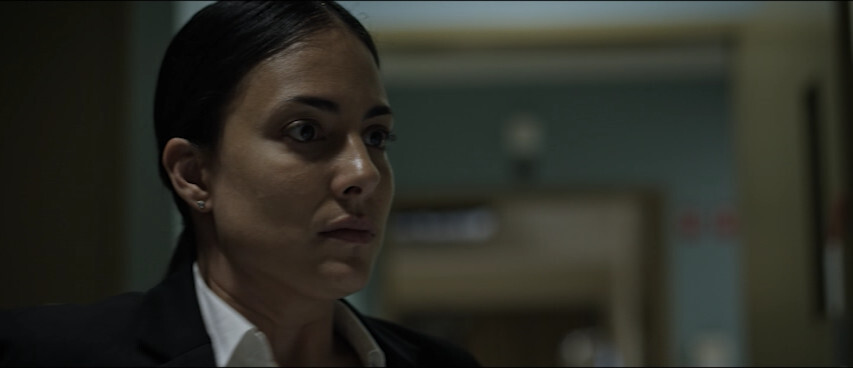
Hey… that’s too much salmon. I shouldn’t have gotten a menu.

22:05: Le vol del corbeau tome 2 by Gibrat (Carlsen)

This is the second and final part of something I read part one of more than a year ago, so I just vaguely remember what it’s about…

It’s a quite simple wartime storyline: A thief meets a communist resistance fighter and romance ensues. Most of this album is spent hiding from the Nazis.
It’s fine. The main attraction here is the romantic/realist artwork, of course. It’s very pretty — I like these interiors and exteriors a lot. Gibrat’s main problem is that all of his male characters look very similar.
Very pleasant.

22:58: Non Eight edited by Eric Reynolds (Fantagraphics)

Non has been very consistent lately (except in its release schedule)… Is this issue gonna be great, too?

Yes! (Sami Alwani.)

This may be the best issue yet! (E. S. Glenn.)

There’s not a single bad piece in here. (Veronika Muchictsch.)

I could snap pics of all the stories in here, because it’s all good. (Maggie Umber.)

It’s a great mix of stories; all different, but still a cohesive reading experience.

*clap* *clap*

23:53: 750cc Down Lincoln Highway by Bernard Chambaz & Barroux (NBM)

This is something as unusual as a straight-up travelogue. OK, the protagonist got dumped, but the book isn’t overtly about that much; instead it’s just driving across the US (on a motorcycle).

It’s a lovely melancholic read… until you remember that the lovely artwork isn’t by the guy who wrote this, which means that (probably?) the guy who wrote this had his camera out the entire trip to document it, which destroys the melancholy of it all.

So forget that thought! This isn’t autobio, after all.

It’s really good. And how can NBM publish this so cheaply?

00:28: Green Manor 1 by Bodart & Vehlmann (Zoom)

This album is a collection of short stories about murder.

The stories are… fun?… I guess? The artwork is classic — very varied figures and heads and faces, although Bodart reuses the same faces in different stories, making me wonder whether there’s some connection between them, but there isn’t.

What kills the enjoyment here for me is the colouring. It’s relentless: Everything is a yucky melange of beige, brown and brownish green. (And sometimes brownish purples.) It’s very evocative of a period; we all know that they didn’t have any other colours in Victorian England, right? RIGHT?

*sigh*

Anyway, reading more of two of these shorts in a row is probably not to be recommended: You’ll have to spray glitter in your eyes to recover.

(NOTE: NOT ACTUAL MEDICAL ADVICE.)

01:02: Sleep.

And I think it’s time for me to go to bed now.

But that was a pretty good batch of comics, eh? The standouts were Procedural, Goblin Girl and Non 8, I guess, but only one real clunker, I think?

Nighty nighty.