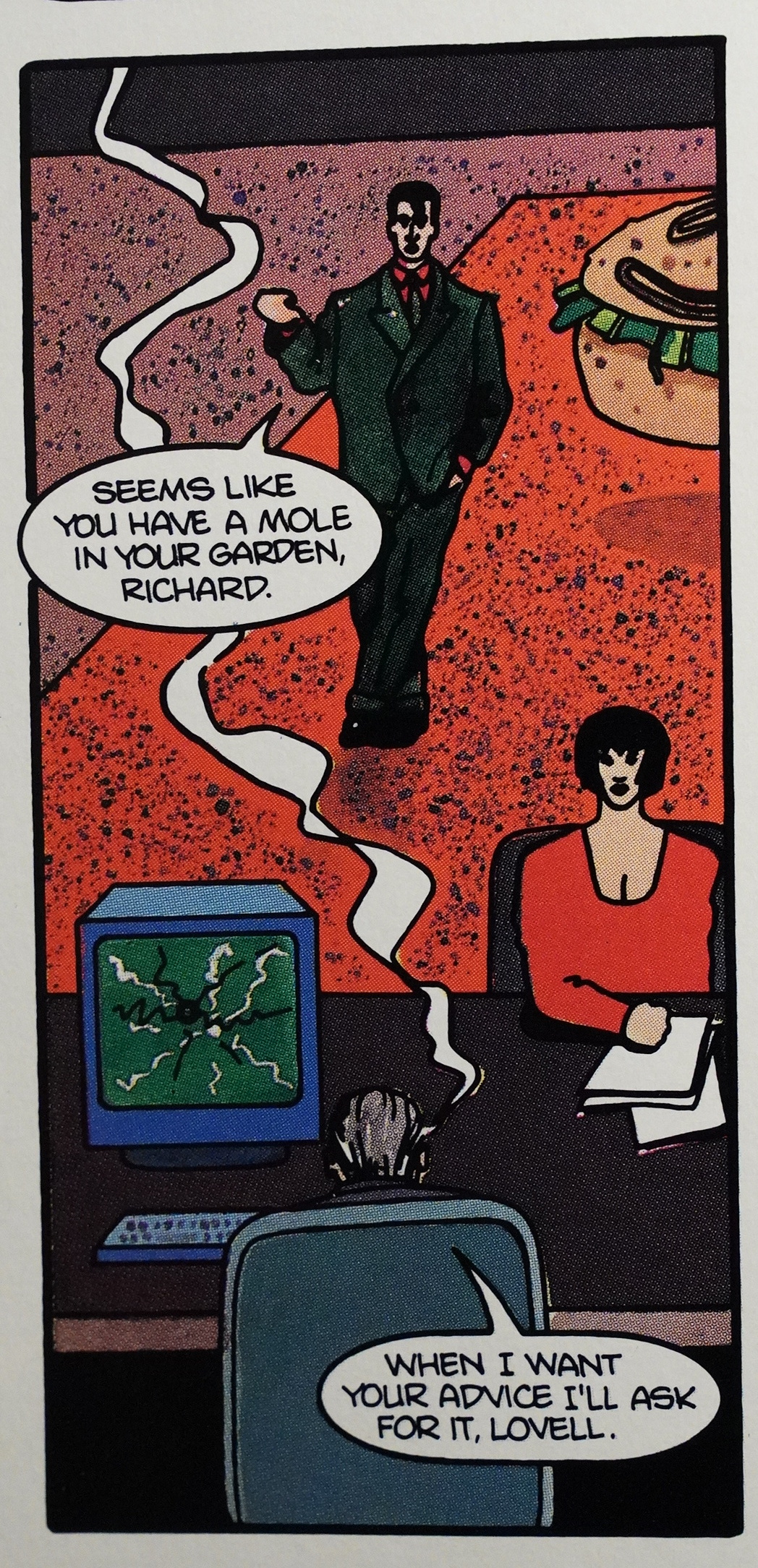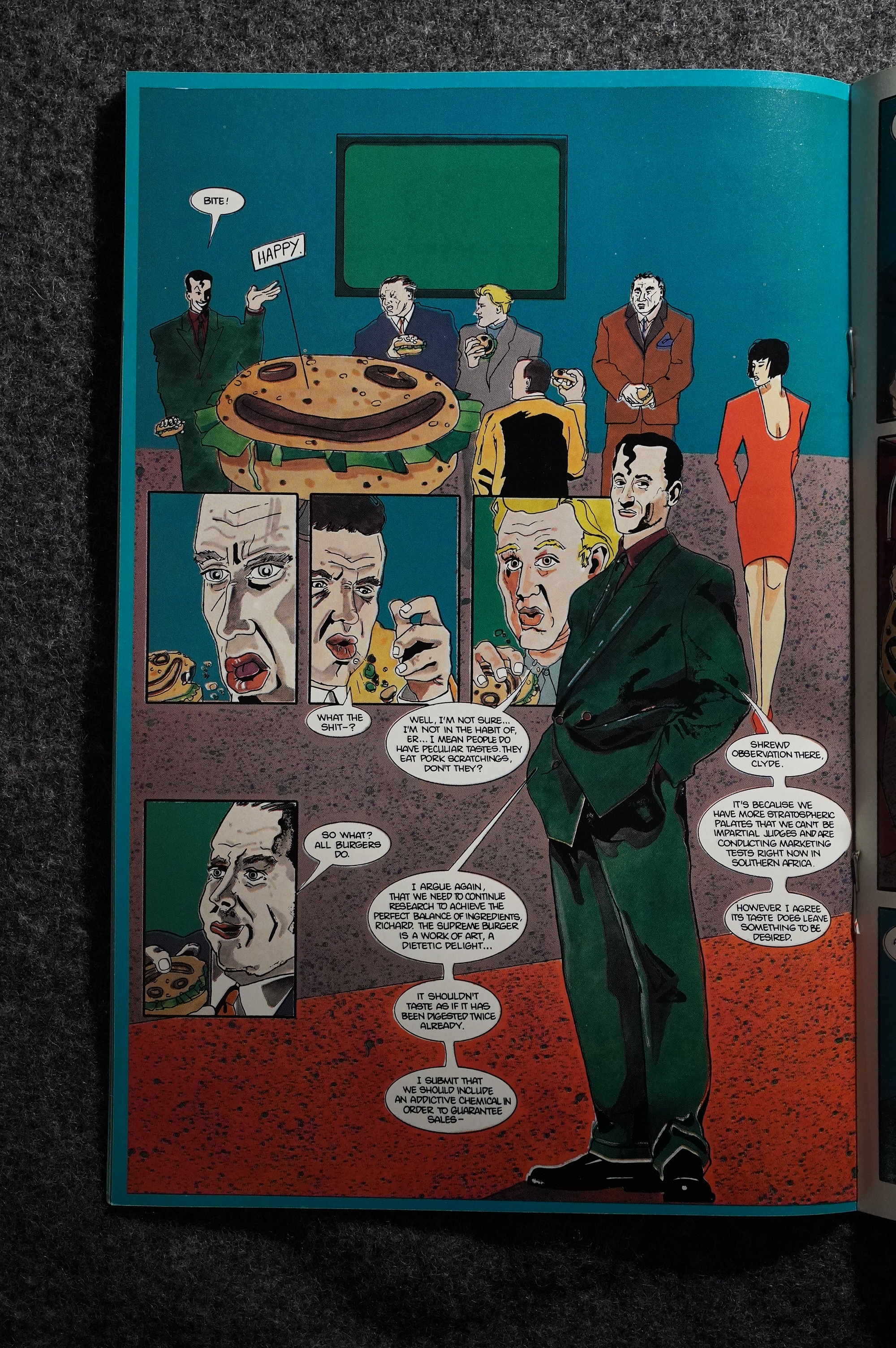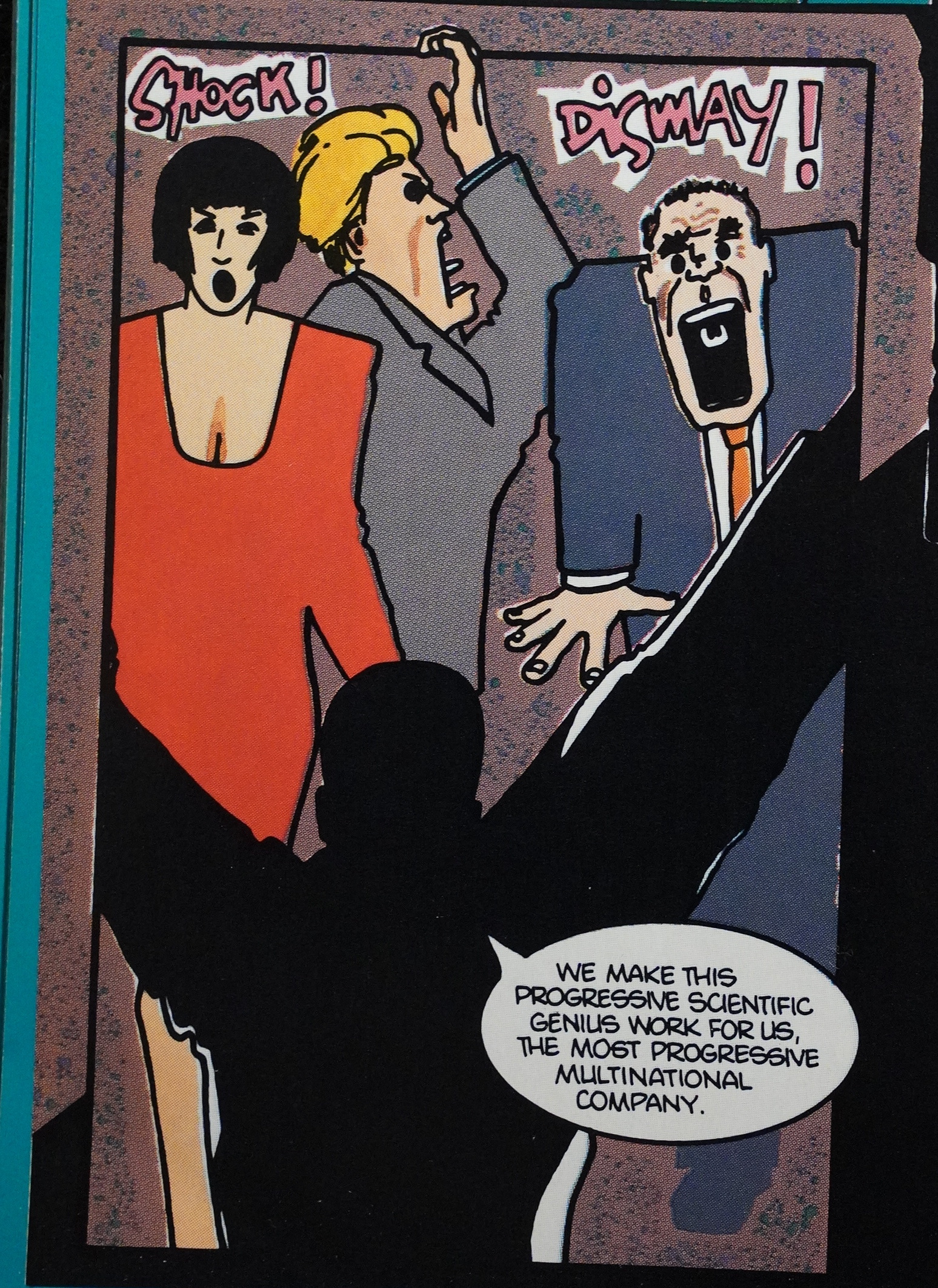
ELC1995: Skin Tight Orbit

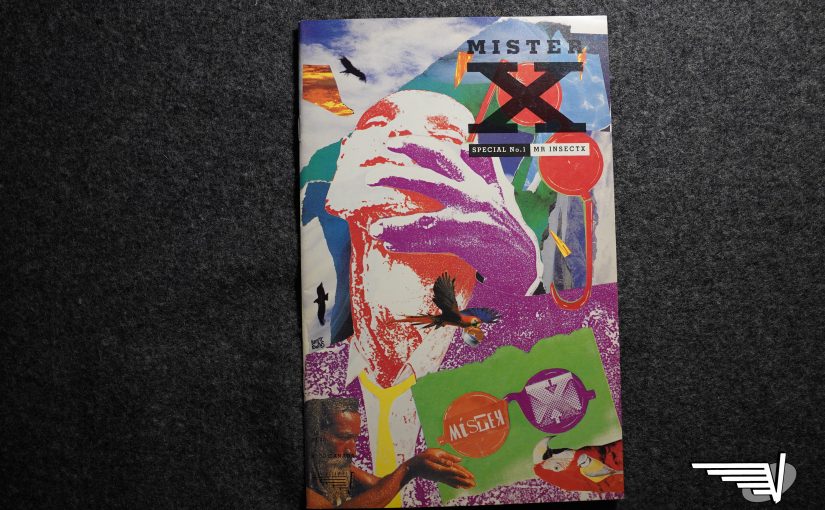
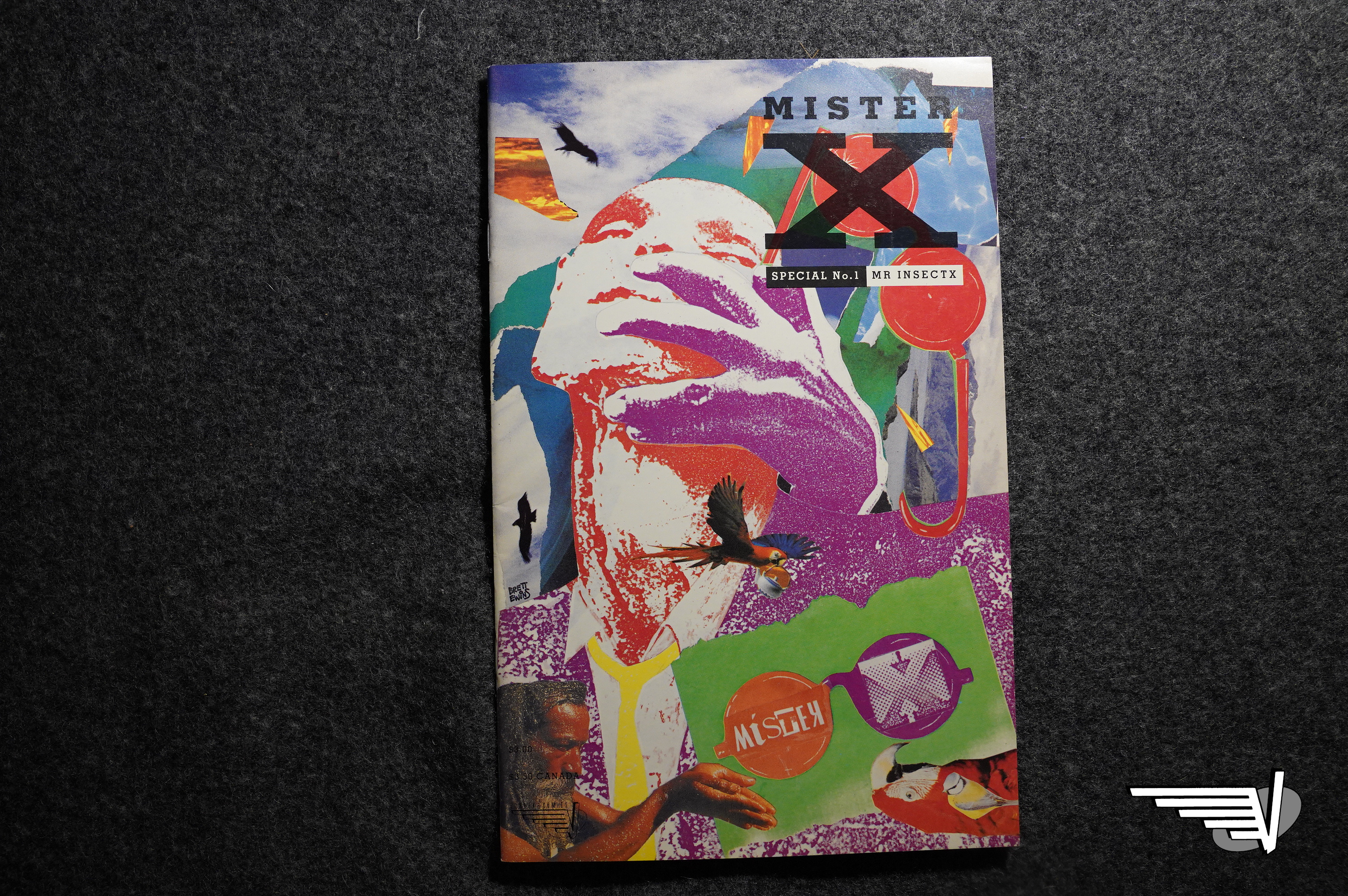
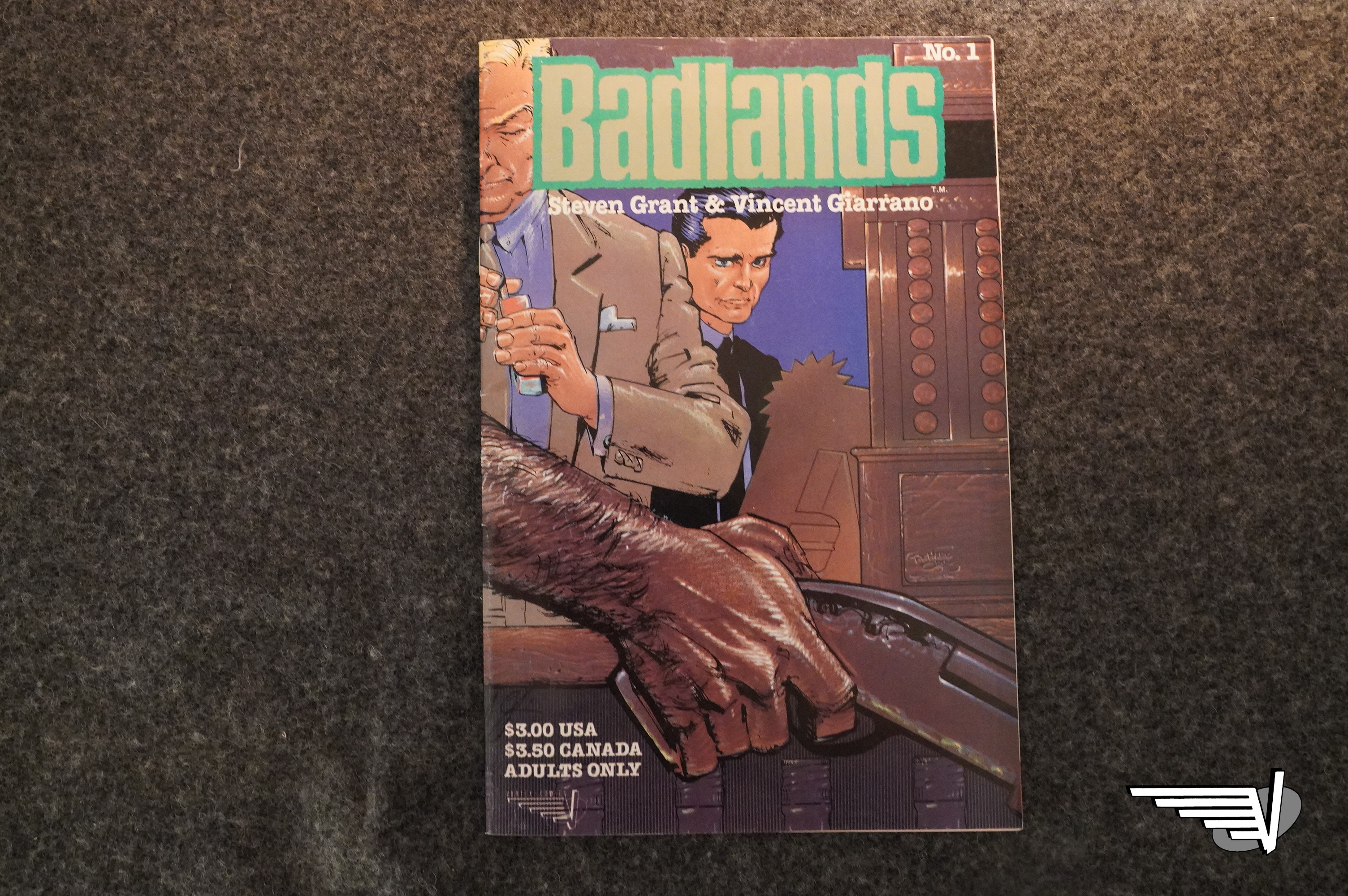
Skin Tight Orbit vols 1 & 2 by Elaine Lee and various, published by NBM/Amerotica.

The US direct sales comics market has been through so many upheavals since it started in the late 70s. It always seems to be either going through a huge growth spurt or a catastrophic downturn? The reason I’m mentioning this is that this is published by one of NBMs imprints for porn I mean erotica.

NBM is, of course, one of the most respected publishers of serious, quality comics in the US. (Well, or they would be if everybody didn’t keep forgetting that they exists.) So what’s up with the erotica I mean porn imprints?

Fantagraphics Comics was probably the trailblazer here: During the previous crisis (1990), Fantagraphics established Eros Comix, and the stated goal of the imprint was to bring in as much money as possible so that Fantagraphics could continue publishing the good stuff. As a publisher of quality non-porn comics, you’d assume that they’d publish quality porn comics, right? No. They sometimes accidentally published somebody good under the imprint (like Molly Kiely), but since that wasn’t really the mission statement, there seemed to be no lower bound to how unreadable the dreck they’d shovel out could be: It just had to sell.

Some unfortunate things were published.

NBM was pretty much in the same boat, and they started their Eurotica imprint in 1991, and Amerotica in 1995 (yes, we were already in the next comics industry crisis now).

So I approached this book with some trepidation, because I have no idea what approach NBM were taking with their porn I mean erotica comics: Attempting to publish good stuff, or Just Whatever Sells?

(Oh, Here’s an explanation of what this blog series is.)

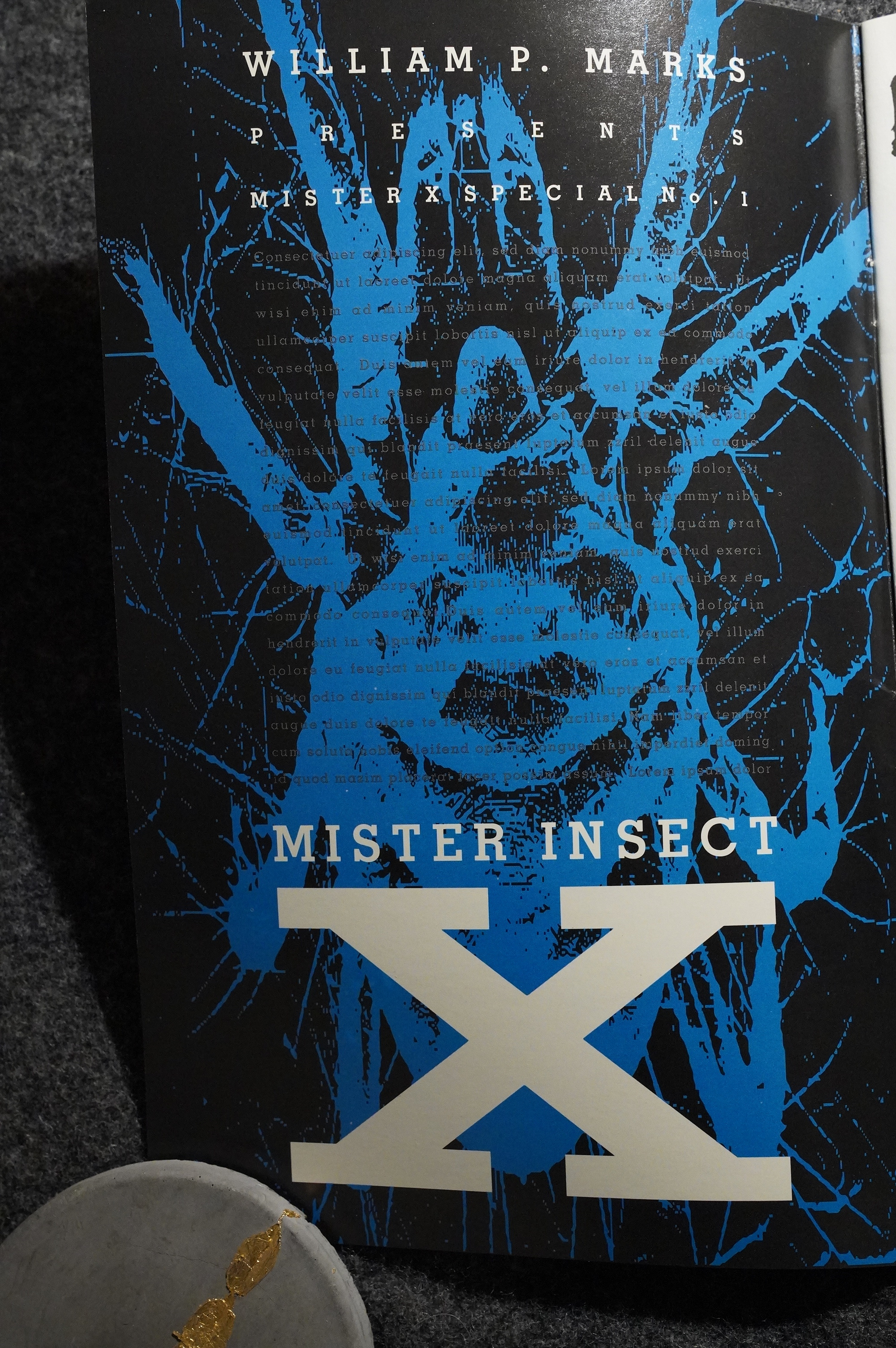
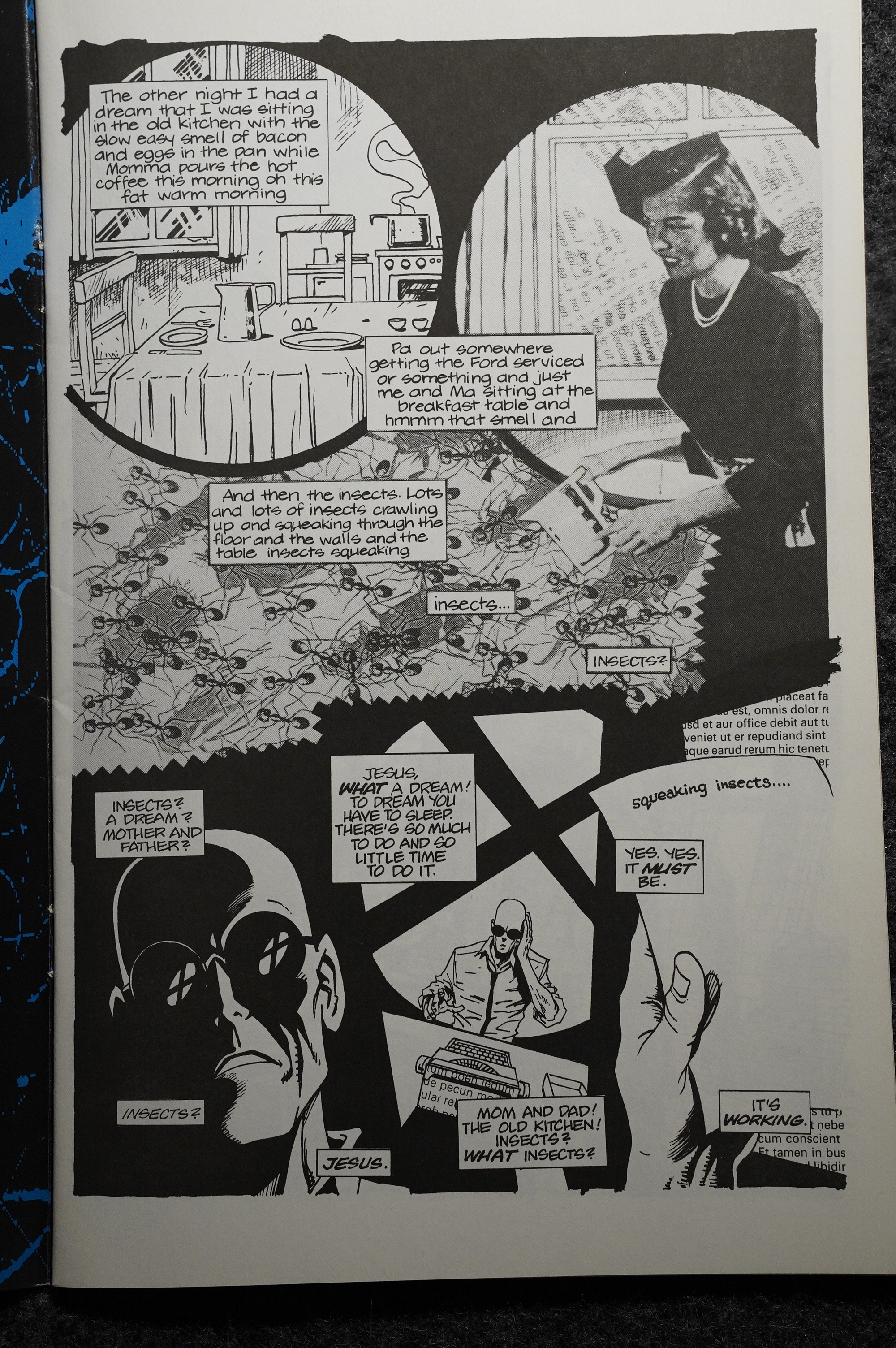
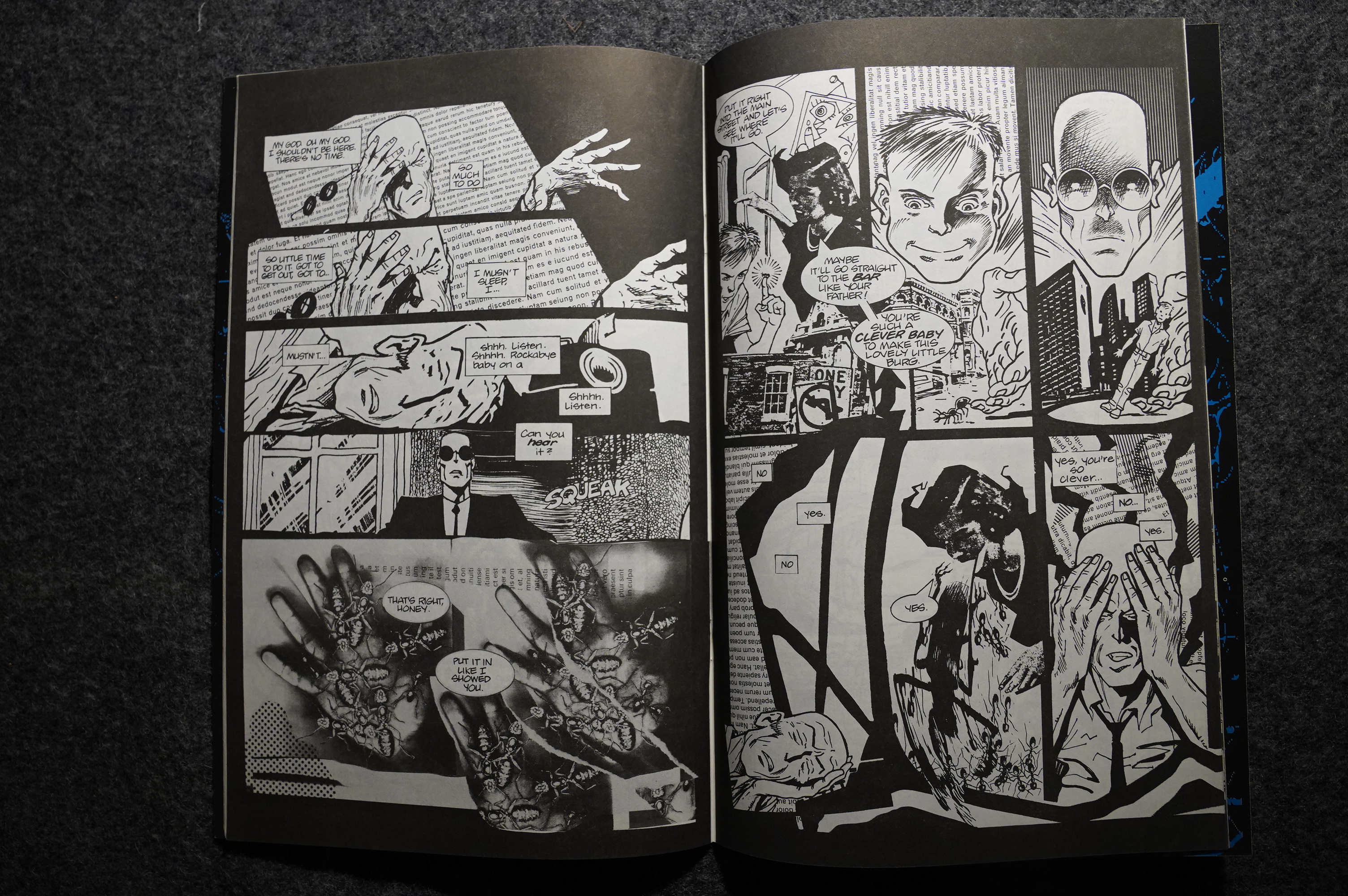
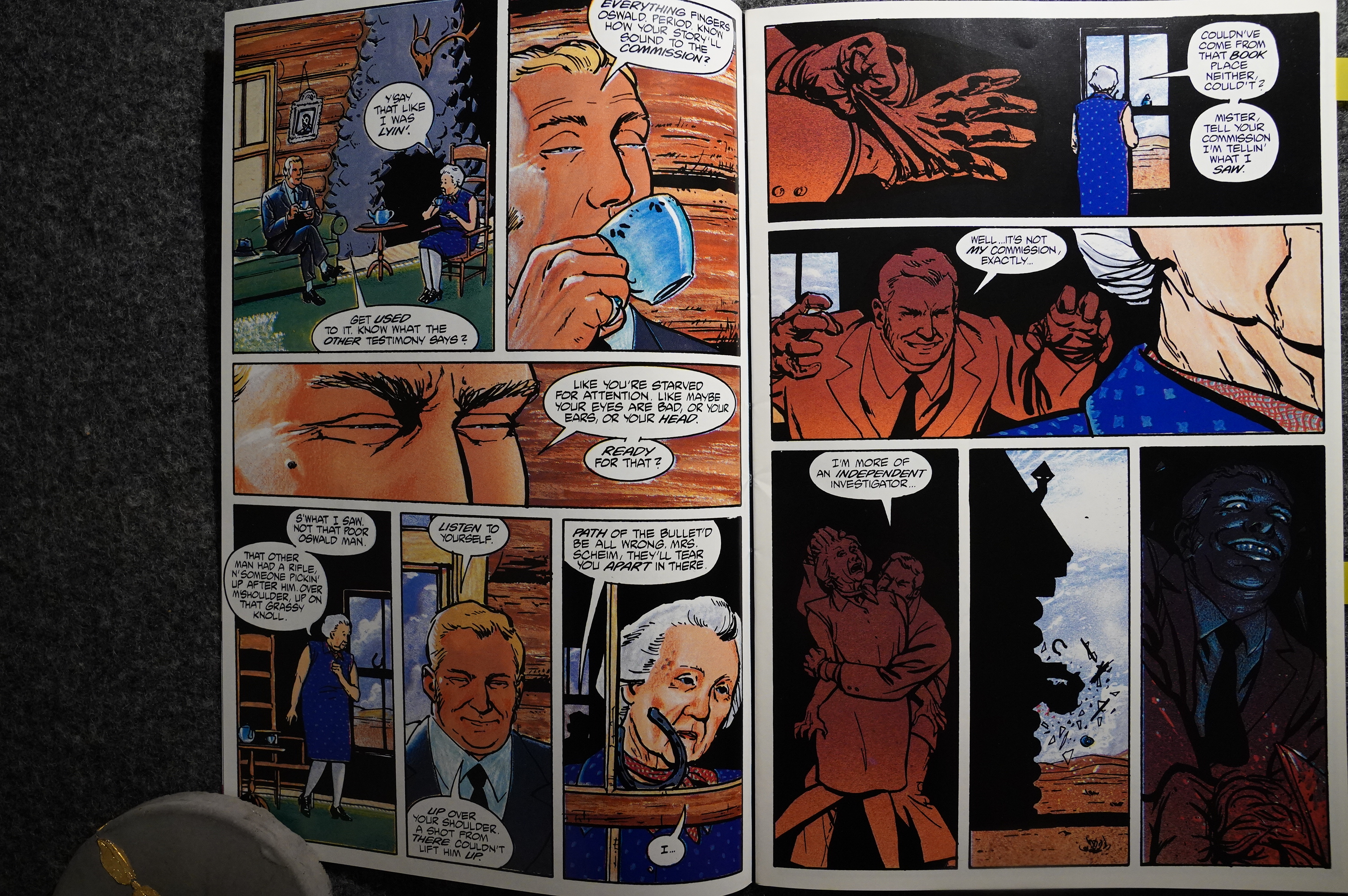
Let’s read the first three pages of Skin Tight Orbit.

Well, this looks promising… it’s seems like it’s going to have some humour, and best of all, it’s sci-fi.

But is that really William Michael Kaluta!? I couldn’t tell at all from looking at the artwork; it’s the least Kaluta-like Kaluta artwork I’ve ever seen.

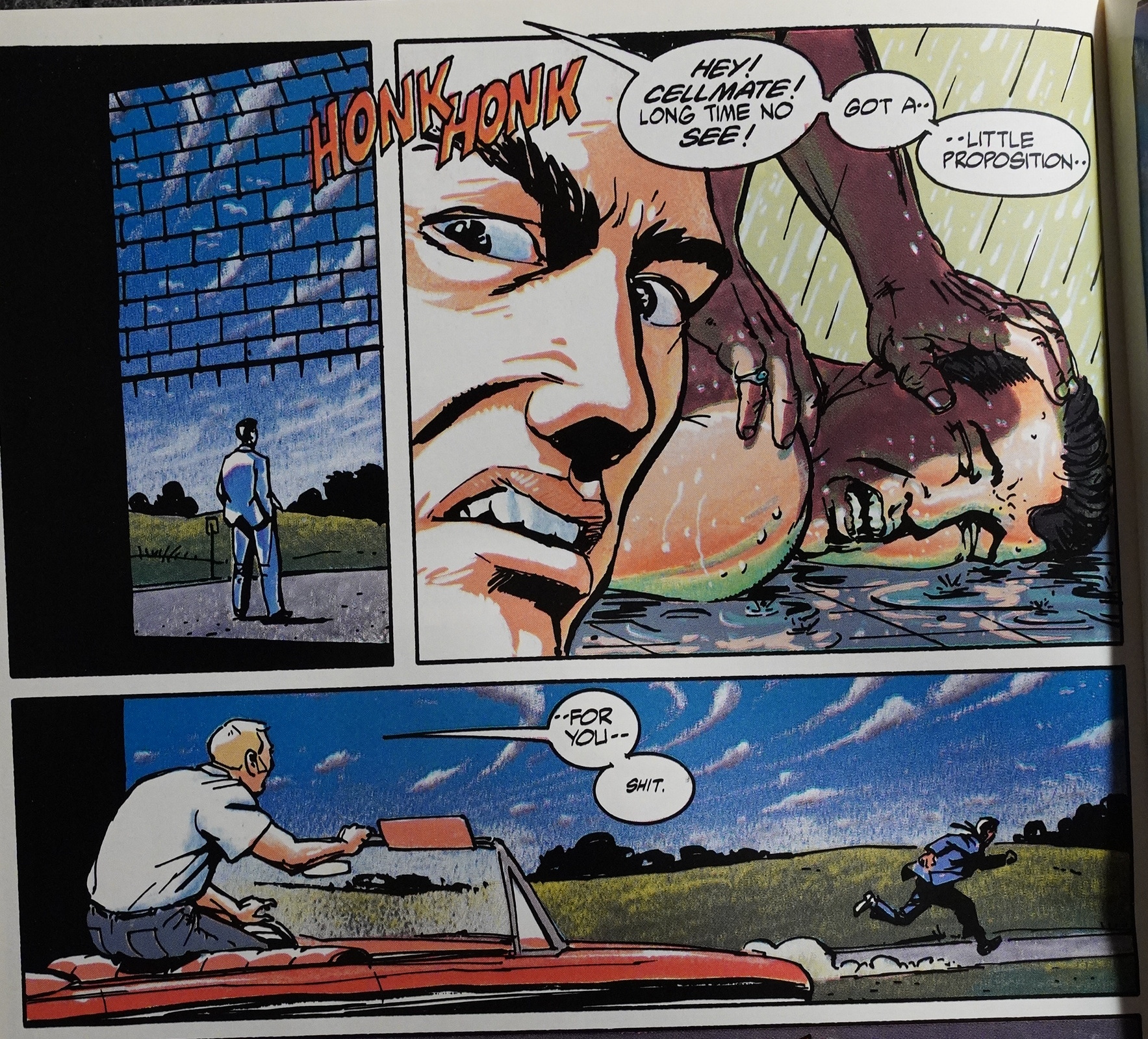
(The story ends with a pretty obvious twist ending, but it’s well told.)

Mary Wilshire illustrates three short pieces about sex androids, and they grow progressively sadder. I mean, it’s on purpose, but it’s not very sexy.

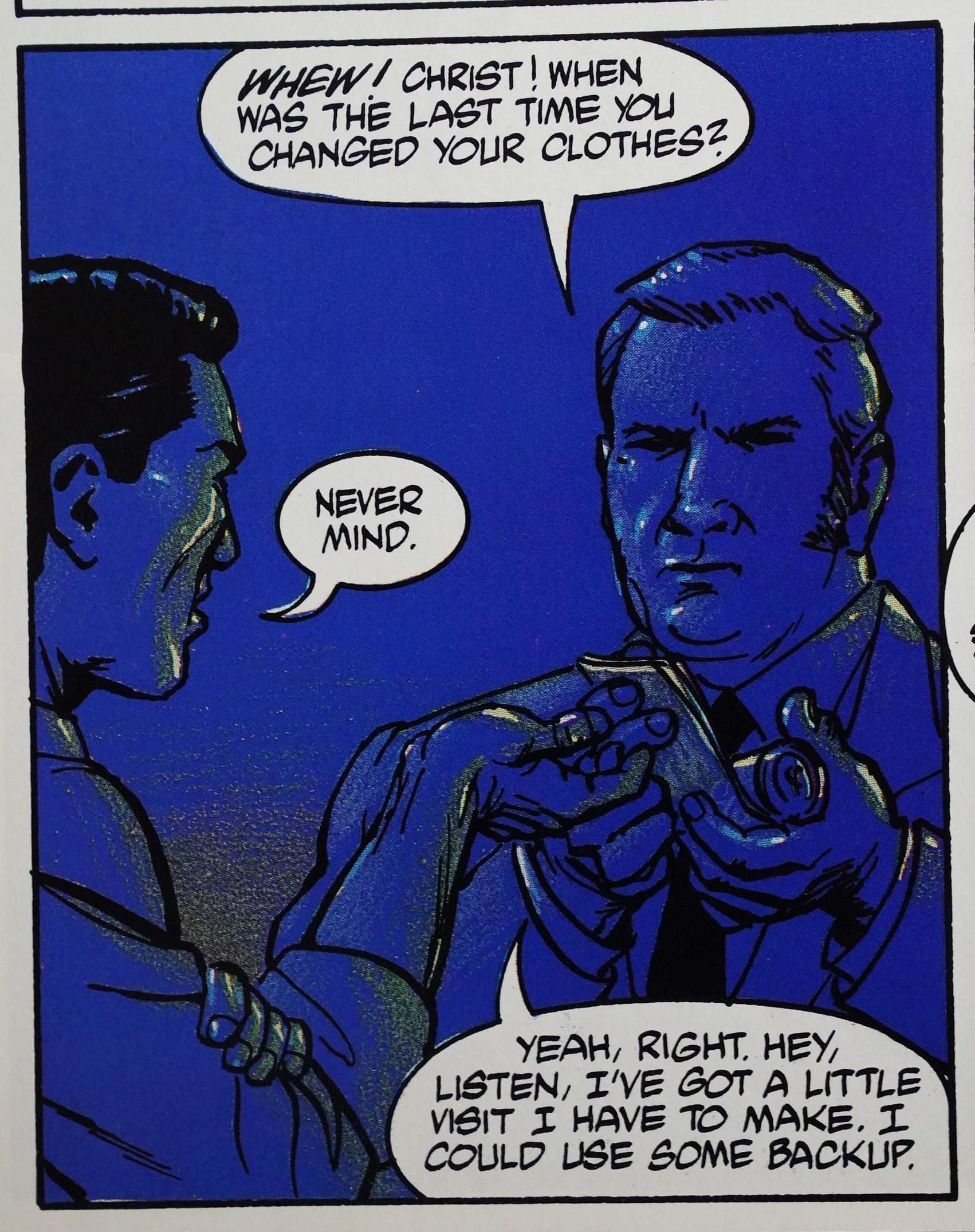
Will Simpson illustrates a story about two er astronauts that change bodies: Her mind in his body and the opposite.

It ends with a horrific rape and murder.

Hang on. Wasn’t this supposed to be a porn I mean erotic book?

Here’s what the back cover says:

“Horny stuff”… “hot collection of erotic science fiction”. The story with the mind swap and subsequent rape and murder is described as “the most intense story”. Well… yes, it is, but…

But is it porn!?!? IS IT PORN!?!?

Is this one of those “I know what porn I mean art is when I see it” things?

Phil Winslade’s artwork gave me a brain aneurysm, but is actually quite porny and was originally printed in Heavy Metal (while most of the other stories seem to be made especially for these books). Well… quite porny except for the horrific ending.

I think it’d be easier to classify these books as sci-fi horror instead of erotica. A fair number of them are gruesome, or at least ambiguous, like this Ray Lago-illustrated story about a guy dying from oxygen deprivation (I think that’s what was going on).

Perhaps the most gruesome of them all is this Jim Sherman-illustrated story of slimey tentacle rape… and that’s the final panel: This is tentacle rape for all eternity.

Several of the stories are about virtual reality/gaming. Above we have a guy in a VR suit living out his sex/accidental necrophilia dreams, apparently…

We have one very sad married couple, each with their own VR setup.


And one with a VR sex worker, who has as a speciality forcing the men who pay her to rape her (in VR, of course).

Fortunately, there’s one lighthearted story in the book: It’s about a species that have human-like women, and where the males are these tentacle parasites that only live to have sex with the women. I’m not showing you any of the tentacle porn images. Hah!

So.

I rather liked these books. The scenarios are surprising and interesting, and Lee is witty. The artwork ranges from passable to really good; there’s an emphasis on storytelling rather than just doing pin-ups, which is refreshing for a porn I mean erotica book.

But… c’mon. It’s a horror anthology. It probably wouldn’t have sold any copies if marketed as that, so I understand why NBM marketed it as an Amerotica book.

The books have never been reprinted, apparently, and I’m unable to find anybody on ver interboobs that admit to having read them.

ELC1990: Starstruck: The Expanding Universe

Starstruck: The Expanding Universe #1-4 by Elaine Lee, William Michael Kaluta, published by Dark Horse.

I wasn’t going to do any Starstruck-related stuff in this blog series, but it occurred to me that I had the Dark Horse series, and it might be interesting to read it and compare it to the IDW collected edition.

(Oh, Here’s an explanation of what this blog series is. And I wrote about Starstruck here.)

First we get a somewhat revisionist history by Mark Askwith — Archie Goodwin didn’t “commission” the first Starstruck graphic novel so much as reprint it: It first appeared as a serial in Heavy Metal.

But we’re told what this series is: It’s an expanded version of the graphic novel, the Epic series, and then presumably what was supposed to come after the first six issues of the Epic series (which had originally been planned as a 12-issue series).

Let’s see… the graphic novel was about 72 pages long, and the Epic series was about (* 6 30) => 180 pages long, so that’s *gets slide rule out* 250 pages. And they propose to add 320 pages, so it’s going to be more than twice as long as originally published? Right. Let’s look at the versions..

Above is the first page of the graphic novel..

And then the first page of the Expanding Universe series…

… and finally the first page of the collected version published by IDW in 2011. (Yes, I’ve got the floppy IDW version, too, but I think that’s the same as the collected version. (No, I’m not obsessed! Shut up! No you shut up!))

Famously, the IDW version is in comic book ratio (higher or narrower than the magazine/graphic novel ratio), so Kaluta (with Lee Moyer on colours) had to elongate the artwork on all the pages reprinted from the graphic novel. Here he’s just added an almost-repeat row to the bottom, but they use a large number of techniques, like making panels taller, or adding more space, etc.

And then these are the next pages from the graphic novel…

But these are the next pages from the Expanding Universe! These are new pages! So they did the new pages in the graphic novel ratio, even if the book is printed in comic book ratio? Perhaps they were aiming for a final collected edition that was all in graphic novel ratio?

I had assumed the IDW version was in comic book ratio because the new pages from the Expanding Universe edition were in that format, but… nope.

So even these pages have to be elongated.

Then we’re back to the graphic novel pages…

(here in biggenated version) again. It’s pretty seamless! Of course, Kaluta’s artwork has more of a 70s flair in the original version… the hairdos are just a bit more … soft.

The printing in the Dark Horse edition leaves something to be desired. Sure, it’s printed in a smaller format than it was drawn for, but even so, the lines have a tendency to disappear into nothingness…

Basically, the Dark Horse version covers the same stretch of storyline as the graphic novel, and then adds the first issue of the Epic series. That’s ~100 pages originally, and this version is 200 pages long, so that’s 100 new pages.
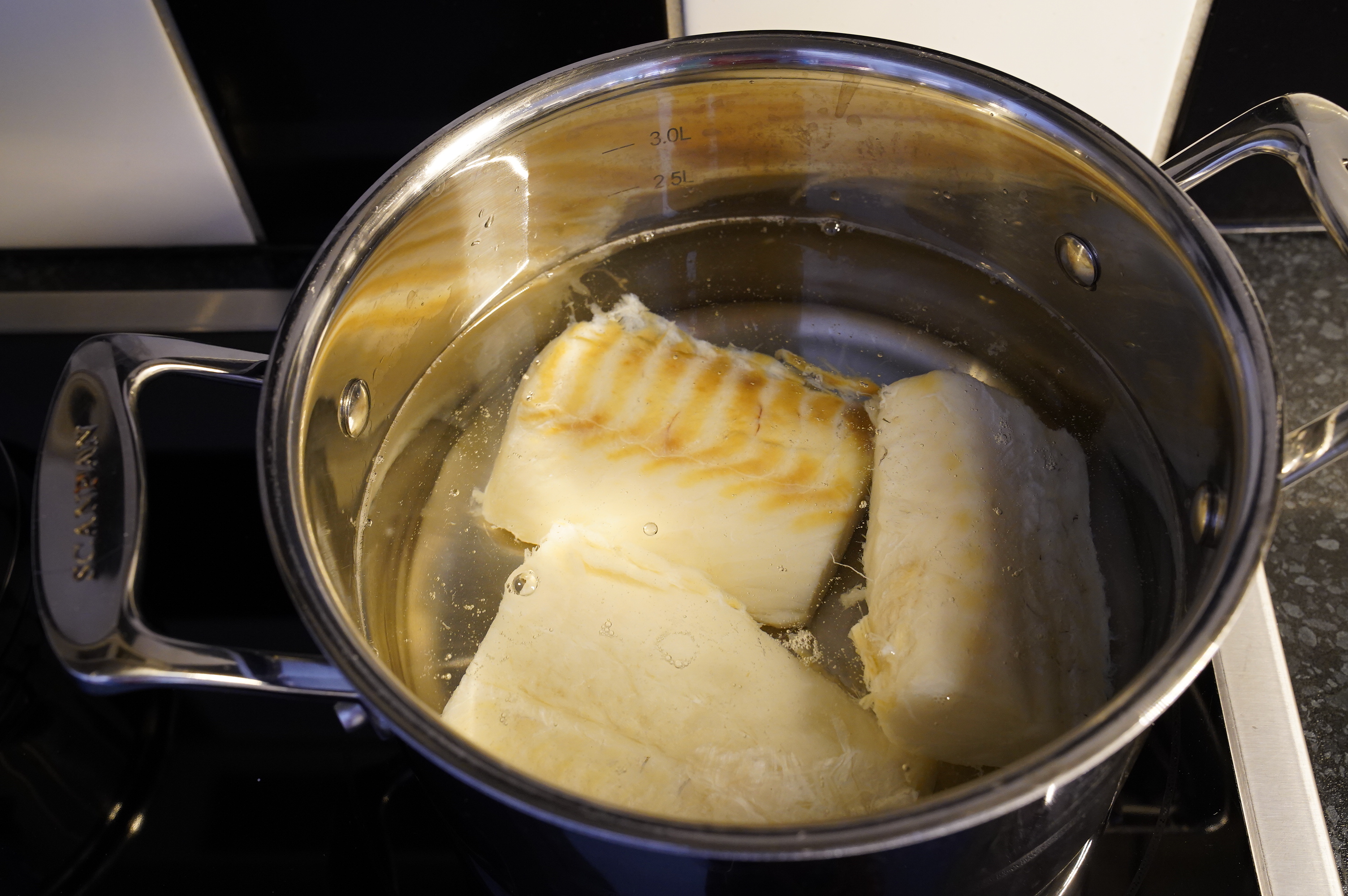
So what’s on these pages, then? I mean, the original graphic novel was a great, fun, exhilarating ride. It basically… makes things clearer? I know that sounds like the most boring thing ever, and there are a couple of scenes (like the above) where the characters are talking about things that we already know (if we’ve been paying attention).

Fortunately, these explanatory pages are mostly confined to the start of the series, and then we instead get the backgrounds on Galatia 9/Bruscilla the Muscle (and other characters. It’s not that these are vital to the plot, but they’re really fun, interesting reading in and of themselves.

The IDW edition is (except the enlongening) page for page identical with the Dark Horse edition: The dialogue is the same, and everything happens in the same order. There’s basically nothing new, except somewhat minor things like the heading on the page above.

… which has gotten a date stamp and a quote in the IDW version.

And, of course, we get the infamous dictionary entries that Starstruck has had since the Epic days. I love them. They often fill out details, or make connections between characters that you may not have already made. They… broaden and deepen the Starstruck universe without being a cop-out: They aren’t pages of text that you need to read to understand what’s going on; everything you need to know is in the comic itself, if you just pay attention. These are just extra fun bits.

And, if you really piece together what’s happening, the recaps by Lee Moyer are very lucid and to the point.

I guess kids these days may not get that panel, what with people probably more used to seeing themselves in selfies than in mirrors, but I just love that detail of Molly Medea above imagining herself as she sees herself in the mirror. (Not reversed scar.)

Anyway, I didn’t really plan on re-reading the series for real, like, but just look at the edition, but again I found myself engrossed in the book. It’s just such a perfect comic book. Kaluta’s artwork never fails to impress: It’s gorgeous through and through, and so inventive, but it’s also so damned readable. The storytelling chops are out of this world, especially considering how much this series is about identities and self, which means that you have a bunch of characters that look (on purpose) very similar… and yet it’s never confusing. (Except when it’s meant to be.)

And reading it this way, comparing and contrasting editions, you’d think would take all the fun out of it. But it totally doesn’t, because it’s already a work that you really have to stop and think and go “but wasn’t… yes! hah! hah!” a couple of times per page, so all these editions just makes it even more of a fun puzzle.

Oh, I said that the IDW version was identical? I lied. There’s (I think) three totally new pages, and they’re mostly like that page on the left. (I looks like filler, but it does totally make sense in context.)

That means that we get a different left/right page dynamic on many of the spreads, but I think that perhaps the IDW spreads are slightly better.

Oh! Suddenly a new page in comic book dimensions? Odd.

And then… we run out of graphic novel pages.

Here’s the final graphic novel page.

And here’s the first Epic Comics page, so we continue straight onto the Epic Comics version.

Trading cards? Well, it was the 90s, I guess…

Anyway, the additional pages stop when we reach the Epic Comics portion in the final issue (which is 64 pages long; the others are 48 pages). So all the additional 100 pages went into the graphics novel expansion.

Except… the page above which was added to the end…

Which is sort of mashed up with an original Epic page. It does help with the flow a bit, because the wax guy came in a bit abruptly originally.

Anyway, I’m guessing that means that the next four issues would mostly reprint the remaining five Epic issues, and then we’d finally get the continuation in the final four issues?

I don’t know. It’d make sense?

Instead we had to wait until 2015, when Lee and Kaluta published the kickstartered Old Proldiers Never Die, which does indeed reprint the remaining Epic issues, but I haven’t done a comparative reading, so I don’t know how much it expands upon it.

Indeed.

Anyway: The more I read Starstruck, the more I love it, and I already loved it to bits the first time I set my eyes on it.

If you haven’t read these books yet, hie thee over to bookshop.org.

ELC2011: “Mischief”

“Mischief” by Elaine Lee in Chicks with Capes, edited by Lori Gentile and Karen O’Brien, published by Moonstone.

OK, this blog series is about Elaine Lee’s comics, and this isn’t a comic book. Instead it’s an anthology of short stories about super-heroes. But I’ve bought it, so I might as well read it.

Oh, it’s a whole series of books… I had no idea.

So Lee’s contribution is a 20 page thing about a super-hero called Mischief.

“The thing he was driving looked like the box her car came in.” Her care come in a box? Do cars come in boxes? My car didn’t come in a box. Did her car come in a cardboard box? Does the thing he’s driving look like cardboard?

WHAAAAT

Oh, perhaps she’s thinking of a container, and the thing he’s driving is a square metal thing?

CHECK

Mischief is an odd name for a hero, but here we get the explanation.

So, as you may surmise, this isn’t a Deep And Serious story, which is fine by me.

Hm… how does his exercise bike feel, anyway?

Oh, right.

I’m just saying there’s some lines here that don’t quite… It’s a choppy read: We get a framing story (in a car), and a flashback to a super-hero fight, but most of the energy is taken up with a couple’s counselling session. It’s quite funny, but it’s a lot for 20 pages.

And it would be totally out of line for me to point out some copy-editing issues. I mean, I don’t even read my own blog posts, so they are teh grammer mistak.

It’s an amusing story (complete with revenge power fantasy), but just when I was getting used to the writing style, it’s over.

BC&B: Poulet Sauté aux Echalotes w/ Tarte au Fromage Blanc Ferme d’Alsace

Hi!

It’s been quite a while since the last chapter of this blog series… since before The Pandemic, I think? It seems like most people reacted to the thing by starting to bake and cook like crazy, but I mostly just… sat on the couch and read stacks and stacks of books. For some reason, the thought of making Real Food just seemed really unattractive to me for many months… but yesterday I pulled myself together and turned to the next chicken dish in the Bistro Cooking (by Patricia Wells):

The Chicken of Shallot.

Hm… that recipe looks really simple… I mean, there’s no seasoning beyond salt and pepper? I have my doubts… can something this simple be any good?

I didn’t get a whole chicken this time, but instead a bunch of chicken pieces. Because I’m just like Lauren Walker:

Me too!

So there’s a lot of shallots in this dish… the recipe calls for 60 shallots, and since I’m halving the recipe, I bought 30… and then I saw the recipe say “60 shallots, approx 400g”. 400g is ten of the shallots I bought! Did they have really small shallots back in the olden days (i.e., the 90s, when the book was written)?

So now I have to find something else to do with the other two bags…

Anyway, first the chicken pieces are cooked over high heat to get some crispy skin.

Then the shallots (and garlic) into the pan…

… and then the chicken bits back again…

… and then cook for 20 minutes.

So while that’s cooking, let’s select a book:

We’re getting towards the end of this blog series? There’s only five more books to go! *gasp*

Today’s book is by Nicole Hollander, best known for her wonderful, fabulous Sylvia strip series. I love it to bits: It’s graphically unique and gorgeous, and it’s hilarious.

But… this is a memoir? Let’s read the first few pages:

Hm. OK… it’s photos and illustrations, but it’s mostly Hollander talking about her childhood. And… it’s not… it’s not hilarious. Instead it’s just oddly repetitive. And I don’t mean just what you see on the spread above (where you have an illustrated version of a conversation that’s then reproduced, verbatim, in the main text), but that Hollander will do things like mention a sort-of brother, and then mention him again, and then a couple pages later explain what’s up with the sort-of brother.

Now that I’m writing it like that, I’m kinda making it sound like Hollander is going for a discursive writing style where that kind of spiralling conversational pattern would be natural (for some people), but it doesn’t feel that way reading this thing.

It just feels like she hasn’t even read the text herself and done even the slightest attempt at structuring, and that we’re reading the first draft of the book.

ME AM DISAPPOINT!

OK, back to the cooking:

Then I get to do something I’ve never done before: Flambé! Olé!

So I heat some cognac in a pan, and then (because I’m a wimp) I just threw the match into the pan instead of burning my fingers. I should get longer matches.

Look at it burn! I mean… look! You can almost tell!

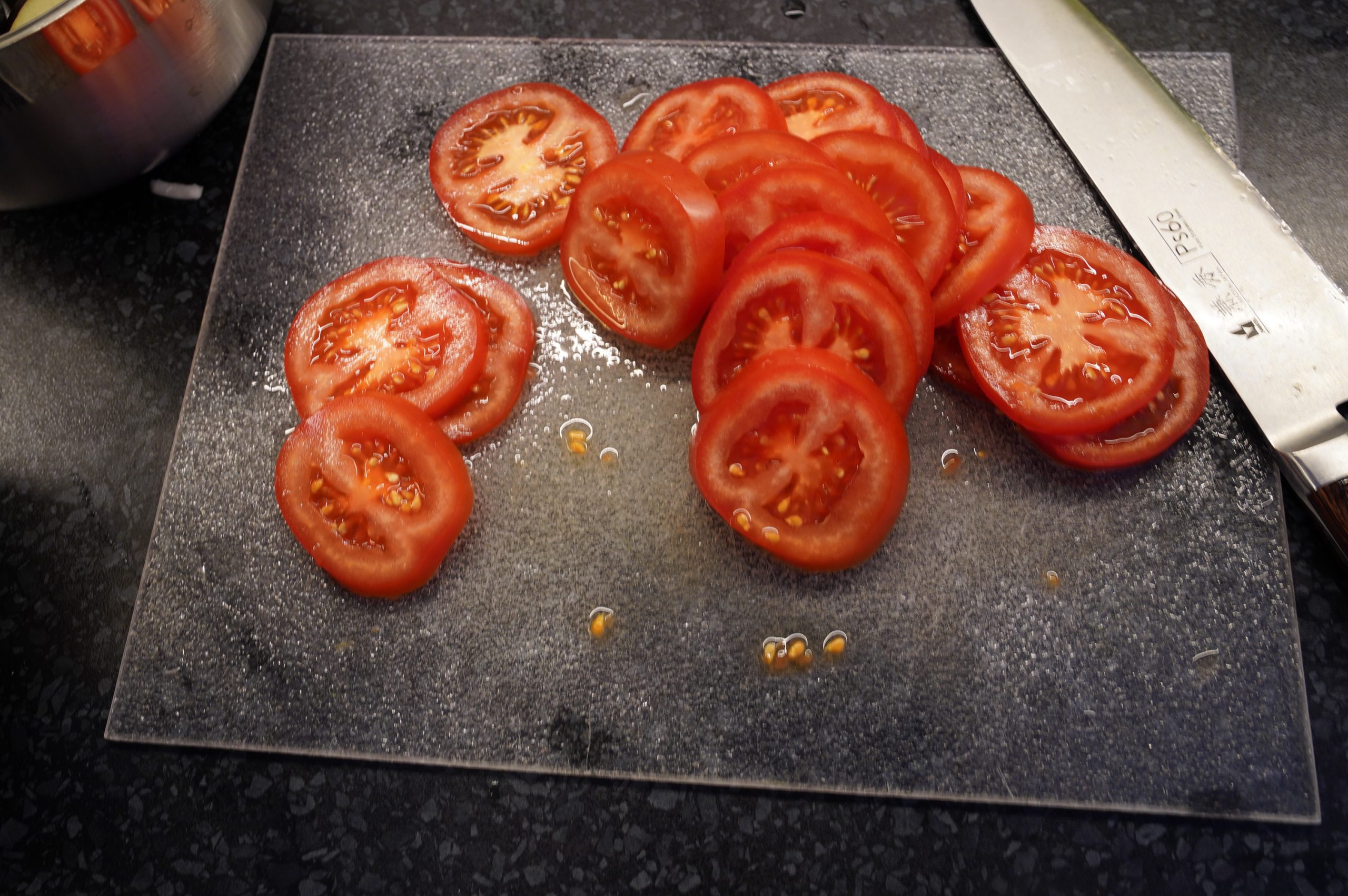
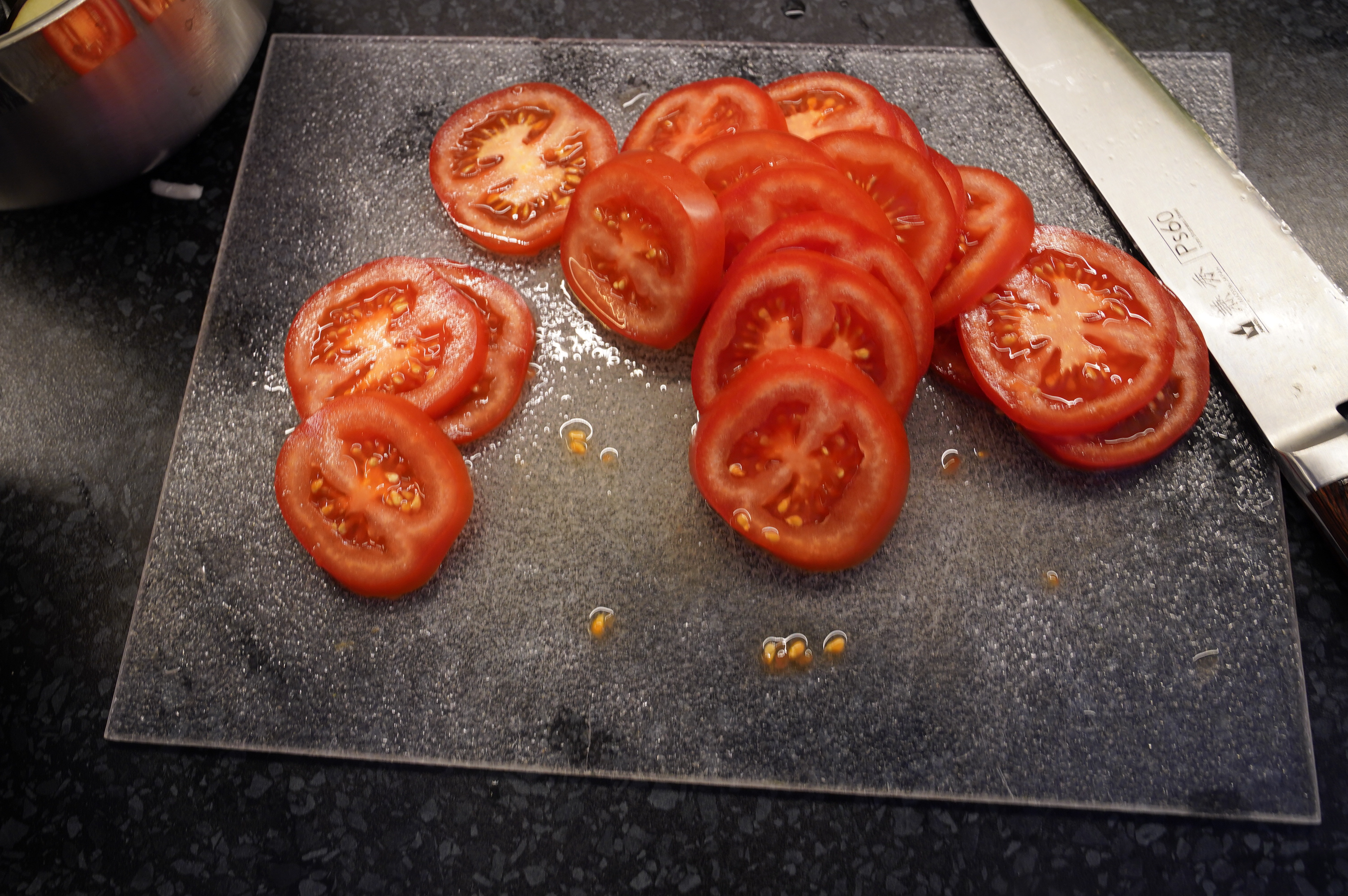
Then that’s dumped over the rest of the stuff, and added four tomatoes, and then simmer for five more minutes.
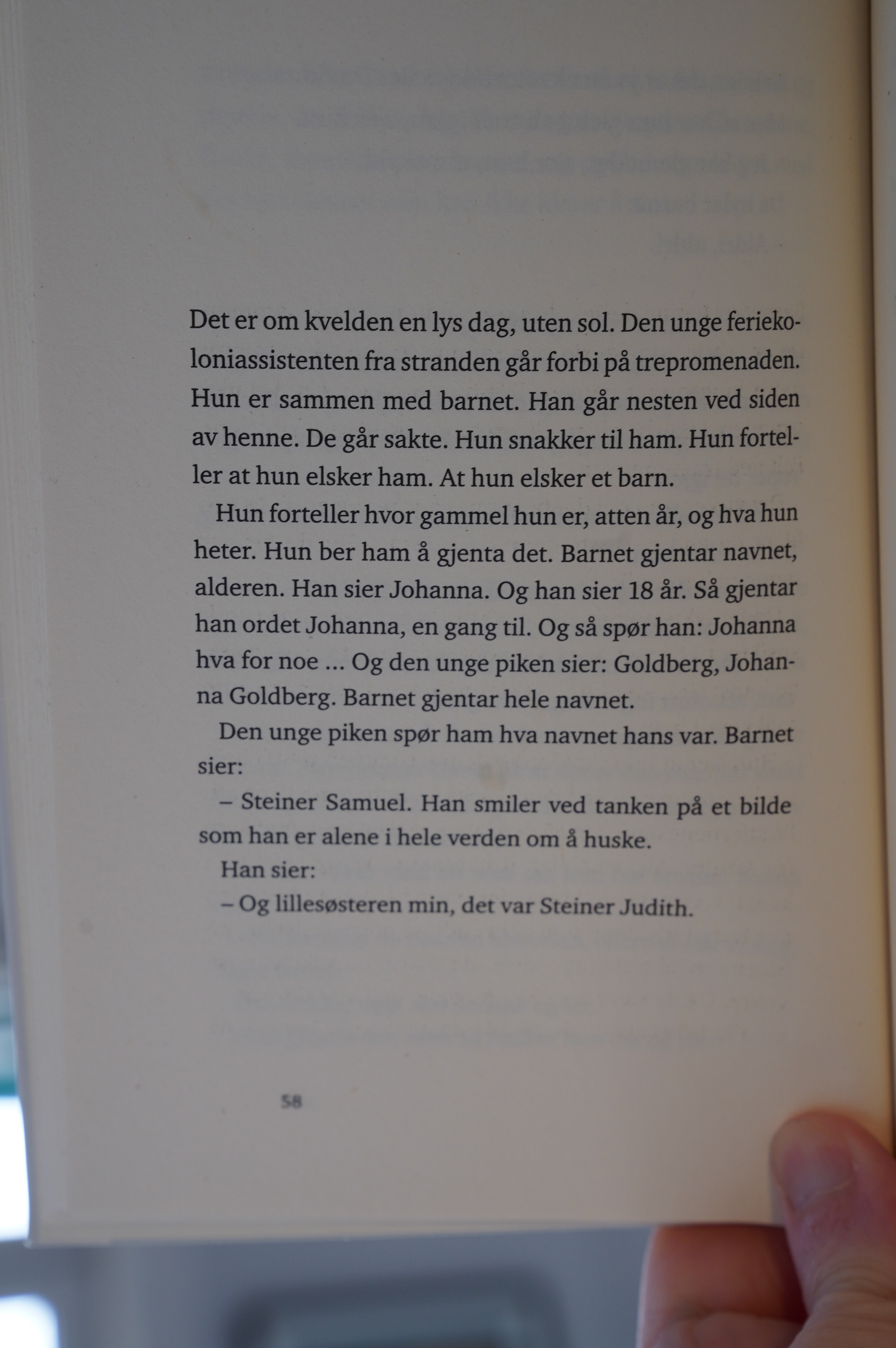
Chop chop chop.
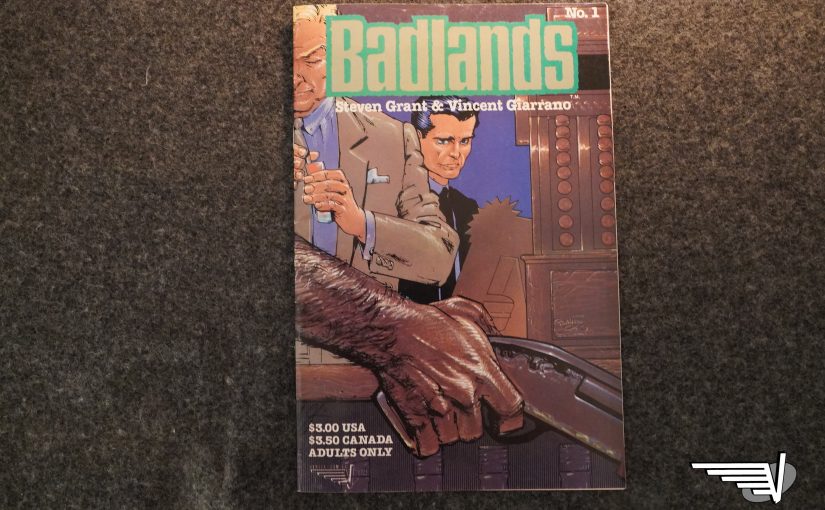
And then serve over some boiled white rice, and served with a rosé.

Hm…

Hm! It’s delicious! I can’t believe it! The chicken is juicy and flavourful, and has so many subtle things going on that I can’t believe it. I mean, it’s just such a simple recipe! Is it the brandy I mean cognac that’s giving it this ephemeral delicious taste?

Wow.

It’s so well-balanced and… I was totally to prepared to be disappointed, as I have been a number of times cooking from this cook book, but this is insanely good.

So how does it pair with the book? I’m not quite sure, because I couldn’t concentrate on anything than eating…

I’m so stuffed that I can’t really even contemplate dessert, which makes this recipe ideal: I can start it now and continue it tomorrow. It needs to sit 6 to 24 hours…

So it’s a cheesecake, which is something I’ve never made before.

So it’s cottage cheese and yogurt in a food processor…

And then run it until it’s smooth-ish…

… and then it’s just supposed to sit like this, at room temperature, to drain for hours and hours. How odd.

I thought the recipe just sounded to bland, so I blitzed some strawberries and drained the mash.

Speaking of draining… it actually works! The volume reduced by about a quarter, I think. I guess the point is to get a less wet mixture so that it’ll actually bake?

Oh, yeah, there’s a shell to this cake — pâte sucrée.

You just put the ingredients into a FUD professor and then blitz until it forms a dough.

And then form it into a disc.

And into the fridge for half an hour.

It got really hard! Difficult to roll…

But I sorta kinda got it to enflatten.

There! Perfect!

I thought it was strange that this goes into a spring form instead of a pie mould, but pie moulds are holey, and the cheese mixture is quite wet, so I guess it would just leak all over the place?

Anyway, it’s baked the traditional way… first blind baked for a while…

… and then without the foil for a while.

The cheese/yogurt mixture is now a lot less wet. Look at that texture!

So I added the illicit strawberries…

… and then some eggs and sugar and a bit of cream.

And then into the spring form.

*gasp* It baked!

And it came out of the spring form!

OK, now I see why the recipe specified trimming the edges before baking.

It’s… it’s delicious!

The crust is a bit over-baked, as you can see, but tastes fine, anyway. The texture of the cake is really nice, and the subtle strawberry flavour is really good.

I love it, and I ate four pieces straight away.

But it doesn’t really look like the most appetising thing in the world. Perhaps I should add some strawberry sauce or something…

Nah.

This blog post is part of the Bistro
Cooking & Books
series.