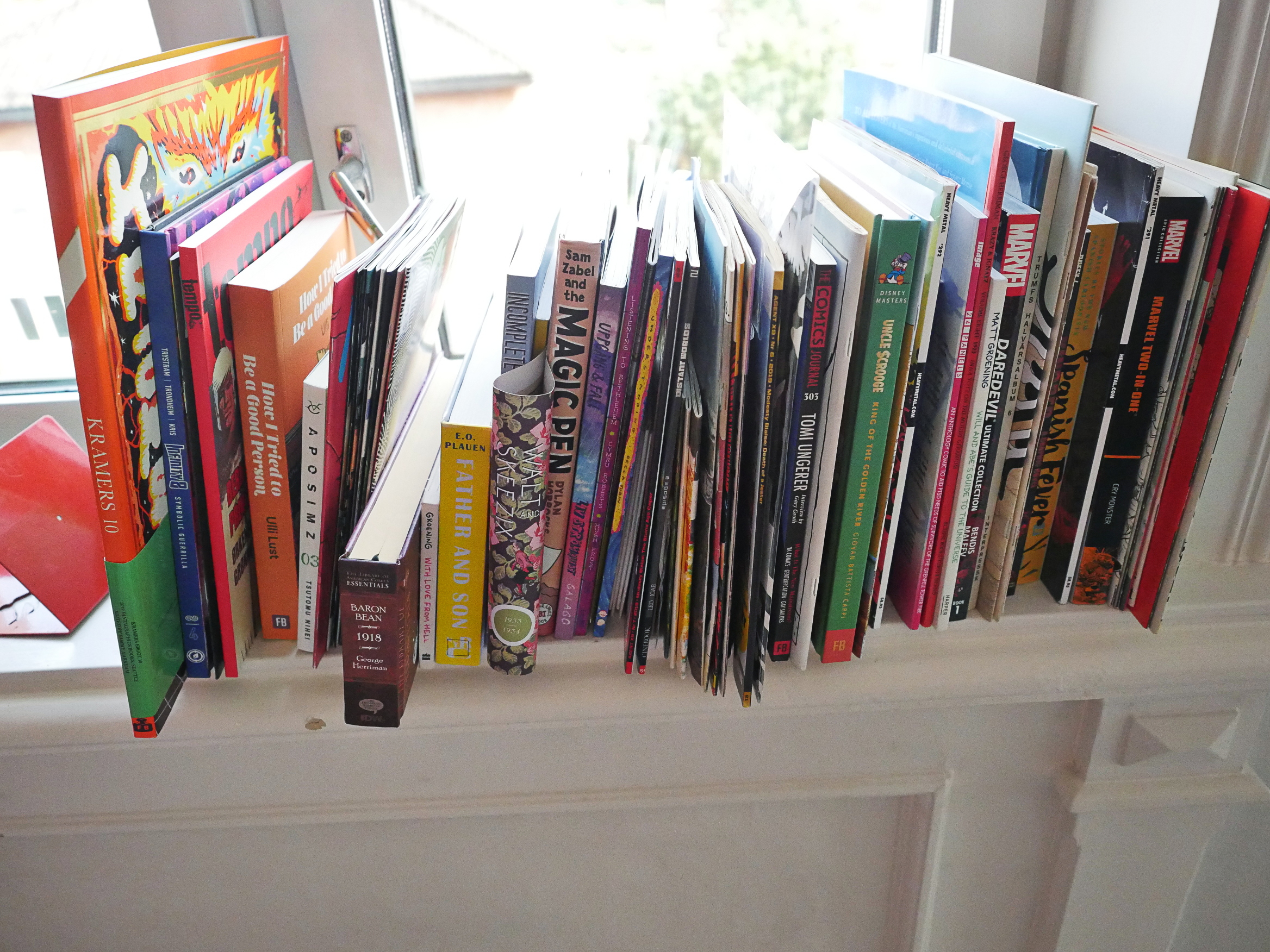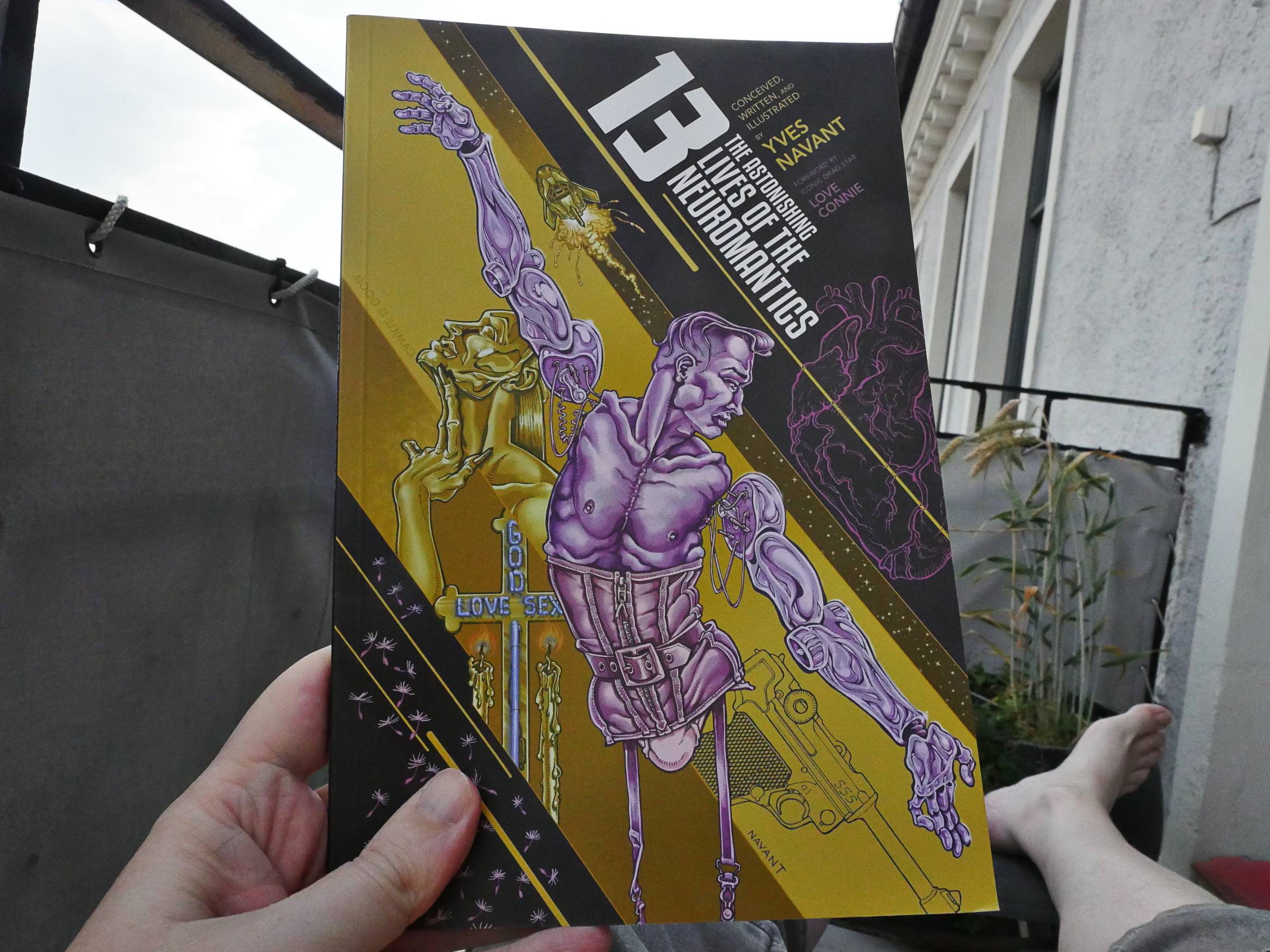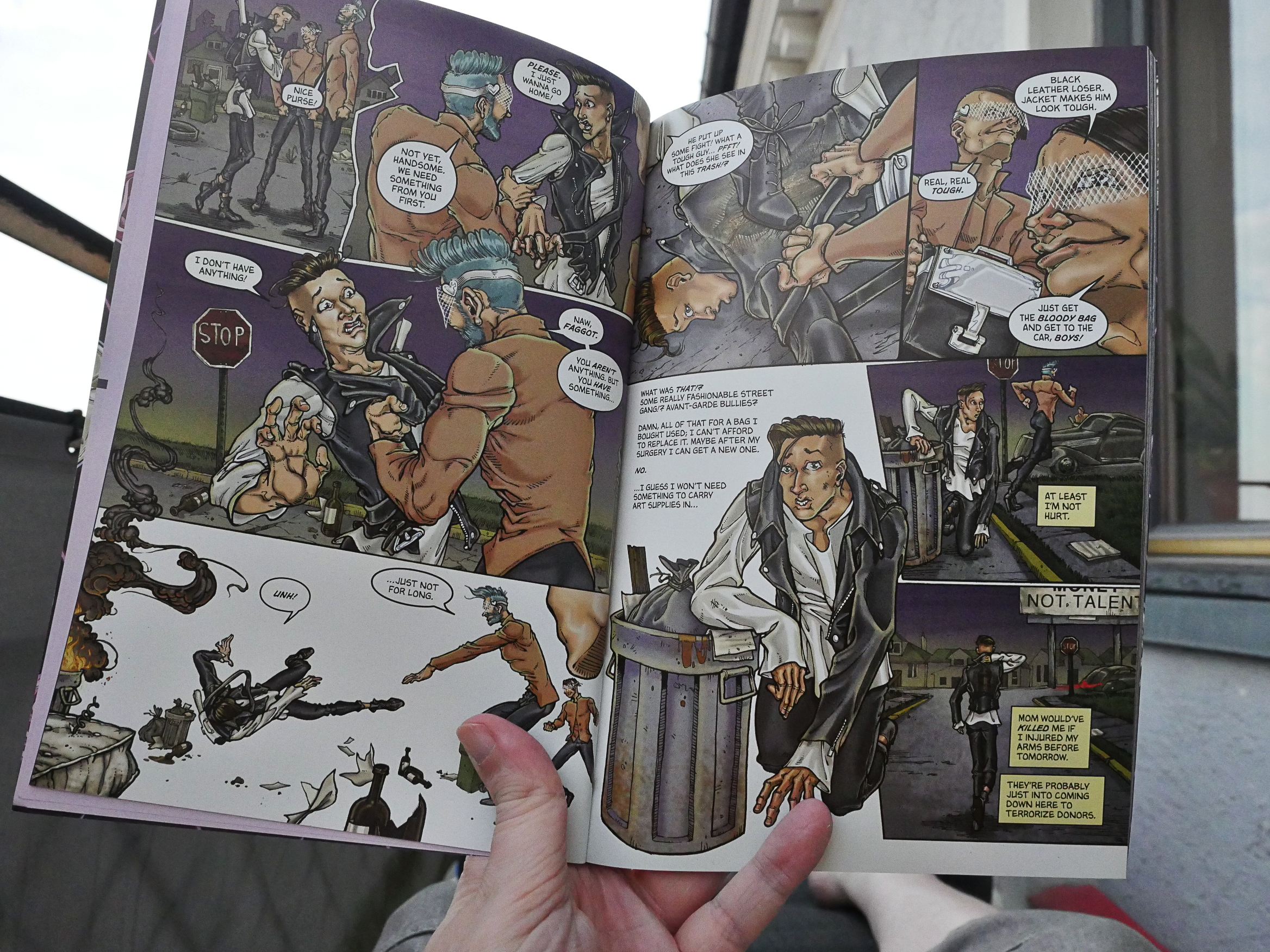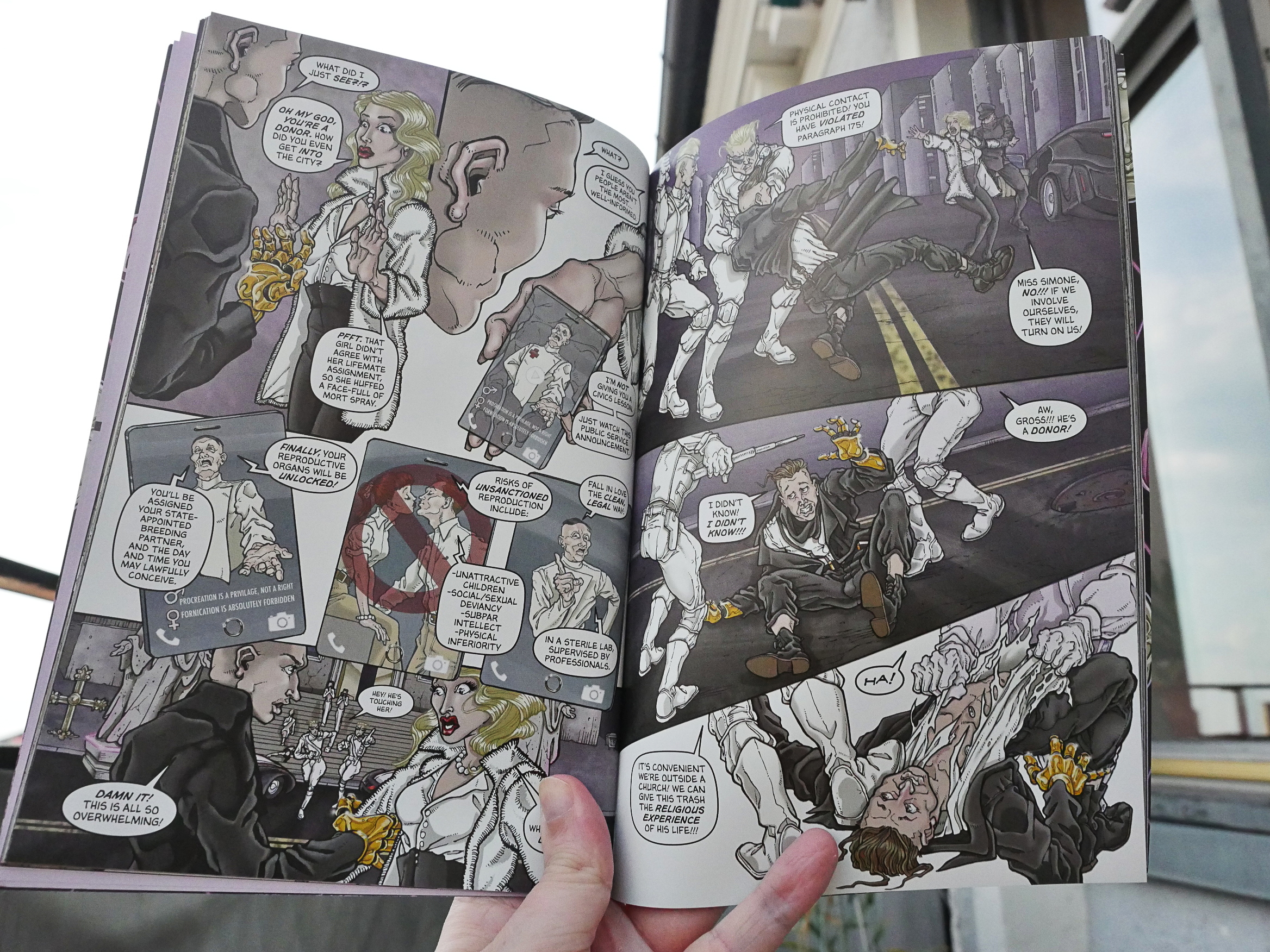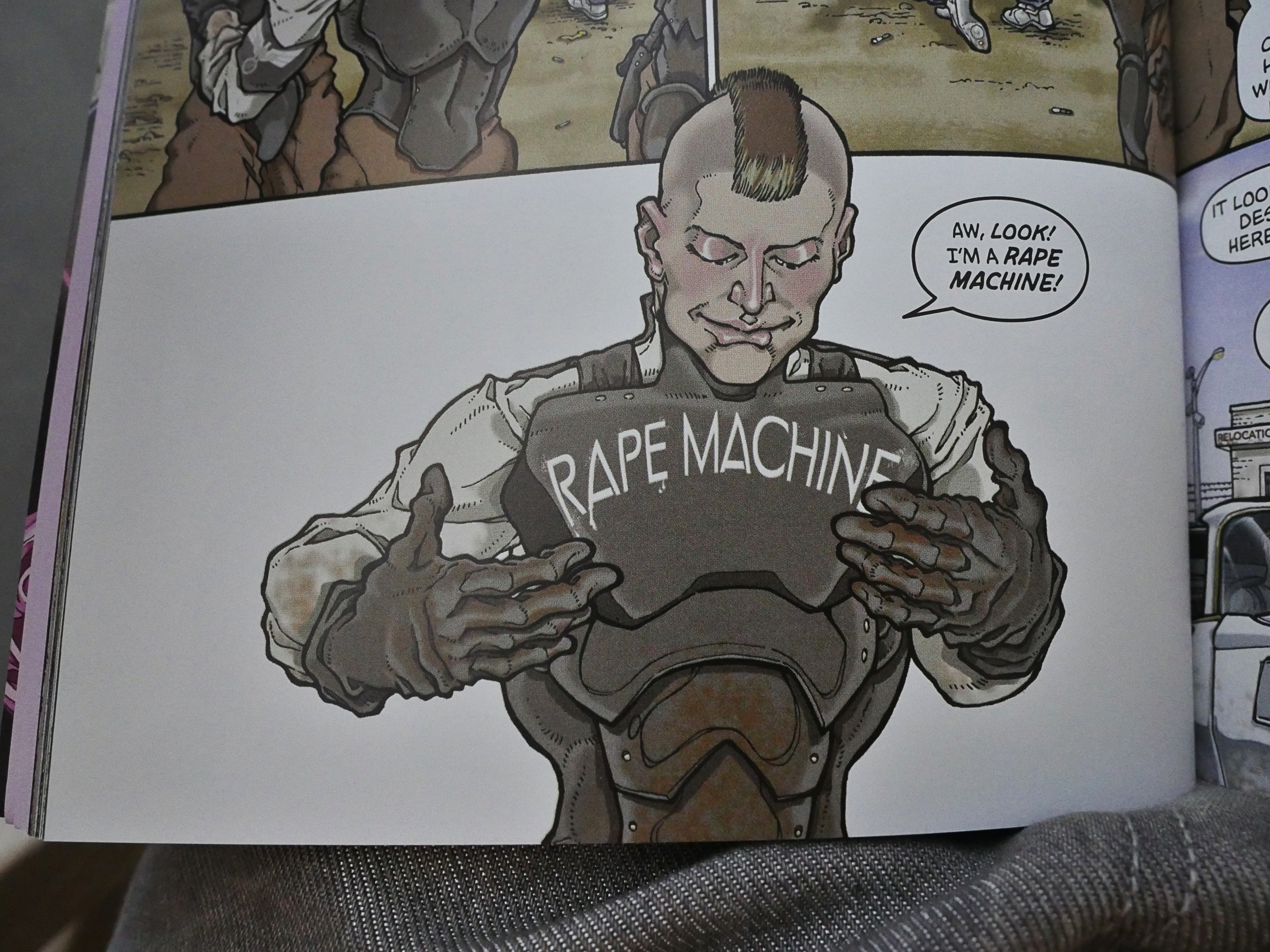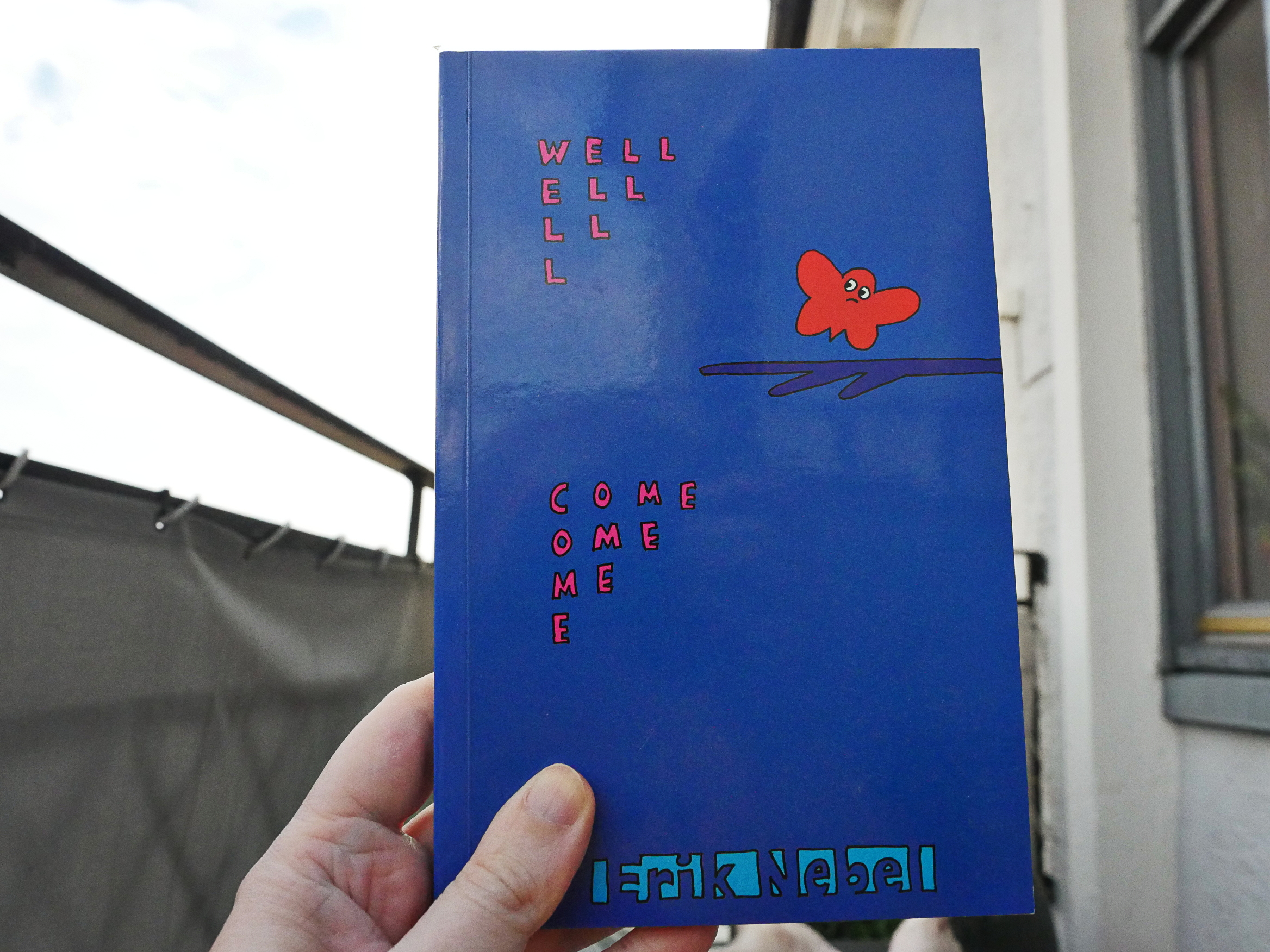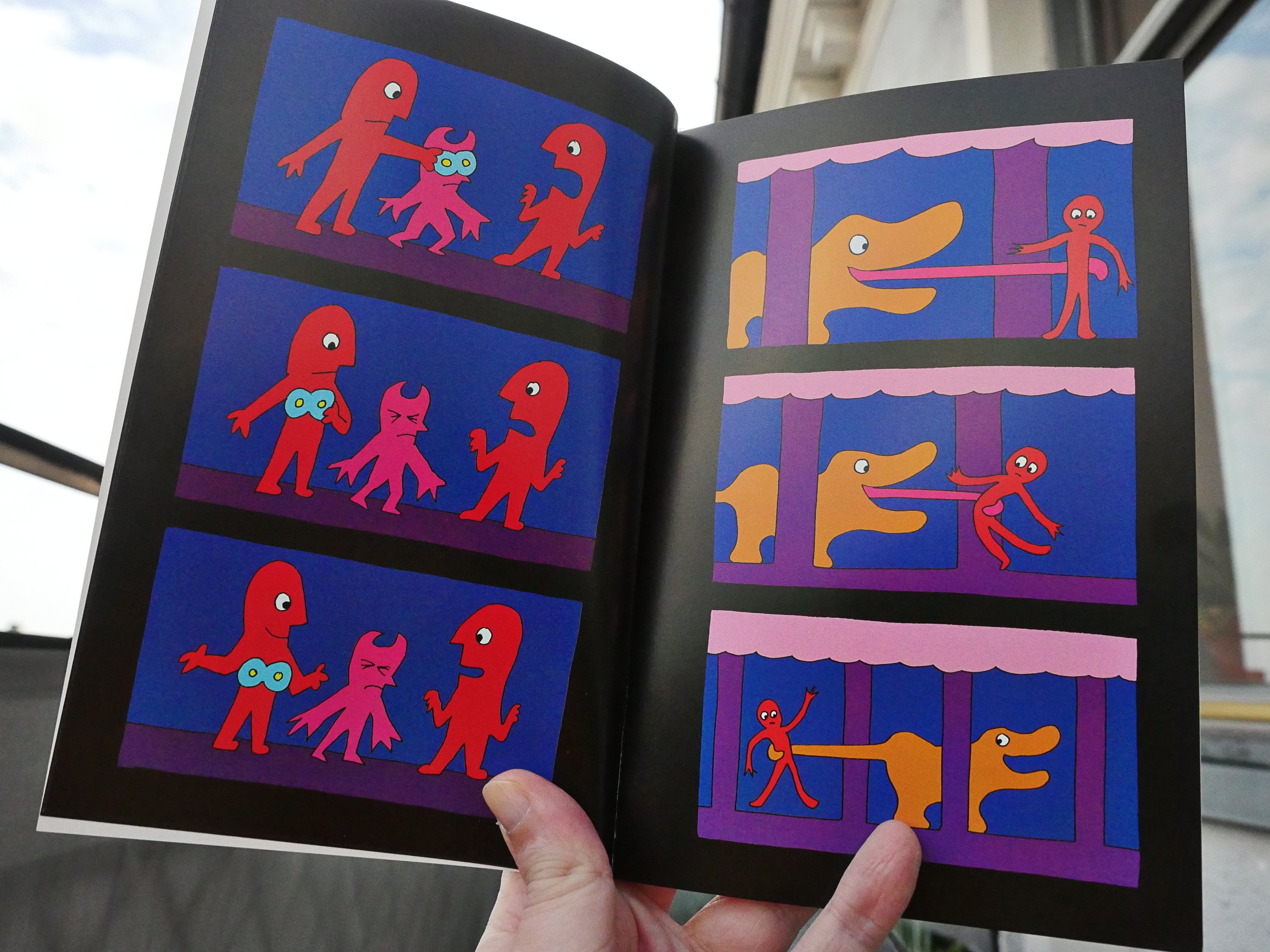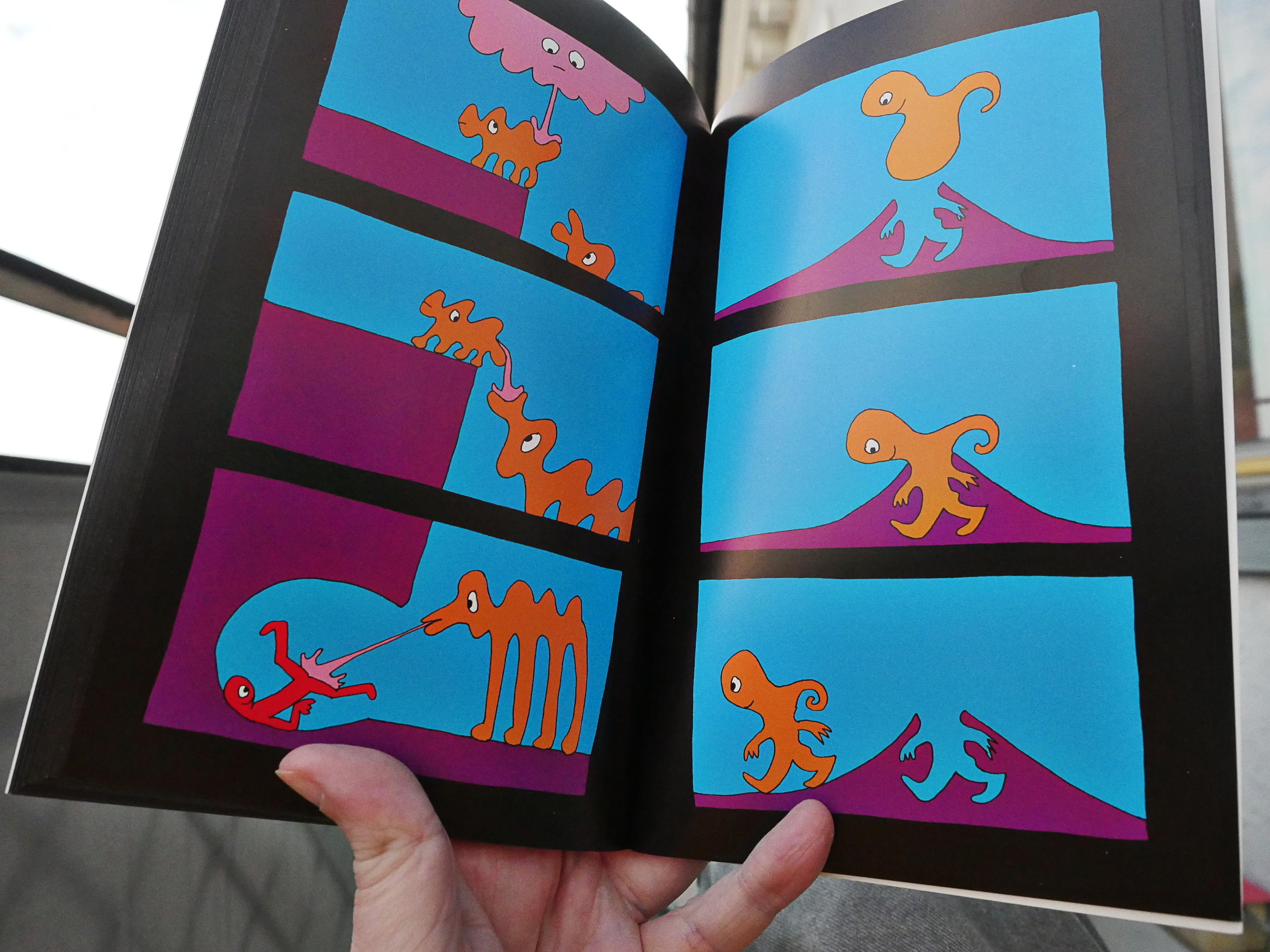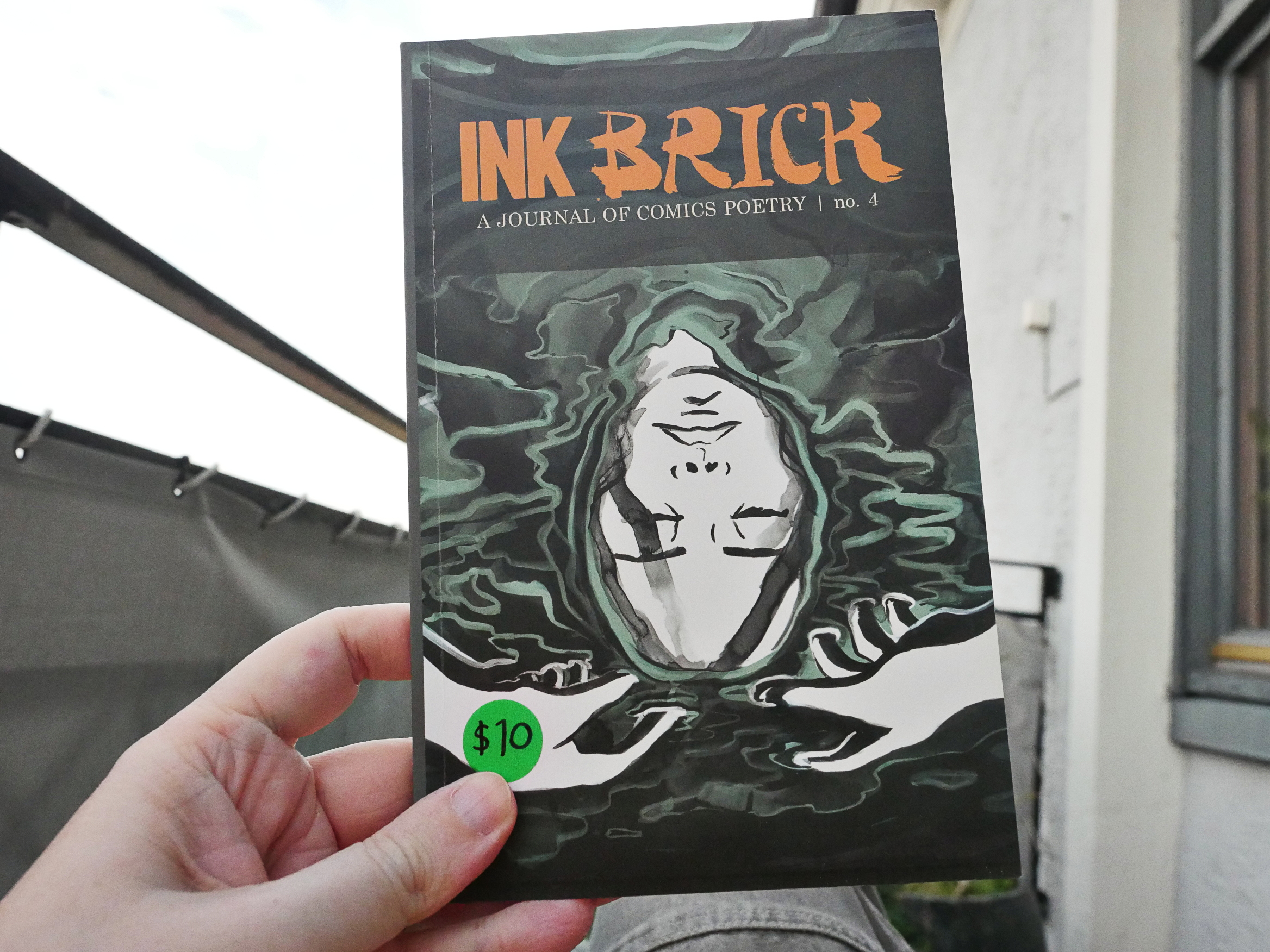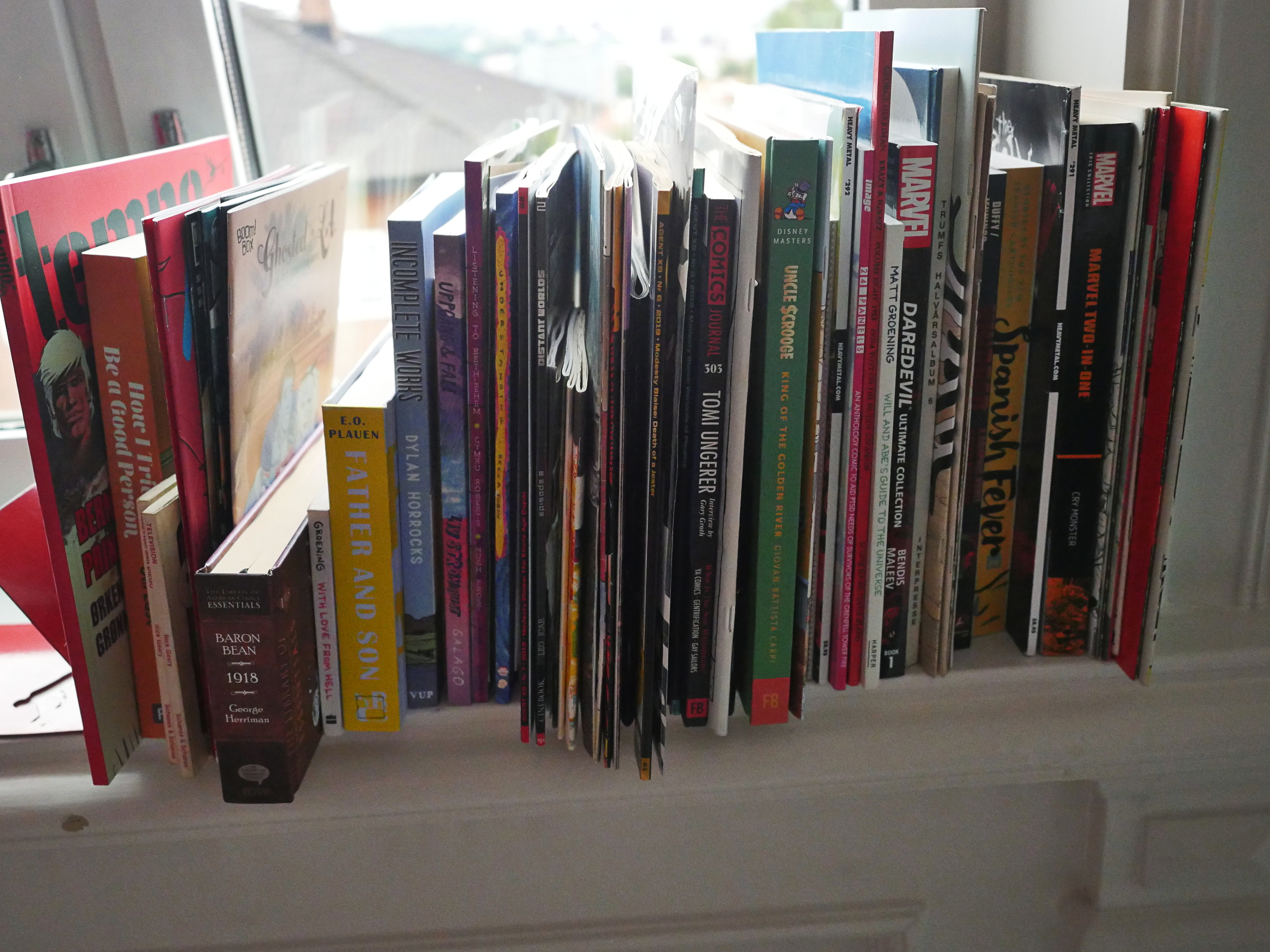
These holidays keep getting in the way of me making some progress in my to-be-read shelf of comics. (I mean window sill.) That’s the point of this blog series: To finally get to Comics Queue Zero. So, as usual, just comics, no reviews, because nobody has time for that.
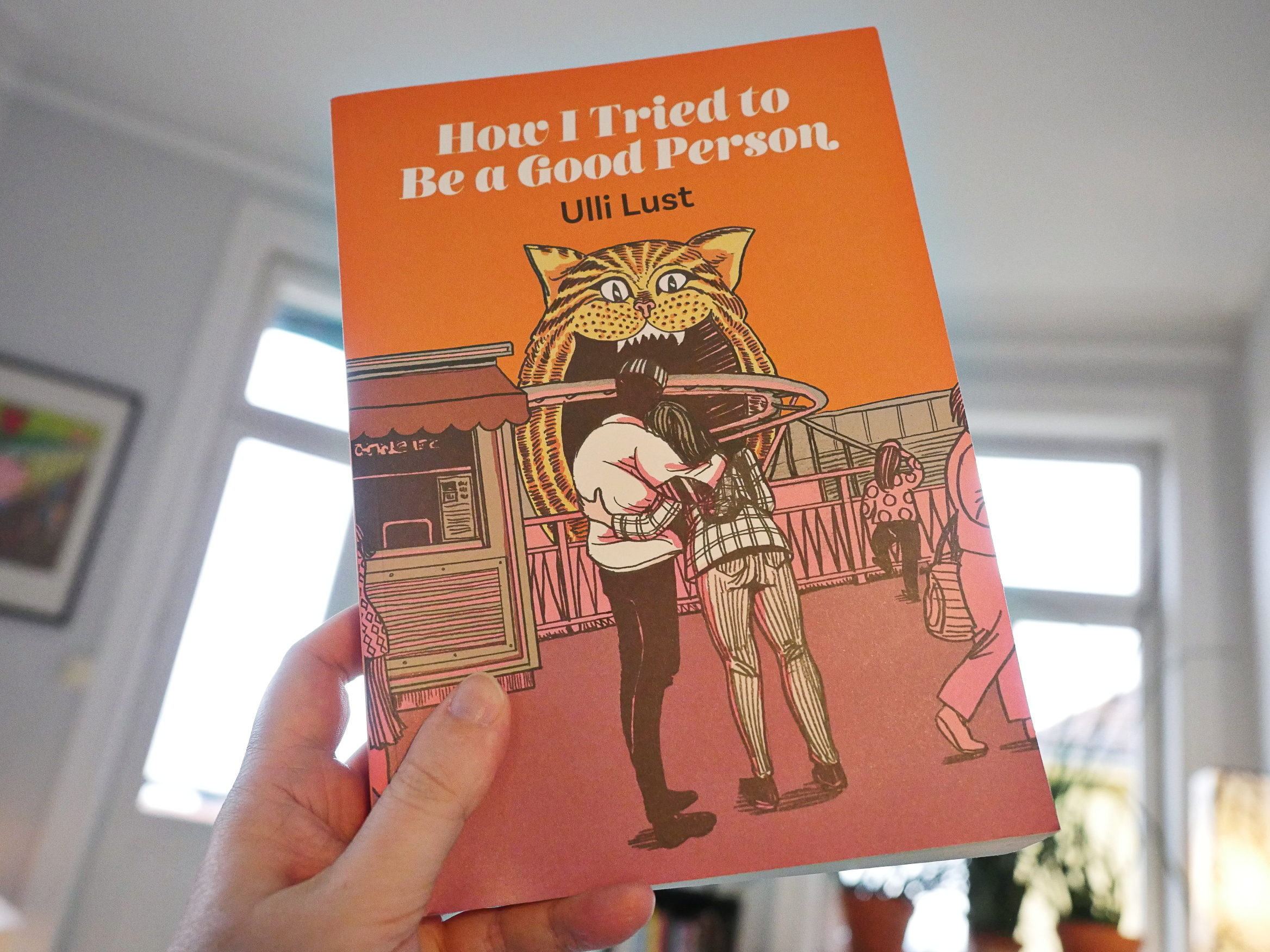
How I Tried to Be a Good Person by Ulli Lust (Fantagraphics)
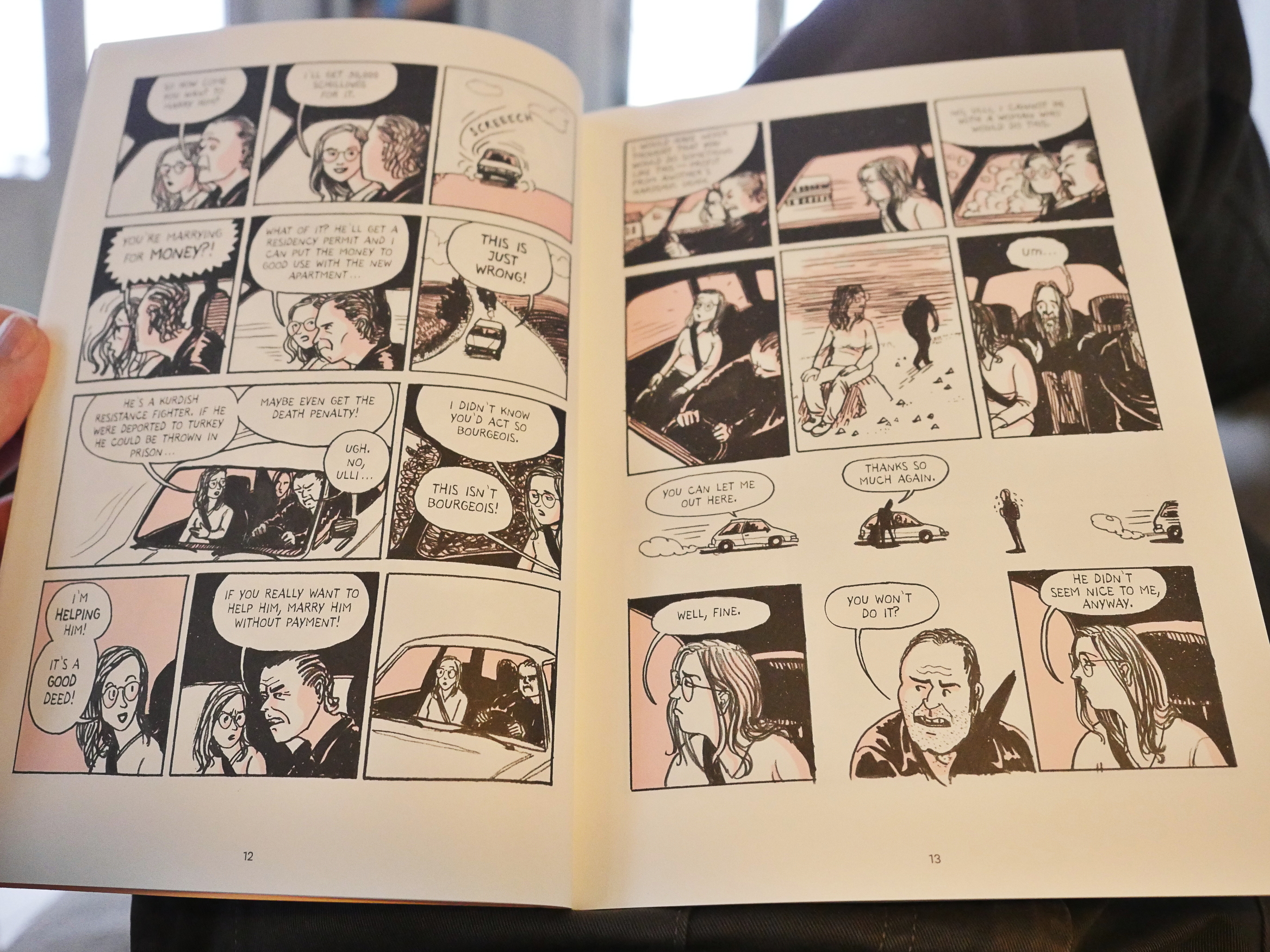
Lust’s previous book was utterly thrilling, so here’s a sequel of sorts. Once again, we’re back in the 80s, but Lust is a few years older than when we saw her last.
As in the previous book, her performative honesty is brutal. On the other hand, that could totally be a little sequence from any underground comix of the 70s and wouldn’t be a big deal there. How prudish we’ve gotten.
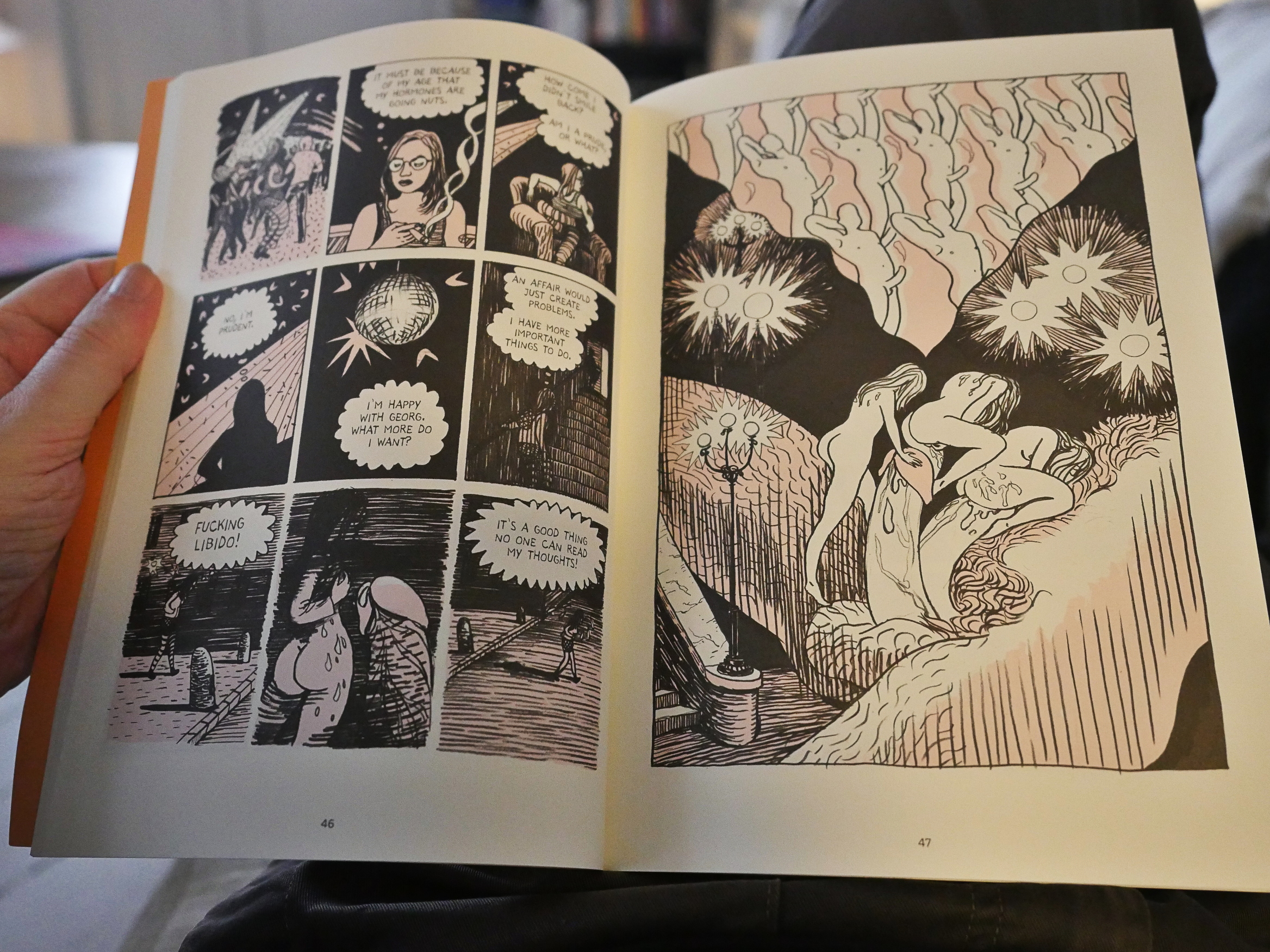
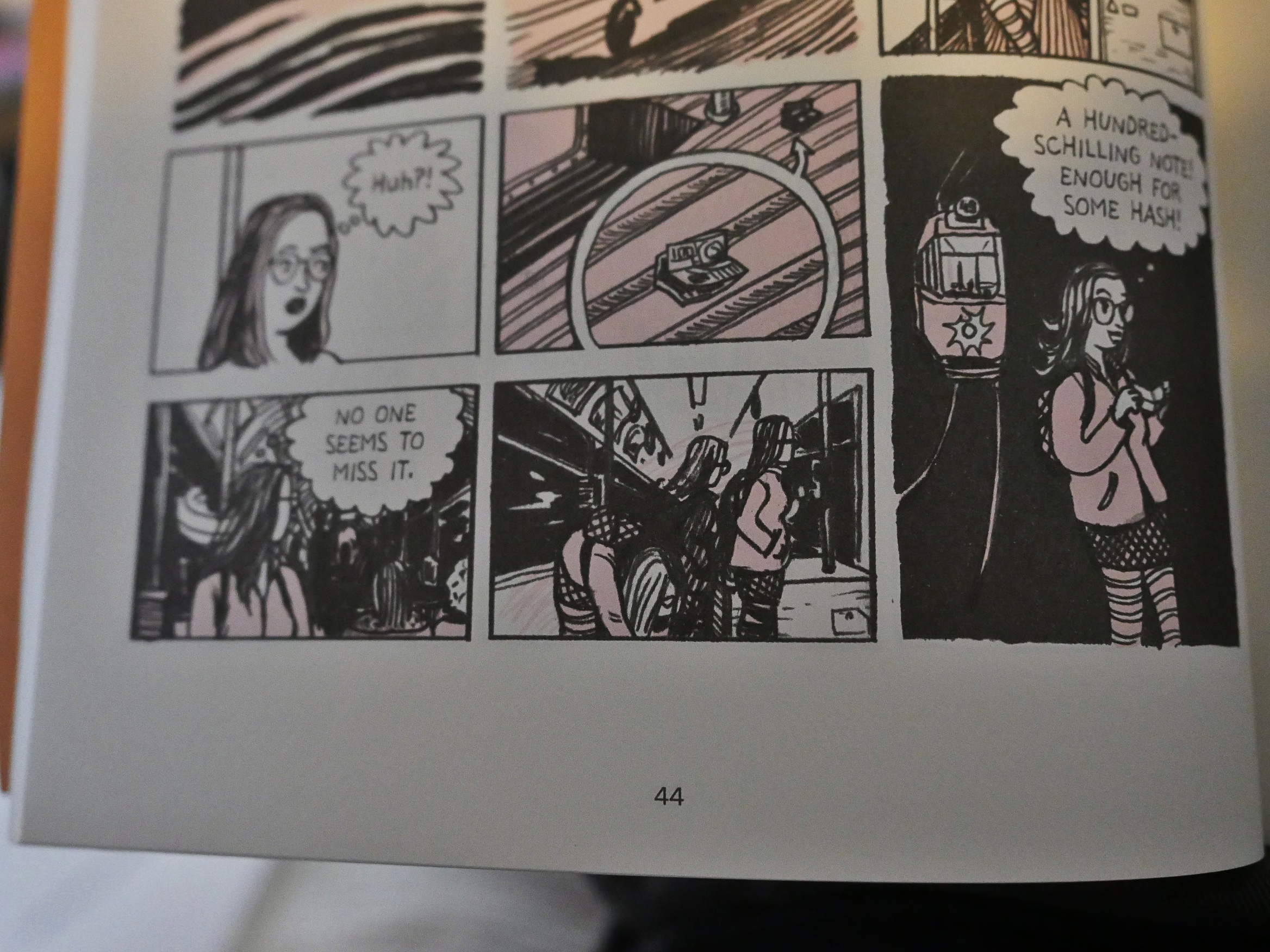
And speaking of prudish: This is a very horny book. These sequences are great!
And… I’d say about the first half of the book is fantastic? But then things become repetitive. I don’t doubt Lust felt she had to be hones and tell the story thoroughly, but it’s the kind of thing where you’re sitting there grinding your teeth and muttering “leave that asshole already” but there’s still 150 pages to go before that’s going to happen.
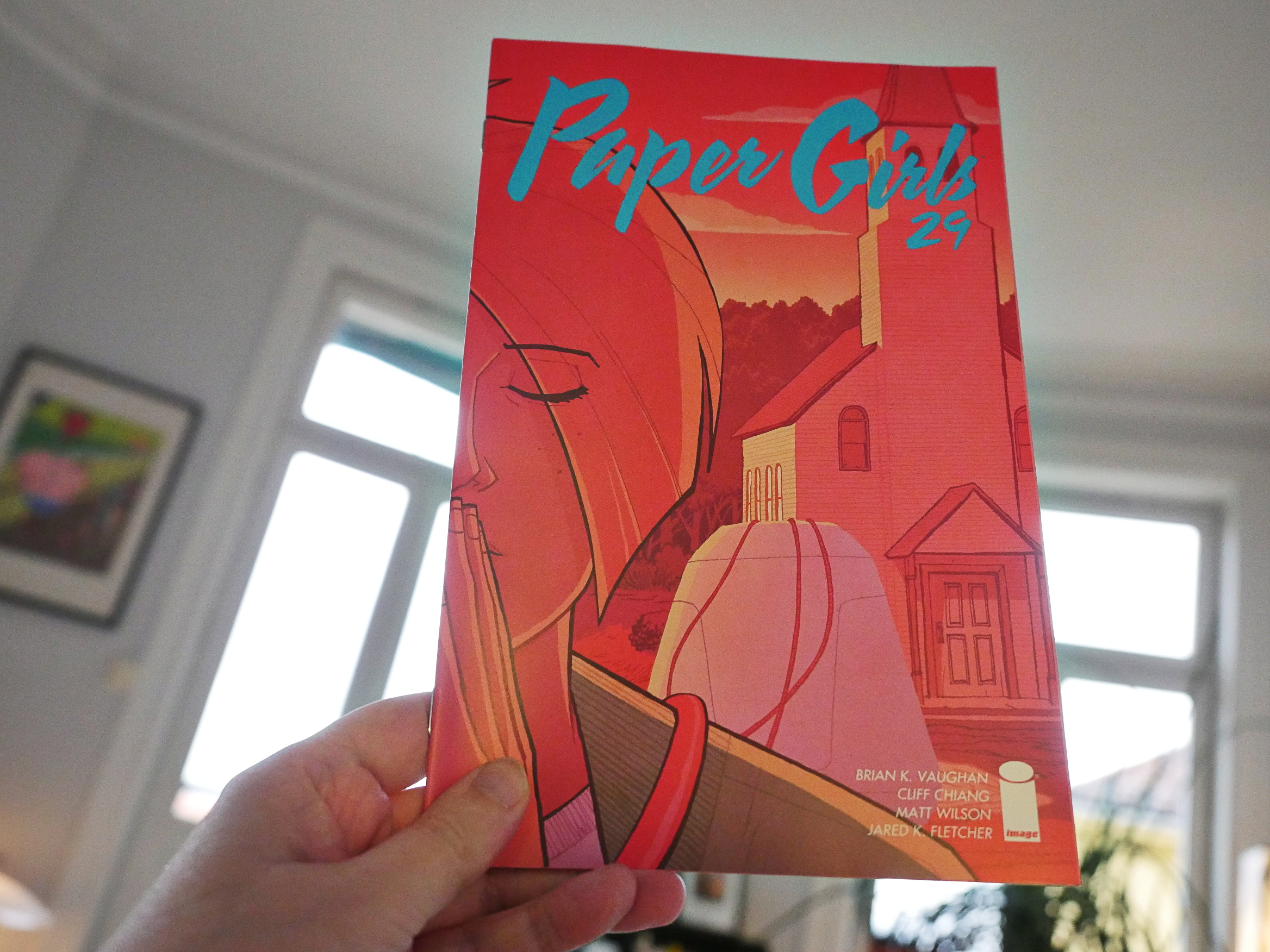
Paper Girls #29 by Brian K. Vaughan and Cliff Chiang (Image)
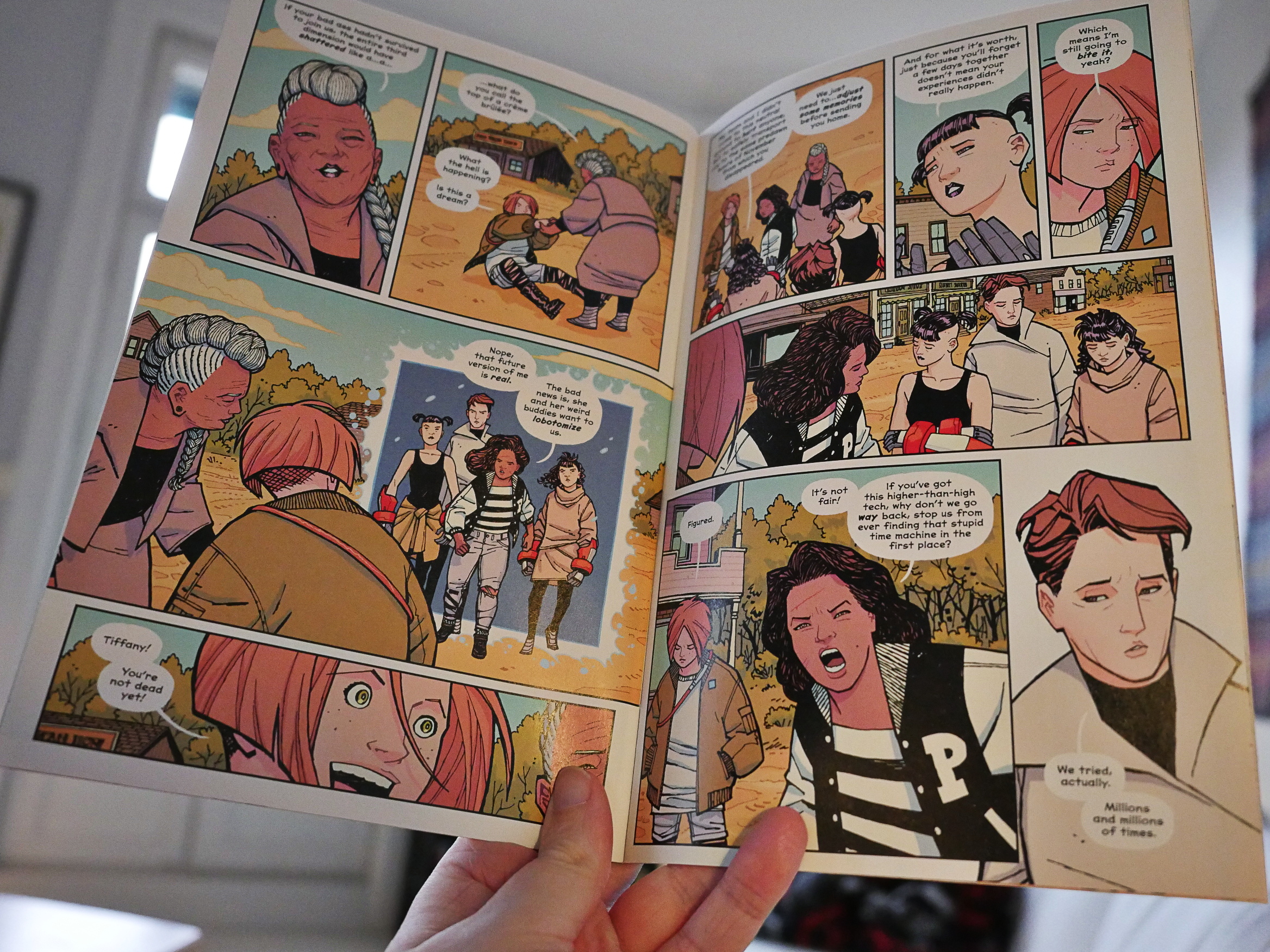
Everybody loves Saga, and so did I. So I picked up Paper Girls, and I’m still reading it… even though it’s kinda boring. And everybody shouts all the time! It’s intensely boring.
I guess what’s good about Saga is Fiona Staples.
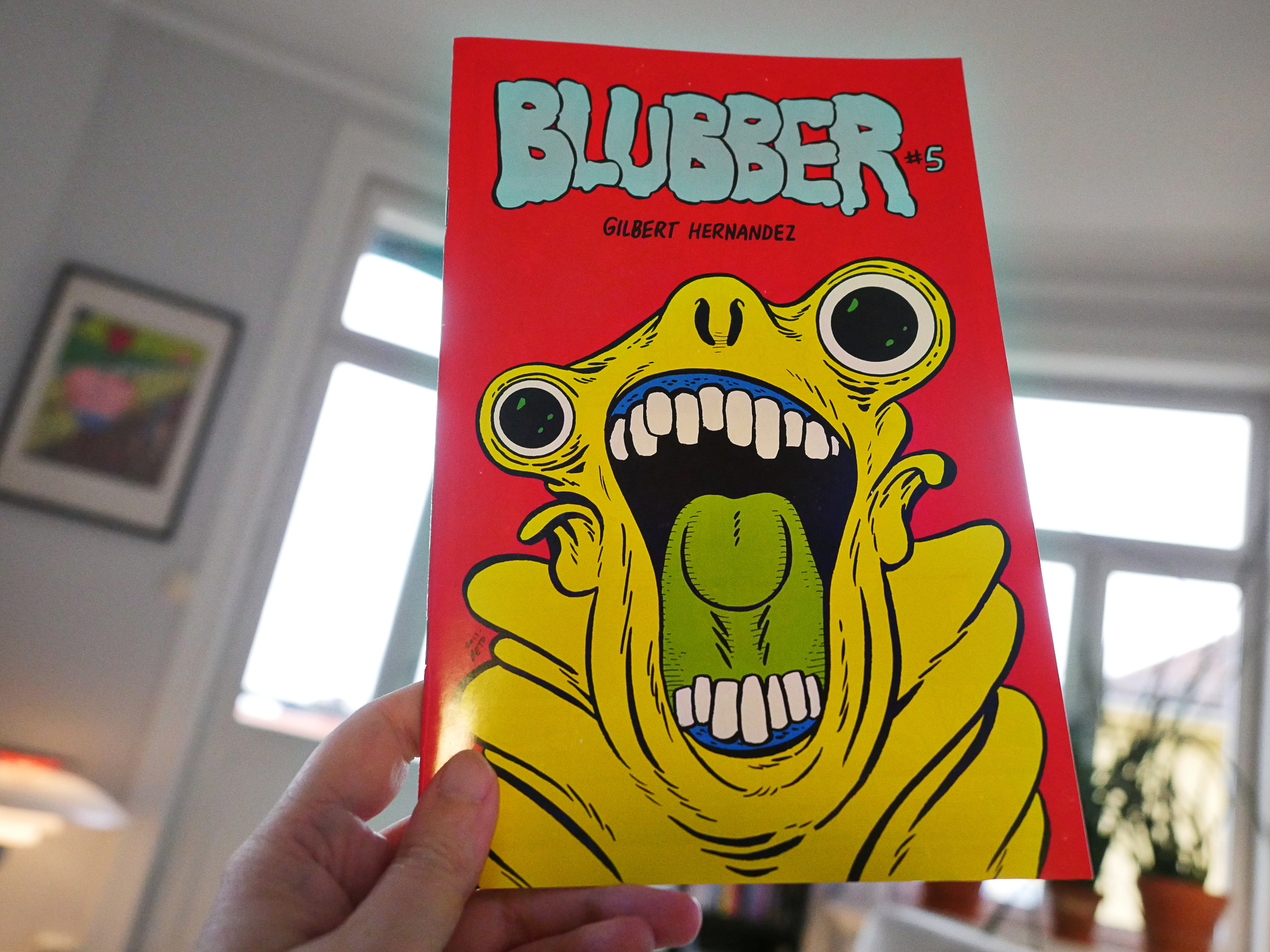
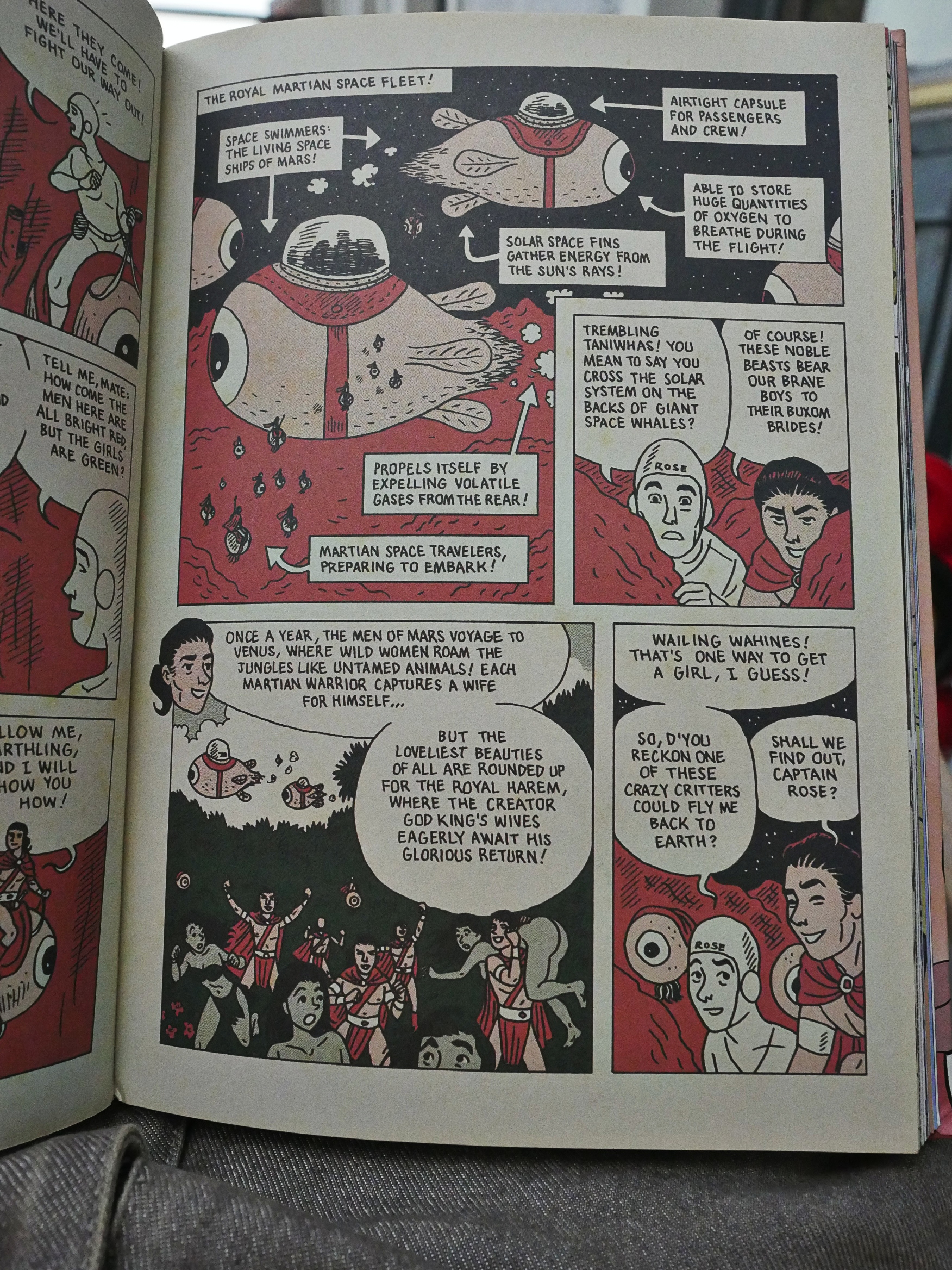
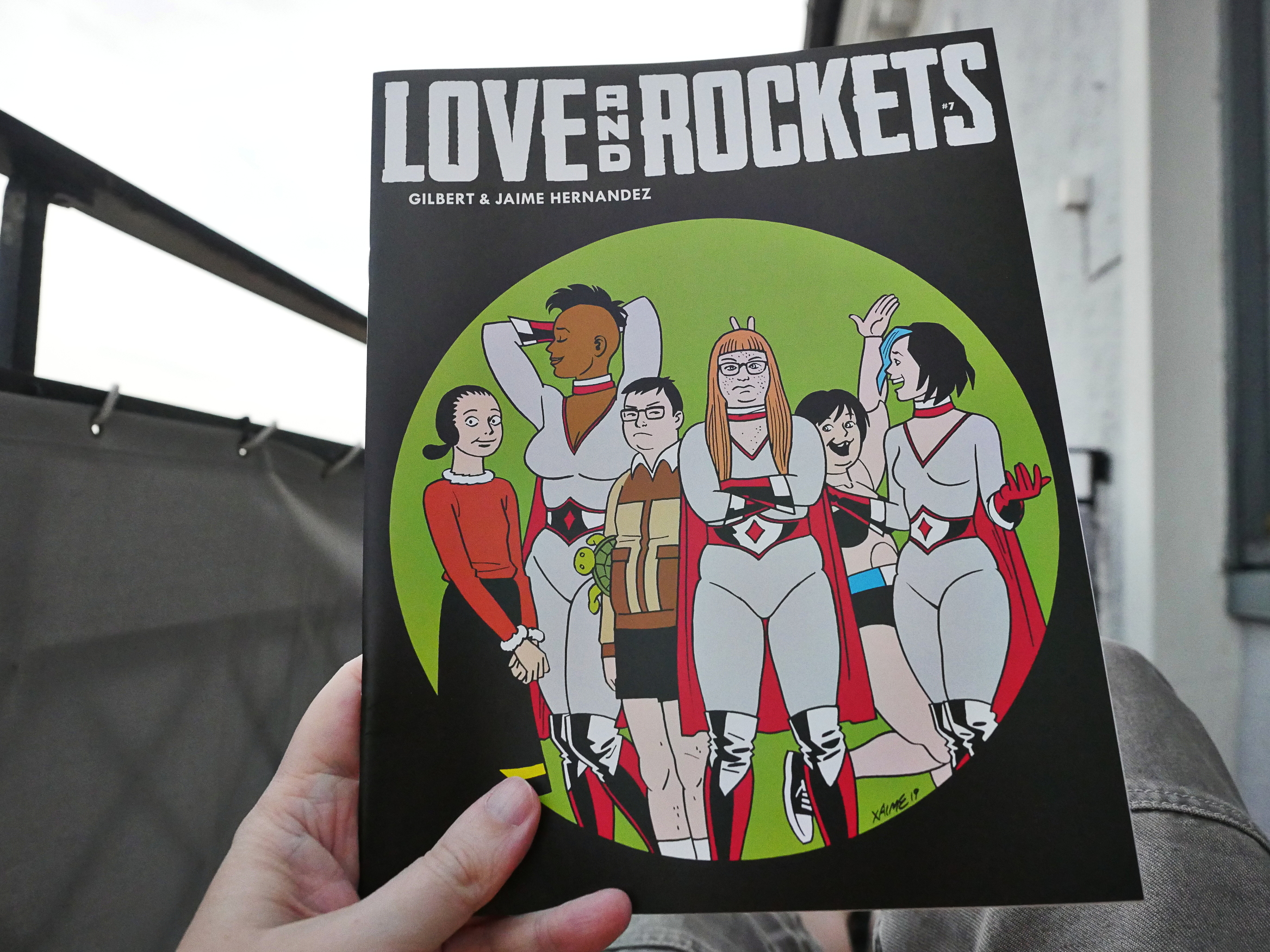
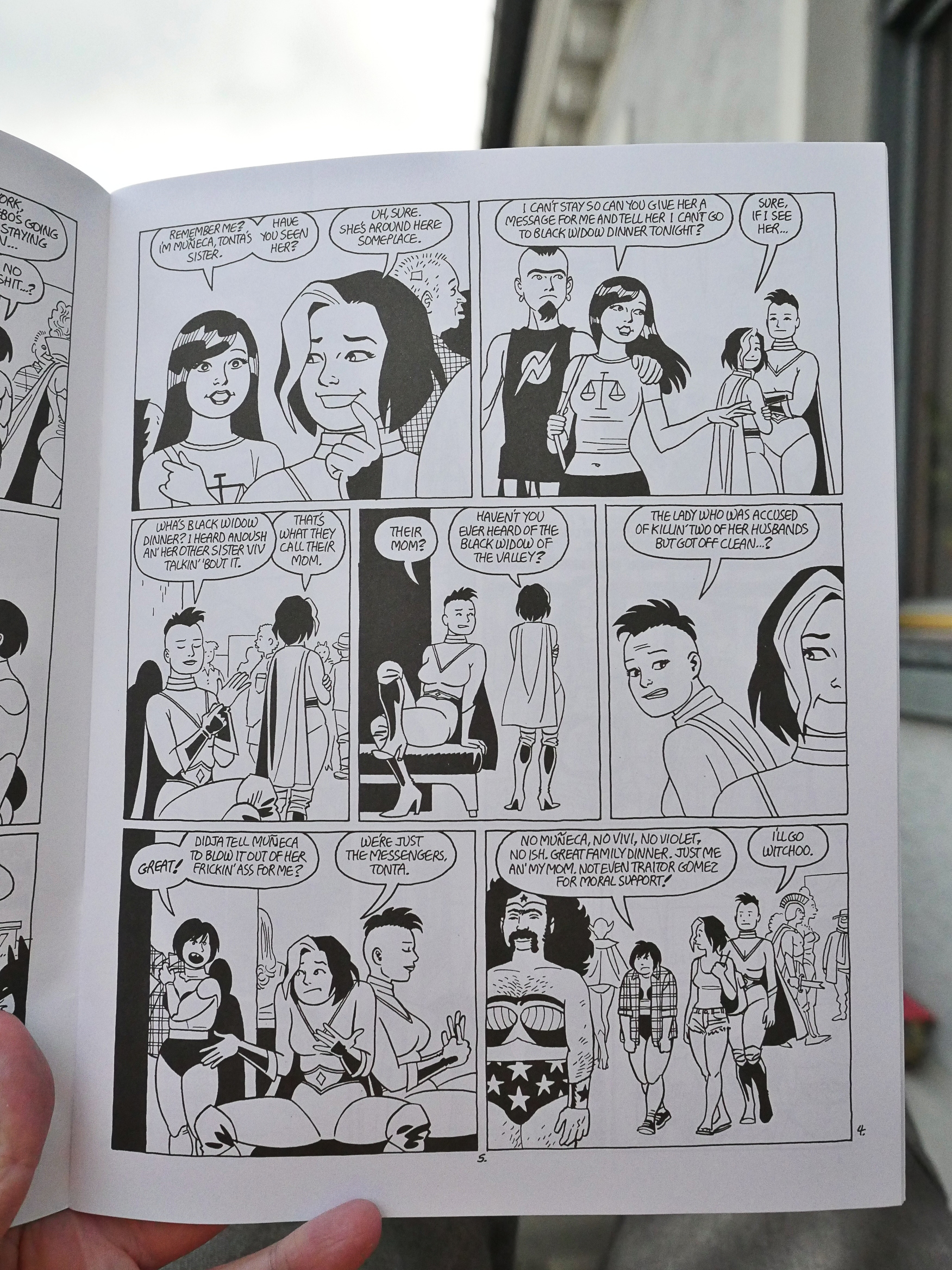
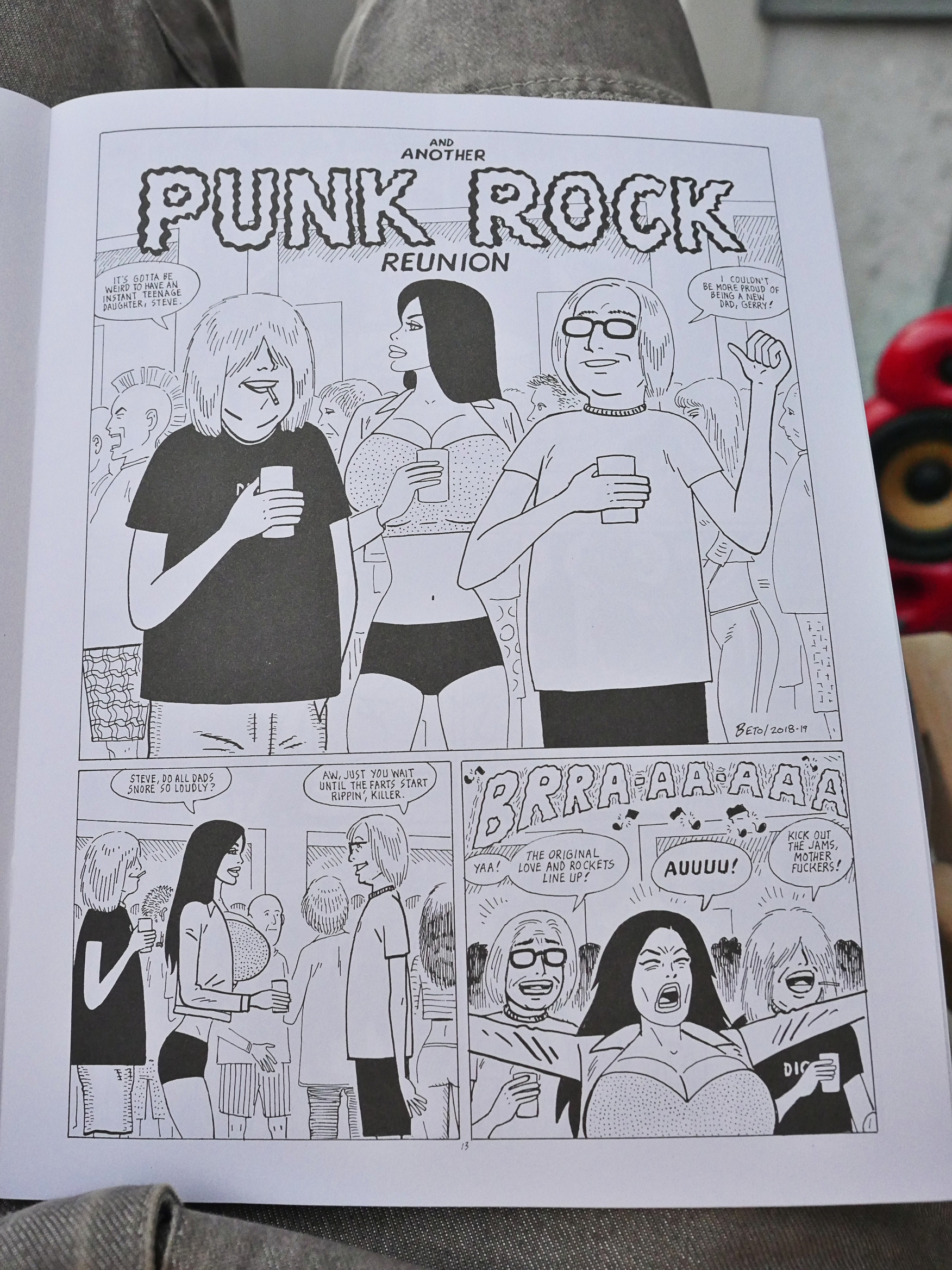
Blubber #5 by Gilbert Hernandez (Fantagraphics)
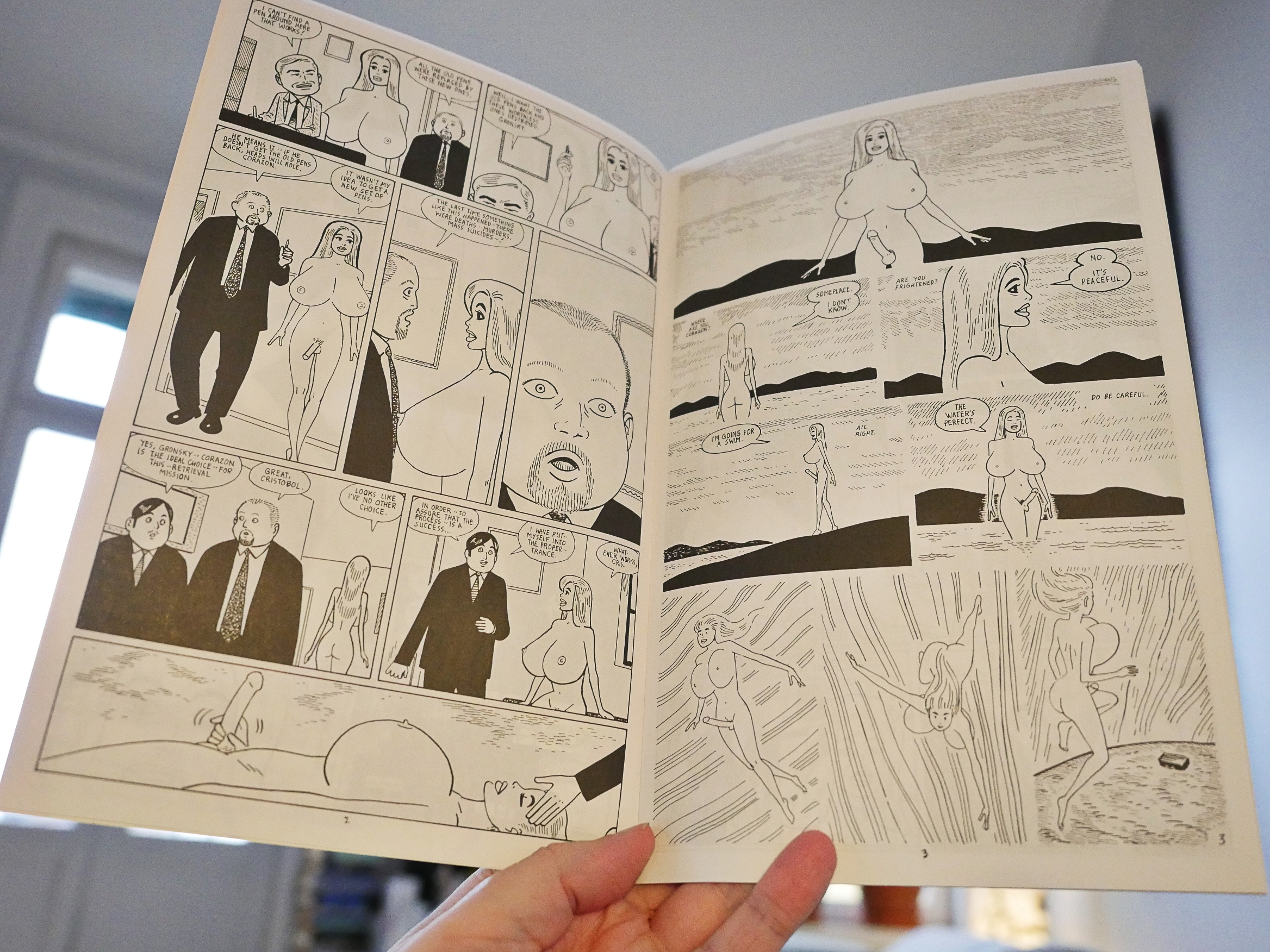
The previous issues of Blubber have all been batshit crazy. Now it’s more straight-up associative logic.
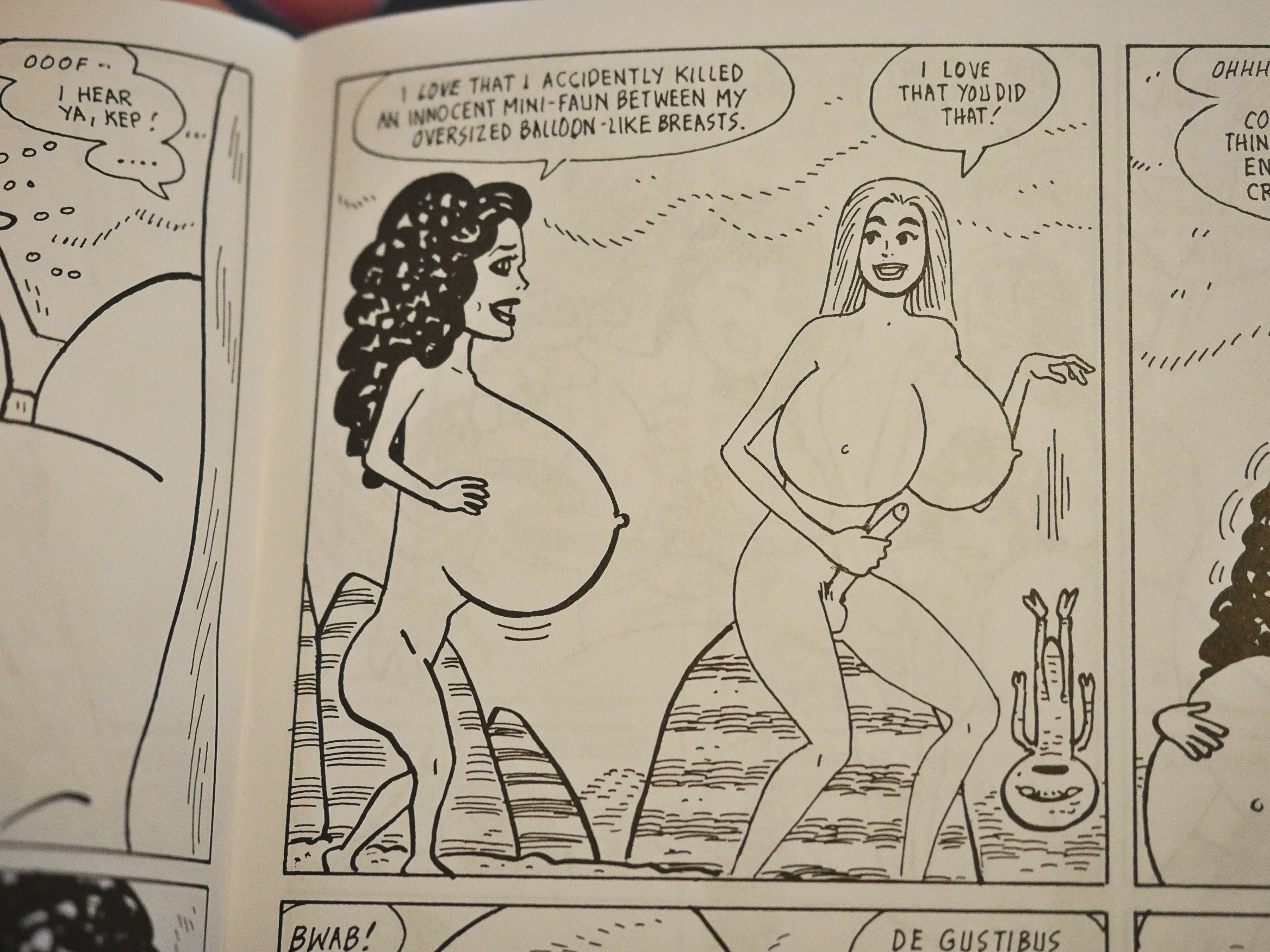
I mean, things are still batshit crazy, but it’s more connected to Hernandez’ more mainstream work now, I think?
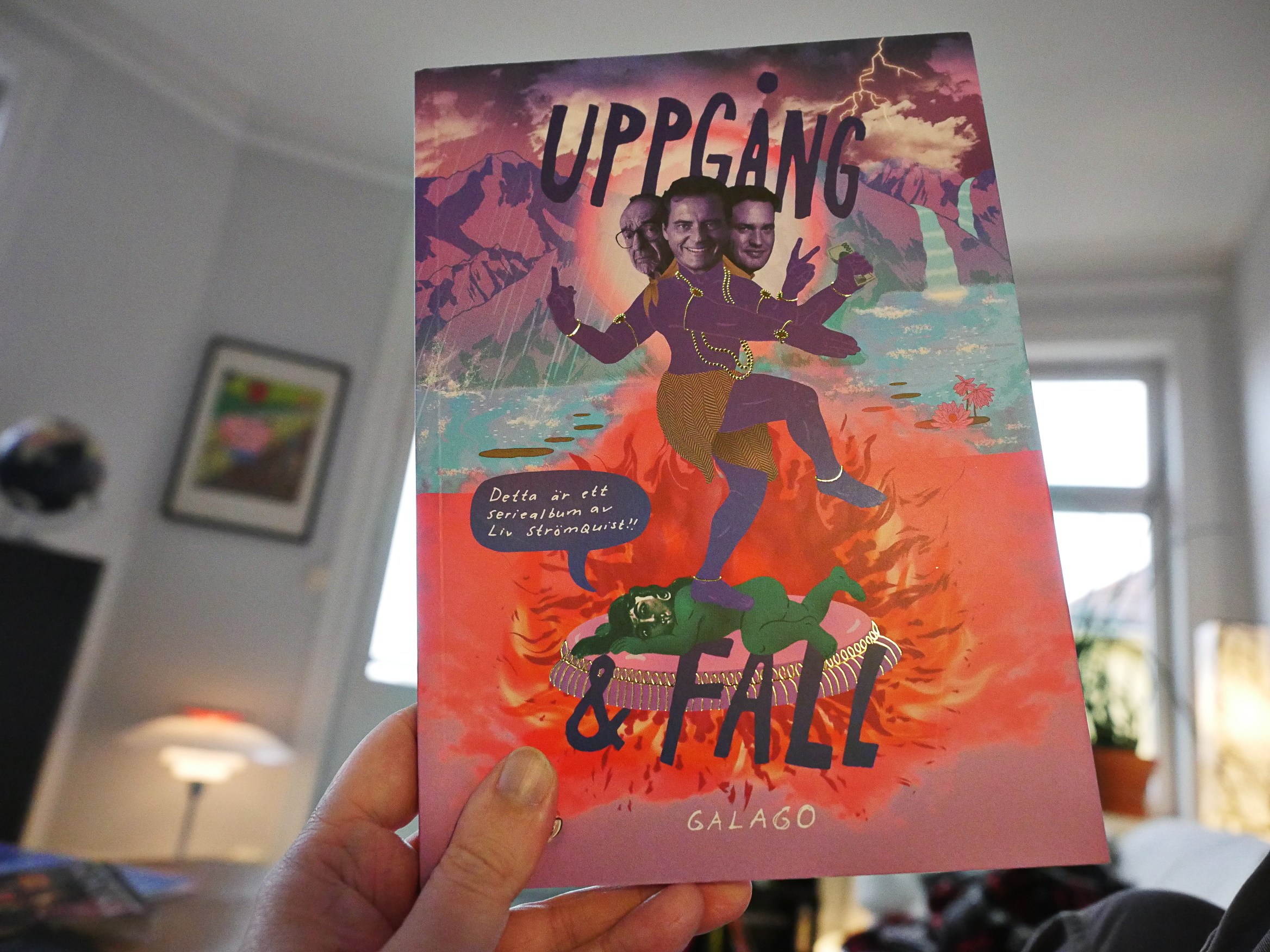
Uppgång & fall by Liv Strömquist (Galago)
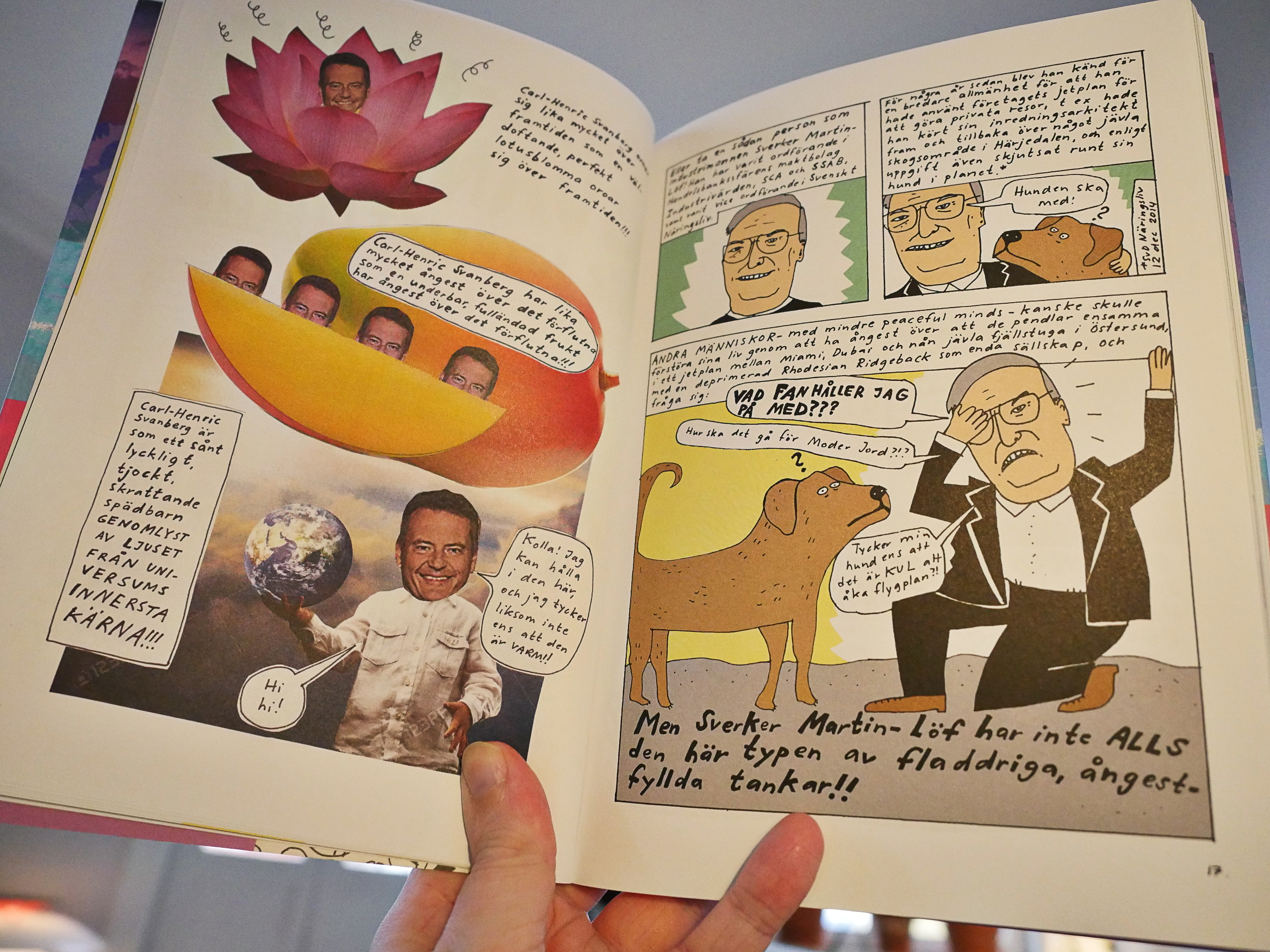
This is a collection of essays on various subjects; mainly politics. Strömquist’s artwork is very basic, but it gets the work done, and she’s funny and insightful.
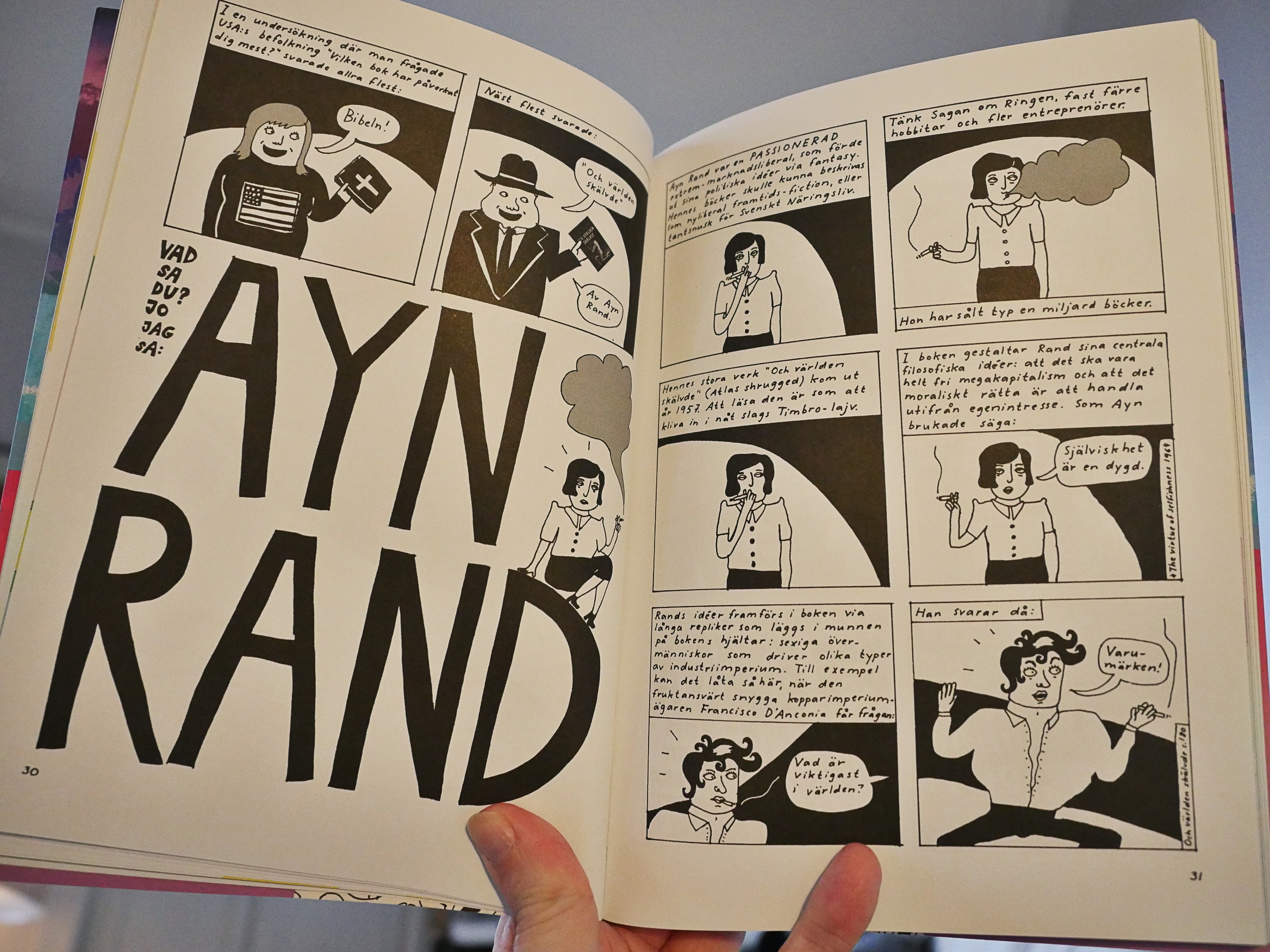
I mean, that’s a perfect Ayn Rand (in the book’s best-illustrated piece). The summary of the “plot” in Atlas Shrugged is hilarious.
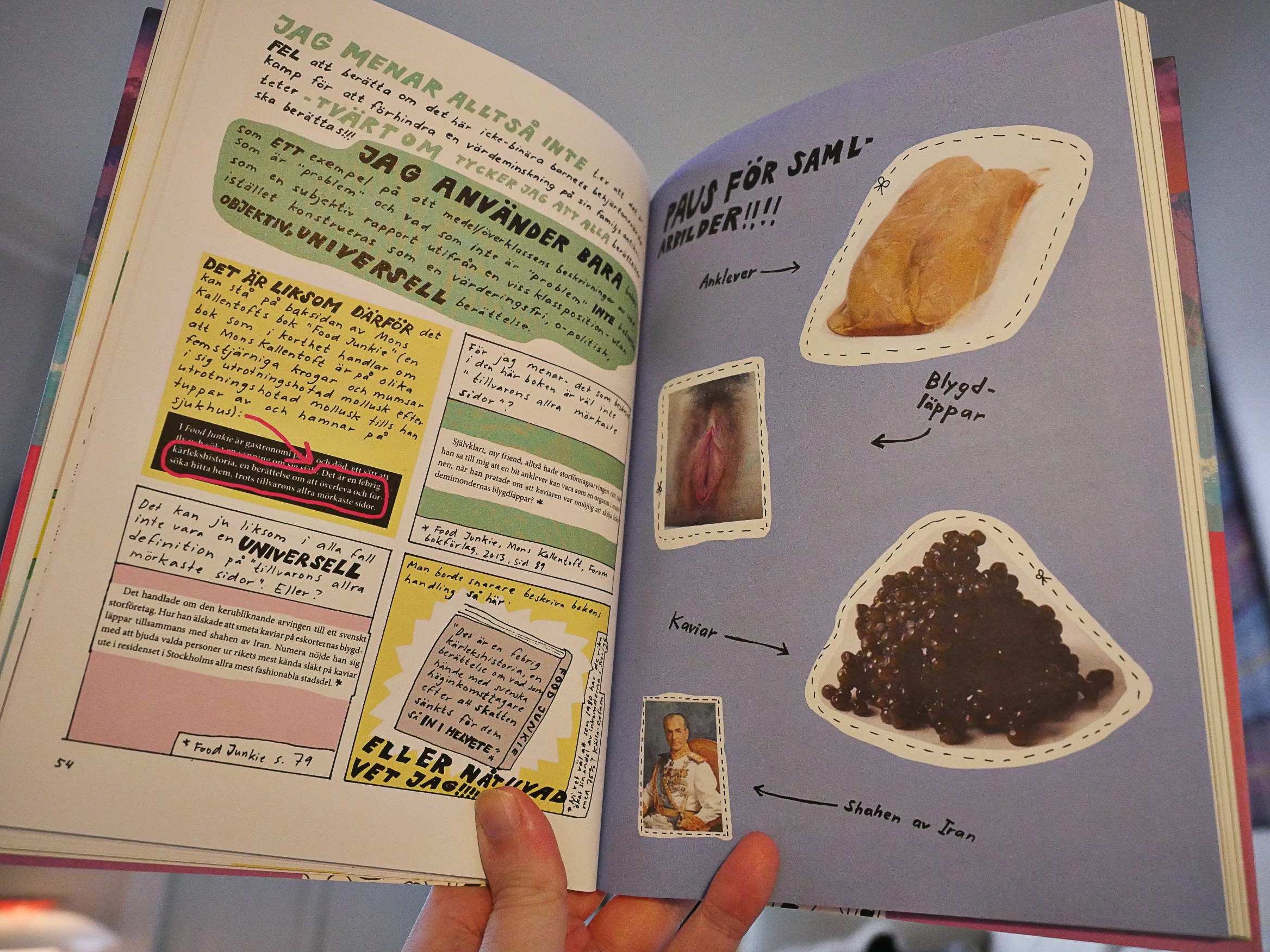
But it’s mostly text (arranged in panels) together with illustrations.
The piece about current left-wing inefficiencies is thrilling reading, with lots of quotes from Wendy Brown and Nietzsche, of all people.
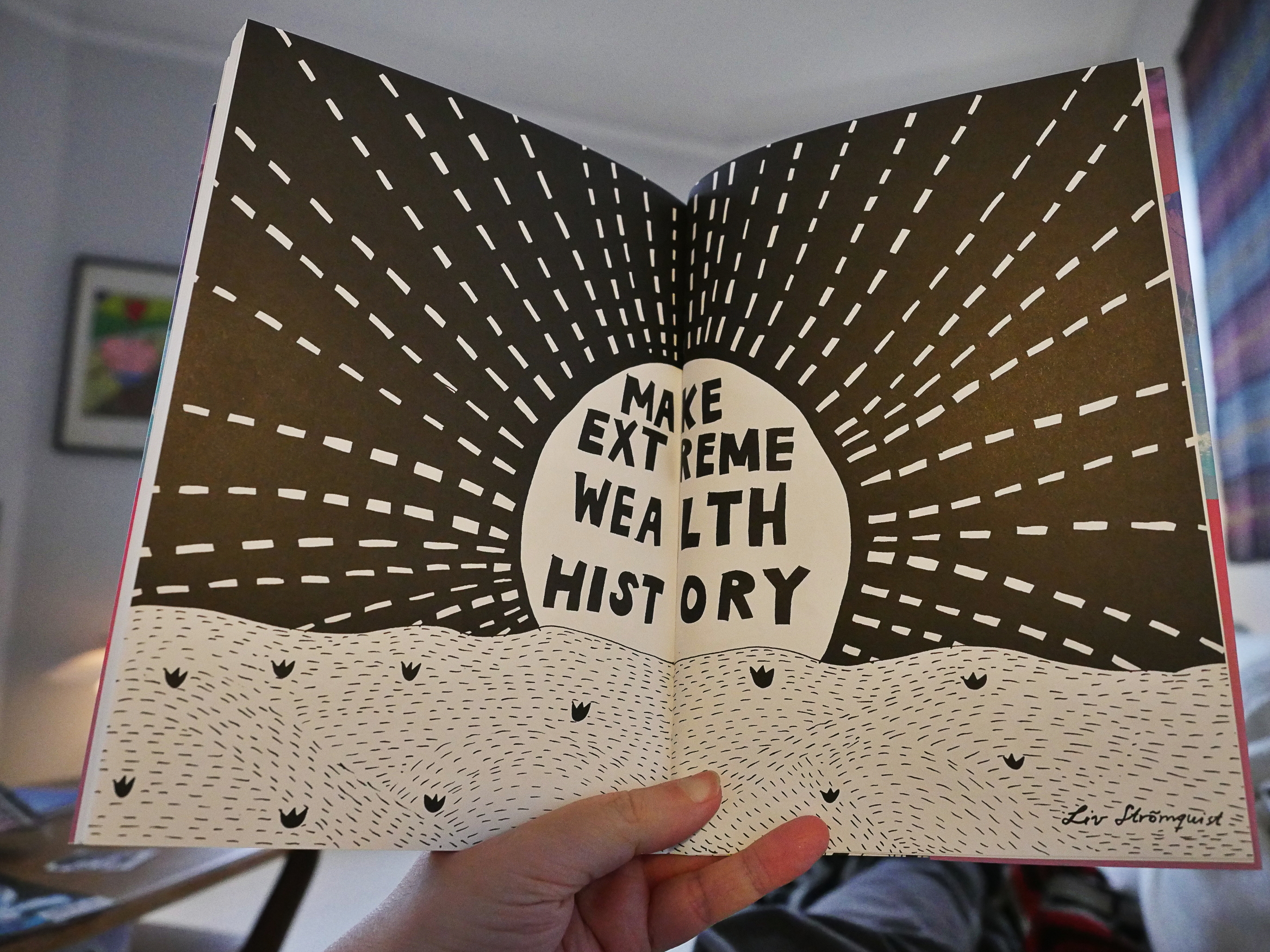
Highly recommended.
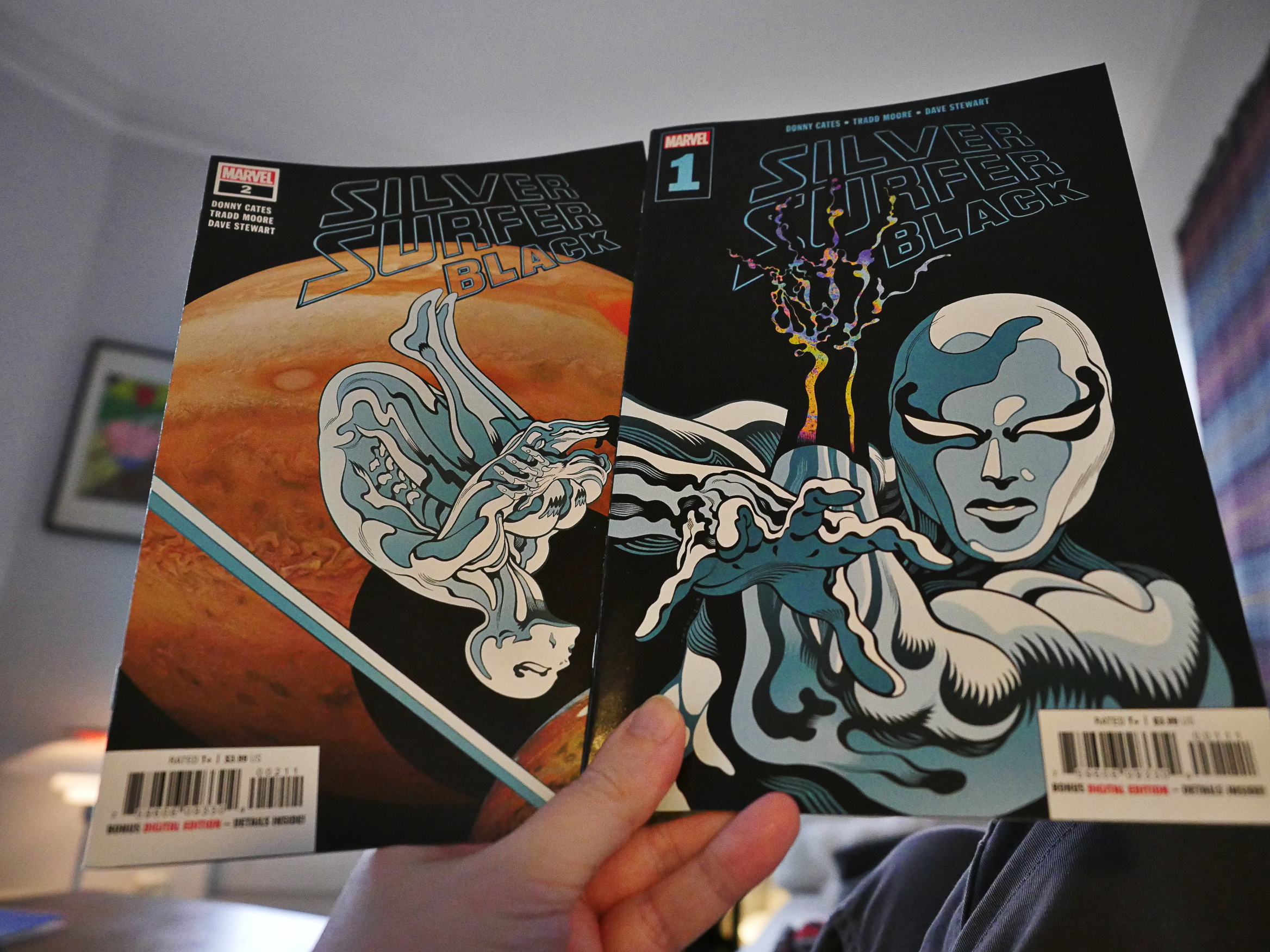
Silver Surfer Black #1-2 by Danny Cates and Tradd Moore (Marvel)
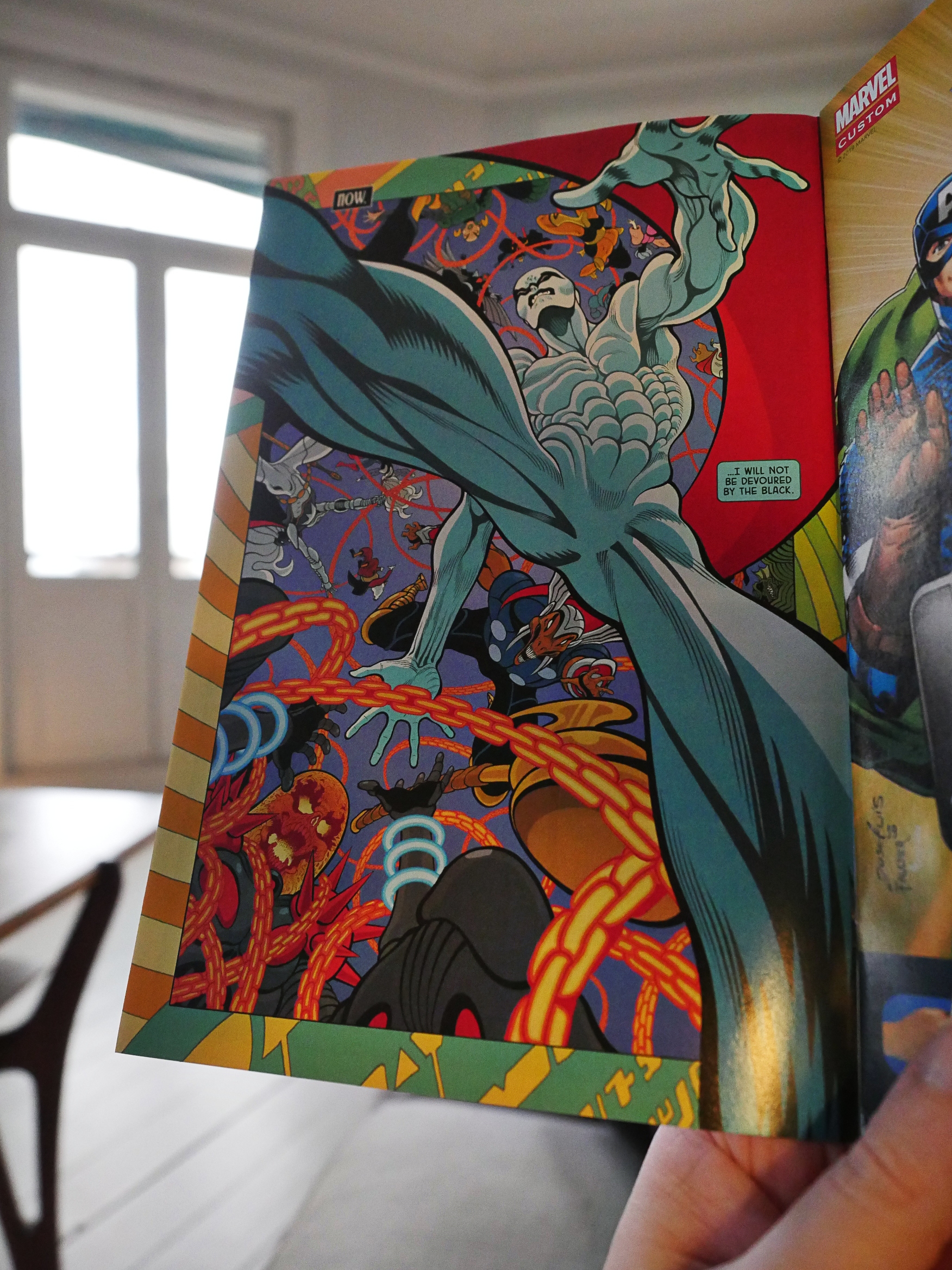
I read somewhere that this was supposed to be groovy and stuff, so I got it… and that’s pretty groovy?
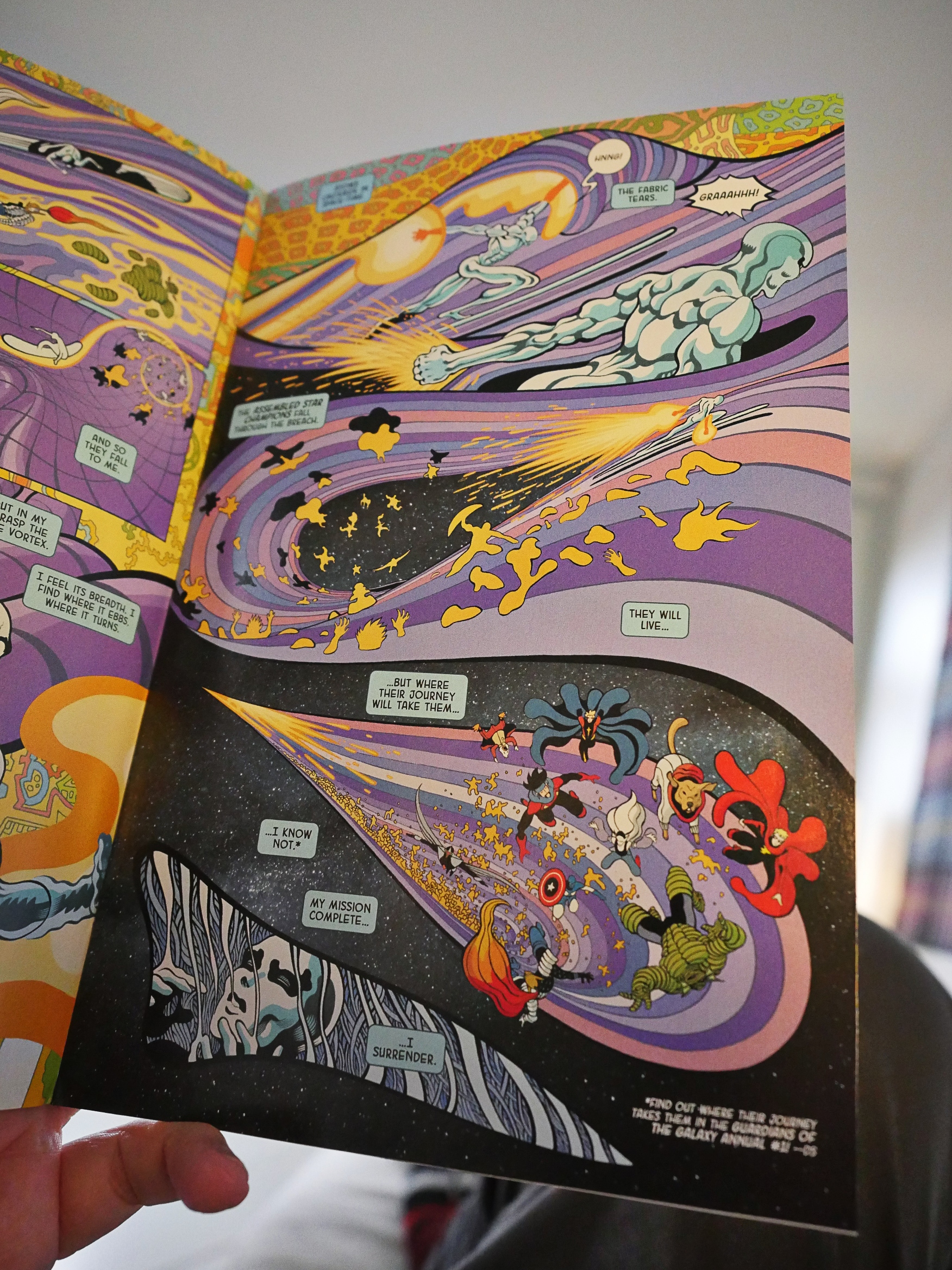
But then it turns out that this all spins out of some other comic book that I have no interest in. And the two issues here are basically one long fight scene.
I mean, the artwork’s rad, but it’s a bore.
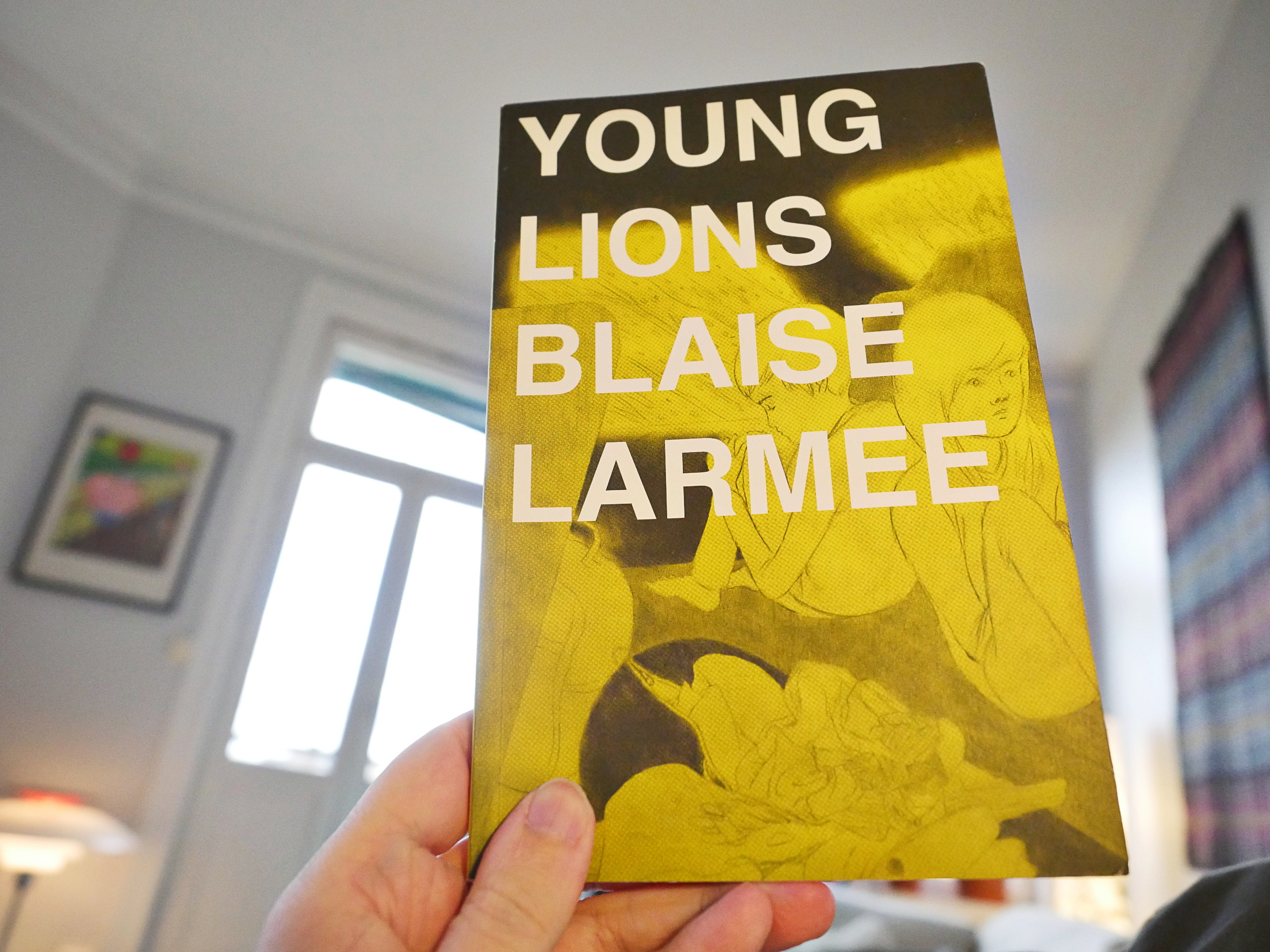
Young Lions by Blaise Larmee (self-published)
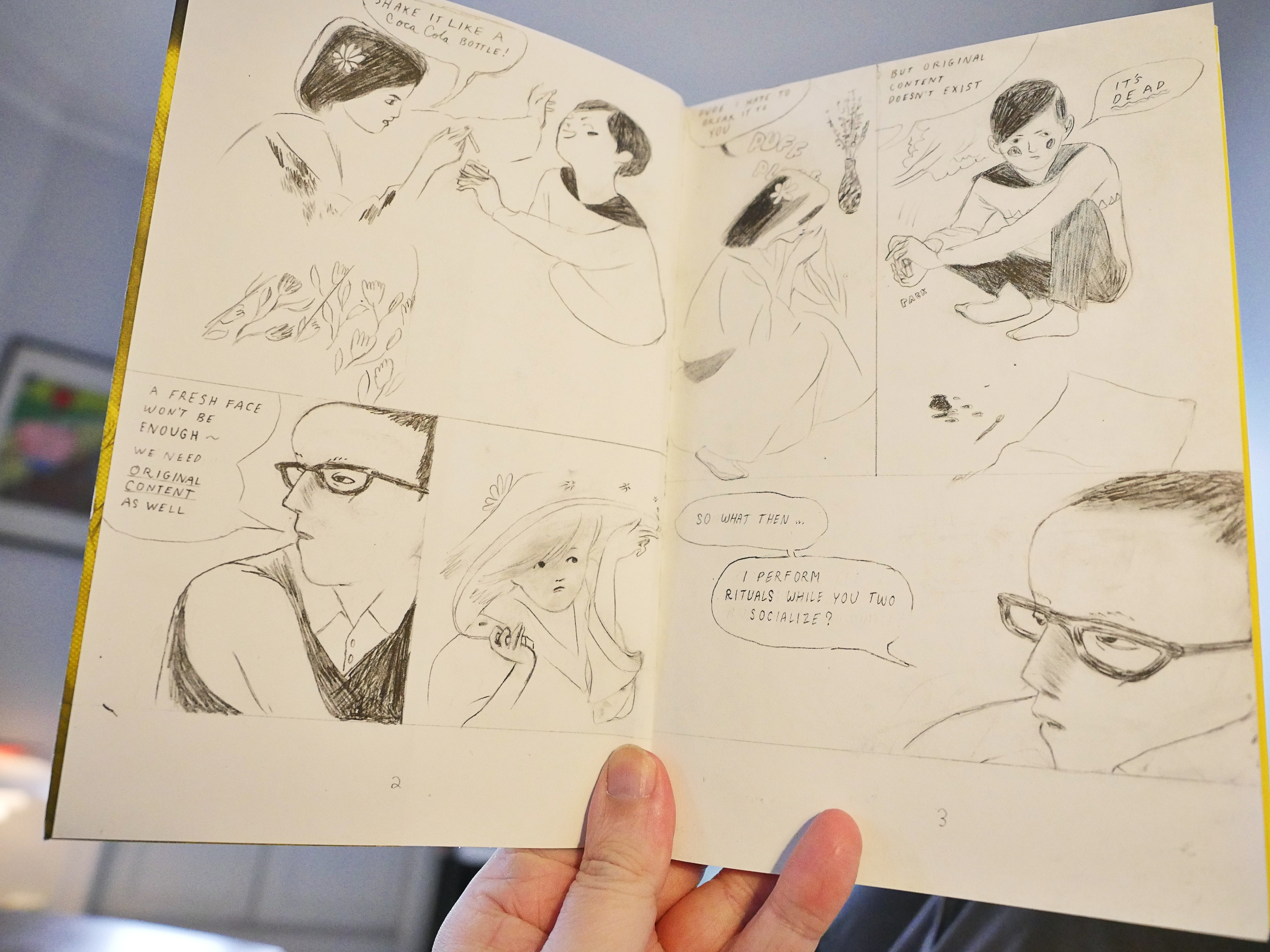
This is Larmee’s first book, and it’s quite different from his later ones. Instead of being all meta and tricky, it’s a somewhat straightforward narrative, drawn in the beautiful pencilled style.
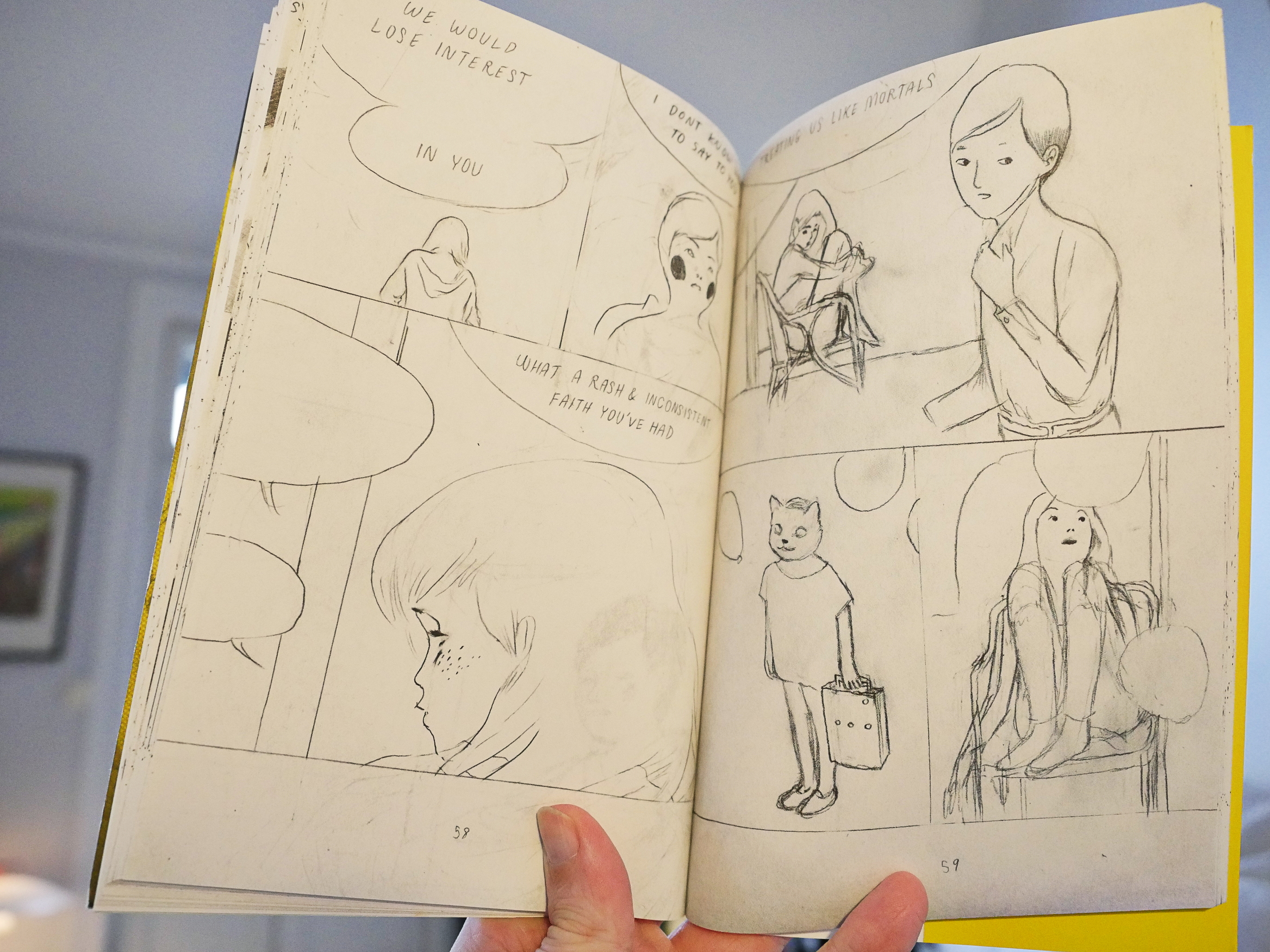
But it wouldn’t be Larmee without at least some formal exploration, you know.
The story’s kinda vague, but has an unnerving quiet to it.
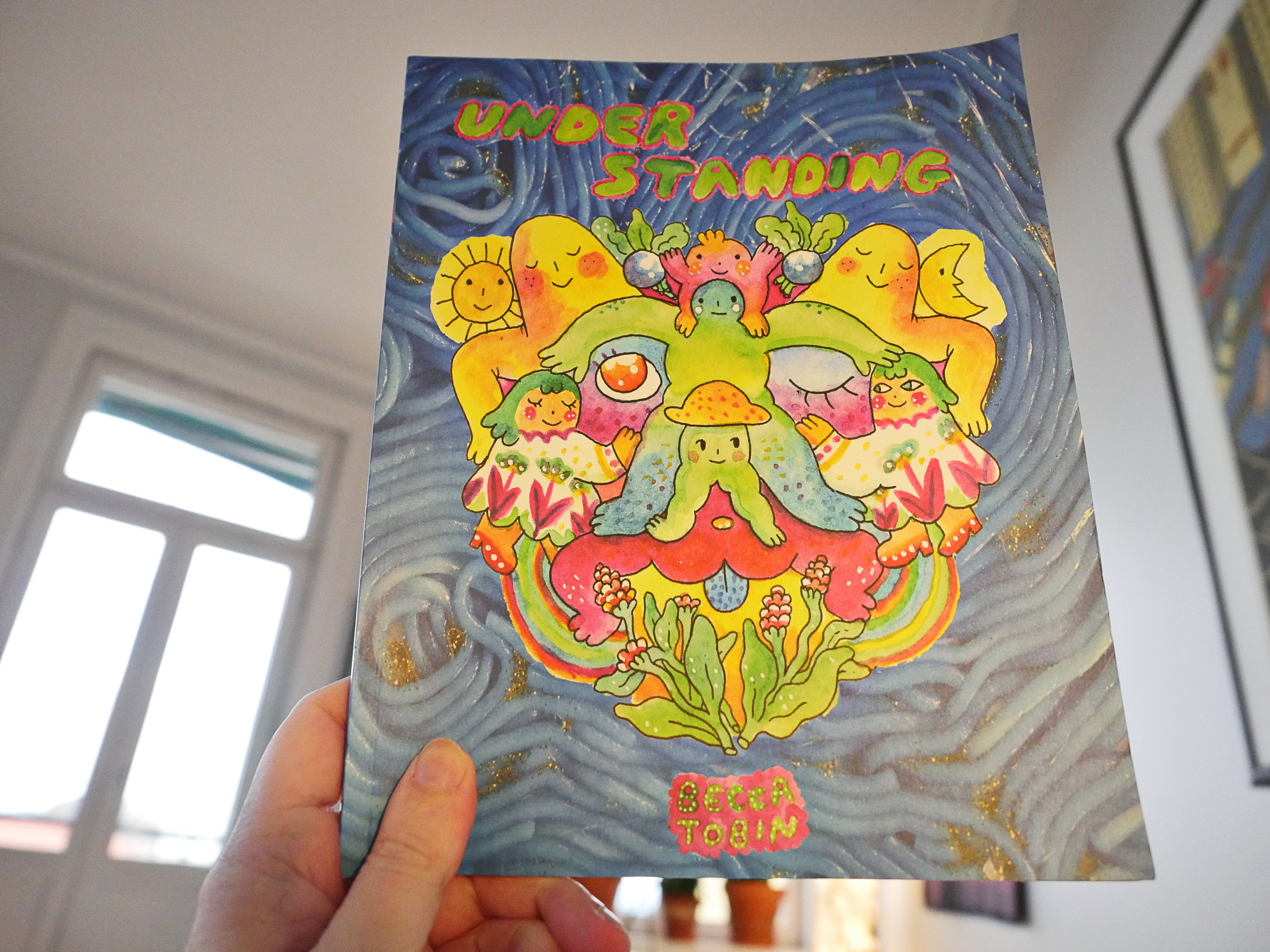
Understanding by Becca Tobin (Retrofit/Big Planet)
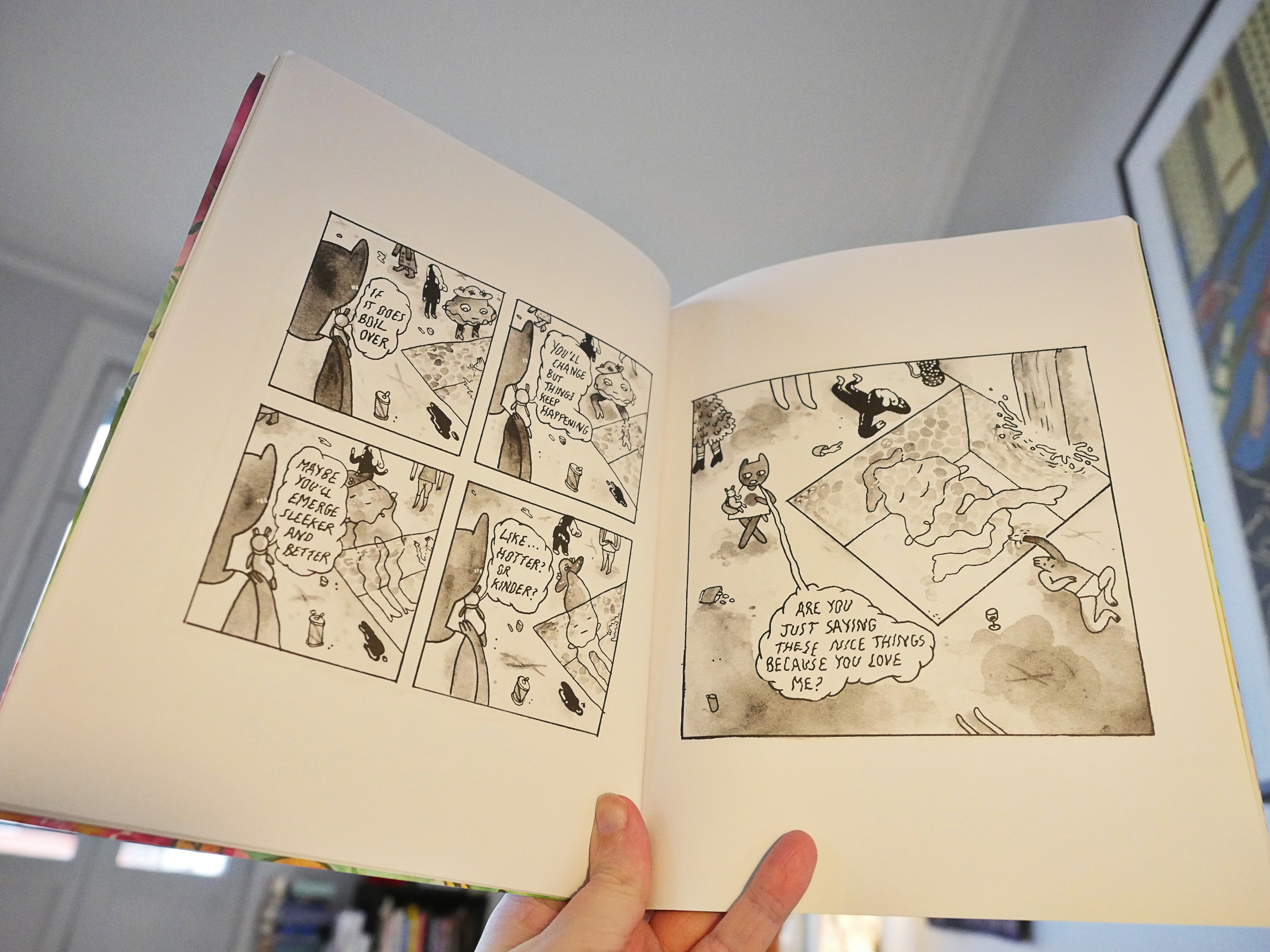
Big Planet have been on a roll the past few years, publishing a number of handsome volumes of good comics. This is still handsome, but it feels pretty slight.
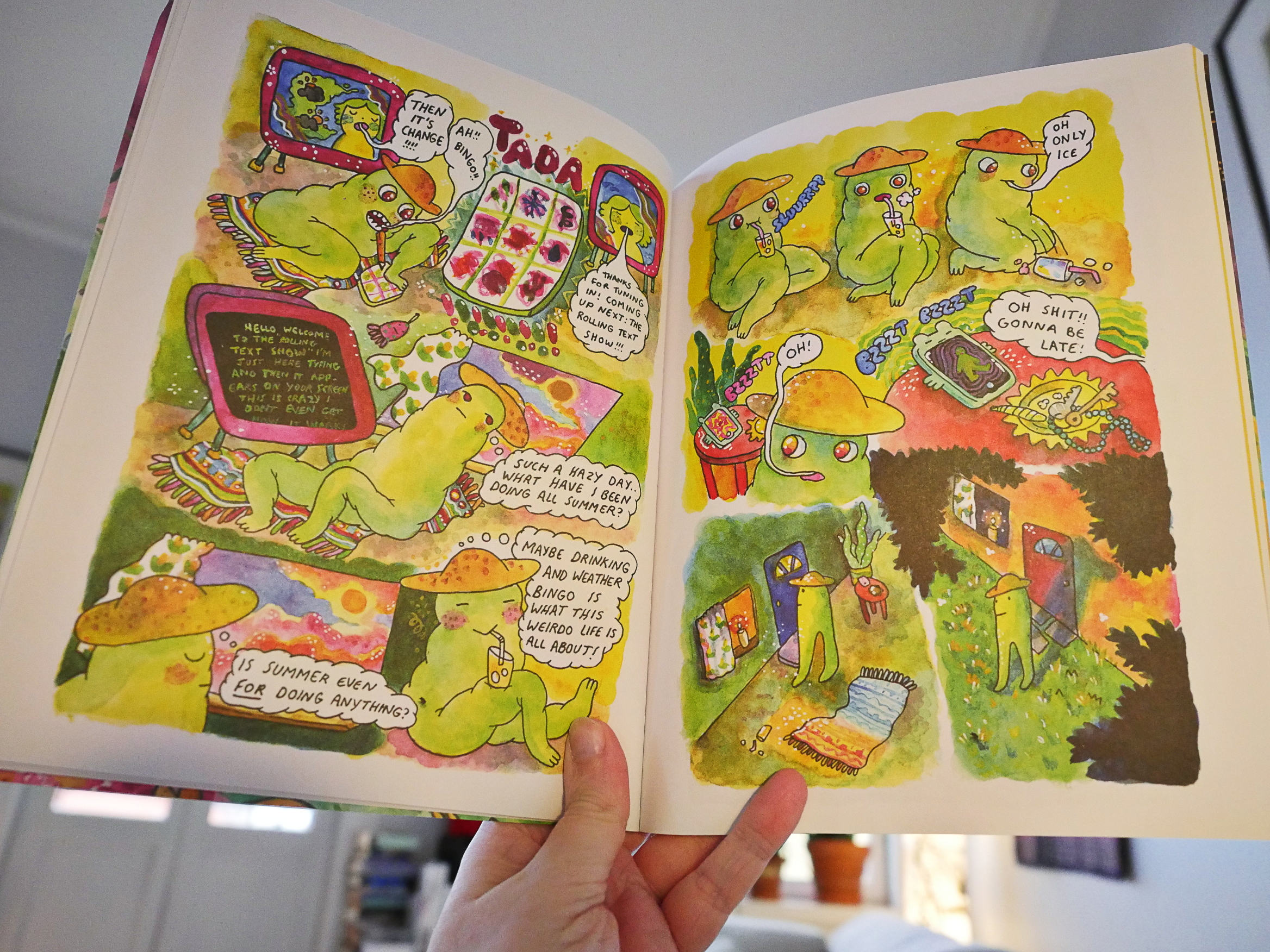
It’s a collection of shorter pieces that don’t seem to have much to rapport internally: Each piece works quite well, but there doesn’t seem to be much of a cumulative effect.
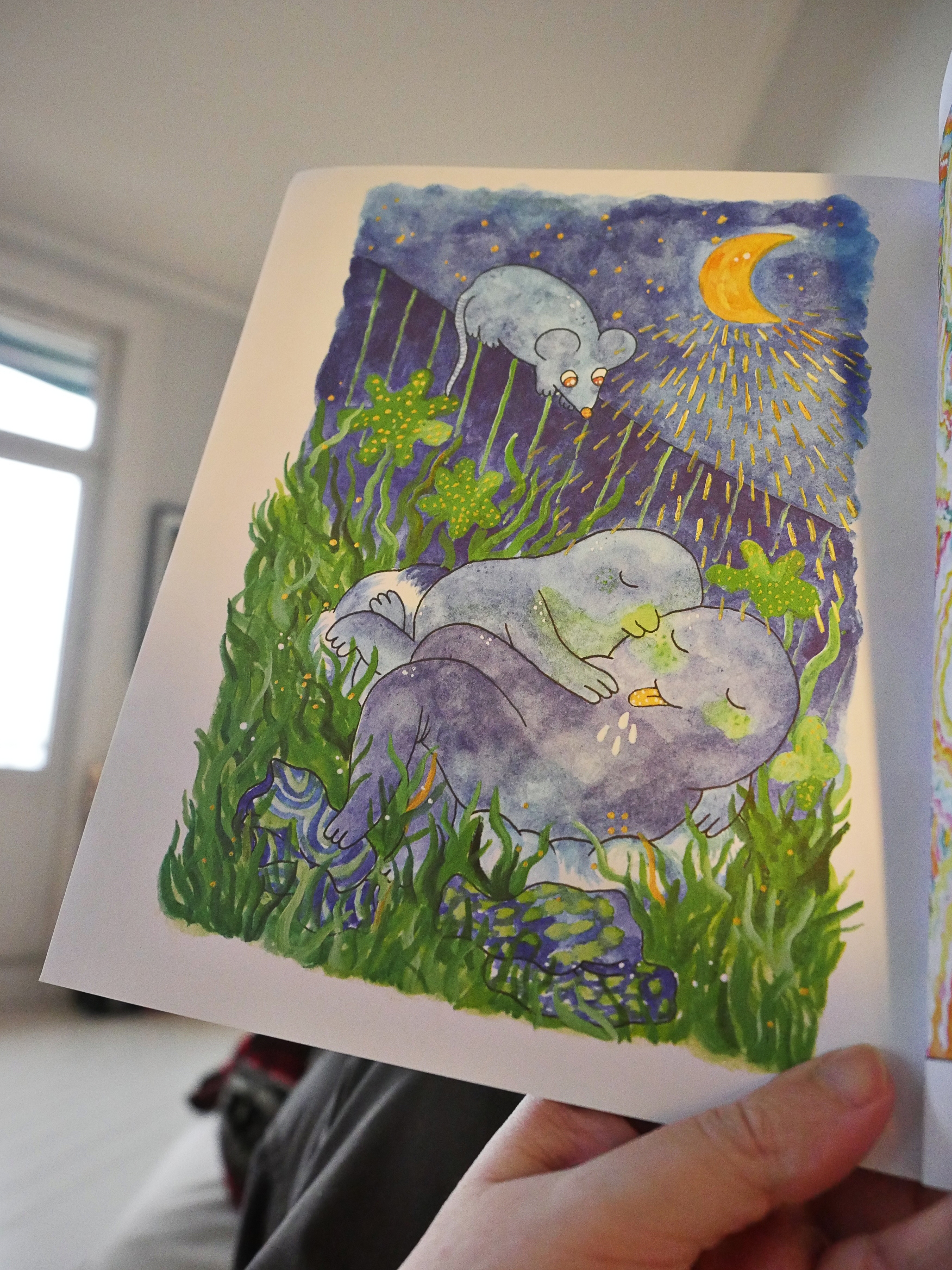
Tobin has a charming art style, and seems to fight against it at every possible opportunity. Except in this image.
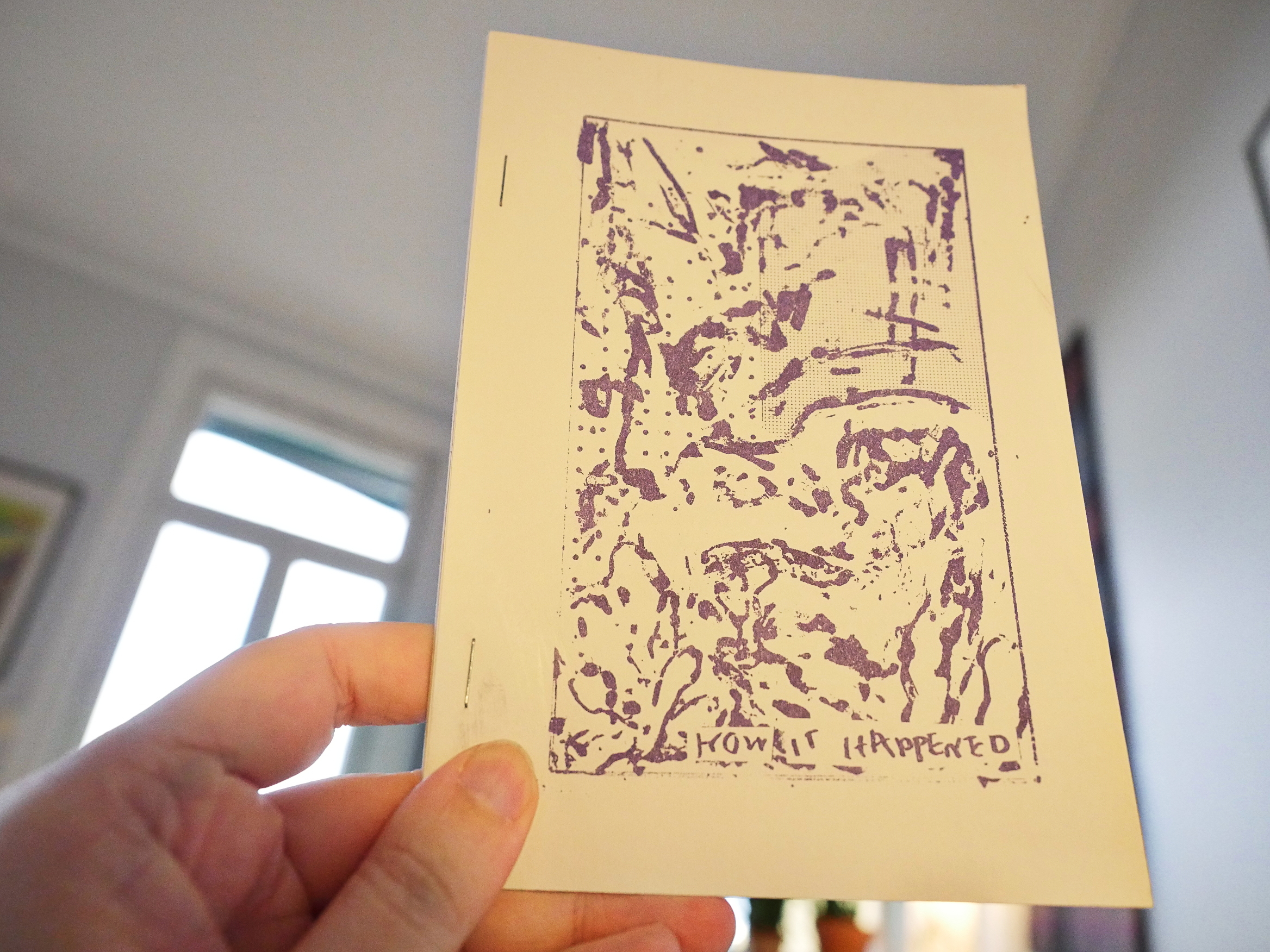
How It Happened by Jason T. Miles (2d cloud)
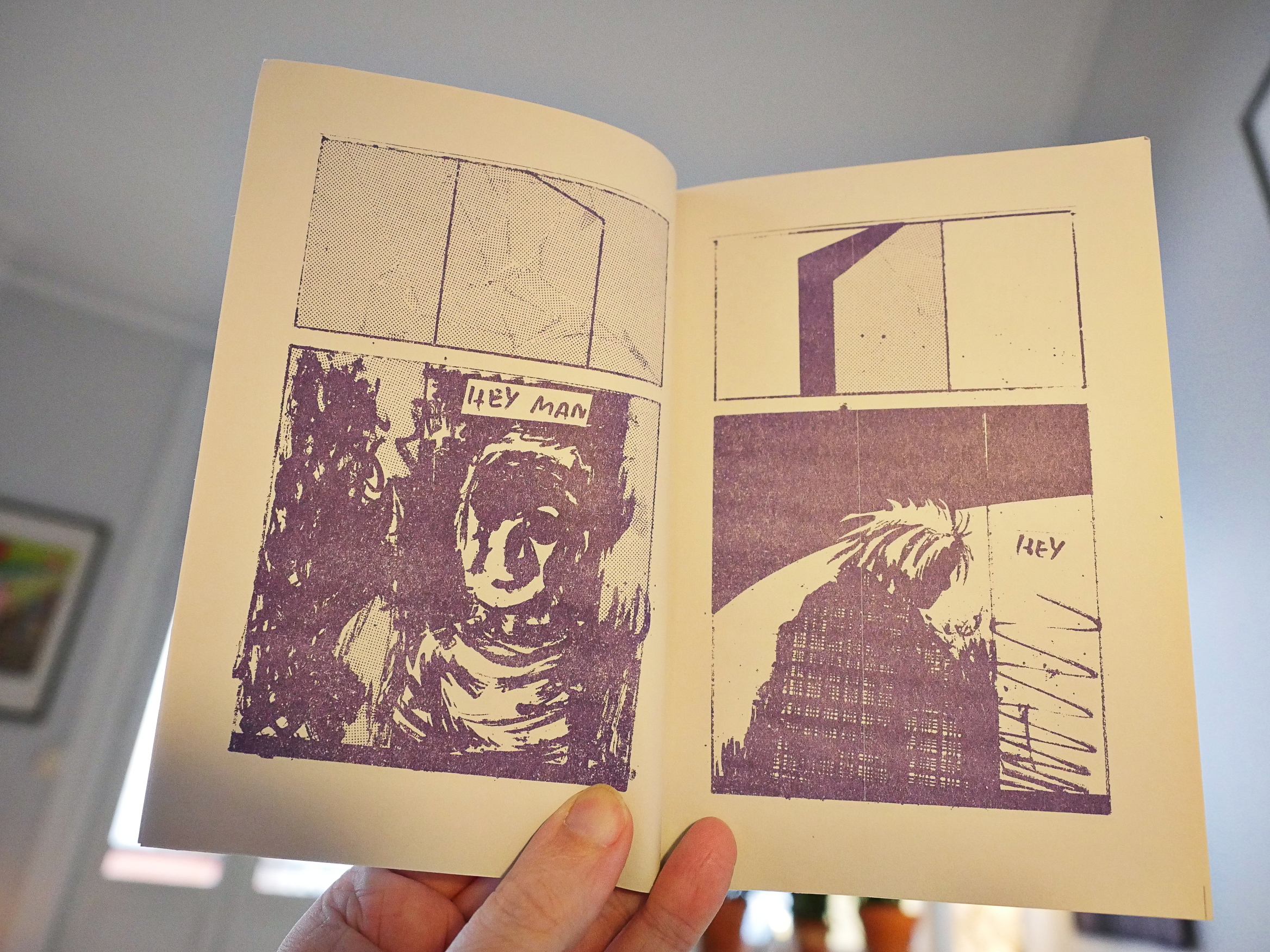
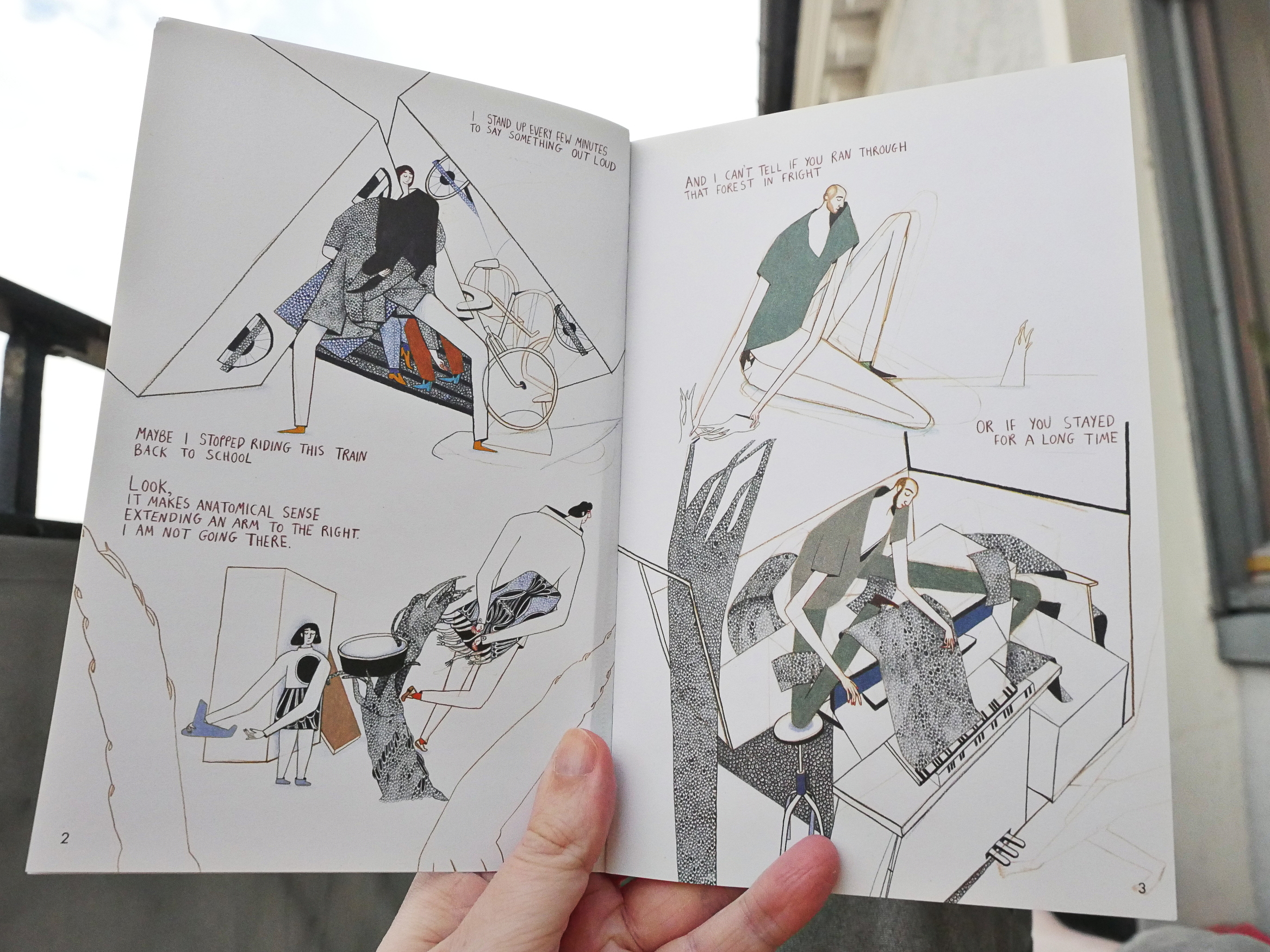
Oh, I found another group of 2d cloud minis I hadn’t read yet. This one nails that unnerving-random-piece feel.
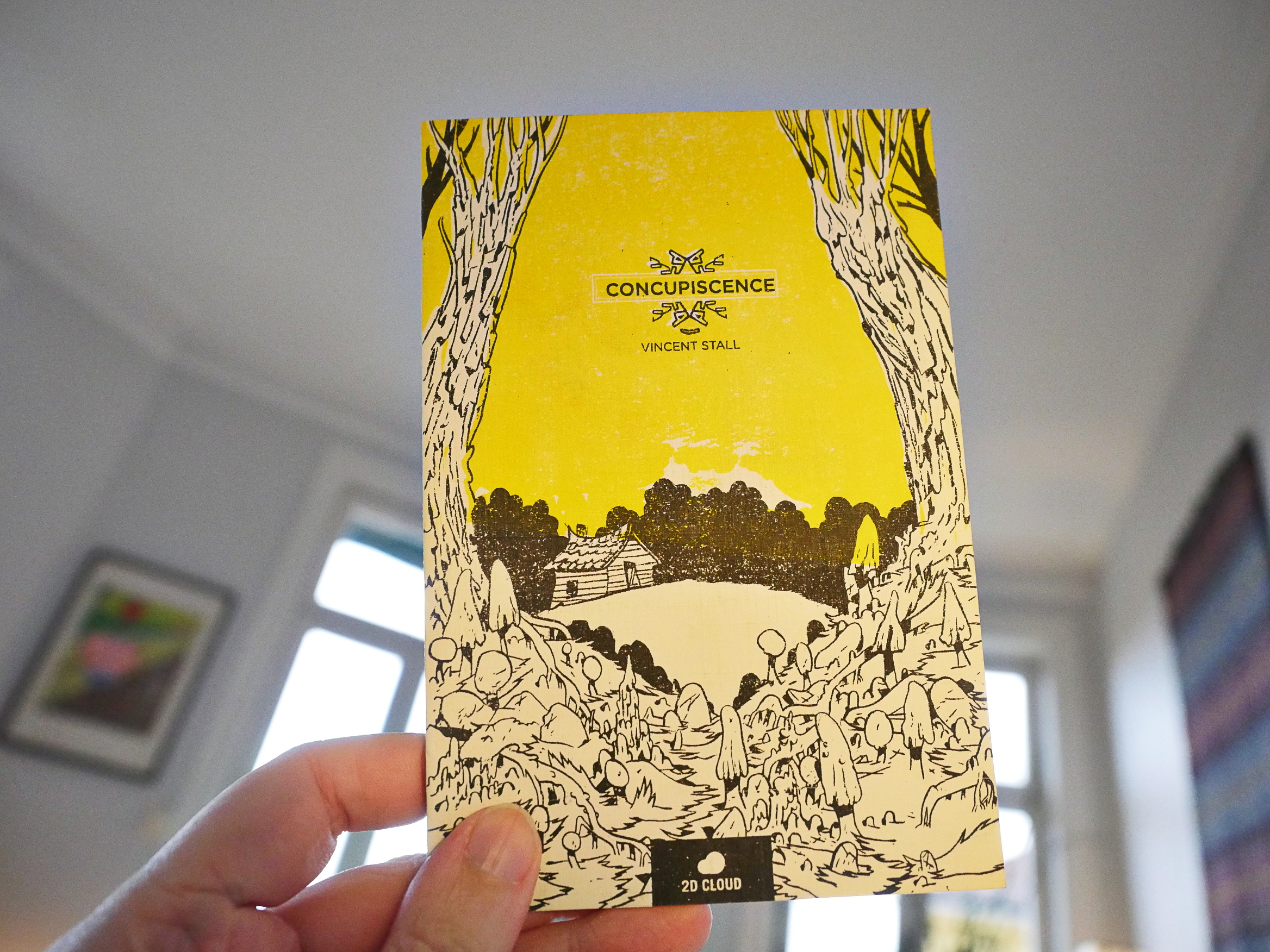
Concupiscence by Vincent Stall (2d cloud)
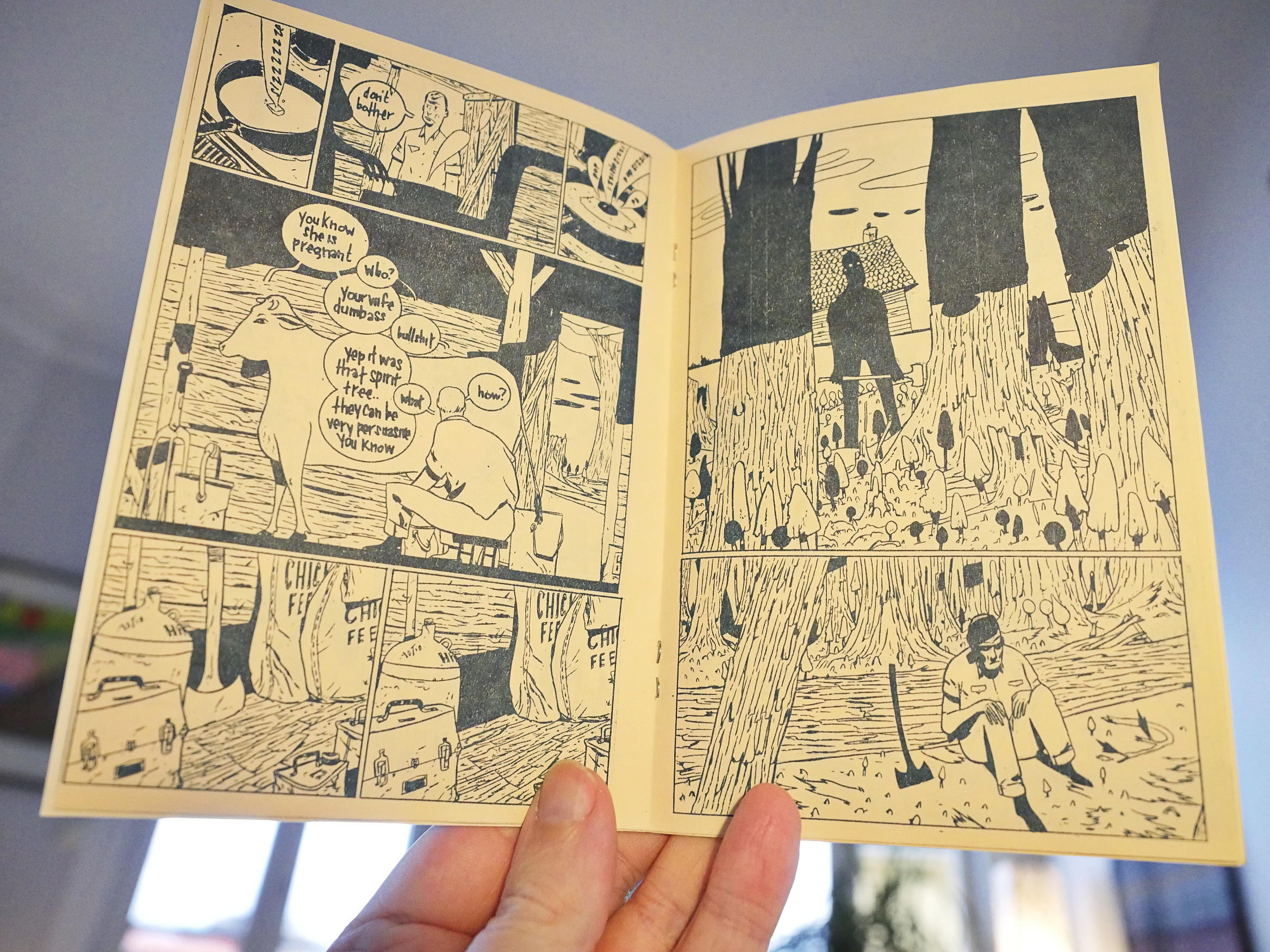
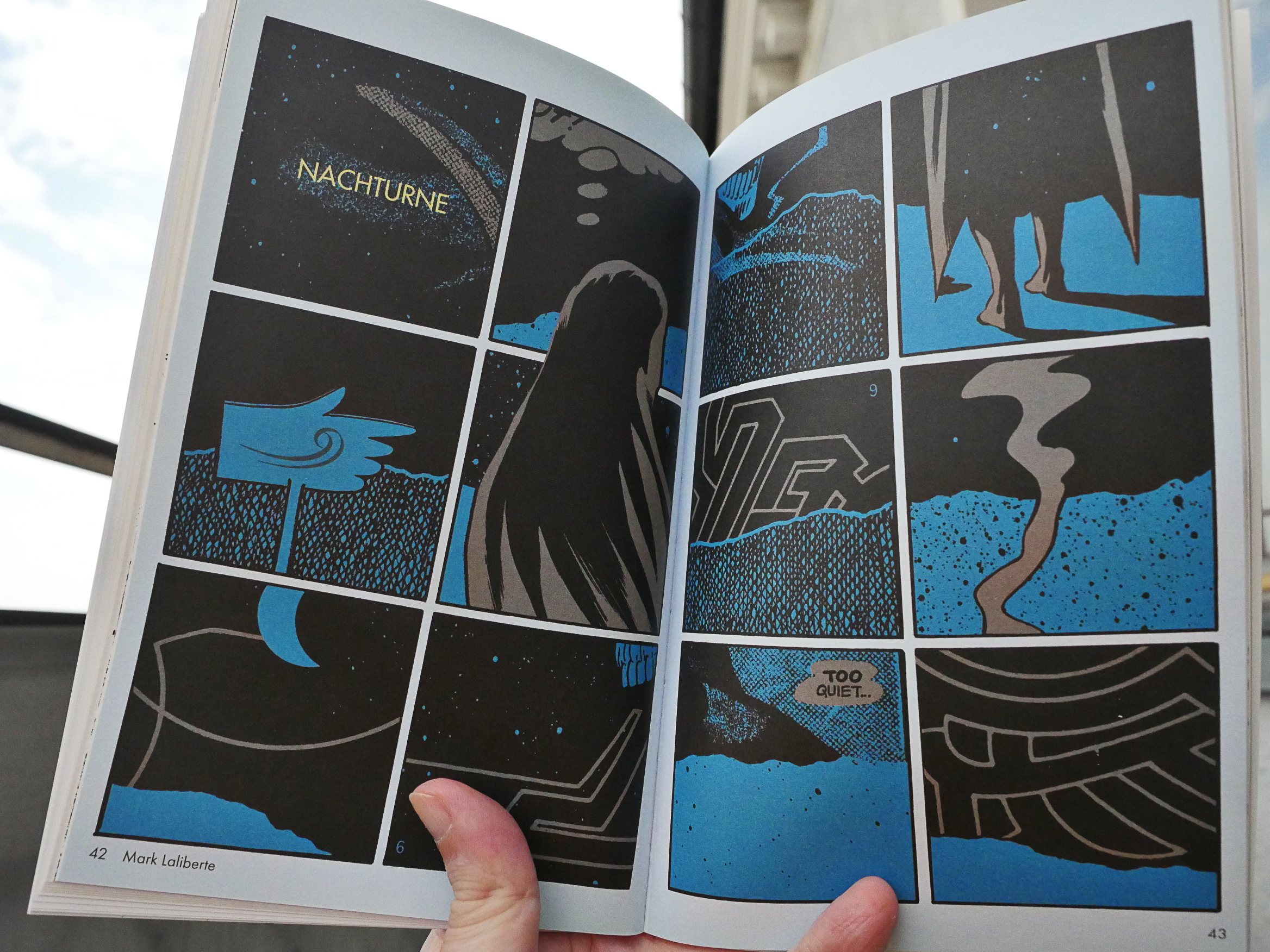
Is this riso? Anyway, it’s a very effective use of eight pages.
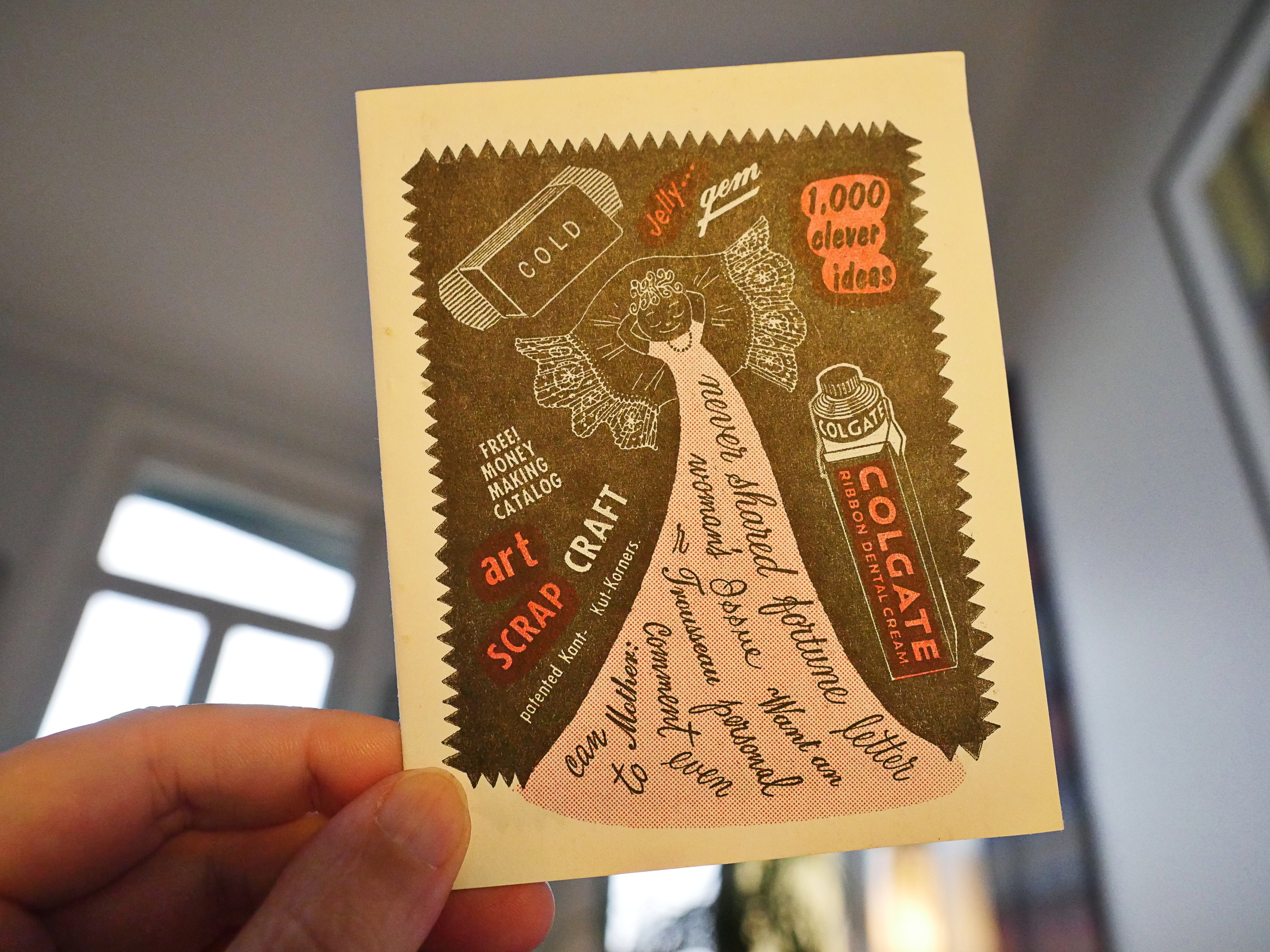
Untitled by Julie Doucet (2d cloud)
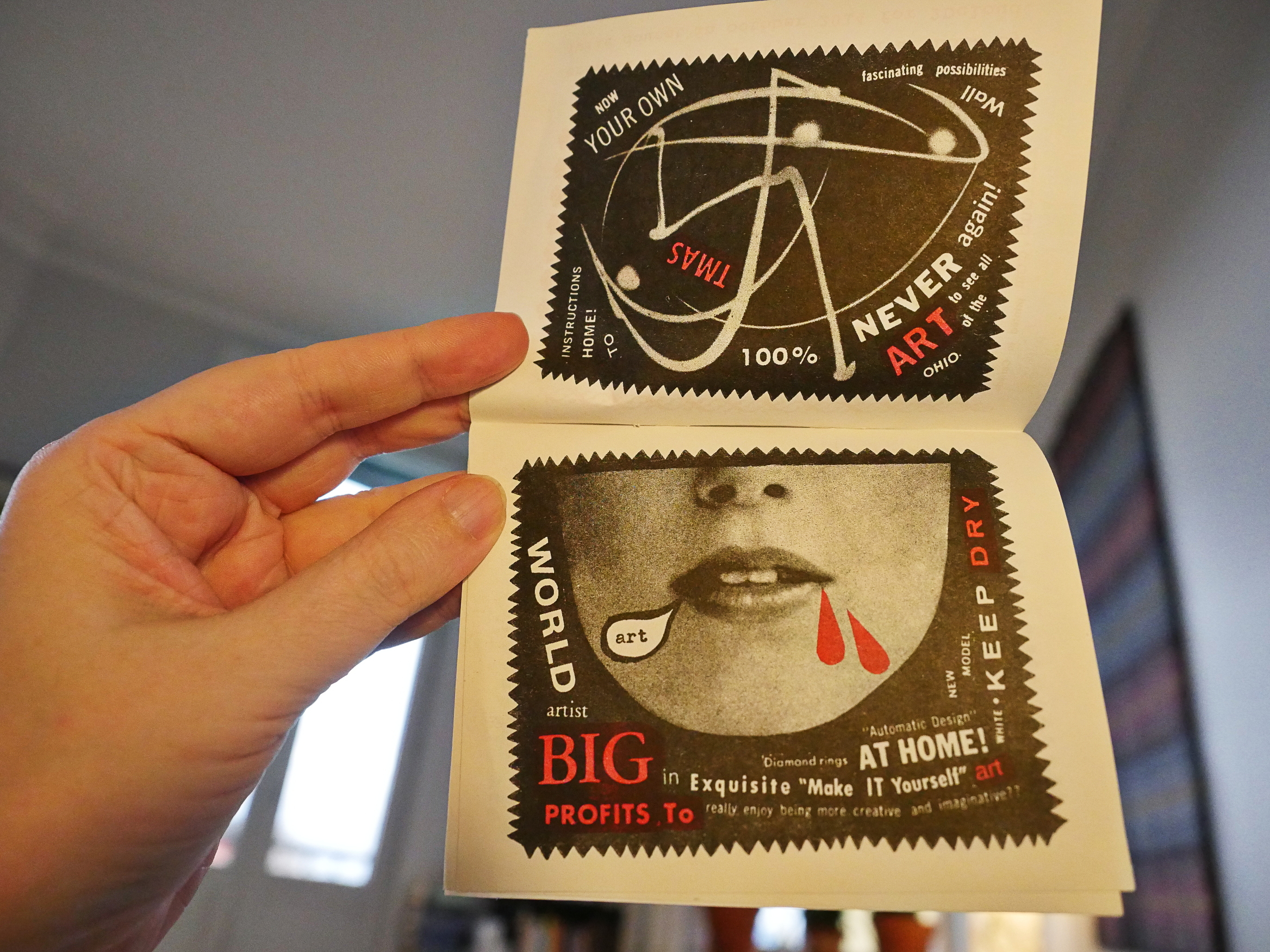
A little riso eight-pager by super-mega-star Julie Doucet. It’s fun.
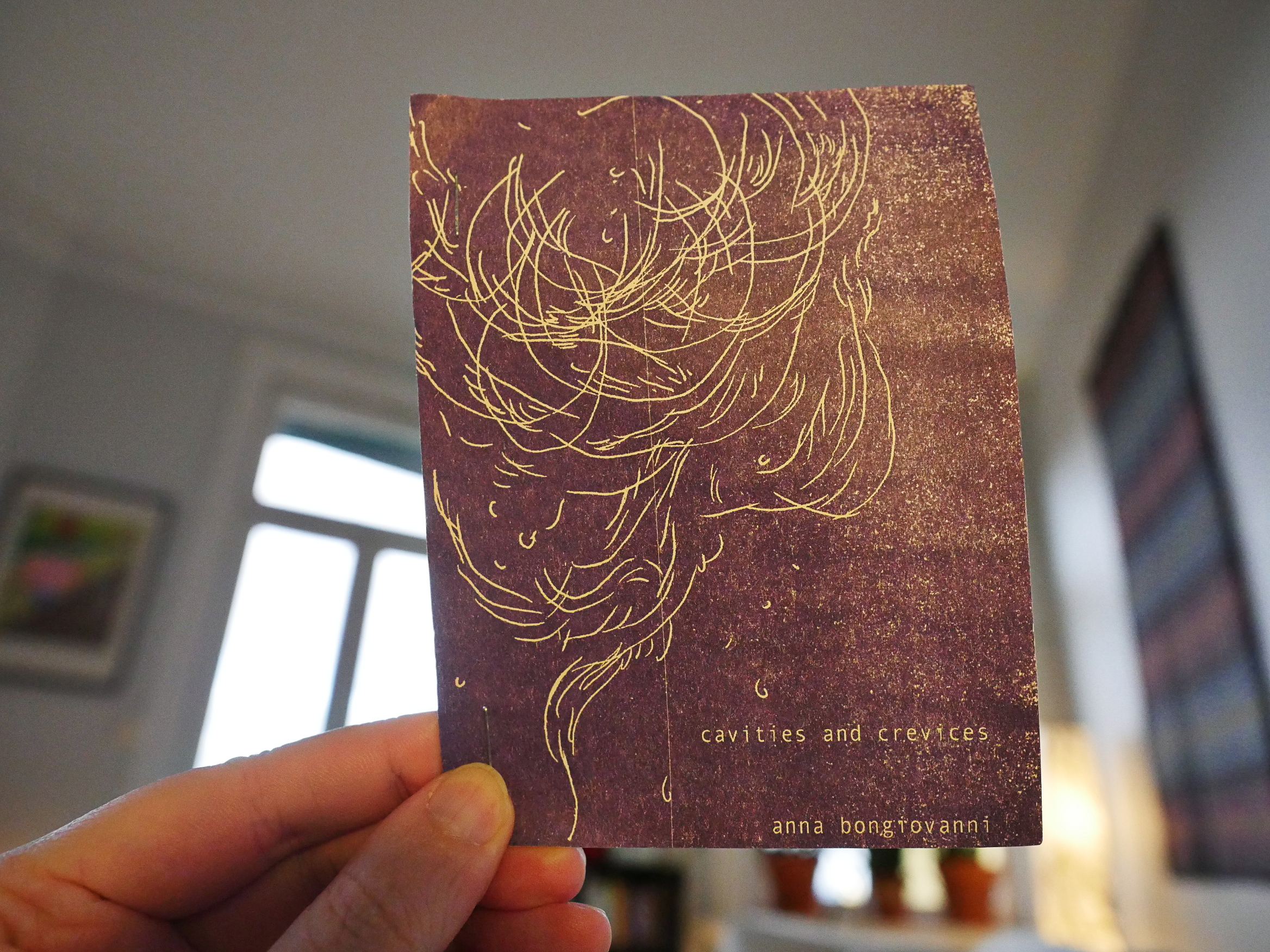
Cavities and Crevices by Anna Bongrovanni (2d cloud)
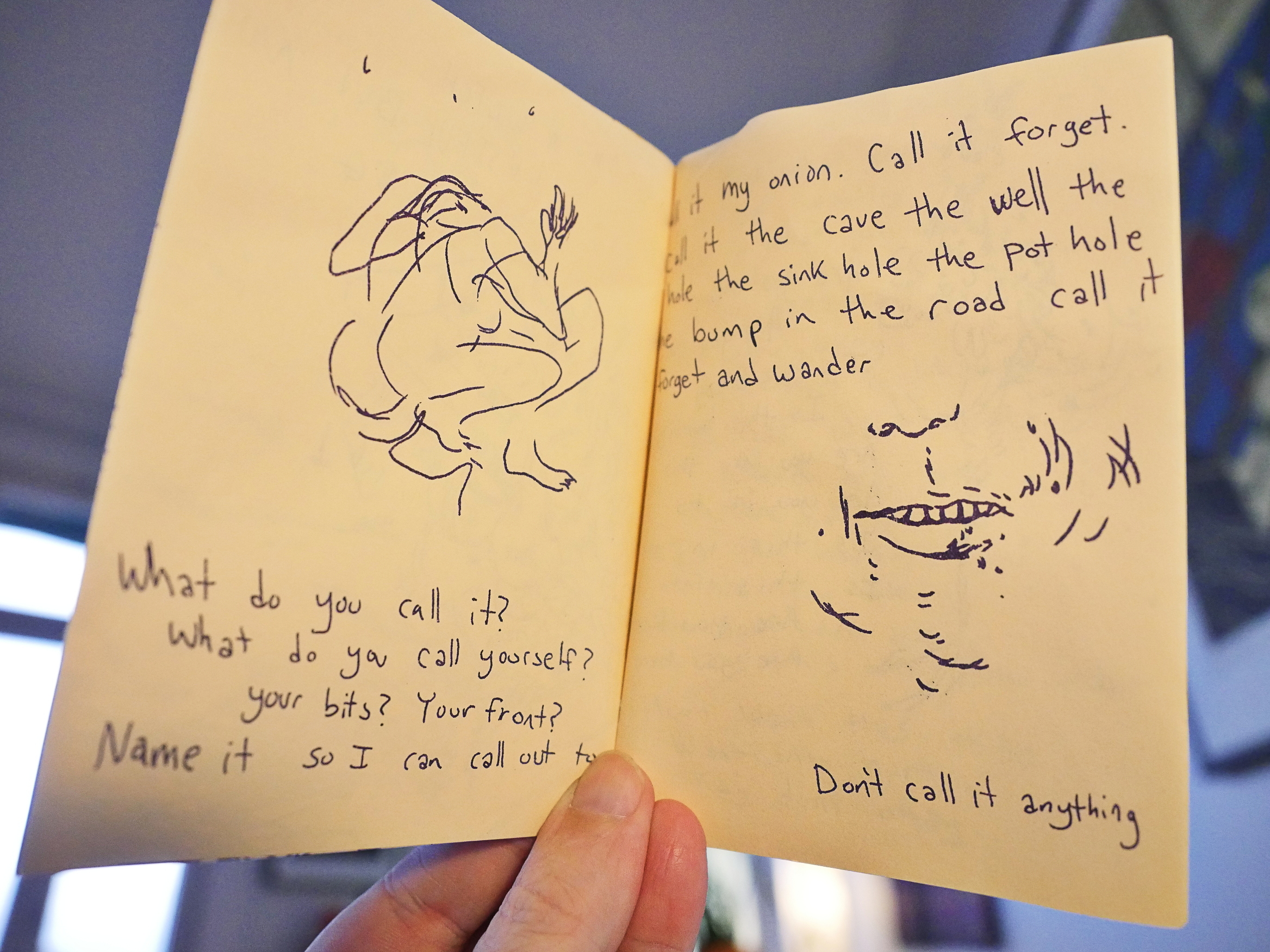
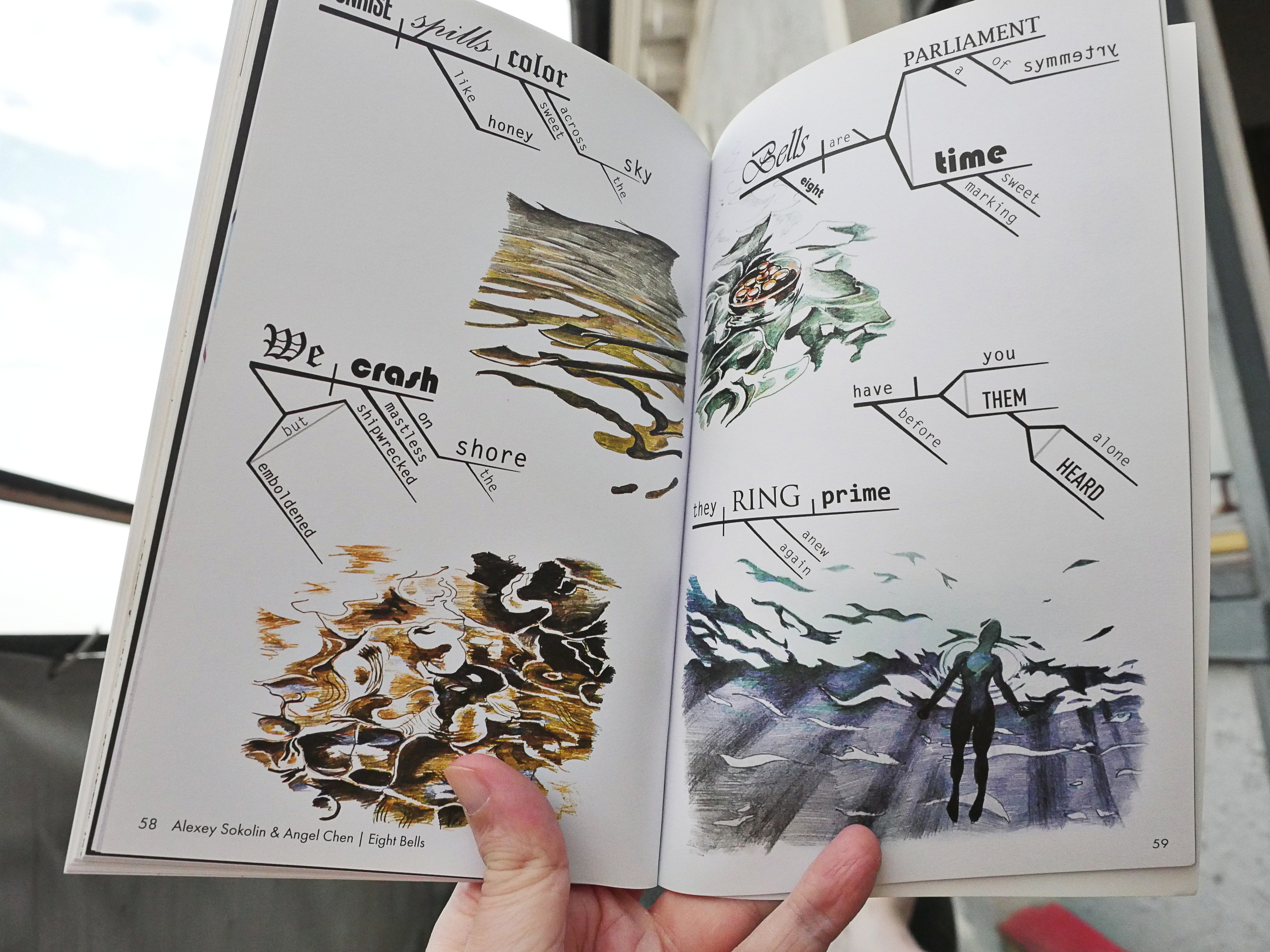
This little mini is mostly illustrated text, and is appropriately unnerving.
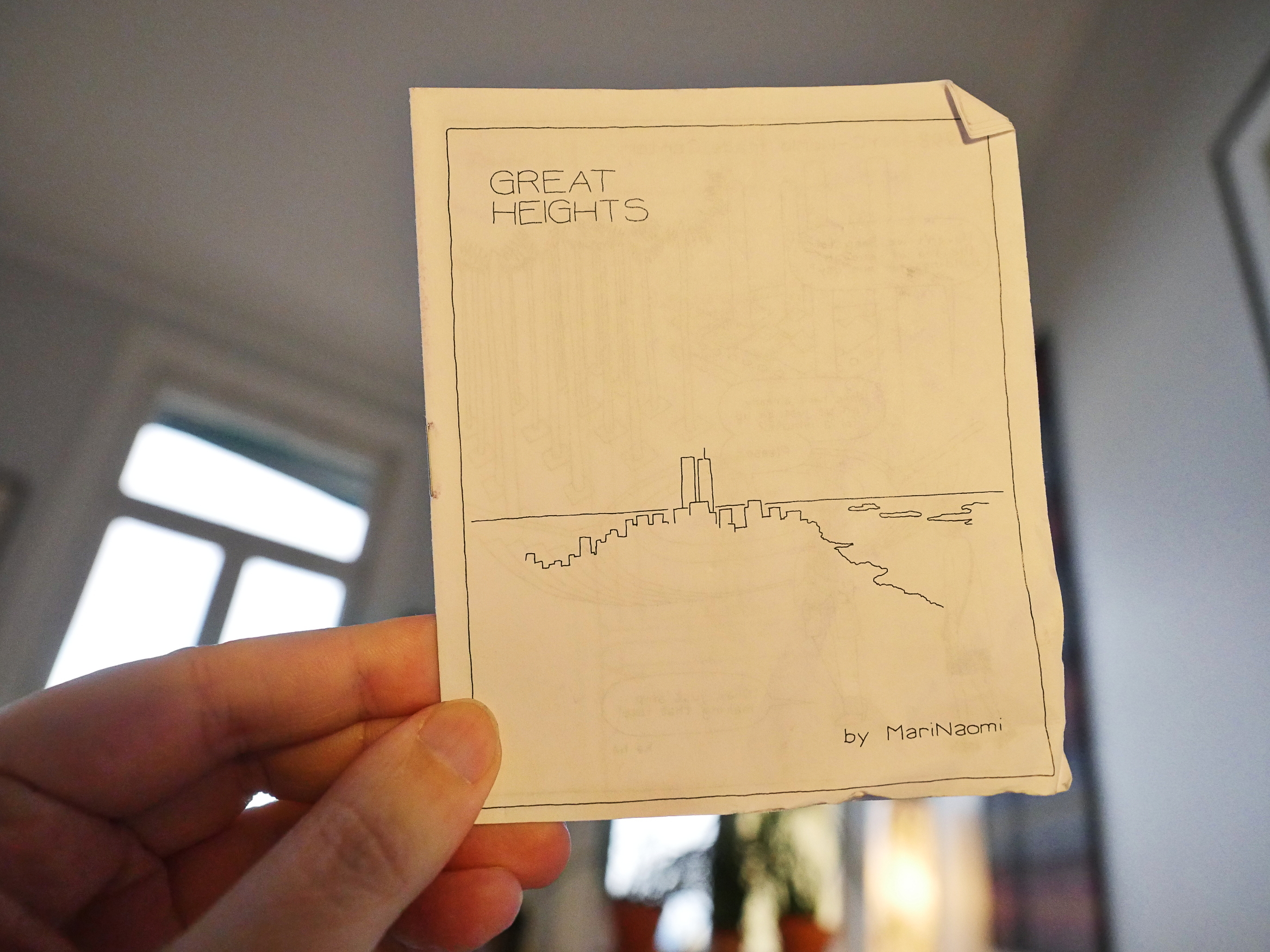
Great Heights by MariNaomi (2d cloud)
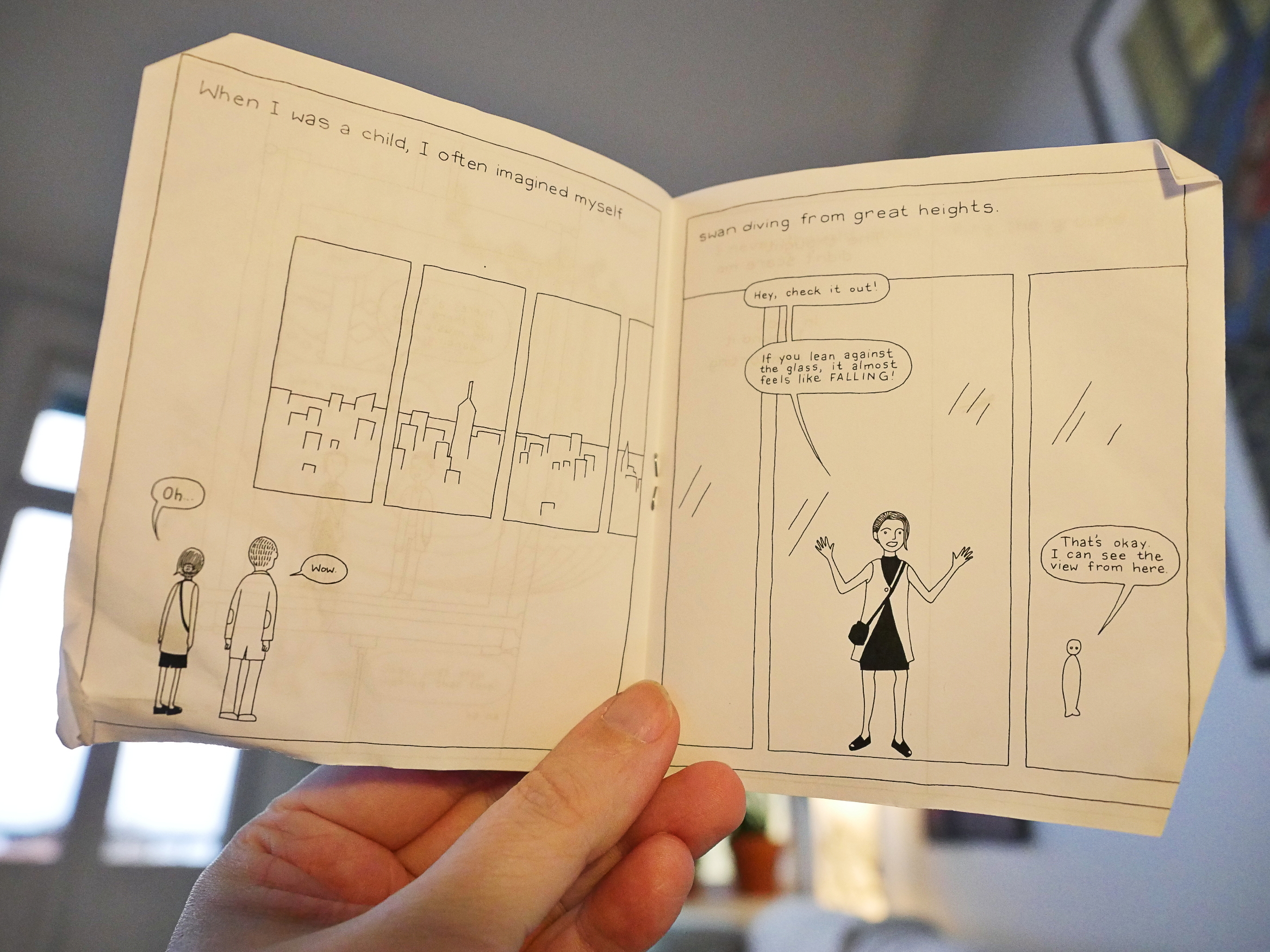
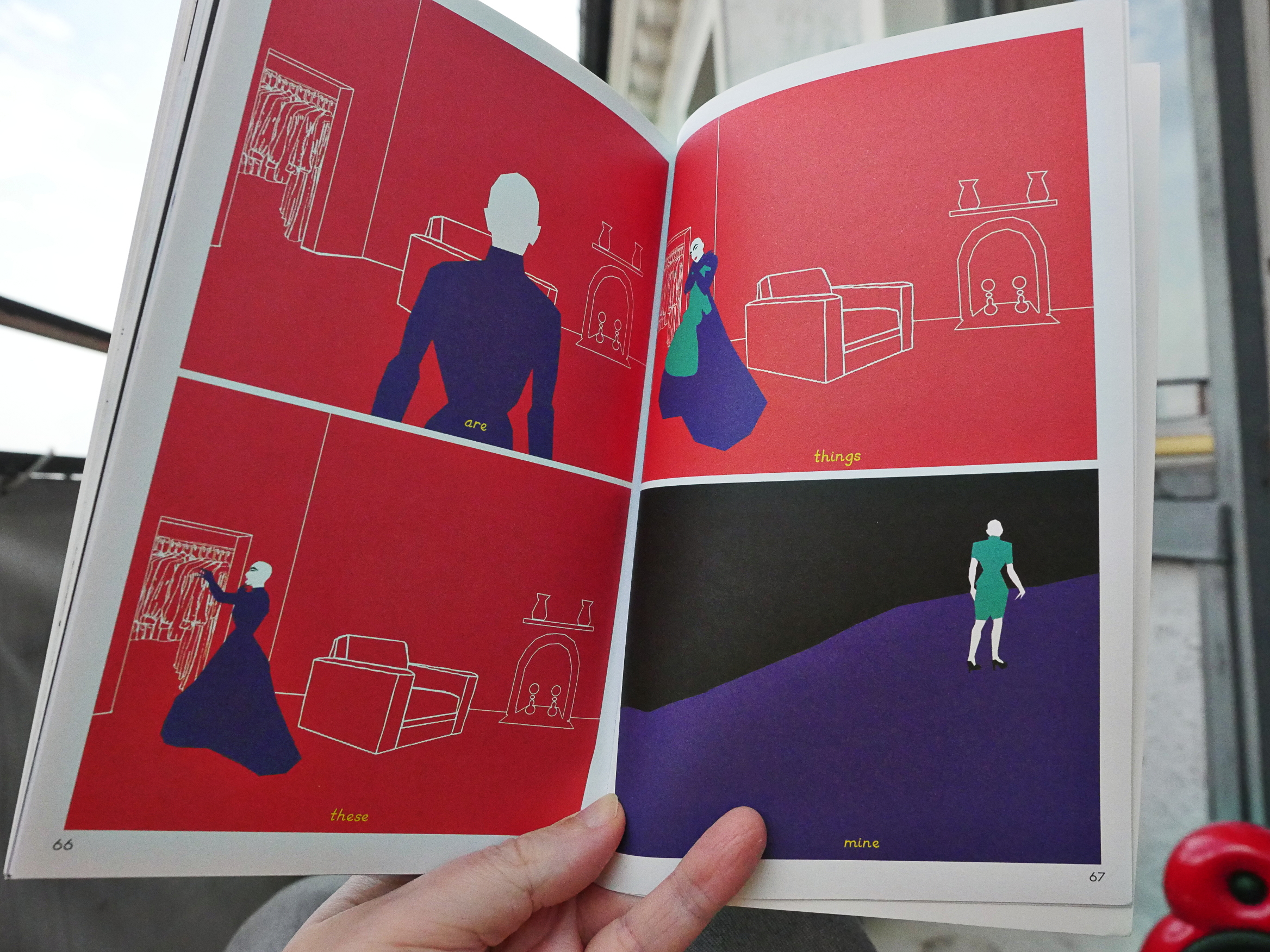
2d cloud, man. All these minis are great! It’s difficult to do something substantial in eight small pages, but these all perfect for the format.
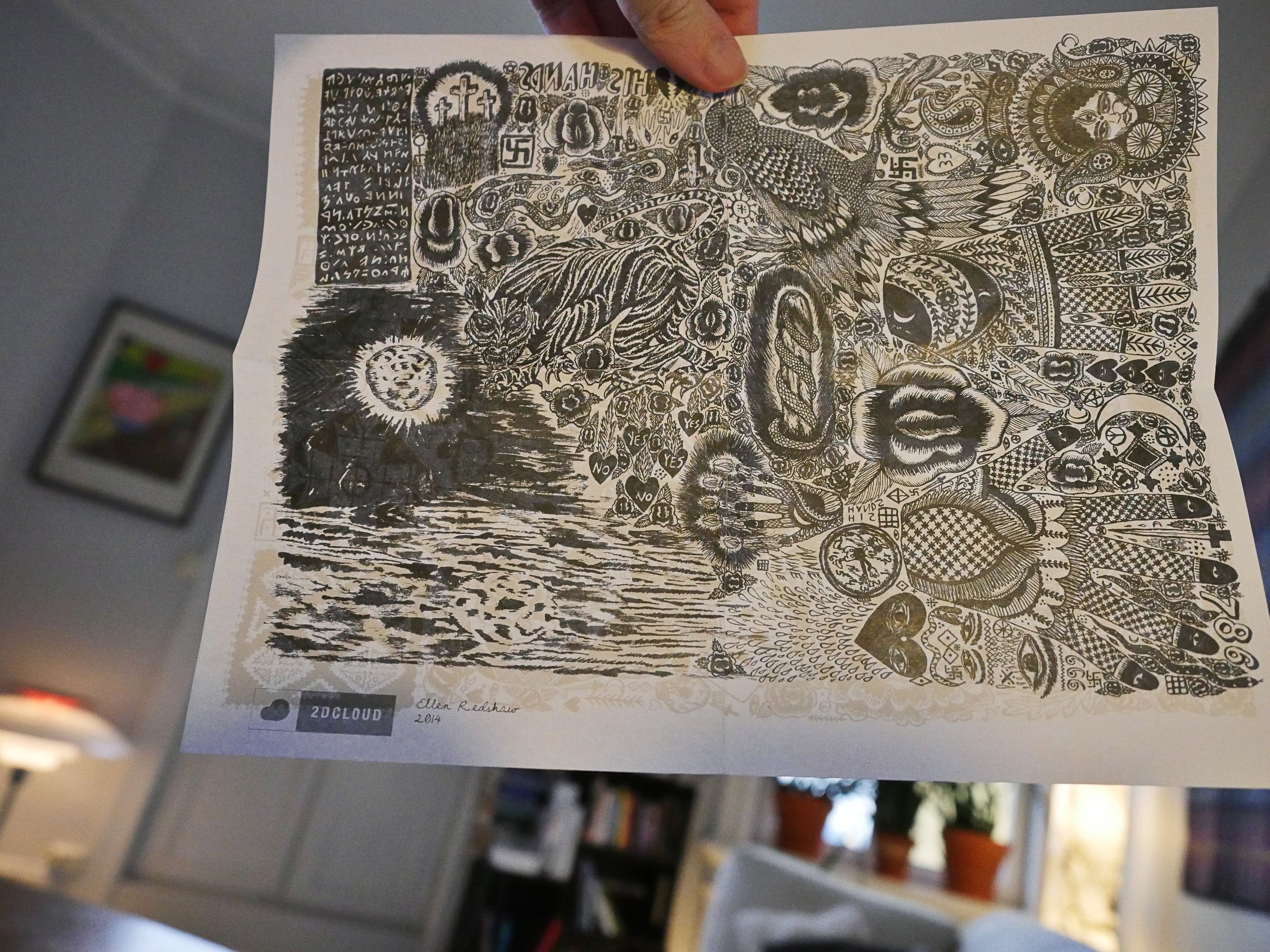
Untitled by Ellen Redshaw (2d cloud)
And this one isn’t even a mini, but just a page with printing on both sides. That’s minimal, dude.
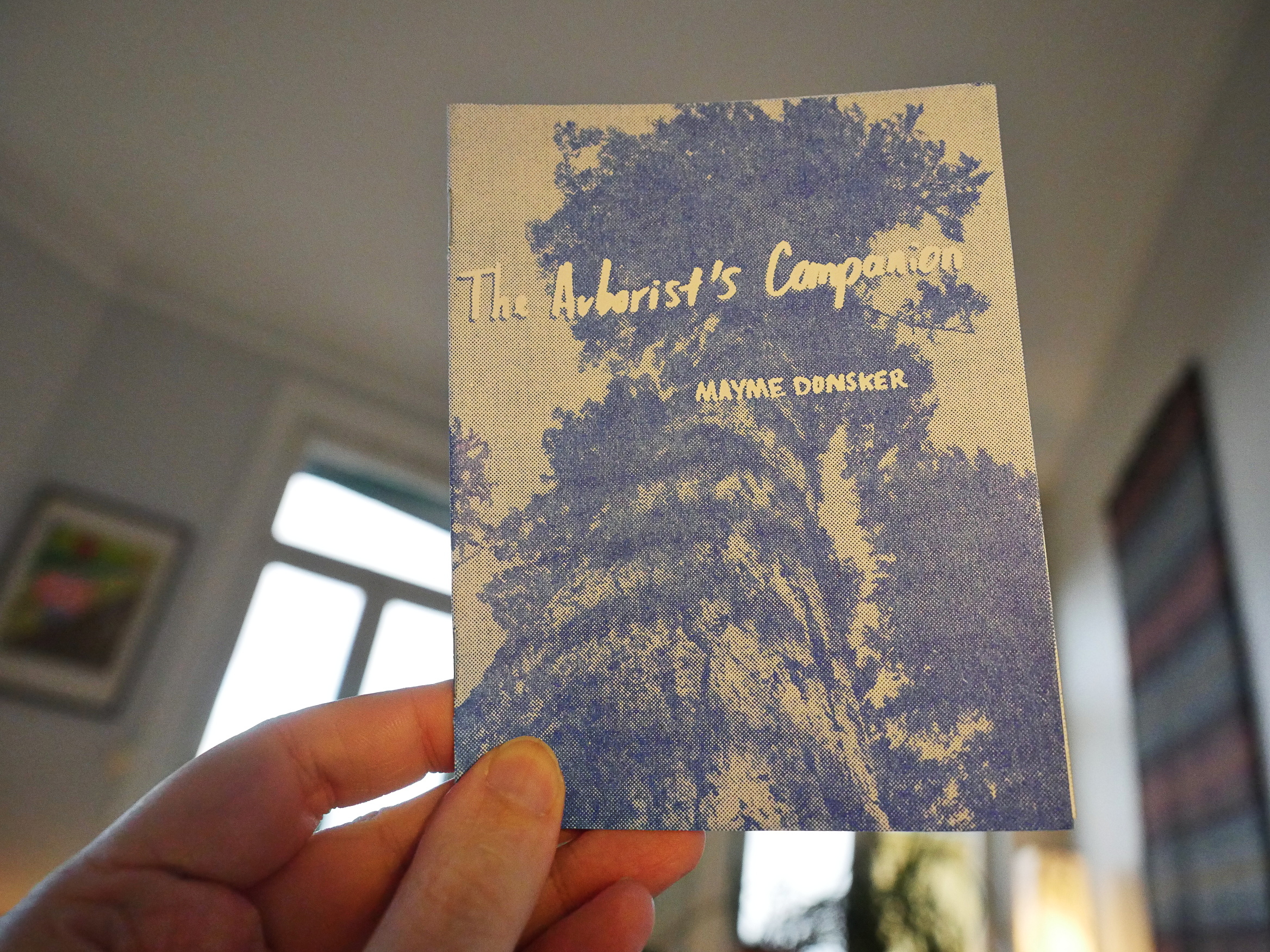
The Arborist’s Companion by Mayme Donsker (2d cloud)
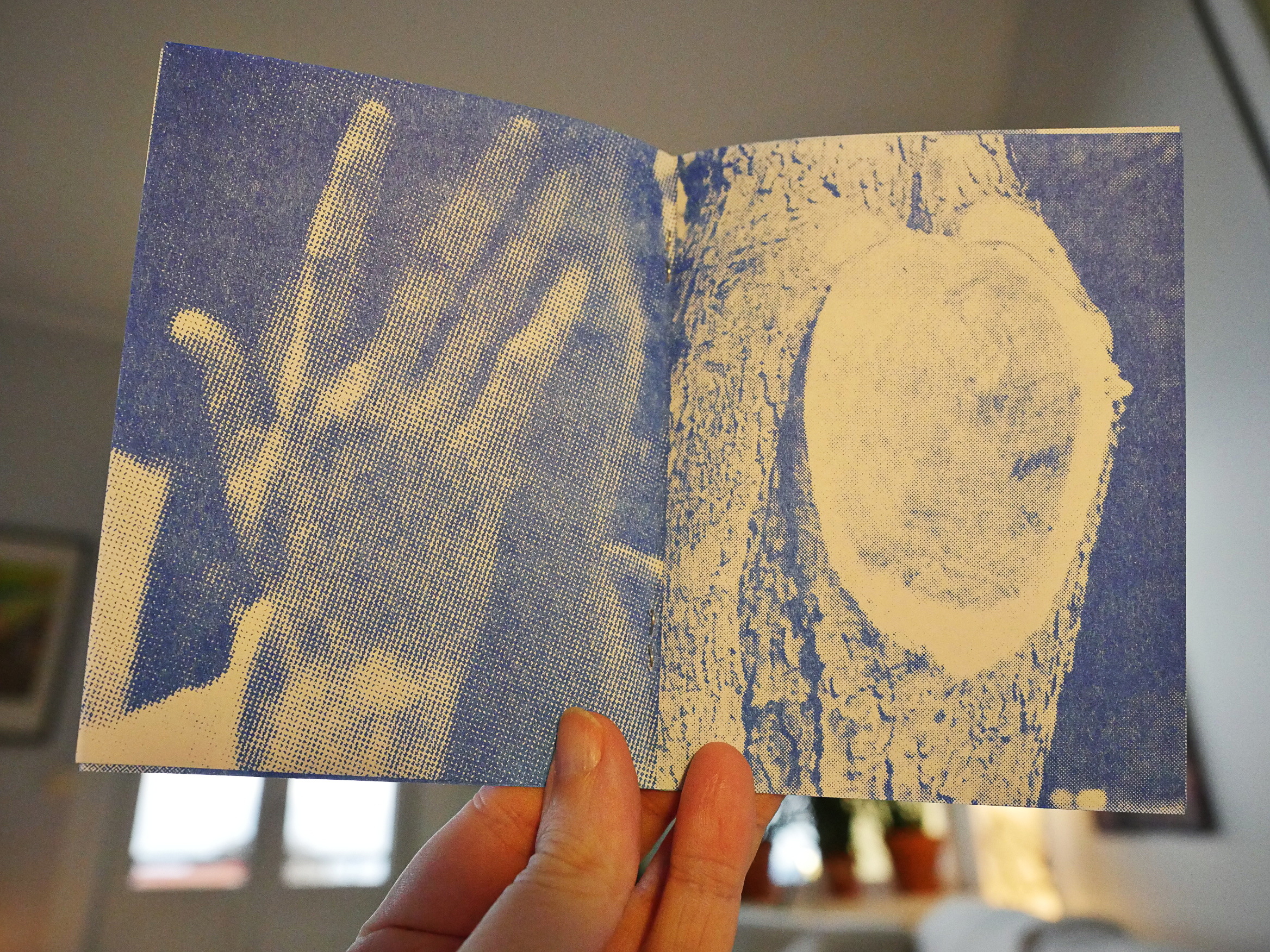
This one is basically just a bunch of rasterised pictures. Still feels weirdly effective, although I’m not at all sure why.
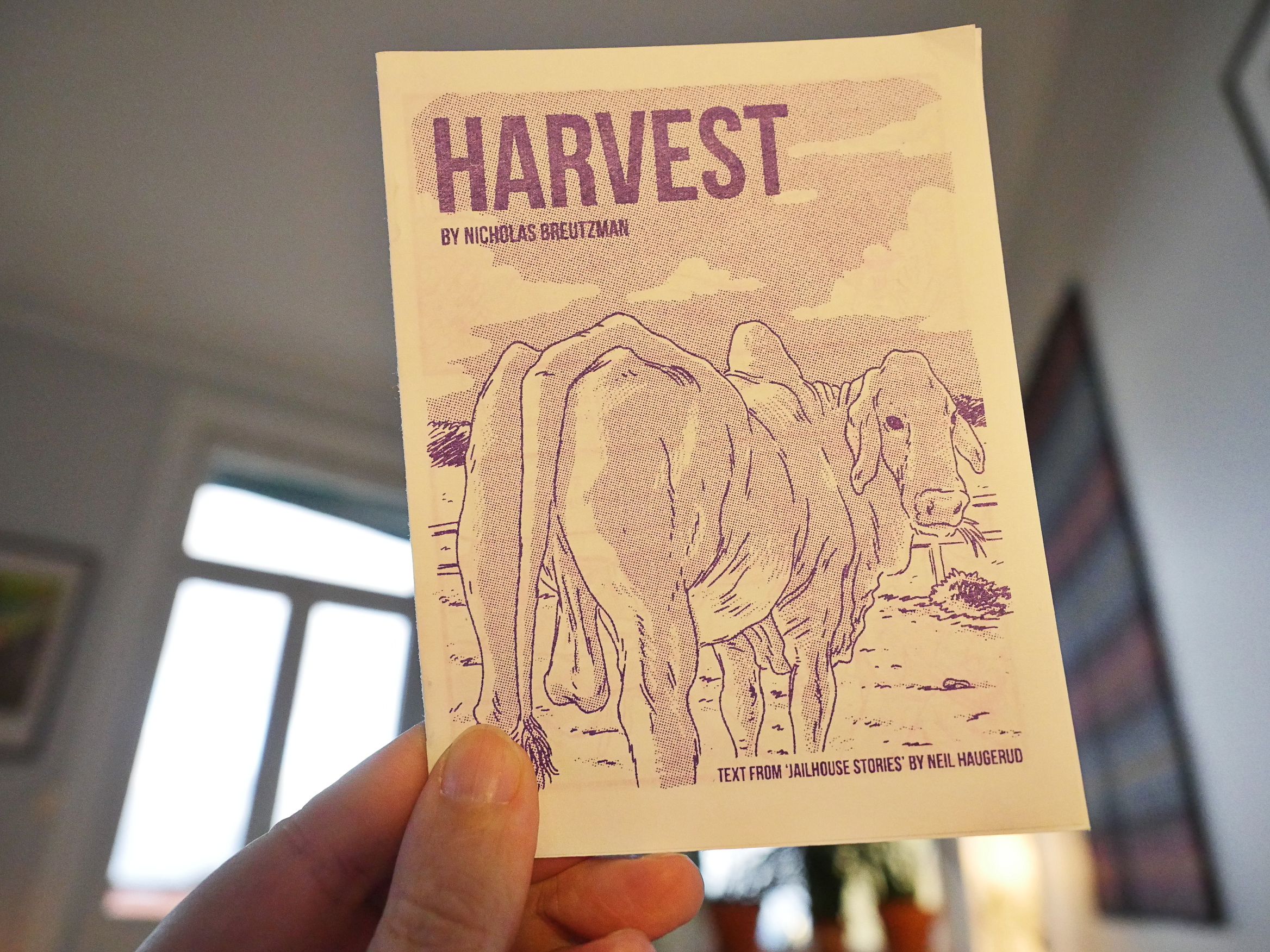
Harvest by Nicholas Breutzman (2d cloud)
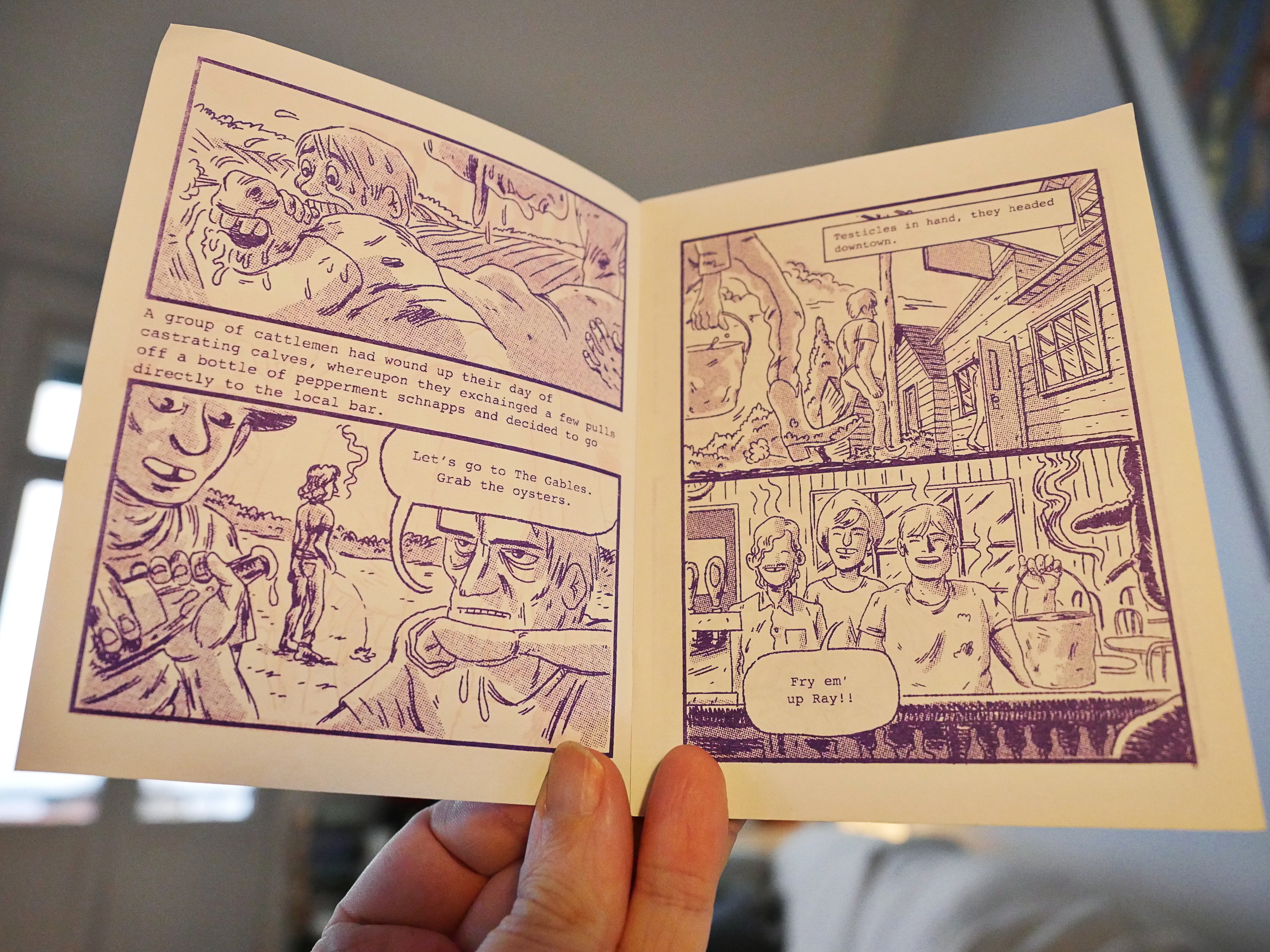
Well, OK, this is basically just a… story. Nice artwork, but it’s something of a non sequitur.
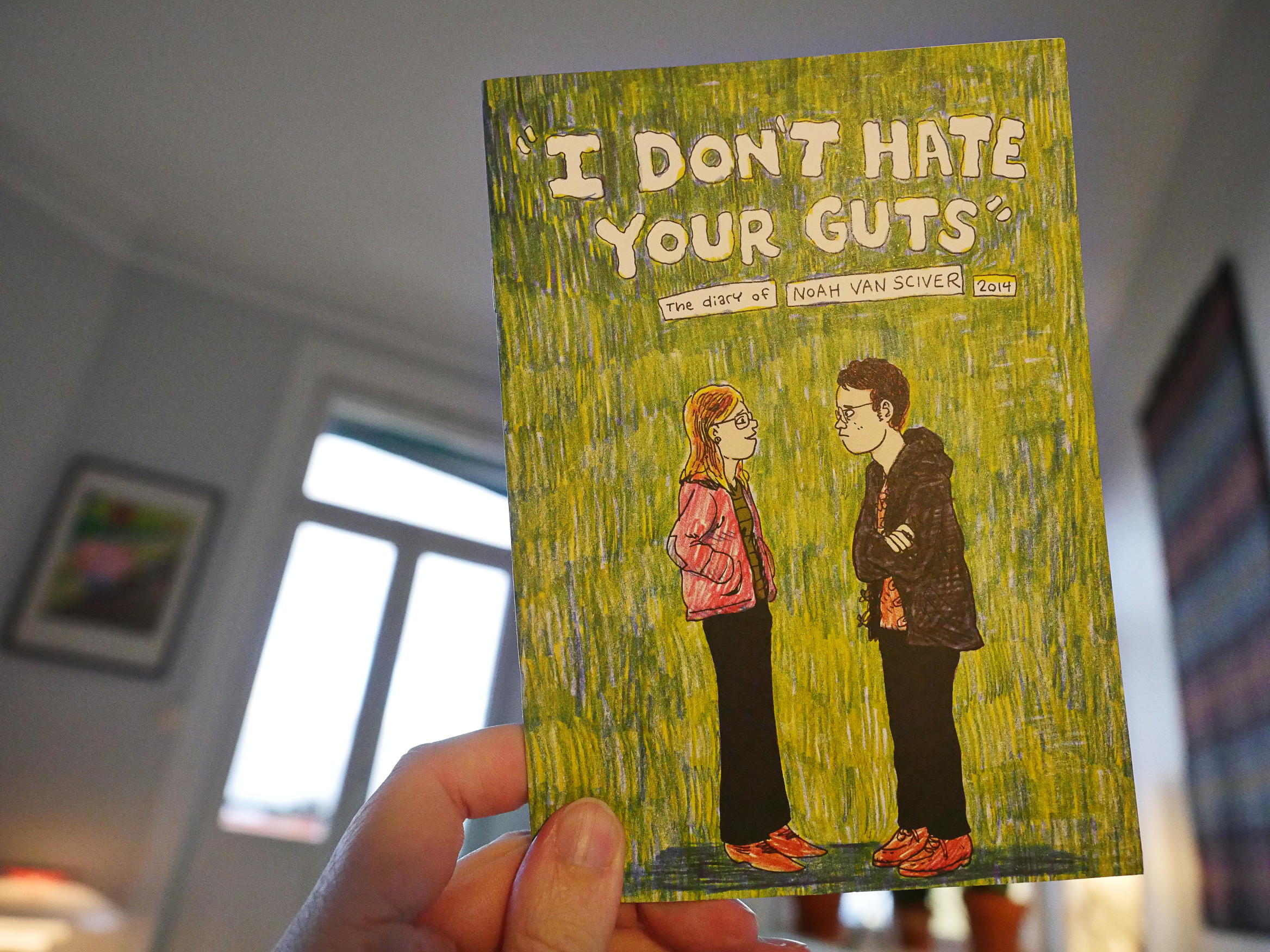
“I Don’t Hate Your Guts” by Noah van Sciver (2d cloud)
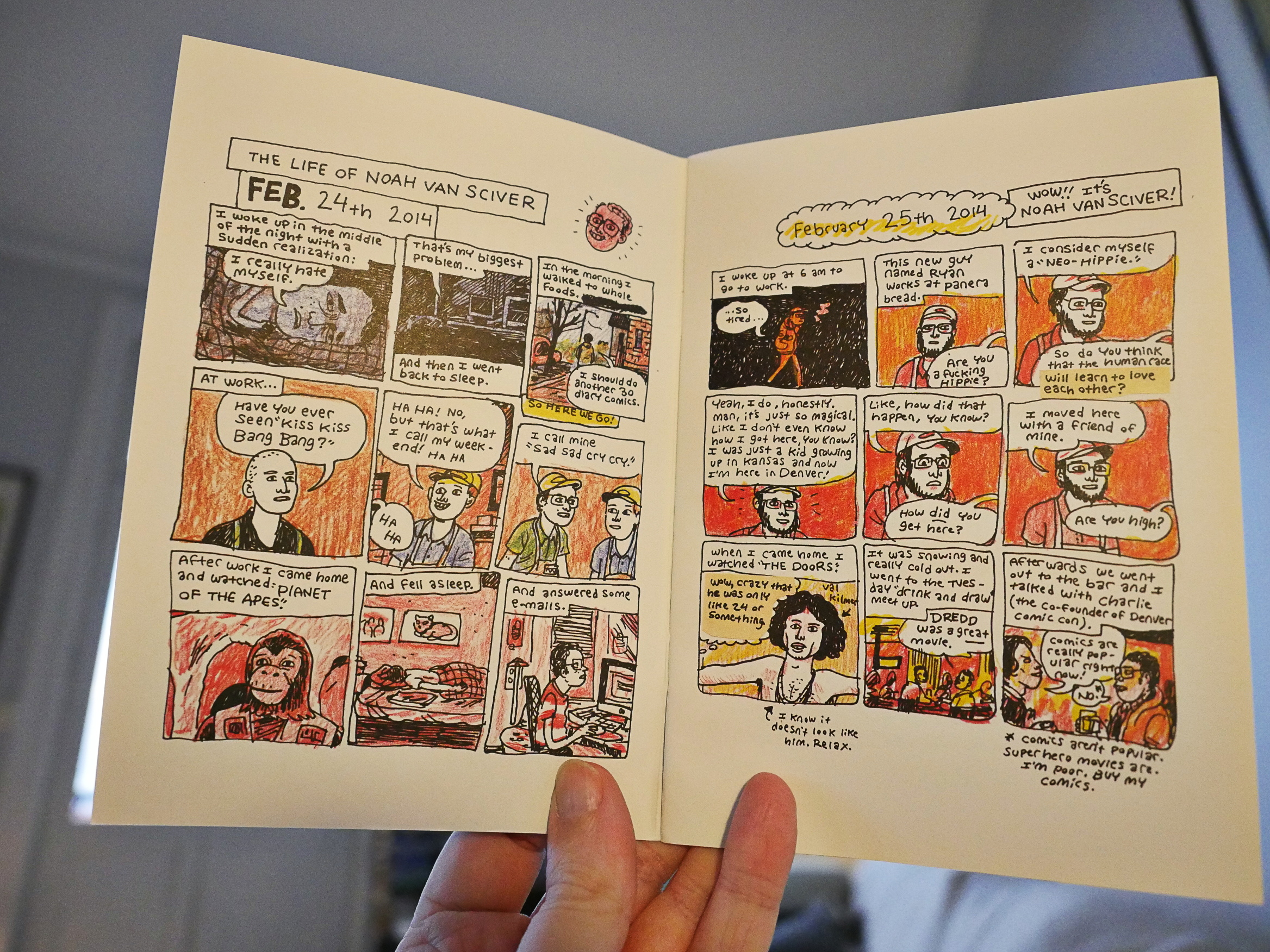
This is a bigger mini, and it’s 30 days in the life of van Sciver. I’ve always liked van Sciver’s seeming ease at drawing this sort of stuff: The artwork just looks so… natural.
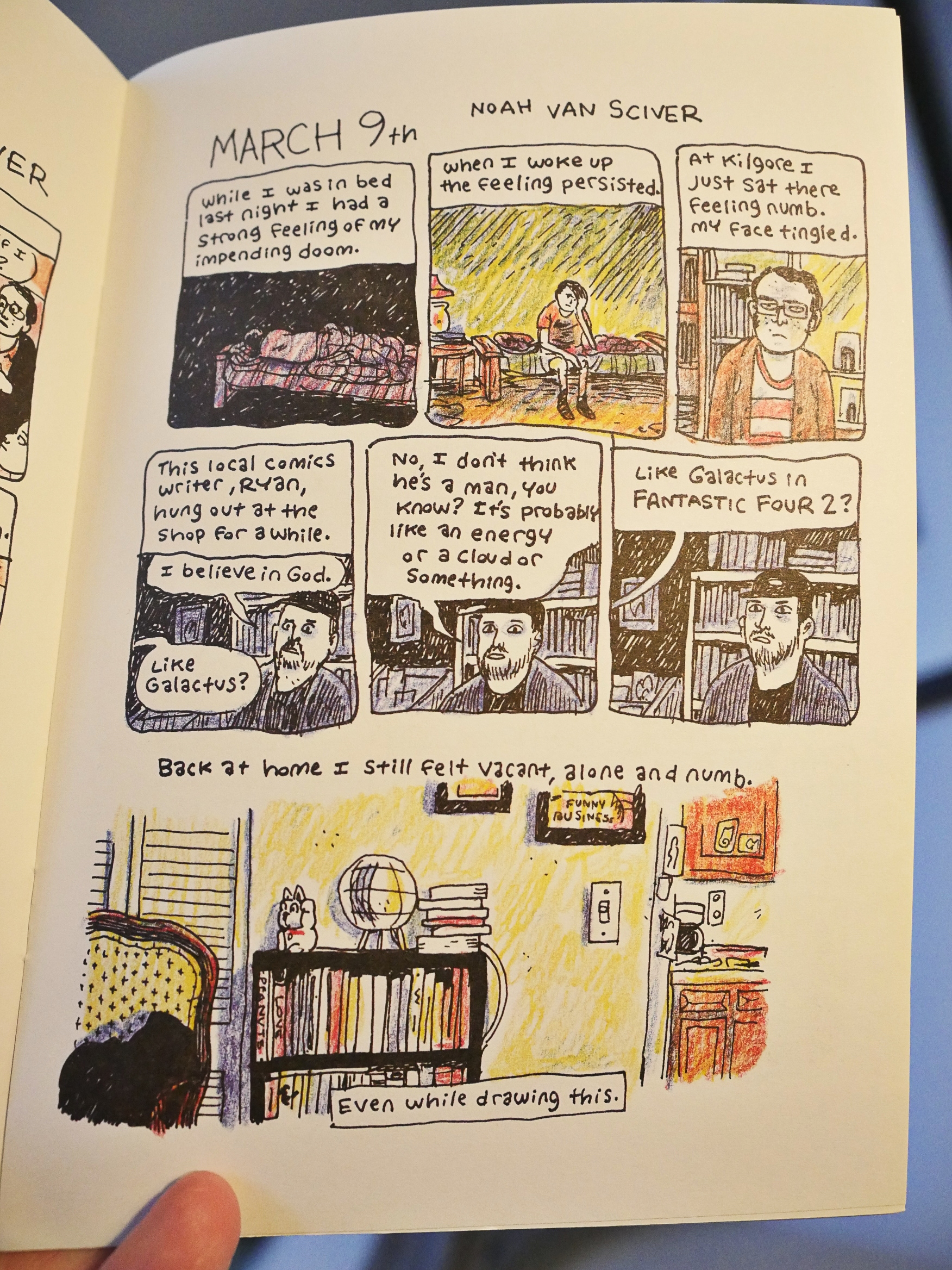
And, as usual, it’s pretty funny, and van Sciver doesn’t shy away from depicting himself as a bit of a dick. But a funny dick.
Unusually for a diary comic, something momentous happens here in here, and the mix of the quotidian and extraordinary feels like witnessing something special.
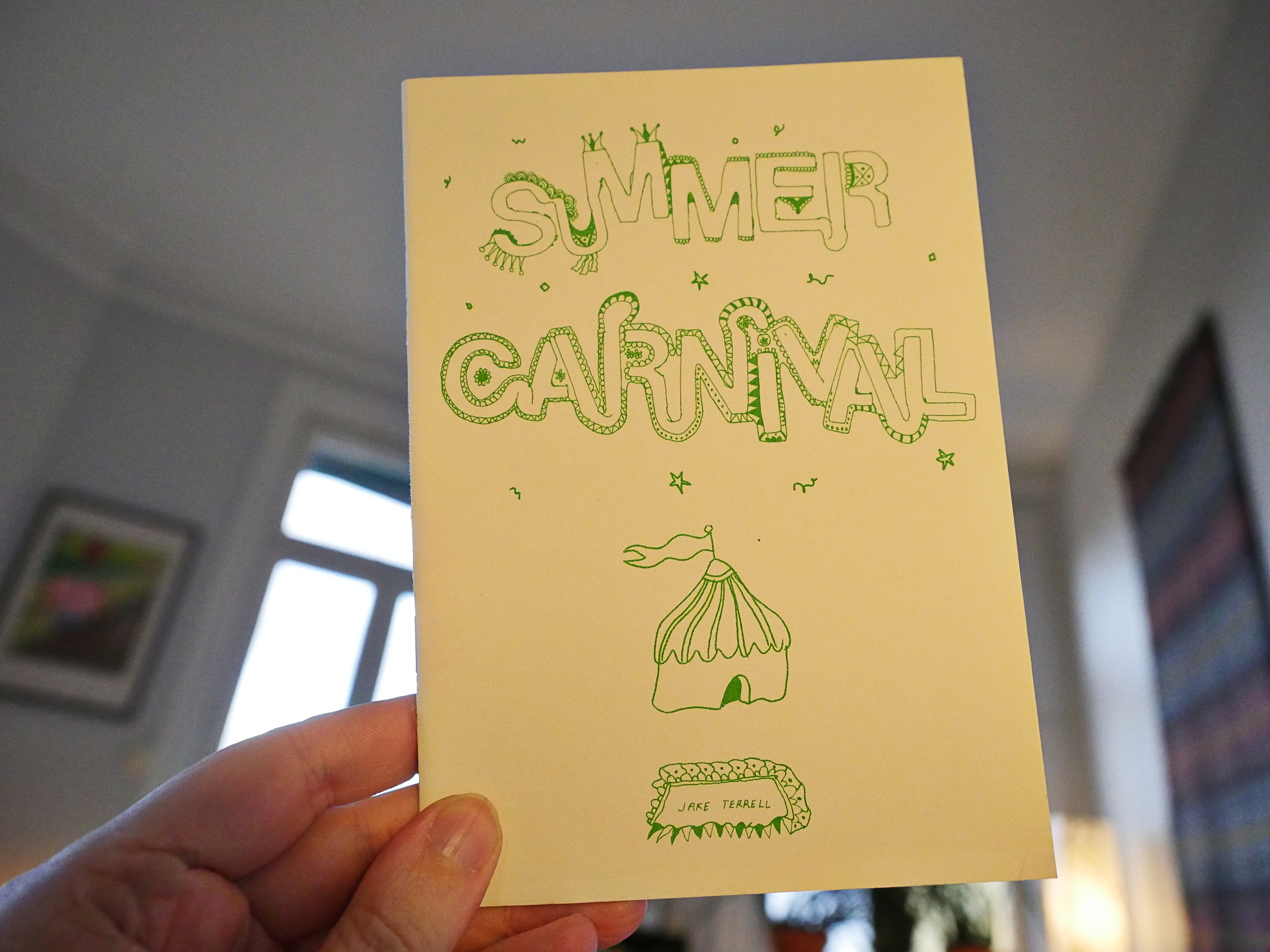
Summer Carnival by Jake Terrell (2d cloud)
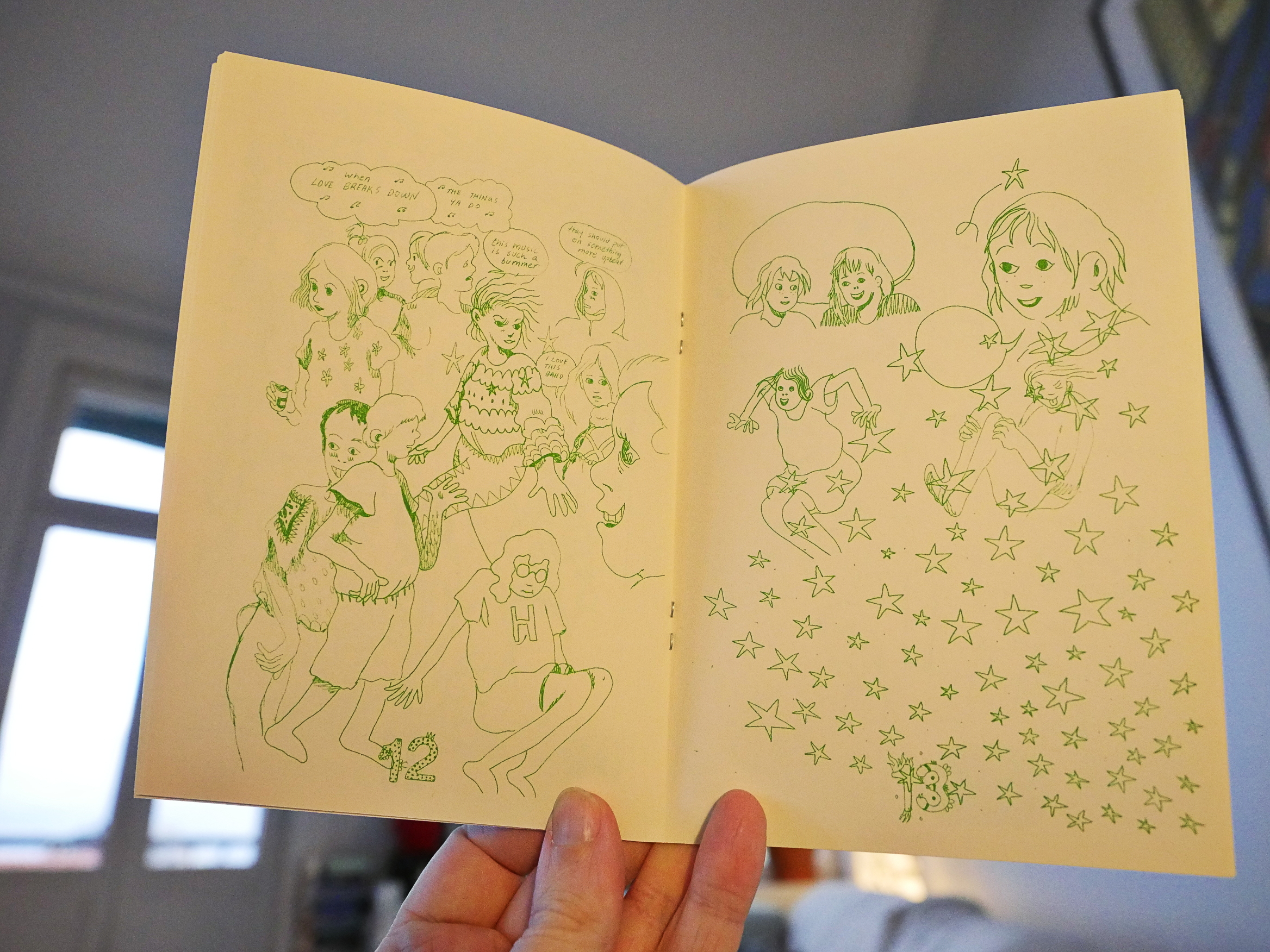
This one is a bit difficult to read… just due to the colour/printing choices made here. But it’s very summery: You feel like you have to squint into the sunshine.
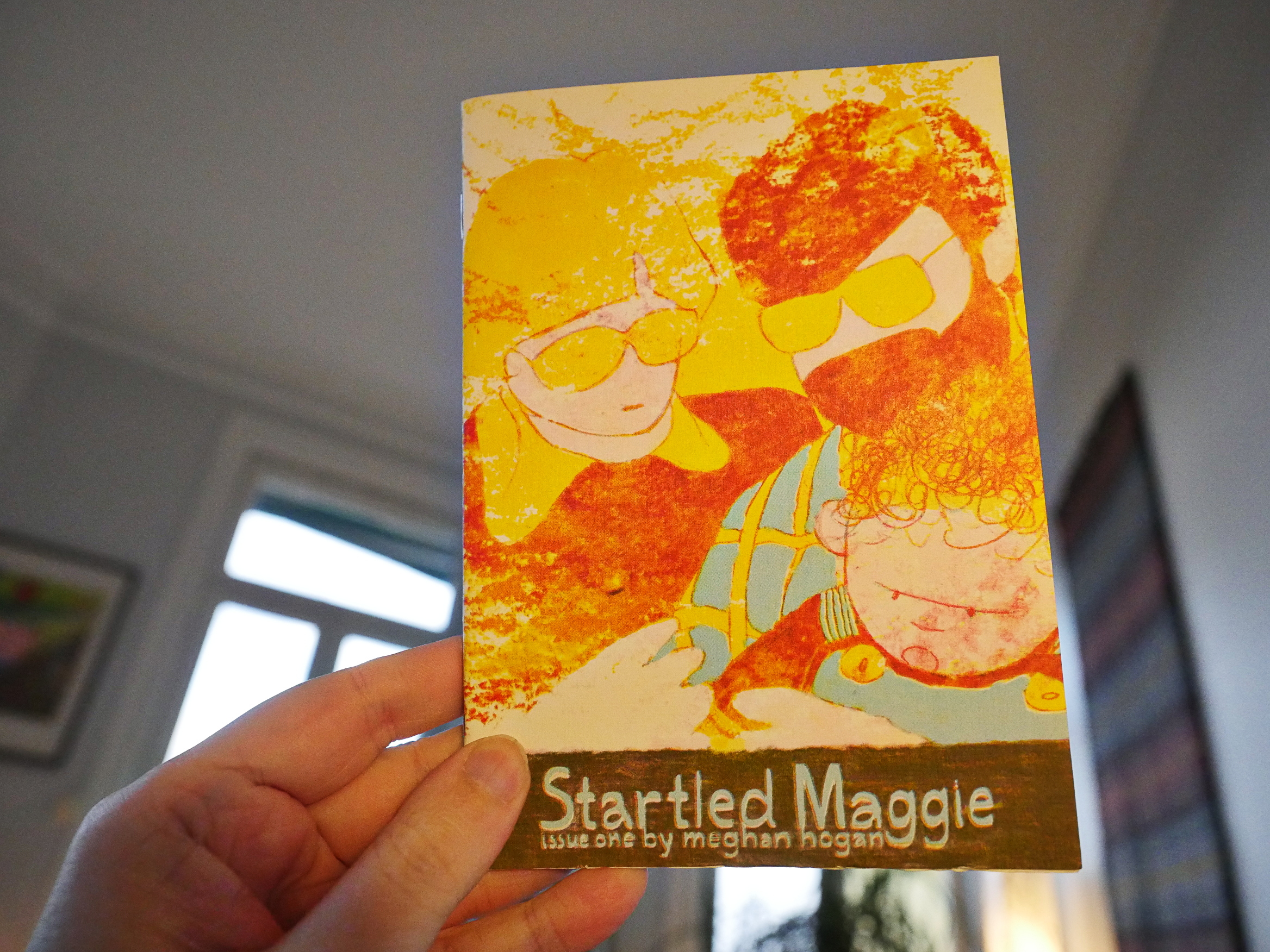
Startled Maggie by Meghan Hogan (2d cloud)
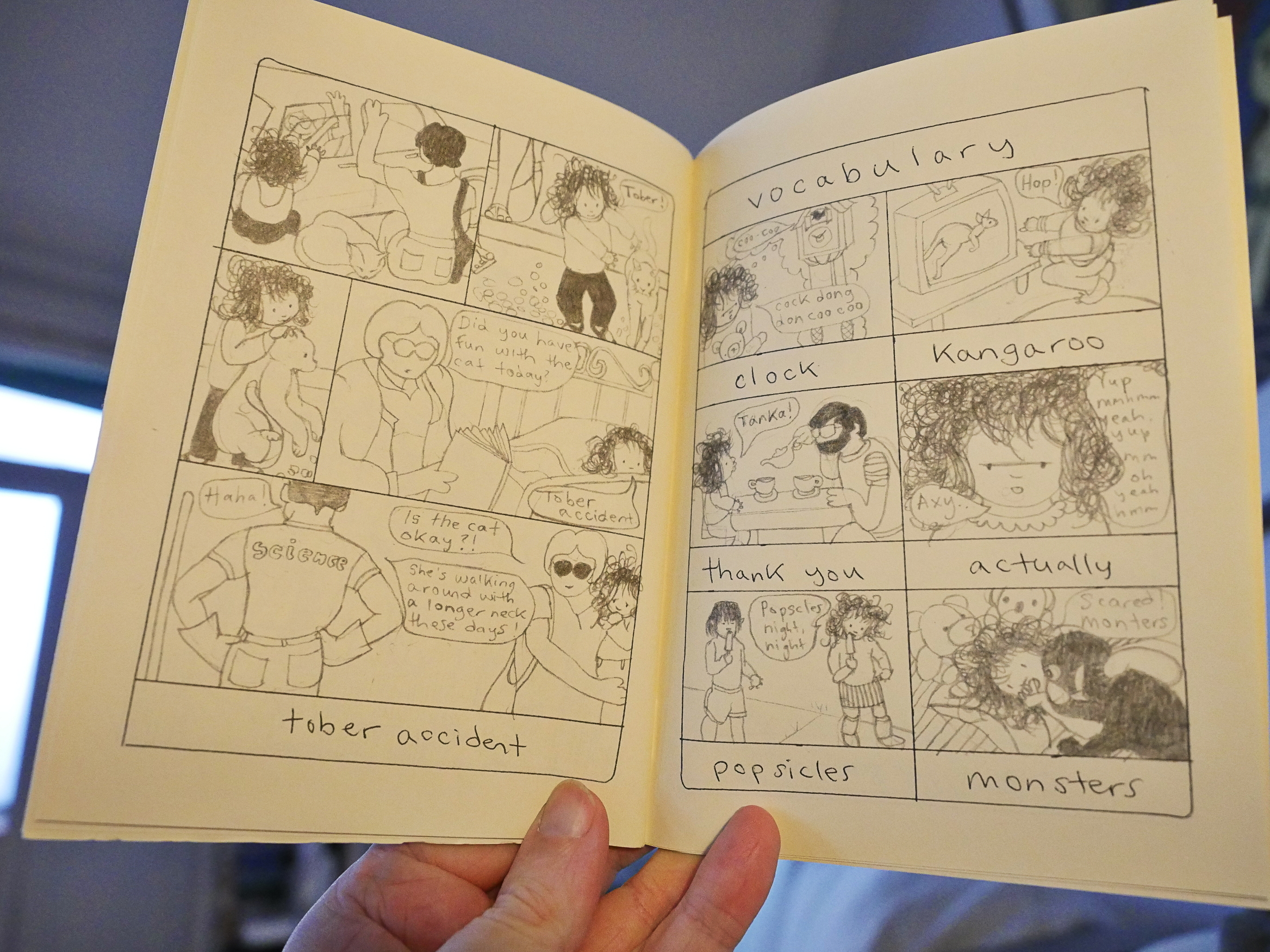
This was published in 2012 and has to be one of the first things 2d cloud published? It’s cute.
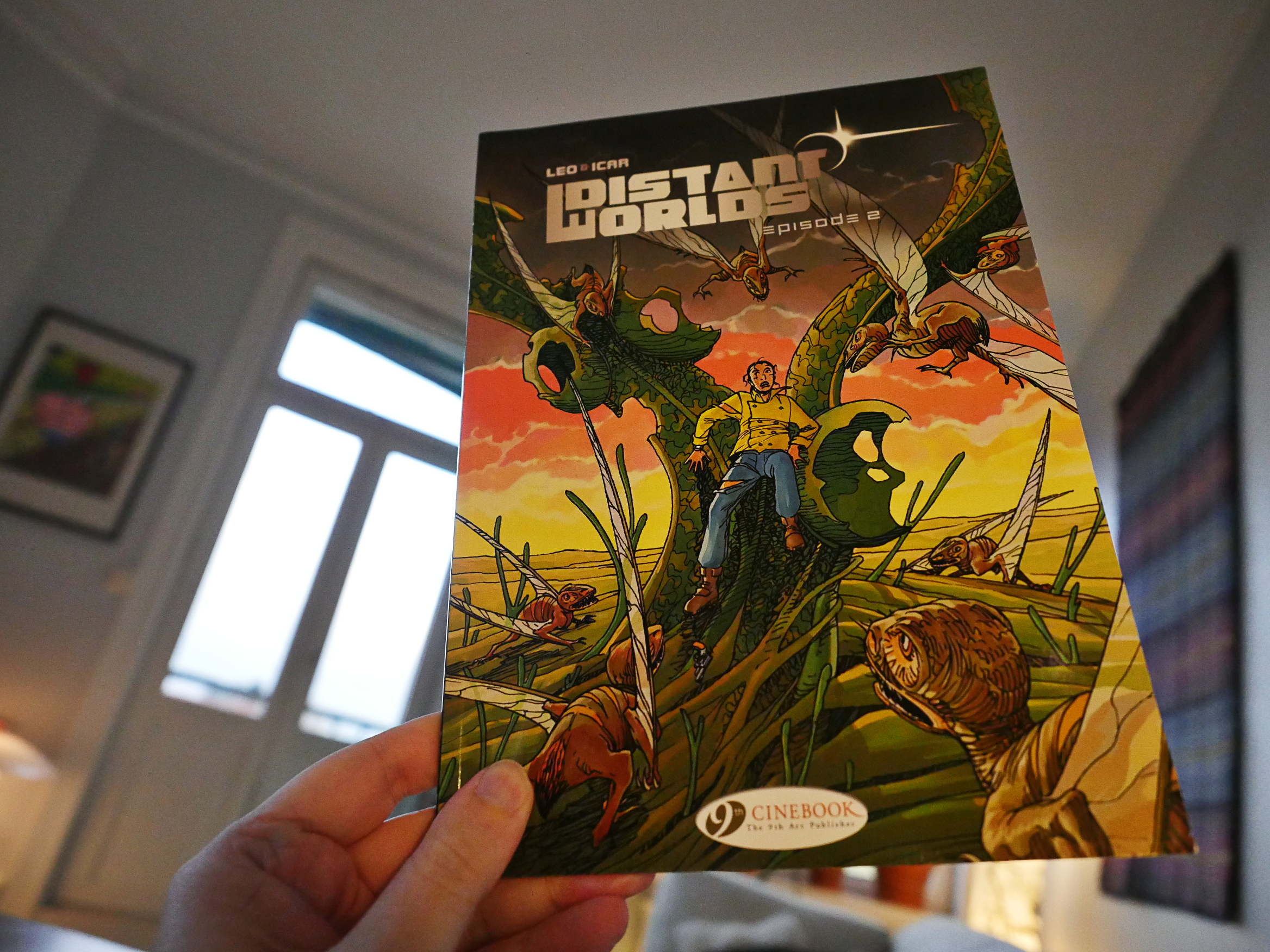
Distant Worlds 2 by Leo & Icar (Cinebook)
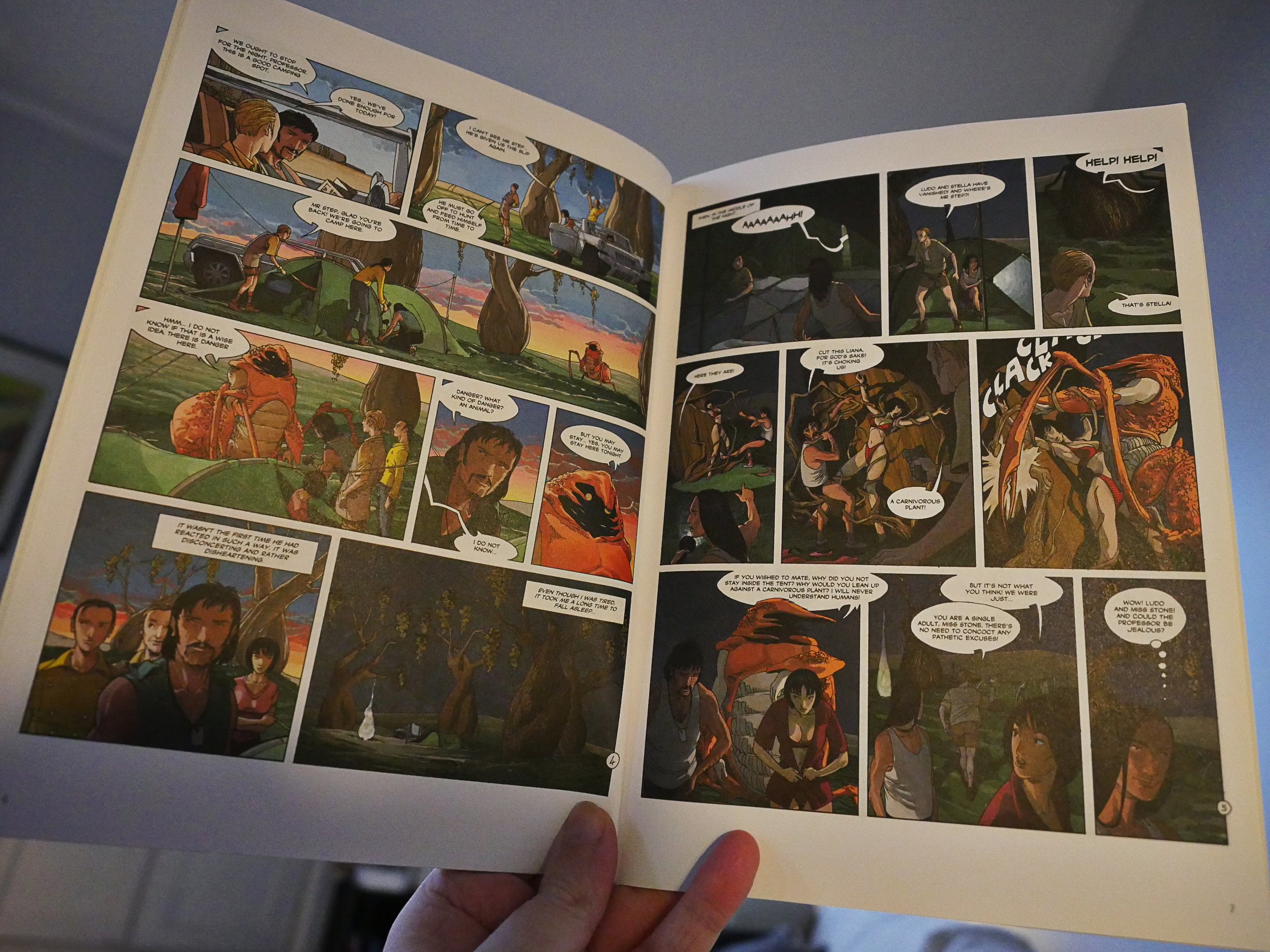
Cinebook has published dozens (I think) of science fiction comics written by Leo, and I’m having some difficulty keeping the plot lines of the various series apart. But this is a series I may not have read before? Did I miss the first album in the series?
As usual, Cinebook prints these albums in slightly reduced size and with somewhat muddy colours. It’s a bigger problem here than usual, because Icar’s artwork is quite detailed and he doesn’t really use colours much to keep things visually separate. Combined with the too-small lettering, it makes for a slightly unpleasant reading experience.
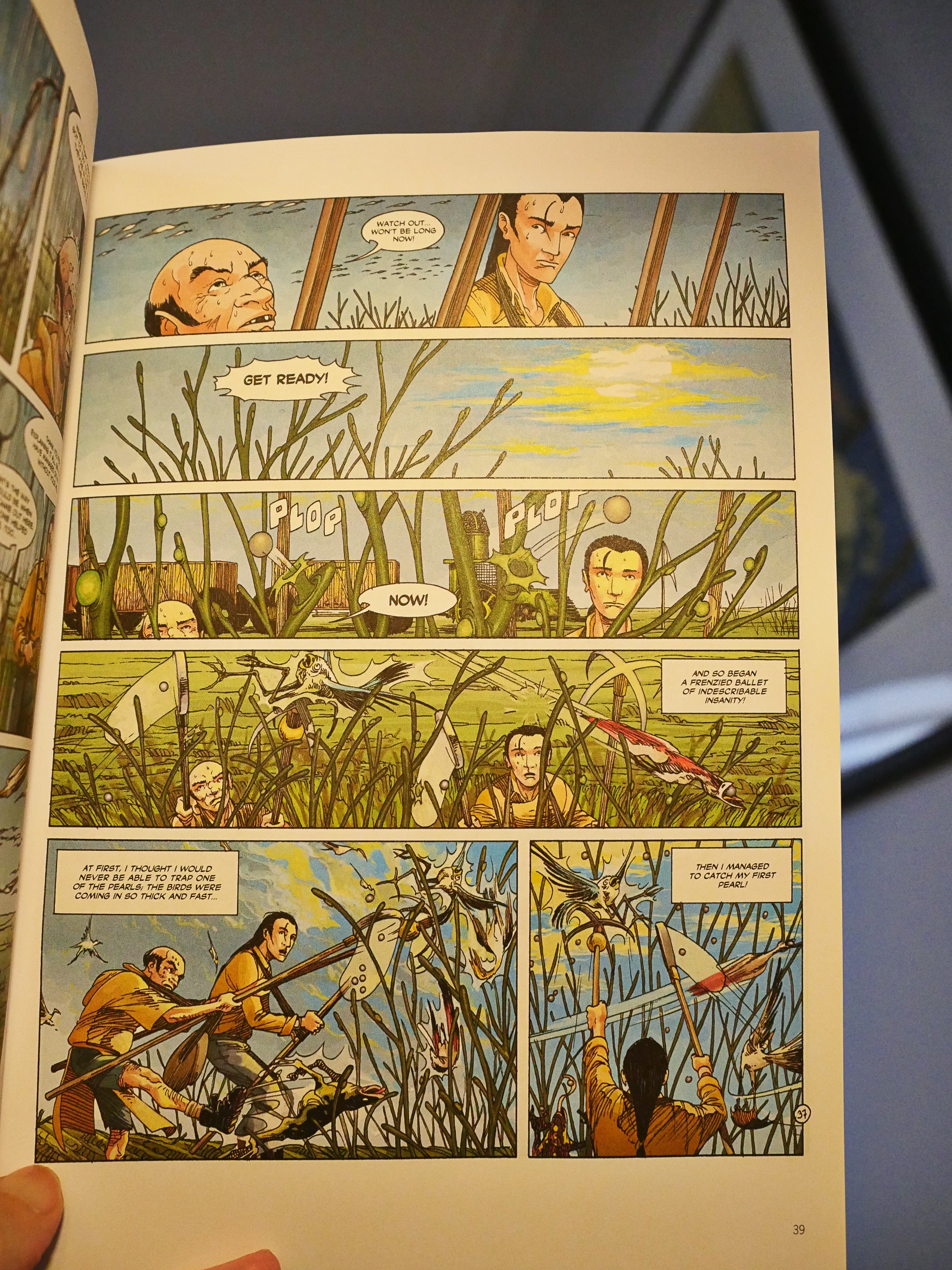
I do like this, though. It’s not very smart or anything, but it satisfies my sci-fi craving.
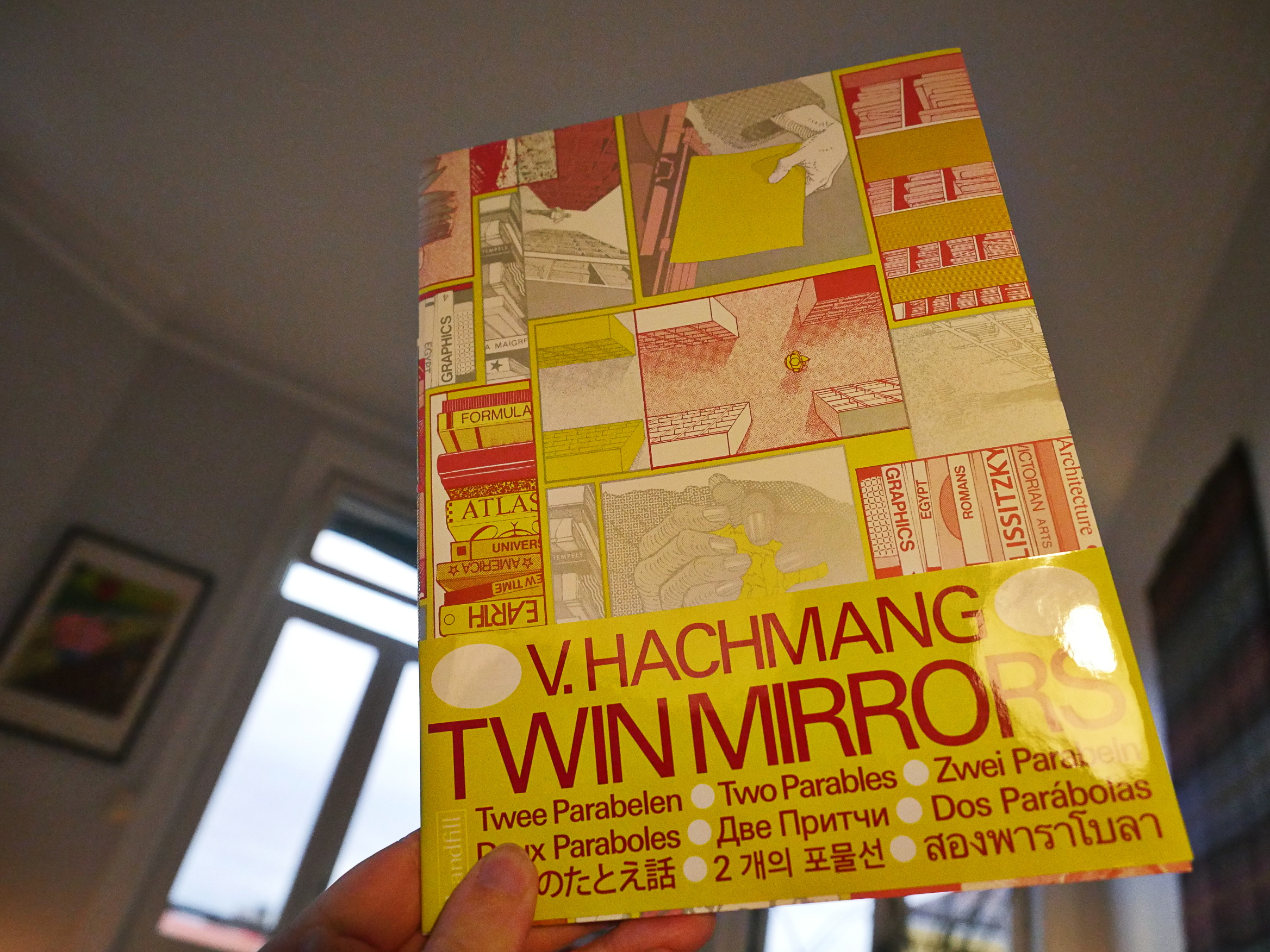
Twin Mirrors by V. Hachmang (Landfill Editions)
Huh. There’s two separate sheets included here… flyers?
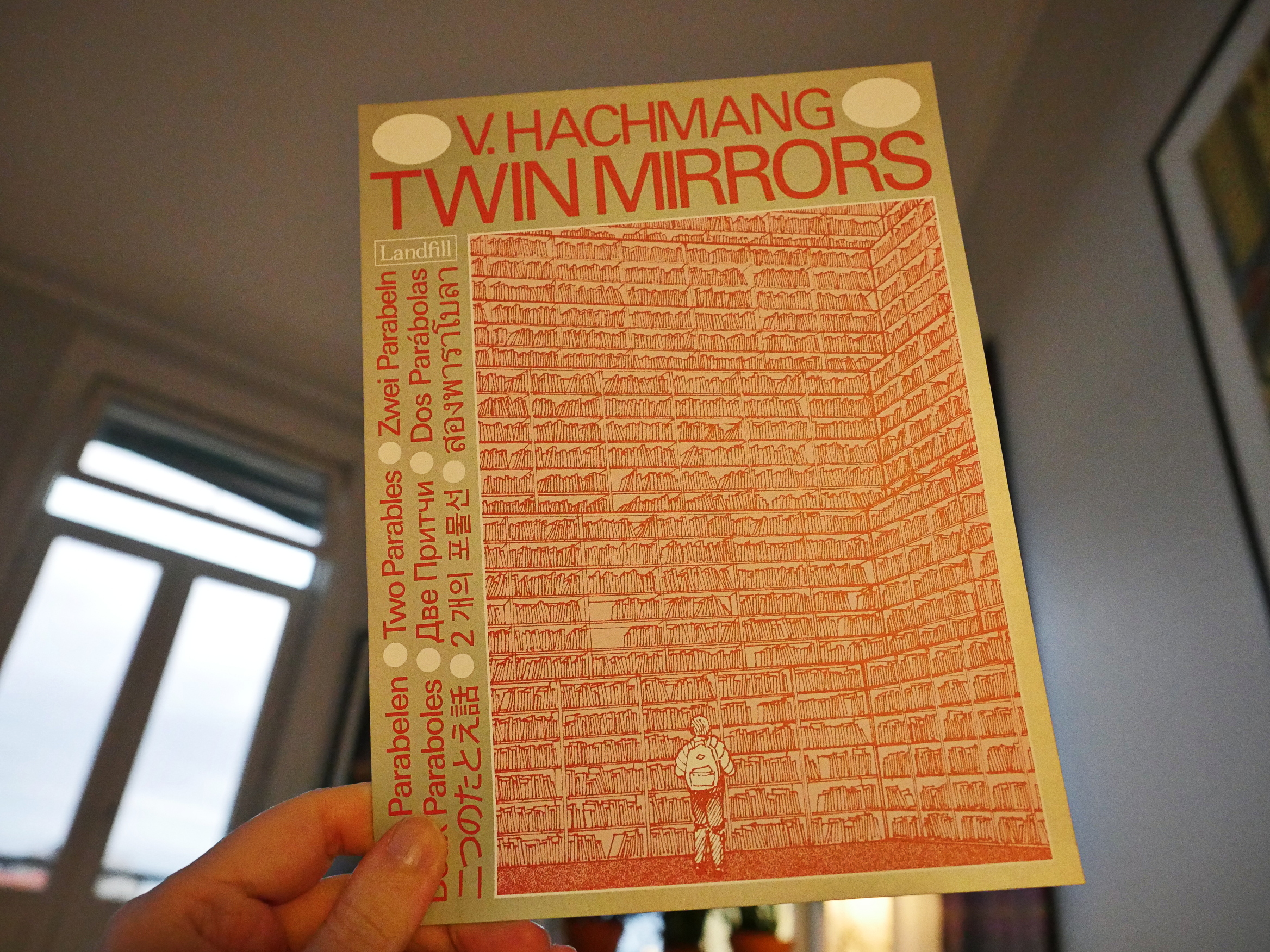
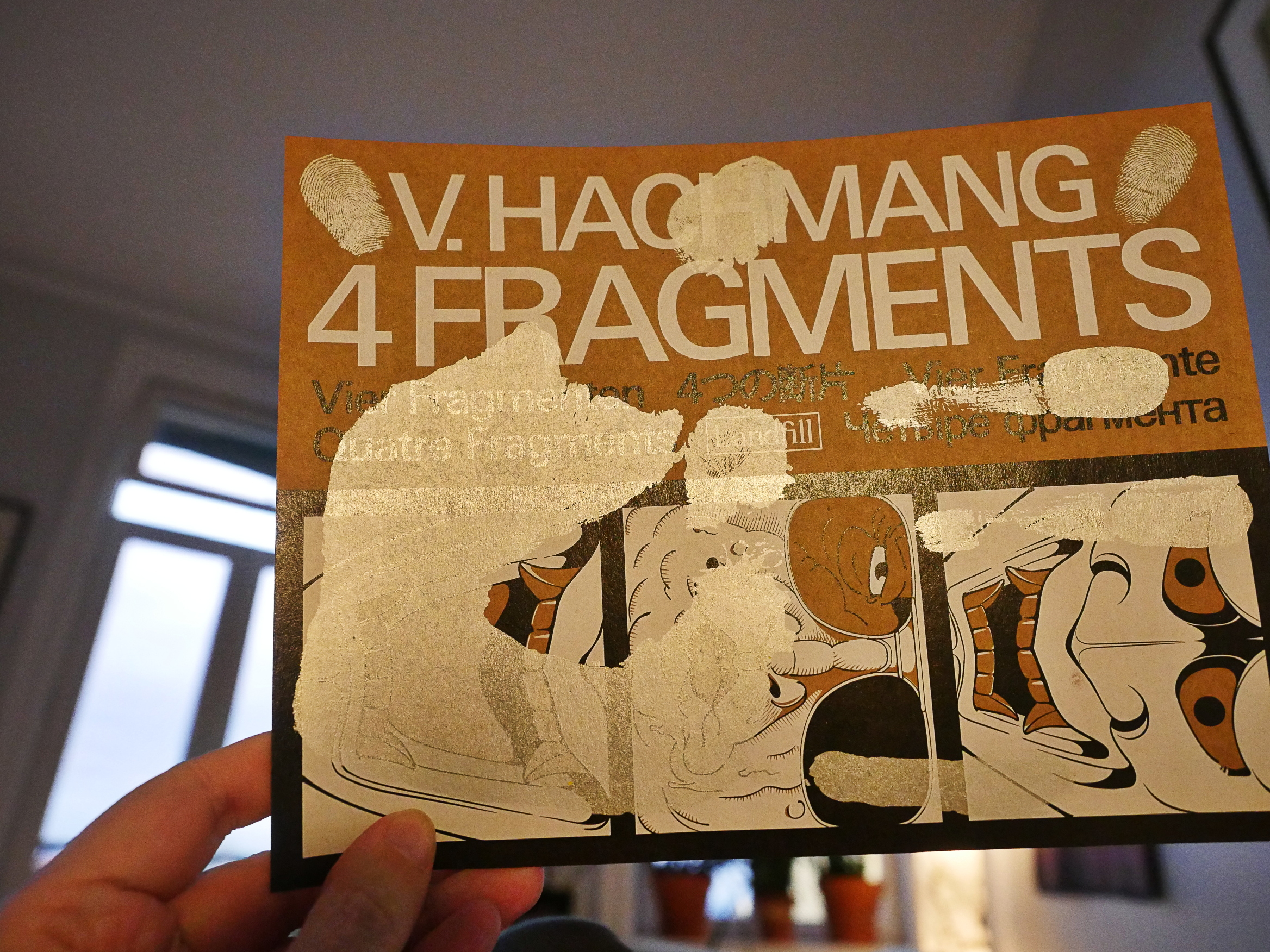
I guess. There’s on stiff cardboard and very stylish.
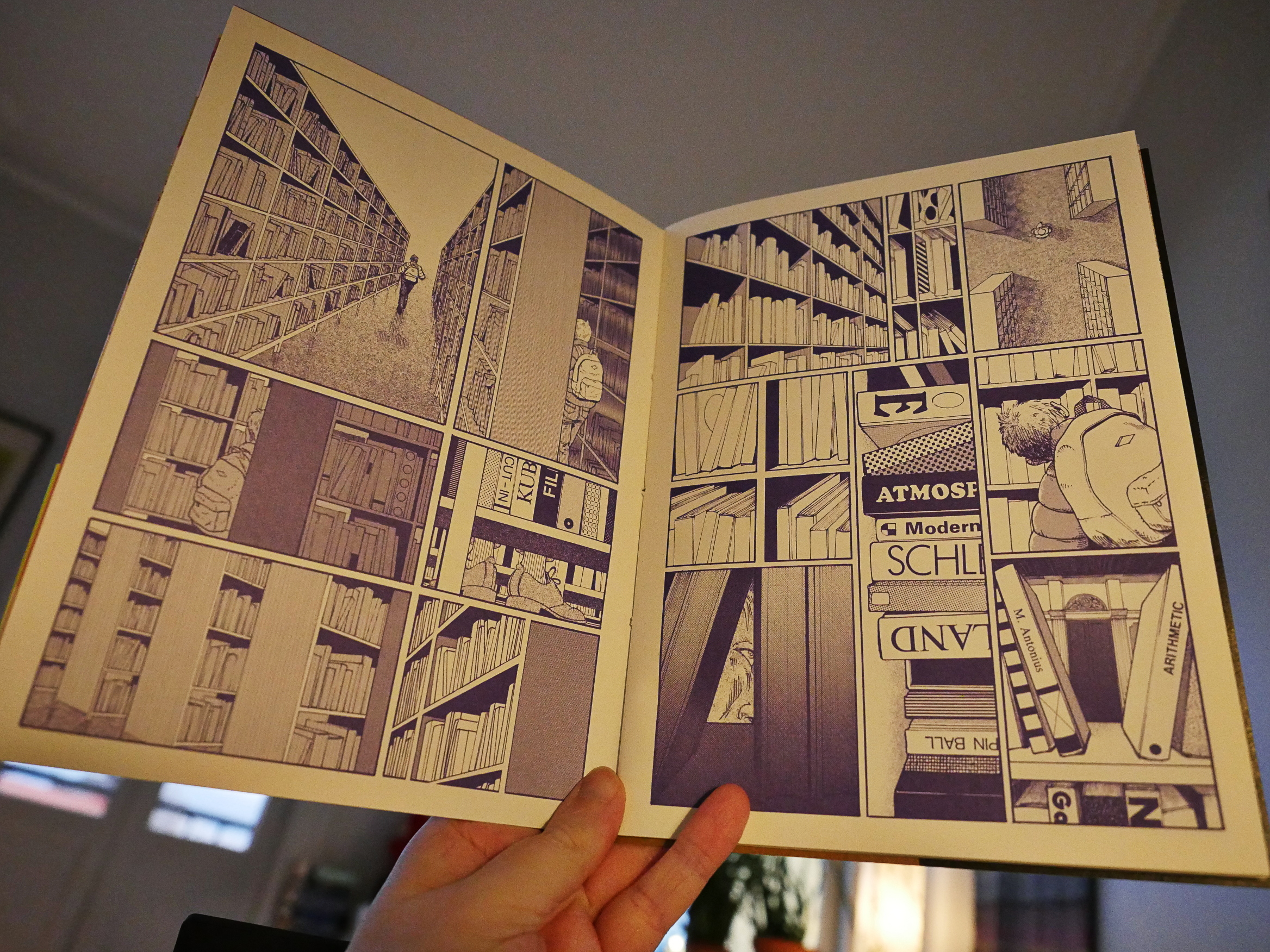
Anyway, this is a very disappointing book. It has the super-stylish Landfill look, but the two stories included here a basically O. Henry kitsch. I groaned out loud at the conclusion to the first story. The second is even worse.
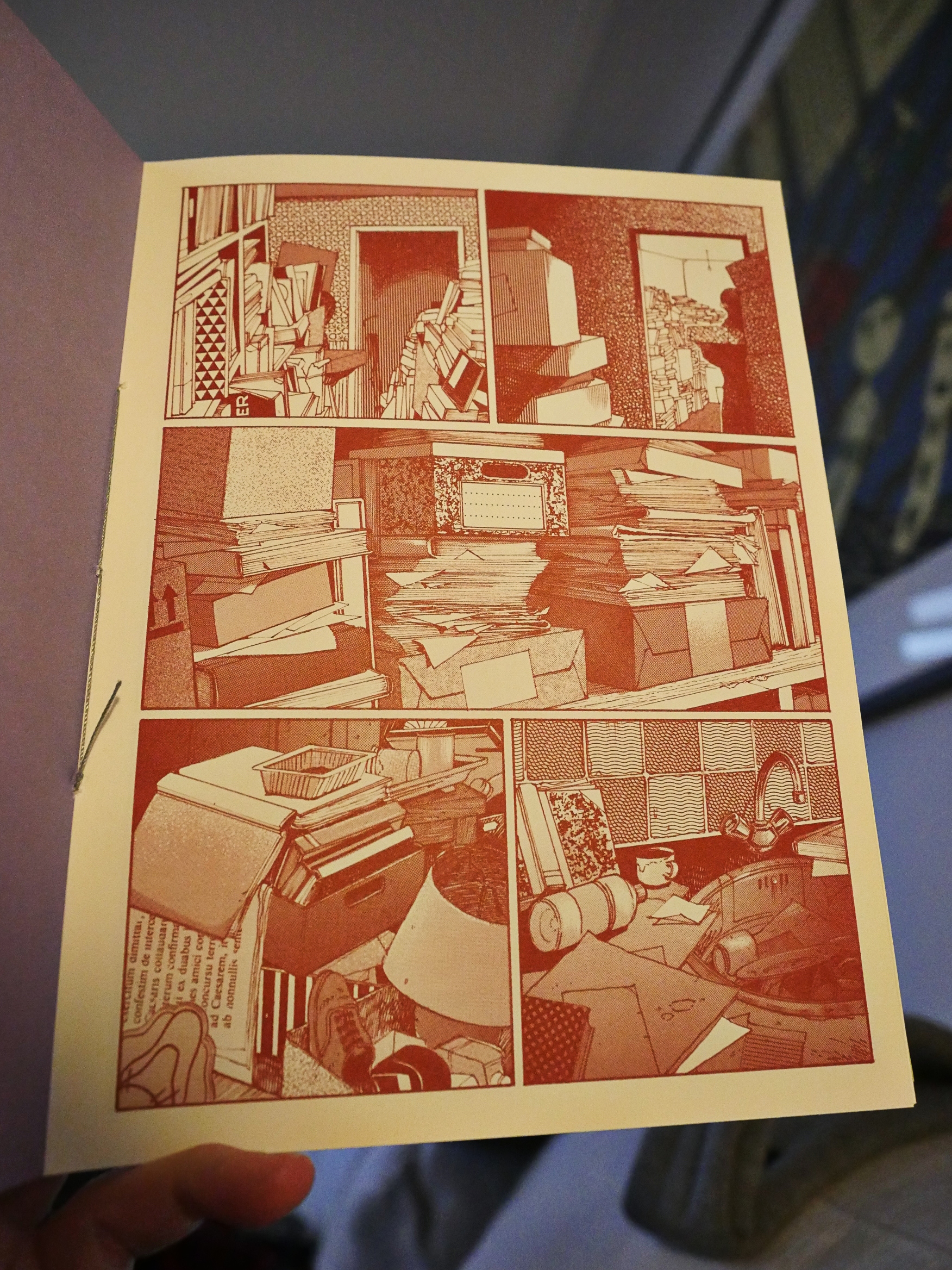
But the artwork is very nice, indeed. The sort of hyper-detailed look you get when you have a bunch of assistants working for you, I’m guessing? I know nothing about the artist in question here.
I liked the stitched binding, but I wonder what on Earth Landfill is doing publishing this. Contract work?
Tempo 24 (Egmont)
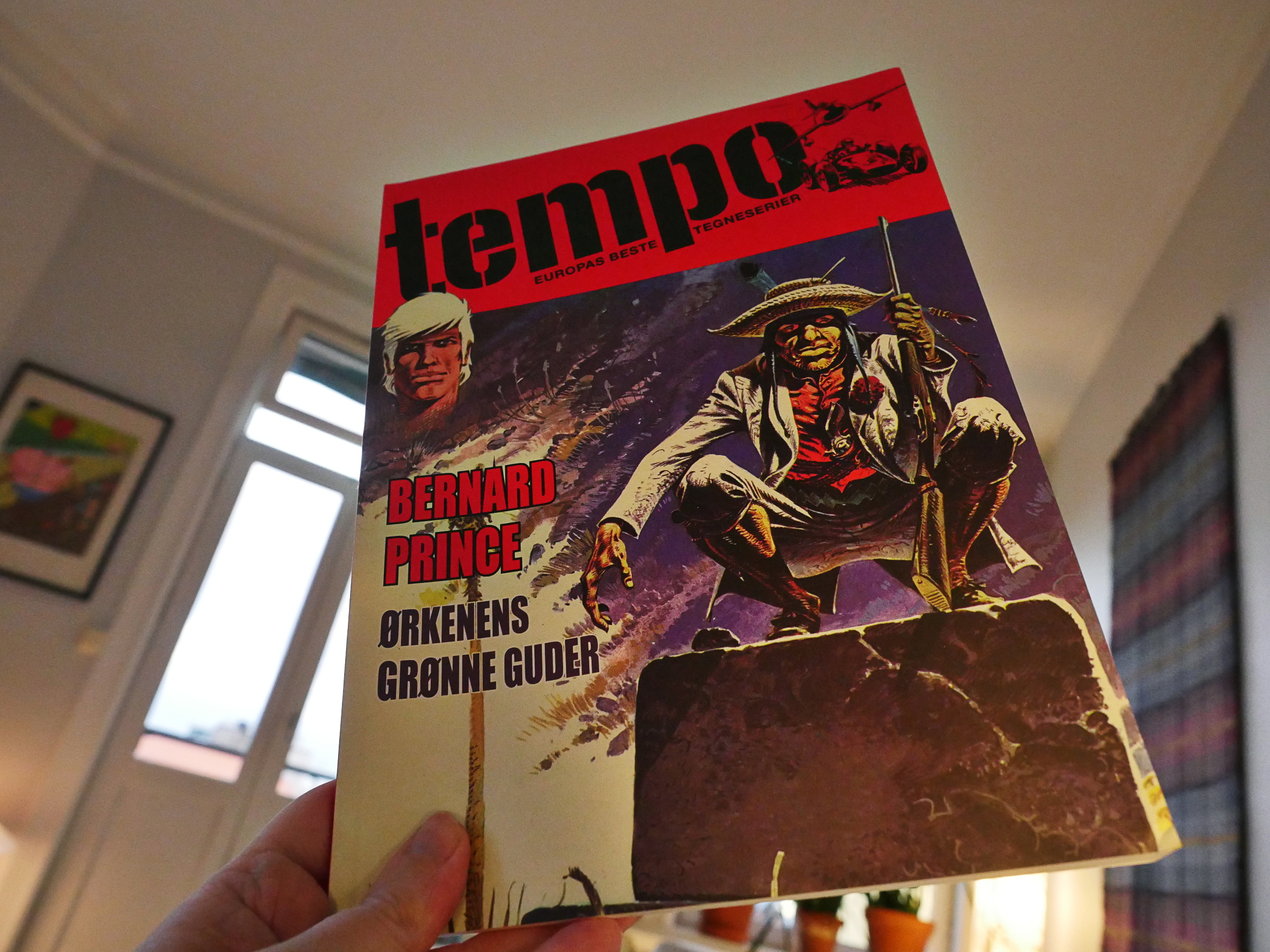
So this is a new issue of the quarterly-ish series that publishes translated classic (and “classic”) Frenchey (that’s a word) action series.
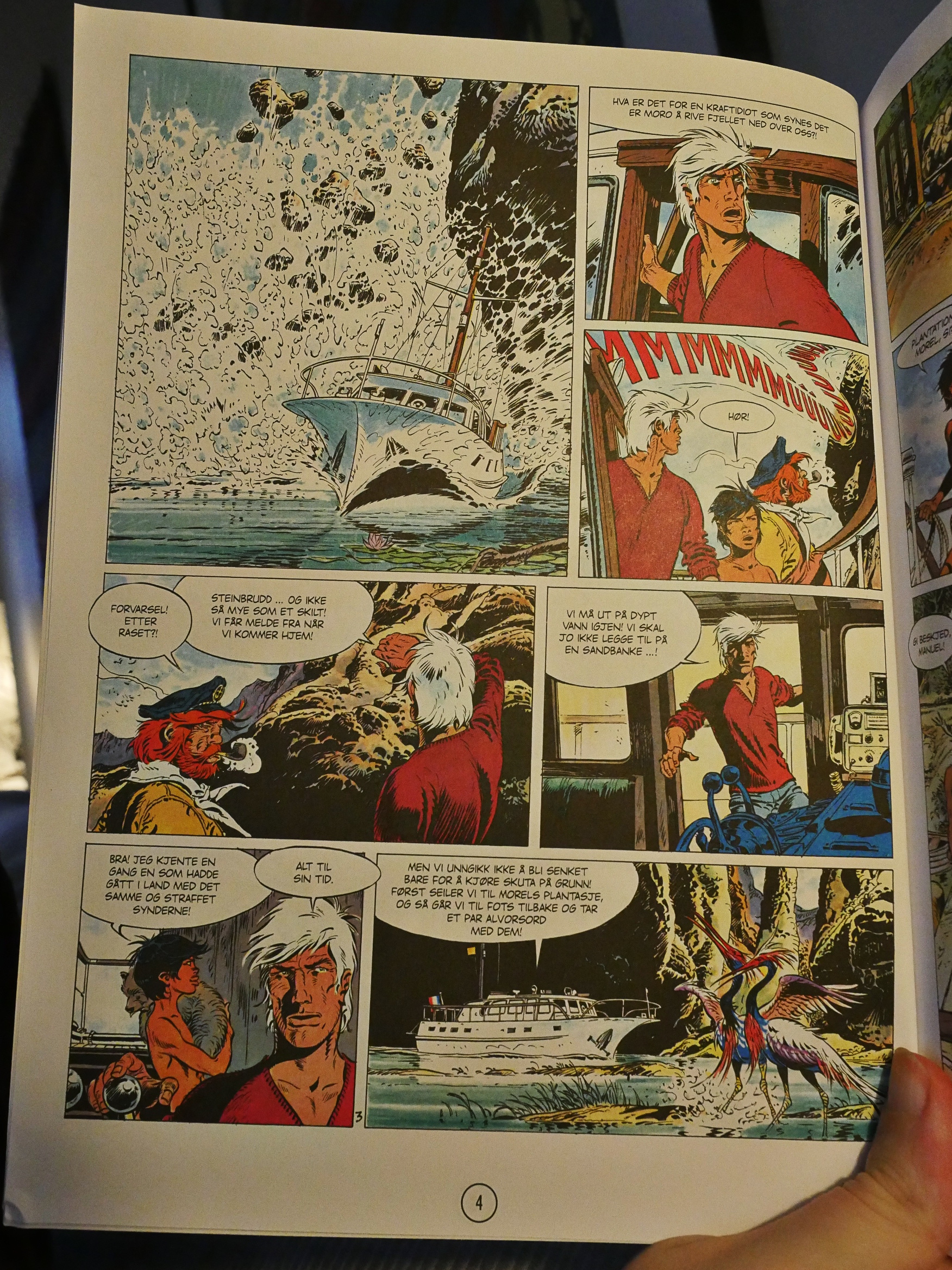
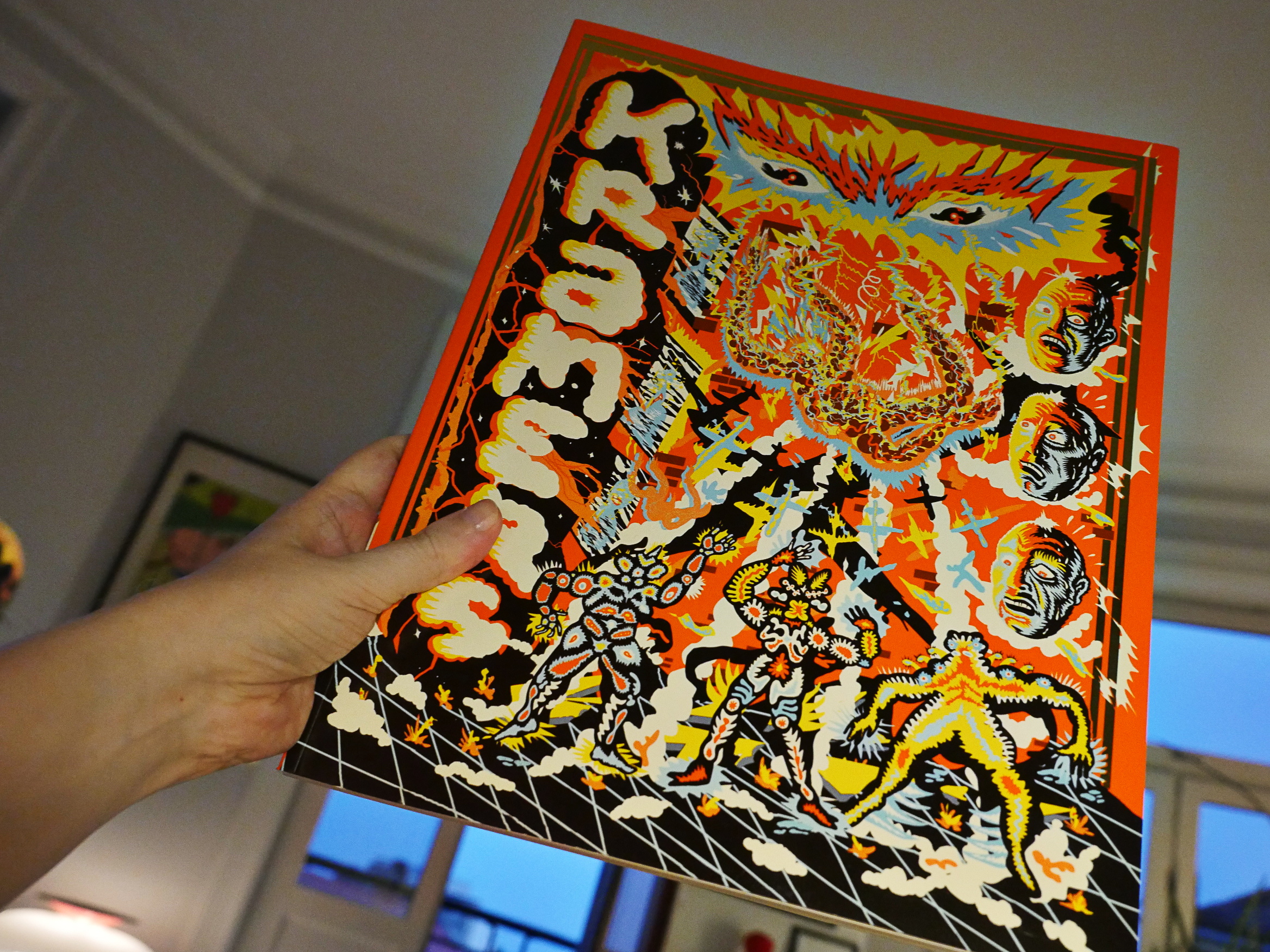
There’s usually two or three albums worth of stuff per issue, and this time we open with a Bernard Prince thing from 1974. It’s the Platonic Ideal of a boys’ comic: It’s about Bernard Prince (the young guy with the white hair up there), his adopted son Hassan, his shipmate Jordan (the older red-headed curmudgeon/comic relief)… and a bear cub… on a yacht… sailing around in the tropics… getting into one adventure after another.
It’s got everything.
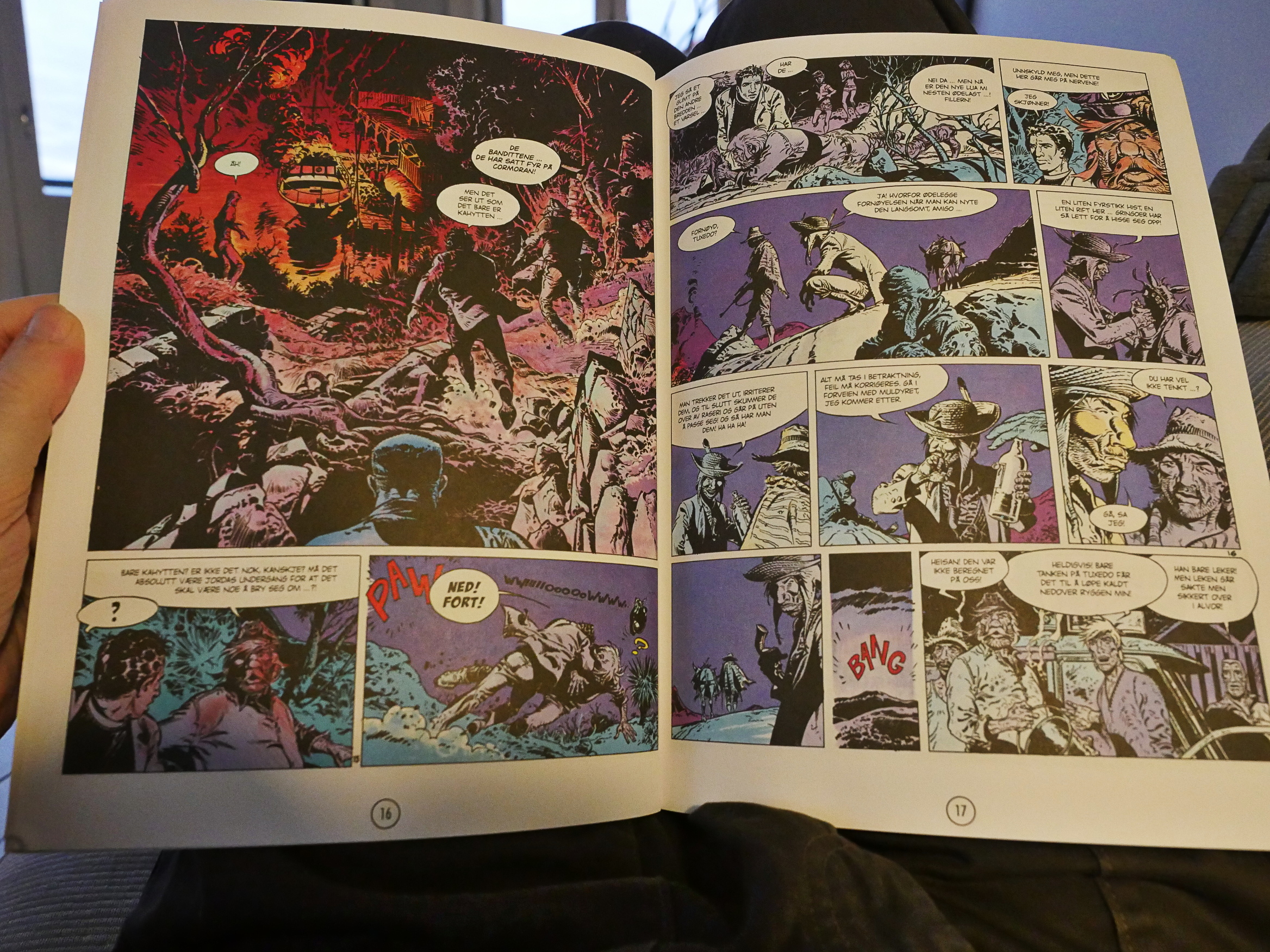
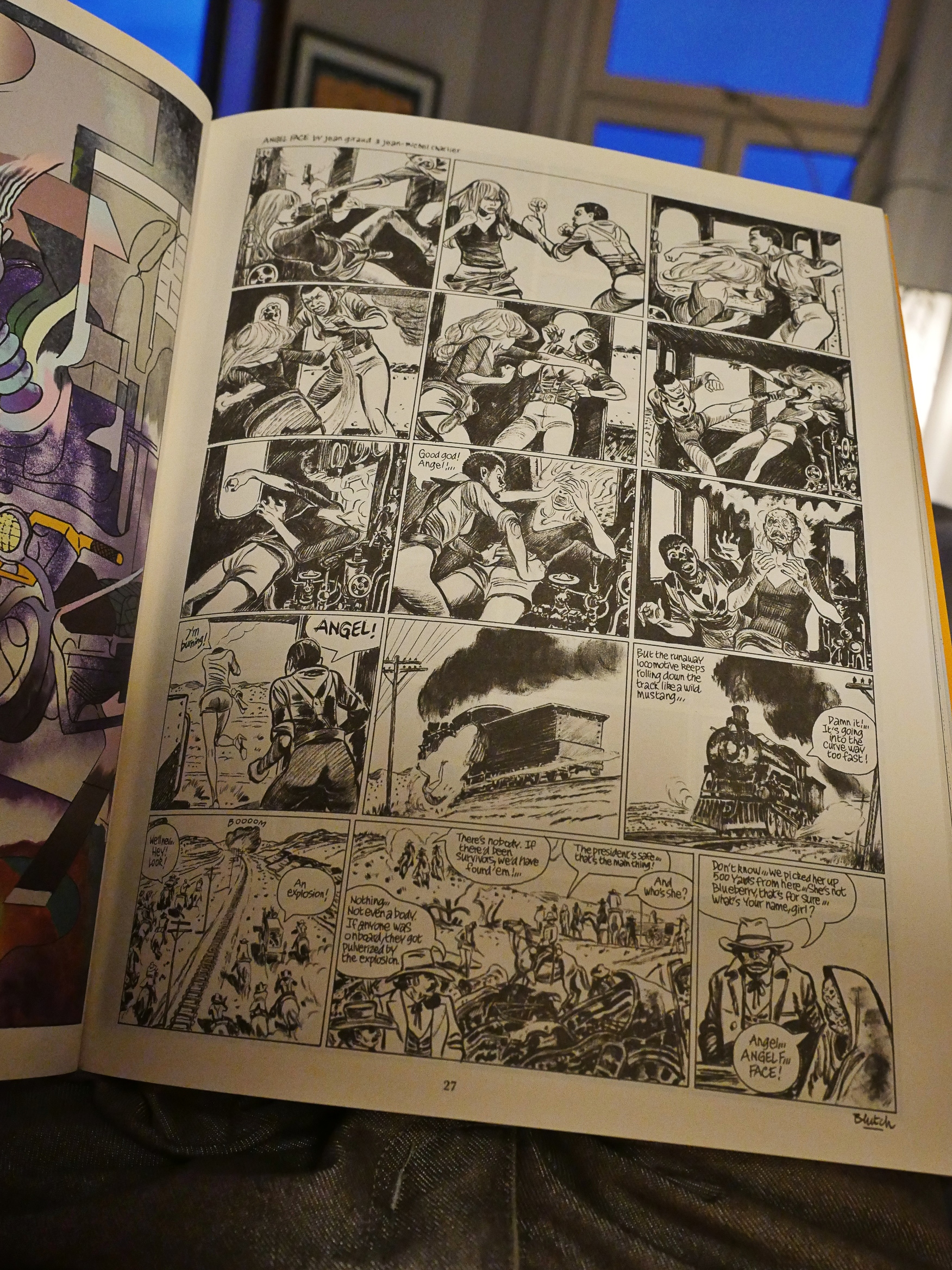
Most importantly, perhaps, is that it has Hermann drawing it. His much-imitated scratchy-but-razor-sharp line is just perfect for these scruffy adventure stories, equally good at action and people standing around talking.
The stories? Well… it’s the standard stuff. But they’re not horrible!
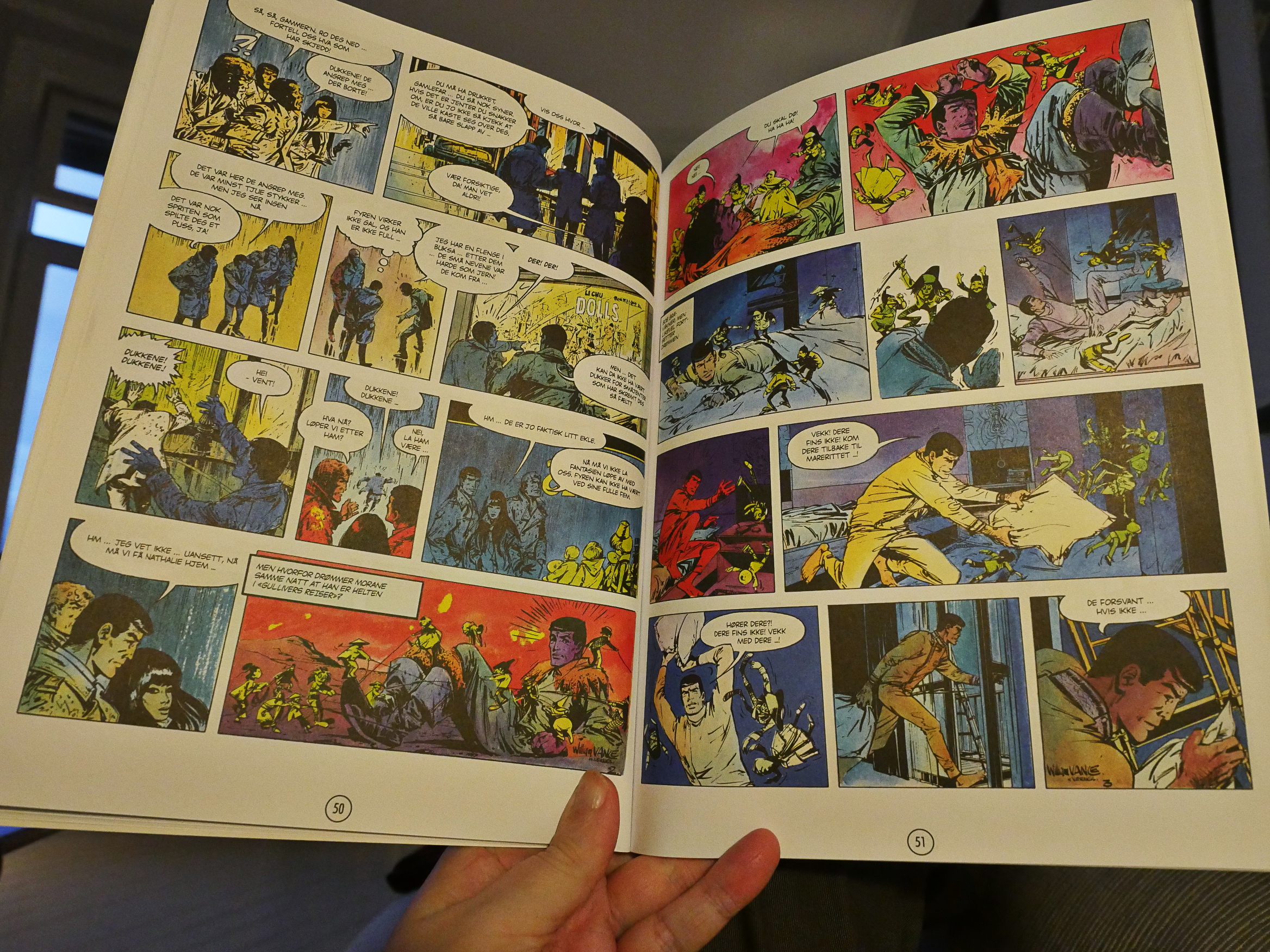
The next album included here is a Bob Moranes thing from 1970, drawn by William Vance. The artwork’s nice, but the story is pure piffle. It’s confused and boring and a chore to get through.
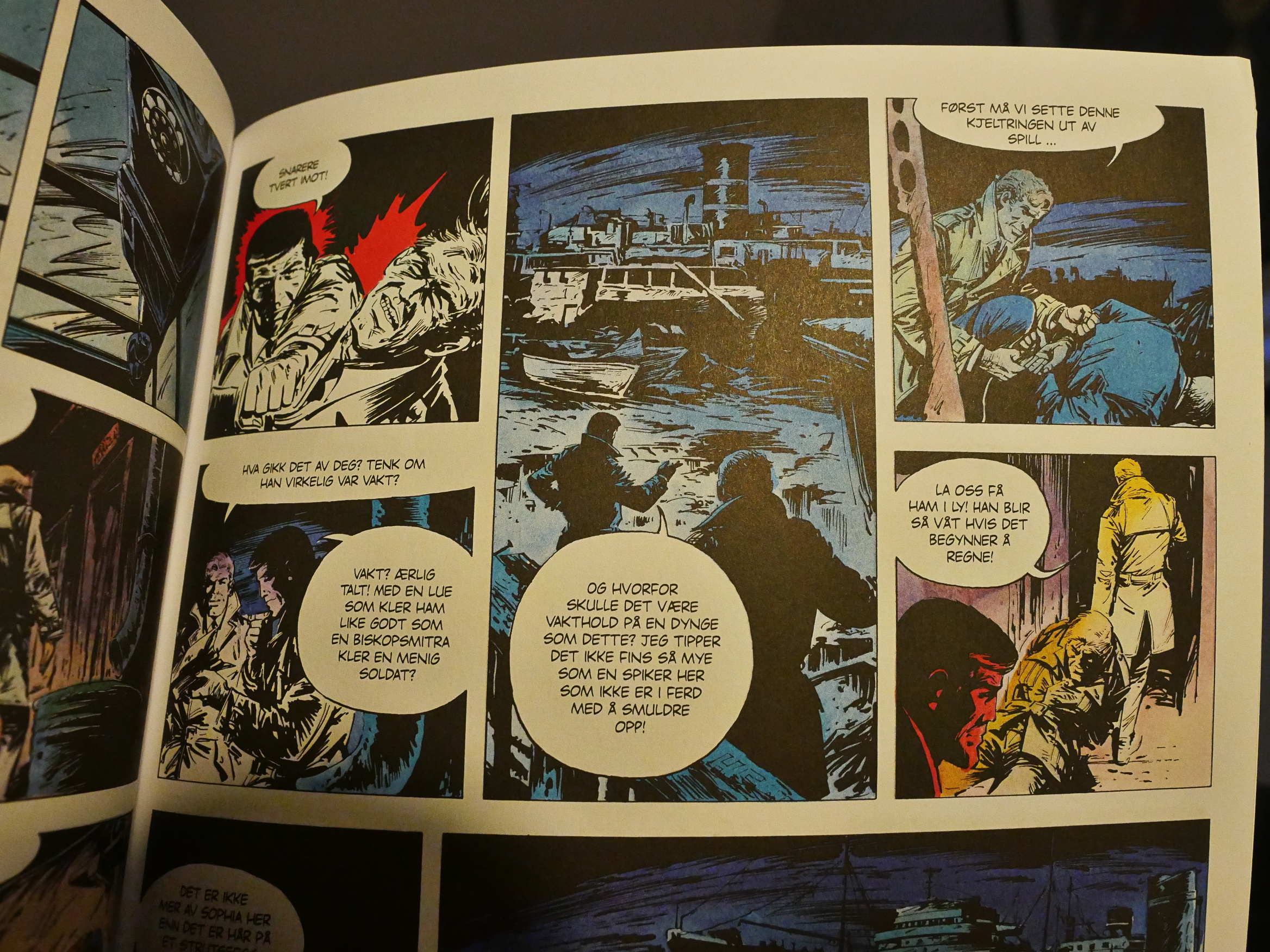
The most interesting thing here is really the colouring. Vance (or whoever did it) sometimes does the colours in a naturalistic way, but he usually uses it to emphasise emotion, action or to just guide the eye across the page. It works well and it’s fun to look at.
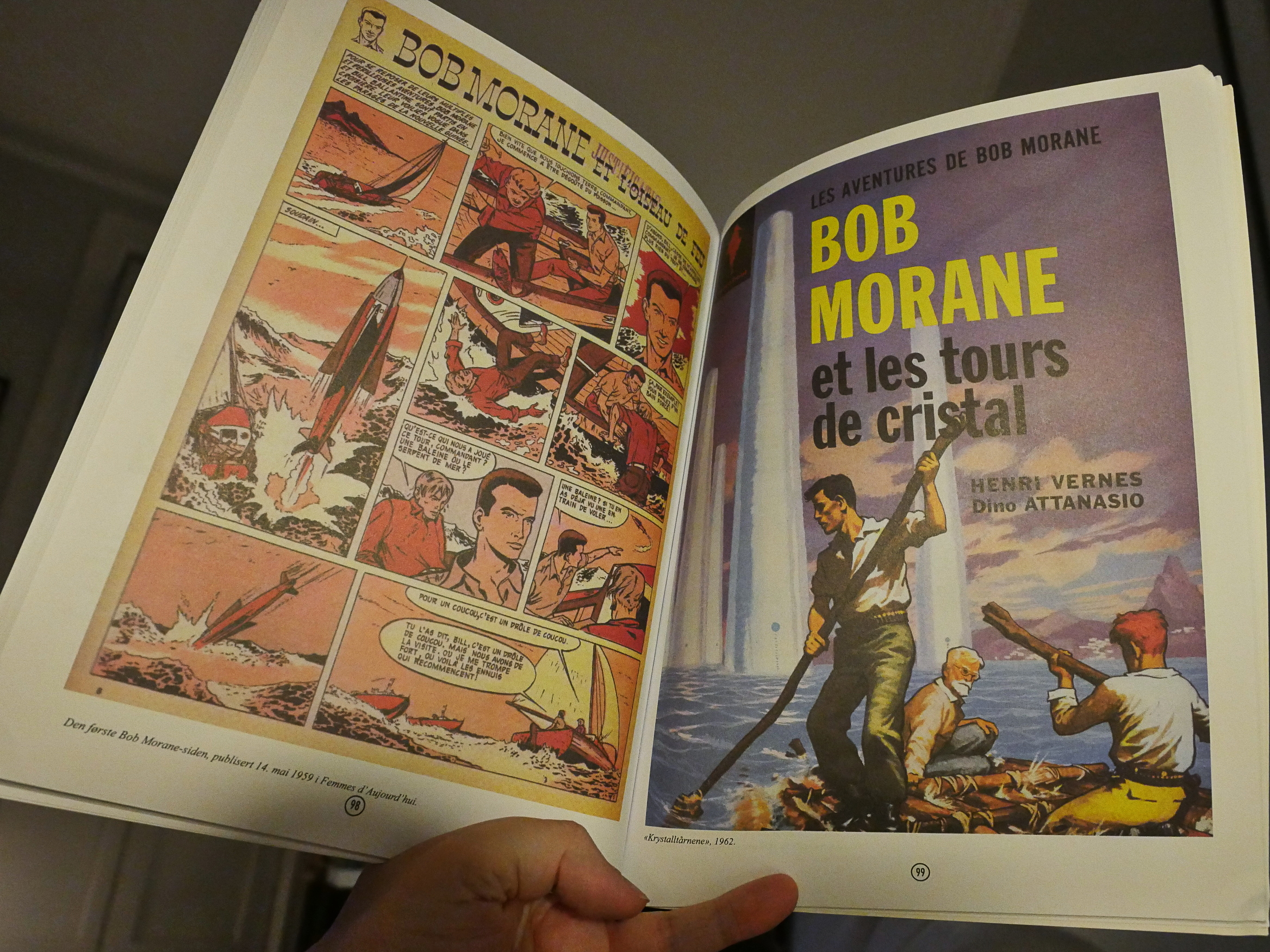
We helpfully get a ten-page history of Bob Moranes with some covers from the book series and some older pages.
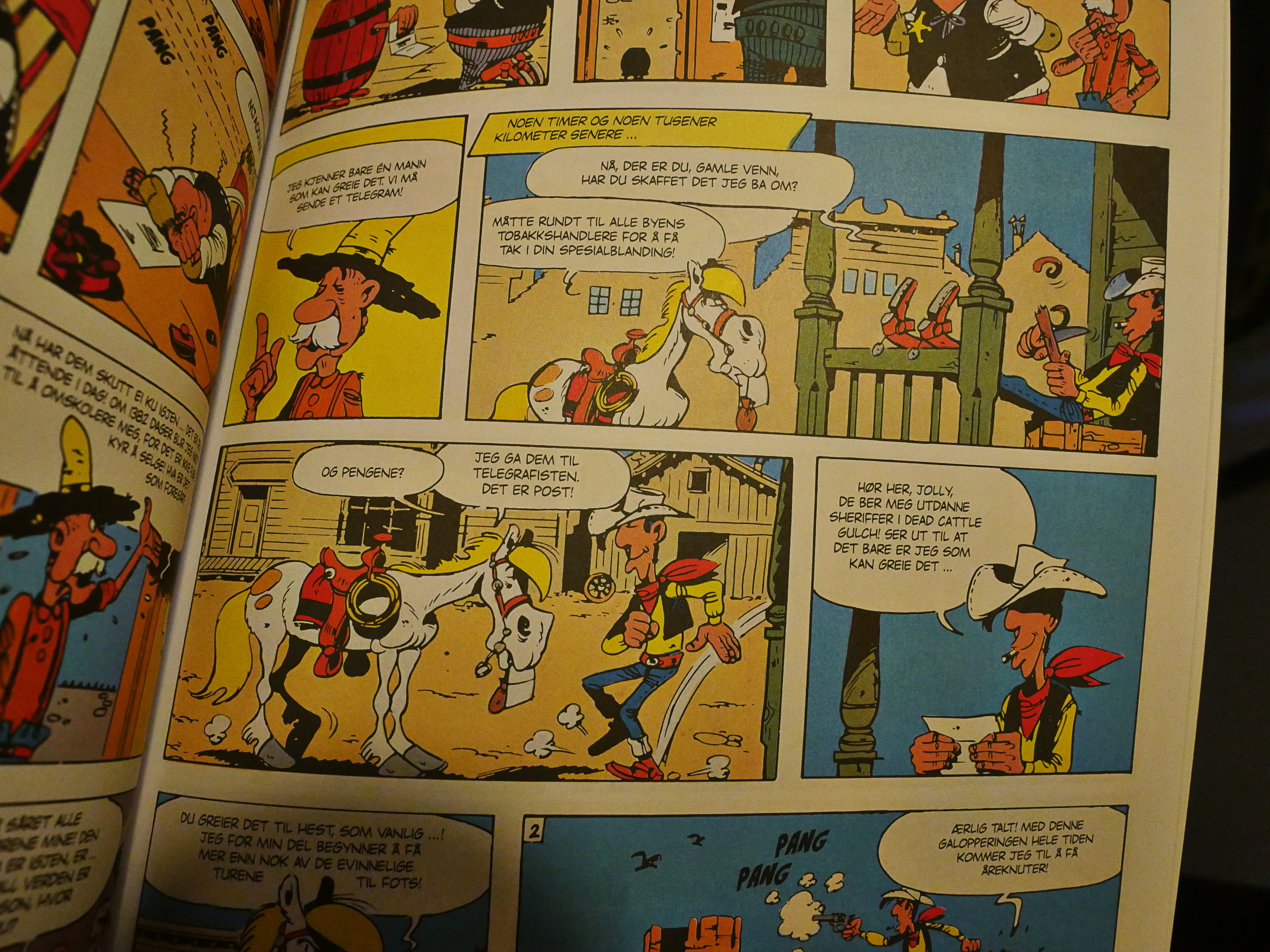
And to round out the mix, we get a short Lucky Luke story from the 70s.
So this time around, about half of Tempo was readable, which is about the normal ratio.
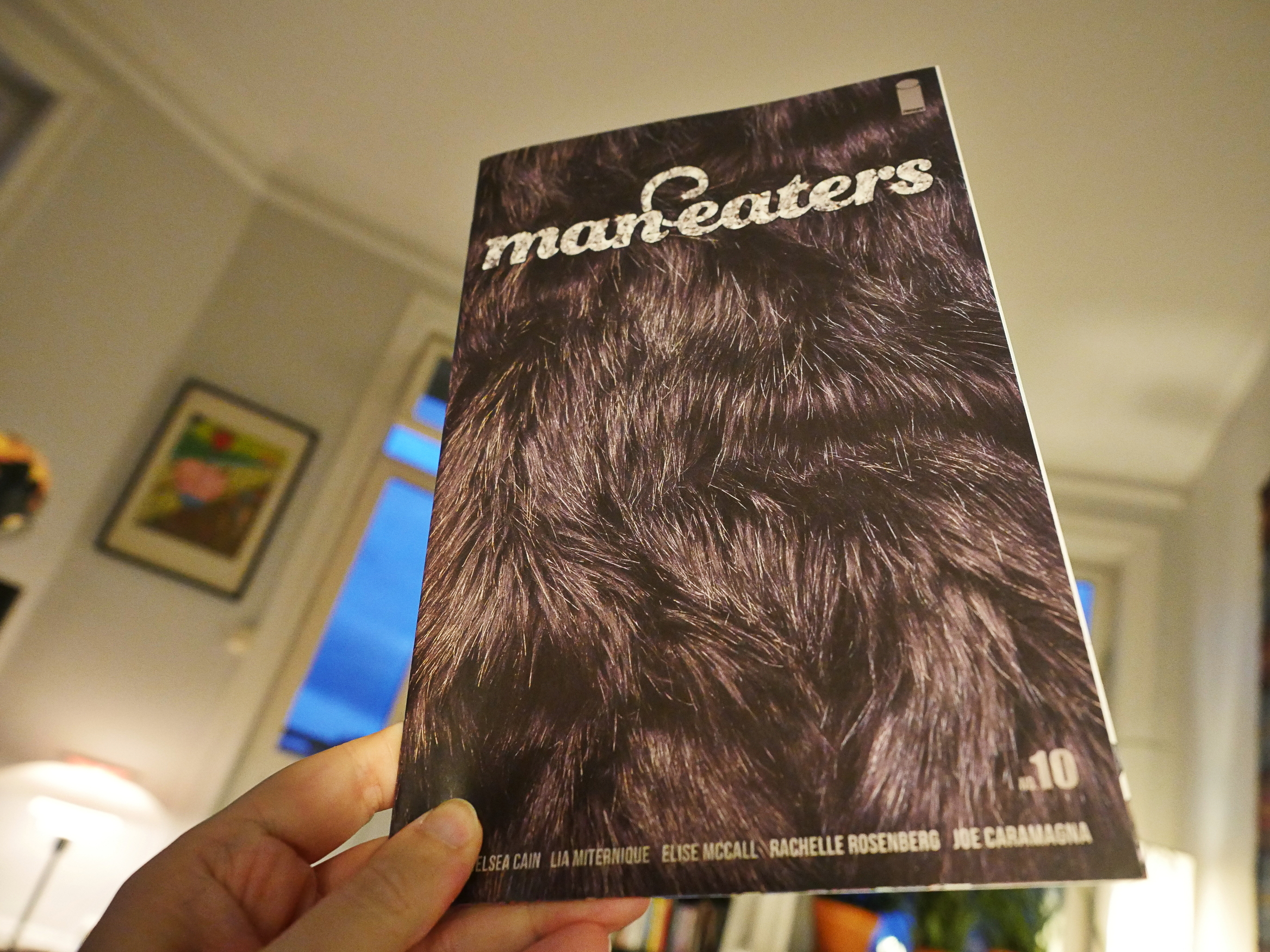
Maneaters #10 by Chelsea Cain and Elsie McCall and a bunch of other people (Image)
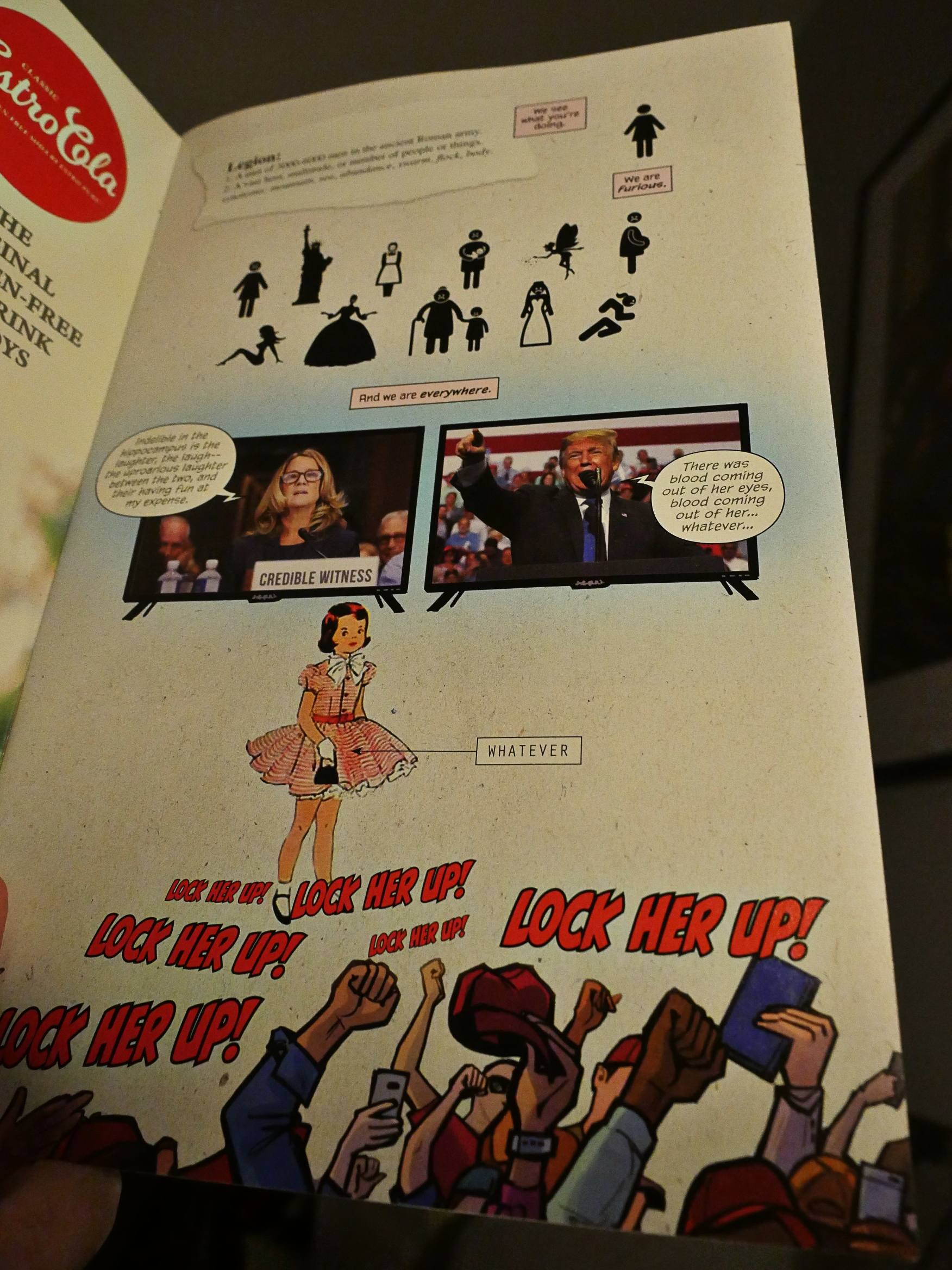
The most frustrating thing with Maneaters is how short each issue feels. I’m going to go ahead and guess that when it’s collected, it’s going to read extremely well.
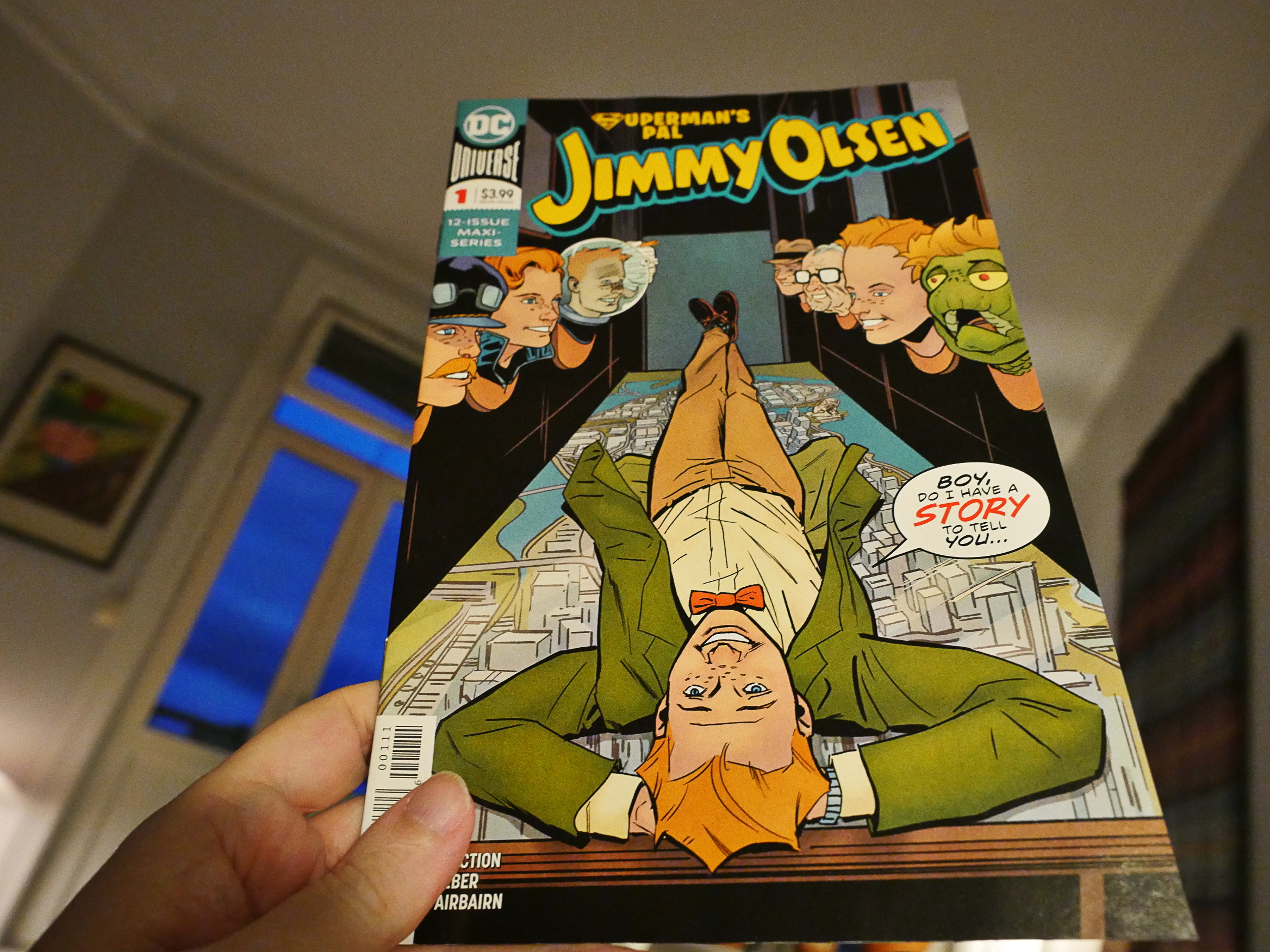
Superman’s Pal Jimmy Olsen #1 by Matt Fraction and Steve Lieber (DC)
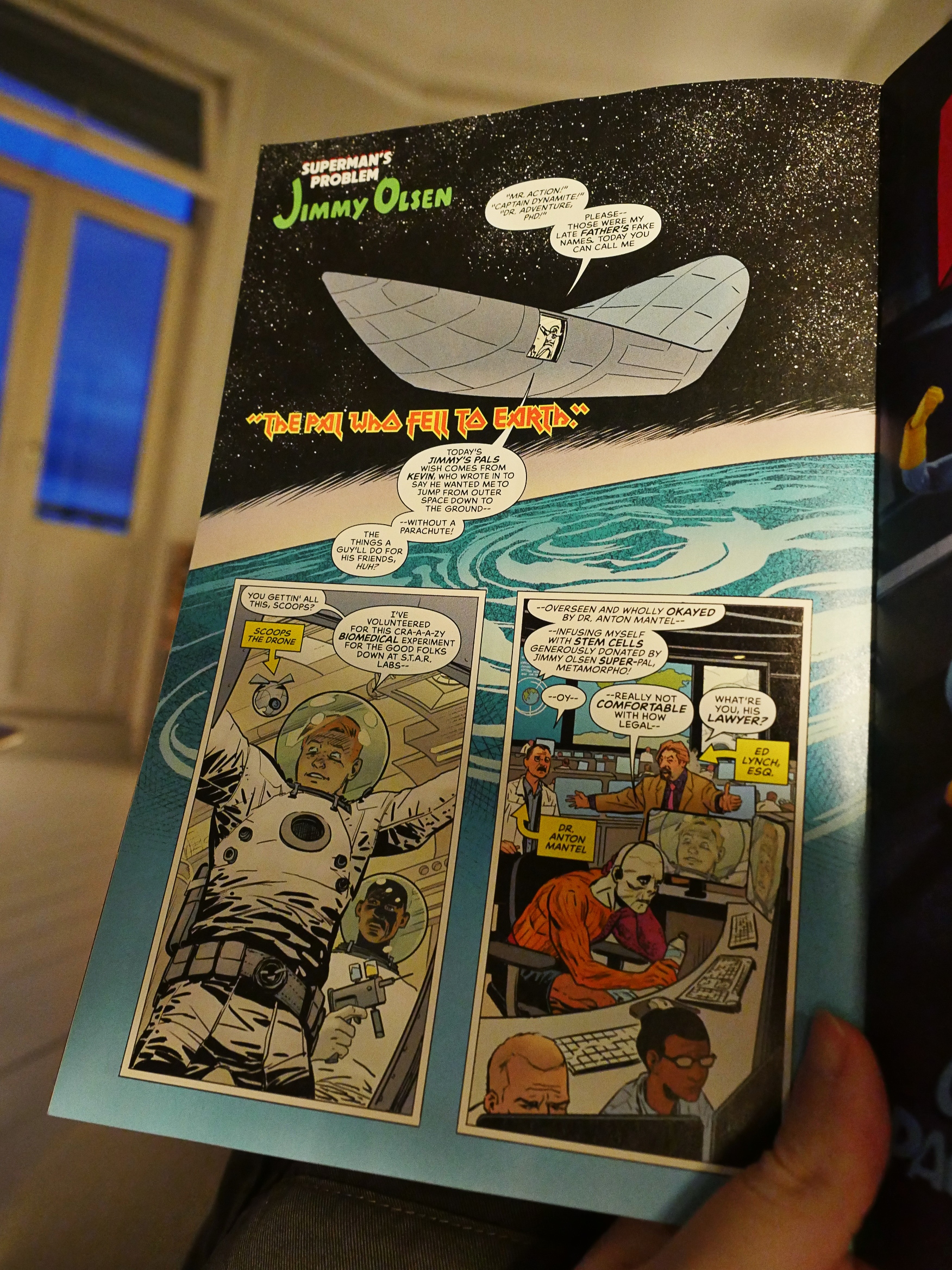
What what. Oh, right. Matt Fraction. I quite liked Sex Criminals and that Hawkeye thing he wrote, so I thought I’d give this a chance.
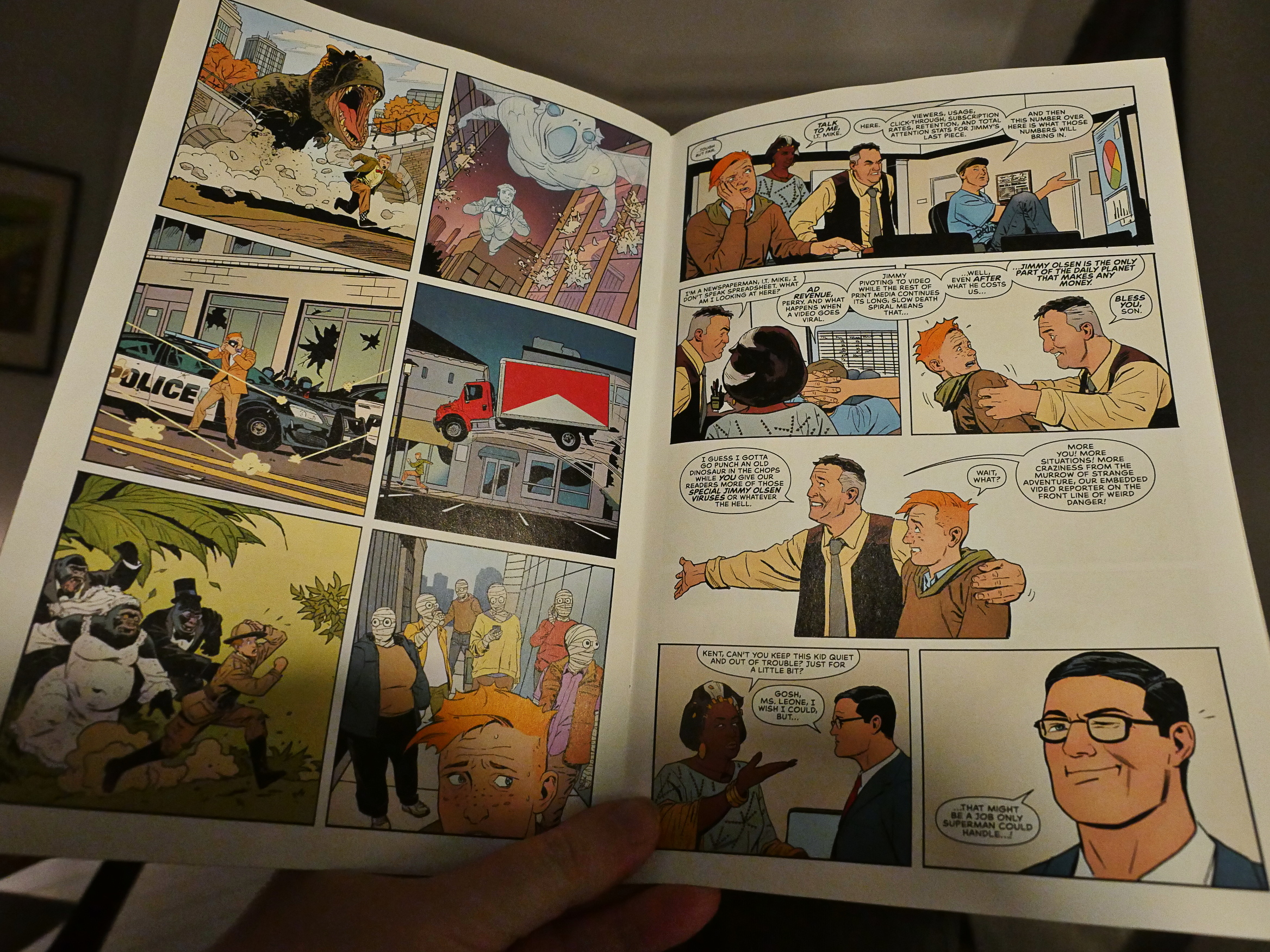
And it’s fun! There aren’t any real surprises here: It’s a very Matt Fraction take on Jimmy Olsen, but that’s fine. He’s made for this sort of tomfoolery.
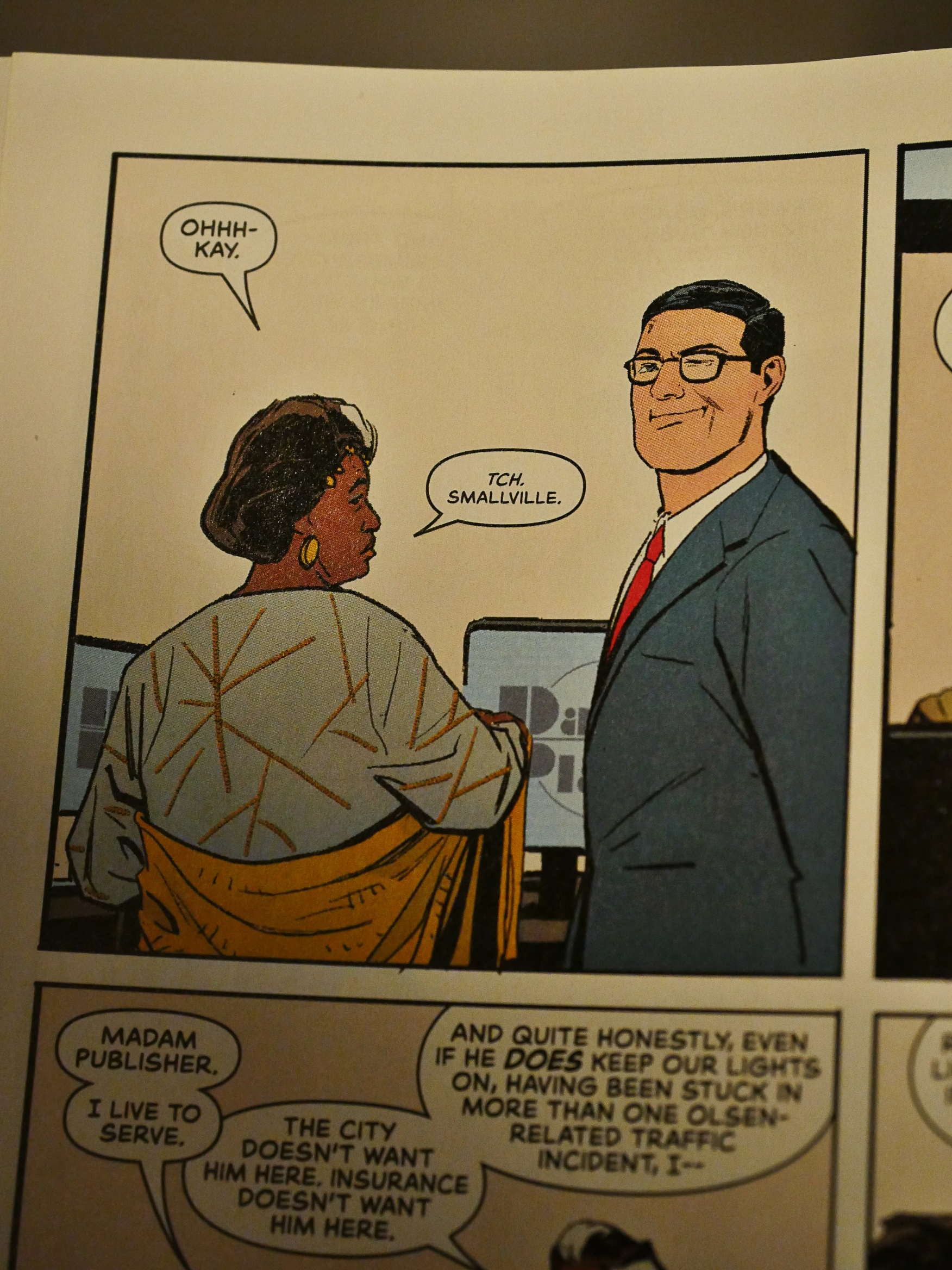
I mean, c’mon. That’s just so perfectly cheesy.
And Lieber’s artwork is perfect for this knowing take.
I’ll keep buying, but I hope Fraction doesn’t introduce a Serious Plot. My guess is that he’ll do so, and it’ll suck, but that there’ll still be some fun to be had.
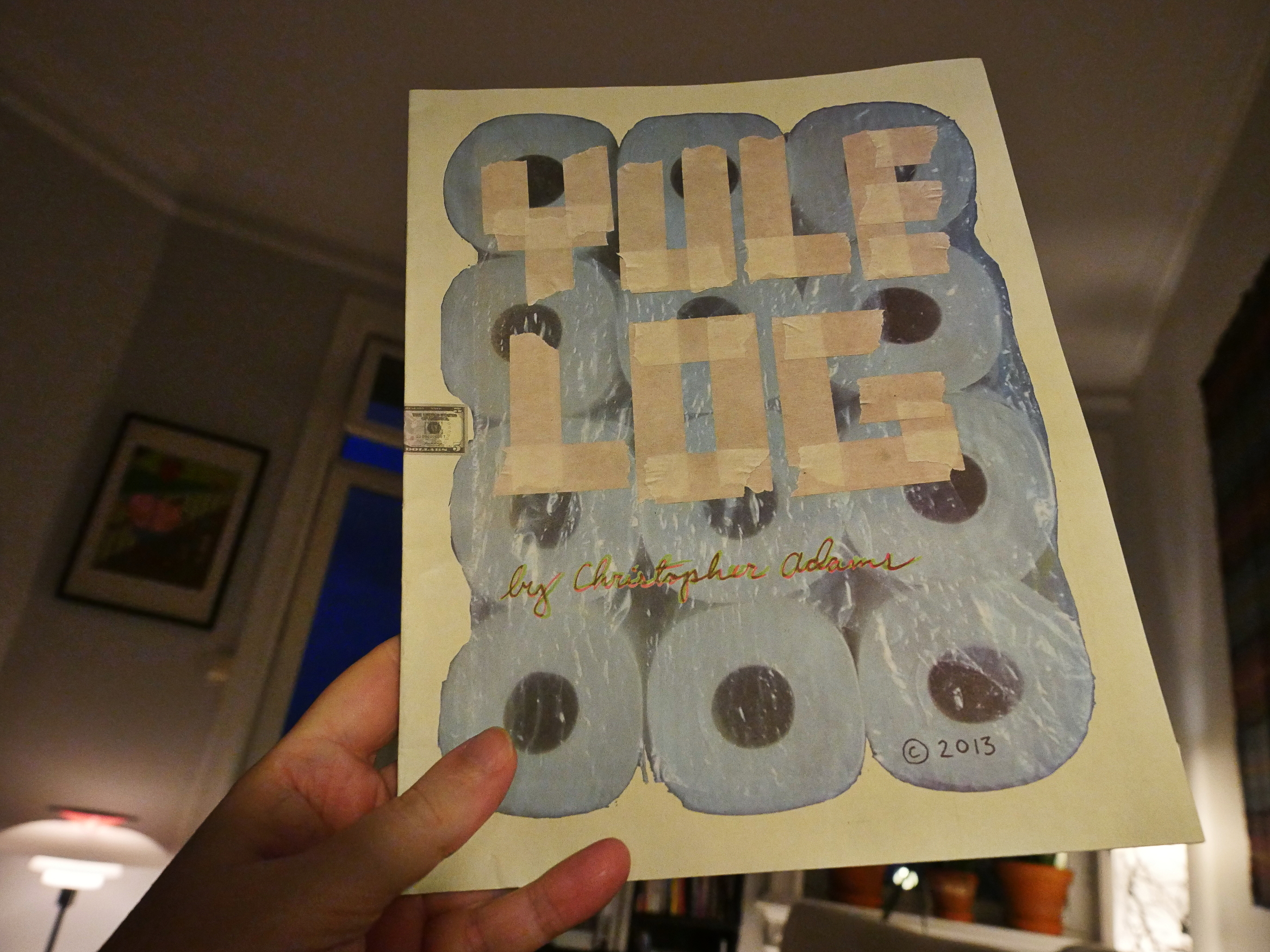
Yule Log by Christopher Adams (2d cloud)
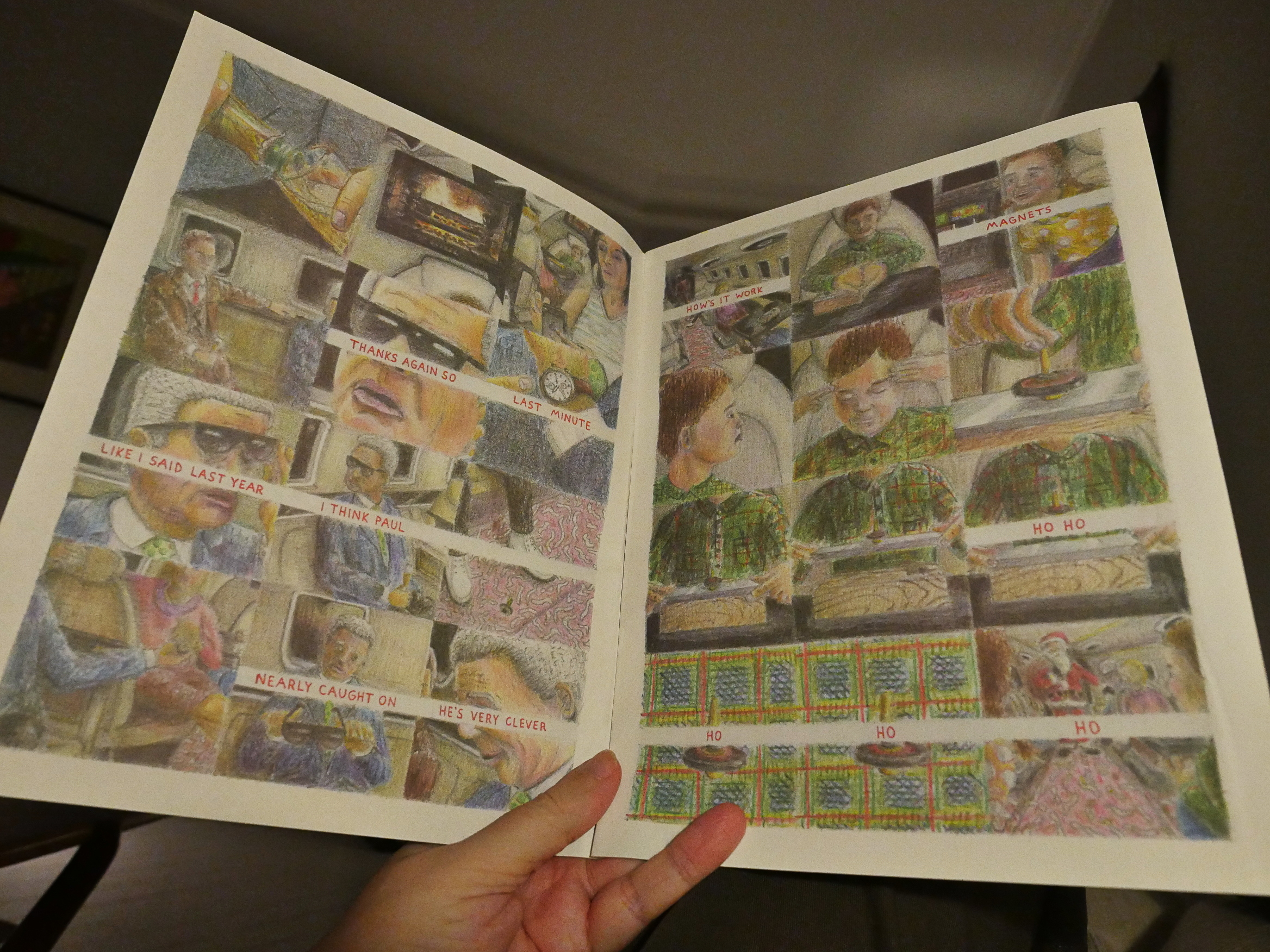
Geez. Even more 2d cloud. This one is a slim magazine sized thing, mostly in black and white but with some colour pages. There’s a cute story in here, but I think these pages (which are only tangentially related to the story) are kinda spiffy.
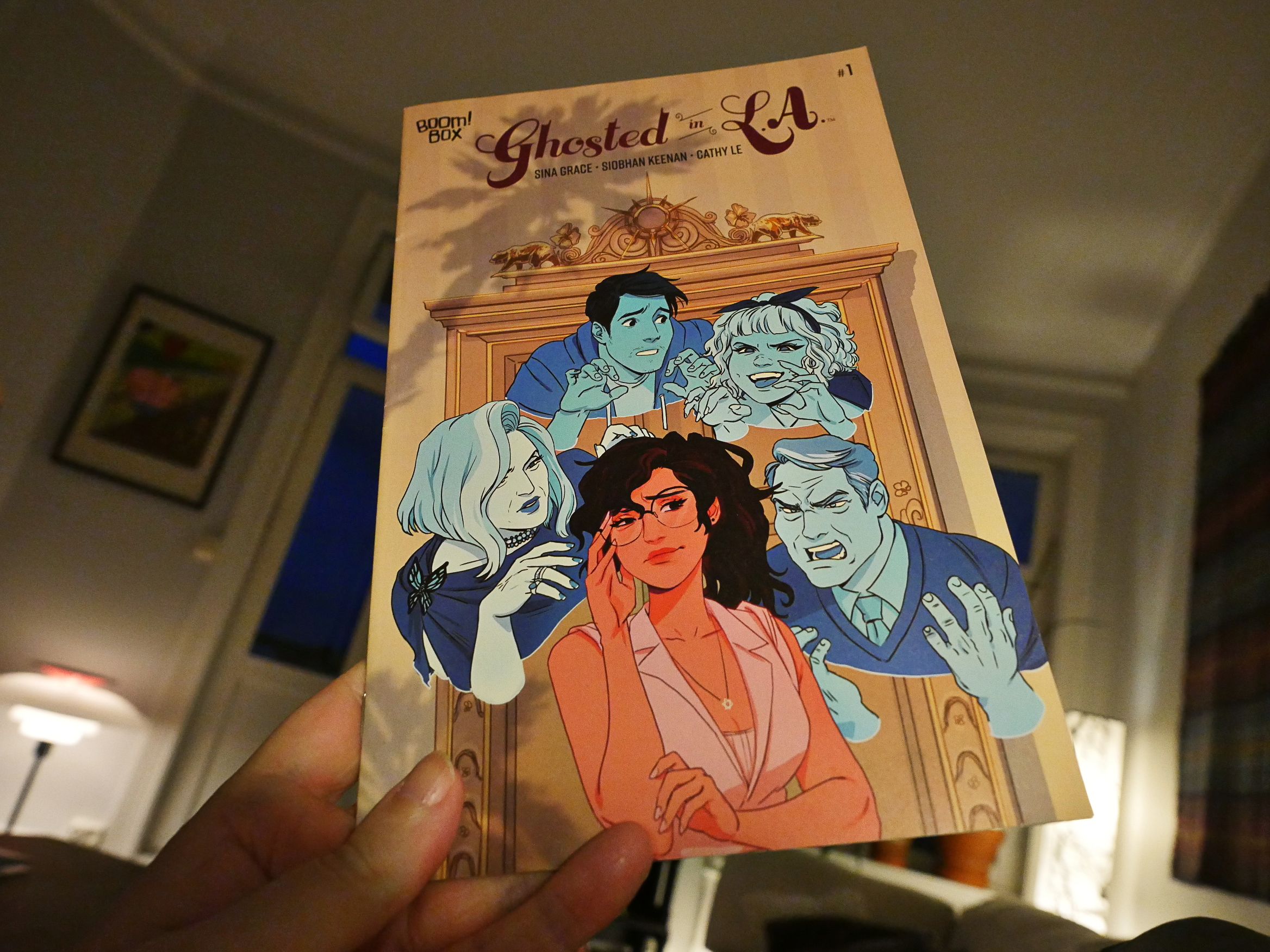
Ghosted in LA by Sina Grace and Siobhan Keenan and people (Boom Box)
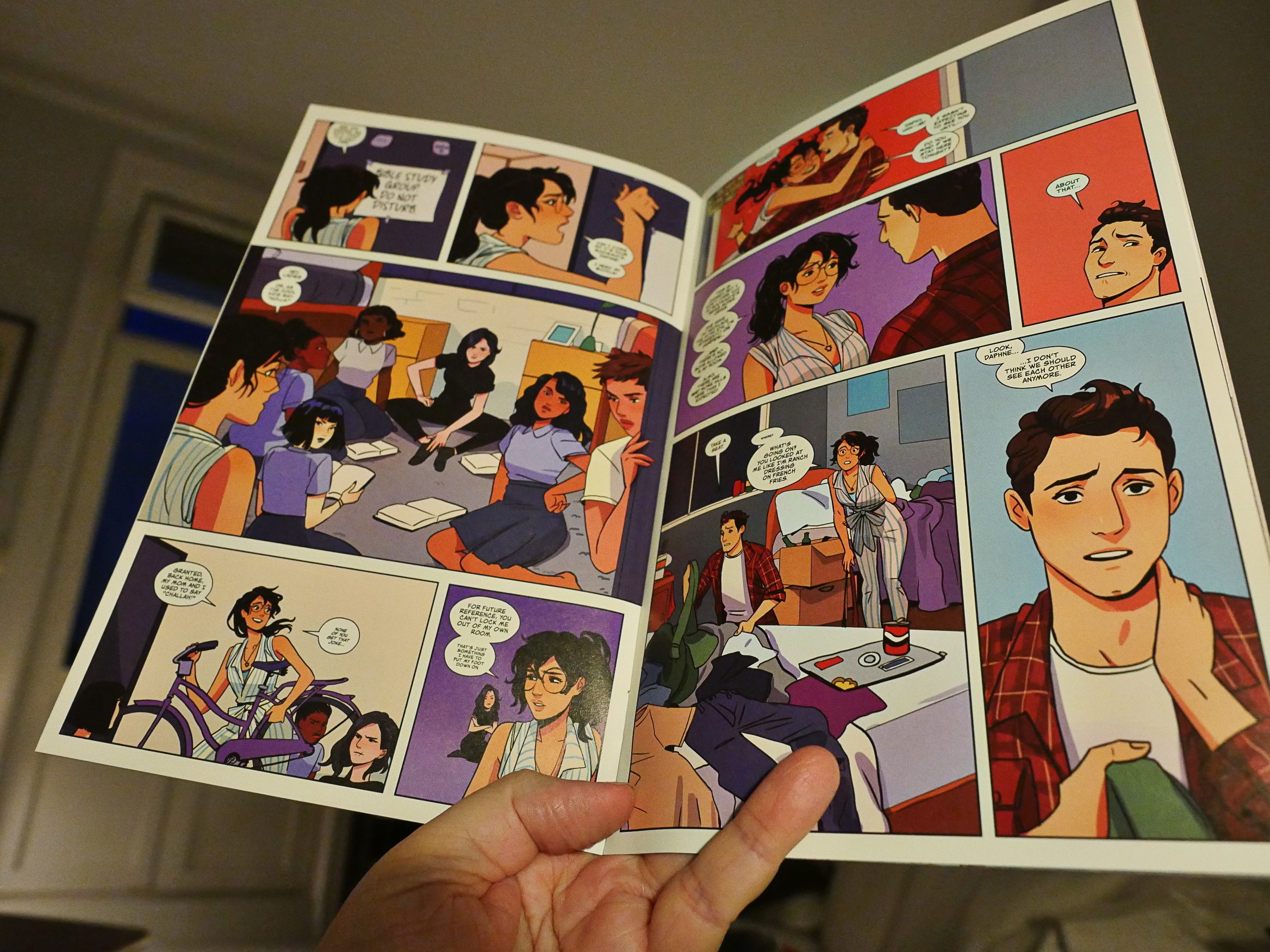
So what’s this then? Hm… Sina Grace? Oh, right, he wrote Iceman, which I though was… uhm… not completely successful? But I bought this anyway, apparently.
I mean, obviously.
The artwork’s kinda standard Young Adult 2019, but it’s not unattractive. The story didn’t go the way I thought at all, which was a nice surprise. It’s kinda fun.
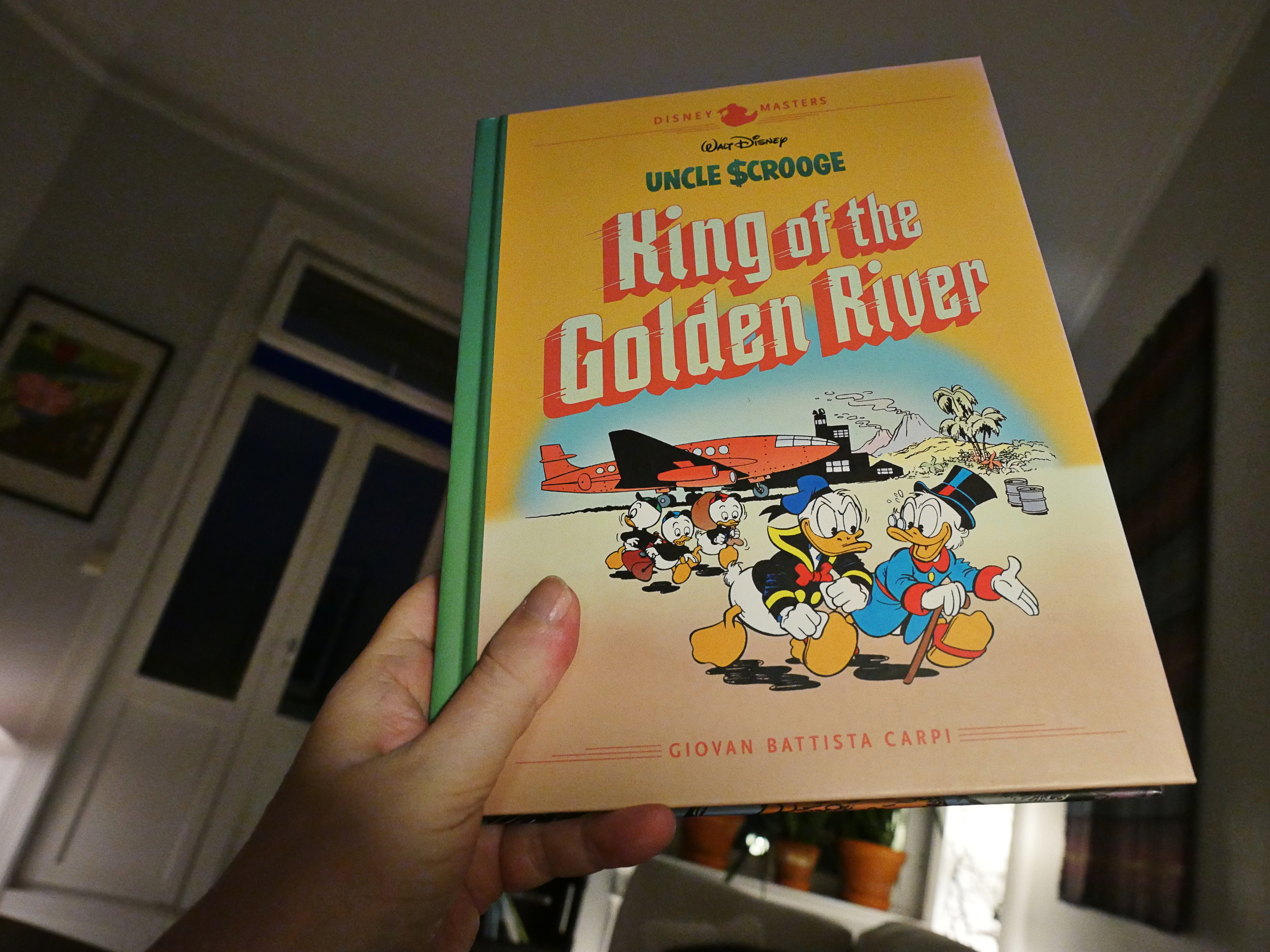
Uncle Scrooge: King of the Golden River by Giovan Battista Carpi and a bunch of people (Fantagraphics)
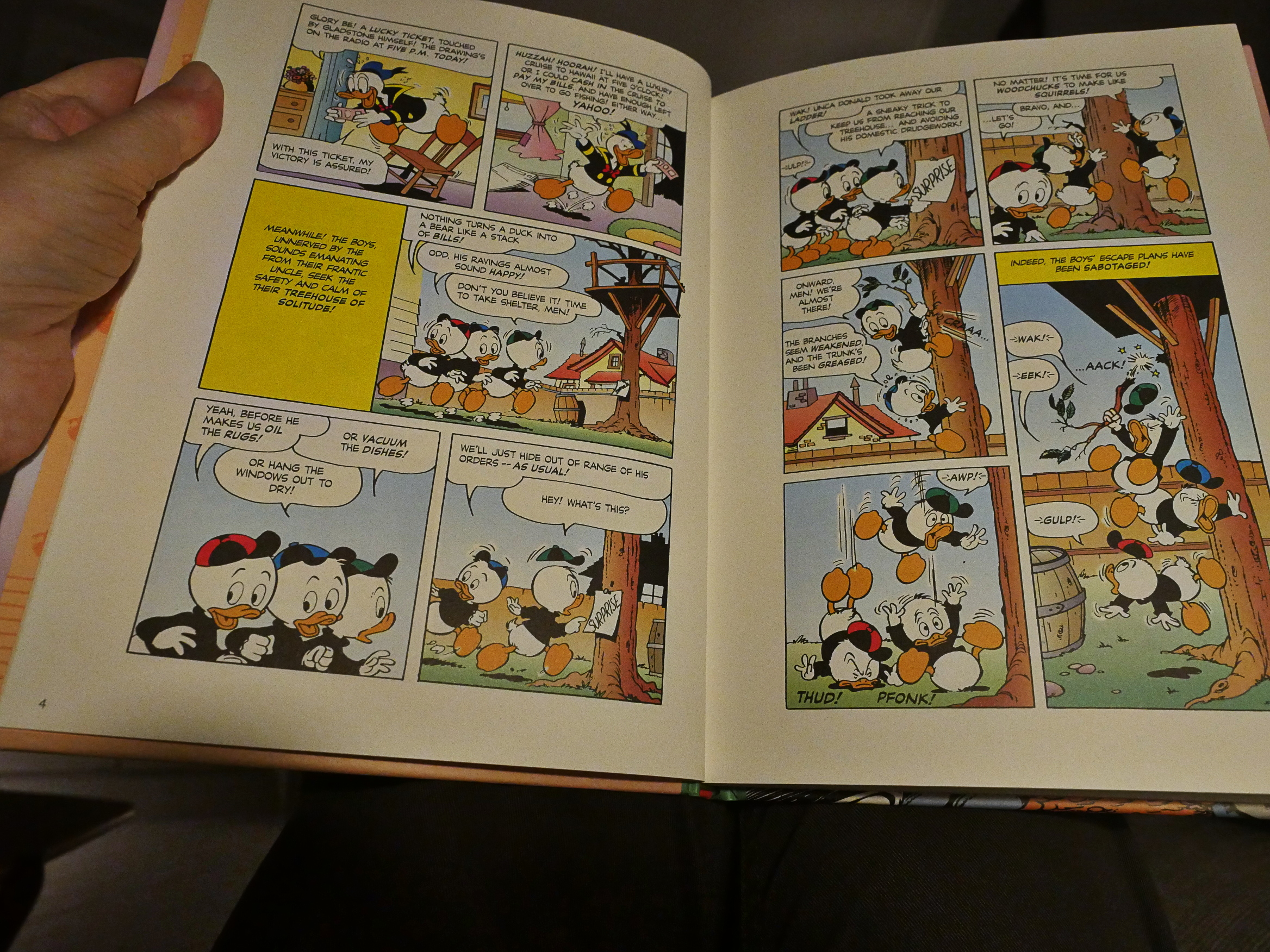
So this book reprints a couple of long Italian Disney stories from the 60s. Italian Duck stories do not have the best reputation in the world, but the artwork here is pretty good, if not without some readability problems.
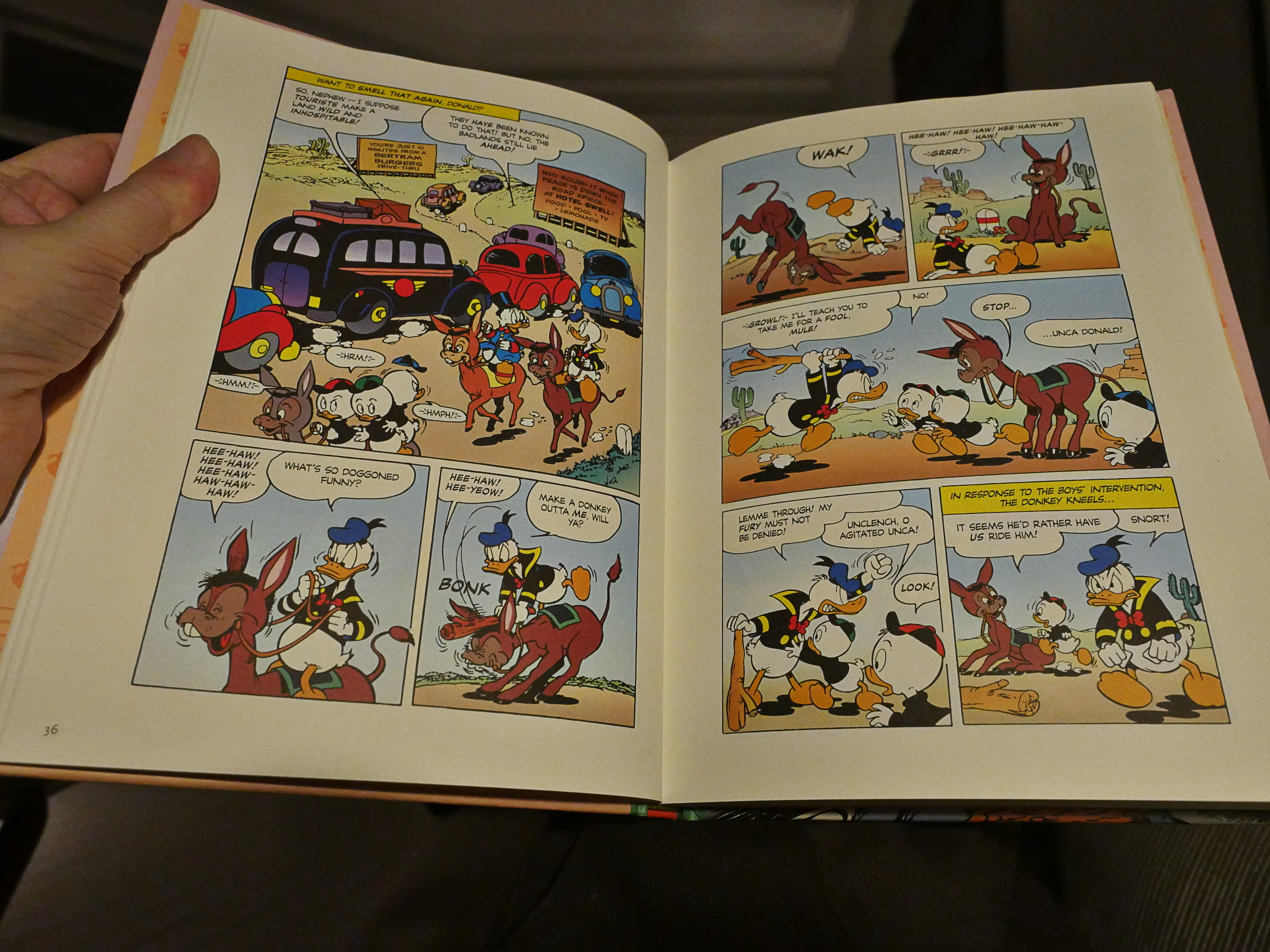
The bigger issue is the relentless cruel behaviour of Donald and Scrooge: That’s not a fun scene. And it doesn’t let up: The two adults are greedy bastards, way beyond what Barks would have done with the characters, and it’s grating.
You have to give the story some props for inventiveness, though.
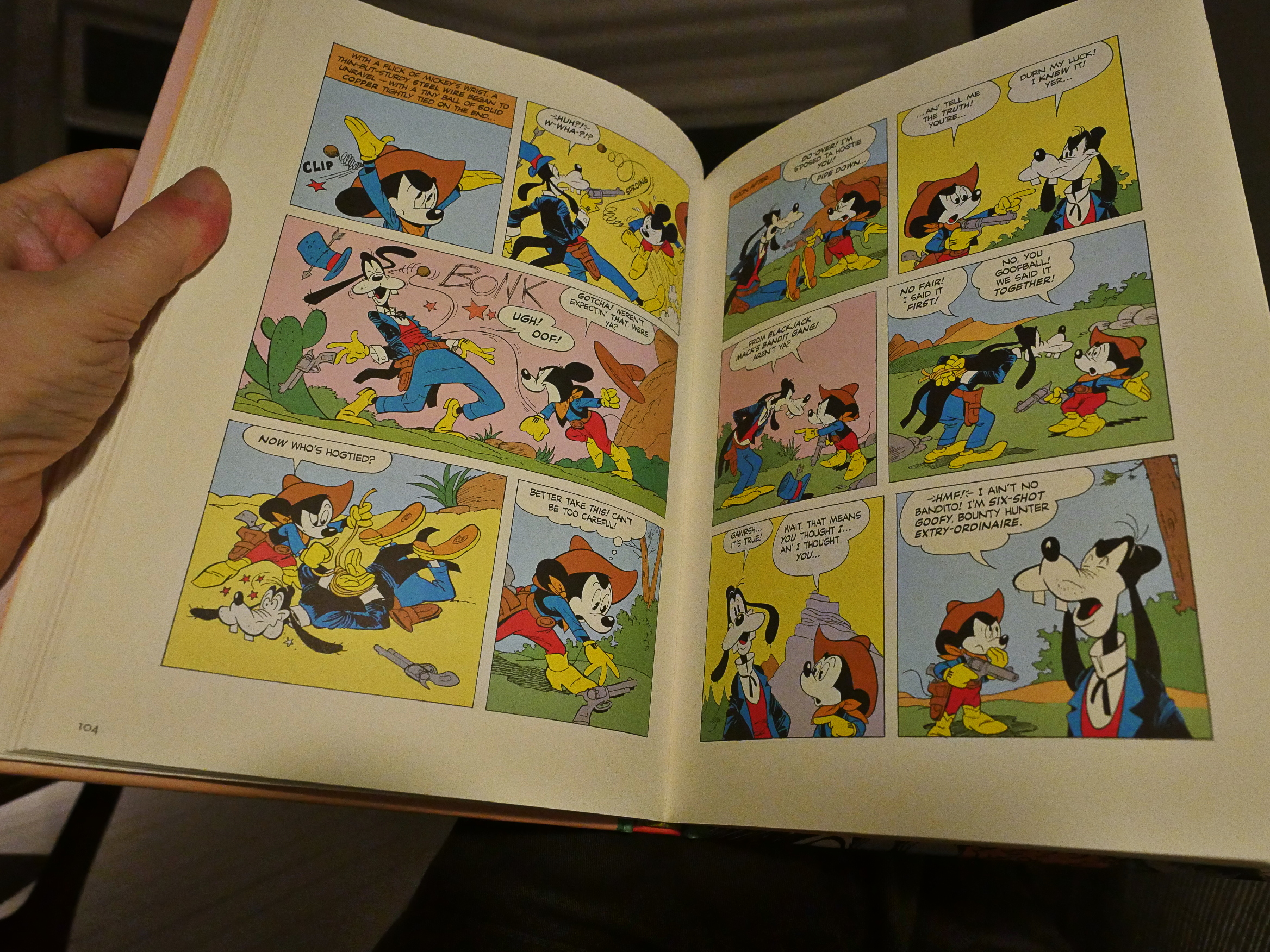
The Mickey Mouse story is very Italian Disney: It’s Mickey and Goofy, but they’re western heroes now.
And now it’s like totally late and it’s time to sleep.
I think I have a day or two to go in this blog series… perhaps I can finish up on… Wednesday?


%3A+A+Question+of+Lust)
%3A+A+Question+of+Lust+(Special+Edition))
%3A+Stripped)
%3A+A+Question+of+Time)
%3A+A+Question+of+Time+(Limited+Edition))









)

+The+Road+(1)%3A+Discipline)
+The+Road+(2)%3A+Live+in+Japan)






)
)
)
)

)