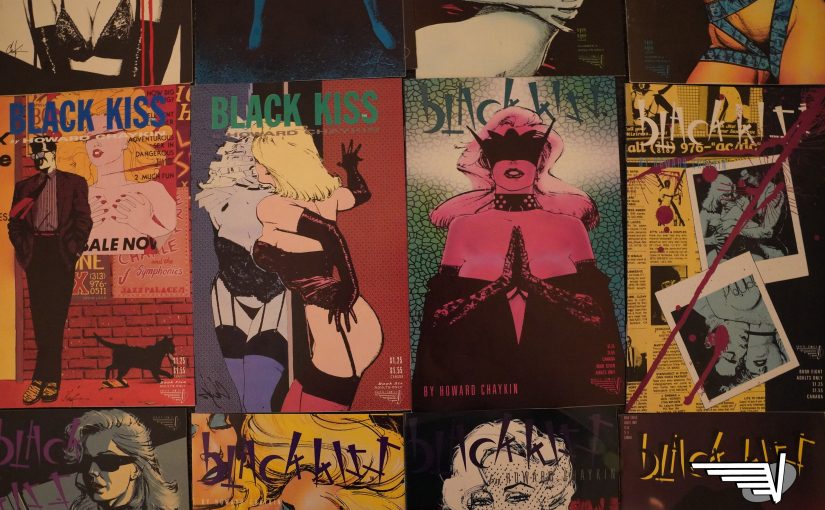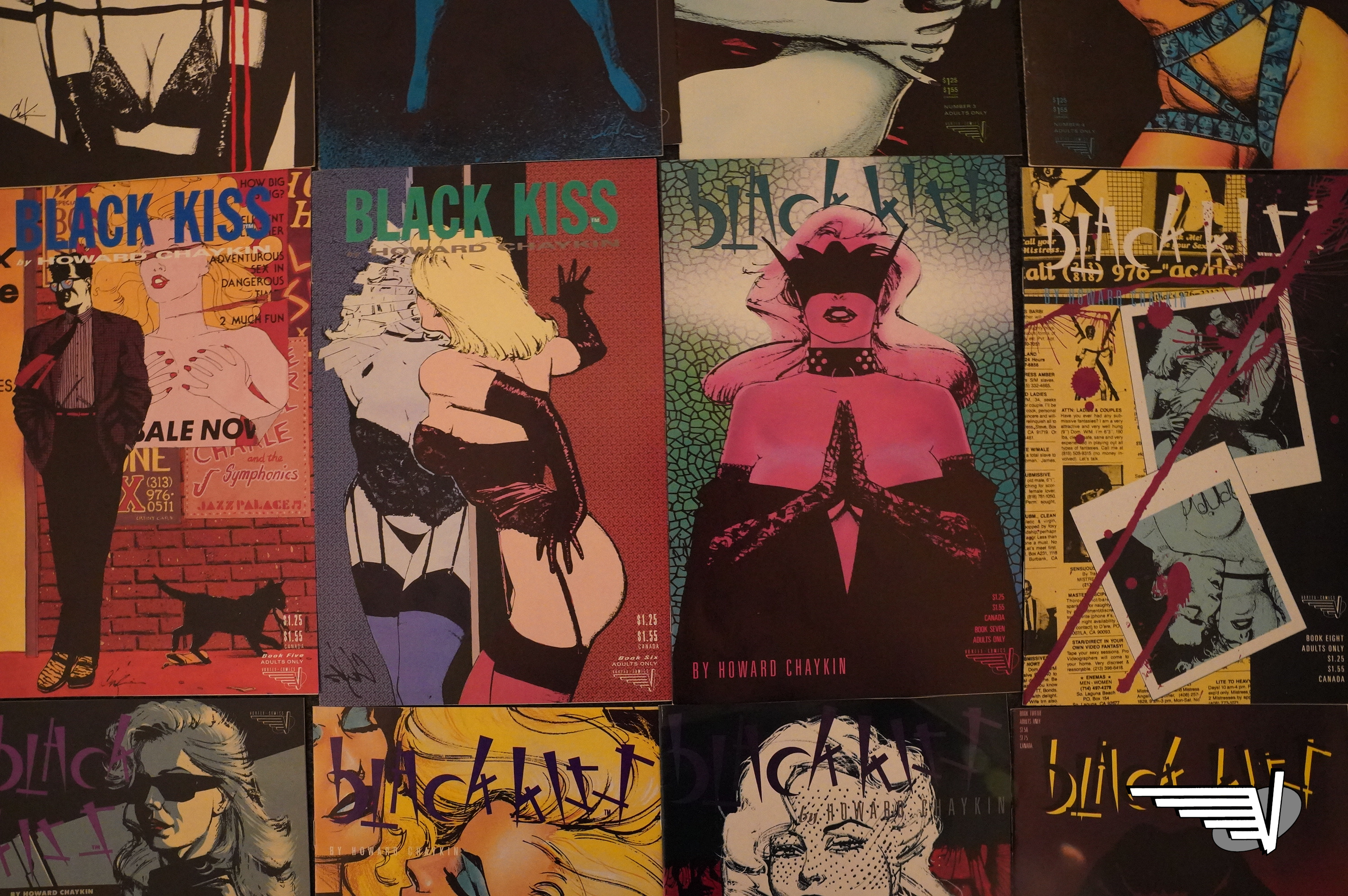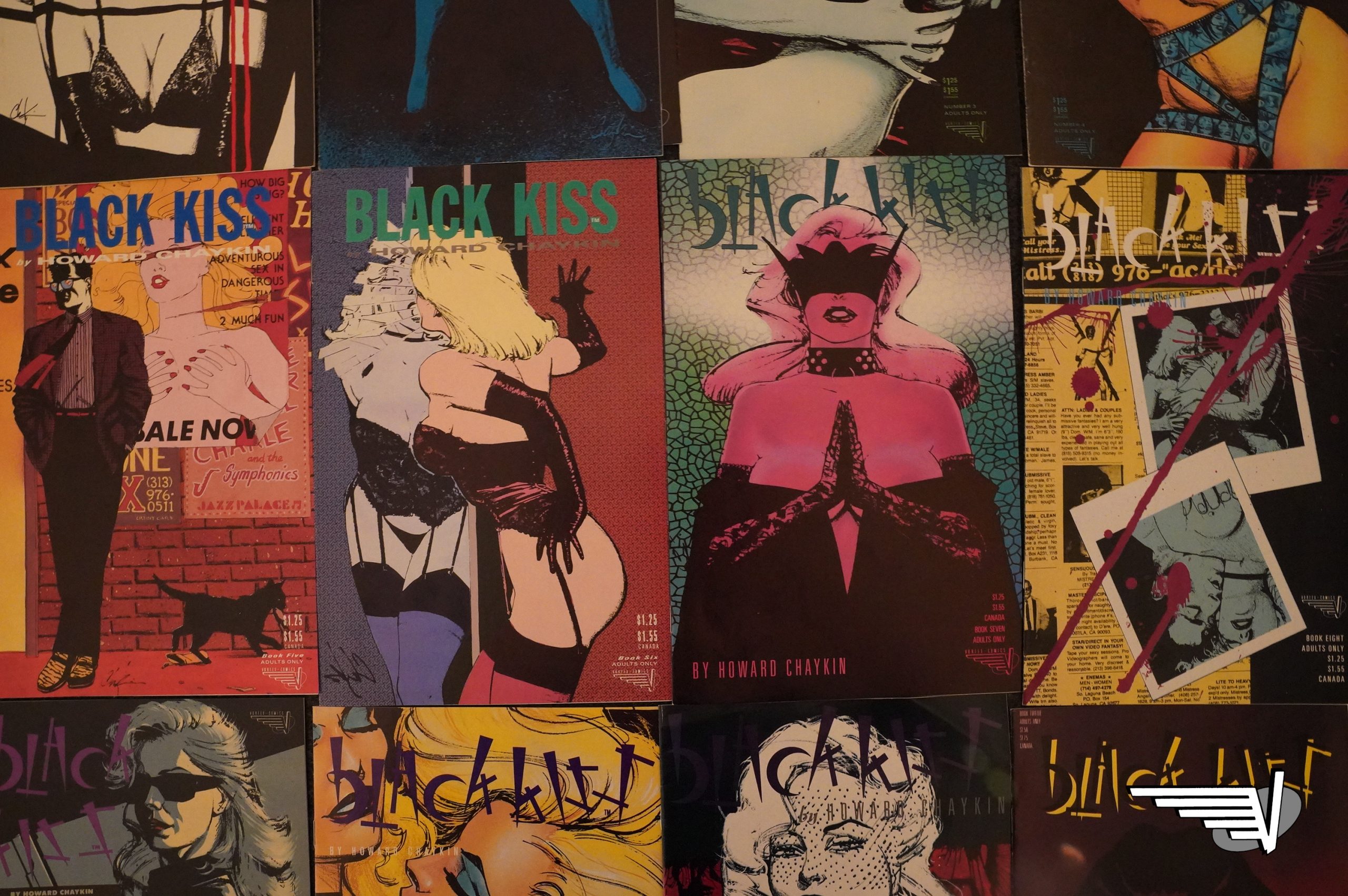
Black Kiss (1988) #1-12
by Howard Chaykin
Howard Chaykin was a hugely influential comics storytelling innovator in the 80s. We were all quite impressed by American Flagg, right? All those little insets and the cacophony. Re-reading it the other year, I was struck by how little substance Flagg had: It’s a fun read, but it’s so… slight.
Which brings us to Black Kiss, which I did not read at the time; I read it for the first time tonight. And… if you haven’t read it yet, you should probably skip this blog article, because I’m going to be doing something unheard of (for me): I’m going to be talking a bit about the plot of this thing.
There’s gonna be a lot of spoilers, and the book is all about confusing and befuddling you, and then springing a stiff reveal on you. That’s the main pleasure of reading this series, and it works… but it’s hard to like this series.
You have been warned! Oh, there’s also a lot of violence (and some sex) here. So… skip this if you don’t wanna see that? OK?
OK.
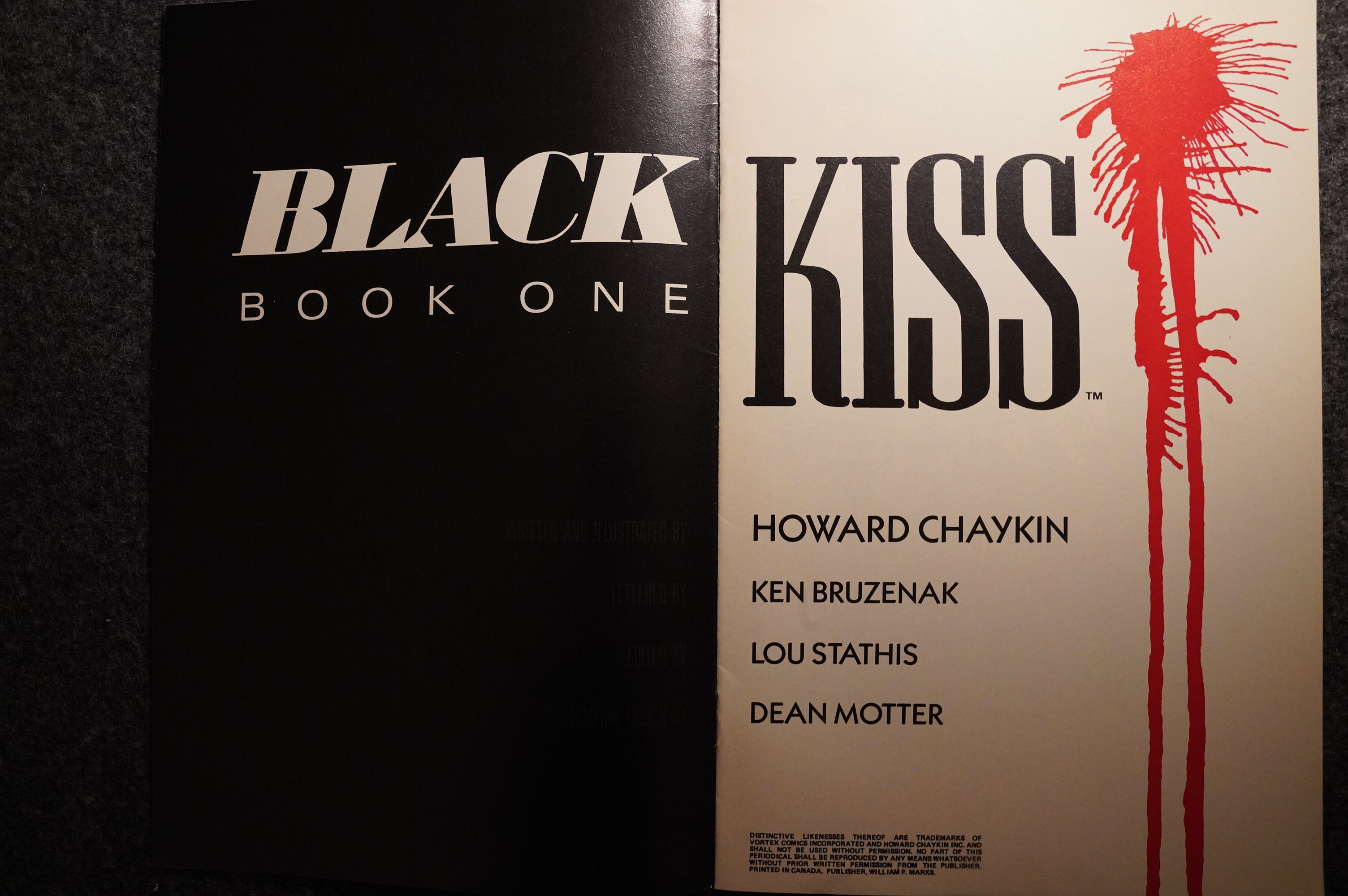
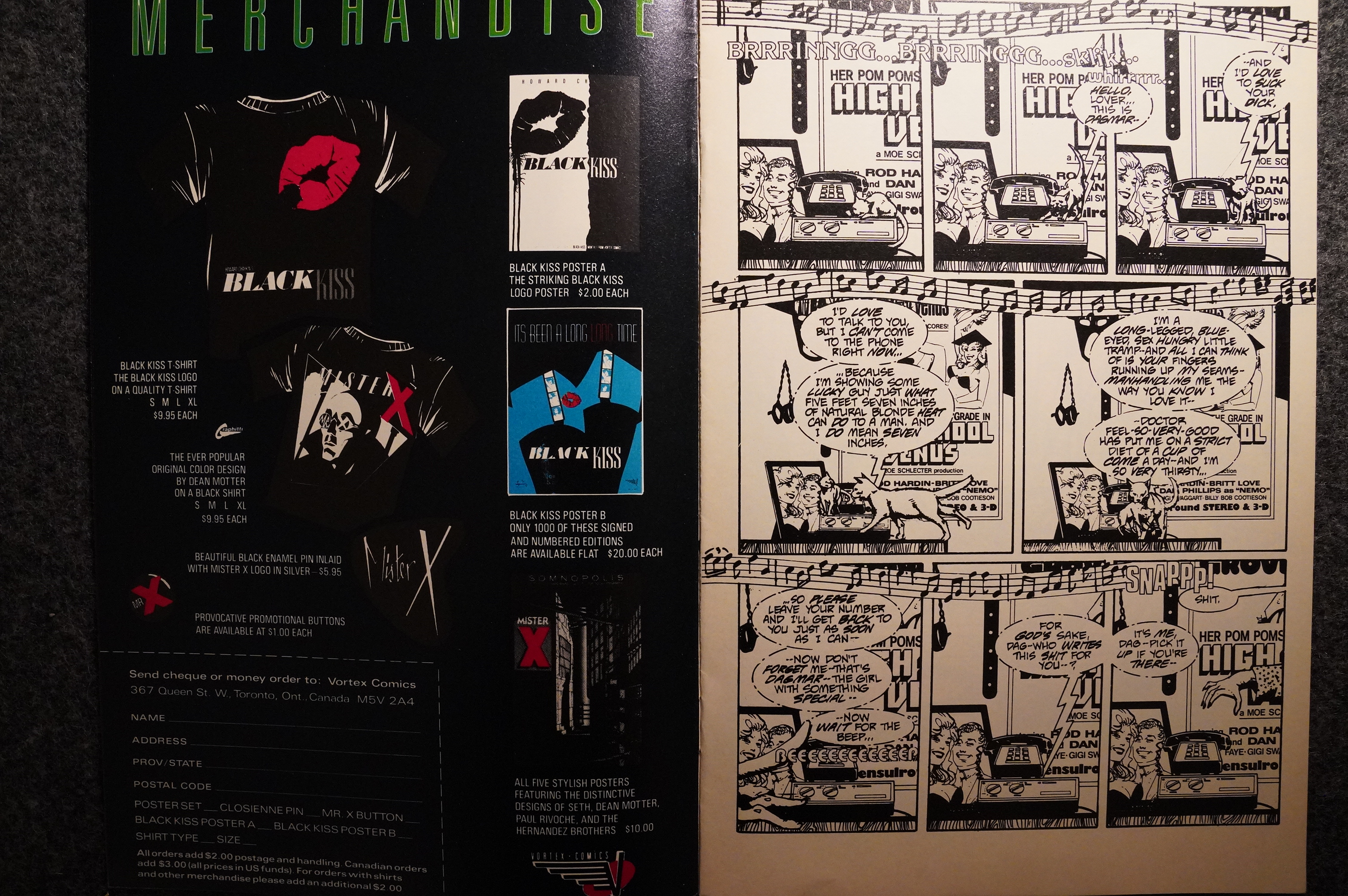
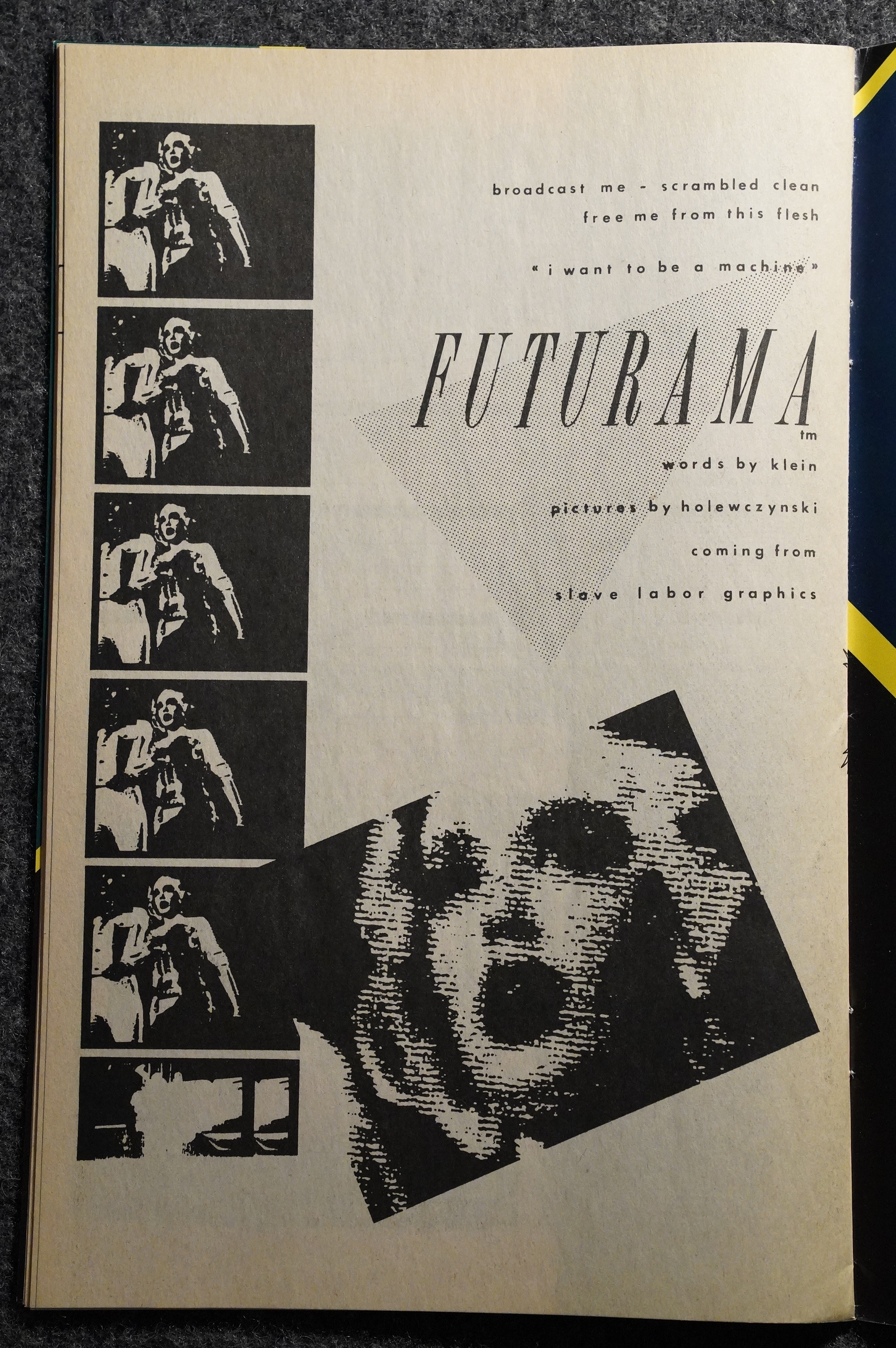
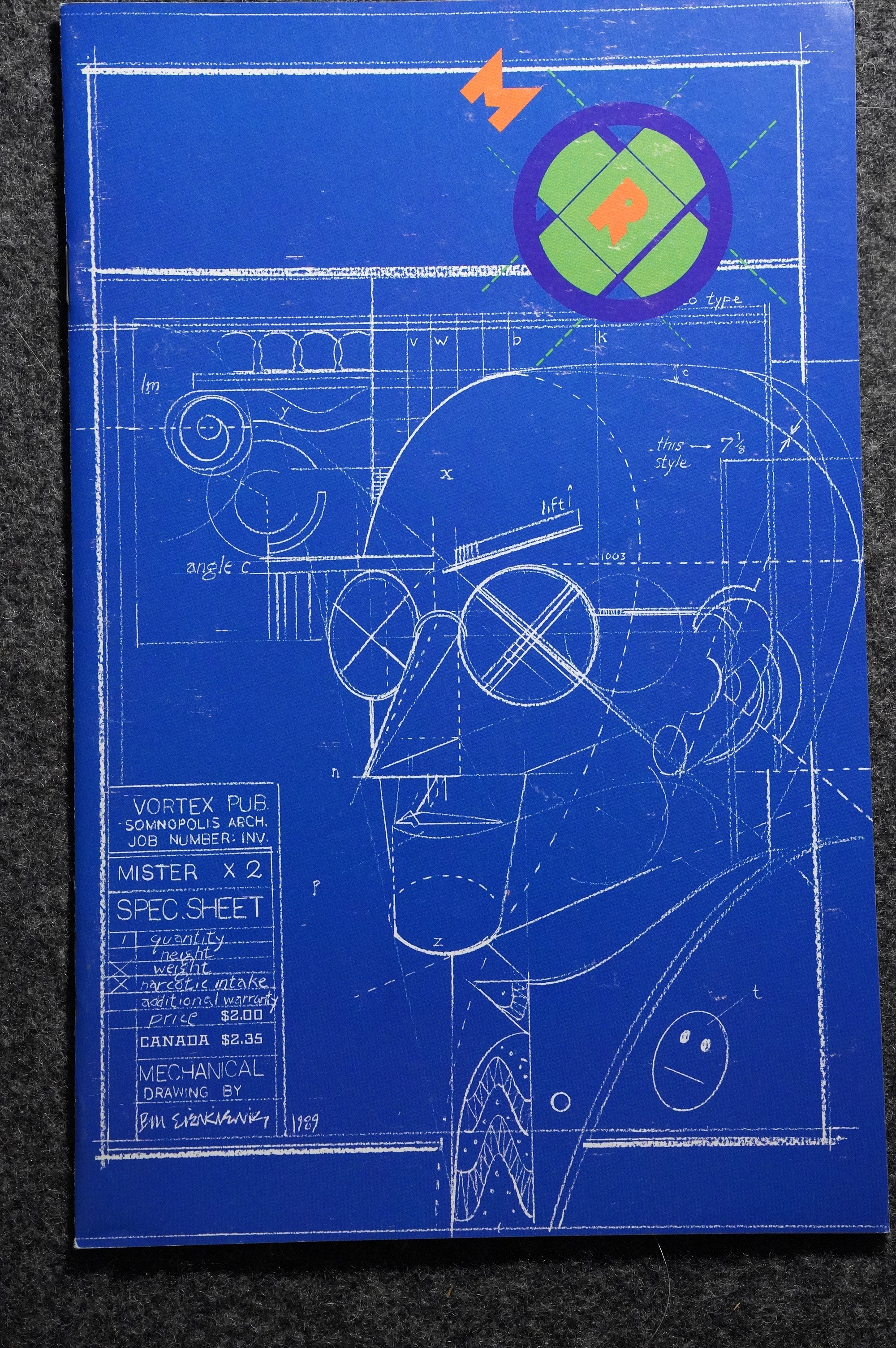
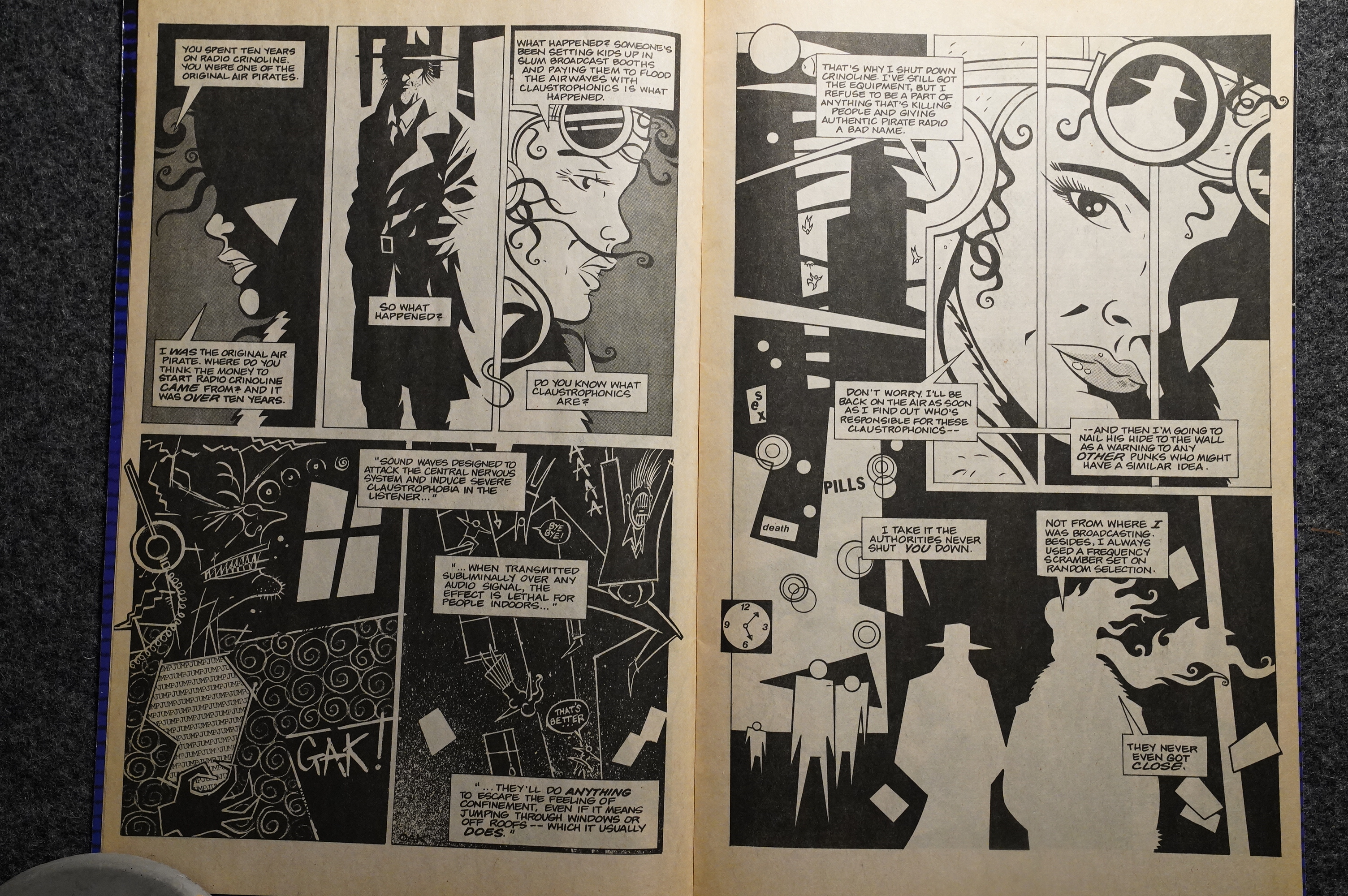
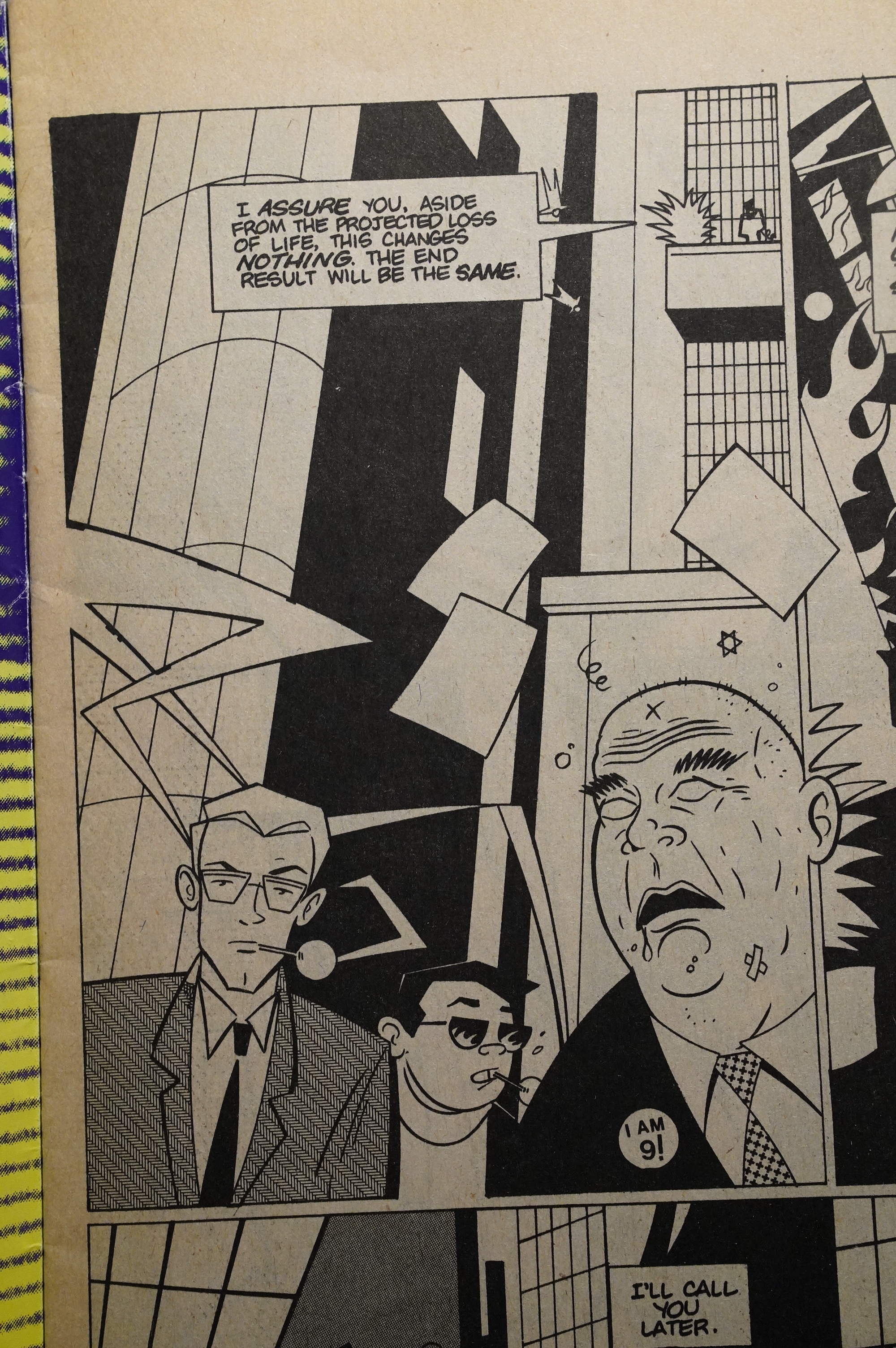
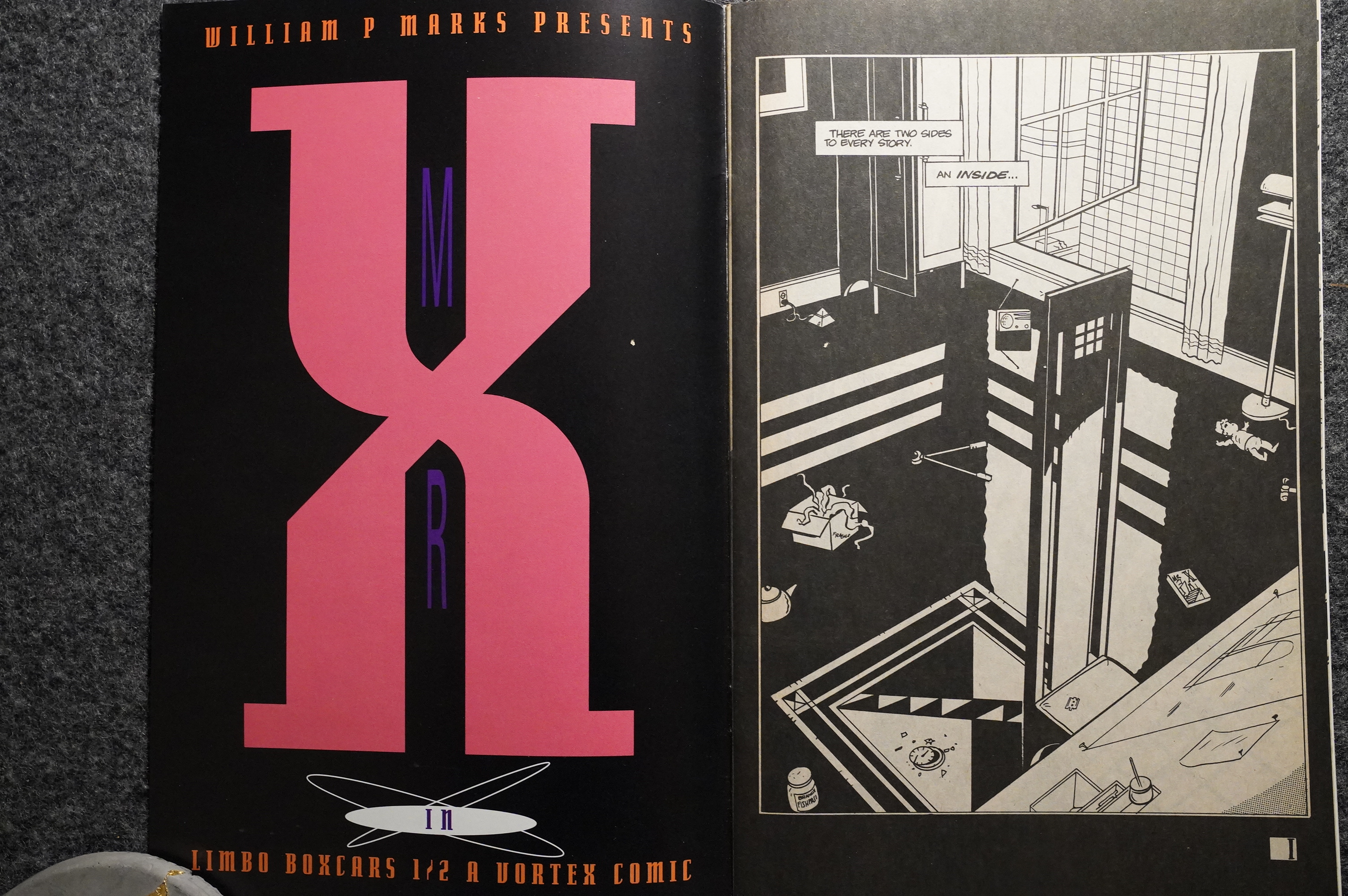
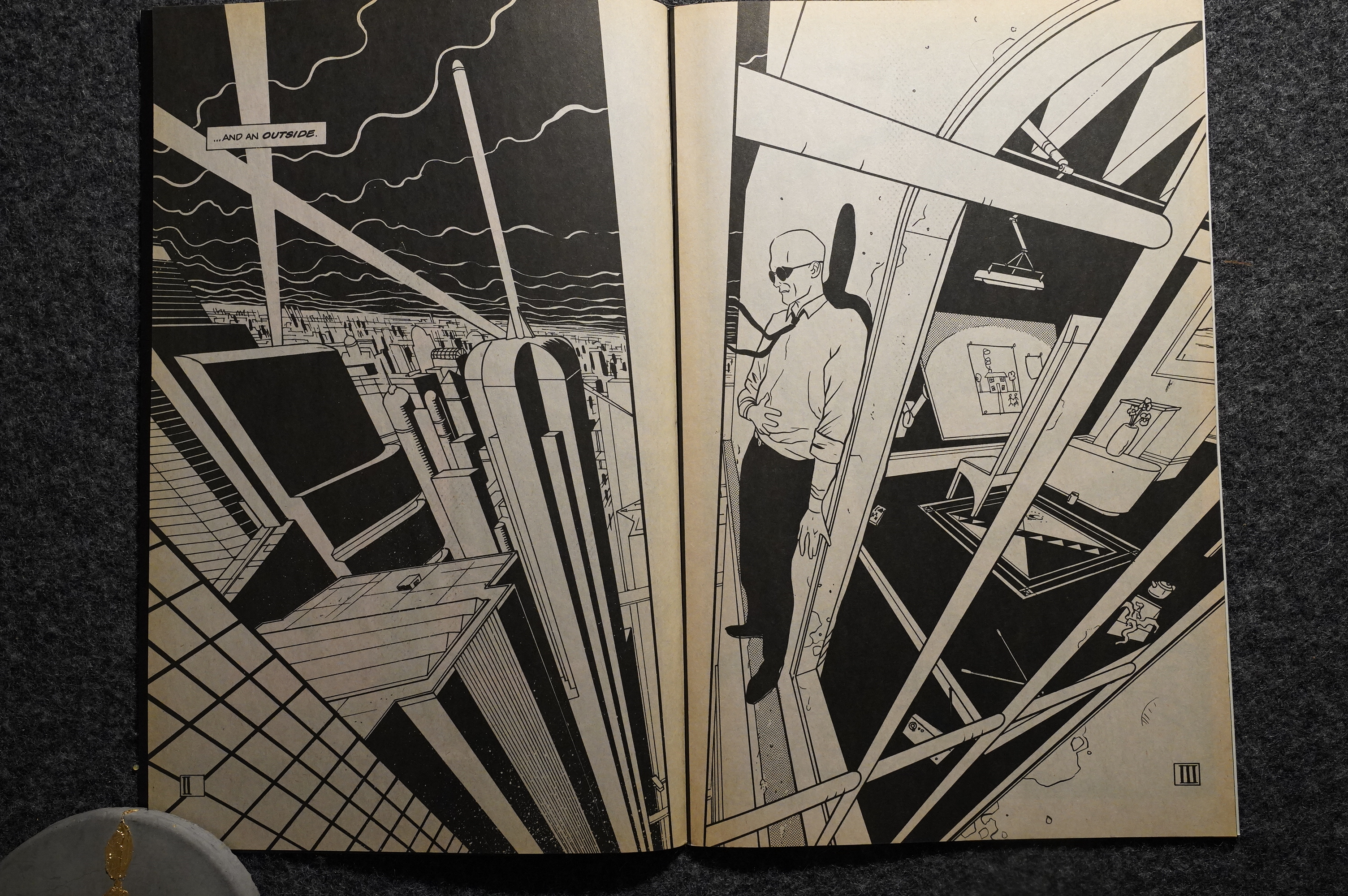
Let’s read the first six pages together:
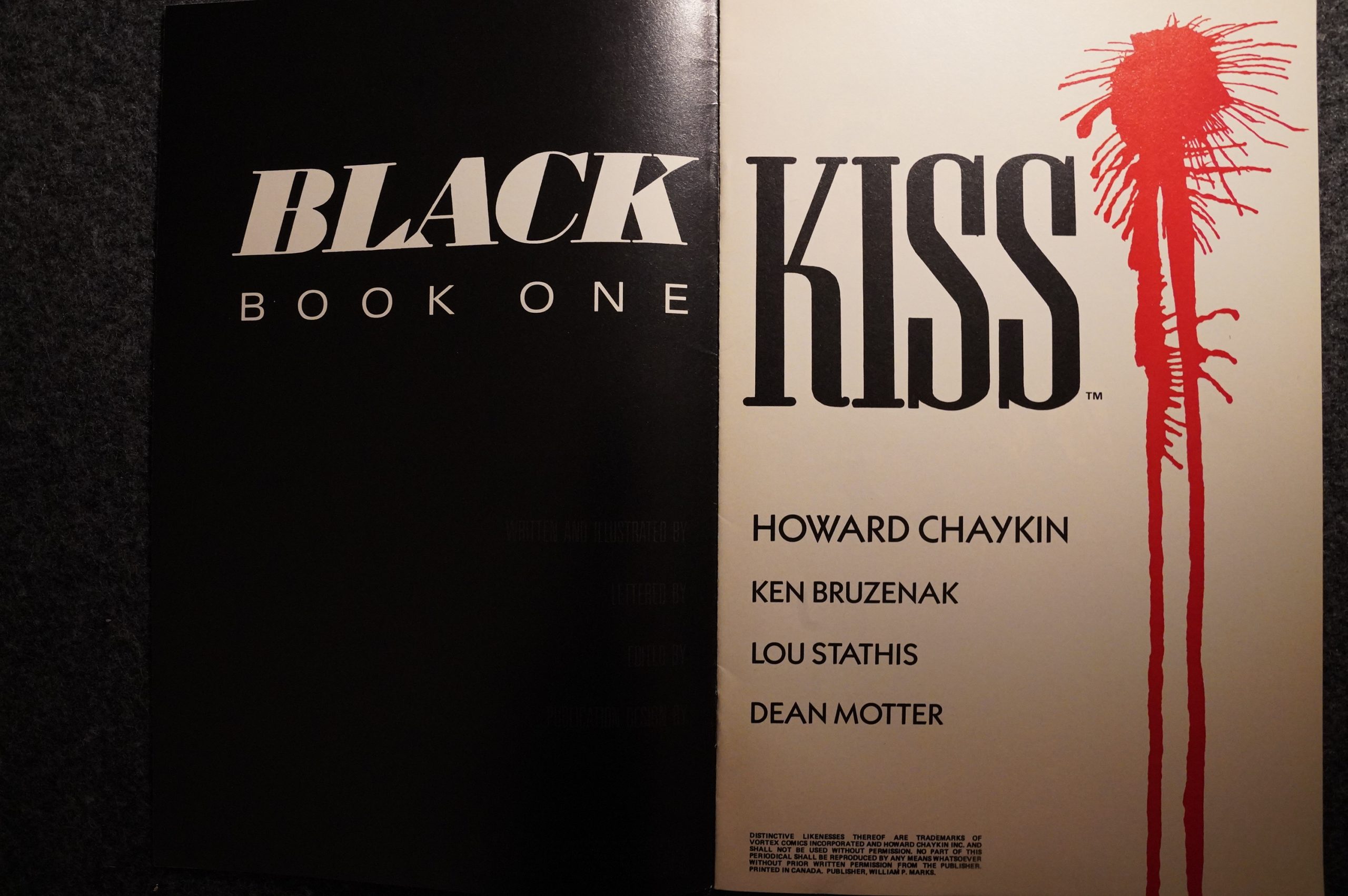
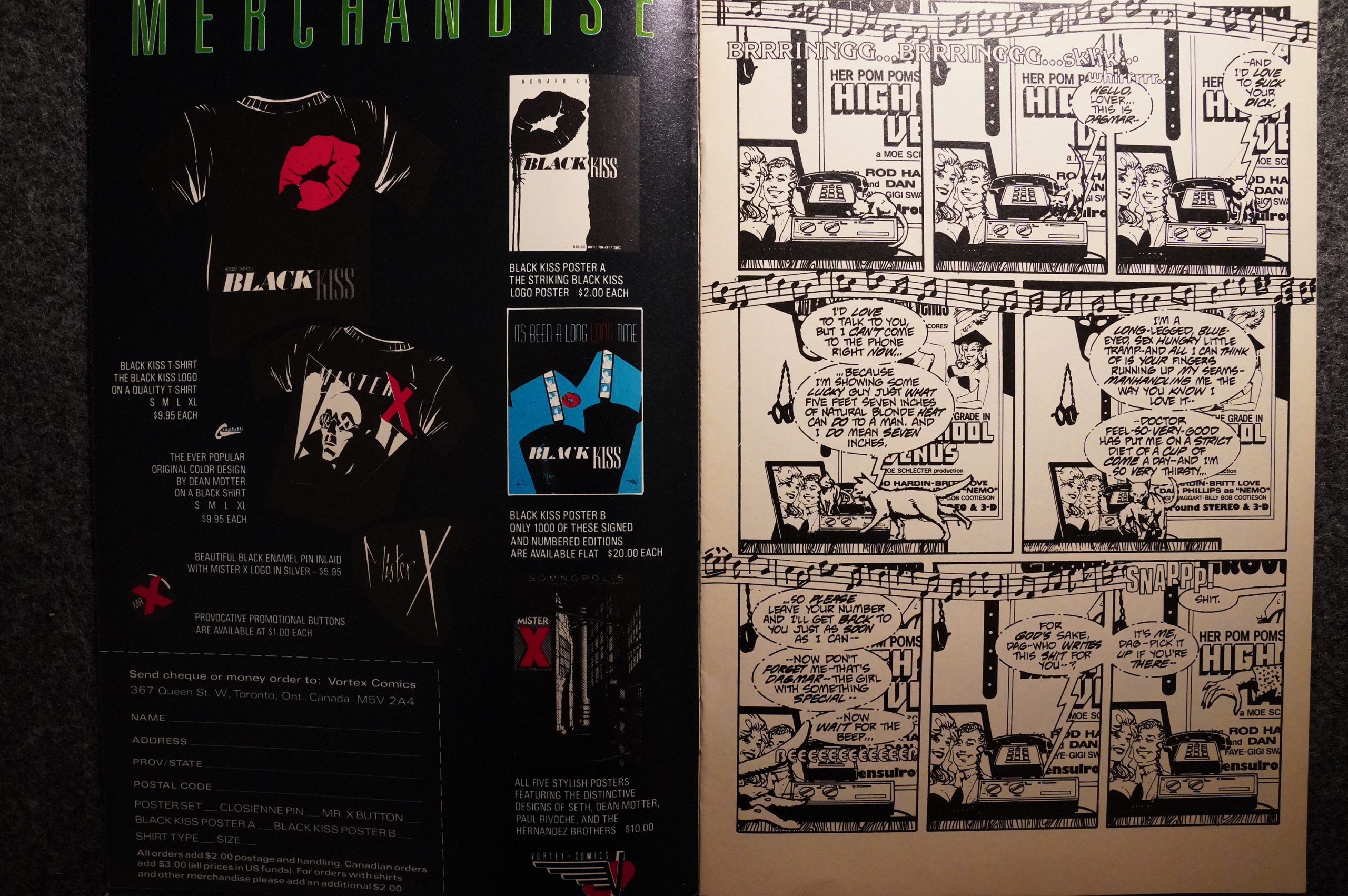
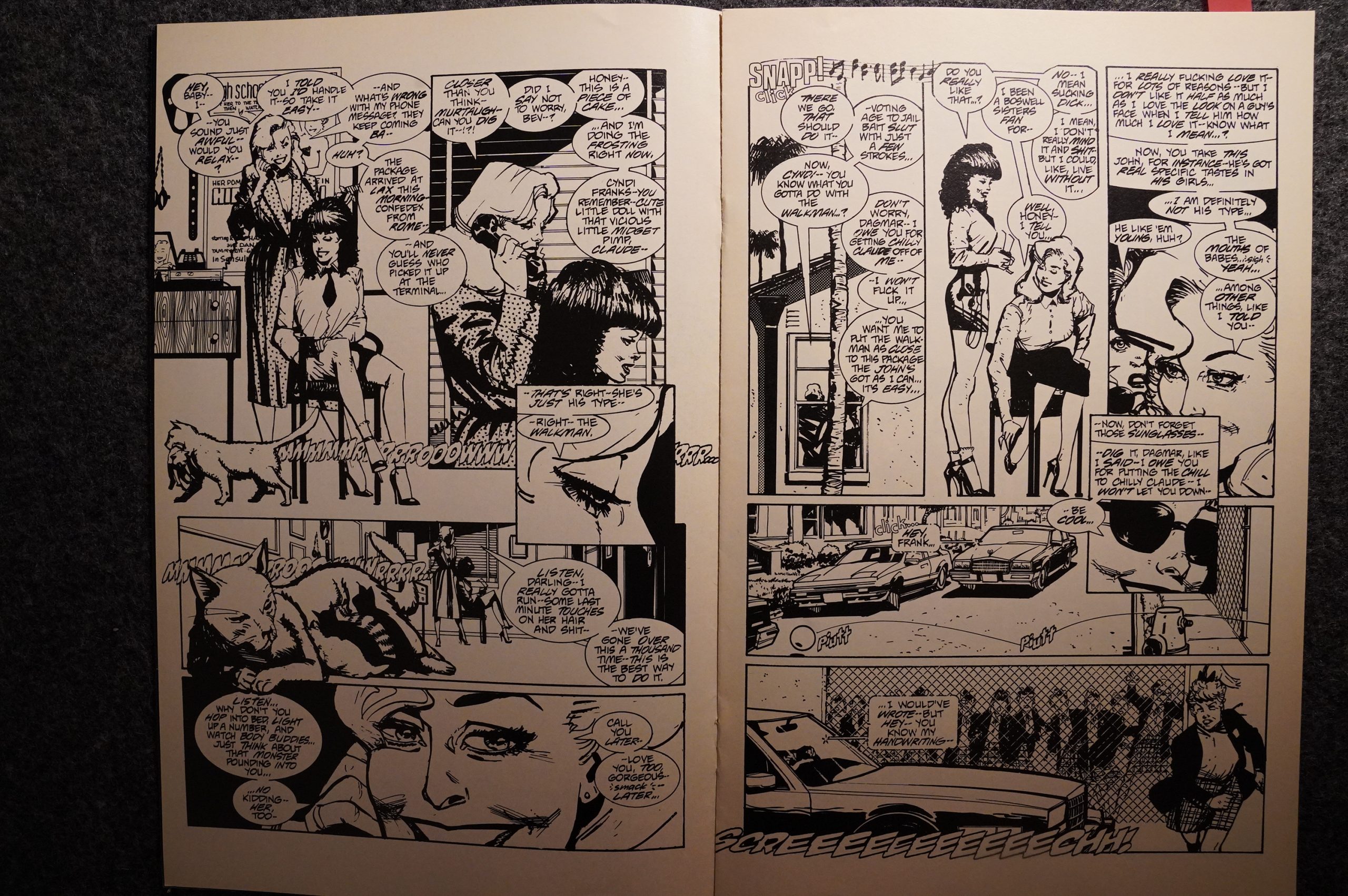
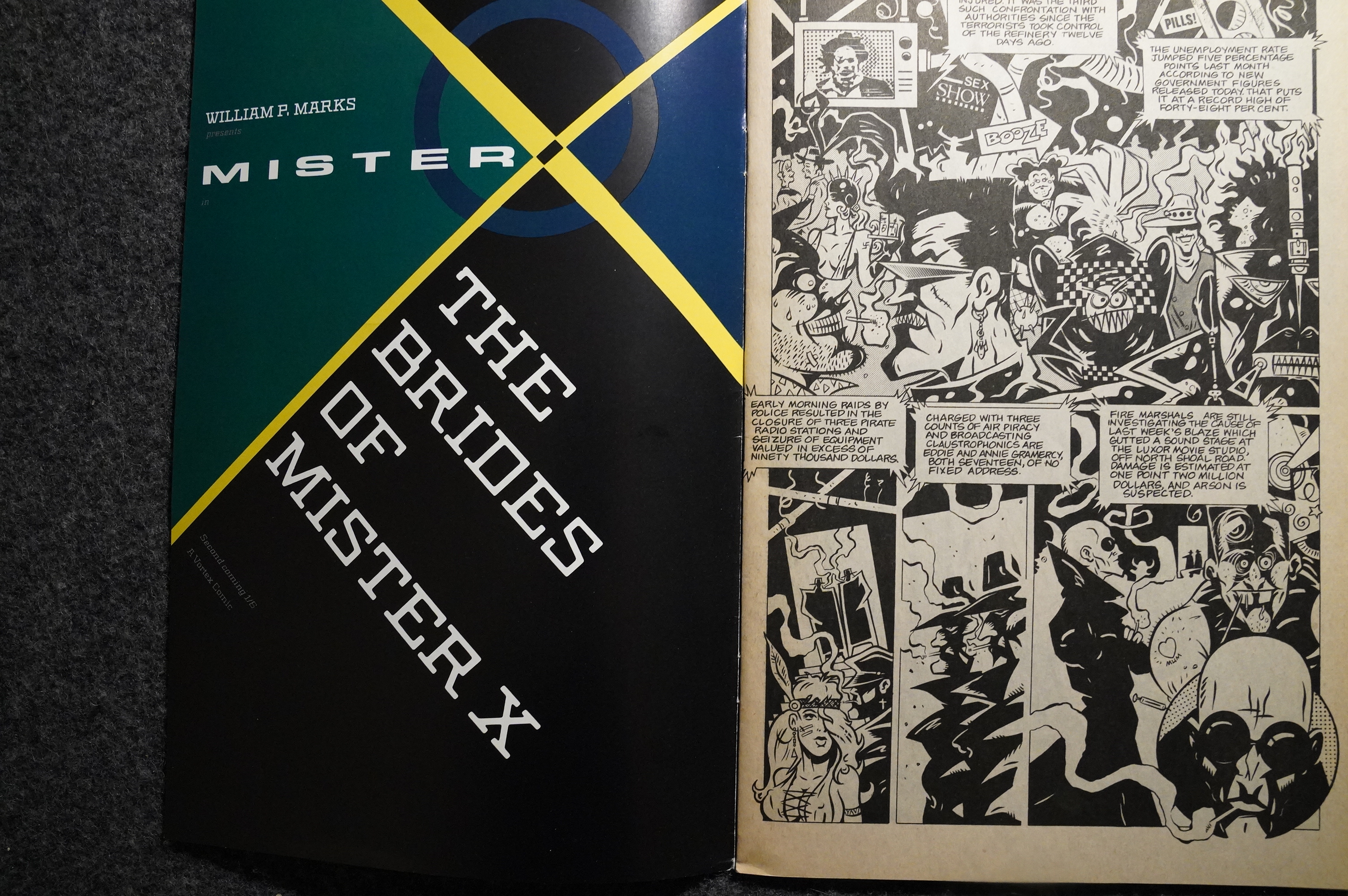
“Hoo, boy”, you’re thinking, “that’s a really snazzy design. And since they’re spending the opening three pages in every issue on that stuff, these are probably big issues?” I’m a mind-reader, I know.
But you’re thinking all wrong! These are 16-page issues — well, really 12-page issues, since it’s in Bill Mark’s unpatented format: The interior stock and the covers use the same paper stock. And with the design flourishes, this means that there’s ten story pages per issue.
“*gasp* *good lord* *choke*” all you comics cheapskates are now saying, I know. And the ones of you good at math will have gotten your slide rules out and computed the total number of pages in this series: 120. Yes, indeed, you are correct.
So this didn’t take me long to read… but Chaykin works well within this format: Every issue (well, of the first half dozen or so) pack in so much that it’ll make your head swim.
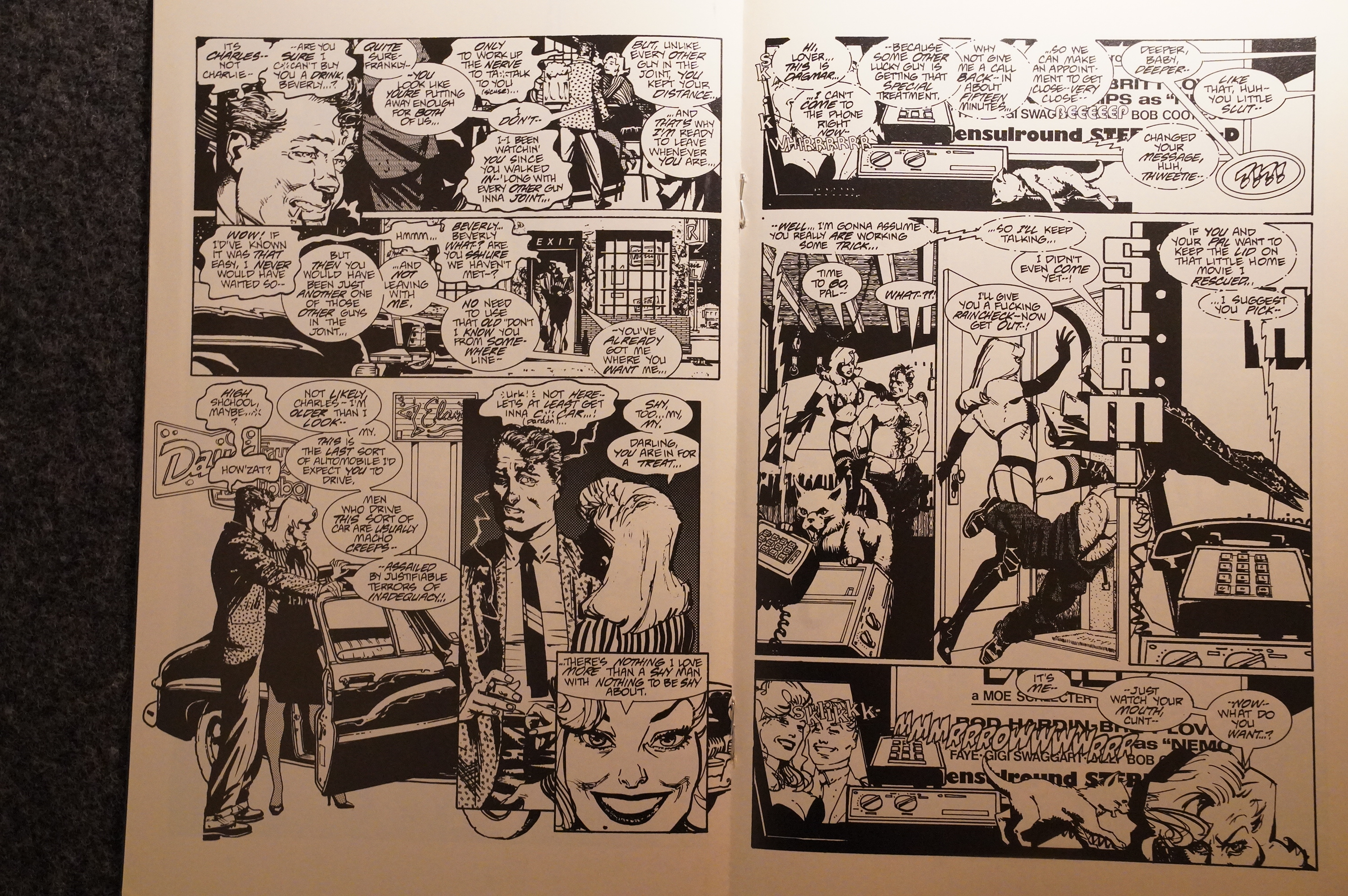
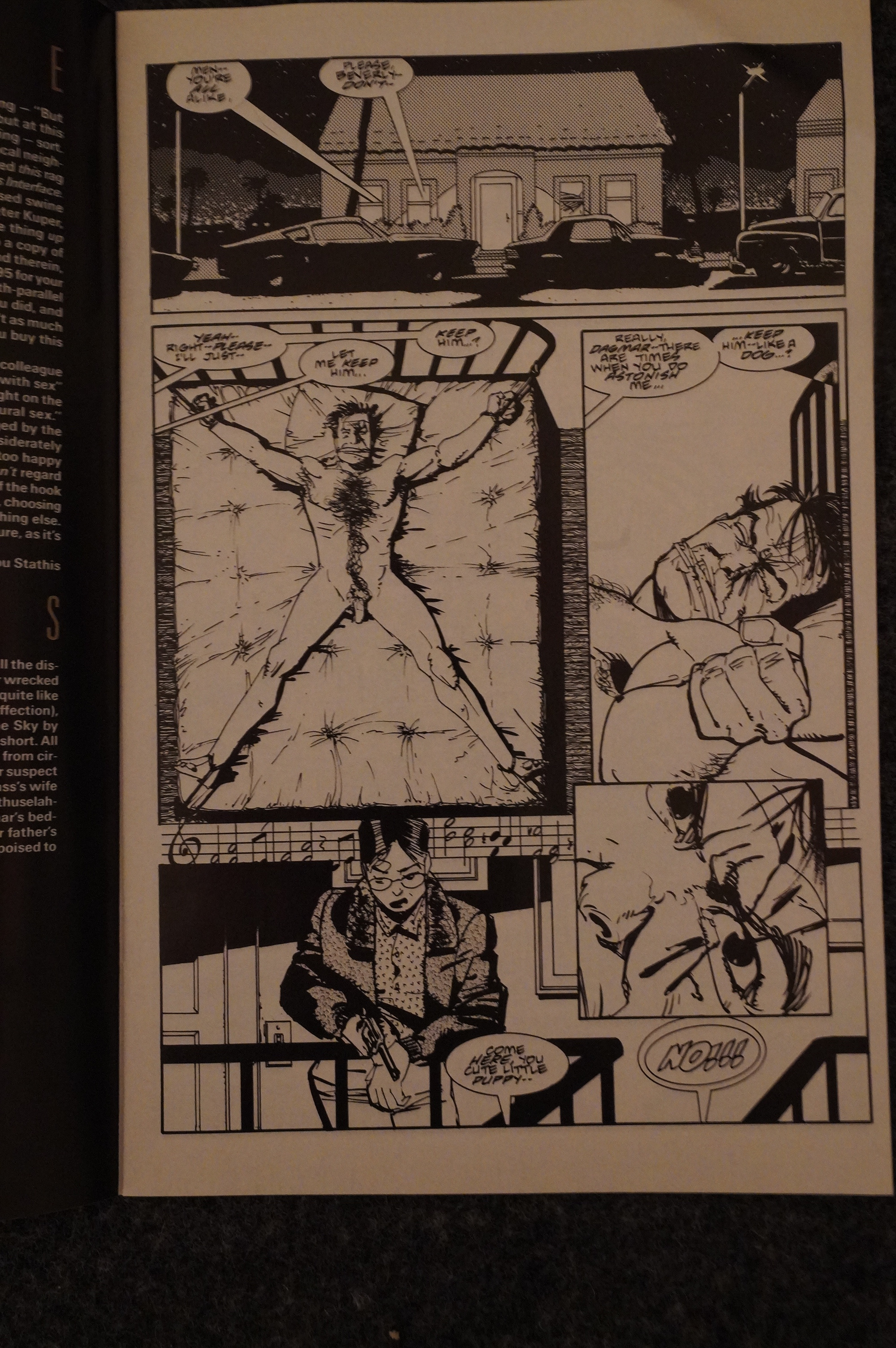
As you can see in the opening three pages, Chaykin uses his trademark motor-mouth strategy: We have at two people talking about something that’s really unclear to us, and there’s a third on the phone, but we never hear what that person says, and there’s a cat and a kitten, an answering machine, lots of talk about blow-jobs, and then a smash cut to somewhere else.
*phew*
It’s great! This is prime Chaykin: He does this sort of stuff so well, and you trust him enough to give the pages your full attention. Who’s Bev? Who’s Dagmar? What’s that about the walkman? What?
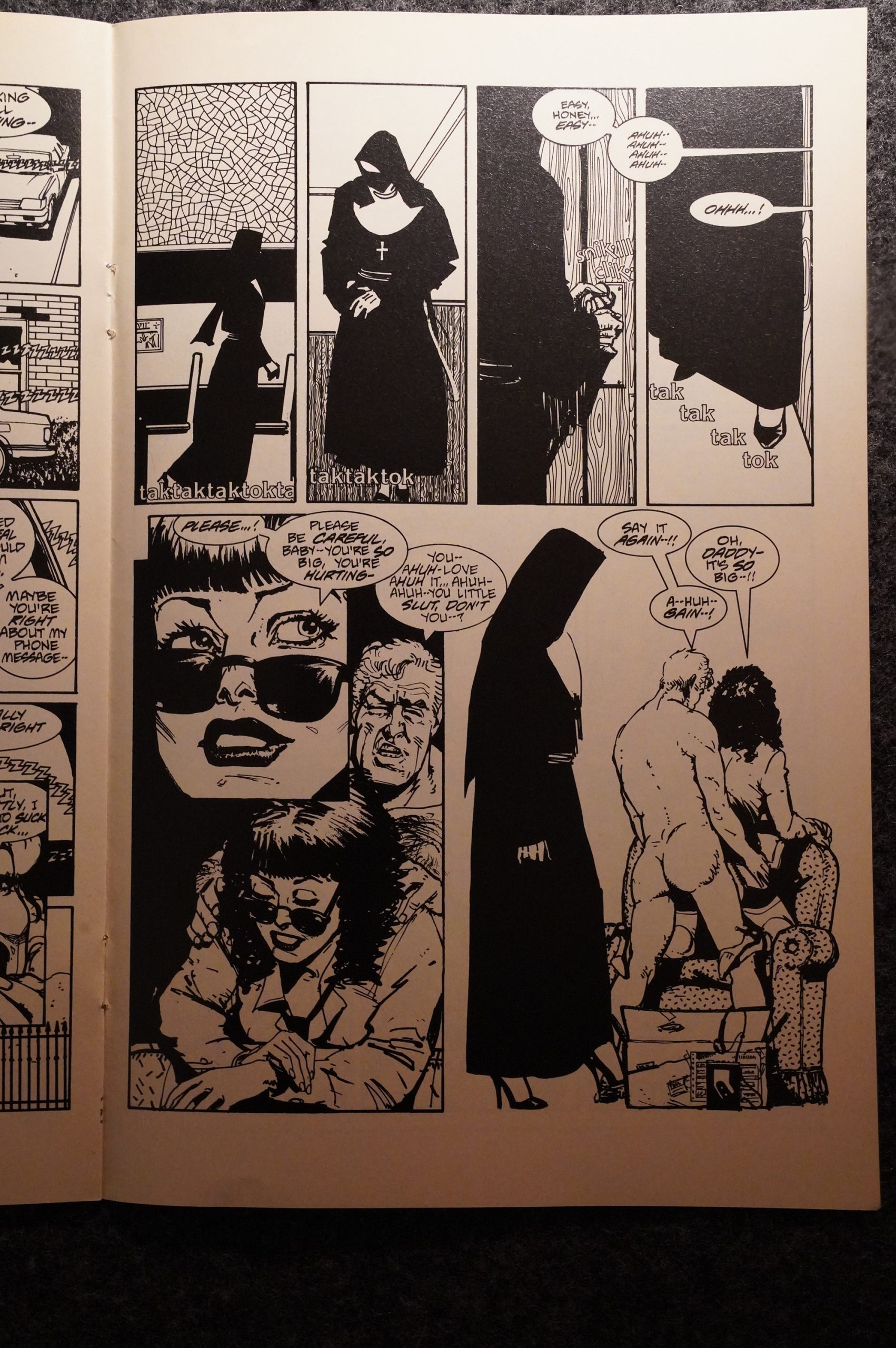
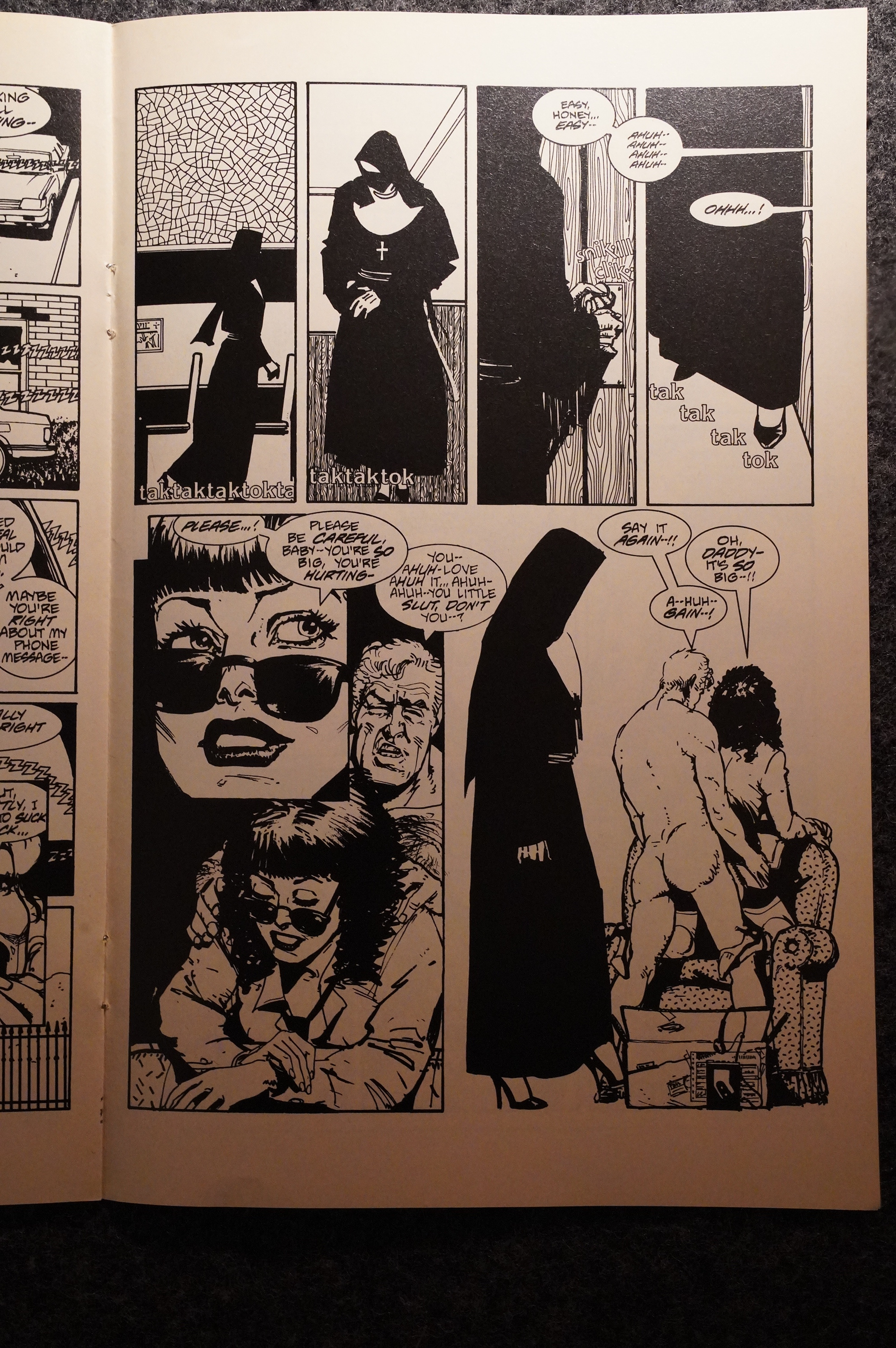
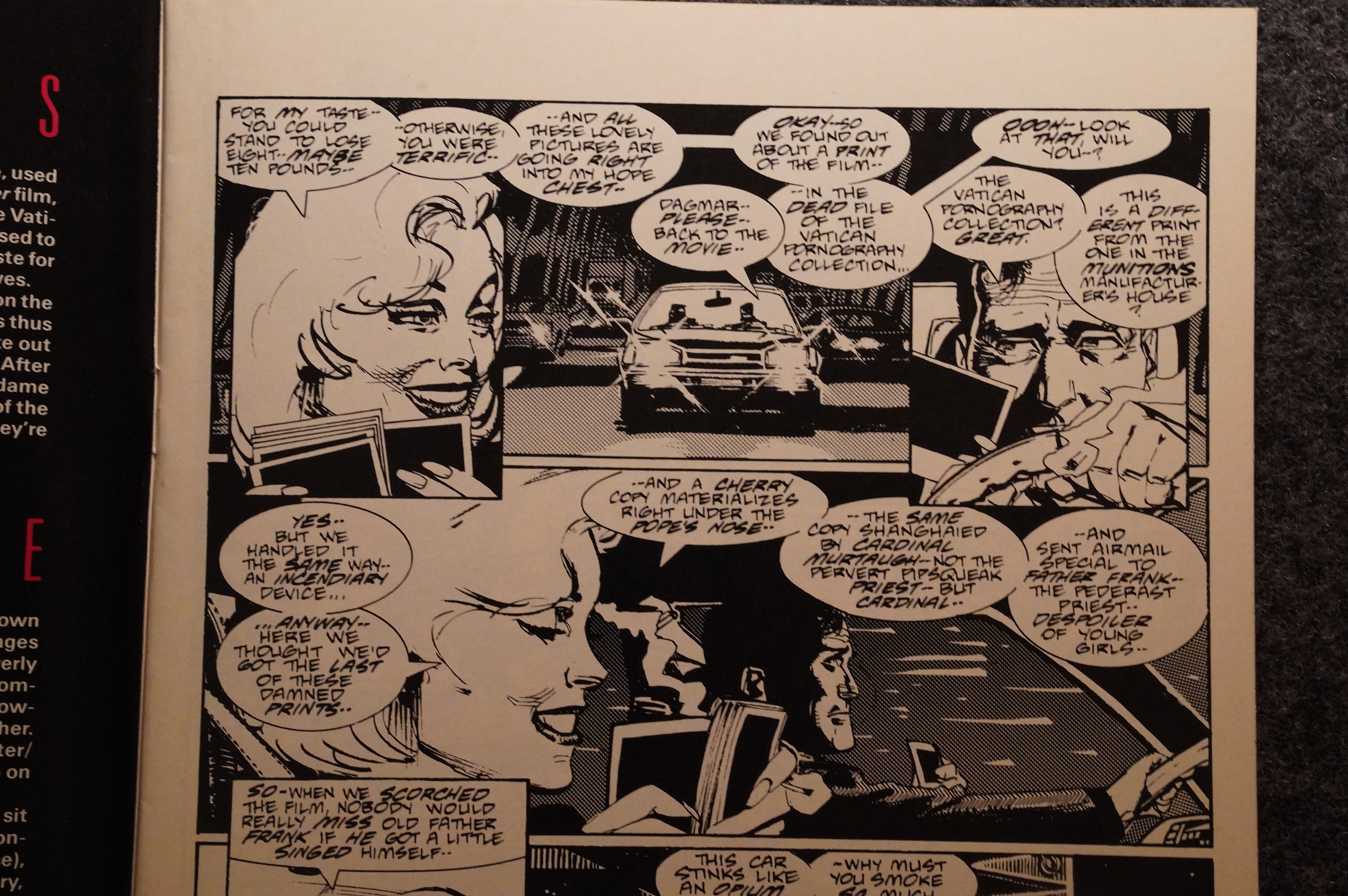
And then, of course, we have a priest fucking a woman who’s probably the brown-haired one from the opening scene? Note the walkman in the final panel. And a nun? What?
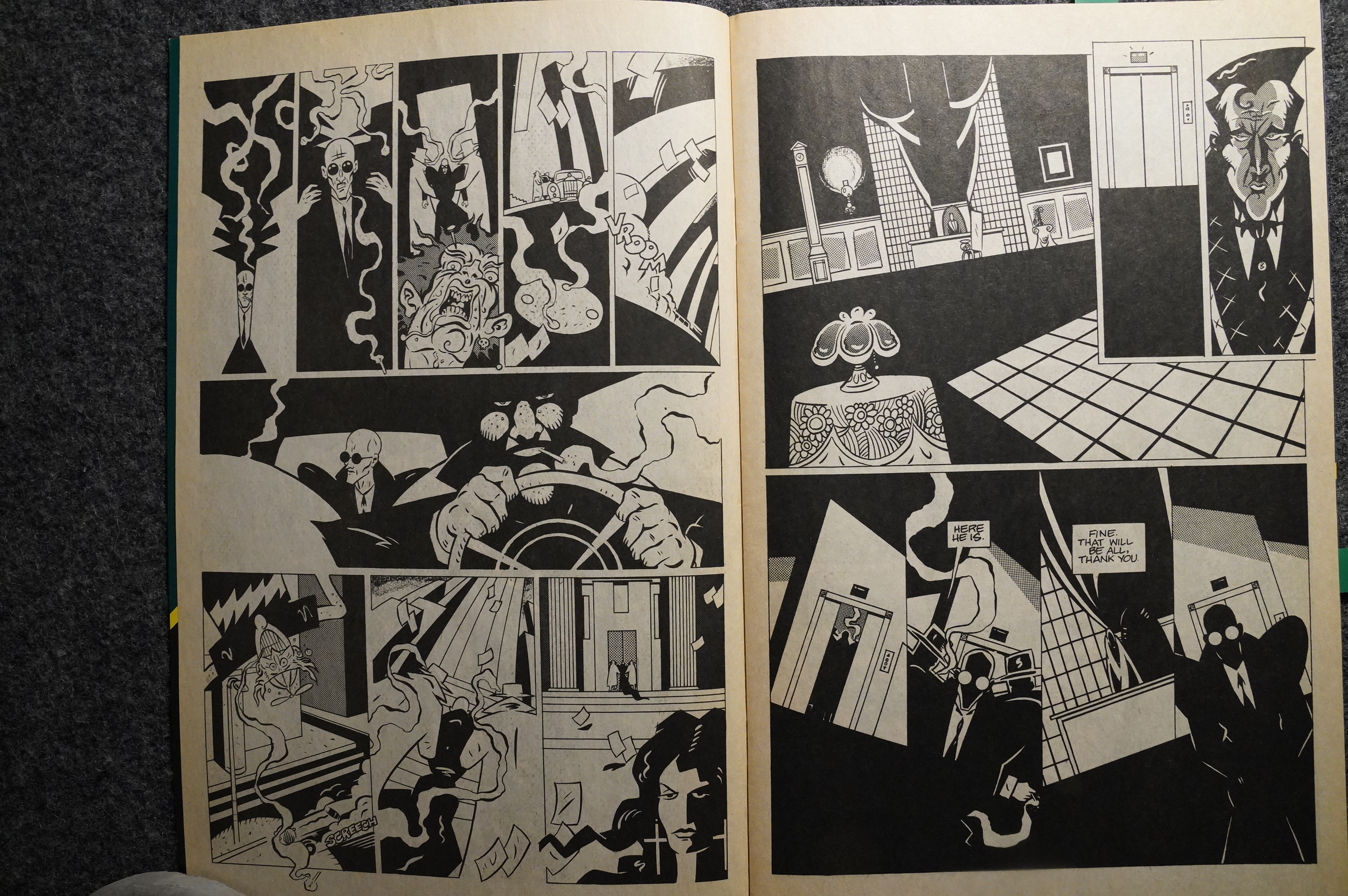
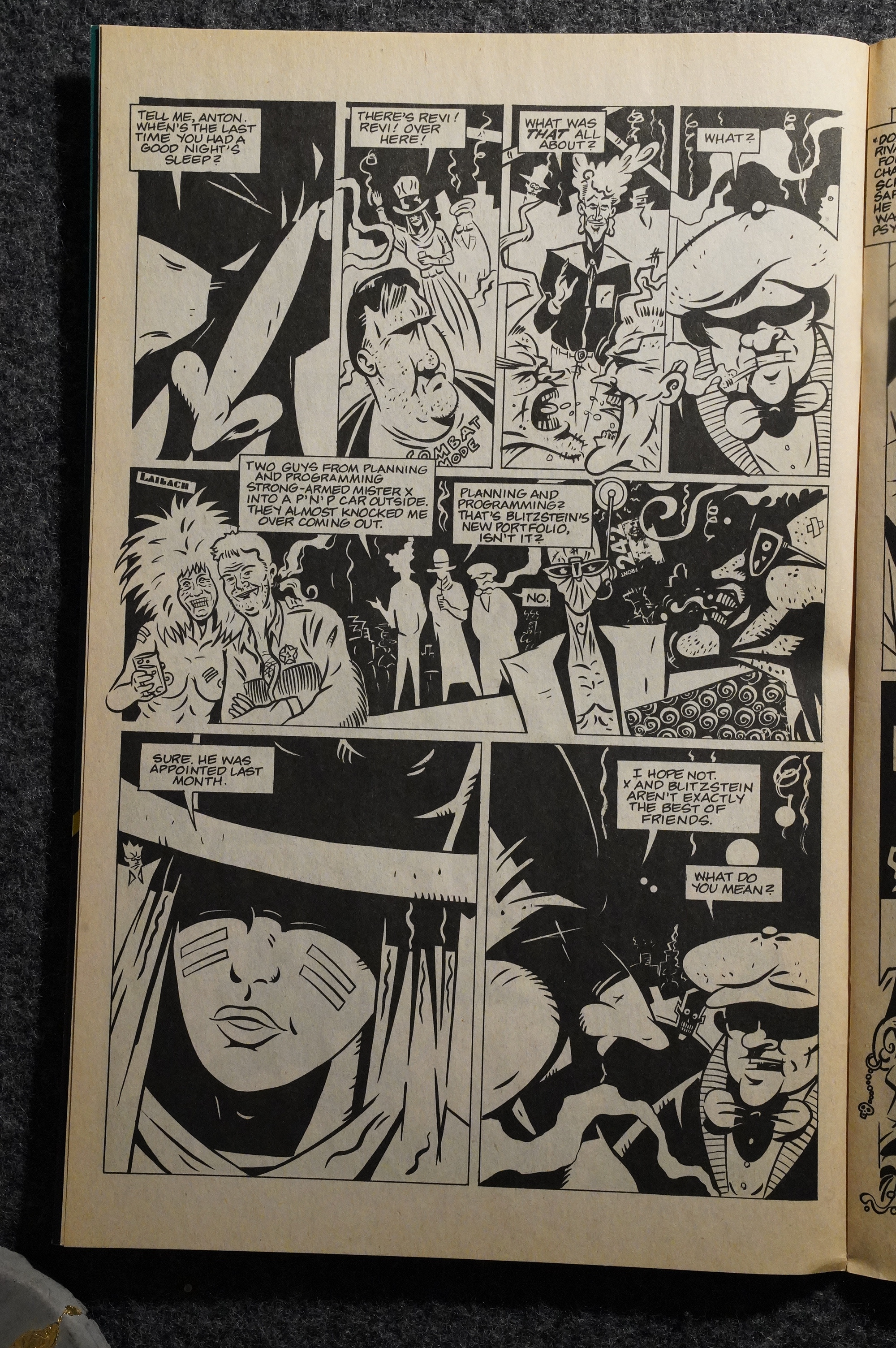
See, this is why Chaykin is what he is, because he makes this work. The storytelling is on point, even if nothing is really… clear? It’ll come together. And the artwork is so stylish; the black spotting is impeccable, and even if the linework sometimes seems rushed, it works.
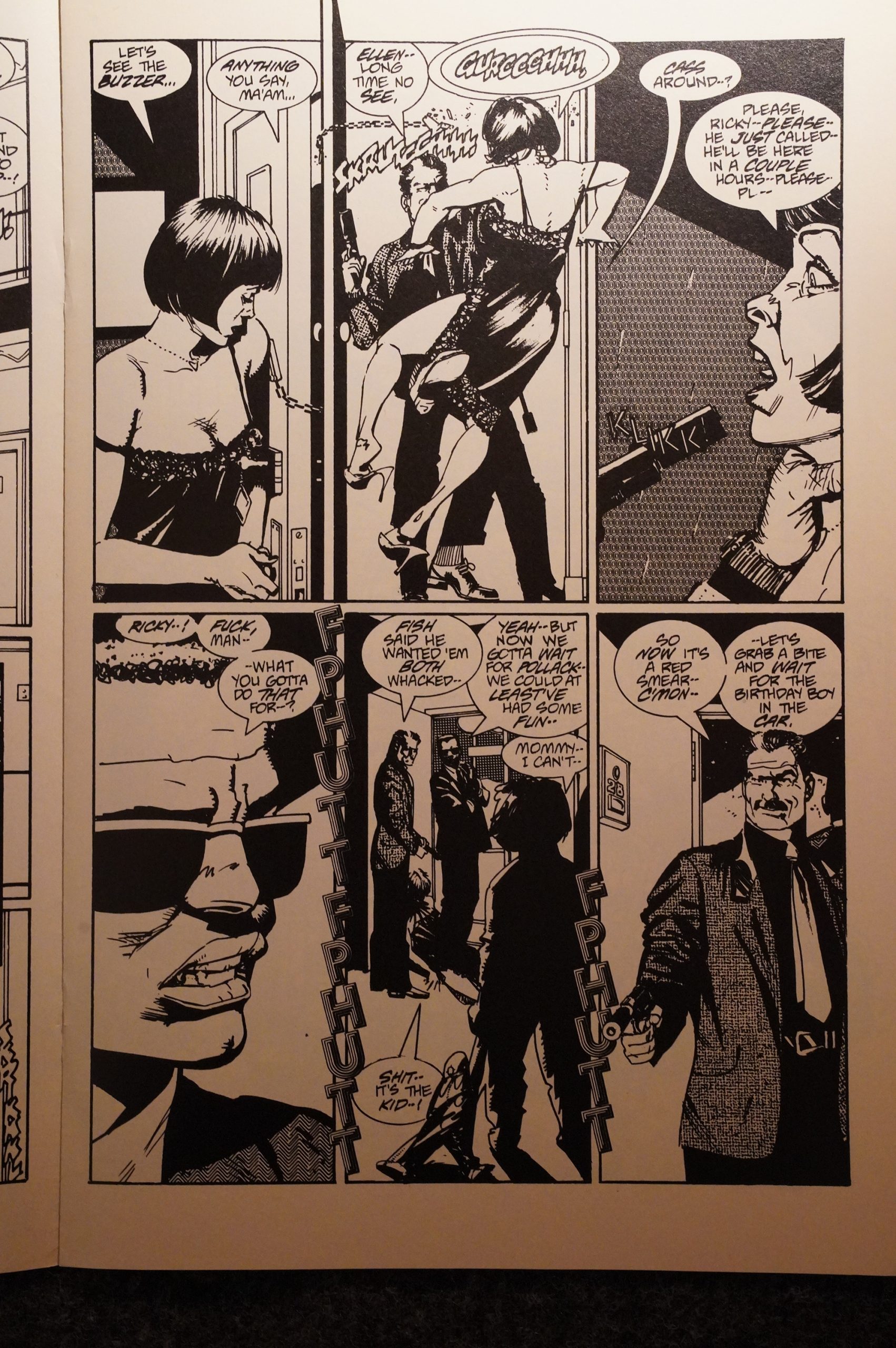
If I remember correctly, this was a really controversial book at the time, but because of the sex? But it’s a really violent book.
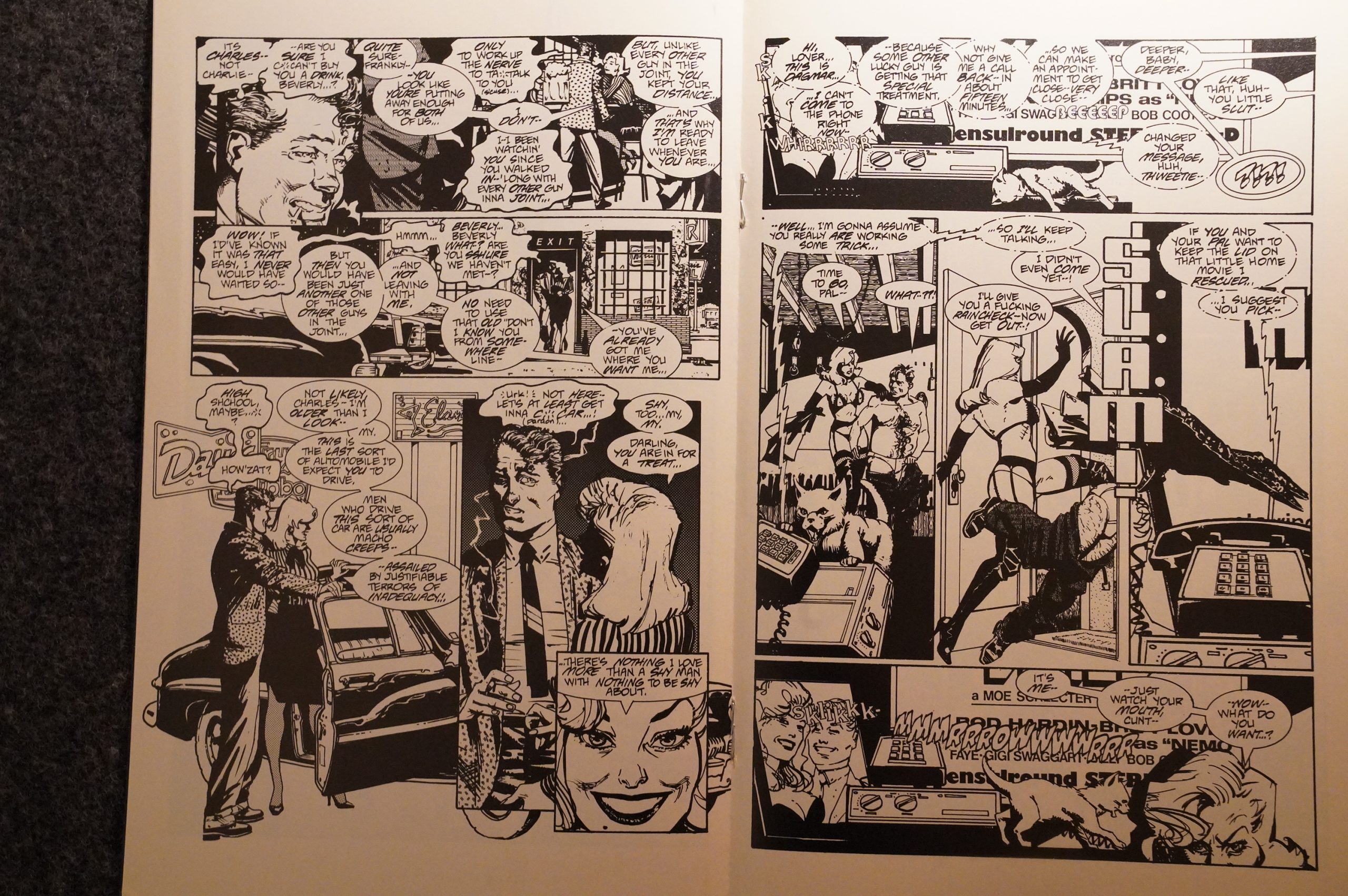
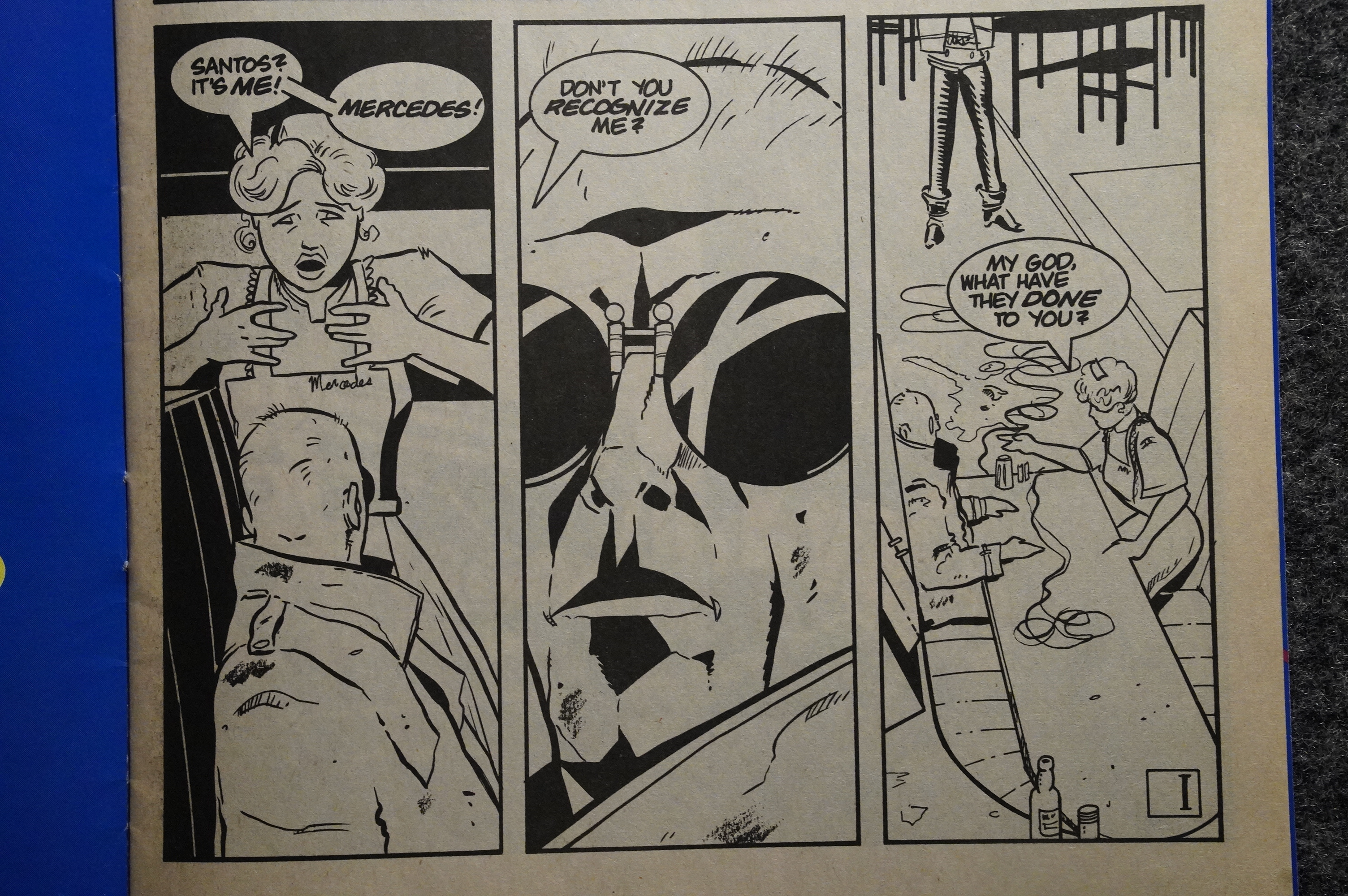
Pages like this can make you despair, though. So a woman called Bev picks up a guy in a bar… and then on the next page, we’re at Dagmar’s house? Is that Dagmar? Is that Beverly? What? But the confusion is SPOILER ALERT there for a reason, because it’s Beverly and Dagmar, and they aren’t just drawn very similarly; they look almost identical.
Of course, using dopplegangers is a well-worn cliché, but when you can have this much fun with it, it’s fine.
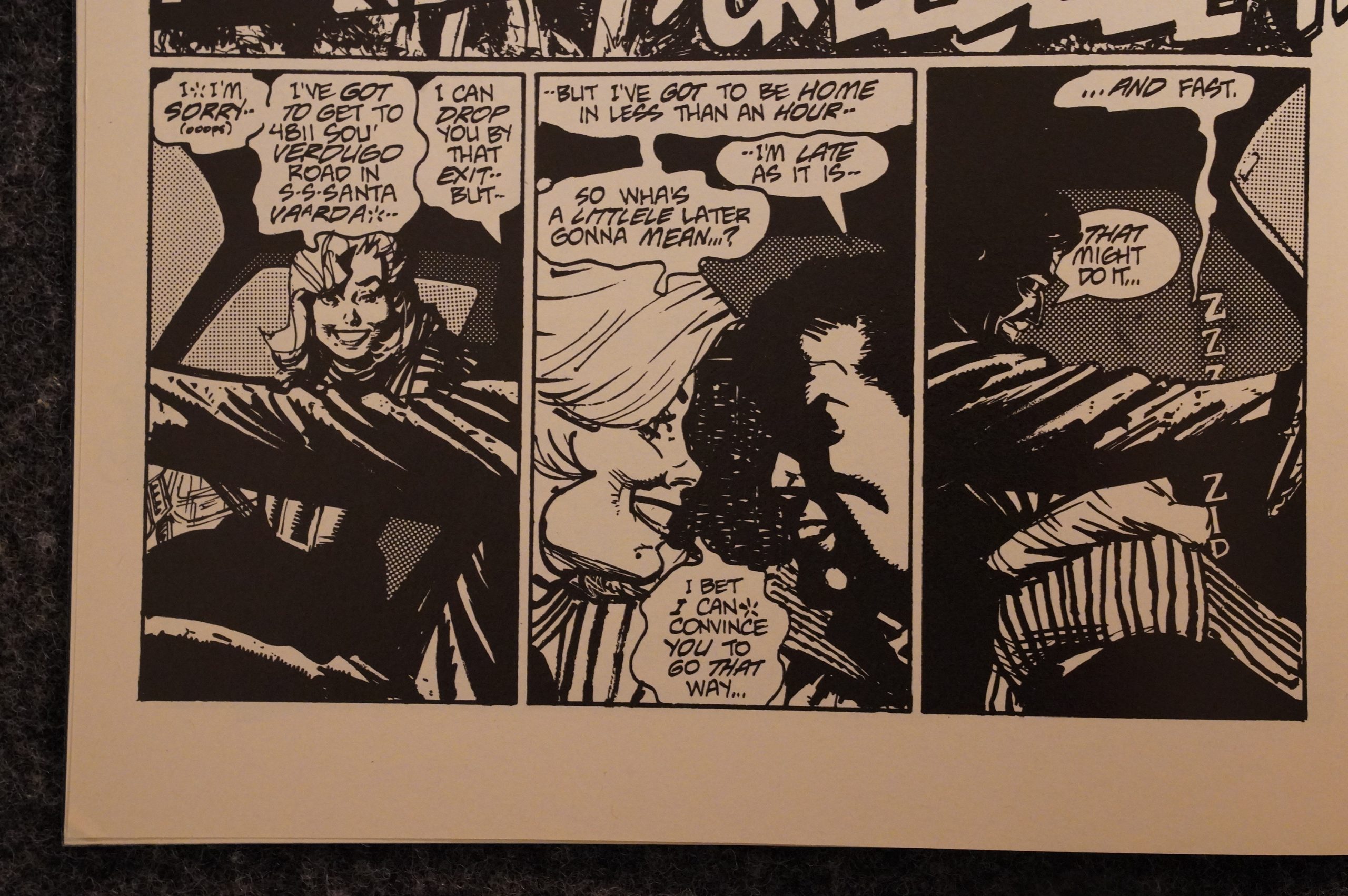
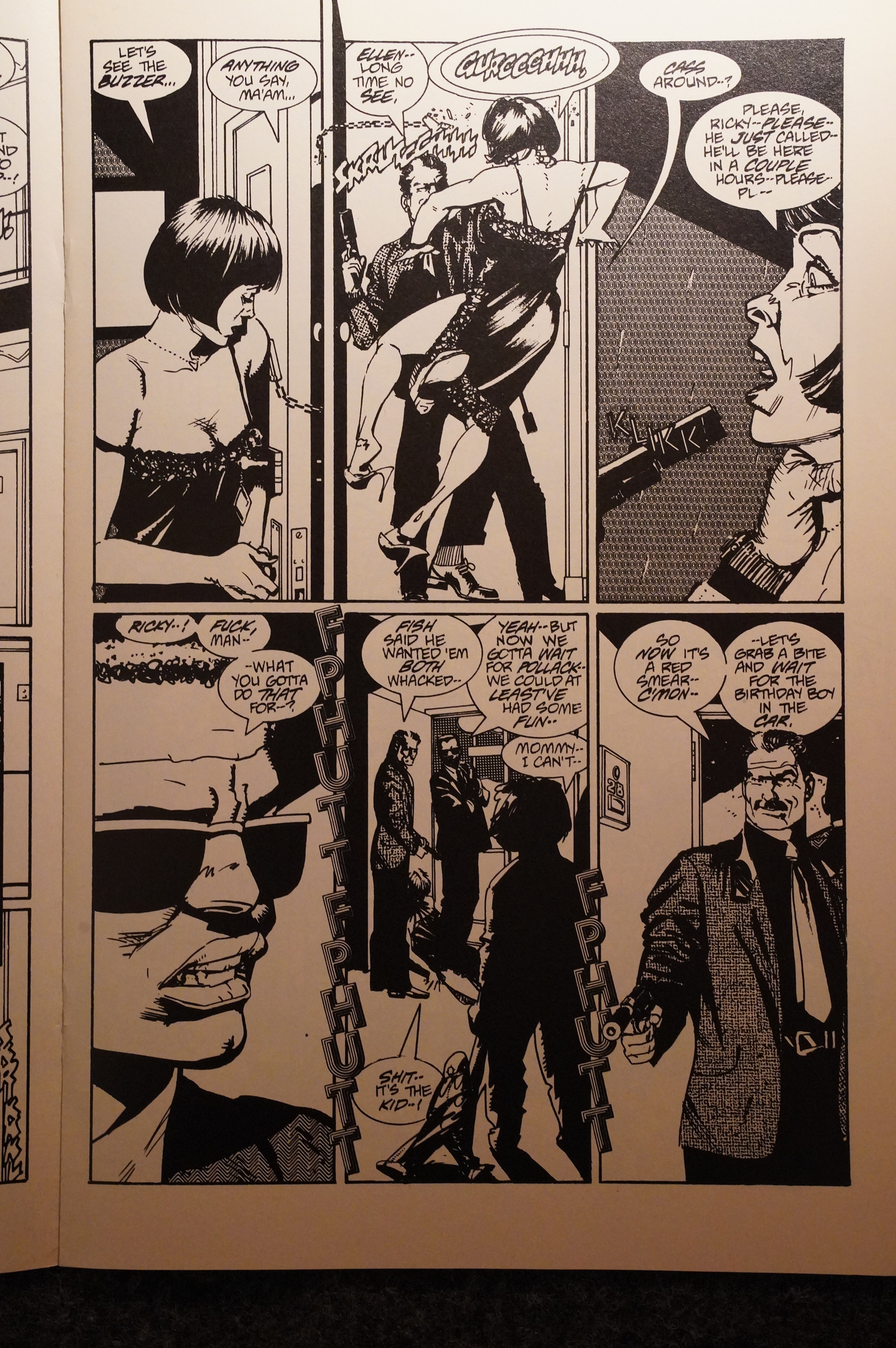
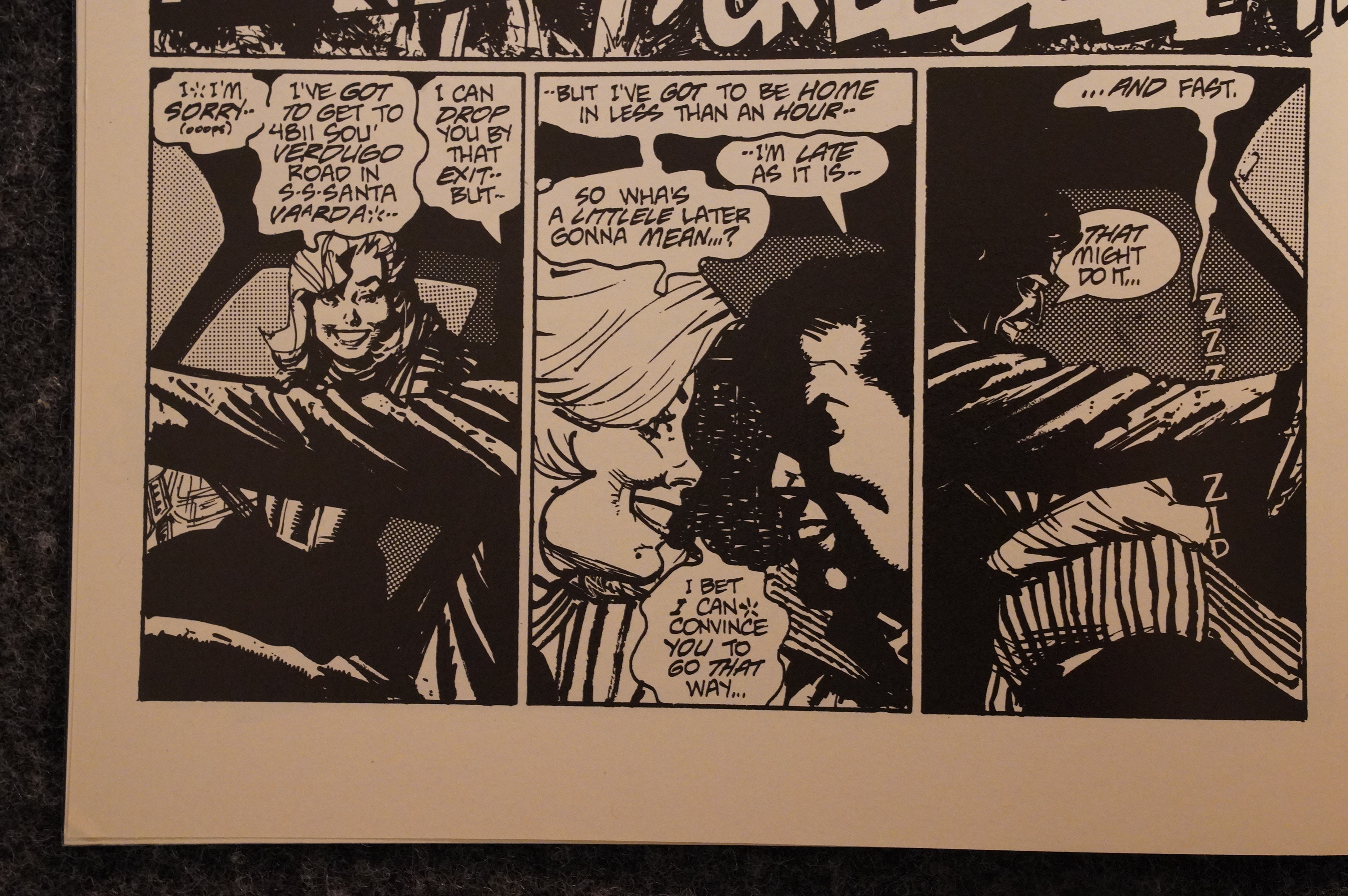
That’s Beverly again, and it takes quite a few issues before we learn why she needed the ride… and we’re never told explicitly?
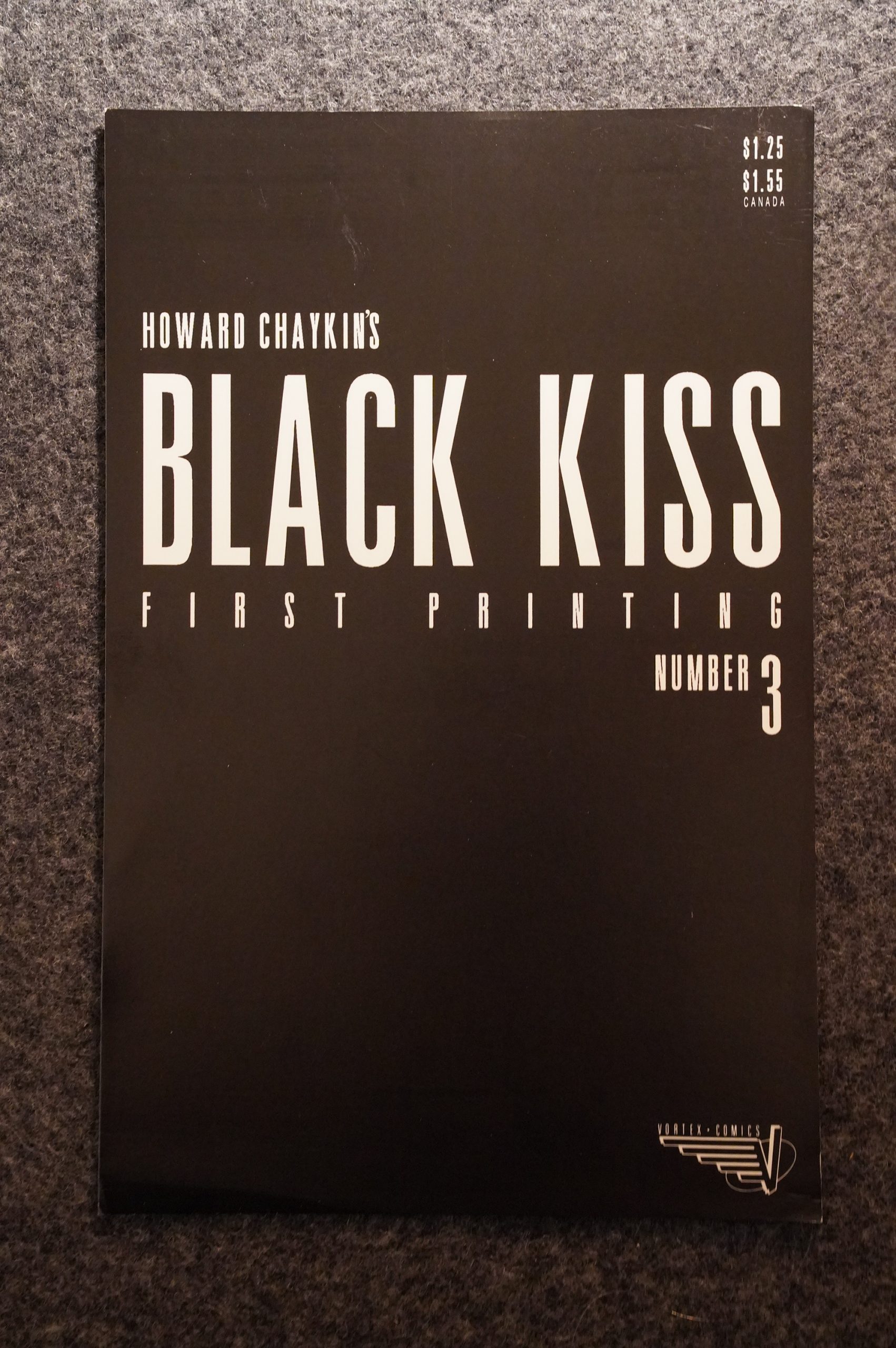
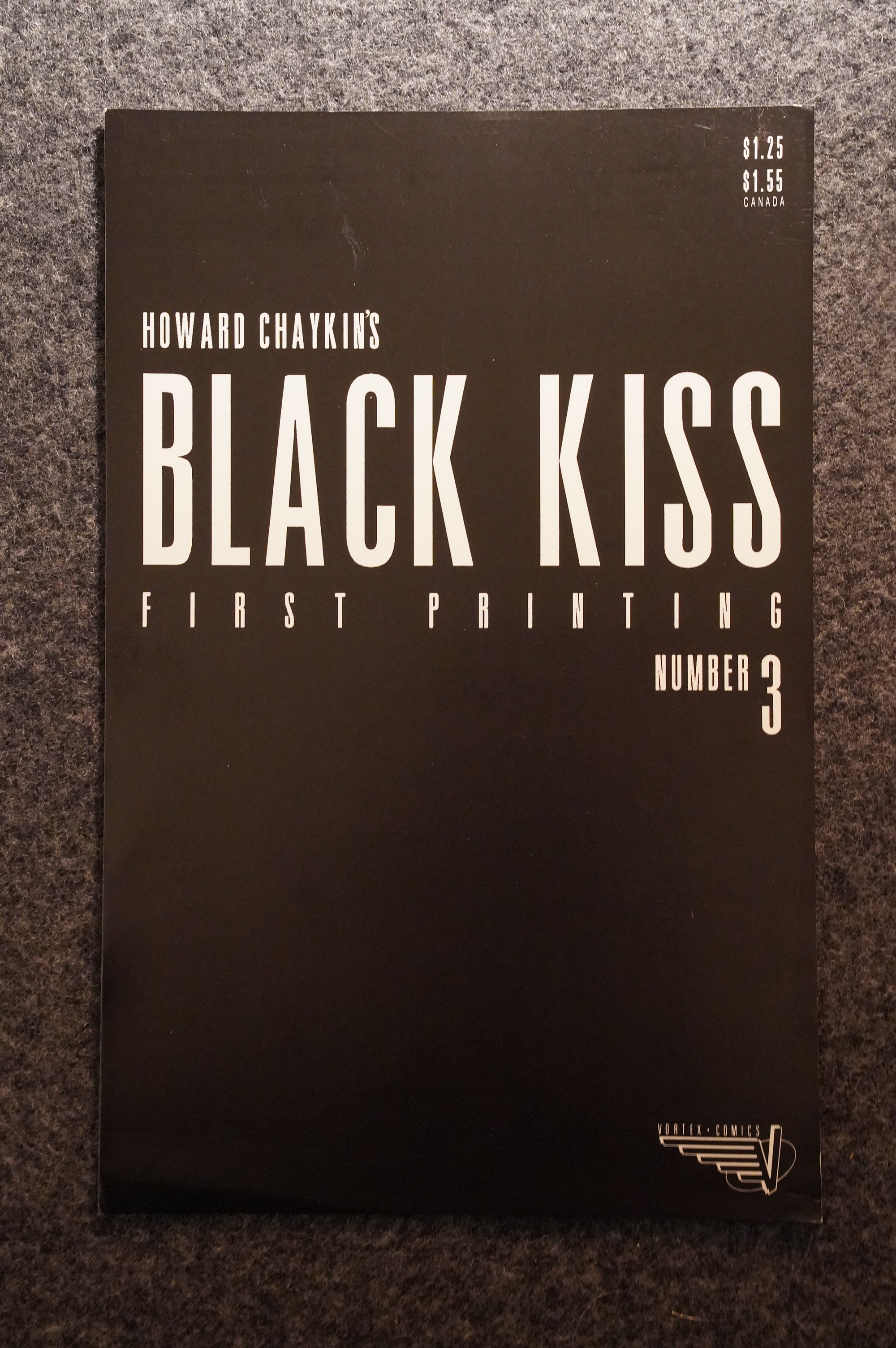
Ah, yeah, these books were so controversial that they were sold in plastic bags with (apparently) cardboard like this to cover the er covers. That’s a bit over the top, eh?
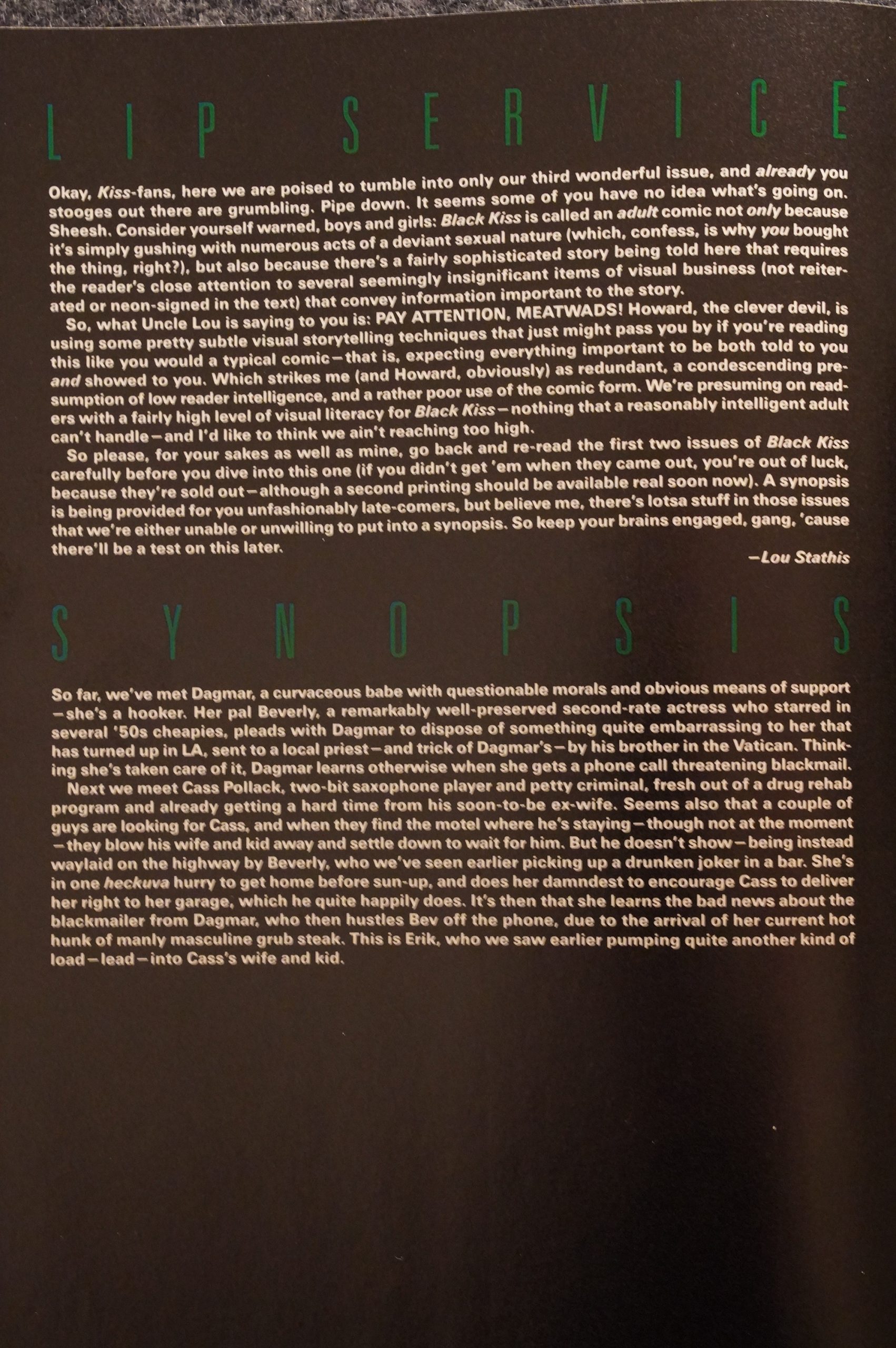
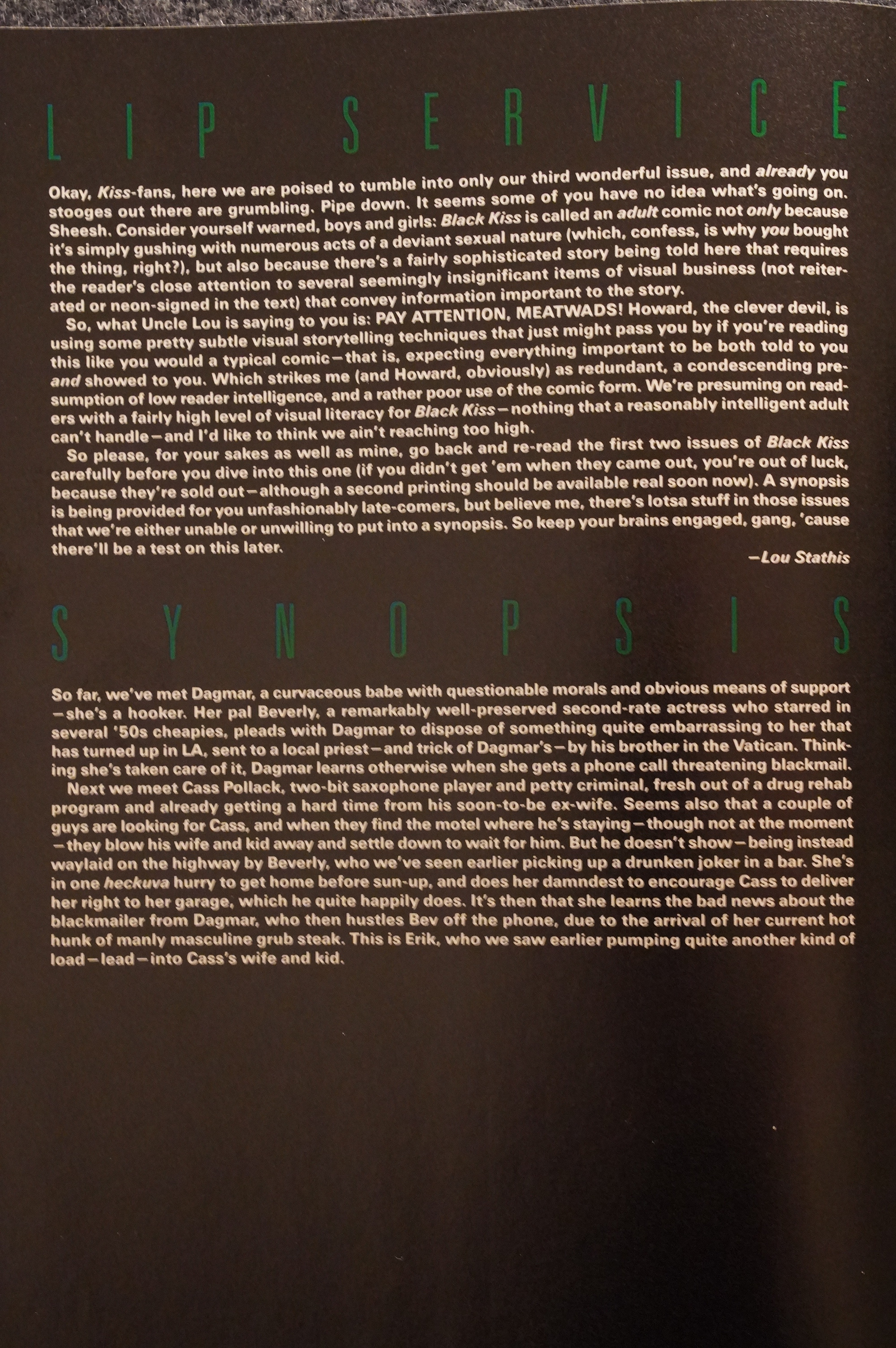
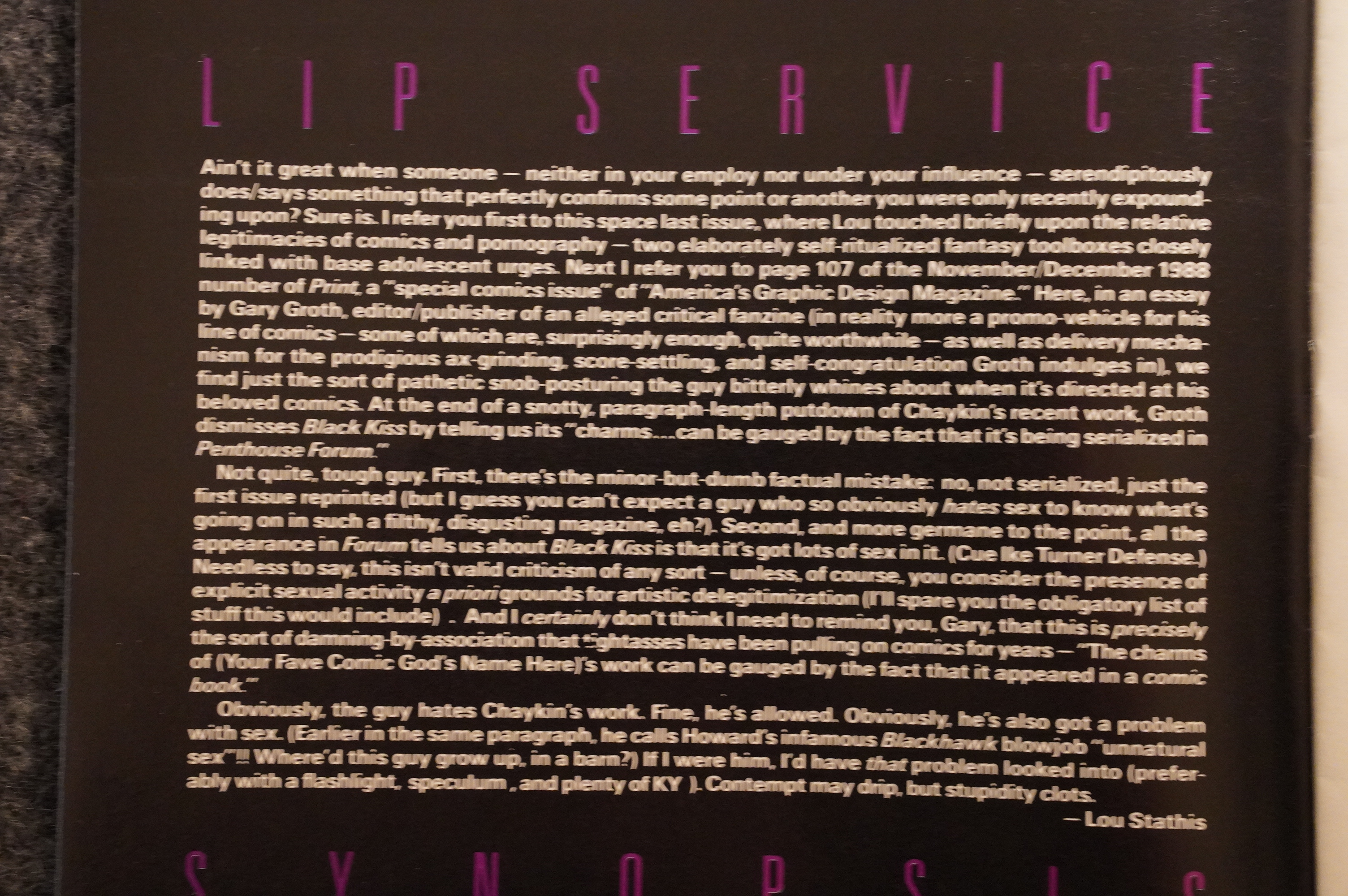
With the third issue, we start getting editorials from Lou Stathis. Here he berates anybody that doesn’t understand what’s happening in these books, plot-wise… and then helpfully gives a recap. Isn’t that admitting defeat?
I did find these recaps handy, because I did, indeed, miss some bits while reading the comic.
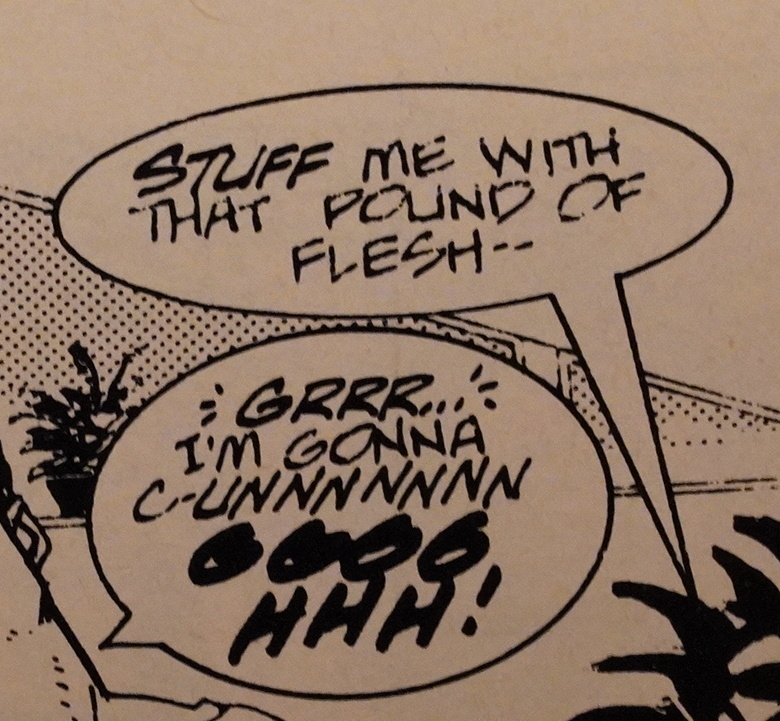
The printing is mostly fine, but some of the lettering, oddly enough, breaks up like this.
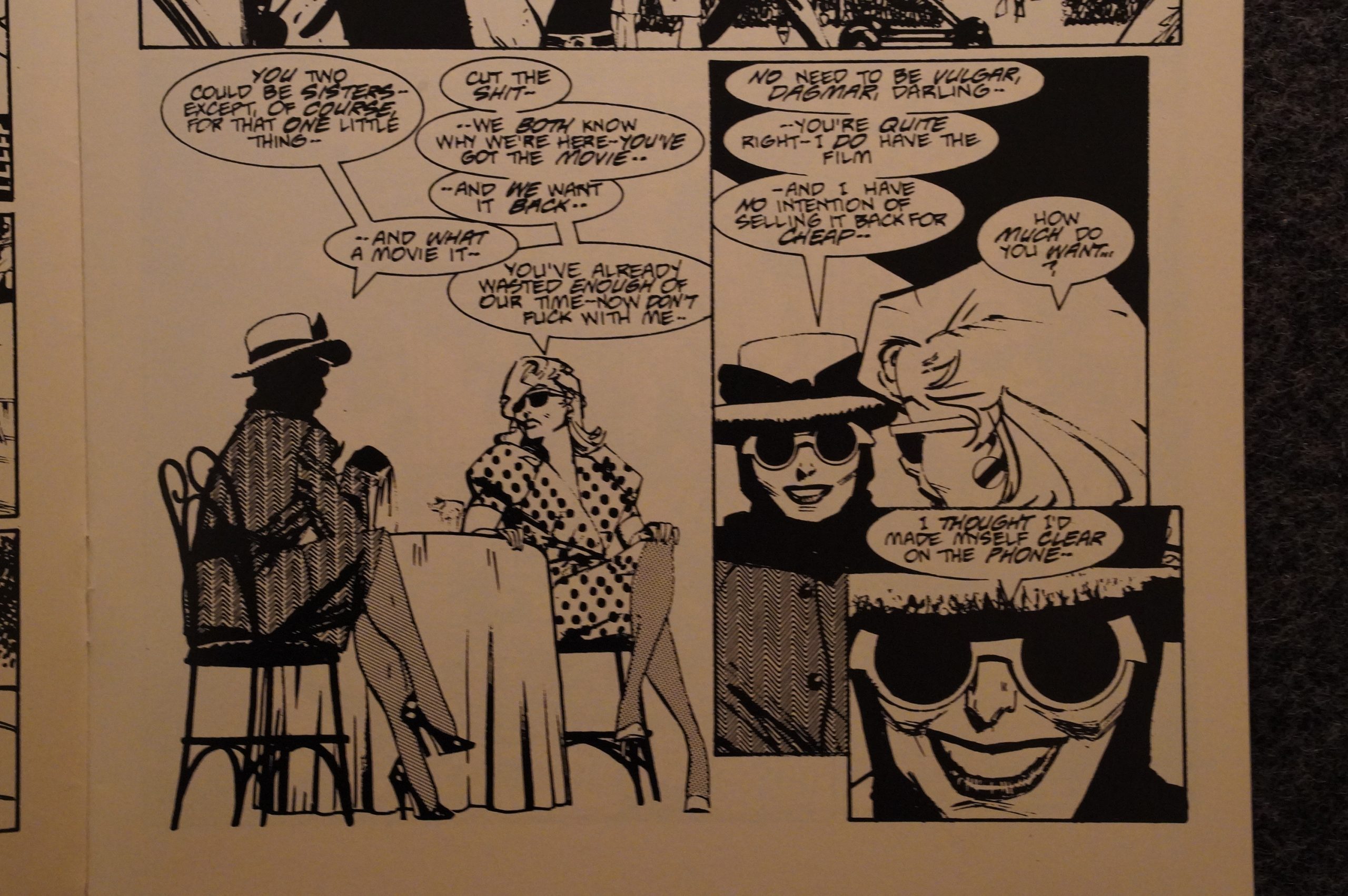
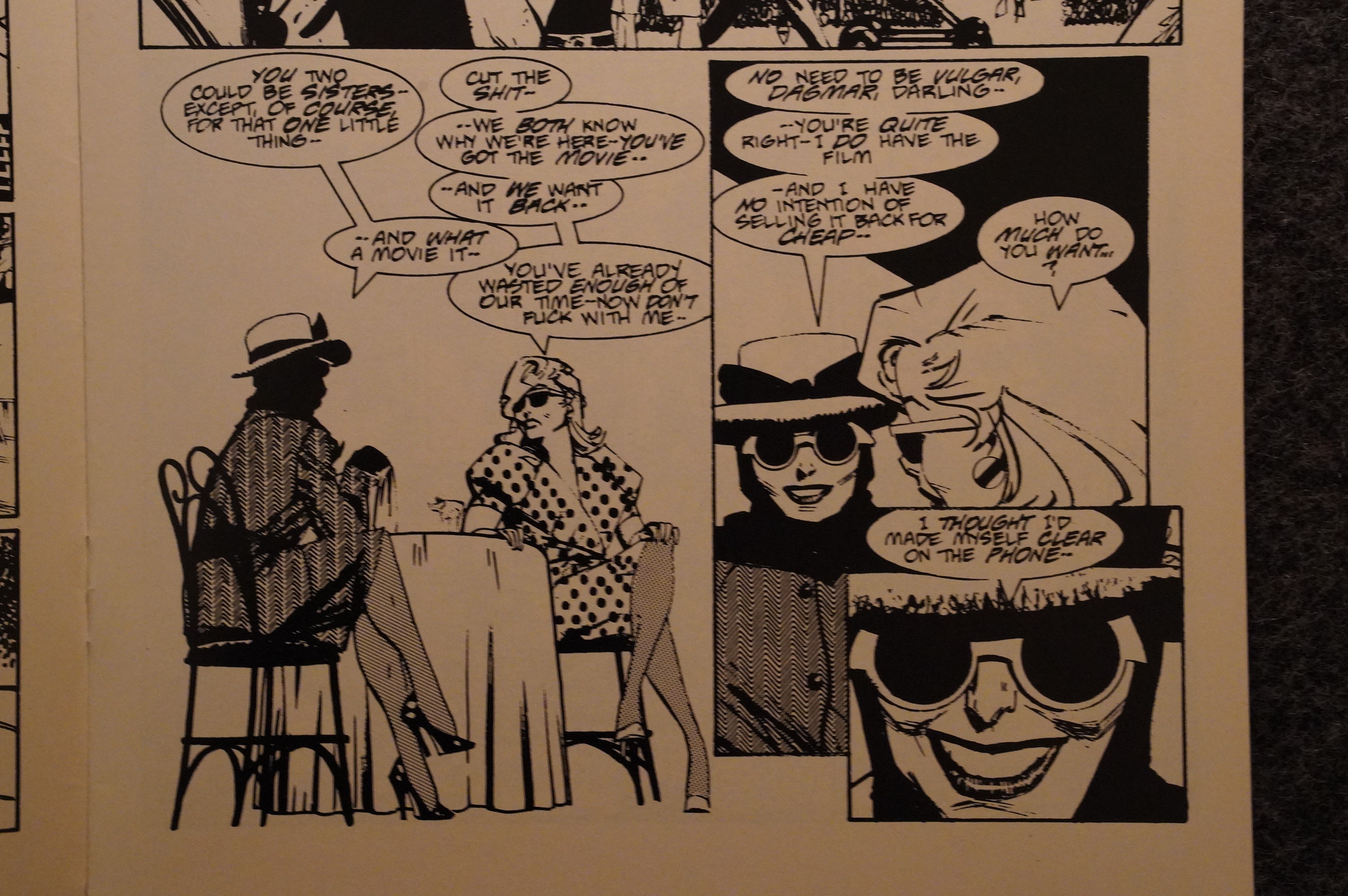
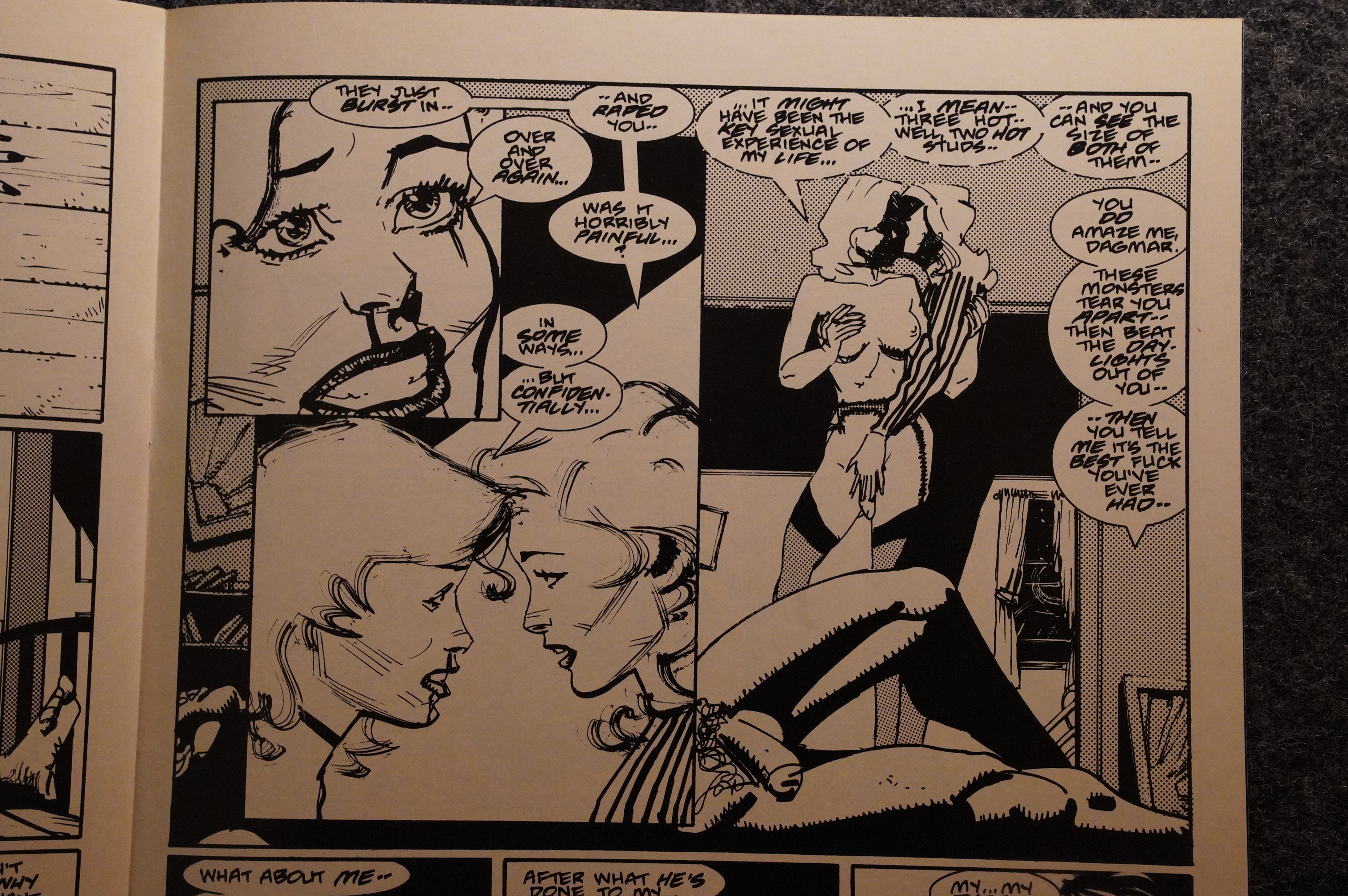
Chaykin drops these hints throughout the book… “You two could be sisters — except for that one little thing.” SPOILERS: It turns out that Dagmar is transgender (with penis intact), which our semi-protagonist finds out when he’s having sex with Bev and Dagmar. Which is a pretty typical trope; the predatory transgender woman, and it was played for maximum SHOCK EFFECT.
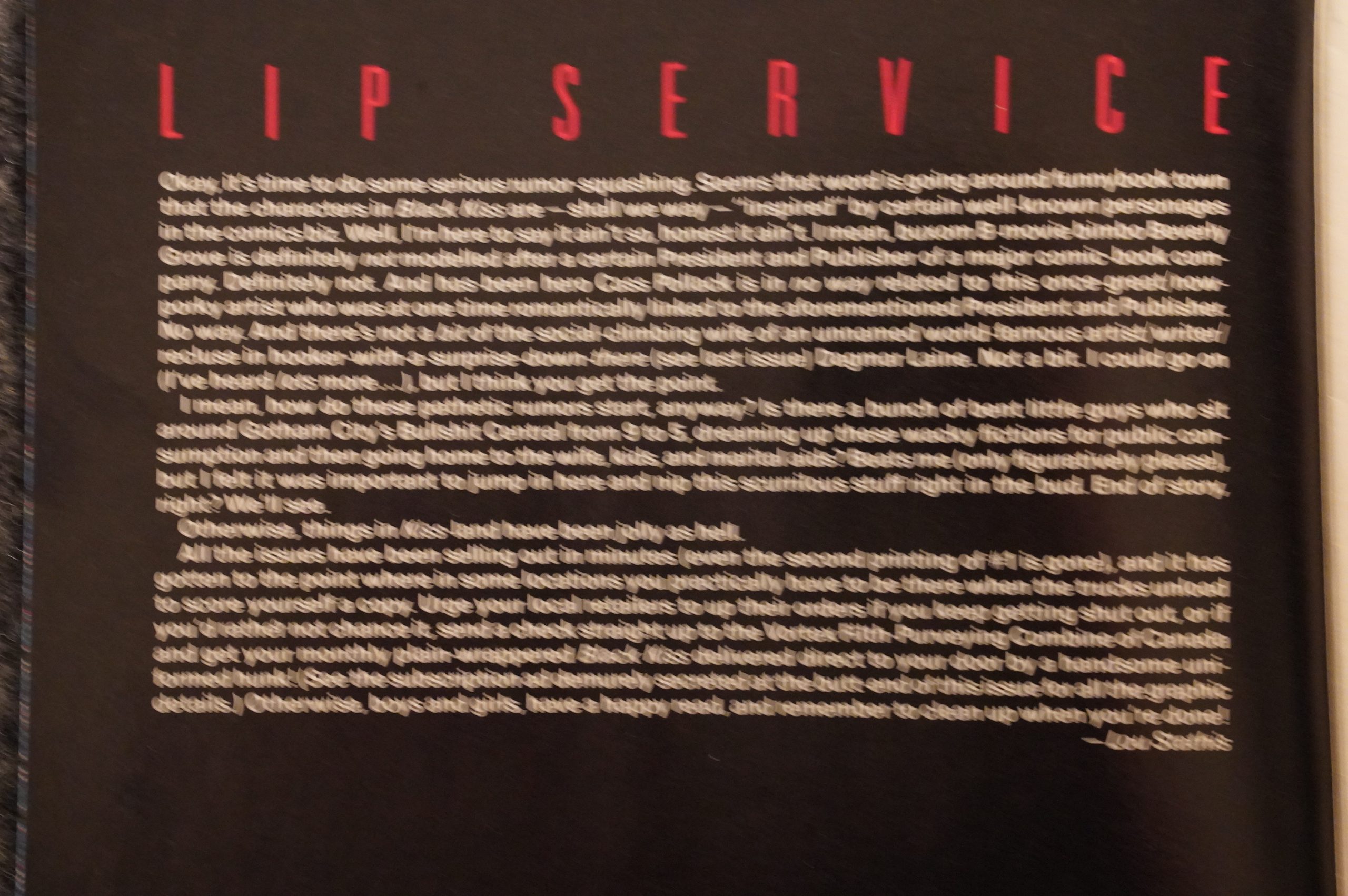
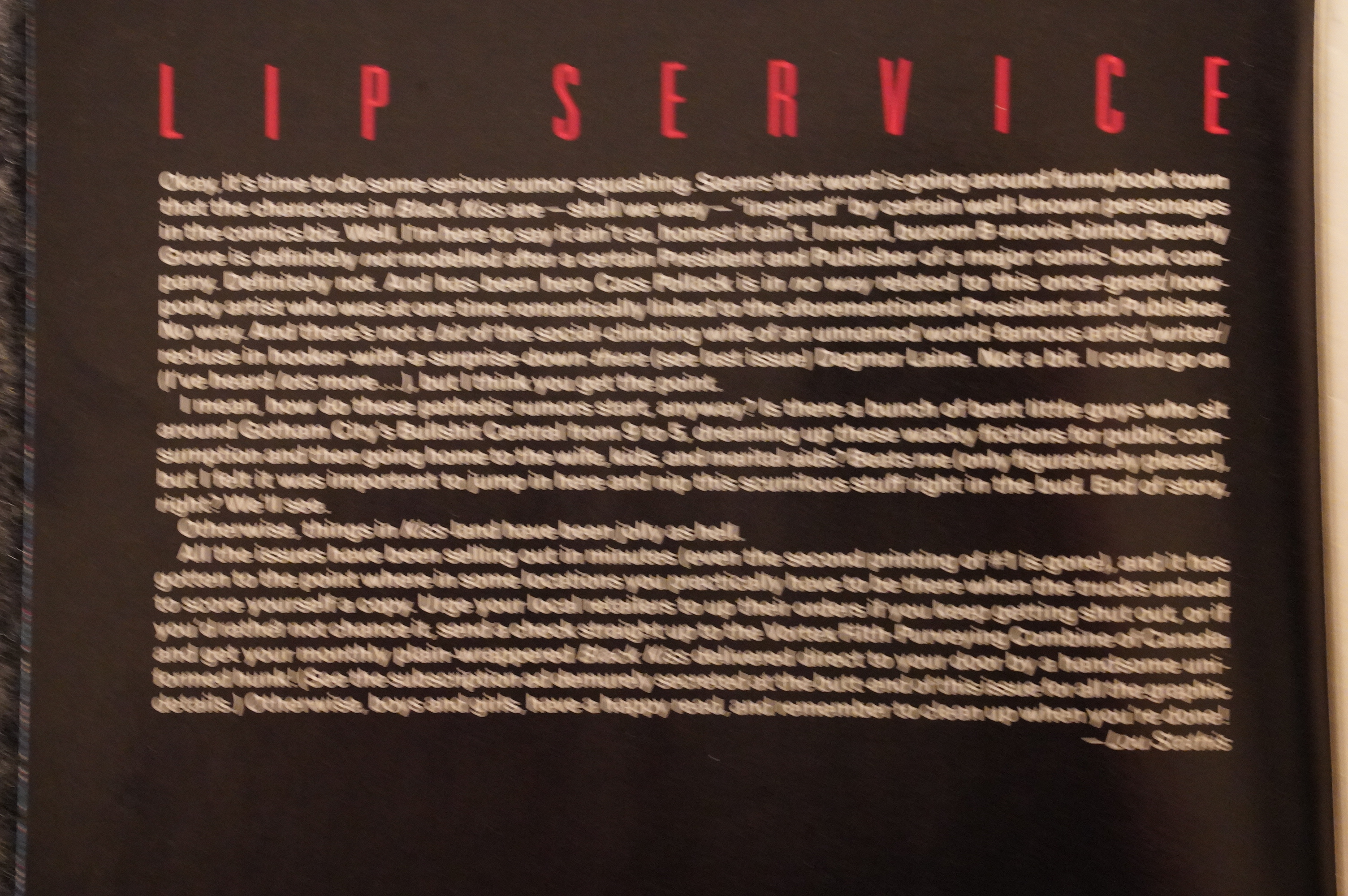
Oops, that pic is a bit blurry. Stathis claims that he’s squashing some rumours that Beverly and Cass are modelled after a couple of people working in the comics business. Now, normally you’d read this as Stathis trying to wink wink nudge nudge us into believing this, but with Stathis? Perhaps he’s just stirring shit?
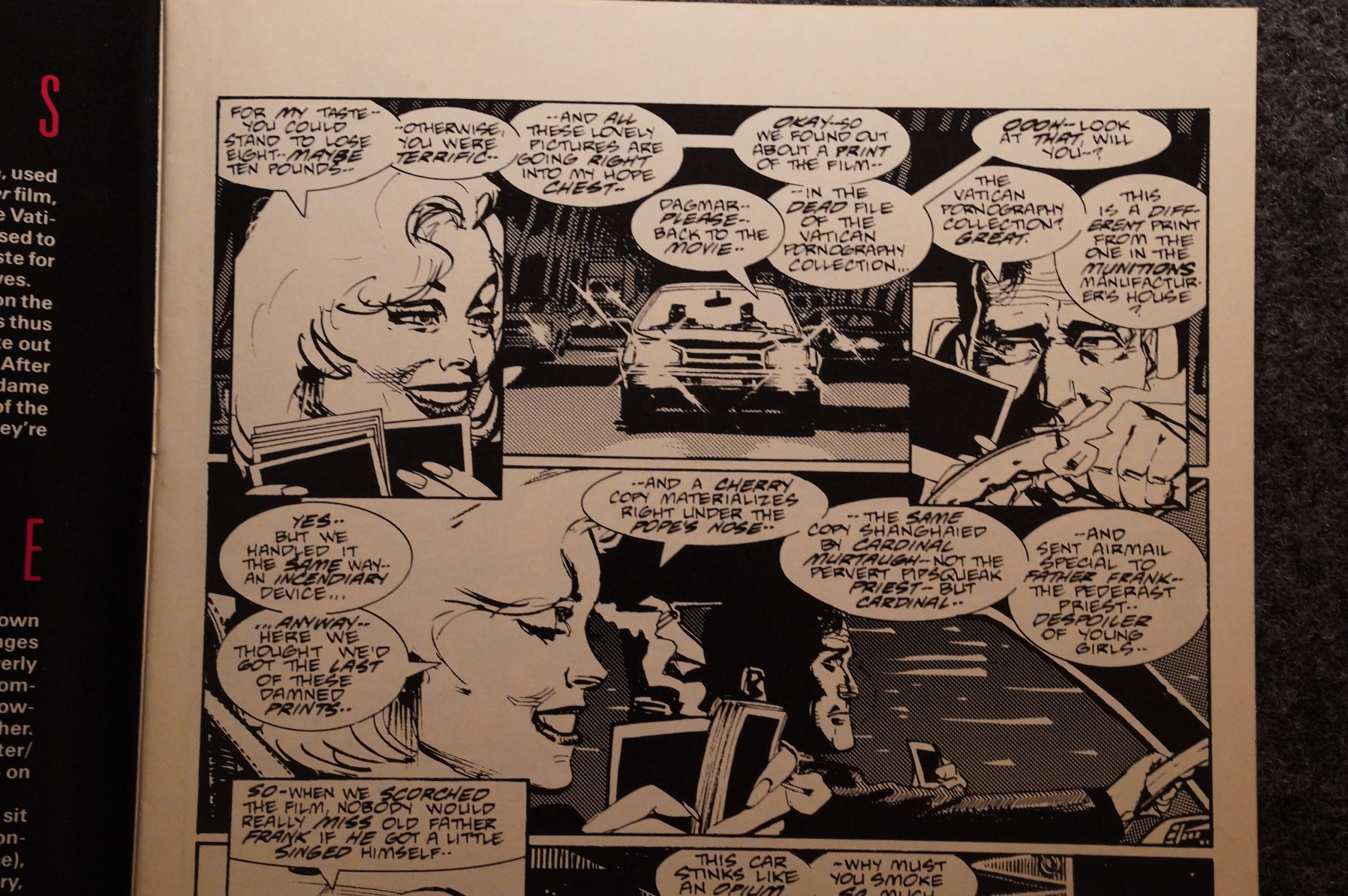
As usual with Chaykin, he seems to lose a bit of confidence in his own storytelling methods about half-way through. Instead of showing and not telling the readers, he starts doing these infodumps on us. Sure, it’s nice to get a confirmation about what we’ve surmised from the book, but…
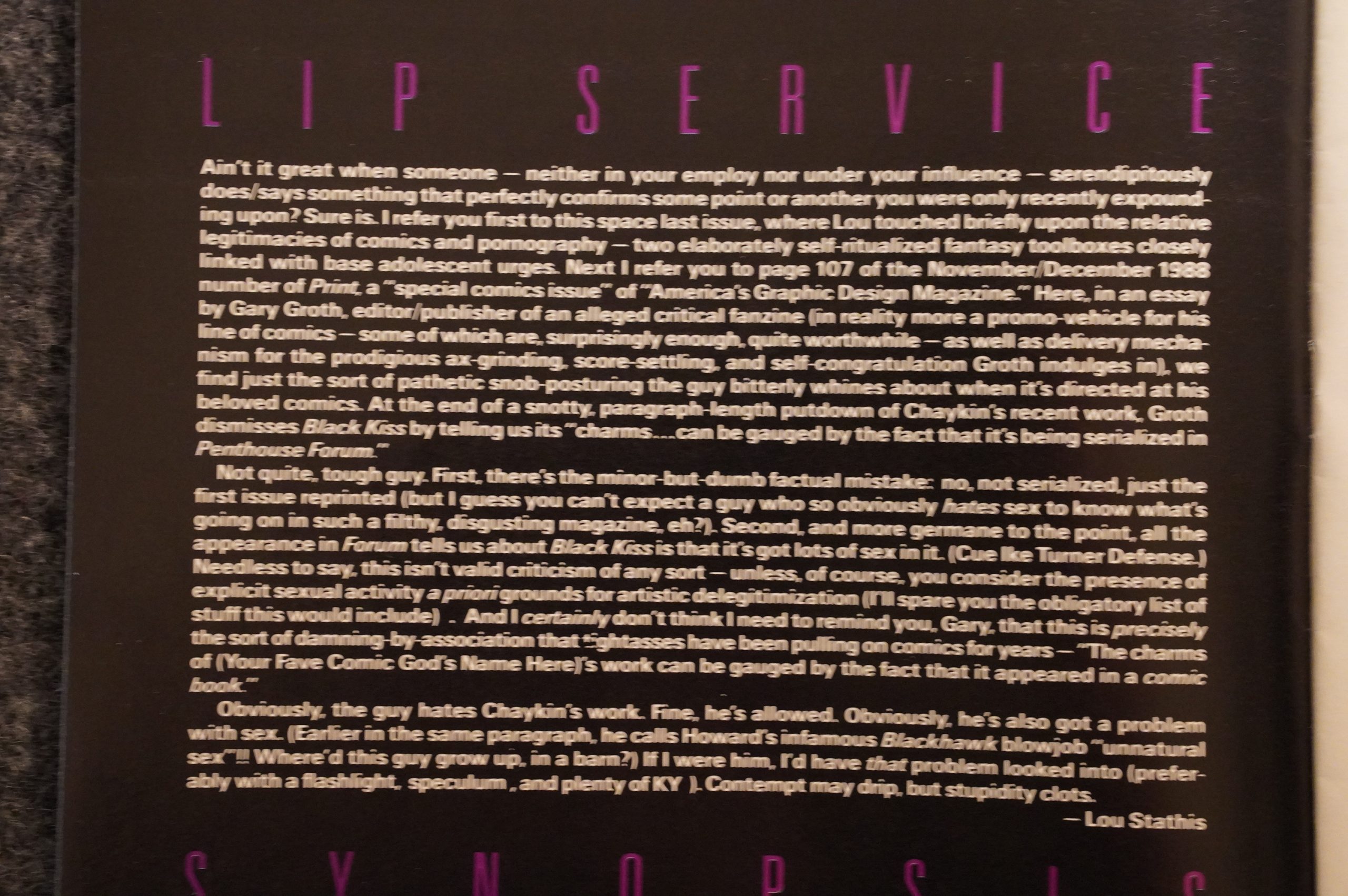
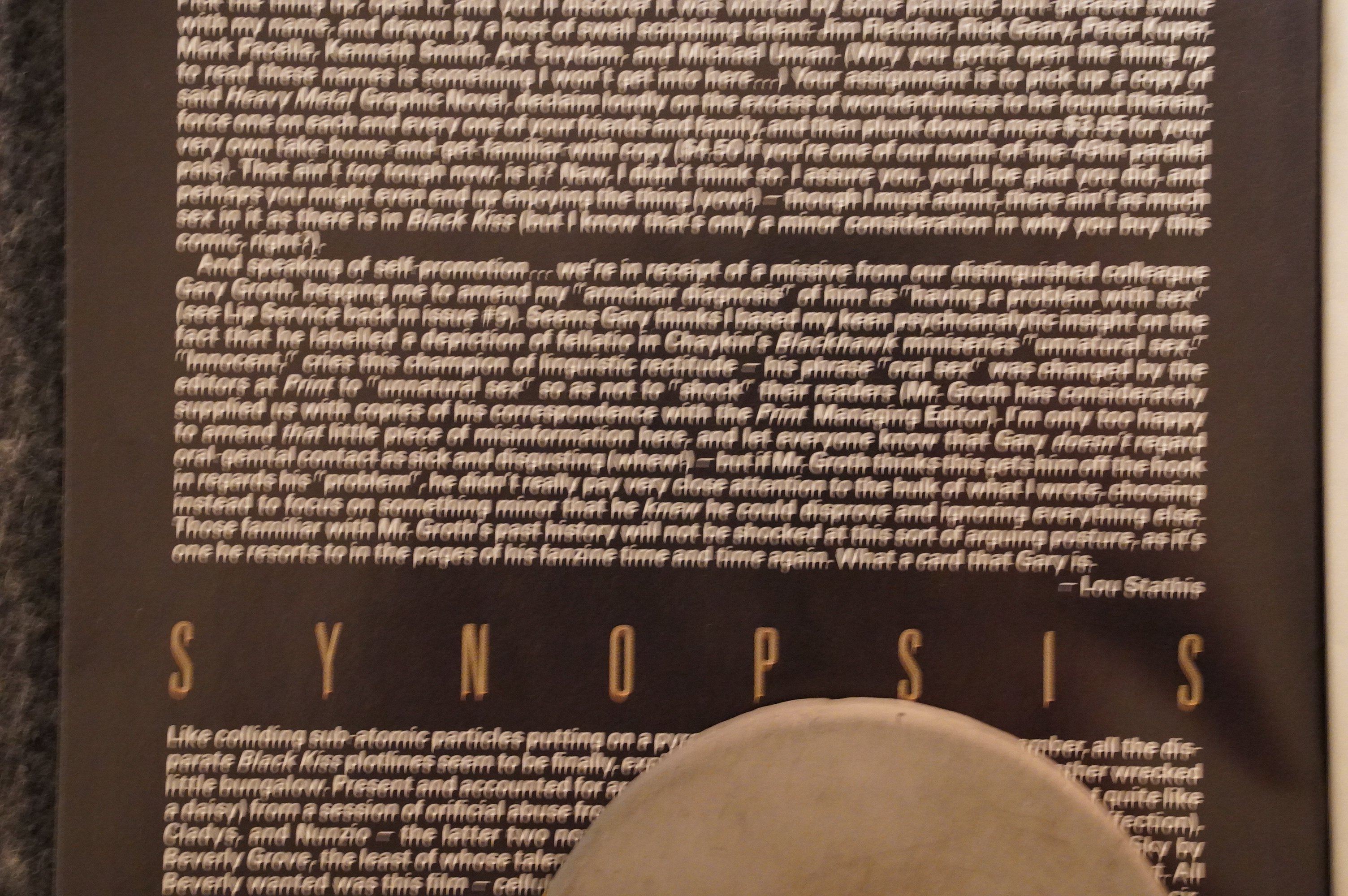
Stathis is angry at Gary Groth, and is especially ridiculing him for having written “unnatural sex” (for oral sex). Well, that is pretty ridic.
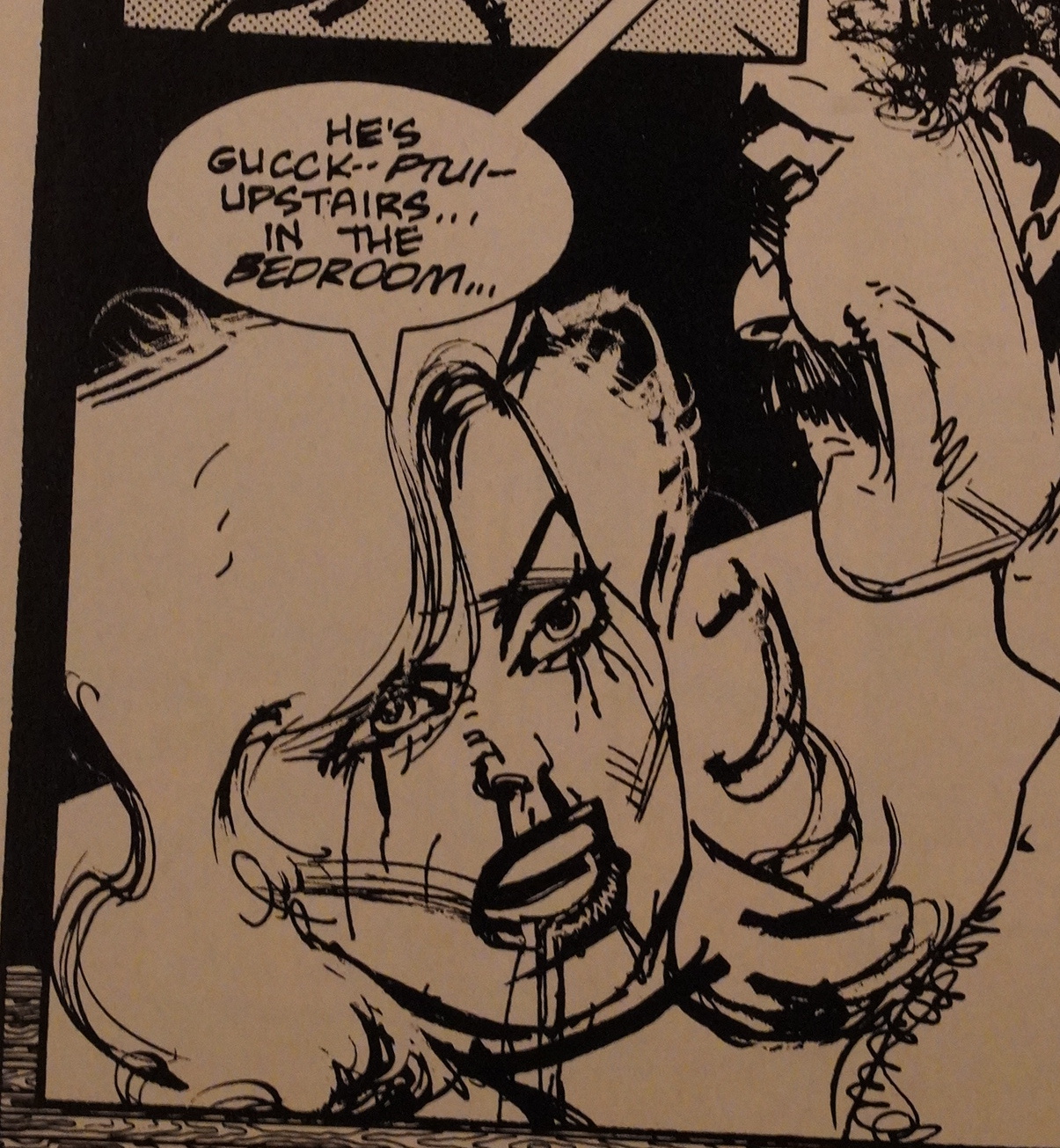
The last… third? of the series all takes place in one location, and we spend most of one issue with Dagmar being raped by three guys. Because, you know, that’s what transgender women need.
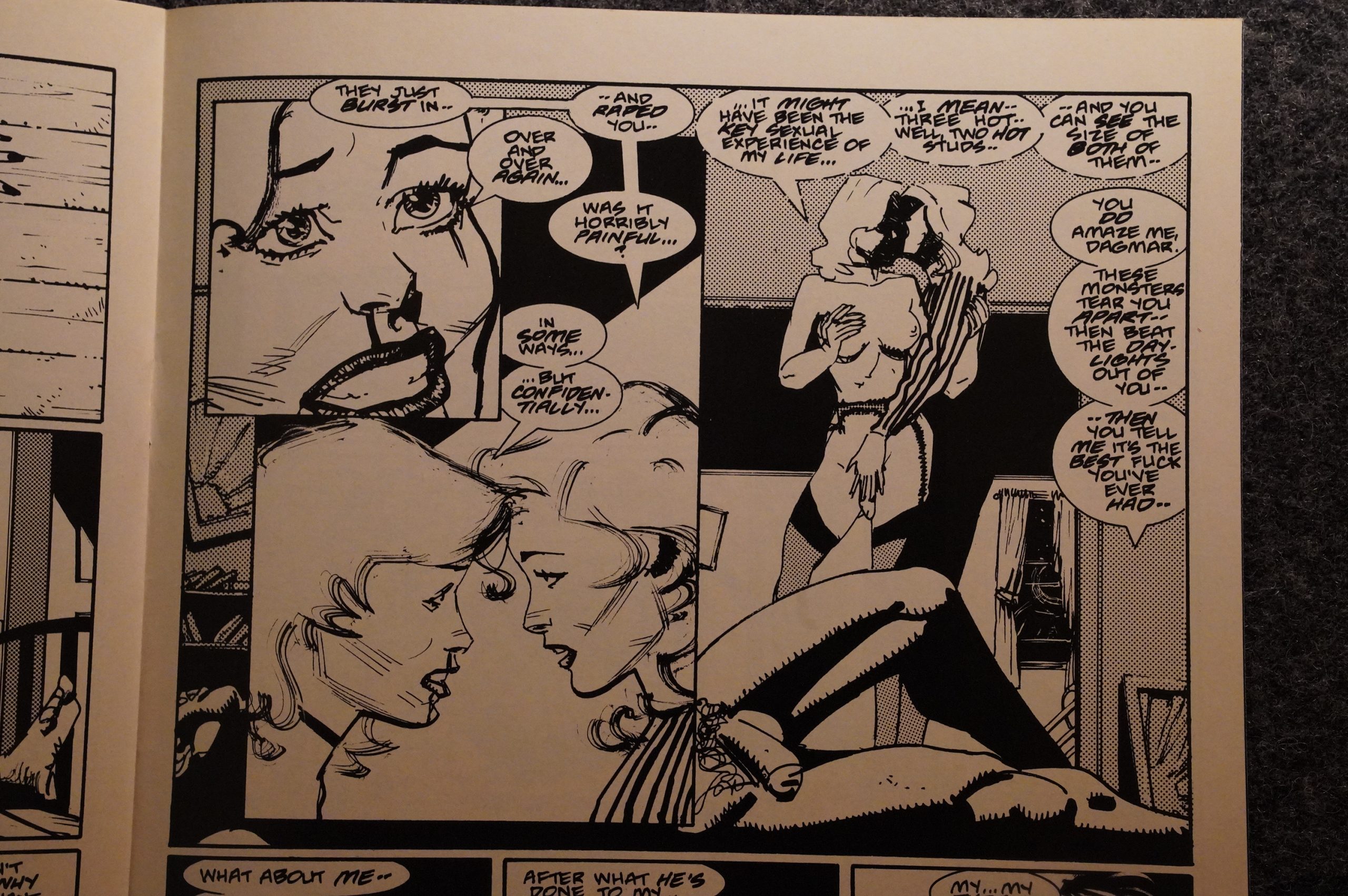
And, as it turns out, it’s what she wanted. “The key sexual experience of my life.”
*sigh*
At least Beverly, who’s a vampire, it turns out, kills all the rapists. Well, except the one that Dagmar loves.
*sigh*
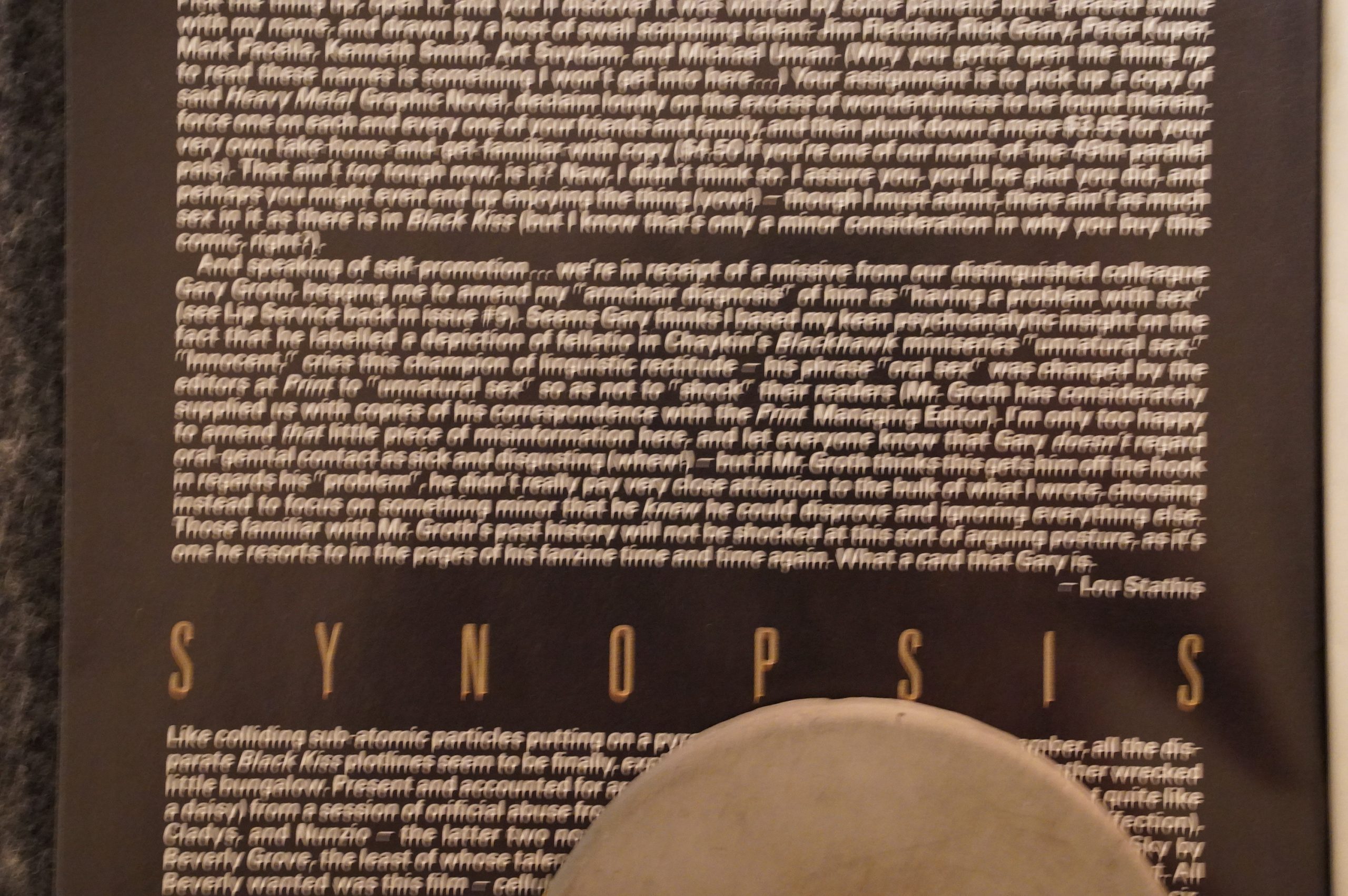
Man! My camera doesn’t want to focus on white-on-black text, does it? Anyway, Groth wrote in to say that the editors of the magazine changed the text from “oral sex”, and he’s got the correspondence to prove it. Stathis claims that Groth is still a poopyhead.
But what I find interesting here is that in 1989, a big magazine like Print, found the words “oral sex” too shocking to print.
It’s like… wow…
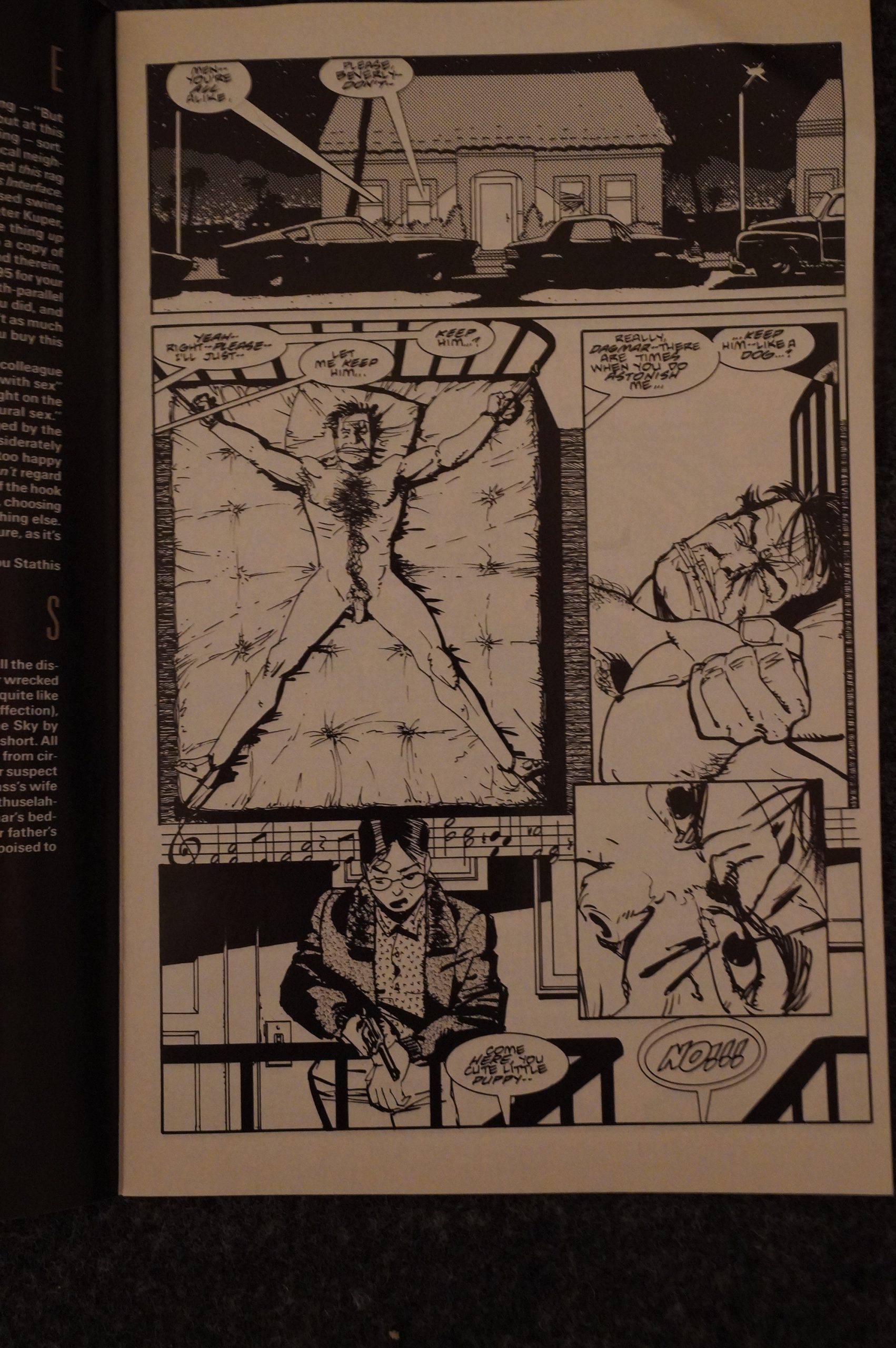
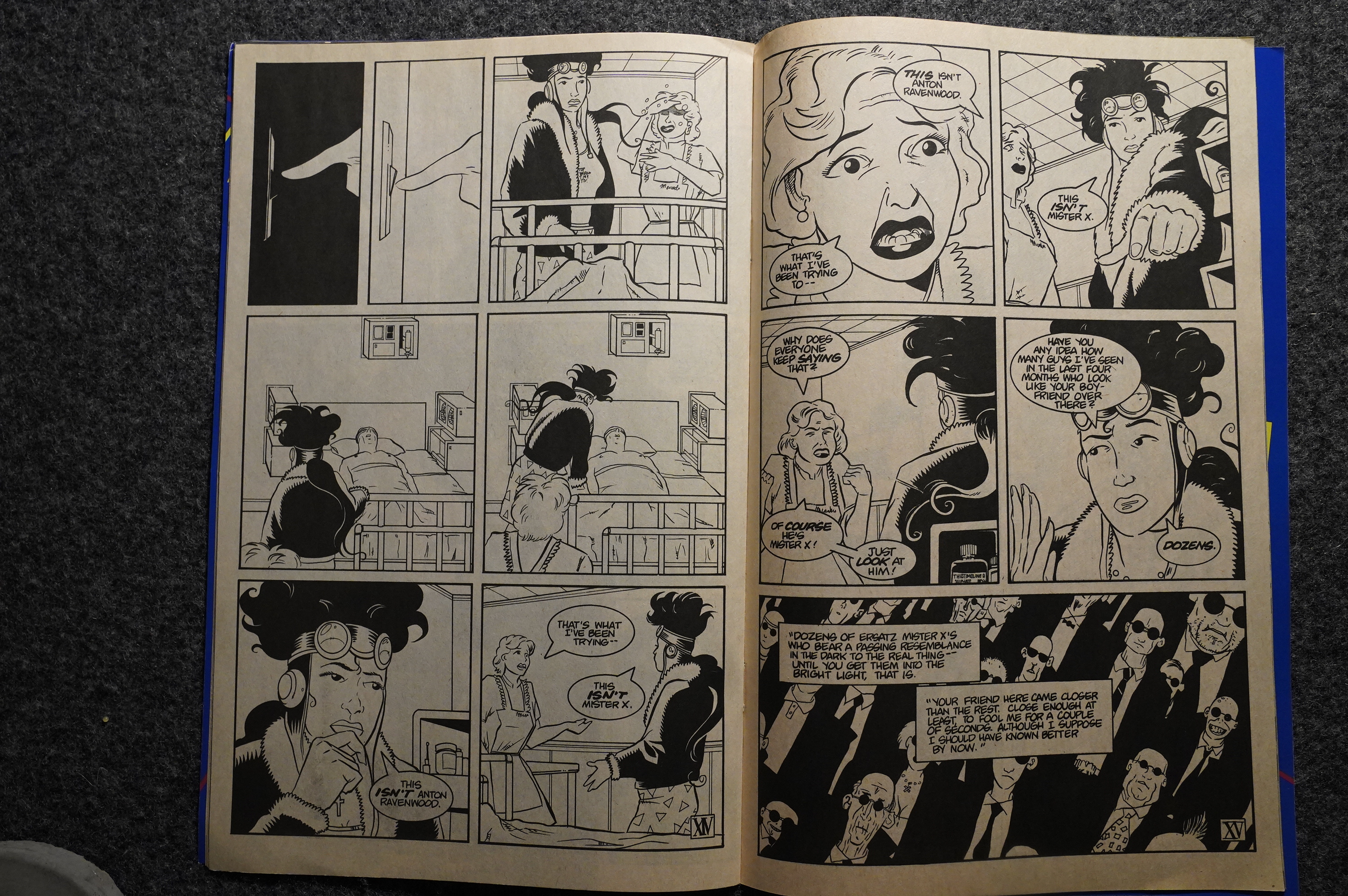
Oh, yeah, I forgot to mention that the plot turned out to be about a secret society of vampire-worshipping necrophiliac Hollywood stars were blackmailing Bevery for being a vampire (so that they’d turn them into vampires, too, to preserve their good looks; makes sense), but then Beverly’s granddaughter turned up… to do the same, but then Dagmar killed the granddaughter, and then the naked guy with the quickly-sketched-in penis (Chaykin seems to avoid spending a lot of time drawing the cocks) kills the vampire with a silver/garlic gun, and then… What did happen to Dagmar? I forget.
The guy and the girl (not Dagmar) ride off into the sunset.
The end.
So basically, Black Kiss has the same problem American Flagg had: The storytelling starts off flashy and exciting, and then Chaykin decides to tone it down, and then … when the fun storytelling isn’t there, the sheer idiocy of the plot becomes hard to ignore.
And most people, I guess, would find the unsavoury being-beaten-and-raped-sure-is-fun stuff something the wouldn’t want to subject themselves to.
“GSB” writes in The Comics Journal #126, page 32:
Vortex Pronounces Itself
“3rd Largest Independent”
Howard Chaykin’s Black Kiss is ‘the
number one selling alternative comic
in America” and its publisher —
Vortex Comics — is “the third largest
independent publisher” in the direct
sales marketplace, according to Vortex
President Bill Marks.
[…]
“This is what we mean,” Marks
said. “Black Kiss is selling 50,000
copies a month. Dark Horse’s Aliens
is selling 80.0m copies every two
months, so in the same period of time,
we’re actually outselling them, too. ”
Marks also claimed that, according
to the September 1988 Internal Cor-
respondence, “Vortex Comics is the
tenth largest publisher in the direct
marketplace, and the third largest in-
dependent publisher. ” That claim, he
admits, hinges on his interpretation of
the term “independent. ”
Oh, those words. So much hinges on how you interpret them. In more serious news:
Ronald’s Printing Drops Black Kiss
Vortex Comics has taken Black Kiss to a new printer after Ronald’s Printing
of Canada refused the fifth issue.
Vortex Publisher Bill Marks declined to name the new printer, but claimed
he was not surprised at Ronald’s refusal of the book after four issues.
“That they stopped printing it wasn’t too much of a surprise,” he said. “The
surprise was that they printed it in the first place. ”
Written and drawn by Howard Chaykin, Black Kiss is a sexually violently
explicit 10-page, black-and-white monthly that is sent to retailers shrinkwrap-
ped with an identifying card over its covers.
“You have to understand that Ronald’s is a subsidiary of Bell Canada, the
largest public trading company in Canada,” Marks said. “It’s a very conser-
vative corporation. Someone sent Black Kiss up their chain Of command, and
the president of the company said it’s not the sort of thing they want to publish,
that it contained objectionable material — that was their only reason. ”
Marks evinced irritation that Ronald’s printed Marvel/Epic’s Marshall [nw,
and DC Comics’ graphic Hellblazer, and The l_nngbow Hunters series. but added,
“Well, Black Kiss is a bit more graphic than those. ”
Ronald’s representative Angelo Messina said the company had no comment
on the decision.
“Being a corporation, you understand, we can’t discuss it, ” he said. “Let’s
just leave it at no comment; it really puts us in an awkward position. ”
Asked if that awkward position derived from printing the book or discussion
the decision to drop it. Messina said, “Both ”
Asked if Ronald’s had received complaints for printing the title, Messina said,
“It would depend on whether you’d call it a complaint, but we couldn’t discuss
any of that.”
Marks said Vortex has received few complaints over the title.
“A lot of stores have refused to carry it, but that’s their prerogative,” he
said. “We haven’t received any letters of complaint over the book or anything
like that.”
Darcy Sullivan writes in The Comics Journal #134, page 47:
Ultimately, however, such conceits
don’t raise the •level Of Black Kiss
much; are clever, but shallow,
because C kin doesn’t wed them to
any real thematic concerns, and
because his 2-D, tough-talking
characters are so weak (and so much
alike). He plays Black Kiss for giggles,
hanging a soupcon of stylistic tricks
on the most contrived of plots, and
seems most interested in referencing
low artforms: hard-boiled pulp fic-
tion, porn films, vampire comics.
Comparing it to films, which Chaykin
hopes to write, Black Kiss is his Body
Double, arguably the schlockiest film
of another style-obsessed creator,
Brian DePalma.
If Black Kiss sustains any interest,
it’s only in the way Chaykin has or-
chestrated his grotesque symphony of
flatness, his rag-paper collage. Text-
wise, his characters struggle to evince
a single dimension, and are as kitchi-
ly overblown as those in bad soap
operas; the plot shudders, shifts, and
overlaps without once deepening; even
Beverly cannot deepen or change,
bound as she is by immortality, her
state paralleled perfectly by a film, a
two-dimensional image that remains
static through time. Stylewise, the
level at which Black Kiss really
operates, the books swarm with other
2-D images, such as film psters and
printed bars Of music; patterns and
textures dominate, all at the same
plane, while inking techniques such
as wash that suggest depth are
notoriously absent; and a general sket-
chiness continually draws attention to
the figures’ flatness.
It’s not just that the dialogue is poor-
ly written or the characters’ motiva-
tions perfunctory at best; the drawn
figures themselves cannot hold their
own against the zig-zagging layouts,
acres of zipatone, and crazily clashing
clothing design. Take Book Eleven,
page three, top panel: Dagmar and
Cass look to have been drawn in
seconds, but the carpet pattern and
contrasting wood floor have been lov-
ingly detailed. TO emphasize the
flatness, neither pattern recedes
toward the distance, but more impor-
tantly, neither Cass nor Dagmar is
casting a shadow; they lack both emo-
tional and representational substance.
All this suggests that Chaykin in-
tended Black Kiss as an exercise in
style — in black-spotting, retro
fashions, and bizarre compositions.
For subject, he sought little more than
to mix his sexual fantasies and let
them run riot, to merge some of pop
culture’s most flagrantly flat media
and subgenres: phone sex, dirty films,
crime noir, gangster stories, she-male
movies, and that nonpareil flat
medium, comics. To damn the series
as mechanical, as Kenneth Smith did
in Comics Journal #125, is to call
Chaykin a success. This is Chaykin’s
ode to pop culture’s transparent
mediocrity, his pell-mell melding of
corrupt influences into a hybrid
superbastard.
Robert Rodi writes in The Comics Journal #124, page 33:
Black Kiss is Chaykin’s first step out-
side heroic fiction since he returned
to comics in 1983; instead, it’s an
erotic thriller. It weighs in at ten pages
issue with a $1.25 price tag, which
for sheer chutzpah just about takes the
cake. If it were anybody but Chaykin
behind this, I’d say don’t buy it.
However, the guy packs a lot of
reading into ten pages. There’s more
to chew on in one issue of Black Kiss
than in any half-dozen mainstream
rags. And, I have to admit, it’s the
kind of material you don’t see a whole
lot of. This is where Chaykin comes
right out and says it: he likes rough
trade. Despite all the leather and
spiked heels you find in Flagg! and
The Shadow and Blackhawk, there’s
very little beyond that kind of come-
on—maybe some naked rolling around
or post-coital lounging. Chaykin,
who’s about as shy as a sailor on leave,
has had to abide by the restrictions of
his publishers, which has not made
him adept at the sophmoric arts of
innuendo and cuness. But Black Kiss,
which is Chaykin’s first work under
the Vortex imprint, arrives at comic
shops wrapped in cellophane, and is
about as coy as a come shot.
And about as subtle. By the third
panel Of the first issue, we’ve heard
the main character’s answering
machine trill, “Hello, lover, this is
Dagmar—and I’d love to suck your
dick.” It’s so arrogant it’s funny; you
laugh out loud. But I have found the
here-it-is-in-your-face aspect of Black
Kiss to be a little wearying after
awhile. Maybe that ten-page limit
actually works to the book’s advan-
tage. The initial charge of hearing and
seeing the forbidden wears off pretty
quickly—after all, it doesn’t take a
great deal of wit to say, “I’d love to
suck your dick” or, for that matter, to
show someone doing so, but it does
take genuine wit to nudge-nudge-
wink-wink your way through a series
Of sexual liasons the way that
Chaykin’s always done in Flagg! Even
the blow-job in Blackhawk is so much
more electrifying than the more
graphic fellatio scenes in Black Kiss,
because in Blackhawk it comes at you
from left field. There’s a numbing
inevitability to the couplings in Black
Kiss. Mechanically, there’s not a lot
you can do with depicting sex; the act
itself is pretty much what it is, no
matter whds positioned where.
Chaykin is interviewed in The Comics Journal #300, page 130:
HCA: so, what happened with Black
Kiss?
HC: It’s hard to go into a hard answer
about that without talking about my
physical and mental state at the time.
I was in a lot of emotional turmoil at
the time, Black Kiss coincided with the
beginnings of a change in my life that
was deep and profound, that happened
over a two-and-a-half year period that
ultimately led to who I am today.
I was drinking more than I should,
doing things that were incredibly coun-
ter-intuitive — God, I’m being so low-
key here — ultimately, I became clean
and sober a couple of years later. People
like me, who use drugs and drink to
excess, whom I refer to as “recreational
drug enthusiasts” —
HCA: I’ve got some experience with
that.
HC: — We frequently find ourselves
in the position of having an additional
job, because maintaining the life one
leads while you’re fucked up becomes
another job. So, back then I had three
jobs: I had my working life, my per-
sonal life, and I had my drug life.
Ultimately, the work suffered for
that and the big change in me hap-
pened after I got fired from my TV
job because, previous to that, I’d had
that kind Of anally retentive idea about
knowing where I was going before I got
there.
Kenneth Smith writes in The Comics Journal #125, page 55:
Chaykin’s Black Kiss is just such a
mechanical contrivance. On first
glance it is awkward, inept, repellent,
an embarrassing reprise of cliches. It
is a superficially ugly book that does
not reveal its more profound mal-
formities until second or third glance.
It is a wordy, talky book, with often
dwarfishly malformed anatomy. The
visual style is strongly derivative from
Toth’s angularity but with none of his
animated, spirited expressiveness;
none Of his judicious, carefully
weighted drama. It is a comic from
which all sense of form has fled: the
figures in it are utterly unlike the
erotic wit we have seen in Frazetta or
Dave Stevens, the delicatesse of
anatomical and foreshorten-
ing. Perhaps in some attempt to boost
its shock-index, the first issue is lac-
ed with a bit of anticlericalism—an
Irish priest ofcamal spirit (orality pro
nobis) and the Nun of The
plot—as who would mortally
Incoherent: who could believe a bla-
tant hooker with such outgoing
messages on her answering machine
W’ould be at all blackmailable? TO be
vulnerable to extortion, one has to
have a care about reputation, nicht
This stuff is perfunctory por-
nography, more routine than outrage:
it heralds an impotence of imagination
as well as of passion. As pornography
it is unappetizing and unerotic; as sor-
did film-noir, it is banal and devoid
Of anything but cliched revelations
about the nightside of society. so what
then is its reason for existence—as a
tour-de-force of the vulgarity of what
is saleable?
Letters page in The Comics Journal #126, page 36:
ALAN C. CARROLL
salt Lake City, UT
On Kenneth Smith’s drawn out, egotistical, and
eccentric speech which pretended to comment
on Chaykin’s Black Kiss but instead spewed
forth several pages of this own morality and
biased recounting of history, never before have
I witnessed such a ‘ ‘deluge Of shit” in so few
pages. I resent that he was even permitted to use
Black Kiss as an excuse to flex his repertoire Of
big words and theology of values.
The Editors reply:
Forgive us for allowing one ofour reviewers ‘0
slip some of his own morality into a critique.
We ‘II try to see it doesn ‘t happen again.
News item in The Comics Journal #121, page 9:
DIAMOND BACKS
DOWN
Three years ago, Marks said, he had
a similar problem with Diamond when
they would not distribute Matt
Howarth’s Those Annoying Post
Brothers. Diamond also recently
indicated to him that they might not
distribute Howard Chaykin’s upcom-
ing Black Kiss, after he described to
them the book’s erotic-horror
contents.
In order to restrict Black Kiss to
mature readers, Vortex is labeling and
pre-bagging it. Schanes told the
Journal, that Diamond would be
taking the comic book.
So… it was a book that got a lot of attention, and mostly negative attention, I guess?
Donald Nivel writes in Amazing Heroes #148, page 65:
But Black Kiss also brims with teen
sexual fantasies. Chaykin’s women
love it, they love doing it, they love
talking about it, they love it all the
time. This is anathema to comics, but
not to over 21 bookstores.
That was unfair. I know where
Chaykin is going with the subtlety in
BK. But I wonder if Chaykin isn’t
being too clever. Not that fanboys
won’t understand it, but he’s being
roundabout in regard to the, shall we
call them, supernatural aspects of
Black Kiss for no reason. He keeps
things from the reader deliberately for
shock value. I imagine it’s kind of fun
when you’ve figured it out to go back
and see how he’s lead up to it, as in
most mysteries, but in mysteries
there is no coy interplay to hide facts
important to the story. Chaykin does
have fun with us: Beverly is sober
when she leaves the bar and is drunk
when Cass picks her up—a hint as to
the vampiric plotline—carried a bit
too far—but why? Had it been a story
atmnt vampire sluts, Chaykin couldn’t
have been so, so clever to see how
much he could get away with: How
long can I keep from coming right out
and saying/showing what Dagmar and
Beverly are? This is more than a story
done just for the sake of the sex, but
not by much. It’s part mystery, part
suspense, part horror (to come), and
part twisted social commentary, kind
of… it’s not sure what it is.
Well, mixed.
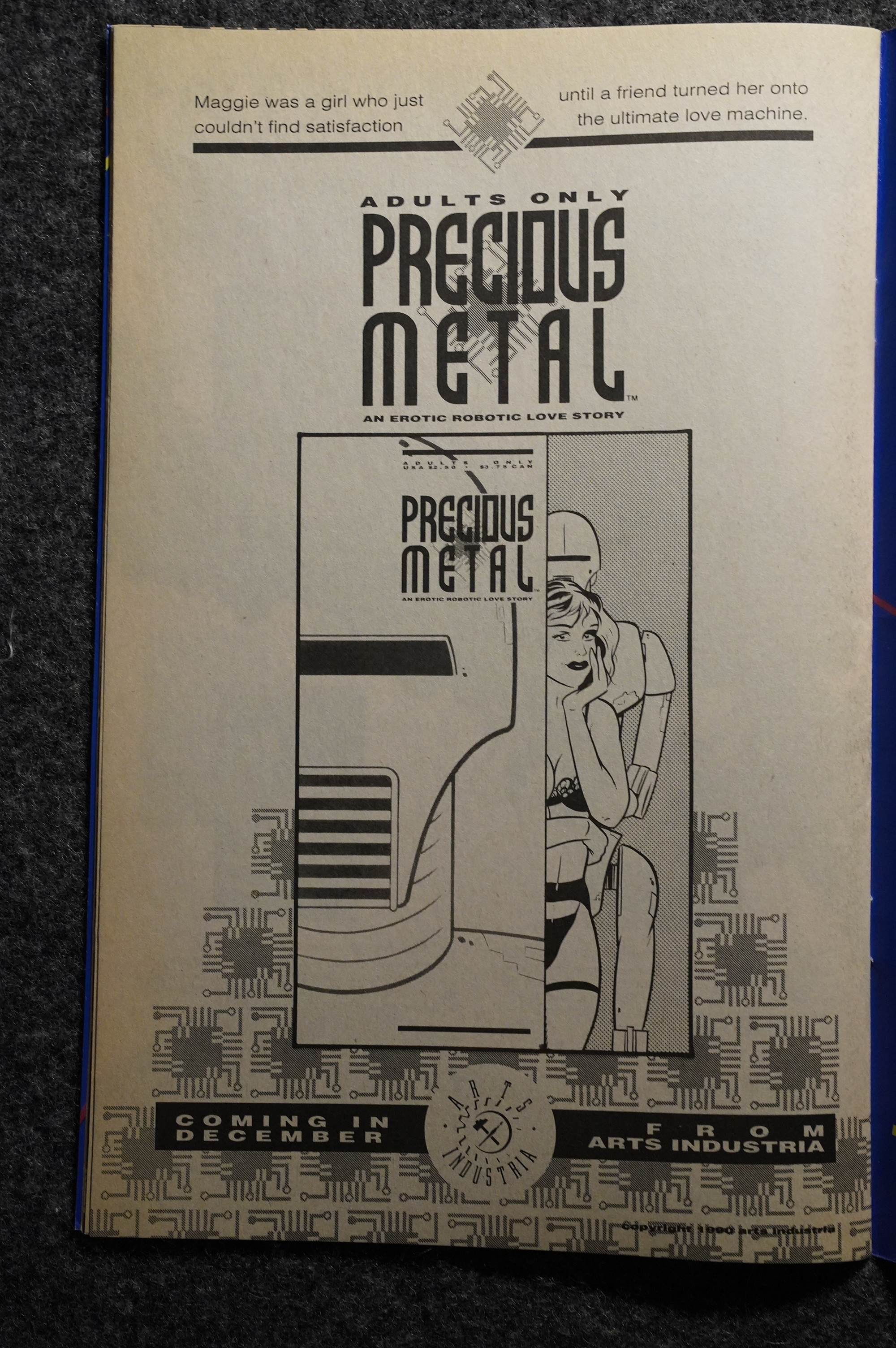
Vortex did several printings of the original series, then collected it in a four-issue series, and then in a one-volume series, so I’m guessing it was commercially successful. It was also reprinted by Eros Comics, owned by the allegedly Chaykin-hating Gary Groth, in 2002. And finally by Dynamite in 2010.
There was also a sequel, Black Kiss 2, published in 2013.
Gasp:
On potential reactions to the Black Kiss II book
I’m long past giving a shit what people think about me and my work. As my wife pointed out to me not too long ago, most of these blogging shitheads are anonymous pu**ies who’d kill to have my job and my life.
I have no expectations beyond the material itself. I’ve been pirated and picked over by other comics talent and by elements of the show business for the past 30 years, and I won’t be surprised if that trend continues.
Anyway.
This blog post is part of the Into the Vortex series.





















)
)

%3A+Her+Dark+Gaze+Drowned+in+Light)
)
)

)