A&R1988: Starbikers

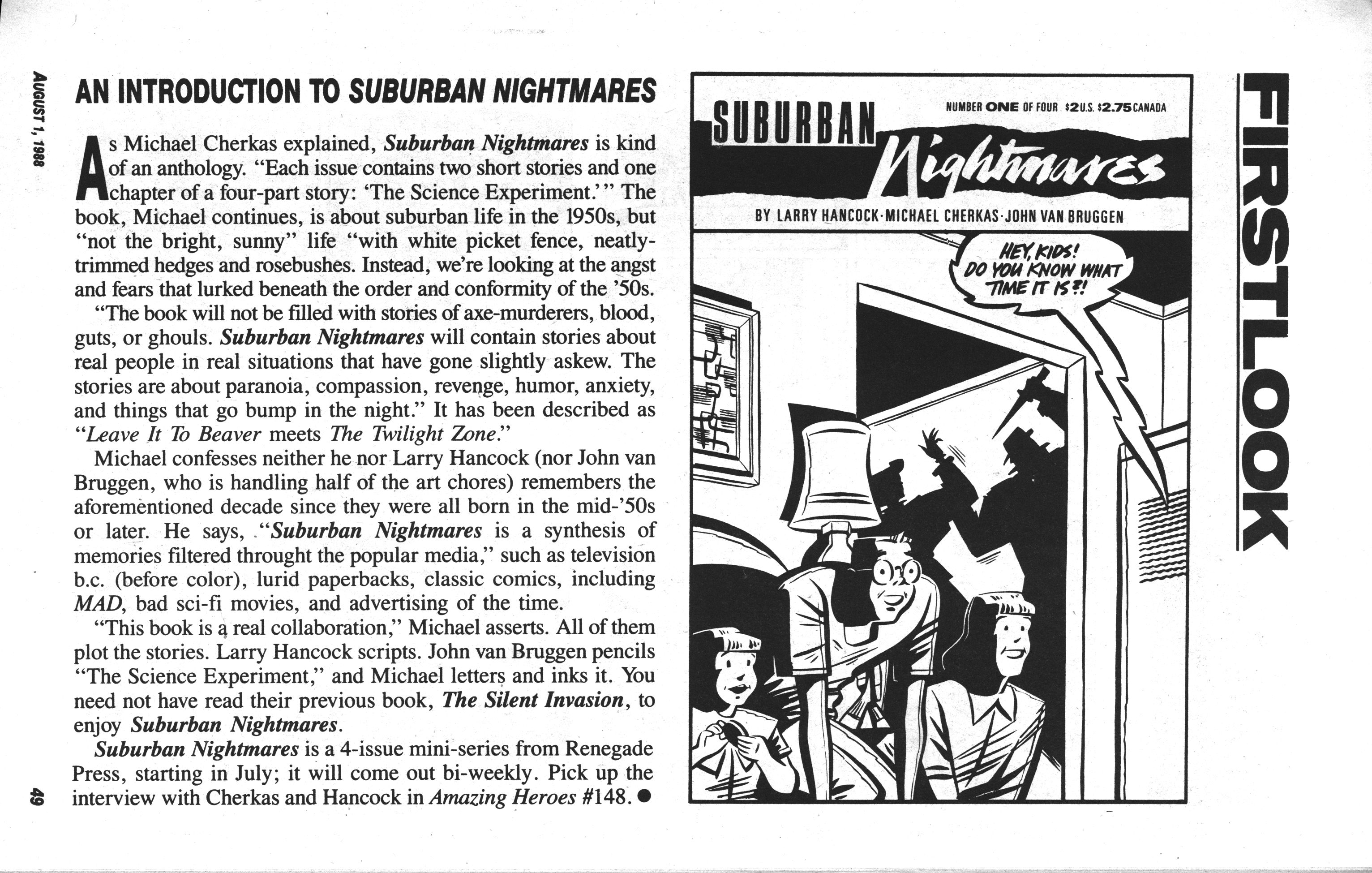
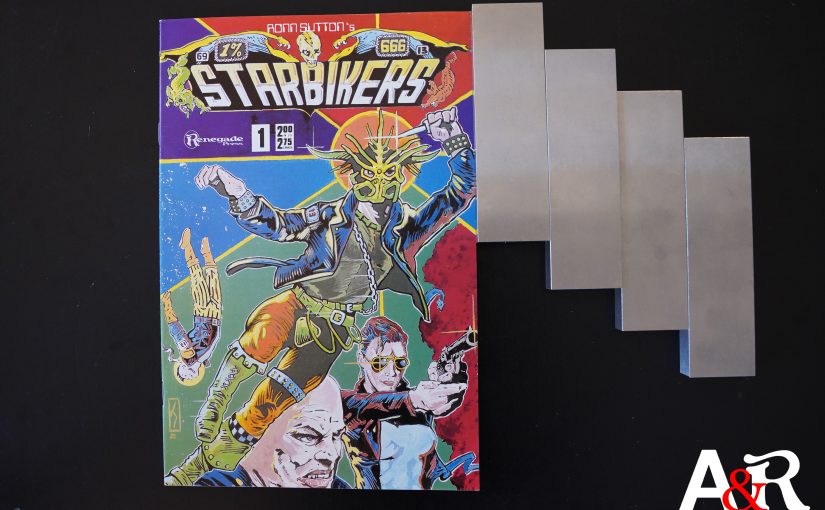
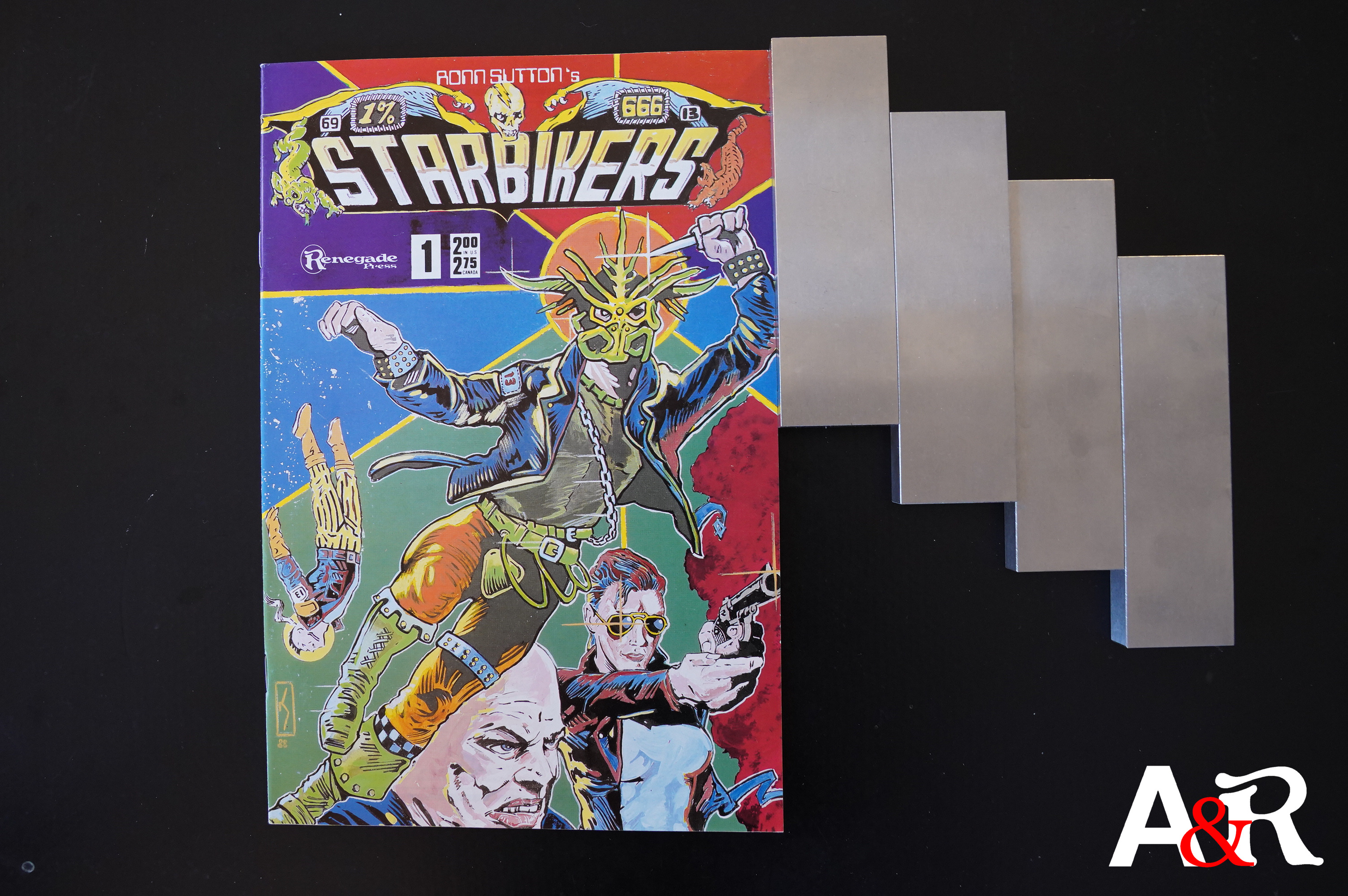
Starbikers (1988) #1 by Ronn Sutton
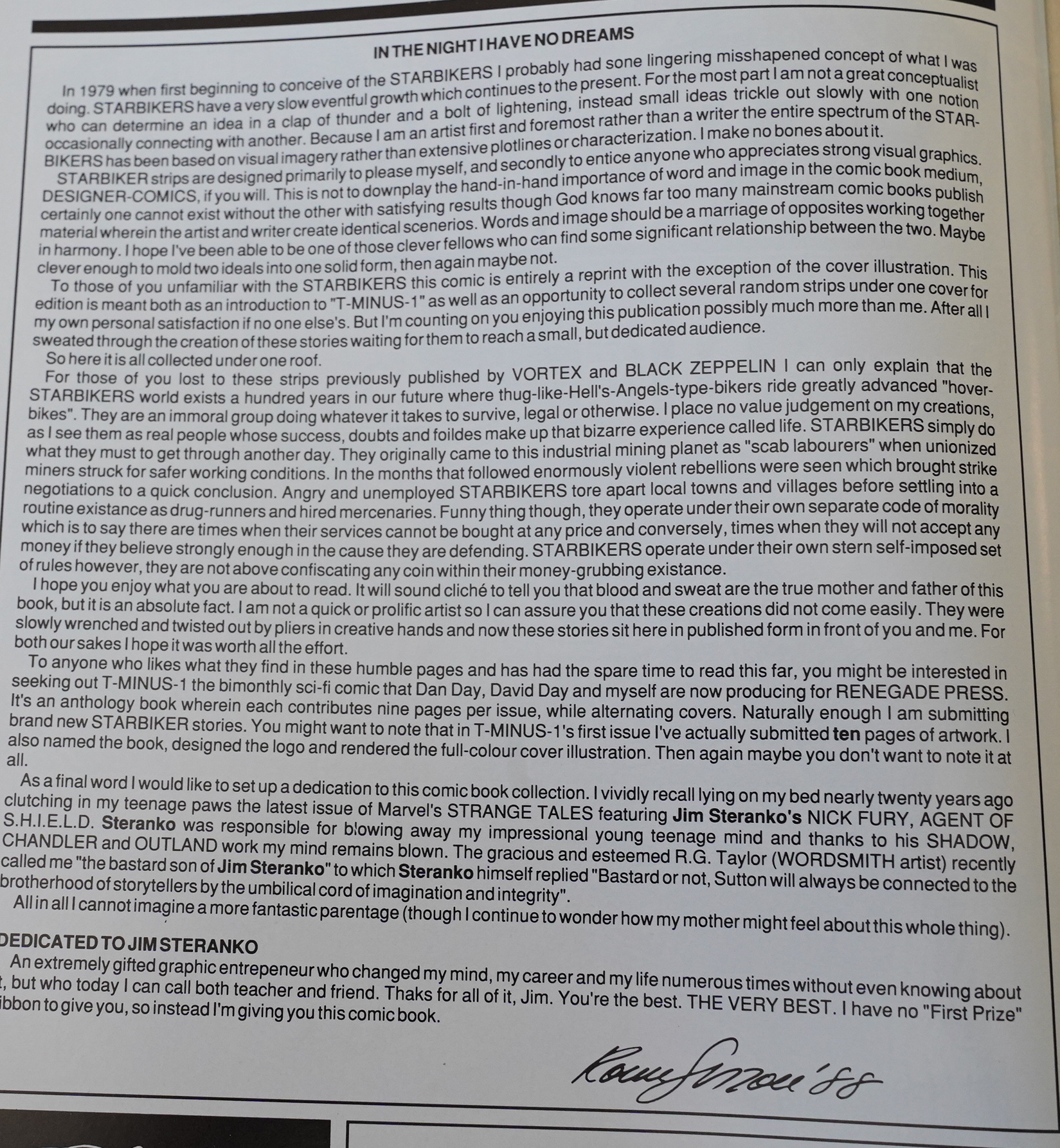
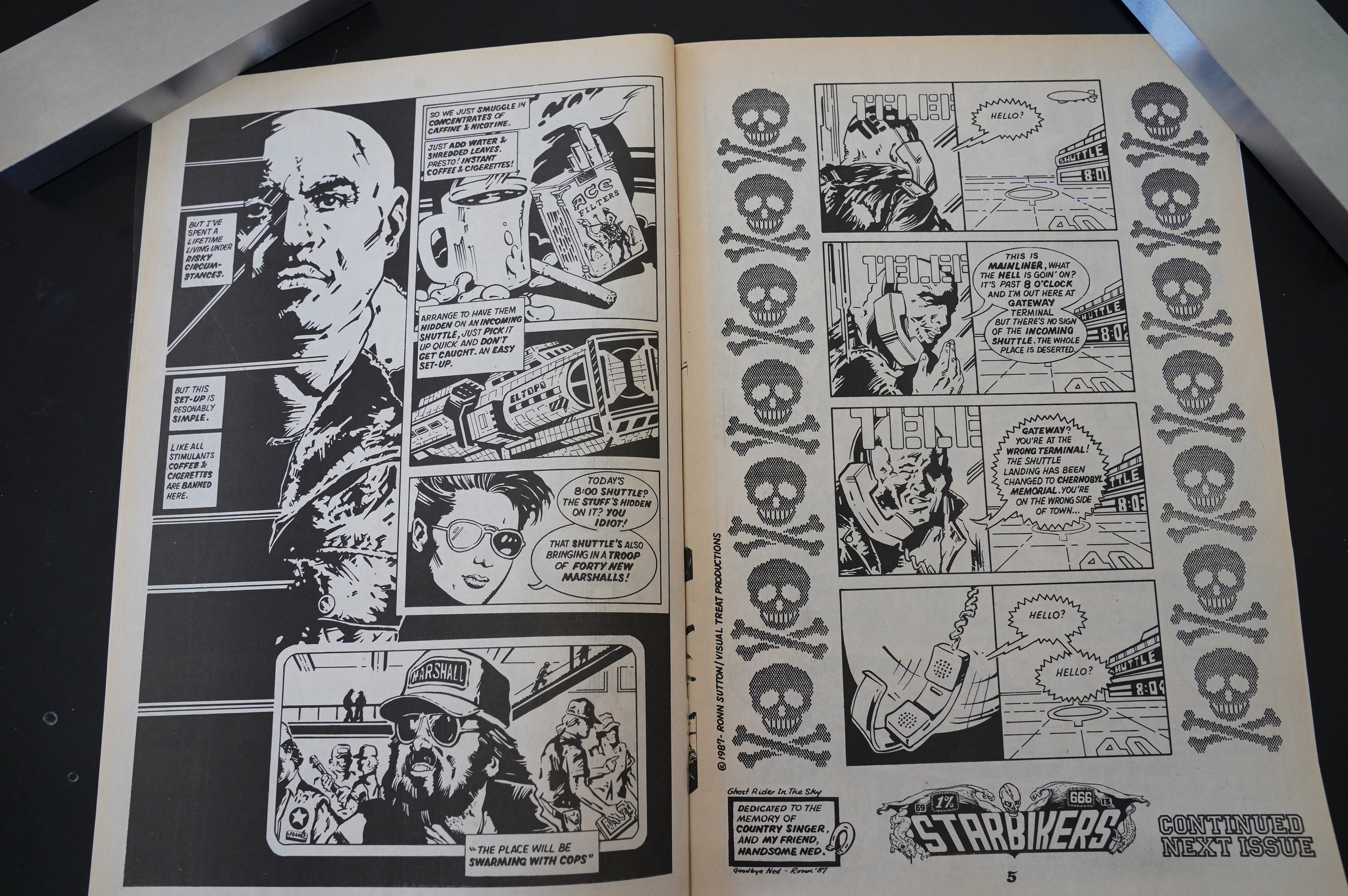
Sutton writes an introduction and explains what this comic is: It’s a reprint of Starbikers stories that had appeared in the Vortex and Black Zeppelin anthologies. The reason for this reprint is that they were launching a new ongoing title — T-Minus-1 — that had Starbikers as the lead feature. So that makes sense.
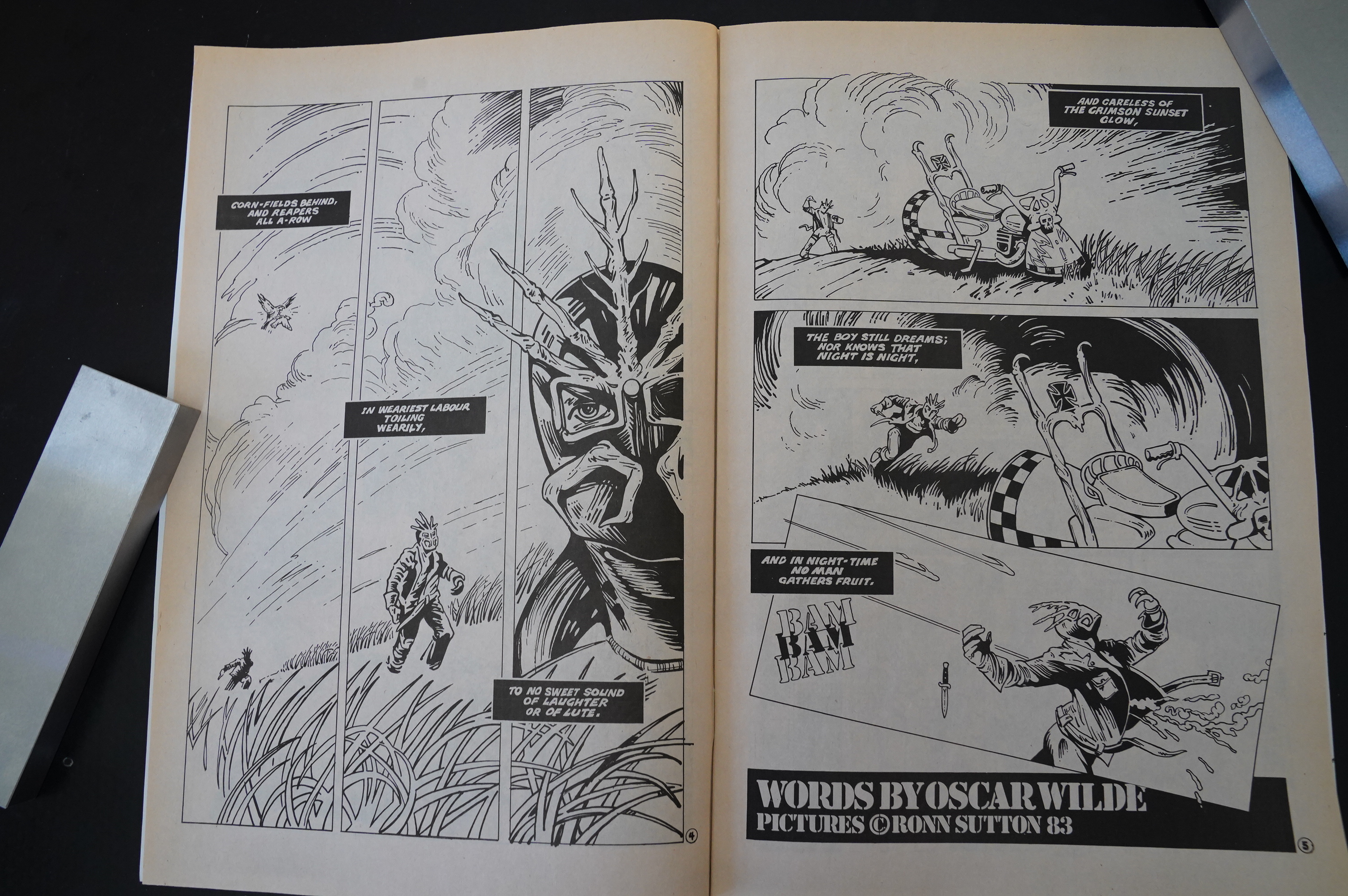
The stories themselves, on the other hand, are a pretty odd bunch. I’ve recently read the anthologies where these appeared, and they were pretty odd in that context, too… we start off, for instance, with an Oscar Wilde thing.

But with more guns.

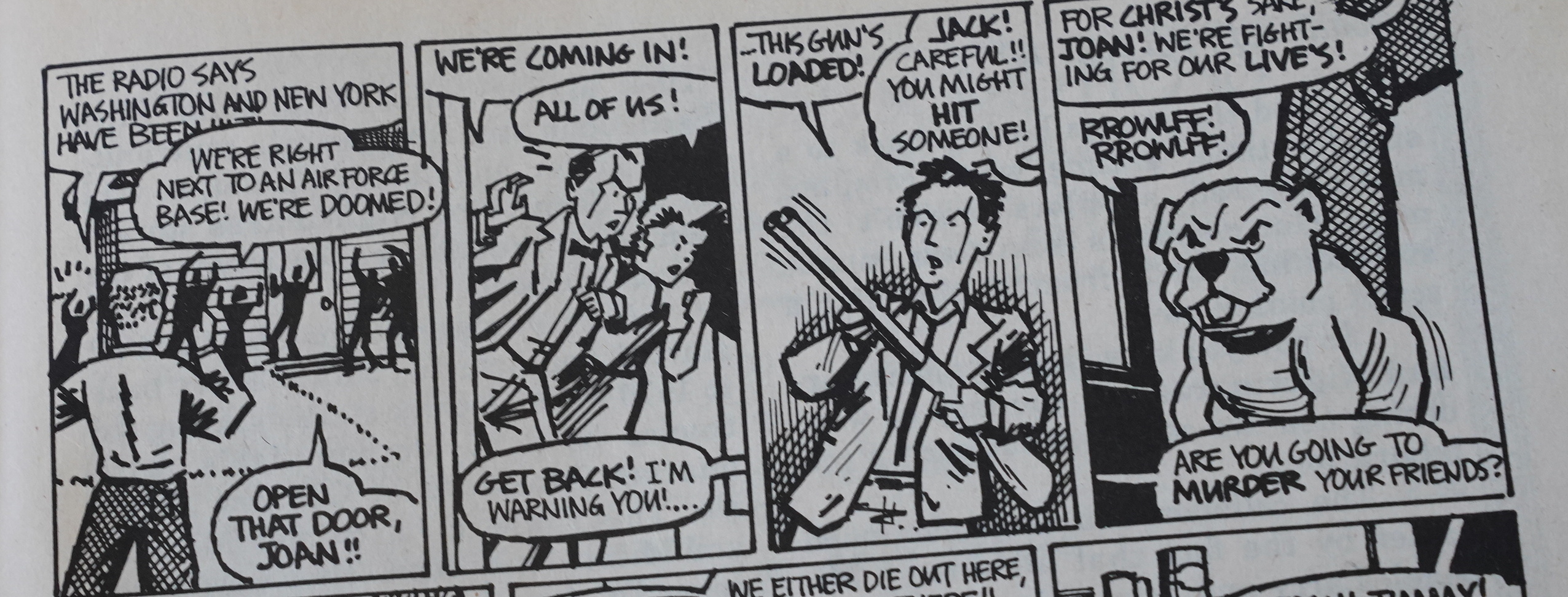
The second story seems to actually introduce us to a character that seems very similar to the one in T-Minus-1, so it’s probably the same guy?
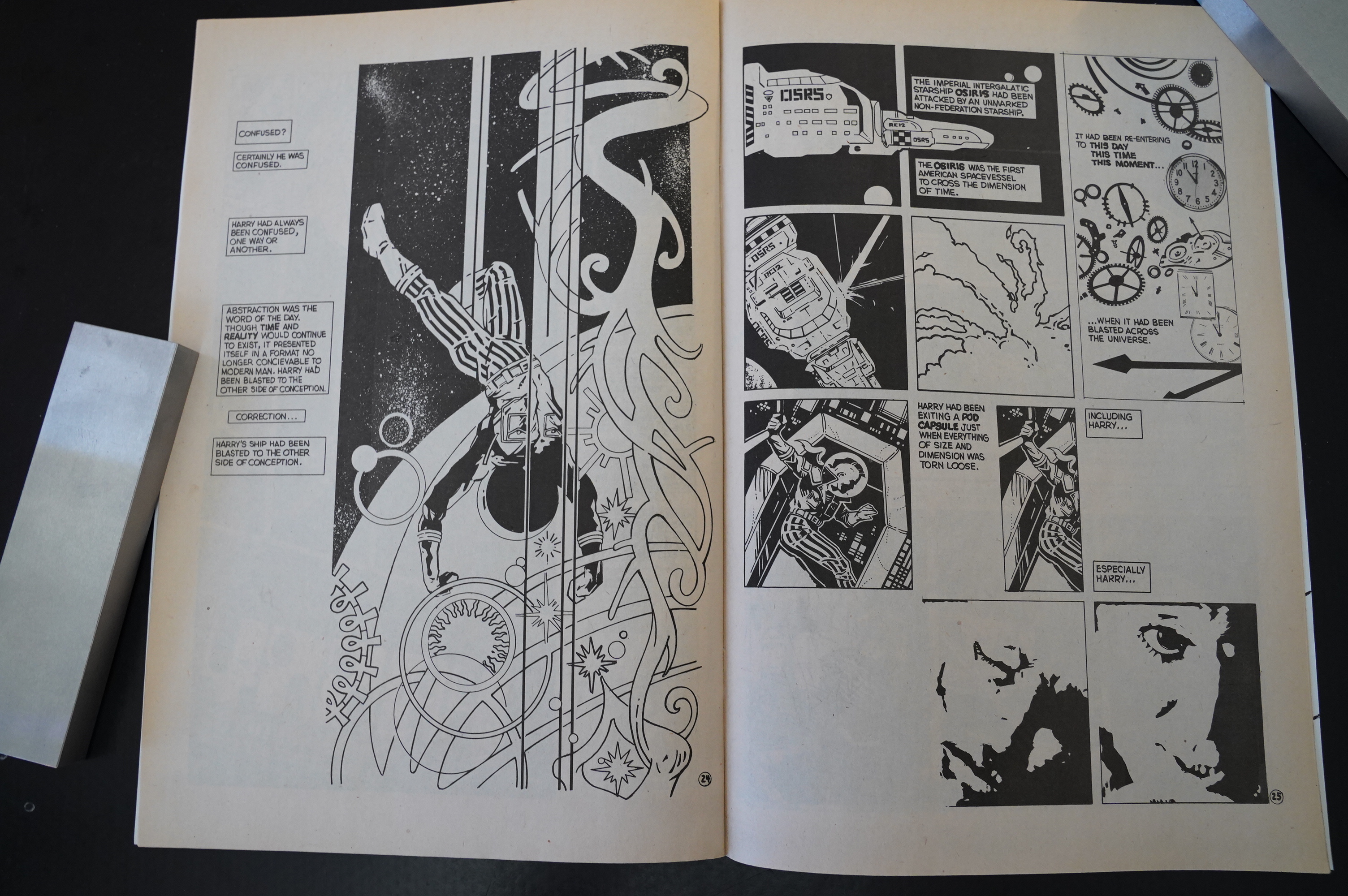
The final story is an O. Henry thing about time travel, and the relation to the other stories seems pretty tenuous.

All the stories have pretty impressive artwork, though — especially the fun layouts.

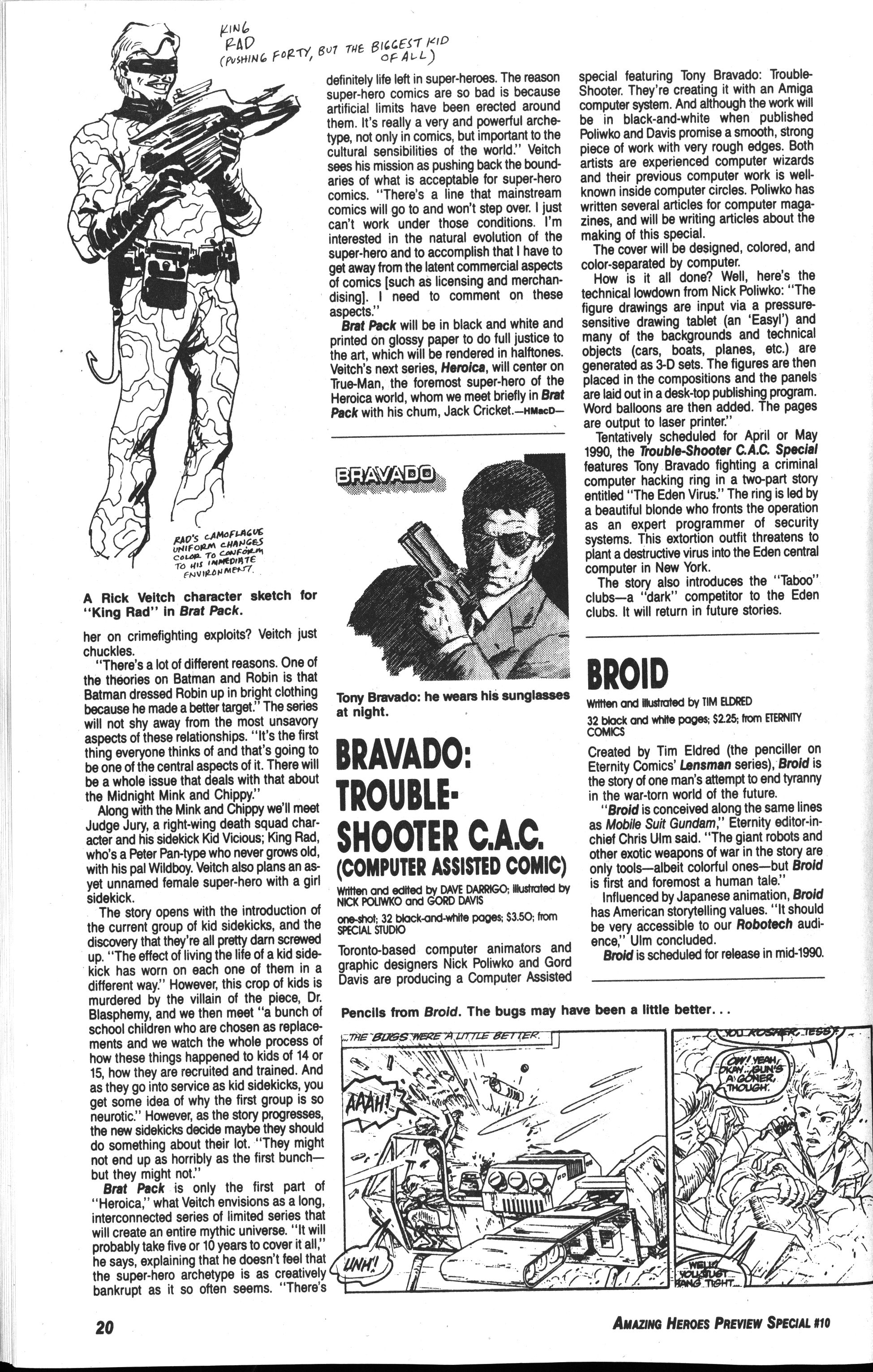
Amazing Heroes Preview Special #10, page 114:

STARBIKERS
SPECIAL
Witten ard mustroted by RONN SUTTON
ore-shot; 40 black-arOttite $395; Wn
SPECIAL STUDIO
When Renegade’s T-Minus One S-F anthol-
ogy got clearance for Ron Sutton went
to work on producing new adventures of the
Starbikers, but only one issue got off the
ground.
Now, Ron’s ten pages for T combine with
17 new pages to make this special. There will
From Starblkers Speclal #1.
also be an additional eight page Starbikers
story and some pin-ups.
The special will introduce such characters
as Mainliner, Rock-a-Billy the Kid, Sorryboy,
and Teflon, and witl further explore the
mining planet turned hell-hole called Trench-
world.
All stories in this special will be complete
and all plotlines resolved, and Sutton even
promises a four page spread!

This apparently never happened.

Sheldon Wiebe writes in Amazing Heroes #162, page 61:

STARBIKERS
Starbikers is a collection of vignettes
published by Vortex and Black
Zeppelin. The basic premise is Hell’s
Angels of the future.
These future-bikers ride hover-
cycles and pretty much do as they
please. They sell dope, hire out as
mercenaries and generally do what-
ever. it takes to survive, legal or
otherwise.
Because Ronn Sutton is, admittedly,
an artist first anda writer second,
Starbikers is a very visual book.
Sutton has a striking, very lean style
that seems more angular than fluid.
Although he cites Steranko as his
major influence and source of initial
inspiration, there are hints of
Infantino, Colon and other artists
whose angular styles have had an im-
pact on North American comics.
Steranko’s influence is most keenly
felt in the layouts. Sutton’s layouts, like
Steranko’s, are anything but mundane.
Size, shape and sequence of panels
vary from page to page. Unlike a num-
ber of would-be comics artists, the
variety in Sutton’s layouts does not
make it hard to follow the story. This
is, perhaps, Sutton’s greatest strength
as an artist: the reader’s eye is drawn
through the story in the desired
sequence.
As a writer, Sutton does leave a bit
to be desired. His dialogue is stilted
and his captions tend to be a bit florid.
Still, he shows a real grasp of the
storyteller’s an in the way his script
and art complement each other rather
than repeat each other. His captions
are not limited to merely listing or
itemizing the contents of the panel.
His dialogue is not limited to the sim-
ple affirmation of what appears before
the reader.
While it is otwious that Ronn Sutton
has imagination and wit and style—it
is also obvious that the stories con-
tained in Starbikers are from a time
when he was defining his personal
style.
Starbikers is a brief overview of
Sutton’s improvement as a creator
from 1983 to 1985.
As such it is interesting, entertaining
and not quite like anything else I’ve
ever read.
If you haven’t read the earlier incar-
nations of these Starbikers stories, I
can, with some slight reservations,
recommend this book. Be prepared
for a work-in-progress. Be prepared
for some awkwardness. Most of all,
be prepared for something just a bit
different.
GRADE: FINE

Here’s a review from the intertubes:

I like that each of the four stories is a little different: The first and last are artsy and prosey, like illustrated short stories, while the middle two are easier to follow, more straightforward and actiony. But I just didn’t care for any of the characters, and the stories were too short and seemed to lack purpose. Like New Ruins for Old – sucks that the bikers’ situation got worse, but…so what?

As far as I can tell, the Starbikers stuff has never been reprinted, but it looks like it was continued in a Caliber anthology?

This blog post is part of the Renegades and Aardvarks series.
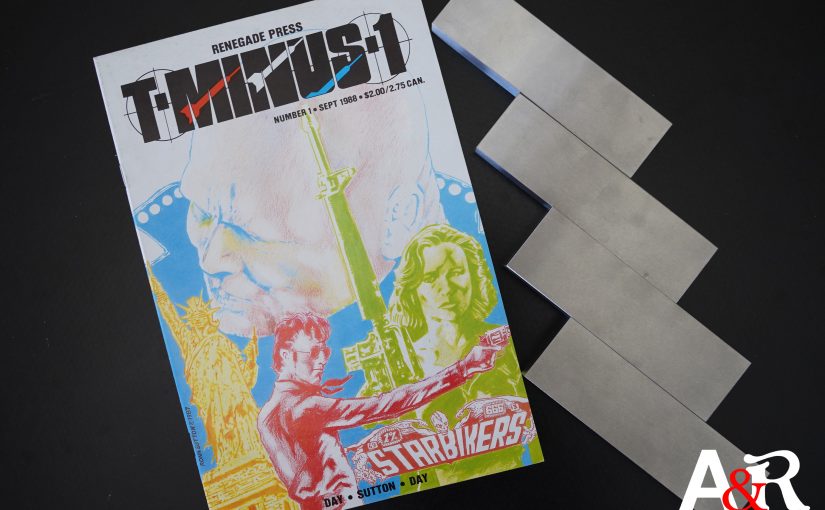
A&R1988: T-Minus 1

T-Minus 1 (1988) #1 by David Day, Ronn Sutton, Gene Day and Dan Day

So this is basically yet another Day Brothers anthology (and Renegade had published more than a handful of thse)… but teaming up with Ronn Sutton this time around.

We lead off with a Starbikers story (David Day inking Sutton), and … it doesn’t seem to have been made for this comic? It says “continued next issue” and then continues on the next page. So this was made for a different anthology, perhaps? It’s also quite frustrating: The first two five page segments just set up the world this is taking place in, and then it ends.

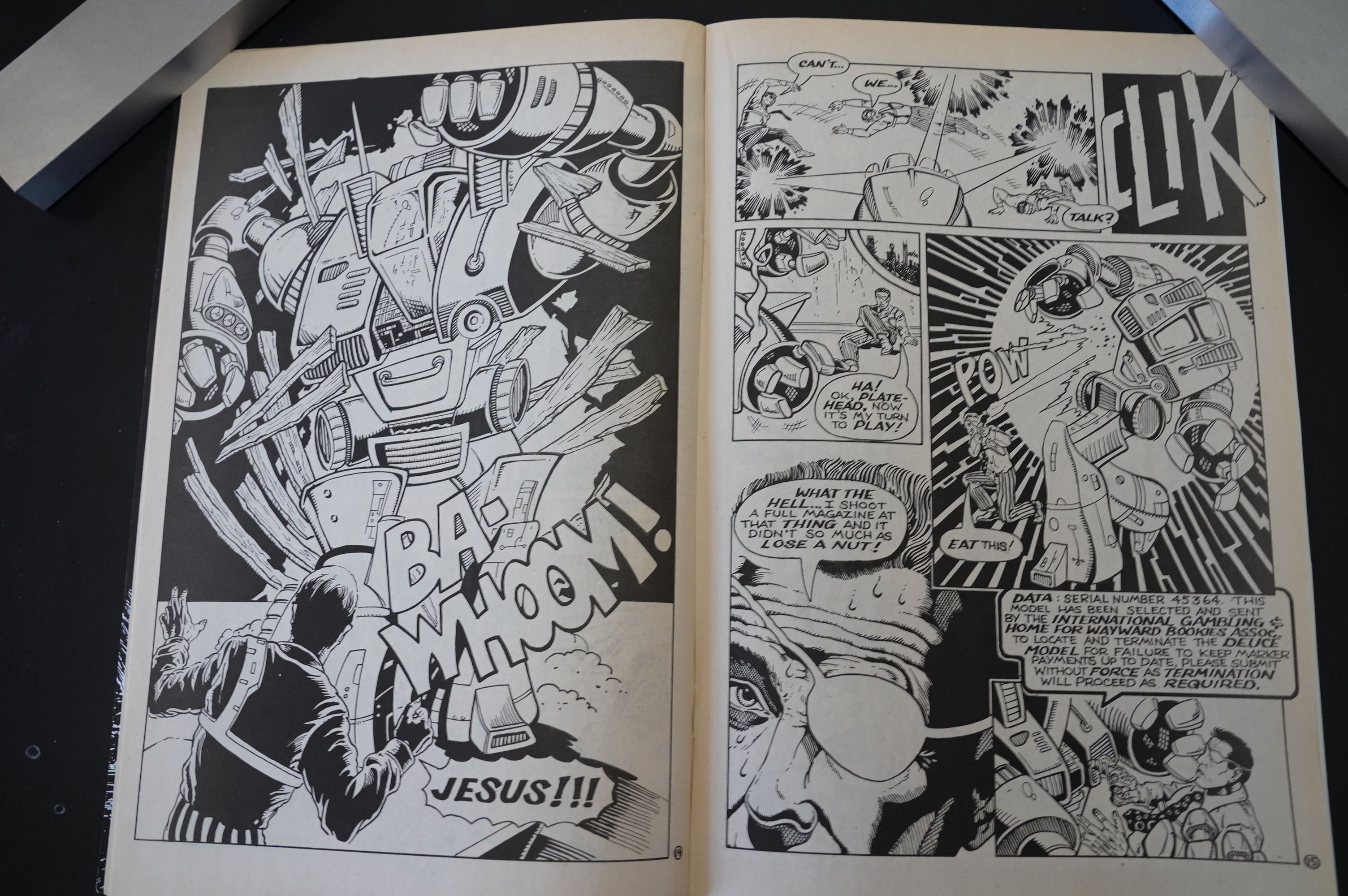
The second story has Sutton inking David Day, and it looks like they had fun working on this, but I really have no idea what this was supposed to be about.

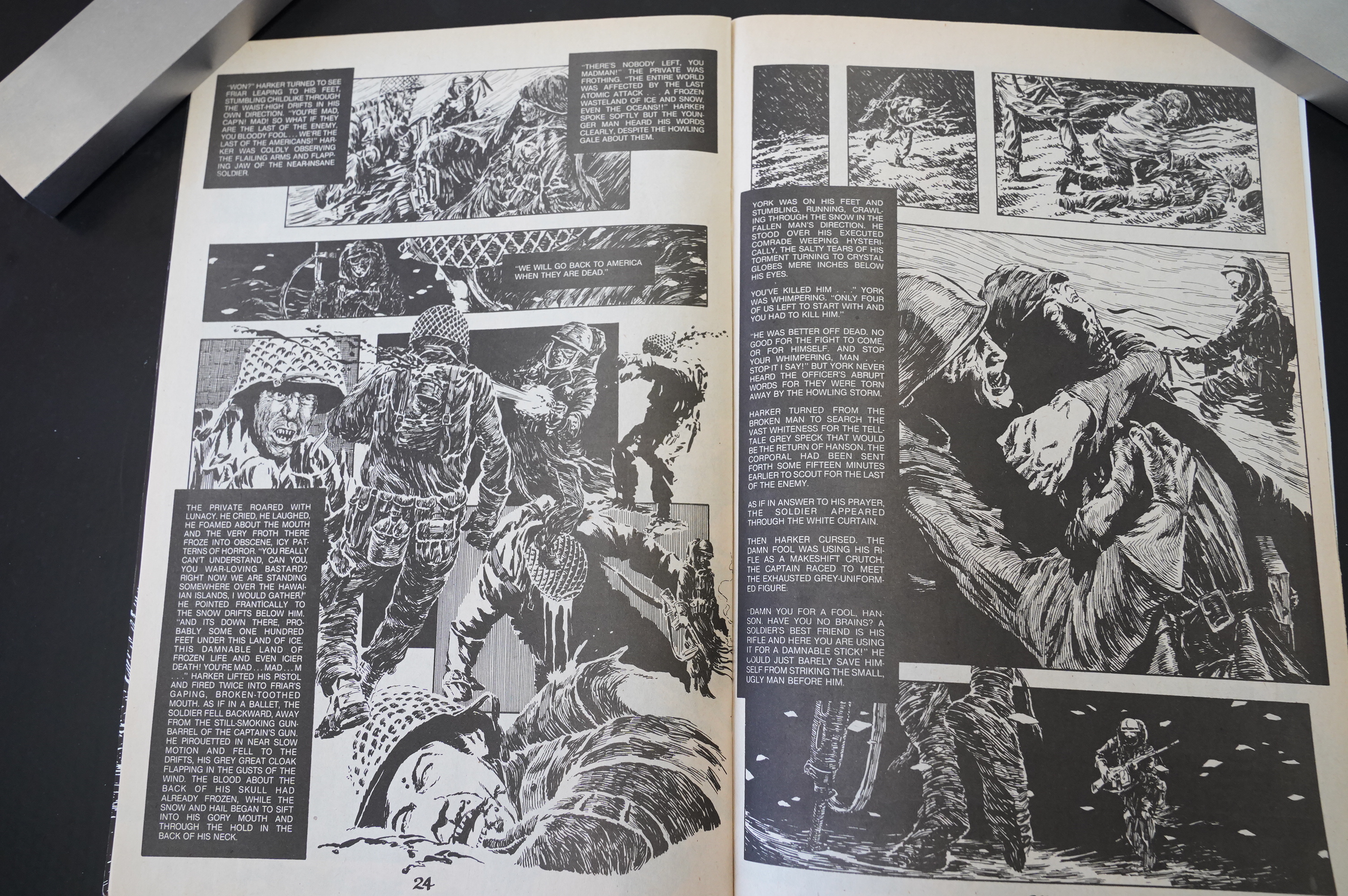
Finally, Dan Day illustrates one of Gene Day’s stories.

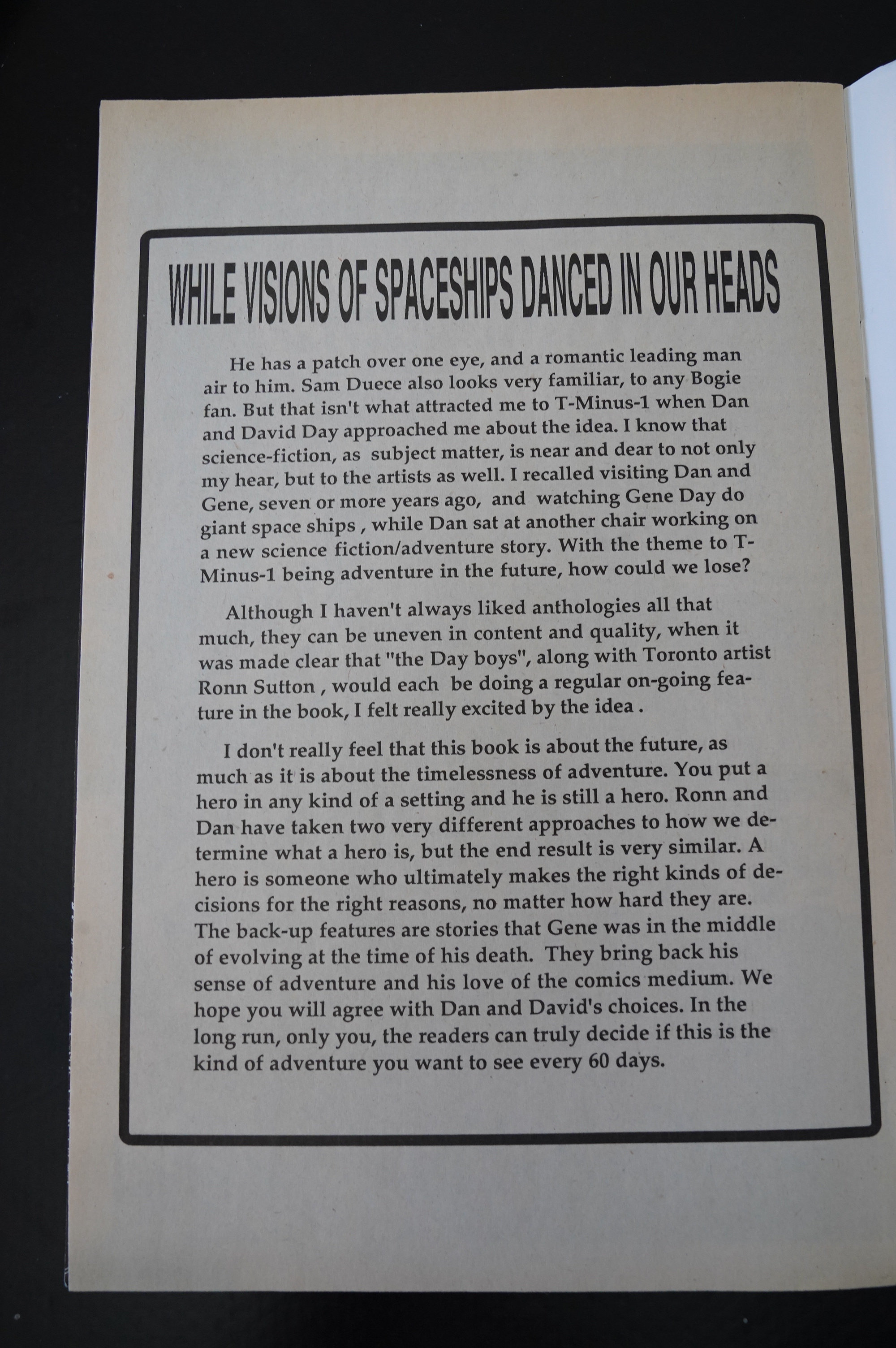
This page is presumably written by Deni Loubert? If so, she explains that she doesn’t really like anthologies a lot… which is weird, since Renegade published so many of them.

This was planned as an ongoing series, but that didn’t happen, since Renegade closed up shop a couple months later.

Sheldon Wiebe writes in Amazing Heroes #162, page 58:

Considering how big anthology
comics were in the “golden age” it
seems hard to believe that there are
so few successful anthology books in
the comics field today.

[…]

T-Minus-l is a new anthology title
from Renegade Press (thank you, Ms.
Loubert).
It features three stories: a new
“Starbikers” tale, a “Sam Deuce”
story, and a story from the unfinished
file of the late Gene Day.
“Goon Shmv” is the Starbikers seg-
ment in this anthology’s debut issue.
The story and pencils are by Ronn
Sutton and the inks by David Day.
This episode is the best of the Star-
bikers tales to date.
The art is improved (Day’s inks are
very sympathetic to Sutton’s pencils
.and that’s sympathetic as in sym-
pathetic vibrations, or resonance… )
and Sutton’s writing skills continue to
grow.

[…]

In “Manic Monday,” we are intro-
duced to Sam Deuce, a 22nd-century
He looks like Bogie with a
patch over his left eye. He is cool,
professional and up to his eyeballs in
gambling debts.
“Manic Monday” deals with
Deuce’s attempts to avoid termination
by a giant robot for failure to pay his
debts.
The story is fast paced and
humorous. The art is very nice. David
Day can write and his pencils are well
laid out. Ronn Sutton’s inks seem as
good for Day’s pencils here as Day’s
inks were for Sutton’s pencils on
Starbikers.
“A Shroud of Tattered Grey” is the
final story.
It is an ultra-gritty post-nuclear-war
horror story that features Dan Day’s
art over a story by the late Gene Day.
The art is about the best I’ve seen
from Dan Day and the story is utterly
gripping.
If you want to see a thoroughly
plausible version of how the world
could end, this one is for you. If it
doesn’t give you nightmares, you
aren’t human.
Overall, T-Minus-l is well-worth the
two bucks you’ll have to pay for it.
It is intelligent, articulate and
effective on virtually every level. It
contains action, suspense, humor and
horror in equal doses.
I hope T-Minus-l succeeds (I mean,
sells). We need more anthology books
in comics and this one is first-rate.
GRADE: VERY FINE

Amazing Heroes #145, page 229:

Ronn Sutton is also offering an
ongoing storyline with Starbikers, a
group of individuals which Sutton
describes as “Hell’s Angels of the
future.” In this particular future, Star-
bikers Sorry Boy, Teflon, and Rockabilly
the Kid ride “hover-bikes” and square
off against the law enforcers from the
local starship. In issue #1, Show,”
the Starbikers must battle 40 marshals
when they attempt to obtain, the
contraband items caffeine, nicotine, and
alcohol. That plotline continues through
to issue #4, when Sutton involves the
group in an intergalactic war. Sutton,
who is writing, drawing; and lettering the
series himself, gets an assist on the first
issue when David Day provides the inks.
(Conversely, Sutton does the inking on
David Day’s first Sam Deuce story,
“Manic Monday.”) Sutton promises lots
of action, and says his artistic style is
heavily influenced by the work of Jim
photo references,”says Sutton.. e includ-
ing those of himself. “Rockabilly the Kid
looks like, well, a lot like me,” comments
Sutton.

It looks like these plans were abandoned after Renegade shut down.

This blog post is part of the Renegades and Aardvarks series.

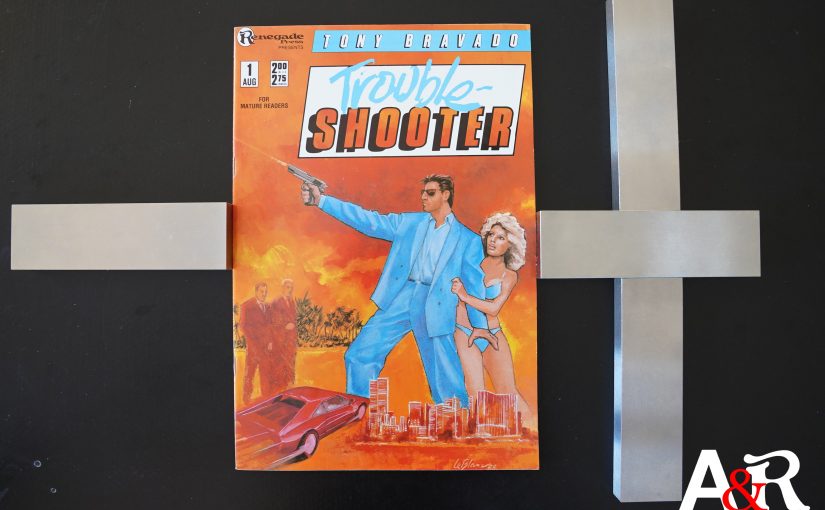
A&R1988: Tony Bravado, Trouble-Shooter

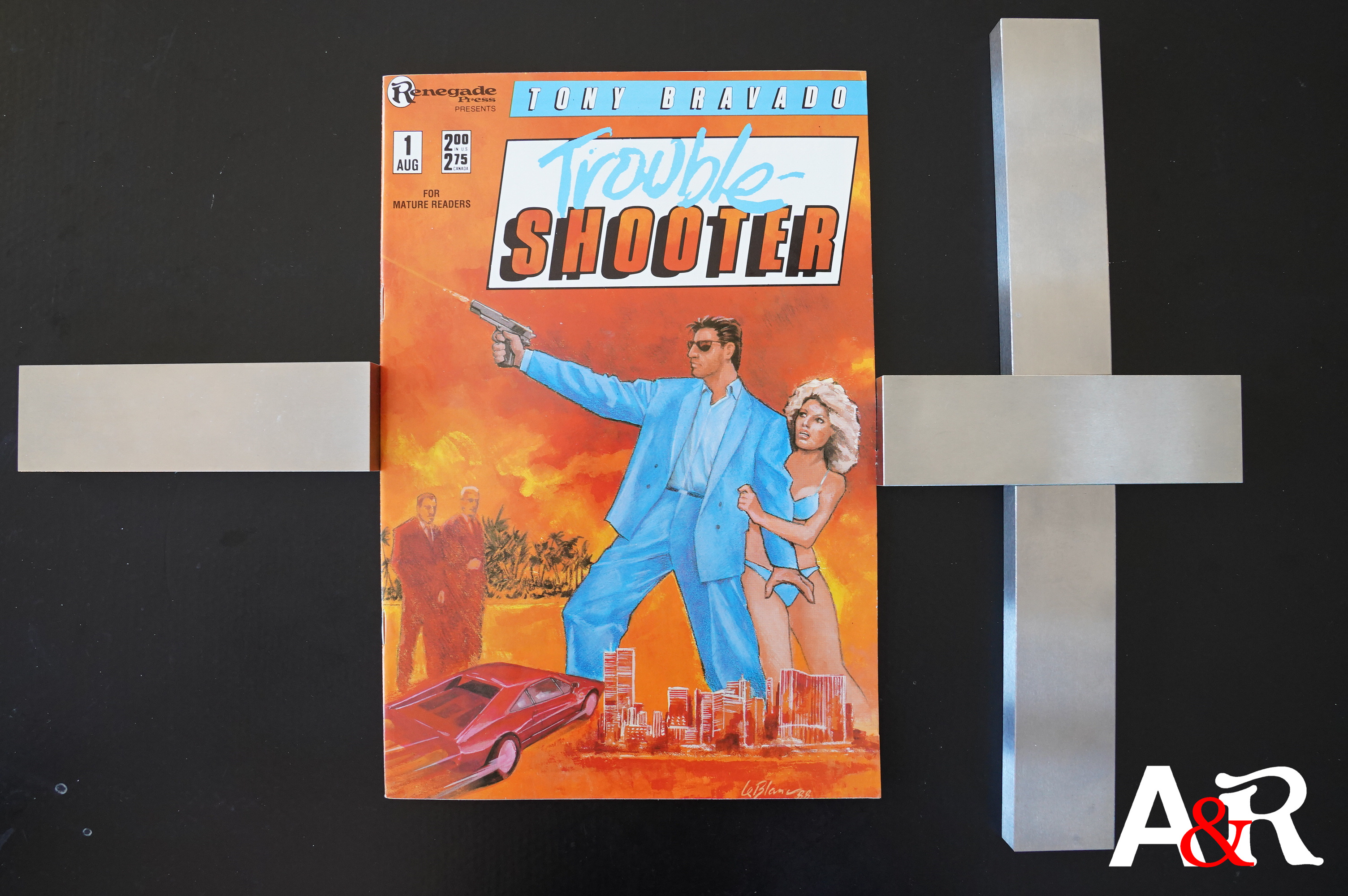
Tony Bravado, Trouble-Shooter (1988) #1 by Dave Darrigo, Steve LeBlanc and Louis Paradis

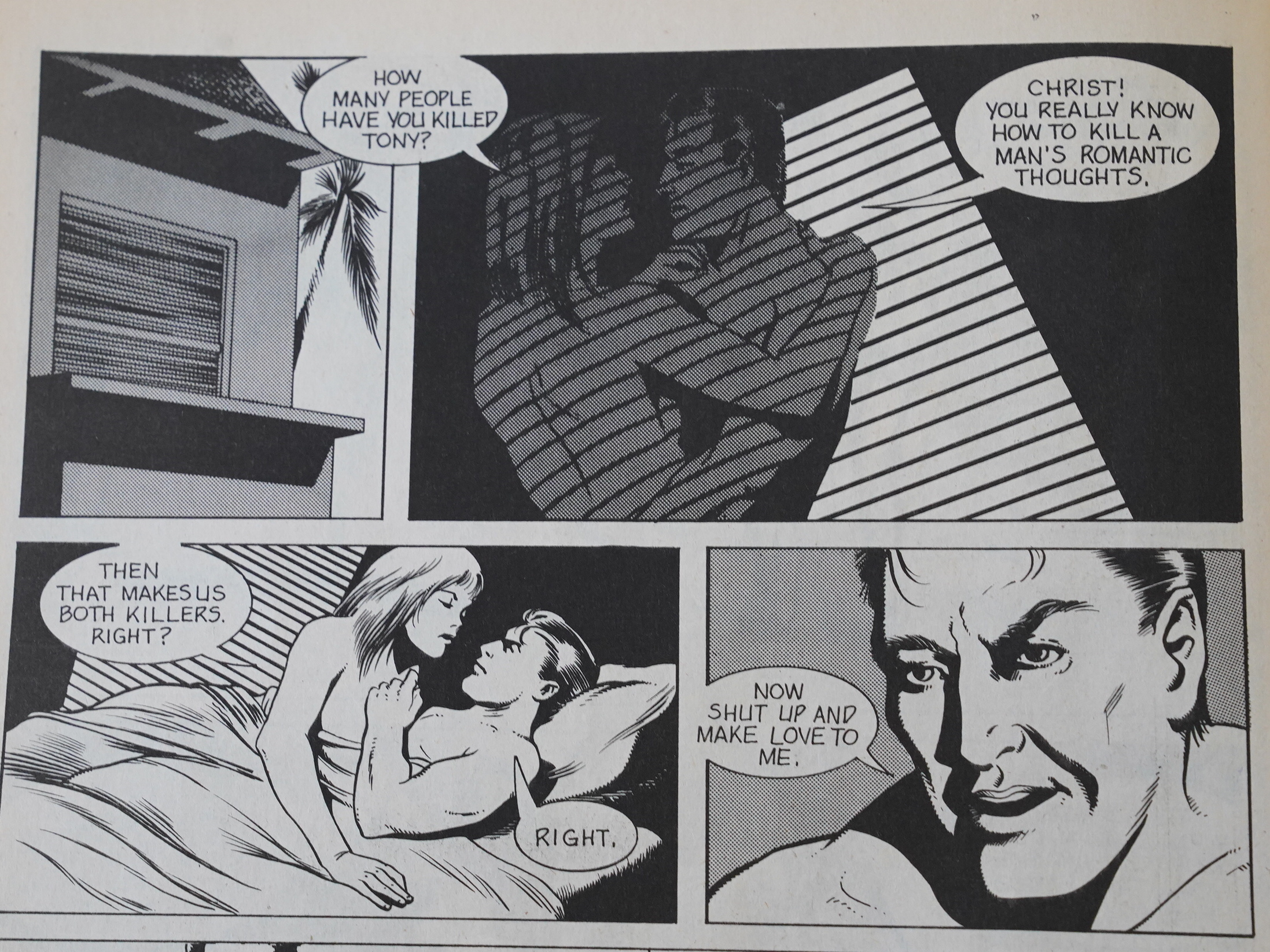
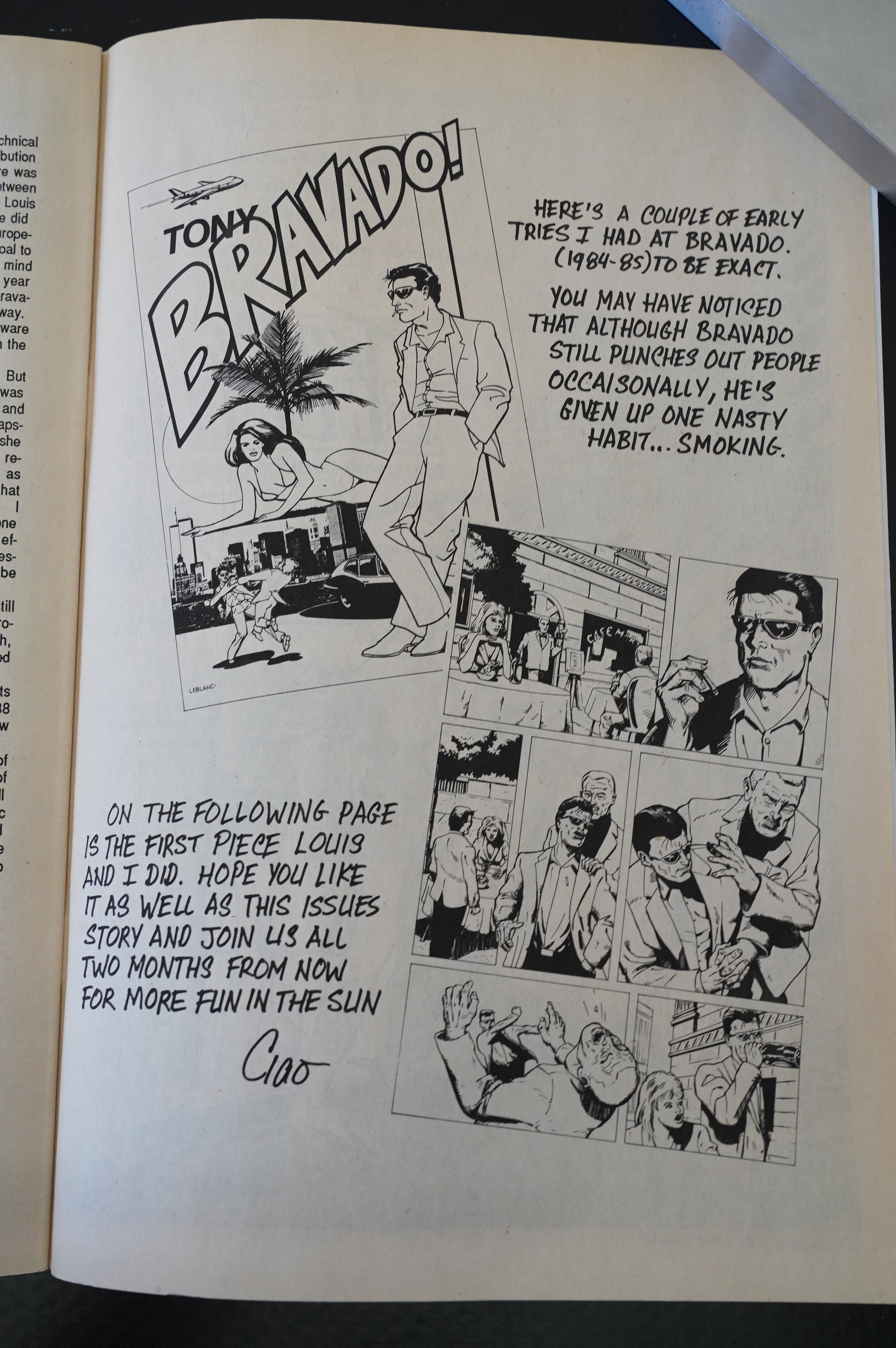
You may remember Dave Darrigo from Wordsmith… or not. So here’s him with a couple of newcomers to comics. Let’s read the first three pages.

Well… ouch? The artwork is very variable — Tony’s chin grows and shrinks in every panel. And… that’s a very odd-looking car. And… is Tony using a can of deodorant to wake up? That’s a very strange ritual.

Anyway, Tony Bravado is apparently a tough guy for hire… but one that’s well-read, and who is ambivalent towards most things, like whether to use a Ferrari or not, and is easily depressed by looking at *gasp* poor people.

So we’re talking Hit Guy With A Heart Of Gold. It’s not my favourite cliche.

But the writing here isn’t that bad?

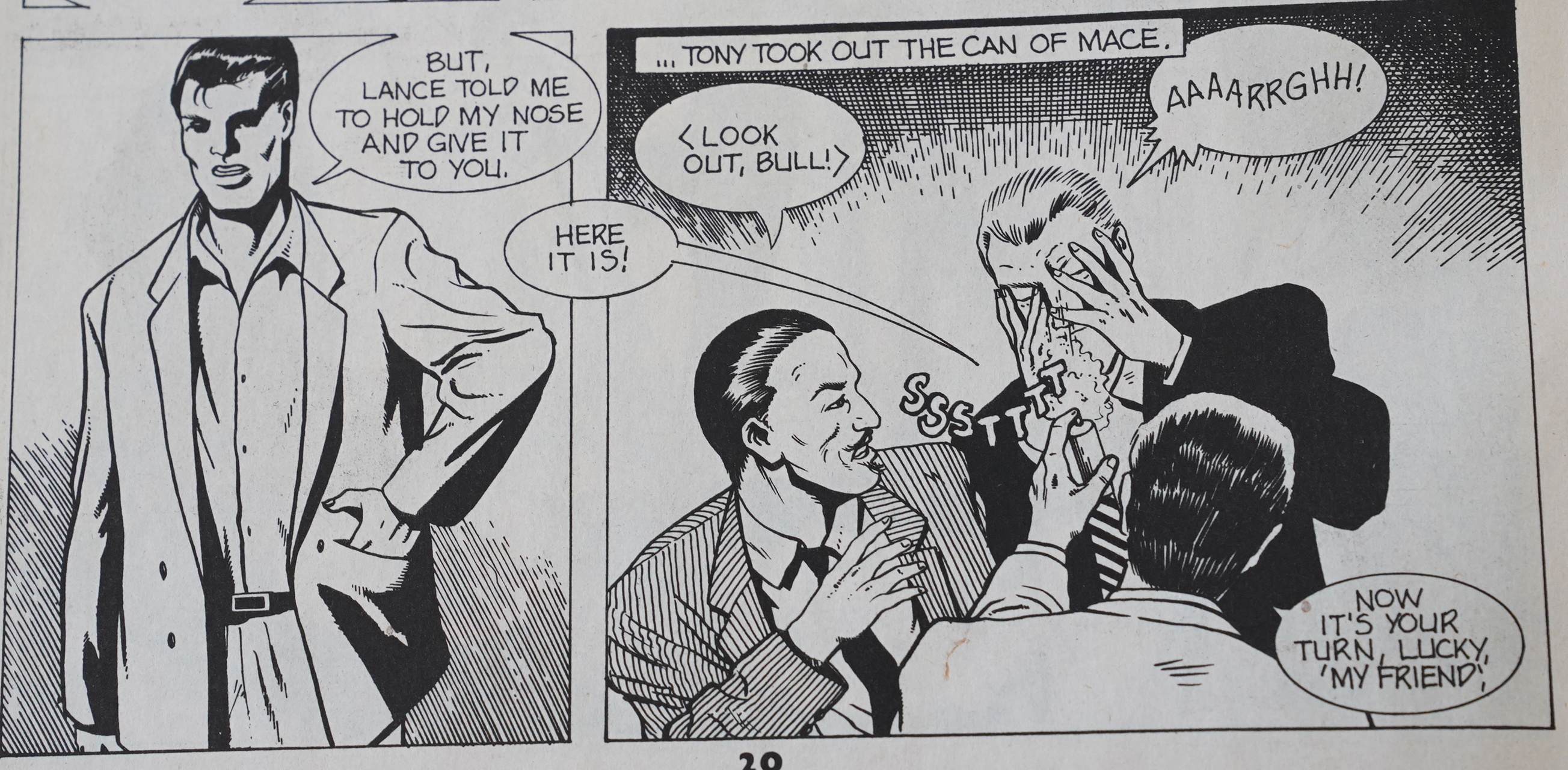
Here on the other hand…

Oh! It was a can of mace!

Well, that makes a lot more sense? … or does it?

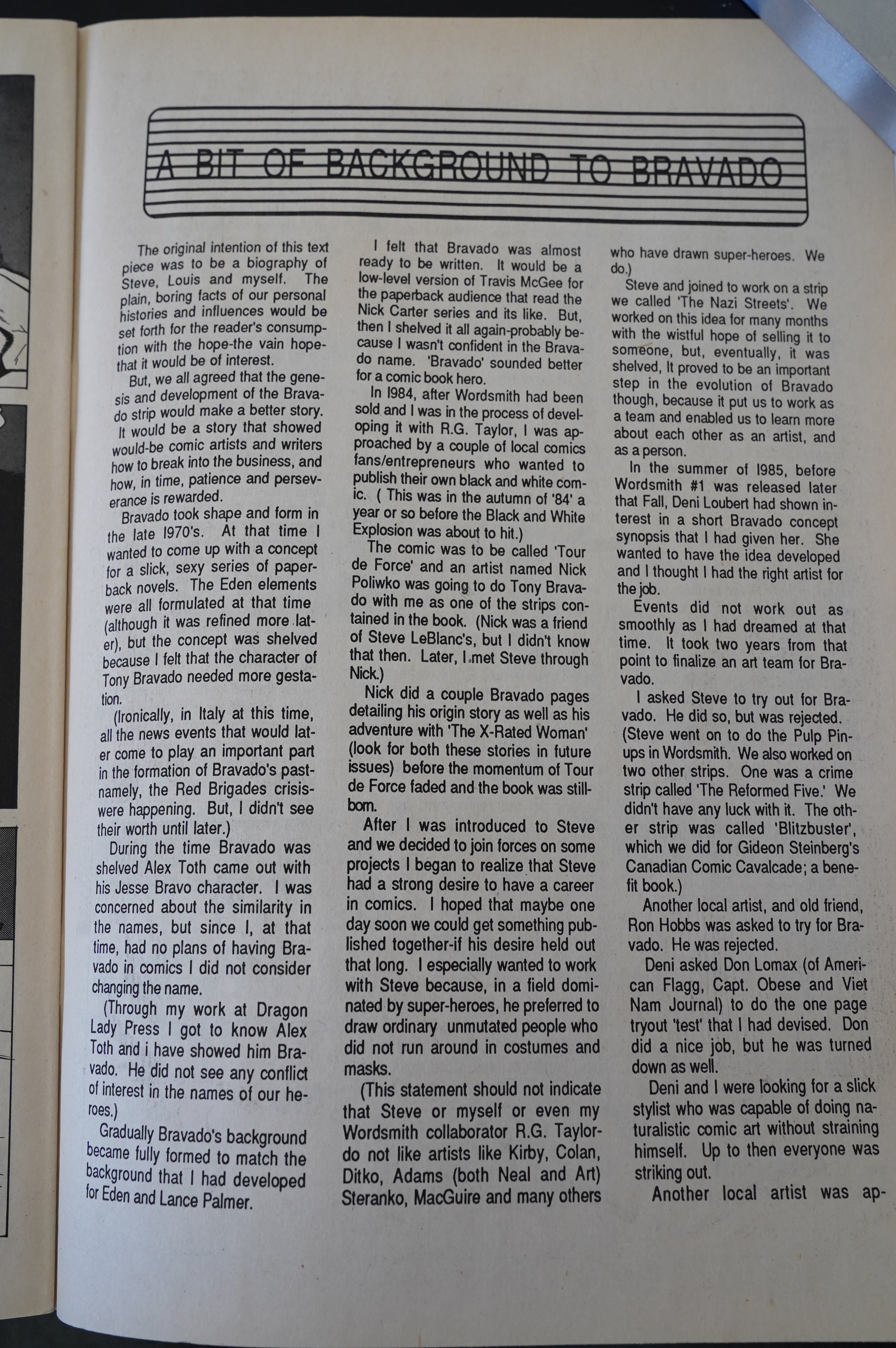
We get a history of the character — Darrigo had been kicking around the Tono Bravado idea since the 70s, but when it came time to make a comic book, they weren’t able to find a suitable artist. So they tried out a bunch of people, before settling on these two (after initially rejecting LeBlanc).

And this was apparently planned as a serial, but Renegade was in the process of going under… so the last four issues were published by Diamond Press (who also adopted a handful of other Renegade series).

Amazing Heroes #145, page 238:

“I’m trying to avoid those typical comic
book cliches,” says Dave Darrigo of his
newest creation, Tony Bravado. “This
book is about a P.I. character, but not
in the classic sense.” Tony is a loner, and
he has a job that uould be a fantasy job
for any male… he works for the Hugh
Hefner-like Lance Palmer. His job takes
him to glamorous and exotic places
around the world, full of warm beaches
and hot ladies. “But,” Darrigo com-
ments, “Tony isn’t happy. He’s over 40.
He has a long history as a former cop,
anti-terrorist, and bodygyard. He’s at a
point in life where he’s looking for his
roots in a jet-set lifestyle.”
Throughout the course of this series,
with issue #1 due out in early August,
Darrigo says that Tony will be taking
good, hard looks at his life. “Bravado
will have introspective characterization,”
says Darrigo, “and in case that scares
people off, be assured that there will be
a fair share of gun play and fisticuffs.”
Darrigo believes that readers can experi-
ence—feel—violence more intensely
when they are familiar with the charac-
ters involved, be they good or bad.

Will Murray writes in Comics Scene Volume #2, page 9:

“The Bravado series comes from
my background as a mystery-
detective reader and writer,” he
says.
“I’ve always been amazed
that of all the genres in comics that
have gone into extinction, crime
comics was one of them.”
Although Darrigo plans for
Tony Bravado to be less ex-
perimental and more commercial
than Wordsmith, it will feature a
similarly true-to-life art style.
“It’s very hard to find artists
who like to draw realistic stories,”
he points out. “By that I mean that
comic artists don’t necessarily like
to draw unrealistically, but they
don’t like to draw the natural
three-dimensional things they see
outside their window. There
always has to be a fantastic el+
ment to it. Fortunately, Steve
LeBlanc, and Louis Paradis, the
inker, are both of the same mind-
set. They both like to draw in a
naturalistic way.”
Darrigo credits a number of in-
fluences on Tony Bravado, from
European private eye comic
heroes like Archie Cash and
Bruno Brazil, to American TV
shows like Miami Vice, as well as
John D. MacDonald’s Travis
McGee novels. The European feel,
Darrigo warns, includes a realistic
handling of the hedonistic world
Of Tony Bravado.
“There’s a lot of nudity in it.
Tony gets laid a lot,’ i Dave Darrigo
announces, “but there’s no explicit
sex.”

Amazing Heroes #133, page 182:

As with Darrigo’s other Renegade title,
Wbrdsmith, simple description of the
book’s set-up is very superficial. Under
the surface boil “the nastier lusts,
emotions and problems of the idle rich.
The book is outwardly cool, inwardly
unsettled—just like the ‘beautiful people’
Bravado works for,” says Darrigo.
An avowed indelRndent, who despised
unions and communism, Bravado now
finds himself exploring these deplored
possibilities as he is continually exposed
to the laissez-faire capitalism of those
who now surround him.

Sheldon Wiebe writes in Amazing Heroes #154, page 59:

As writer/creator Dave Darrigo has
pointed out, there aren’t a lot of orig-
inal crime comics being published
these days. Tony Bravado is his effort
to expand the genre just a tad.
The first issue introduces us to this
ex-cop/ex-bodyguard turned trouble-
shooter. At the start of the series
Bravado works for Lance Palmer,
owner of the fabulous chain of Eden
Resorts and the publisher of Eden
Magazine (unlike Hugh Hefner’s now
defunct empire, Palmer’s highly
successful clubs and resorts provided
the base for the creation of the
magazine.

[…]

Considering the small potatoes
magnitude of the problem, it isn’t sur-
prising that Bravado sorts it out in a
hurry. Darrigo is setting up the series
here, and all we need is a glimpse of
the man at work to get the picture.
What’s more important is the way
Darrigo sets up our introduction to the
book’s lead character.

[…]

Darrigo has given Bravado tough-
ness and sensitivity in the right
measures. If there is any area where
the book is weak, it has to be the art.
Steve LeBlanc and LouiS Paradis
are not bad artists by any stretch, but
they don’t seem to have quite found
the handle on Tony Bravado. In some
parts, their work is detailed, in others
minimally so. They do some dark
stuff and some lightstuff, and not
always at the most appropriate times.
If they are attempting to artistically
enhance the contradictions of the char-
acter, it isn’t quite working. At least
not yet.
Still, there is an awful lot of
potential here. I suspect that as
LeBlanc and Paradis settle into the
character the book will become at
least a cult favorite.
Recommended with reservations.
GRADE: FINE

I’m not sure this comic ever appeared?

There isn’t much talk about the series on the web, but here’s something:

The concept behind the character and series was innovative and, frankly ripe with possibilities.

The series doesn’t seem to have been collected or reprinted.

This blog post is part of the Renegades and Aardvarks series.
April Music

Music I’ve bought in April.

What! It’s been another month? Time flies when… er… did I do anything at all this month? And I can’t really remember buying music according to some… idea… this month, either, so it’s just random stuff.

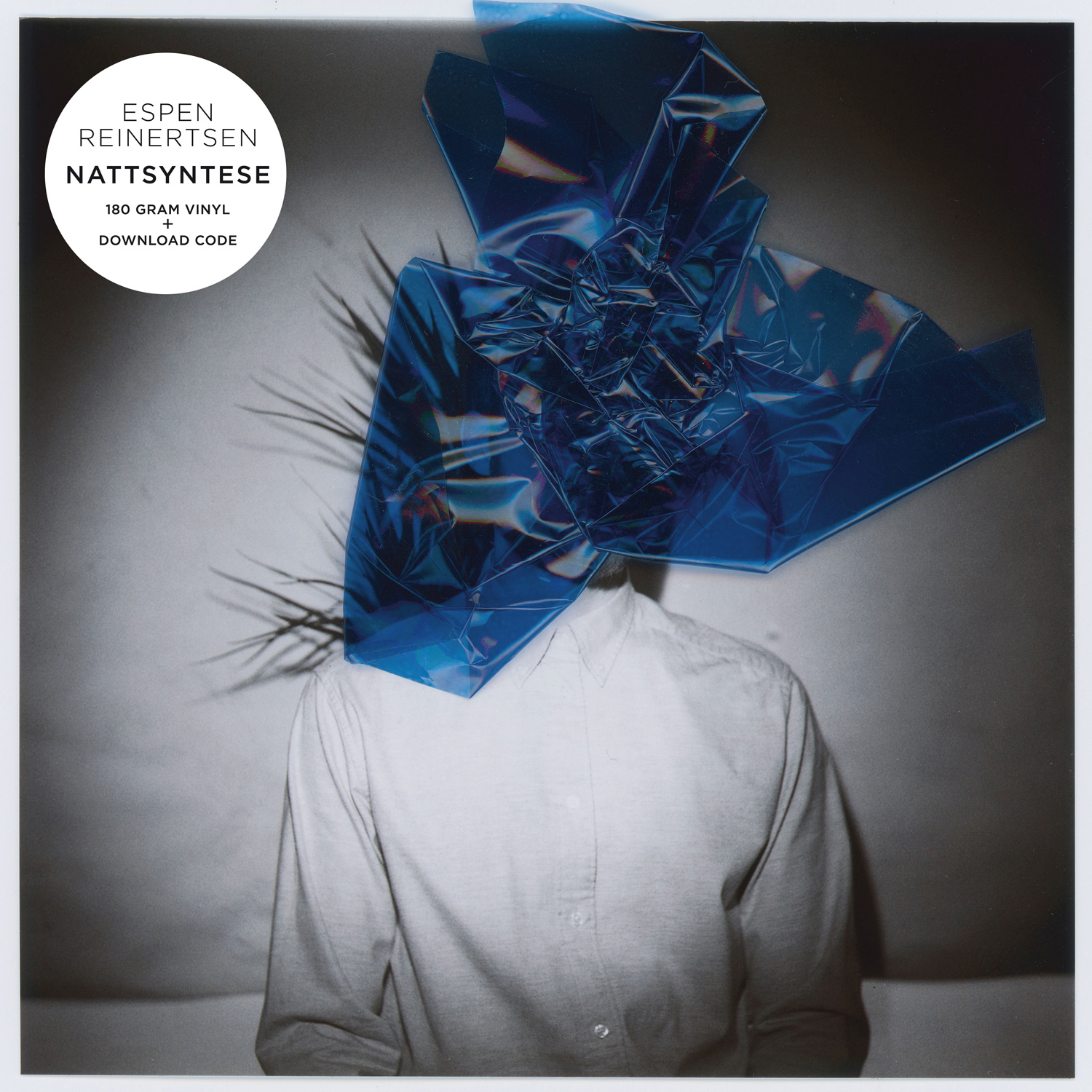
Find of the month is Espen Reinertsen:

I saw a live streaming thing of his, and was kinda entranced, so I’ll be getting all his albums…

A&R1988: Suburban Nightmares

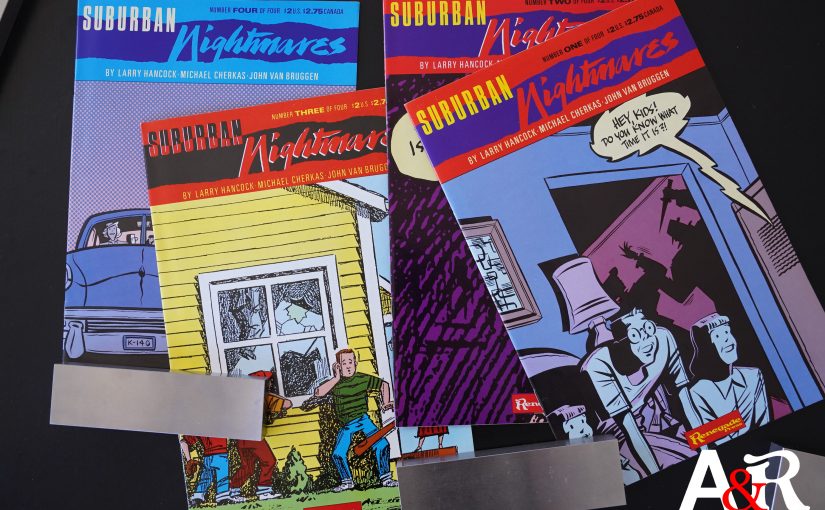
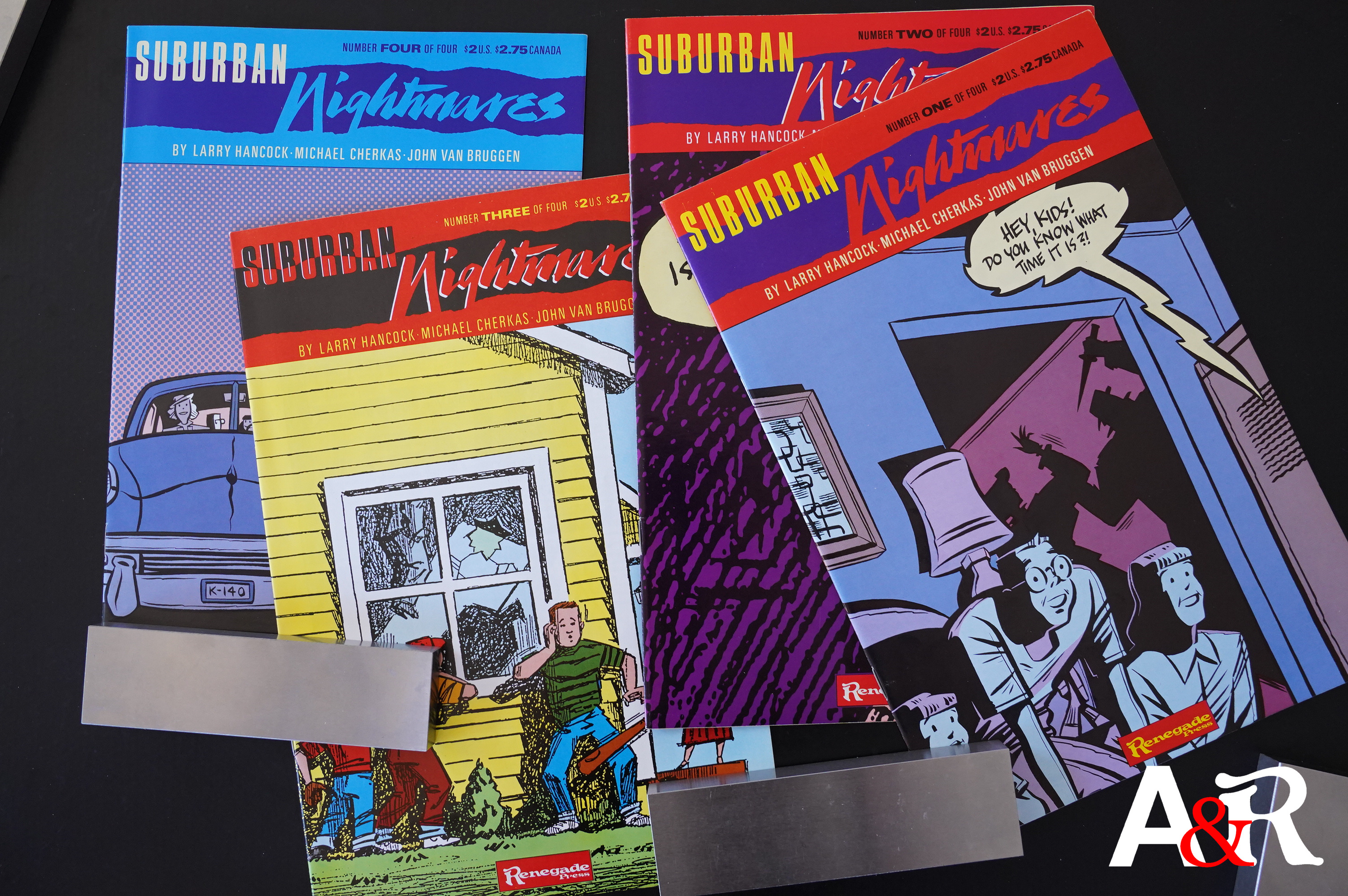
Suburban Nightmares (1988) #1-4 by Larry Hancock, Michael Cherkas and John van Bruggen

One of the more successful (both commercially and critically) comics at Renegade was The Silent Invasion — so this is a spin-off off of that, sort of. That is, it’s the same creators, working in much the same milieu. And this was published over two months as a bi-weekly series, which meant that the comics shops had to order in the entire series before seeing how the first issue sold.

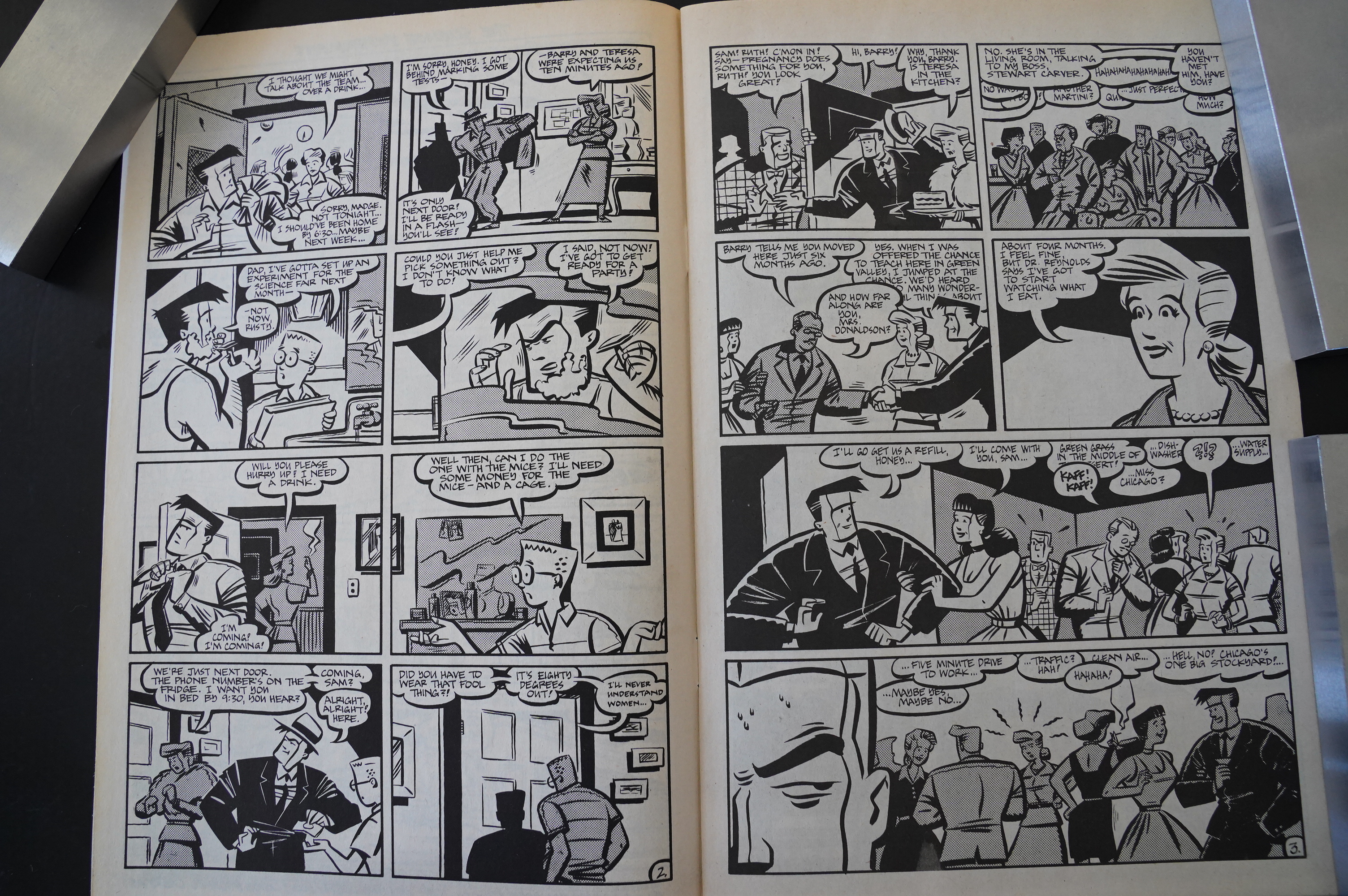
Let’s read the first four pages:

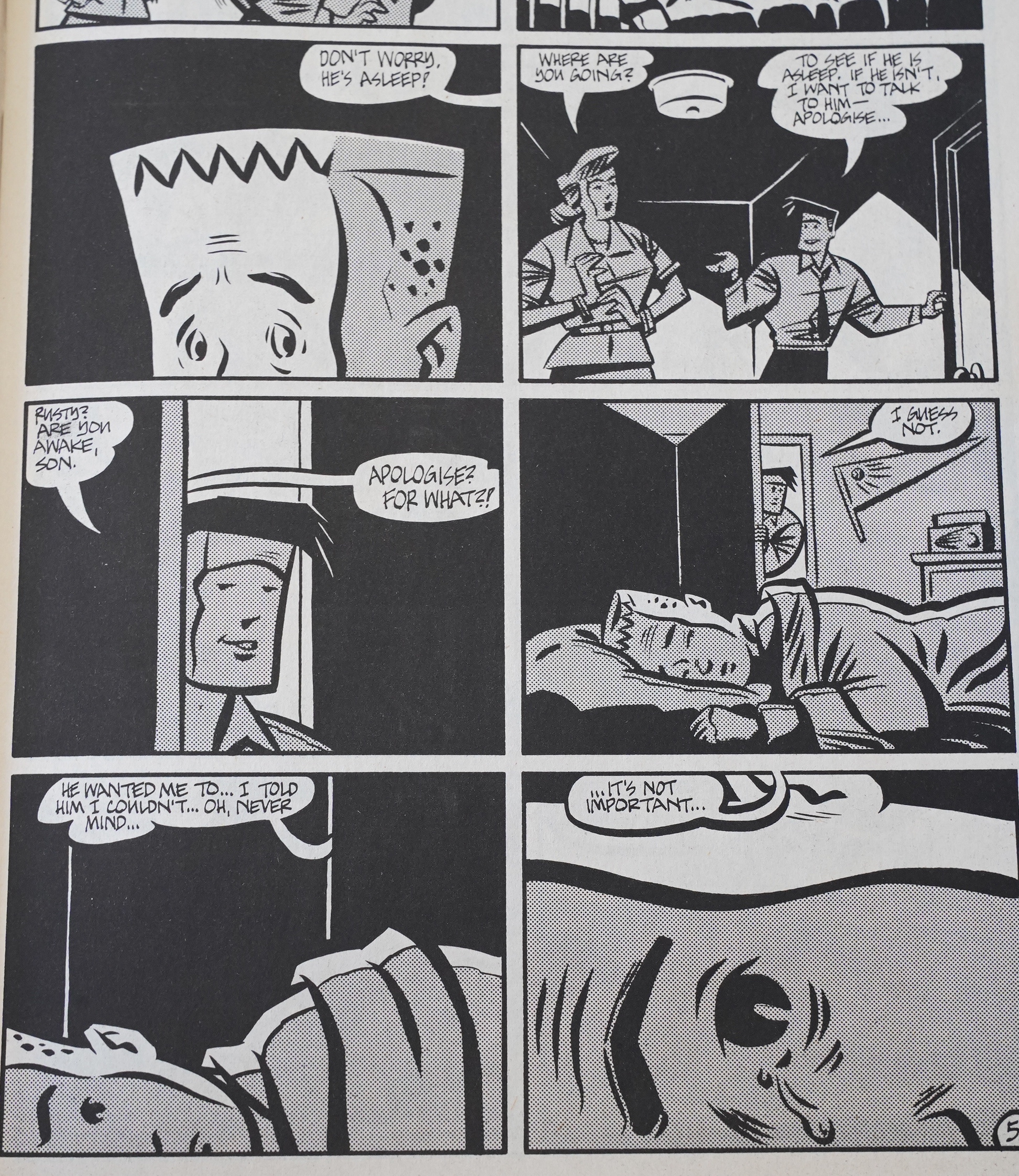
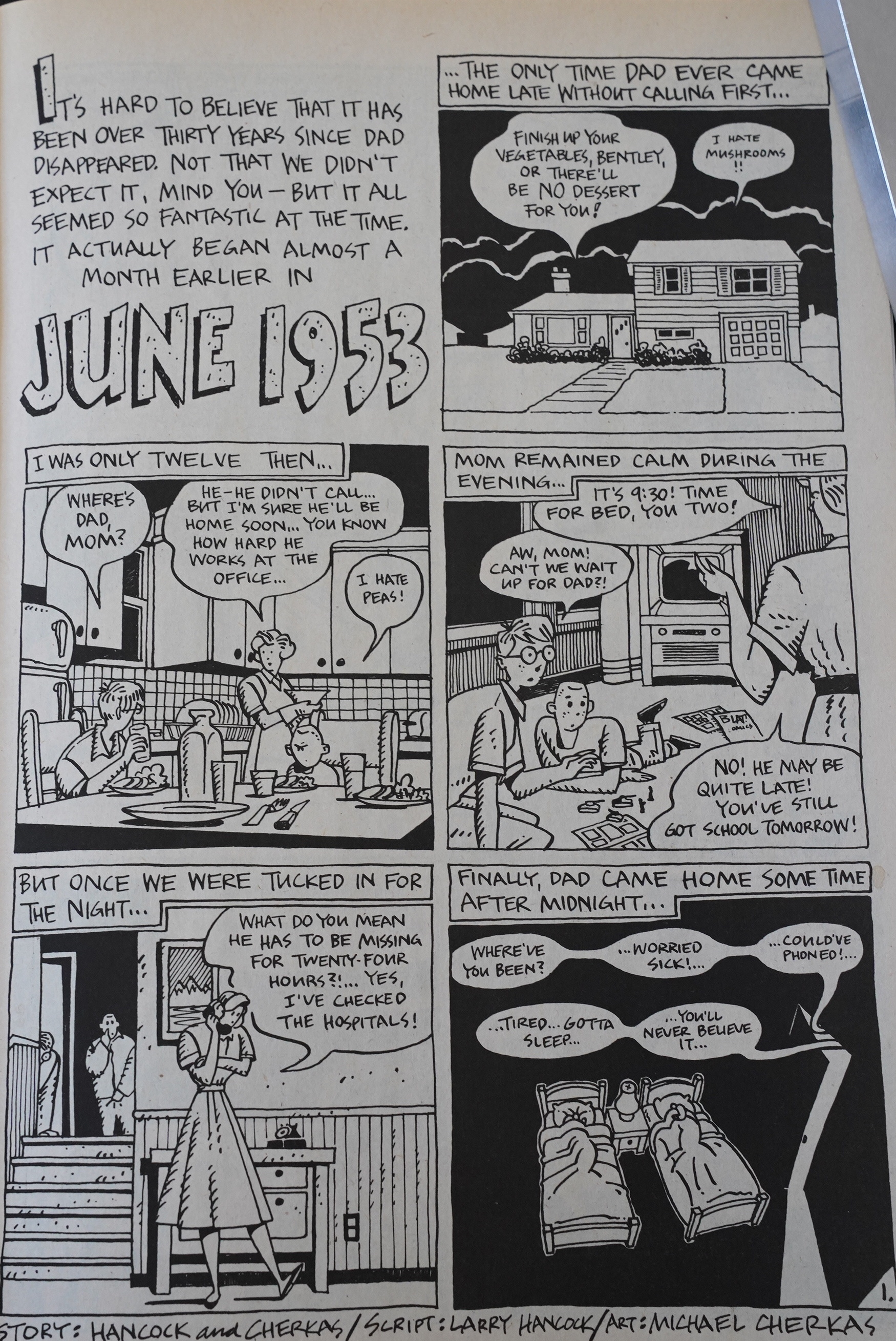
So, the pencilling here is by Van Bruggen, so they don’t look as kooky as when Cherkas does the pencilling on his own. It’s more of an Archie vibe… but with Cherkas’ distinctive neo ligne claire rendering. Looks good!

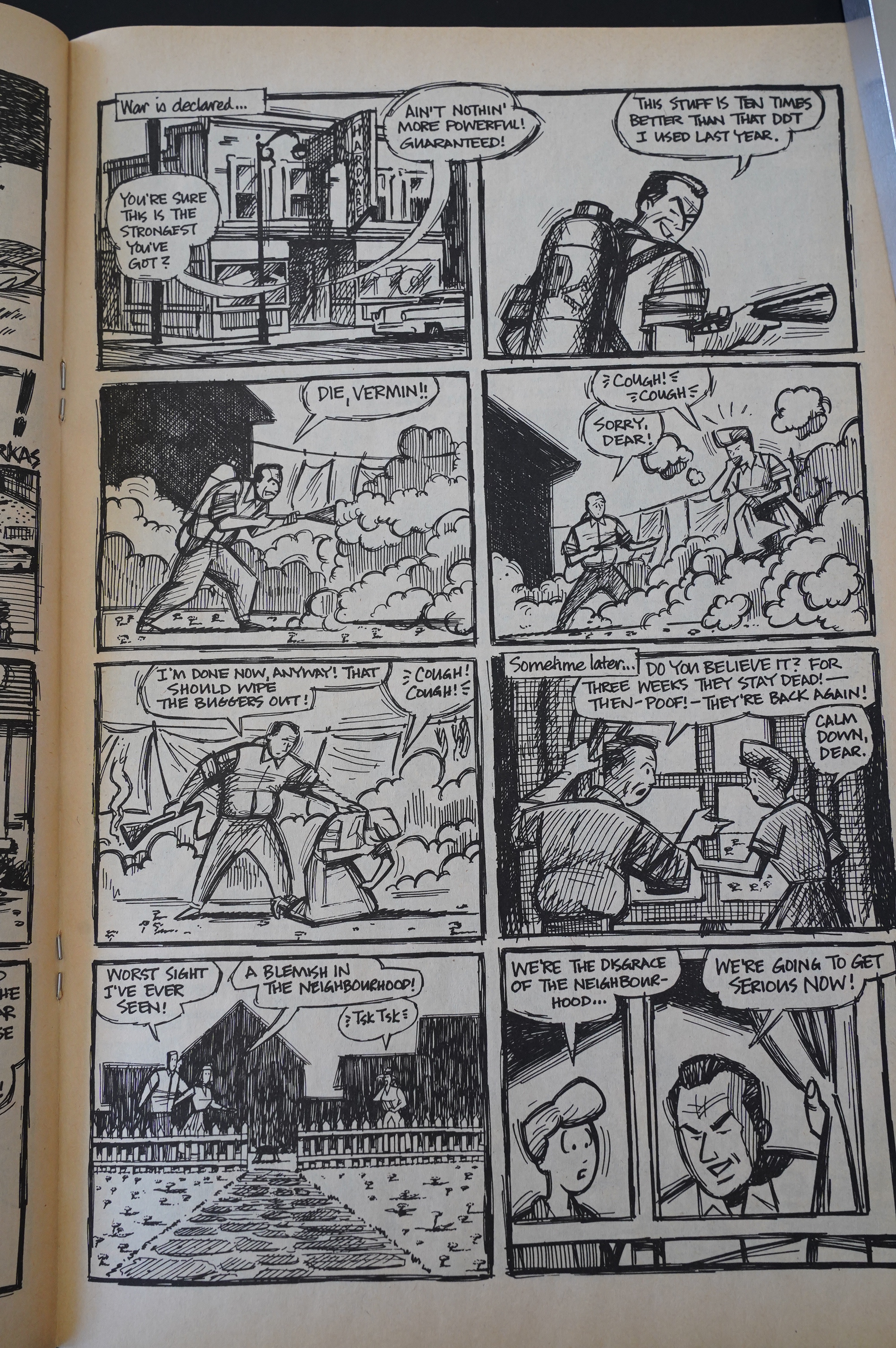
And as you can see, it’s very dense. There’s a lot going on on these pages — a number of characters and relationships either hinted at or stated. But there’s a reason for this super-compressed storytelling: Each issue has eight pages of this serial, and the rest of the pages are misc. short stories. So the main story only has 33 pages to happen… and the creators manage to do this in a way that feels very satisfying.

It’s not all people standing around talking, either.

And, yes, since this is Hancock & Cherkas, there’s nuclear explosions, government plots, conspiracies, secrets and all that good stuff.

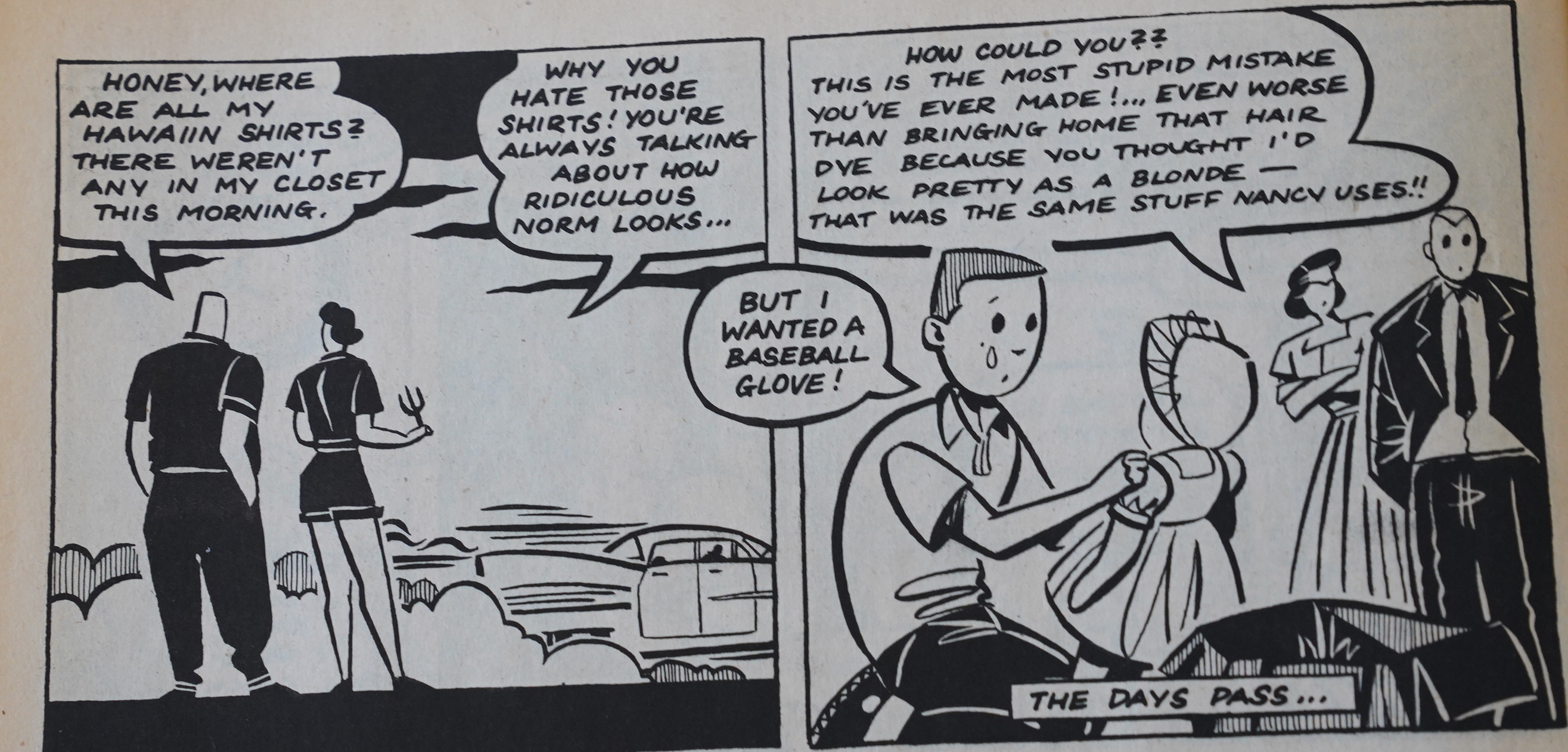
All the back-up stories also deal with subject matter adjacent to the main story, but are all done in different styles. It’s fun.

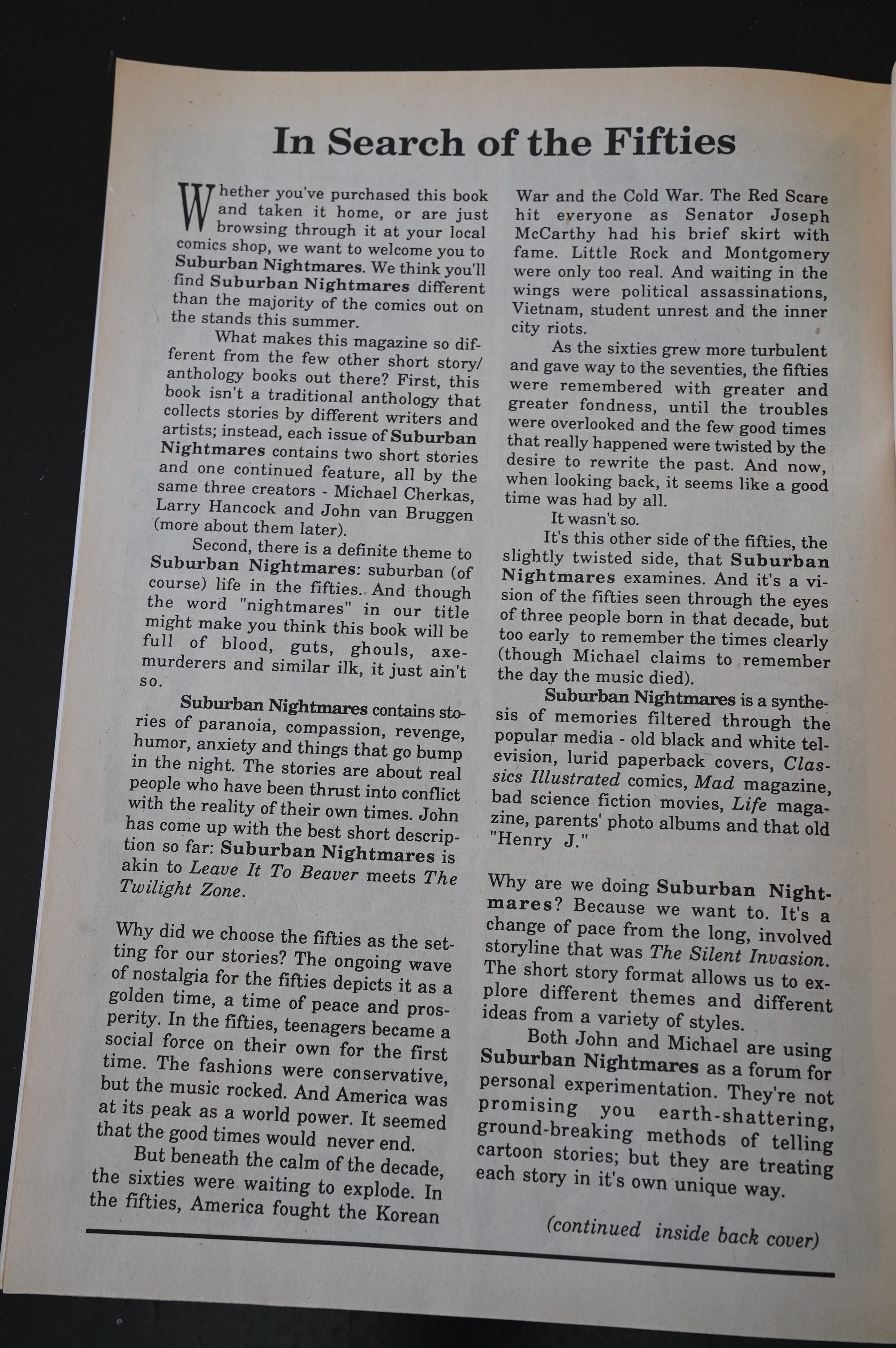
Hancock writes about the rationale behind the series.

The third and final third of each issue is a reprint — of a story that appeared in The Silent Invasion. Since you have to assume that most people reading this has already read that series, that does feel like a cop-out: It’s just 16 new pages per issue.

But if you haven’t read these stories, they’re still pretty good. Not as strong as the new material, though.

This new story, about horrible, horrible dandelions, is very amusing, for instance.

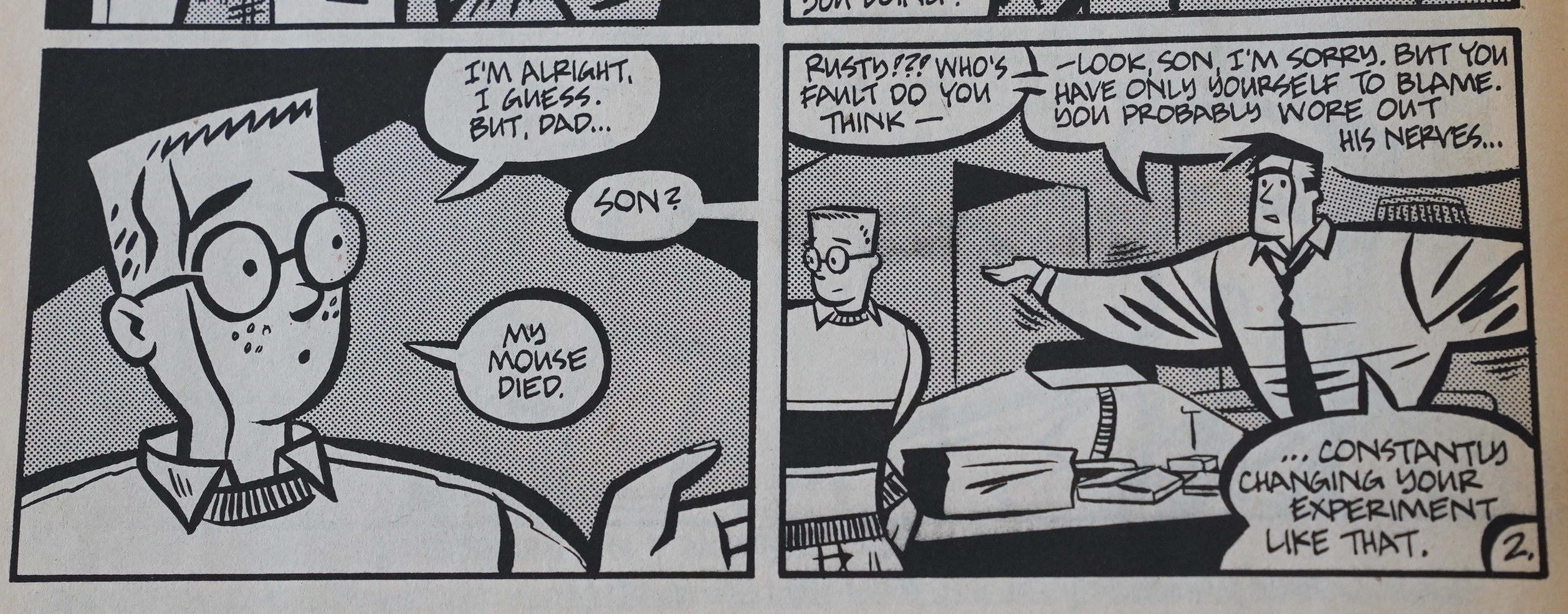
The main serial is very satisfying — the conspiracies are resolved in a non-groan-inducing way, which is often difficult. I’ve only got one criticism, really — it’s these bits with the son. You see, he’s doing an experiment with a mouse for his school project, and it then dies. This is meant, of course, to be a mirror of the main plot, where the gummint is experimenting on the people of the city here… but it’s a bit too on the nose, innit?

The final back-up story, about a guy who has his entire life shift because he misses a train, is probably the best of them all.

So: This is a pretty spiffy mini-series.

Amazing Heroes ran a preview of the series.

Amazing Heroes #147, page 77:

This four-issue anthology series is the
new-—and even better—work from the
creators of the excellent The Silent
Invasion.

[…]

Excellent as it was, the huge cast
and complex plot occassionally caus-
ed The Silent Invasion to sag under
its own weight, obscuring the work’s
deeper levels. Suburban Nightmares ‘
short story format is much more
effective.
What the creators are doing, essen-
tially, is creating a fictional ’50s, very
close to our historical ’50s, but blend-
ing that era, with its outward opti-
mism and prosperity concealing a vast
morass of fears (the atomic bomb,)
prejudices (against blacks and com-
munists), and imminent catastrophe
(Vietnam), with the ‘B-grade’ science
fiction movies that were practically
the only place we allowed those fears
to surface. What comes out is a vast
metaphor for the ’80s, where much
the same mask conceals much the
same fears, prejudices, and conflicts.
Some of the stories in Suburban
Nighmares are reprinted backups
from The Silent Invasion, others are
brand new. The longest story, “The
Science Experiment, ” will be anthol-
ogized throughout all four issues.
There’s not much to say about
“The Science Experiment” at this
point. The first episode, “Welcome
to Green Valley” sets up a number
of situations, resolves none of them,
and is, generally, evocative as hell.
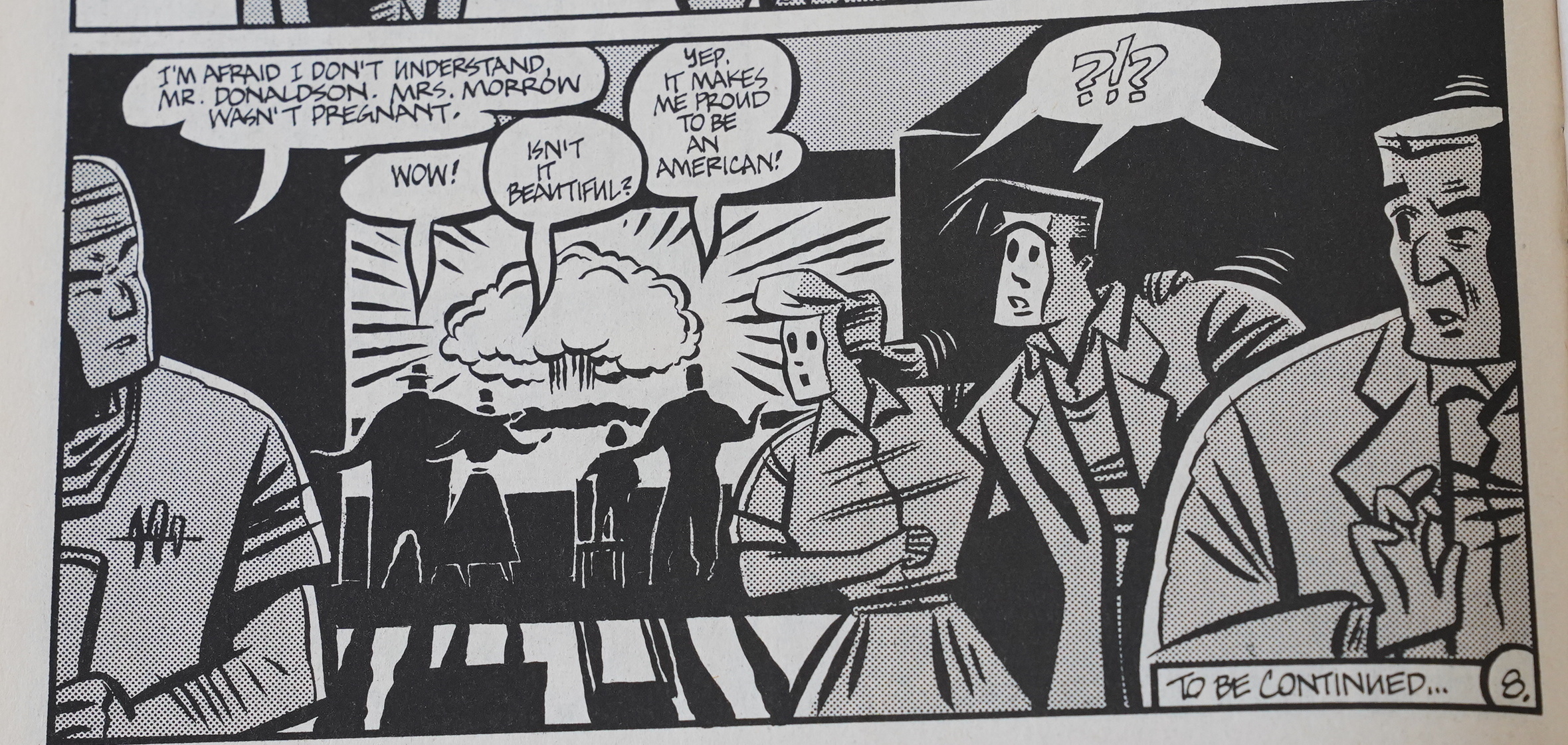
The last page of this installment,
where an admiring crowd watches an
atomic test from a hospital window
in the background, while the plot
thickens in the foreground, is one of
the most subtly terrifying comics
pages I’ve ever seen.

[…]

I’ve saved the middle story for last,
because last is traditionally a position
of honor, and this story, “June,
1953” is, very simply, a masterpiece
of comic storytelling.

[…]

The ending to this story, in this
most bombastic and exaggerated of
media, is a masterful example of
restraint. Without giving it away, let
me just say that no answers are given
but innumerable fascinating questions
are raised.
Suburban Nightmares shares the
unique look of its predecessor—
simple characters, almost caricatures,
given depth and density by exagger-
atedly bold lines and lots of solid
blacks. Heavily influenced by Euro-
pean cartoonists, it’s a style perfectly
suited for human storytelling.
I •m guessing that Suburban
Nightmares is only four issues,
because Renegade wanted to test sales
before committing to a regular series.
If this is so, I hope people catch on
in time, because this is a comic that
deserves to go on for years.
Grade: Mint.

Amazing Heroes #148, page 24:

All: How did the idea for Suburban
Nightmares come about?
CHERKAS•. we were just looking for
a new book.
HANCOCK: Well, it came about in
two ways…
CHERKAS: Larry, Larry, Barry!
Hang on. Really, the whole thing was
that The Silent Invasion was ending
and I was interested in doing another
book. But I didn’t want the commit-
ment required of a whole book again.
But with John van Bruggen’s help, we
could split the art duties and John was
interested in working ion the book.
John had worked on “Suburban
Nightmares” when it was a back-up
in The Silent Invasion. So we agreed
we’d try a four-issue series.
AH: Okay, Larry. What about you?
HANCOCK: I was going to say that
the whole way that Suburban
Nightmares originated was back in
The Silent Invasion when Renegade
increased the price on its books…
CHERKAS: That’s the answer to a
different questione That’s why we
started it.
HANCOCK: Why we started it in the
first place..
CHERKAS: I explained why it
became a second book, now you can
explain why it began in The Silent
Invasion.
HANCOCK: Okay. It began when
Renegade put up the price on its com-
ics. When Deni put up the price, it
was only a small increase in the US. ,
but it went up from $2.00 to $2.75 in
Canada. That was a lot and we look-
ed at it and thought that we needed
to give our readers more for their
money. So at that time we decided to
go up to 32 pages: And rather than ex-
pand The Silent Invasion, which
would have taken up a lot of Michael’s
time…
CHERKAS: we said, well, here’s
something that we can work on with
John. Then we talked to him. I’d
worked with John before; he’d done
comics before.
HANCOCK: Michael came up with
the title, Suburban Nightmares, which
works great. We wanted to set it in the
1950s, to keep with the mode of the
main feature itself. And again, it’s sort
of a “Twilight Zone” type of thing.
Actually, the best description of
“Suburban Nightmares” was the one
John van Bruggen came up with:
“Leave It To Beaver” meets the
“Twilight Zone.”
But the back-up feature lasted only
a few issues. We had done more than
enough story ideas, but when the sales
started slumping, Michael couldn t
really afford to continue doing all
those pages even with John’s help, and
especially since John’s pay came out
of Michael’s money. So we had to
drop “Suburban Nightmares” for the
last three issues of The Silent Invusion.
We had all these ideas percolating
around and we thought it was natural
to go on and look at doing another
book. And really, we wanted a break,
a change of pace. We find that it’s
totally different working on the short
stories than working on the one long
episode. We liked doing The Silent In-
vasion, but these short stories are a
totally different way of telling stories.
I find it much more challenging to try
to put something in seven or eight
pages than to try to stretch it out. Now,
there’s not a hell of a lot of character
development—there’s some character
development, but it’s got to be much
more abrupt. It’s got to be much more
brisk then when you just’ develop
somebody over all the issues we did
with The Silent Invasion. This is a
definite challenge to come up with a
complete, concise story that’s en-
joyable in those seven or eight pages.
CHERKAS: And John and 1 are go-
ing crazy because we decided to treat
each story in a different visual man-
ner. Both of us are feeling really
schizophrenic and we keep wonder-
ing who we are. [Laughter] We’re not
the same people now as we were the
day before, but it’s worth the headache
in the end.

NBM reprinted all the Suburban Nightmare stuff in two volumes.

There are some reviews on the webses:

The use of damaged and discredited characters adds to the mystery elements, and it builds to a dark finale and a grim twist. All in all very satisfying.

This blog post is part of the Renegades and Aardvarks series.