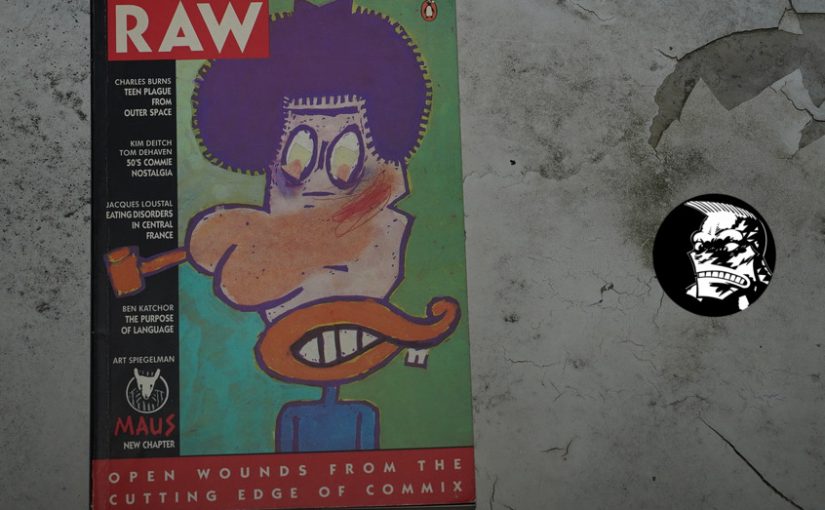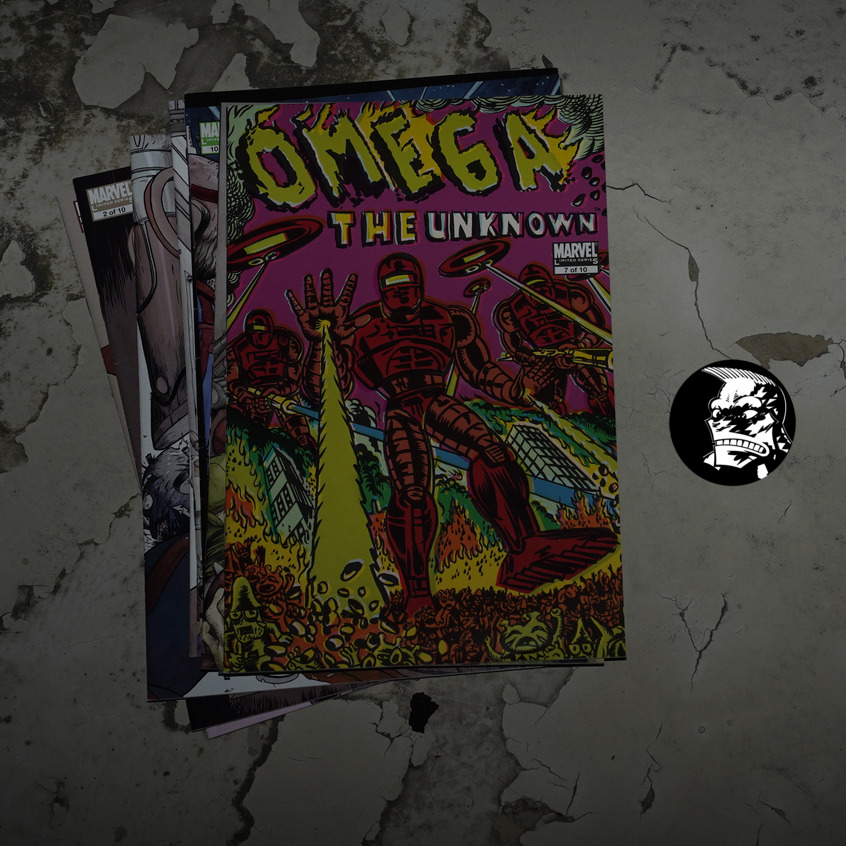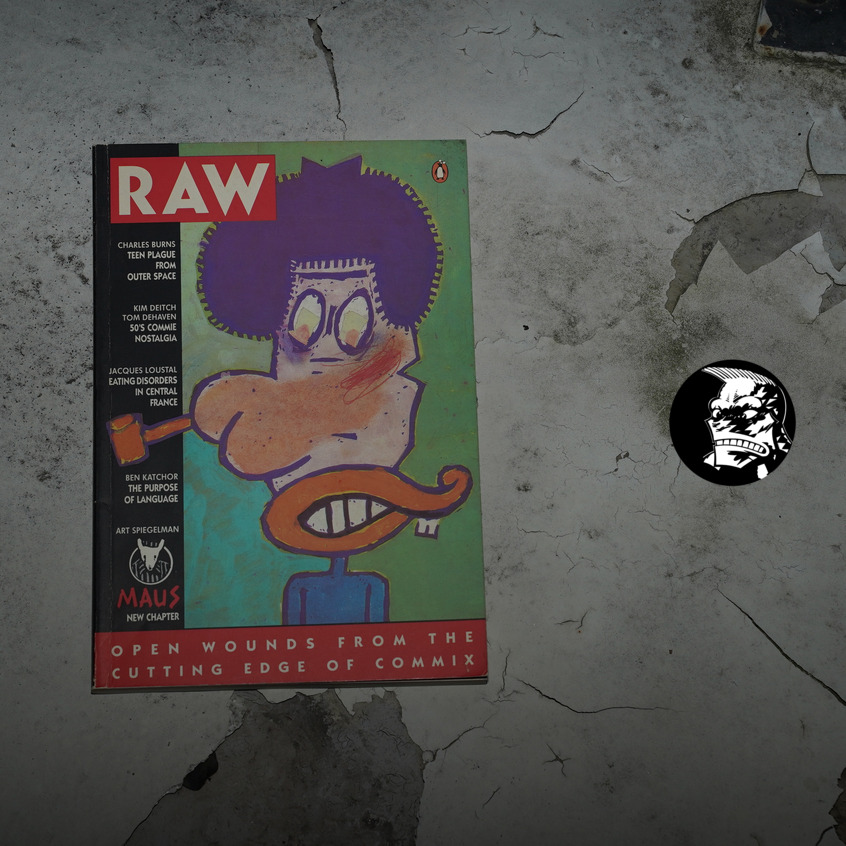
Raw Vol 2 #1: Open Wounds from the Cutting Edge of Commix edited by Françoise Mouly and Art Spiegelman (153x224mm)
I stumbled upon somebody on the intertubes talking about Raw a couple weeks back. Can’t find it now, but they said essentially “Man, Raw was good… I’m talking about the real Raw — not the fake one they had pallets of at the airport.”
This is that fake one they had pallets of at the airport, presumably.
After self-publishing Raw for almost a decade, Mouly and Spiegelman took Raw vol. 2 to Penguin, and shrunk it down into the same size as Maus. Both presumably astute commercial choices, but since it only lasted three issues, I’m assuming that Penguin come to the same conclusion as Pantheon: It’s just really hard to get people to buy any art comic that’s not actually Maus itself.
(Well, at least at the time.)
I don’t remember what my reaction to these smaller Raw books were — I was at the university, and I didn’t pay as much attention to comics as before. I mean, I was still buying comics, and I bought all three of the Raw Penguins as they were published, but I think I’ve never re-read them since? I have absolutely no recollection of anything in them, except… wasn’t there a Mark Beyer piece written by Alan Moore in one of these things?
Hm.
So I’m approaching this book with some trepidation, but also with a fair bit of excitement, because I haven’t even looked at these books in 30 years — they’ve just been in various boxes…
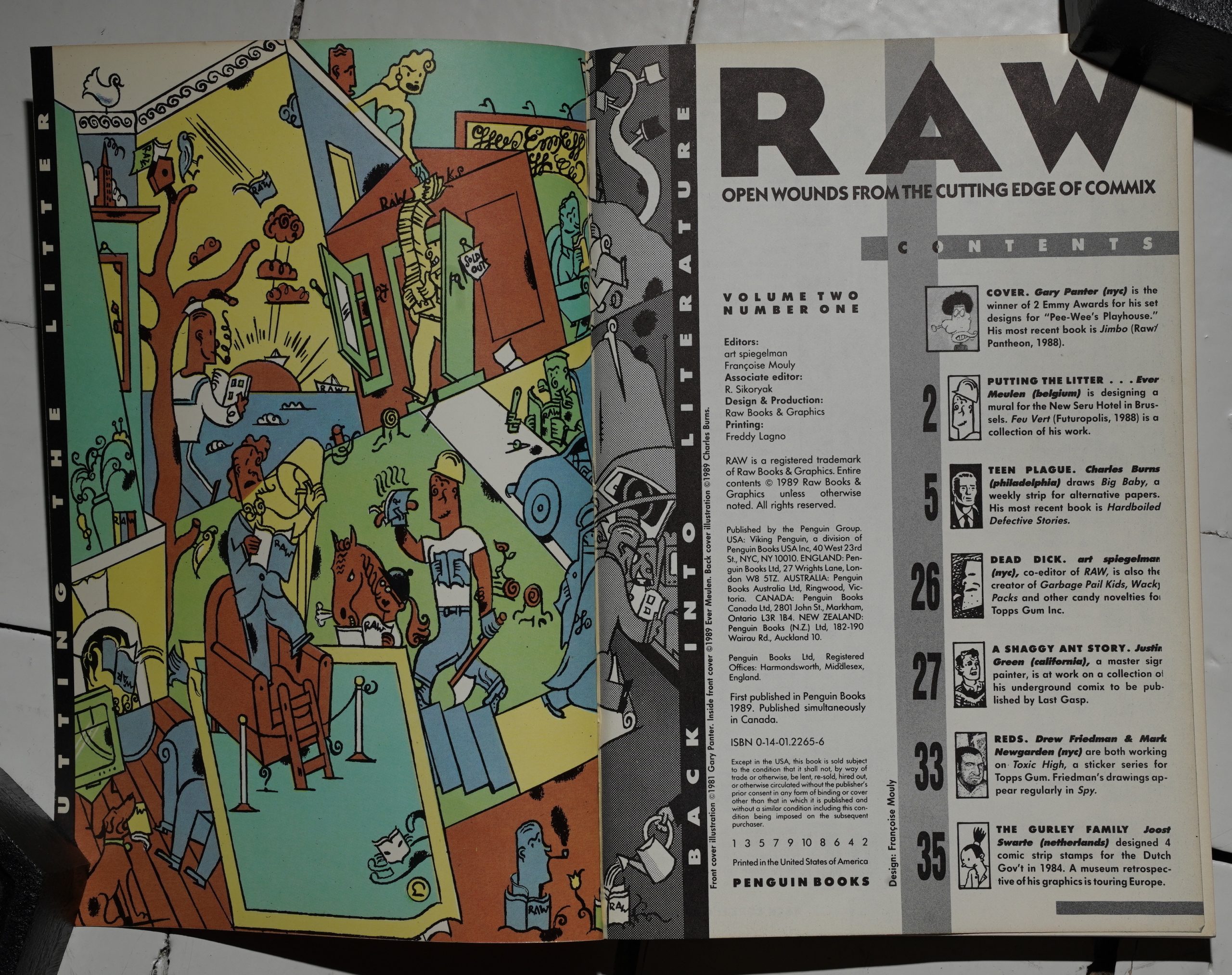
Well, the design aesthetic hasn’t changed… it’s just been shrunk down. (“Futura — and you’re done”, as the saying went in the 80s. It’s true.)
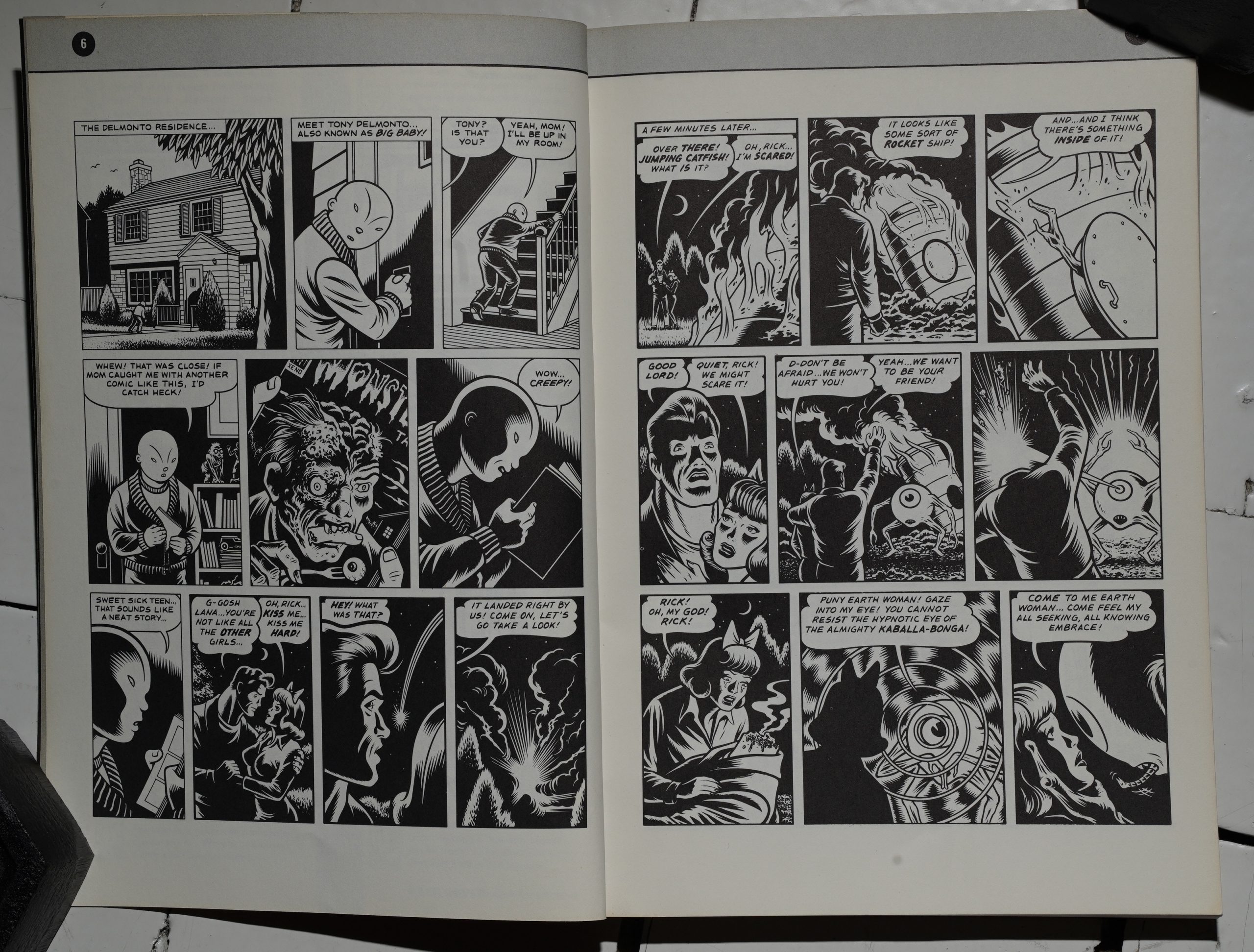
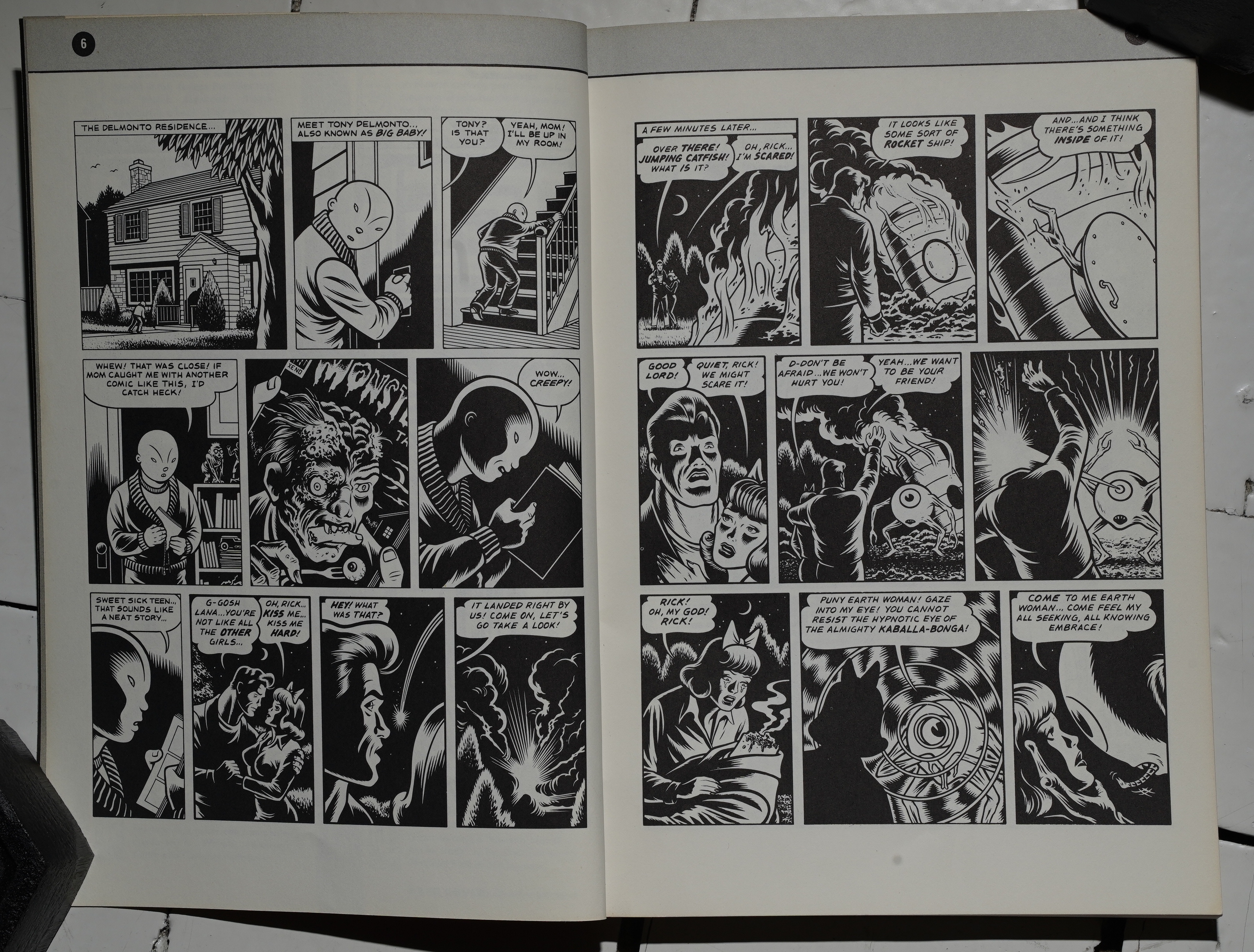
There’s only three longer pieces in this book — Charles Burns, Spiegelman’s Maus chapter, and a thing from Ben Katchor, and they take up less than half the page count.
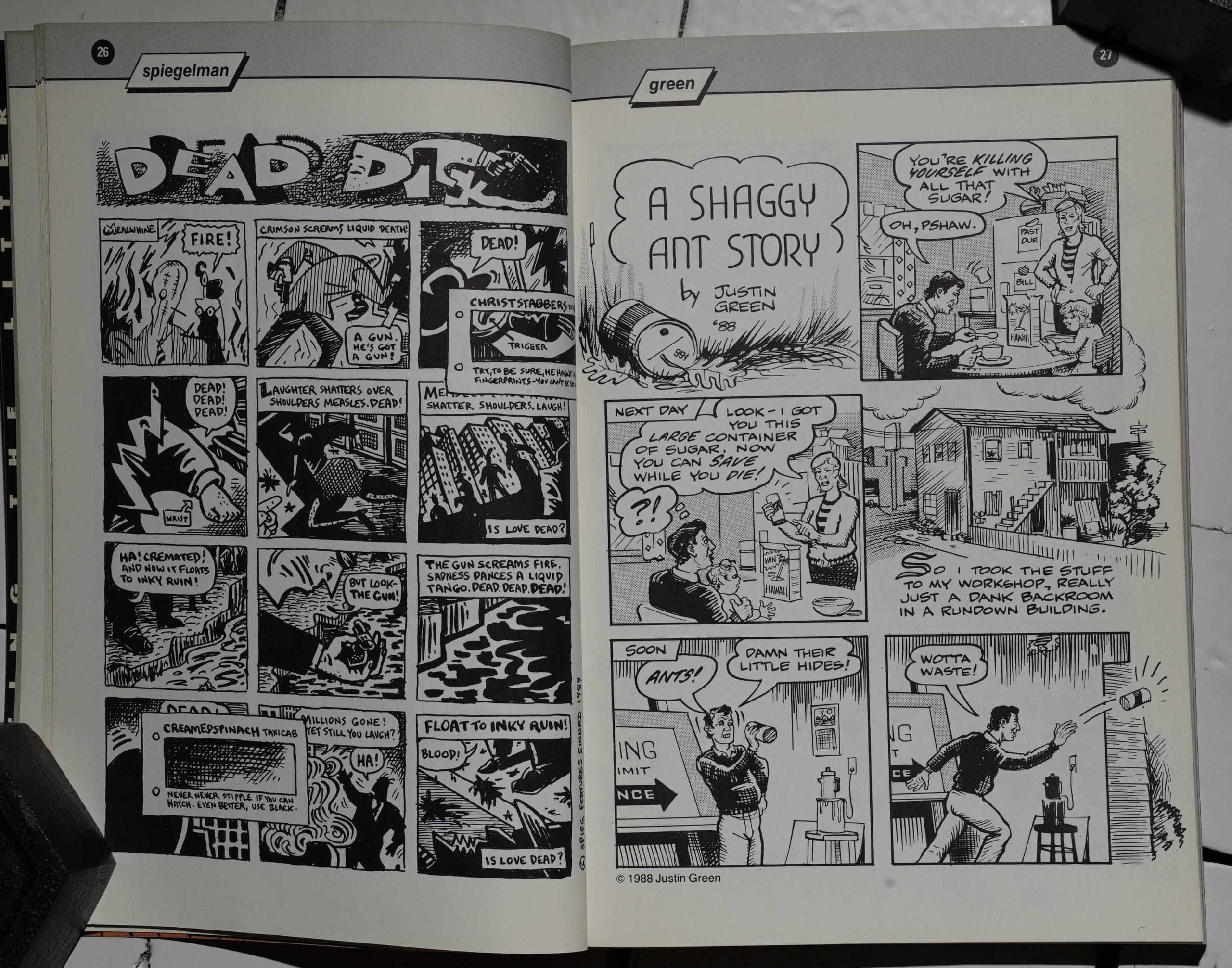
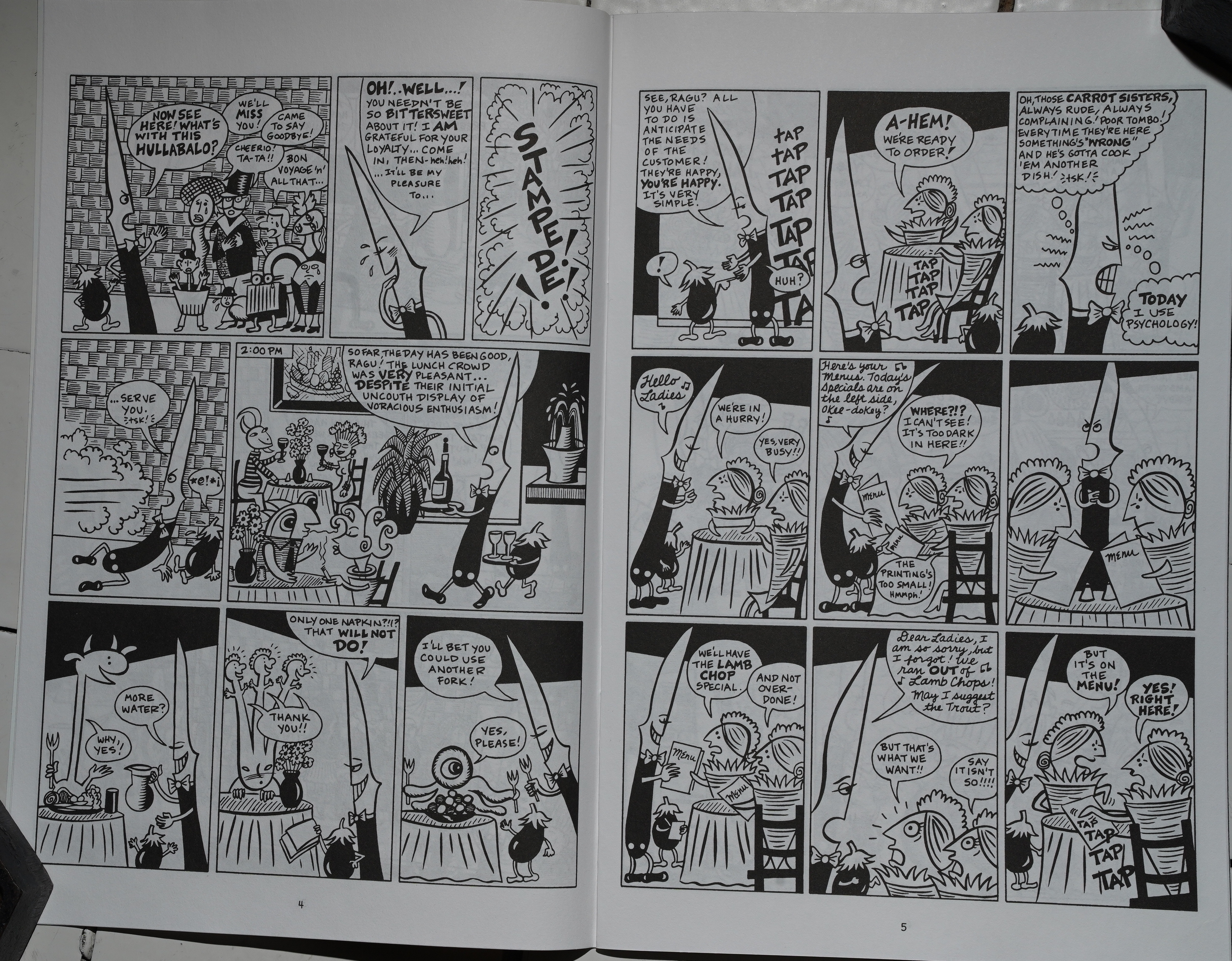
It still seems kinda lopsided — the sheer number of smaller pieces first feels like a cornucopia, and then starts getting exhausting…
The people appearing here are lean heavily into Raw veterans… but there’s also a surprising number of underground types appearing here, like Justin Green.
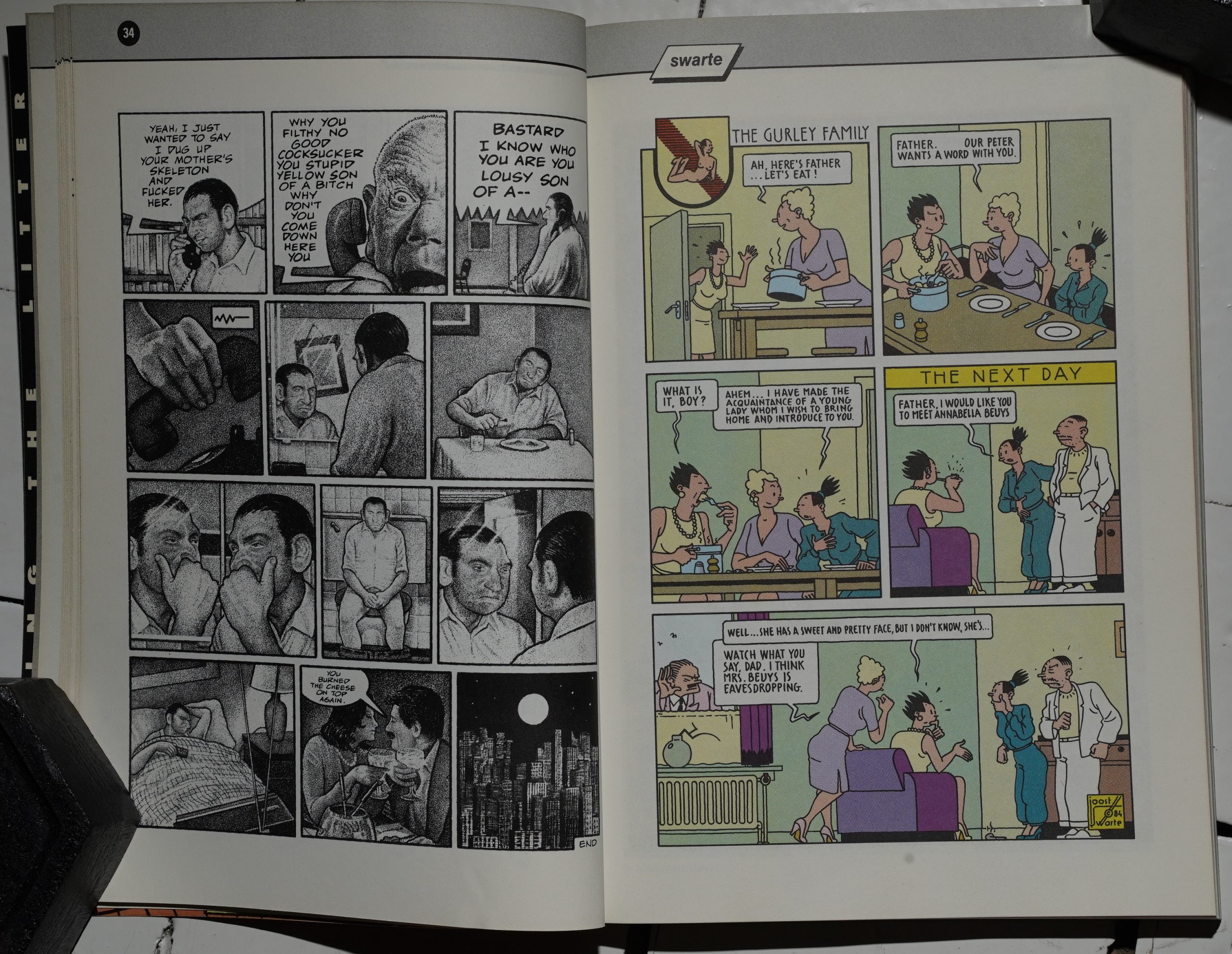
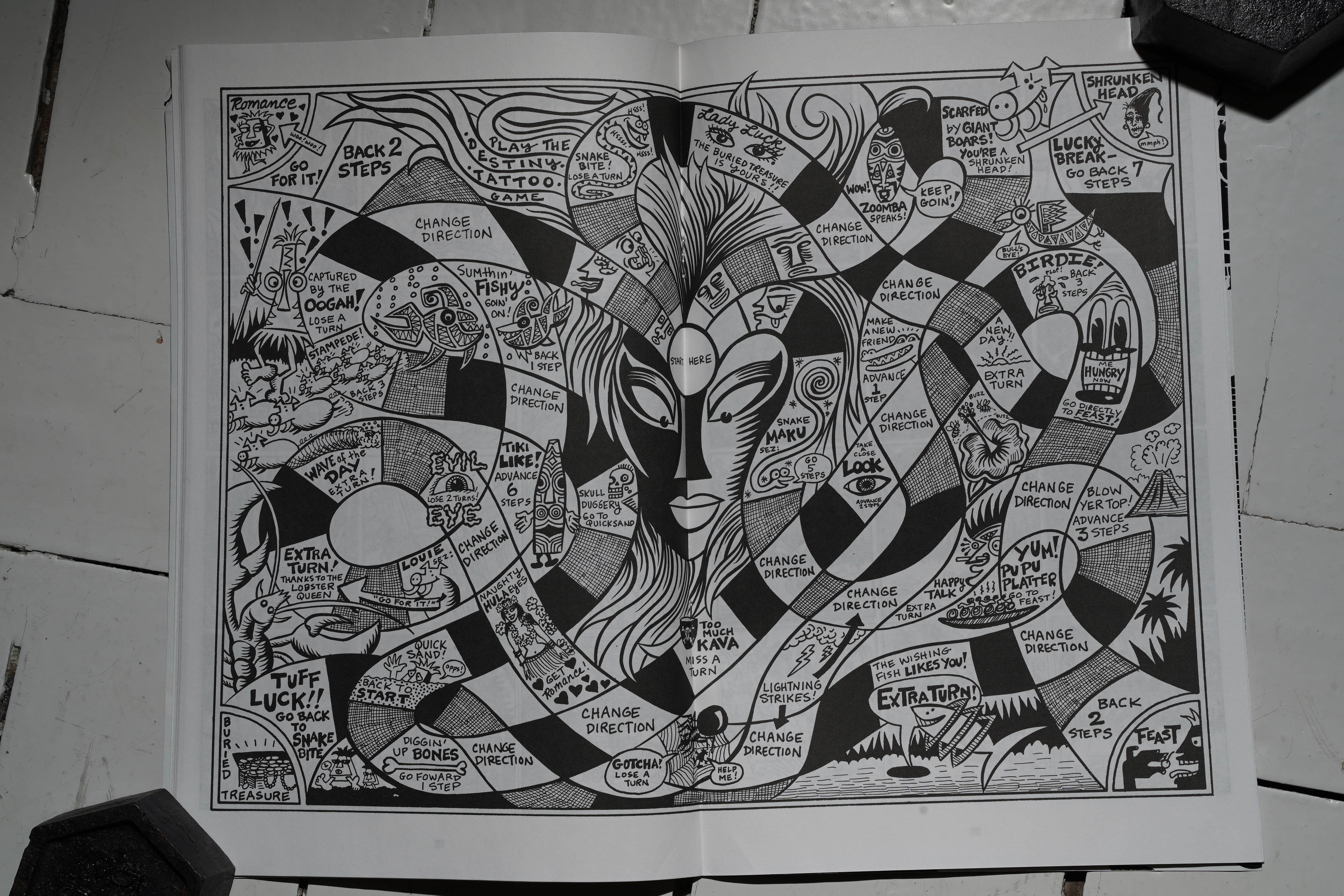
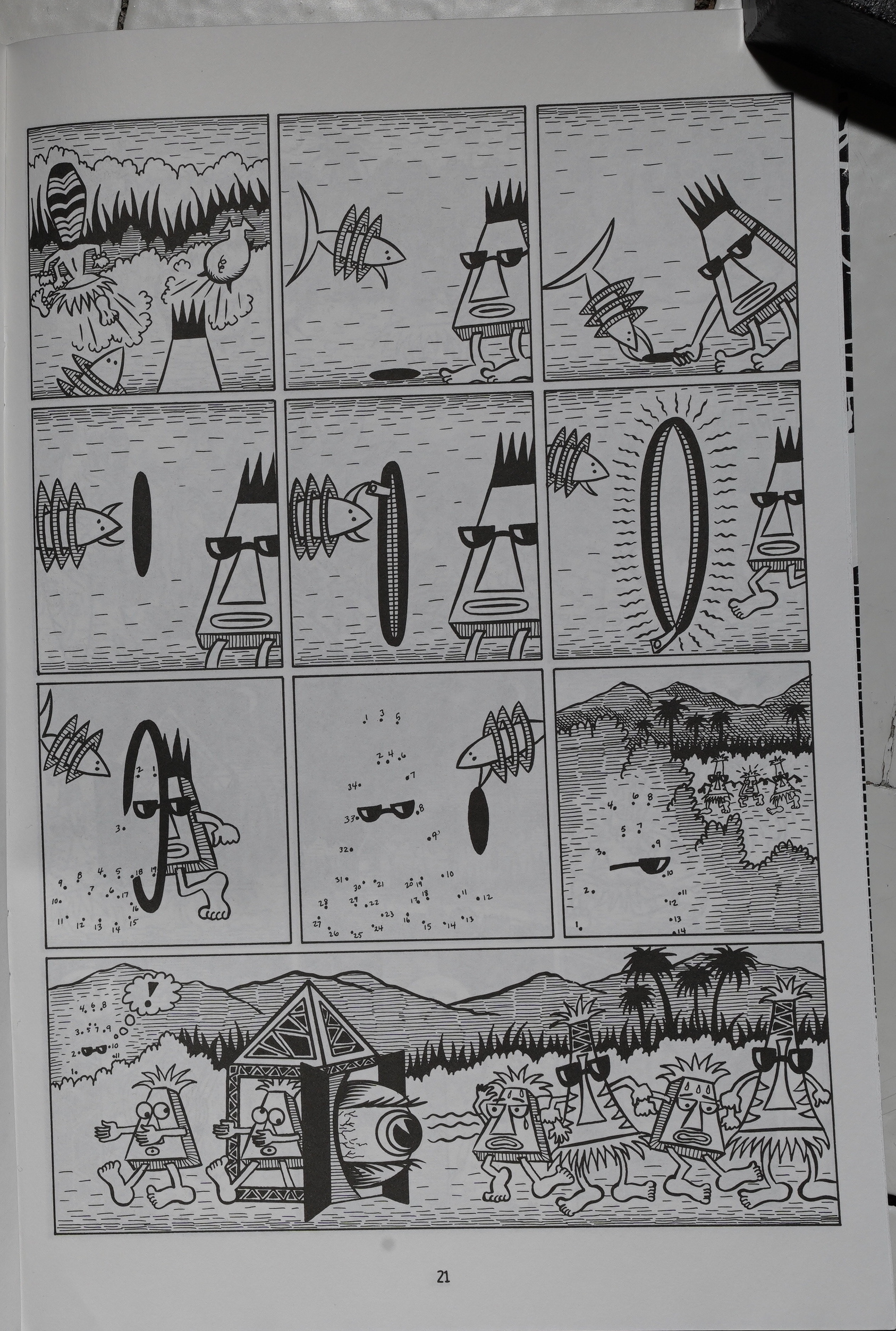
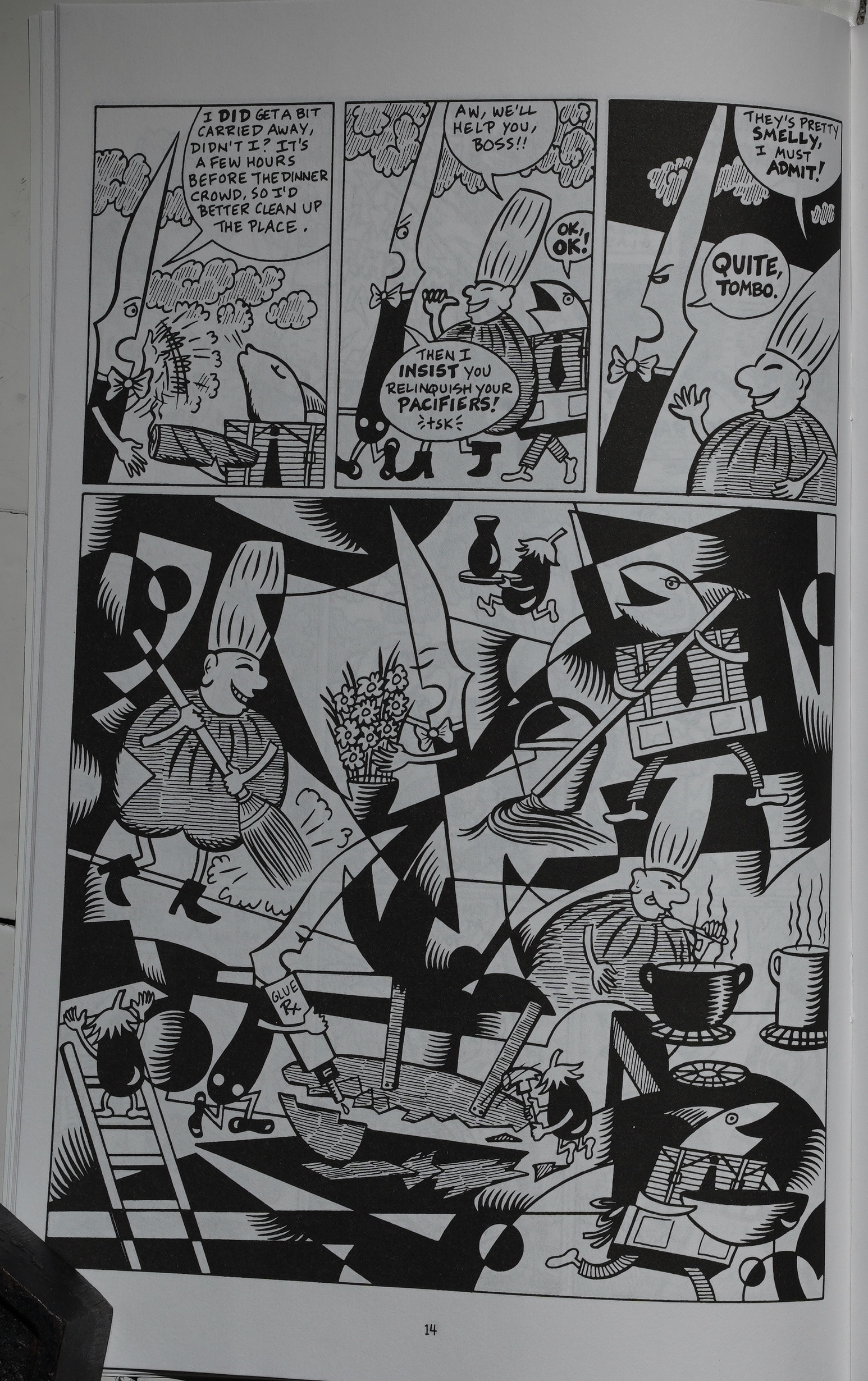
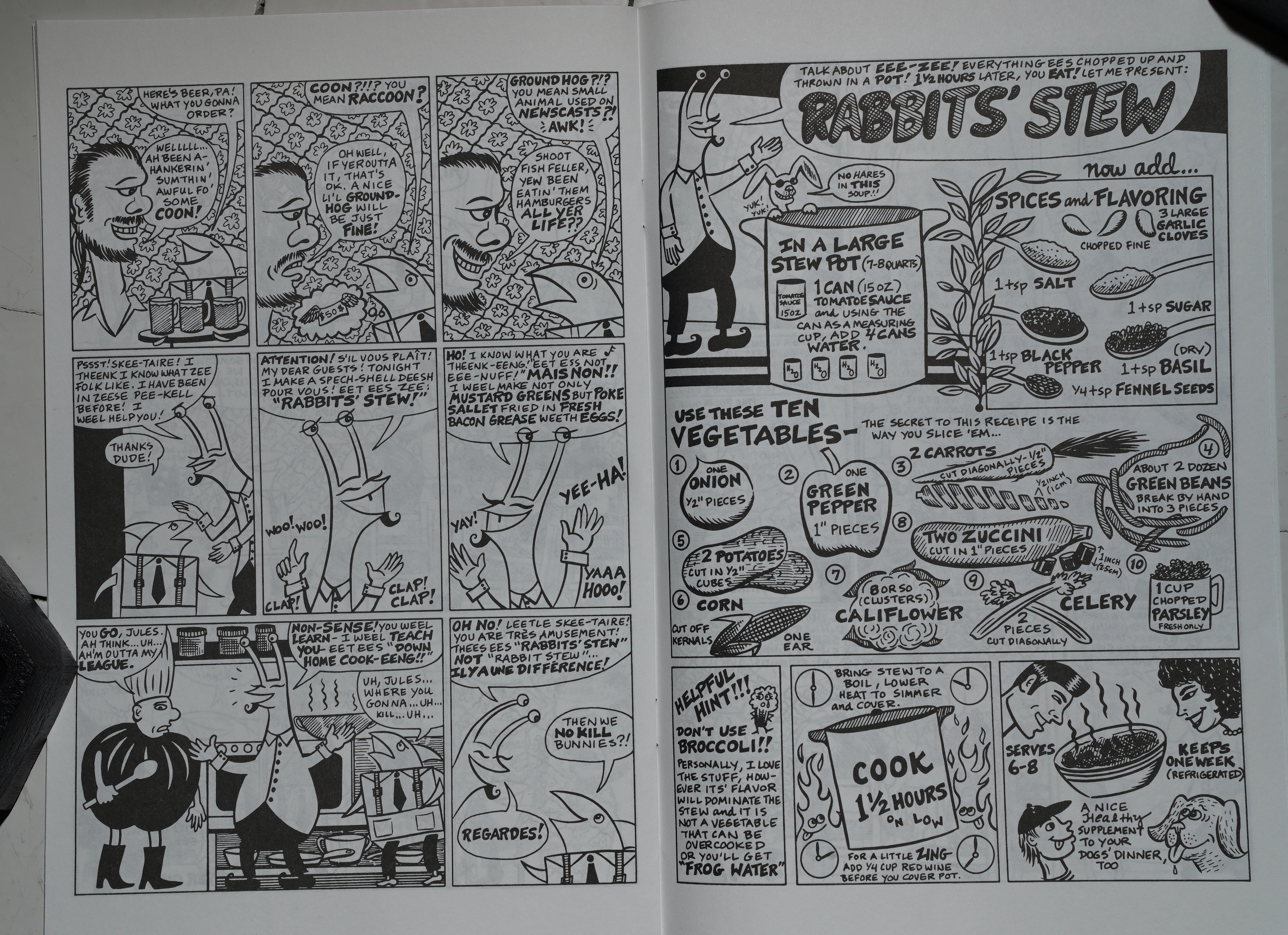
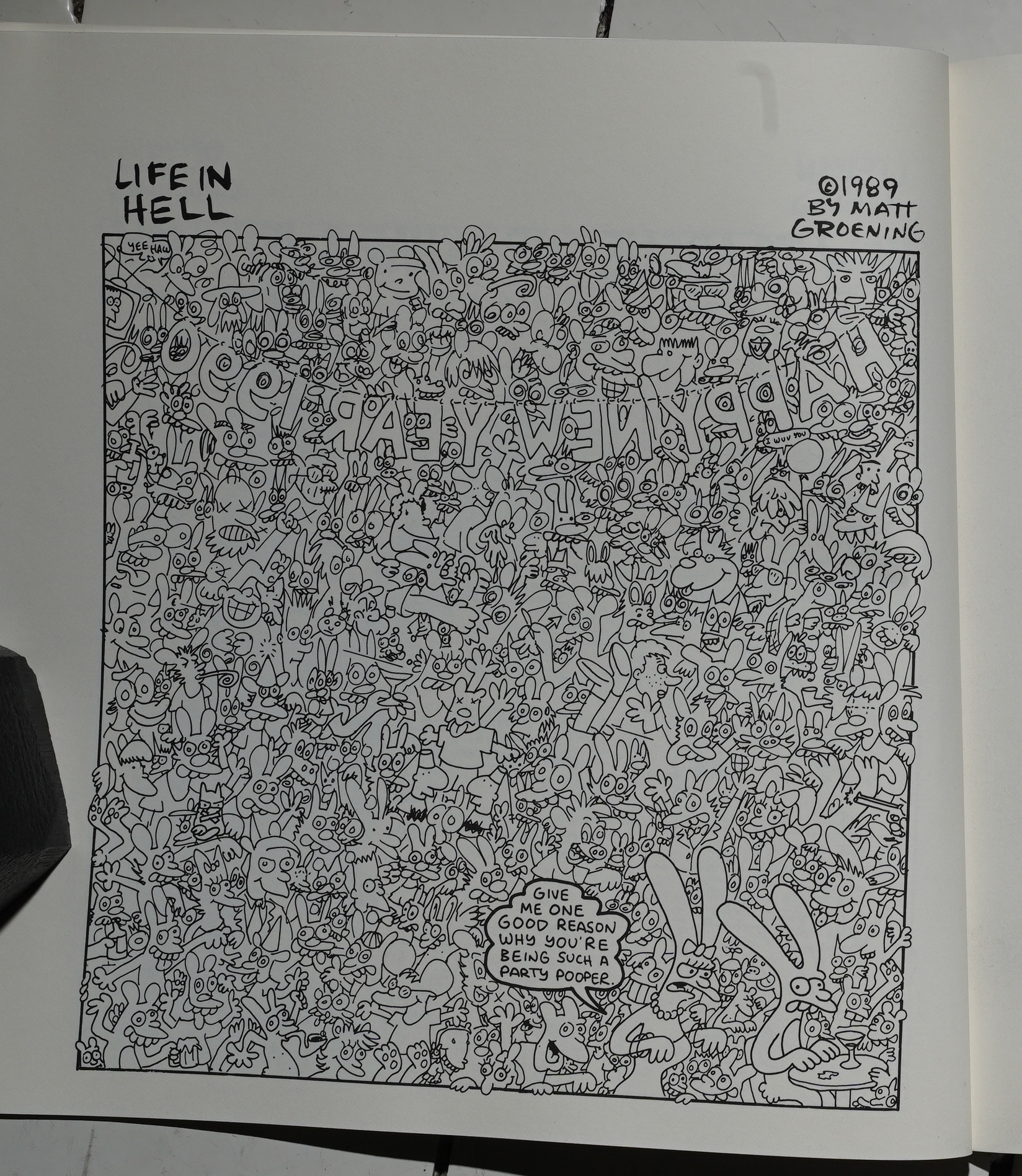
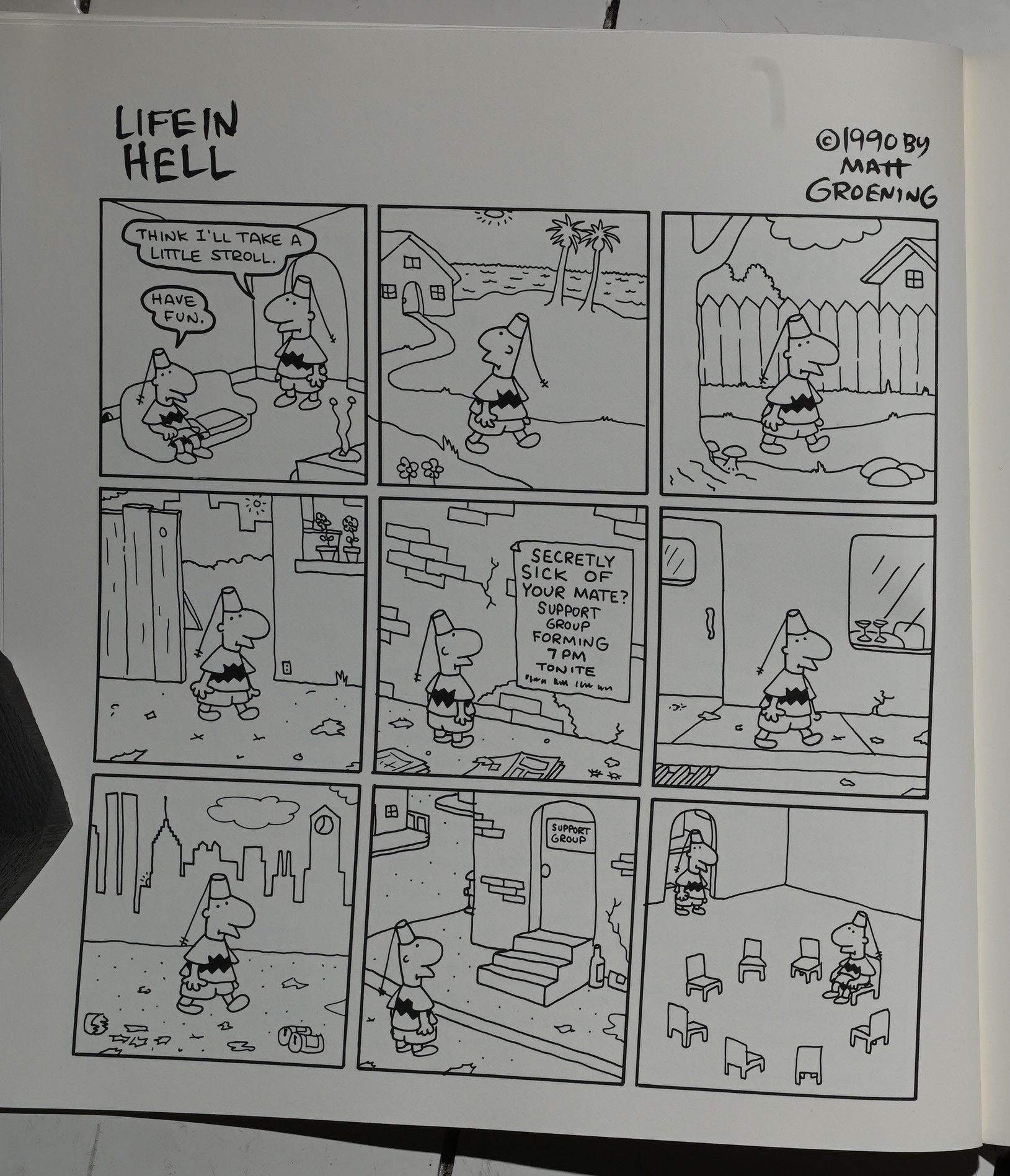
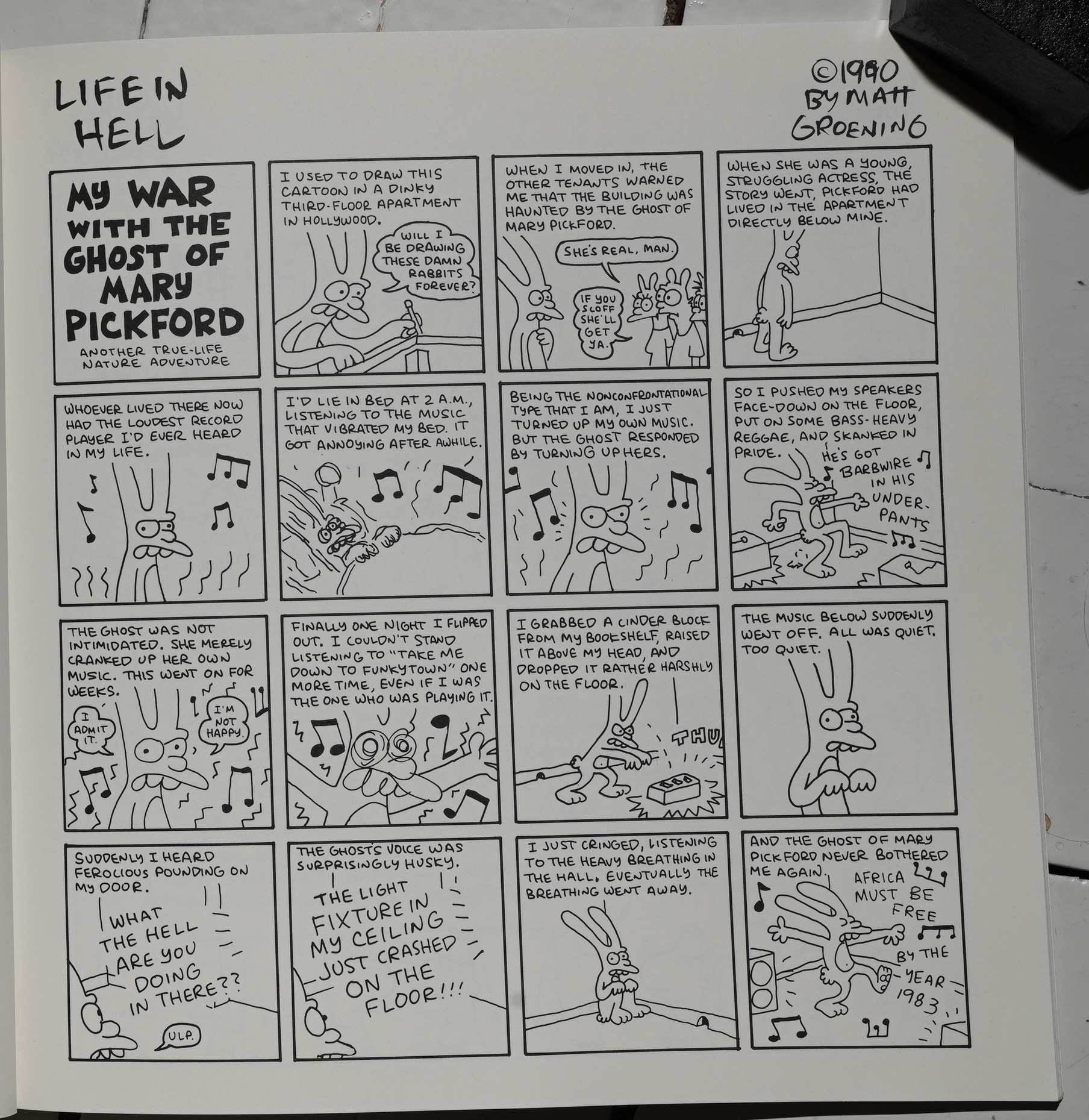
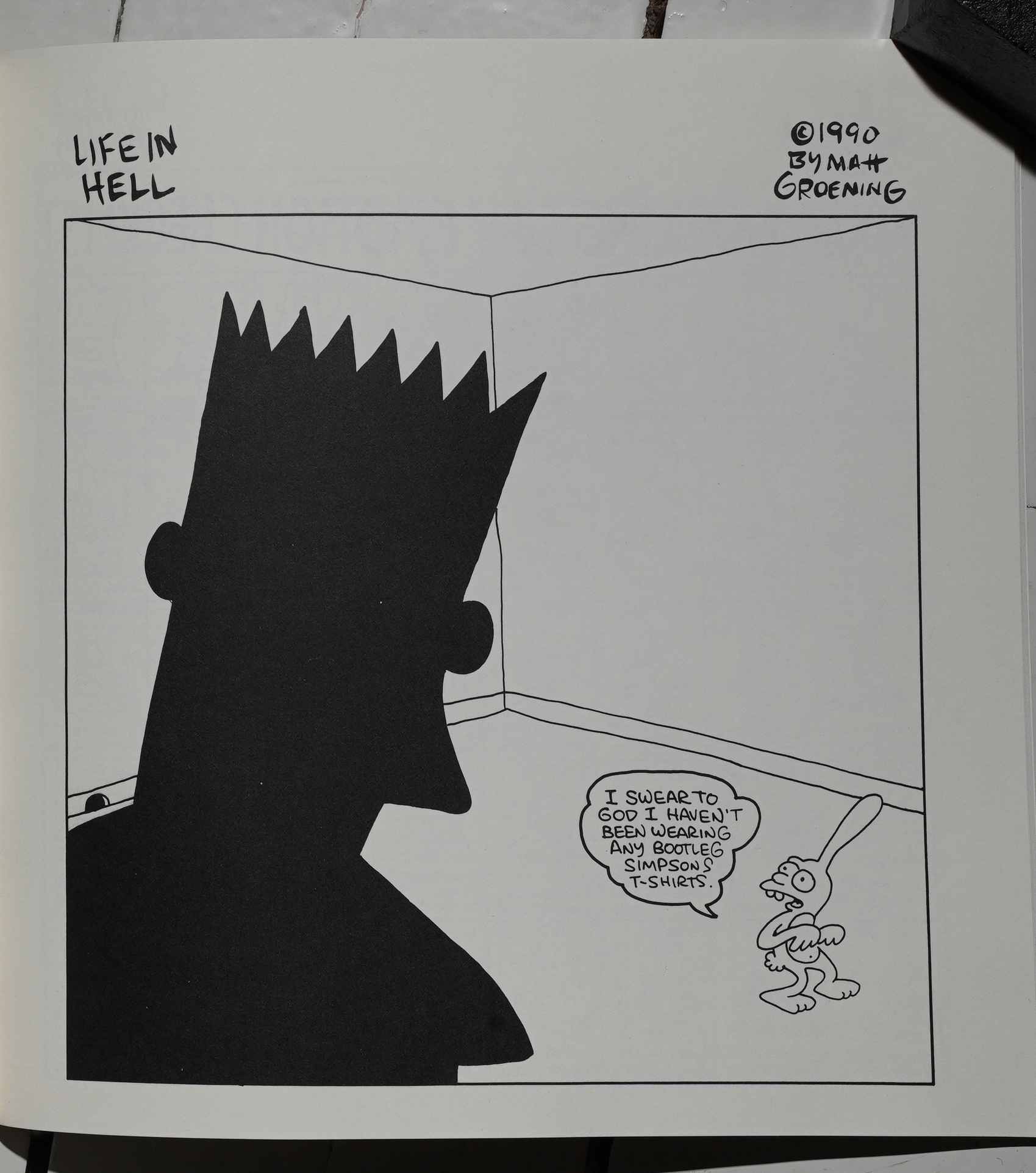
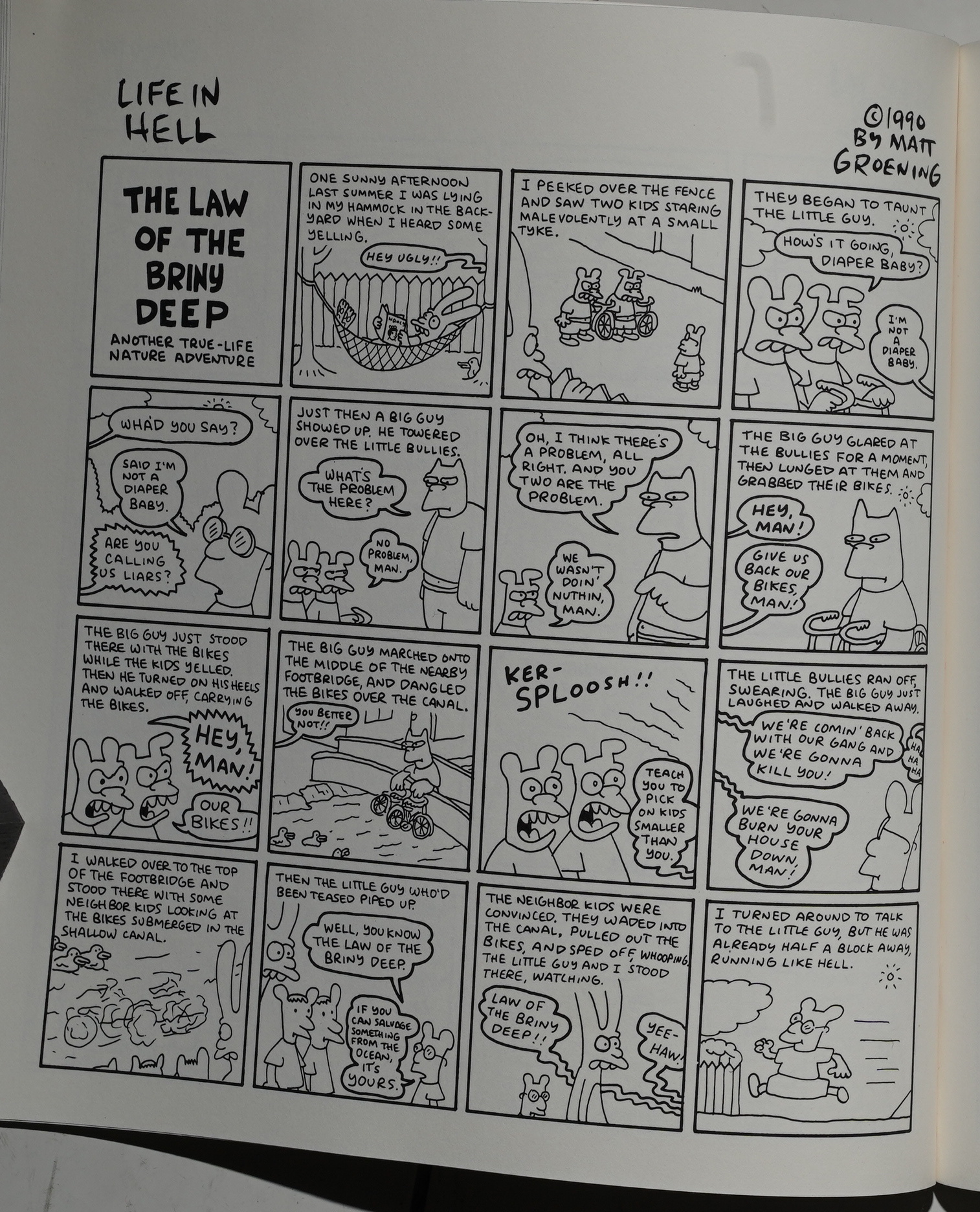
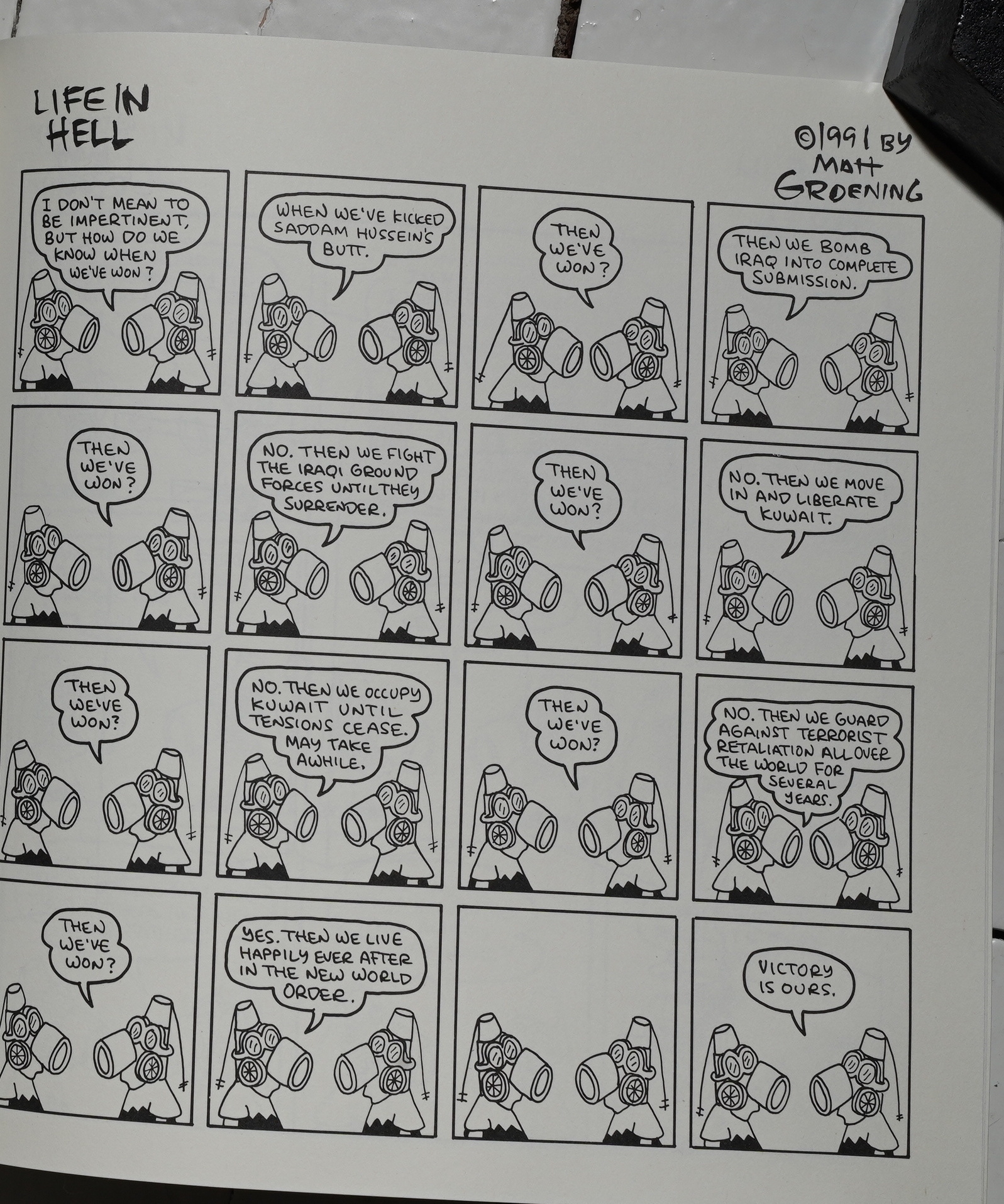
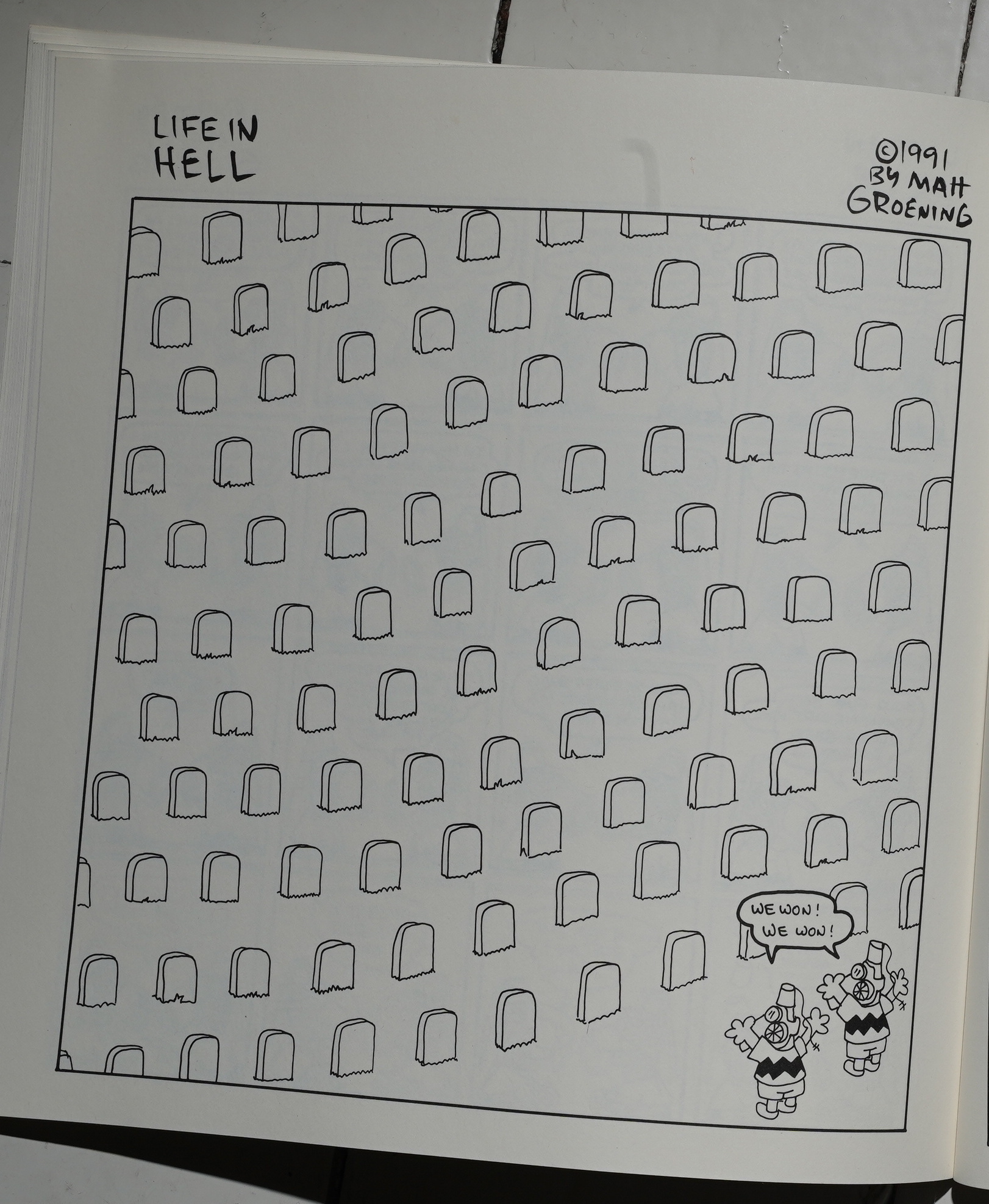
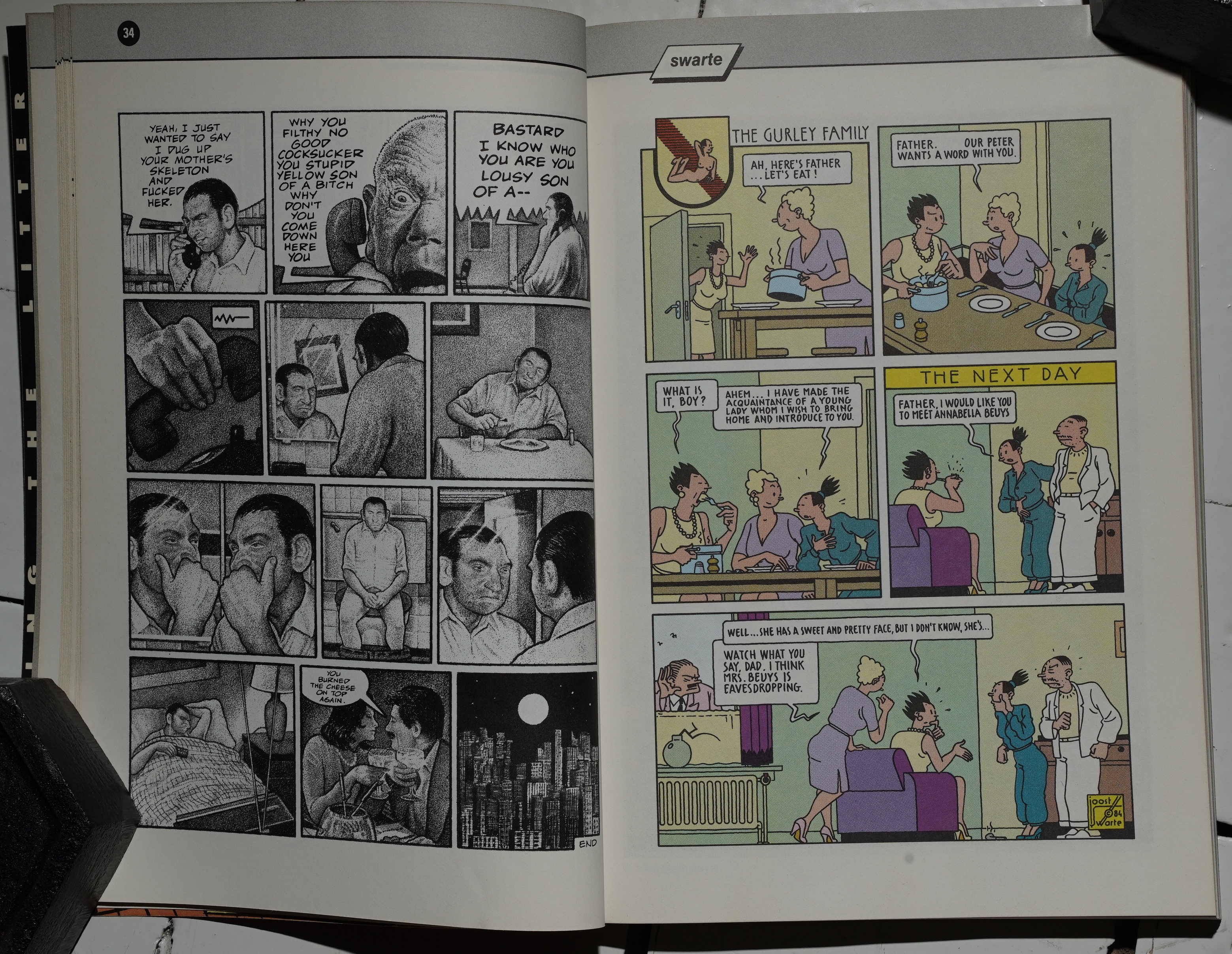
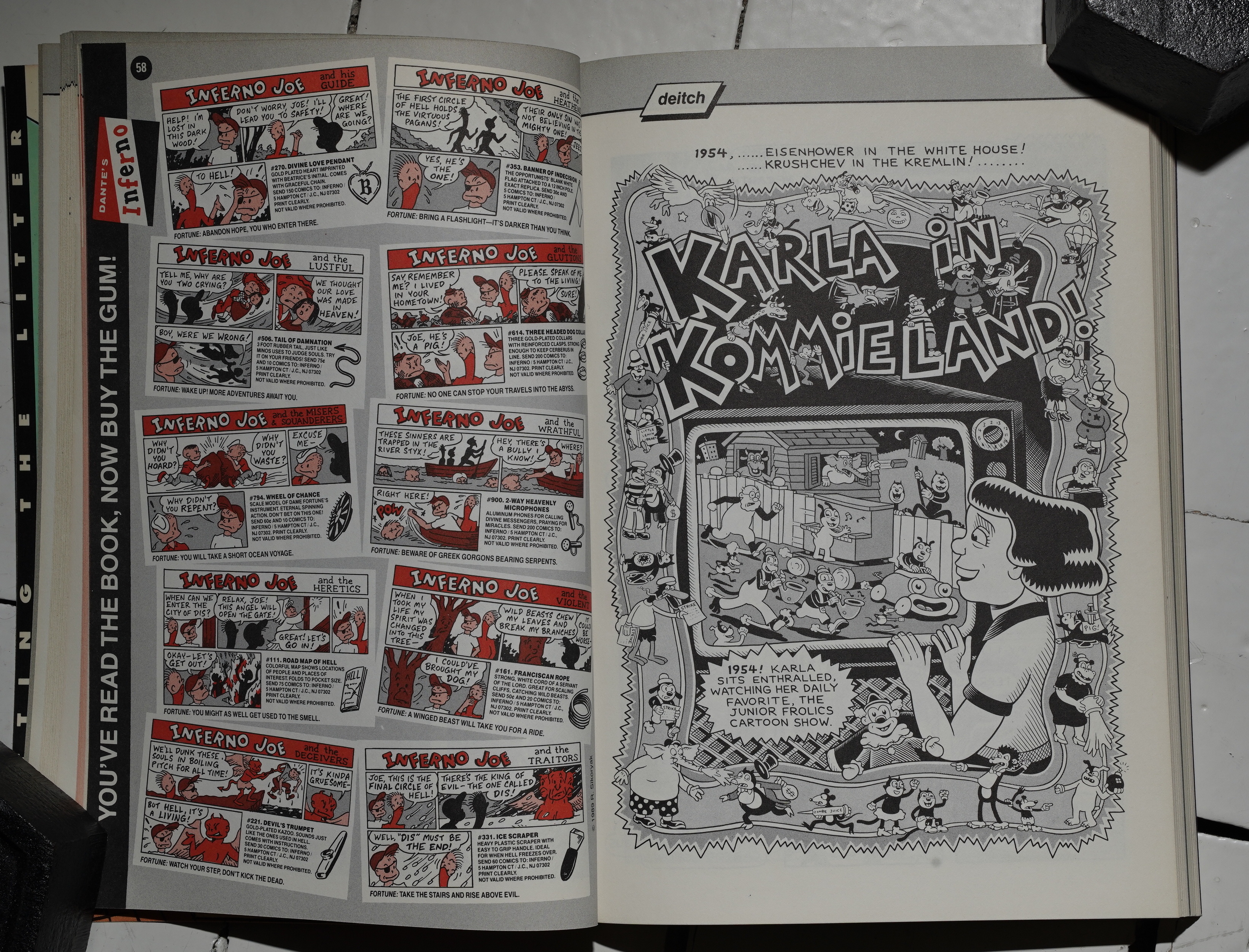
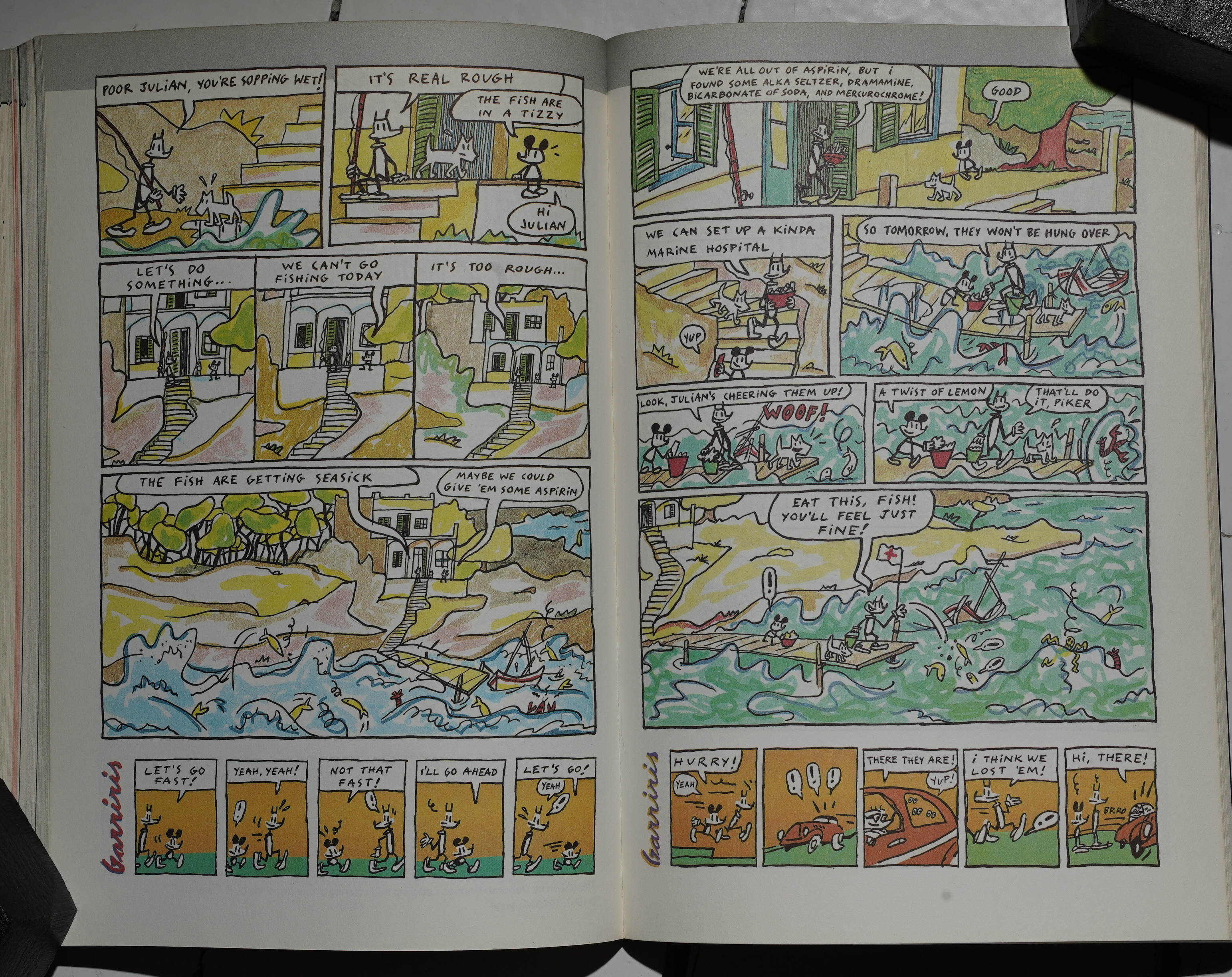
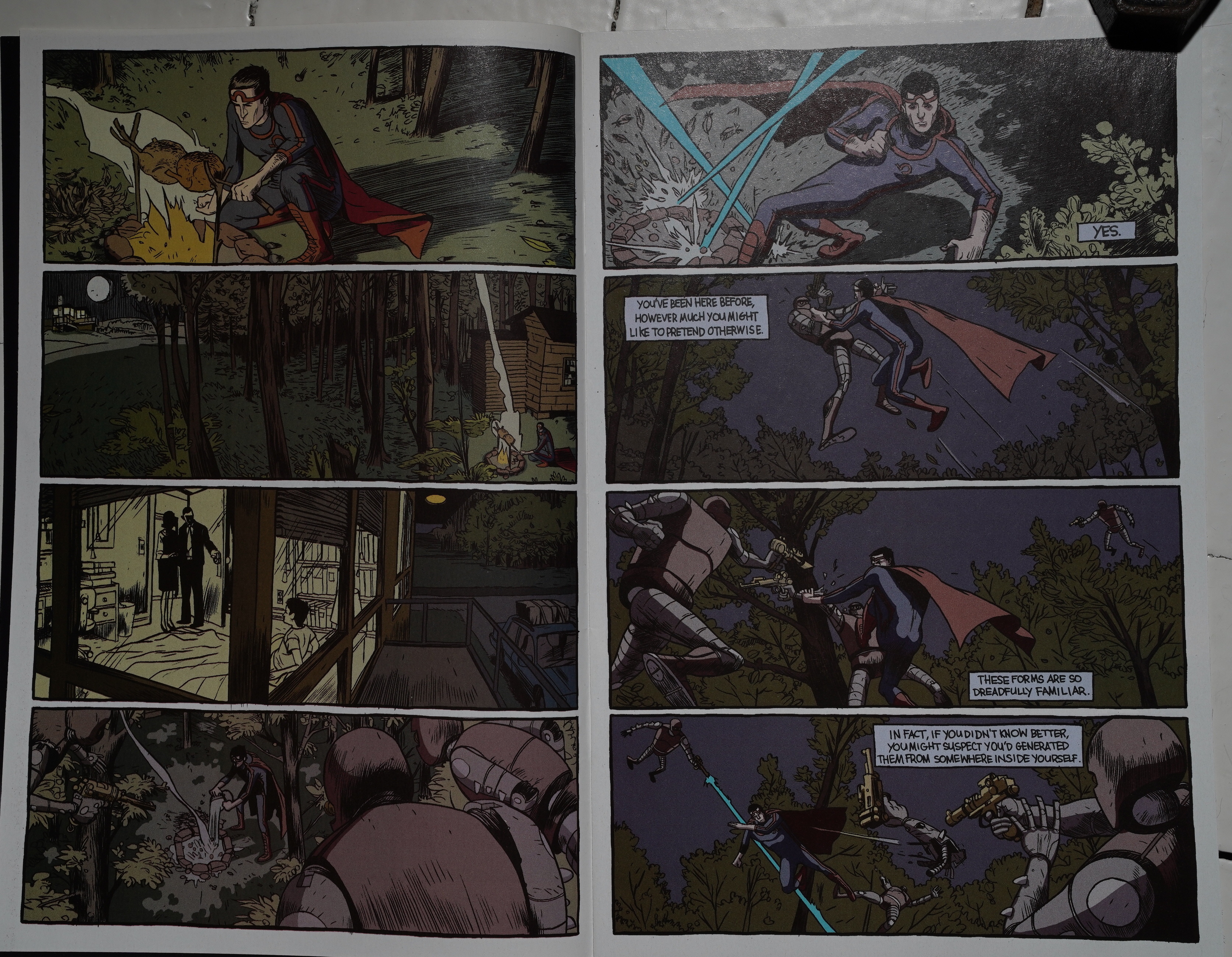
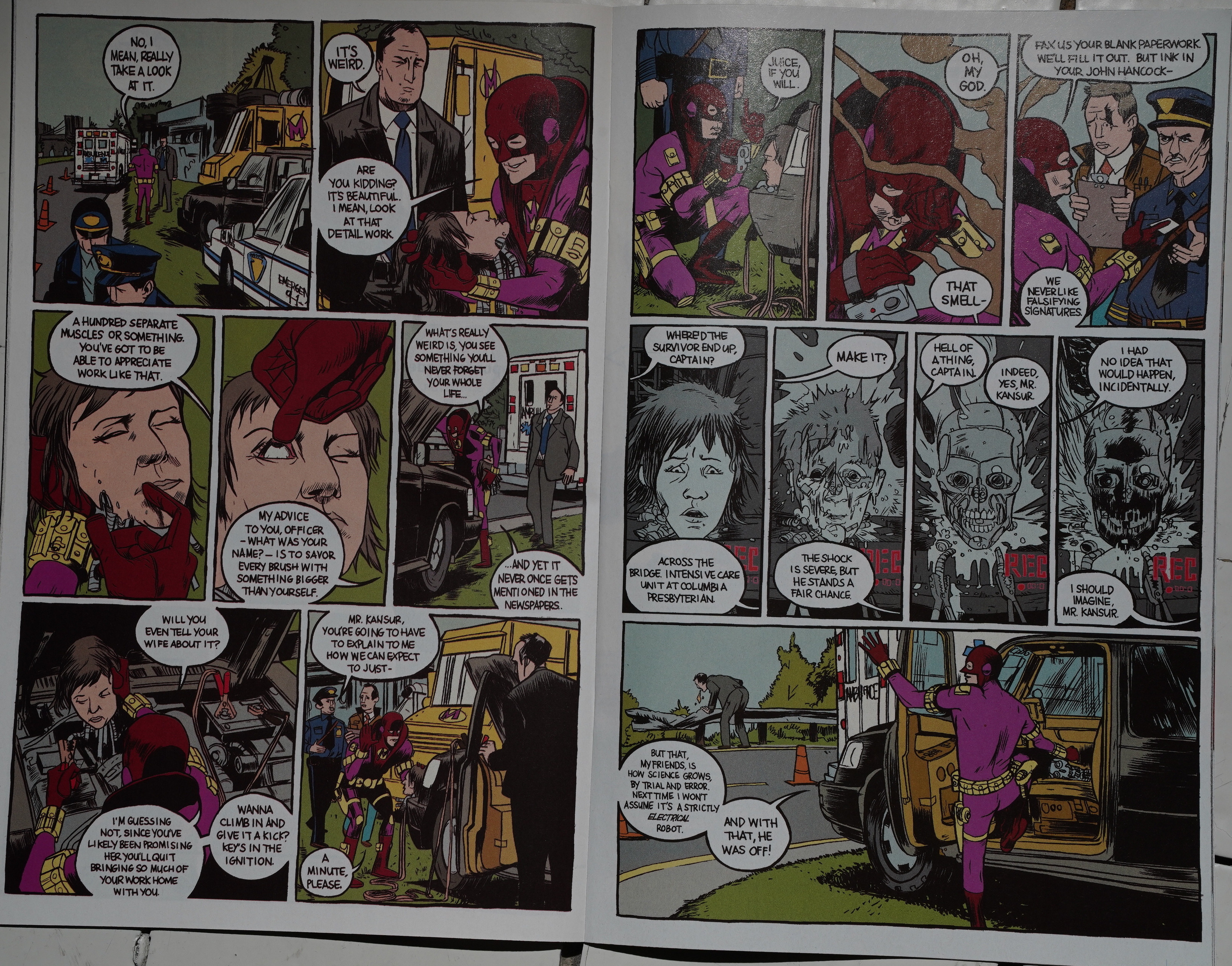
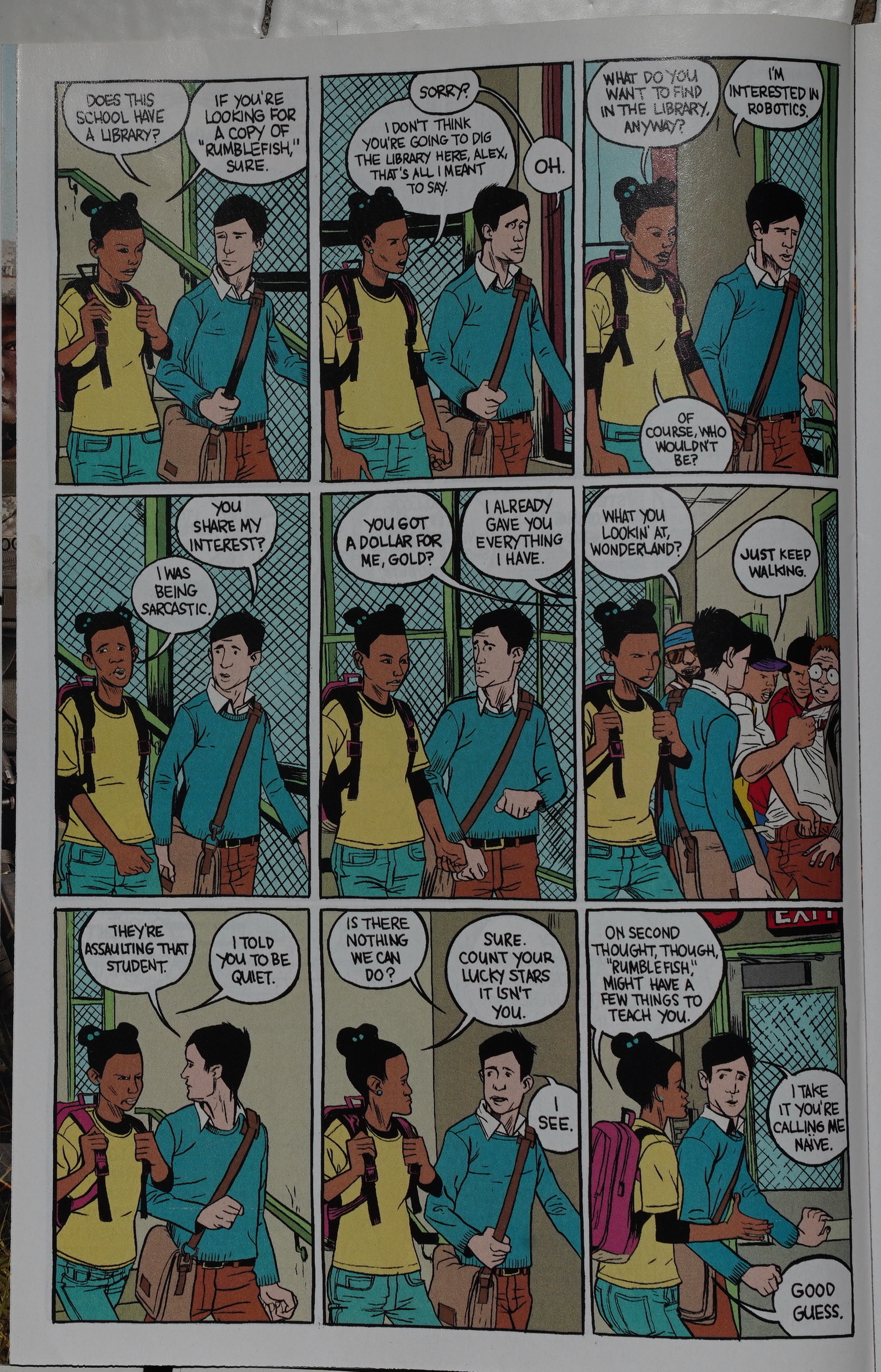
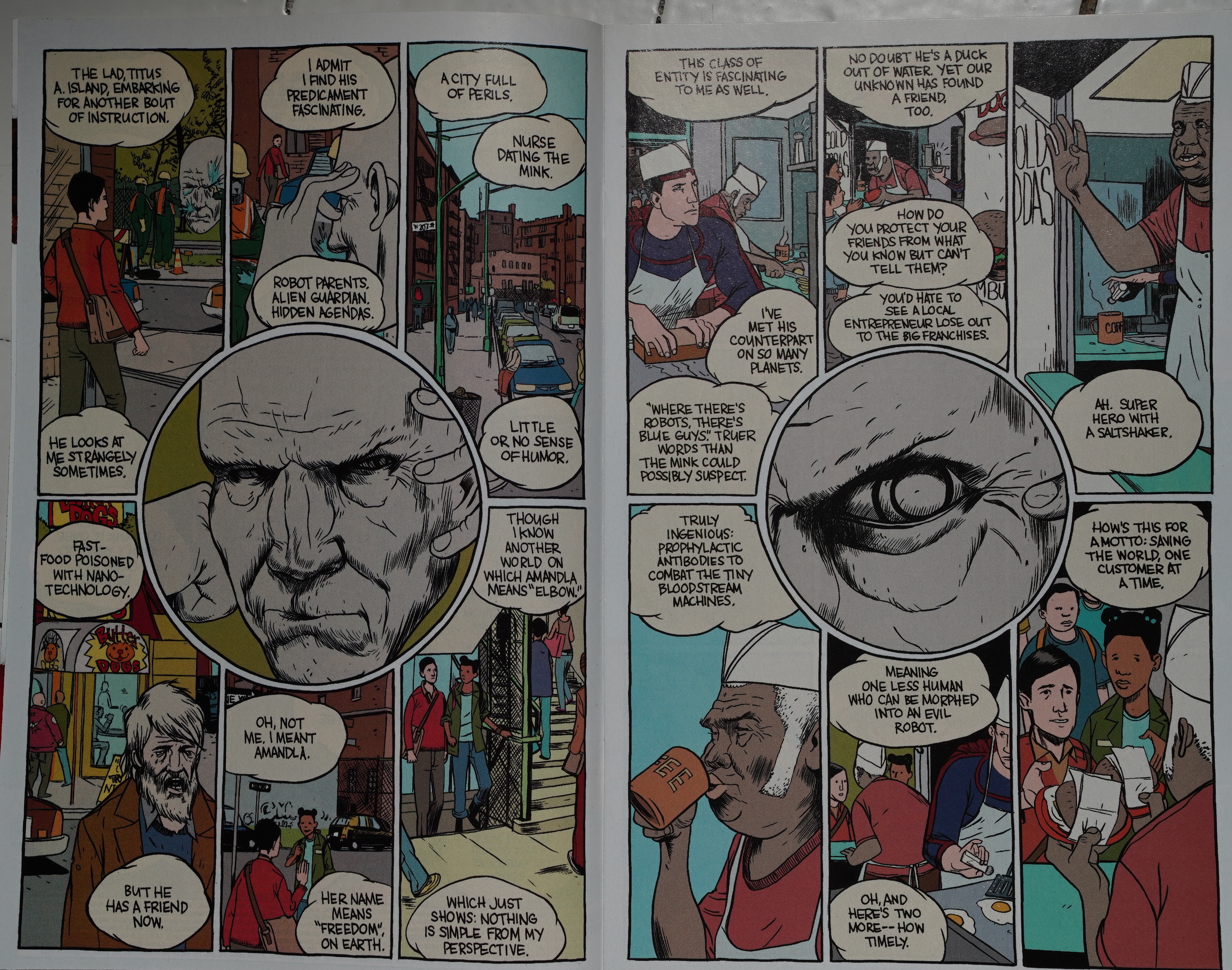
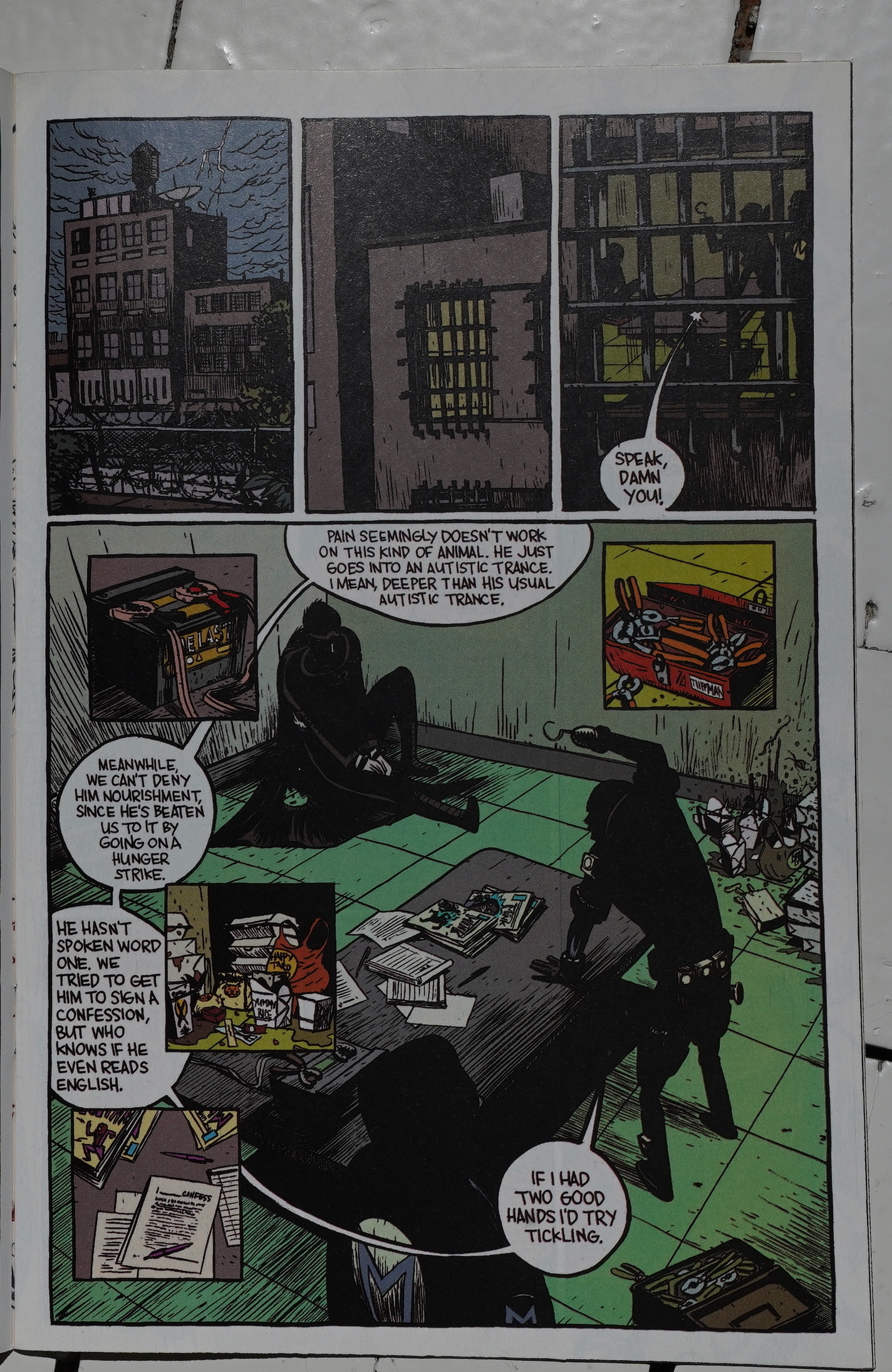
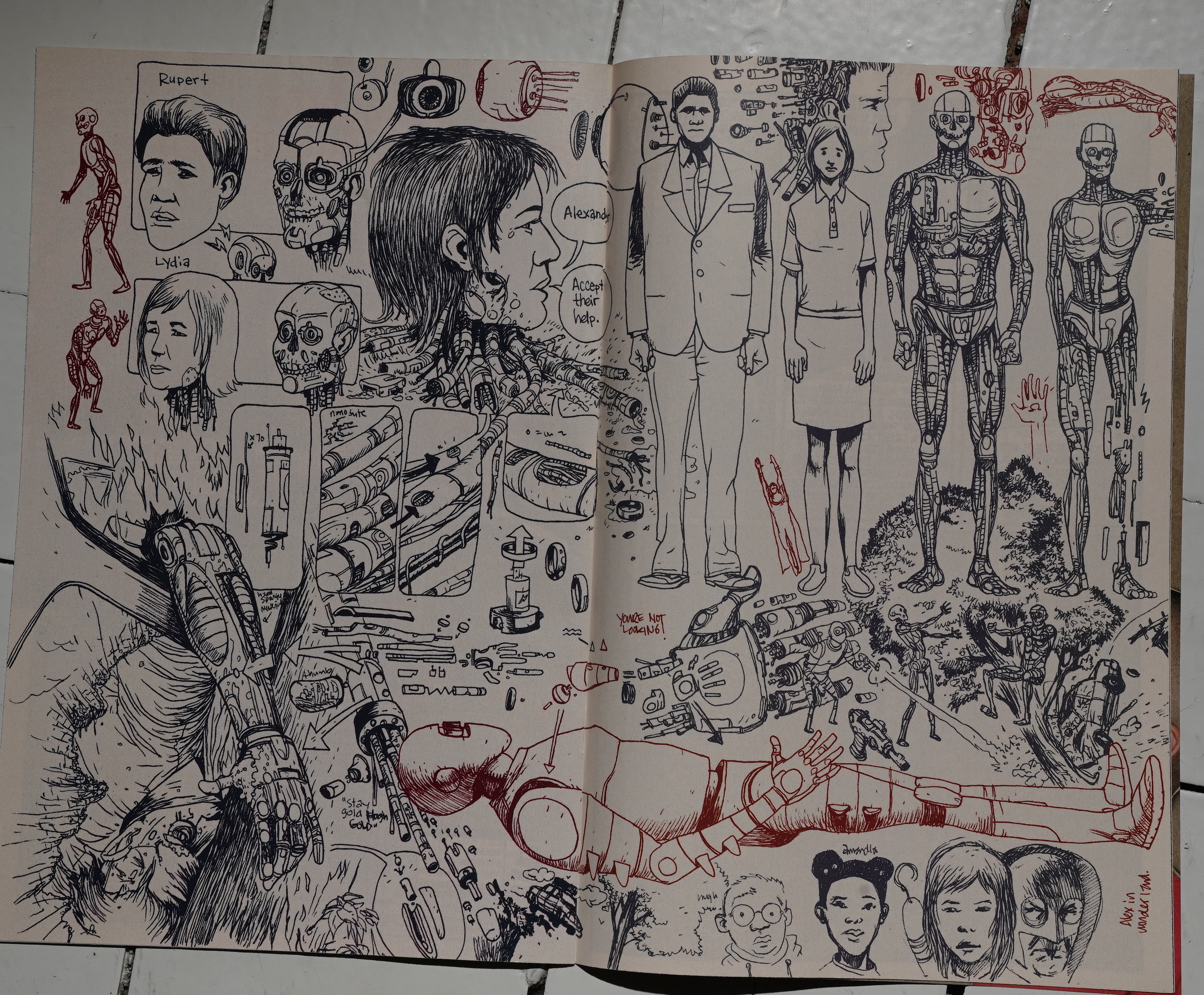
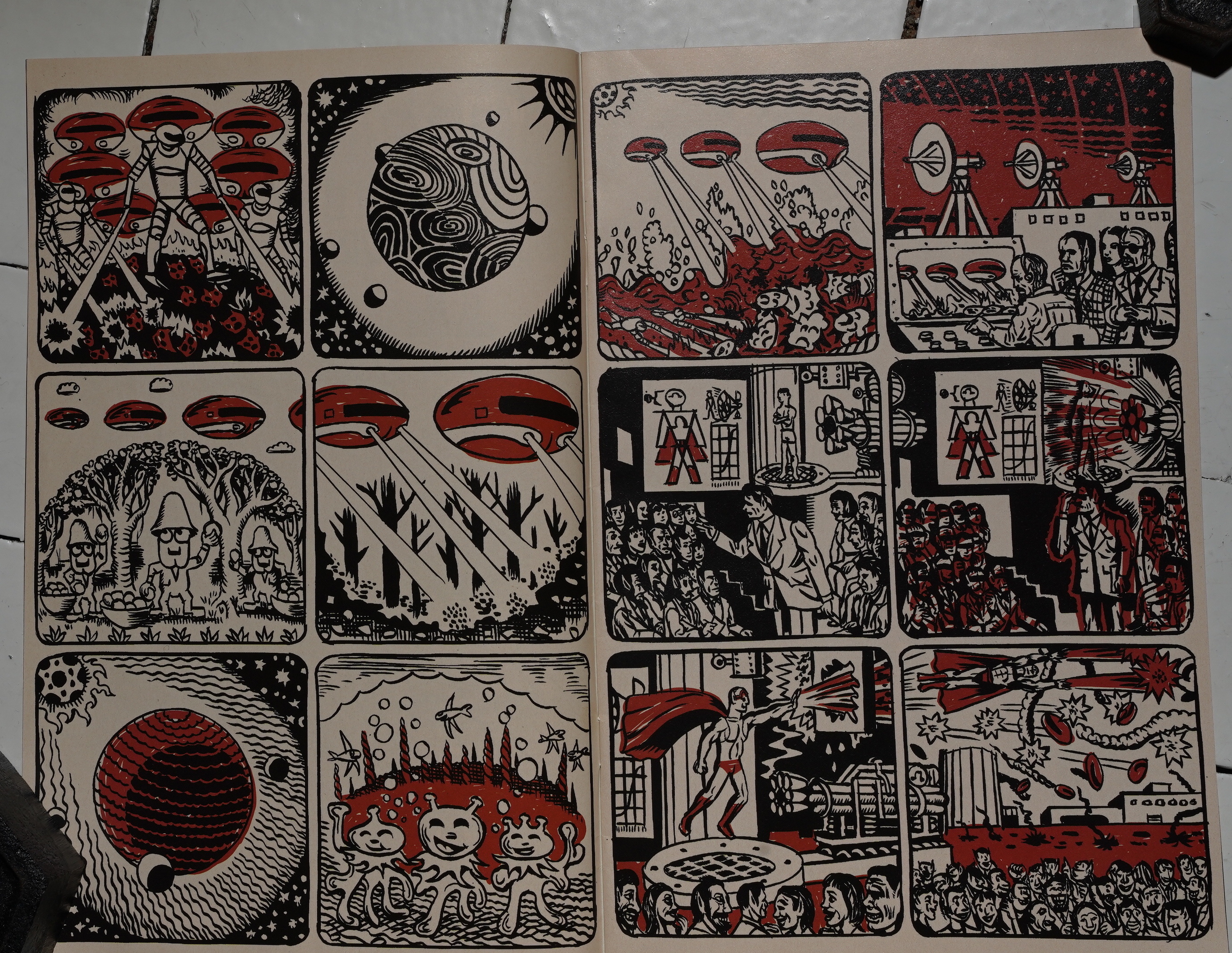
I mean, the bits are pretty funny and stuff, but there seems to be a greater disconnect between the pieces than in previous issues. (Newgarden/Friedman and Joost Swarte.)
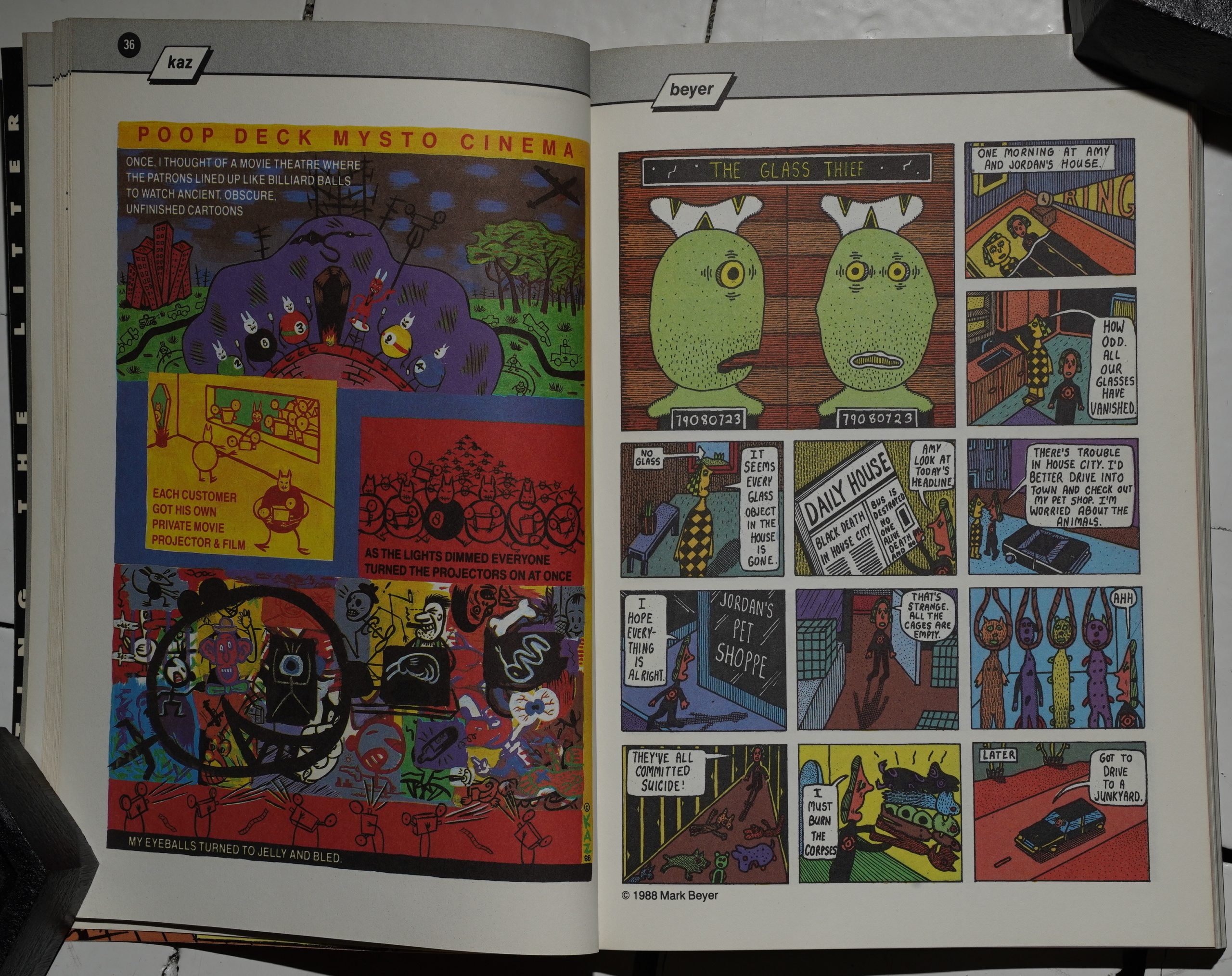
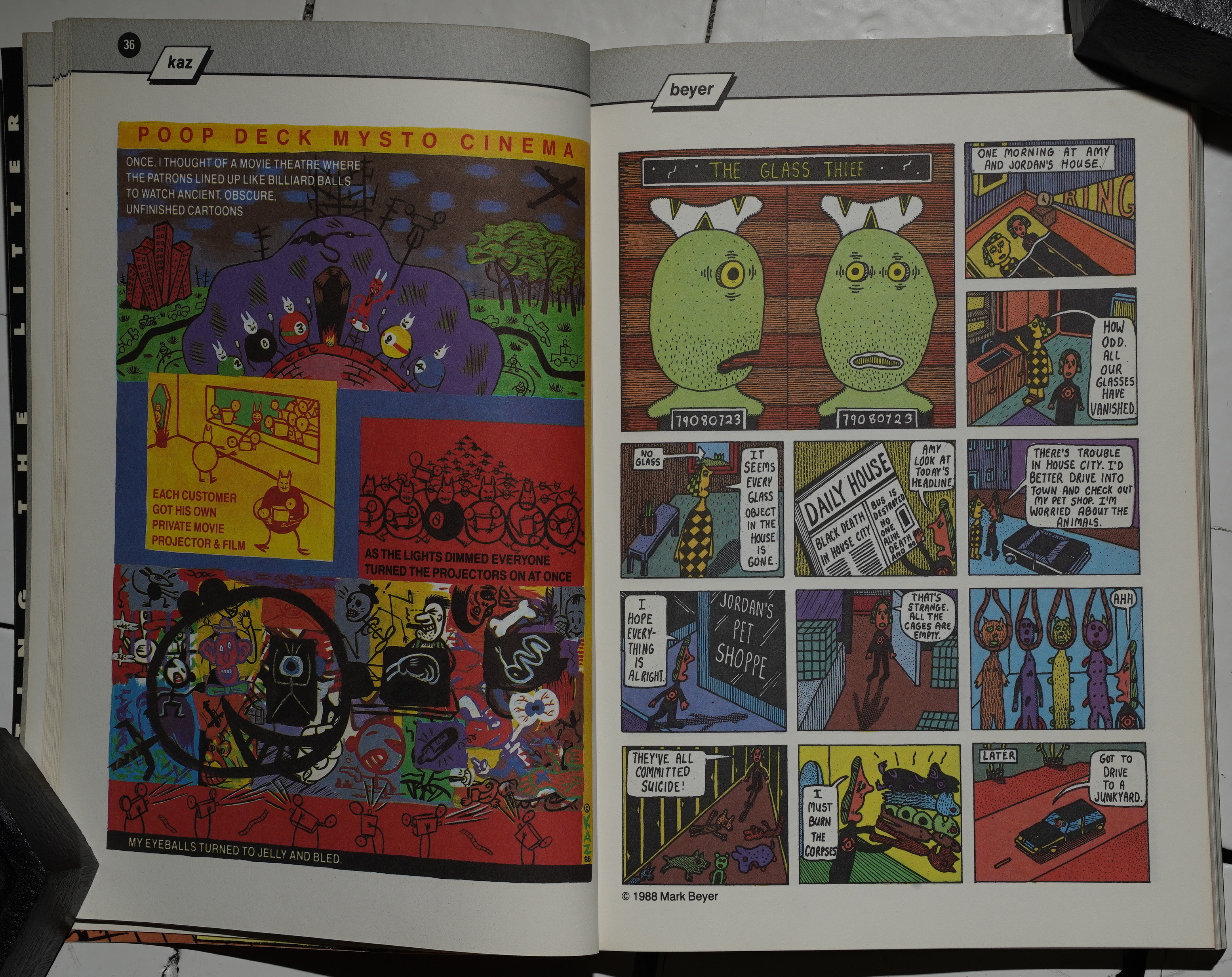
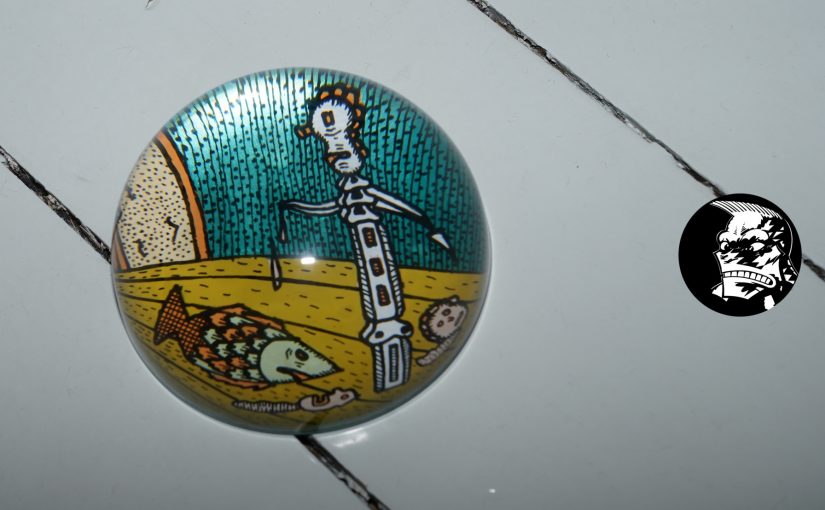
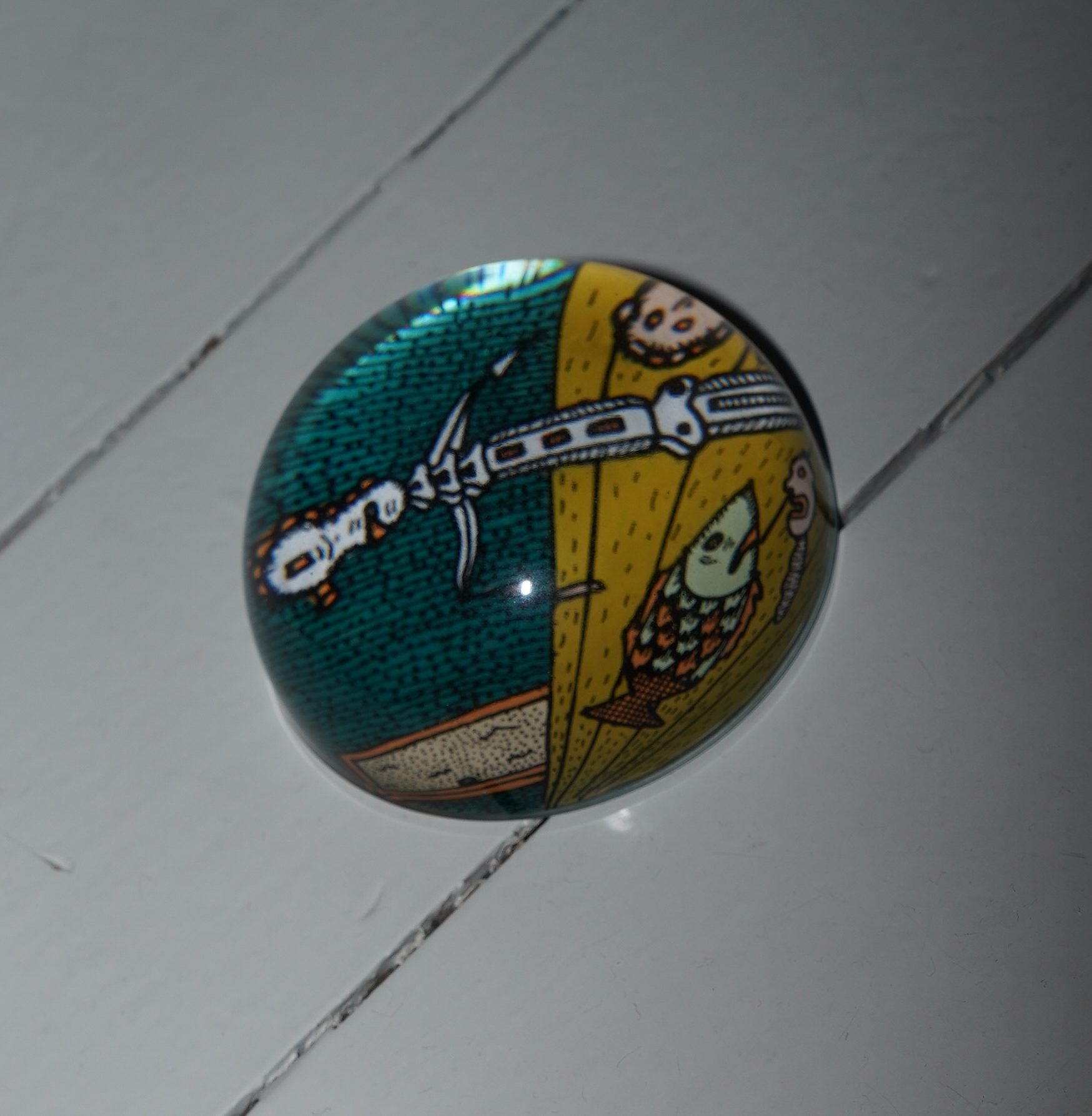
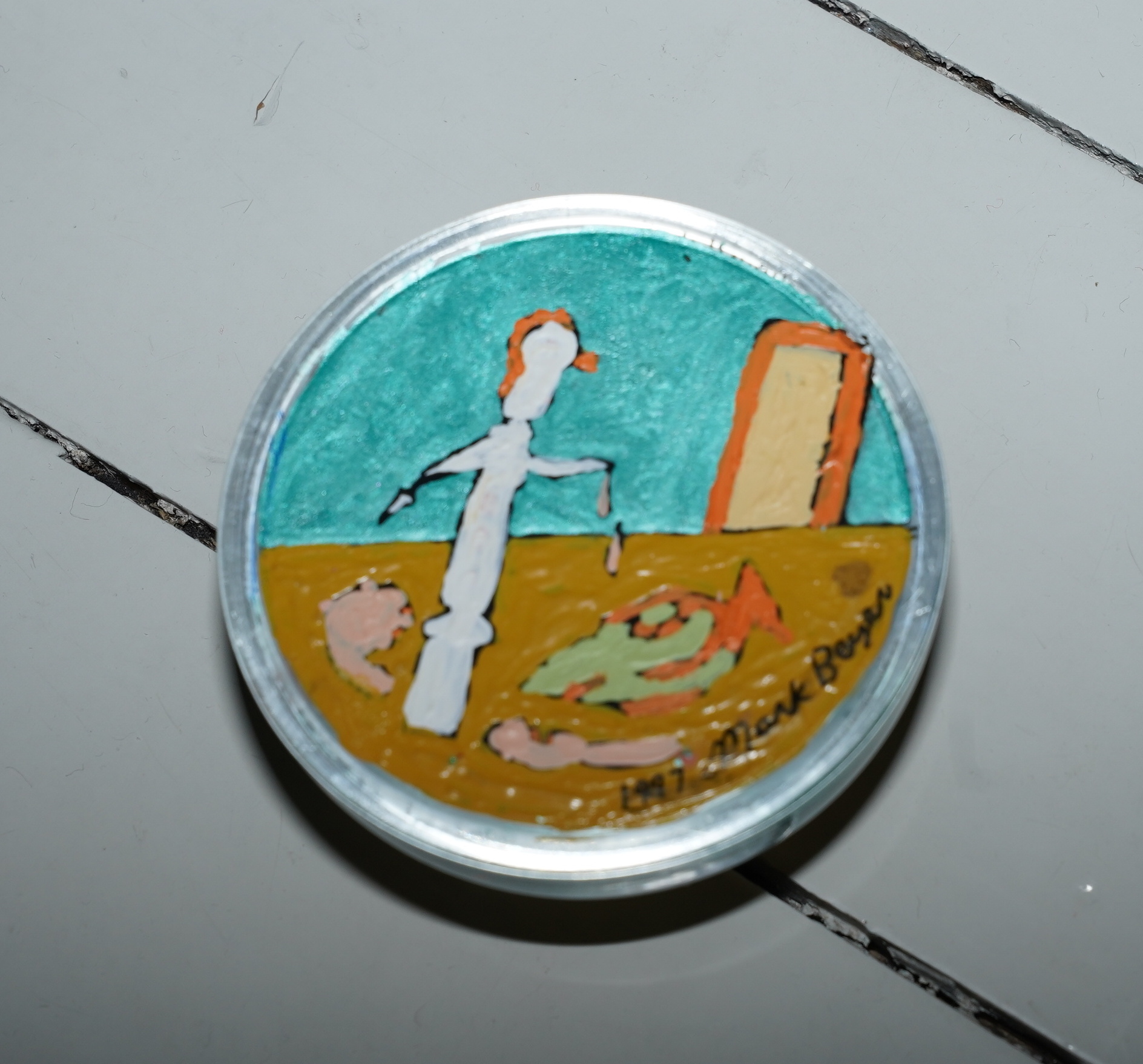
And I’m not sure they were all originally meant for this smaller format? (Kaz and Mark Beyer.)
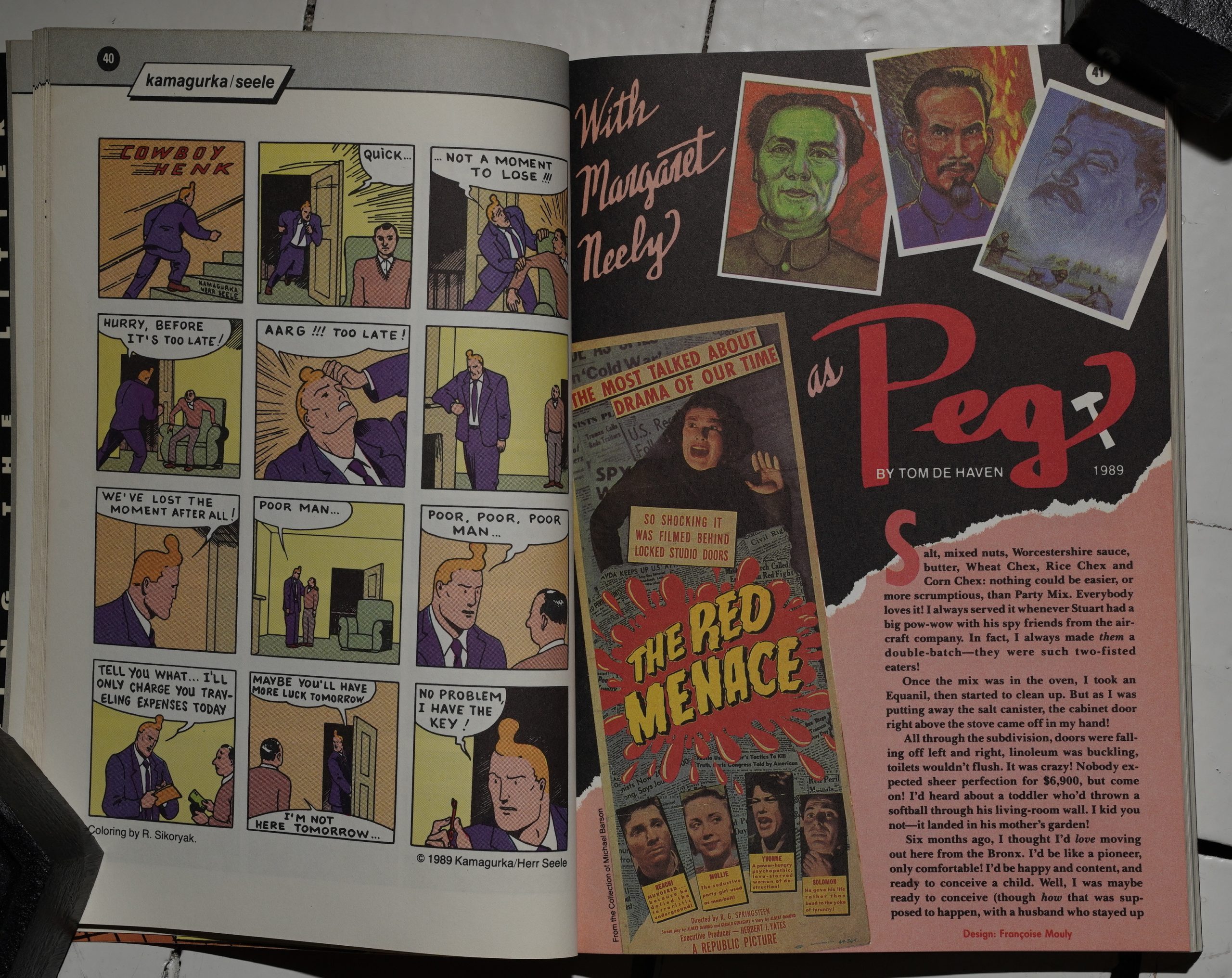
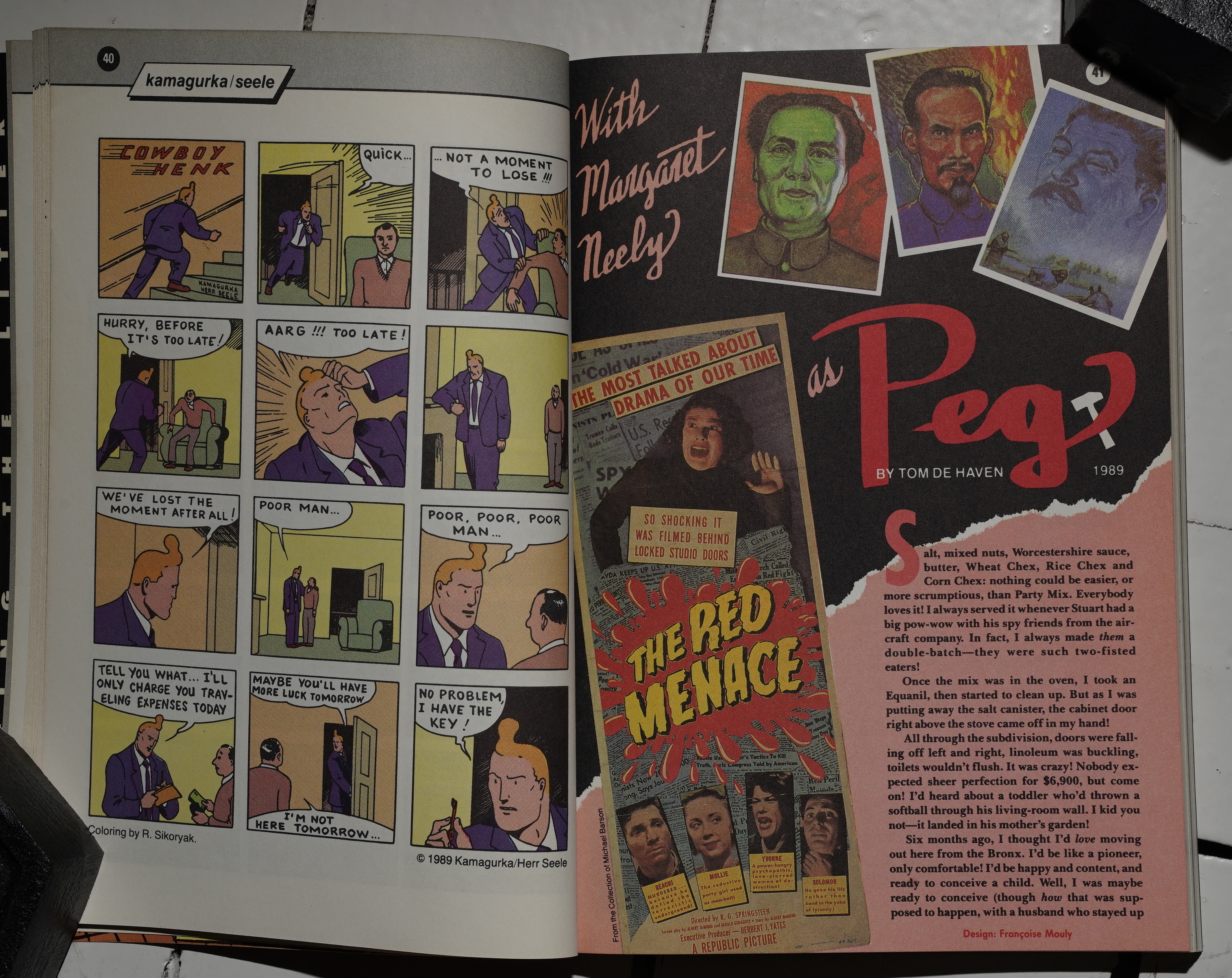
Kamagurka/Seele and Tom de Haven.
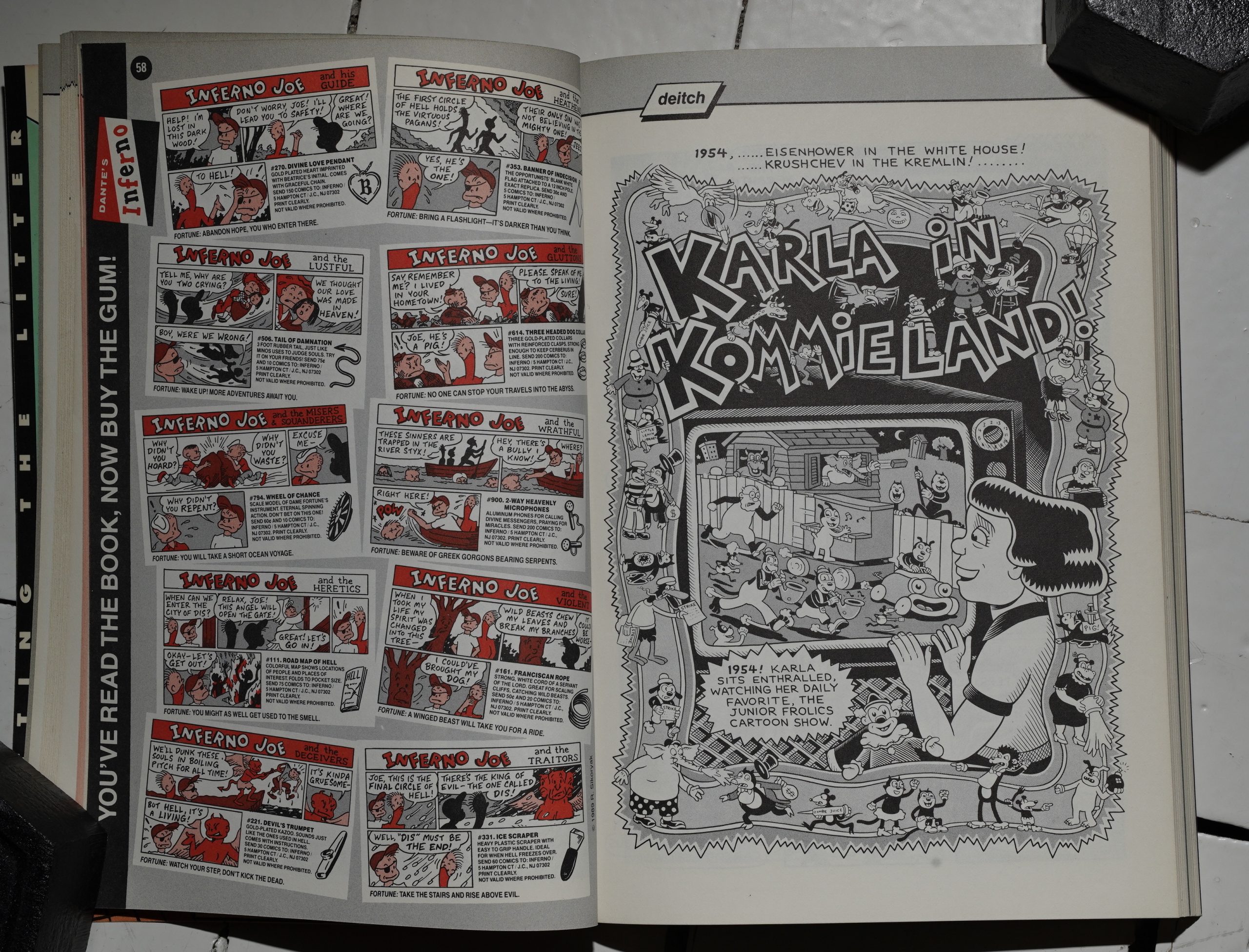
It’s all so random! And many of these pieces are very slight. (Newgarden and Kim Deitch.)
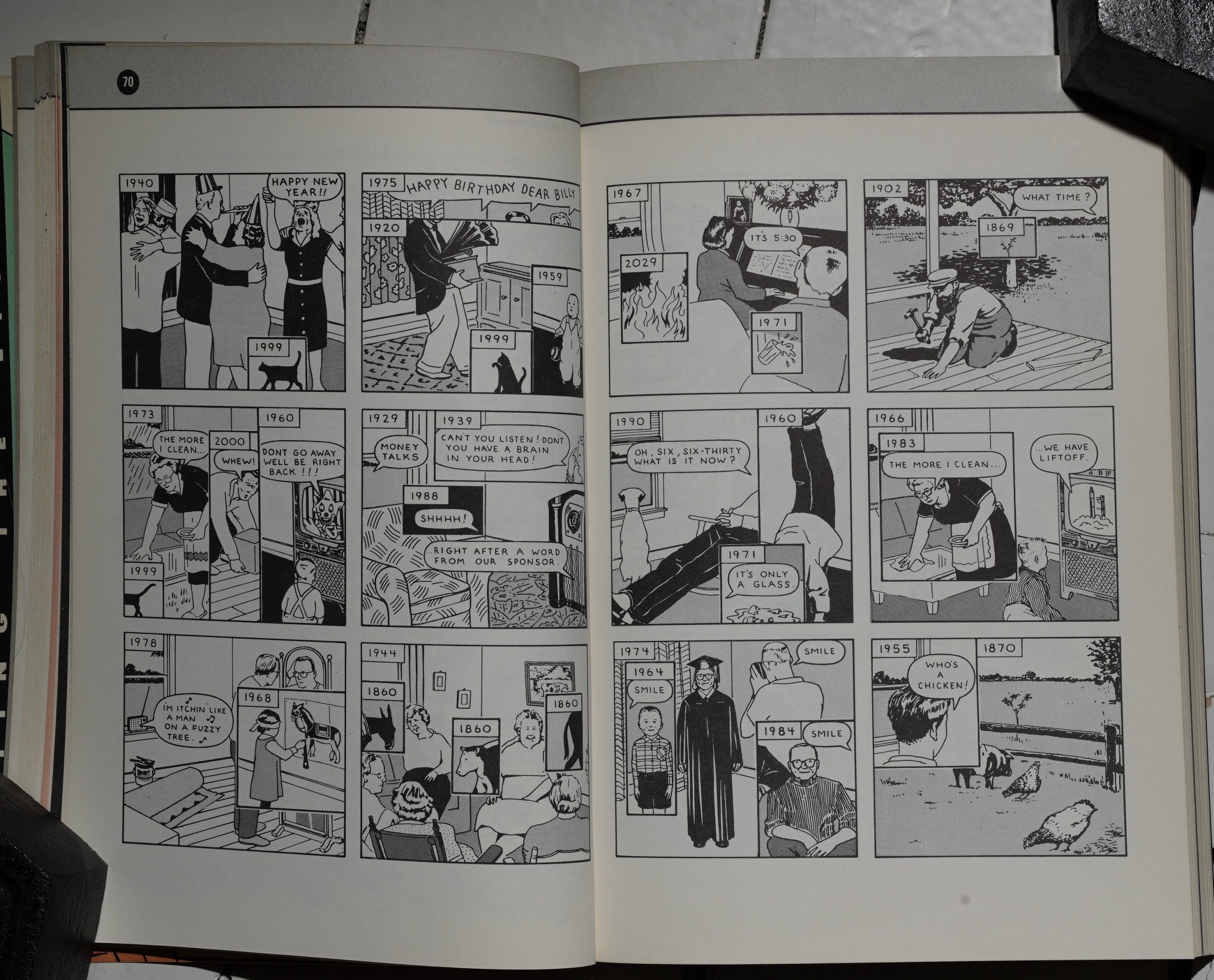
*gasp* “Here” by Richard McGuire, which was originally meant for Bad News #3, but which was incredibly influential, er, here instead. It’s just mind-blowing — and it’s not just a formal exercise, but manages to be quite moving, too.
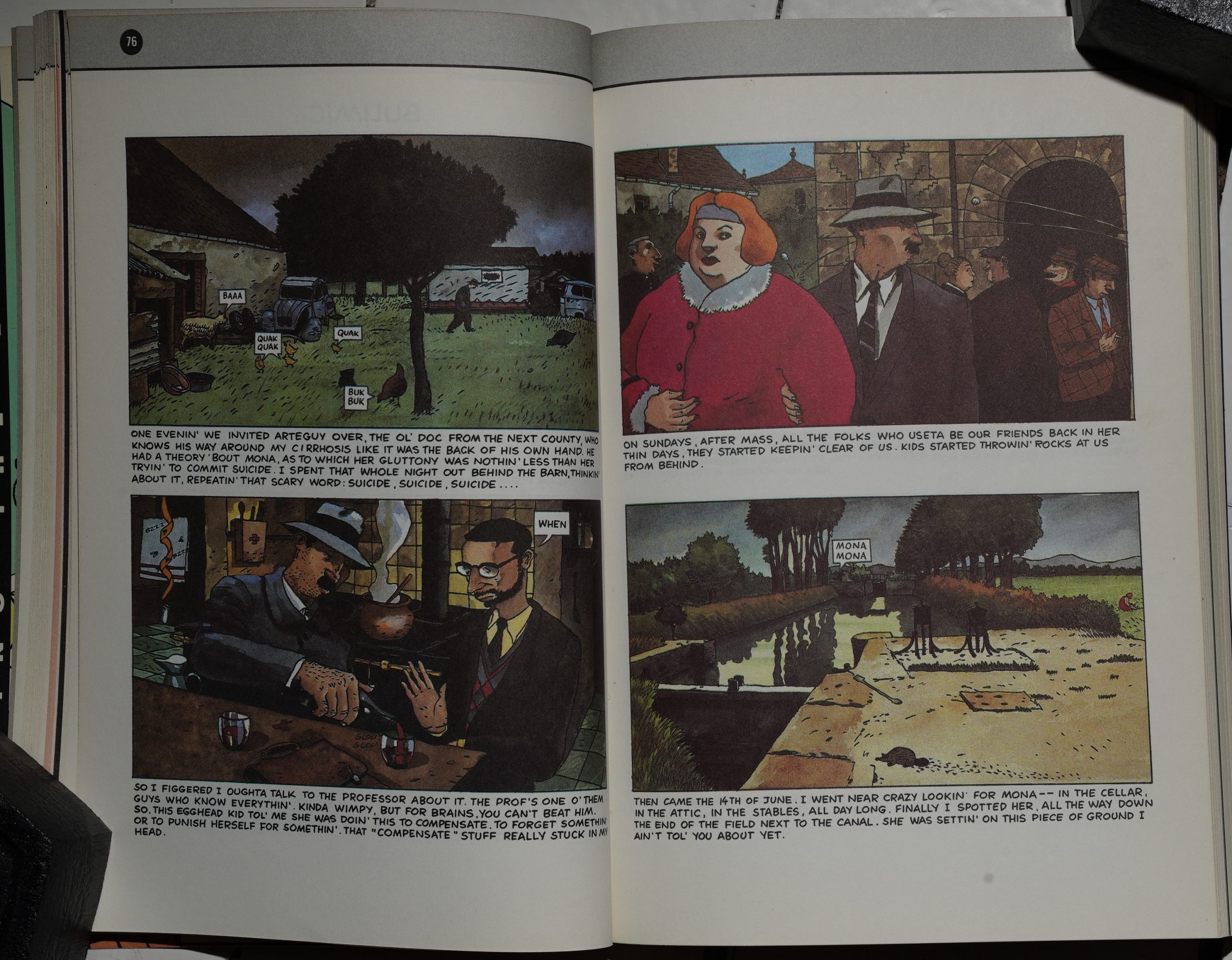
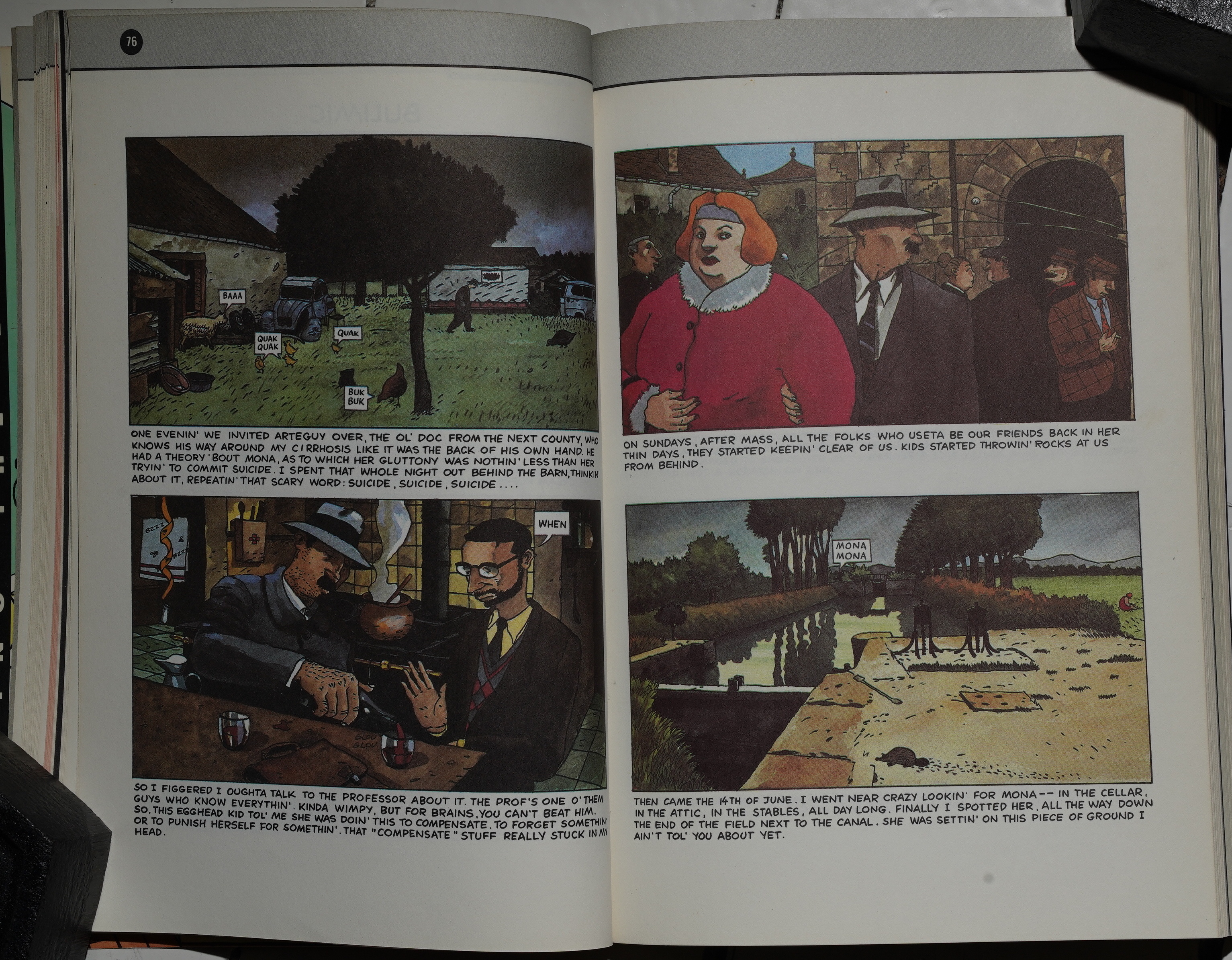
I guess that perhaps what the editors were going after was a feeling of richness? It’s like… “here’s an anthology that shows you everything comics can be. Look at it. JUST LOOK AT IT!” And I can’t really fault any of these pieces. (Loustal.)
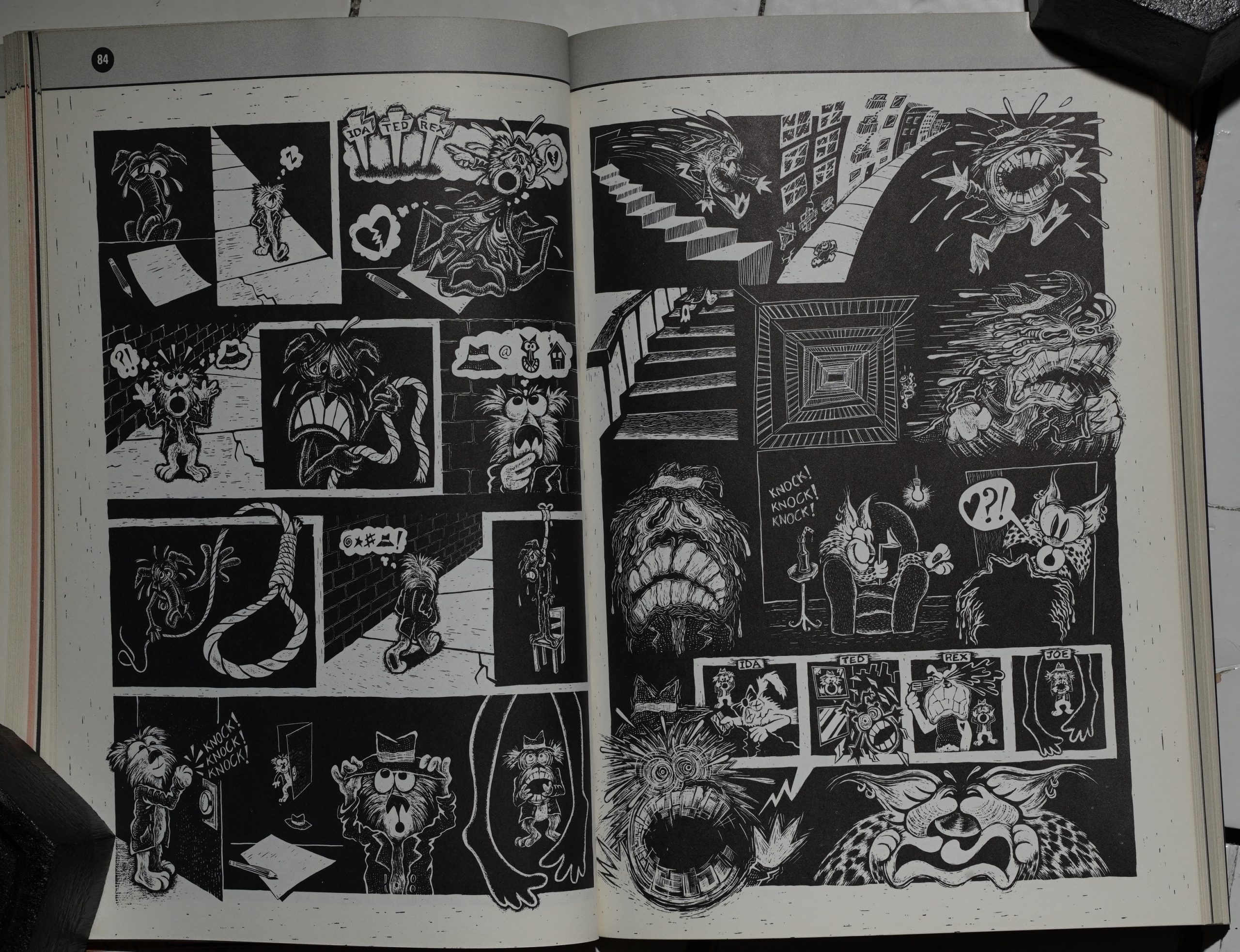
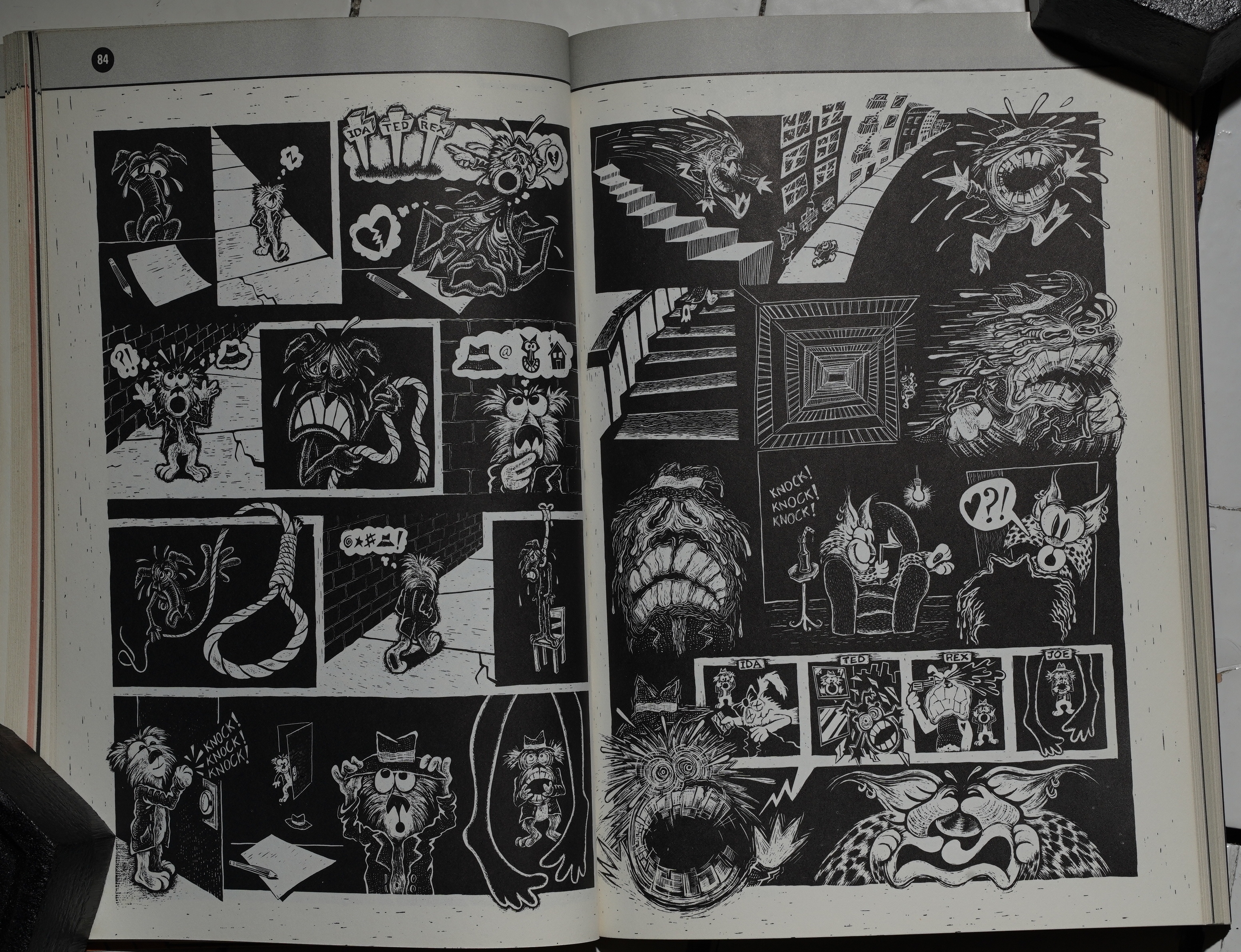
But there’s no cumulative coherent reading experience here. (I love Krystine Kryttre’s scratchboard artwork. It’s more underground, though, right?)
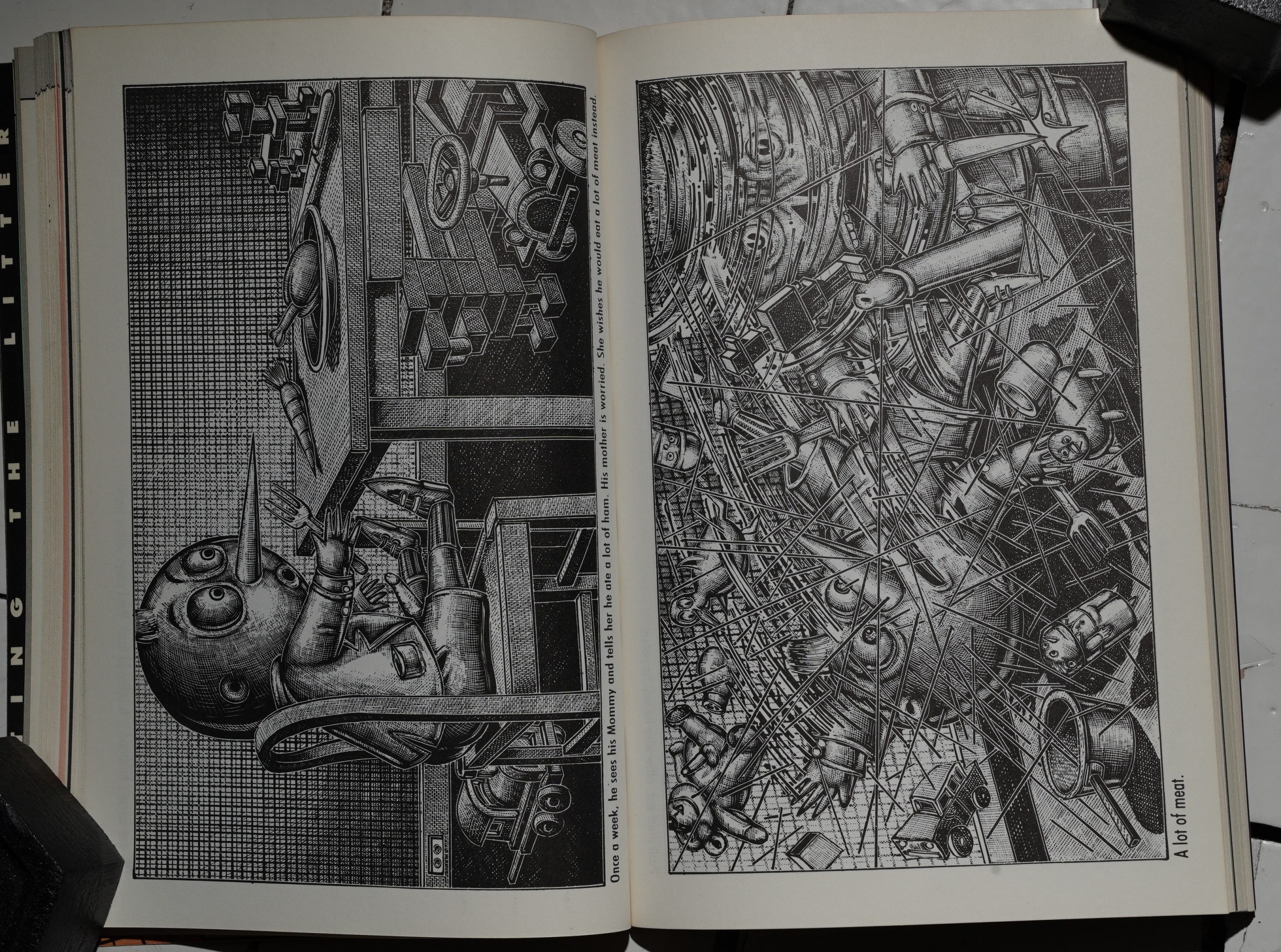
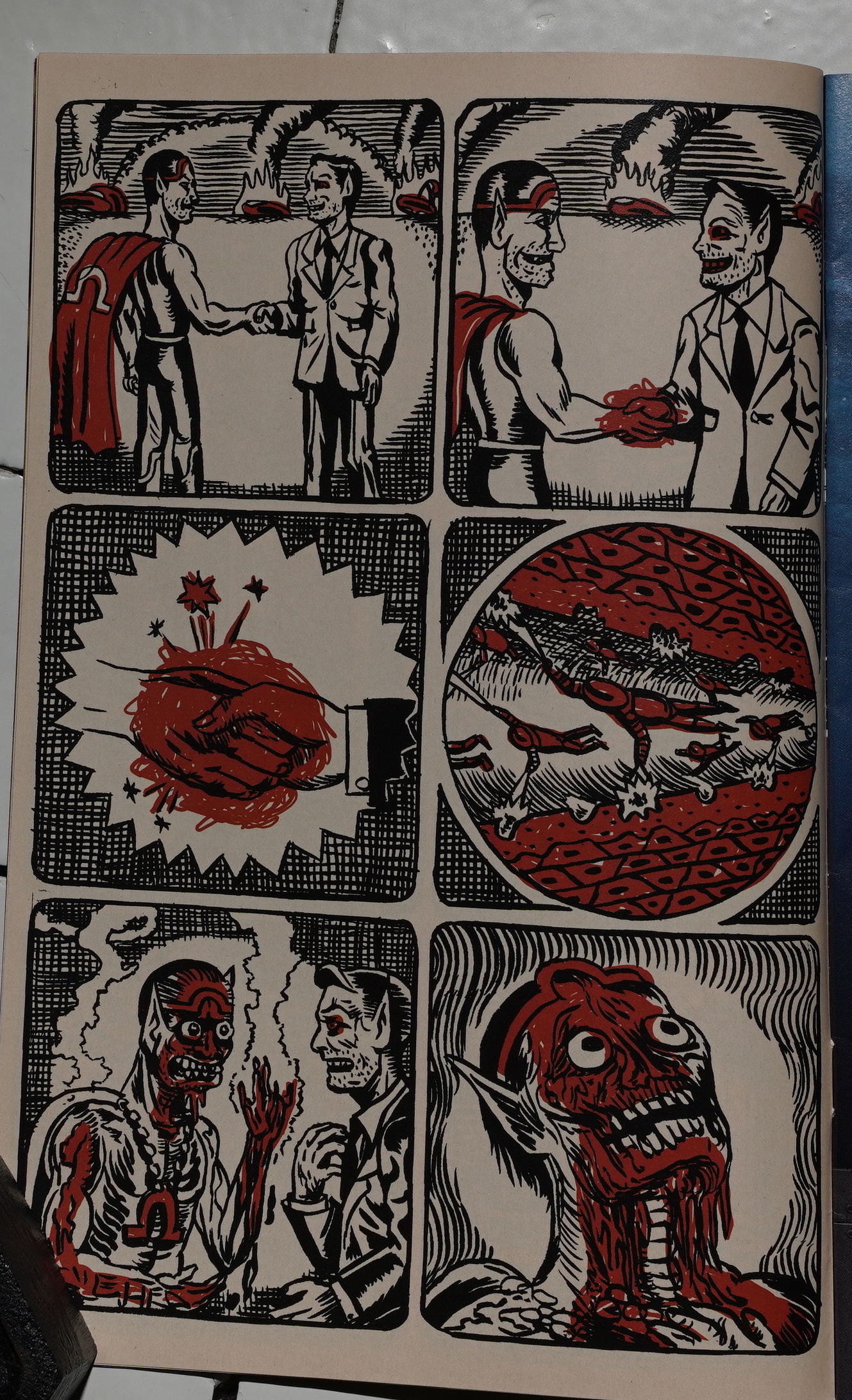
Pascal Doury’s previous longer piece (in… Raw #… 5? 6?) had all the penises censored, but apparently Penguin had no problems with the penisnessness of it all. (So meticulous.)
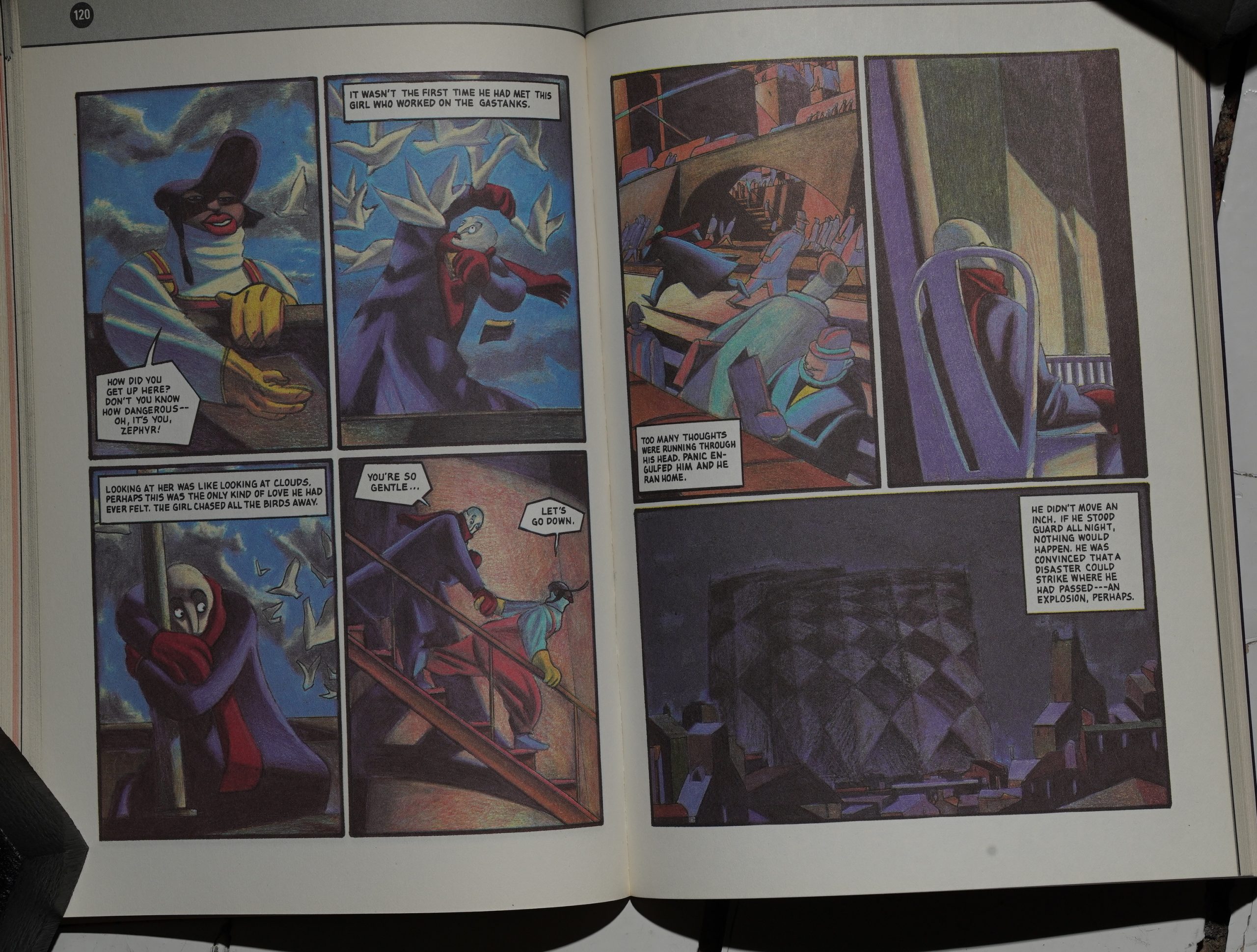
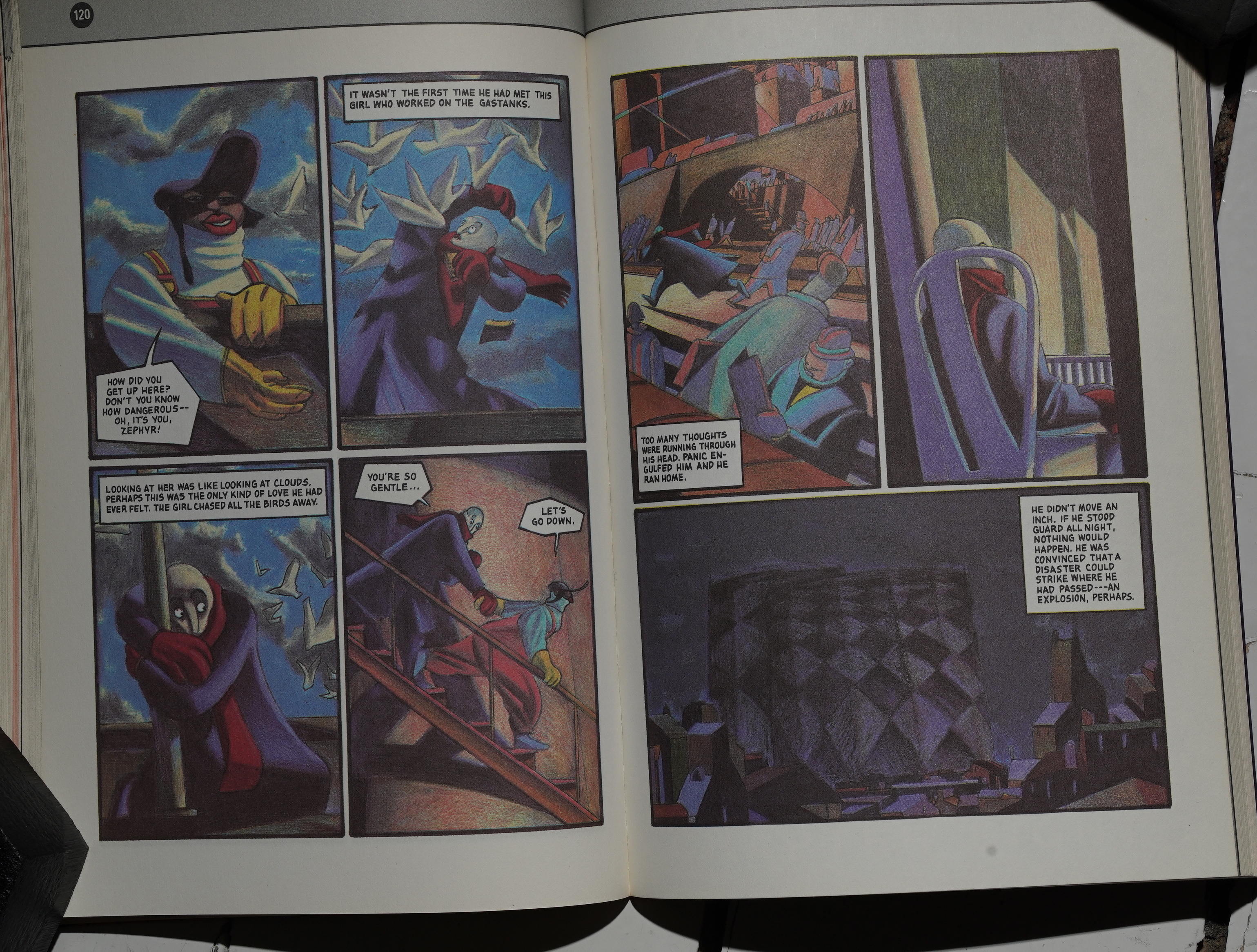
Mattotti’s artwork is amazing, but it’s perhaps not the best printing it’s gotten here…
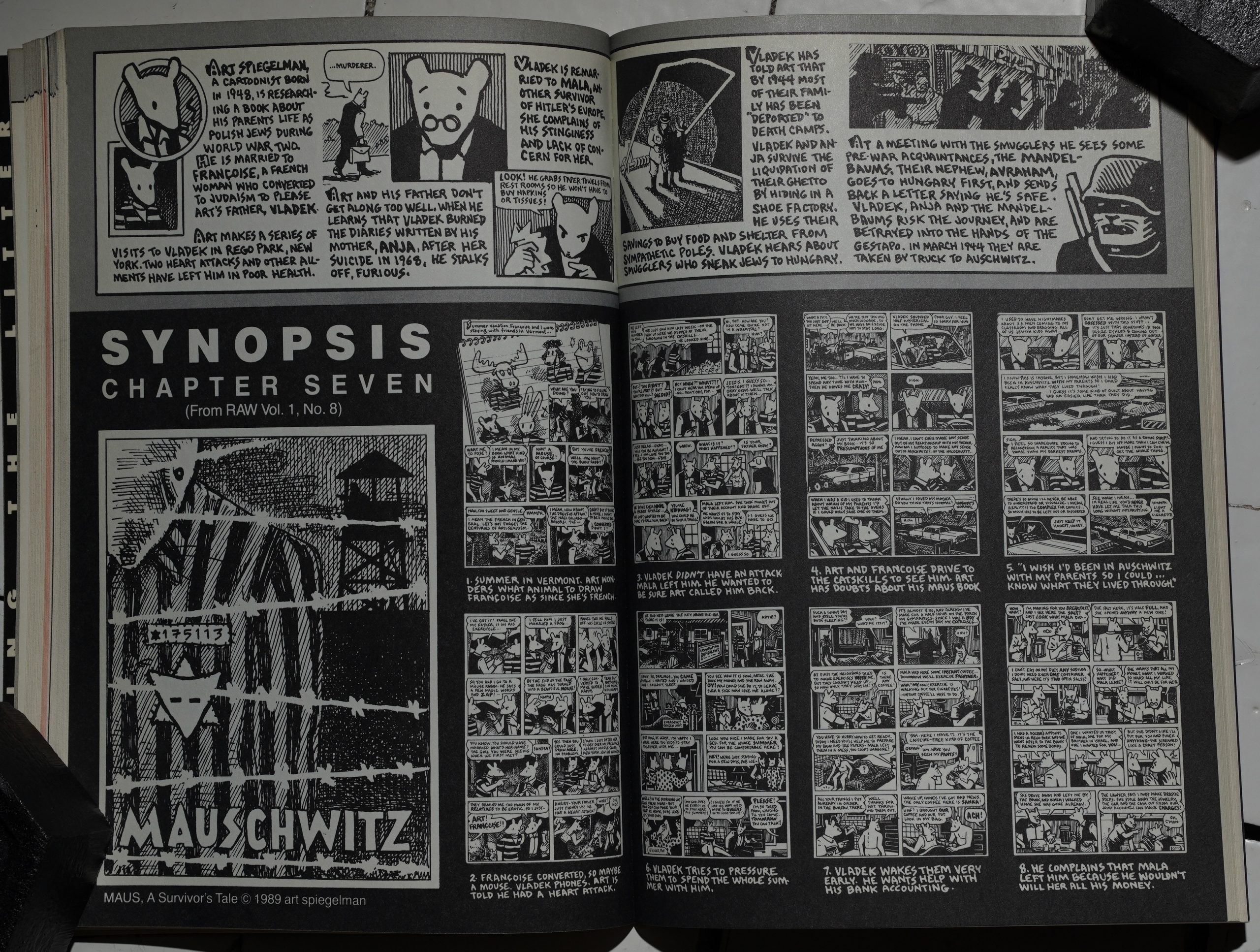
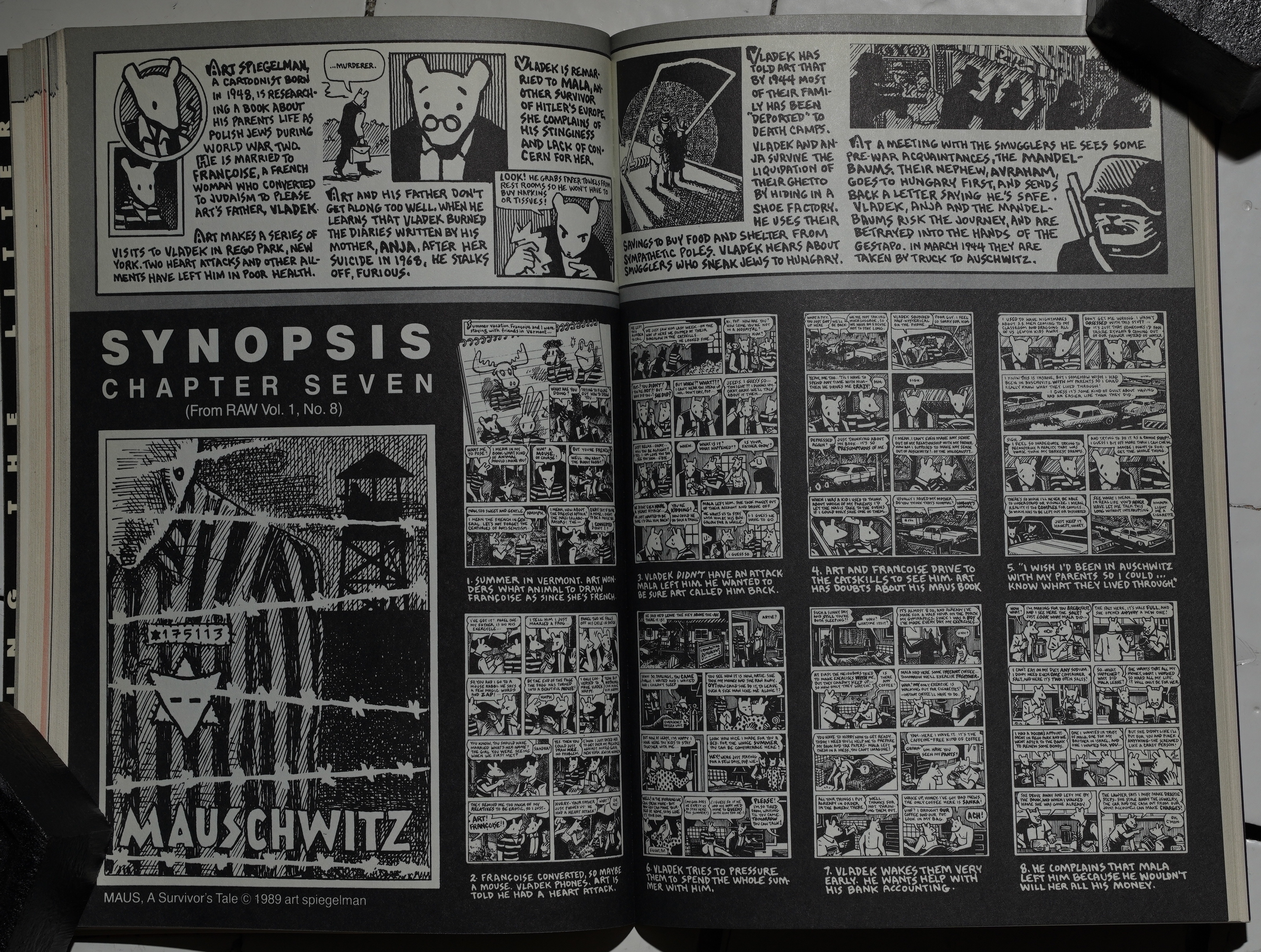
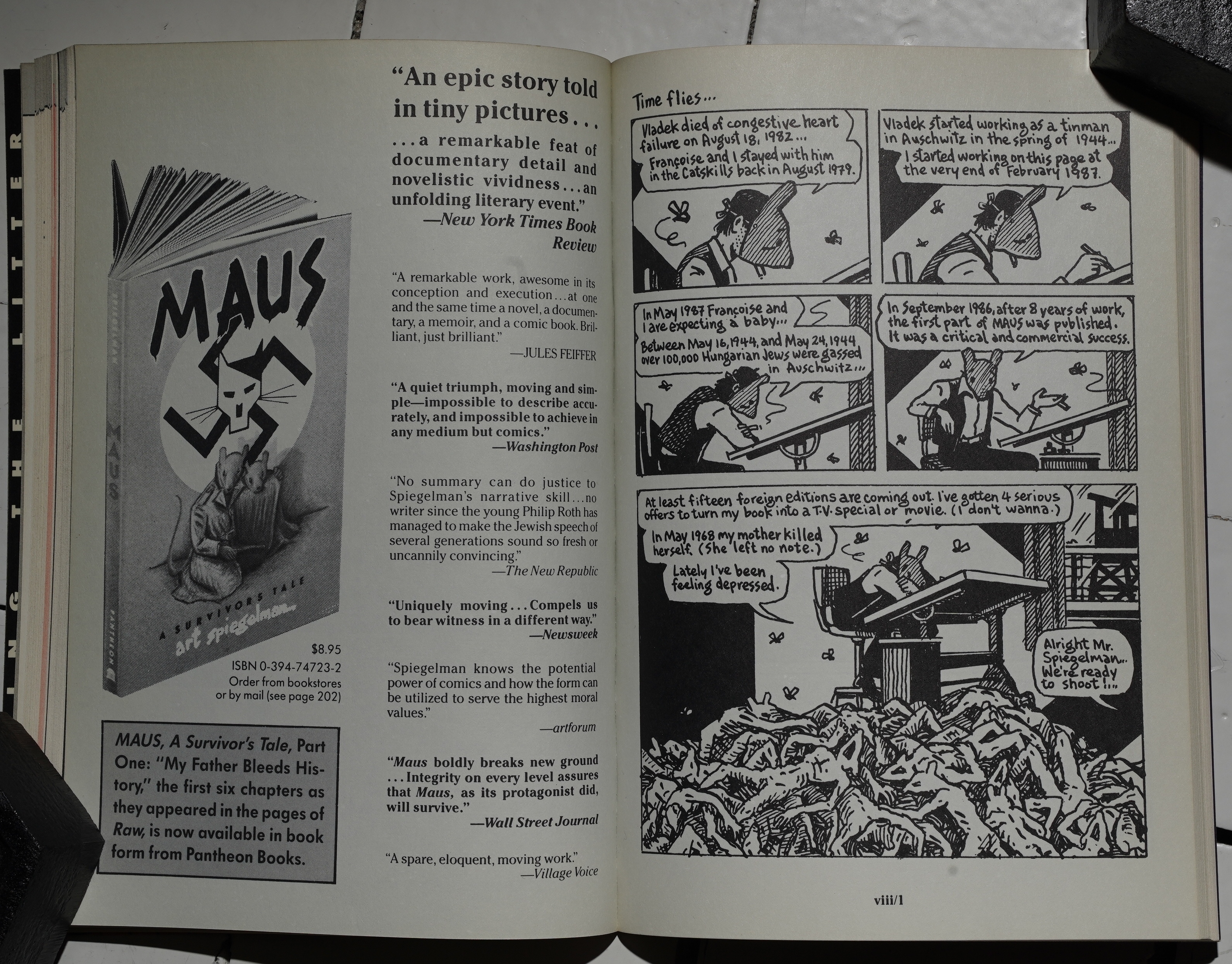
The longest piece here, by far (twice as long as anything else) is the Maus chapter (and this is probably why Penguin wanted to publish Raw at all). Spiegelman helpfully reprints all the pages from the previous chapter (which wasn’t included in the first Maus book), so the assumption here is definitely that people will have bought the Maus book, and then the Penguin Raw.
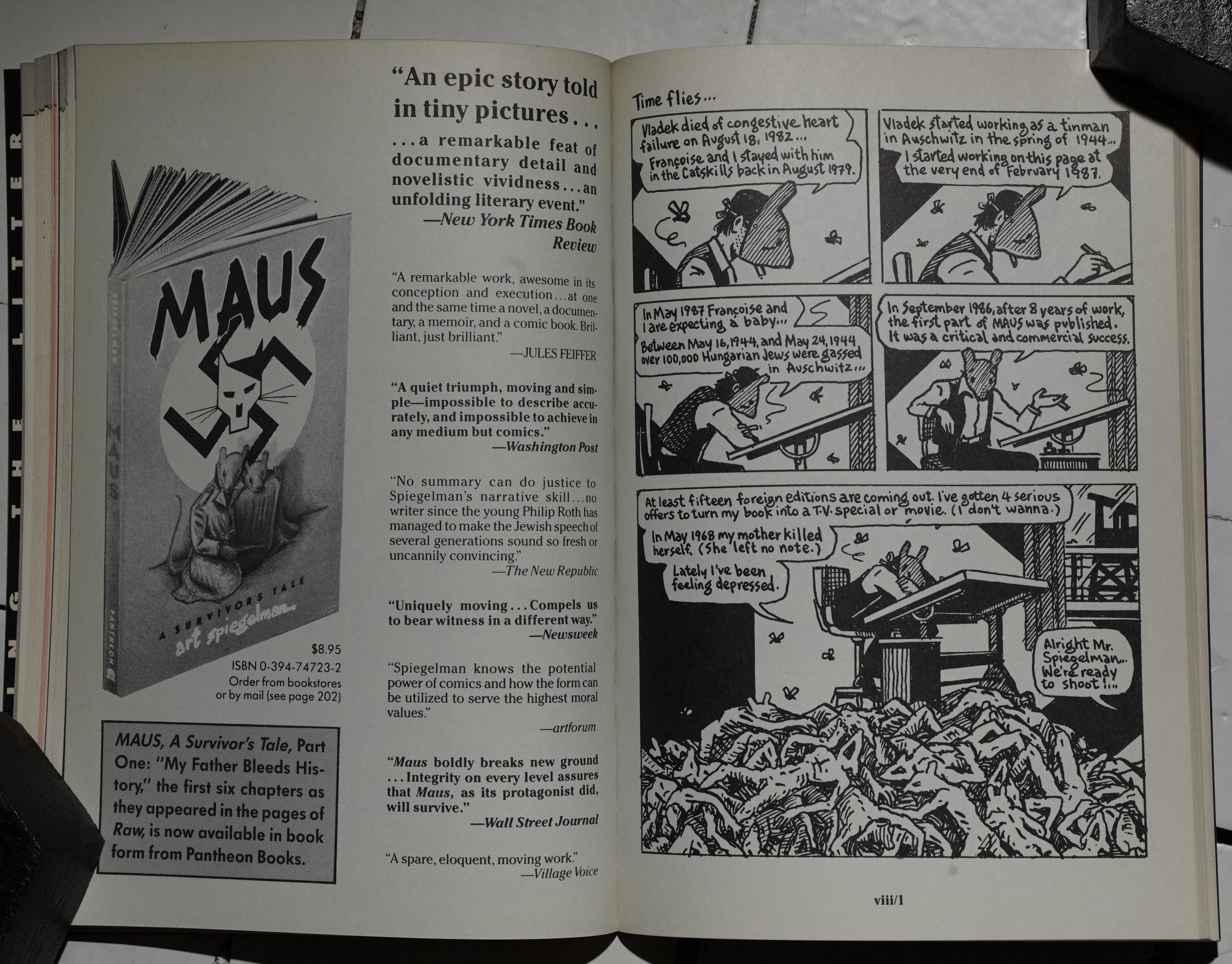
And this is the first chapter Spiegelman did after Maus was published, so it deals a lot with the repercussions and reactions to the book.
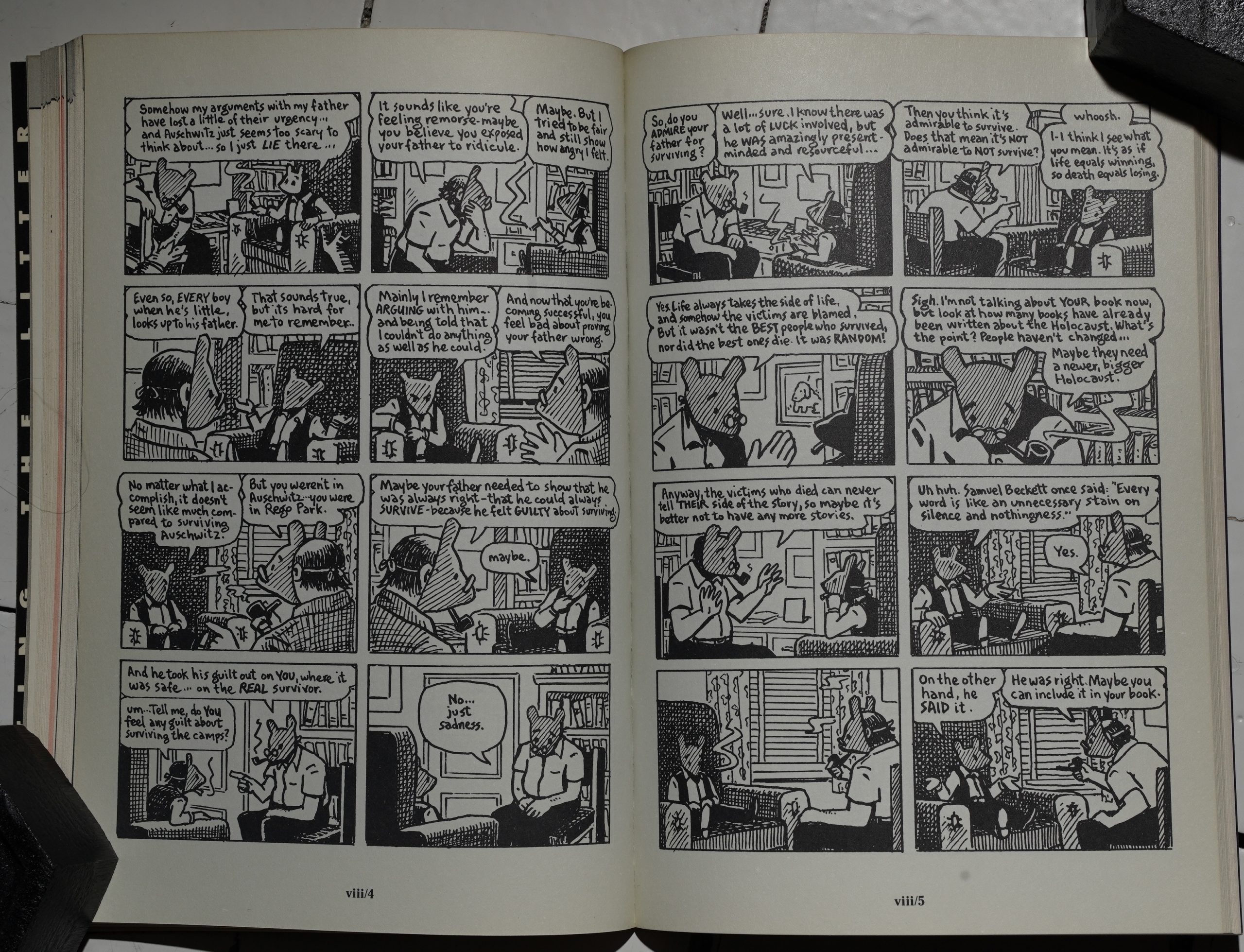
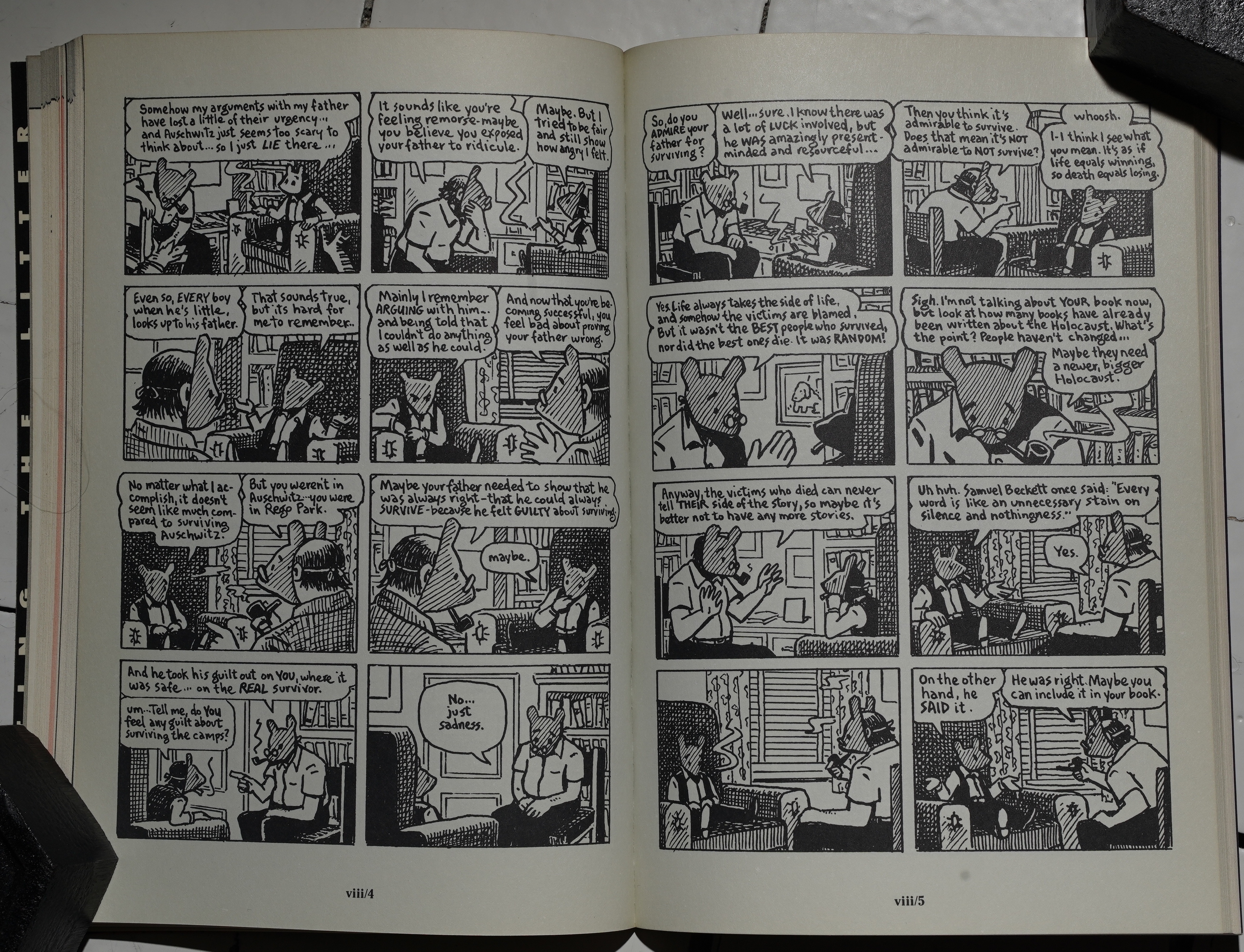
Spiegelman also has his analyst telling him that he’s the real survivor for growing up with an exasperating father.
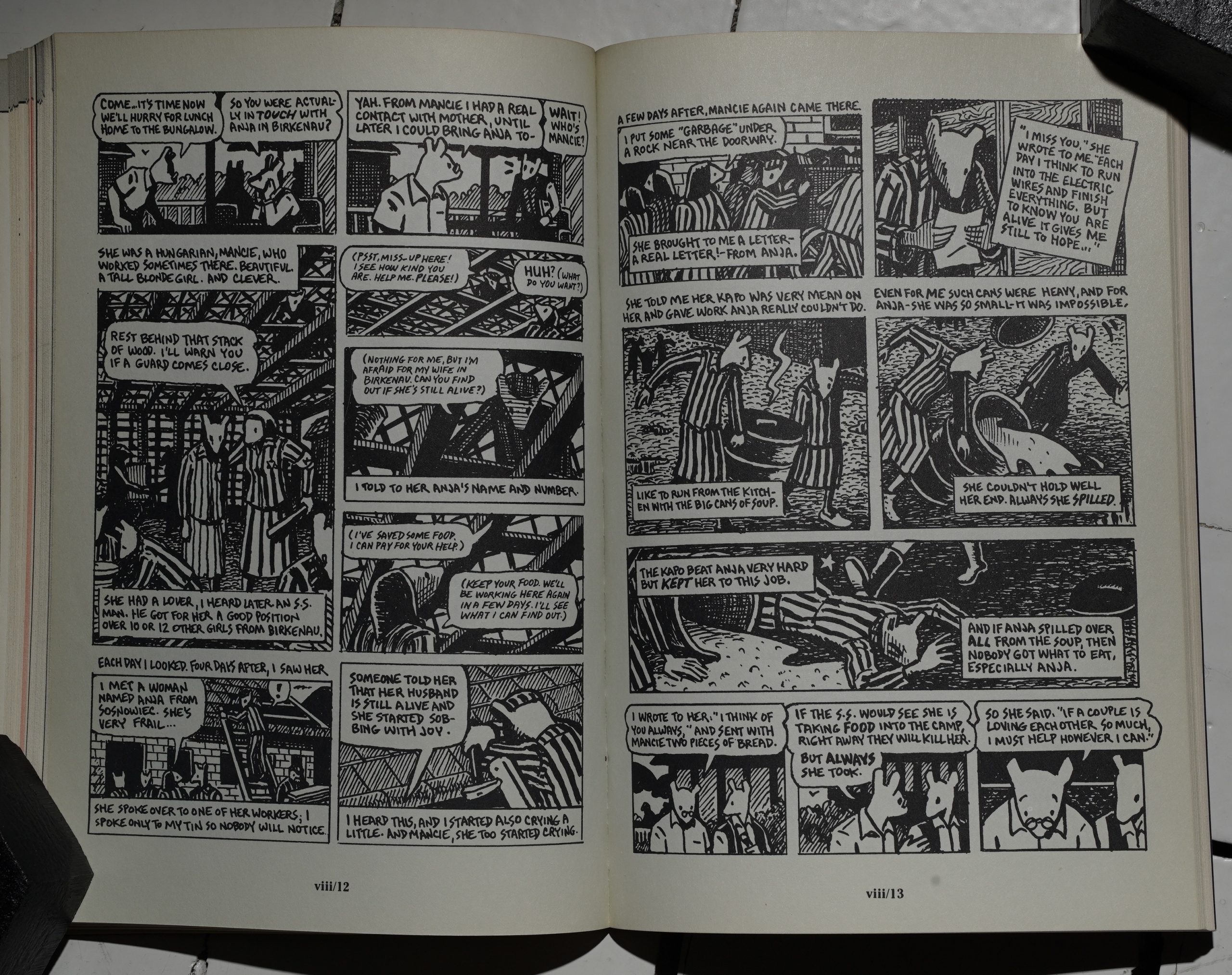
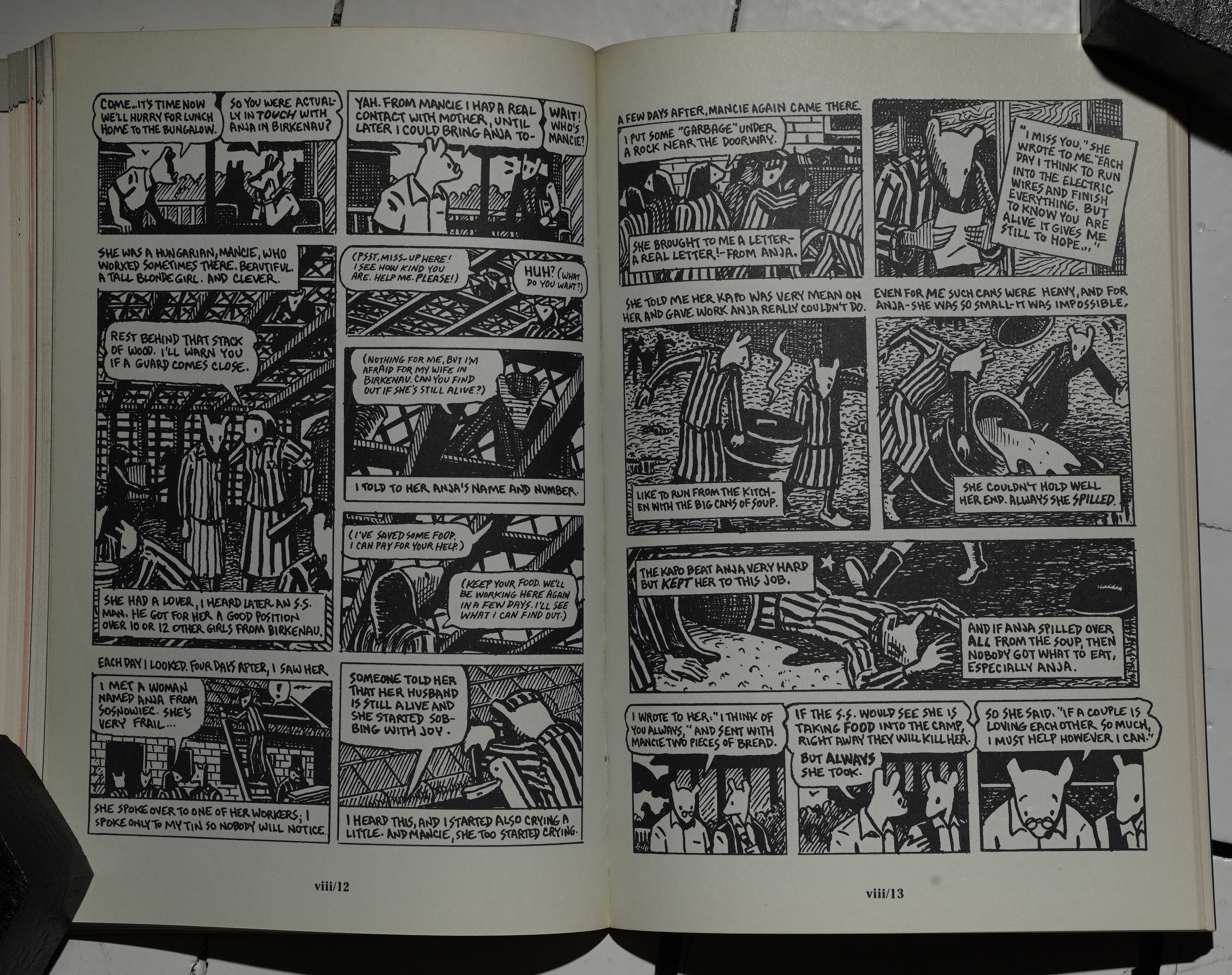
Most of the story takes place in Auschwitz, and it’s heart-breaking.
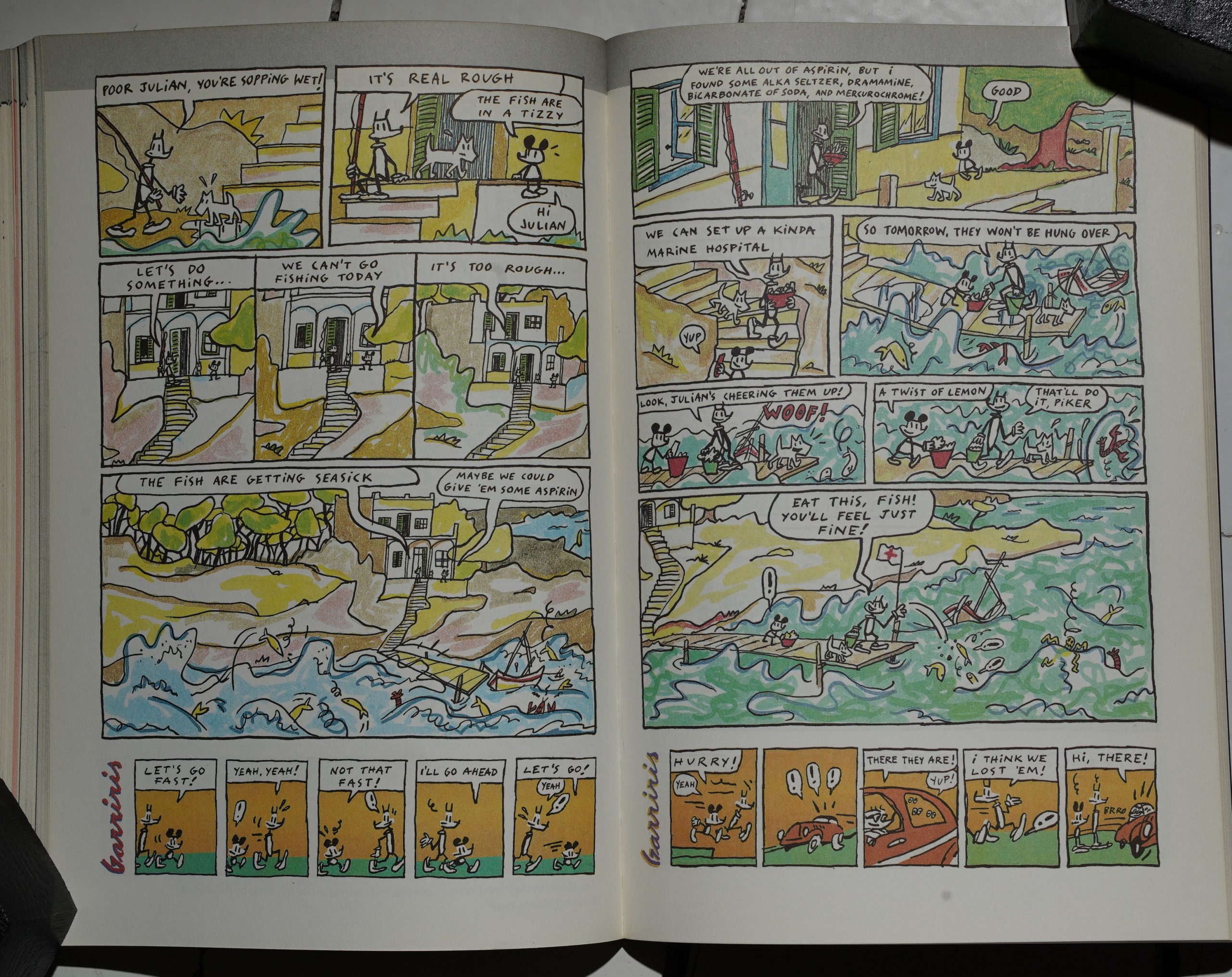
Reading this book, I think I was disappointed by the lack of surprise? It’s basically “all the Raw regulars, and some of Spiegelman’s underground friends”. In one way, that’s very sympathetic — I’m guessing it meant that all these people were finally getting paid real Penguin money — but it’s also disappointing, because there’s little that’s fresh here (except the McGuire piece). But you can’t really complain about getting some Mariscal…
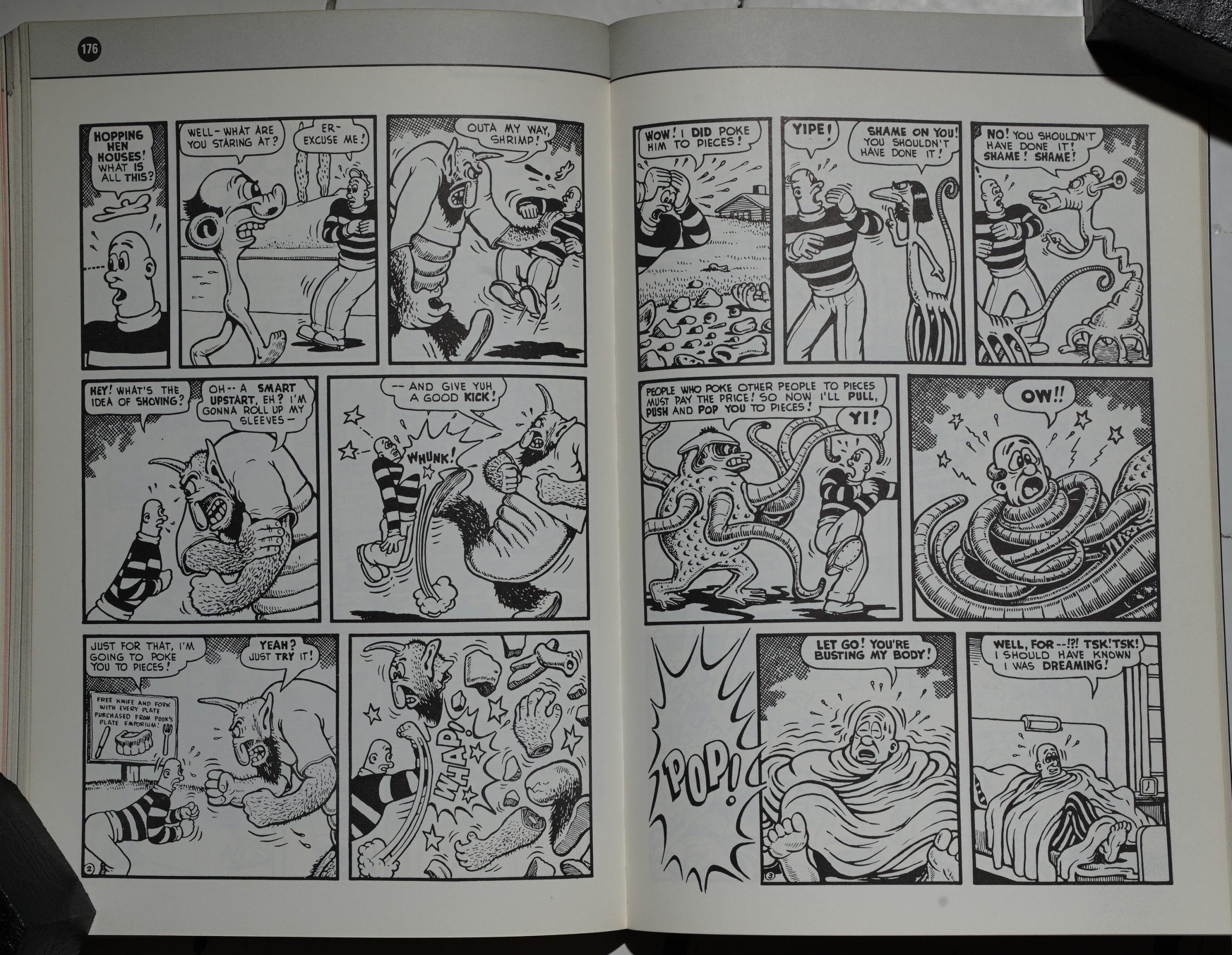
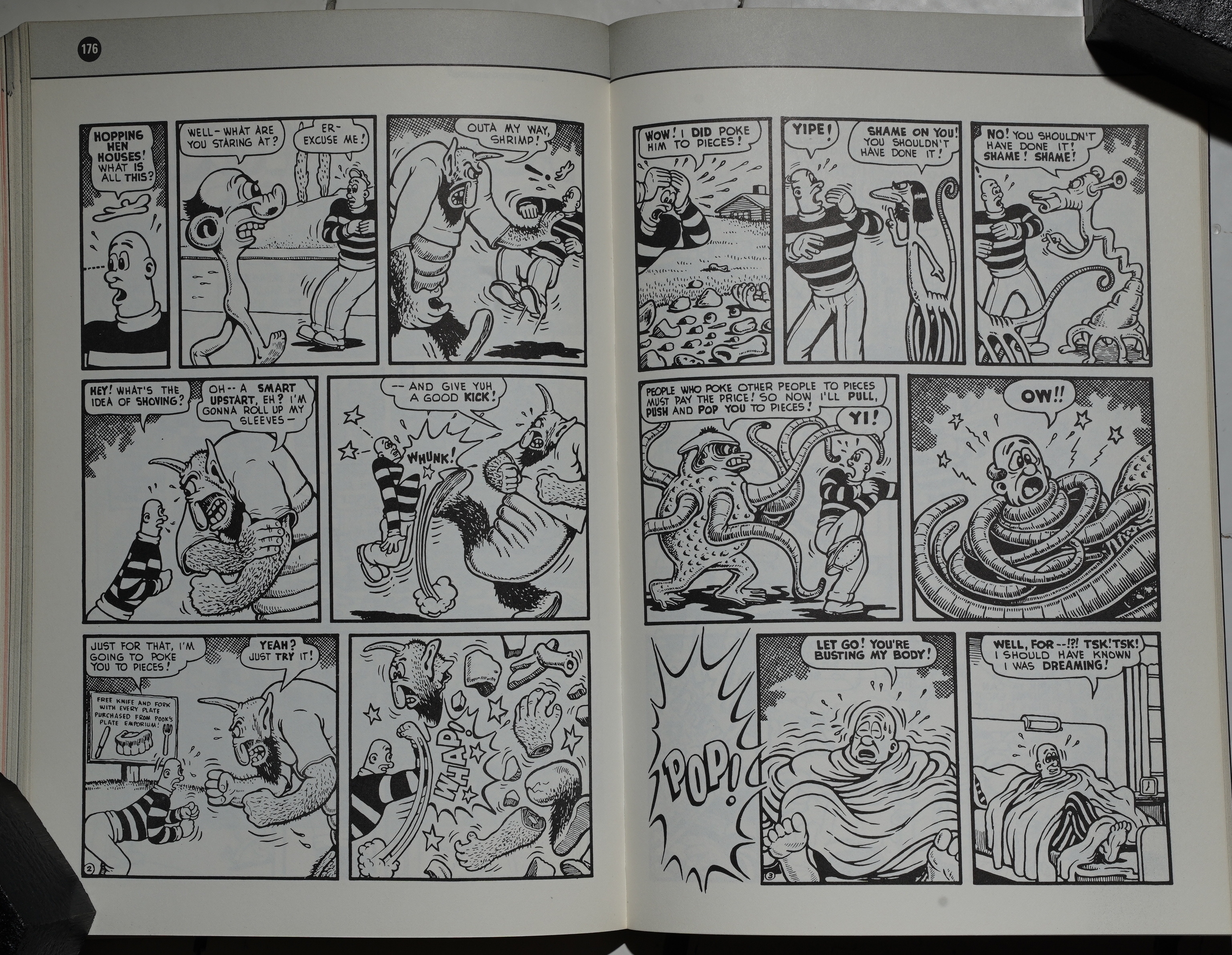
Basil Wolverton.
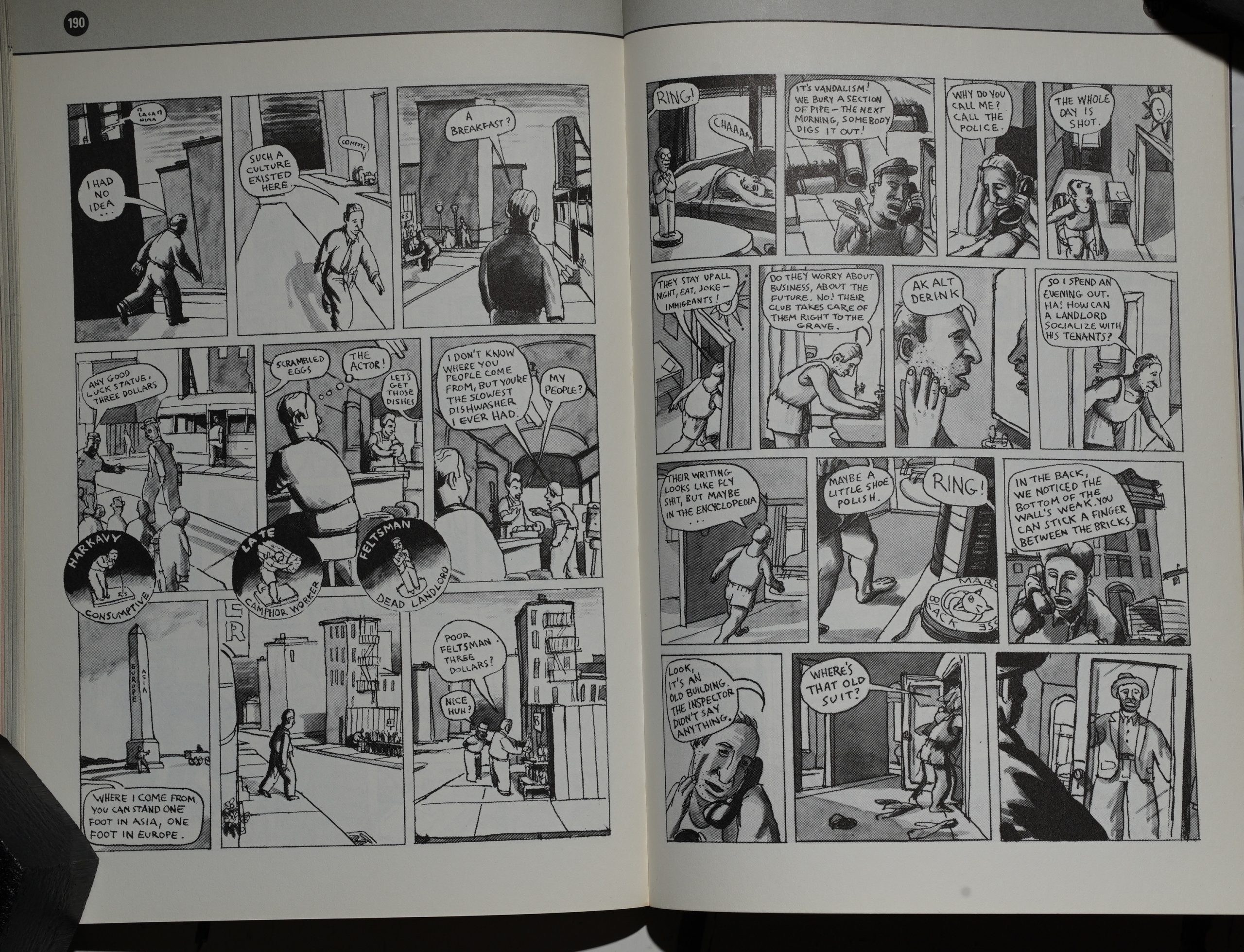
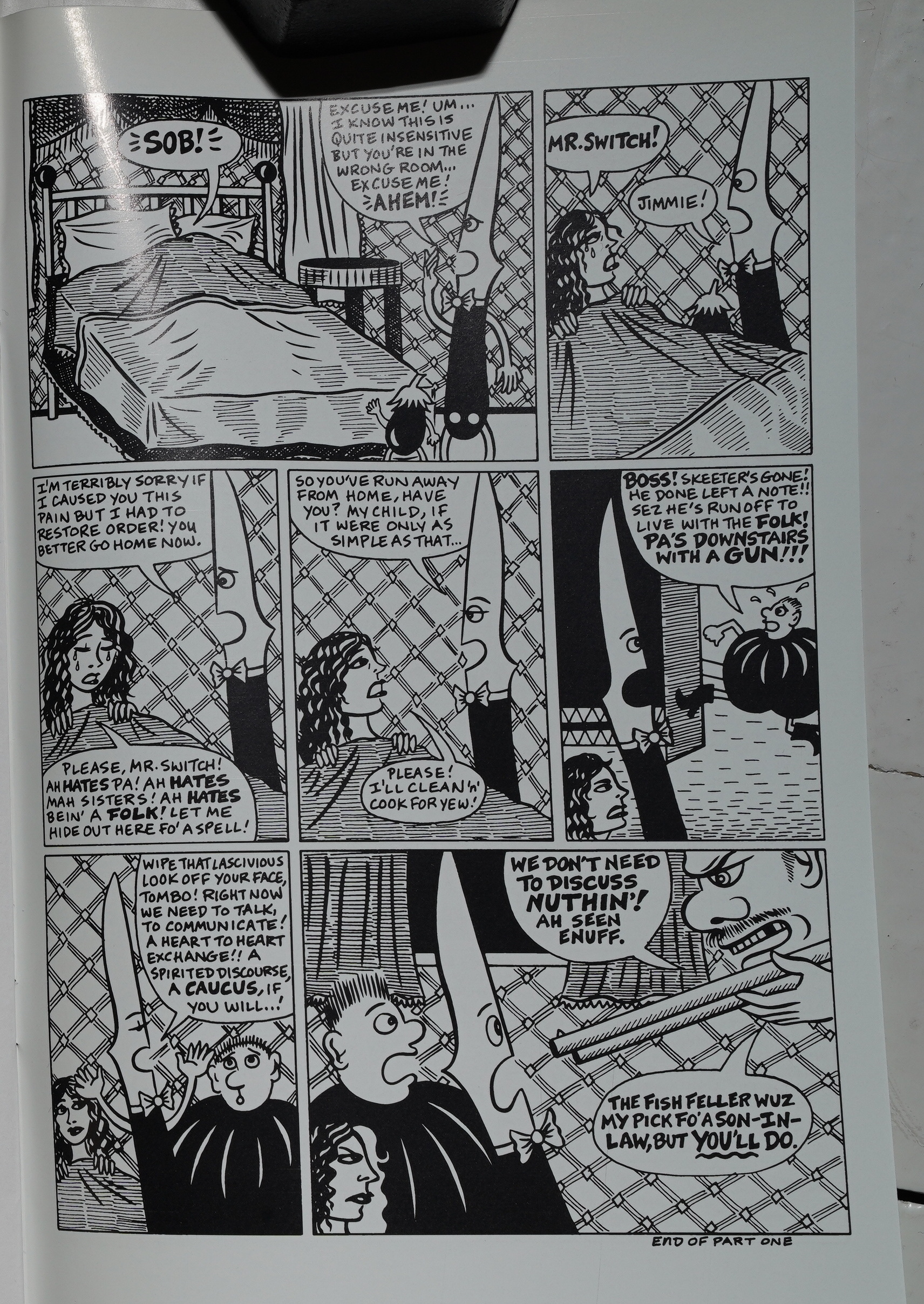
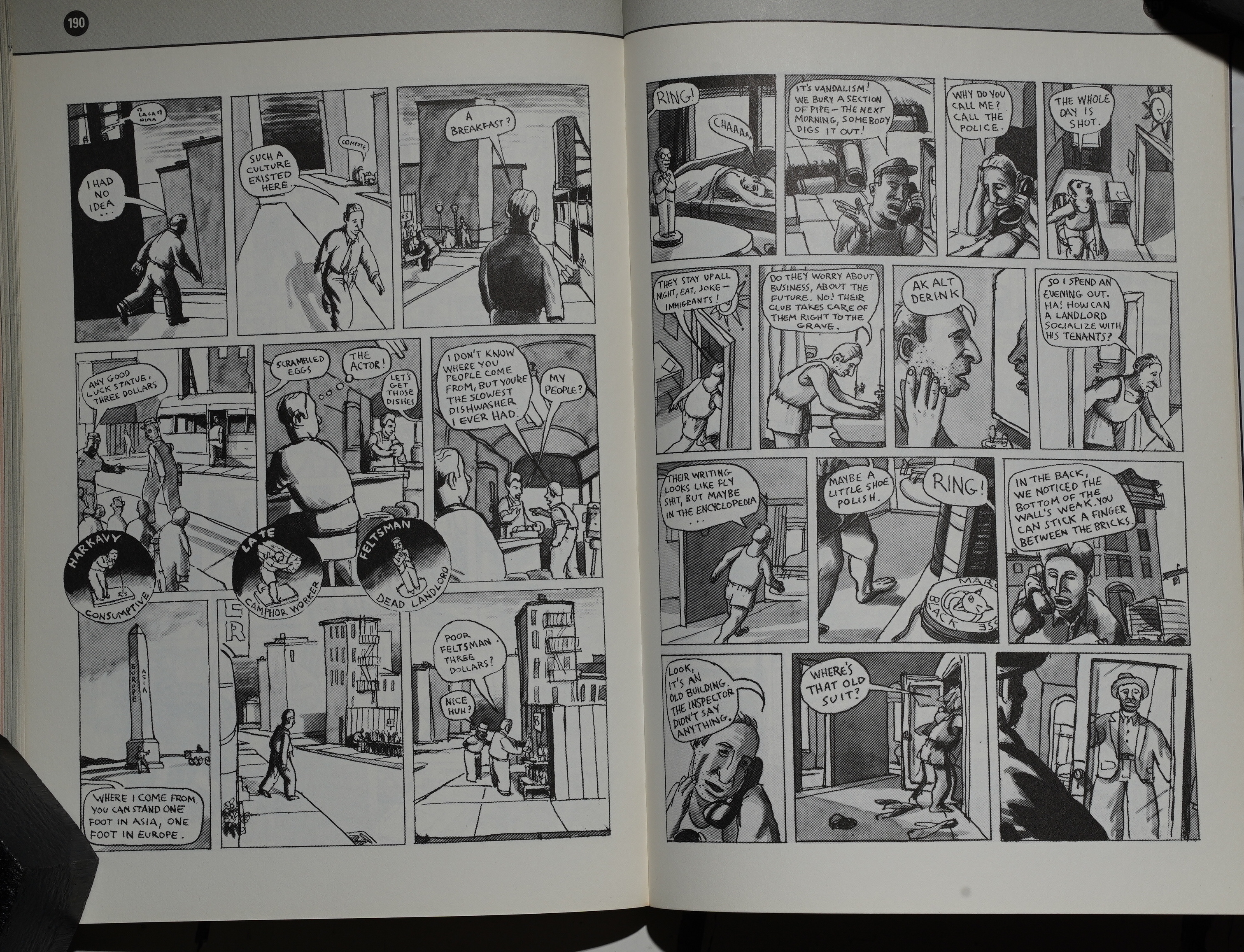
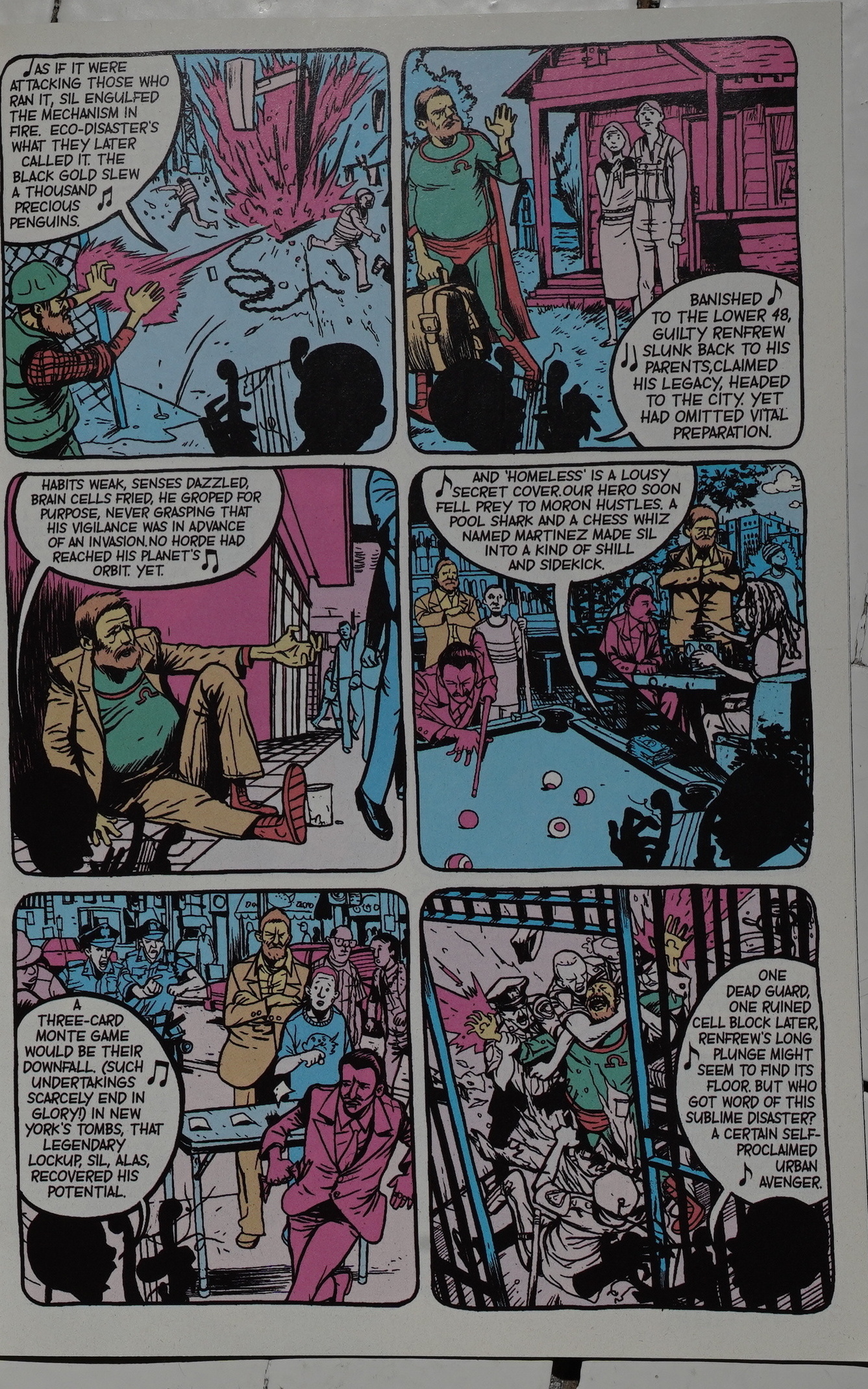
I love Ben Katchor, but I just couldn’t get into this piece. Perhaps I was just exhausted by this point? So. Much. Stuff.
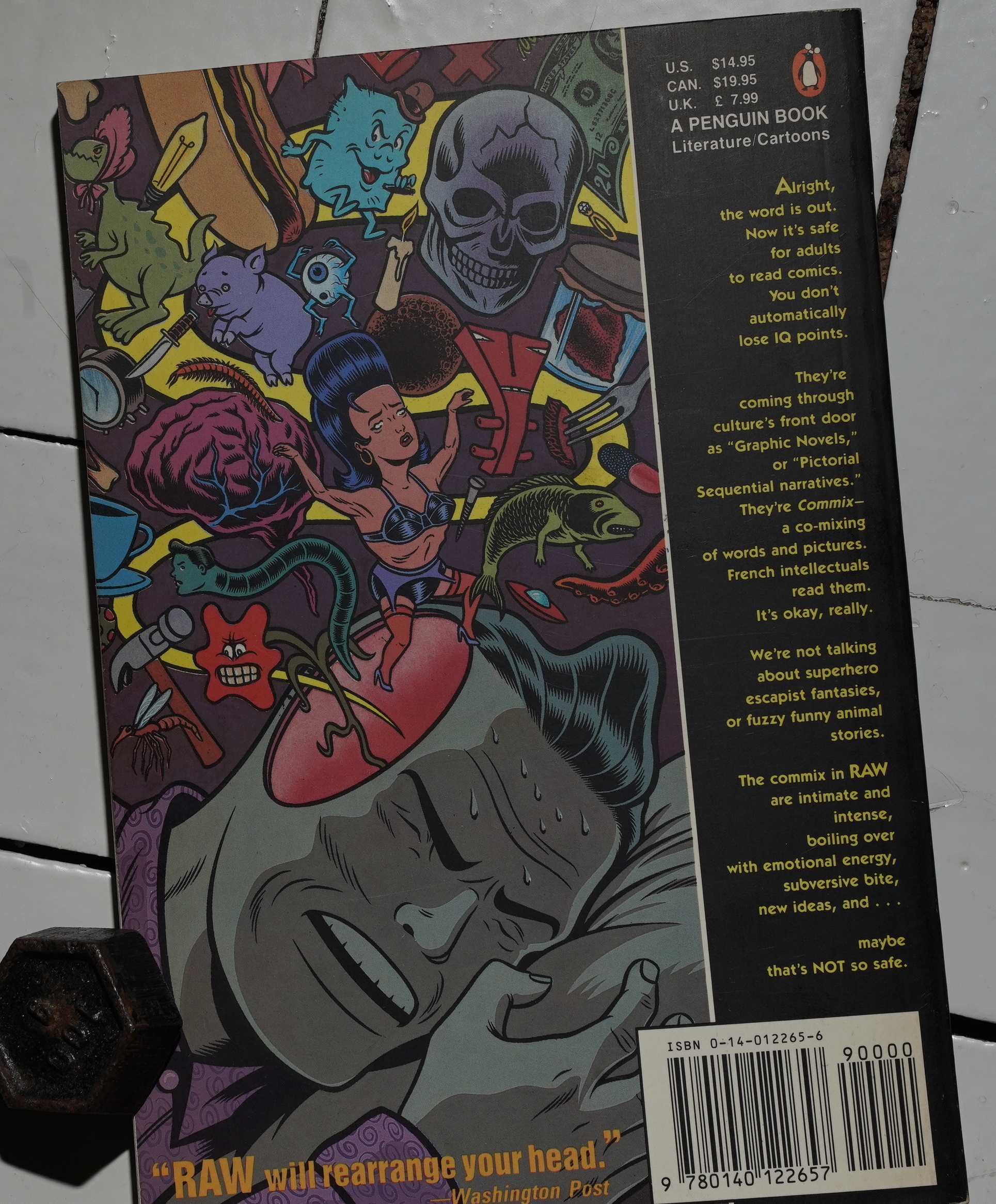
Commix. Spiegelman gives us the hard sell on the back cover.
Kim Thompson writes in The Comics Journal #210, page 84:
After eight self-published tab-
loid-size issues in seven years,
Spi egelman and Mouly re-launched
Raw as a Penguin paperback. Even
though this second “Volume” was
designed in a more mainstream-
friendly format, there were no
creative concessions; in fact, by
making impossible the graphic in-
dulgences Of the tabloid-size
editions, the “new” Raw handily
rendered moot the most frequent
criticism — that its emphasis on
design overshadowed narra-
Unfortunately,
Spiegelman and Mouly called
it quits after three issues. At
that time, Raw had become so
infrequent (those three Pen-
guin editions took six years to
produce) that its disappearance
didn’t carry a sting — more
like a long, slow, creeping dis-
appointment as the ’90s
continued on with no new
releases. But by that time, Raw
had launched so many careers,
defined (and in some cases ex-
hausted) so many trends, and
opened so many possibilities
that its job had arguably been
done.
Michael Dooley writes in The Comics Journal #135, page 60:
Let’s play comics critic butcher and
carve up the new RAW magazine.
After all,’ it’s been garnering high
praise for over a decade. Worse, it’s
now receiving accolades from outside
the comics world. It’s even become
a book-of-the-month club selection.
So, O.K. Let’s start slicing:
First, let’s accuse the once self-
published RAW of going establish-
ment. This latest issue, the 200-page
volume two, number one, now car-
ries the Penguin logo. Wearing
Mickey Mouse ears, no less. And it’s
no longer a “sporadical. ” Rather than
release dates based on Art Spiegel-
man’ s inner compulsion and the avail-
ability of worthy material, a new
volume is scheduled to be delivered
every nine months. And, in a blatant
ploy for respectability , the back cover
pompously categorizes RAW as
‘literature/cartoons. ‘ ‘
And let’s mourn the passing of the
luxurious bomb-shelter coffee table
format, modeled after Wet and other
avant-garde magazines of the late
1970s. RAW has been shrunk down
to Maus size so it fits tidily on shop-
ping mall bookstore shelves and
folding TV trays.
And let’s bemoan the loss of the
angry, abrasive cover illustration, like
Kaz, Mark Beyer, and Charles Burns
used to do. The latest is certainly a
relatively mild concoction, from
“Buy or Die” Gary Panter of all peo-
ple. It’s a goofy grafting of five comic
strip characters into one head, and one
that he did quite a while ago. A Print
Casebook article about the creation of
RAW’s cover for issue three shows it
as a sketch — is there any Other kind
of Panter drawing? — which was re-
jected for being too static and
understated. But that was in 1981,
back before Panter became the Em-
my Award-winning designer for TV’s
Pee- Wee ‘s Playhouse.
And let’s note how the overall
cover design is no more shocking than
its apparent inspiration, the 1954
MAD comic book simulation of life
magazine with Basil Wolverton’s
Lena the Hyena.
And let’s claim that the material in-
side, billed as “Open Wounds from
the Cutting Edge of Commix,” is
simply a collection of the usual gang
of idiosyncrats, suffering from tired
blood. Their work is just Soho-hum,
designed to be easily accessible to the
trendy set.
[…]
If RAW is running the risk of
becoming the darling of yuppie
hipsters it’s certainly not because it
caters to their huge egos. Witness the
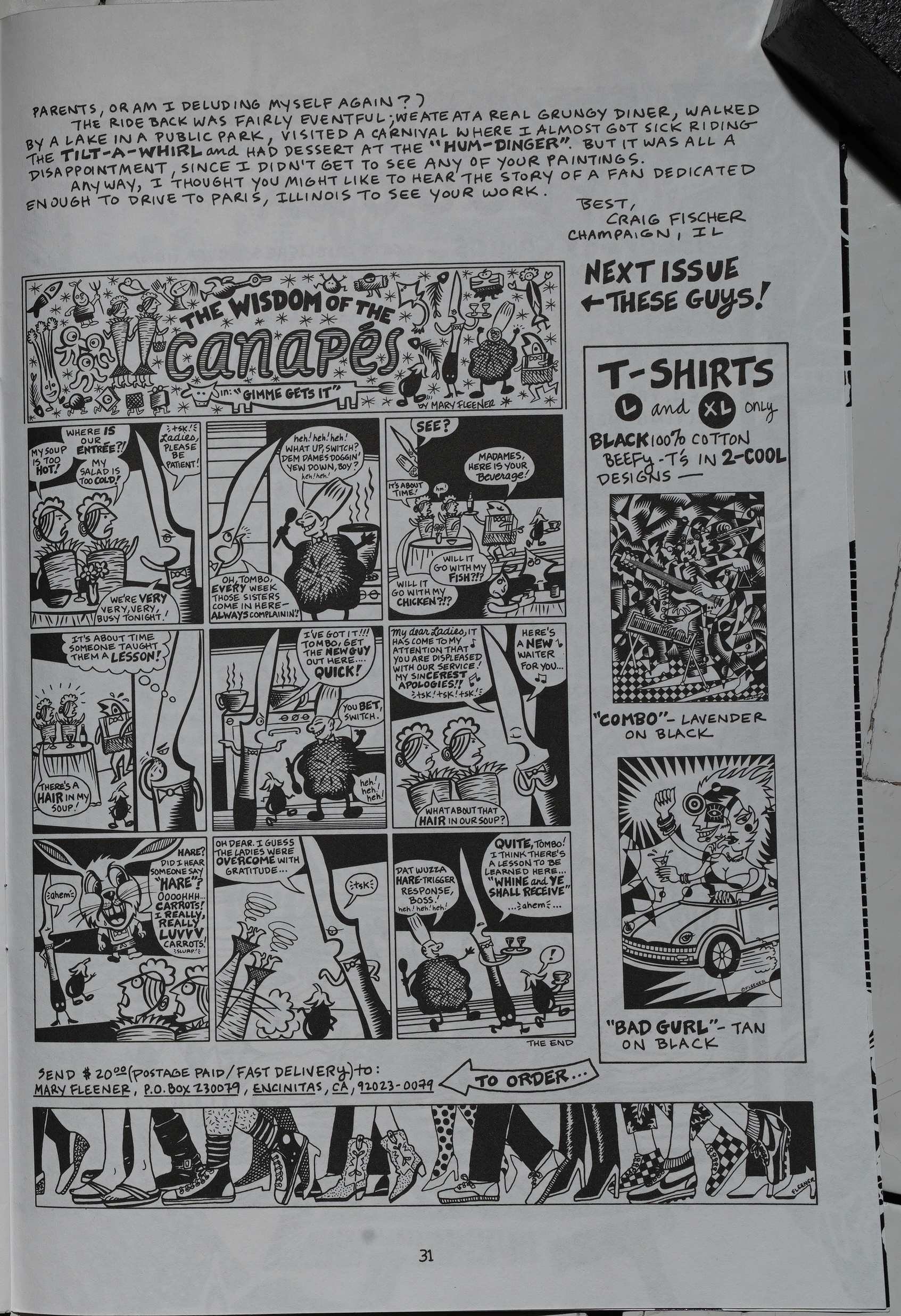
inclusion of “The Single-Minded
Pursuit of More,” Georgeanne
Deen’s painting, in violets and
yellows, on the inside back cover,
positioned opposite Catalan’s full-
page ad for RAW-related merchan-
dise. Looking like a record album
cover that was cropped on the side,
it shows a material girl from hell with
a blobby Jag, tiger skin toreador
pants, pointy tailfin breasts, Woody
Woodpecker hairstyle, and eyes lit
with a fierce, determined, insatiable
hunger to have it all. While not ap-
proaching the brutally awesome pow-
er of RA W s past painter-contributor,
Sue Coe, Deen’s vicious portrait
radiates a savage electricity.
But these are just appetizers. Let’s
dig into RAW’s main course, the
eighth chapter Of Maus.
Spiegelman has an amazing talent
for subtly injecting his cerebral humor
into the most personally horrifying
circumstances. The tide of this install-
ment, “Time Flies,” is a complex
pun involving anthropomorphism and
EBticides. He has, however,
the “M” from “Mauschwitz.” It’s
as as if, now that he’s arrived at that
actual point in the story , his vision Of
the place has become too real for him
to continue to indulge in flippant
wordplay.
[…]
More’s the pity that Spiegelman’s
acute characterizations are severely
weakened by his casual sketchbook
renderings. This style, while it has an
appealing spontaneity and vitality, is
too understated, too easy to dismiss.
[…]
Psychosis reaches a strident pitch
with “The Glass Thief,” in which
Mark Beyer, comix’s conductor of
gloomy tunes and mortuary melodies,
reprises his usual notes of discord.
Amy and Jordan get Out of to find
all their pets are dead. Killed by a
green man dressed like a clown who
leaves more corpses all around. “I am
nothing,” the green man cries. He
threatens to kill them, but then he
dies. We’re just getting bopped with
the beat of the same old song Of
alienation, desolation, and despera-
tion, played out like shattered Philip
Glass.
[…]
Given the same number of pages,
Krystine Klyttre’s ‘ ‘Social Butterfly”
also portrays a world careening
hysterically out of control. Yet, she
manages to maintain our interest
throughout.
[…]
Bob Fiore’s comments in Comics
Journal #132 notwithstanding, RAW
is now using much more Of the con-
ventional sequential image method of
storytelling. And, in doing so, it’s ac-
commodating the expectations of new
readers drawn in by word Of Maus.
Despite post-MTV claims Of a new
visual literacy, people are uncom-
fortable with abstract narrative as
racticed by Mouly, Cathy Millet,
Patn•cia Caire, Bruno Richard, and
Joe Schwind. These very talented
contributors, when mentioned at all,
are unjustly dismissed with derisive
accusations of pretentiousness,
obscurantism, and such.
Will RAW continue to dish out
vapid and lukewarm fare from Beyer,
Friedman, Green, and Katchor? Or
will it serve us yet more spicy and
succulent cuisine to surprise Our
palates, such as it has with “Dead
Dick,” “Poop Deck,” “Zephyr,”
‘ ‘Paul,” and “Here”?
Whatever Spiegelman is ccxyking up
for the future, for the here and now,
R4Wis still the best meal in town.Ü
R. Fiore writes in The Comics Journal #132, page 49:
The problems with RAW, such as
they are, have to do with Art Spiegel-
man and Francoise Mouly’s difficul-
ties in adapting to success. I don’t
knmv where you’re going to find a bet-
ter 200 pages of comics in one place,
but just about everyone I’ve heard talk
about it has expressed some disap-
pointment with it, including Spiegel-
man. (RAW’s new term for the medi-
um, incidentally, is “commix.” Spie-
gelman has tied himself to the mast
of this uglyism and is apparently will-
ing to go down with it.) The editors
have said in previous interviews that
one of the original ideas behind RAW
was to do something new with each
issue, and as they’ve gotten to the tenth
issue they’re discovering that there
aren’t that many new things to do.
Spiegelman has complained of a lack
of new talent of RAW caliber, which
suggests that he was counting On new
talent to regenerate the magazine. But
can you really expect that much new
talent every issue? There was a lot of
new talent about in the beginning
until RAWthere was no place
for it to be published. The problem
is not only that this RAW has the same
people, but that it has the same peo-
ple doing the same things. The danger
is that RAW will start coming out
because there has to be something to
wrap around the new Maus chapter.
There is one untried direction for RAW
to progress in, though, and that is nar-
rative. I don’t think this was ever con-
scious policy, but the effect of the way
the editors choose material for RAW
has been that the only one allowed to
use the techniques of conventional
narrative and characterization is Spie-
gelman. Now that everything is the
same size, this begins to 100k more
and more like privilege.
Ah, so there really was a general disappointment with this book at the time. Spiegelman’s complaint about the lack of new, exciting artists totally undermines my guess that they were just including in familiar faces as a favour — and the late 80s was a weird time for art comics. I’m not intimately familiar with the French(ey) comics scene, but looking from outside, after the semi-collapse of many reliable anthologies, it seemed like the only thing coming out of that scene was science fiction, porn, and science fiction porn. (This changed in the … mid 90s? when (for instance) L’association and Le dernier cri (etc) got cracking and made it possible to publish interesting stuff in France(y) again.
And in the US, things were also in the doldrums in the art comics scene. The next generation wouldn’t arrive until a few years later (Julie Doucet, Chris Ware, etc)…
This blog post is part of the Punk Comix series.