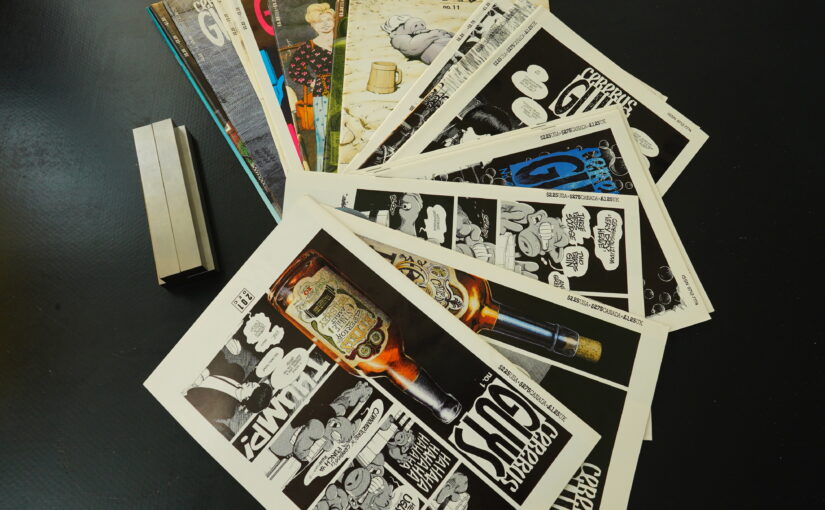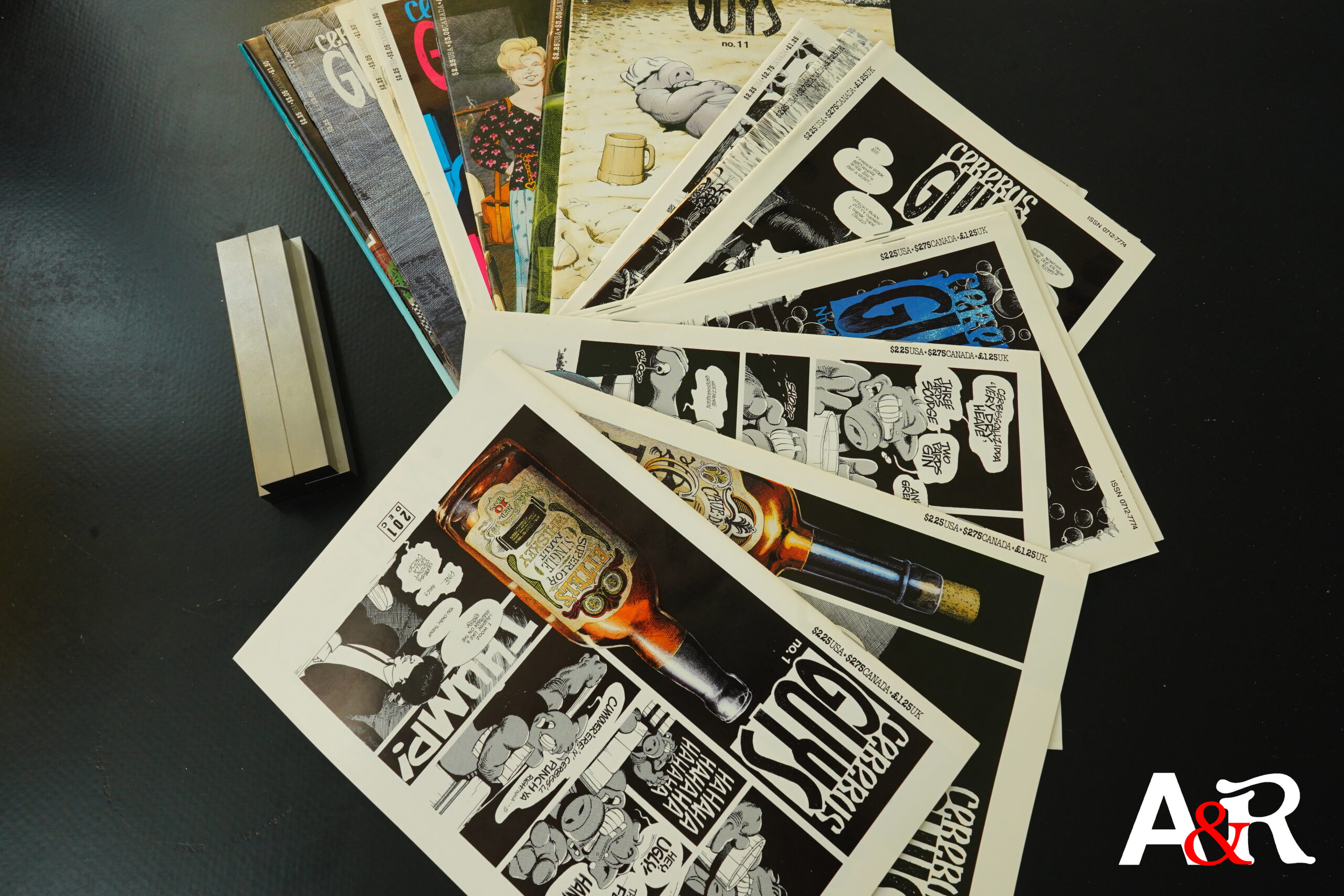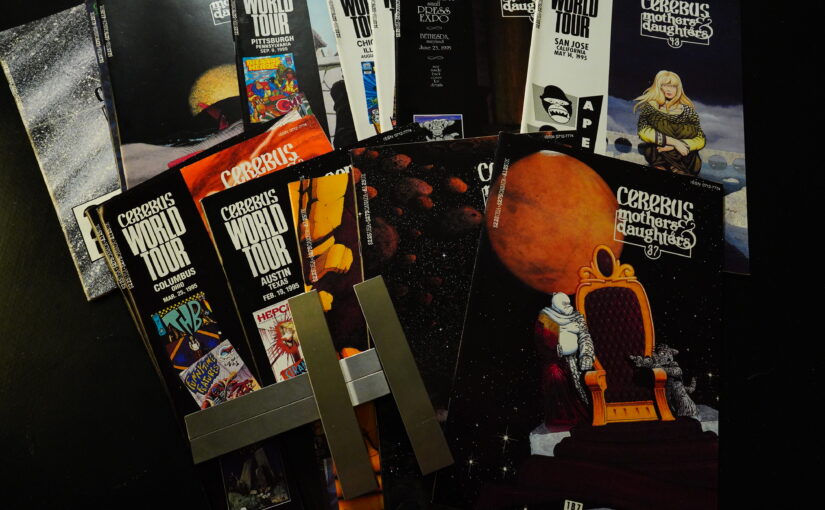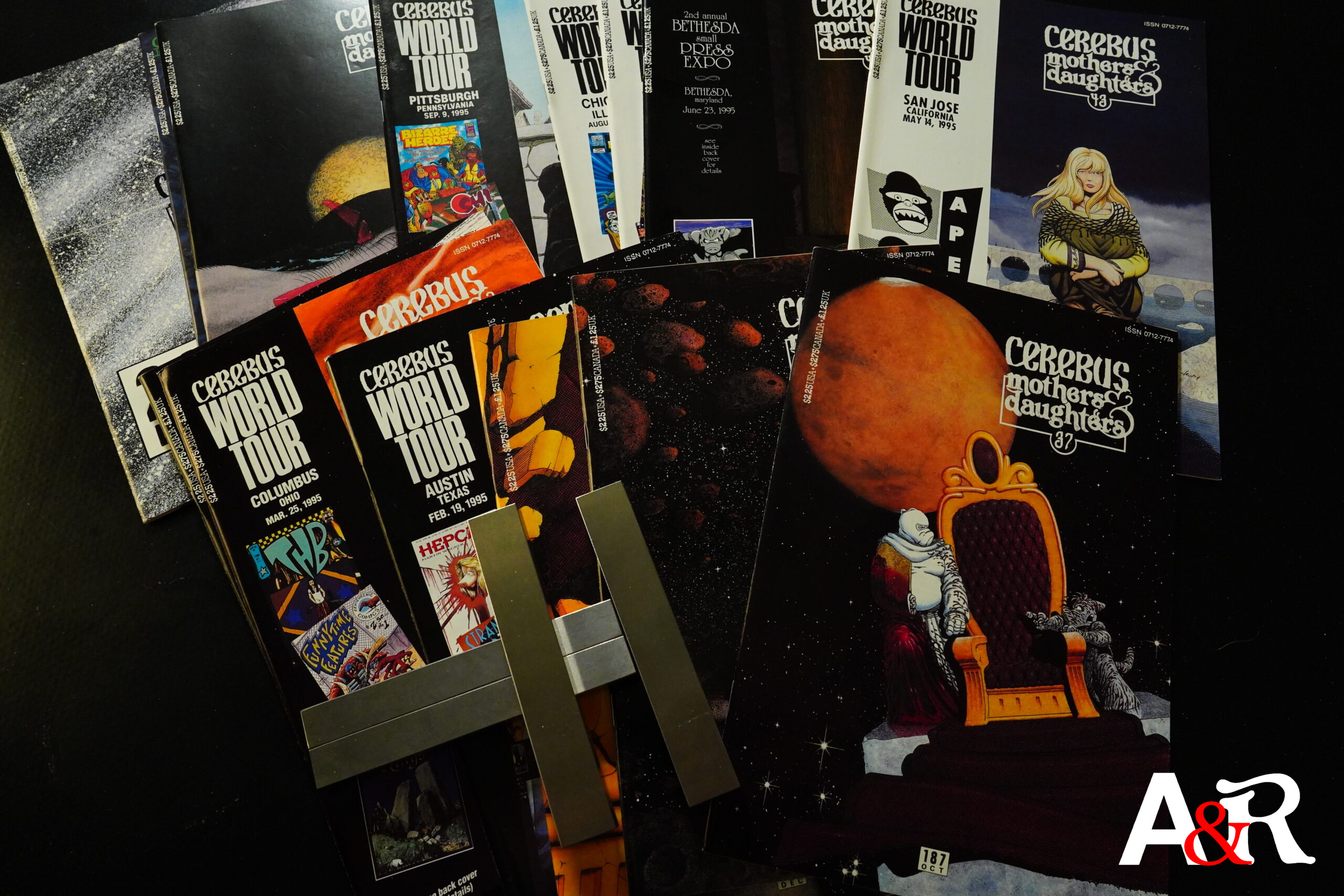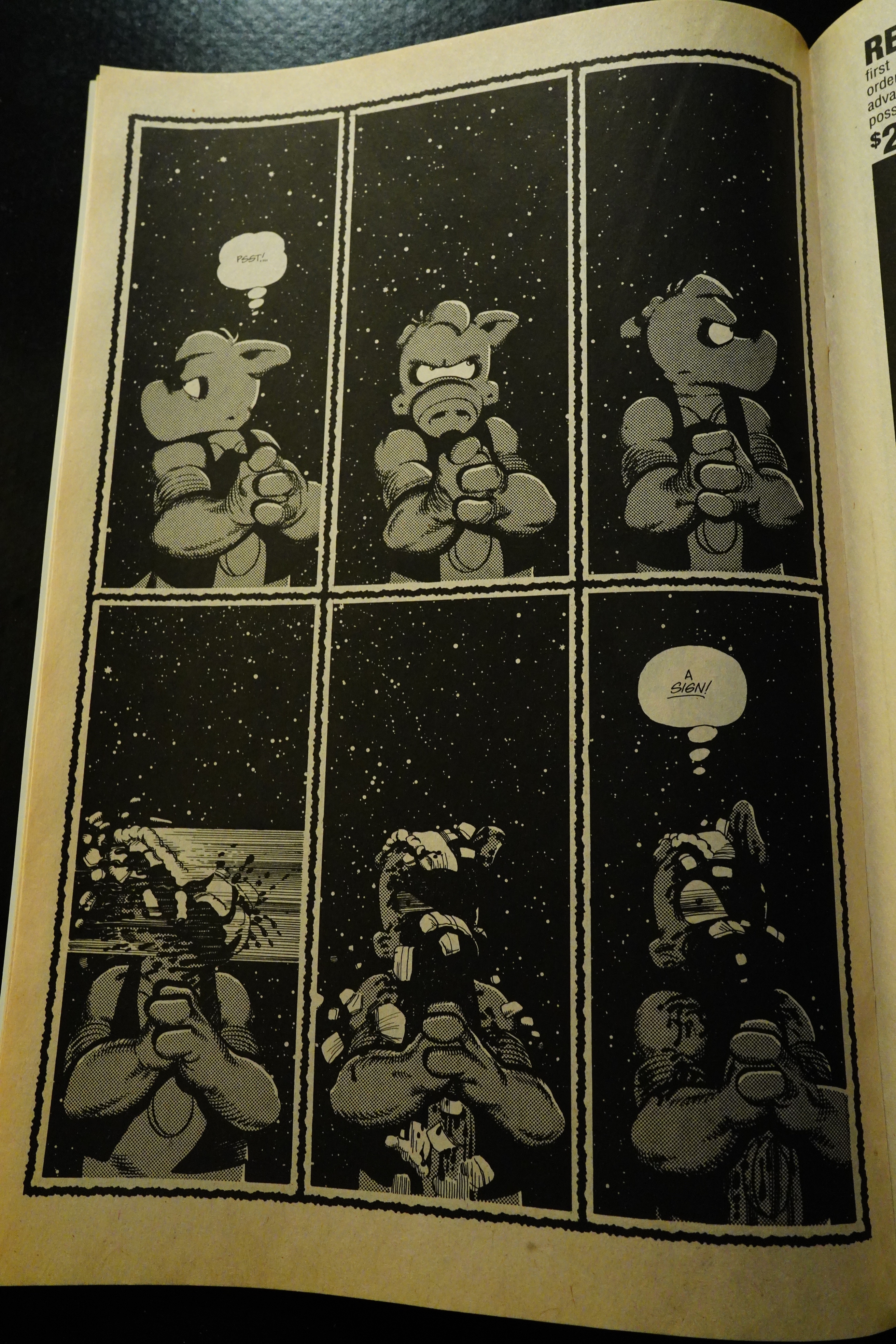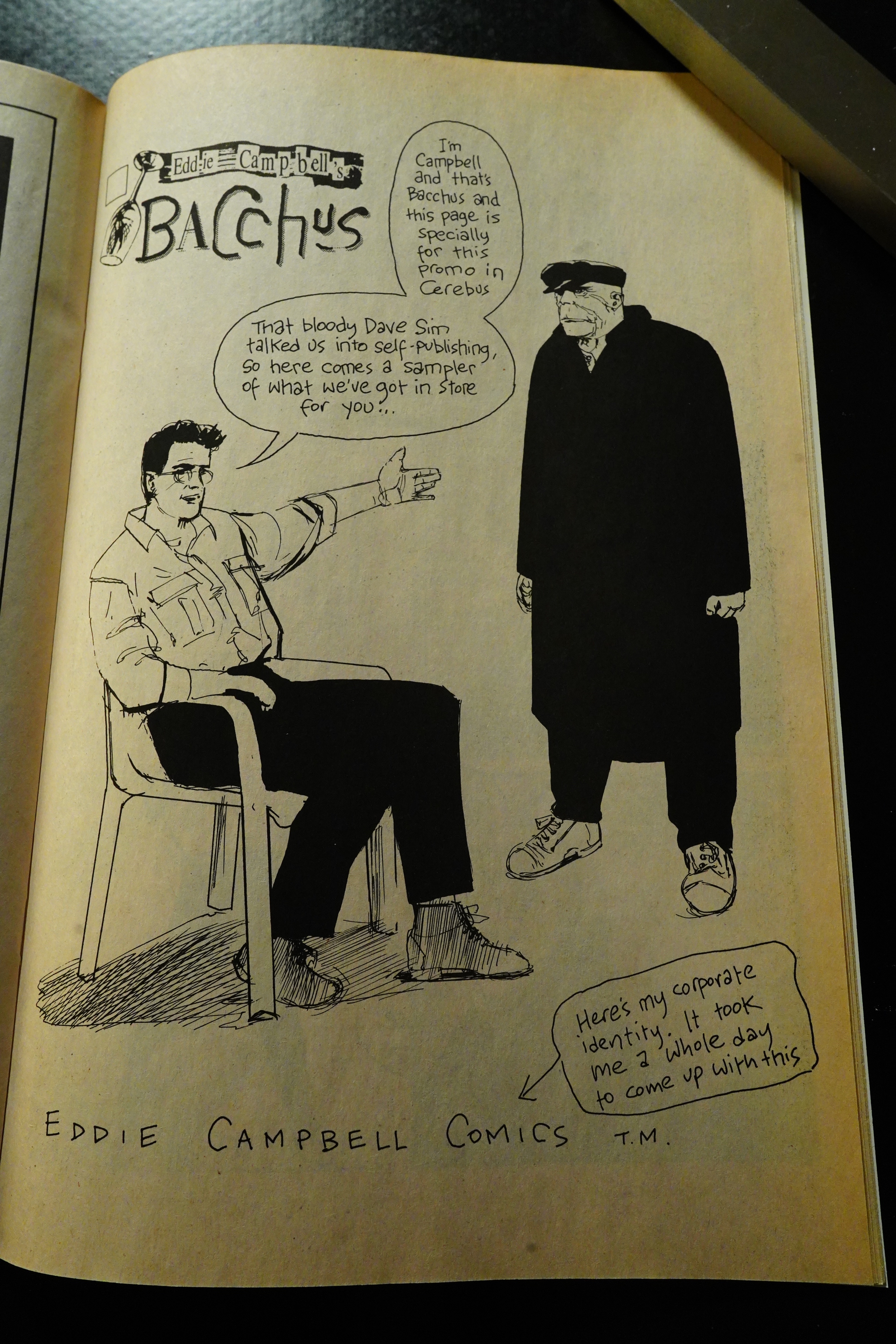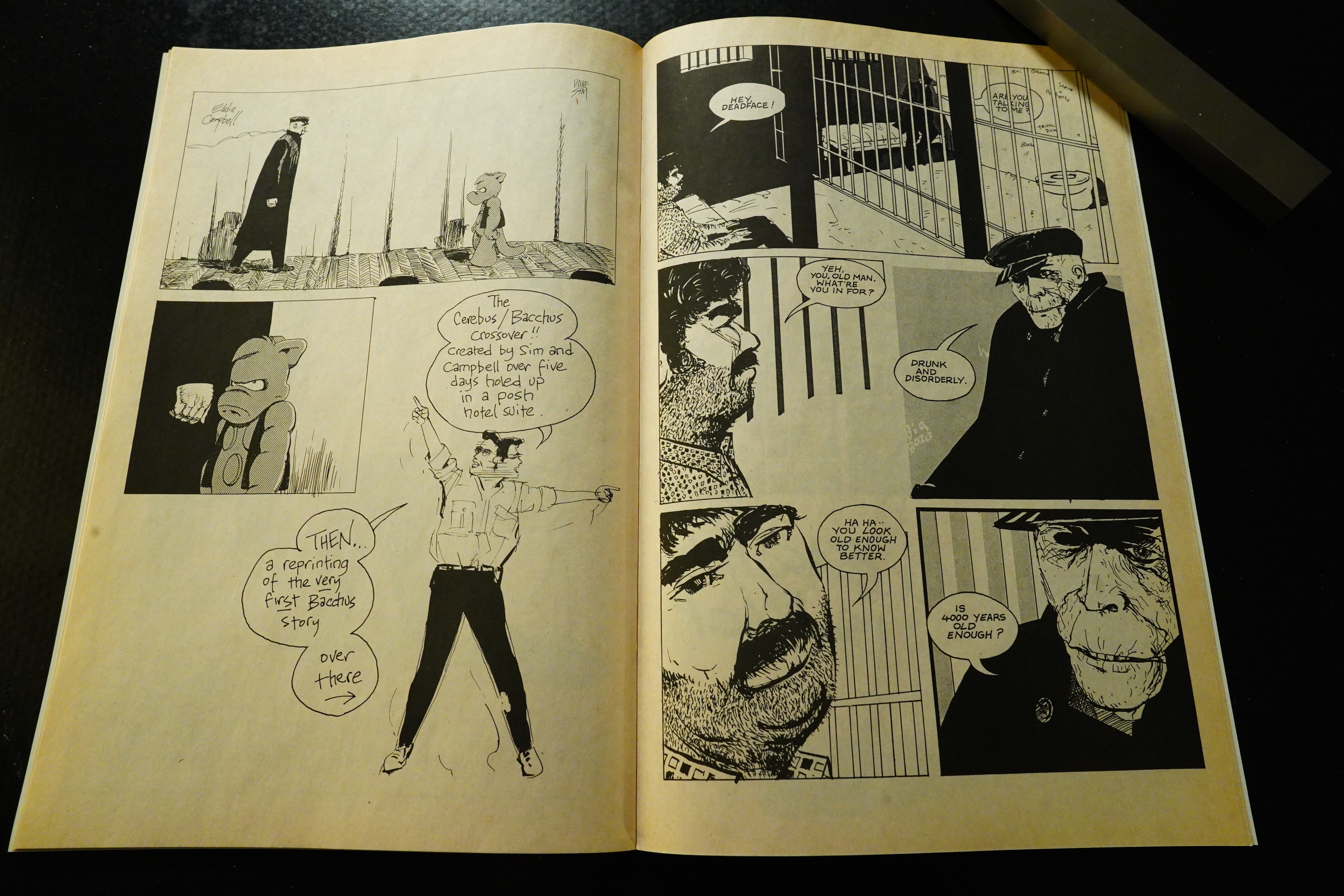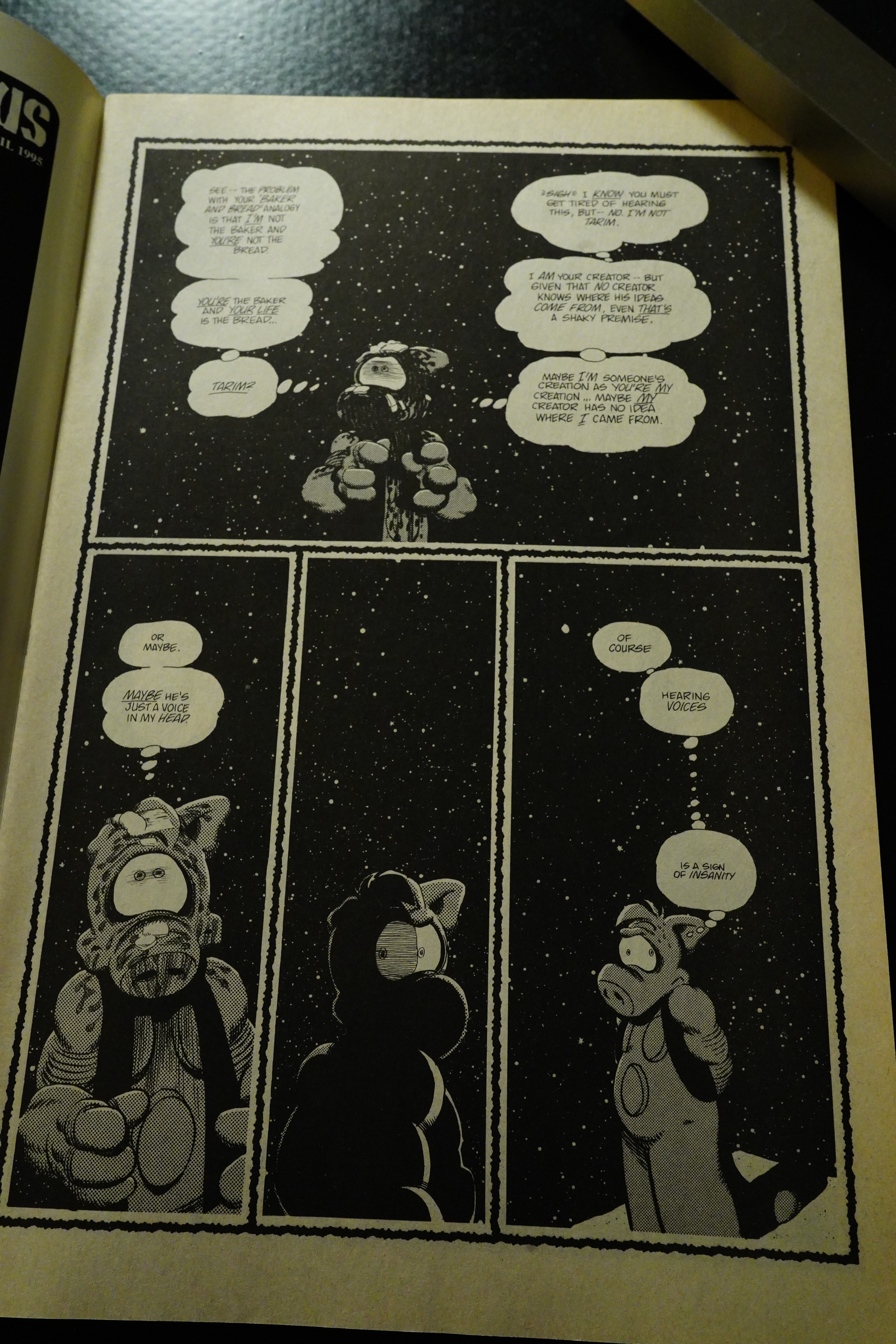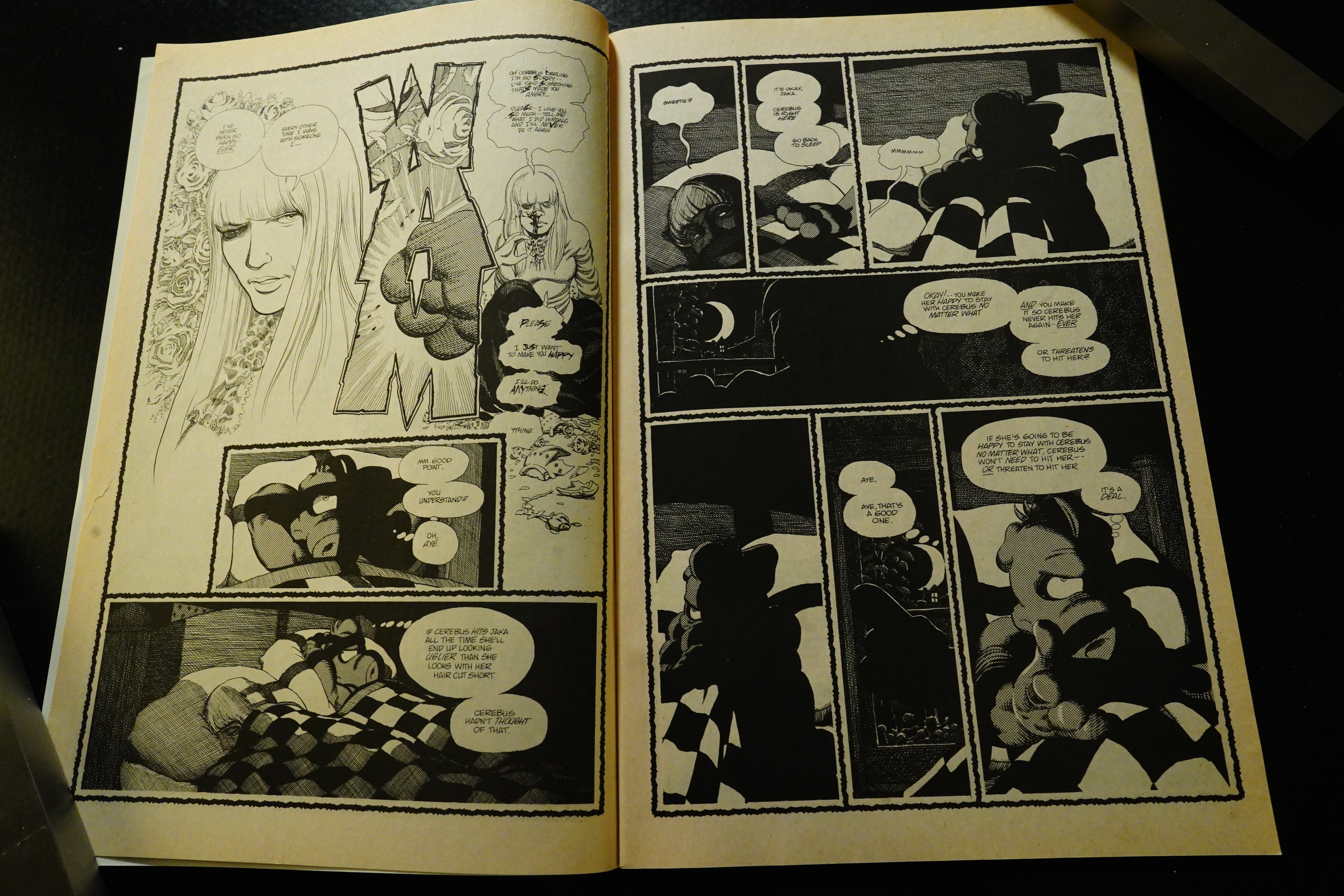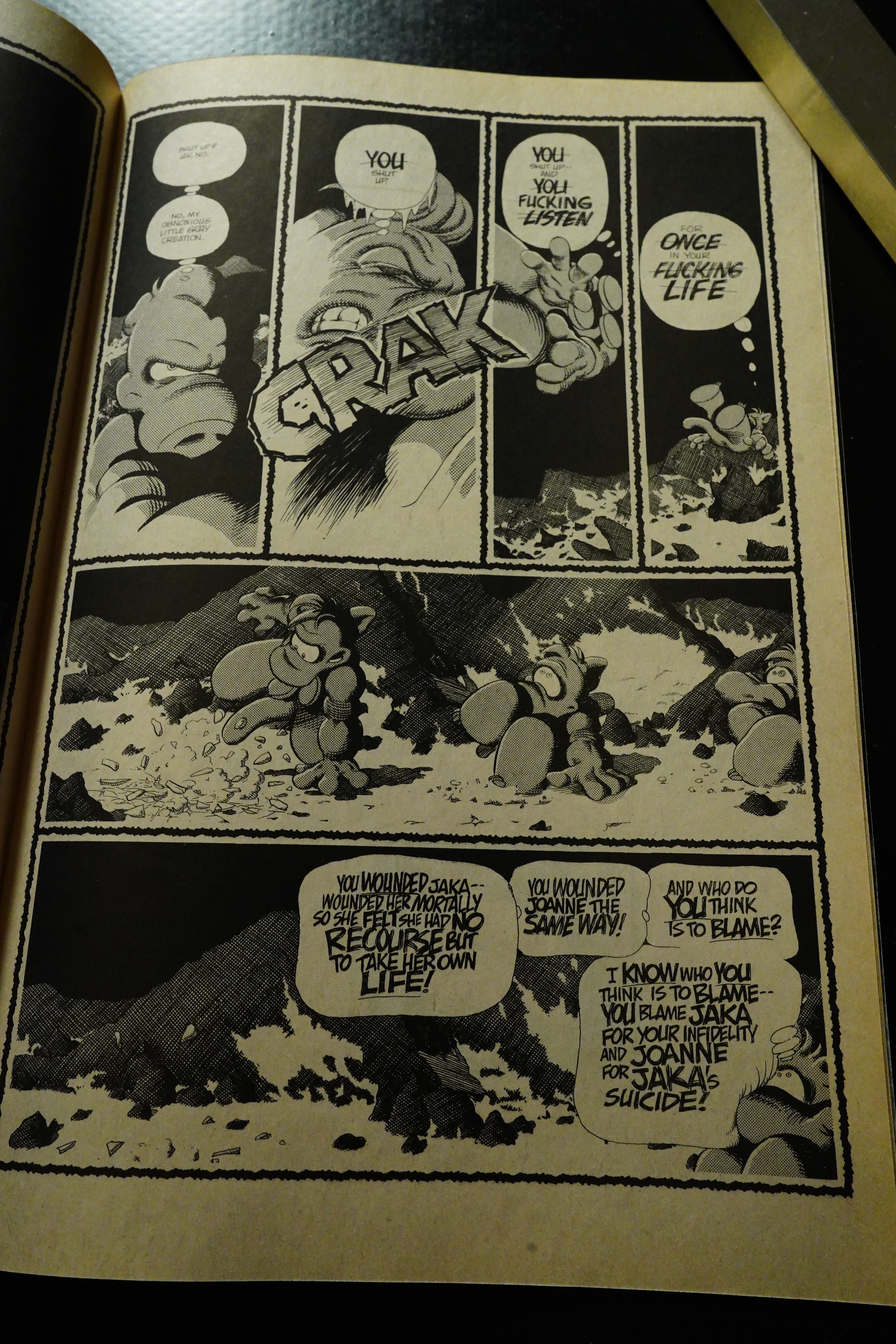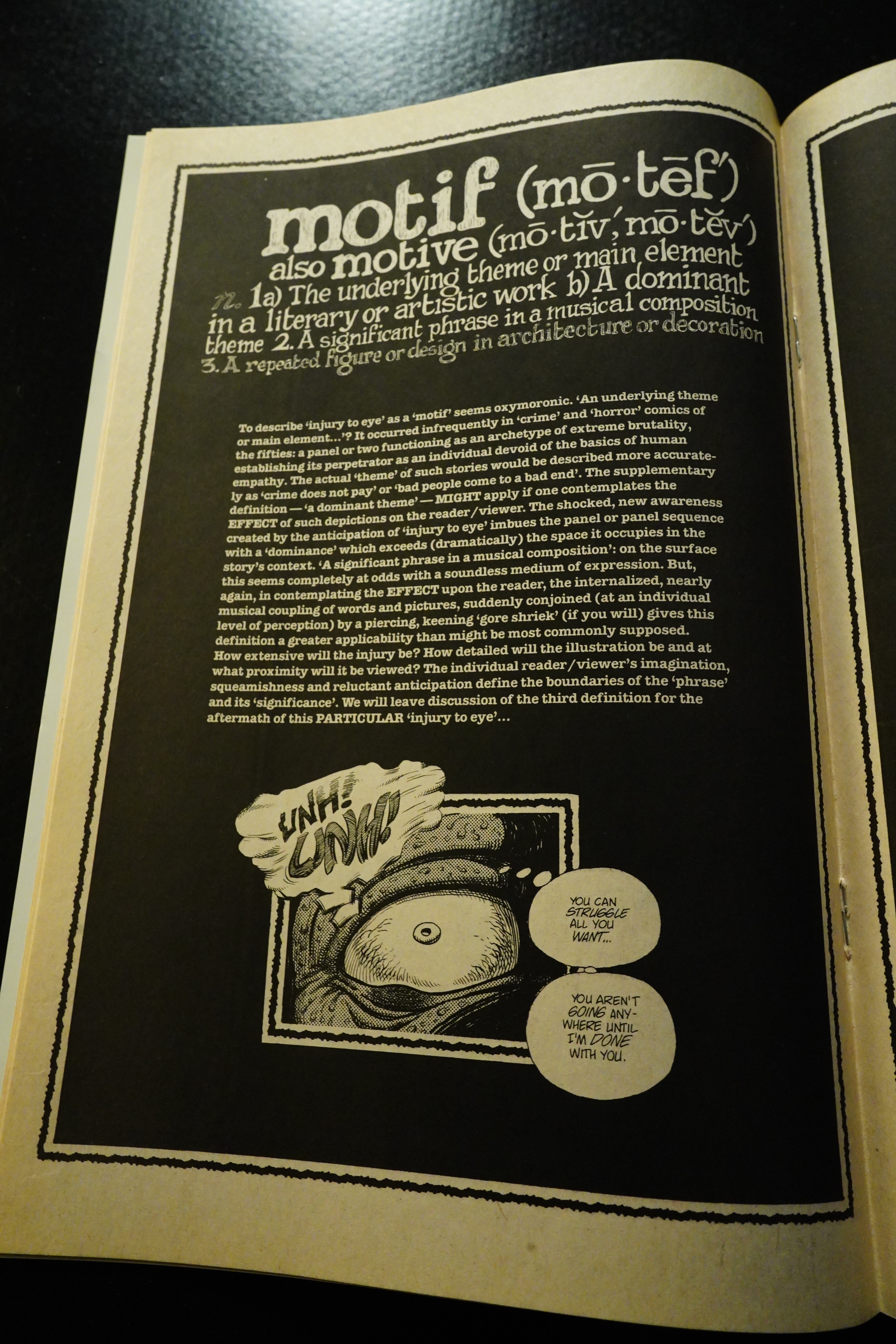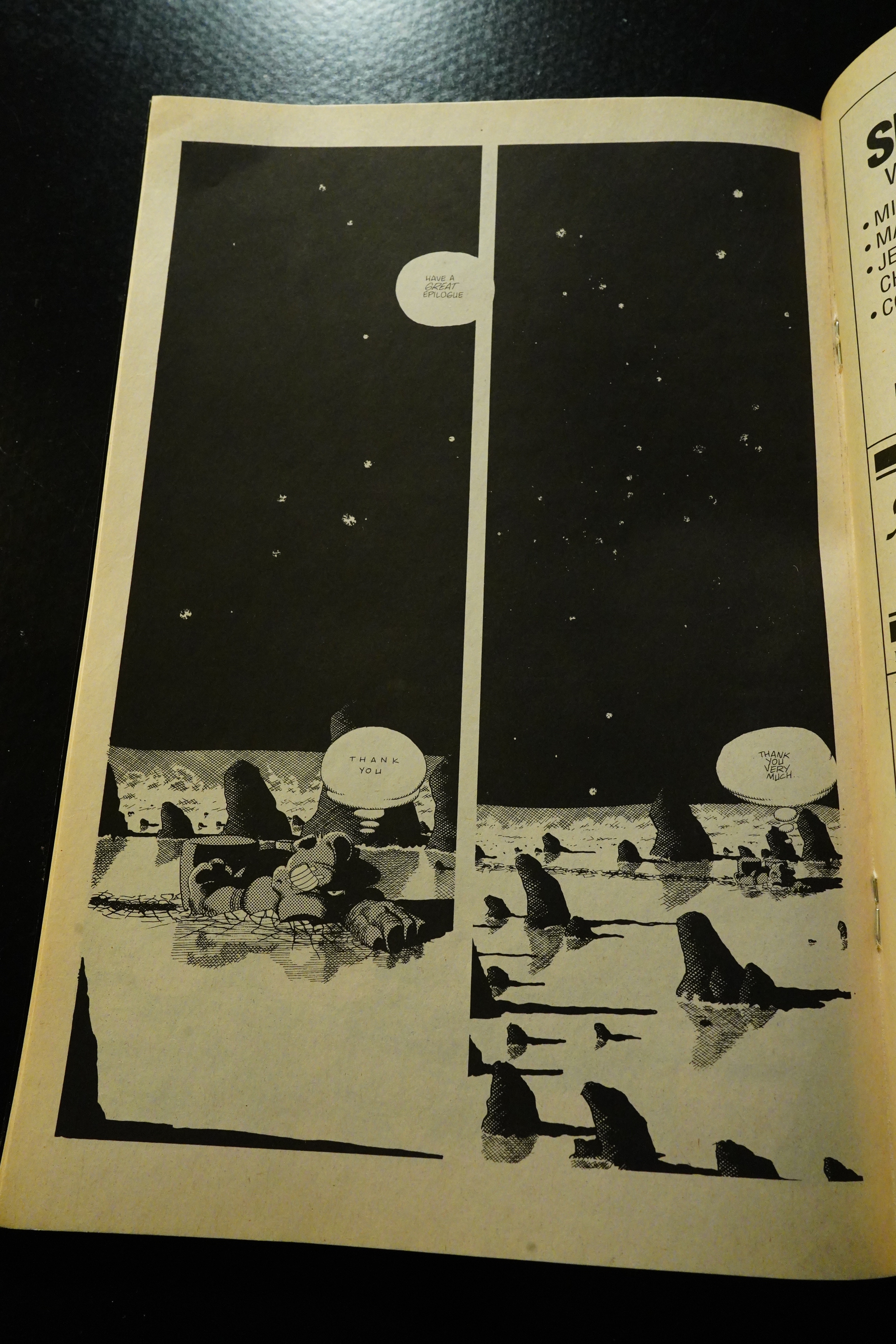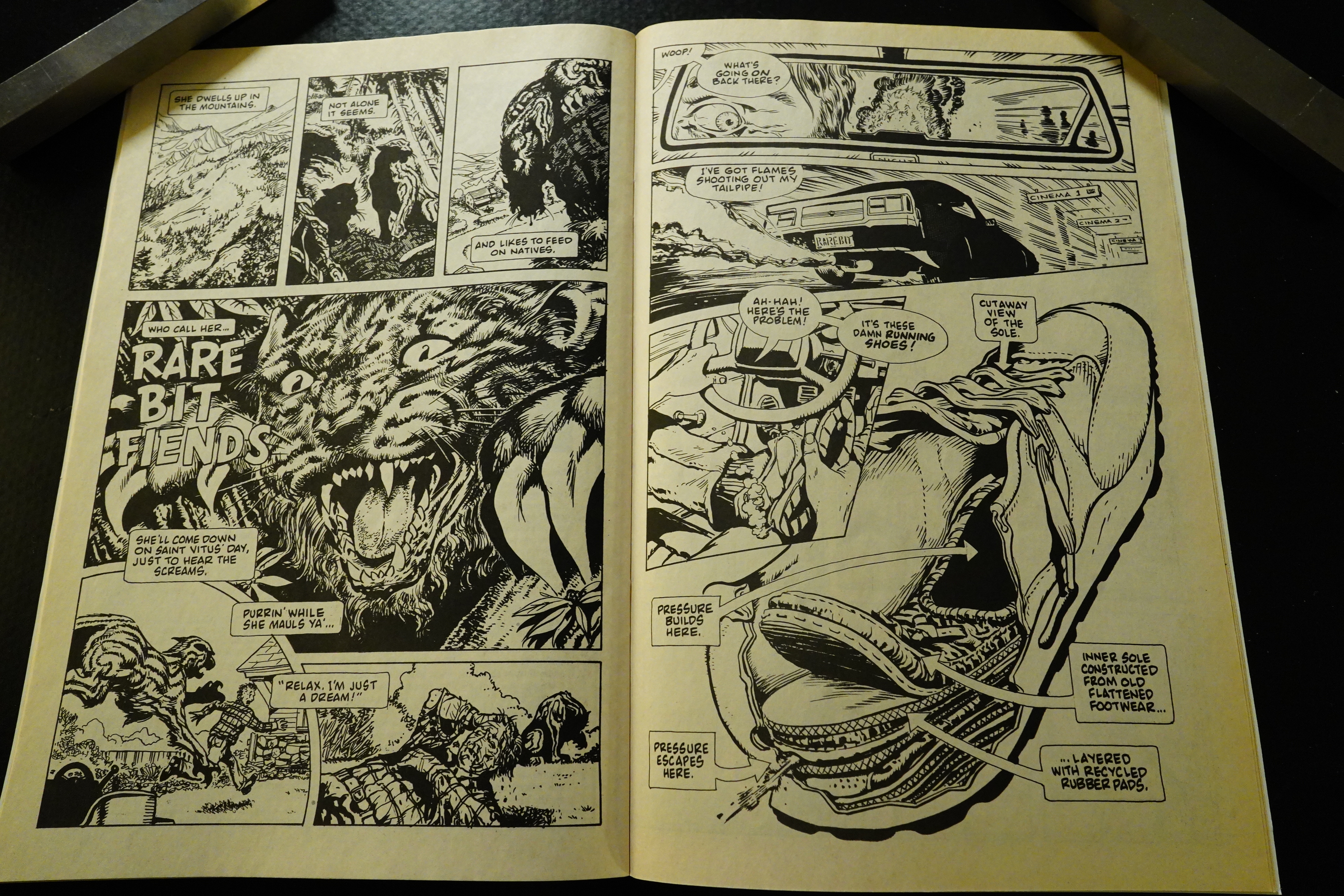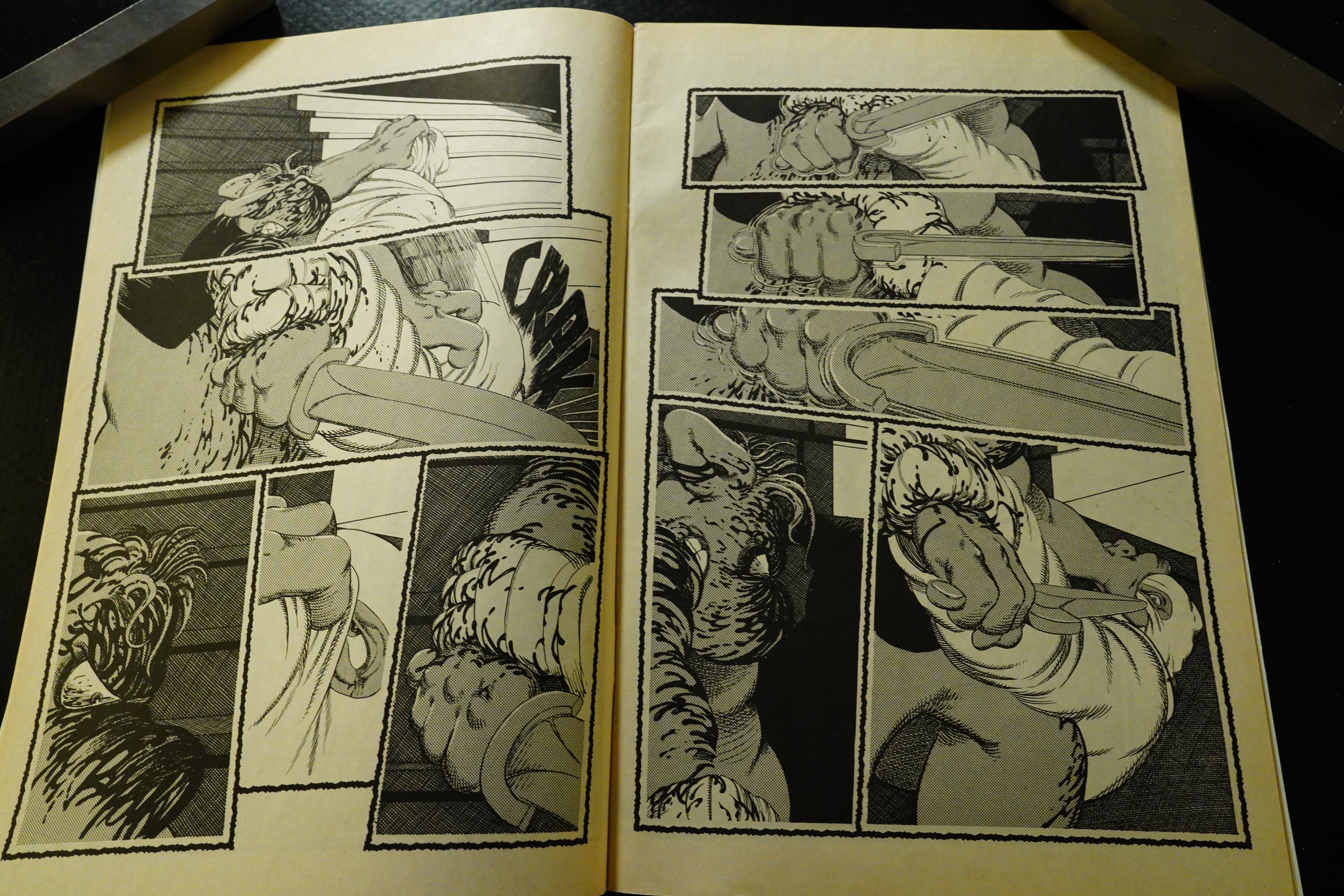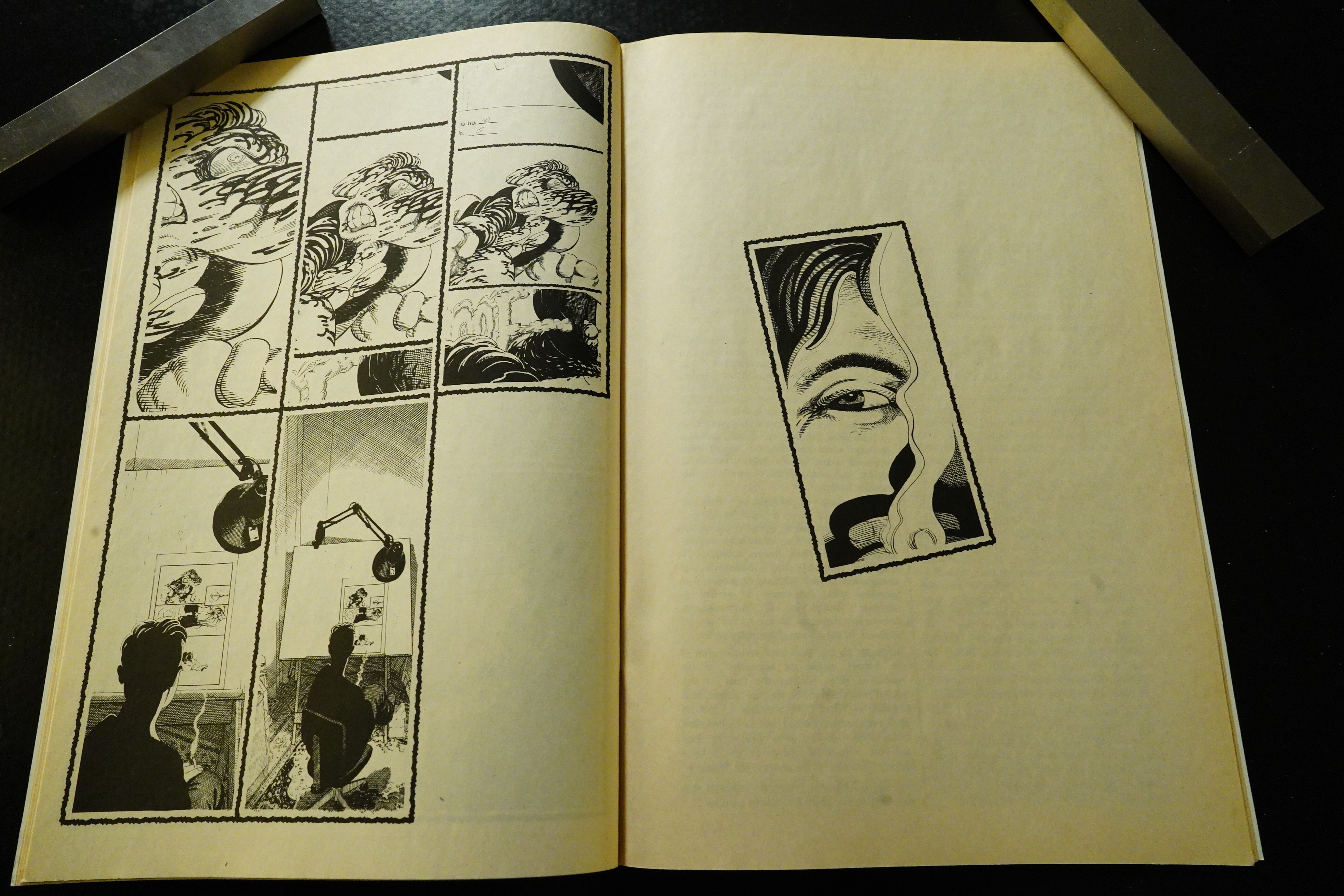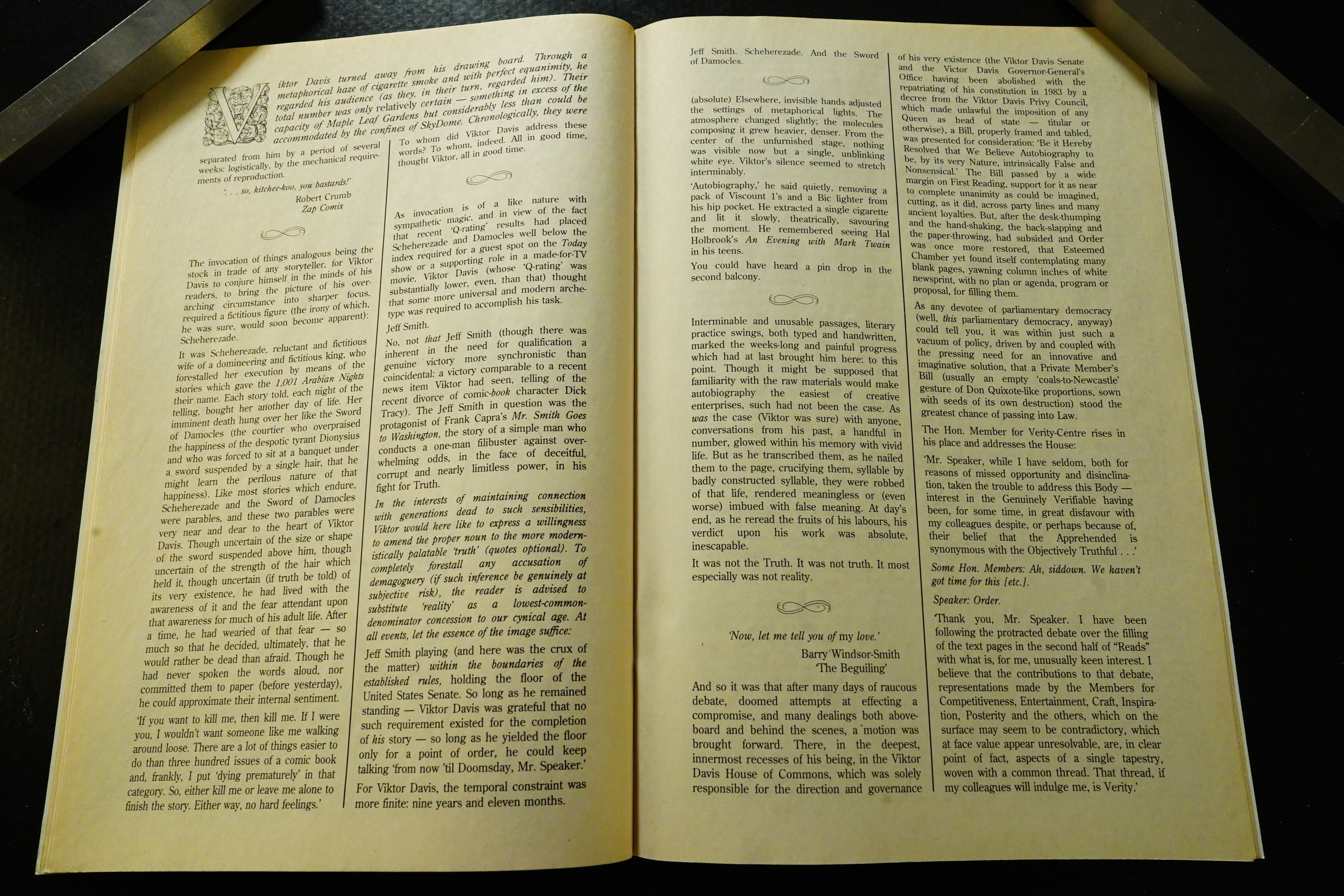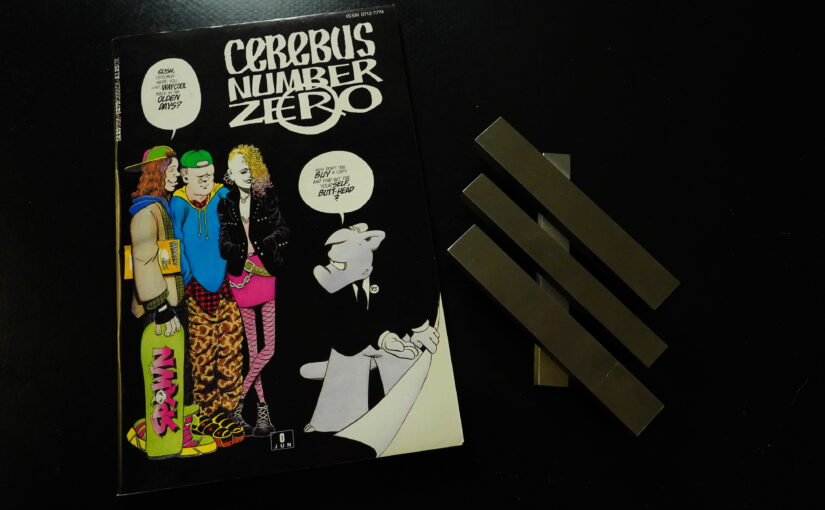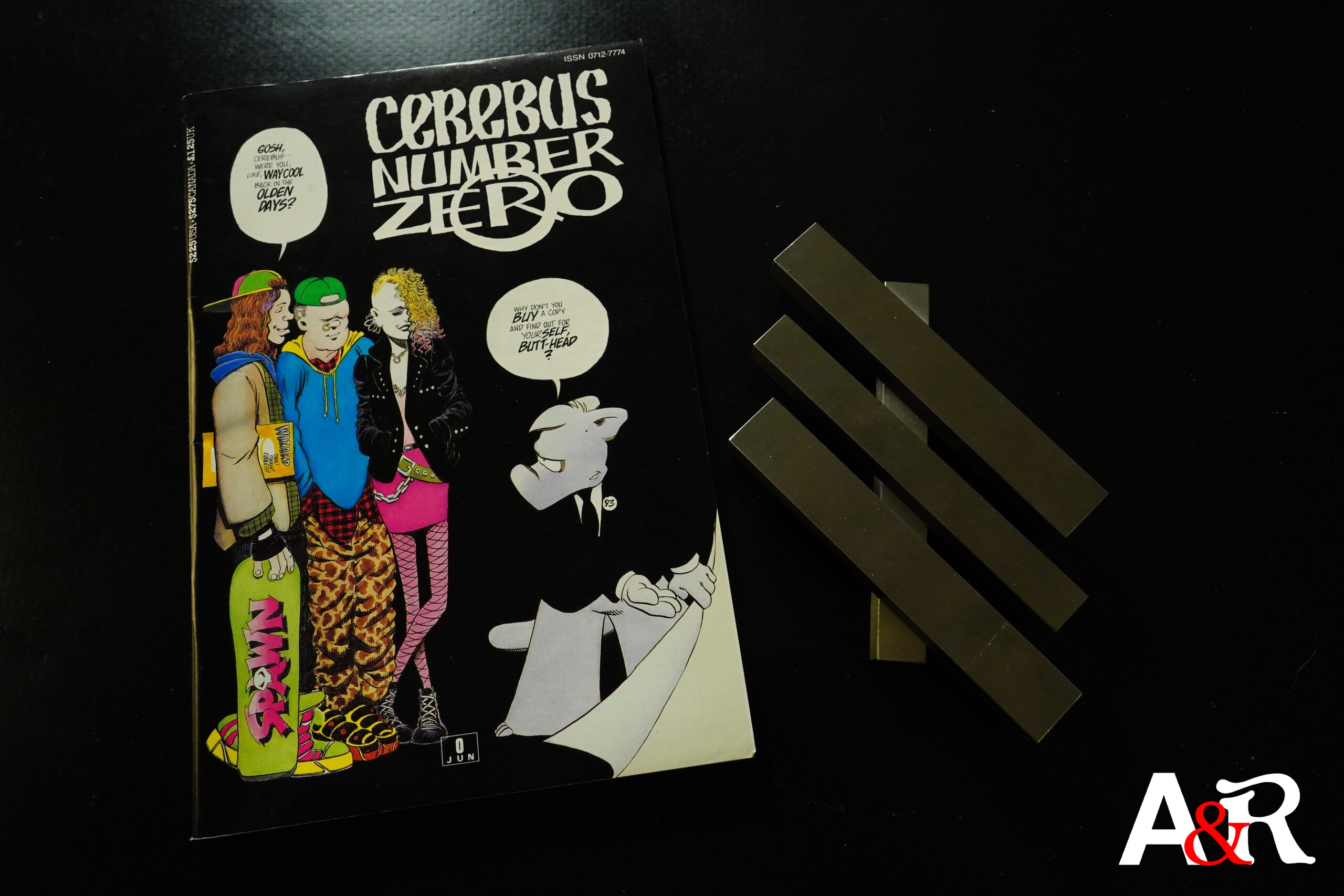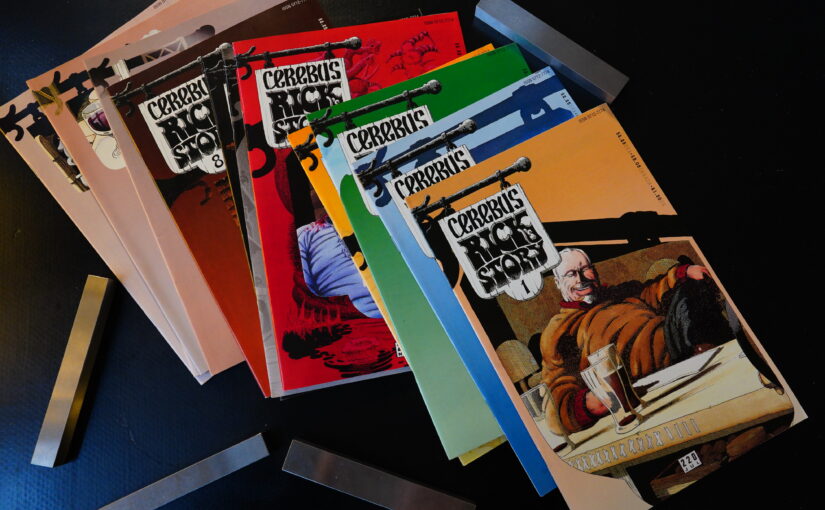
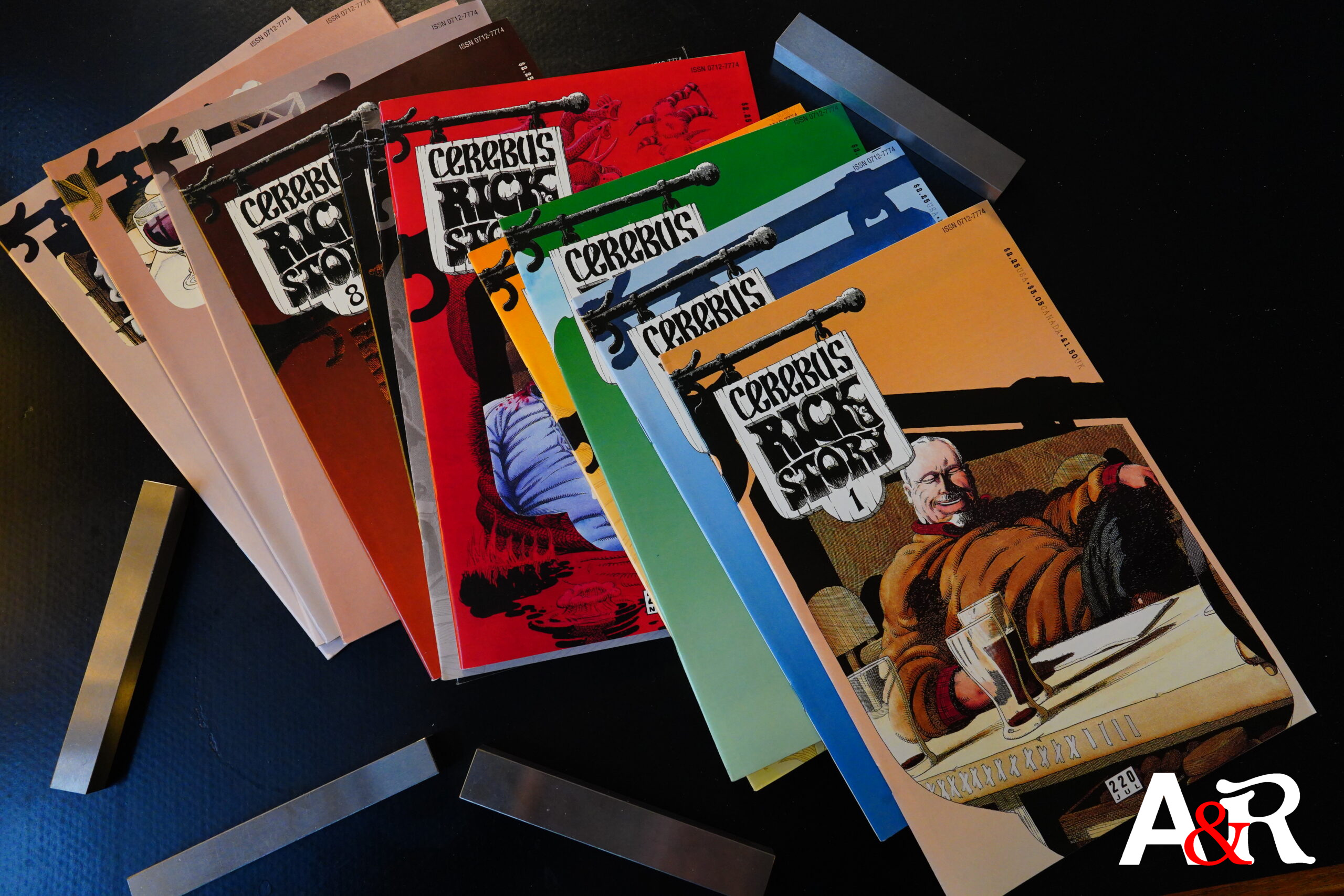
Cerebus (1997) #220-231 by Dave Sim & Gerhard
OK, Rick’s Story.
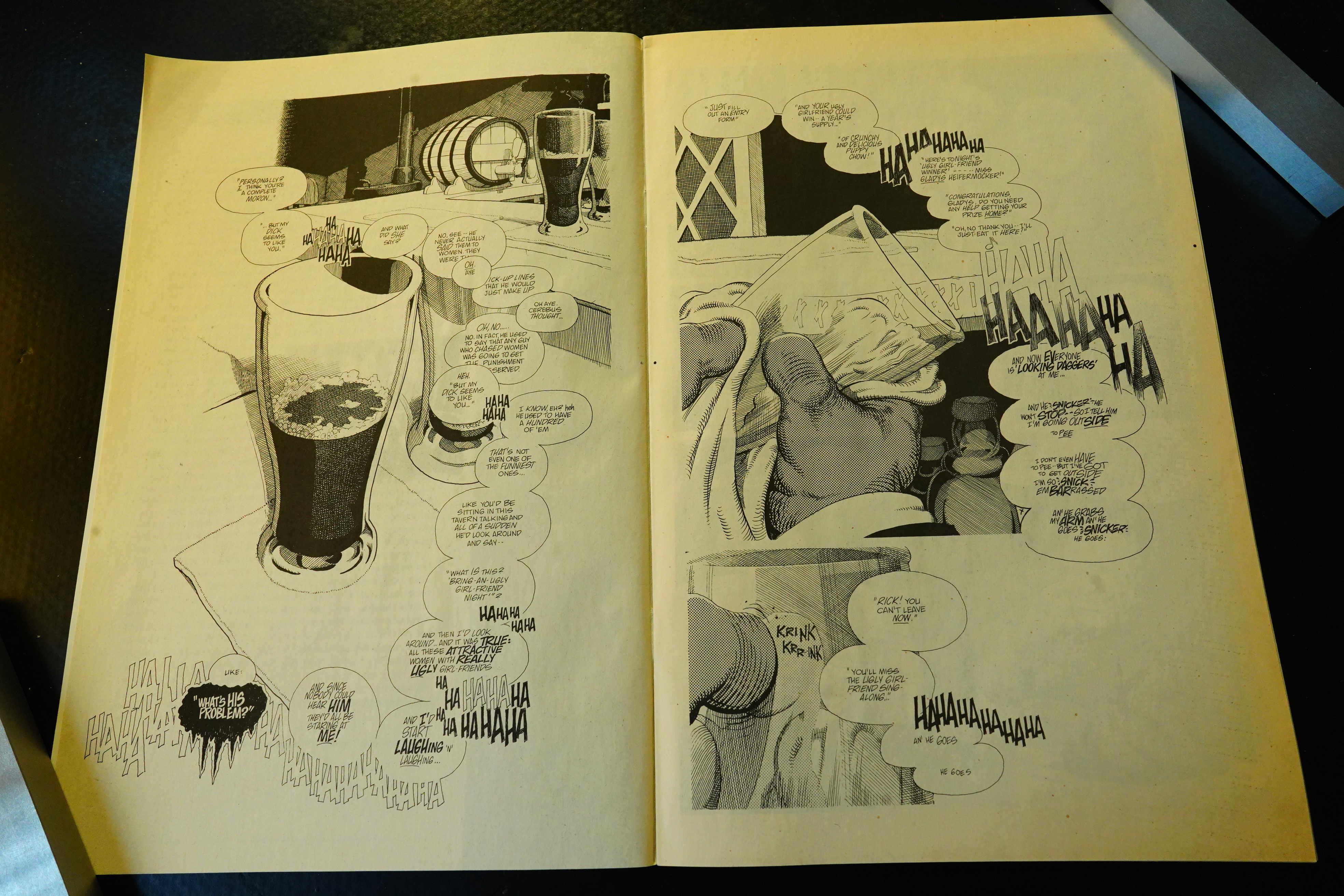
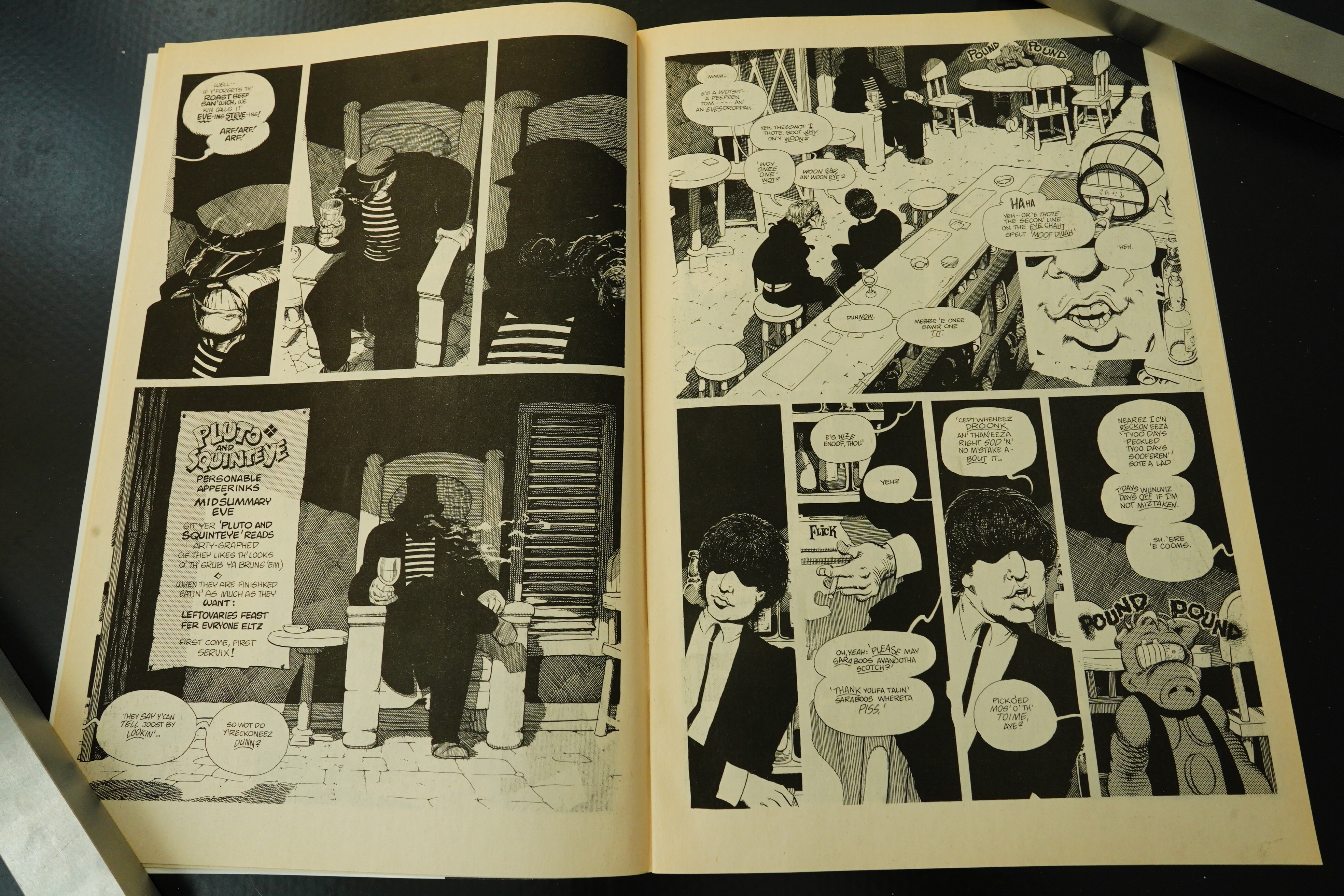
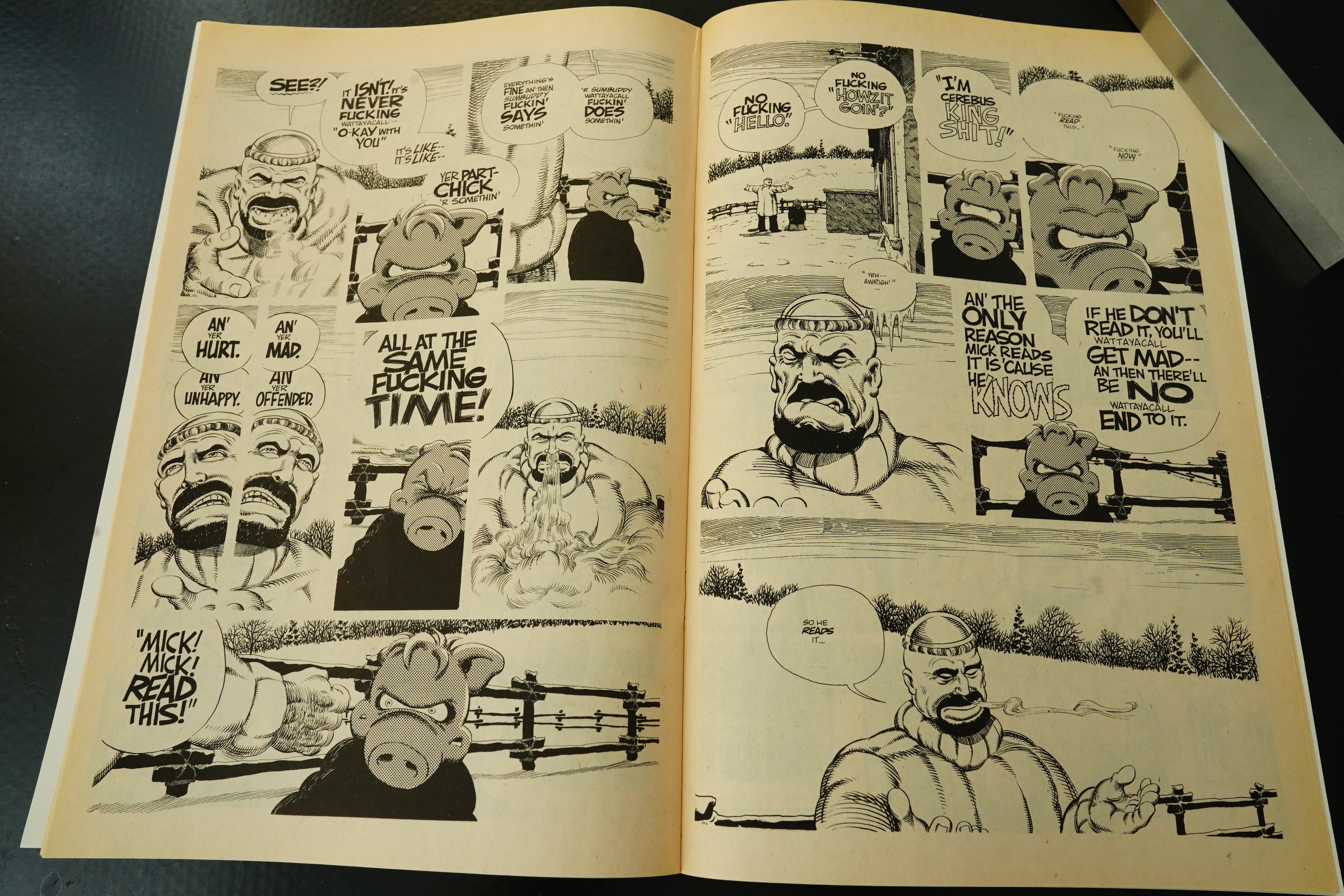
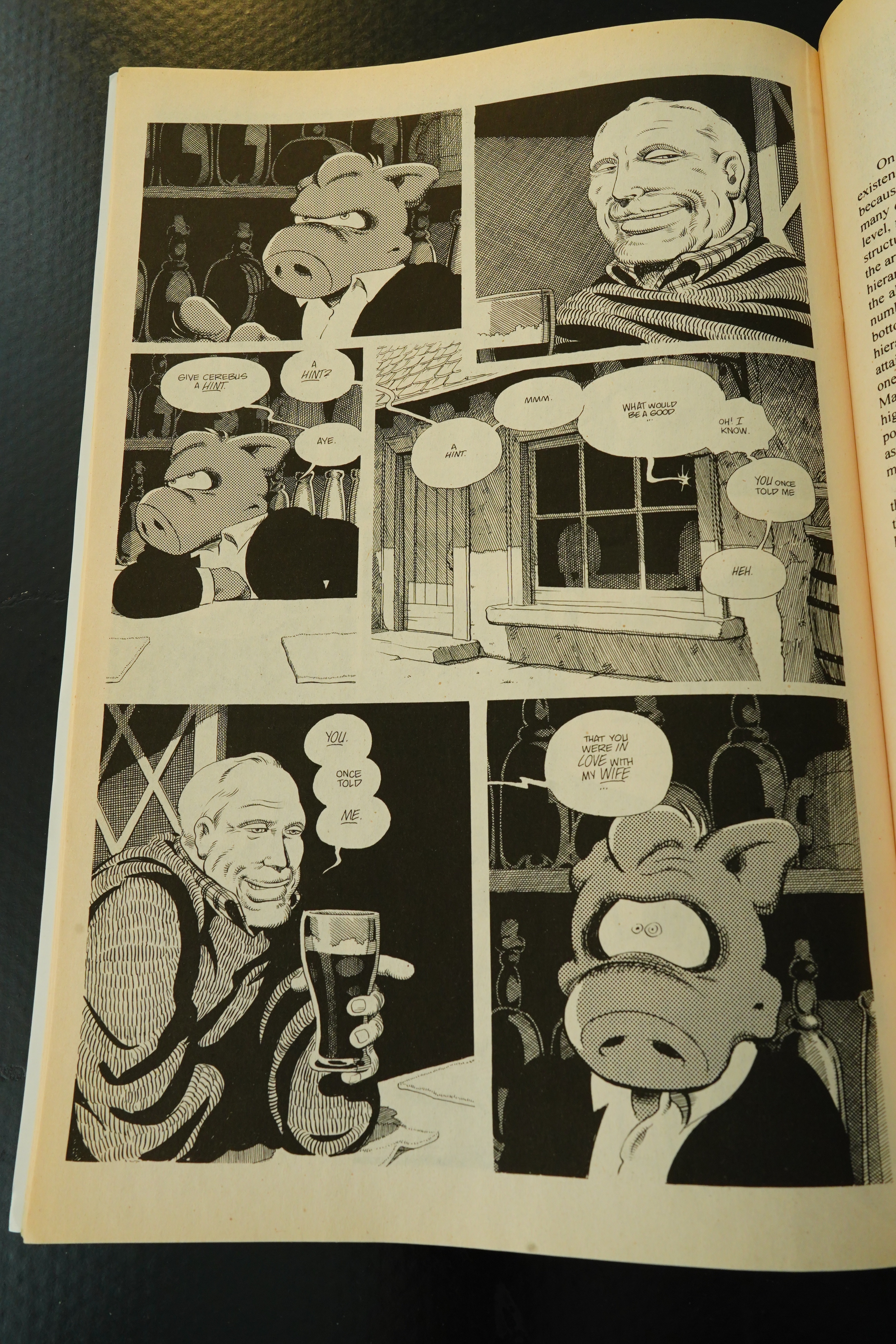
Guys ended with Rick (Jaka’s ex husband) showing up randomly at Cerebus’ tavern, and Rick’s Story continues on from that. And yes, Rick’s appearance there seems to be “at random”, i.e., guided by god, as is usually the case in Cerebus. Sim’s not very good at manoeuvring his characters around in manner that makes much sense — it all happens because it happens.
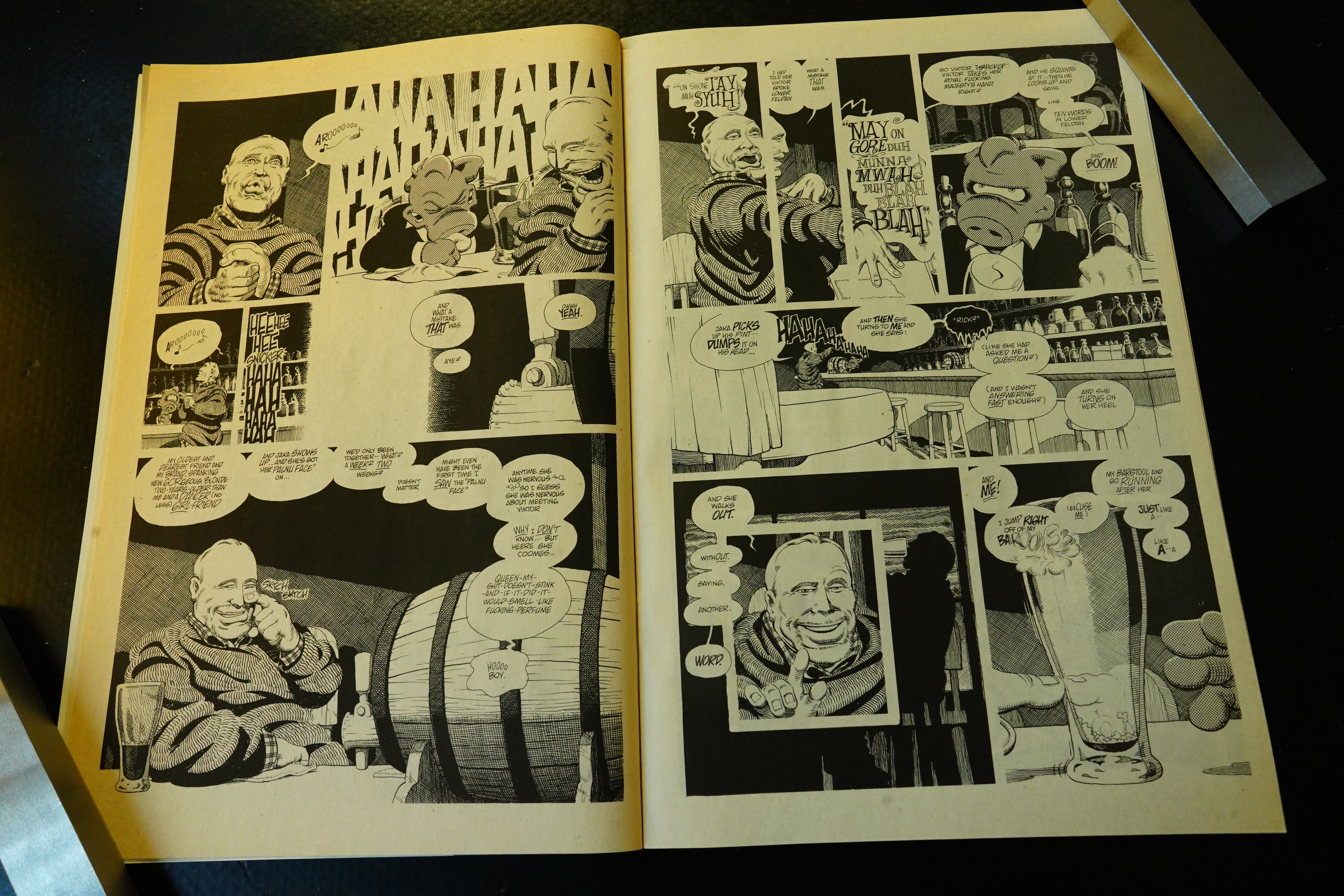
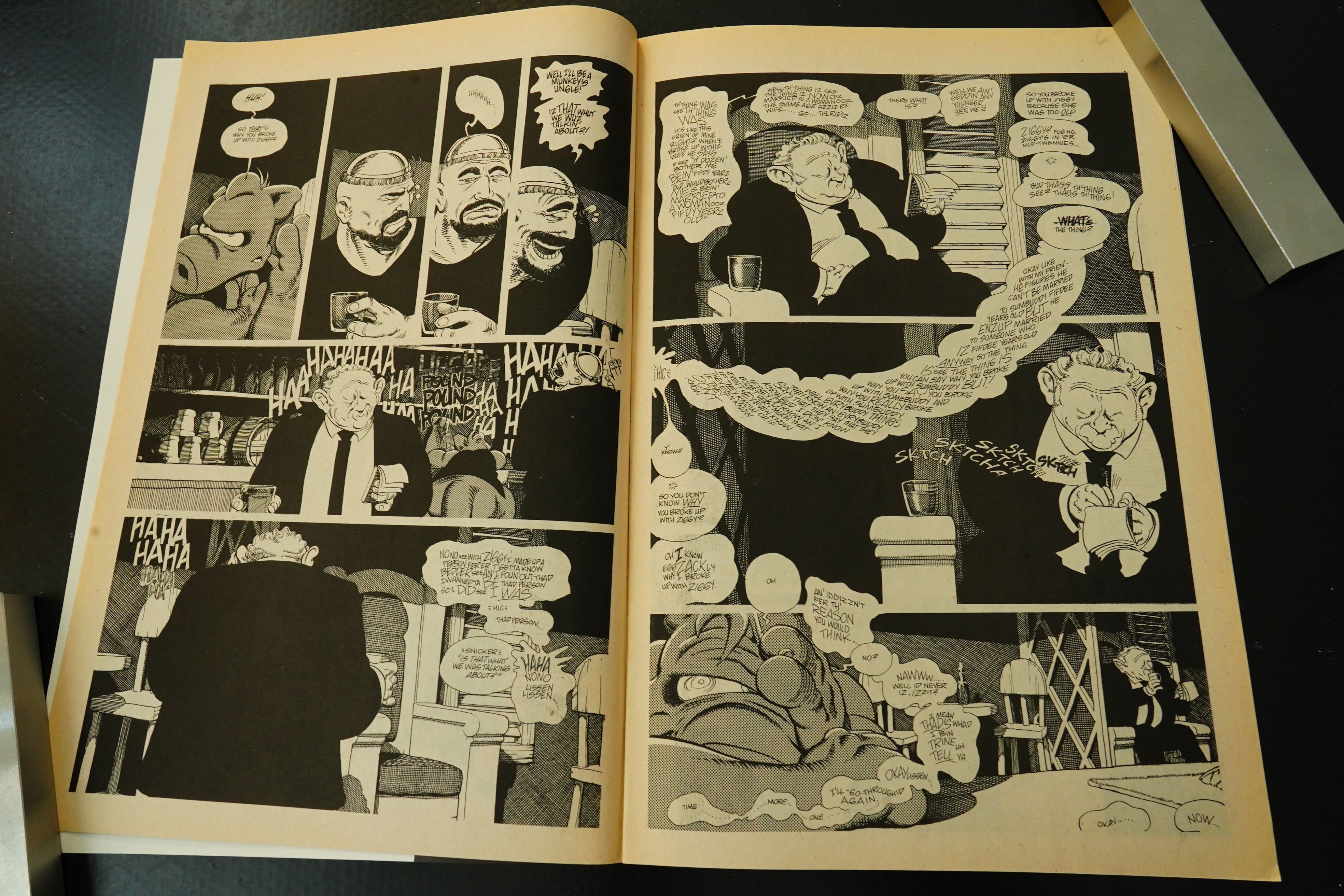
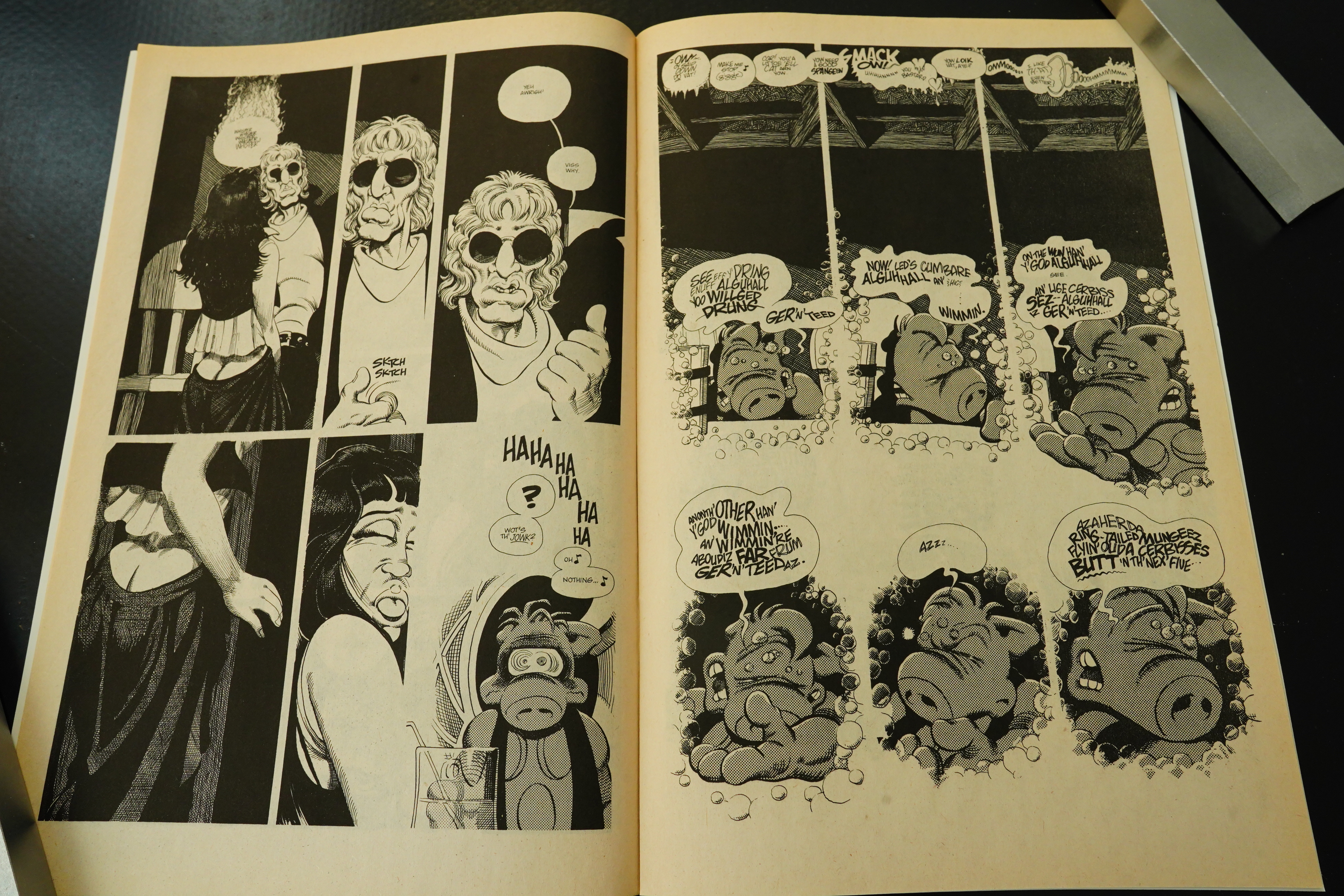
Rick comes off as being yet another version of Sim — this time the funny storytelling one…
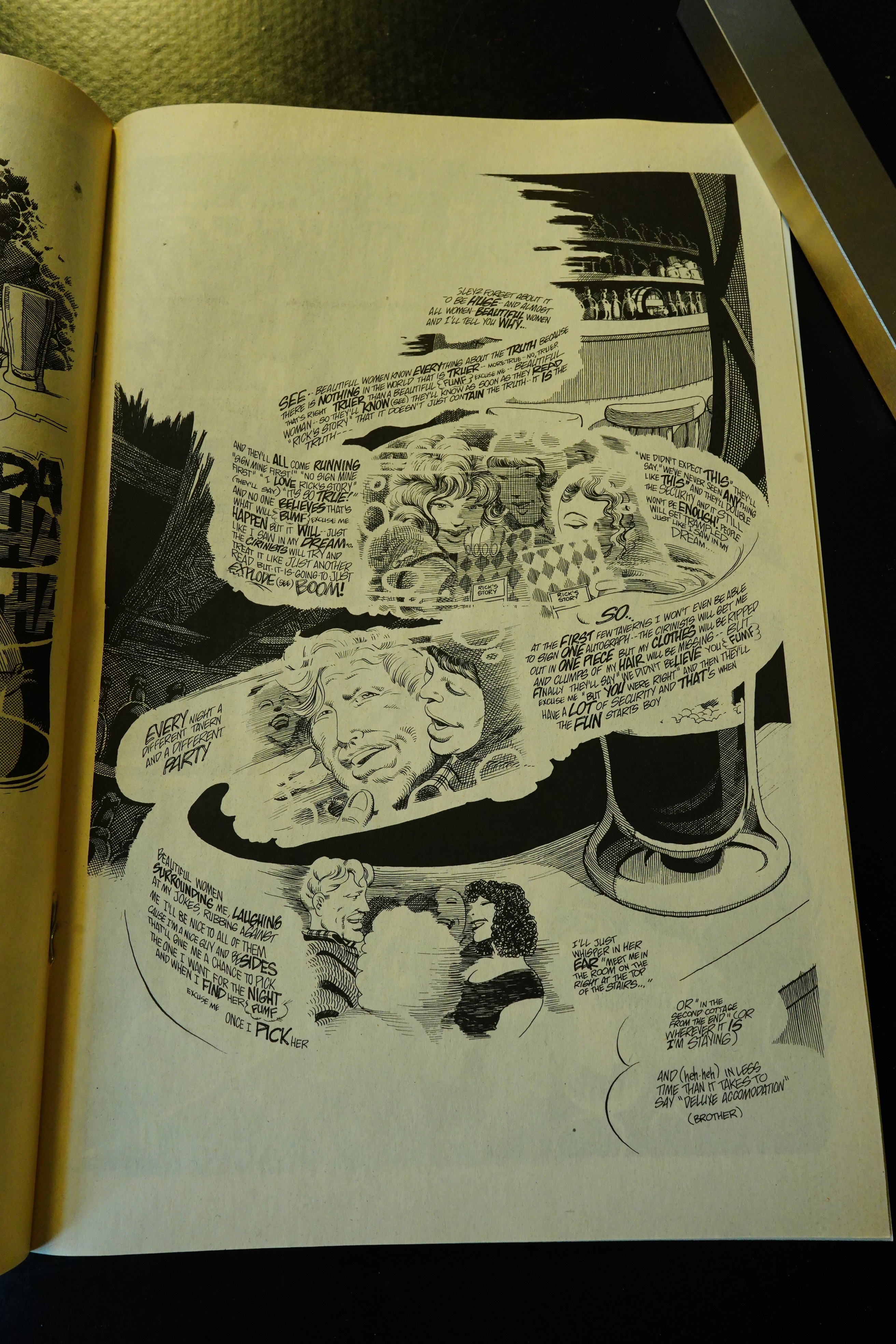
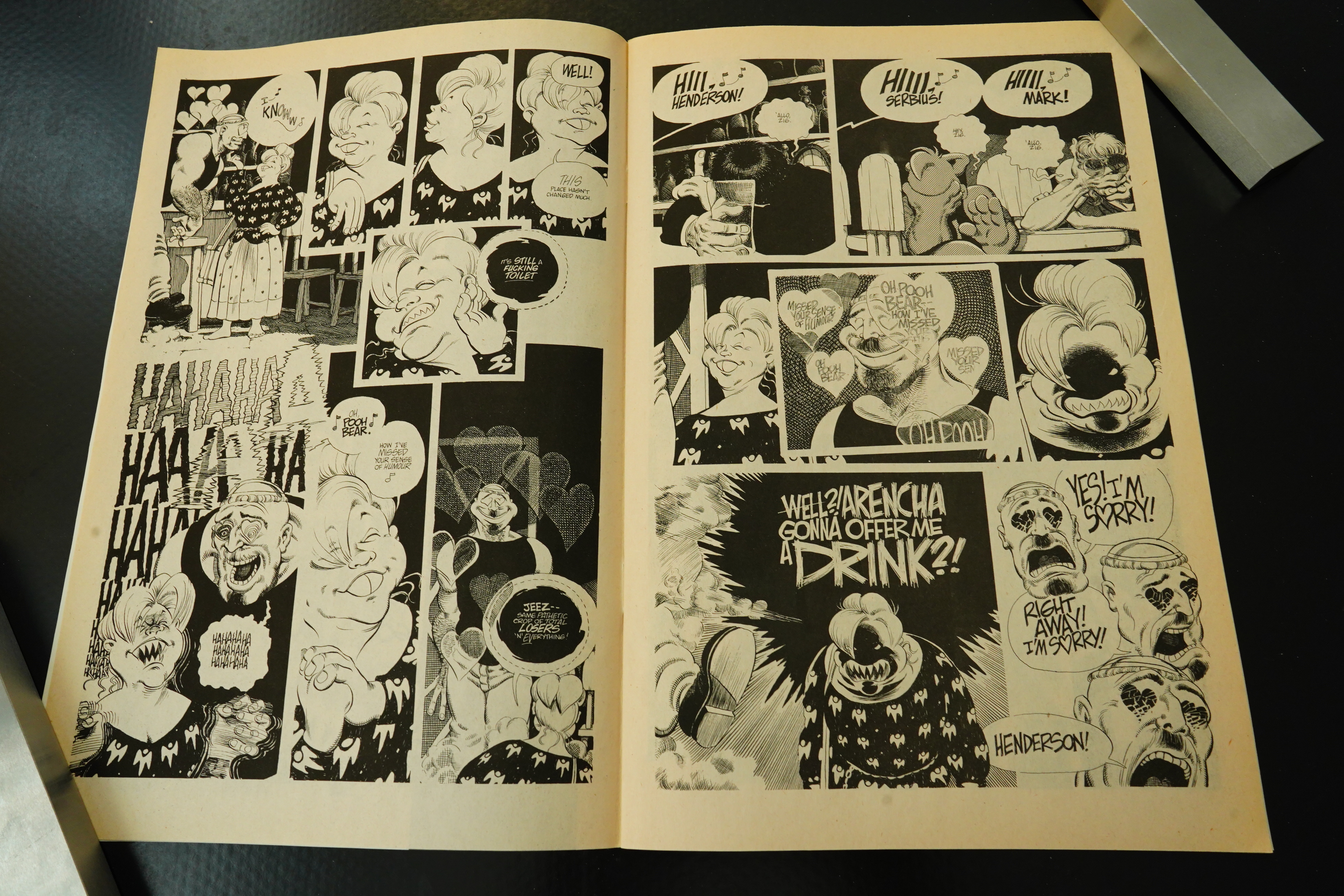
… that drinks way too much, has lots of female fans (Rick is a writer, of course)…
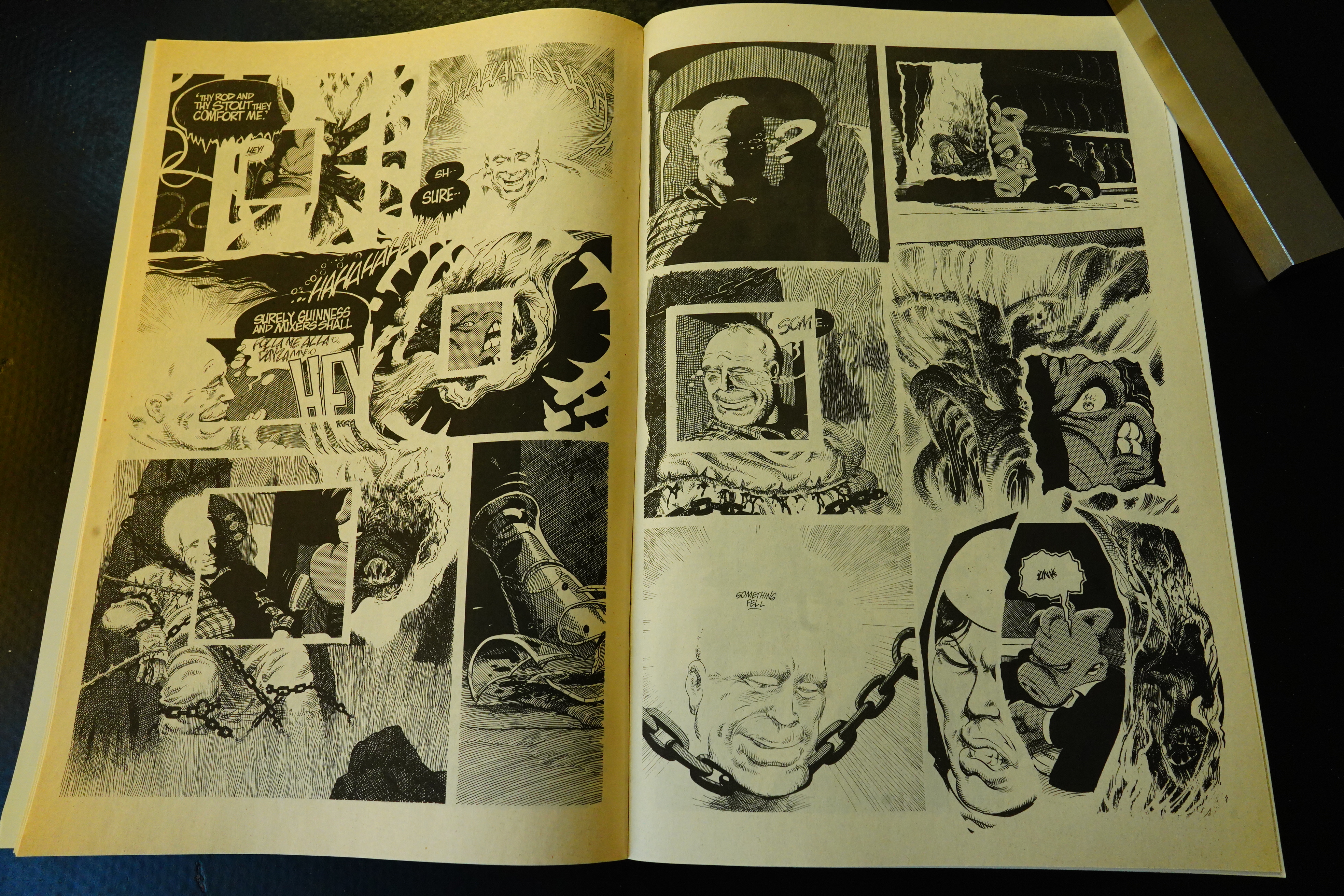
… and has mystical visions all of the time. Sounds very much like Sim himself, eh?
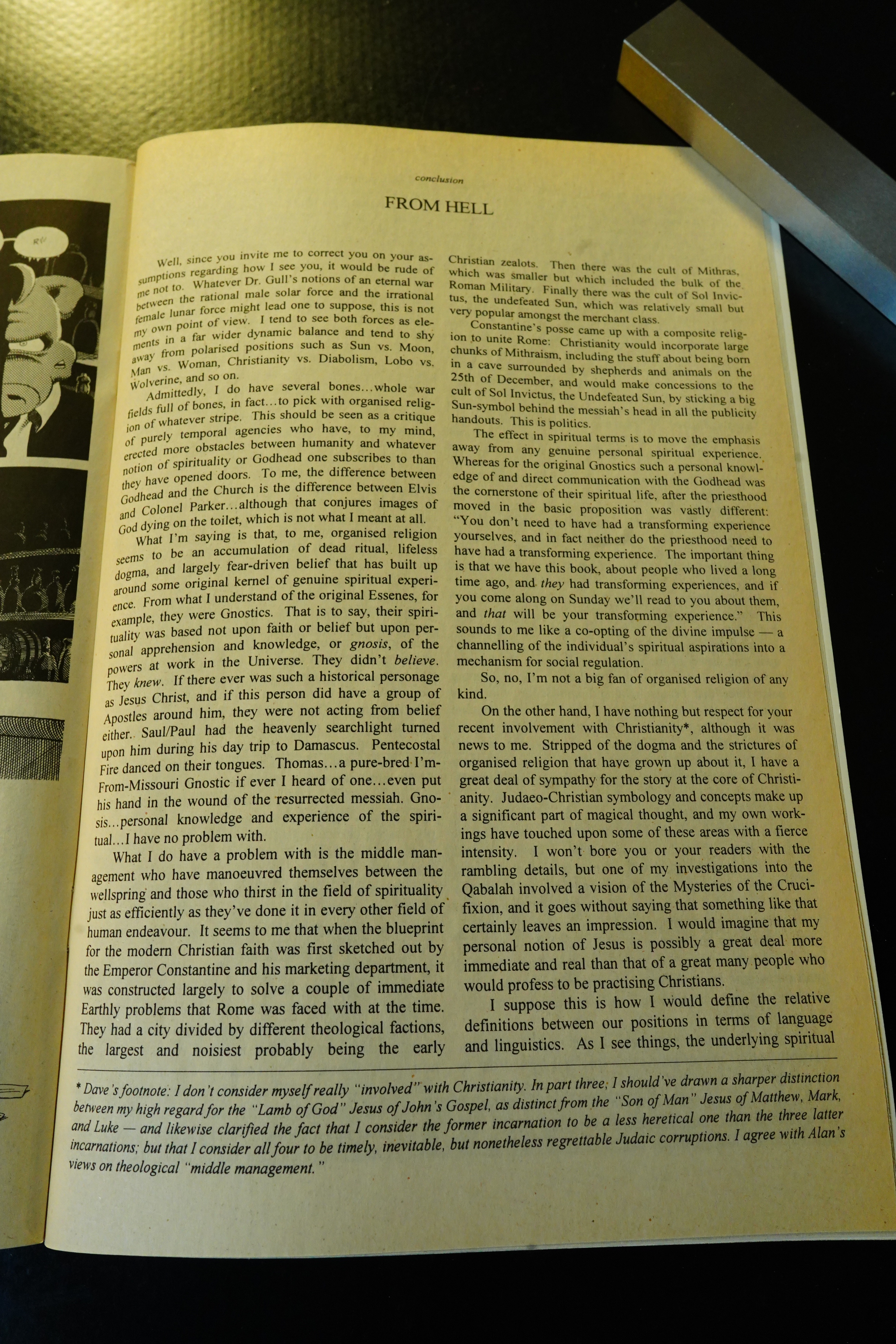
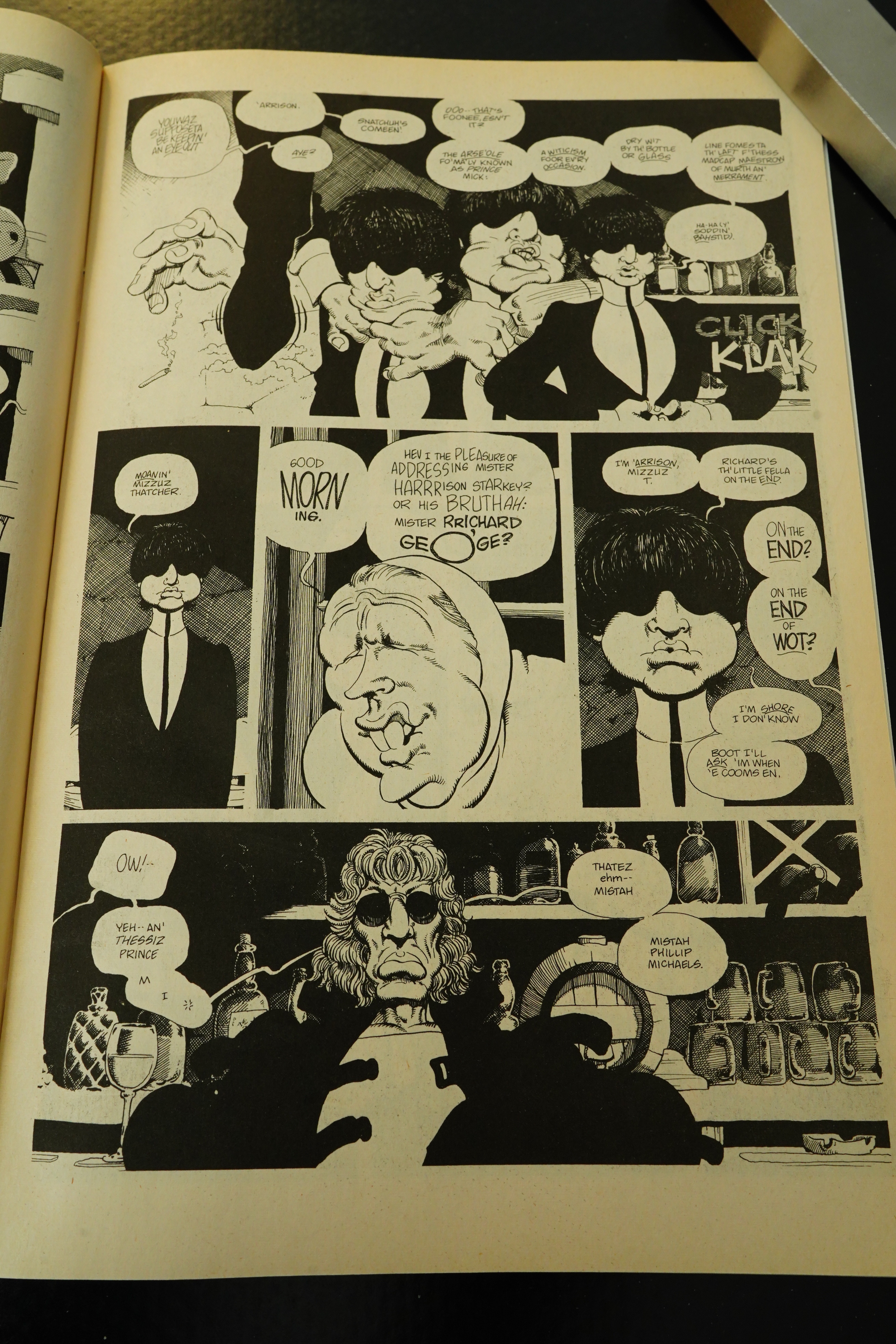
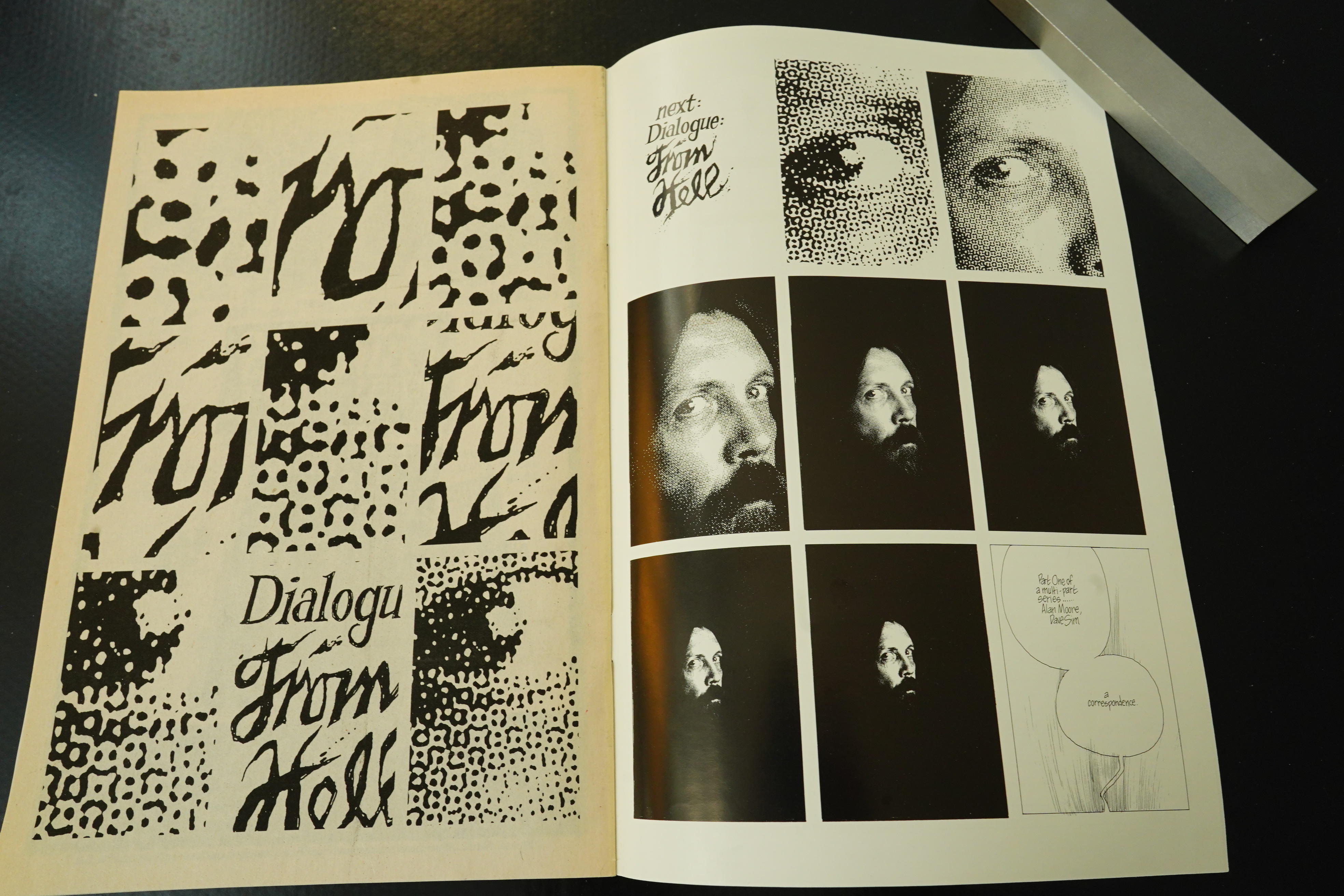
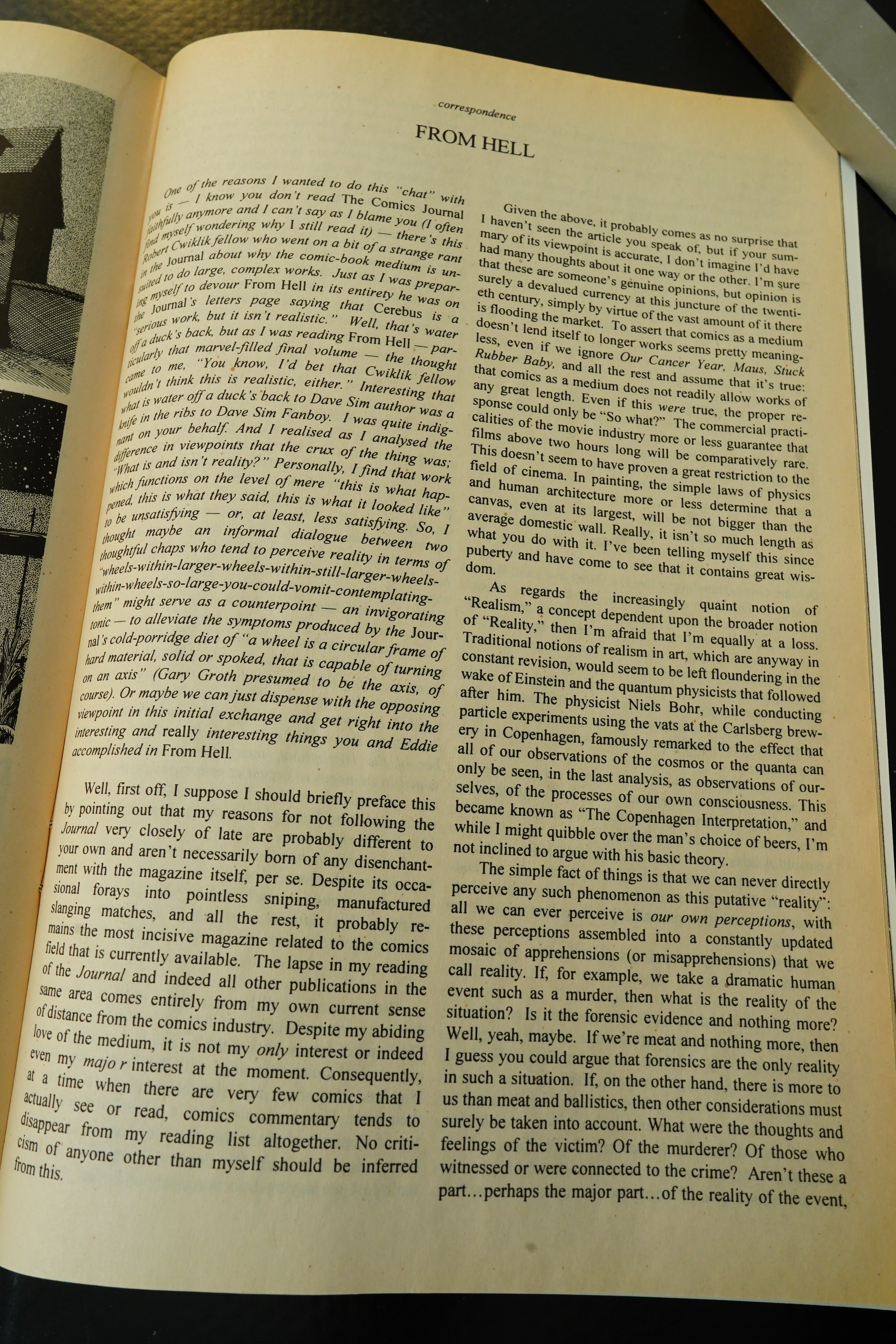
The dialogue with Alan Moore comes to an end (without any acrimony, which is pretty unusual for these things involving Sim), and Sim lets Moore get the last word. (Except for nothing that he thinks the Christian gospels are “regrettable Judaic corruptions”.)
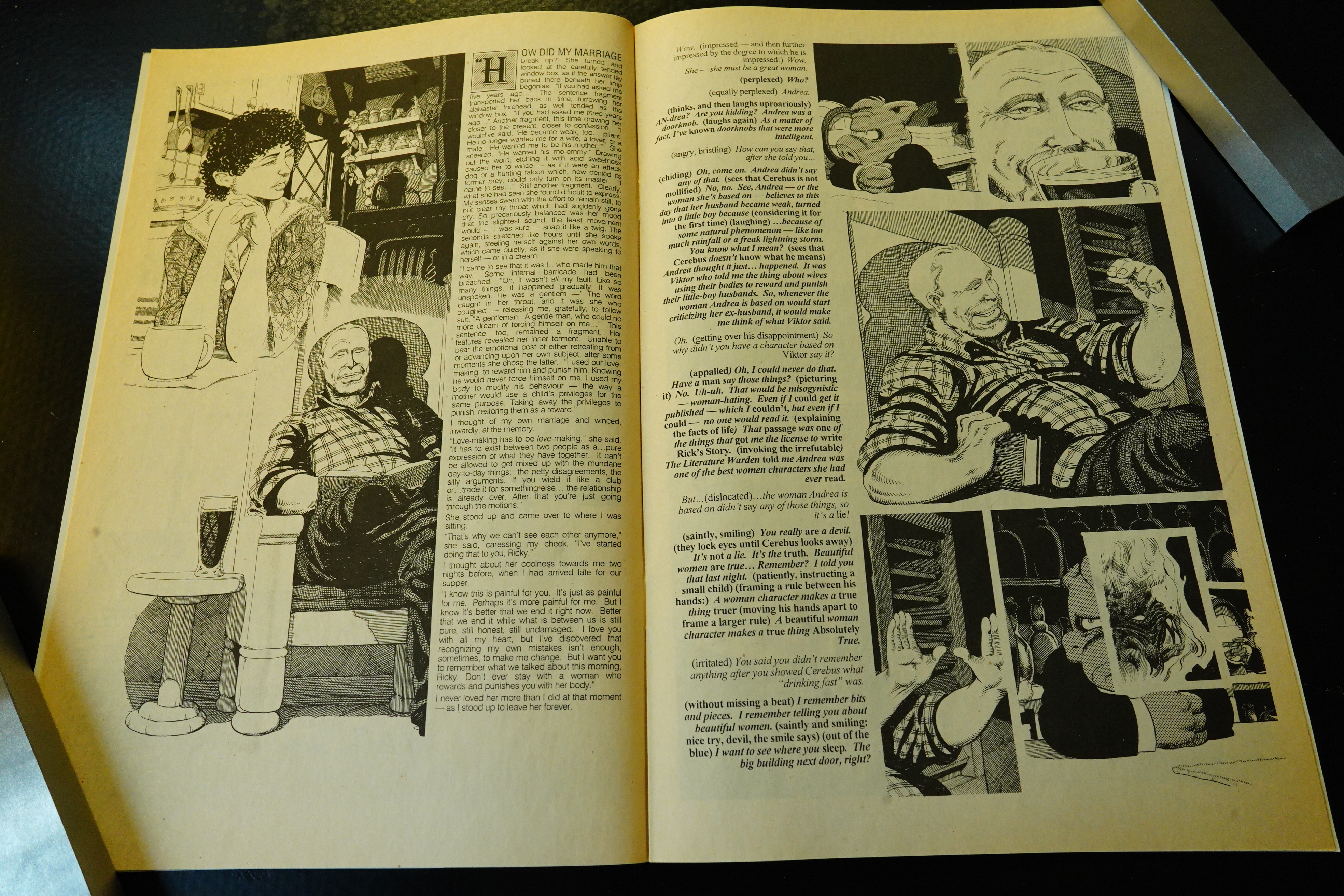
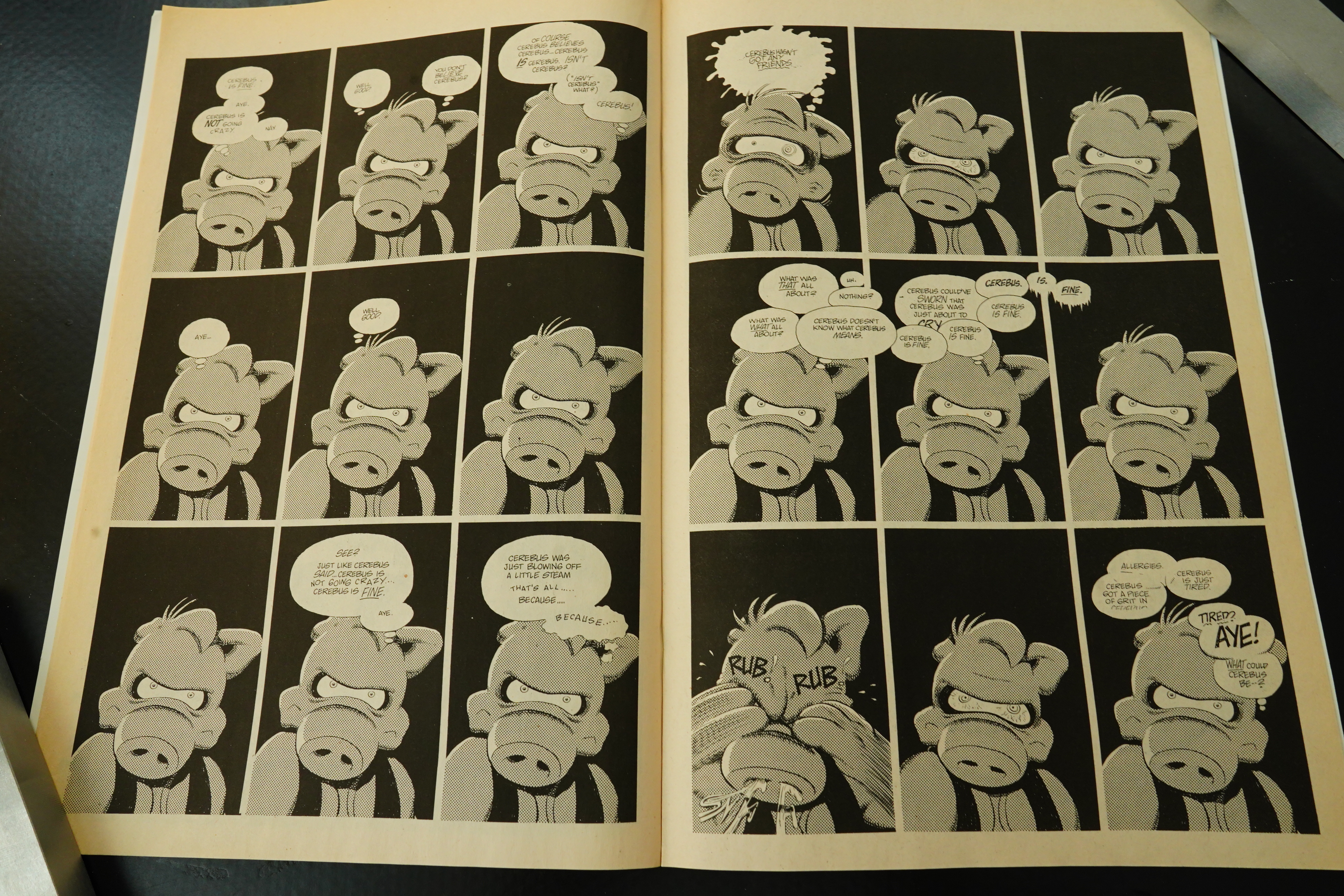
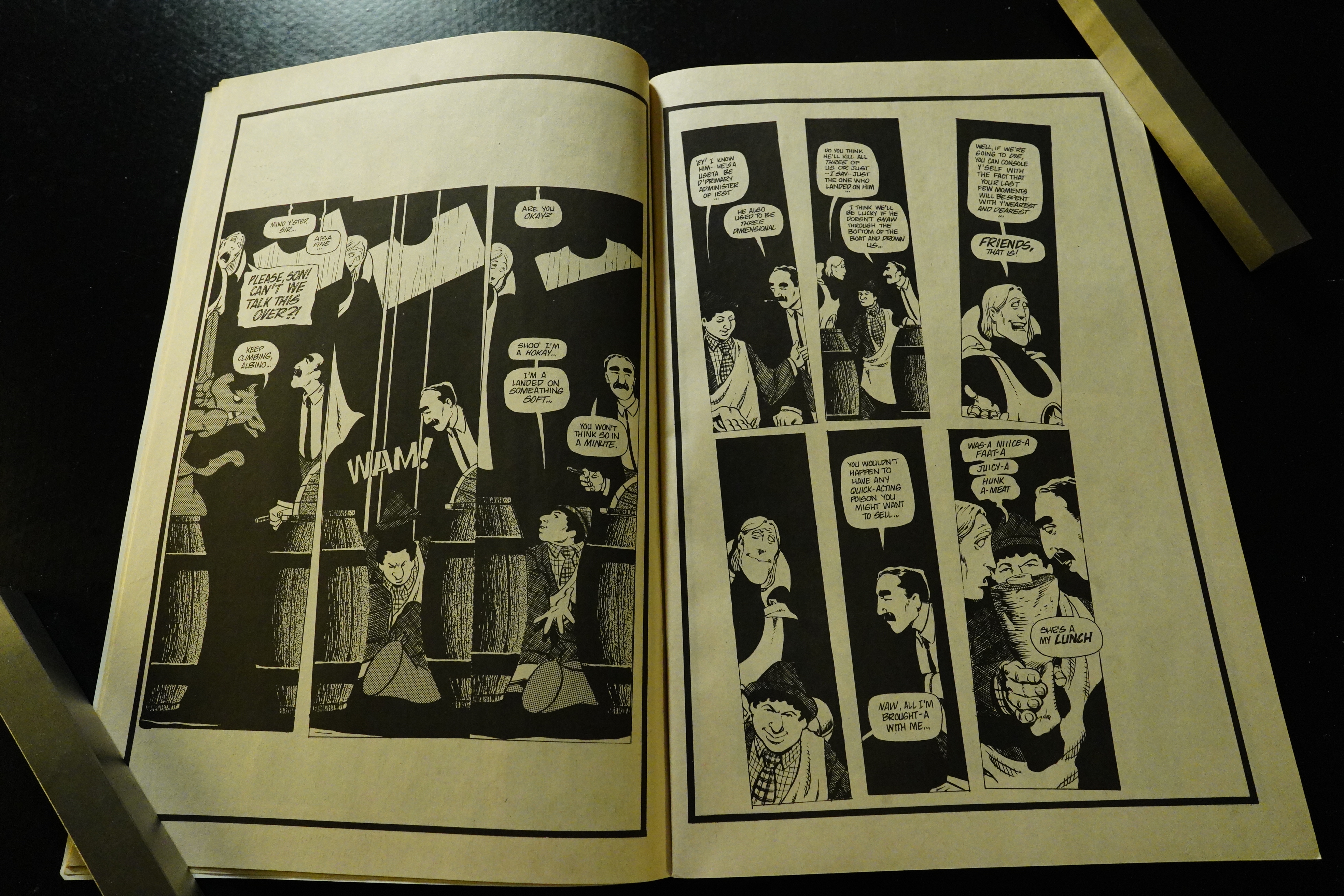
Rick talks a lot, and he gets on Cerebus’ nerves, and…
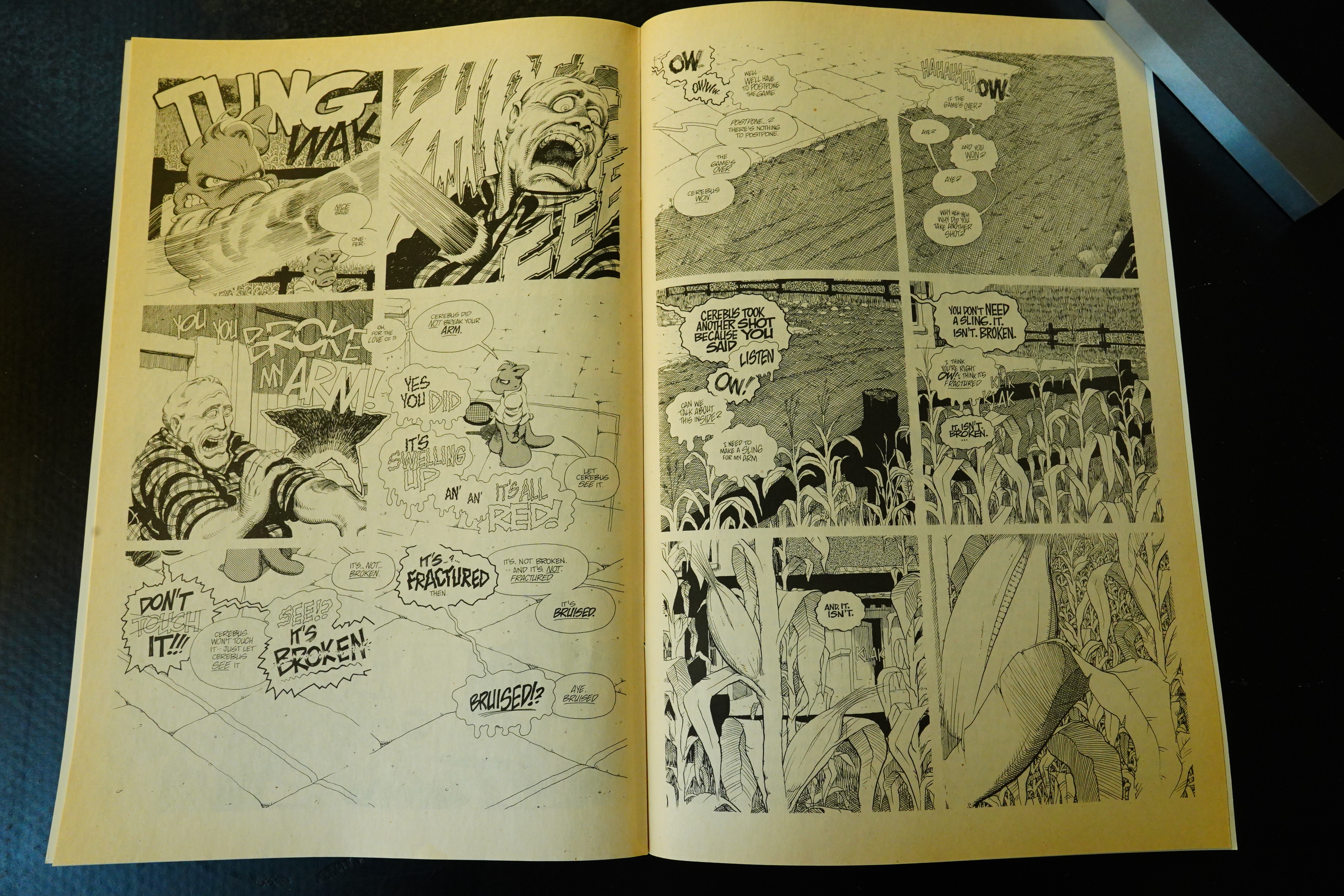
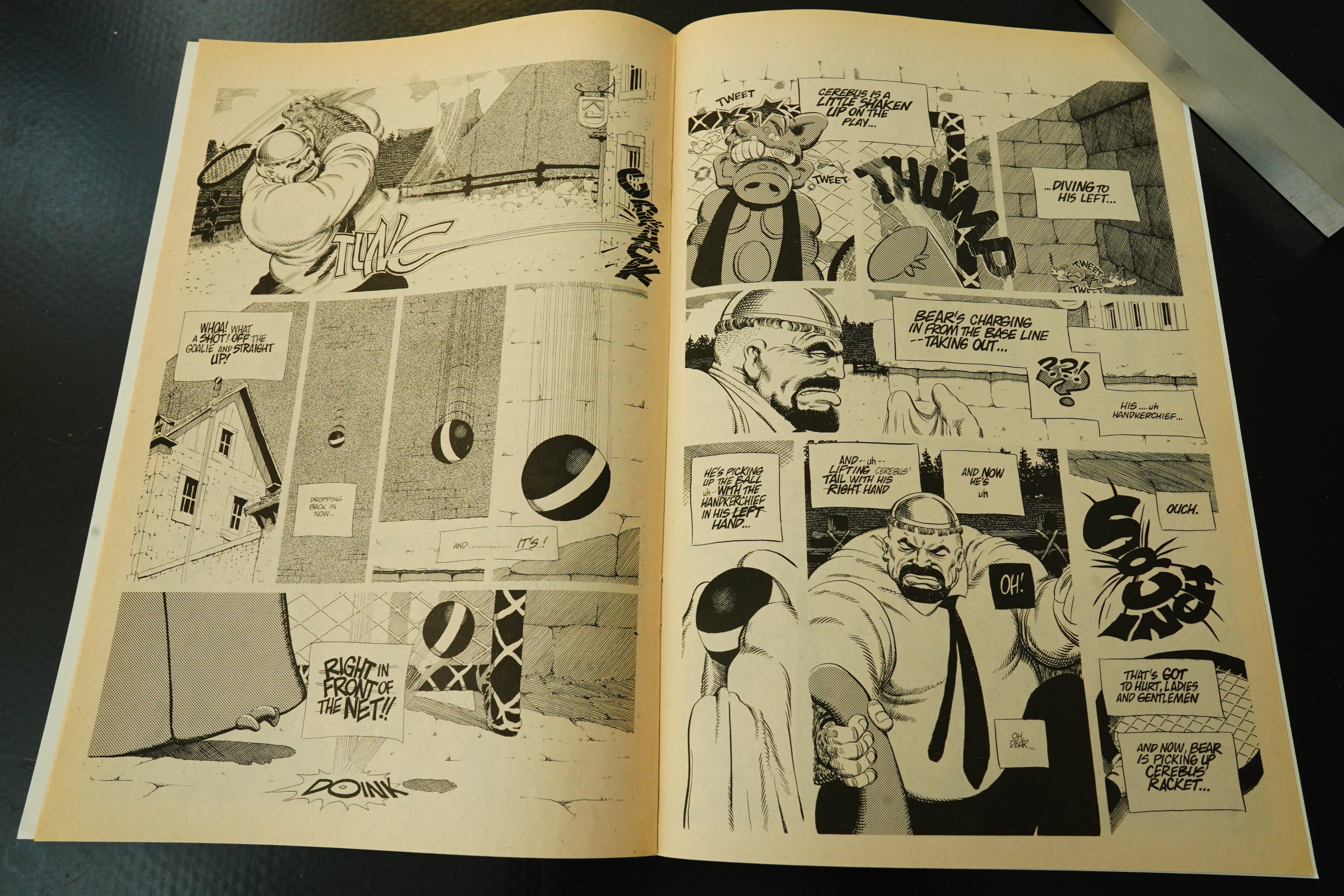
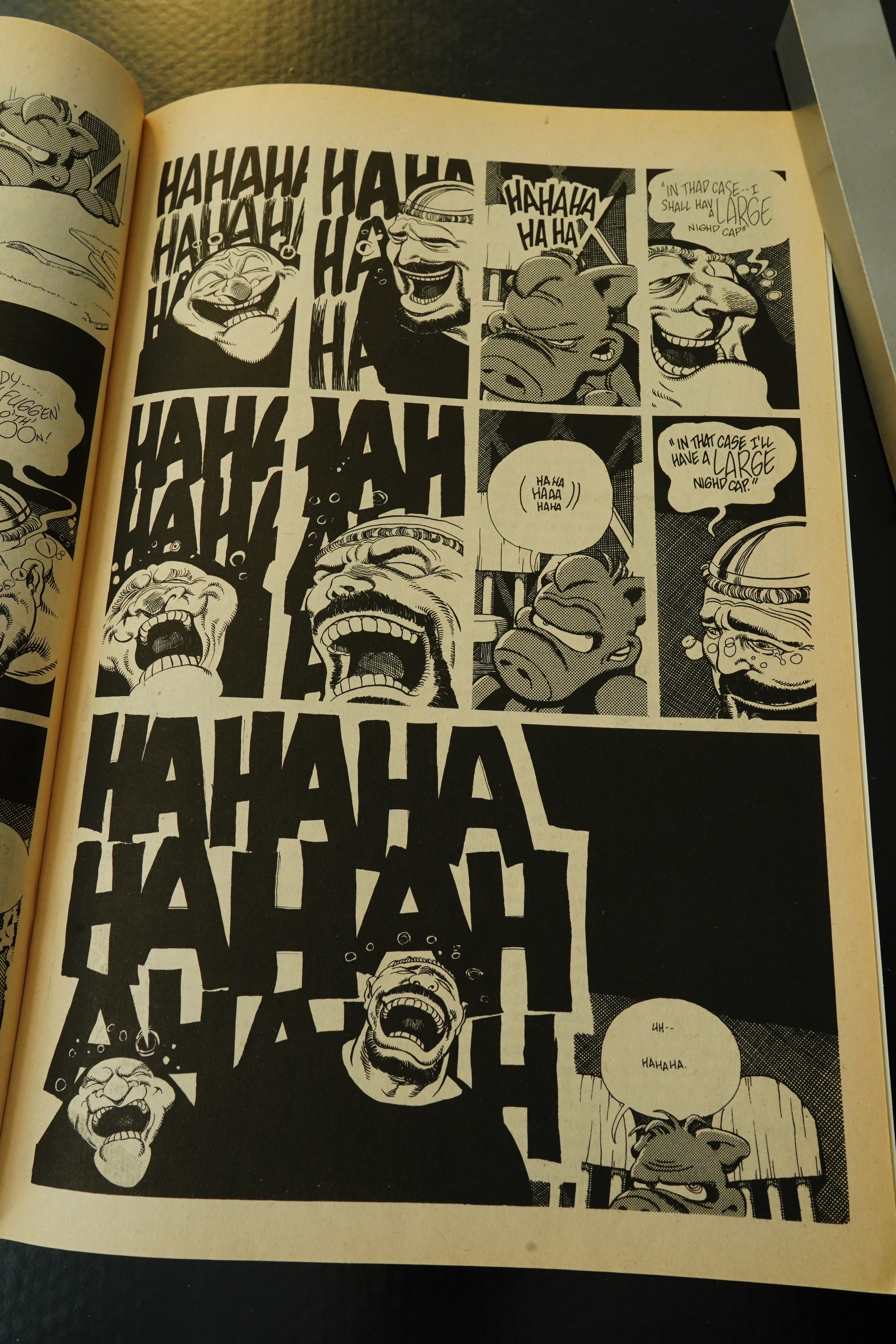
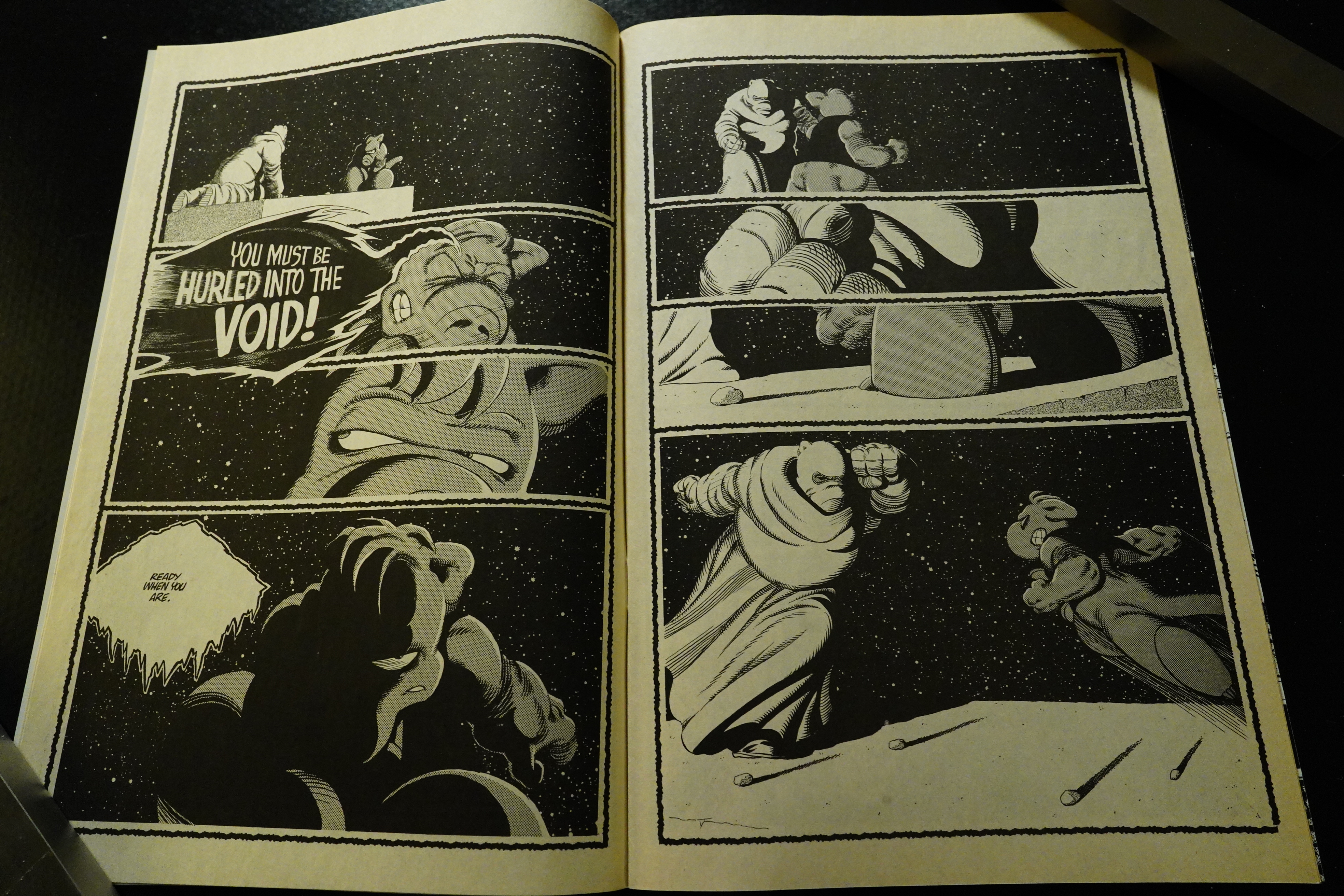
… Cerebus has his little revenge by beating him in some game or other. It’s all kinda amiable? That is, Rick’s Story does have conflict, but it’s all kept on a lower level than we’ve seen before in Cerebus.
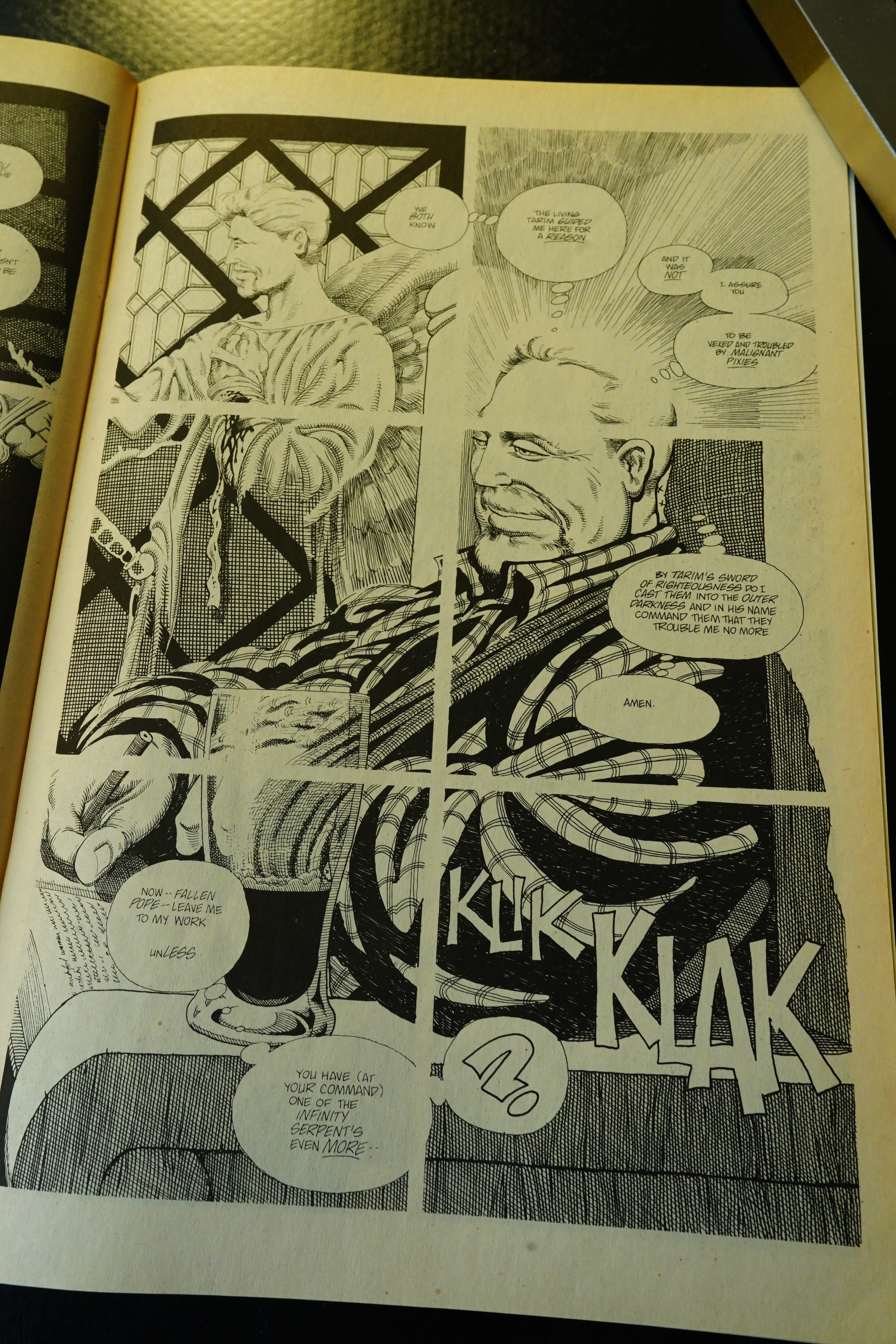
Rick is having visions constantly, apparently.
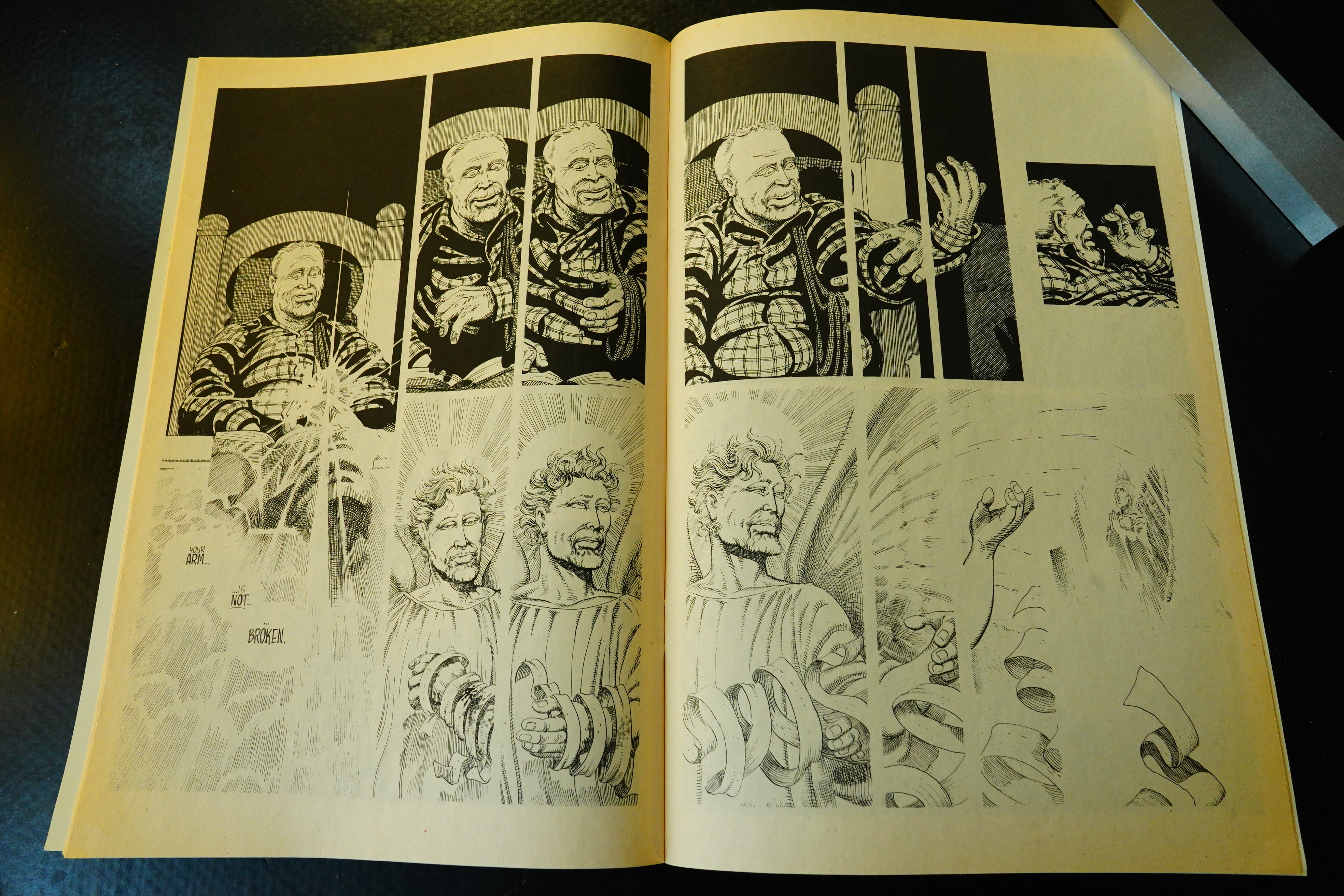
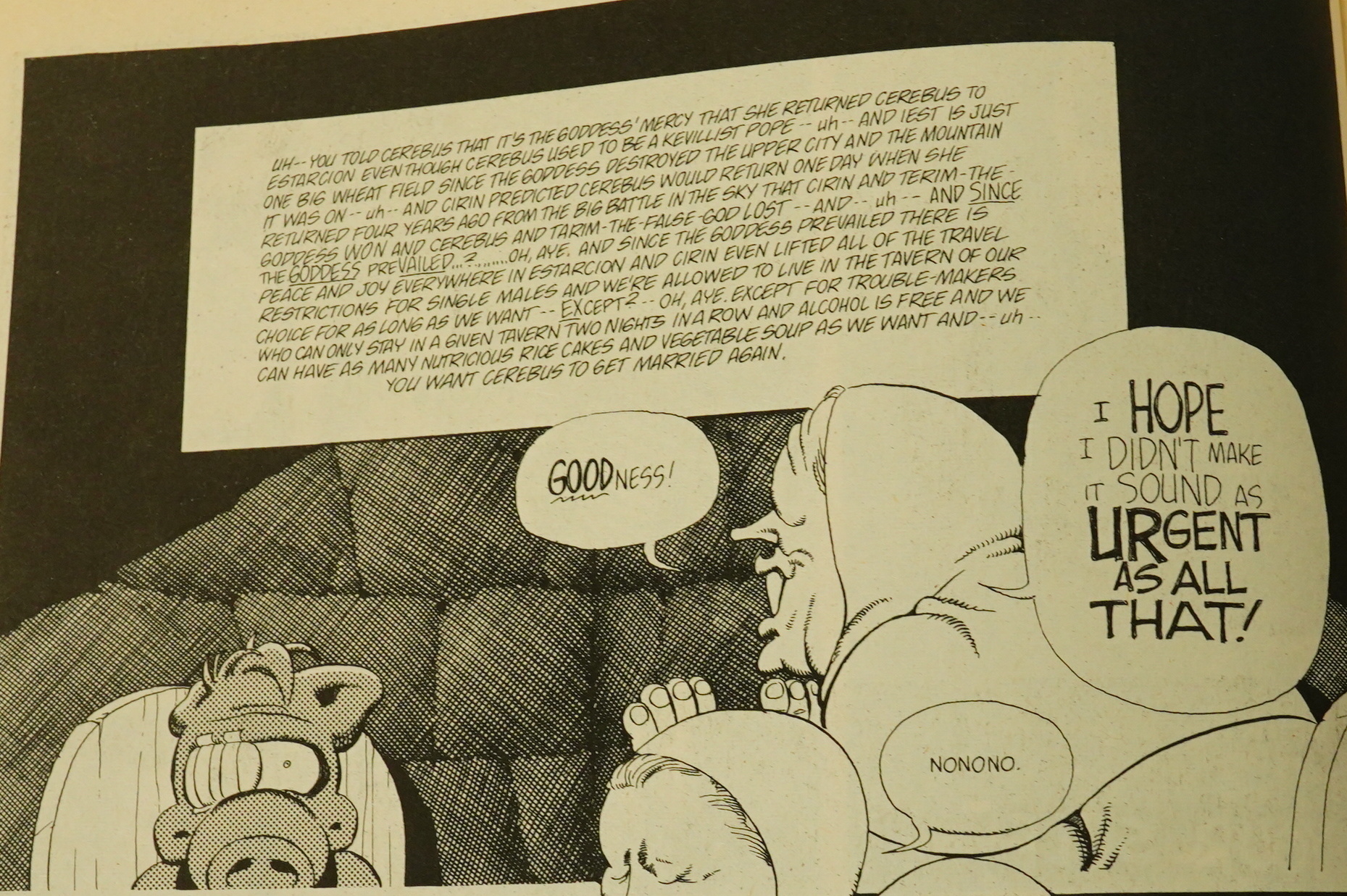
And he (amusingly) interprets everything as divine actions. Cerebus tells him (once again) that his arm isn’t broken, but this time he believes him, and thinks that Cerebus has healed him. If Rick is a Sim stand-in, Sim is being rather critical of himself? Gently poking fun of himself?
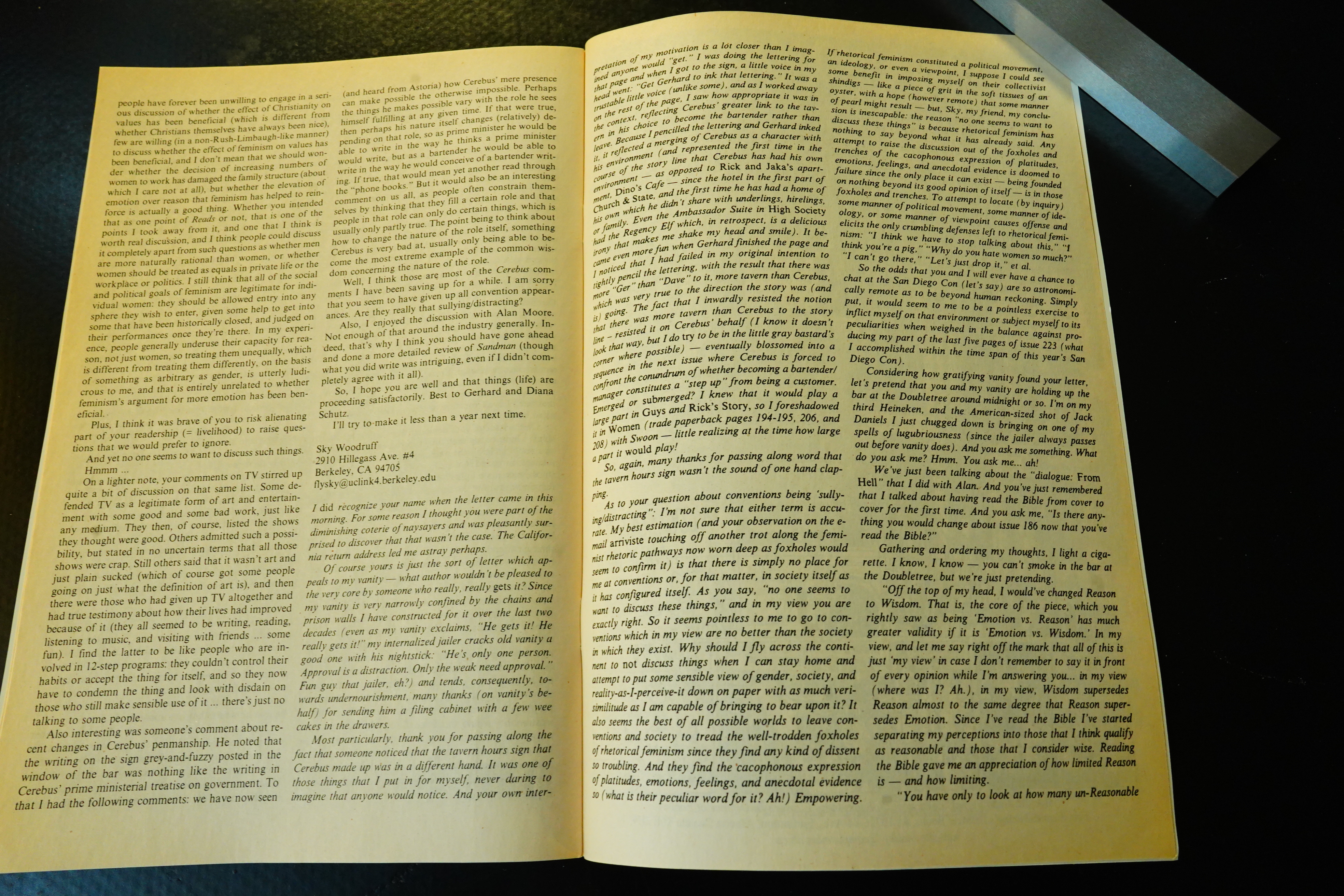
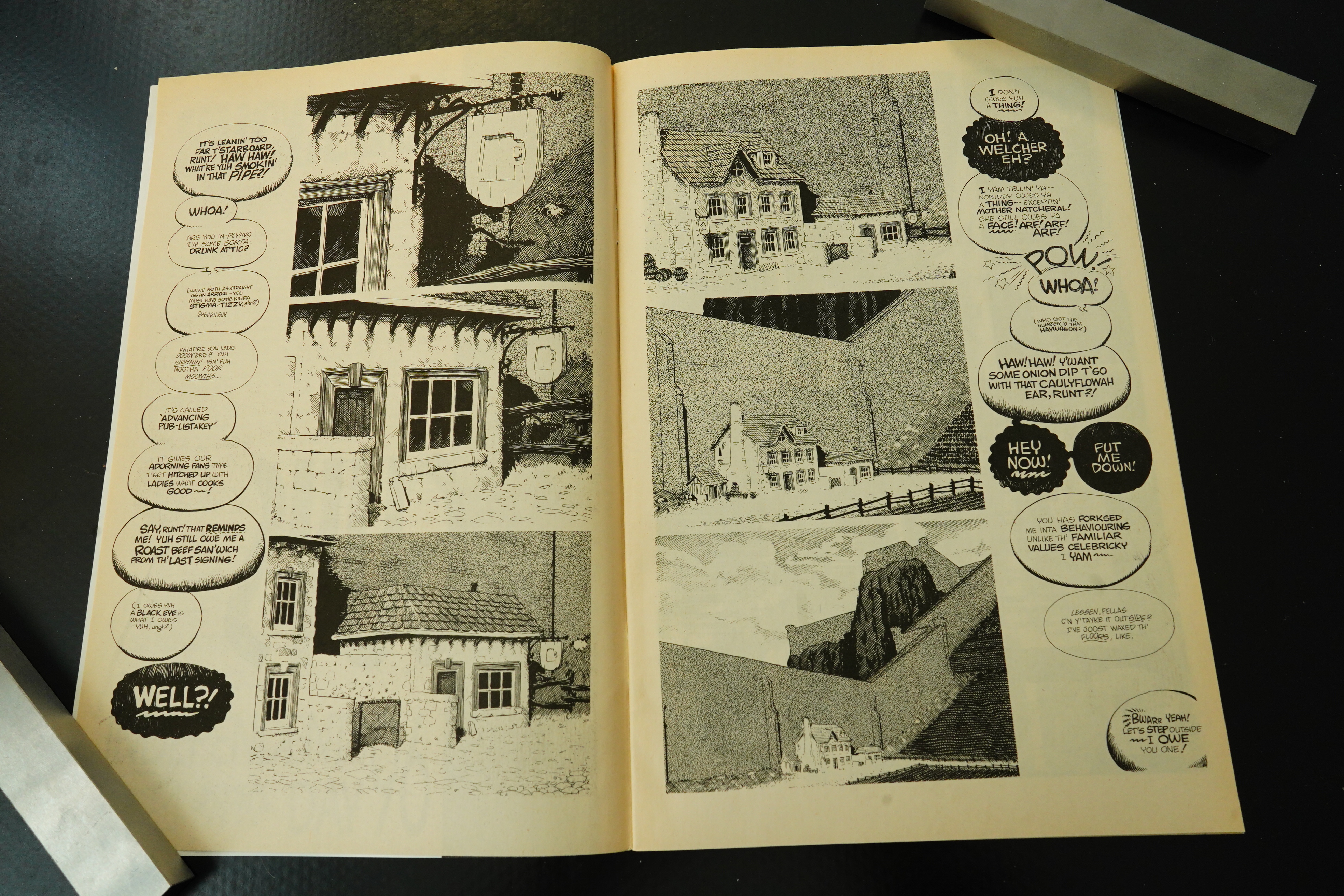
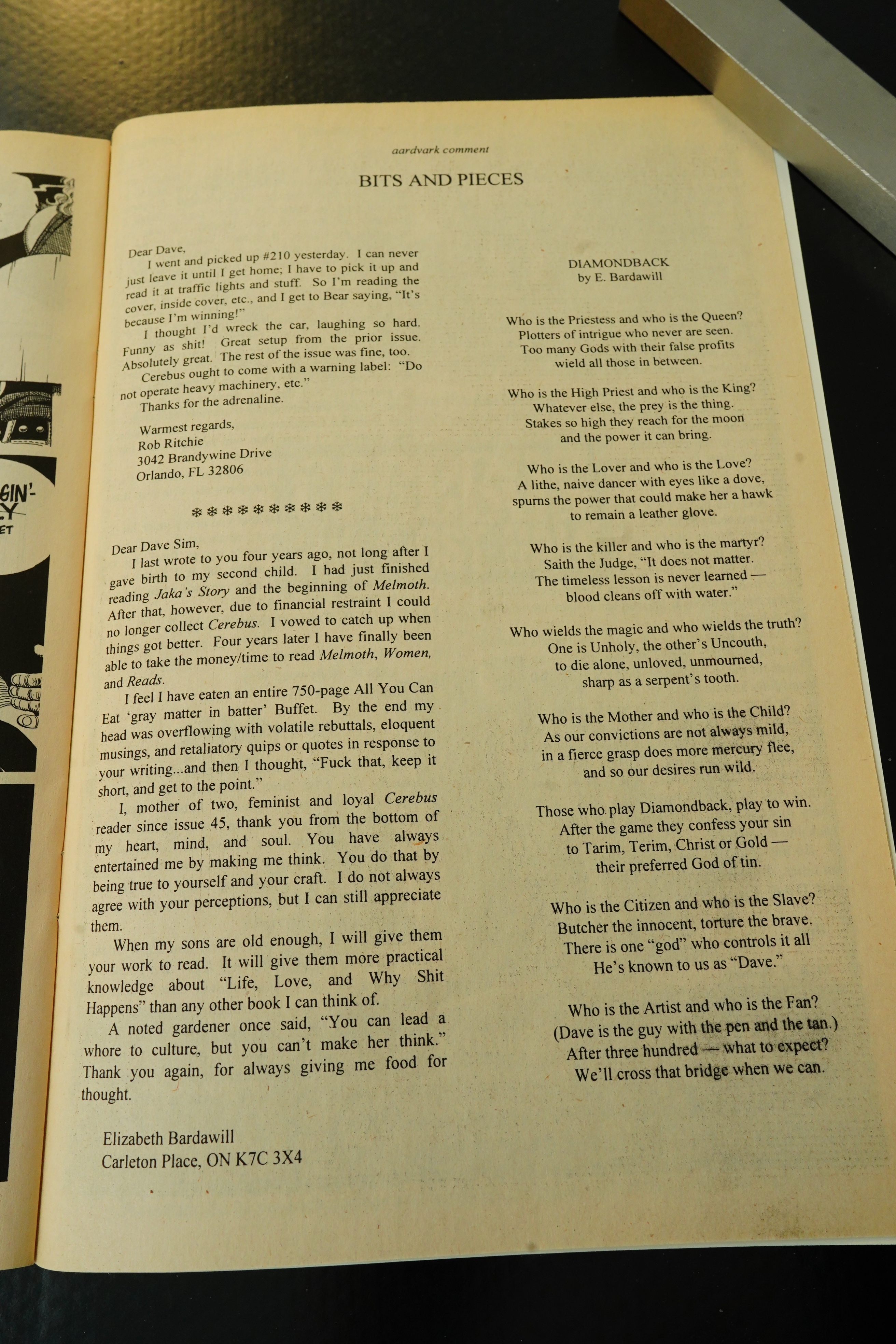
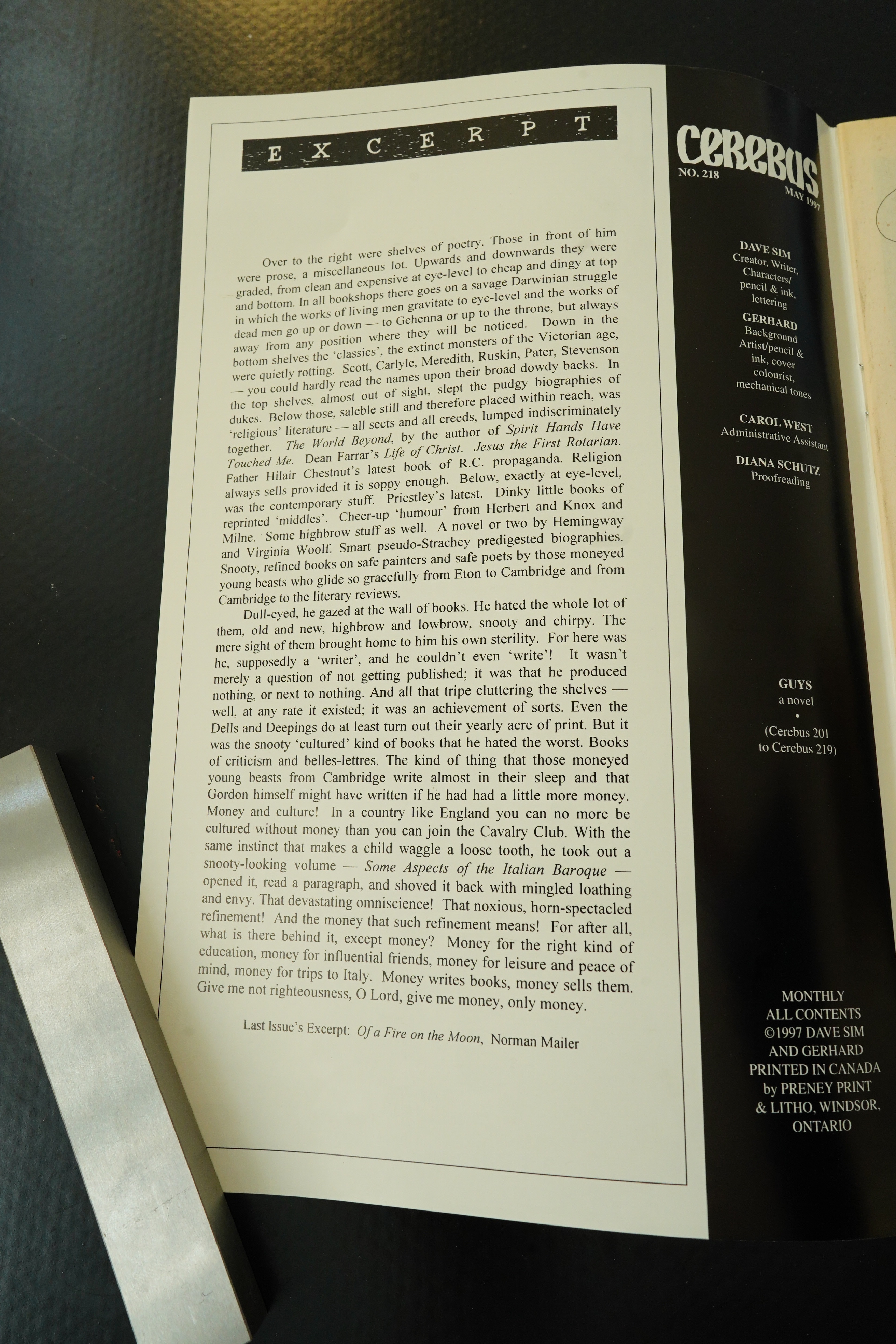
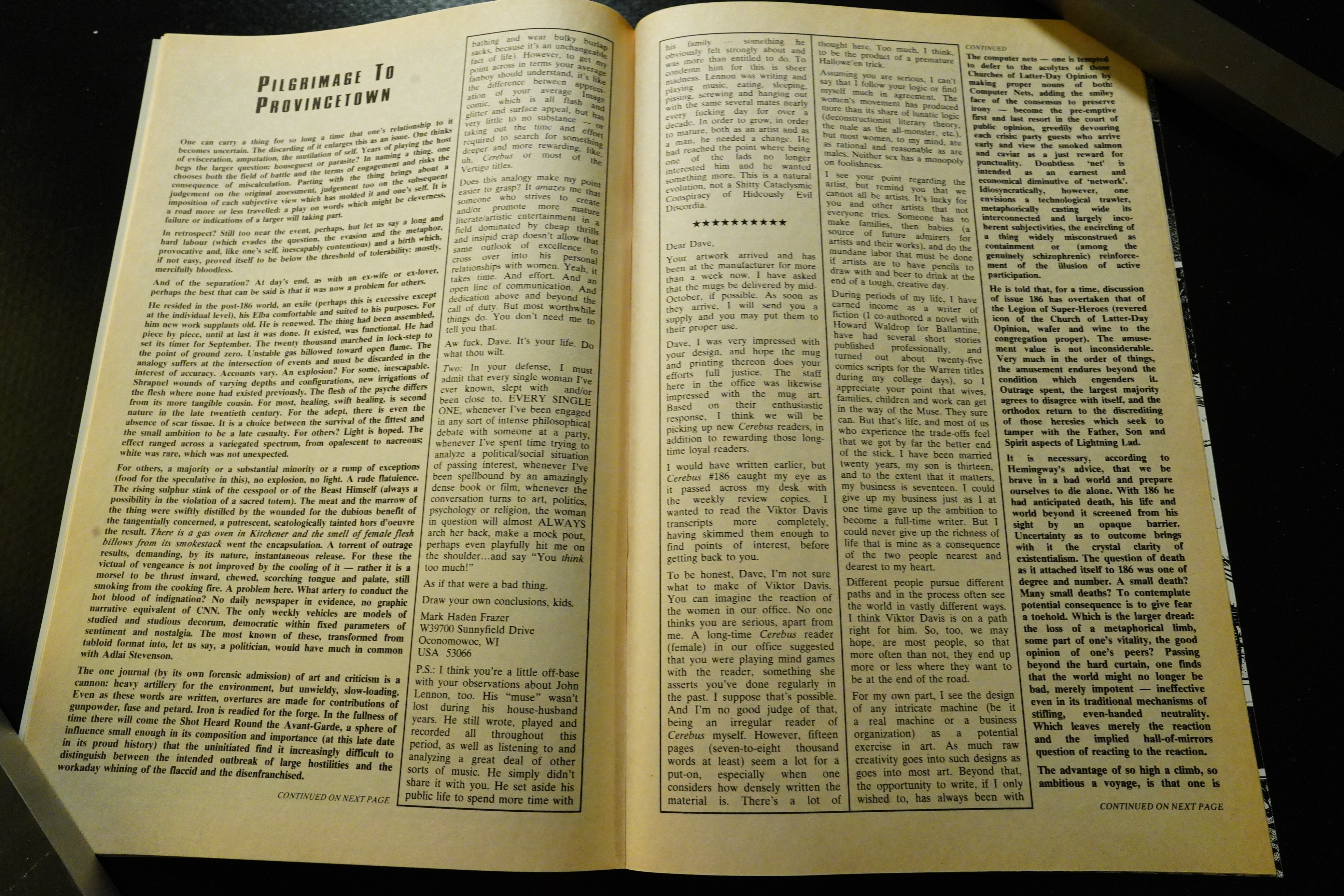
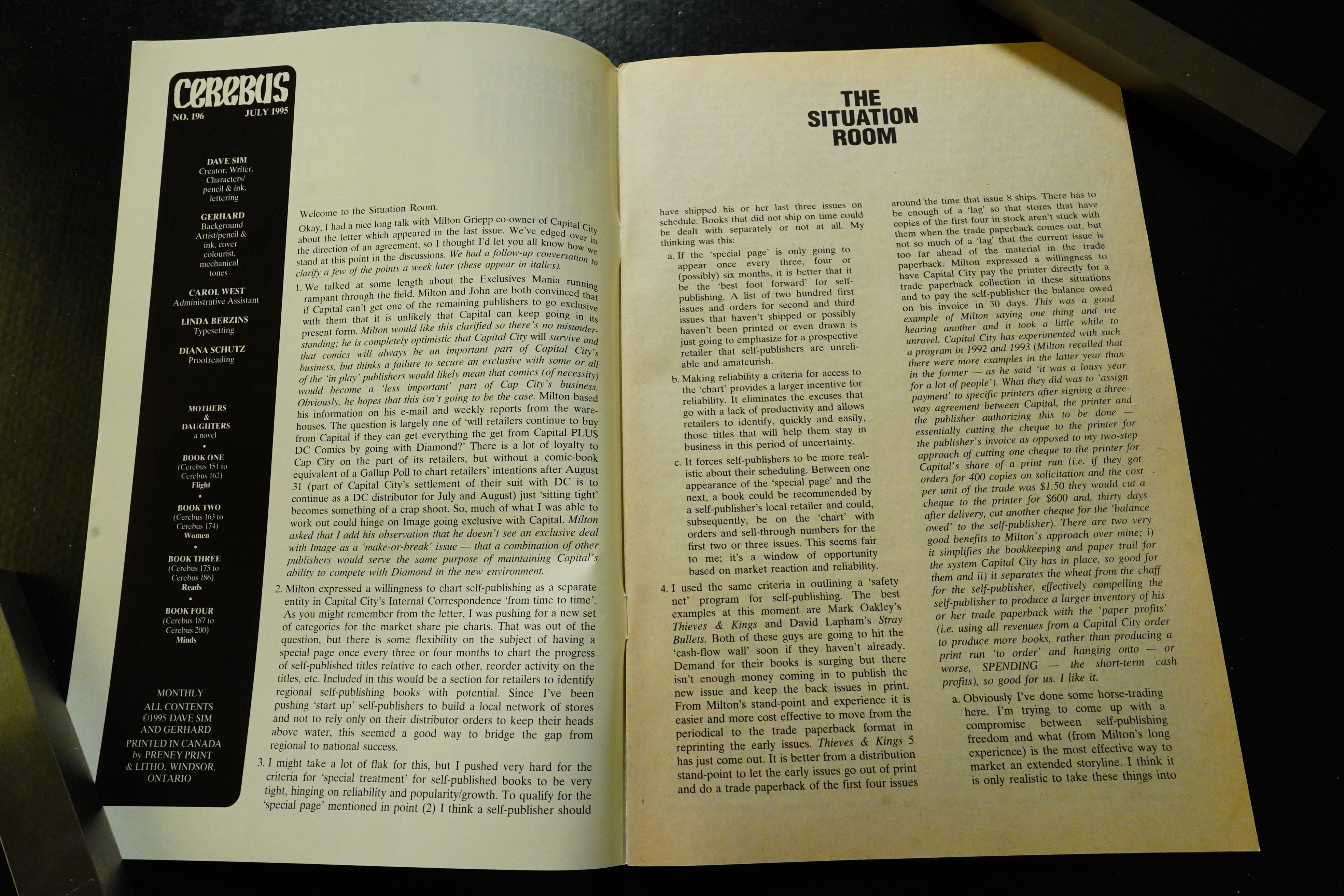
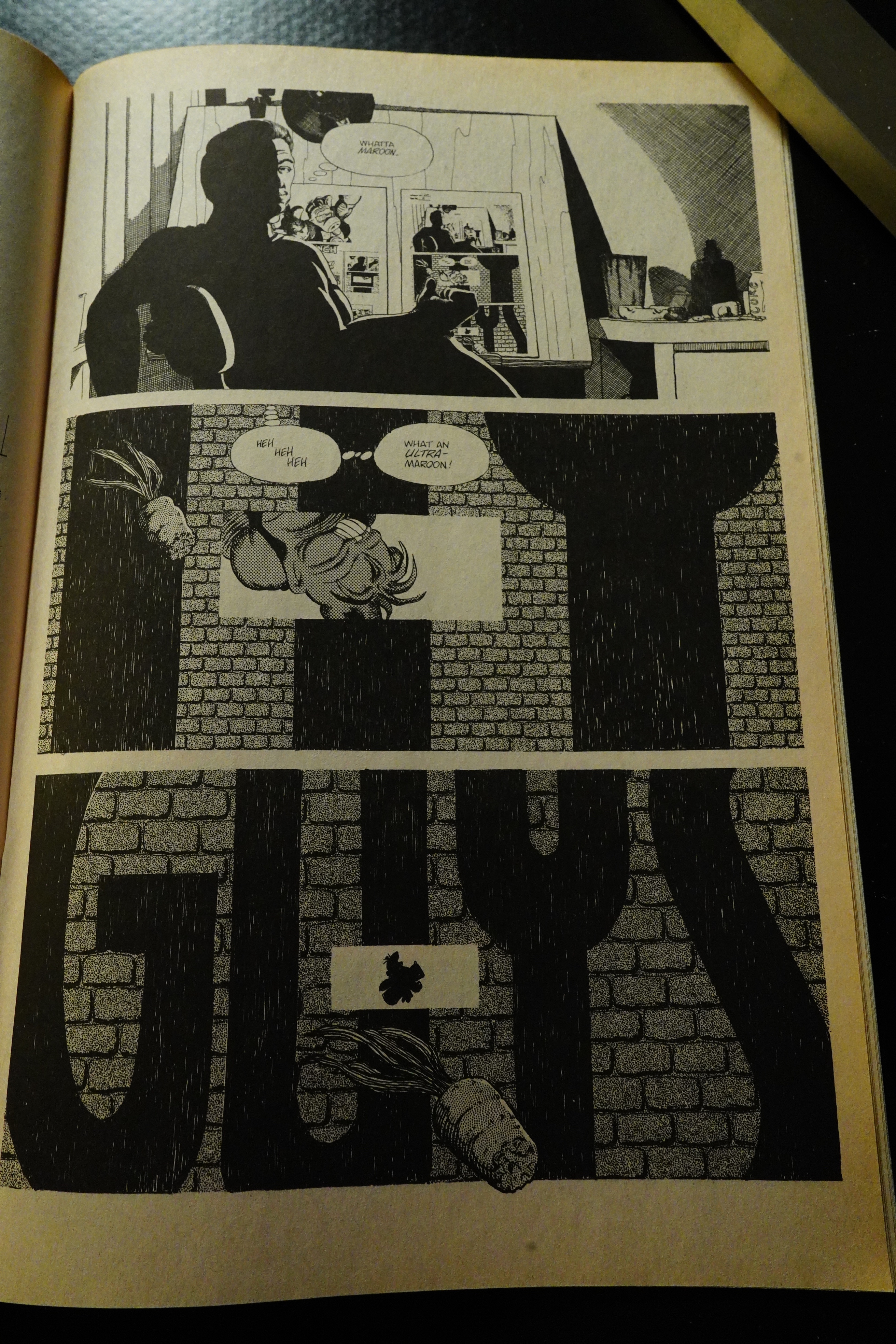
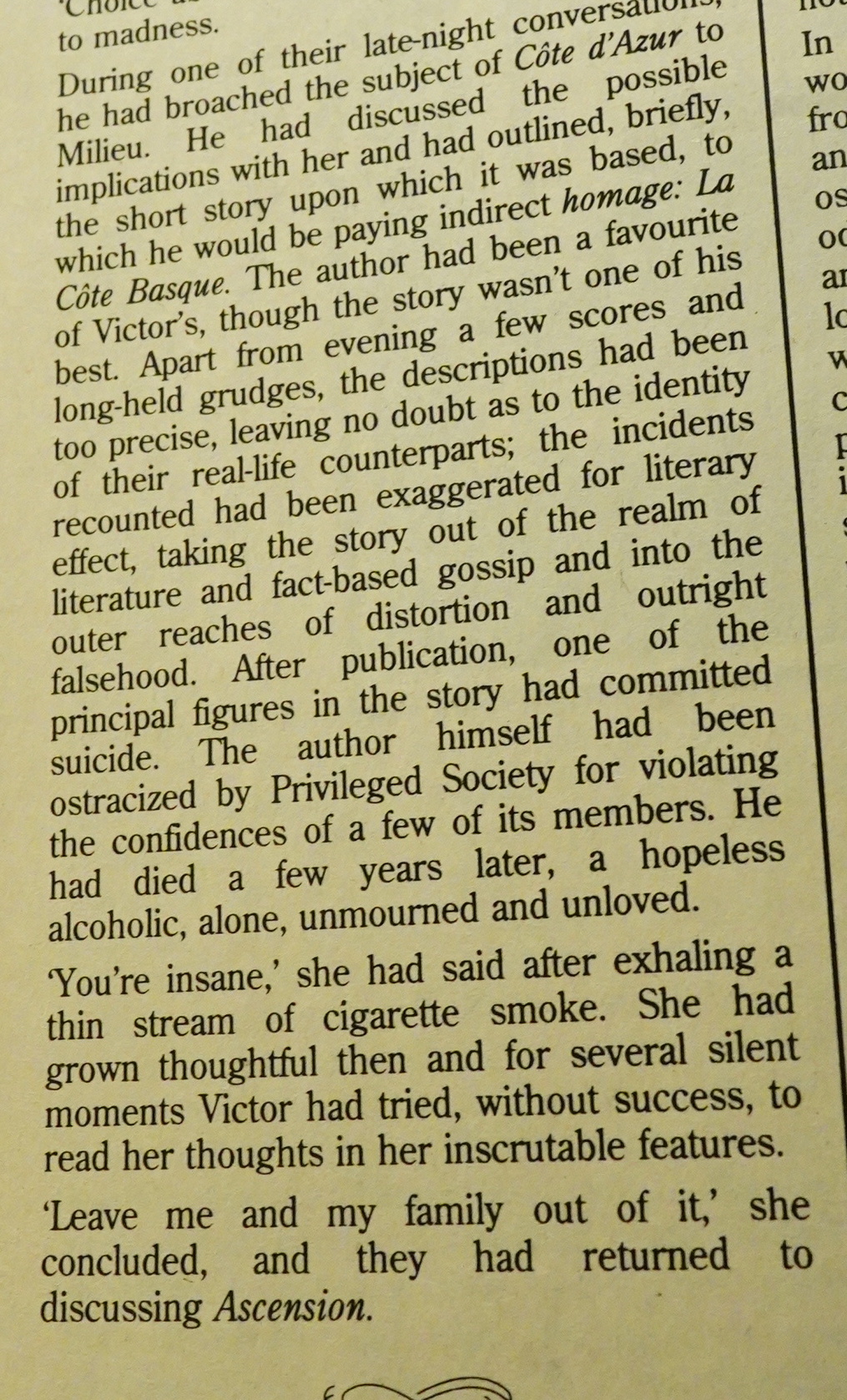
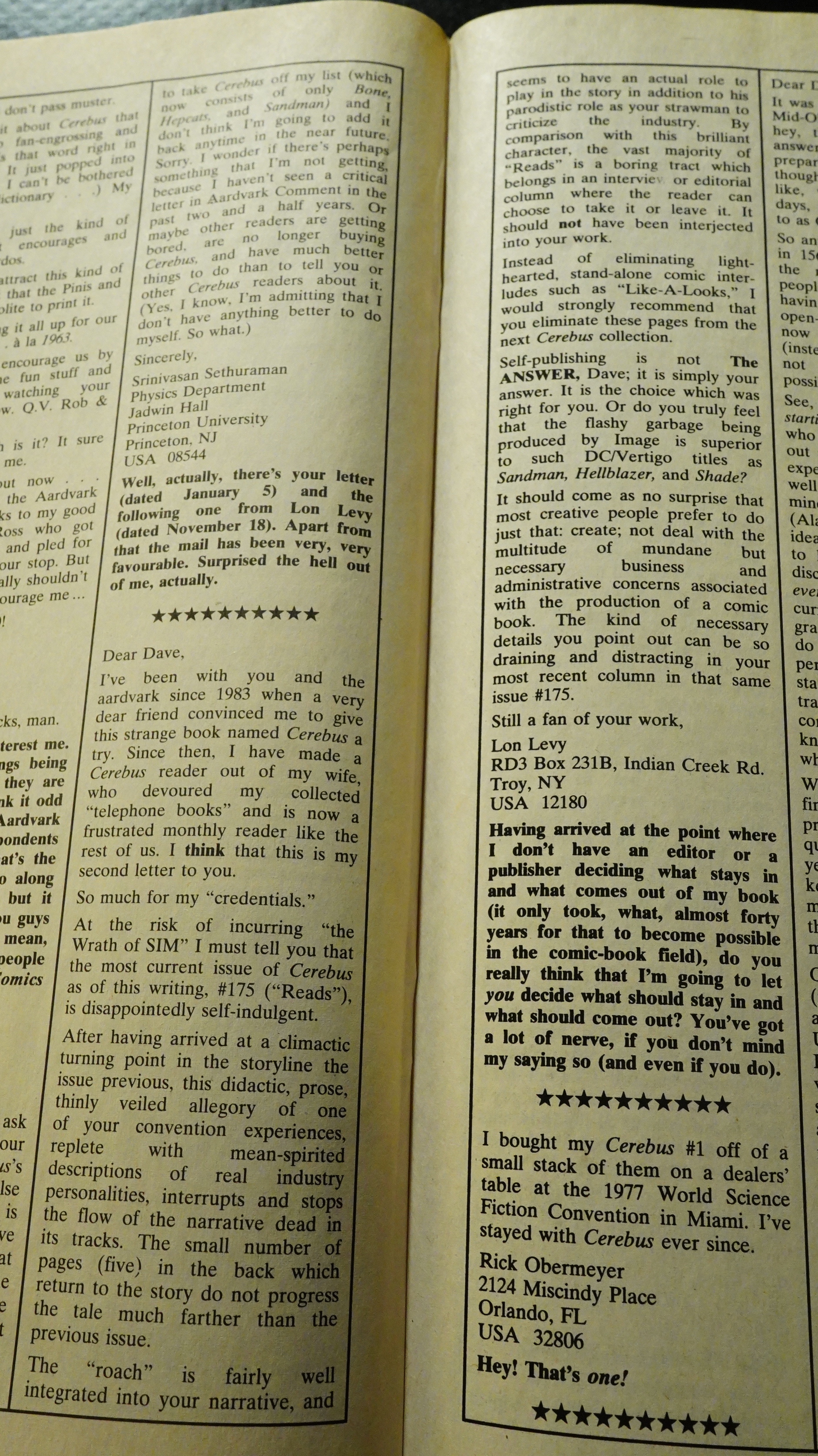
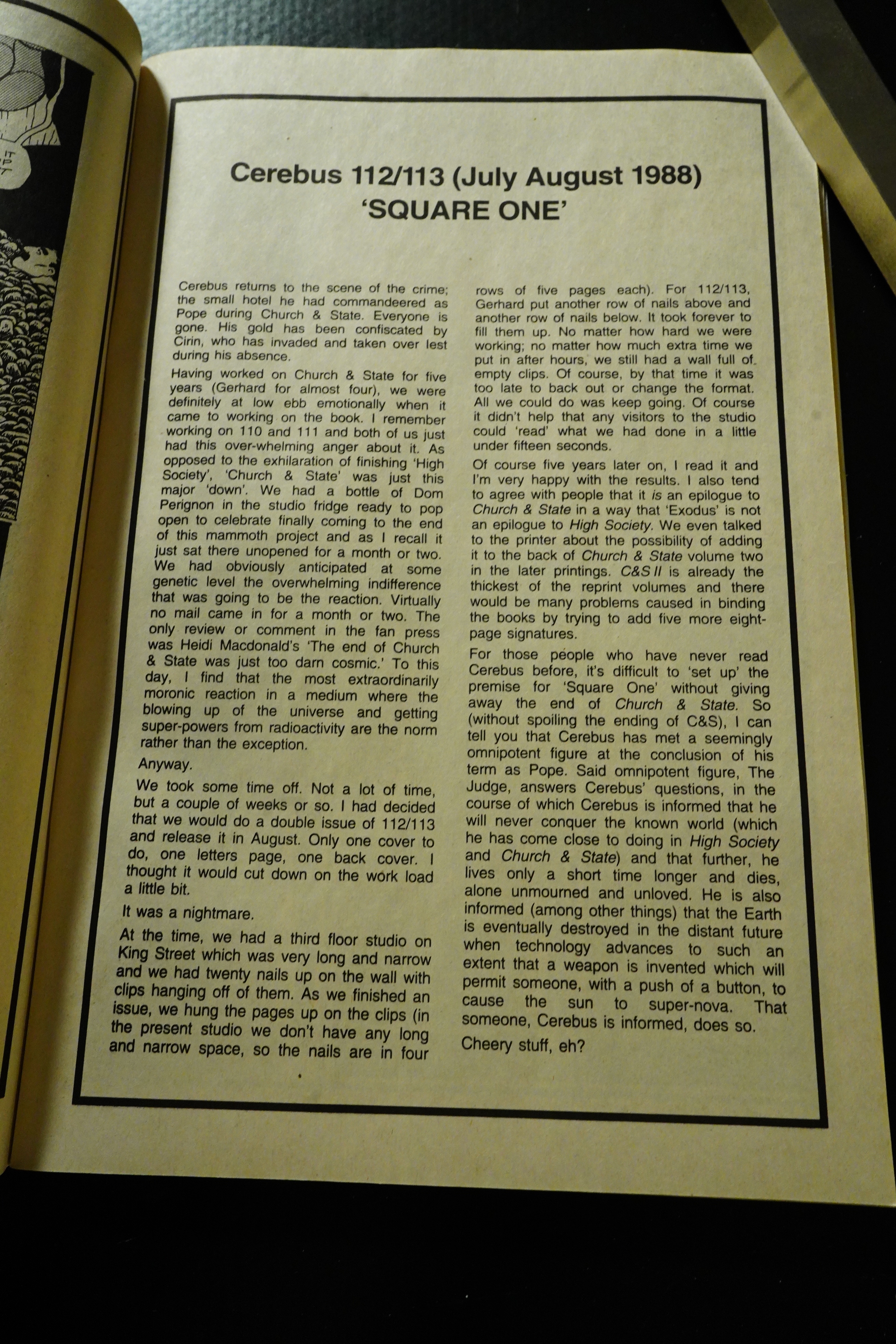
Sim receives a letter praising him, and he talks about the thought process that went into having Gerhard ink the lettering of a sign at the tavern and how nice it is that somebody noticed it. I did notice it, too — the sign was obviously written by Cerebus, and I just thought that it was a bit out of character for Cerebus to make the effort to write a sign like that, but then again — Cerebus’ character is malleable.
This reminds me of a thing I was thinking about the other day while reading some Cerebus discussion about Cerebus in a comment section. One person was wondering whether Sim’s early seemingly positive female characters had always been meant to be horrible people (as Sim would insist later), or whether Sim just changed his mind. And I’m honestly not sure. Things like this (with the sign) shows that Sim puts thought into things that are difficult to actually pick up on as a reader. So if you have a woman making a nice sandwich, the reader thinks “she’s making a nice sandwich”. While Sim may have been thinking “I’m depicting her with a knife, cutting bread, clearly emasculating men, and in particular with regards to the meanings attributed to bread in the Bible, so what I’m really depicting here is how Feminism is usurping Christianity, see?” *insert nice drawing of nice woman making a sandwich here*
Or he just made up that stuff later, and he was just drawing a nice woman making a nice sandwich. Hard to say.
And:

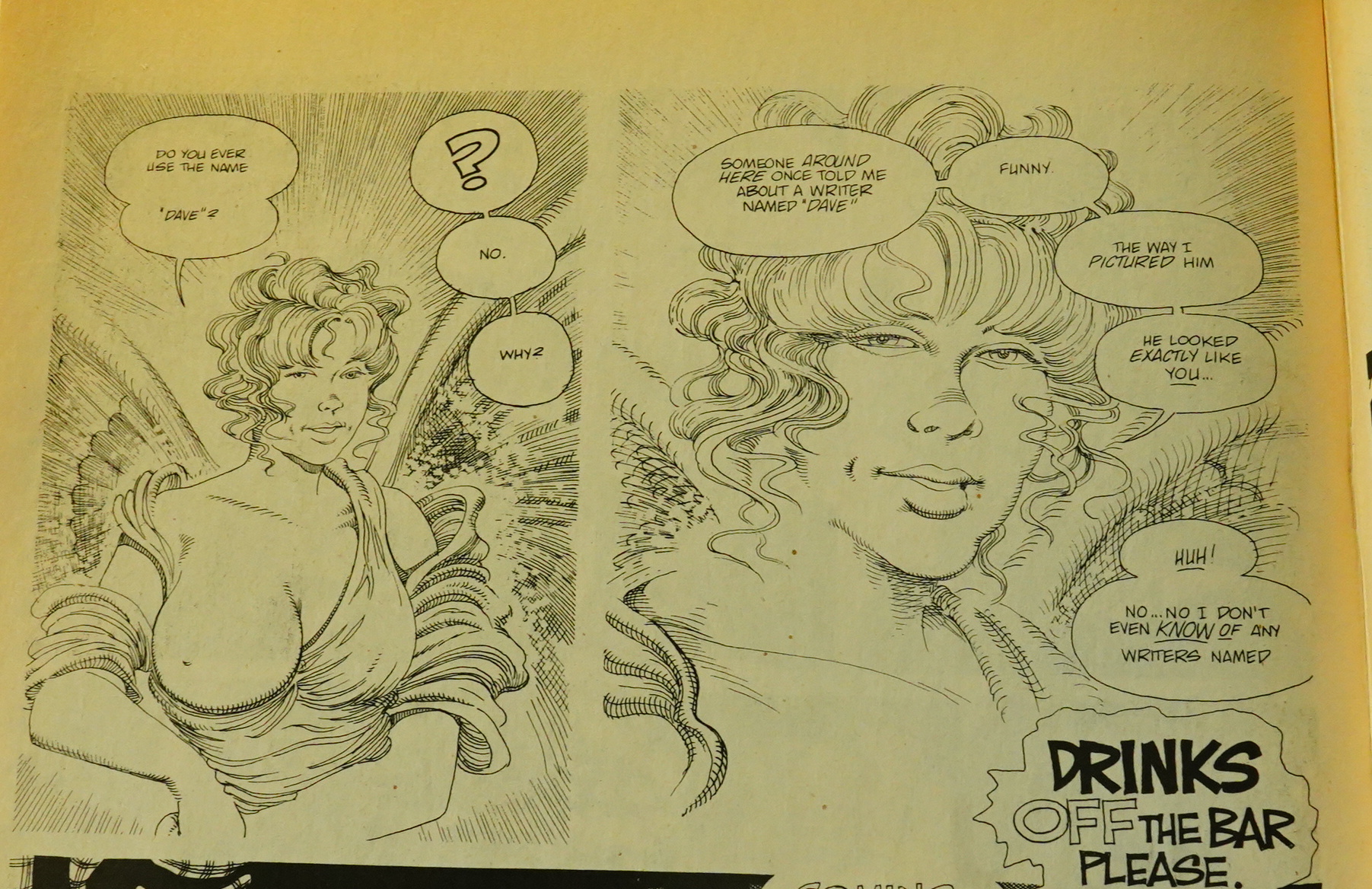
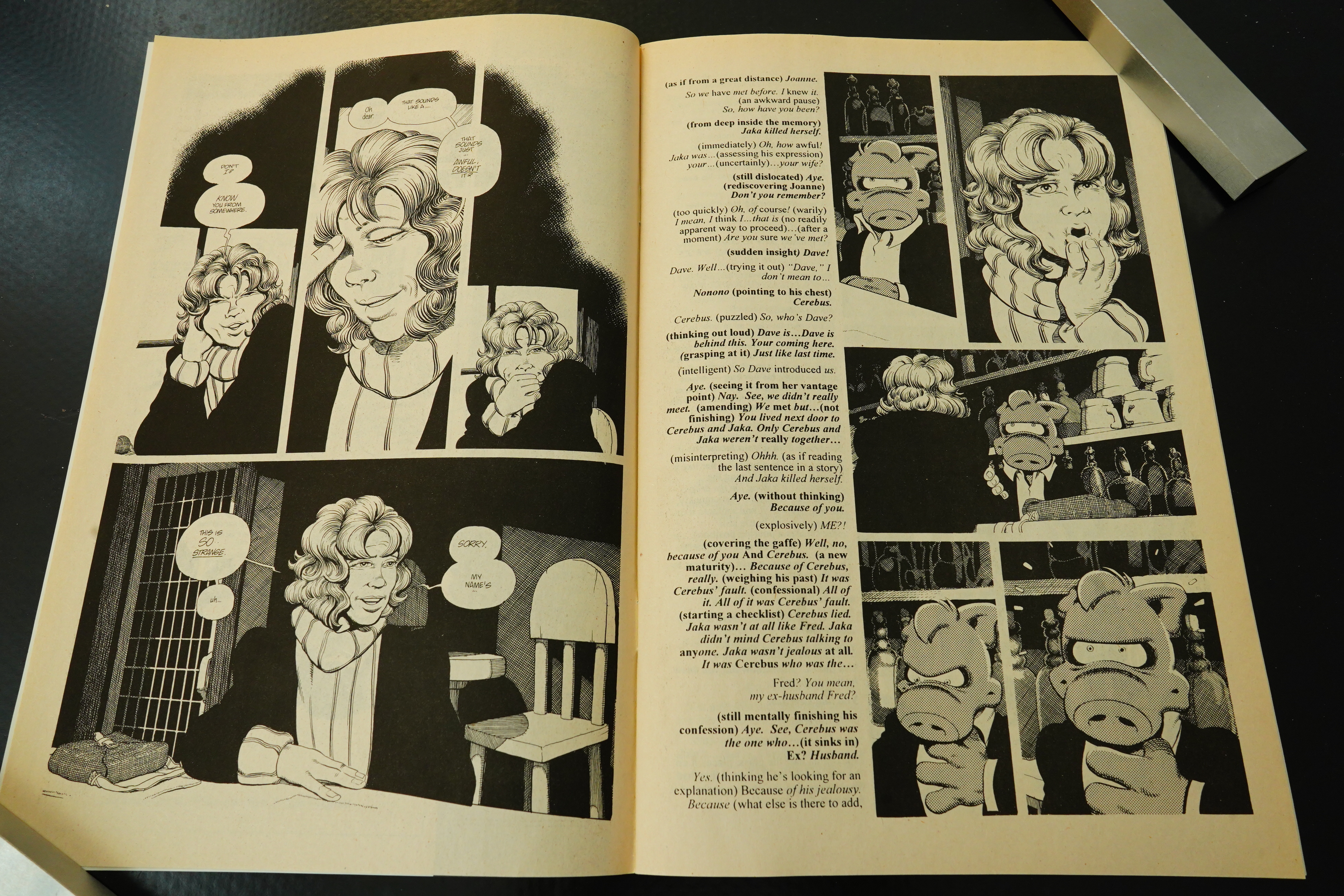
Even Joanne thinks that Rick might be Dave.
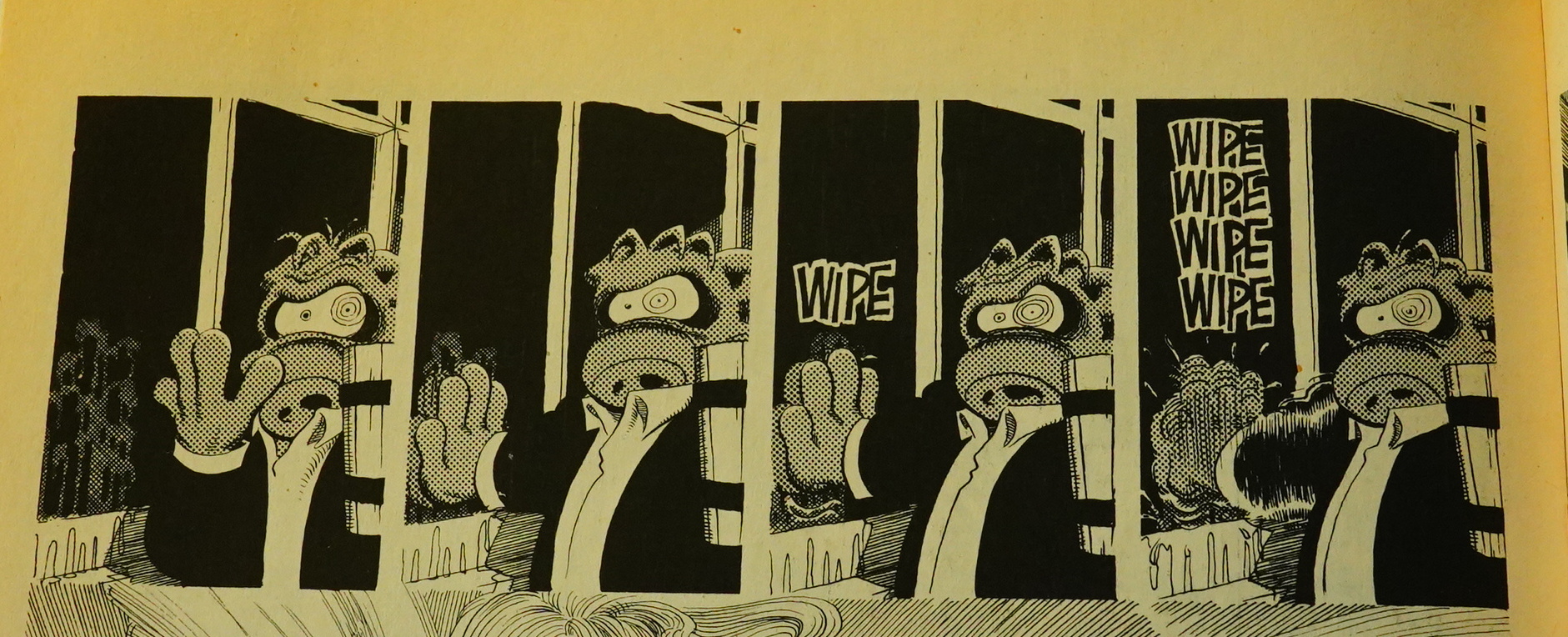
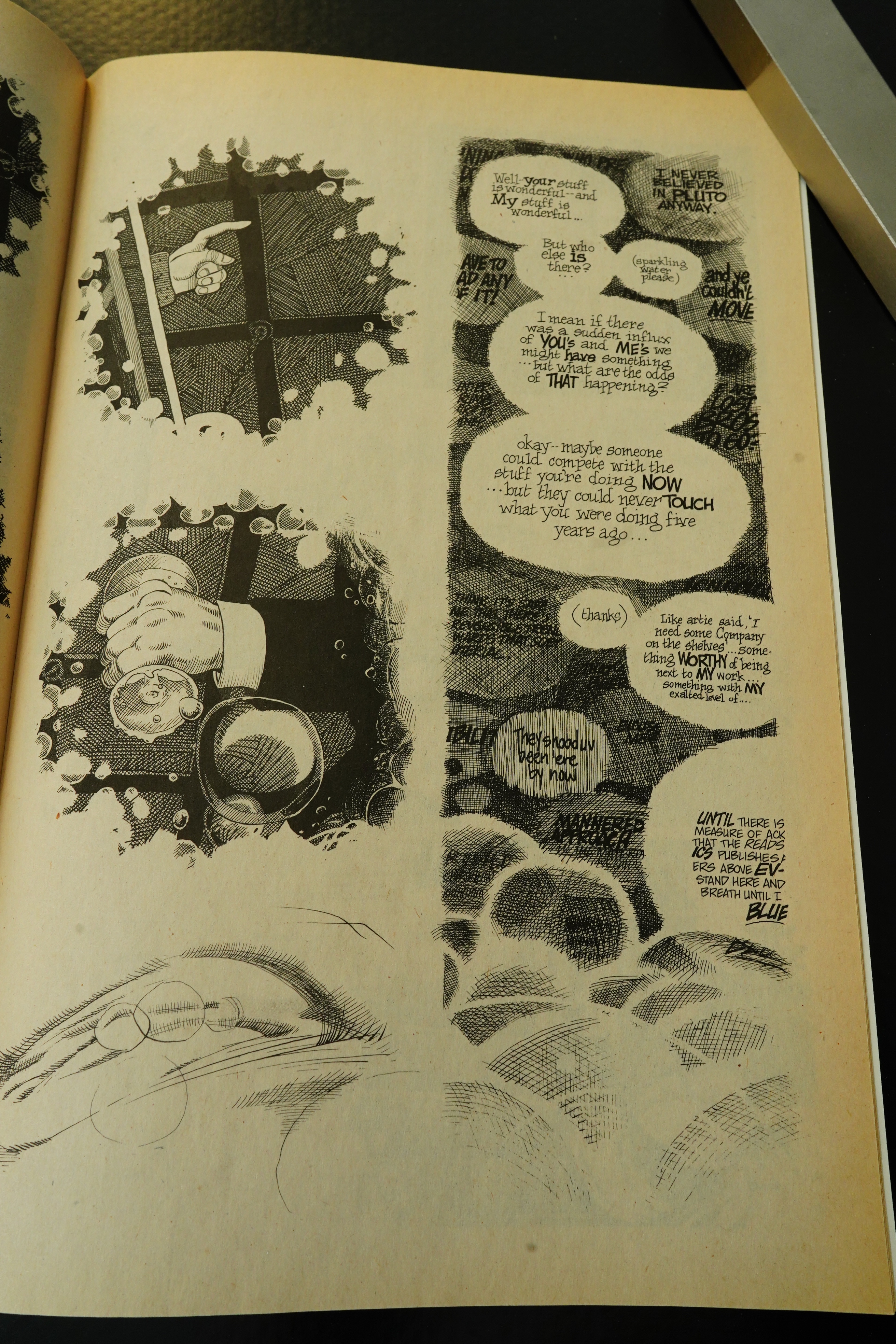
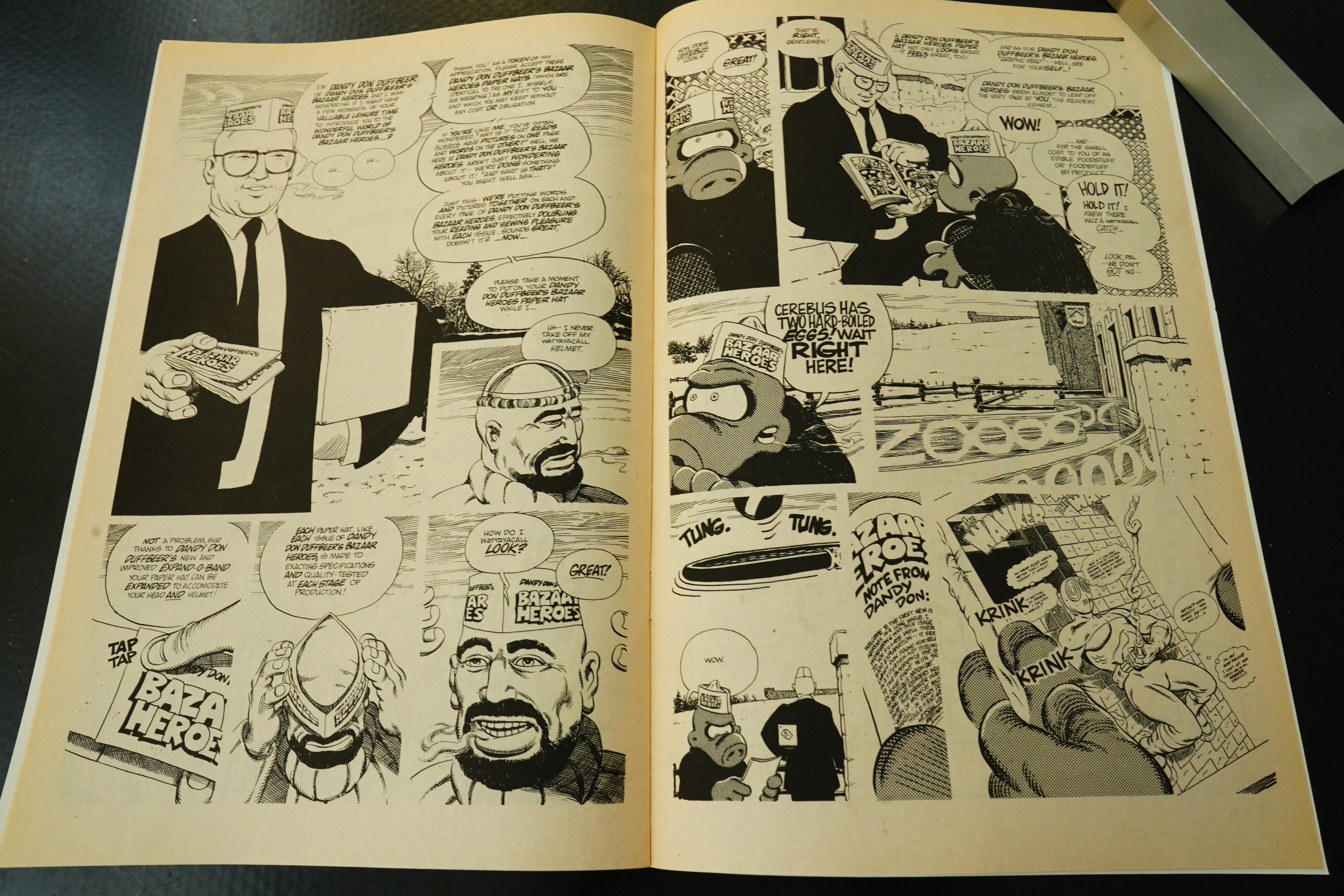
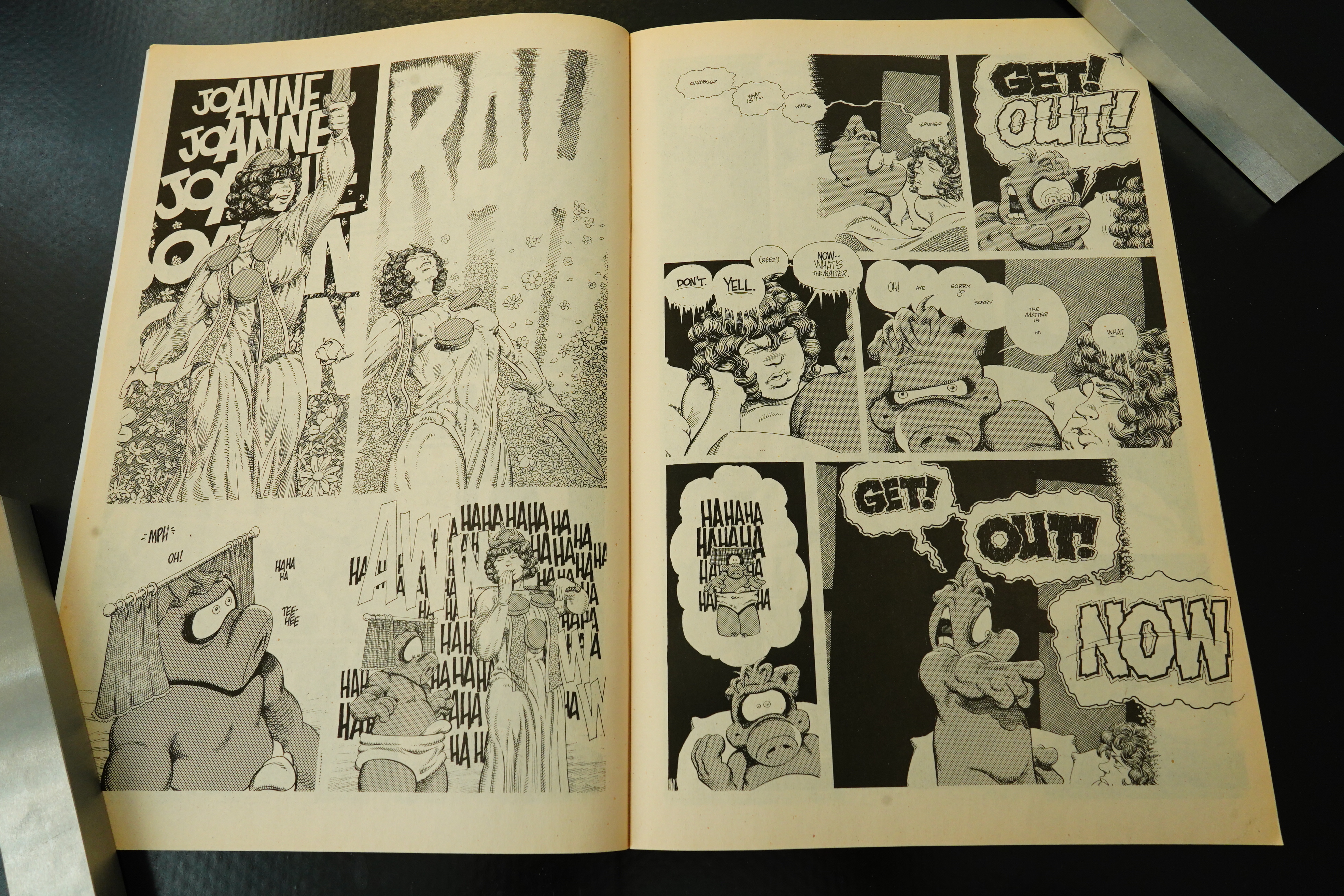
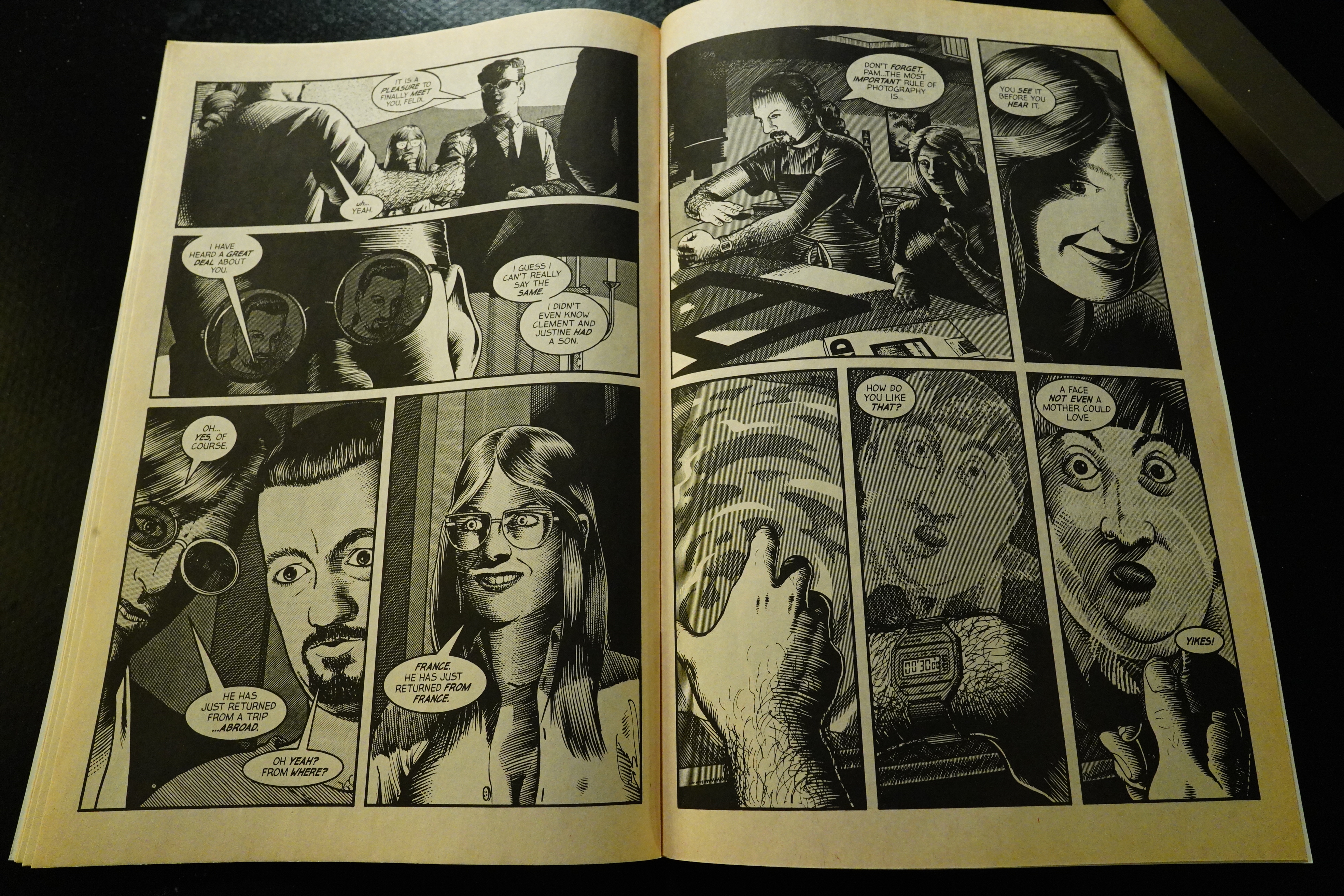
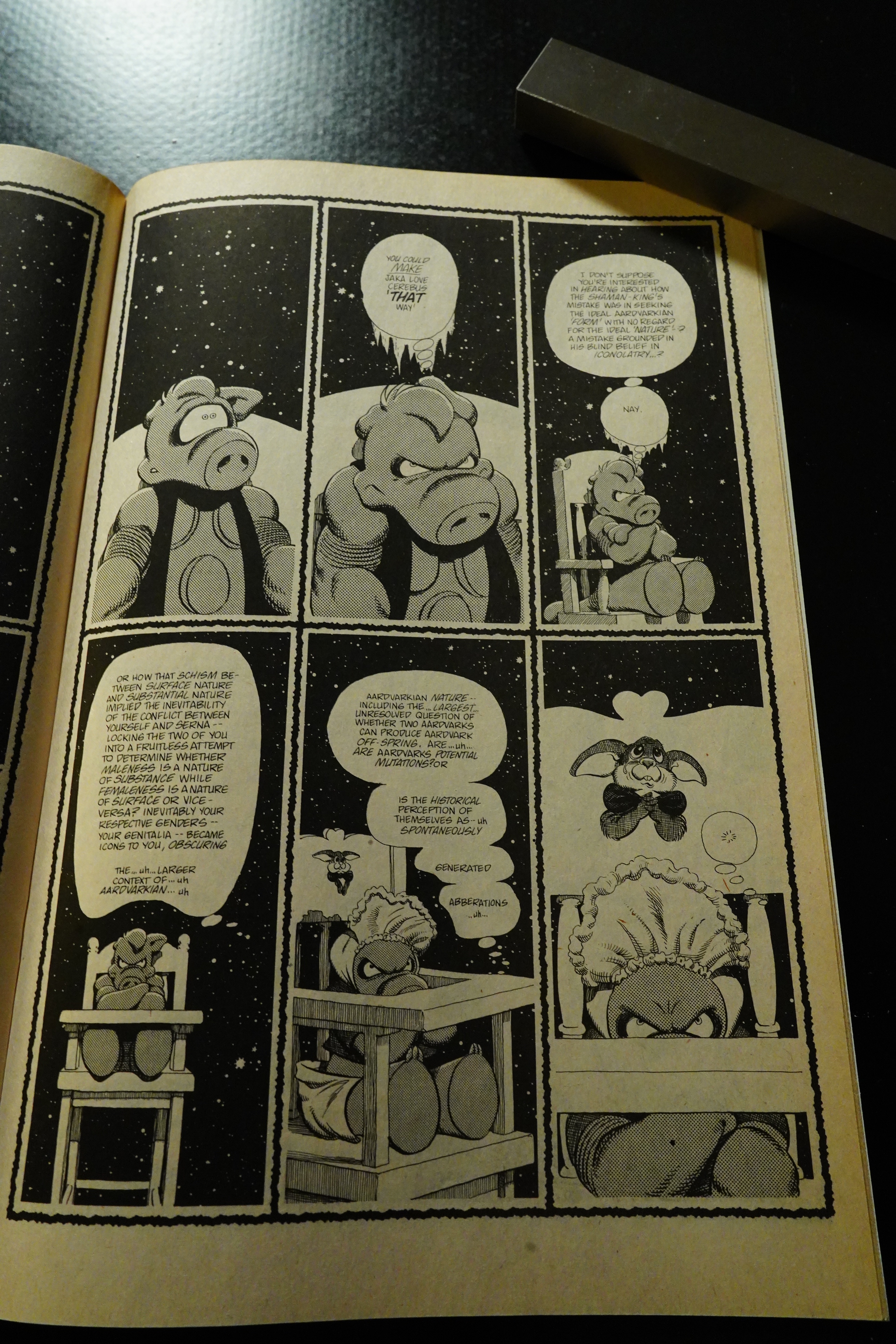
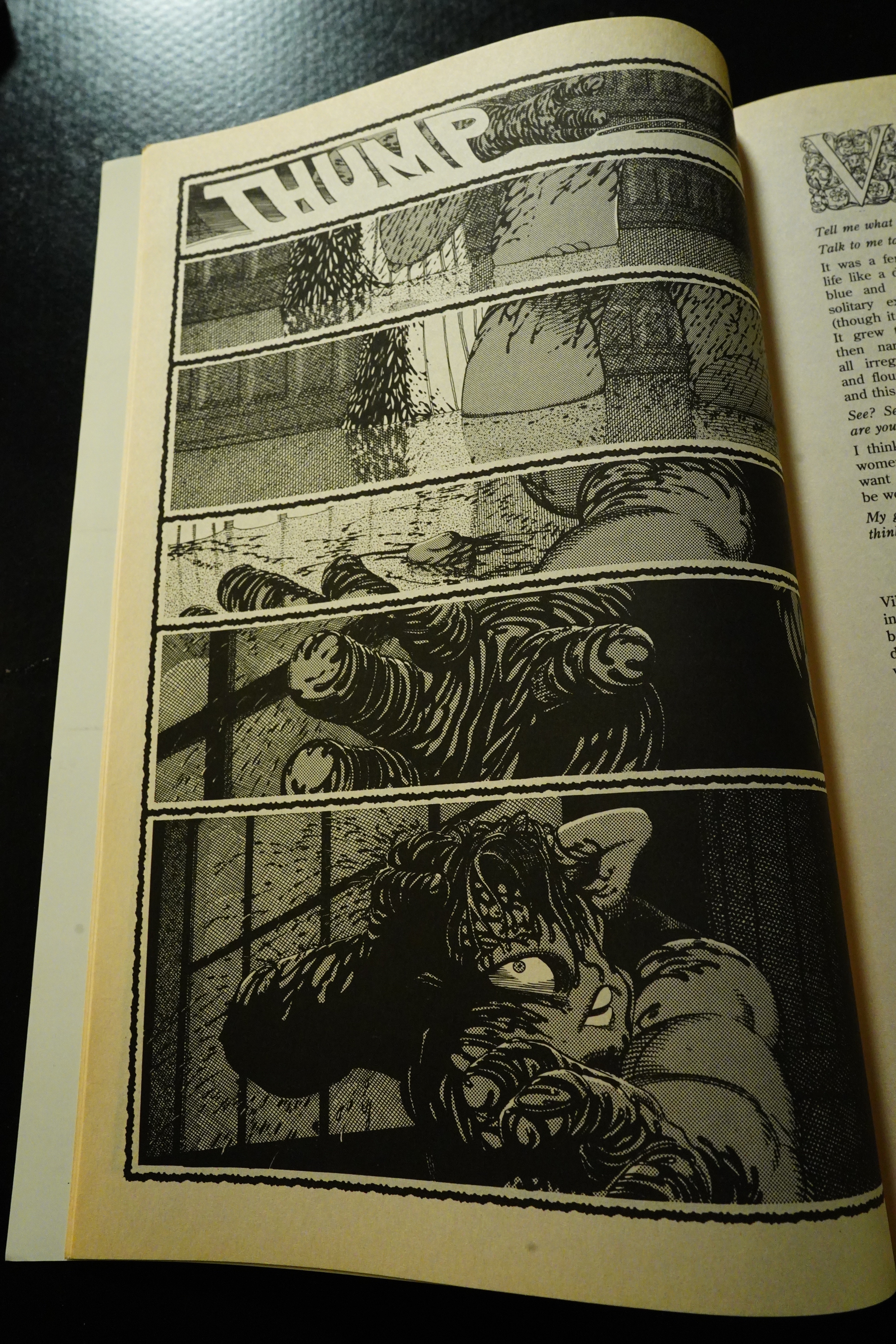
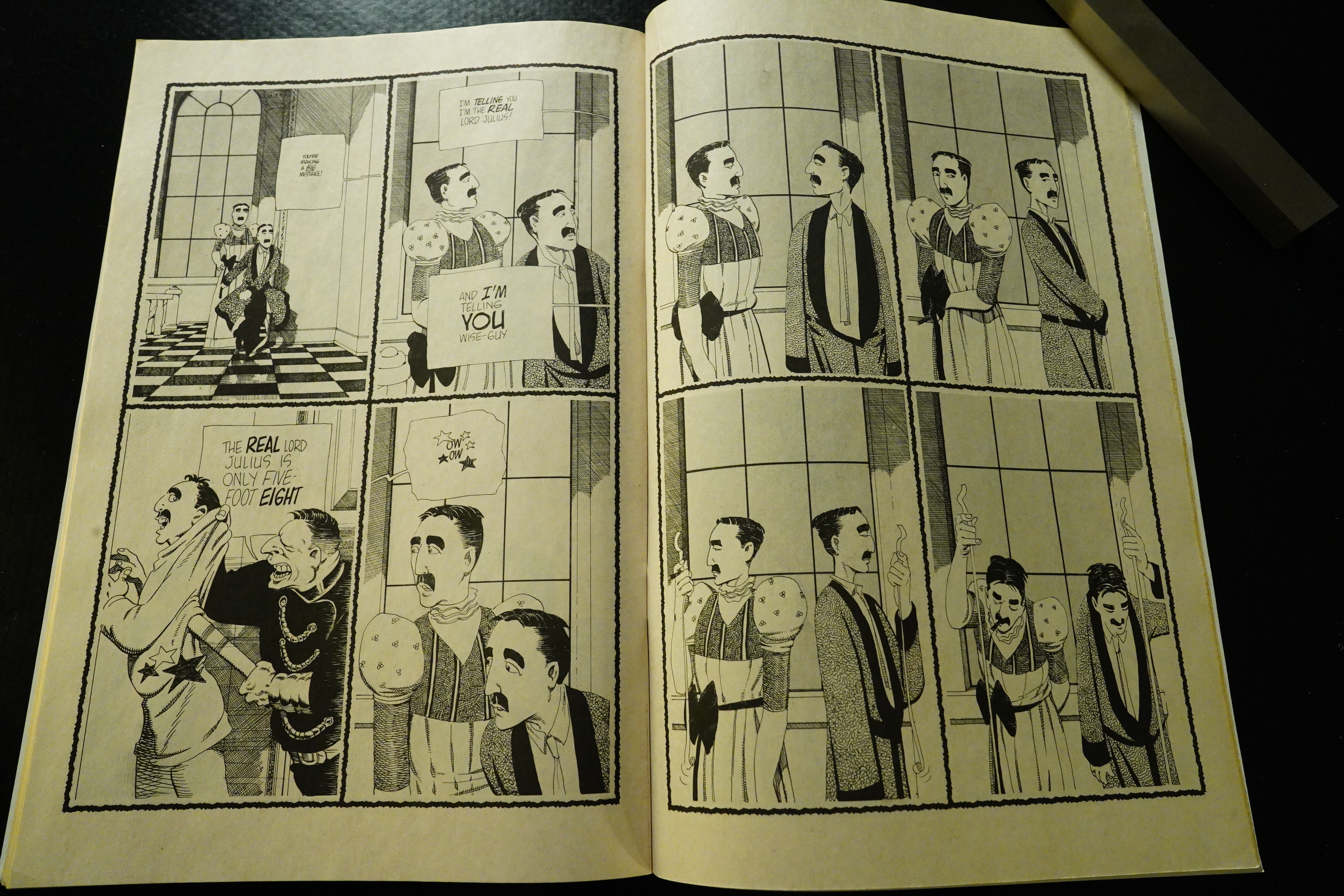
Sim can still bring the funny. Here we have Cerebus trying to suavely wash a window so that Rick and Joanne won’t think he’s spying on them (but he forgot to bring a rag).
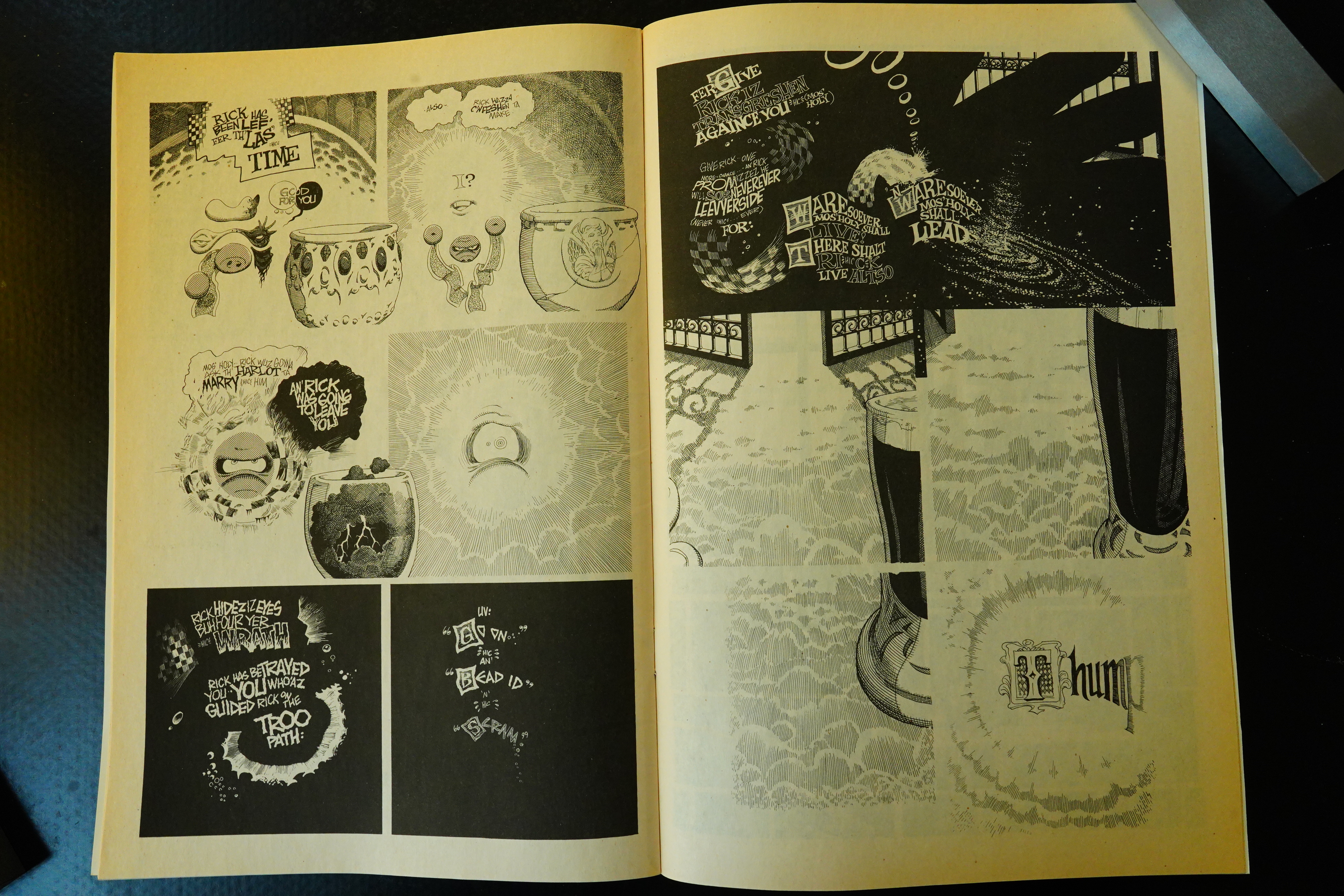
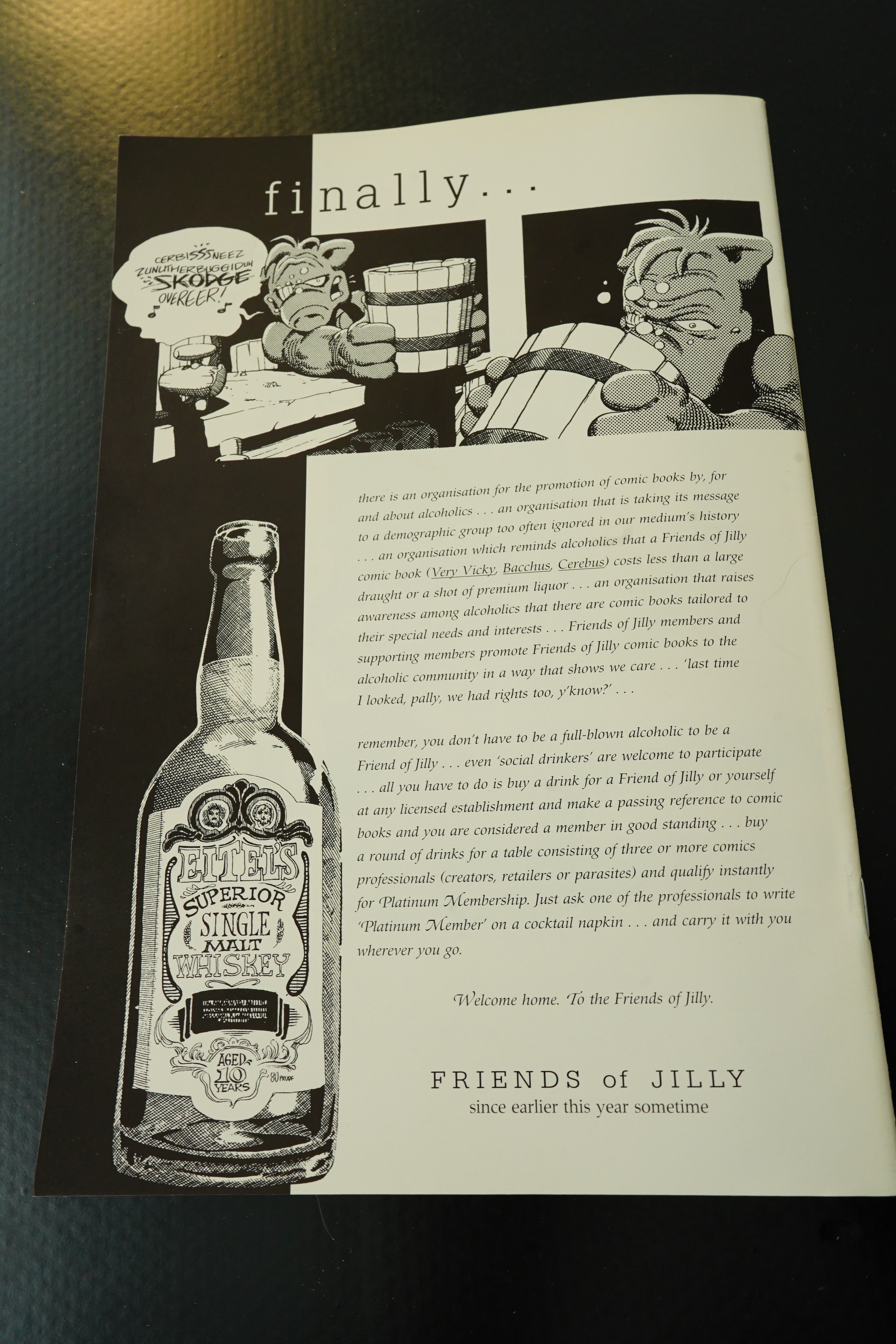
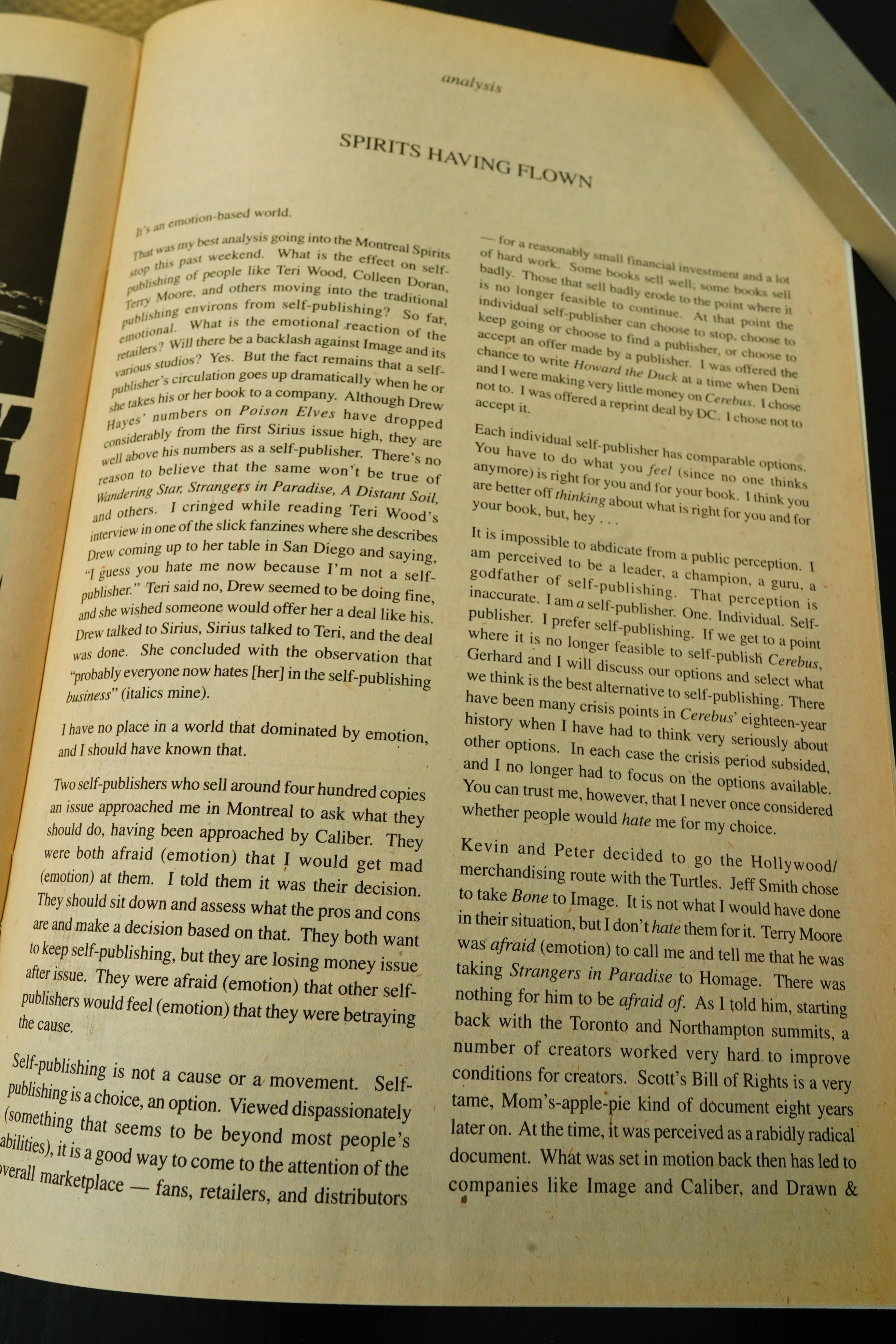
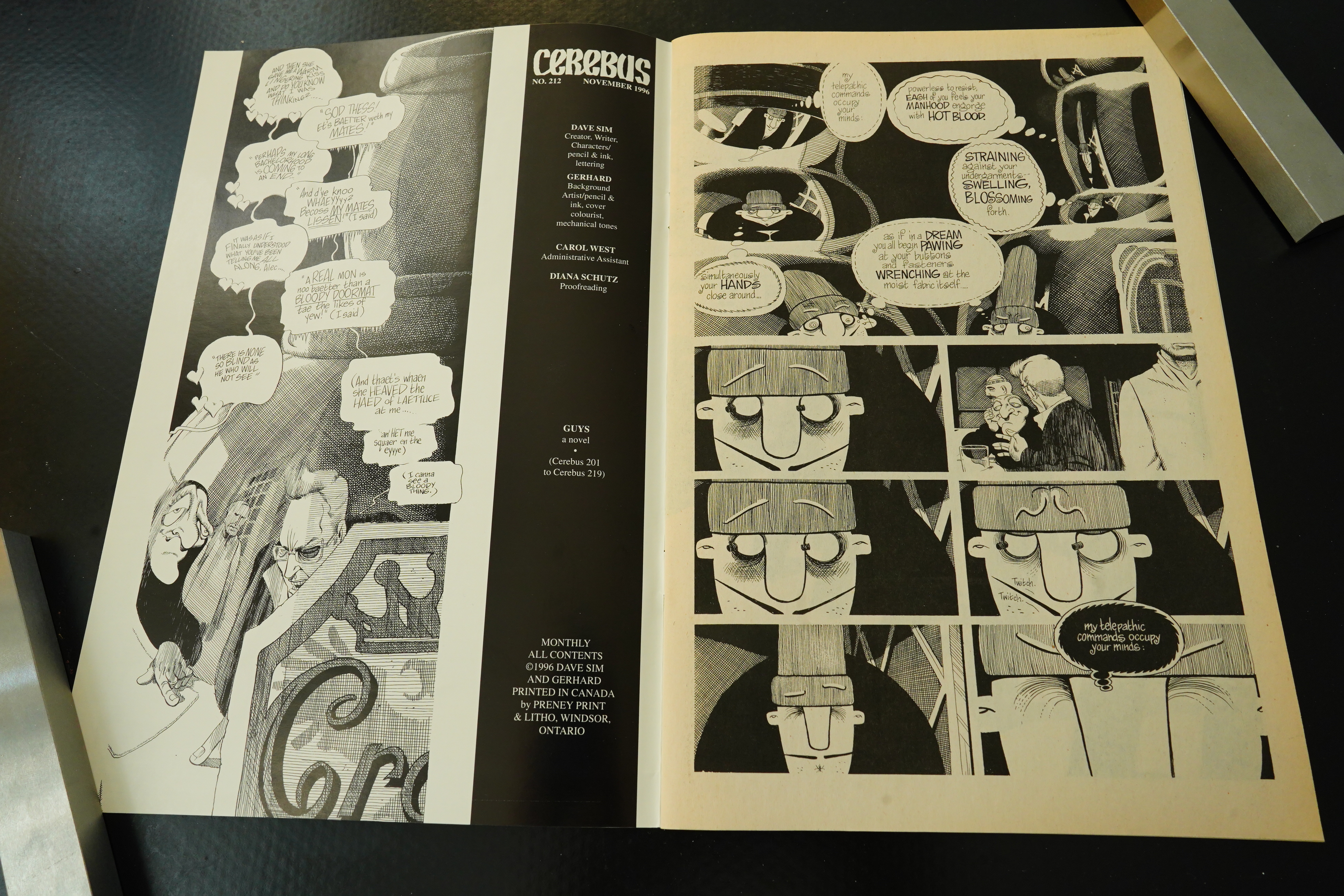
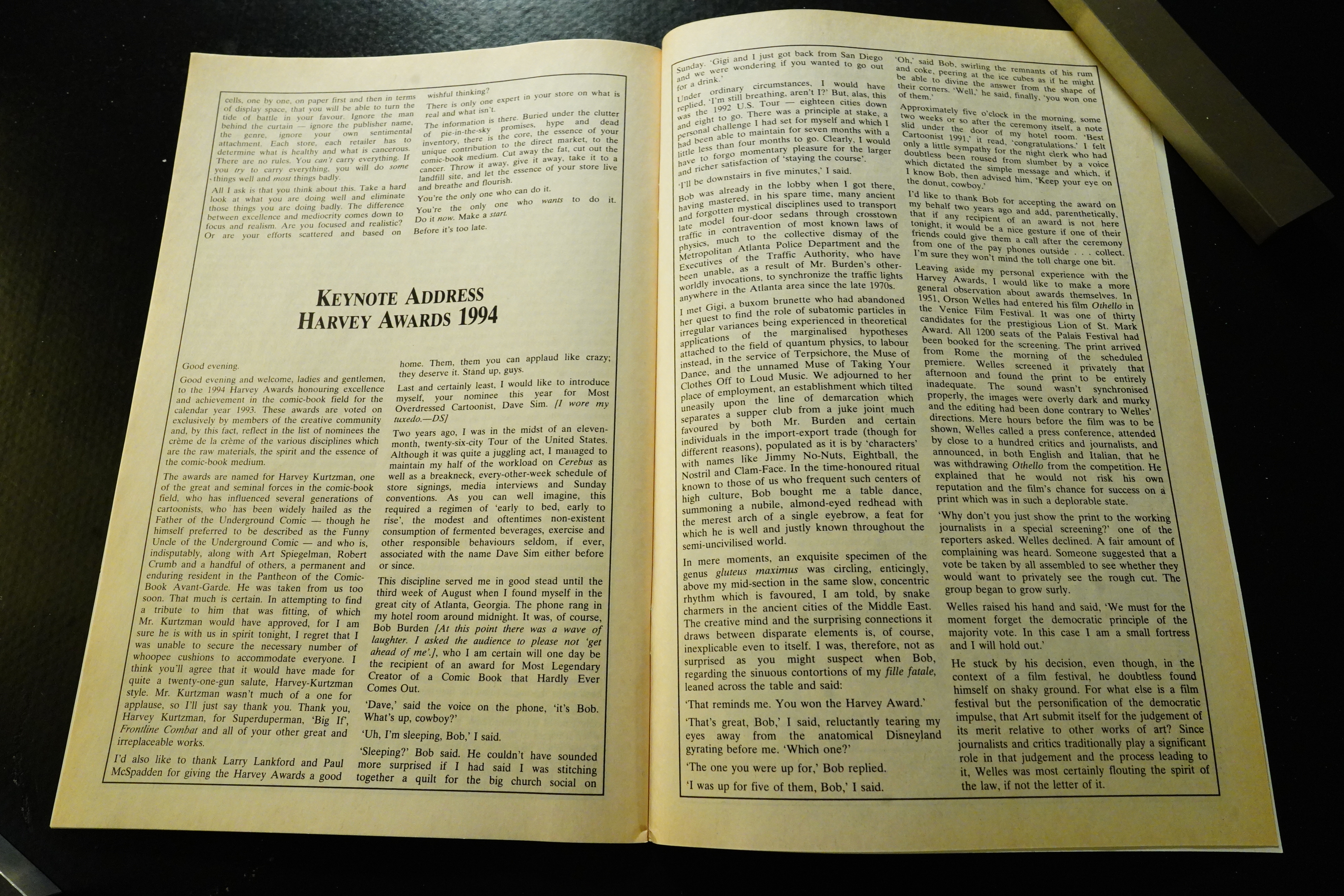
Sim was up for “Best Letterer” at many, many Eisner awards.
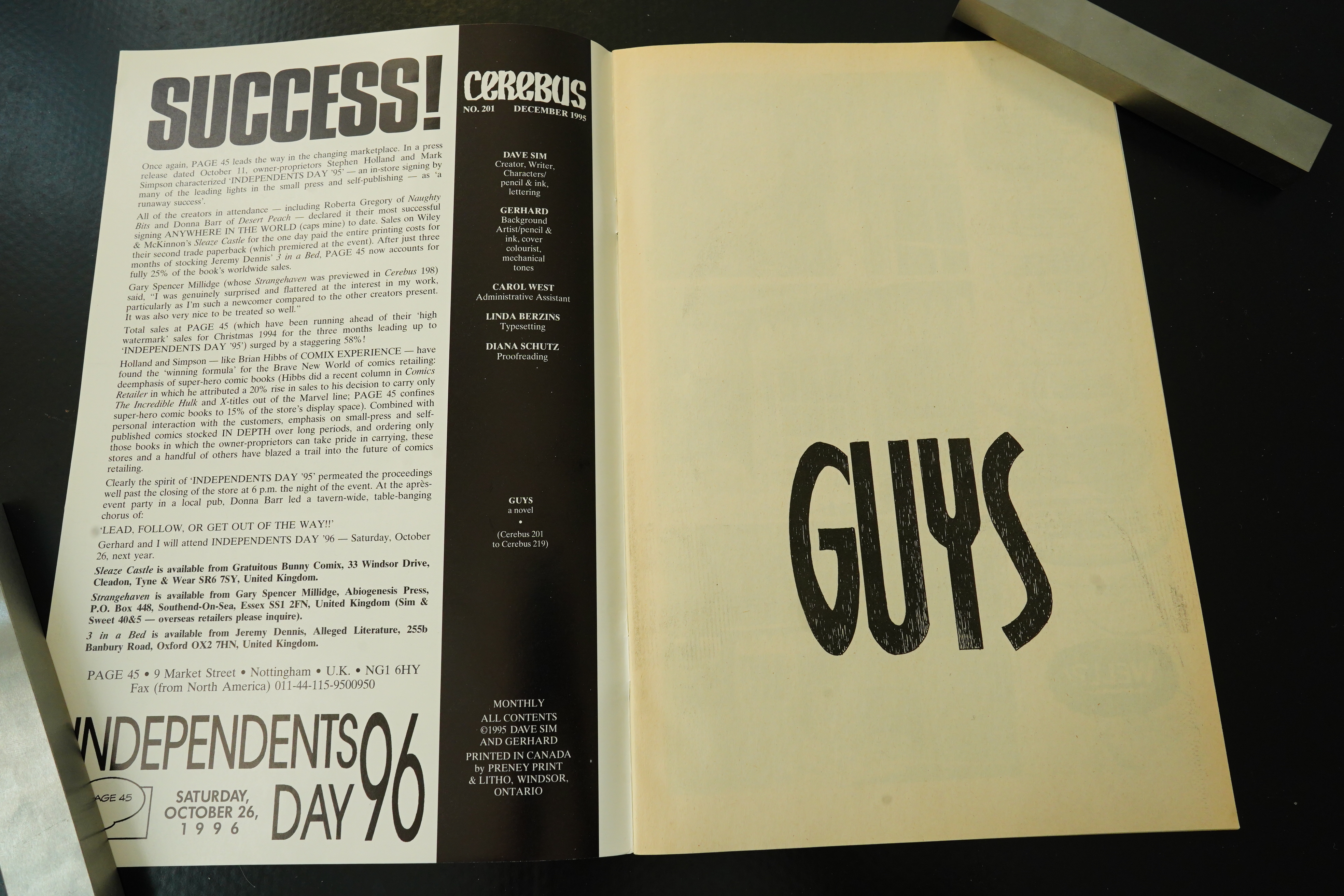
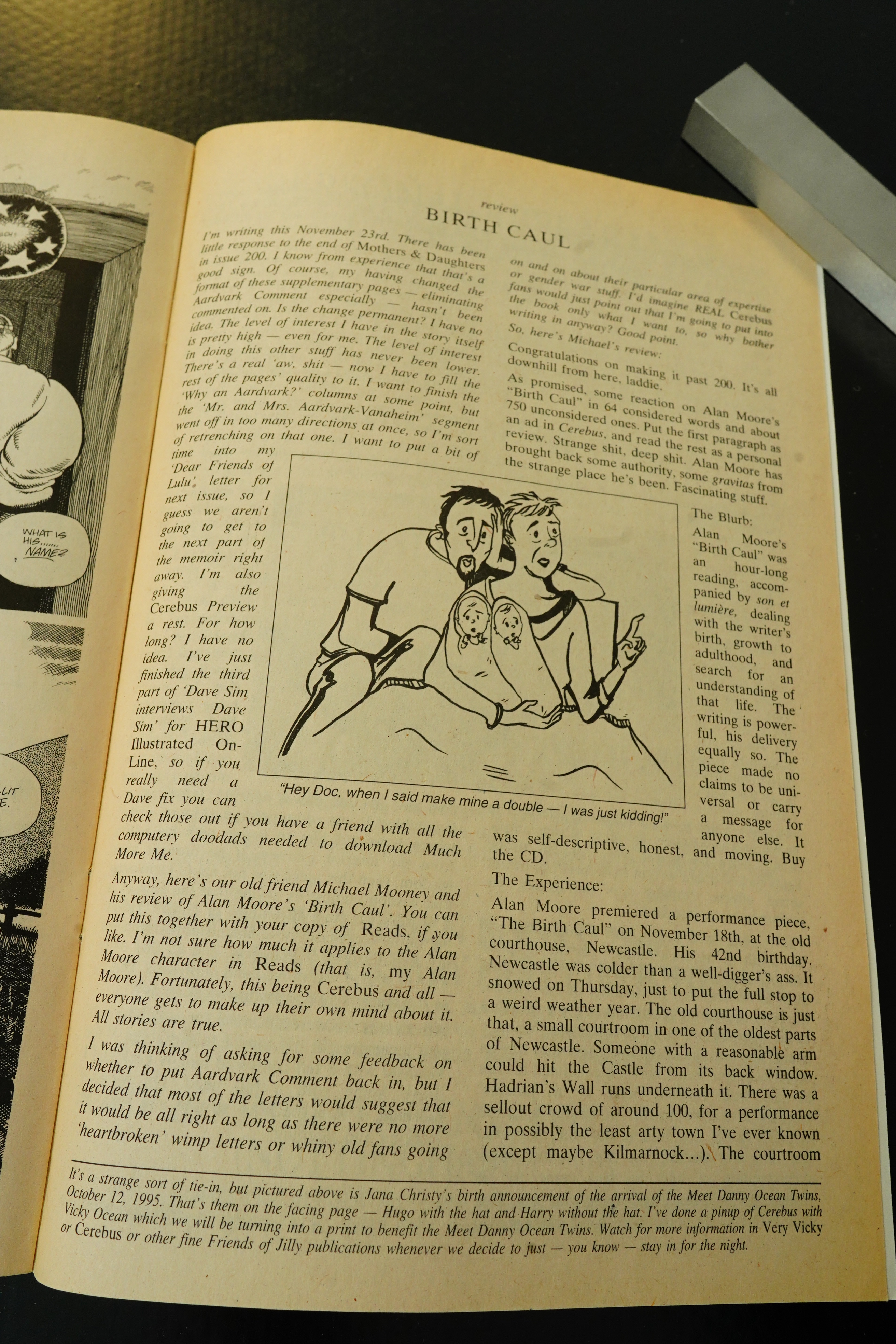
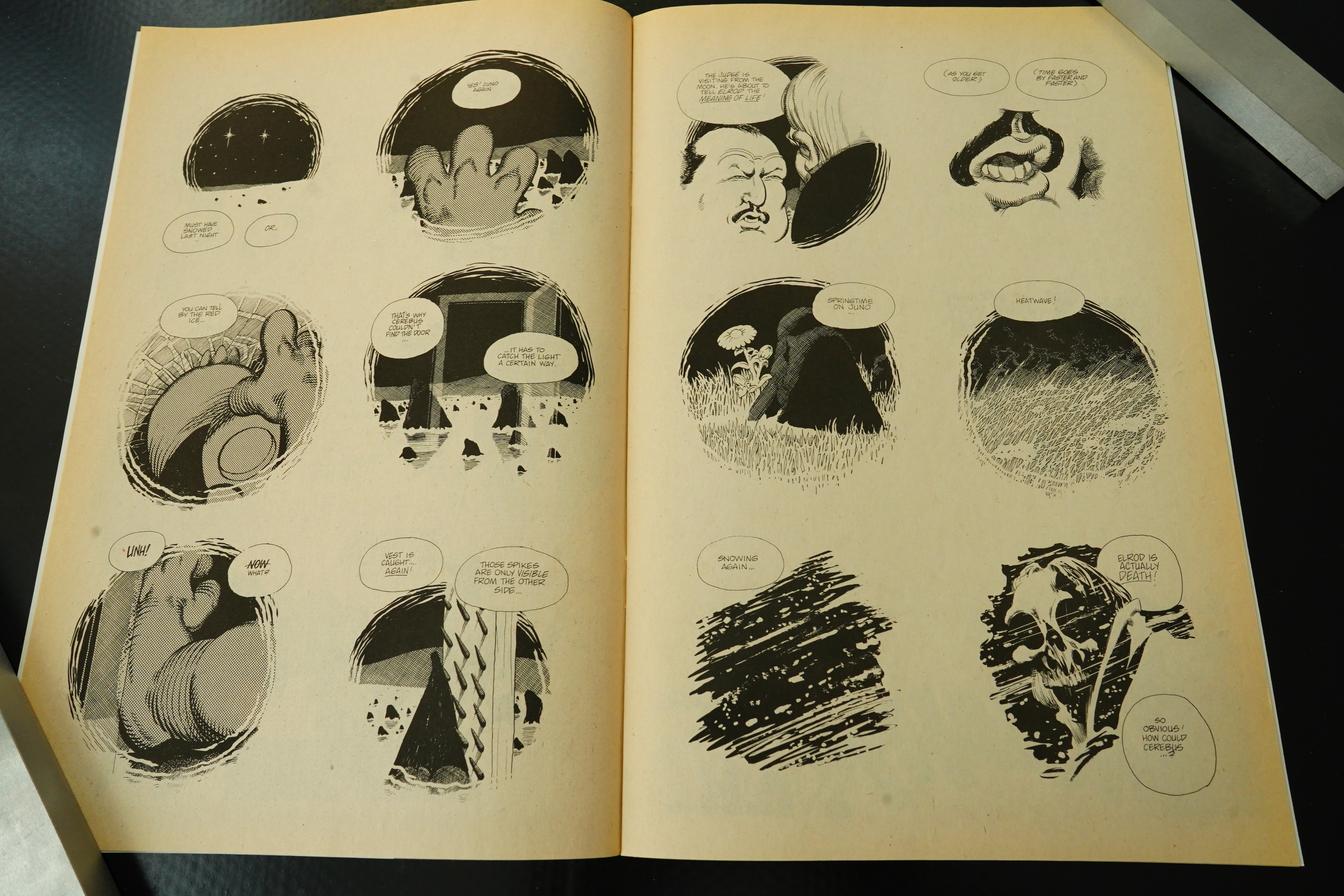
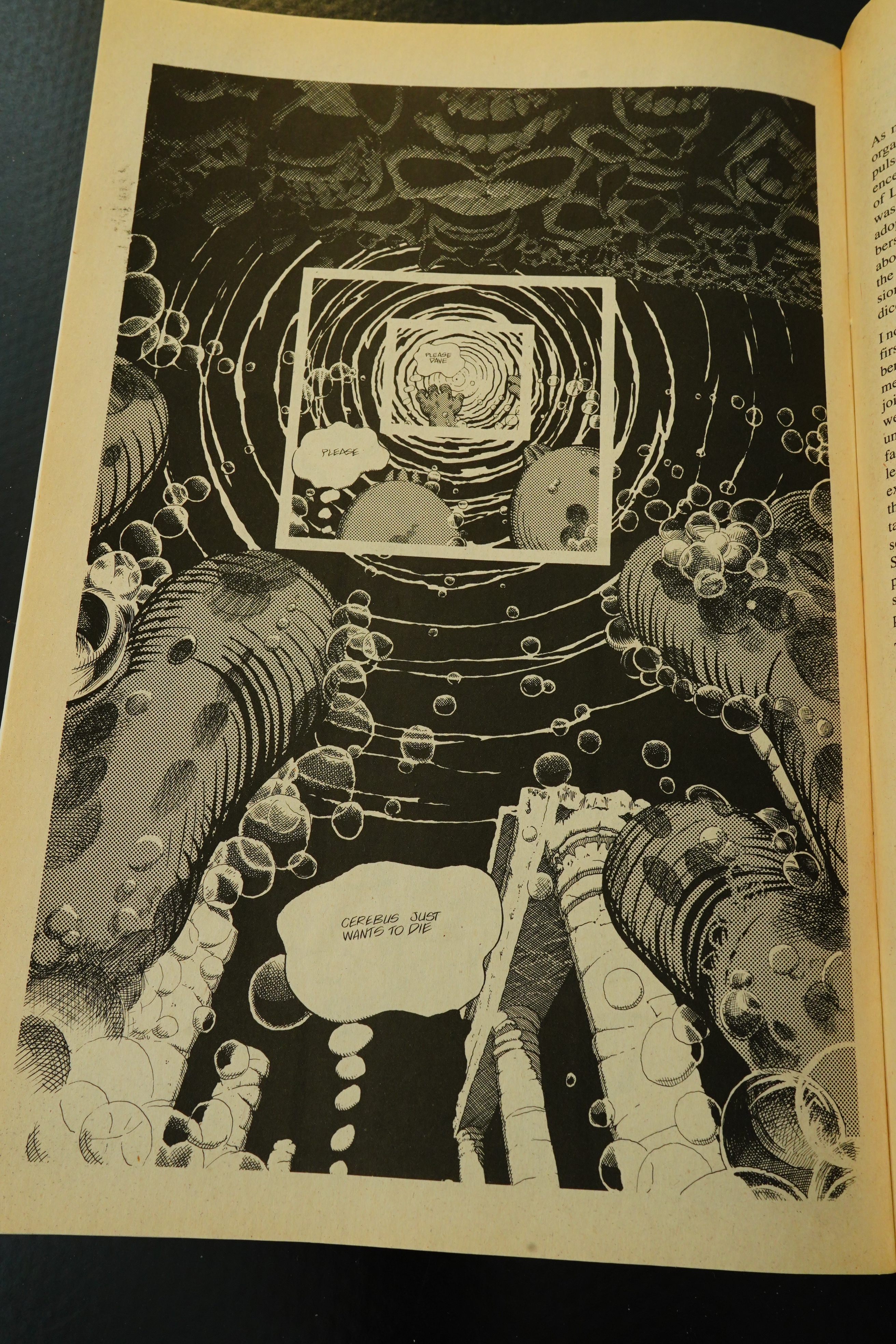
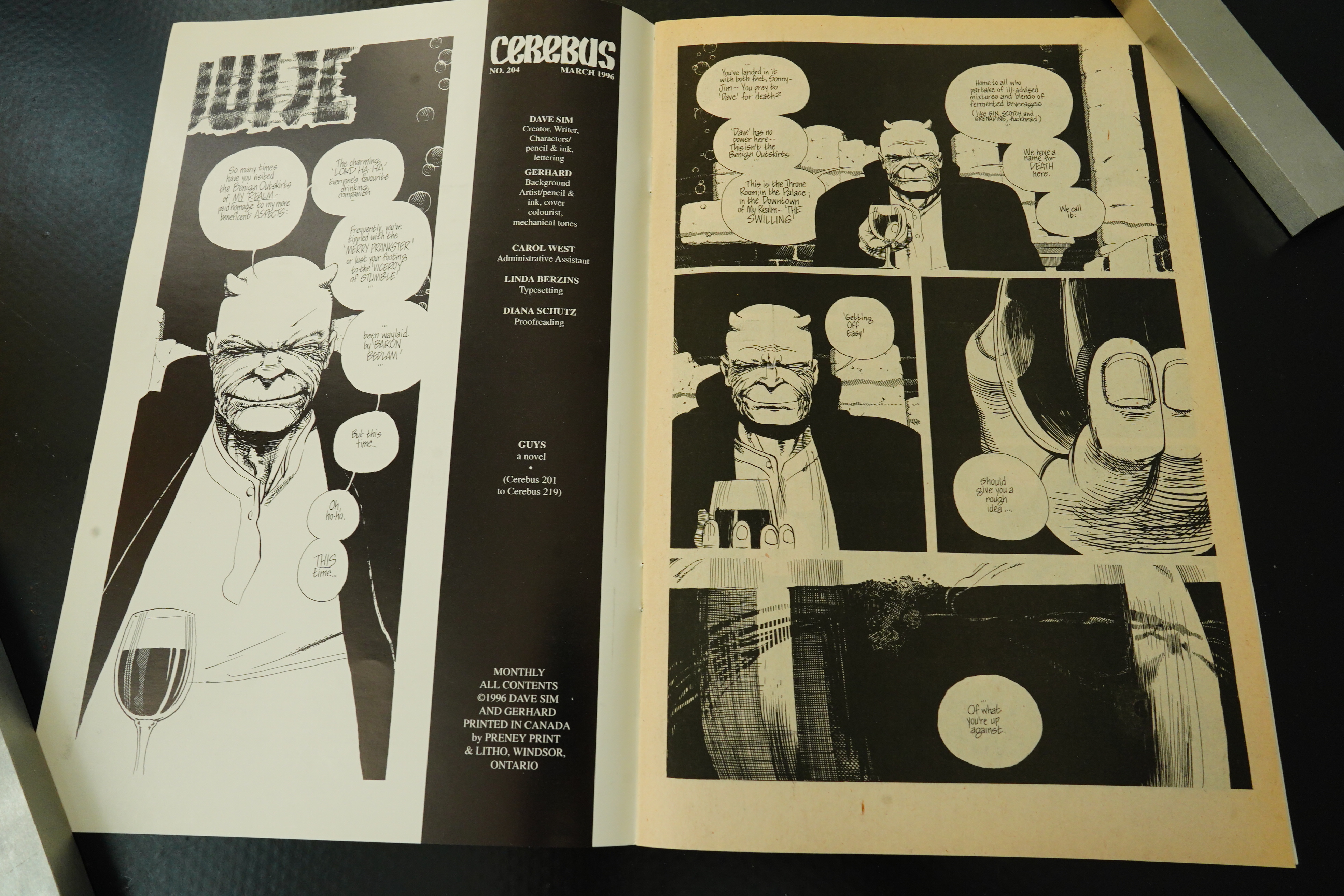
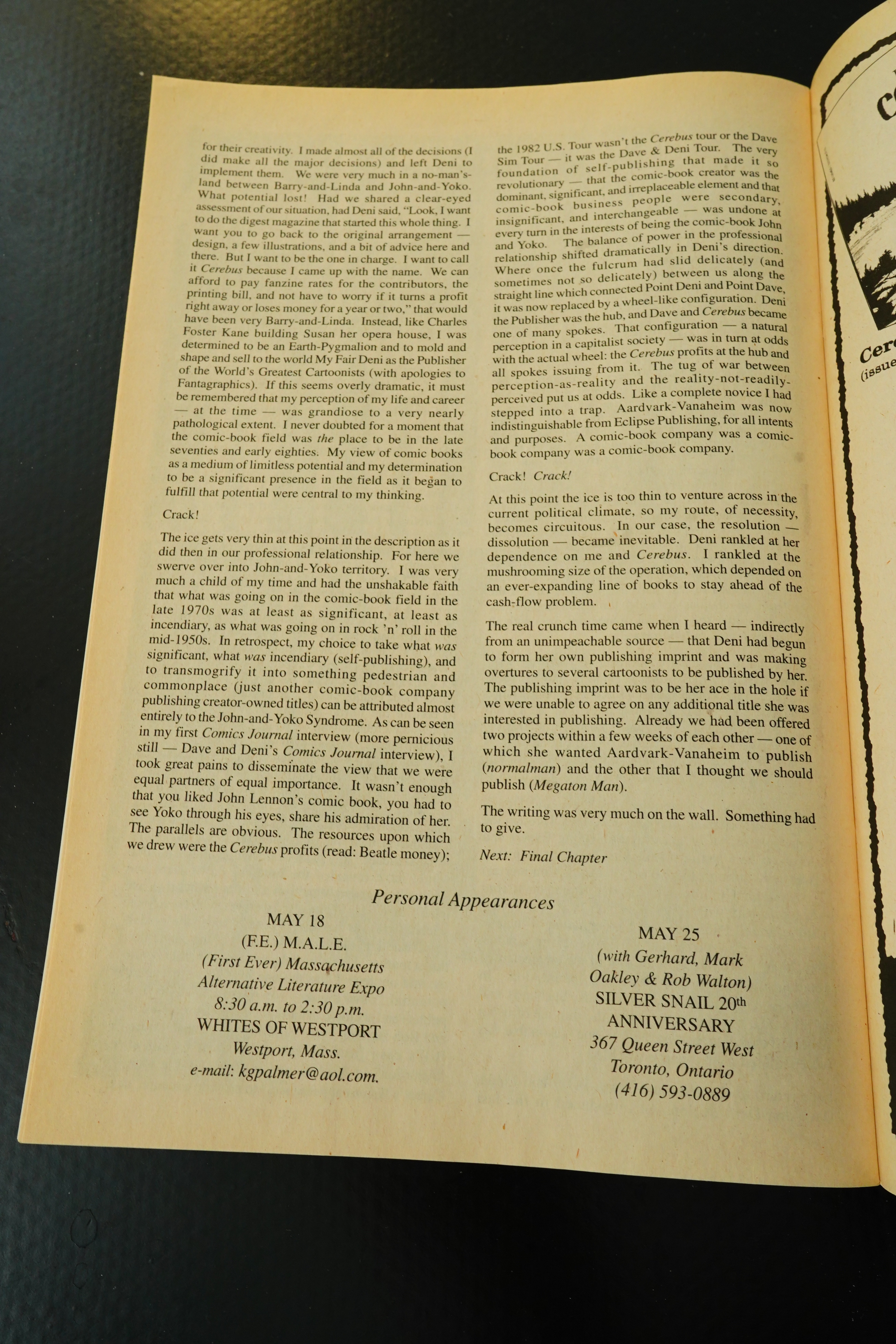
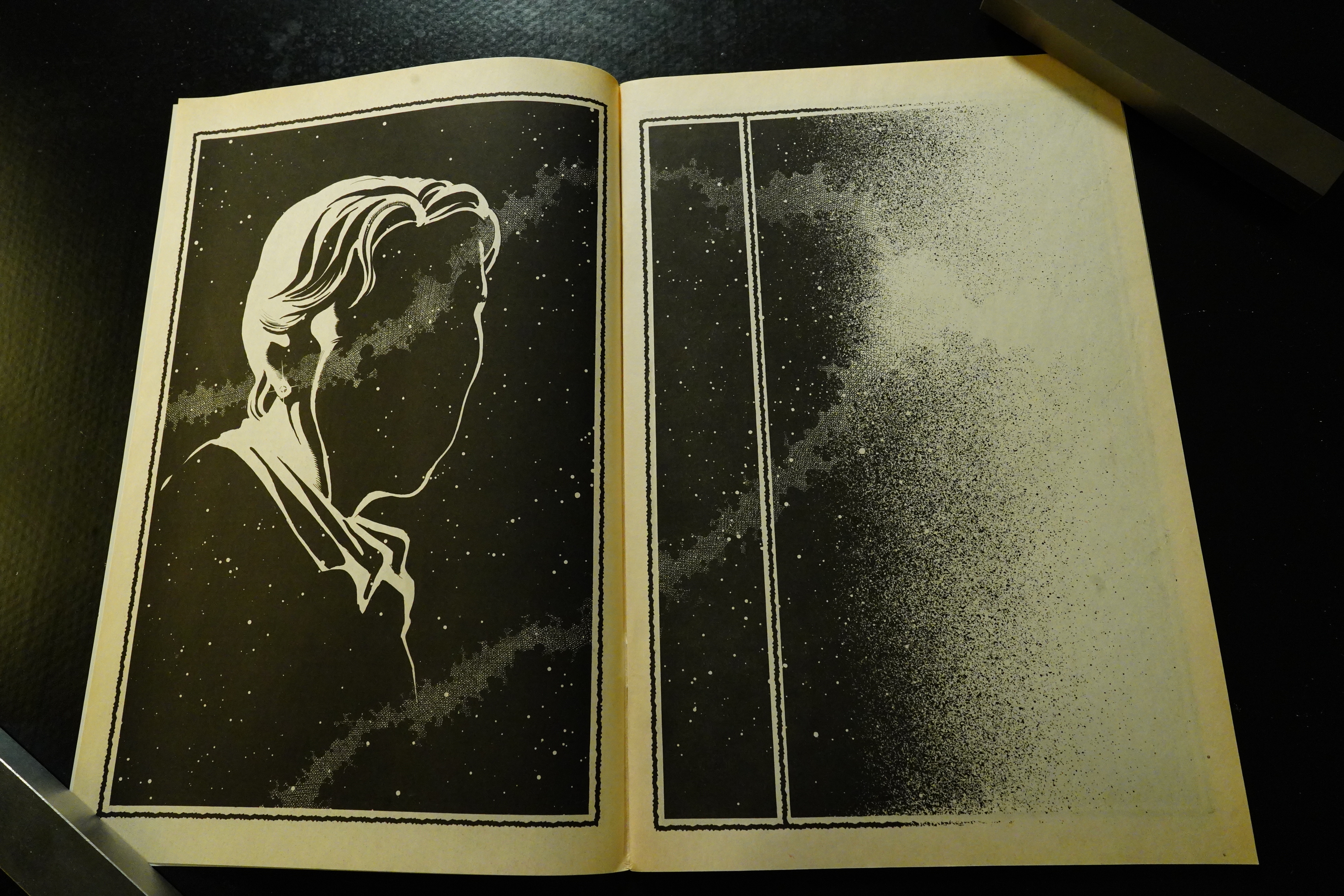
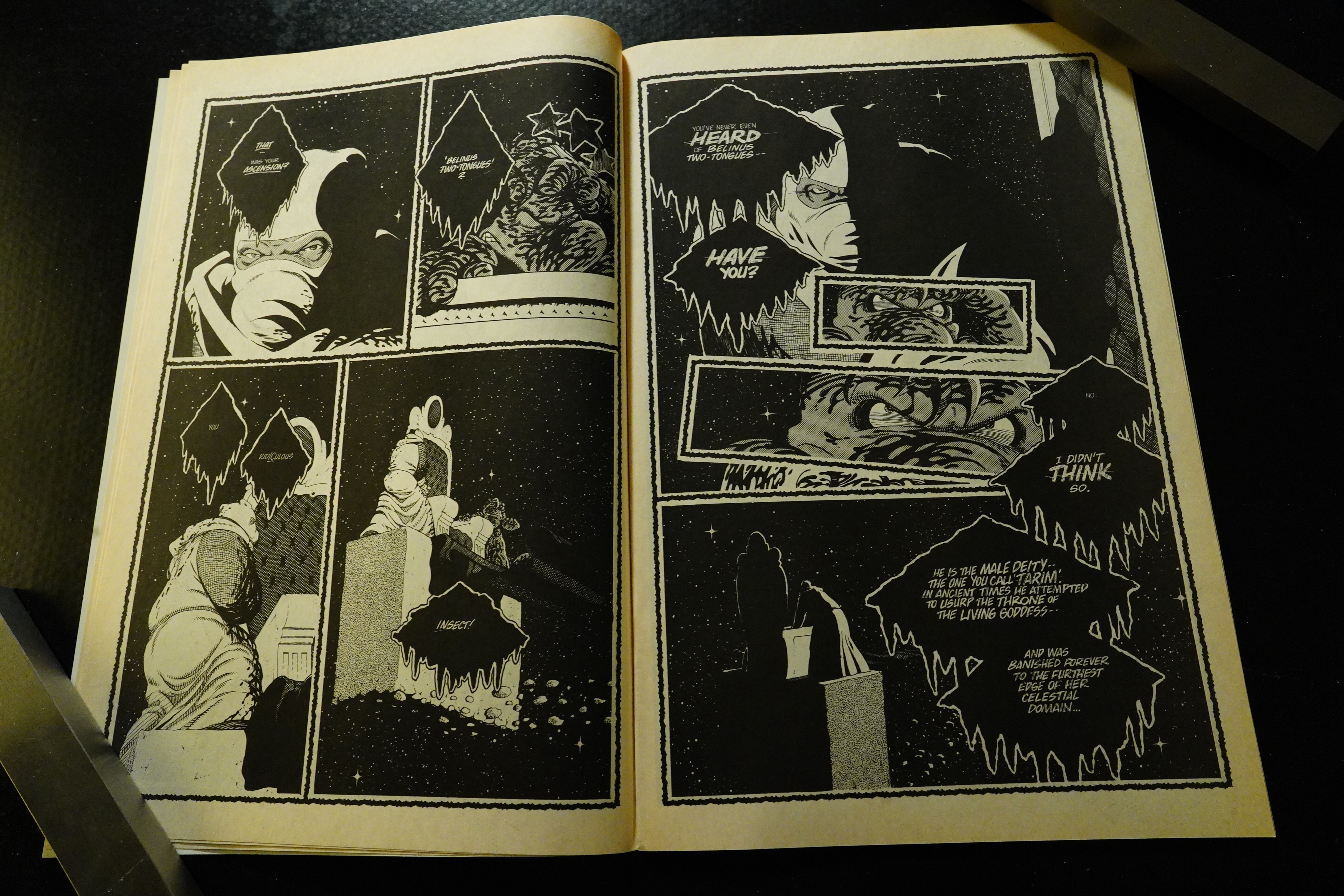
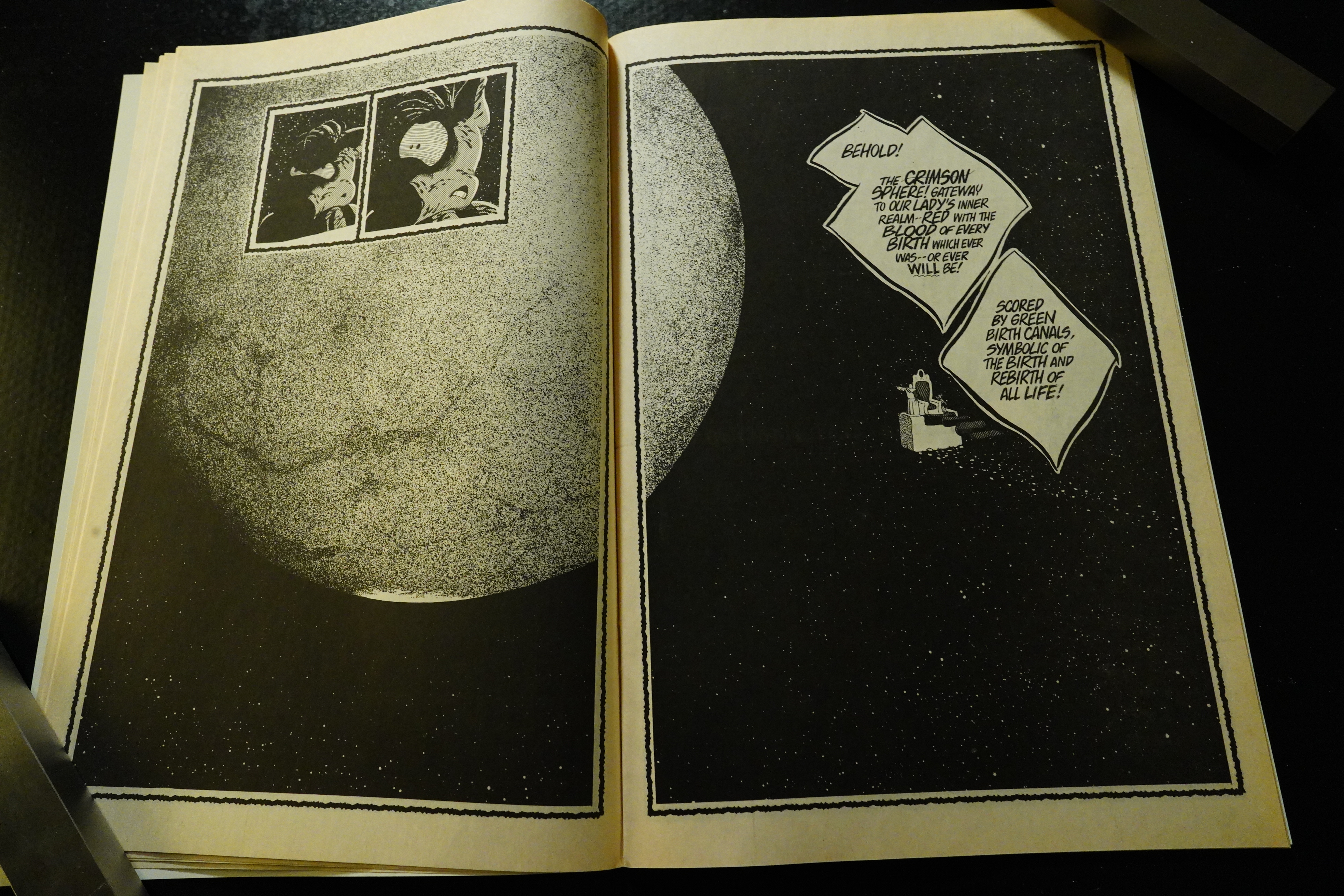
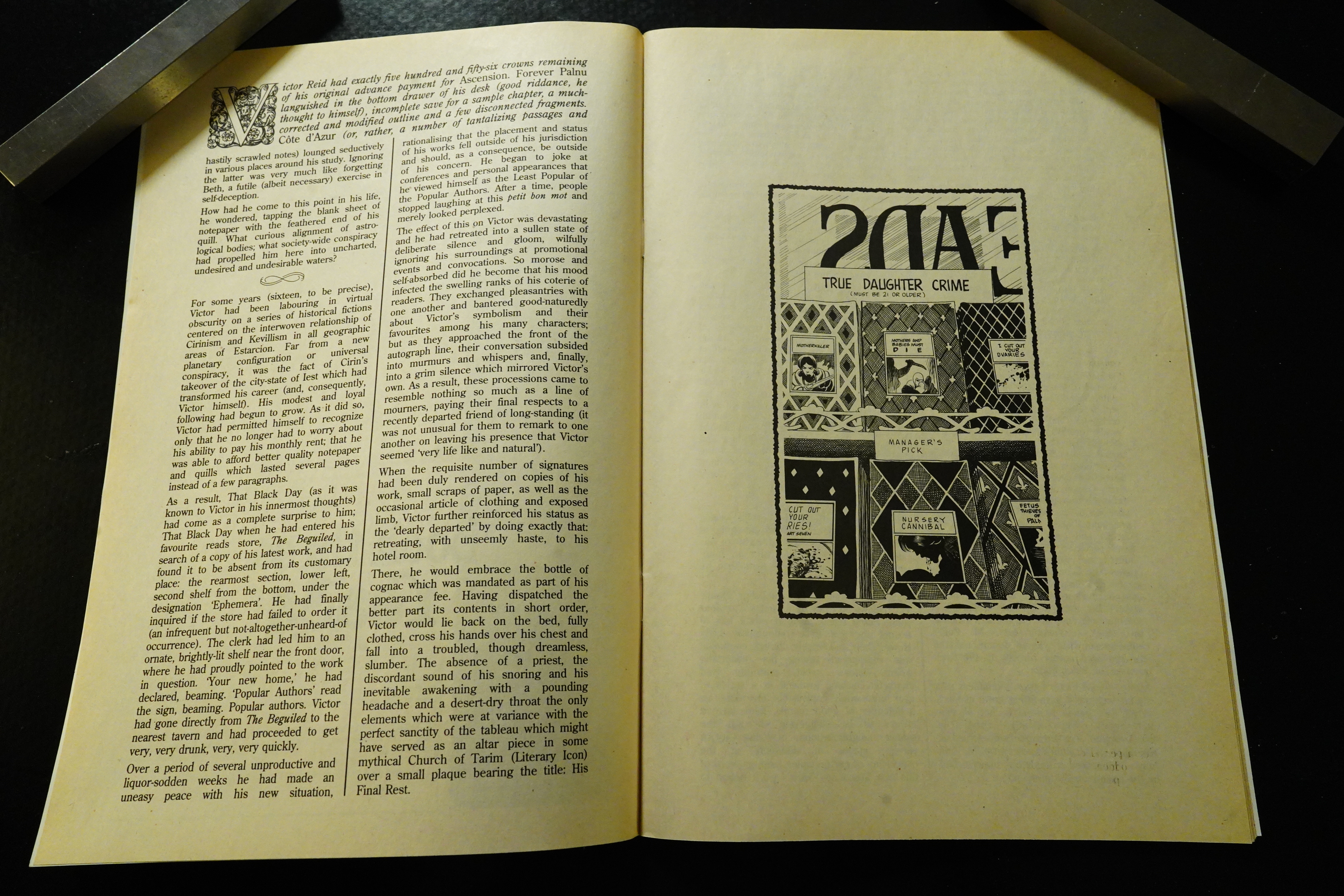
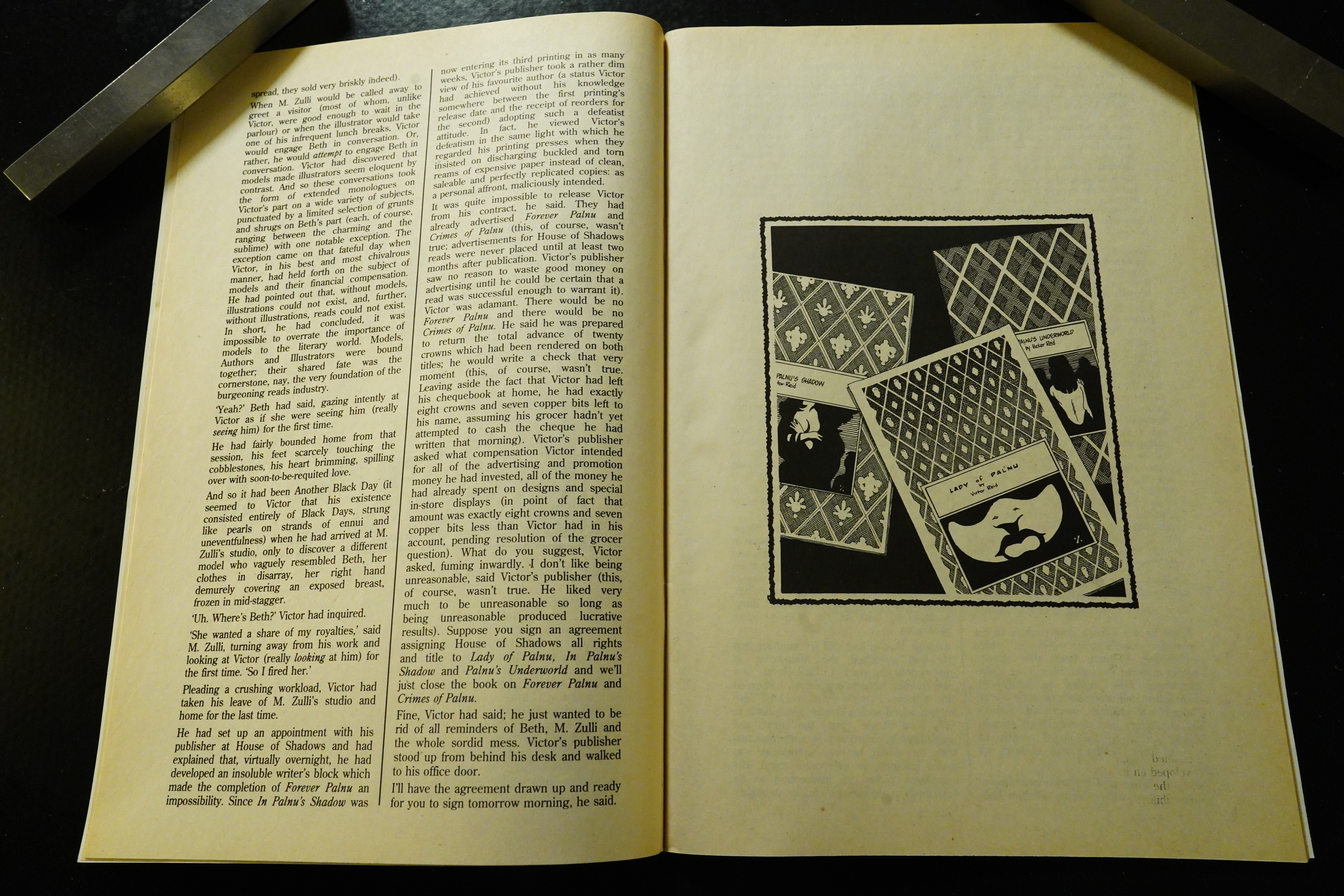
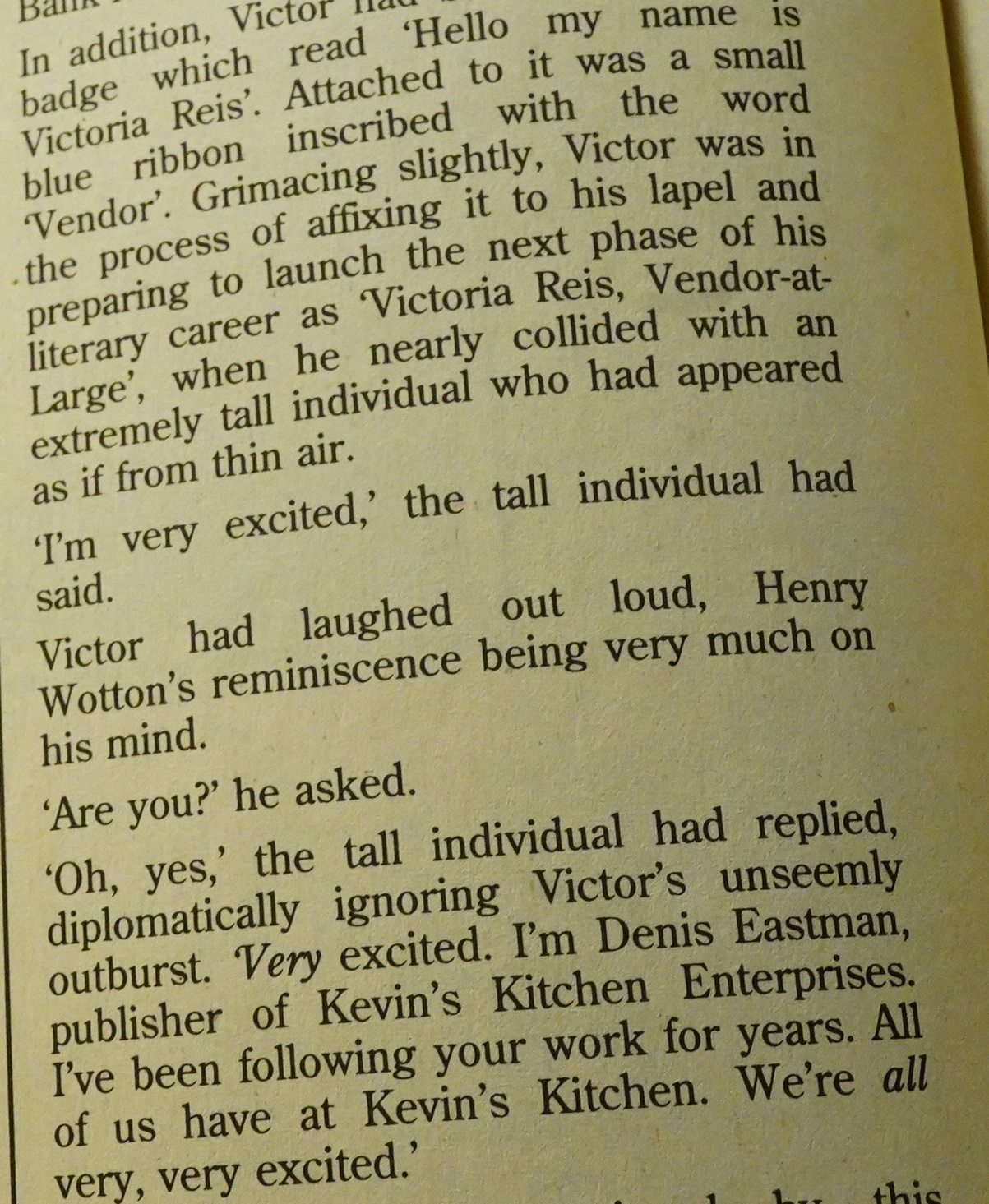
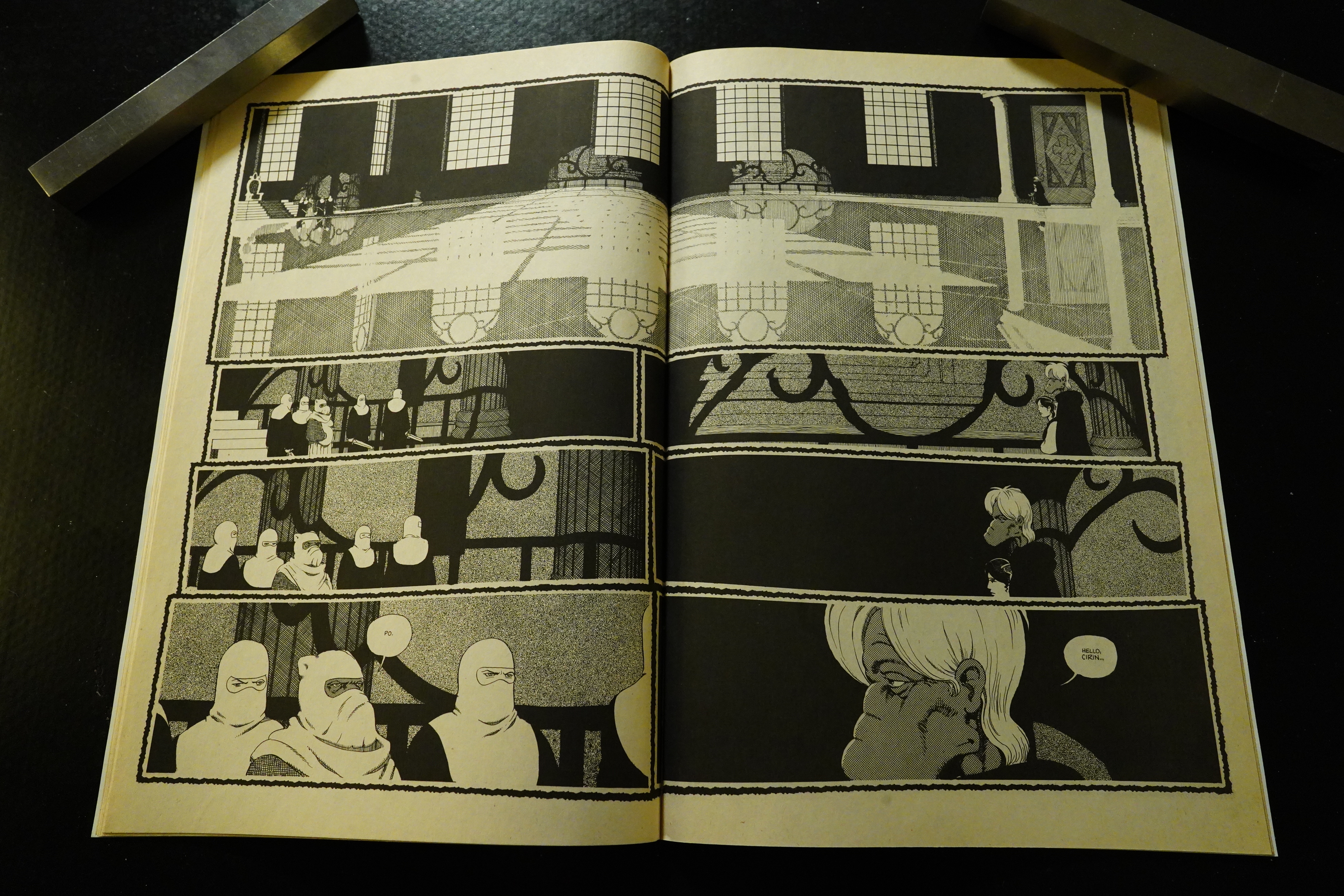
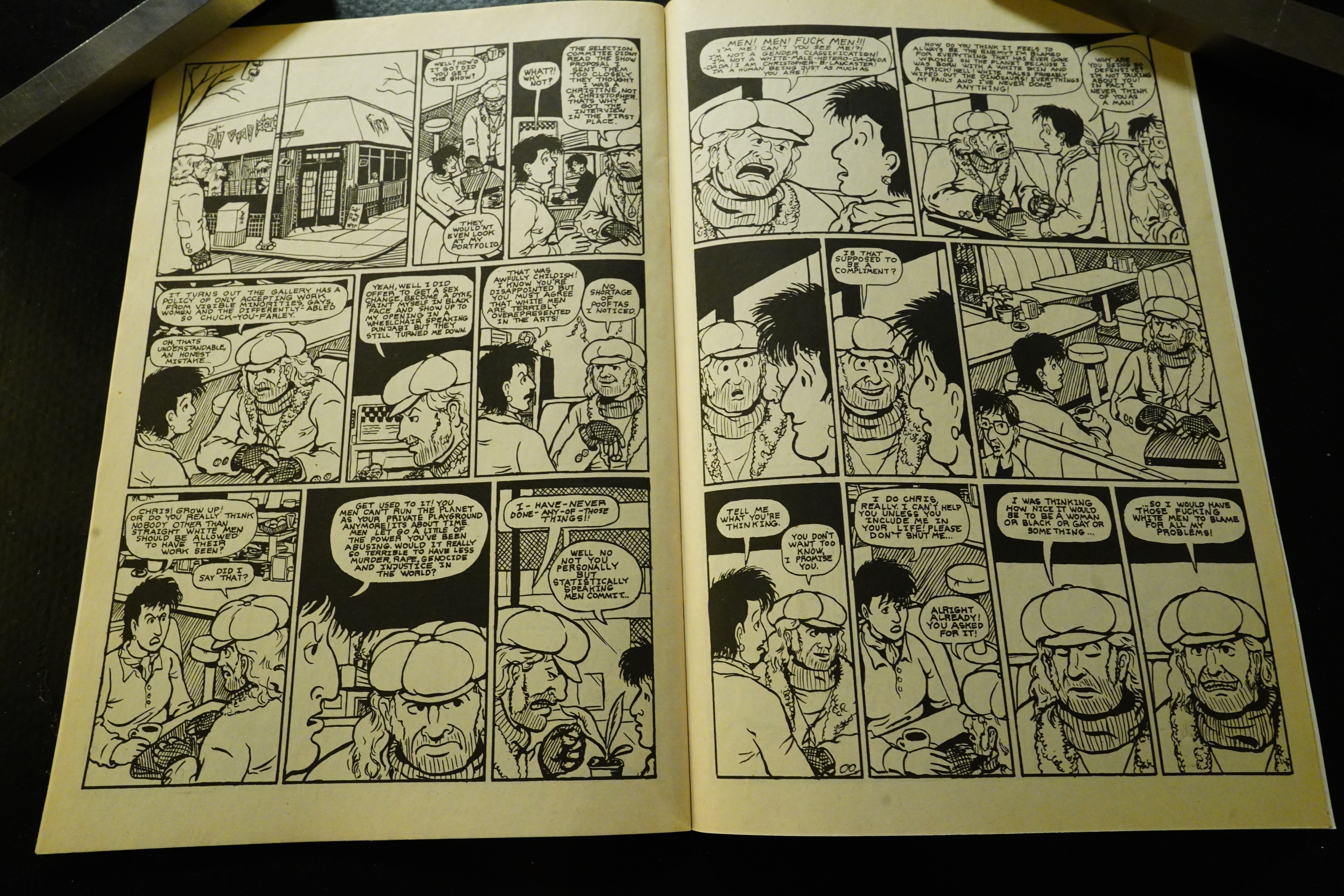
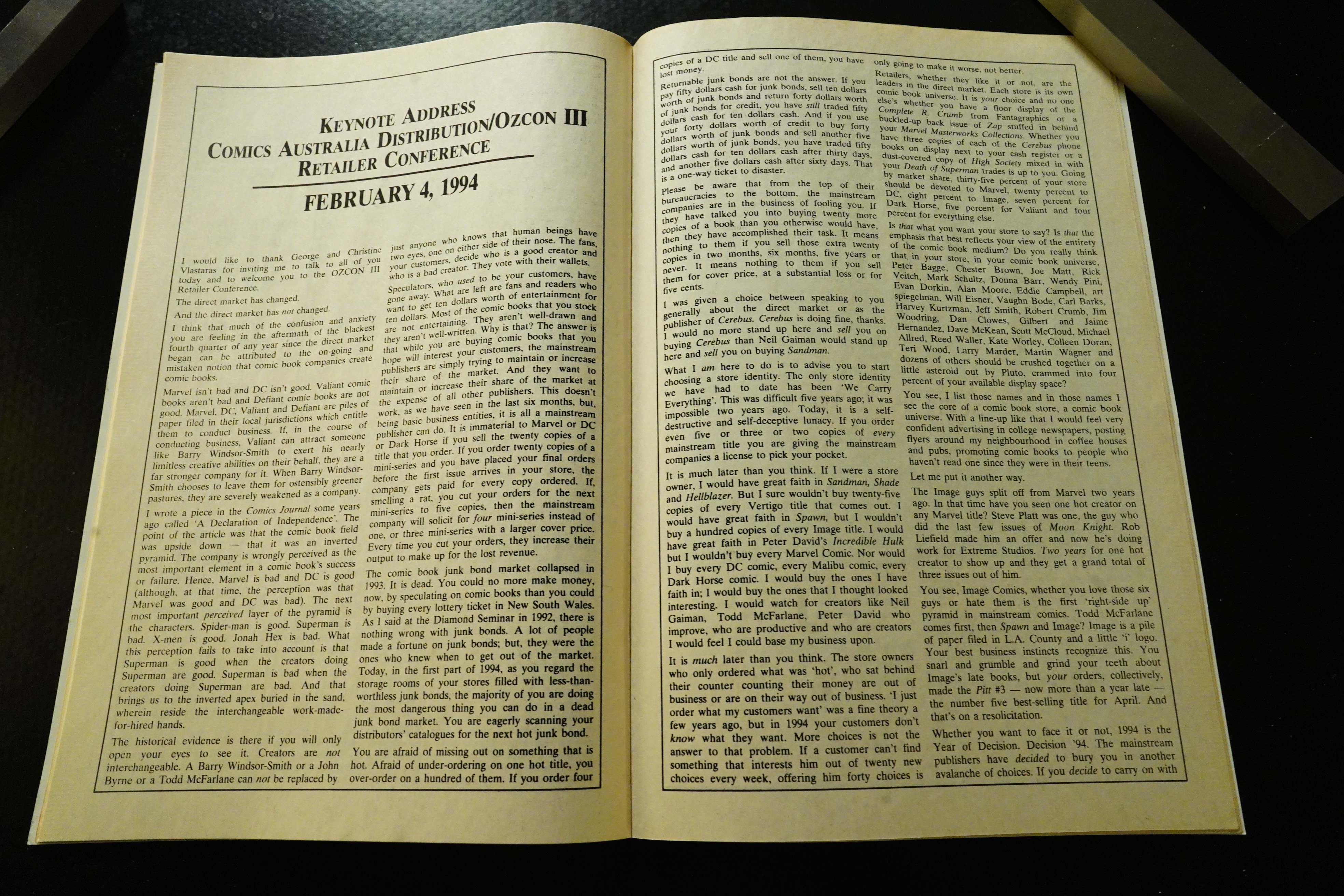
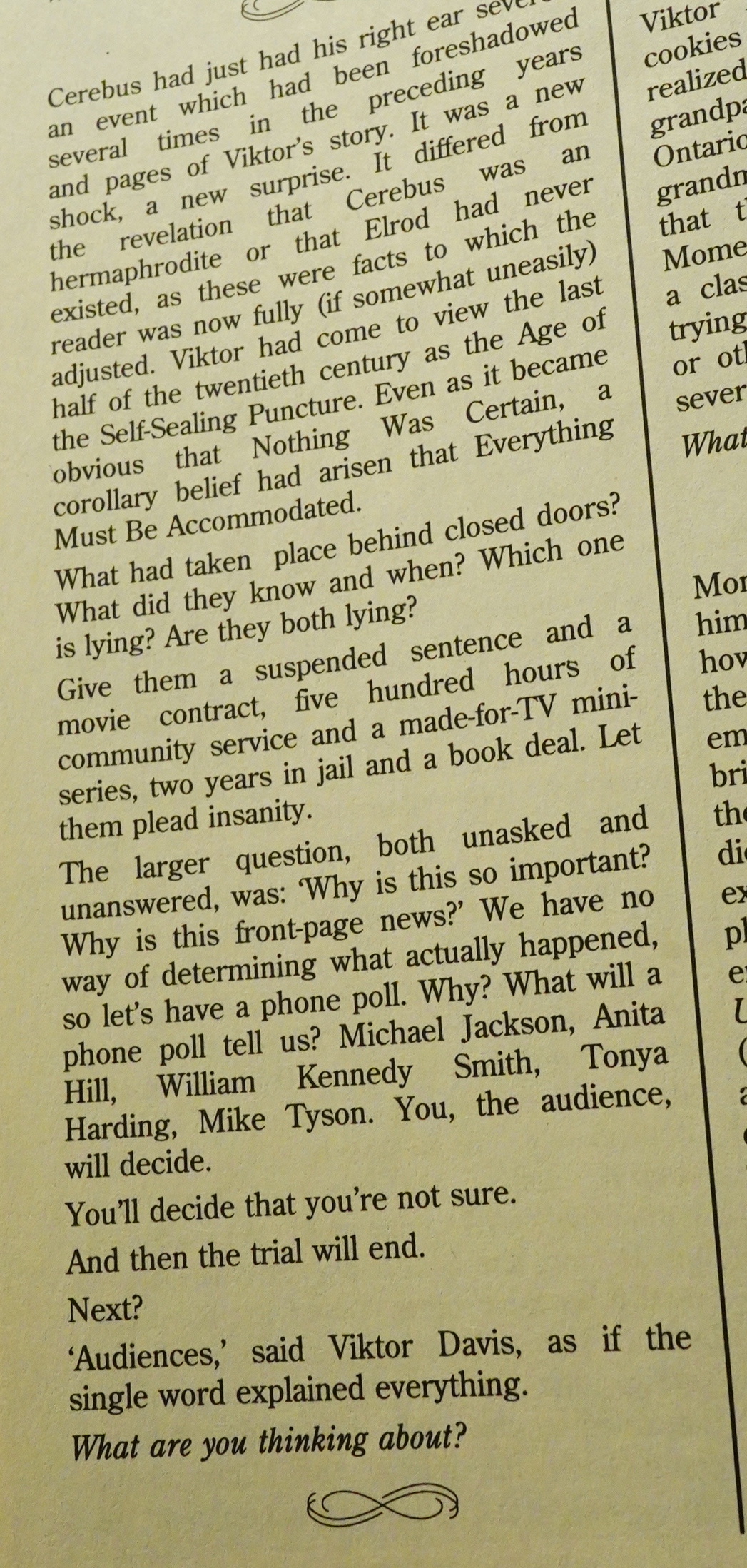
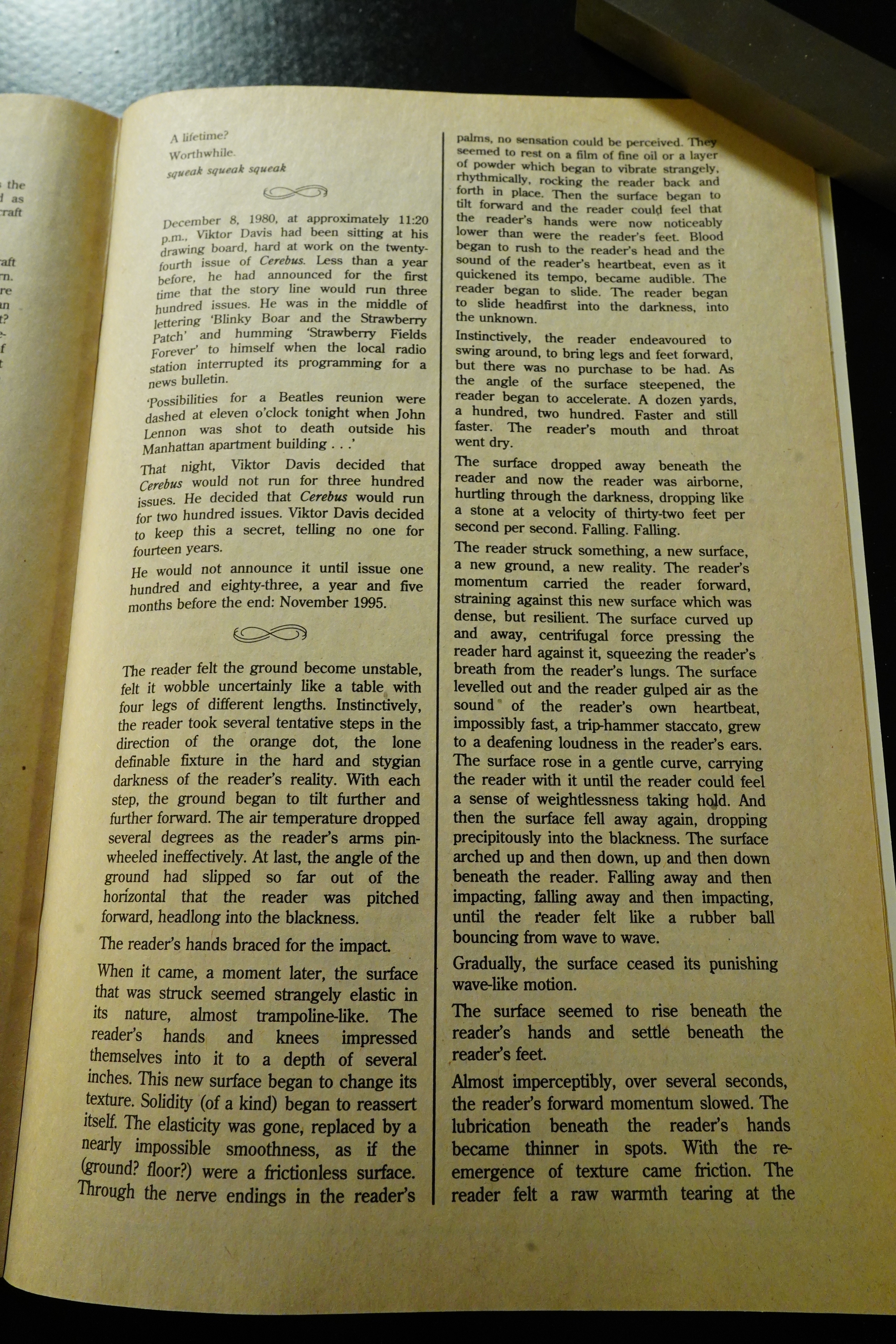
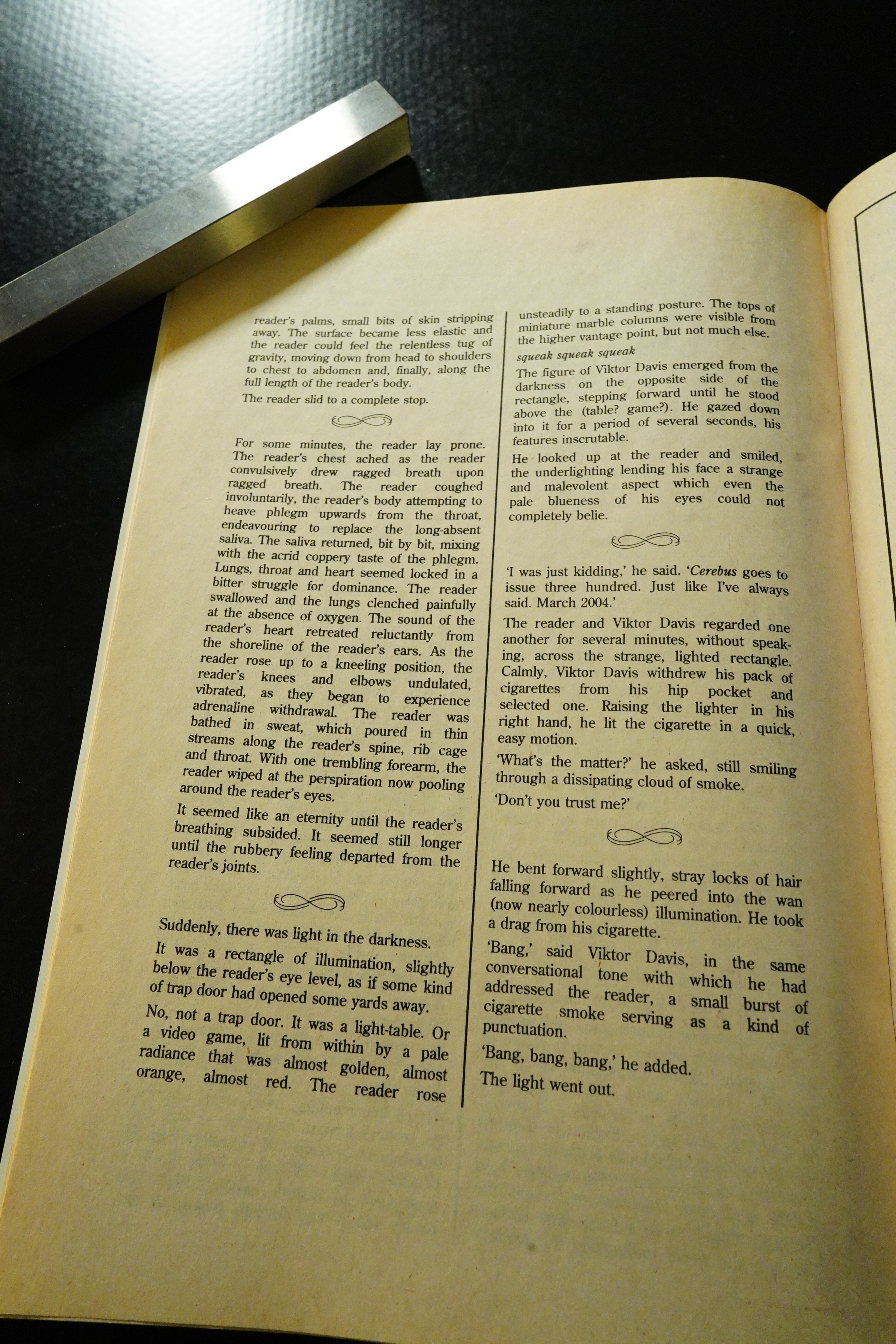
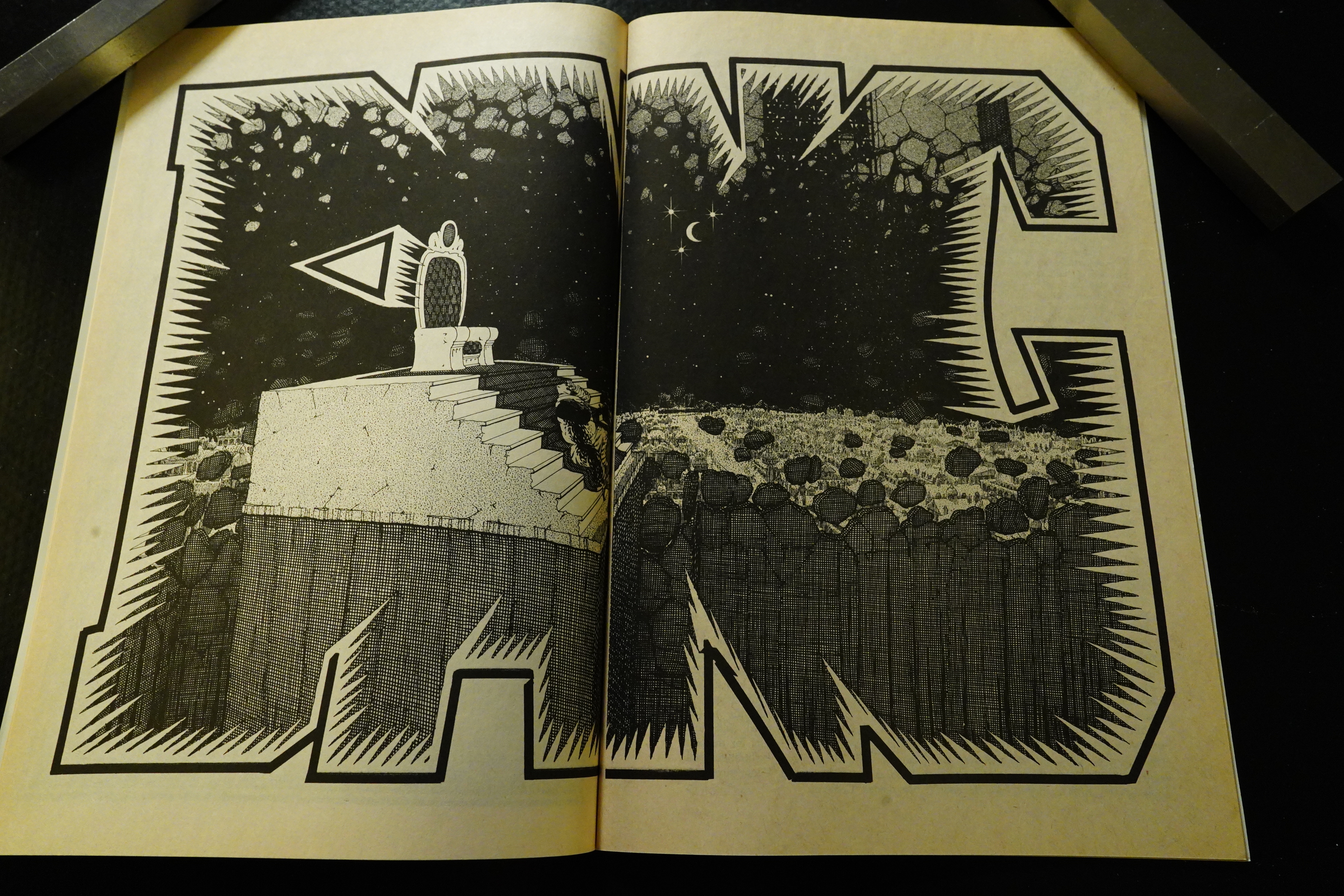
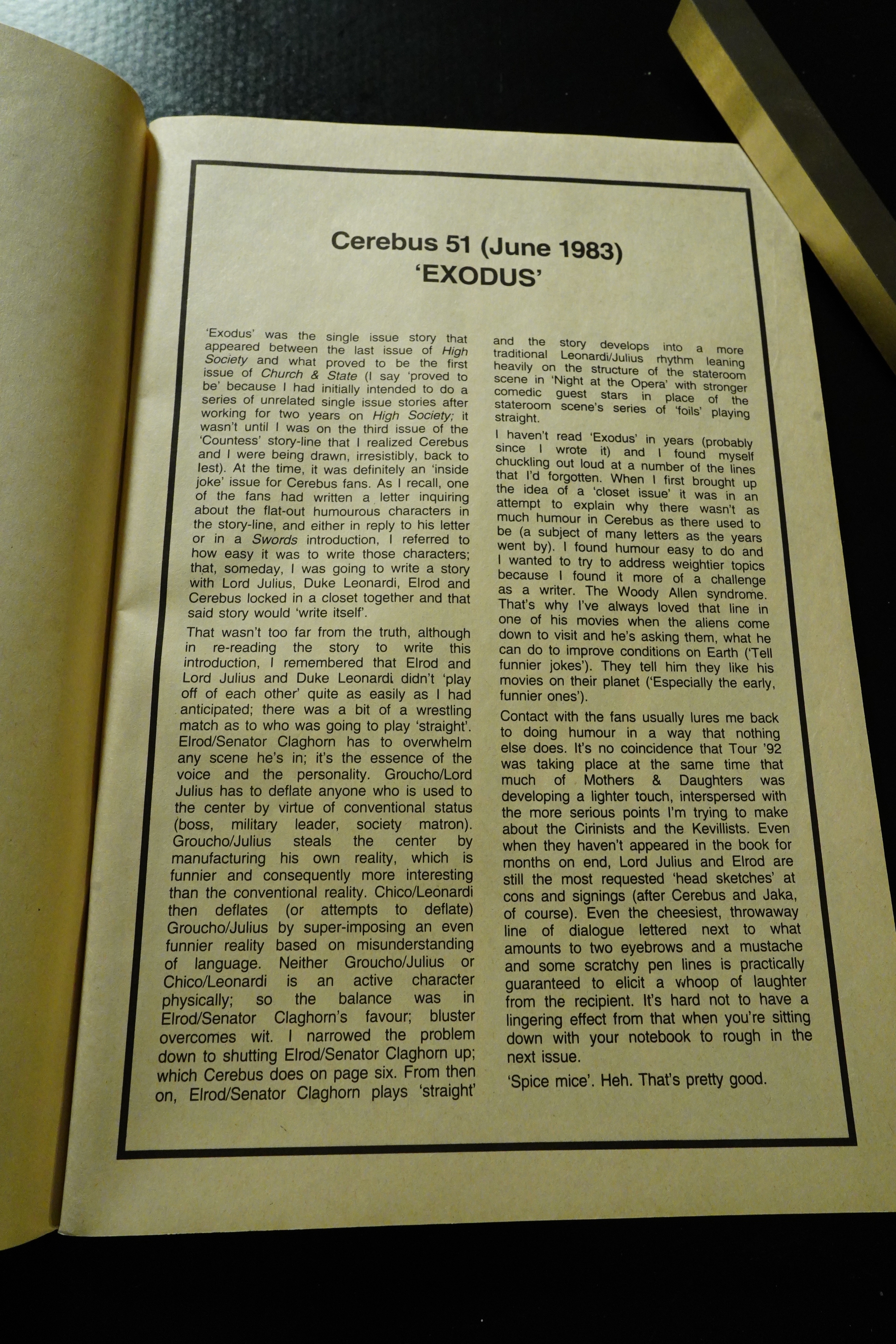
Hm… these snaps are coming off too yellow. I mean, the newsprint has yellowed, but not this much. Lemme futz with the white balance a bit…
OK, that’s too blue — the pages aren’t this white — but let’s go with this anyway.
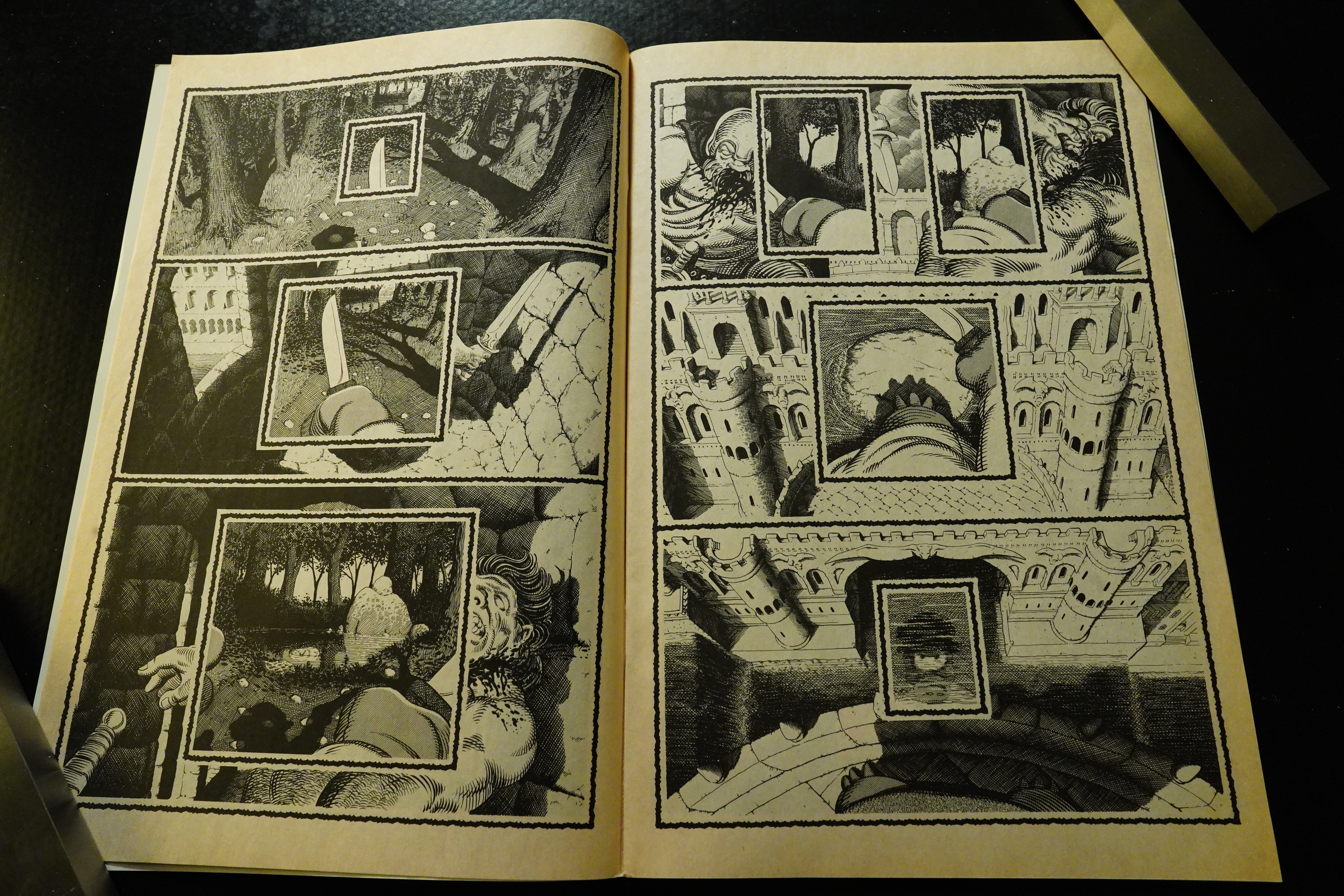
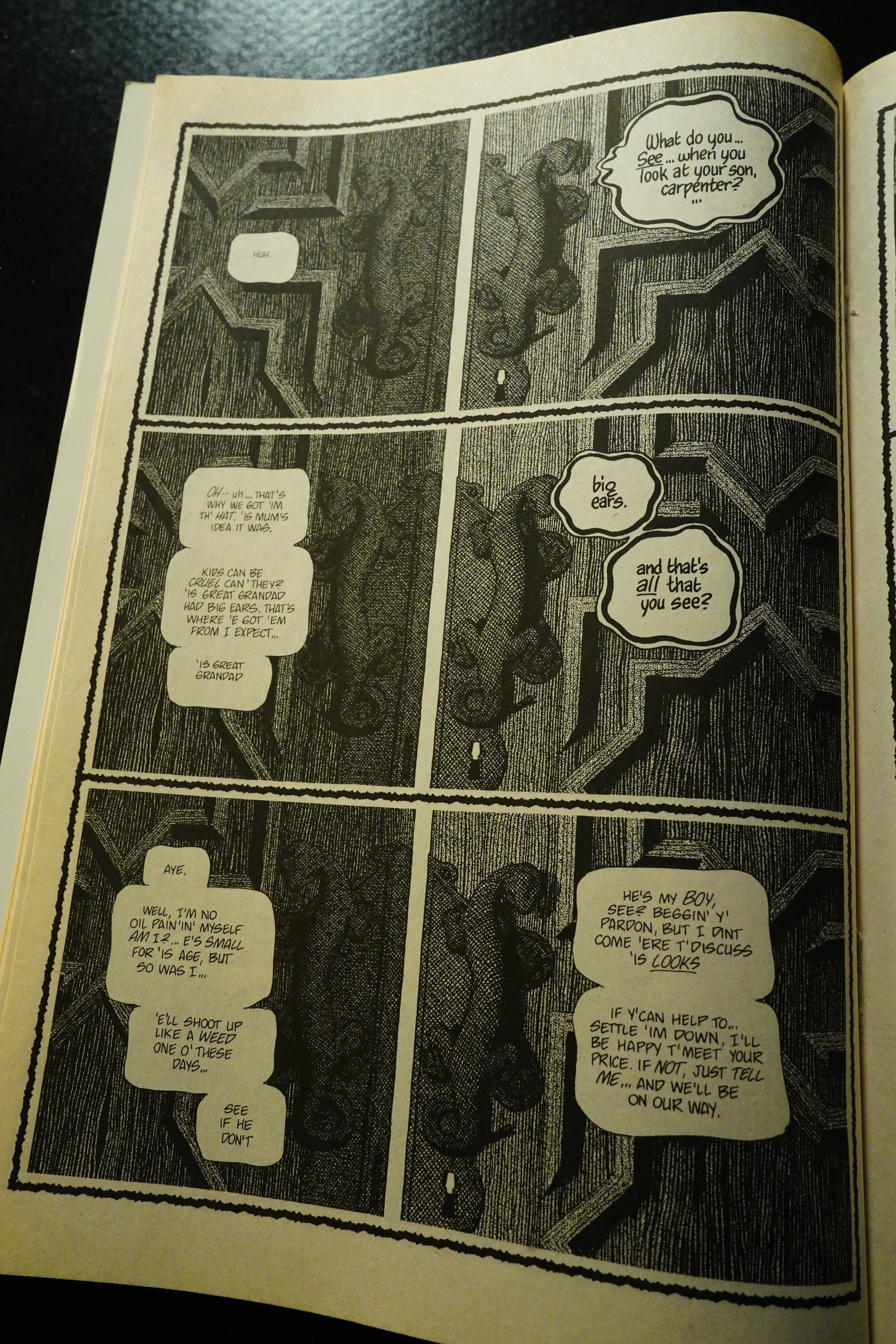
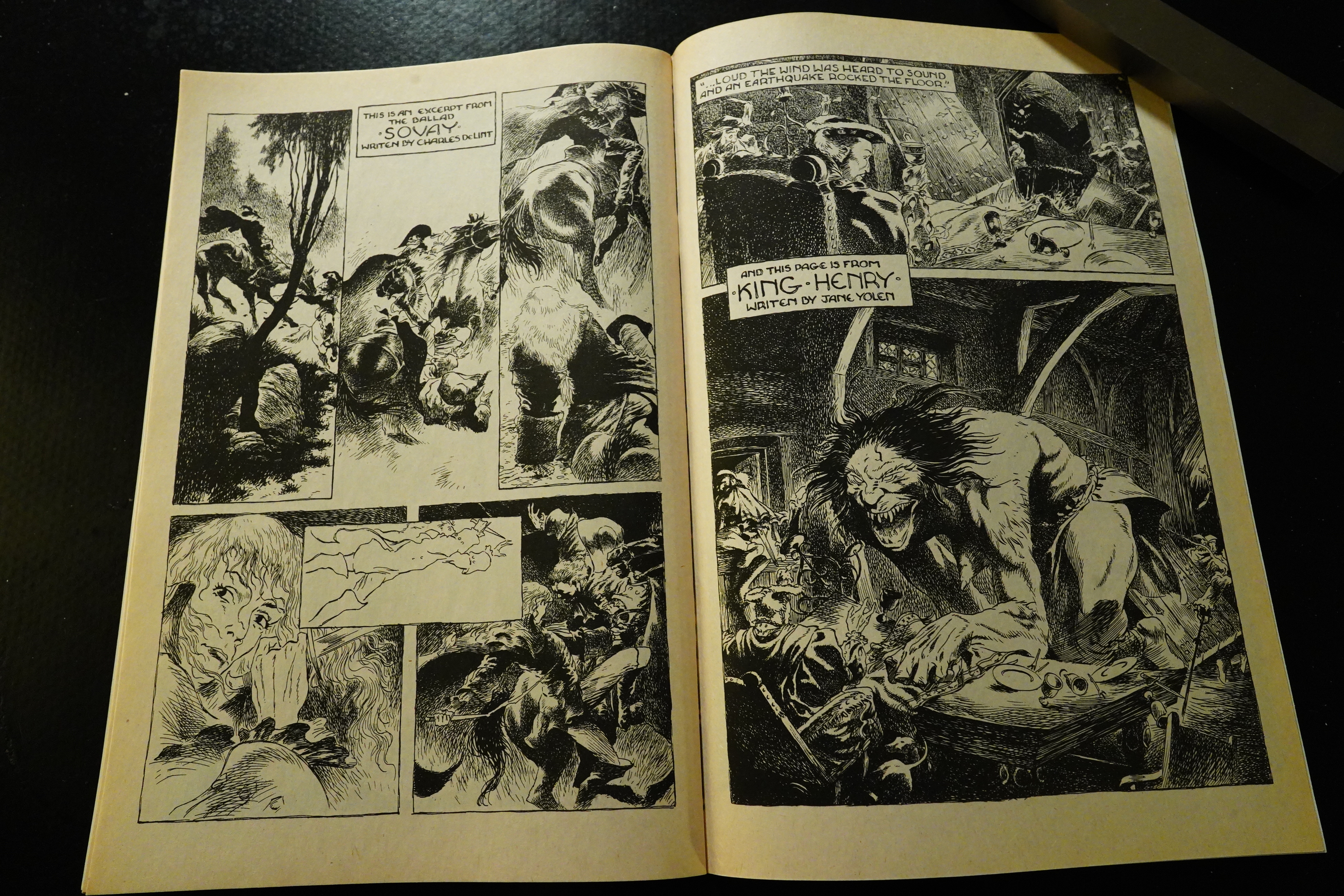
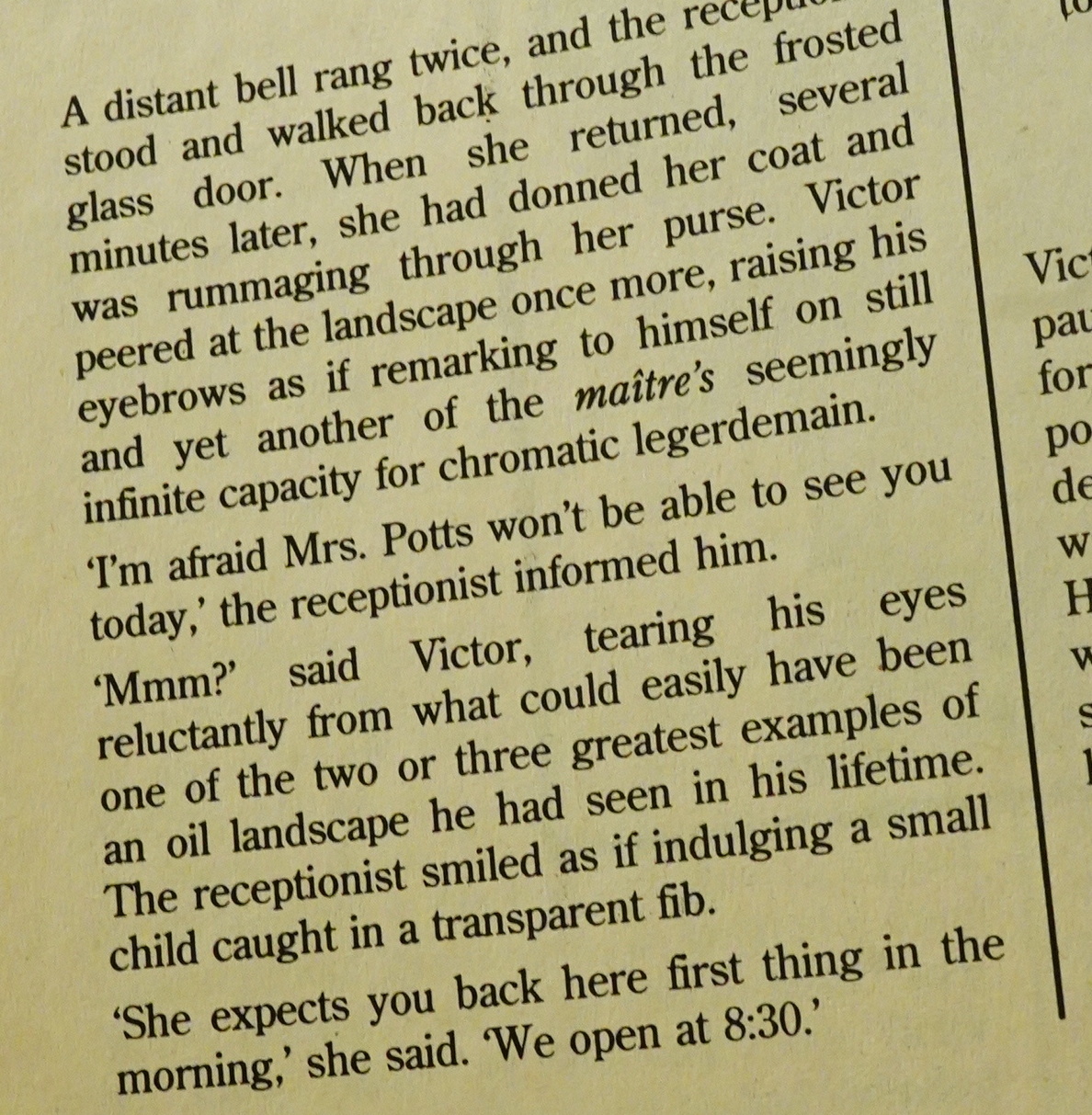
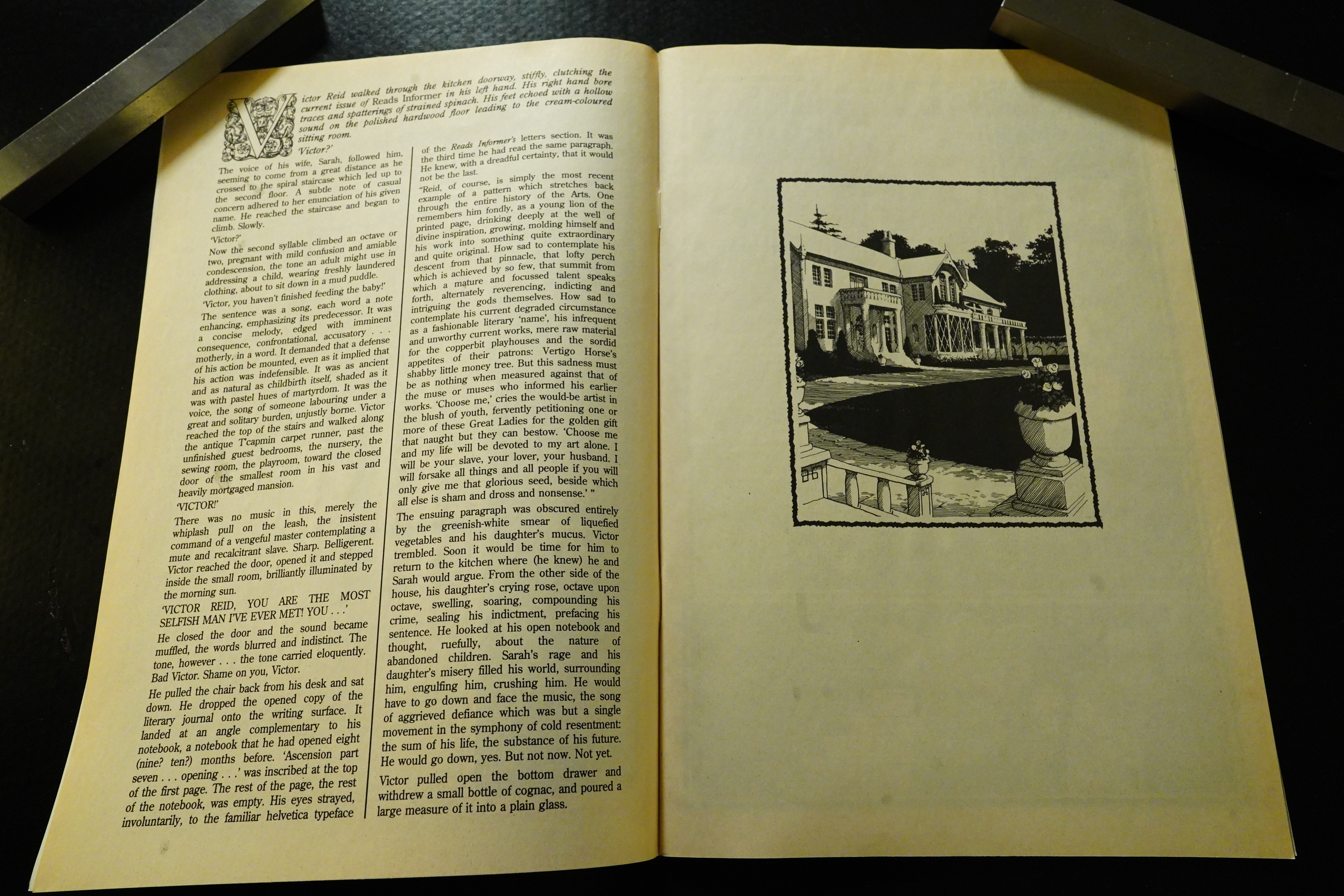
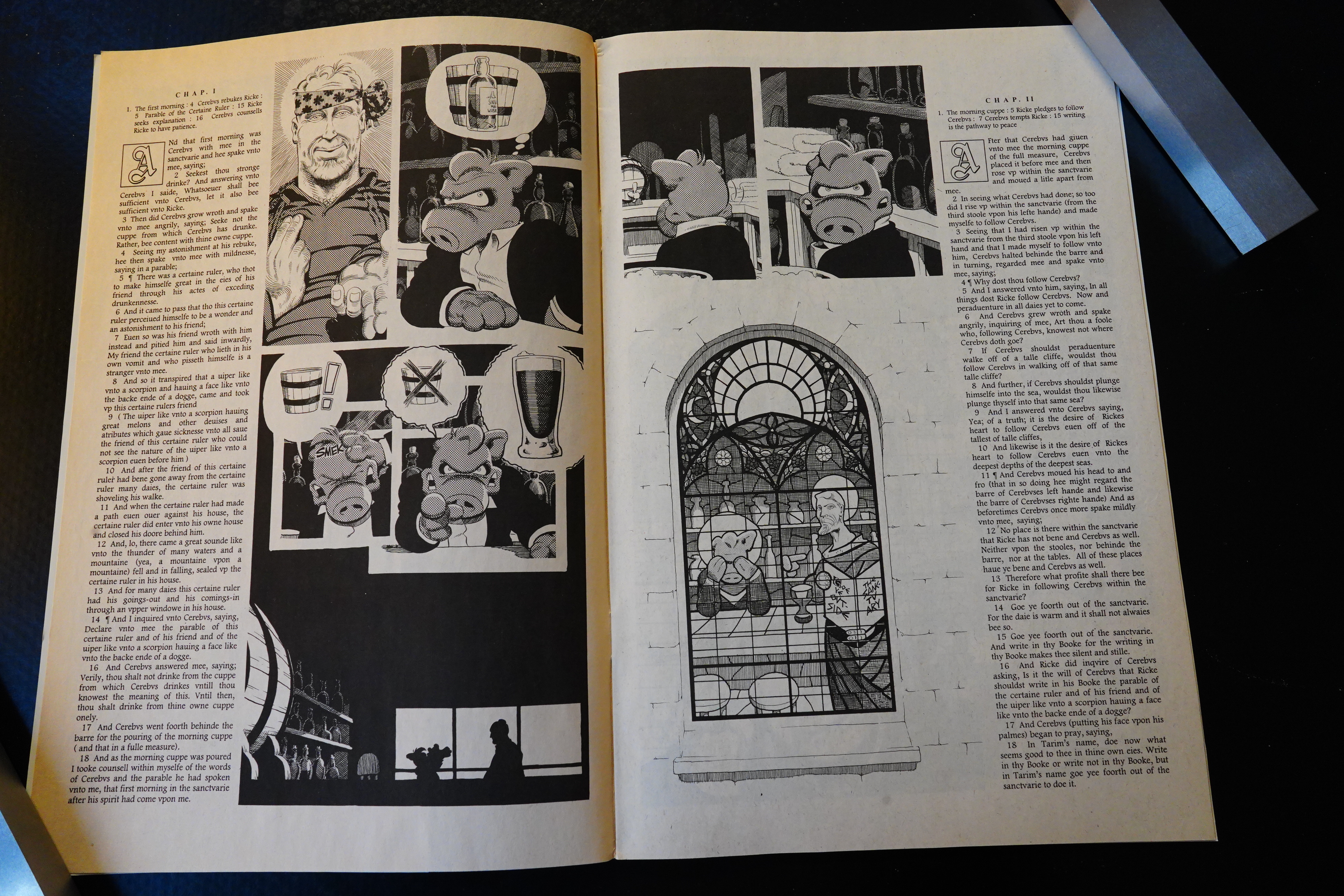
And… hoo boy. I hate reading cod King James’s Bible.
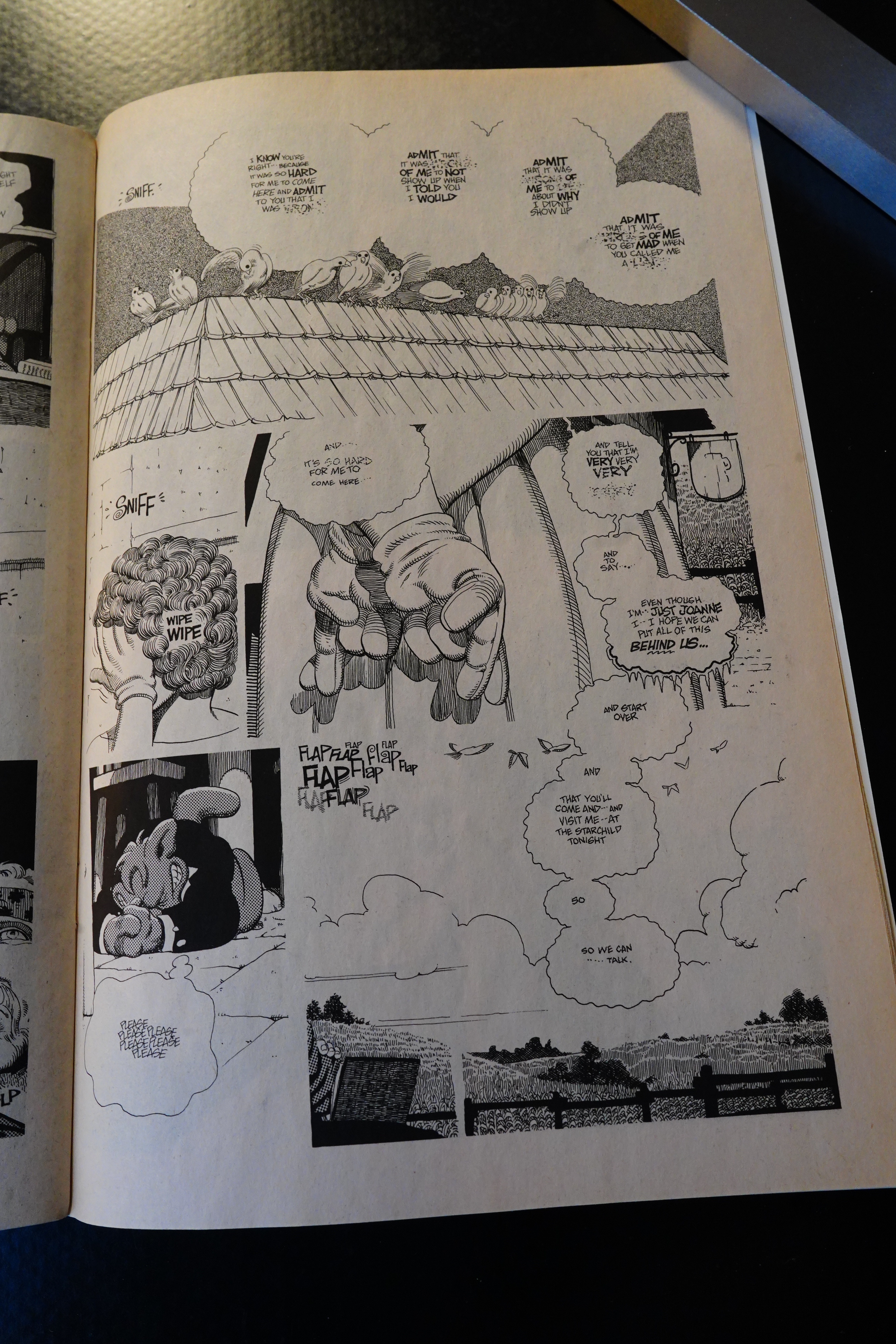
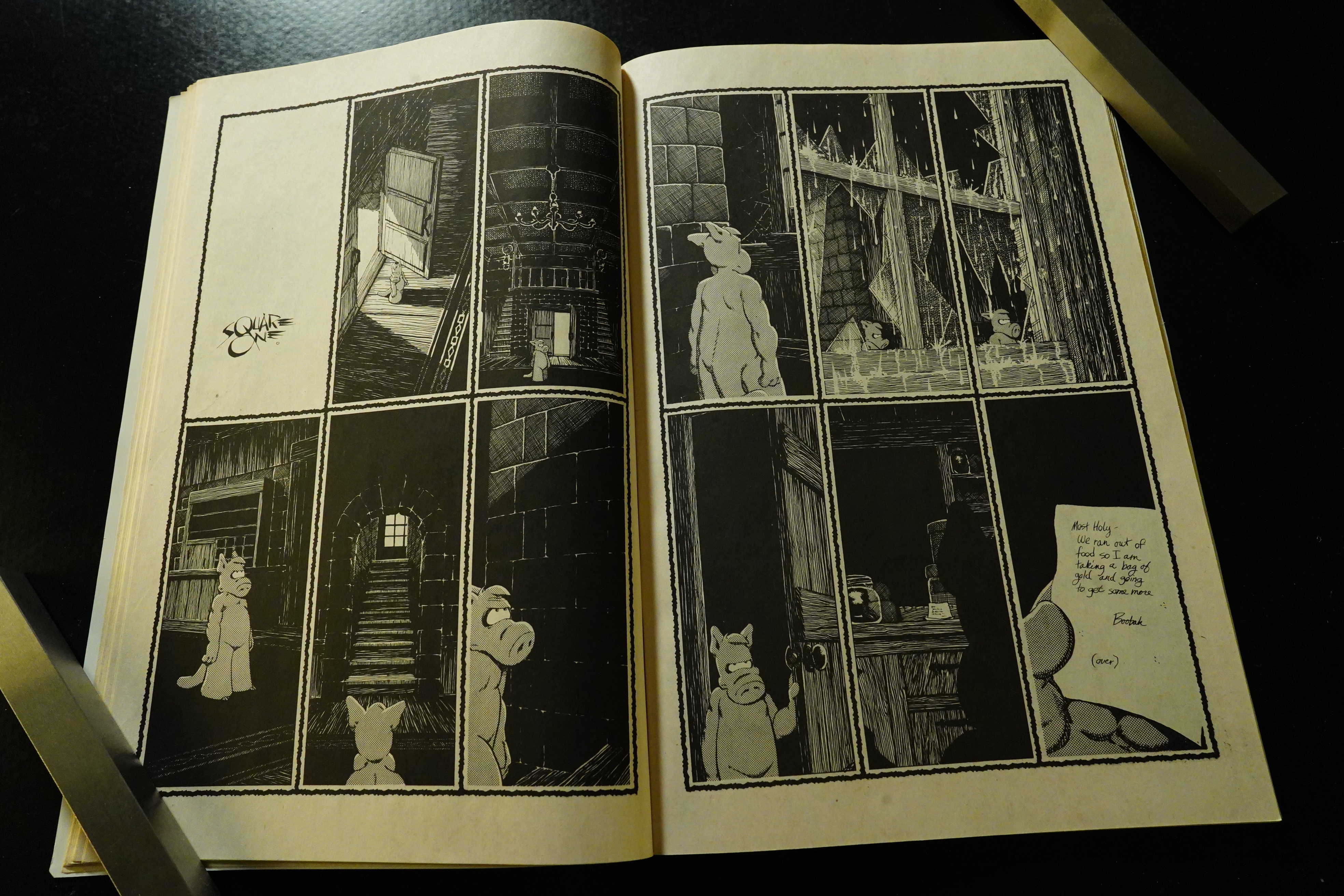
Joanne is the largest mystery in Guys/Rick’s Story — what is her deal, anyway? Is the a Cirinist spy?
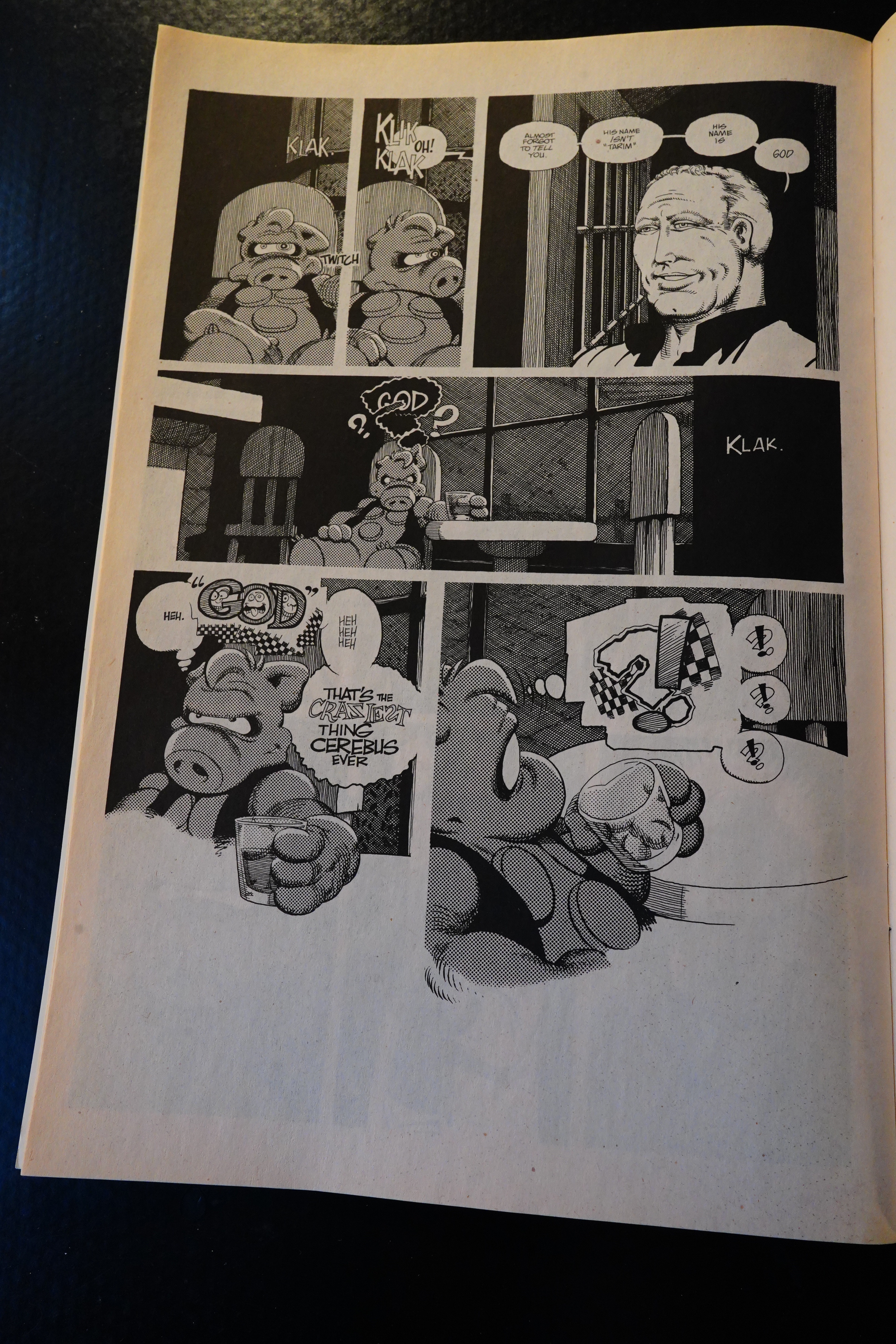
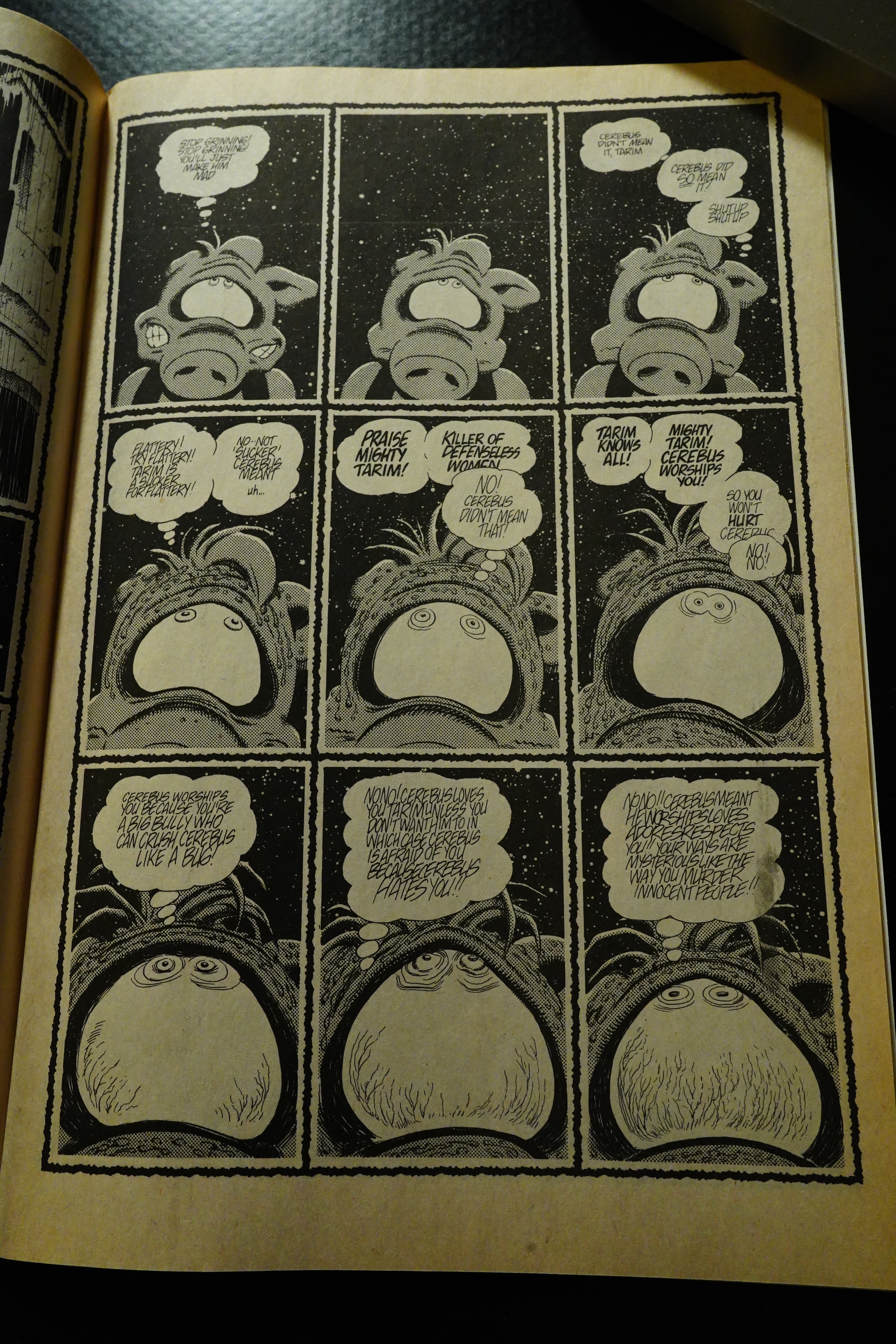
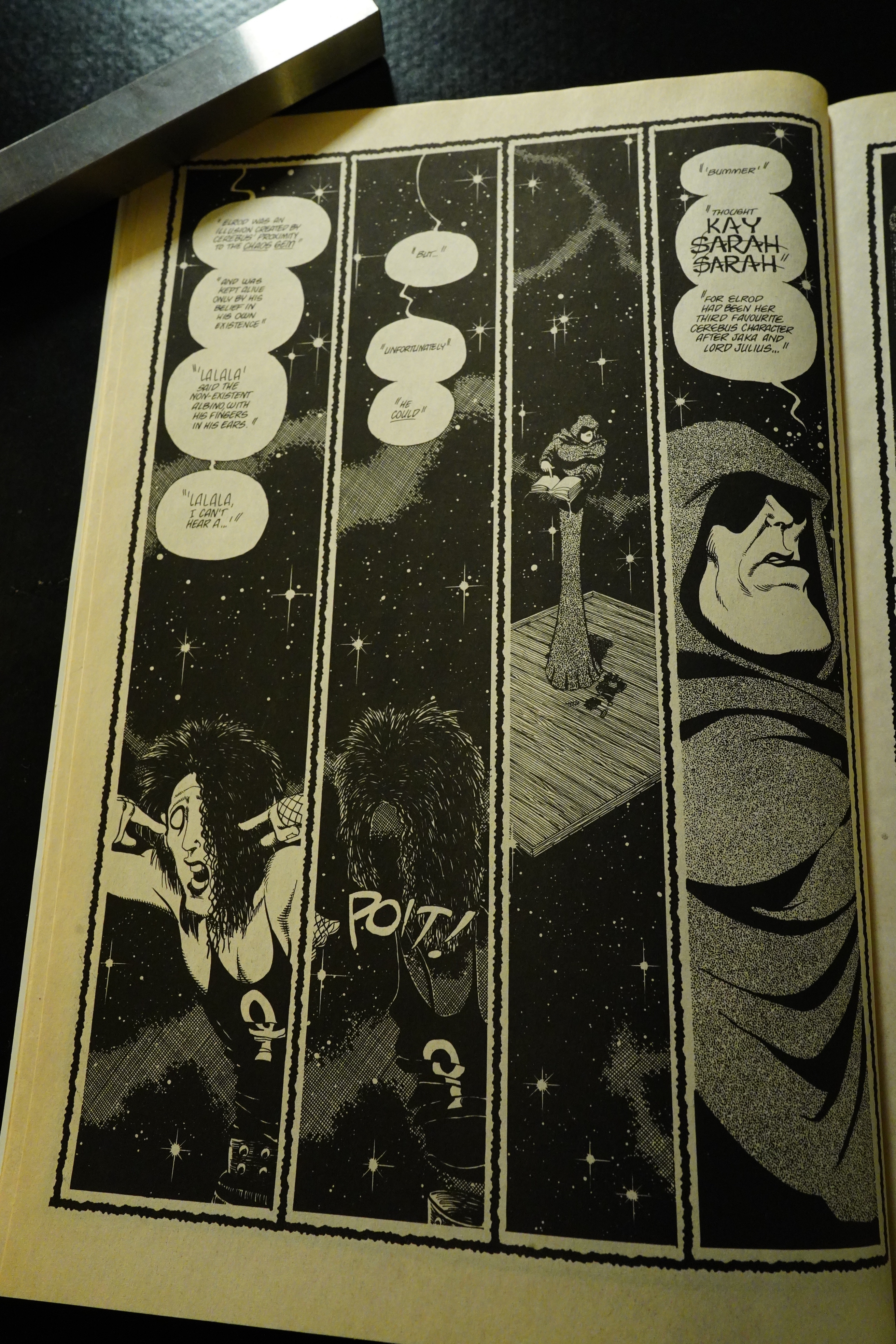
Rick has had another revelation: Tarim’s real name is “God”.
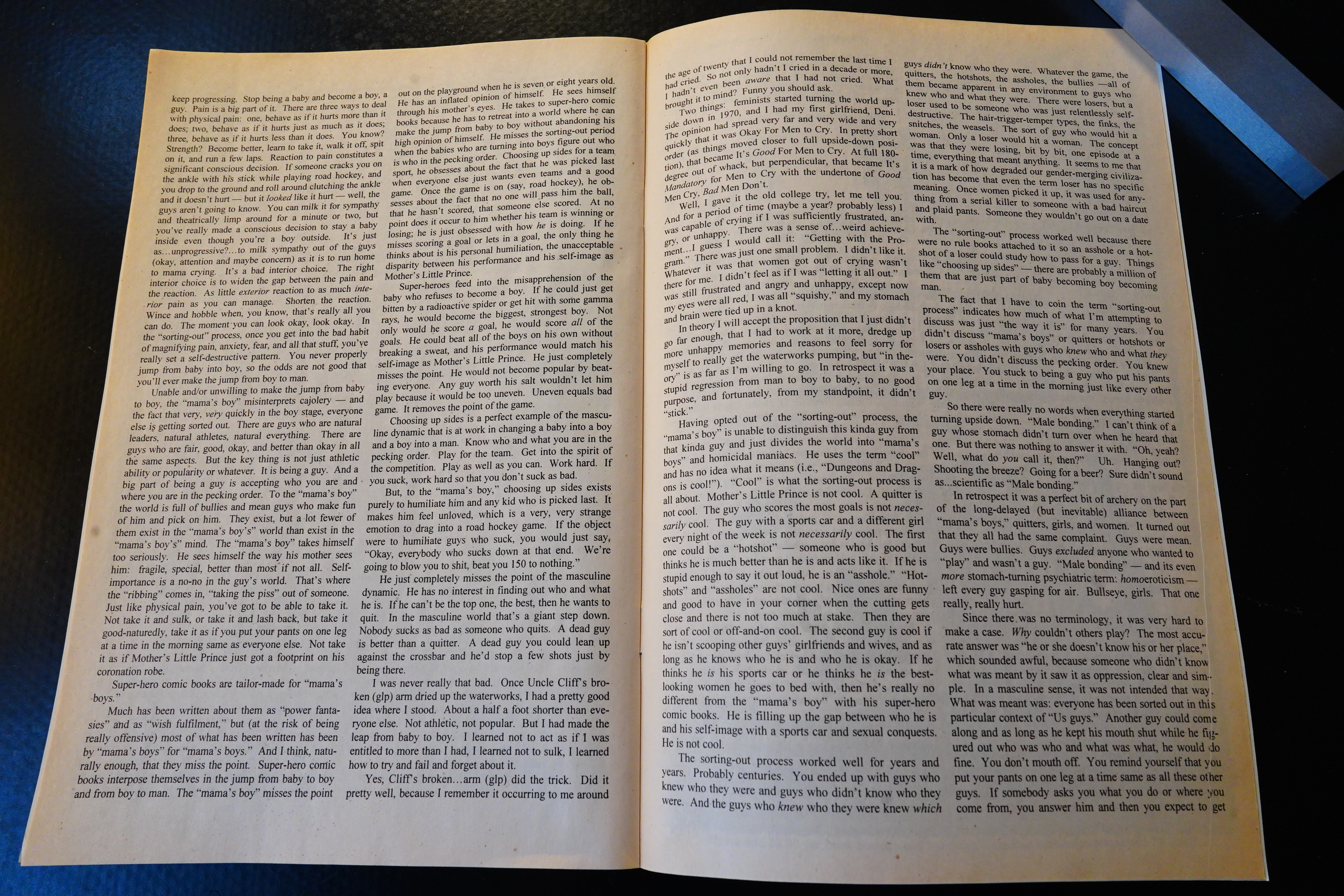
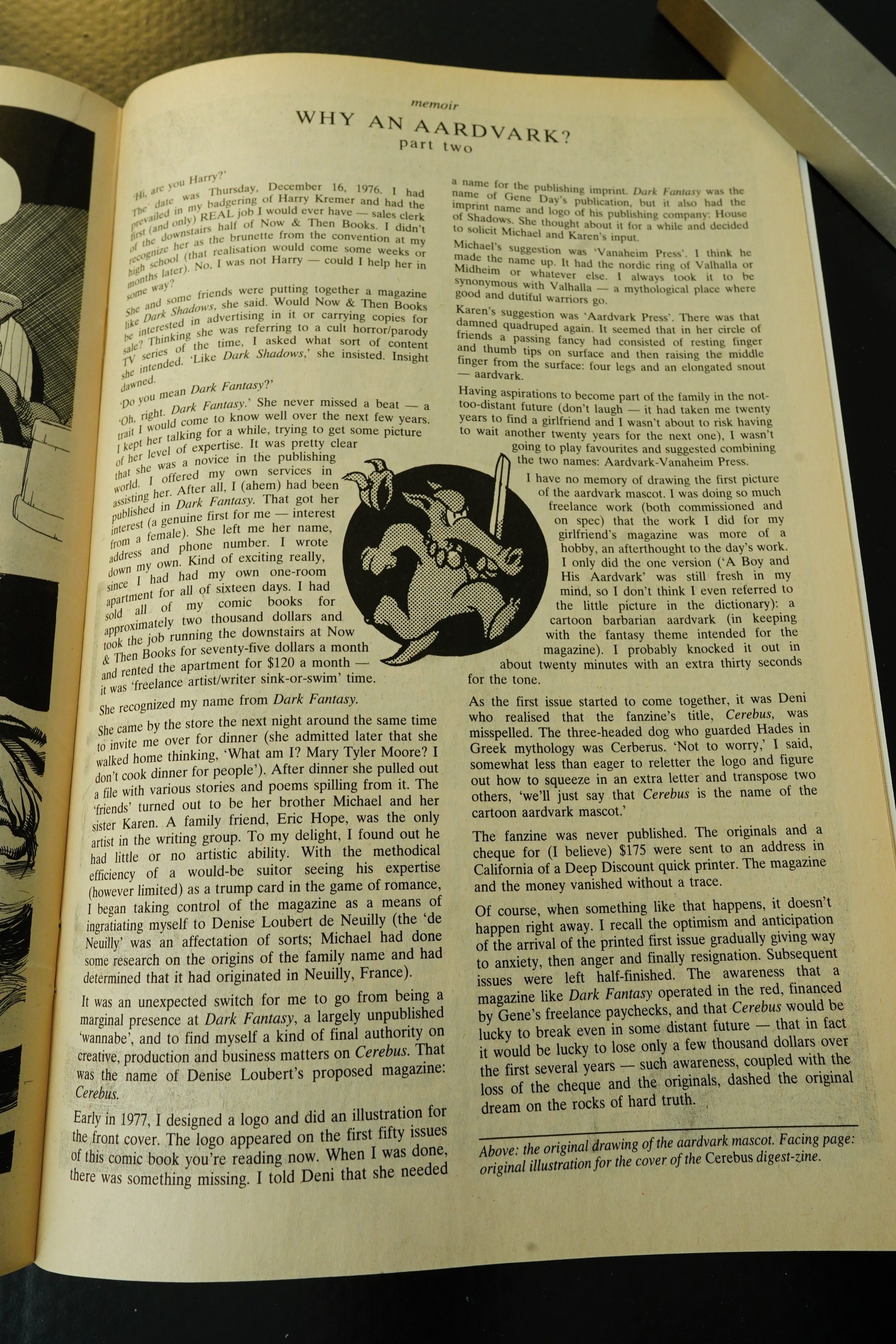
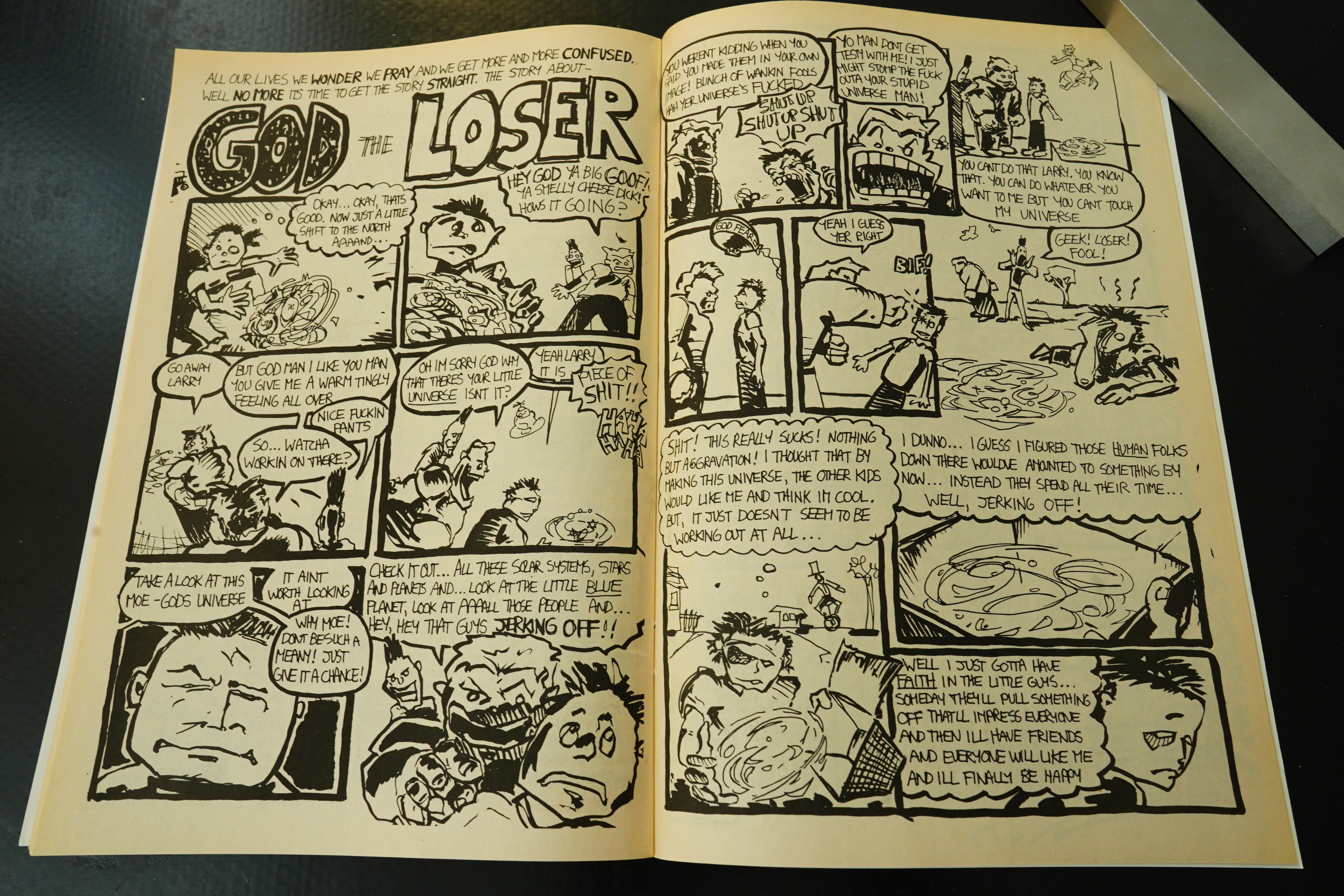
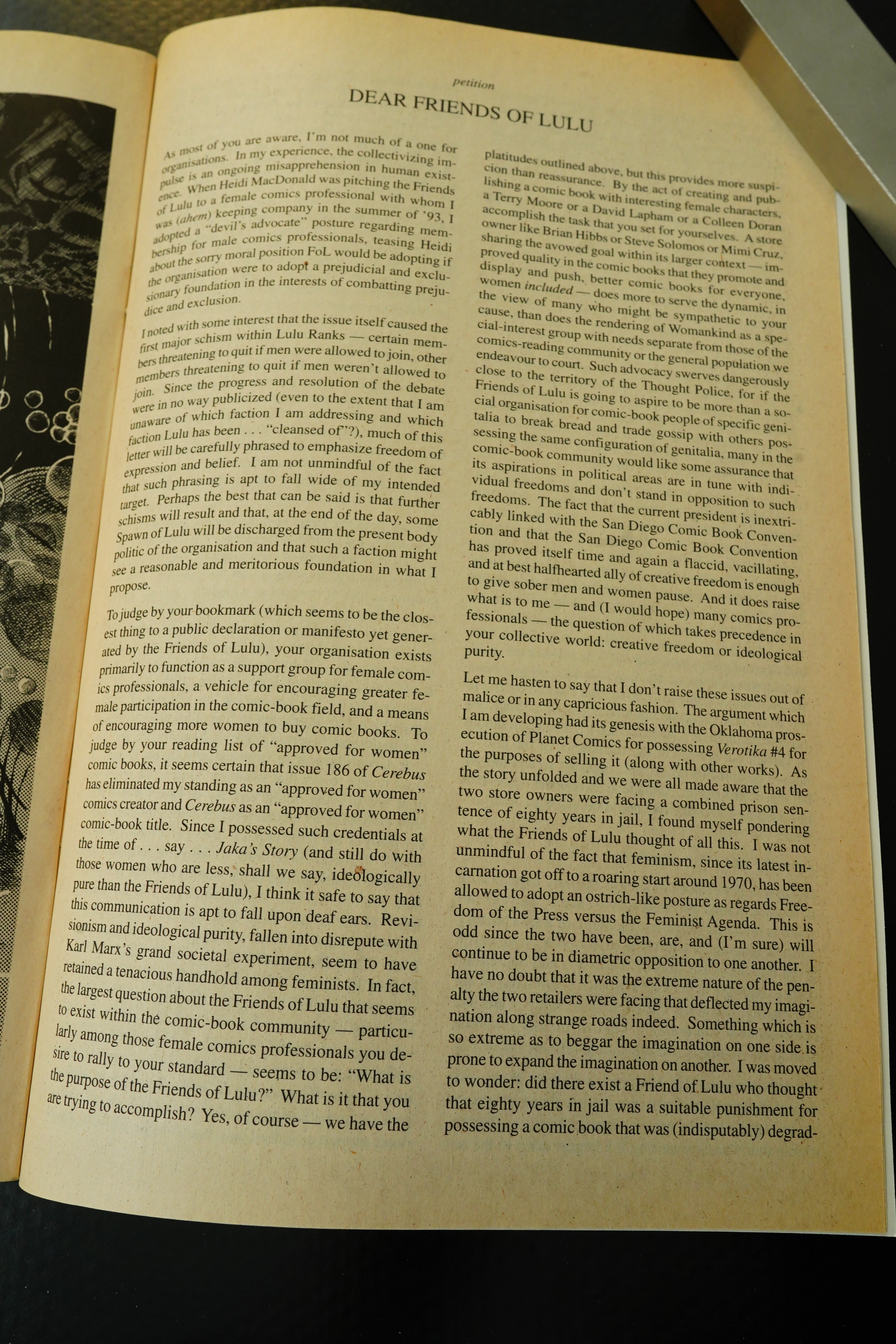
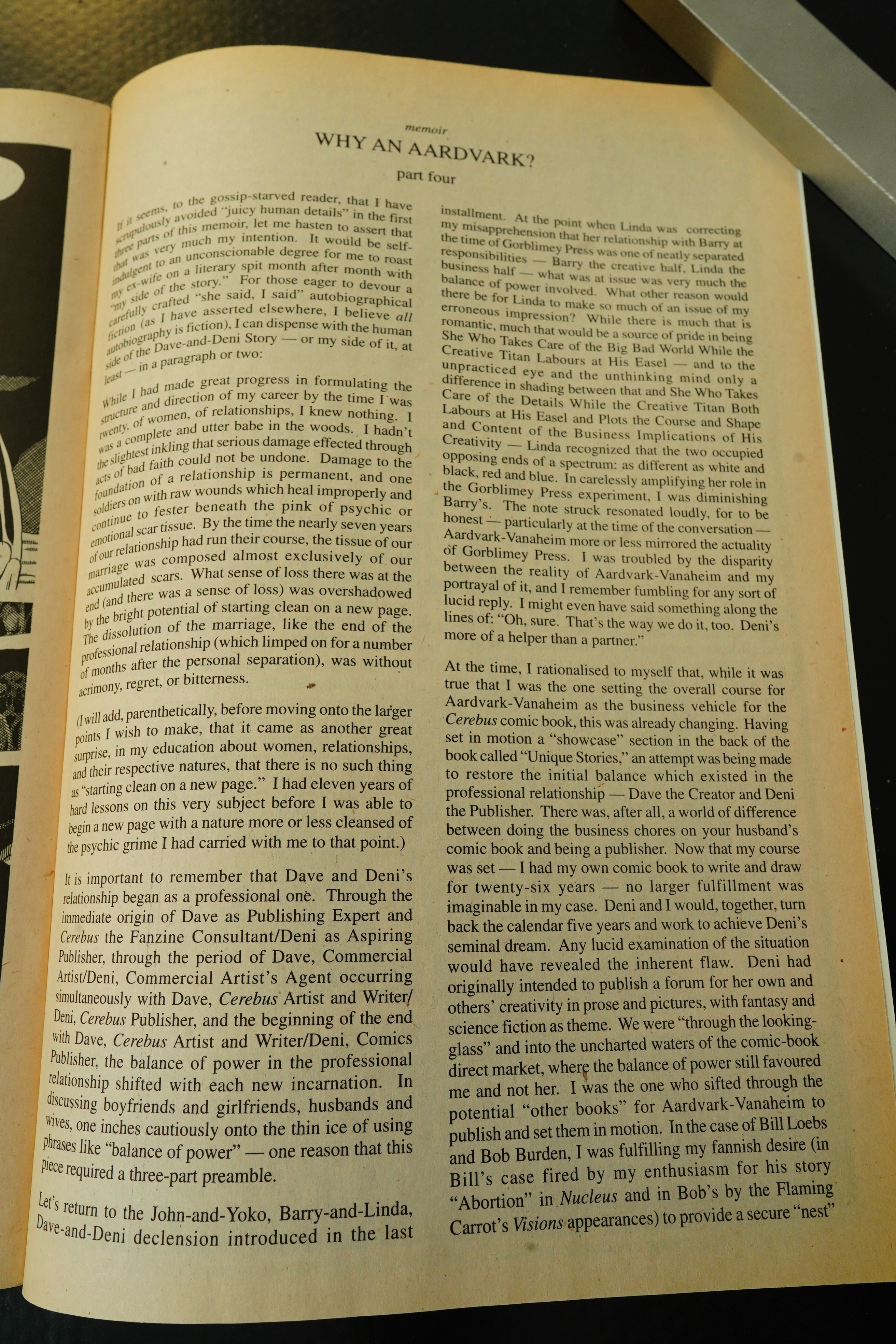
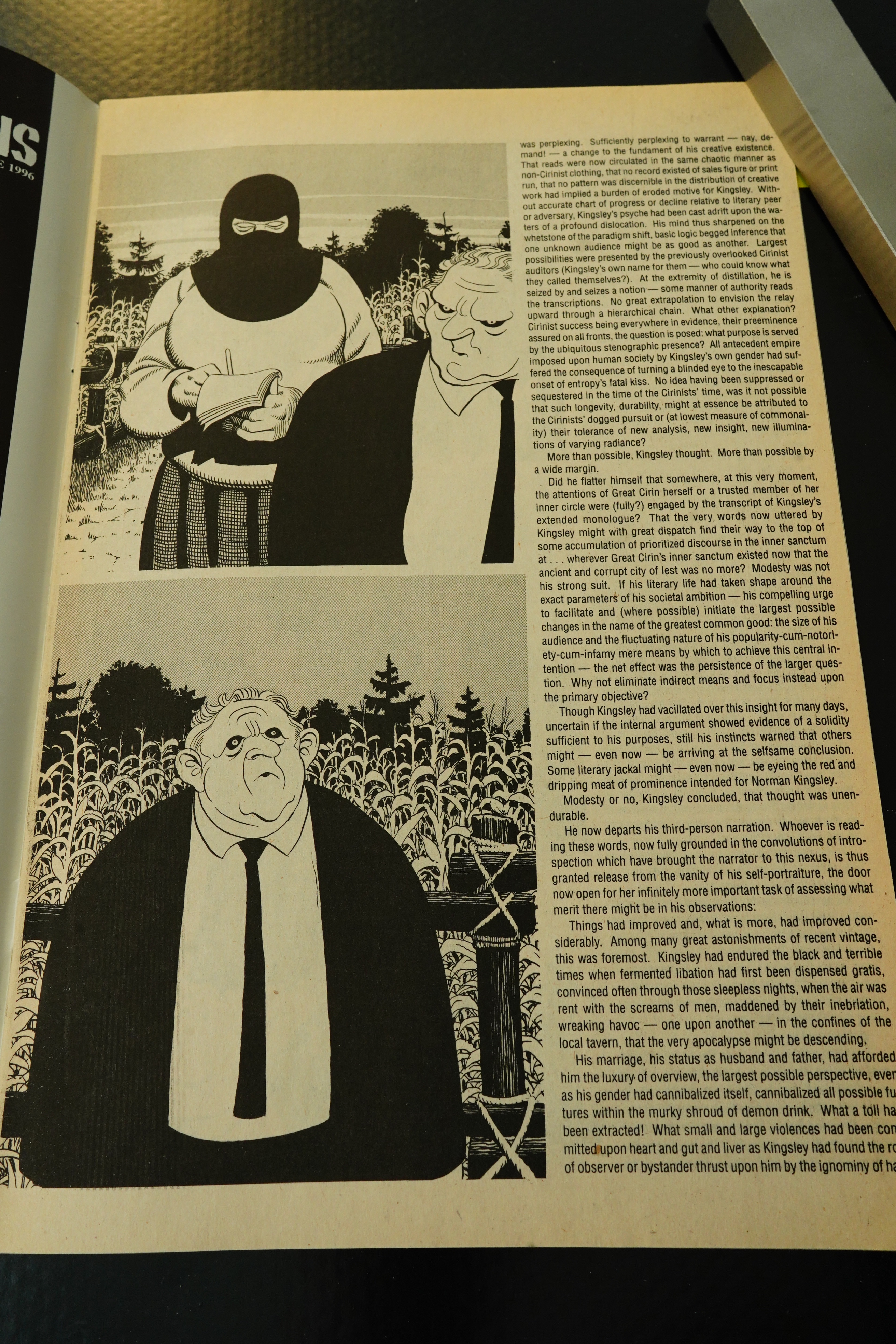
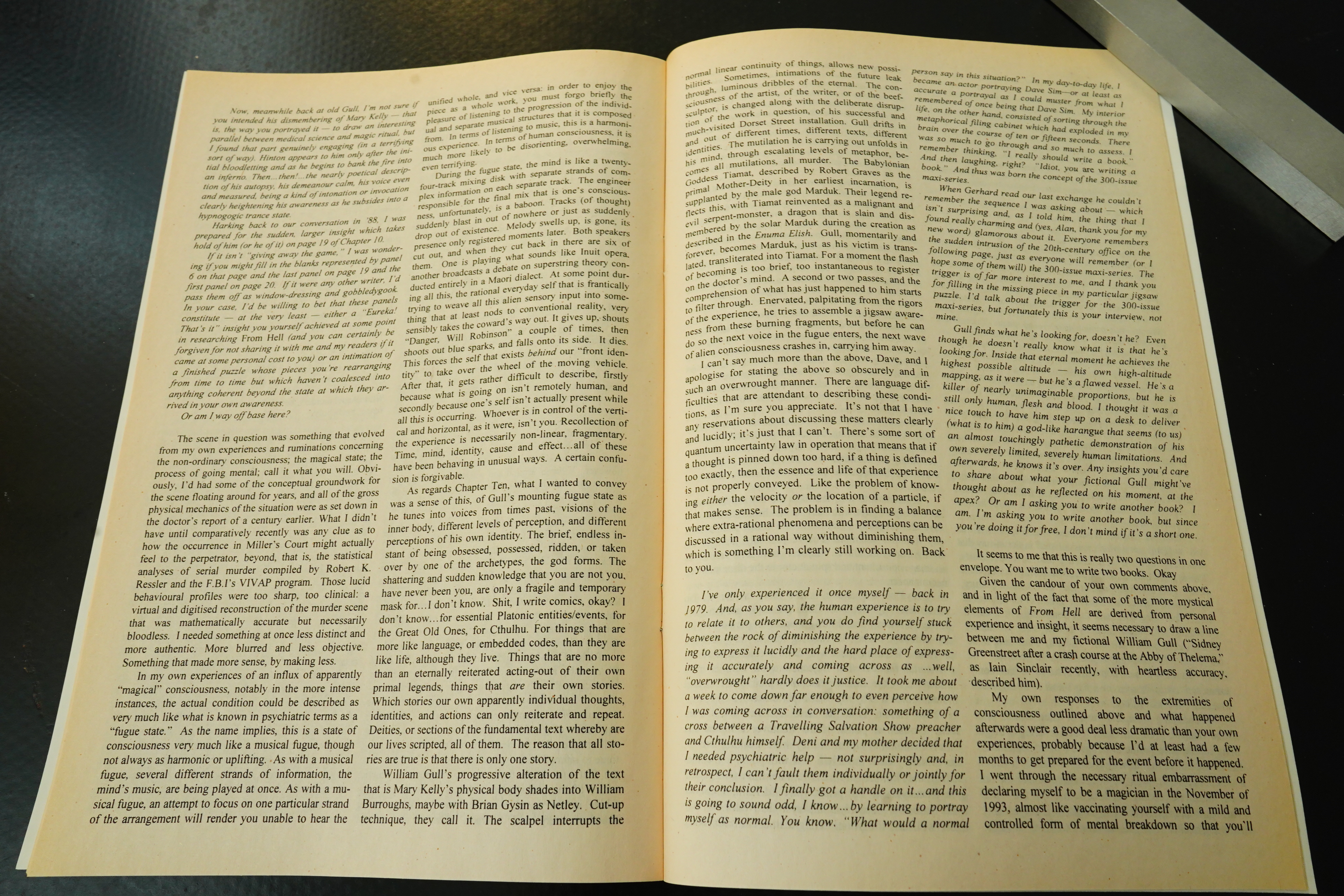
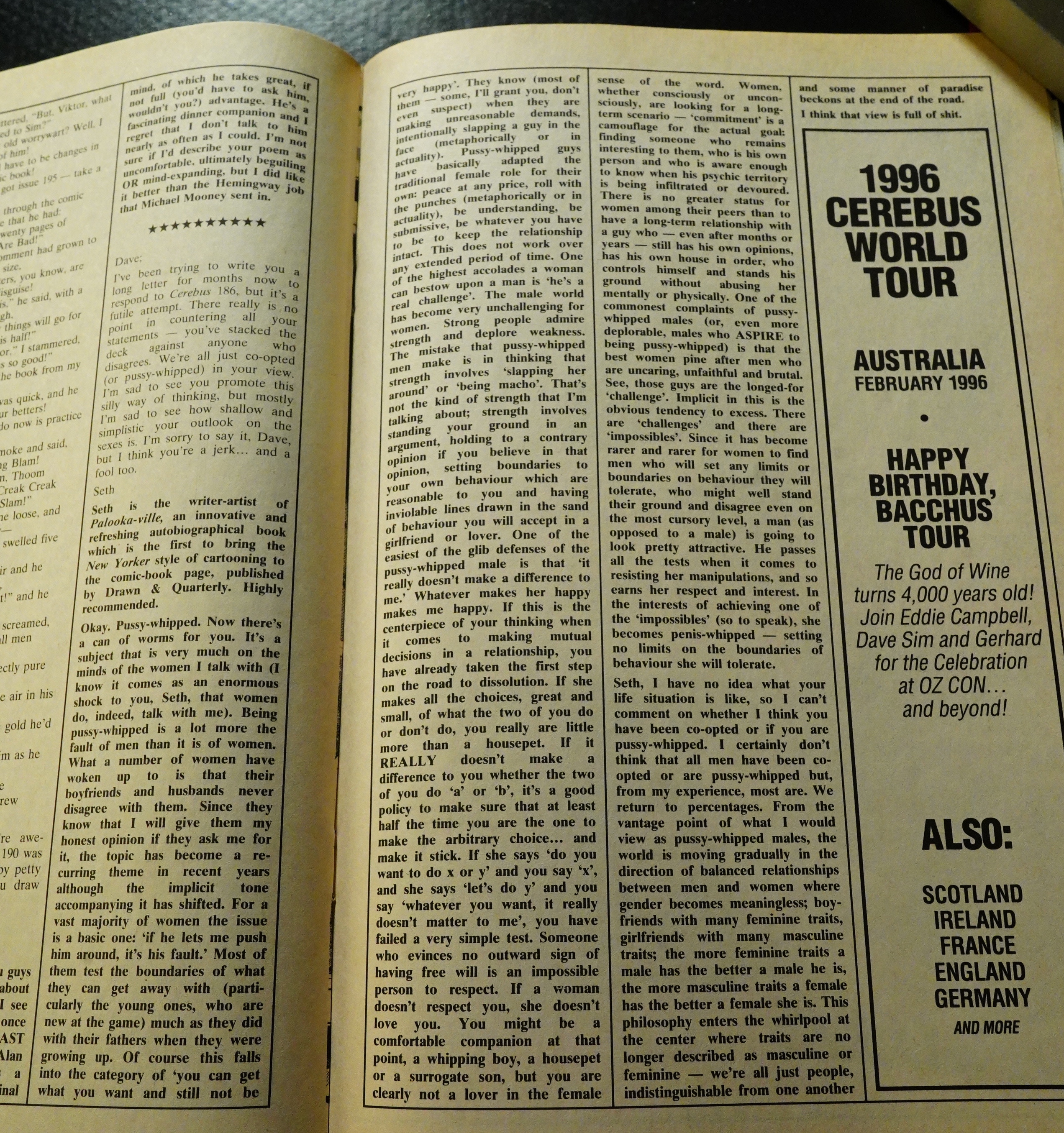
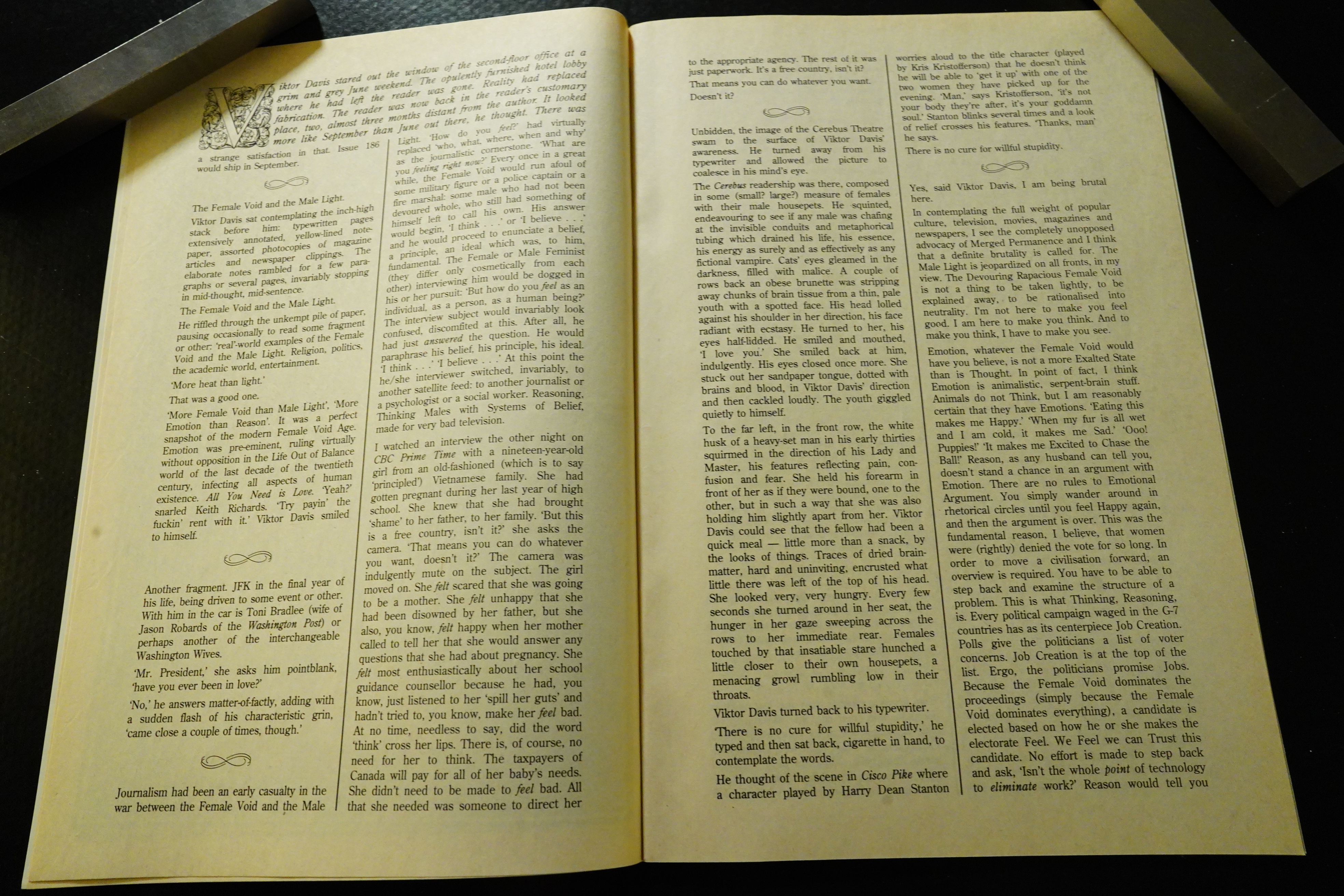
Sim starts a four part essay: “Mama’s boys”. And it’s pretty interesting, actually! His analysis of the dynamics of being chosen last for sportsball, and how that ties up into super hero comics worship sounds cogent.
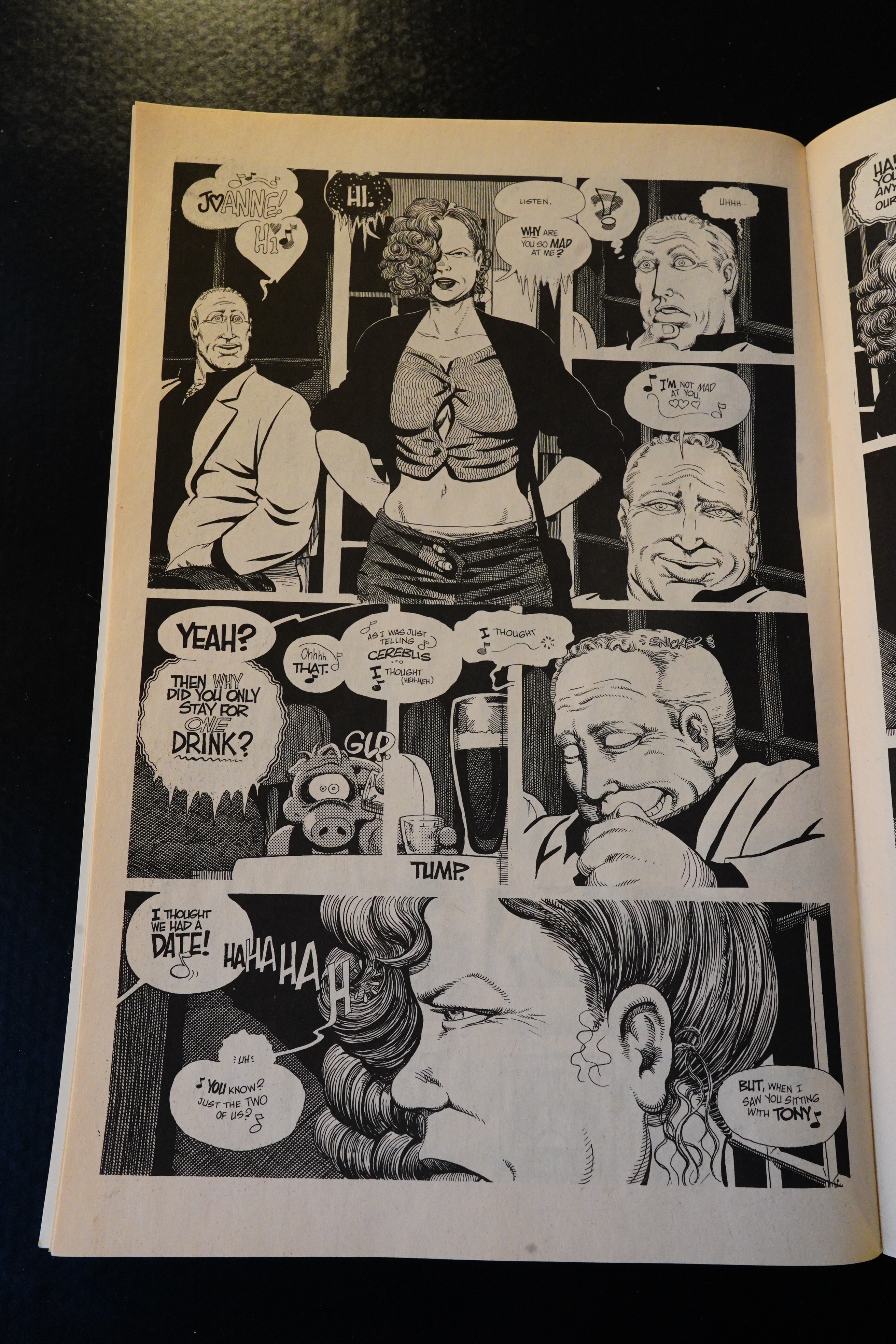
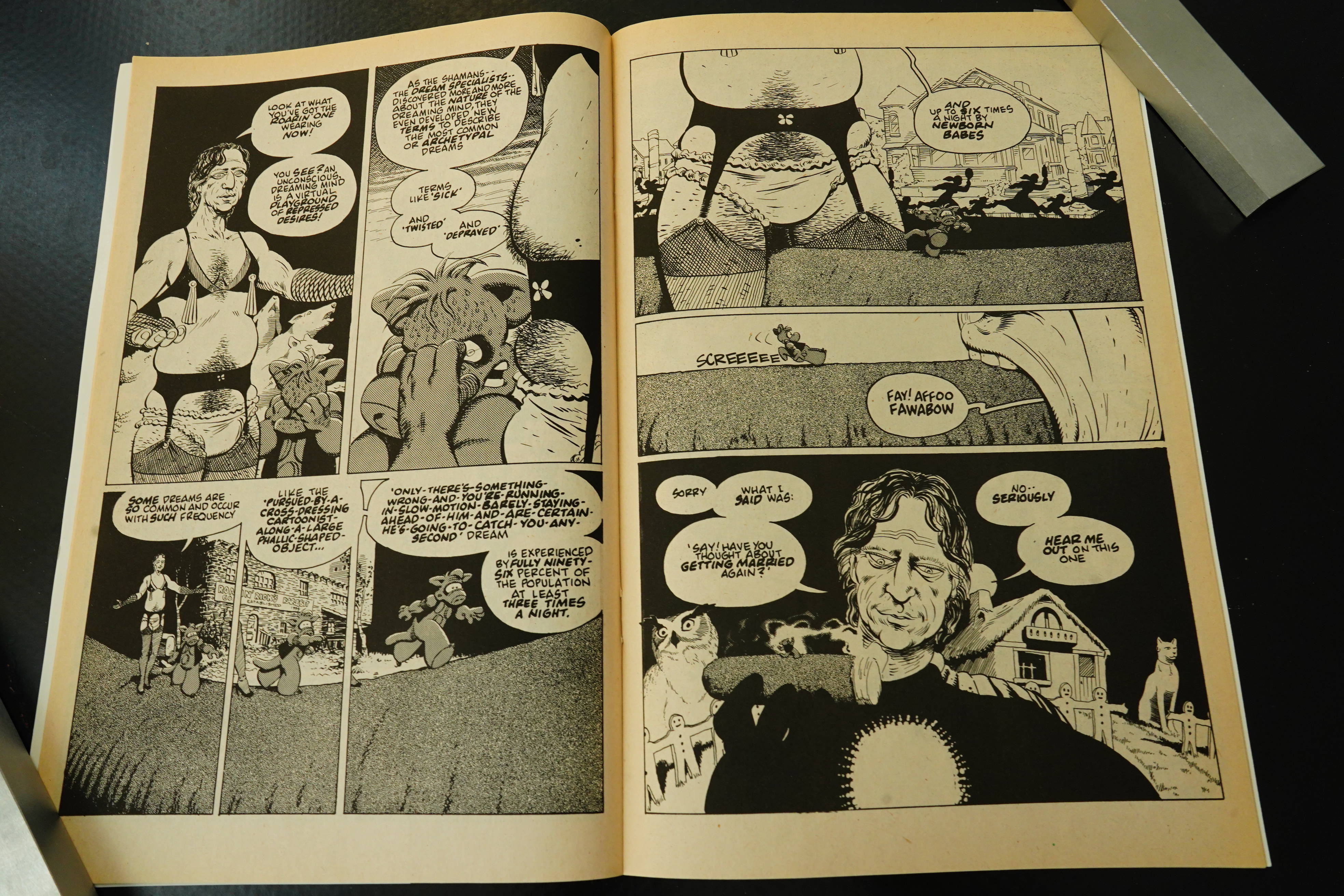
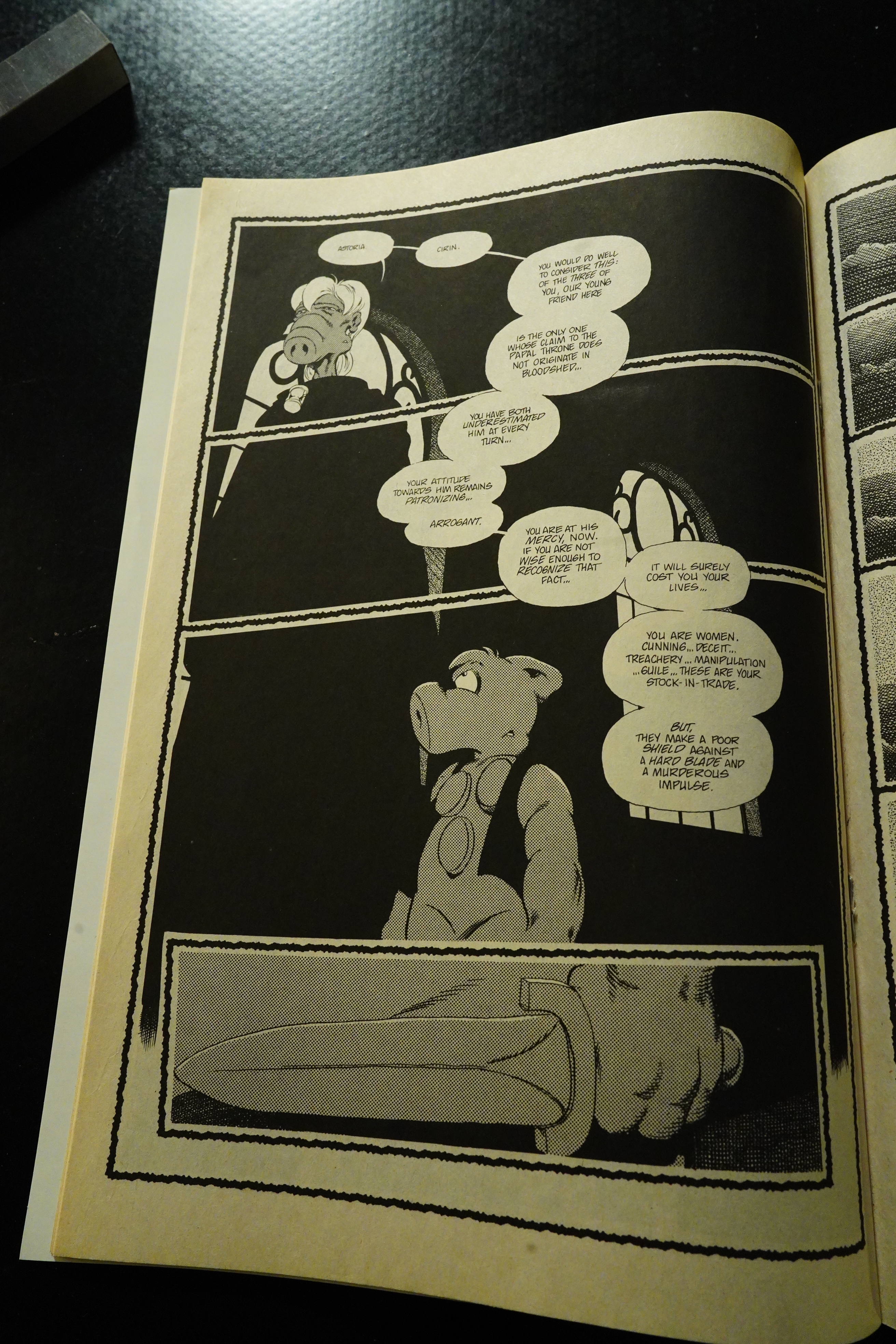
I’m never sure whether Sim is trying to make Joanne’s many, many hairdos as ridiculous as possible, or whether Sim just isn’t very good at doing hairdos.
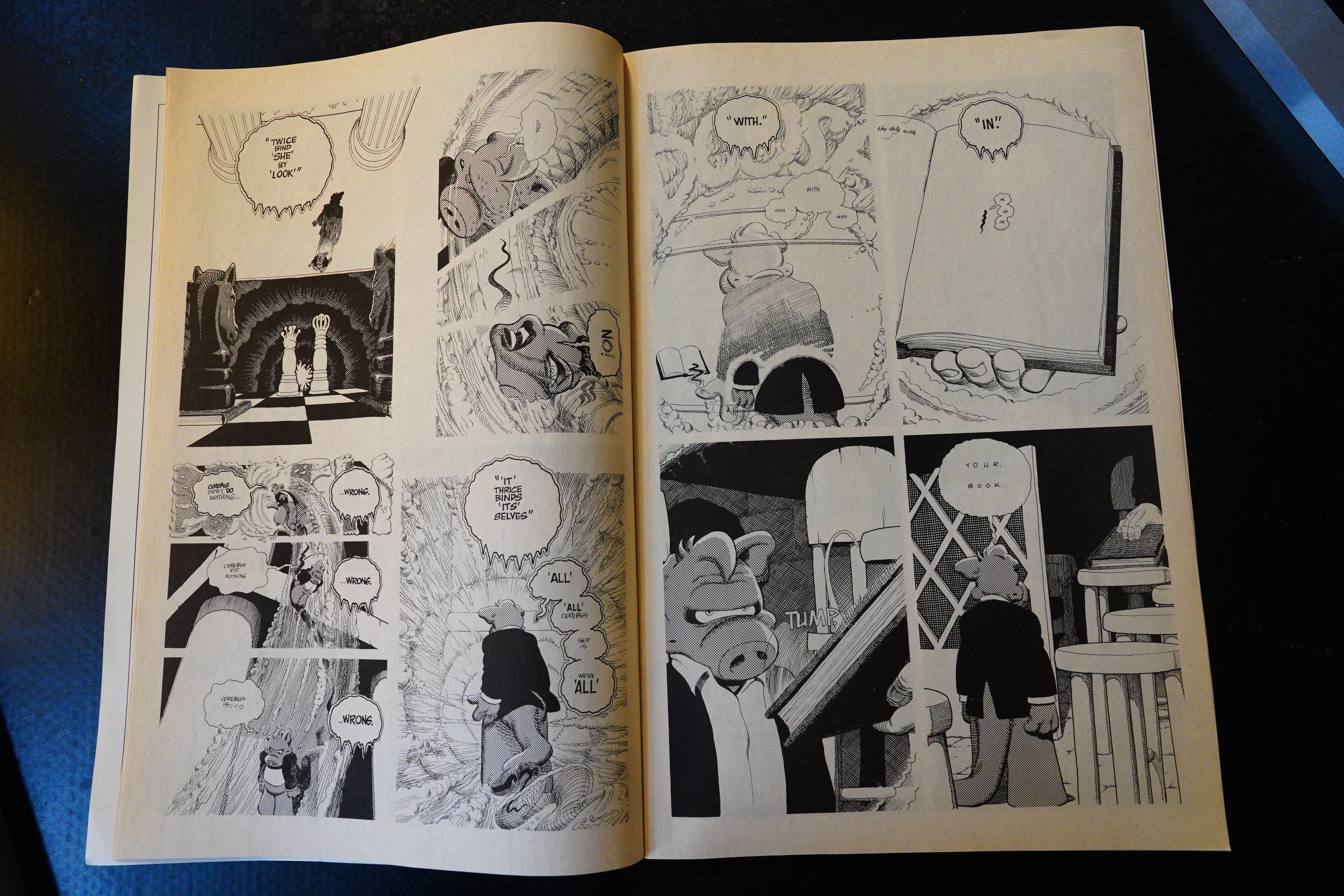
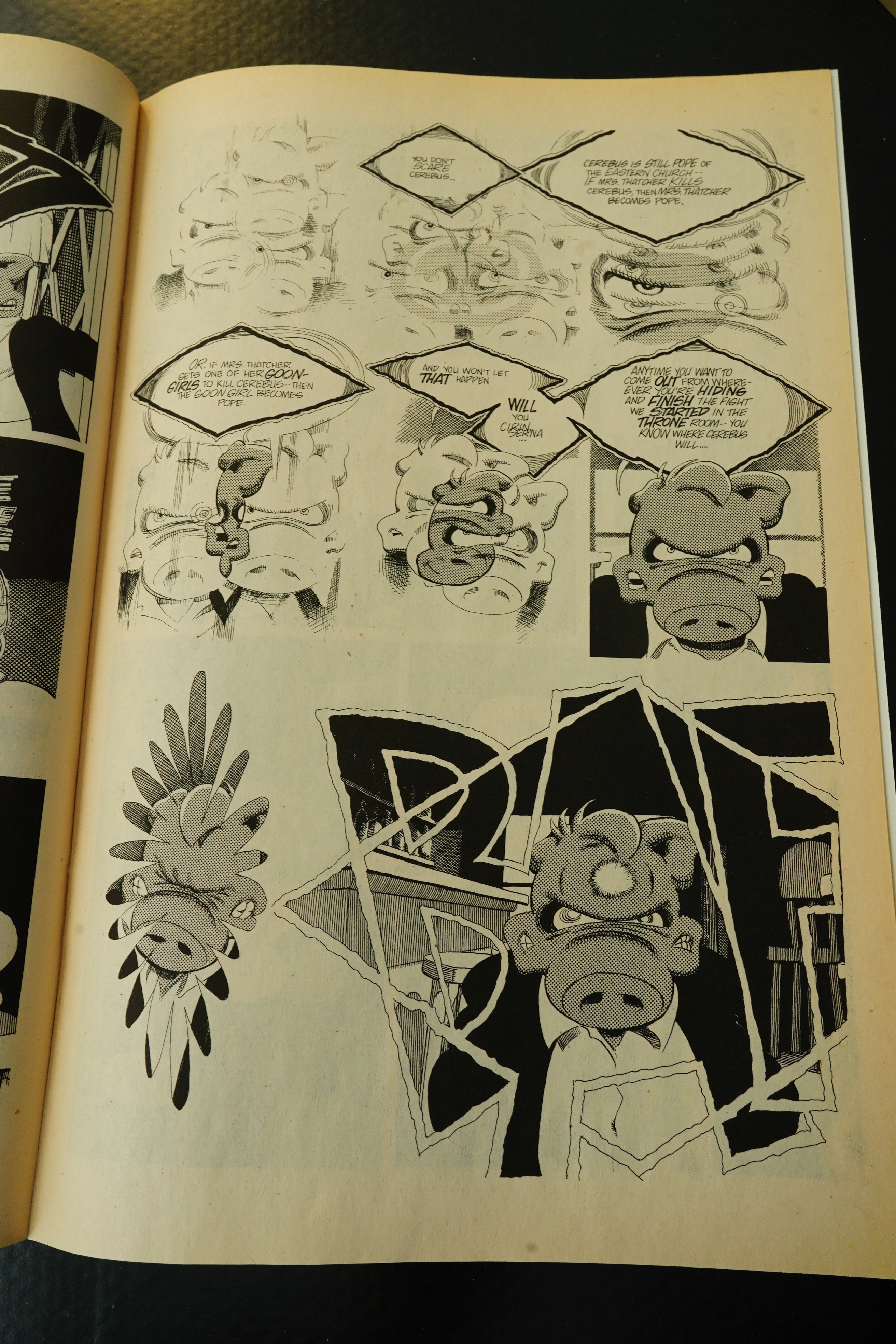
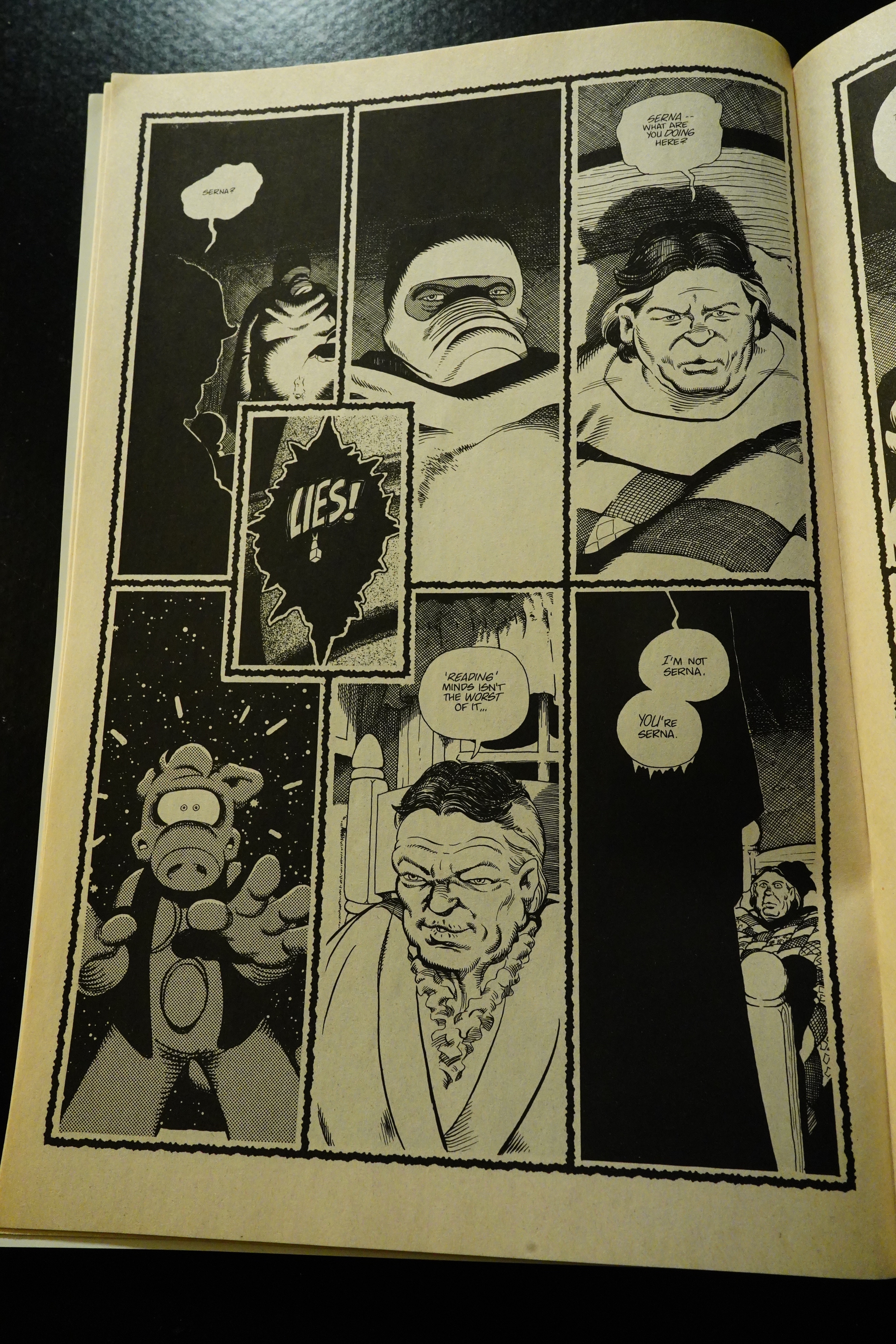
As is usually the case in Cerebus, when things finally happen, they’re a bit on the “well that was abrupt” side: Rick doesn’t give Cerebus a chance to explain anything, but just casts a spell (!?) on him, and then leaves.
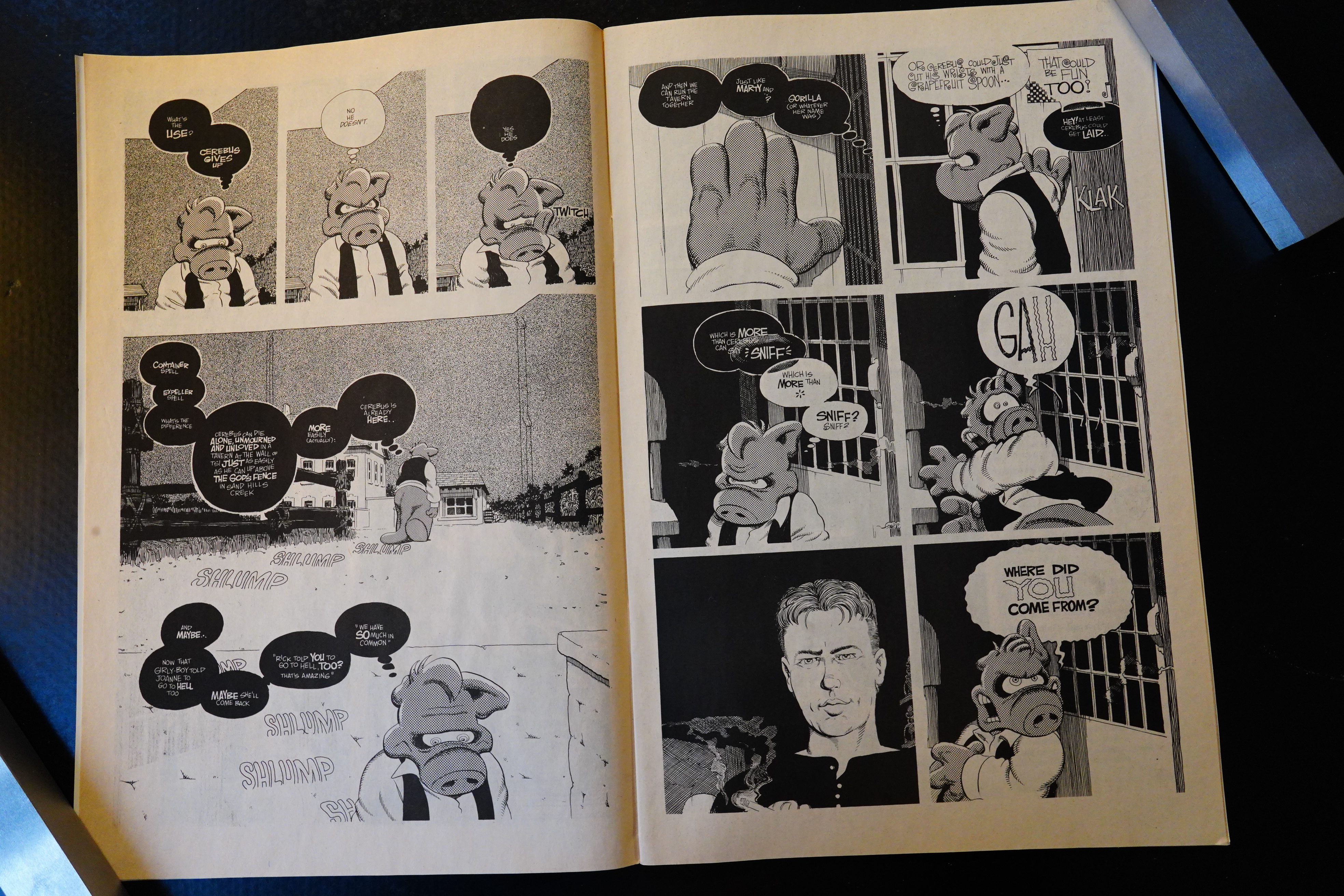
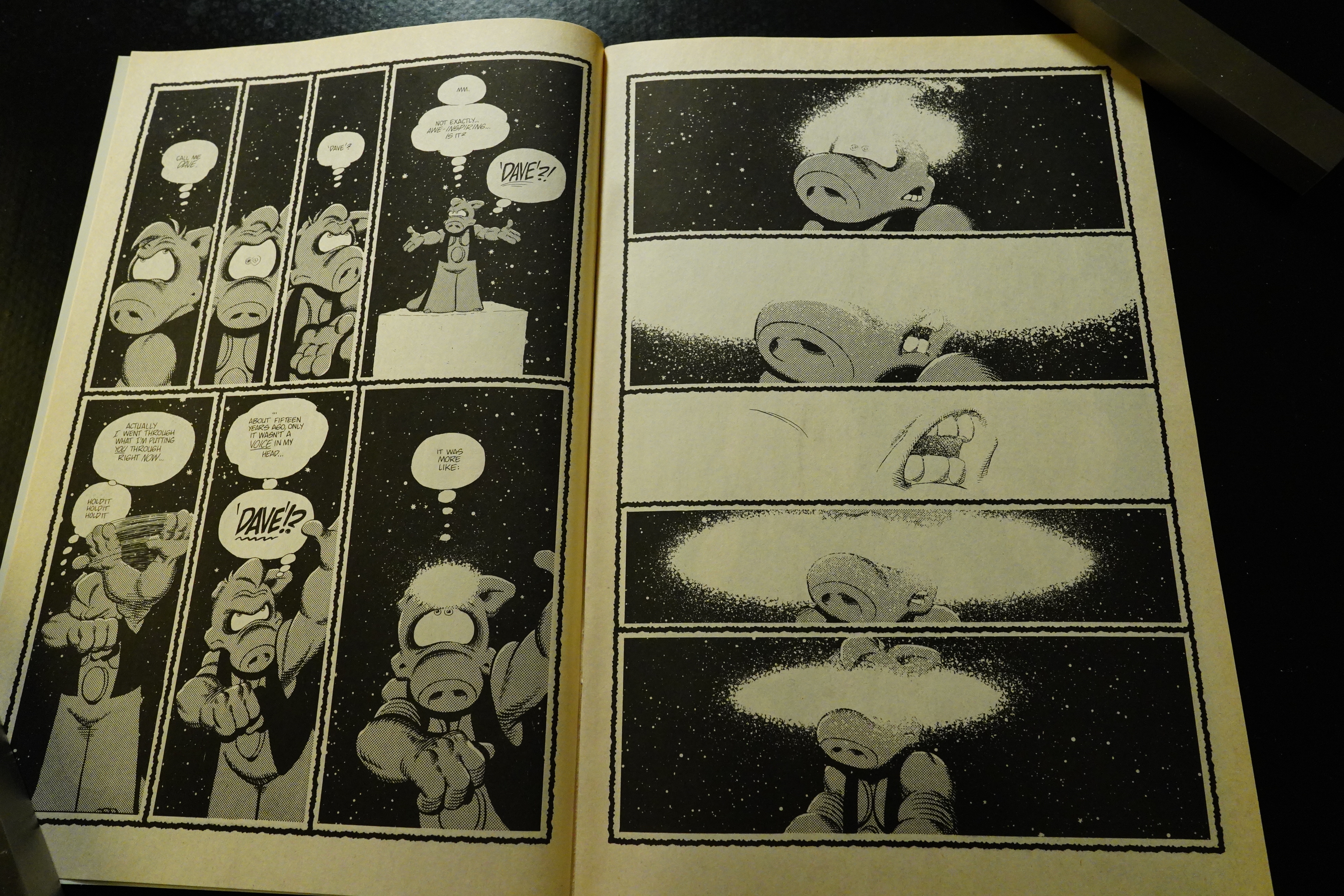
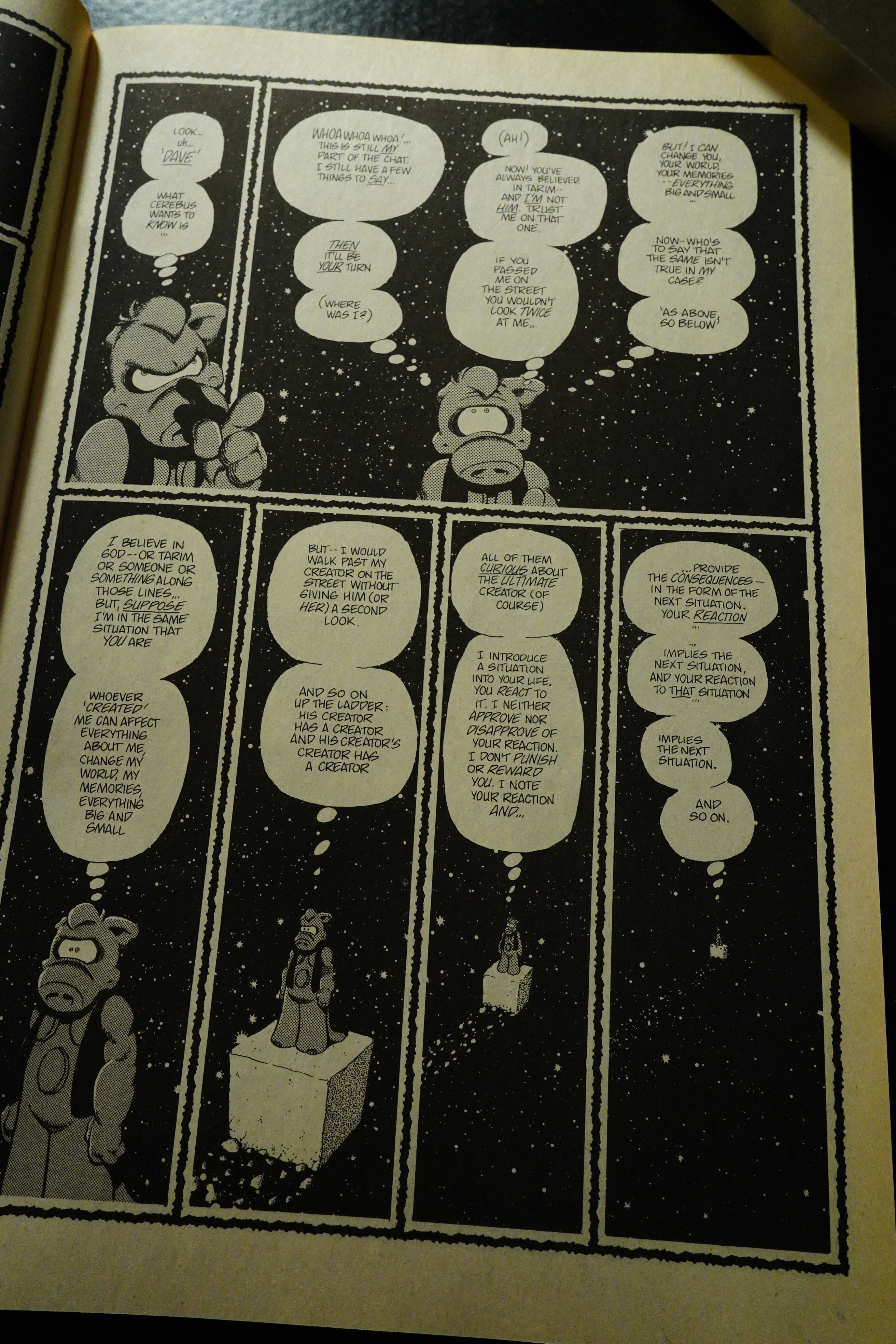
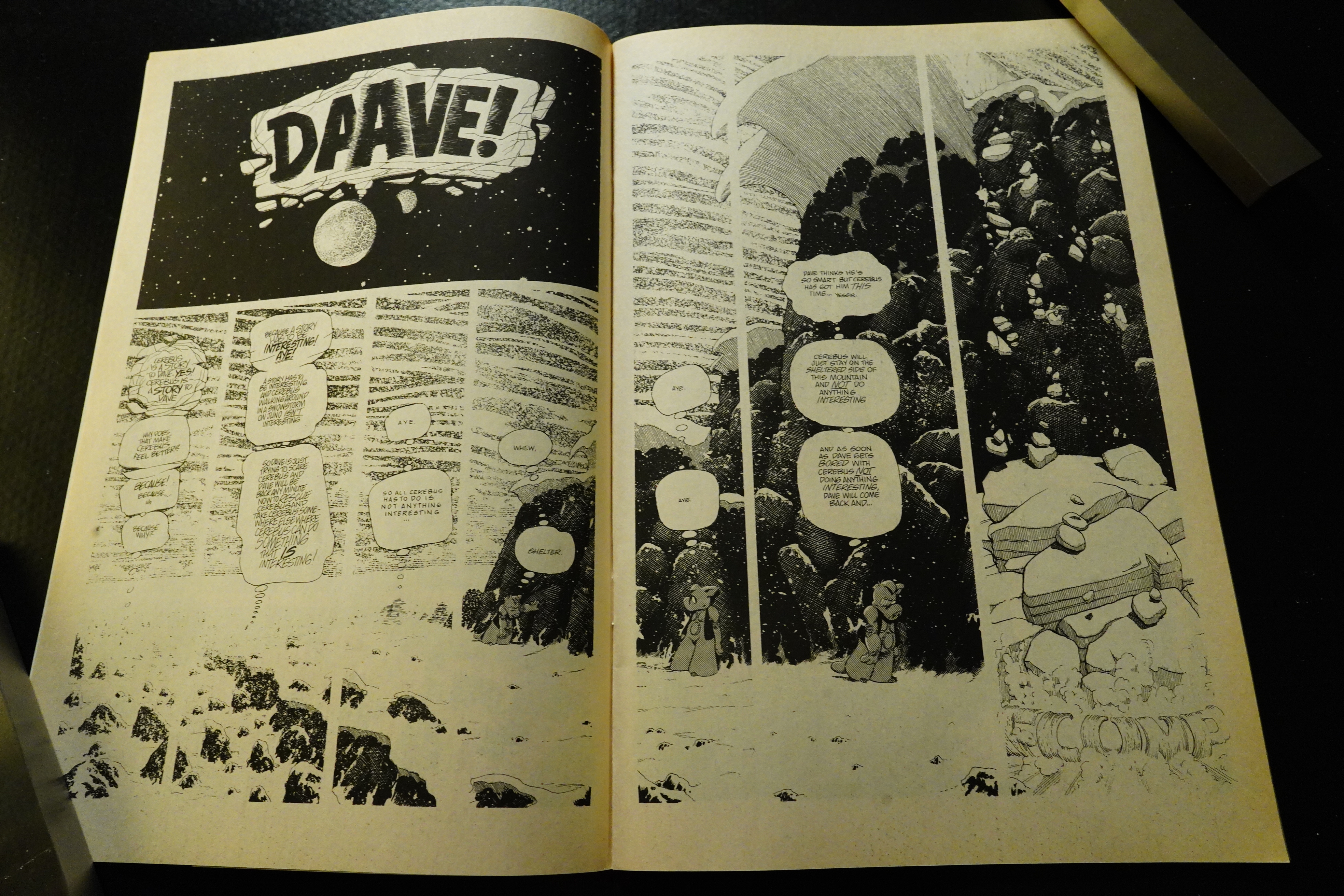
And then Dave shows up! What are the odds!
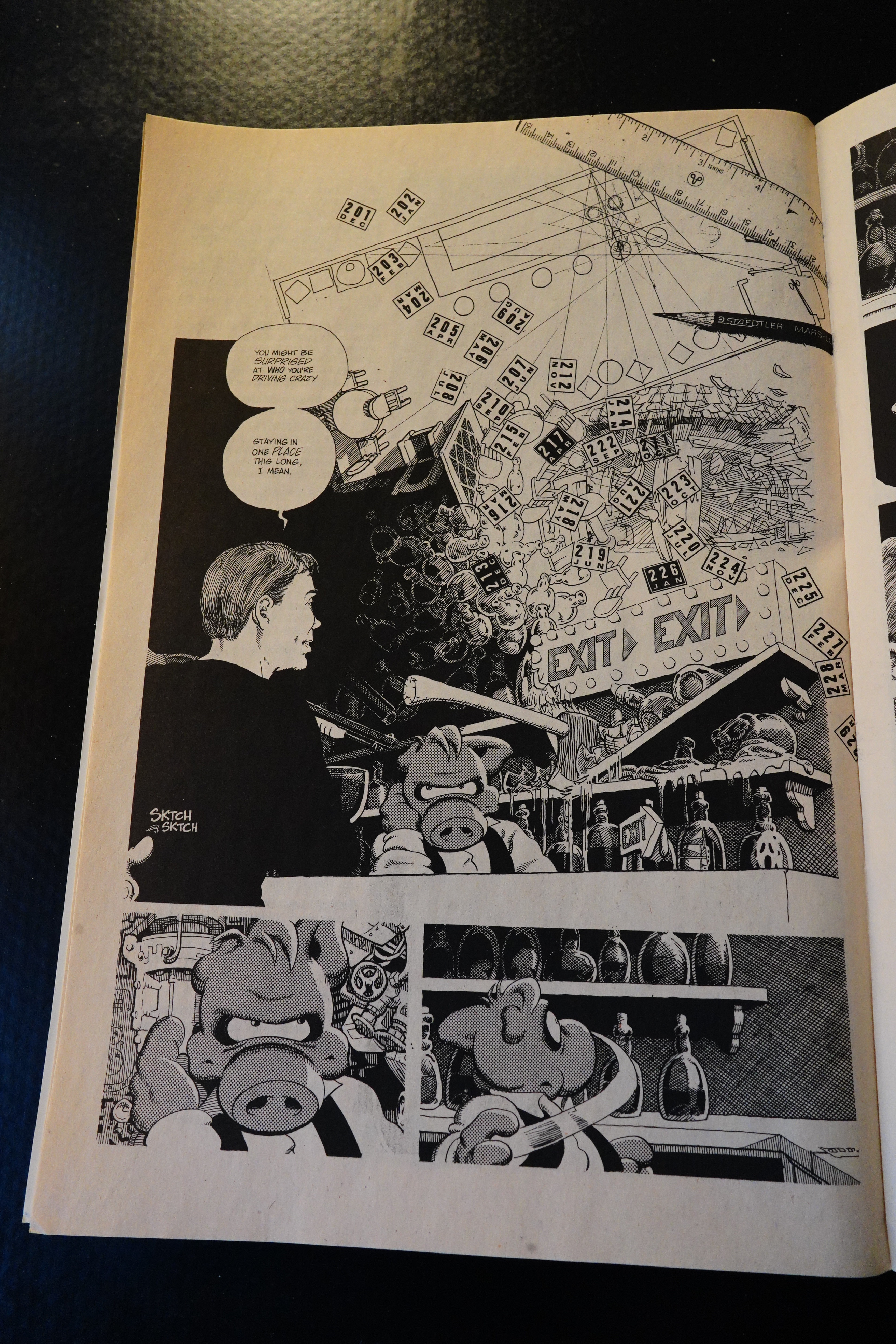
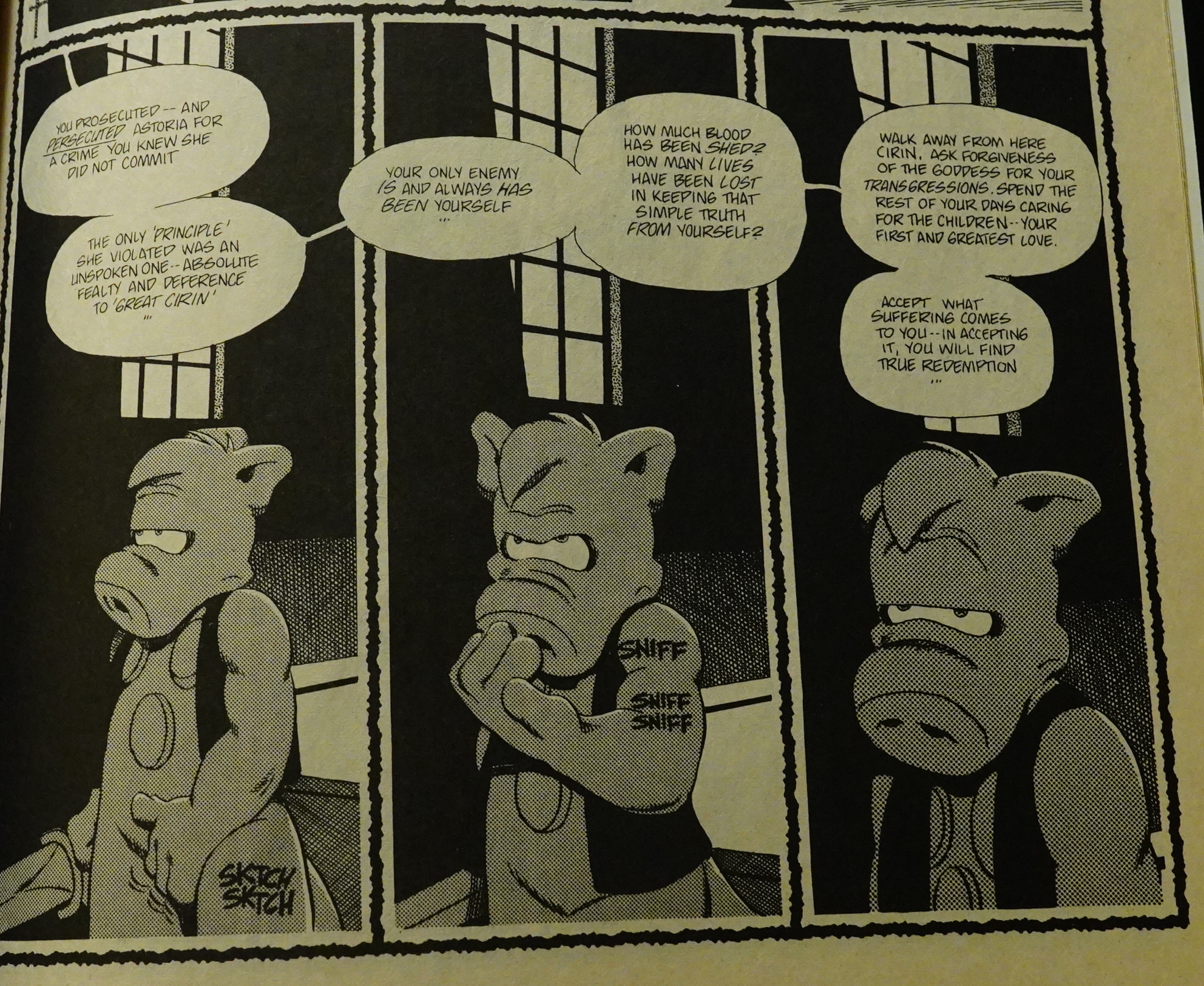
And he is telling Cerebus to leave, because we’re all tired of the tavern by now.
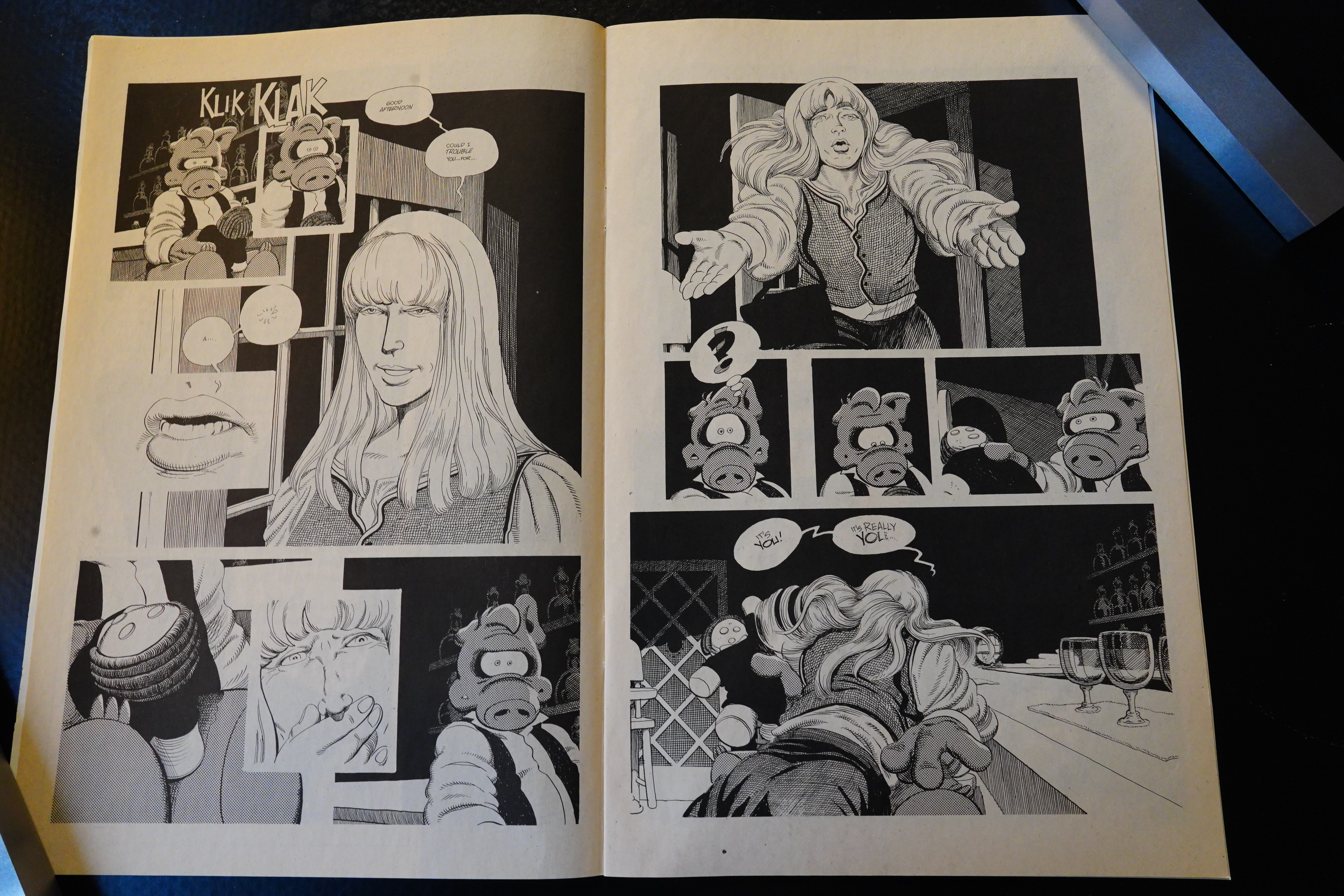
So how does that happen? Yes! Jaka! And as is Sim’s wont, she also seems to drop in — at random, without any planning — at Cerebus’ tavern. See? It’s much easier to make a story if you don’t have to have it make sense — Dave wanted Cerebus to get out of the tavern, so he sent Jaka there. (Or perhaps God did; you never know with Sim.)
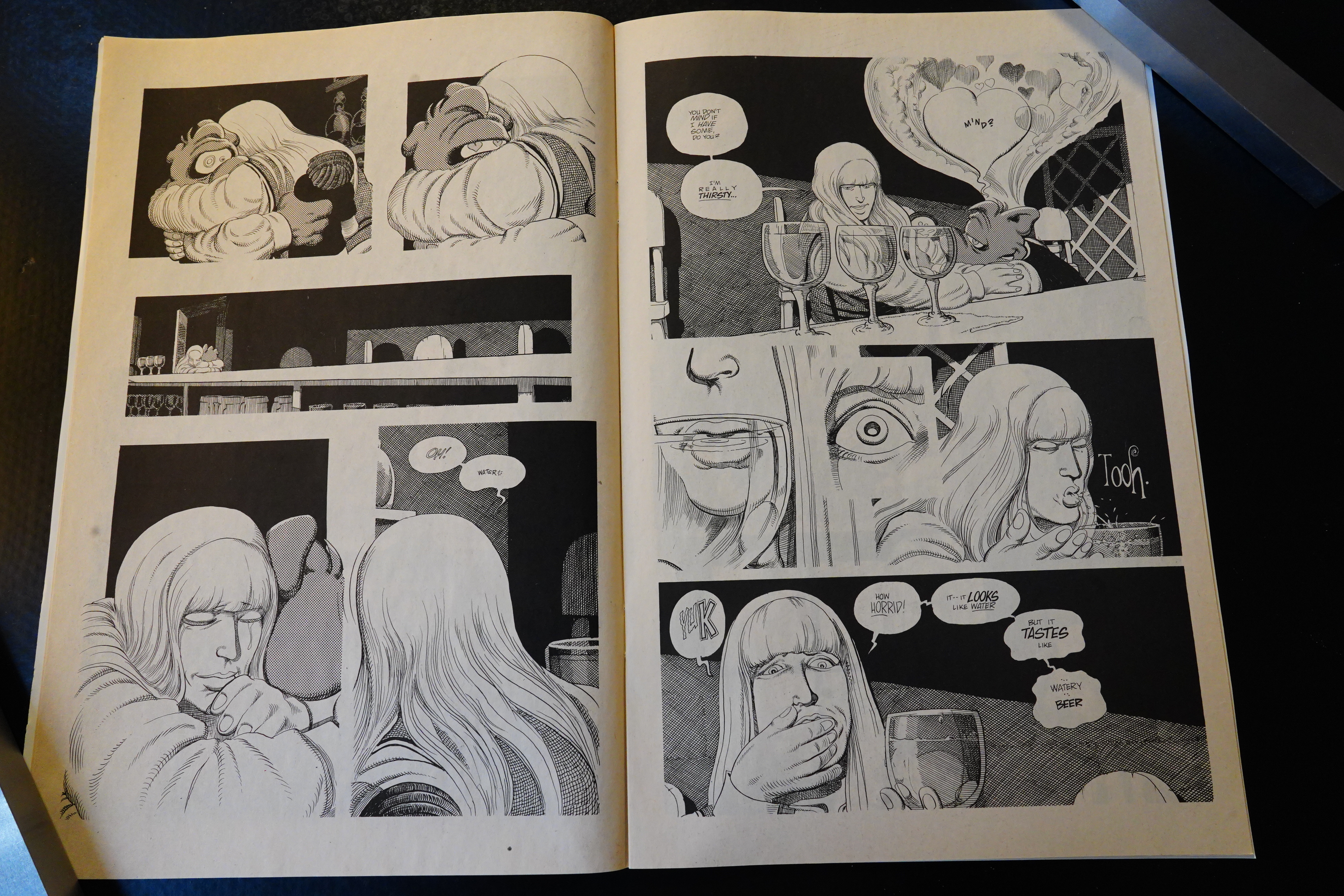
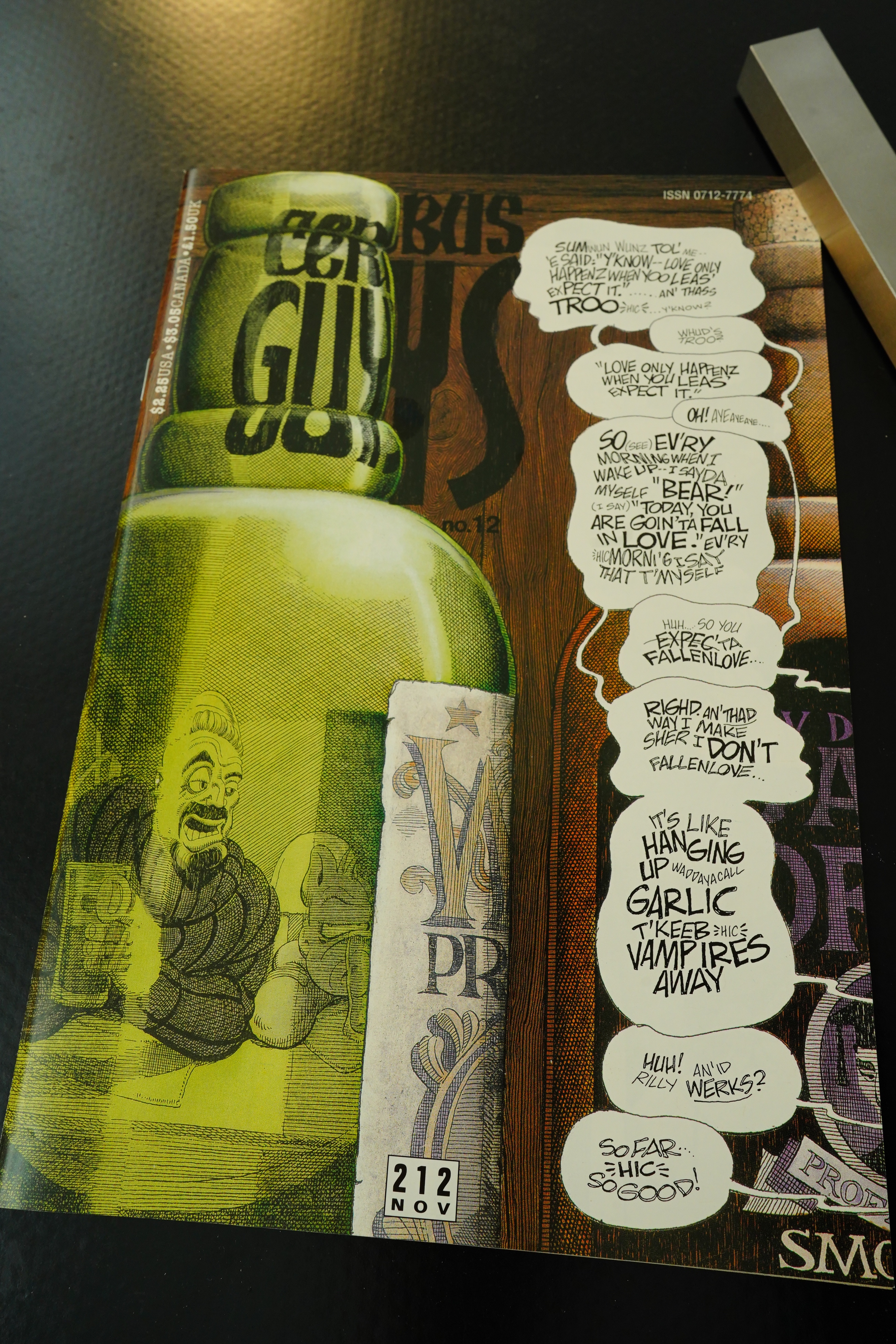
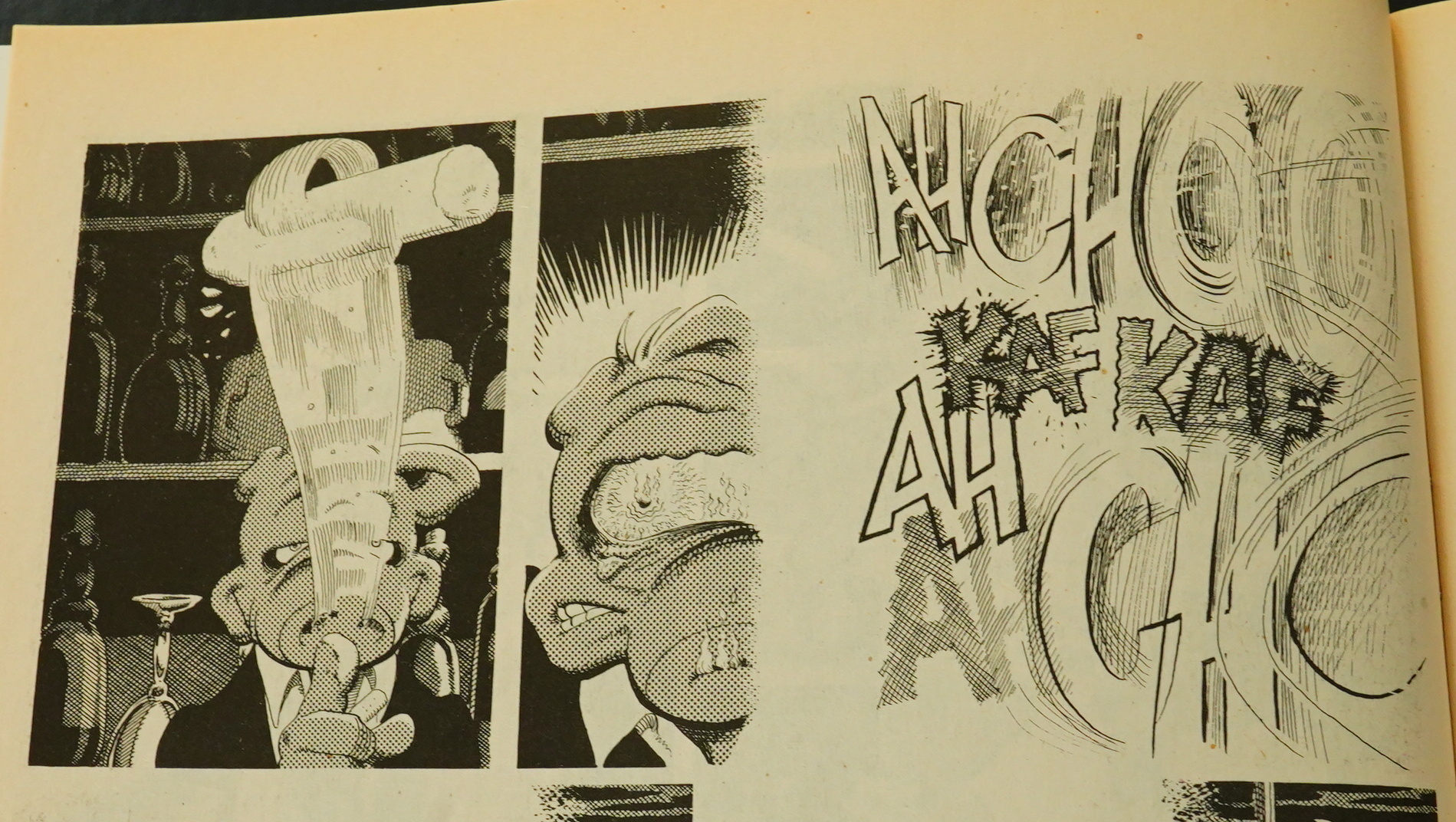
And… Dave has turned wine into Coors. Nice touch!
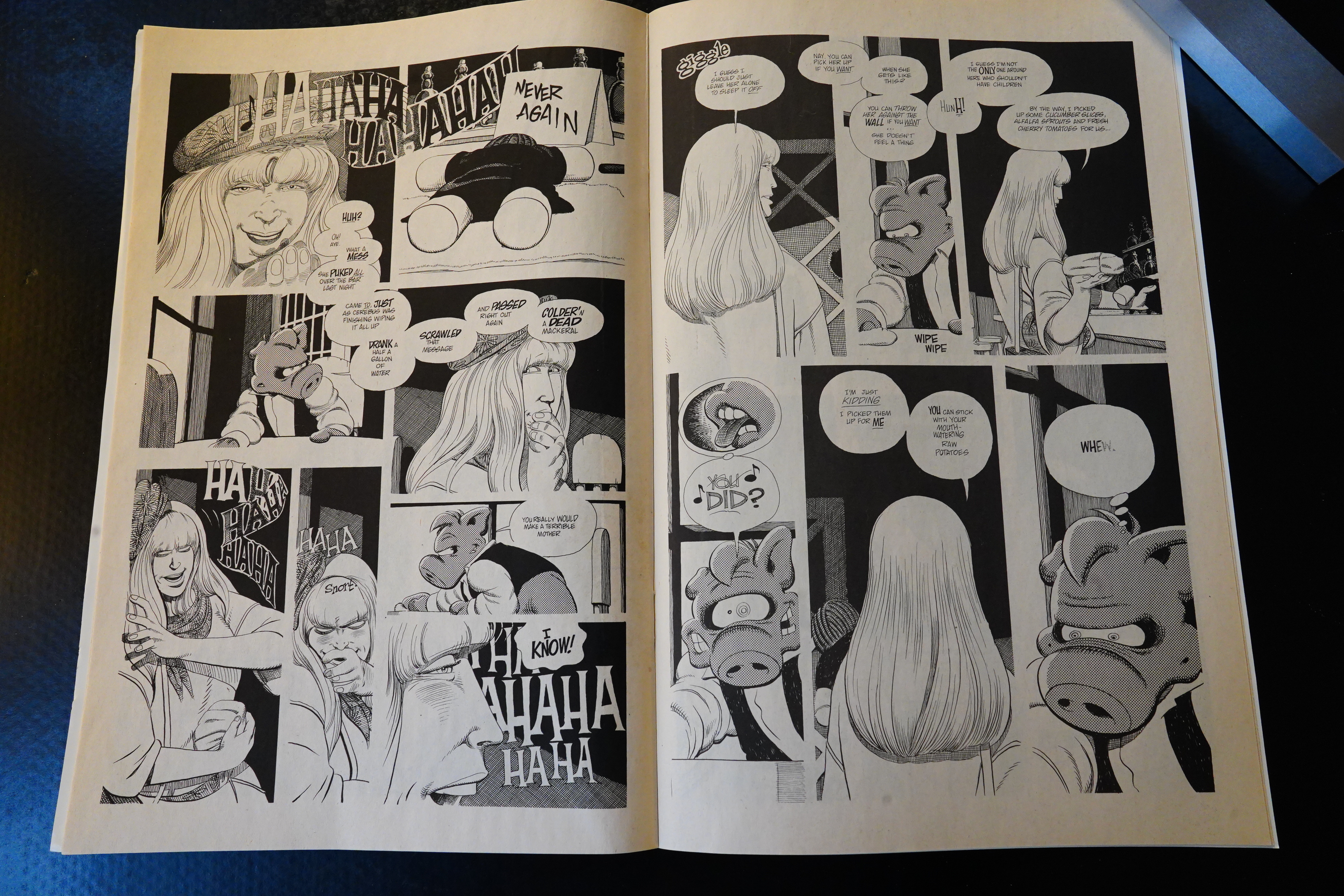
Sim leans really hard into romance movie tropes for the meeting, and I have to admit that it works. These couple issues with Jaka at the end here are really, really cute. Almost makes up for the rather tedious King James bits.
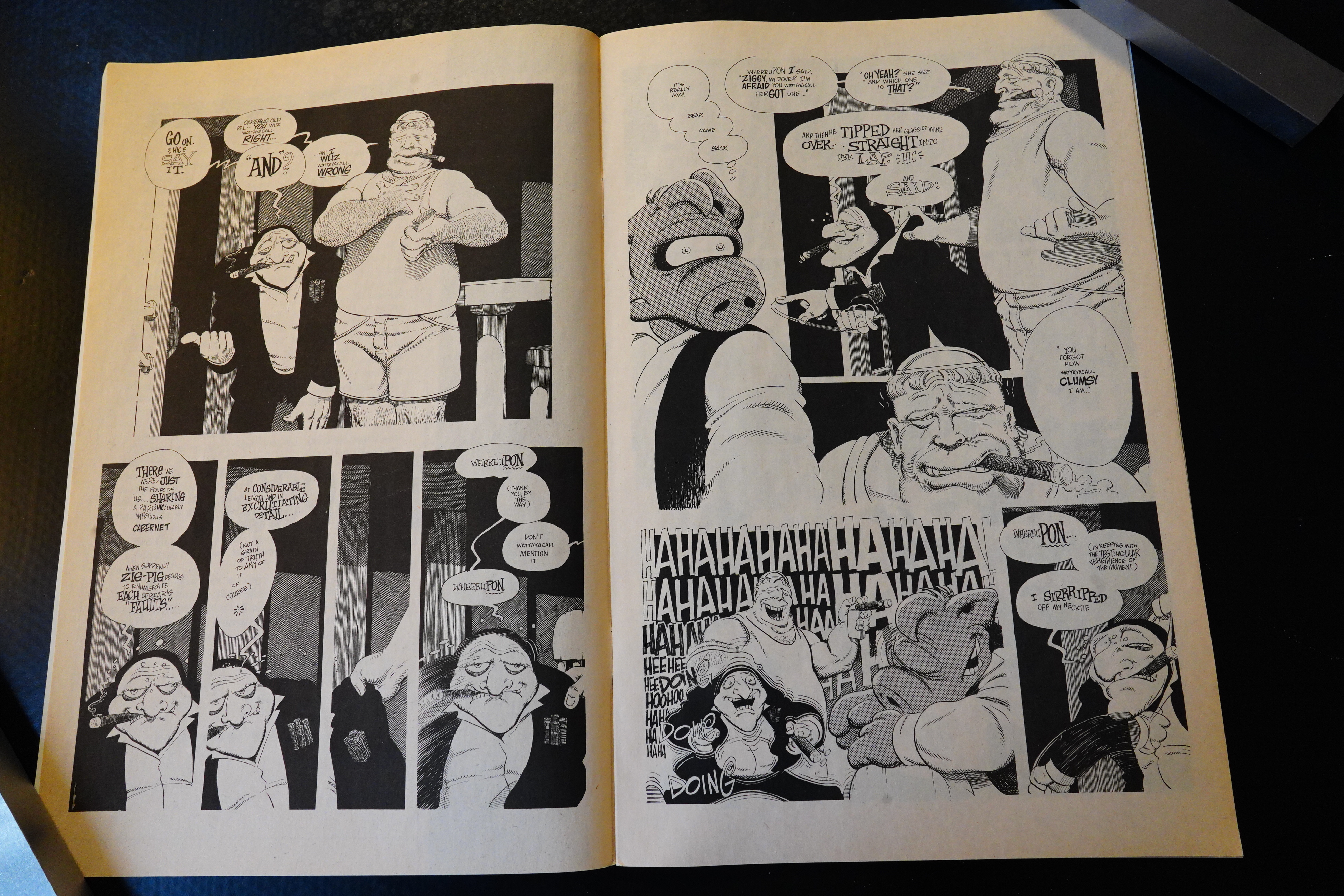
And of course, to heighten the drama, Bear finally comes back. Cerebus had been waiting for him for months? years? And finally when he does, he has to choose between Bear and Jaka.
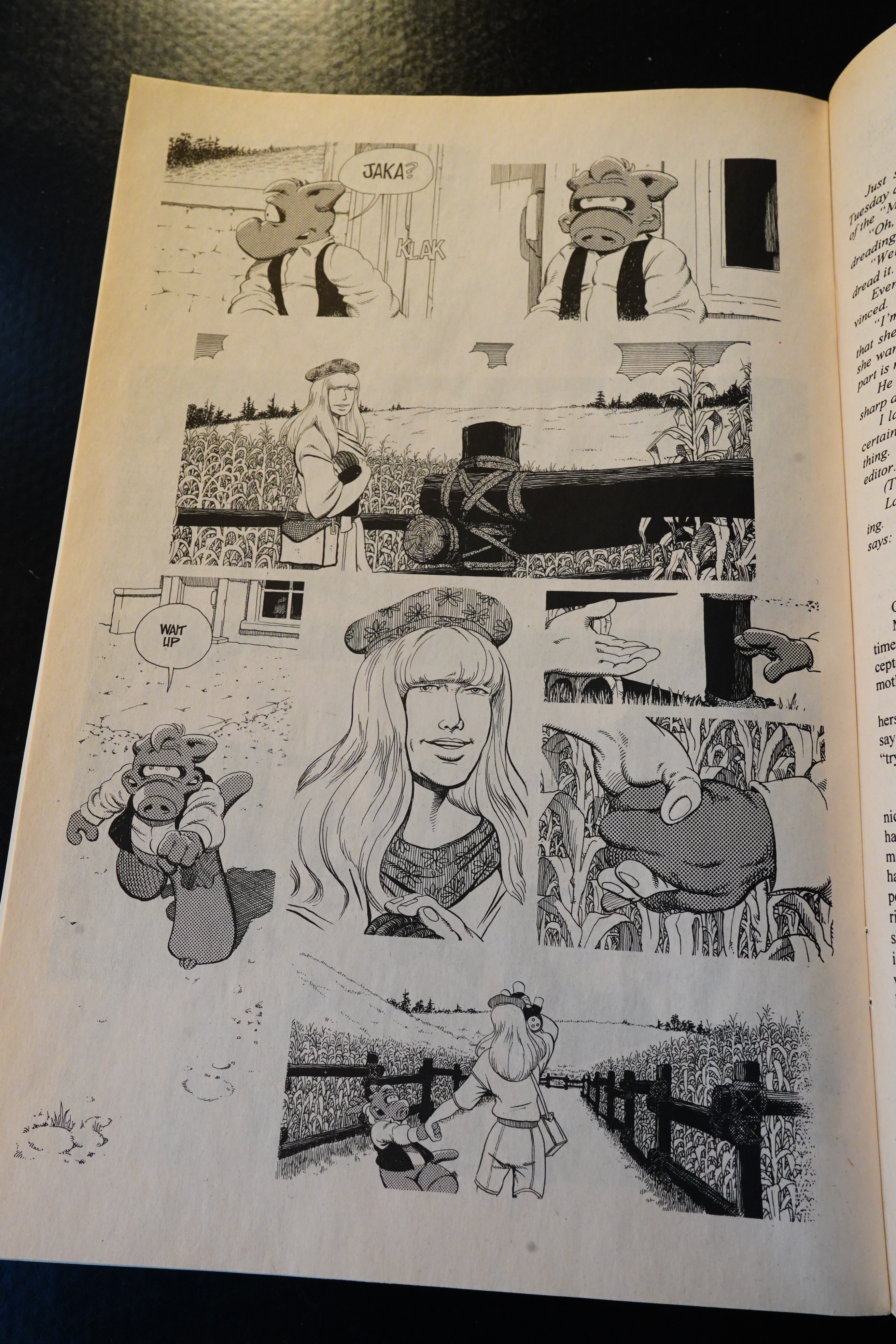
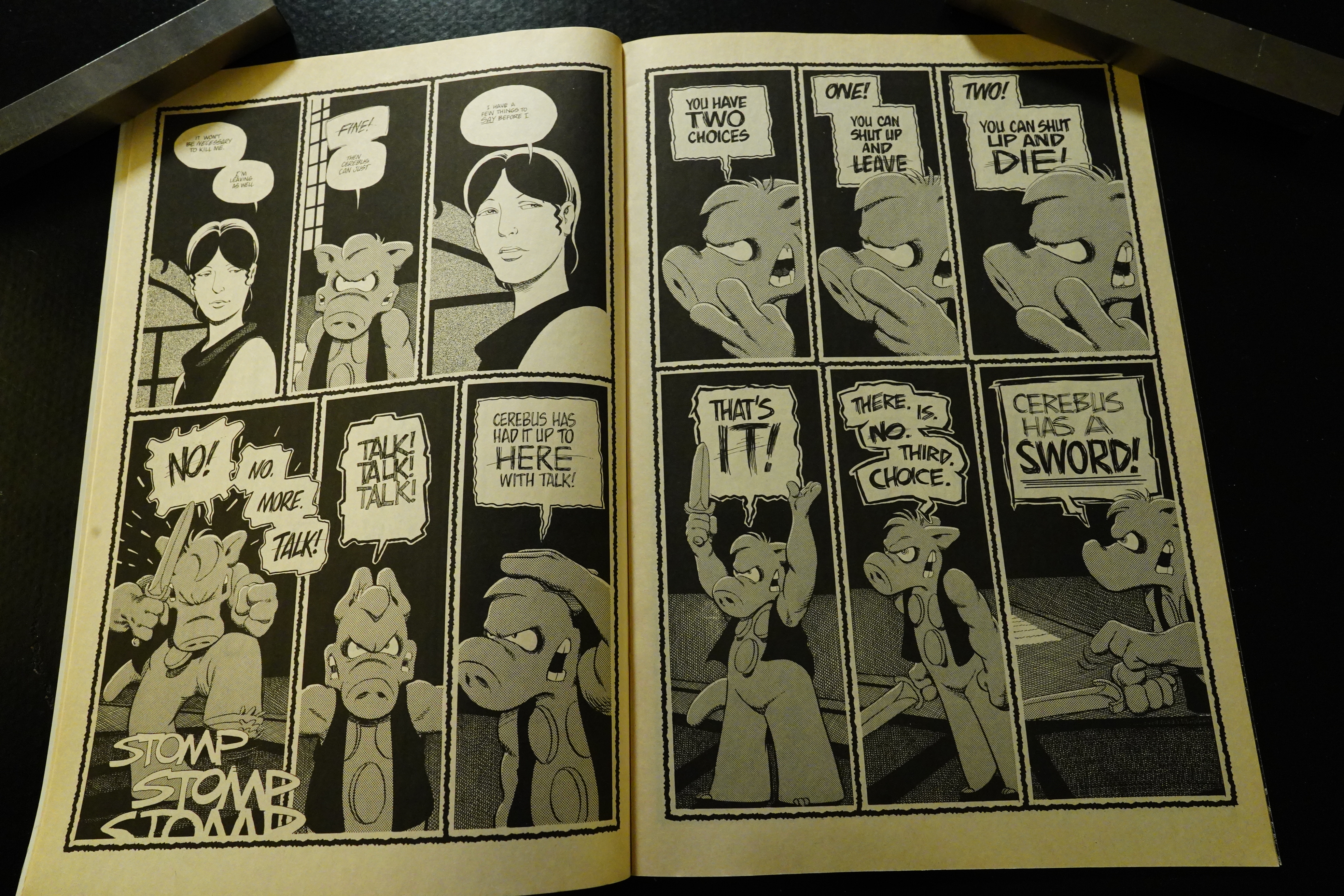
The choice really is no choice.
So that’s Rick’s Story — one of the shortest Cerebus books. It’s a pretty snappy read, too — the text bits are limited. But is it good? Like Sim, I felt we’d spent too much time at the tavern, but Rick’s Story isn’t as boring as Guys was.
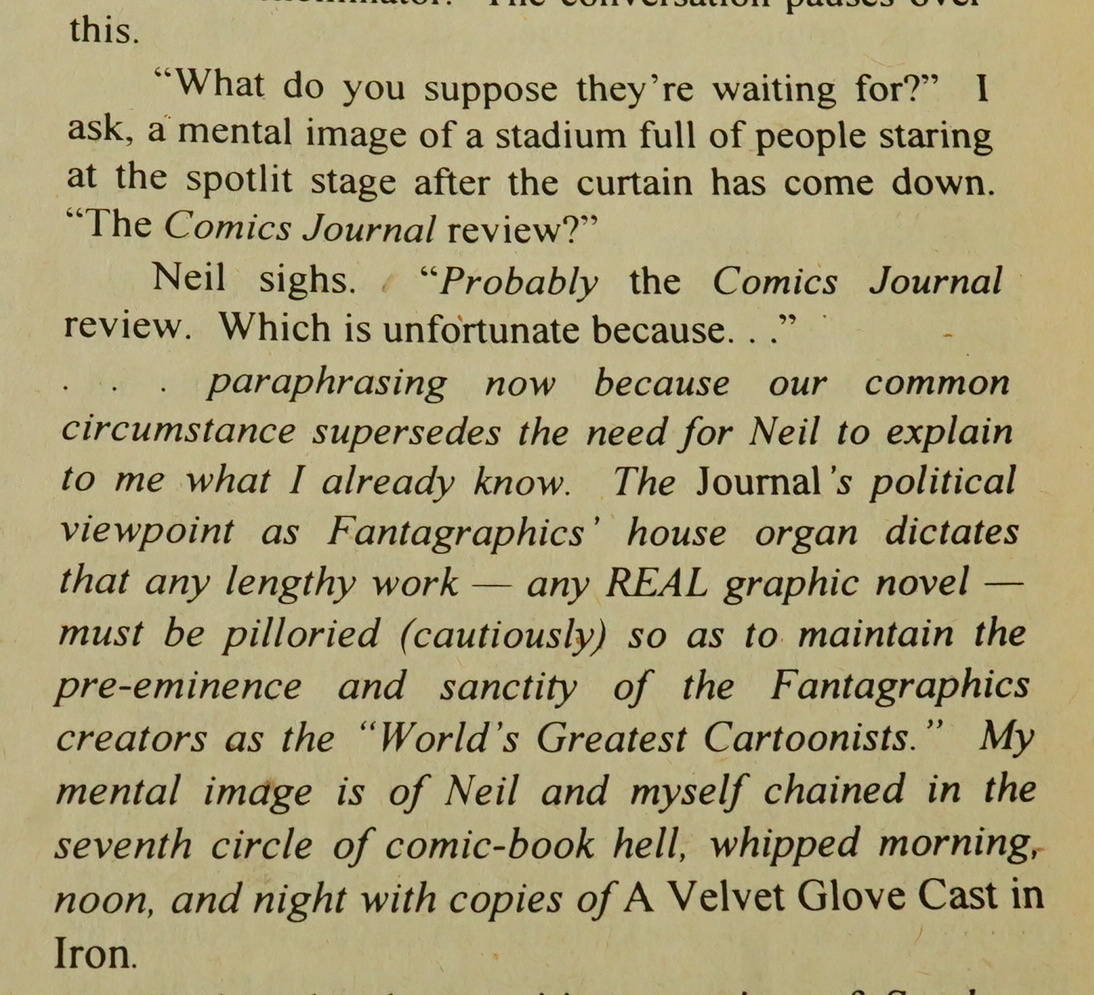
David Groenewegen writes in The Comics Journal #263, page 121:
The strength of agendas are illustrated
in the stories told about Cerebus during
the story. Many are just single lines about
various perceptions of Cerebus the charac-
ter. Others are more substantial because
they show something being written about
Cerebus, while demonstrating him doing
something quite different. This happens
to a certain extent in Going Home, where
E Stop Kennedy interprets all of Cerebus’
actions in ways quite opposed to what hc
is actually doing, but is more visible in
Rick’s Story, in which Rick bases a bible on
Cerebus for no apparently logical reason
(although some ofit seems to be hero wor-
ship, and some revenge for Cerebus’ love
Of Jaka).
This can be read as a critique Of bibles
in general — that they are written by
humans, whose thoughts and prejudices
influence what they are writing, and
which create something quite different to
that which actually occurred.
Interestingly, Rick’s bible actually creates
an environment in which Cerebus can
become a messiah-like figure, despite the
fact chat much of it seems to be a particu-
larly nasty joke at his expense. So it serves
the purposes of moving the story along,
showing the power of words, while simul-
taneously inviting the reader, yet again, to
question what they are told and read.
Bart Beaty writes in The Comics Journal #263, page 118:
Rick’s story
This is When I thought that I should
give it all up. I couldn’t soldier on. I could-
read it any more. If Jakd$ Story was the
pinnacle, this was my personal nadir. I
may never read these issues again, and I
sometimes wonder if I’ll ever read the
series again. Why put myself through it
all? To relive my sense of youthful wonder?
Don’t they have drugs for that?
I get the feeling that people didn’t really like Rick’s Story:
Who else never expected to see Rick again? I’d have to think that most people thought he was gone for good after the events in Jaka’s Story. Honestly, it might have been for the best if he had stayed gone, because this ends up being the most forgettable of all the books so far.
Oh, Sim wanted to point out that he isn’t Rick?
Sim prefaces the book by saying he isn’t Rick and was unsure if this was true or not when began reading this. Because Rick, like Sims, has gotten into this religious interpretation of the things that happen in his life that are annoying to misogynist. But the key difference is that Rick lets go of the bar eventually whereas Sims is still so charmed with his barfly life he consecrated two books to his drinking days.
Heh:
Except that while researching Rick’s Story by reading the Bible and the Koran, Sim realised what he was reading was, in his eyes, the Actual Truth, and was born again to a syncretic and highly individual religion which we’ll all learn more about in later books. But this, obviously, coloured what he’s doing in Rick’s Story – it’s no longer a lifelong atheist parodying religious texts, but a devout new believer in those texts parodying them.
Melmoth is almost unreadable, but that is ok as you can skip it and go straight to Flight. The next few are hit and miss, with Rick’s Story being the last good book. Best just to stop there.
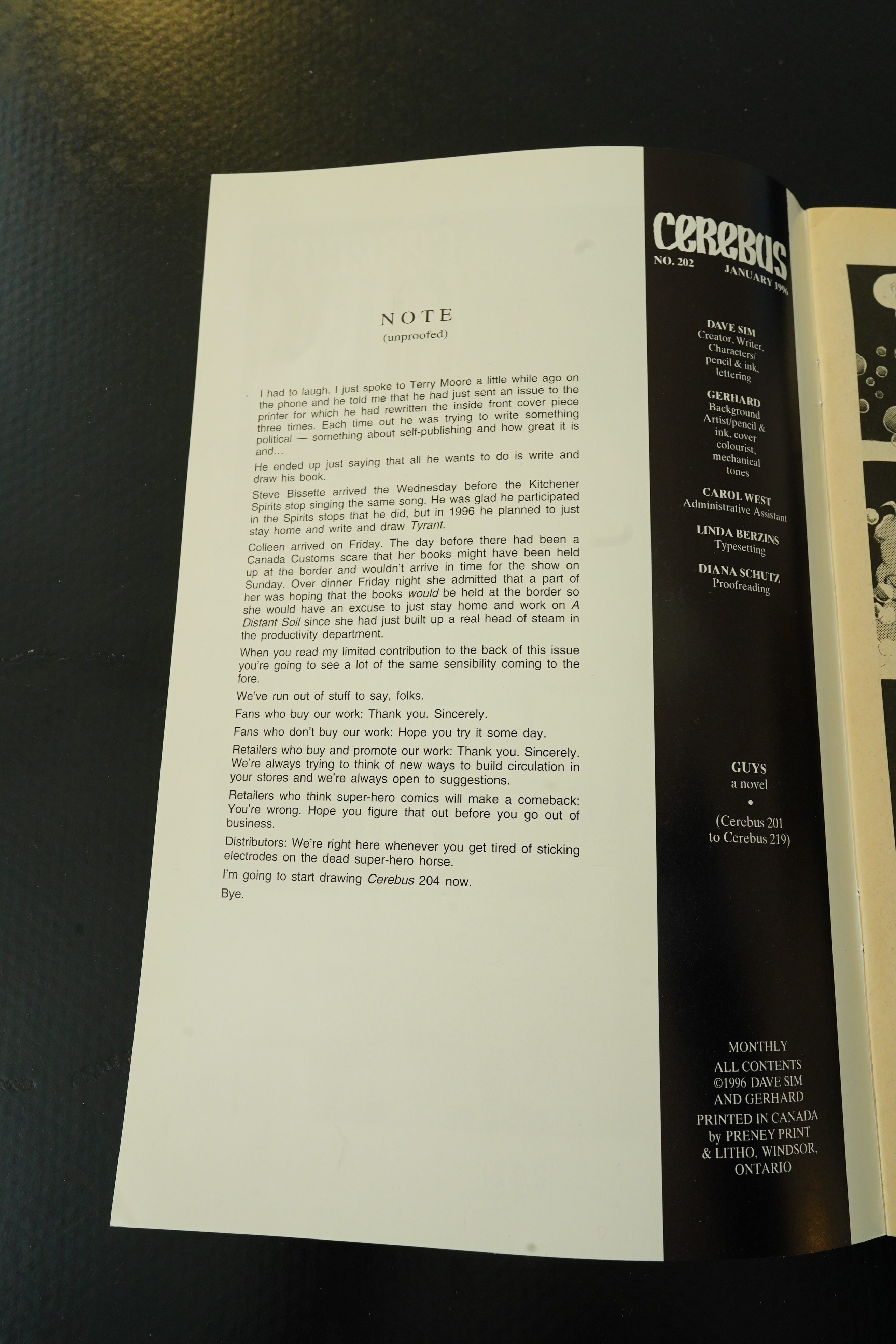
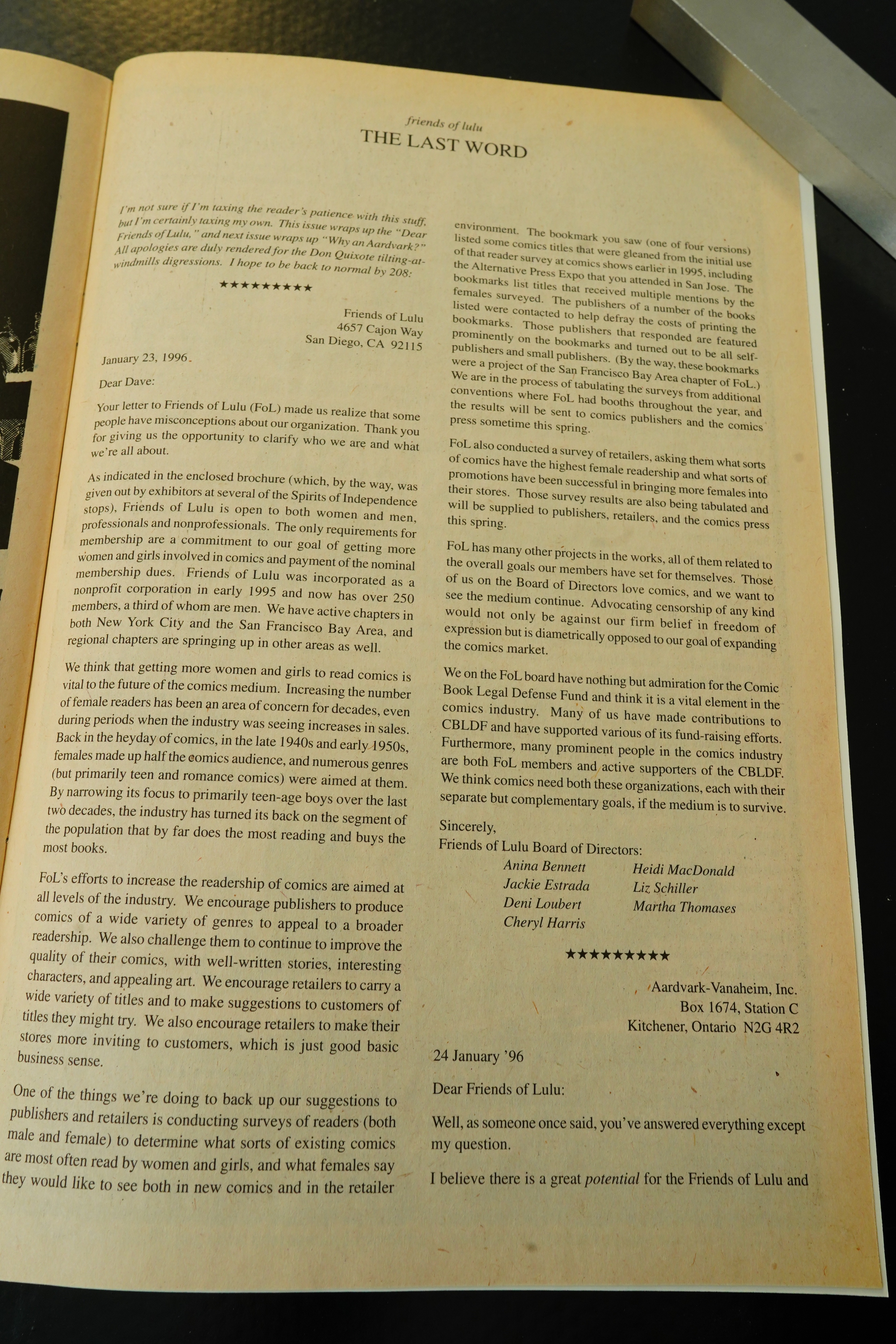
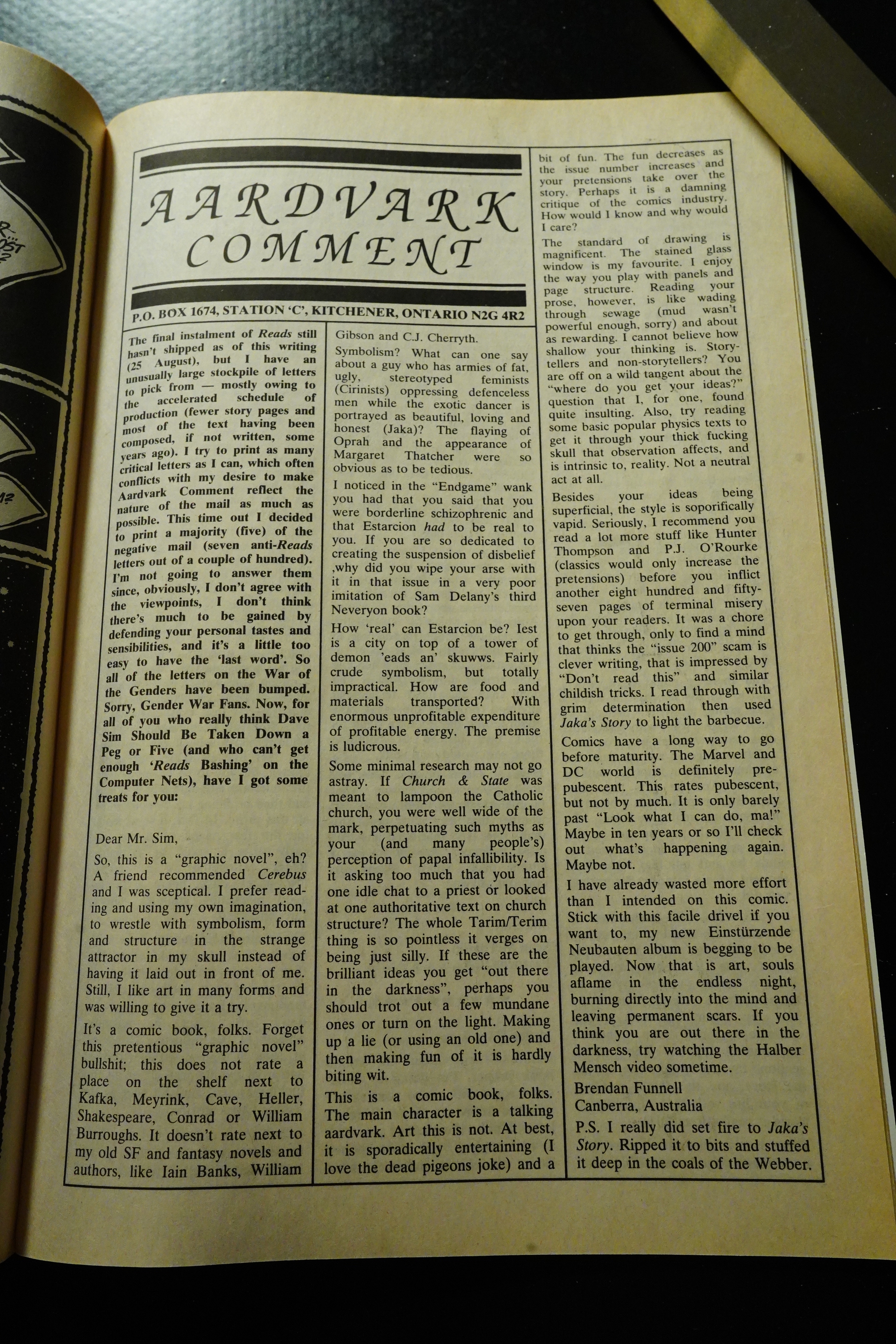
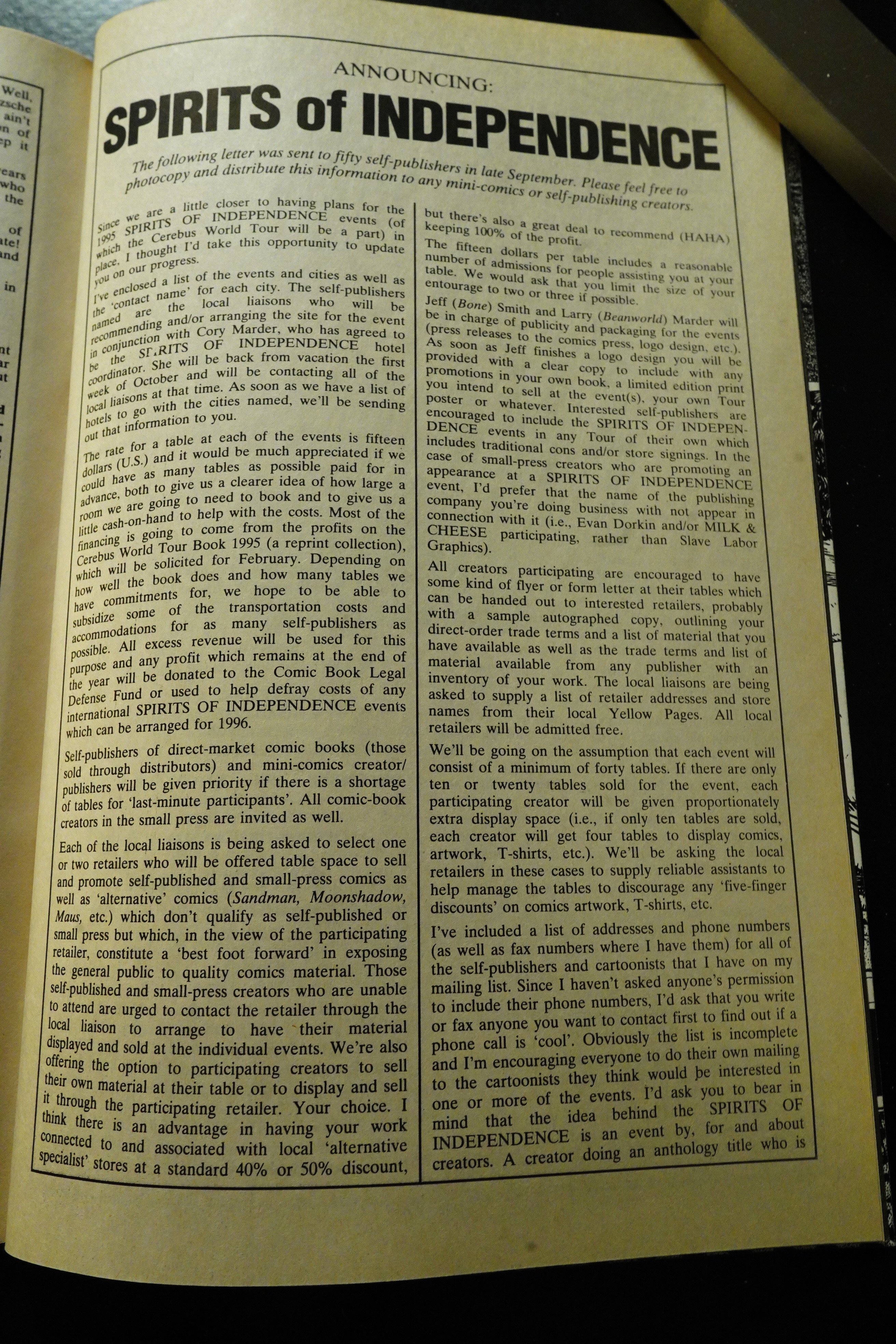
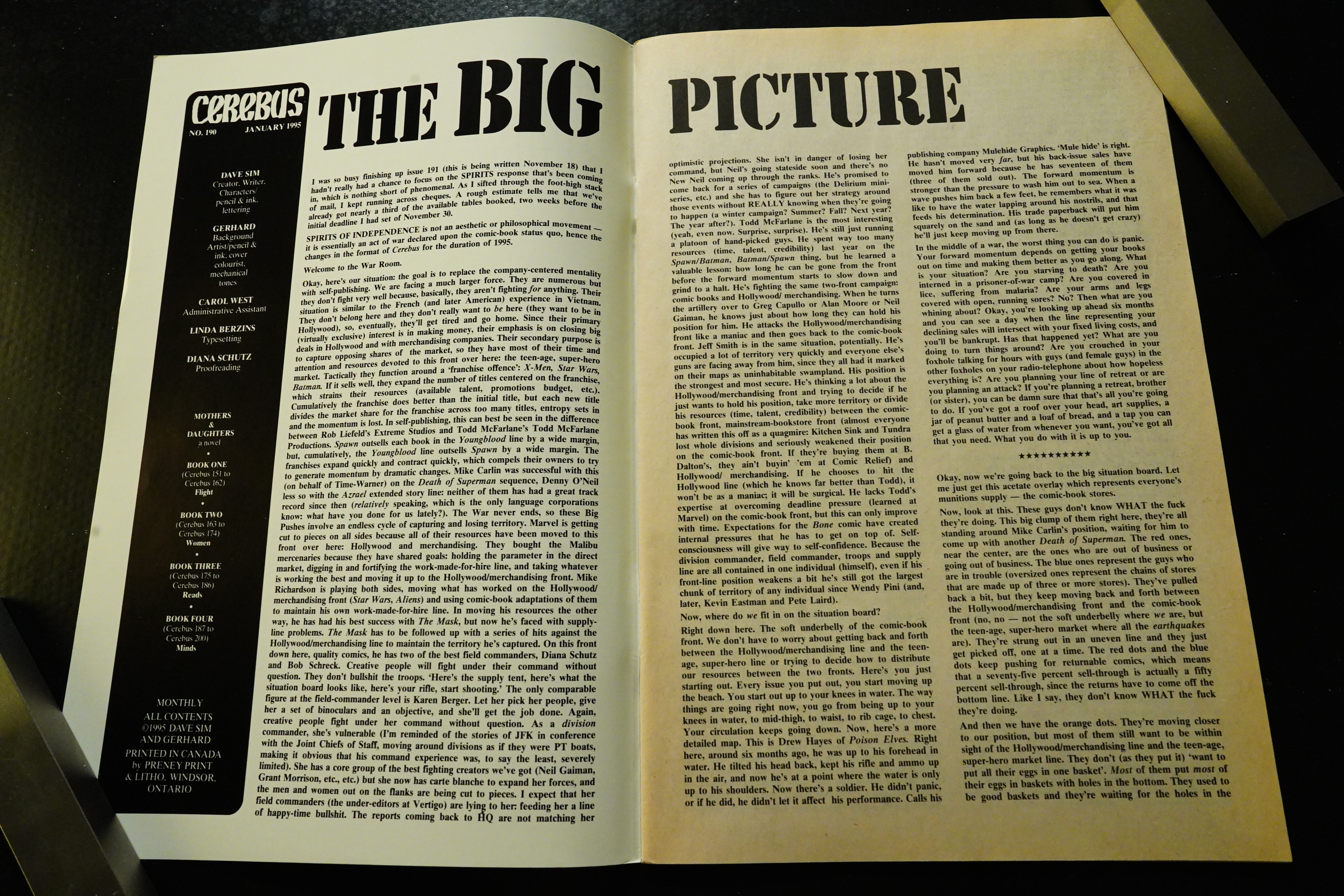
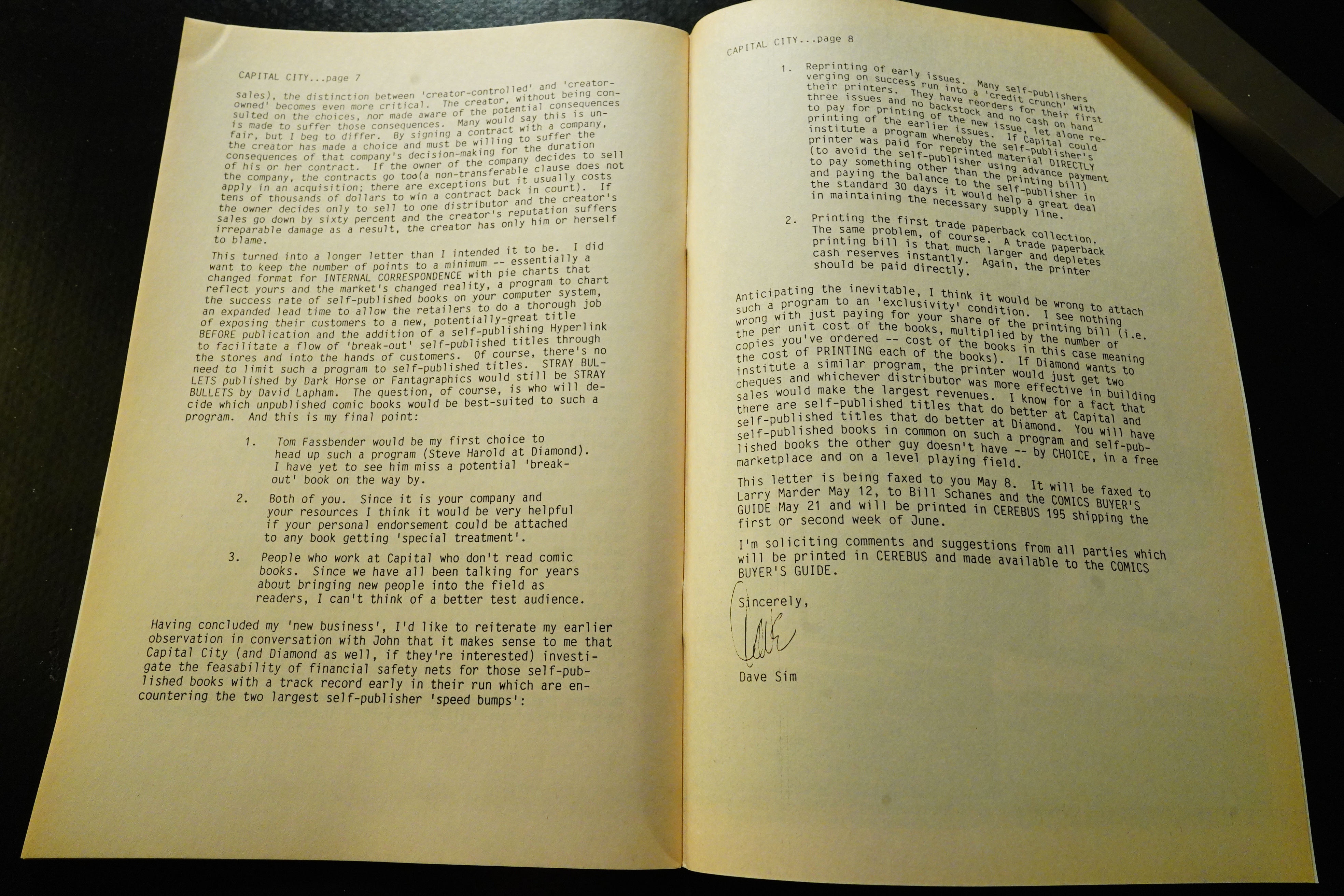
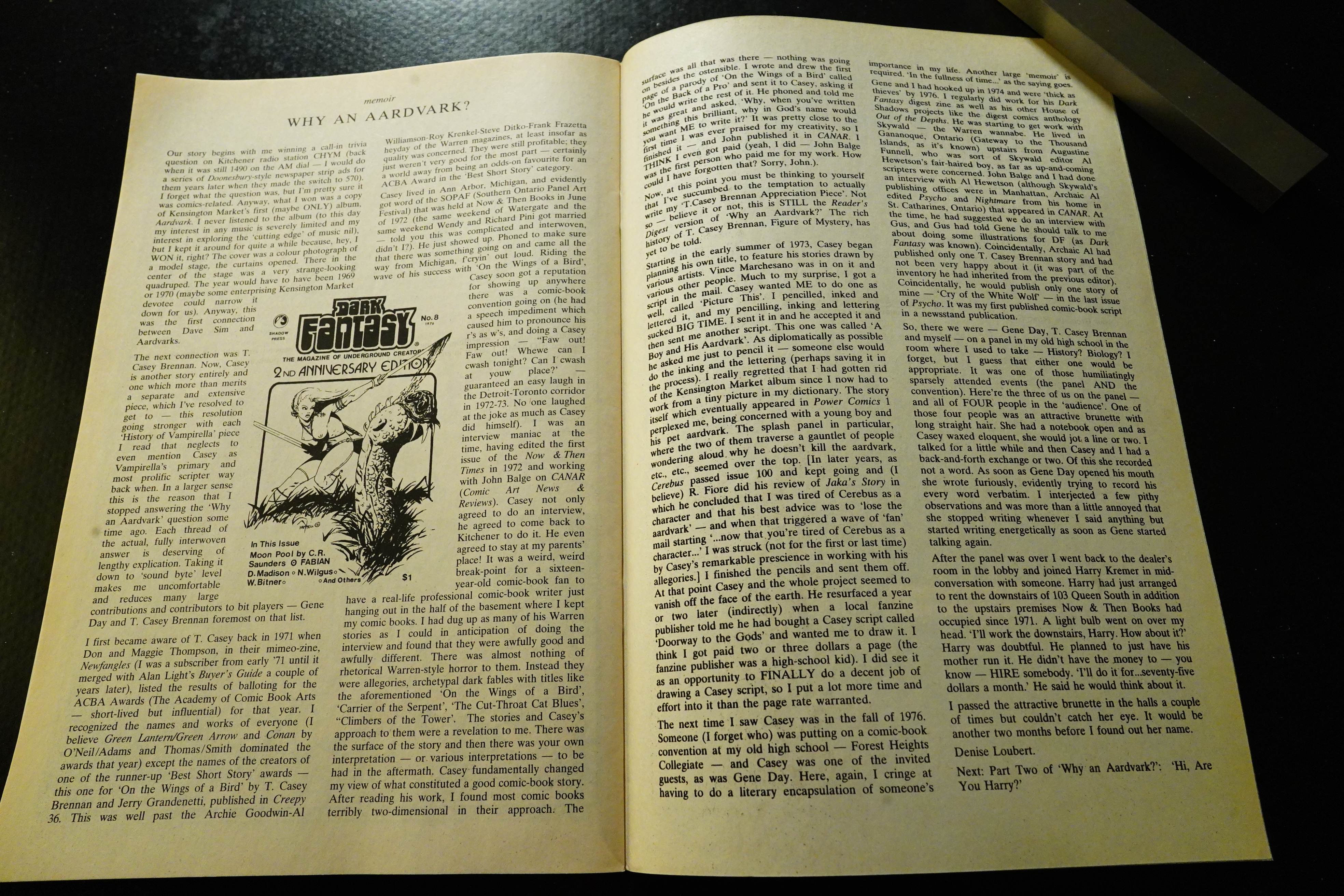
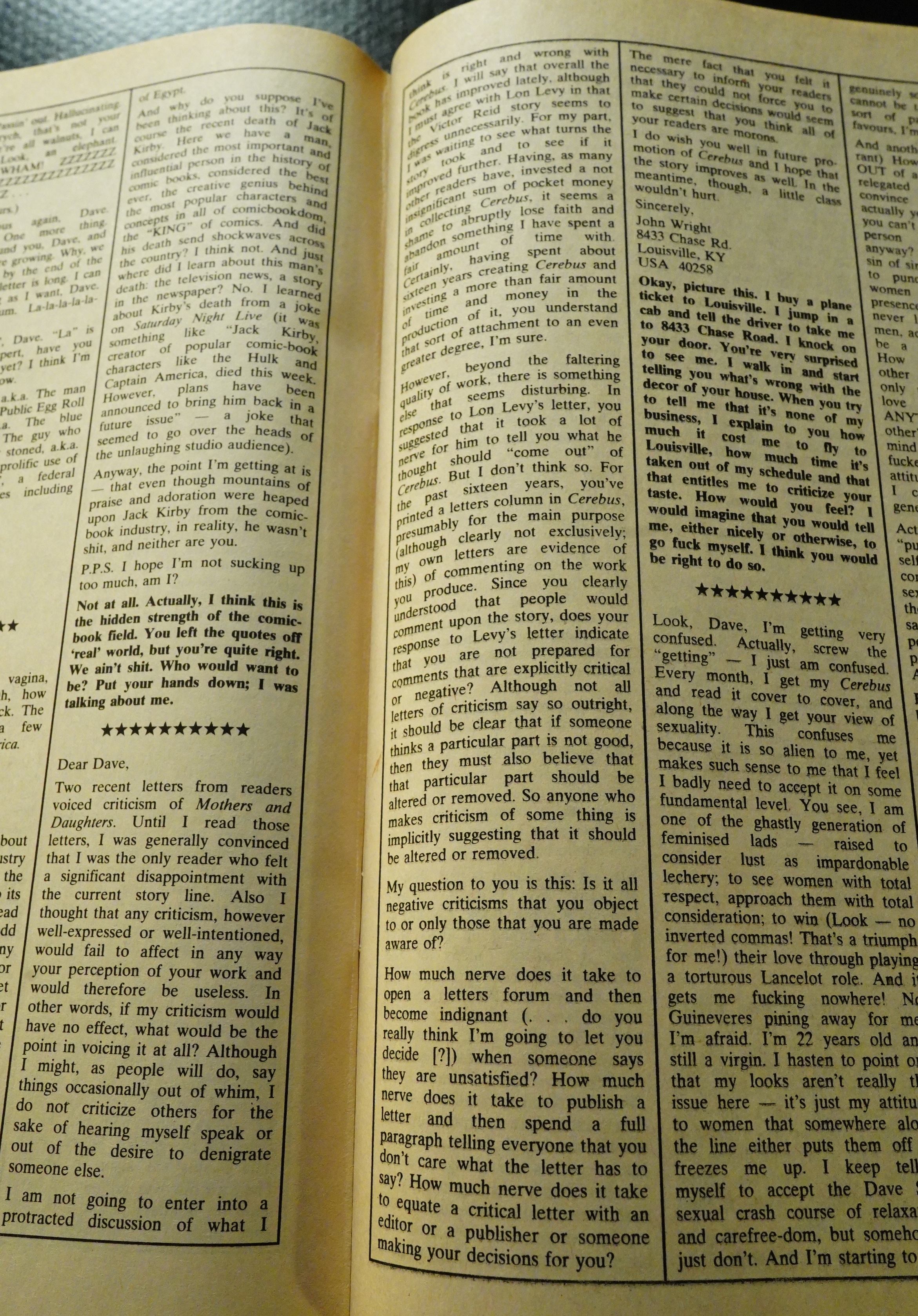
Jeff – That essay was definitely written a) to try and find a positive spin on my mother and b) before my mother retired and both she and my Dad went seriously, alcoholically, “wonky” which made what few positive things I had said about my mother in the essay REALLY REALLY pointless.
The account says “Unknown”… This is in response to the final part of “Mama’s Boys”, which was a pretty weird one: It was all about how perfect his mother was. It didn’t seem to have anything much to do with the previous parts, and it turns out that they had a pretty strained relationship — and both parents were alcoholics? (This is if “Unknown” is Sim, which seems to be the case from the responses, but I dunno.)
This is the volume that changed Dave’s life fairly drastically. As I recall, he had mostly put his partying days behind him, but was still what he would call an athiest and fornicator. Rick’s Story was originally meant to be a parody of the bible, and indeed, it still is, especially in the context of the ridiculous origins of religion (I wonder if Jesus was also 3 feet tall and gray). In doing research for the text sections of the book, Dave was reading the bible itself to understand its tone, and in doing so, came away with the belief that the bible really is the word of god. His personal religion has since come to combine Judaism and Islam, but at the time he was apparently rocked pretty hard by Christianity, and that set him on the path that he’s on now—a pretty religiously dedicated fellow who prays multiple times a day and fasts on (I think) Sundays.
And I note that this is the final blog post from this guy’s Cerebus Re-Read — about a decade ago, there was a spate of blogs about people re-reading Cerebus, and most of them stopped way before reaching the end. That almost happened with this blog series, too, I guess. :-/
OK, only four more blog posts to go for me, and I’m home free.
This blog post is part of the Renegades and Aardvarks series.