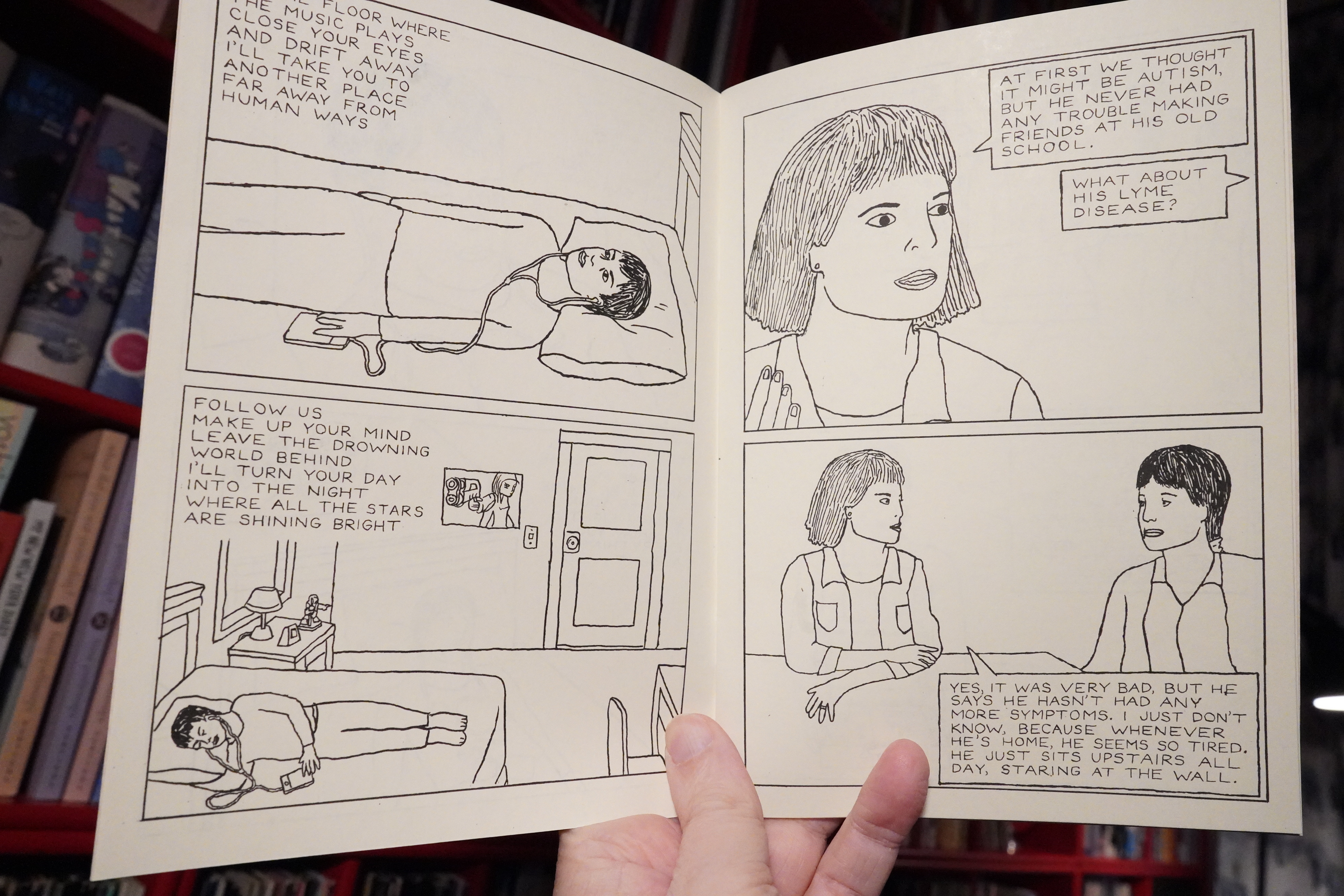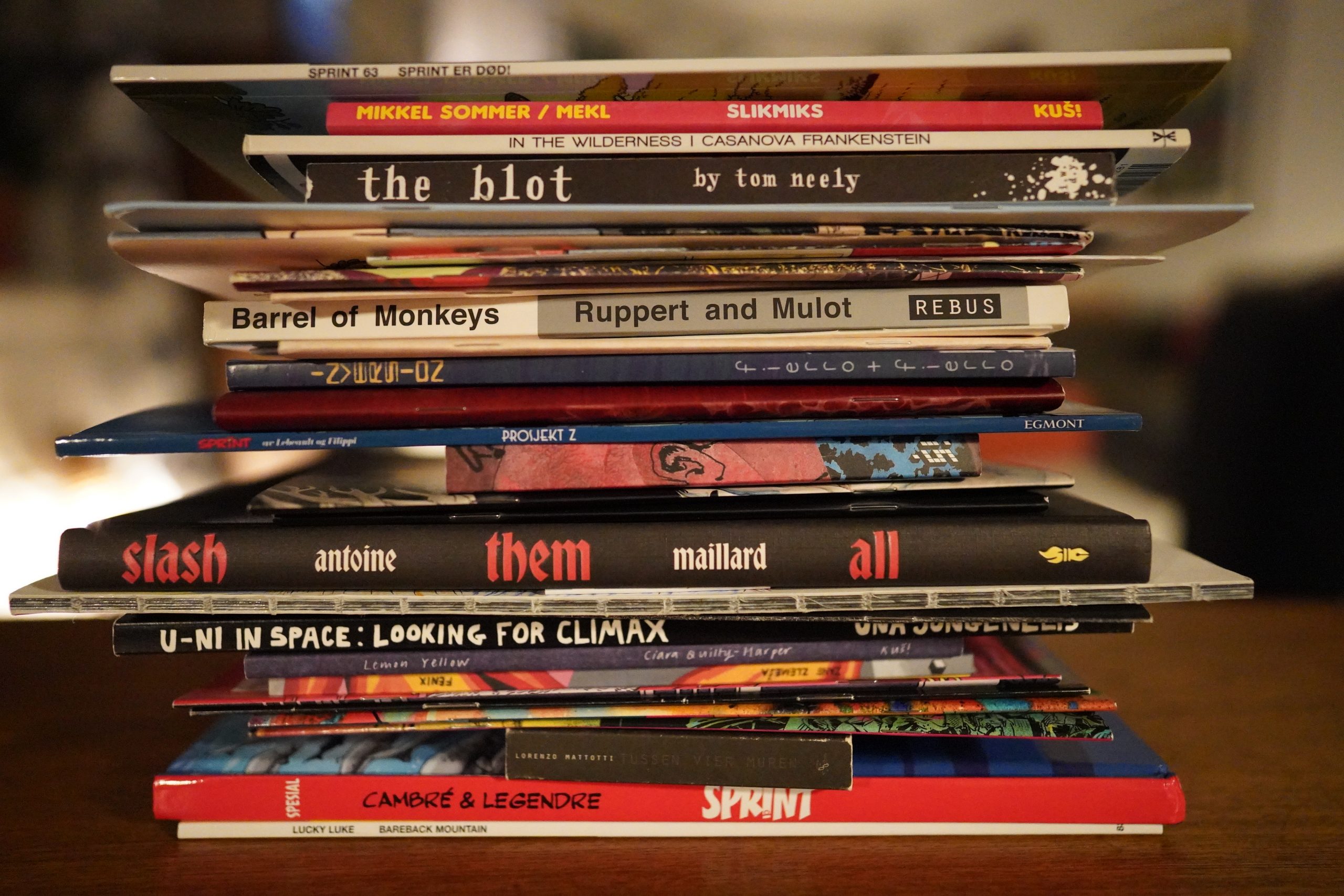

I’ve had a cold (well, still kinda coughy, really (no, not the rona)), and I’ve managed to screw up my sleeping patterns totally. So I got up at 16, which is… er… less than optimal.
On the other hand, this means that I can spend all of the evening and the night and the morning reading comics, so win win! *cough* And since I’m poorly, I’m gonna be listening only to music from the mid 80s.
| Frankie Goes To Hollywood: Liverpool |  |
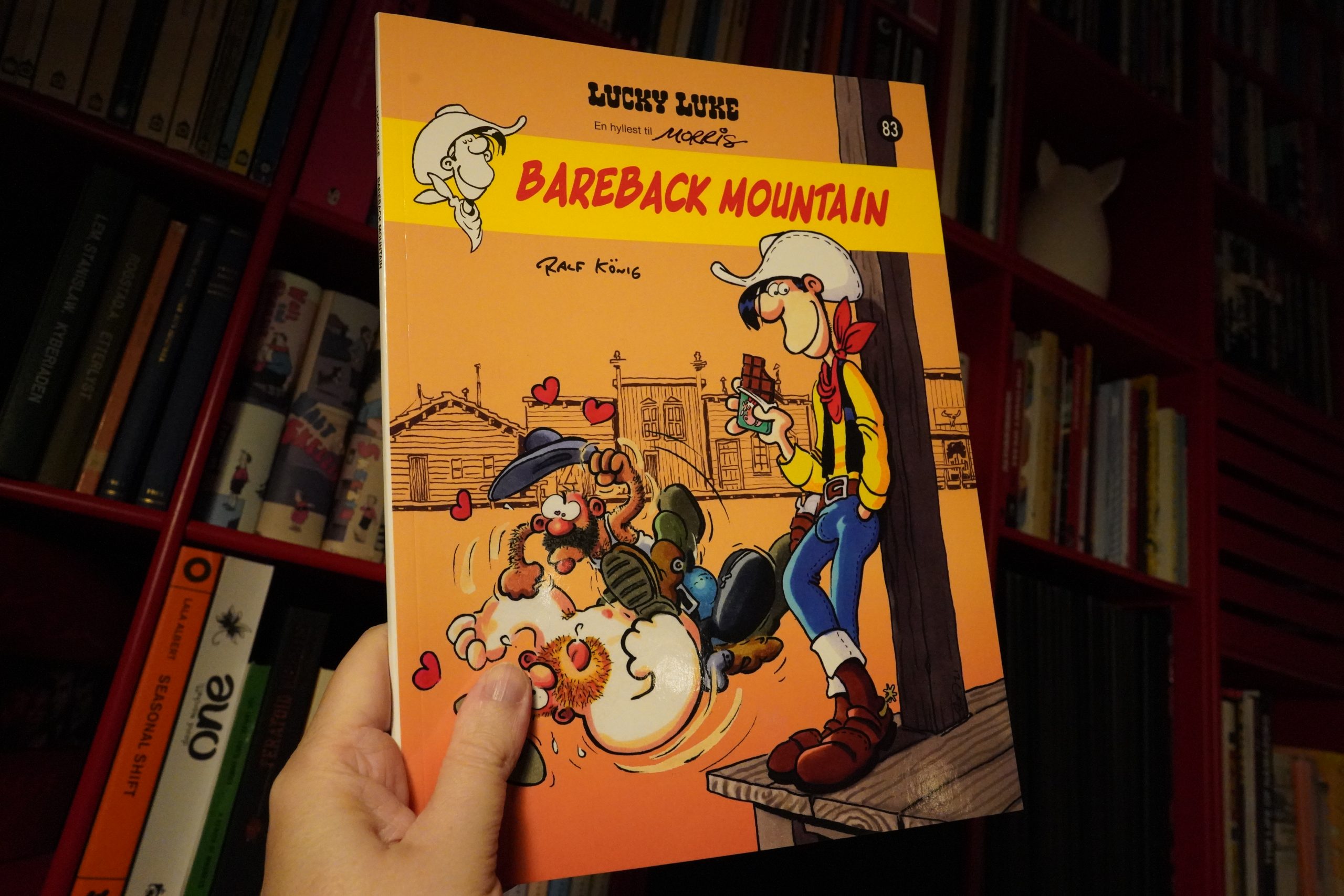
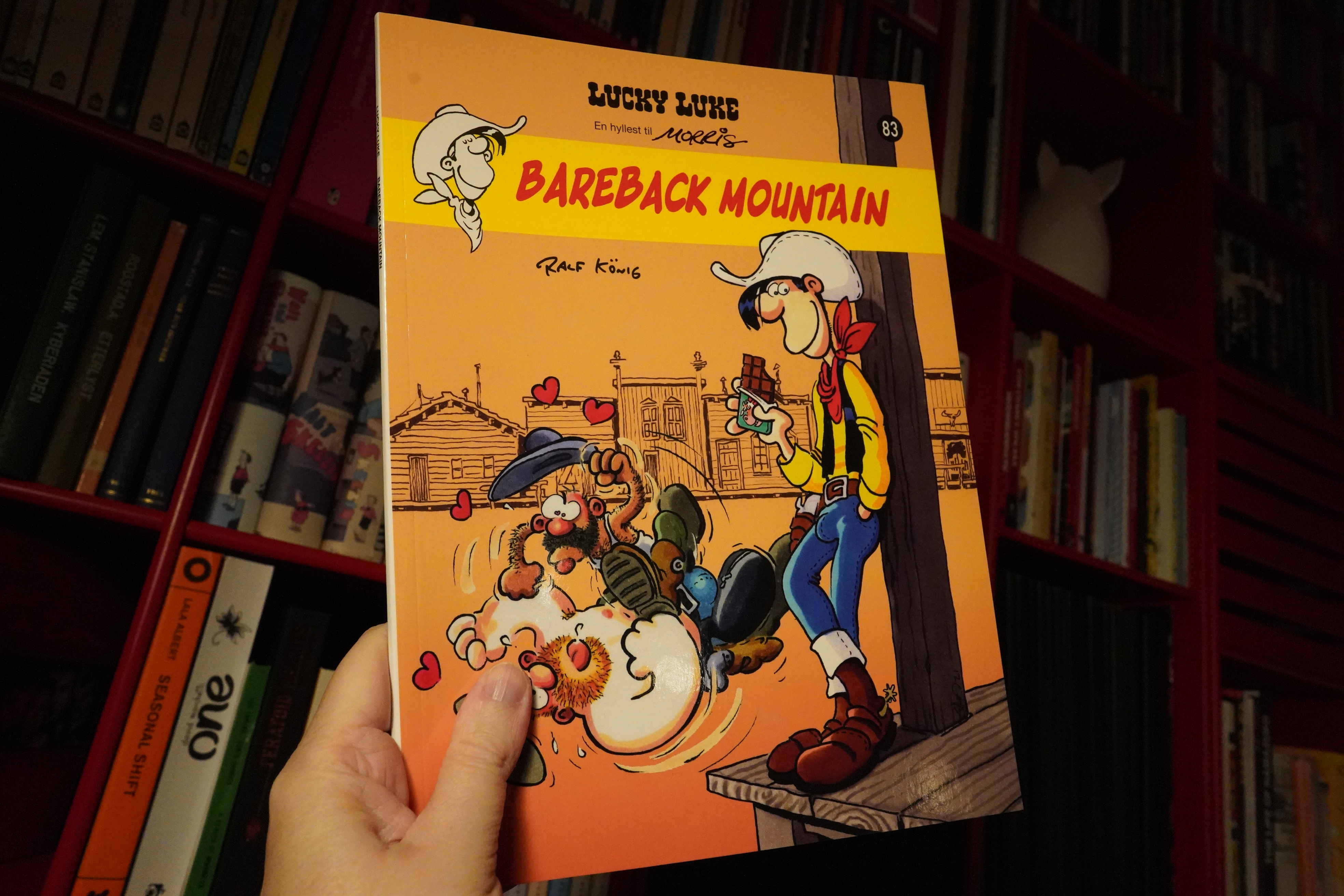
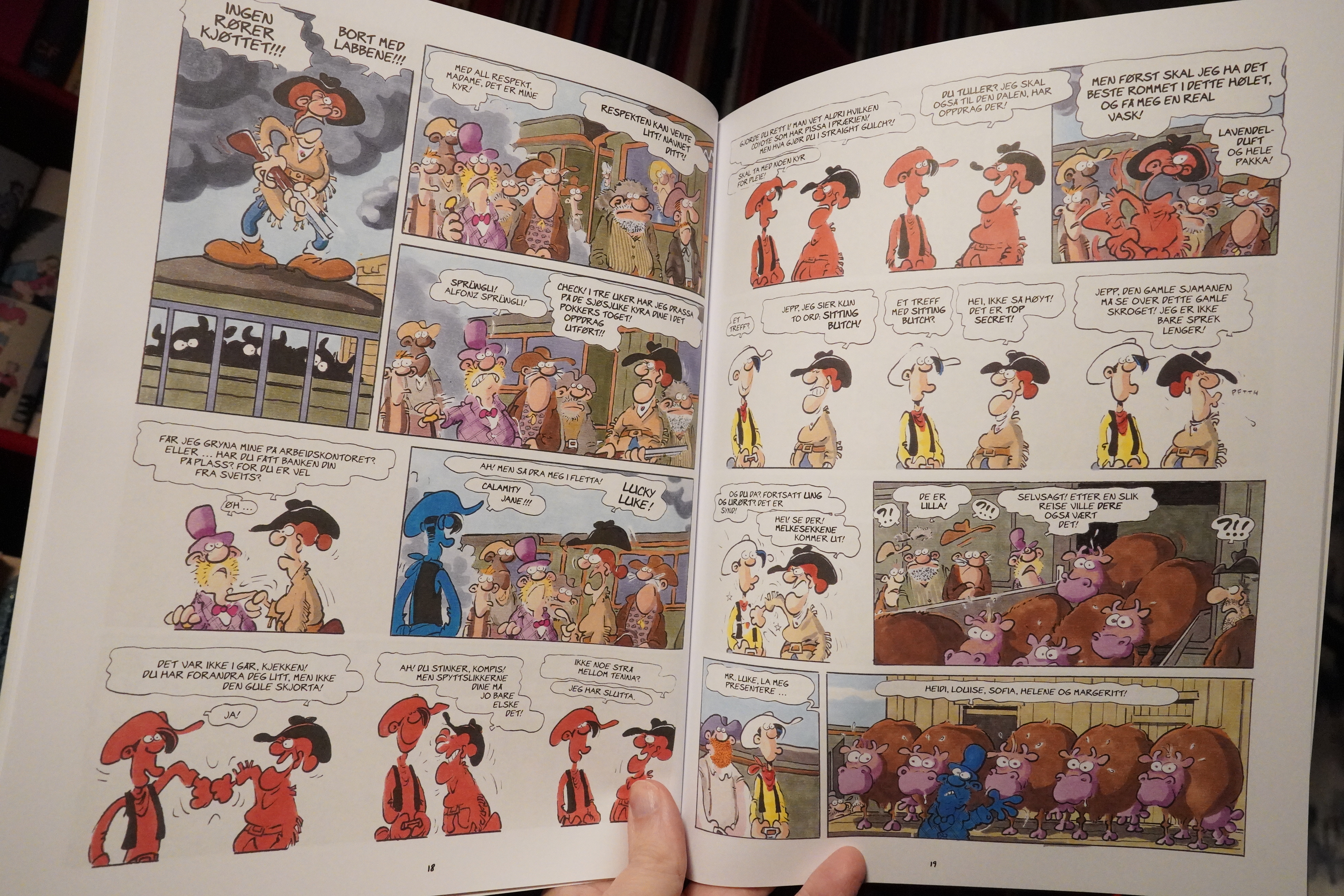
17:27: Lucky Luke 83: Bareback Mountain by Ralf König (Egmont)
Whaaa… wha… OK, they’ve been doing “special edition” albums for most of the French(ey) classic children’s comics for years (a ton for Spirou, for instance, and a few post-Morris Lucky Lukes, too), but the Norwegian edition of this is part of the main series — number 83 and all.

The original German edition of this was called Zarter Schmelz (Tender Melt), and the French one was called Choco-boys because it’s apparently about some cowboys that take care of Swiss cows to make chocolate. (The English-language edition was called Swiss Bliss.) The guys are gay (since this is a König book), so the Norwegian editors went with… Bareback Mountain?
It’s a thing, is all I’m saying.
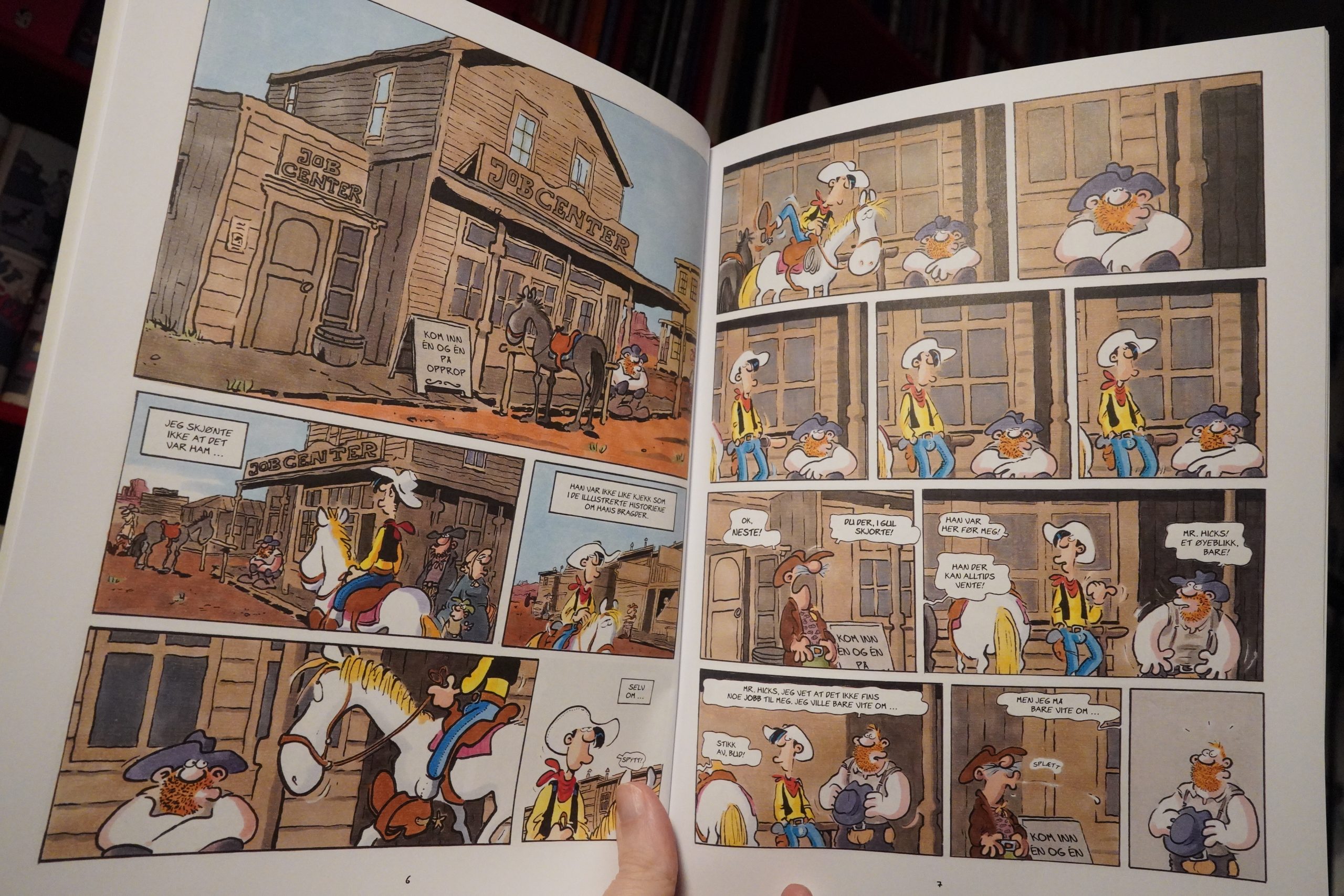
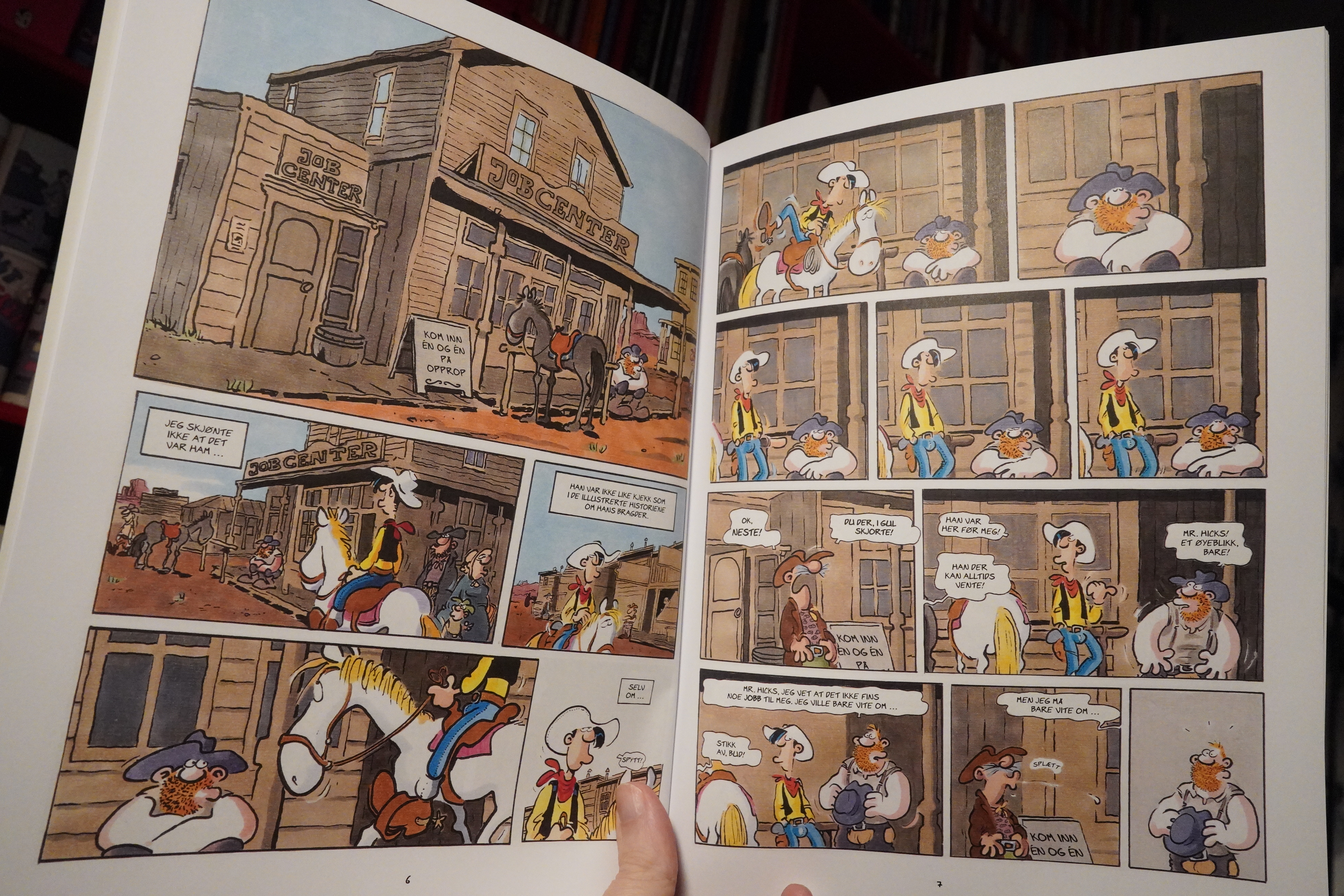
This is most amusing. It’s got a good flow — it feels improvised, but it also has a satisfying storyline that resolves itself (without feeling forced).
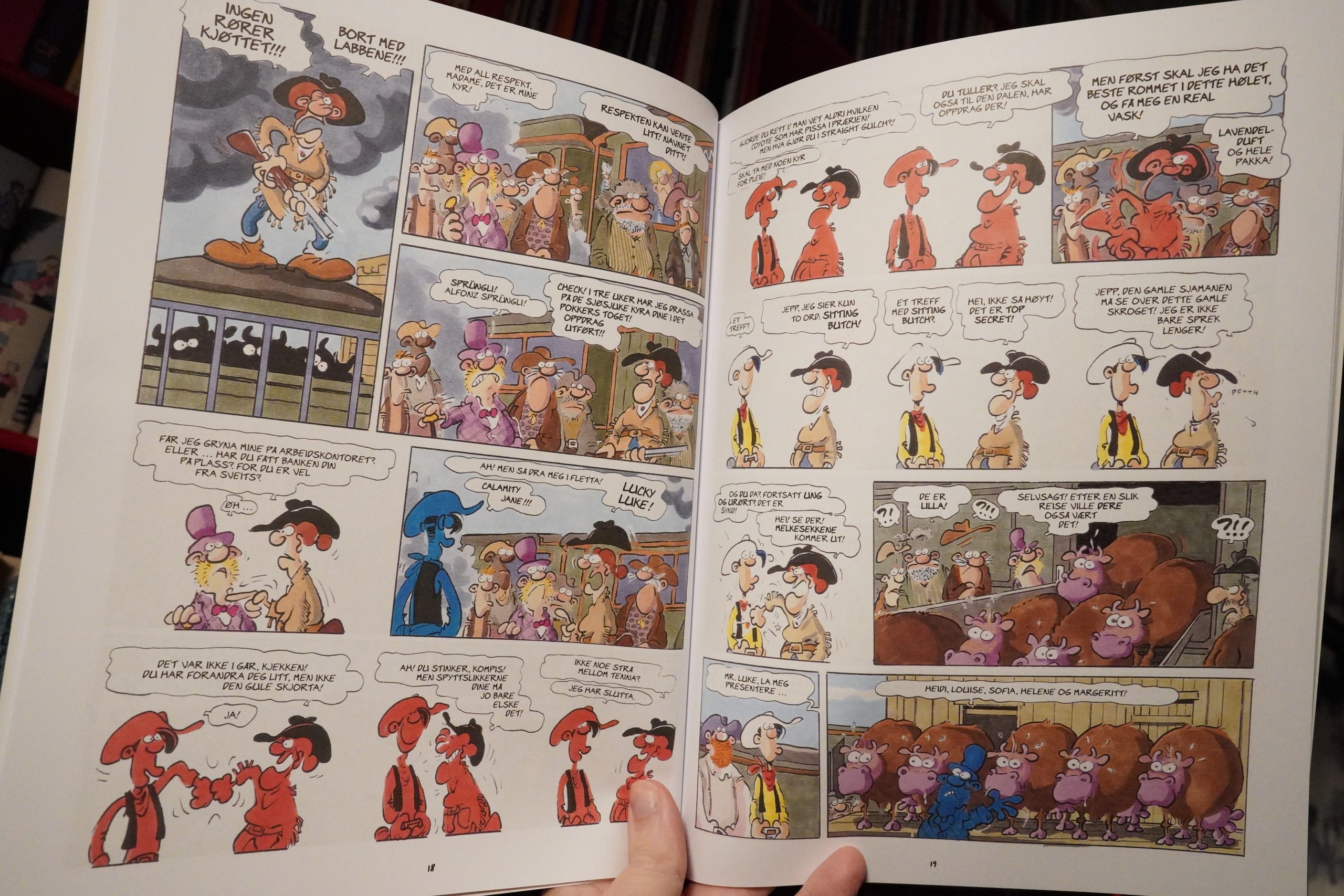
The artwork is more basic than König usually is. He normally works in black and white, and perhaps he felt free to be even more sketch-like since he could then use the colouring to clarify the figures?
The Norwegian translation (from French? I thought it was originally in German?) is just horrible — it’s frequently difficult to understand what the repartee is even about. I feel tempted to buy a different-language edition to reread to see whether the jokes are less non sequiturs in reality.
| Flux: Uncarved Block |  |
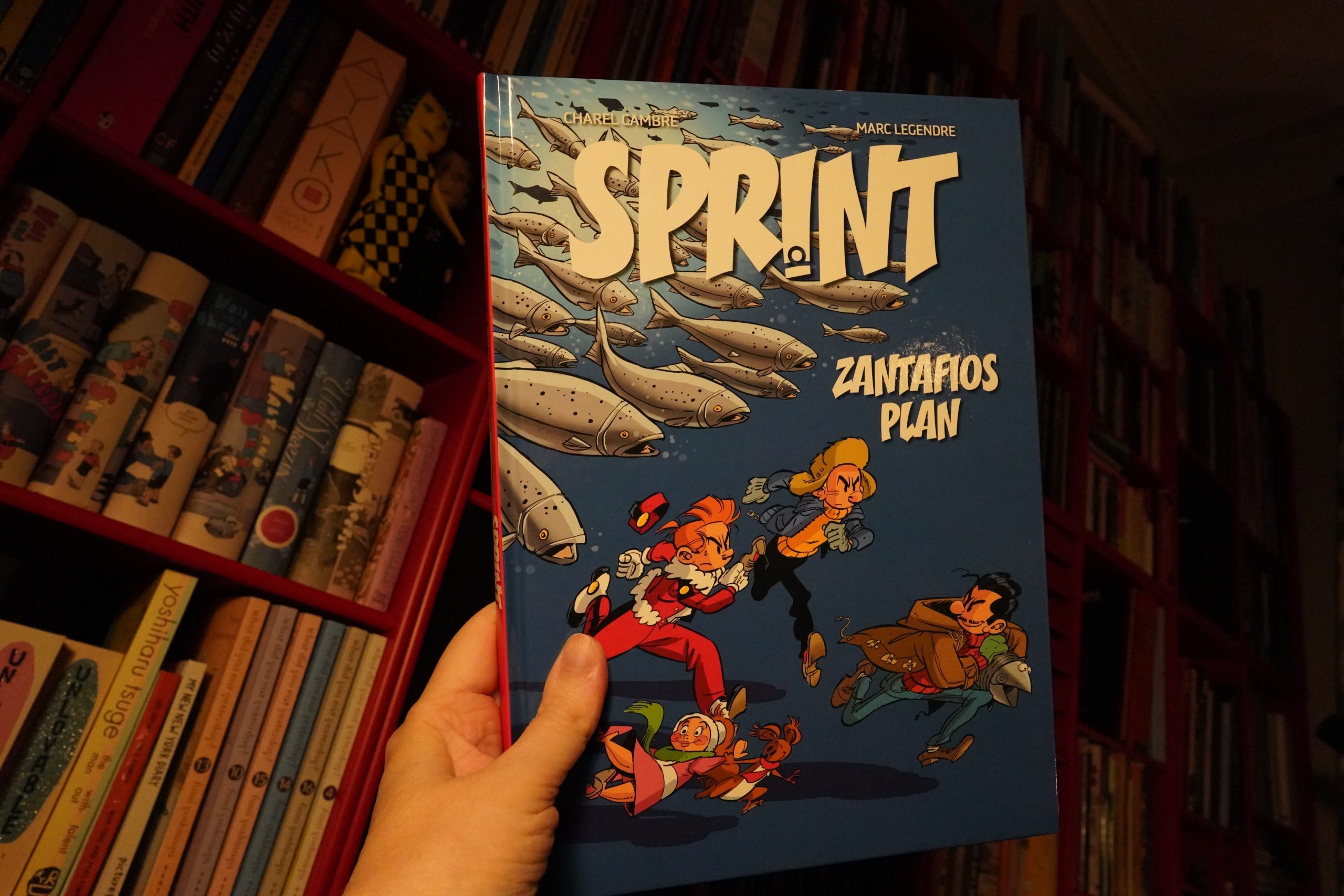
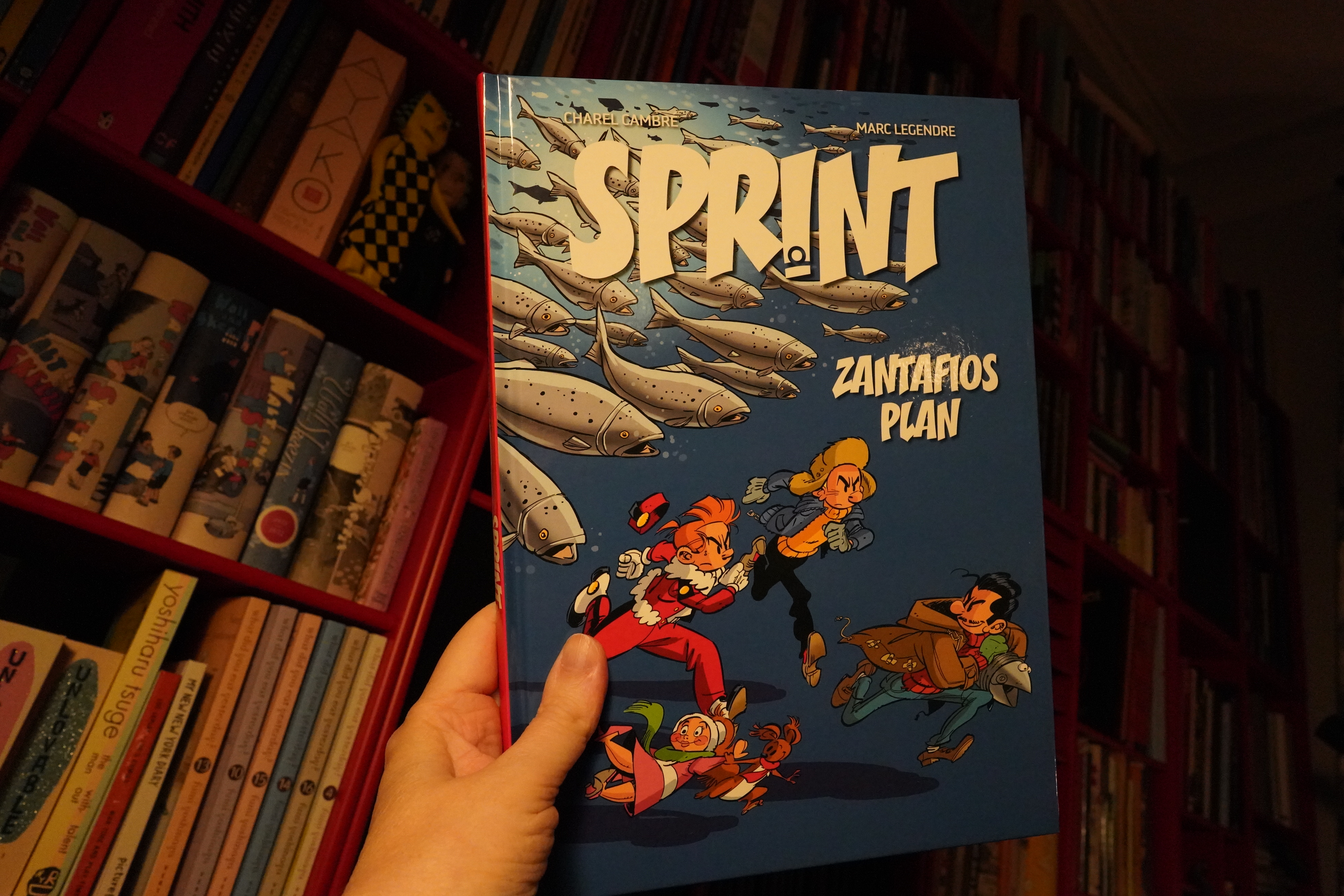
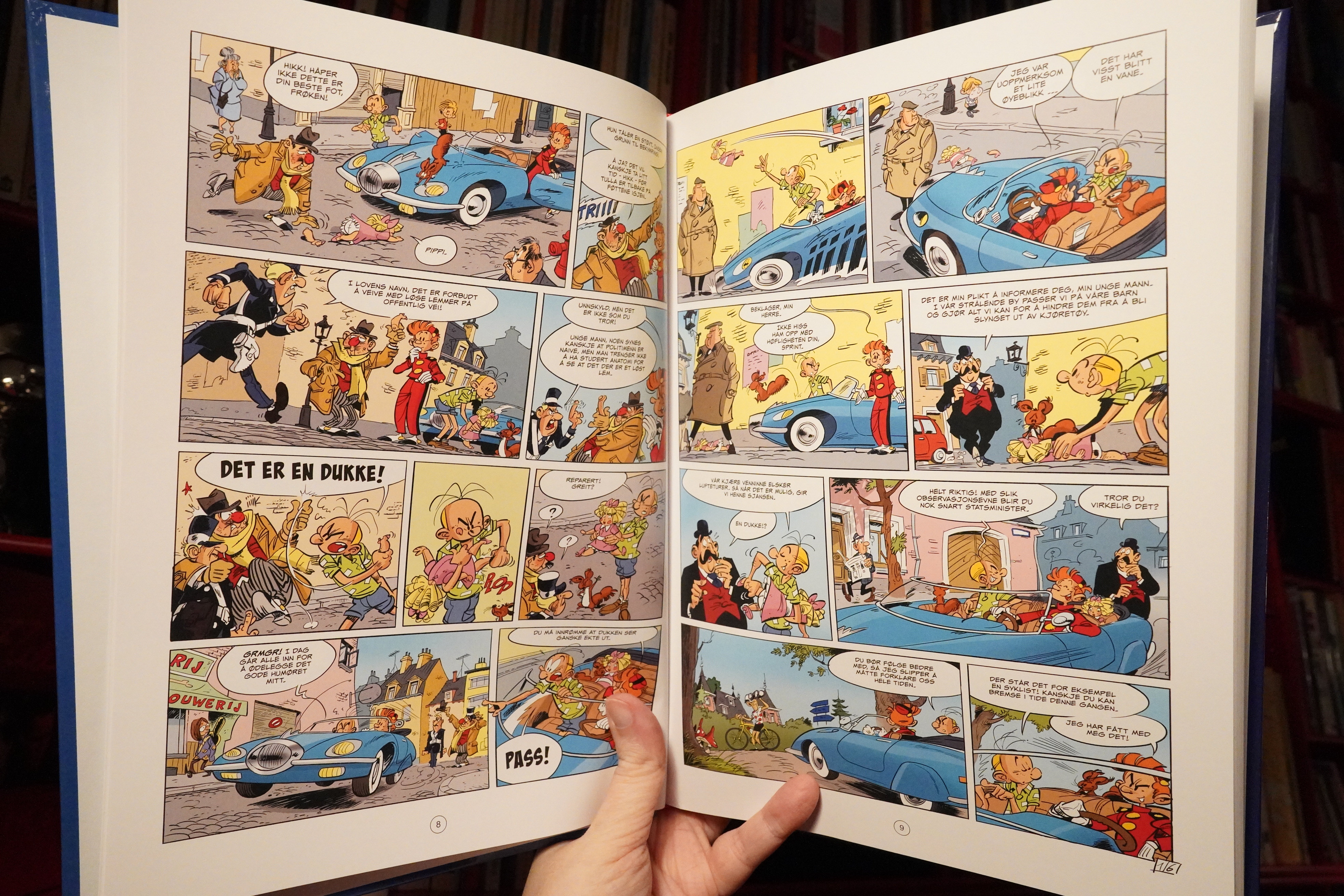
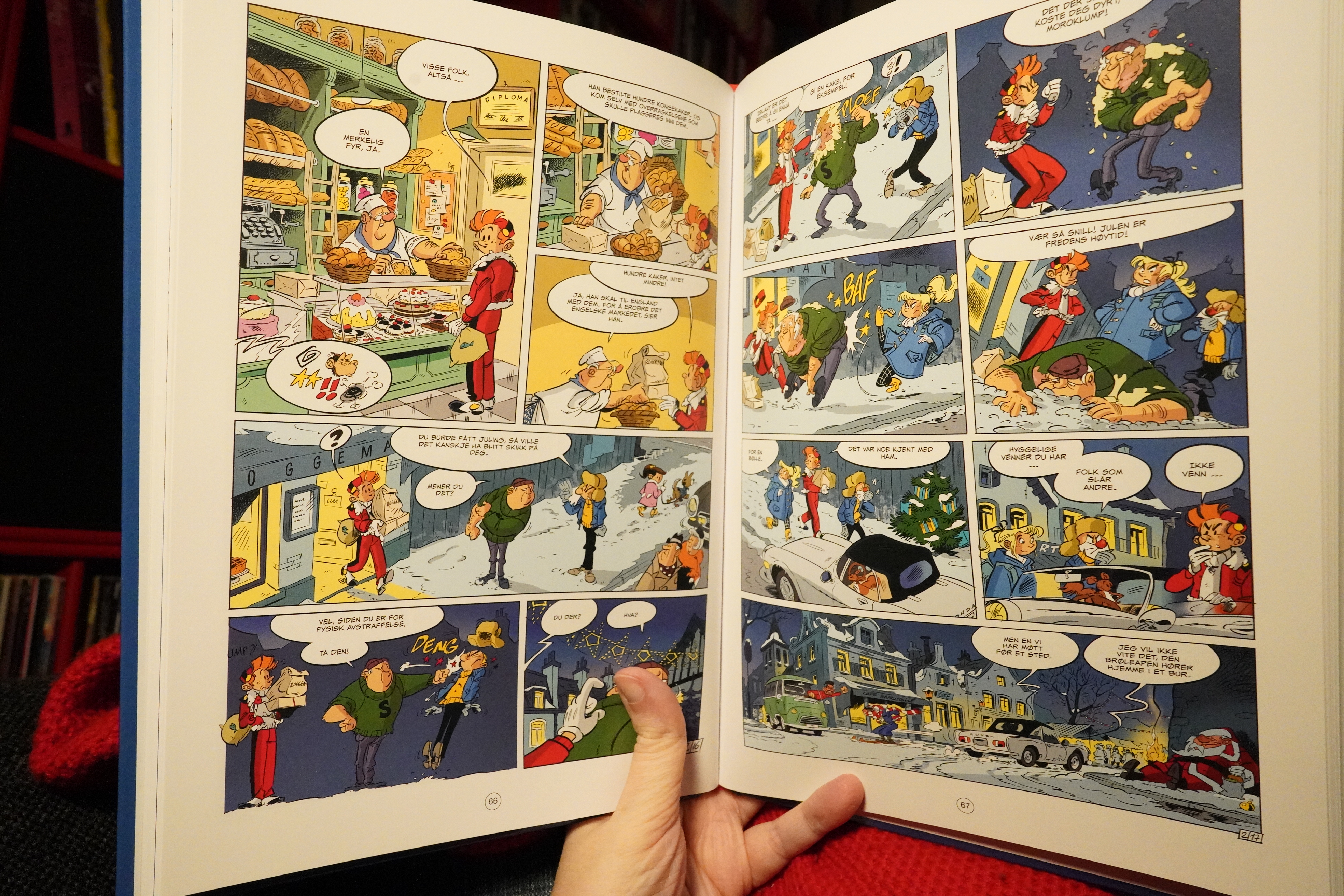
18:12: Robbedoes: Happy Family intégrale by Charel Cambre / Marc Legendre (Egmont)
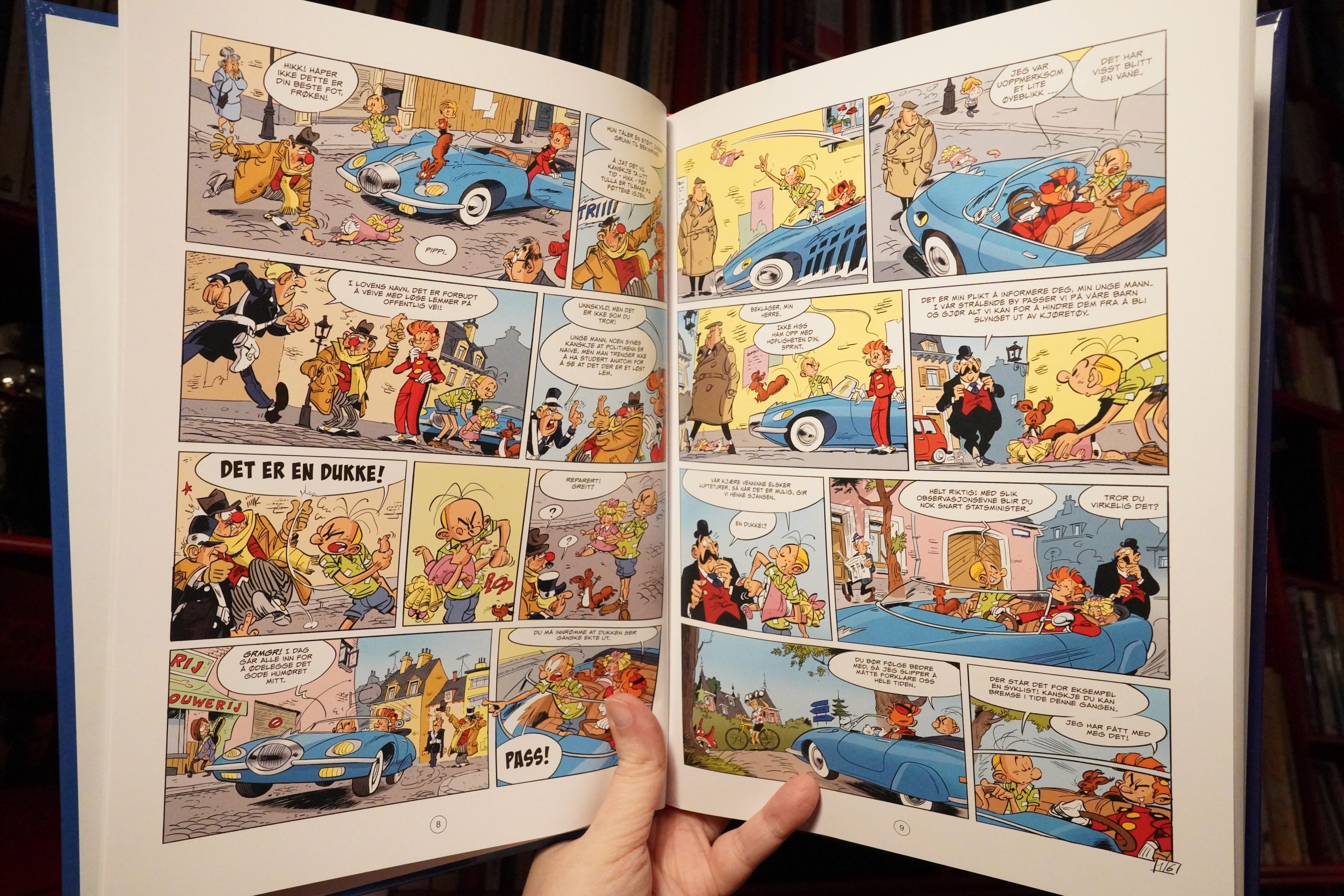
This is a collection of three “special edition” Spirou stories — but they’re totally “on model”, except being set around the time of Franquin’s 50s albums. It’s like the authors here were going “Gee… Le voyageur du Mésozoïque sure is great… wouldn’t it be nice if there were more albums like that?” And that would indeed be very nice.
| The Durutti Column: Circuses and Bread |  |
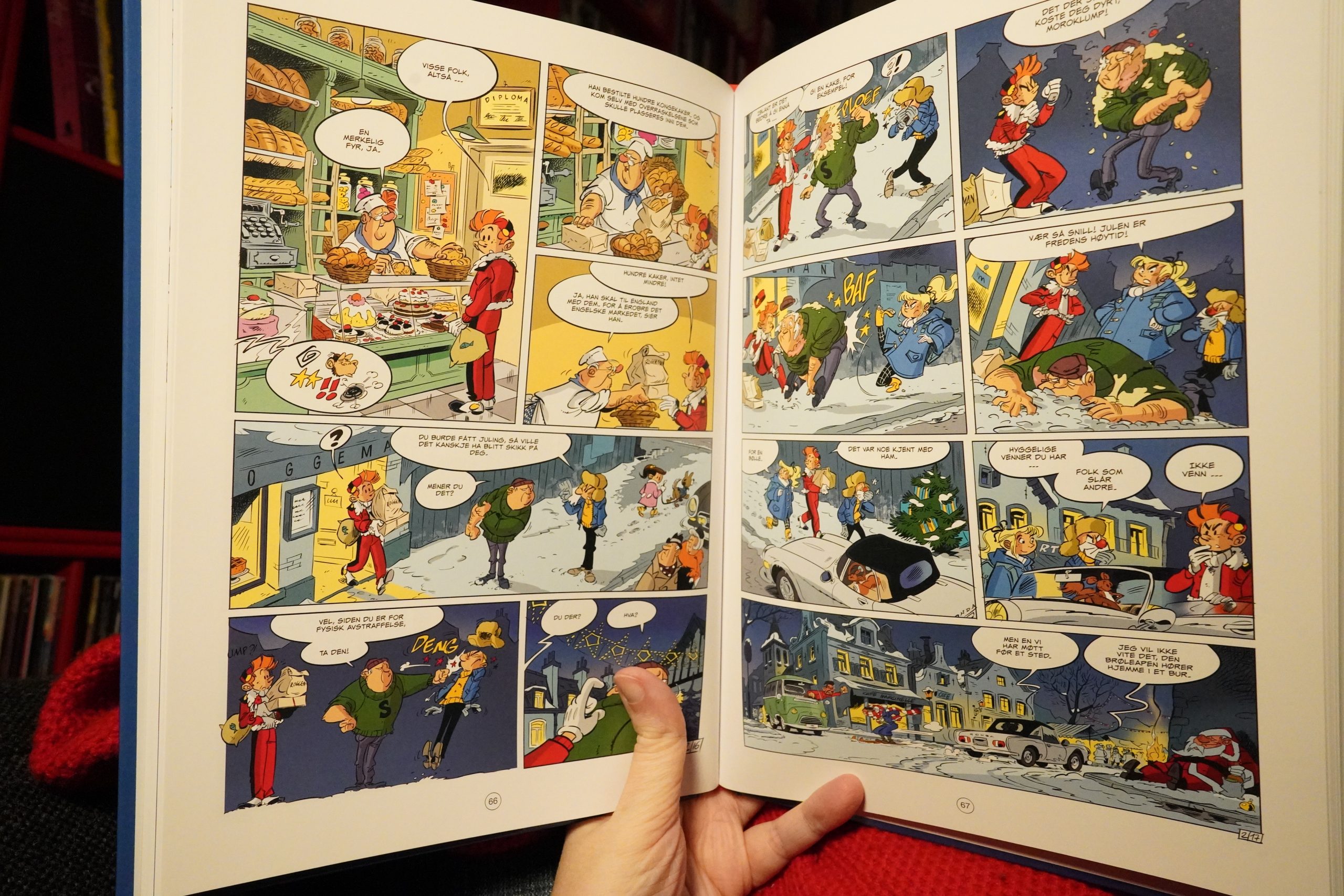
This isn’t as good as 50s Franquin, though, but few things are, so that’s fine. These three loosely interconnected albums are zippy and fun and don’t really try to be anything else. (Some of these “special edition” albums have a tendency to try to be all modern and adult, and that’s sometimes successful, but usually not.)
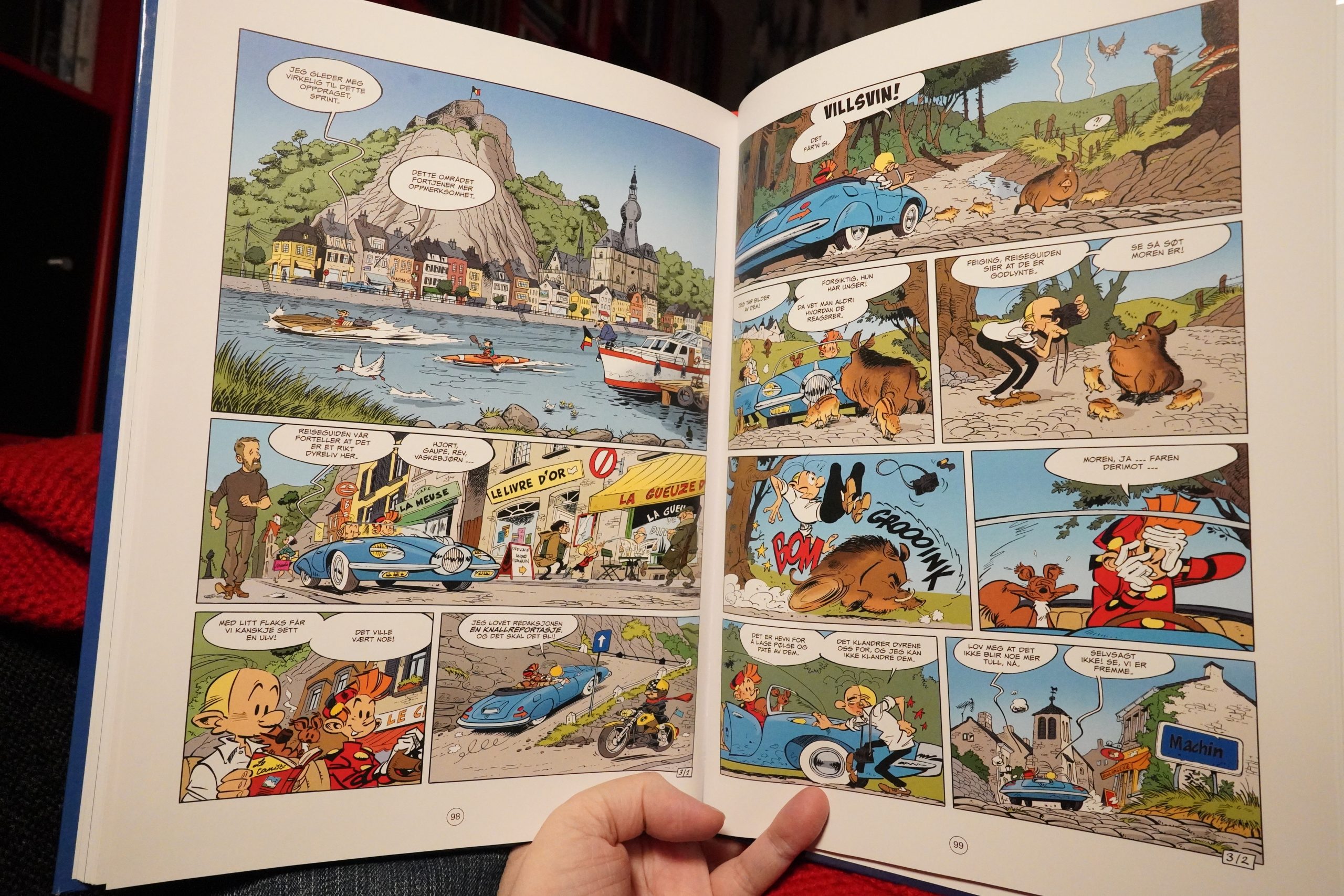
The weakest bit in these albums are the actual plots — Franquin (aided by others, sometimes) had rock solid and original plots, even how many gags he inserted into the stories. This is more like… “uhm… did Zantafio’s plot here make any sense whatsoever?”
But it’s fun anyway, and the artwork is lively.
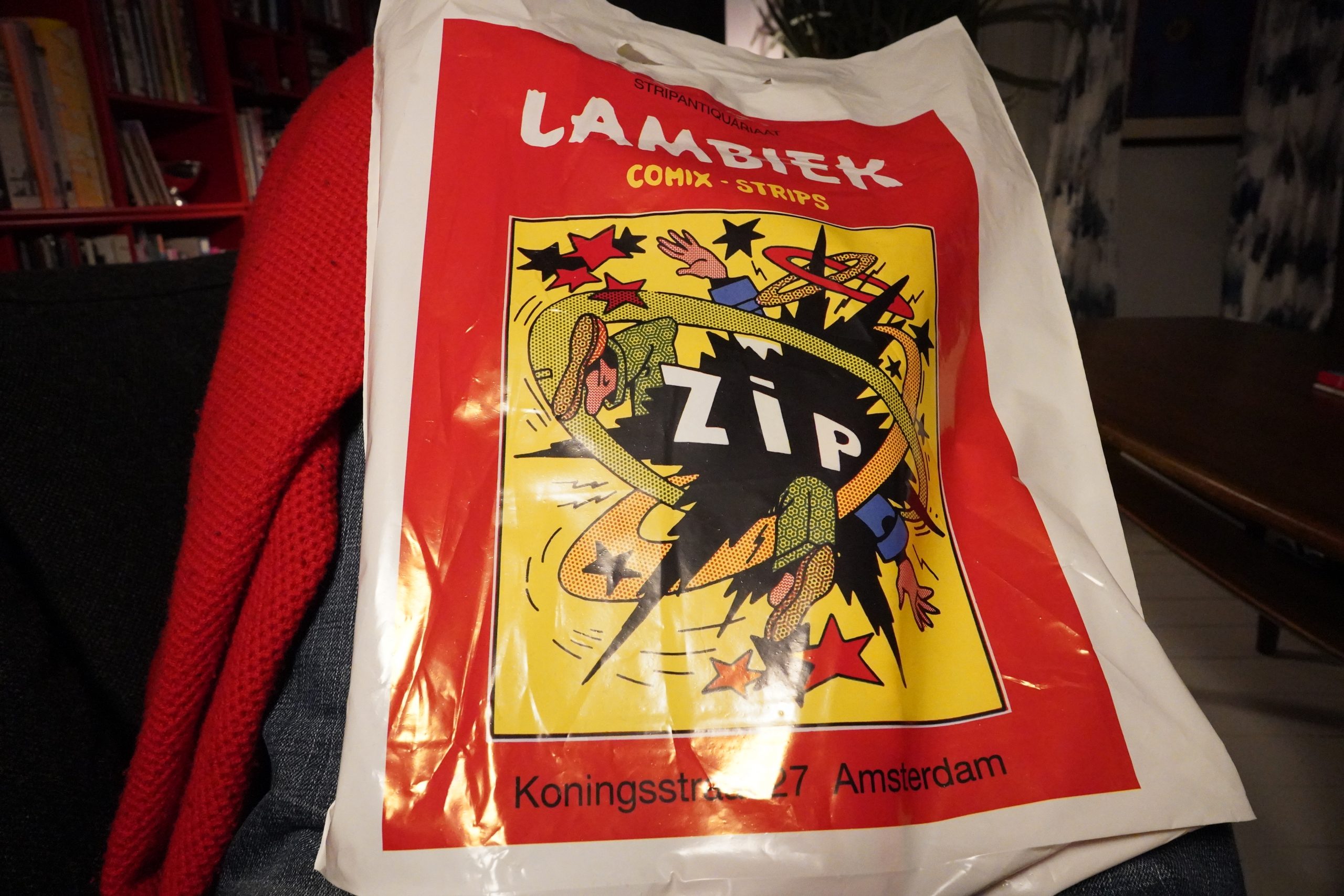
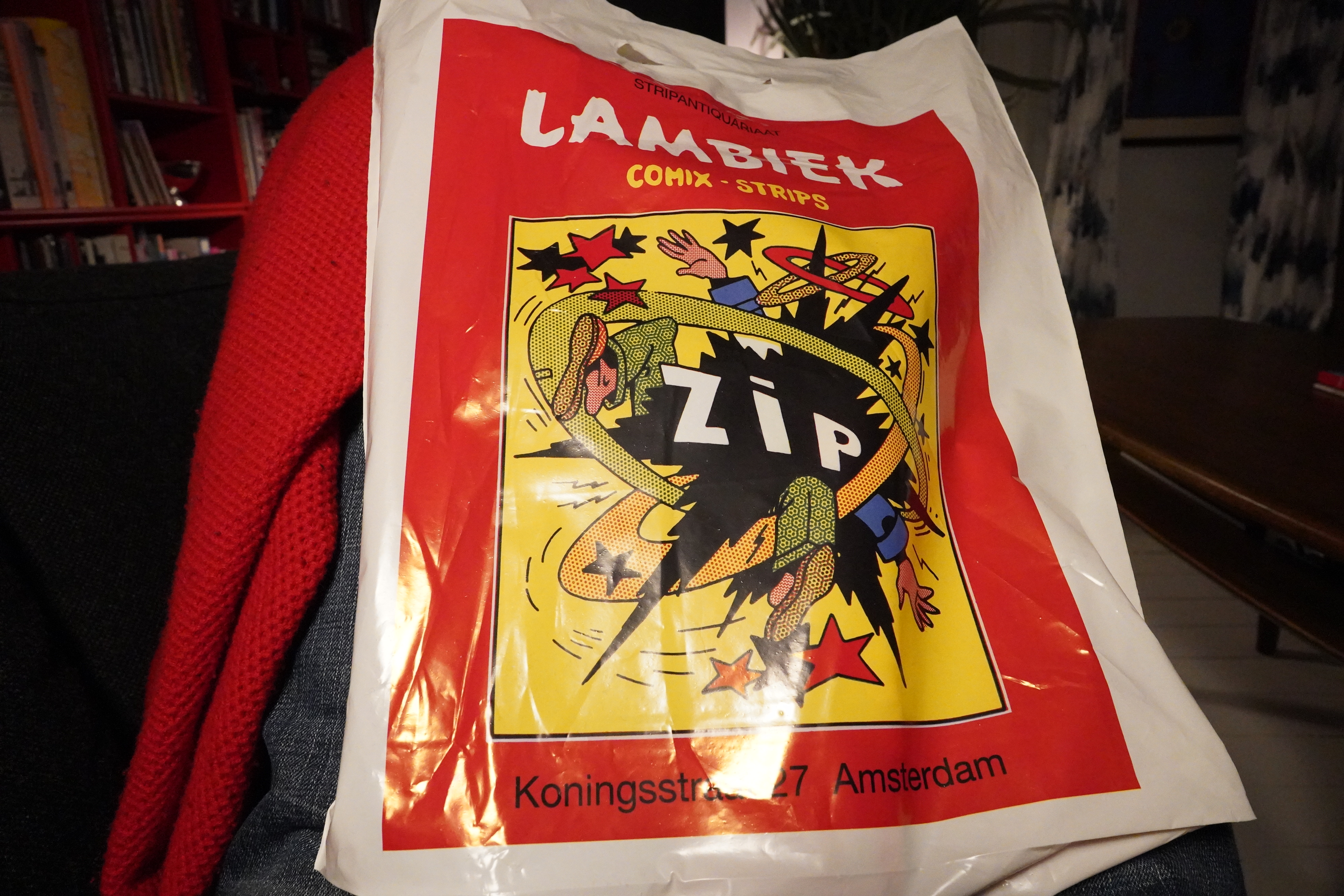
I got back from a holiday in The Netherlands last week, and I visited Lambiek in Amsterdam. That’s a great shop. I don’t speak Dutch, but they had a solid selection of non-Dutch stuff — I mostly shopped from the small-press shelf, but also had a look around for other stuff that looked interesting.
| Dif Juz: Out Of The Trees |  |
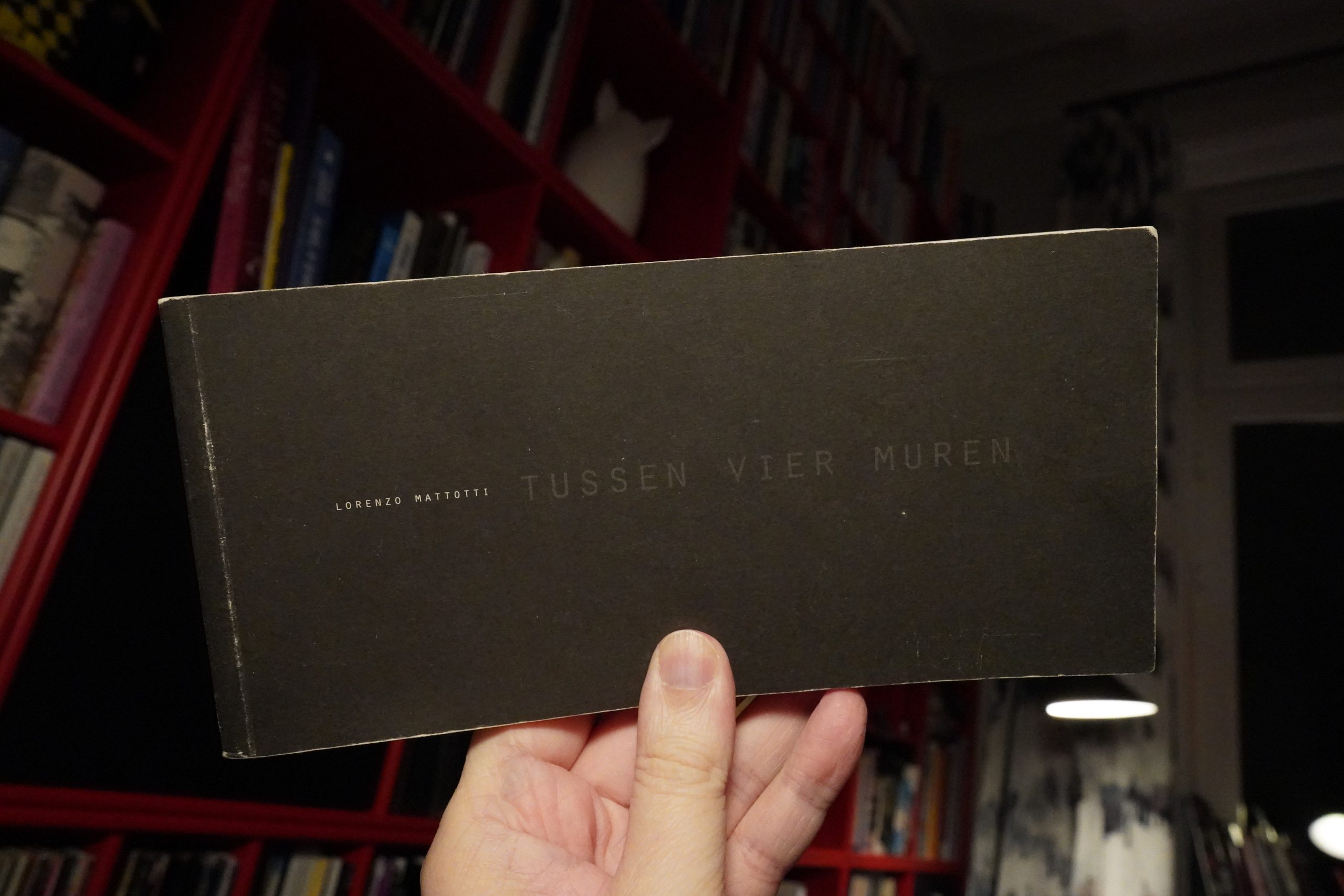
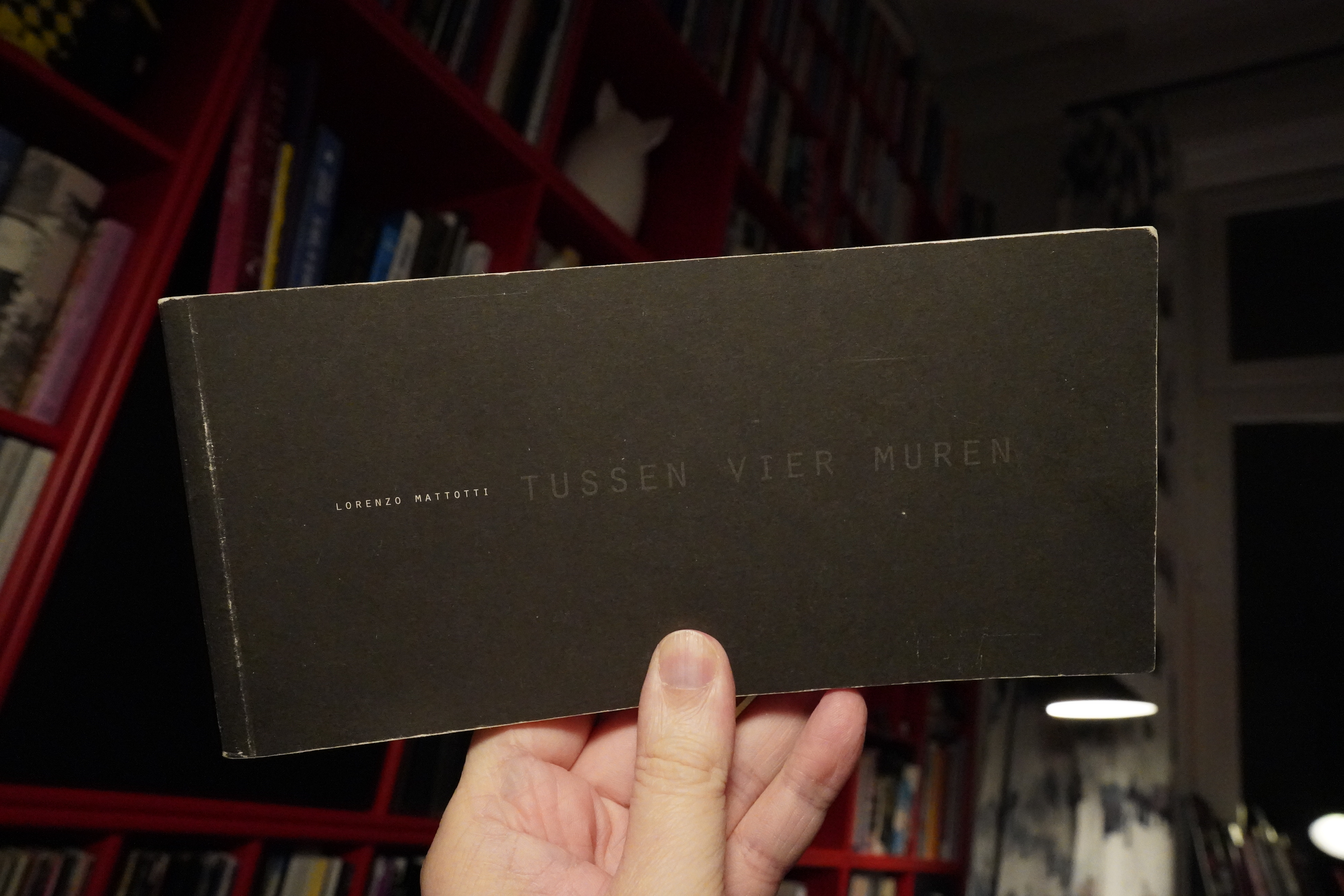
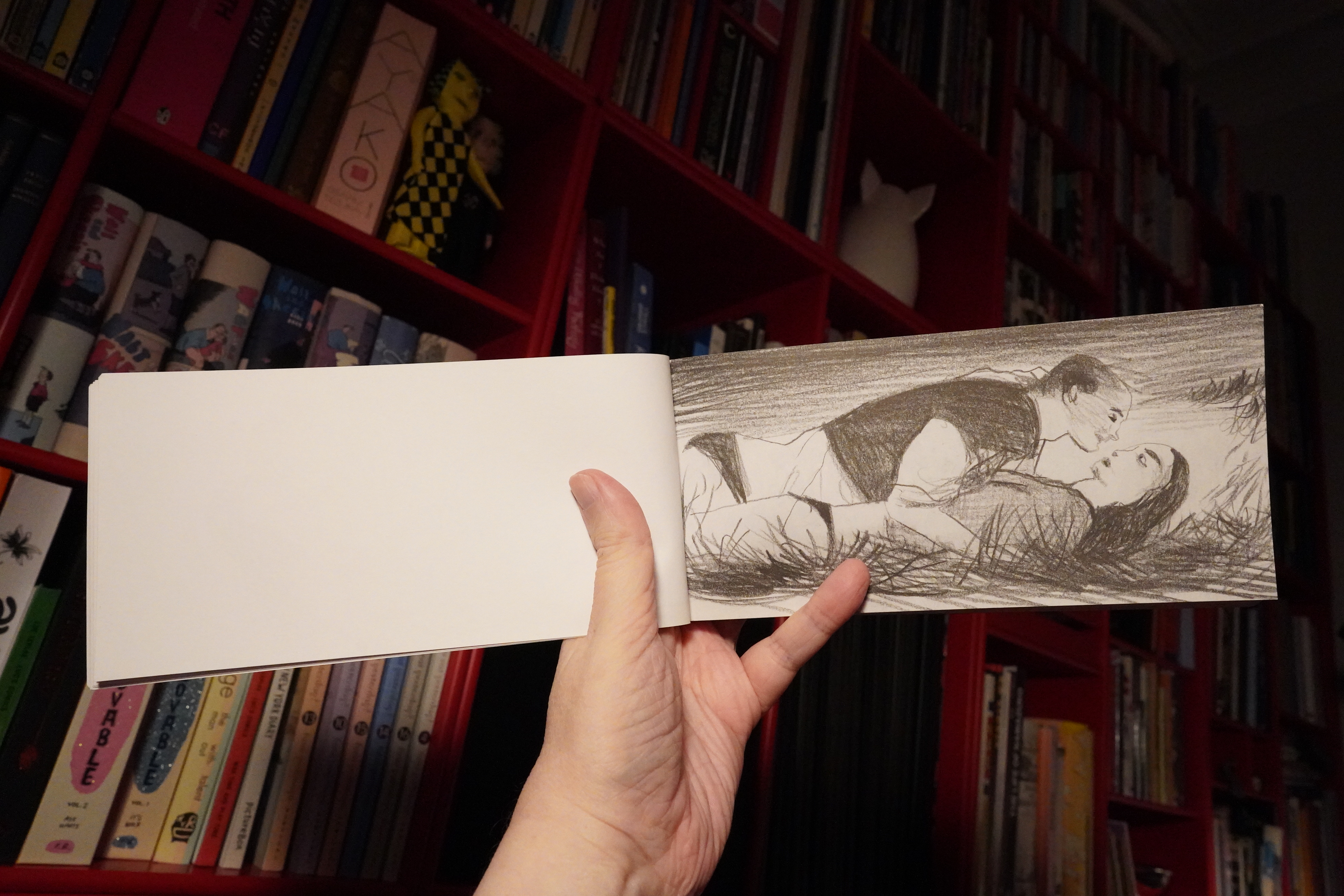
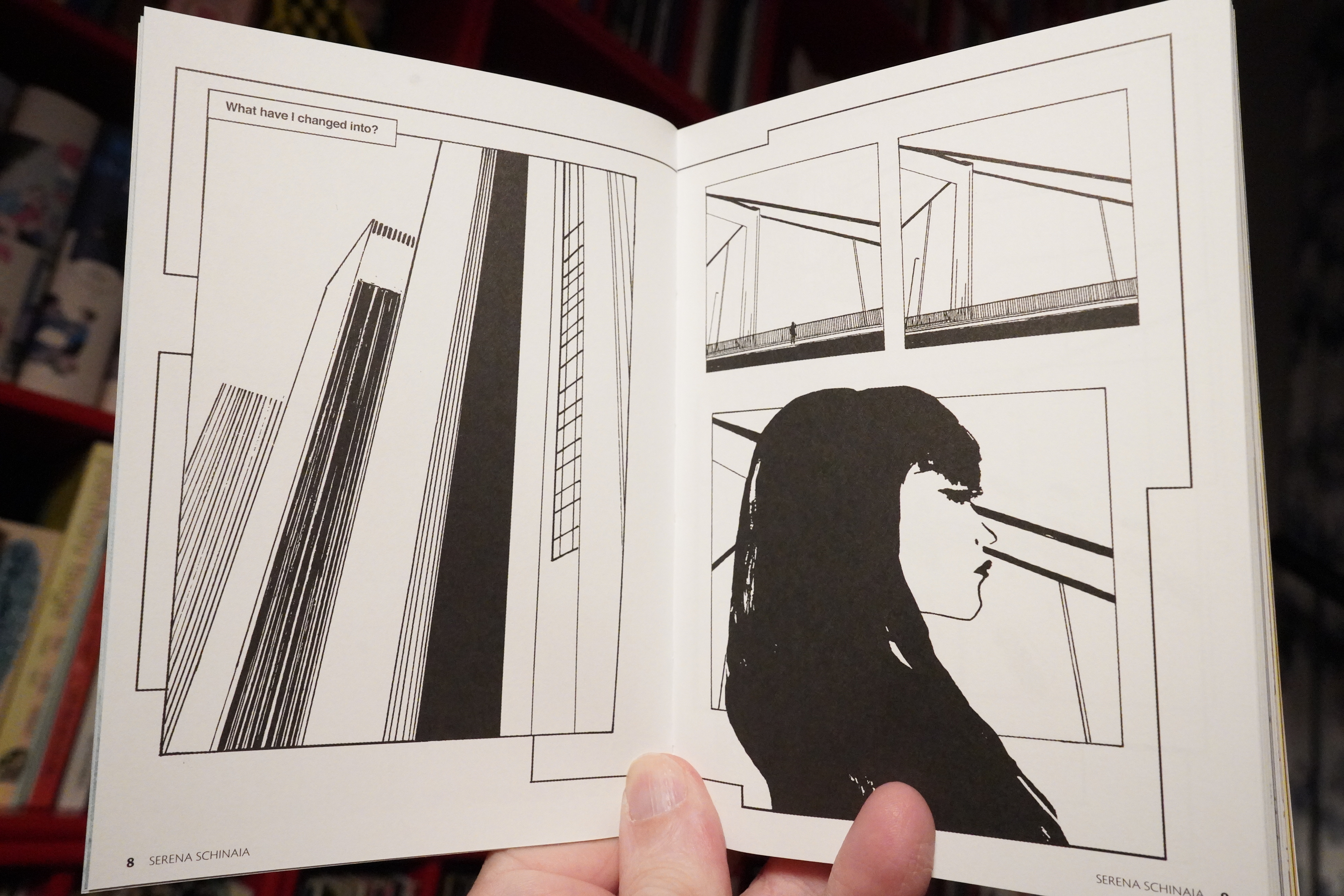
19:25: La Stanza by Lorenzo Mattotti (Oog & blik)
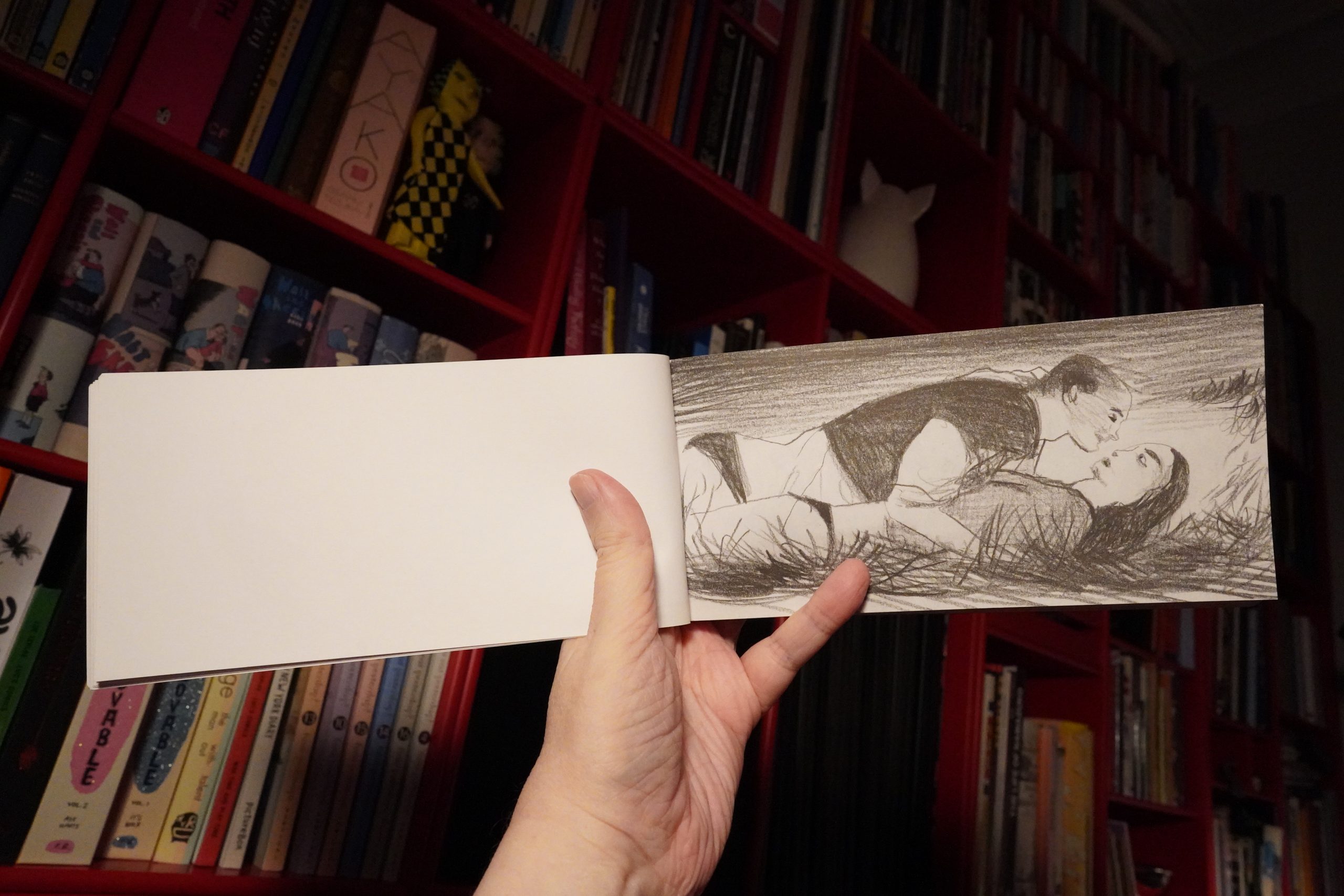
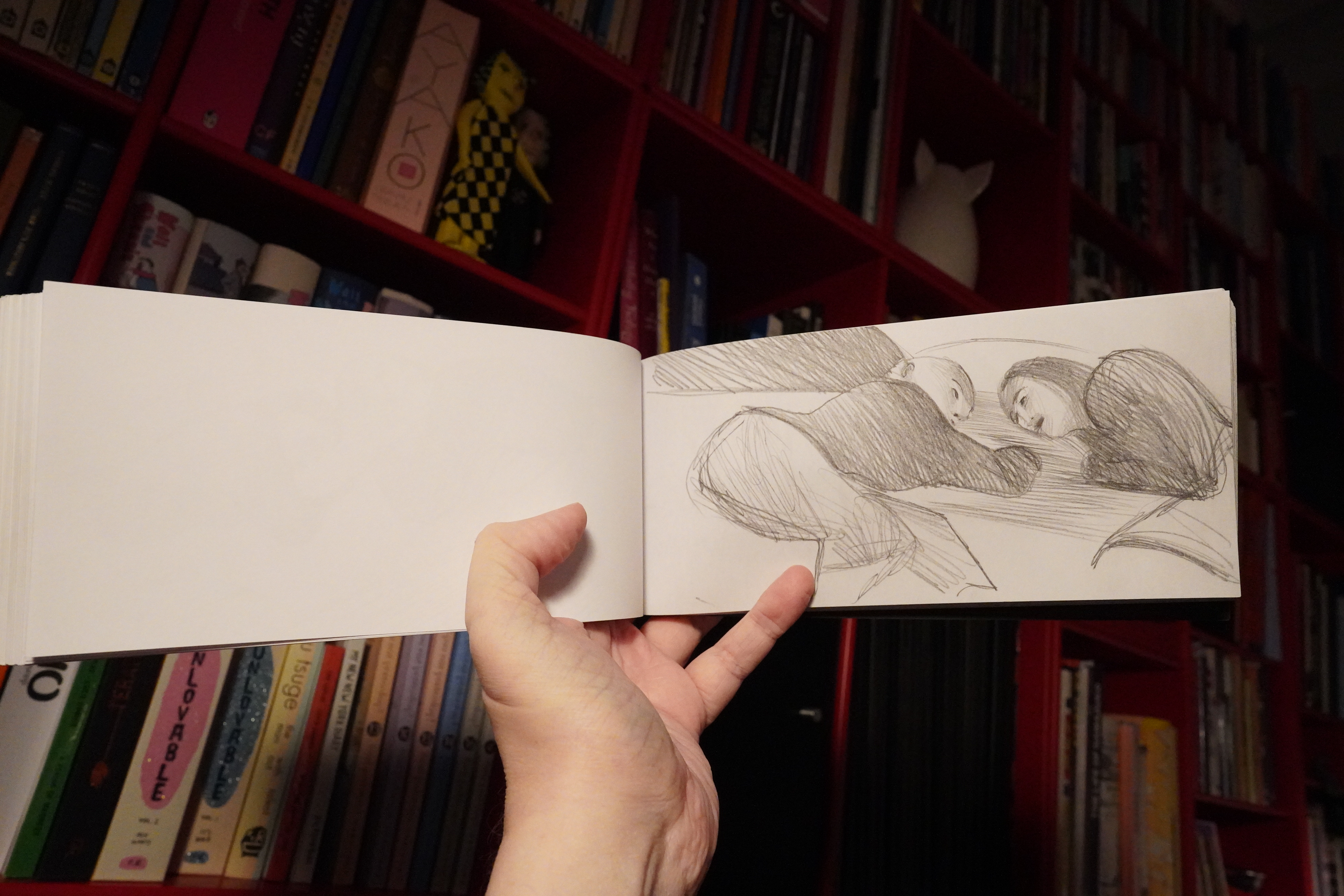
This is a reproduction of a sketchbook, but it’s a remarkably persistent sketchbook.
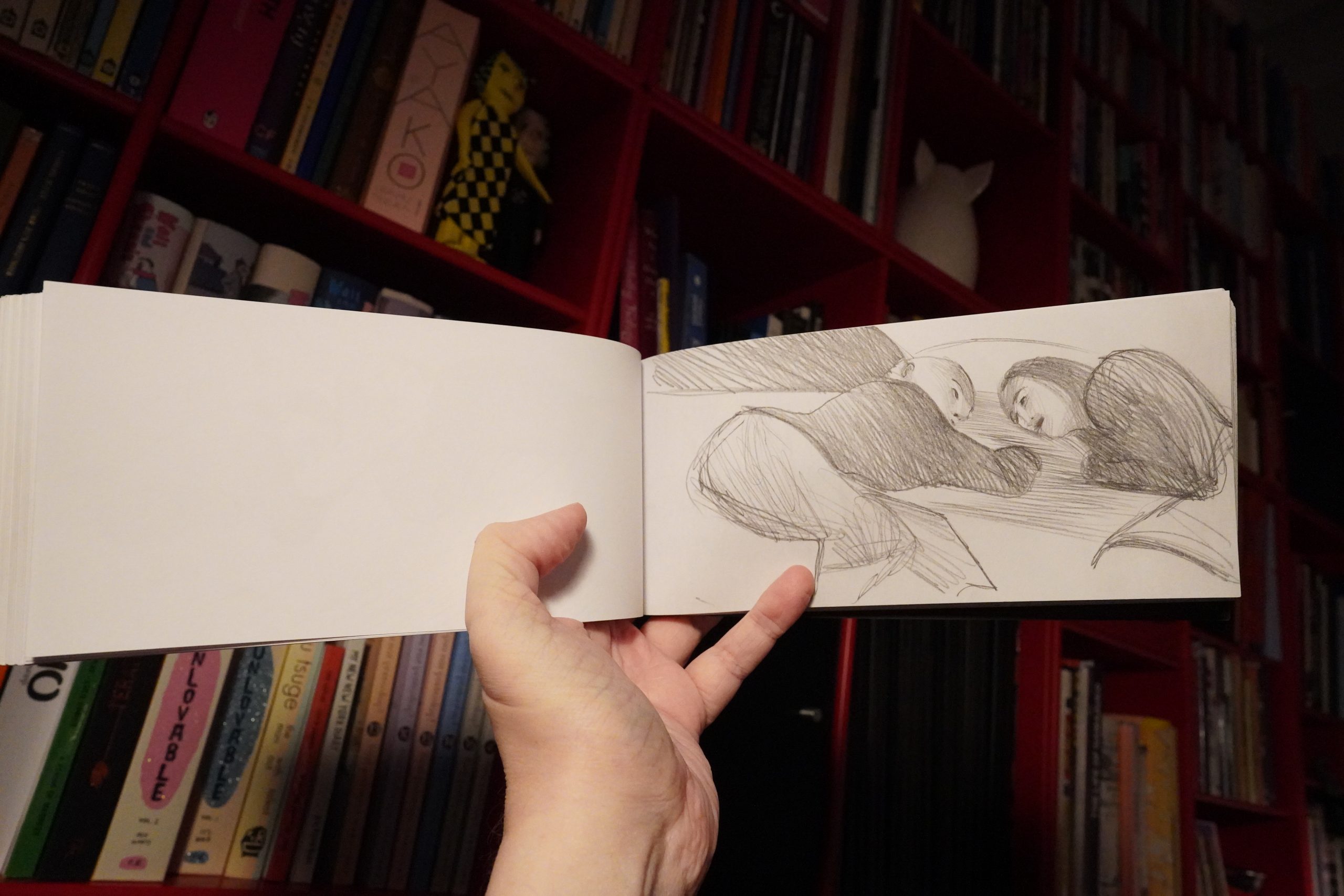
It doesn’t have a narrative as such — it’s just these two characters in bed, sometimes touching and sometimes not, and in the end, the woman leaves. It’s great! Not at all what I was expecting from a Mattotti sketchbook, but then again, I don’t know what I was expecting, either.
| Depeche Mode: Stripped |  |
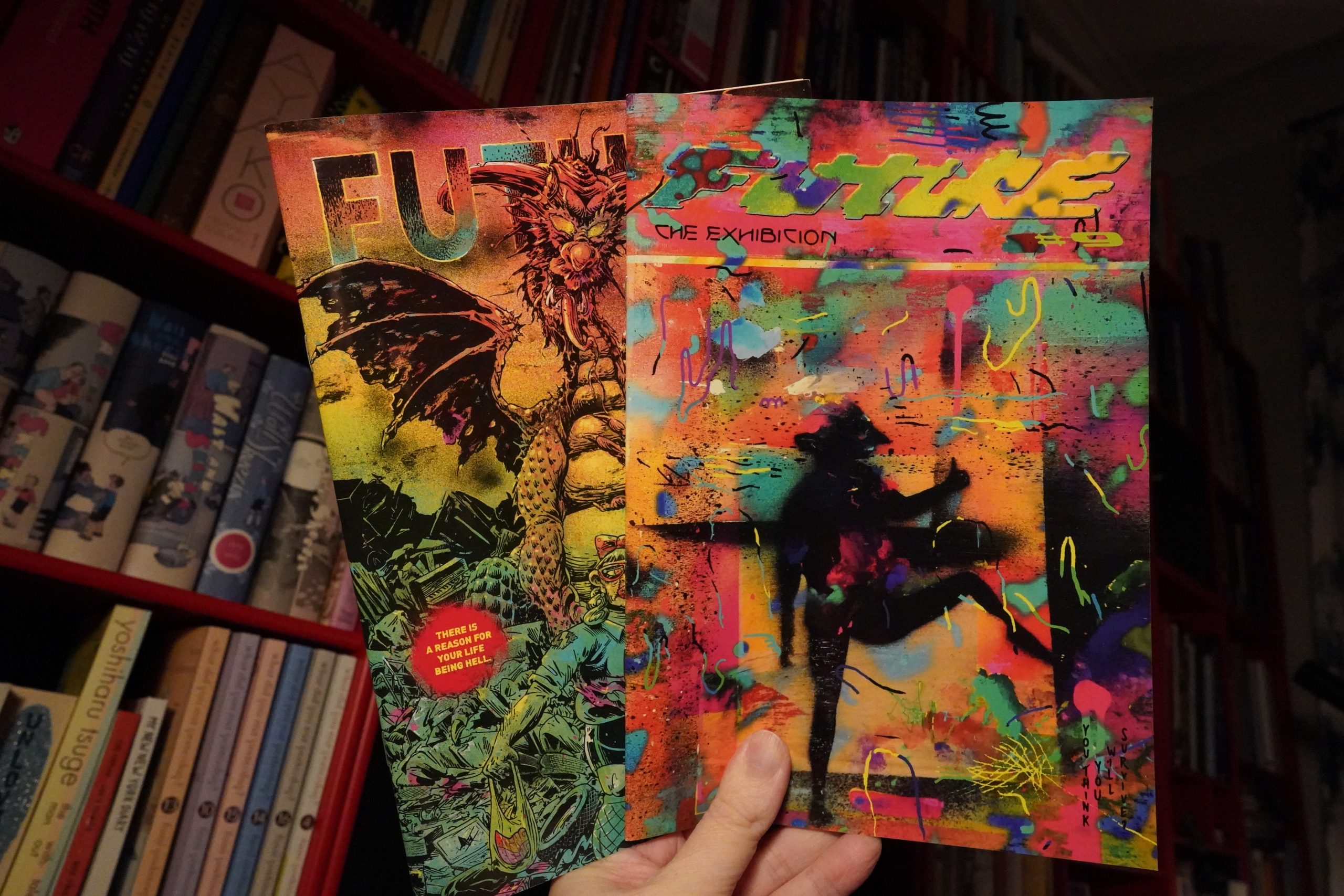
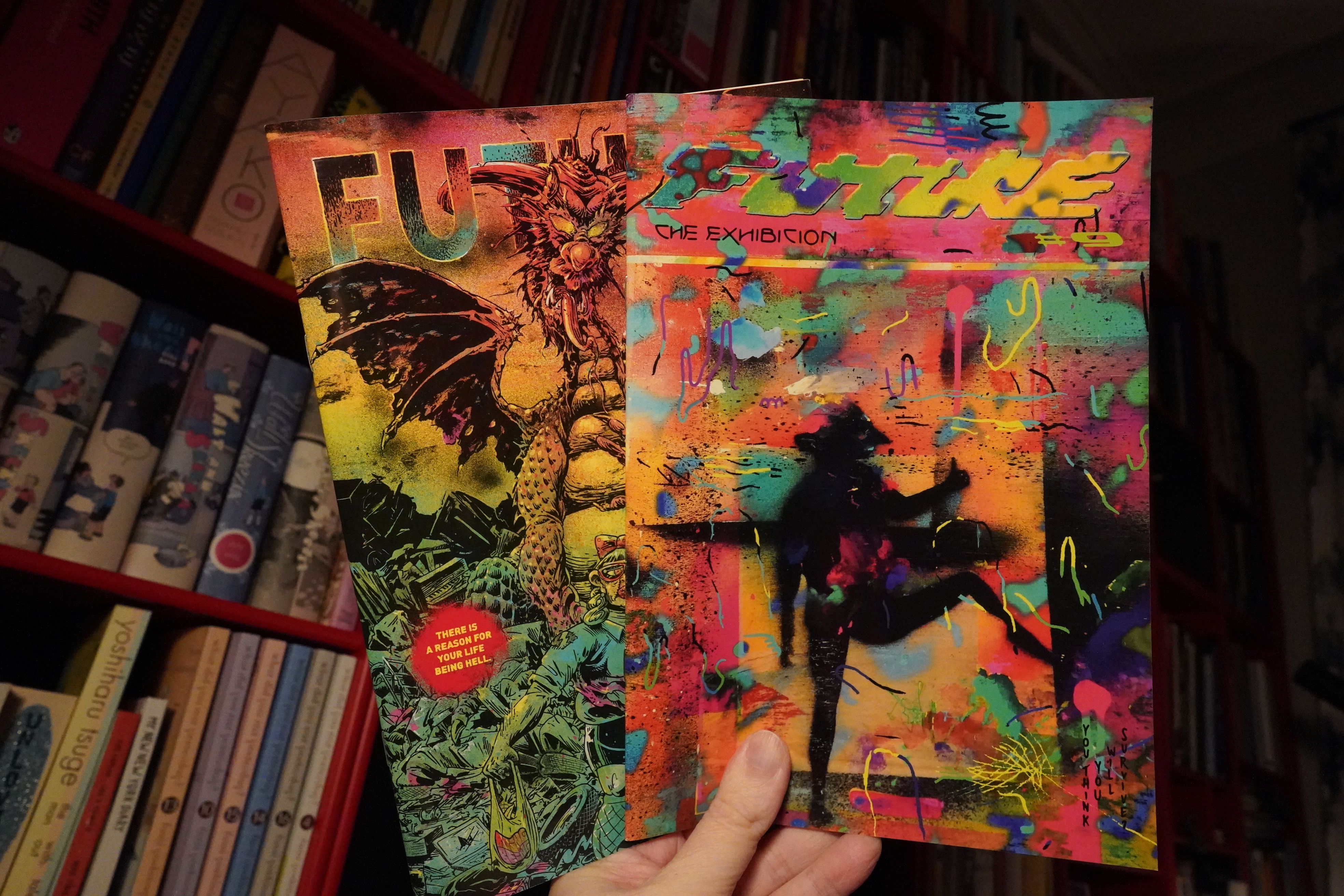
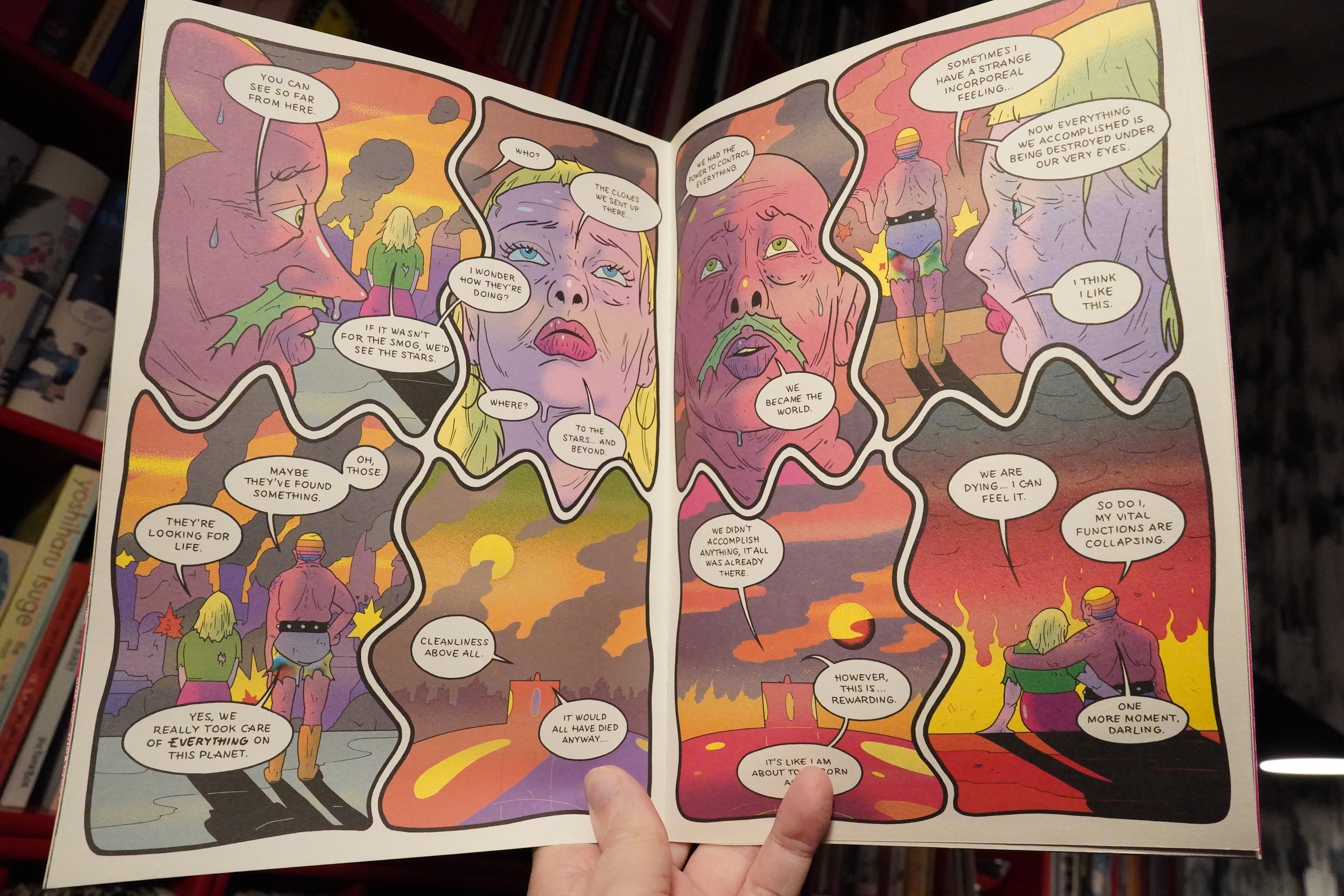
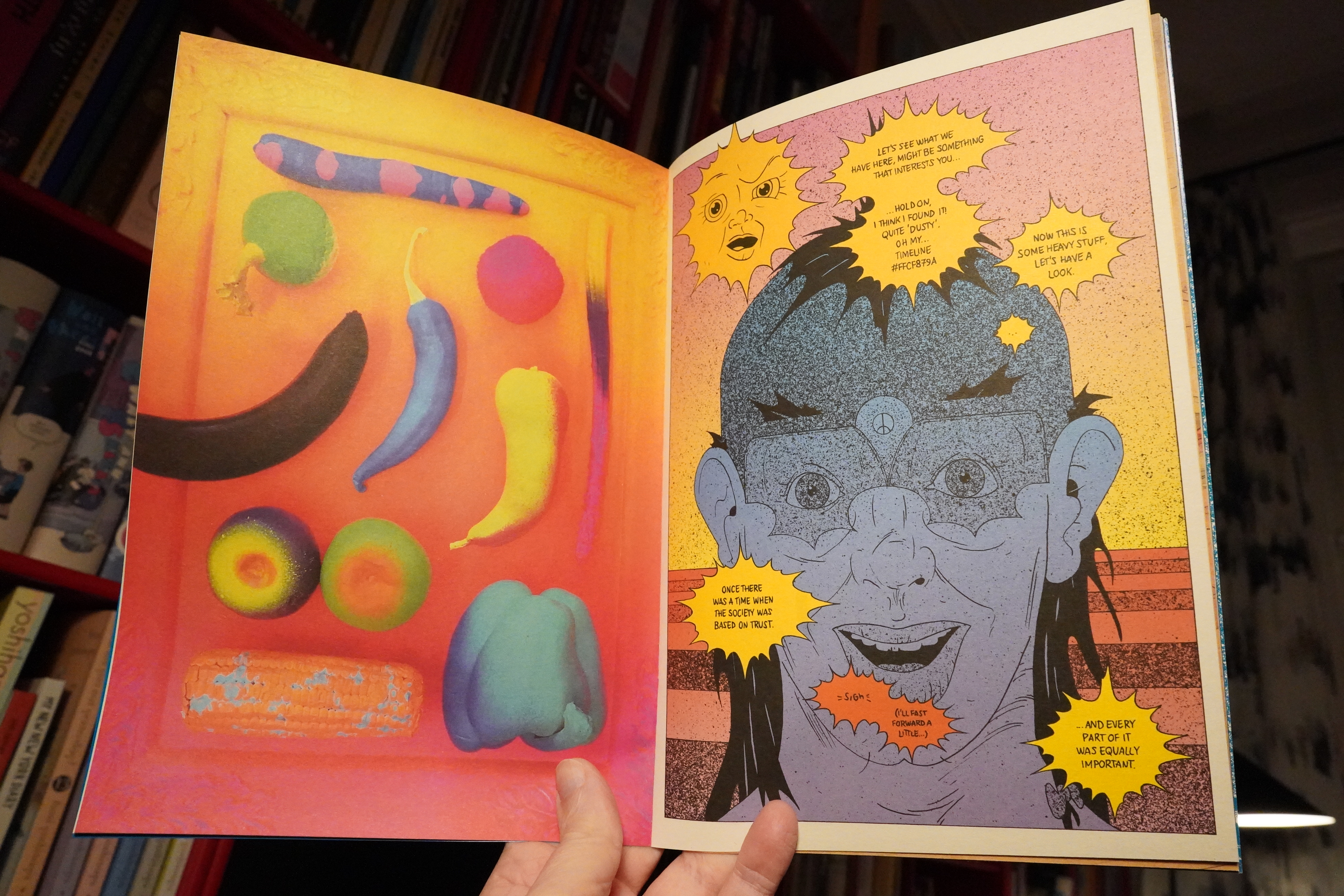
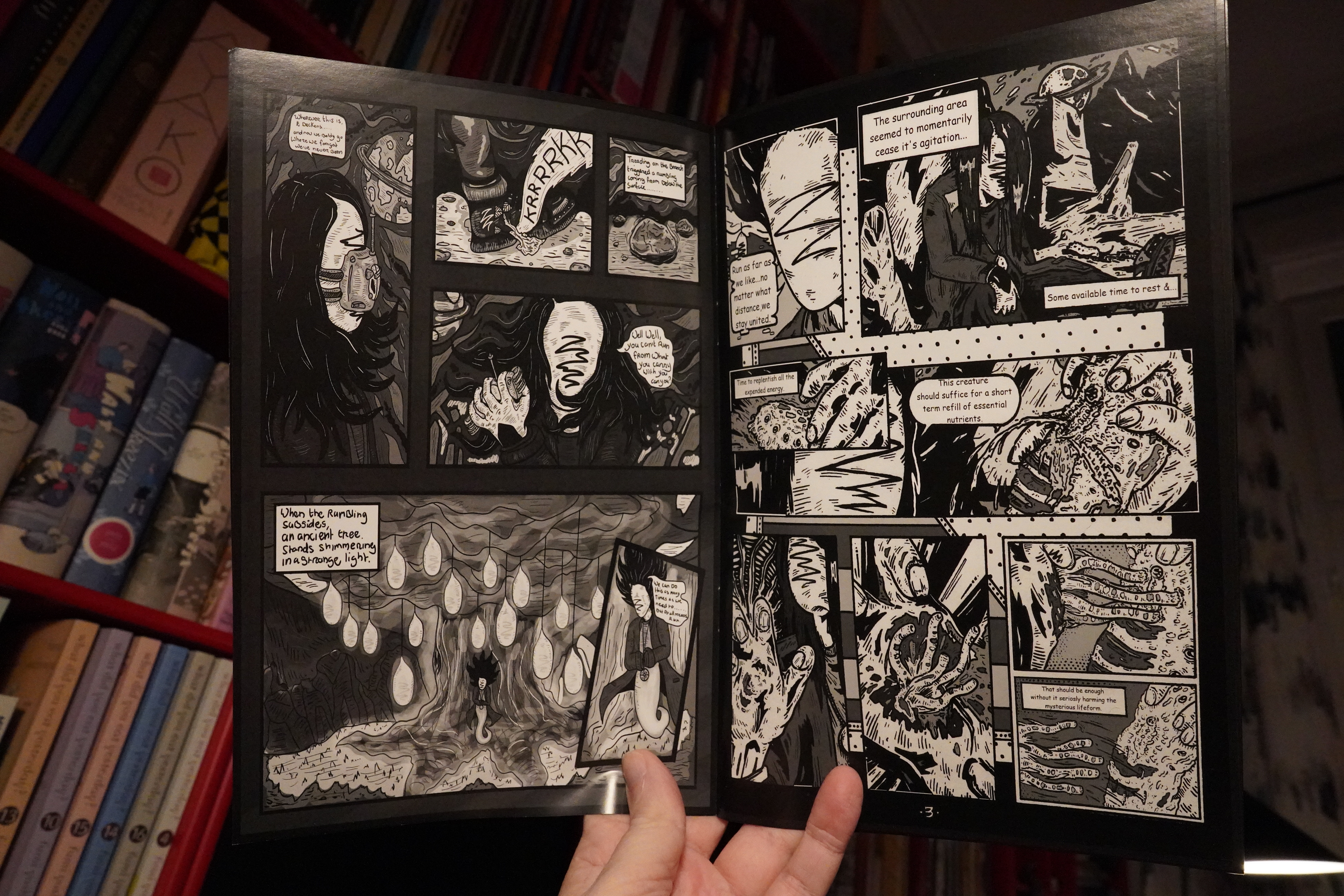
19:40: Future #8-9 by Tommi Musturi
The small press shelf had comics from all over Europe — people are producing comics in English, these days, especially if they’re doing oddball indie books. Which is really nice, because it means that the readership isn’t limited to the country of origin. So here’s some Finnish comics. I think I’ve read 1-7 before…
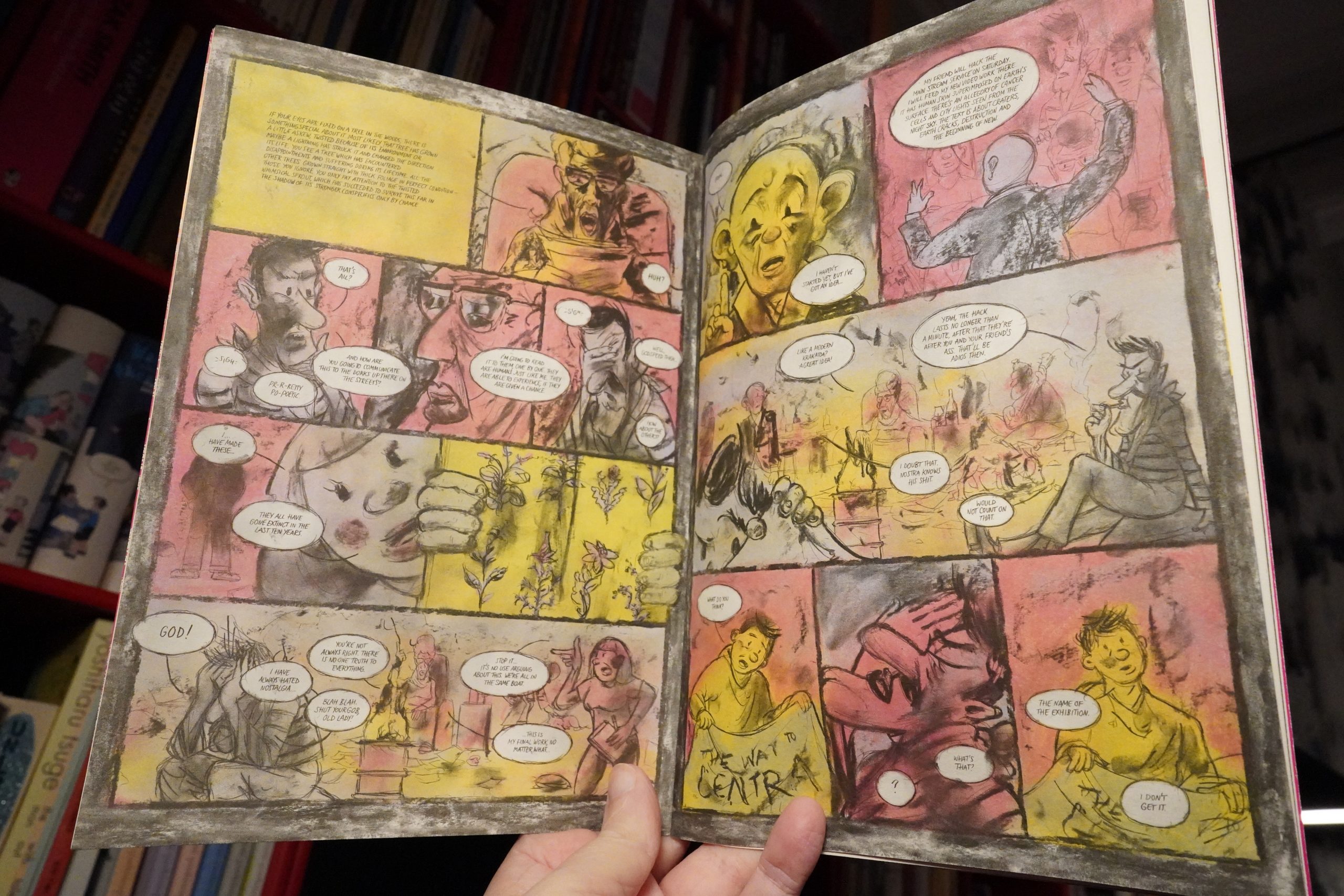
As usual, there’s a pleasingly bewildering variety of styles on display.
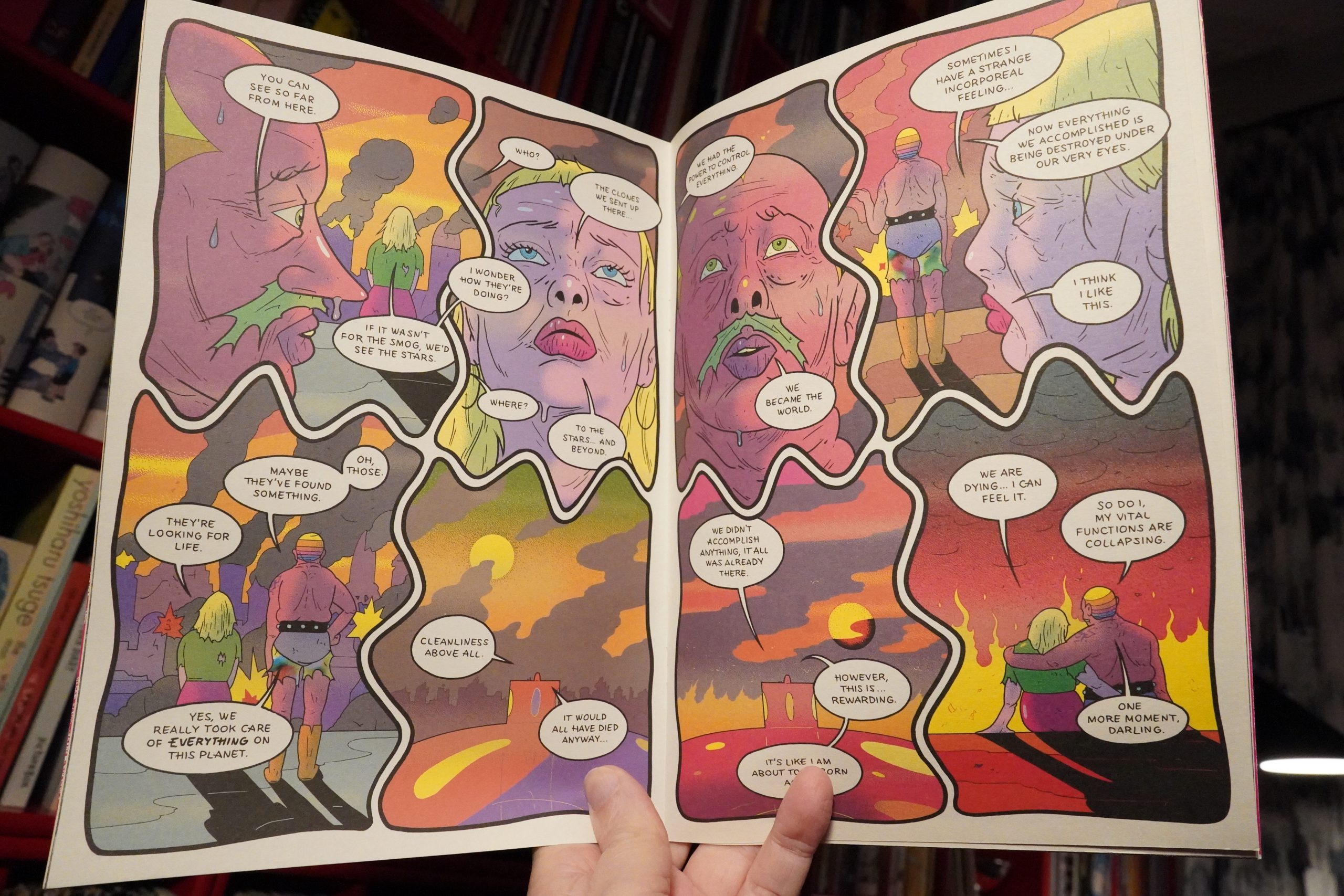
It feels even more impenetrably obscure than usual, though?
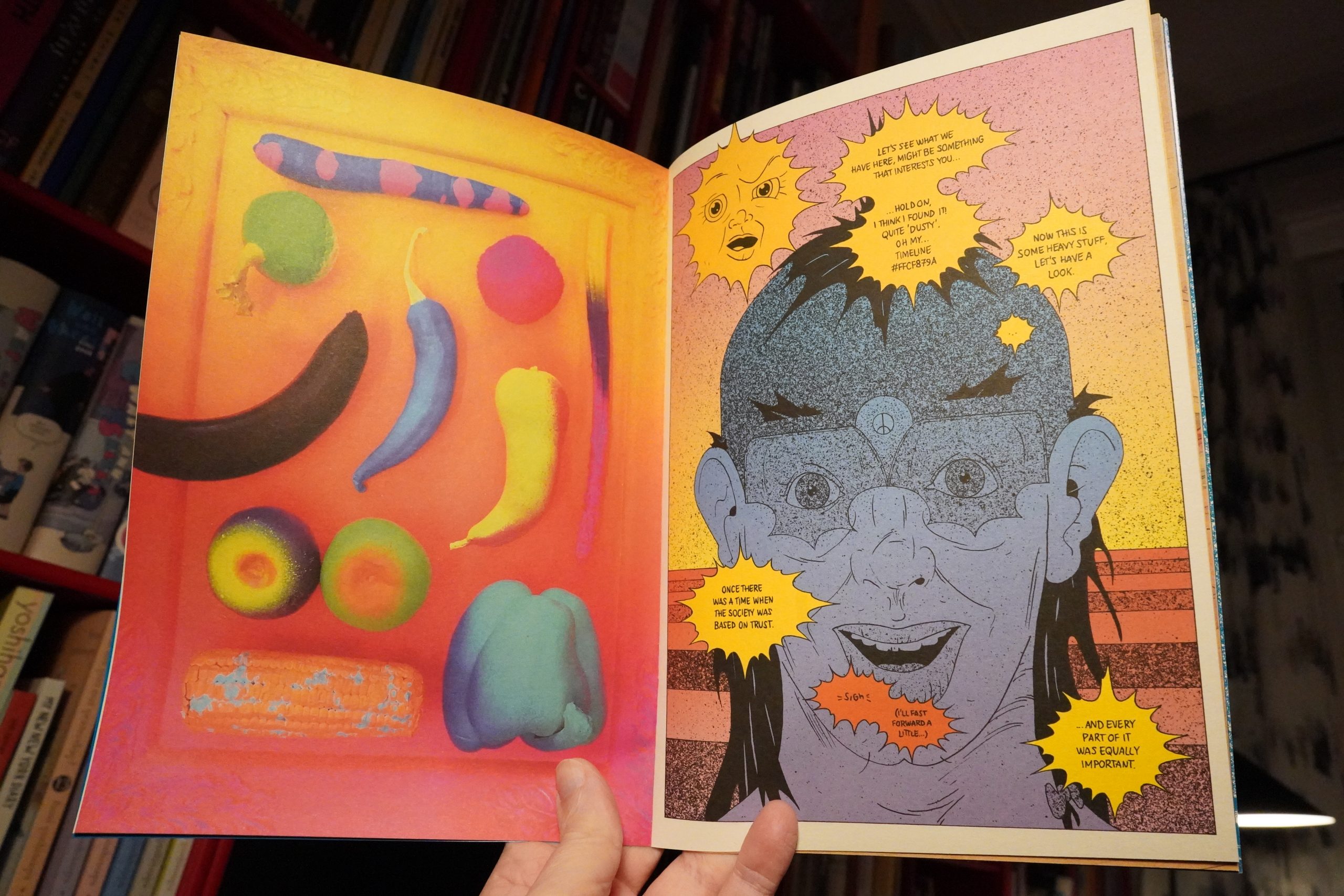
But it’s the good kind of impenetrability.
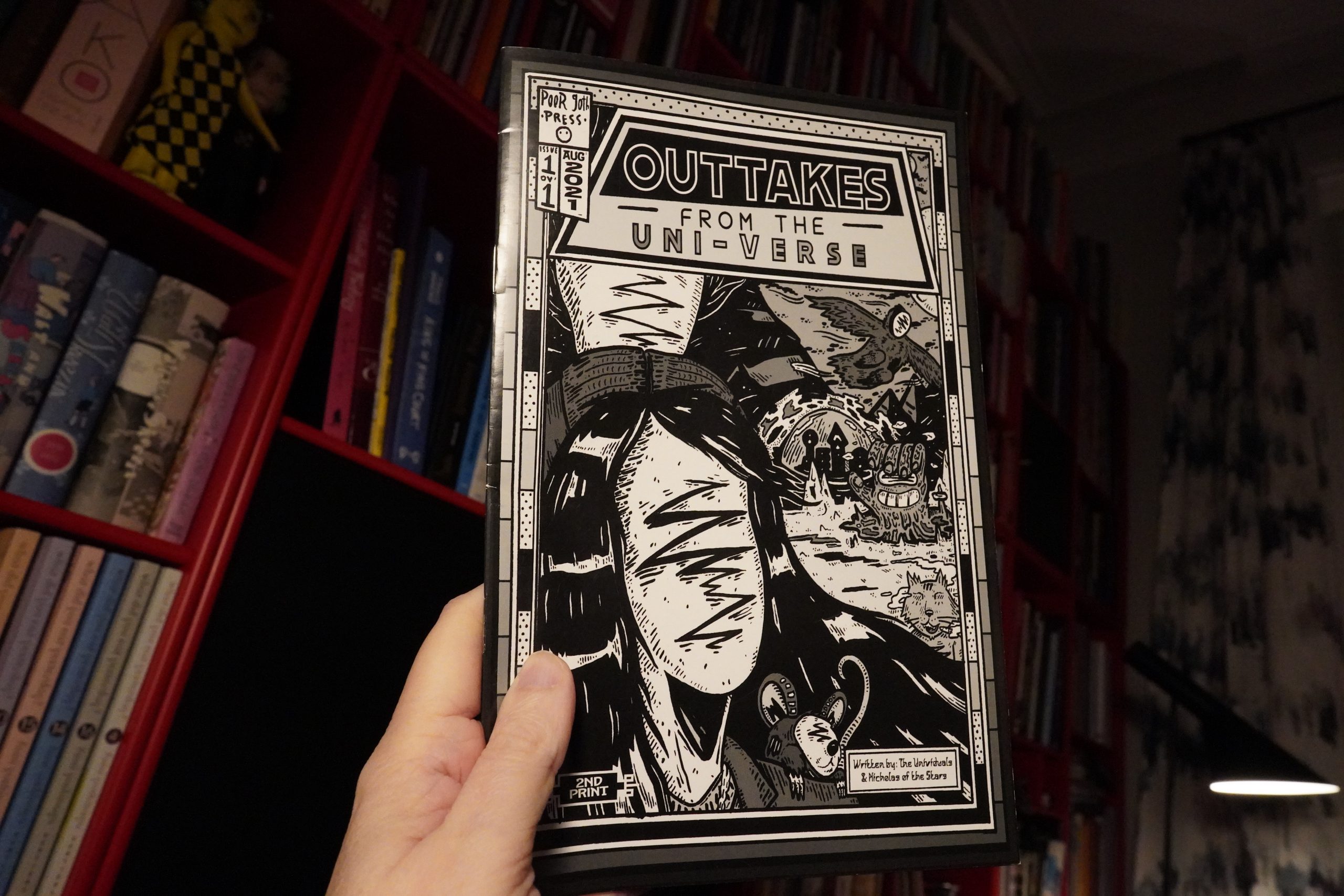
20:03: Outtakes from the Uni-Verse by Brent & Nicholas Johnson
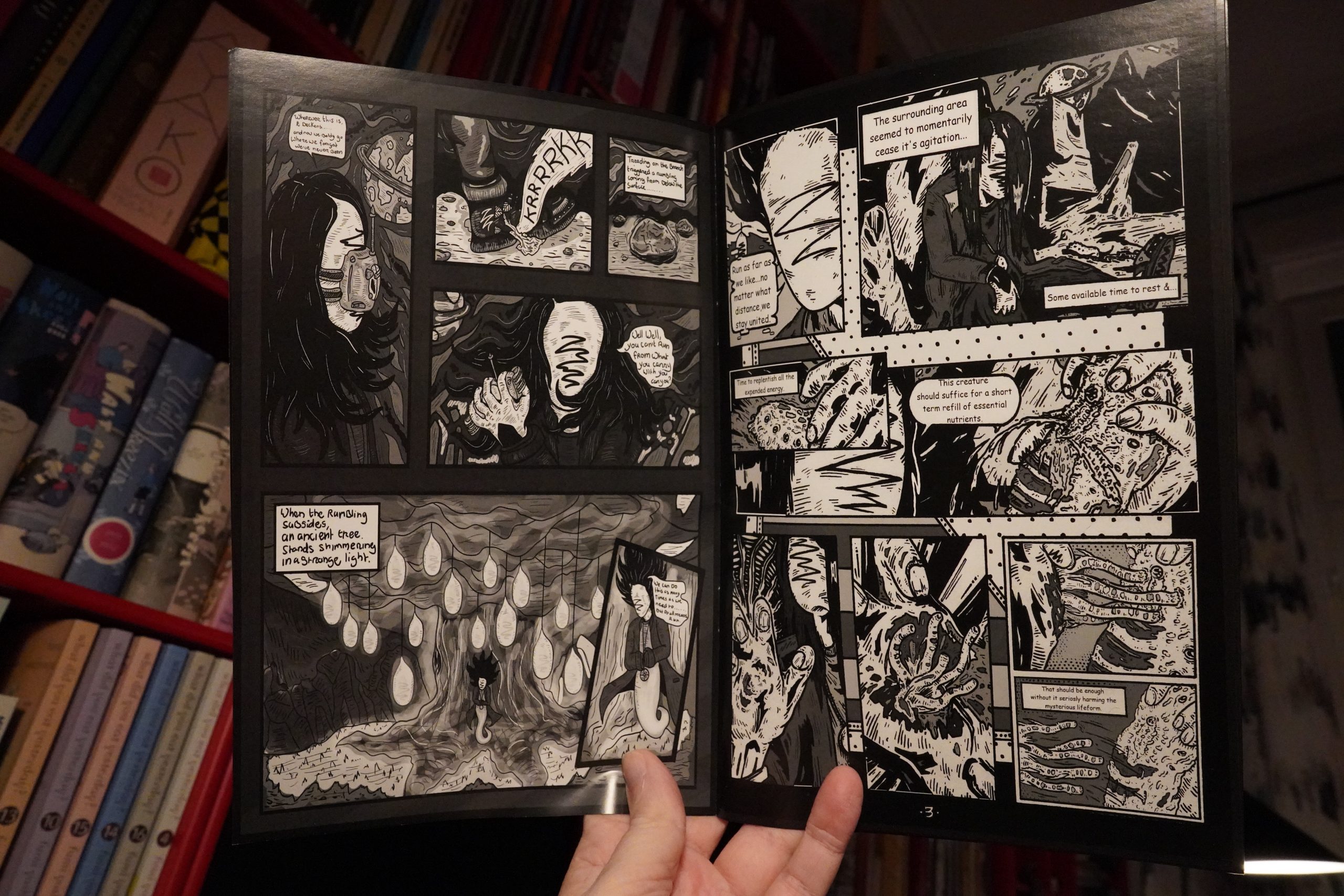
This seems like it should be much longer, but perhaps it really is outtakes from a bigger project?
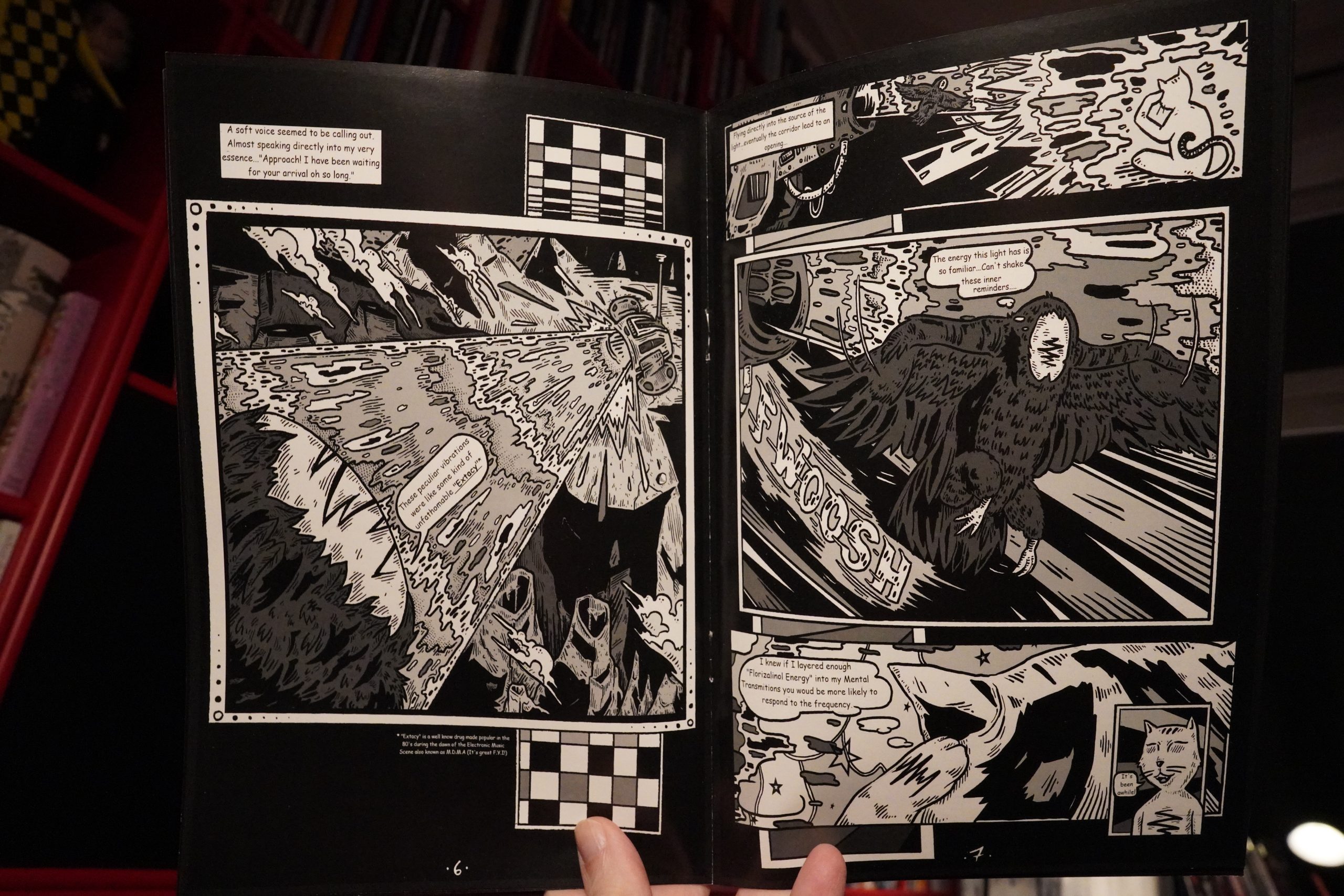
It’s interesting, though.
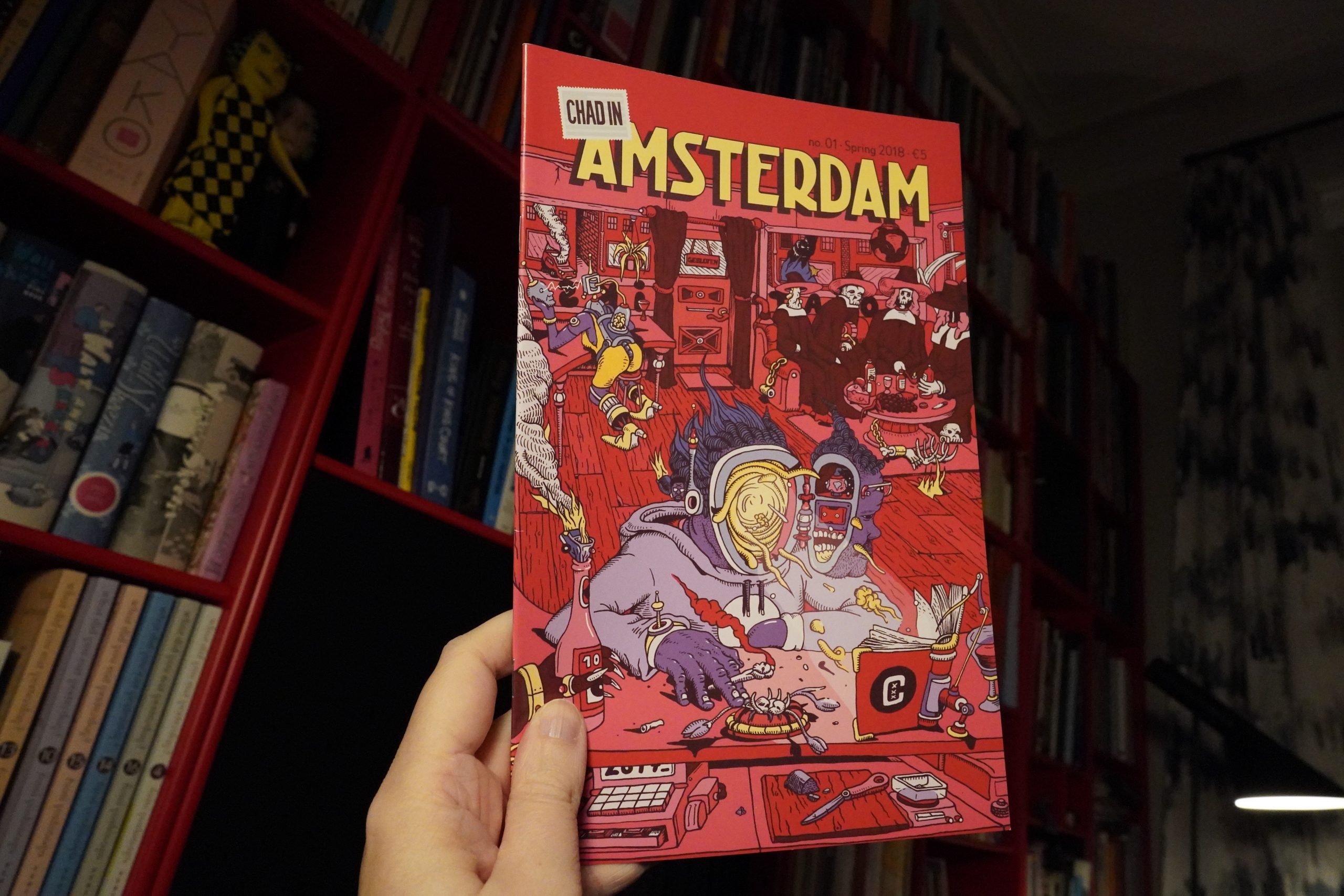
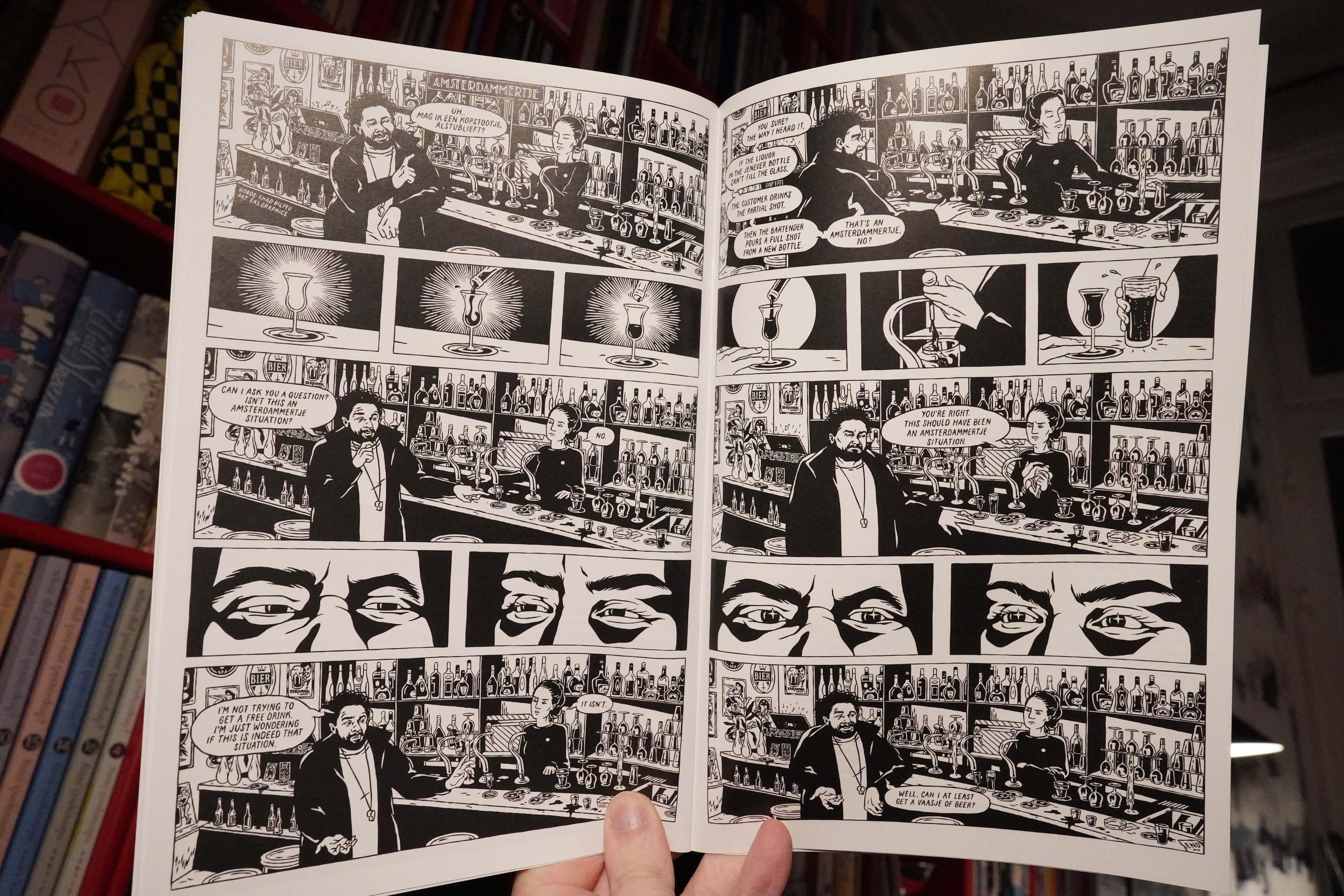
20:09: Chad in Amsterdam #1 by Chad Bilyeu and others (Bistro Books)

This is an autobio book in the Harvey Pekar tradition — and he’s namechecked in the afterword.
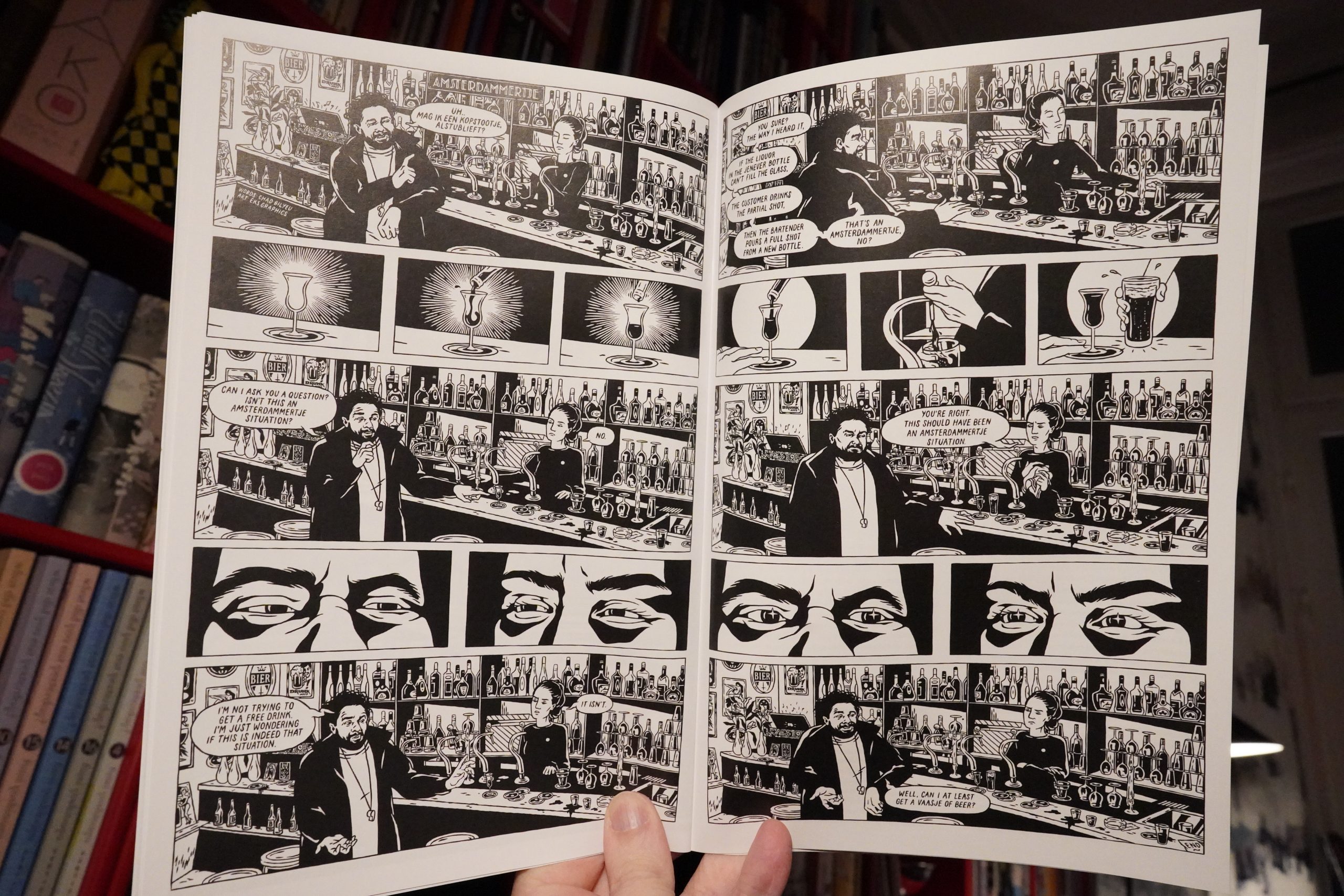
So it a collection of anecdotes, mostly humorous, illustrated by various people. And it’s about living in Amsterdam. It’s good — I wish I’d picked up all the issues at Lambiek.
| Colourbox: Colourbox (MAD315CD) |  |
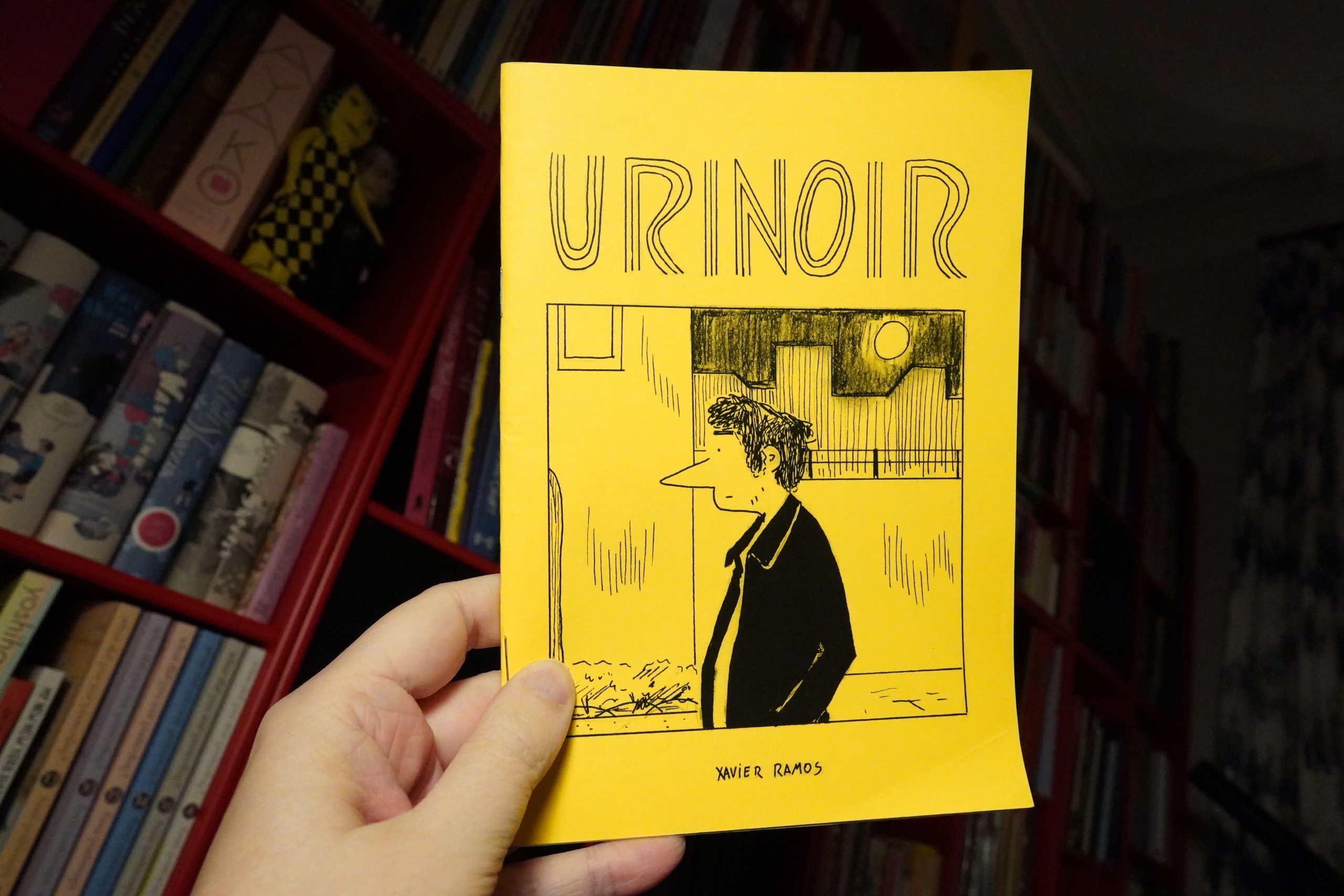
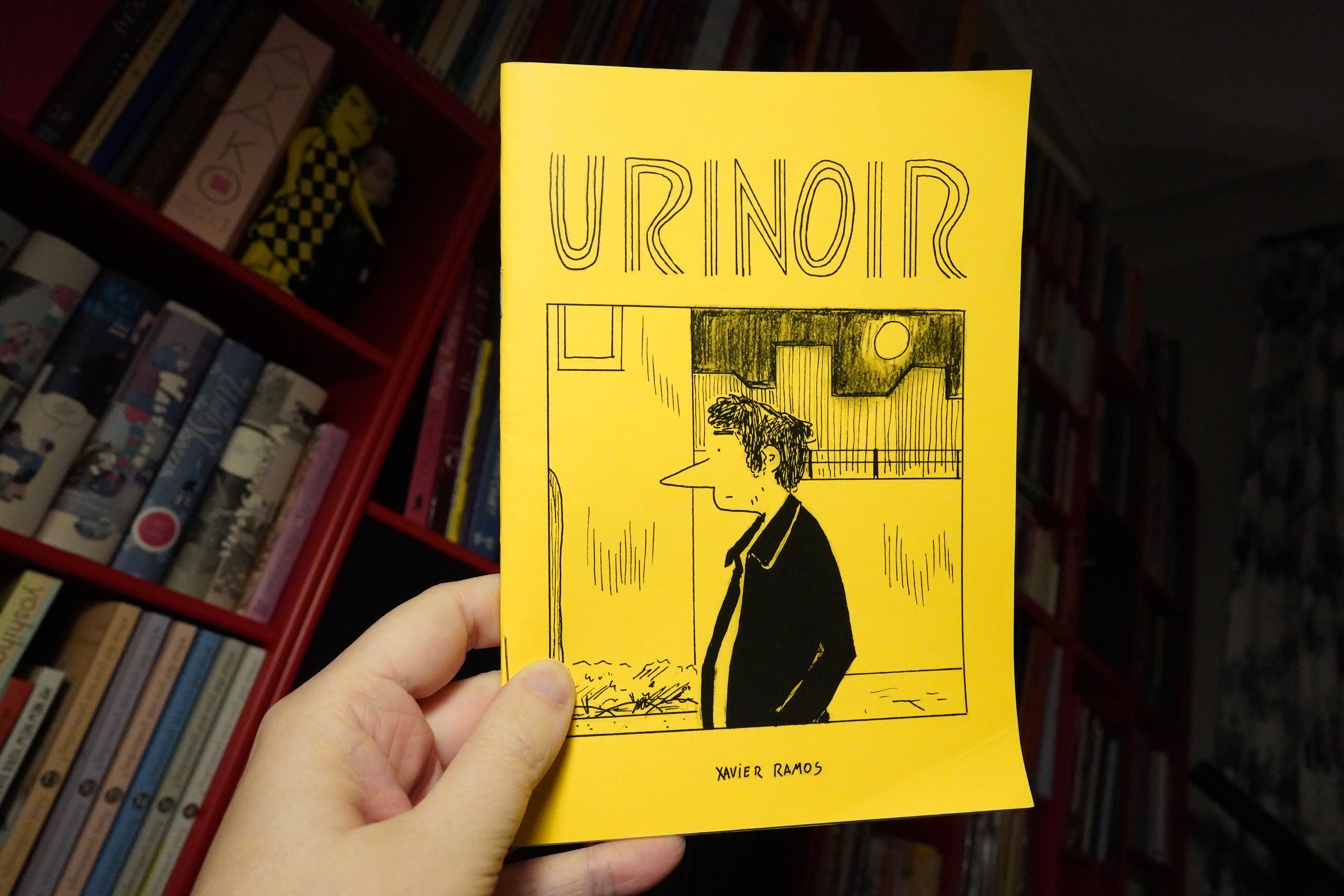
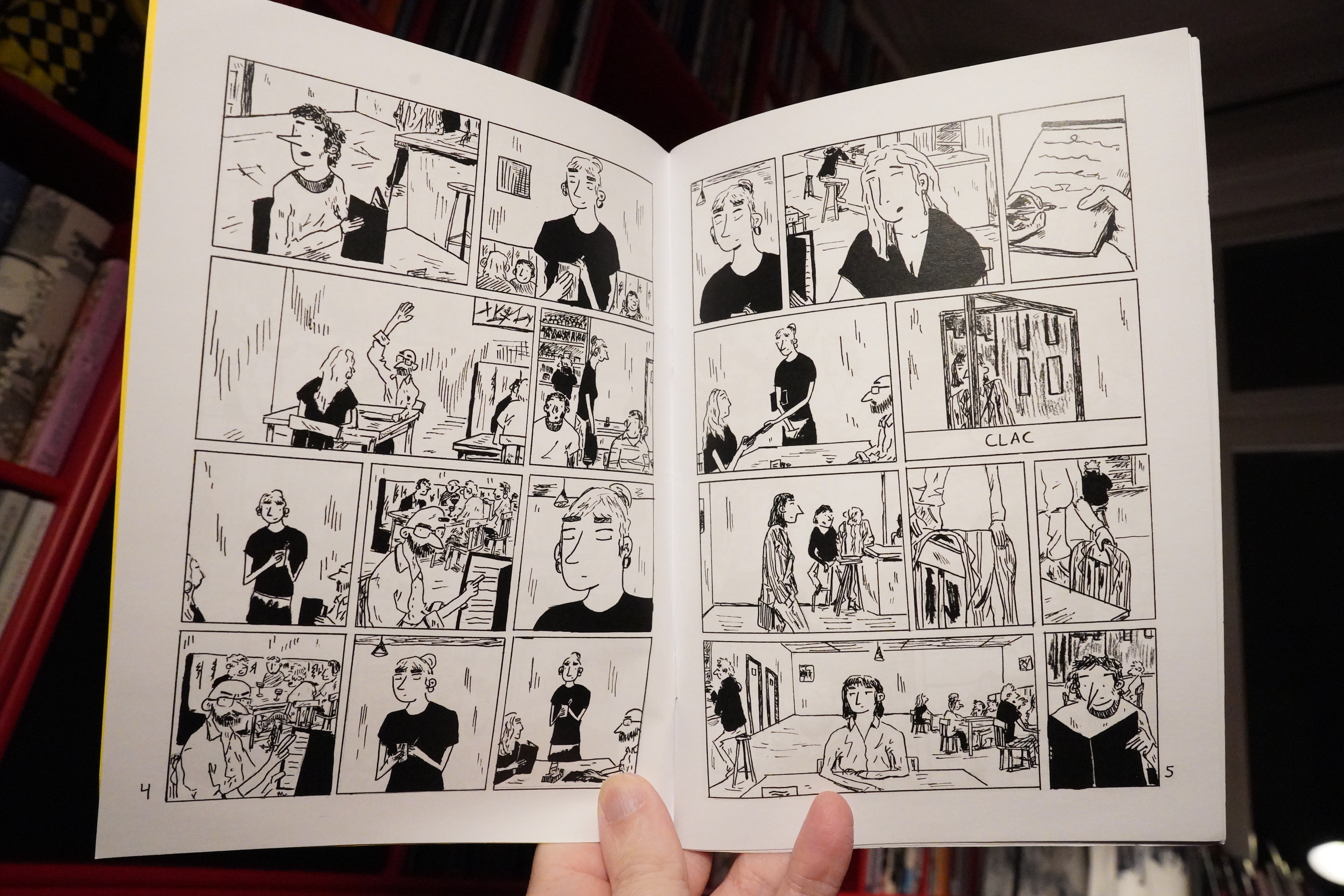
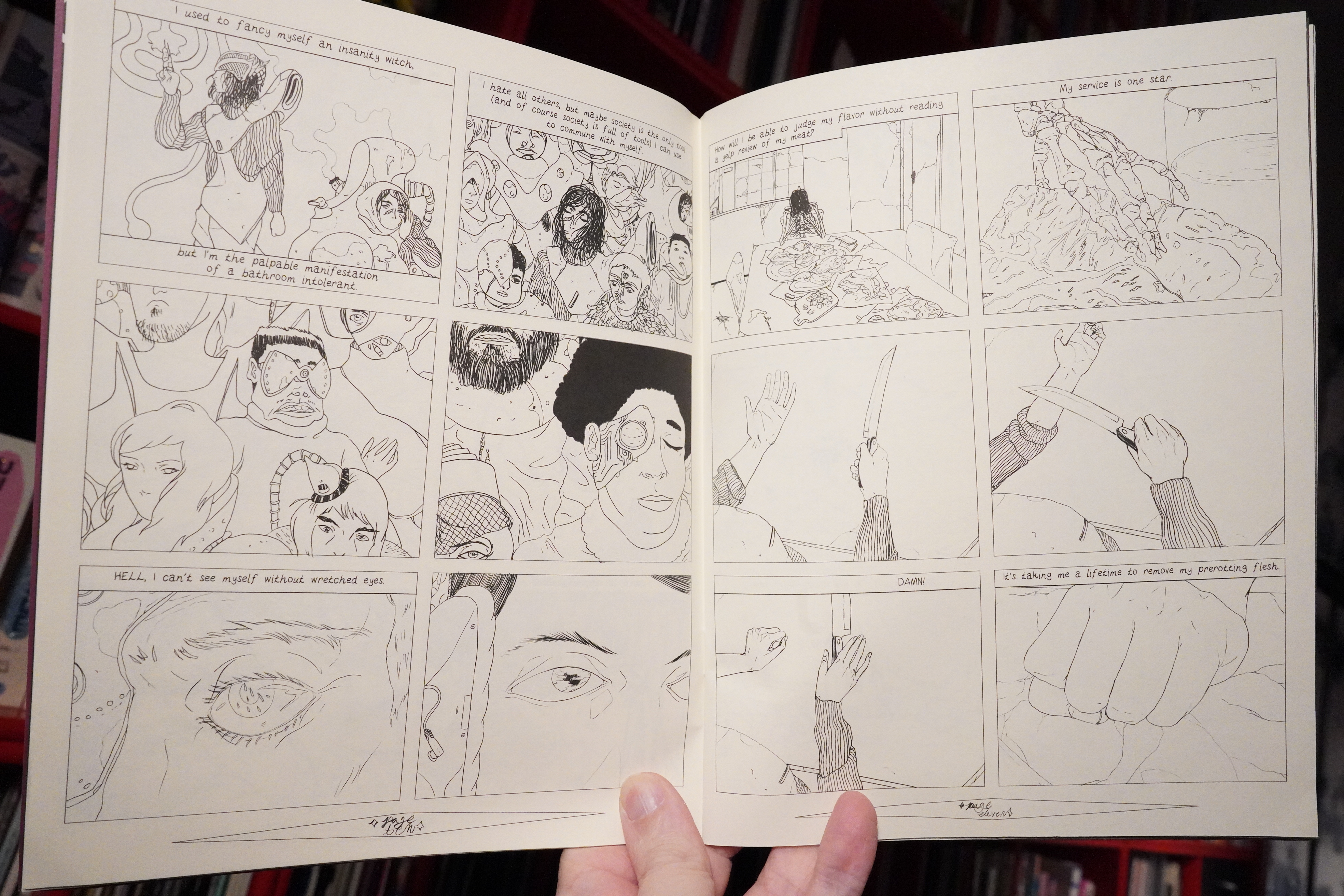
20:22: Urinoir by Xavier Ramos
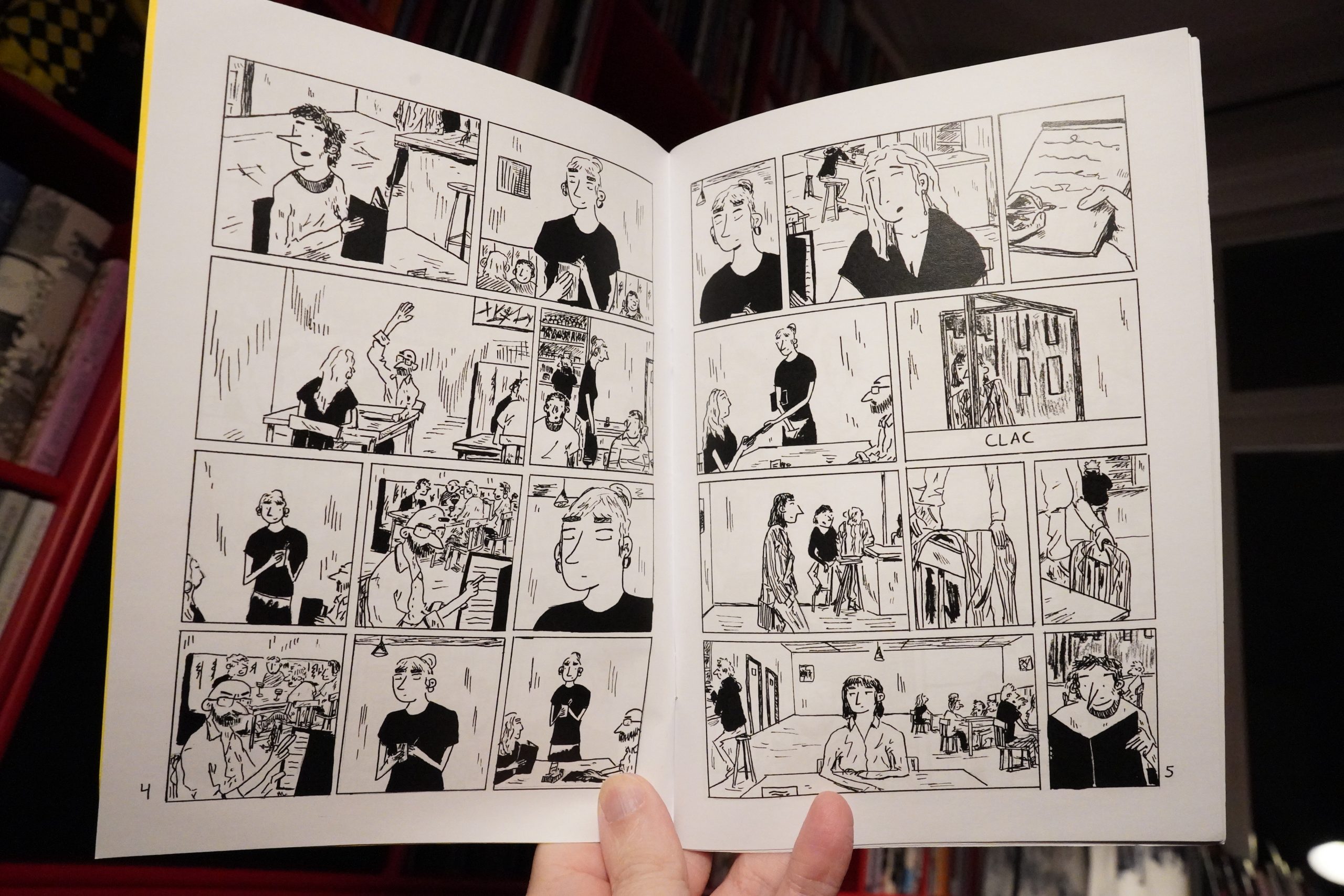
This is a wordless little book about going to a restaurant…
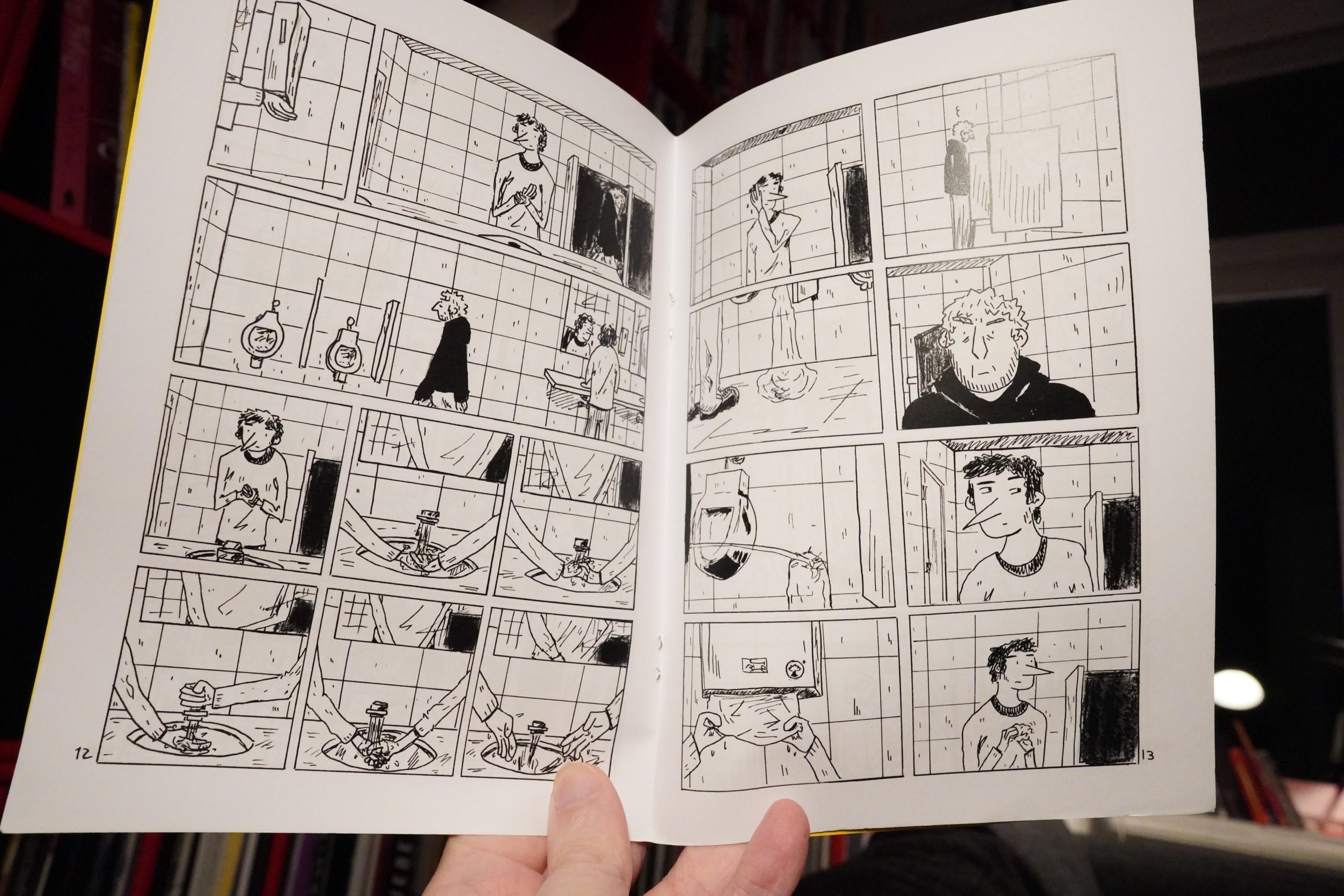
… and then becoming embroiled in a fight in the bathroom. It’s cool — it’s an absurd slice-of-life kind of thing? Compelling.
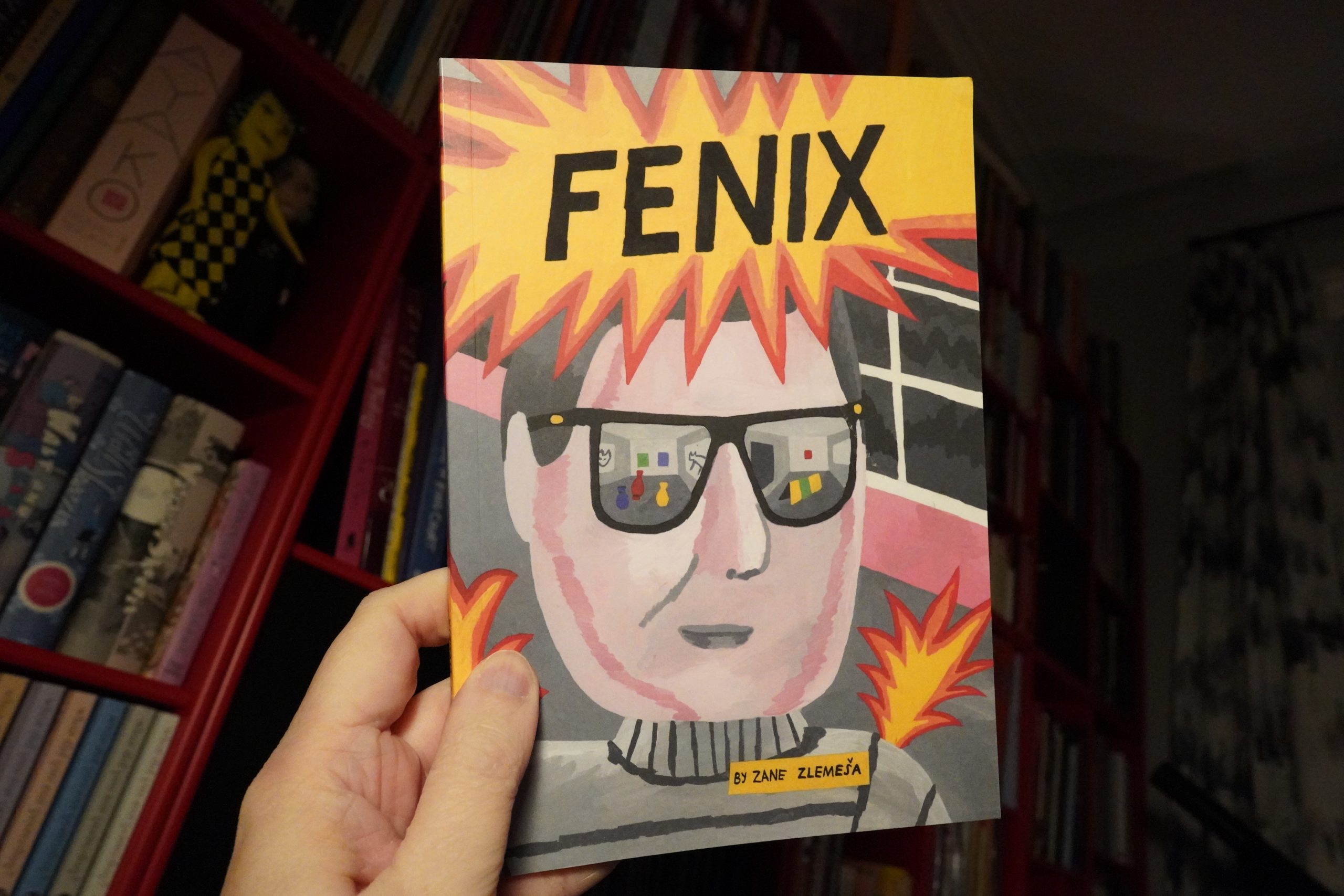
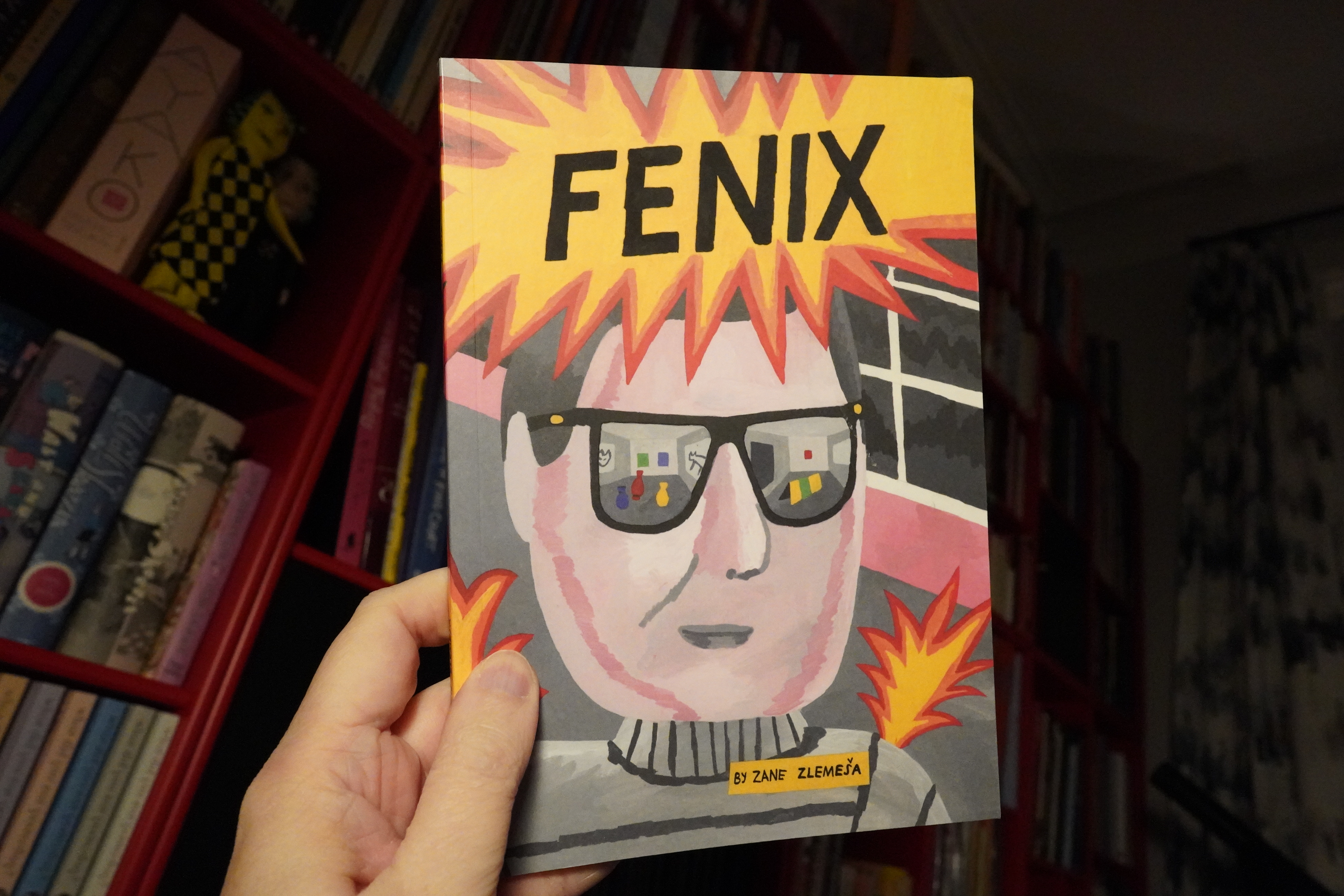
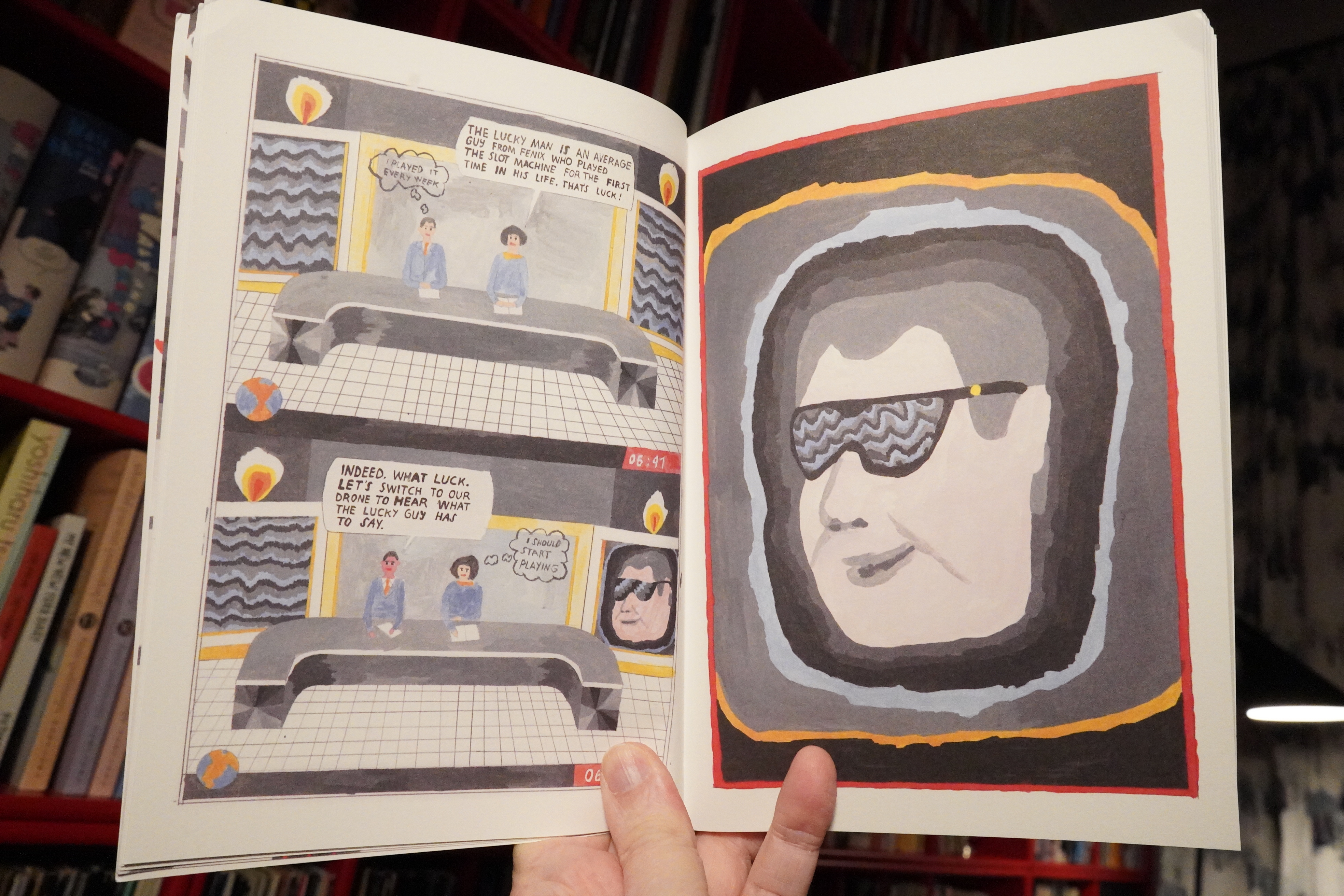
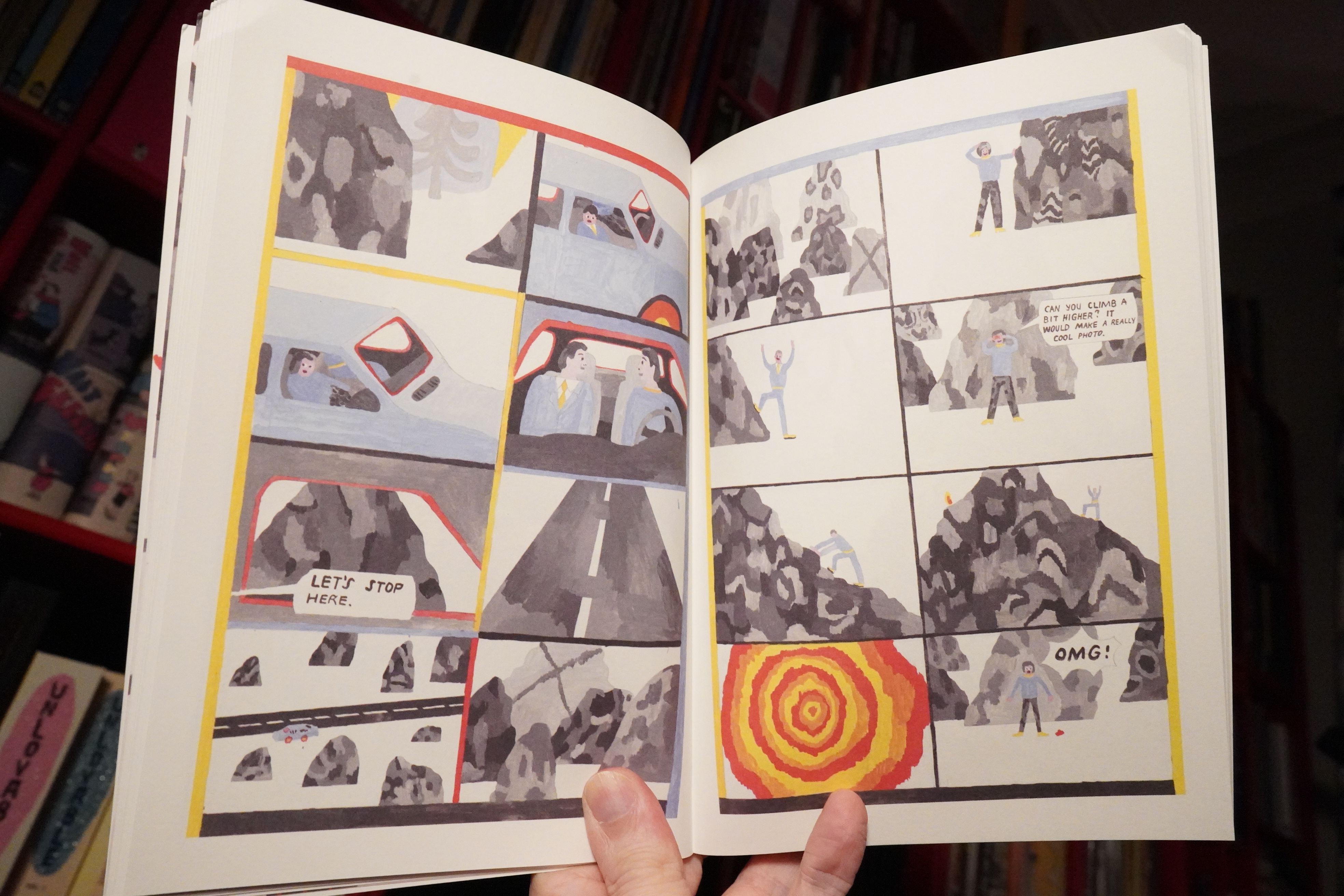
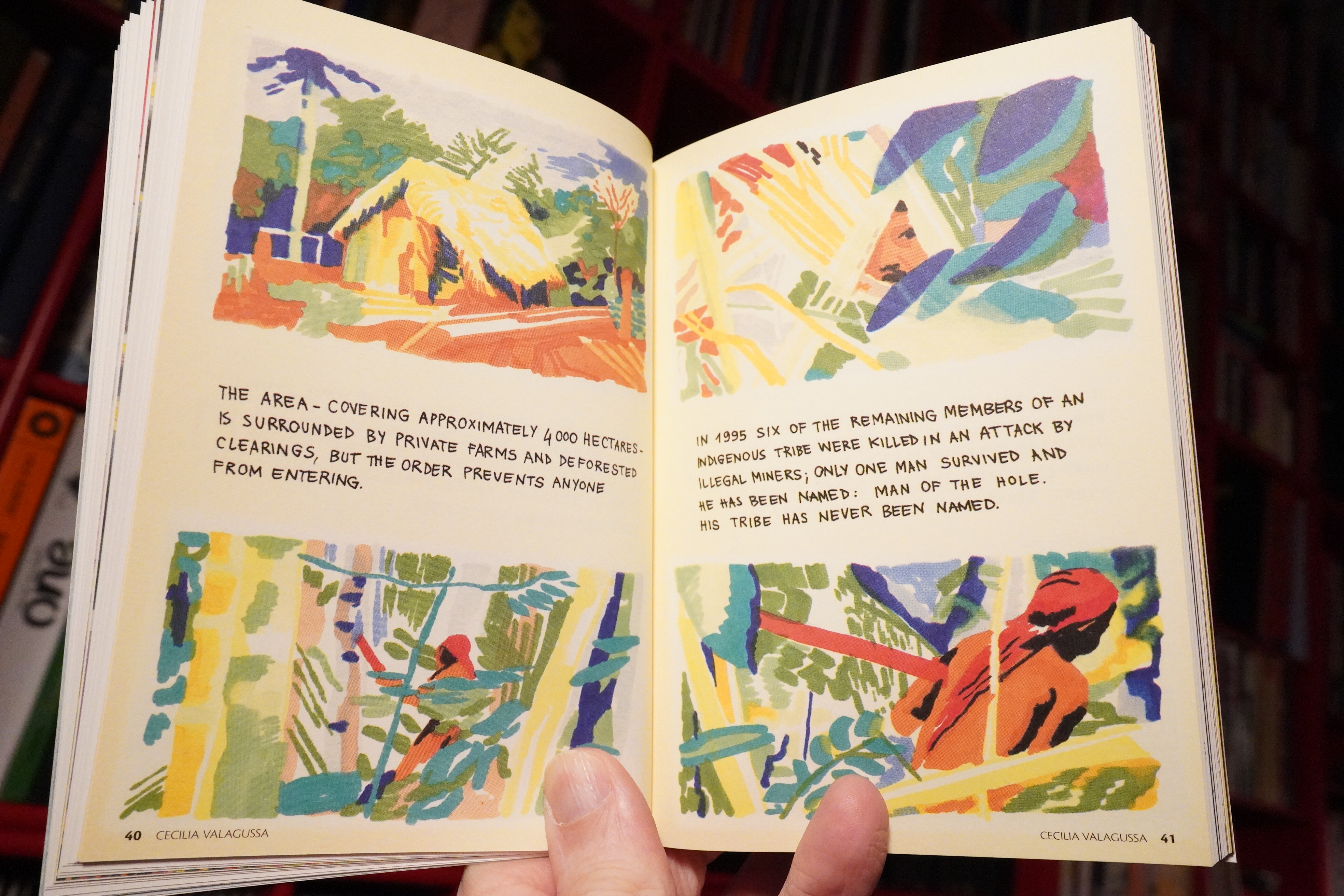
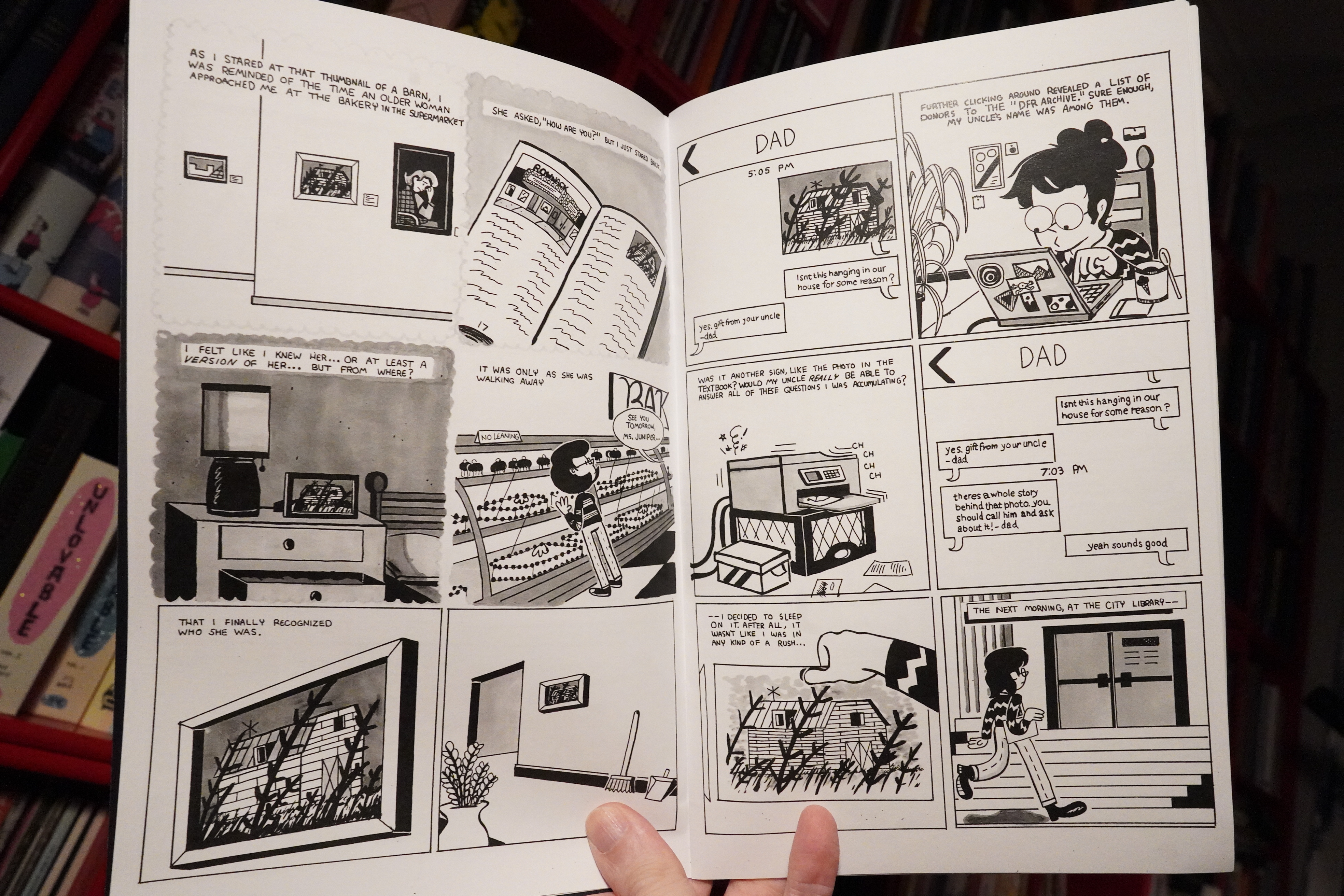
20:27: Fenix by Zane Zlemeša (Kuš)
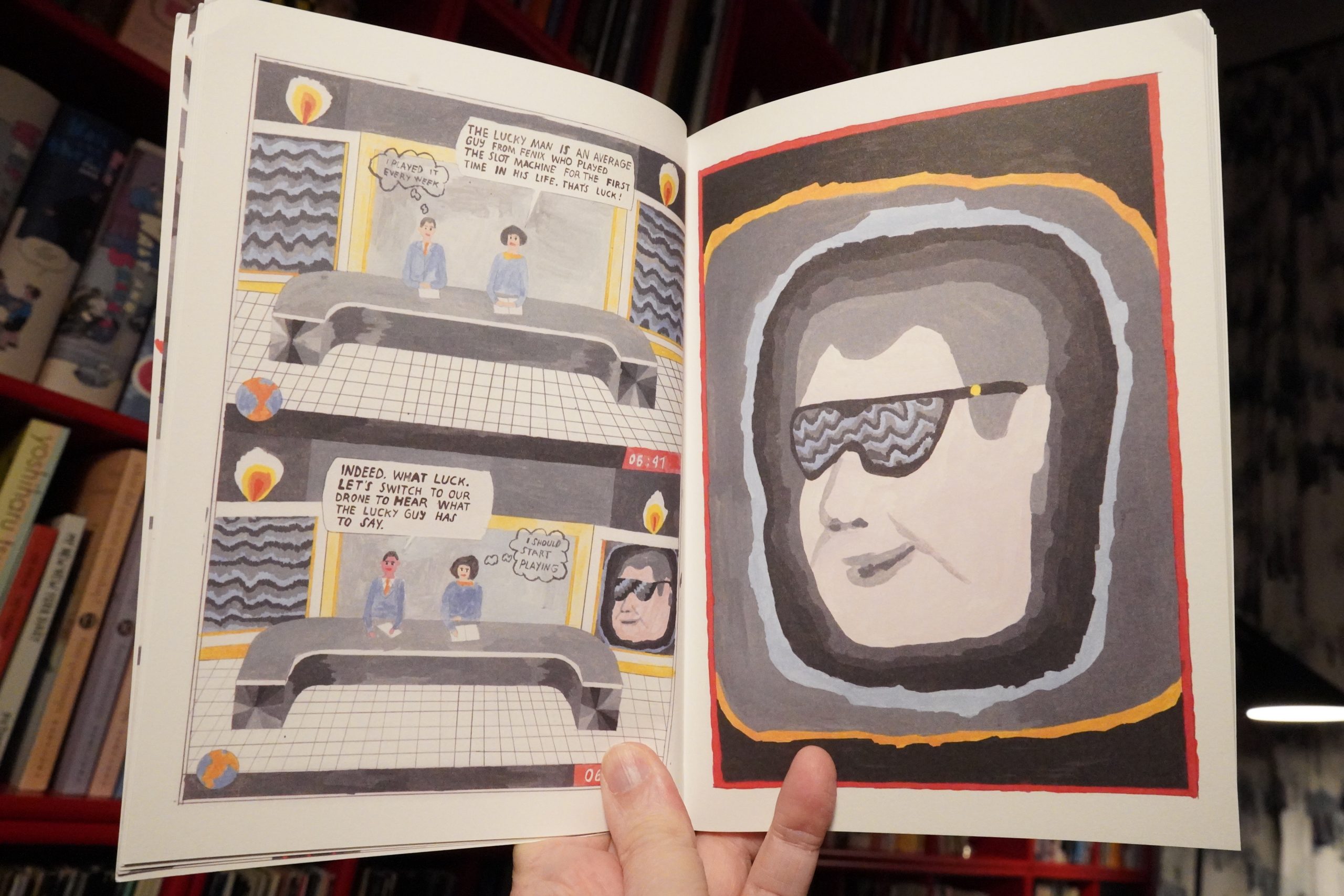
This is very interesting — it tells a straighforward story, really, but in such a way that it all seems mysterious and significant.
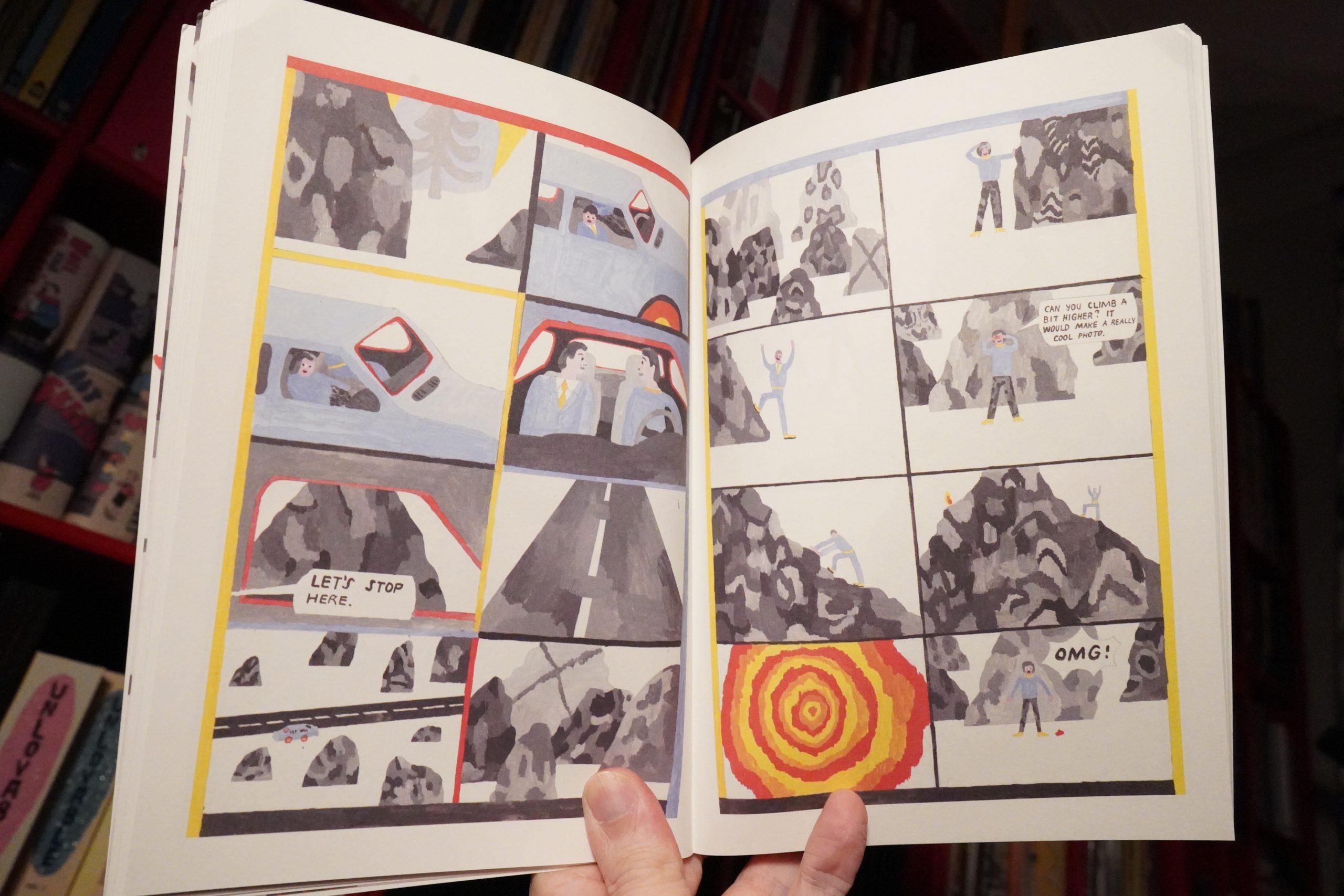
Good stuff.

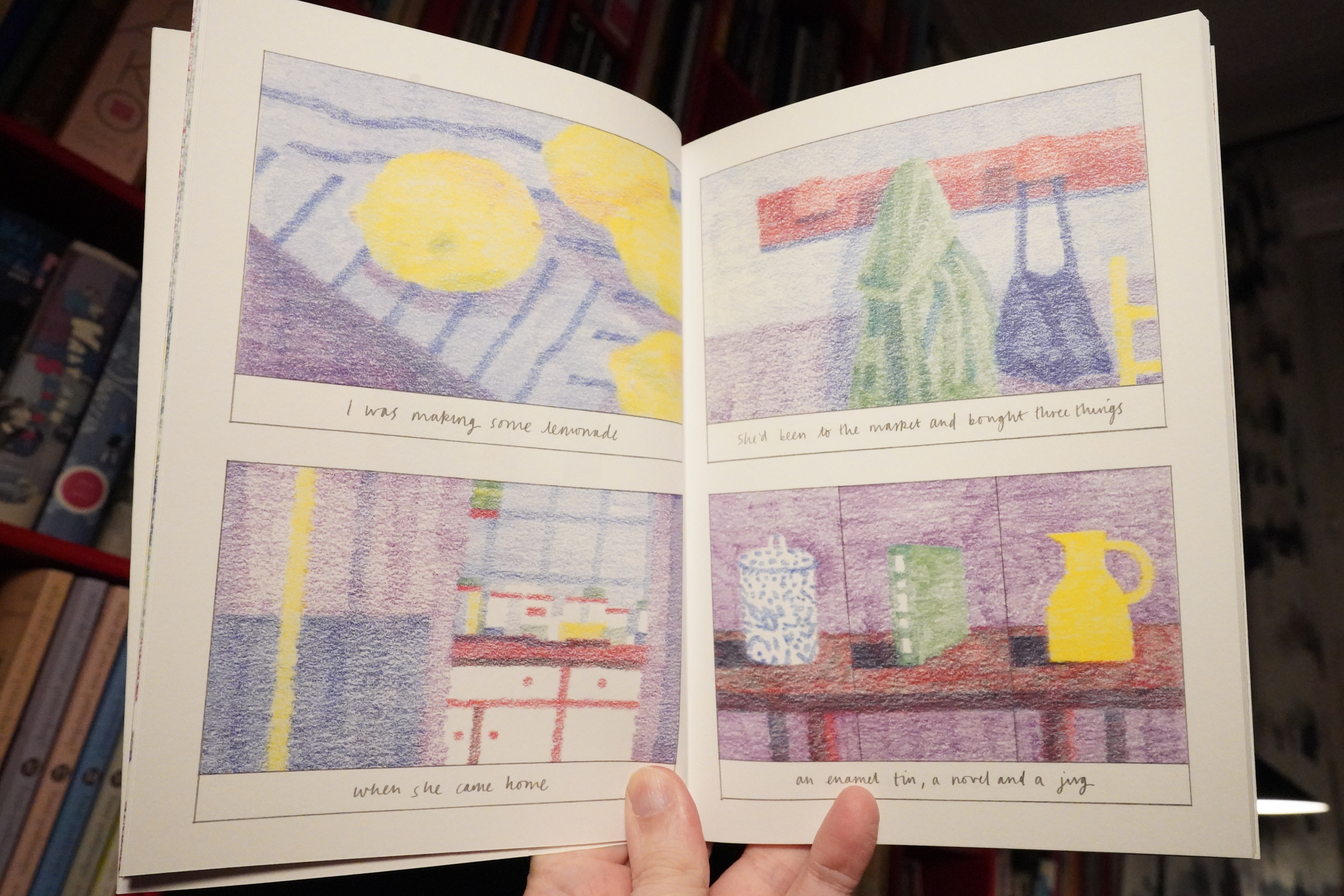
20:34: Lemon Yellow by Ciara Quilty-Harper (Kuš)
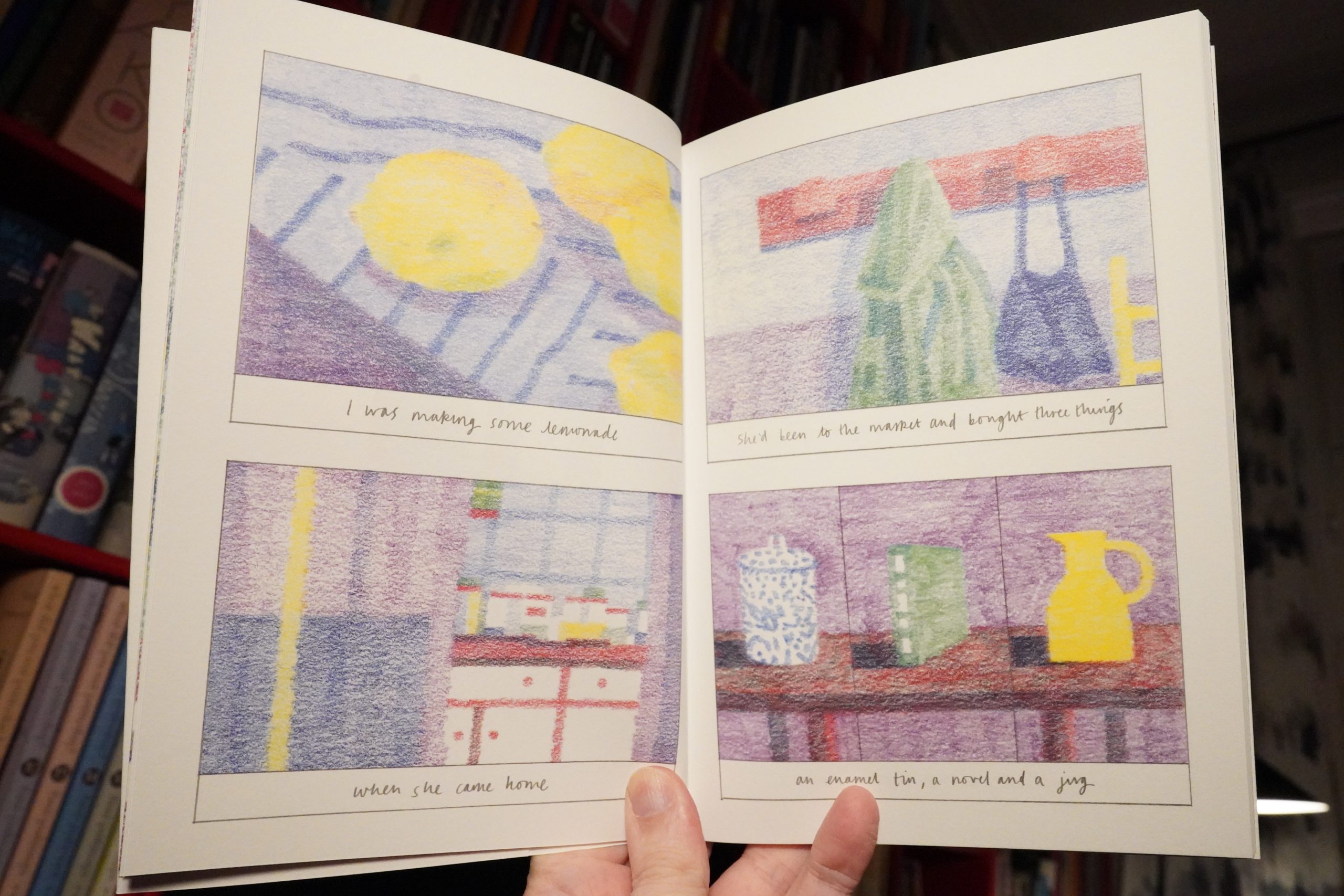
This is dreamy.
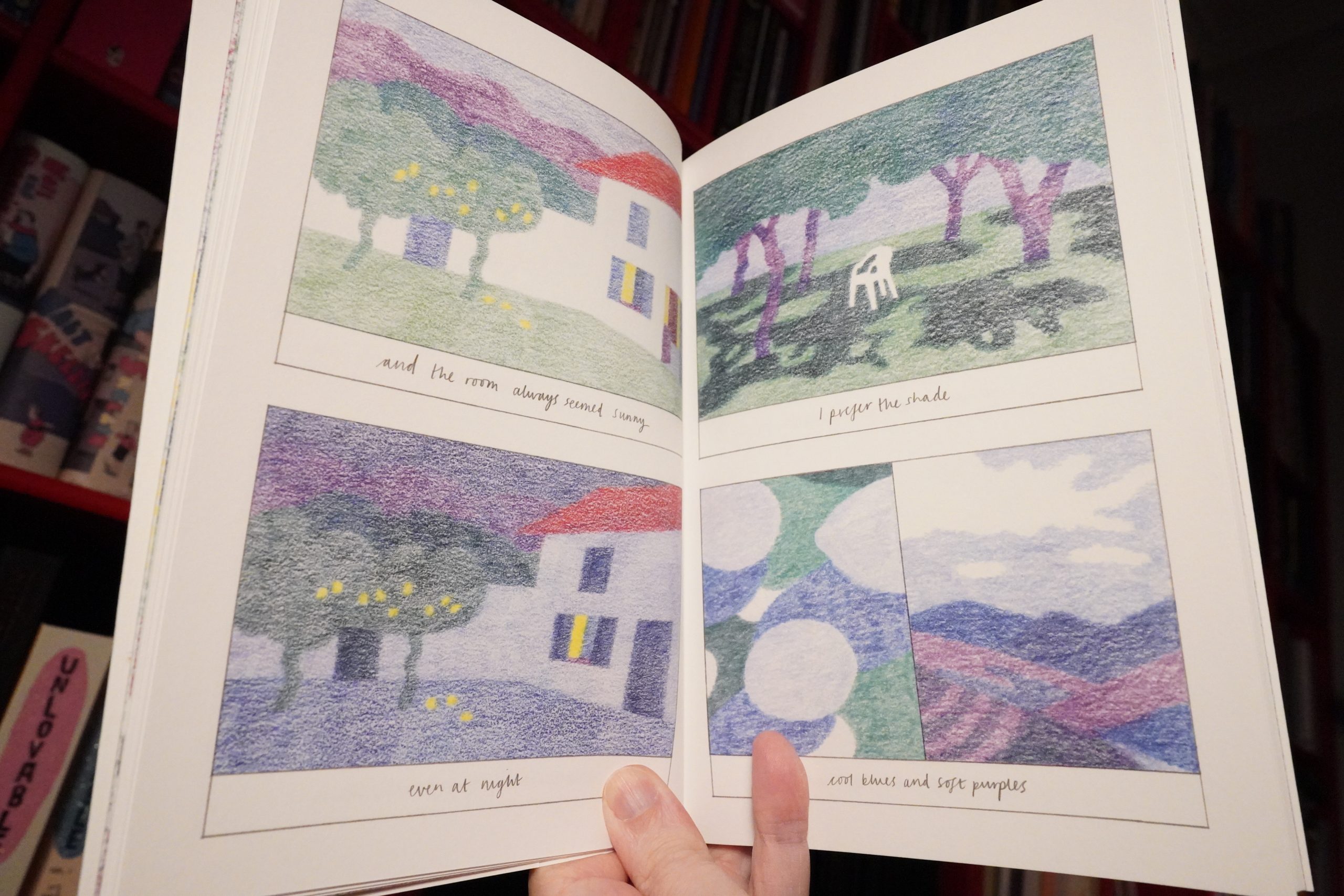
It’s like three meditations on three subjects, and it’s great. I love the usage of pastels (and barely anything else). It’s a book that’s both laser-focused and meandering at the same time.
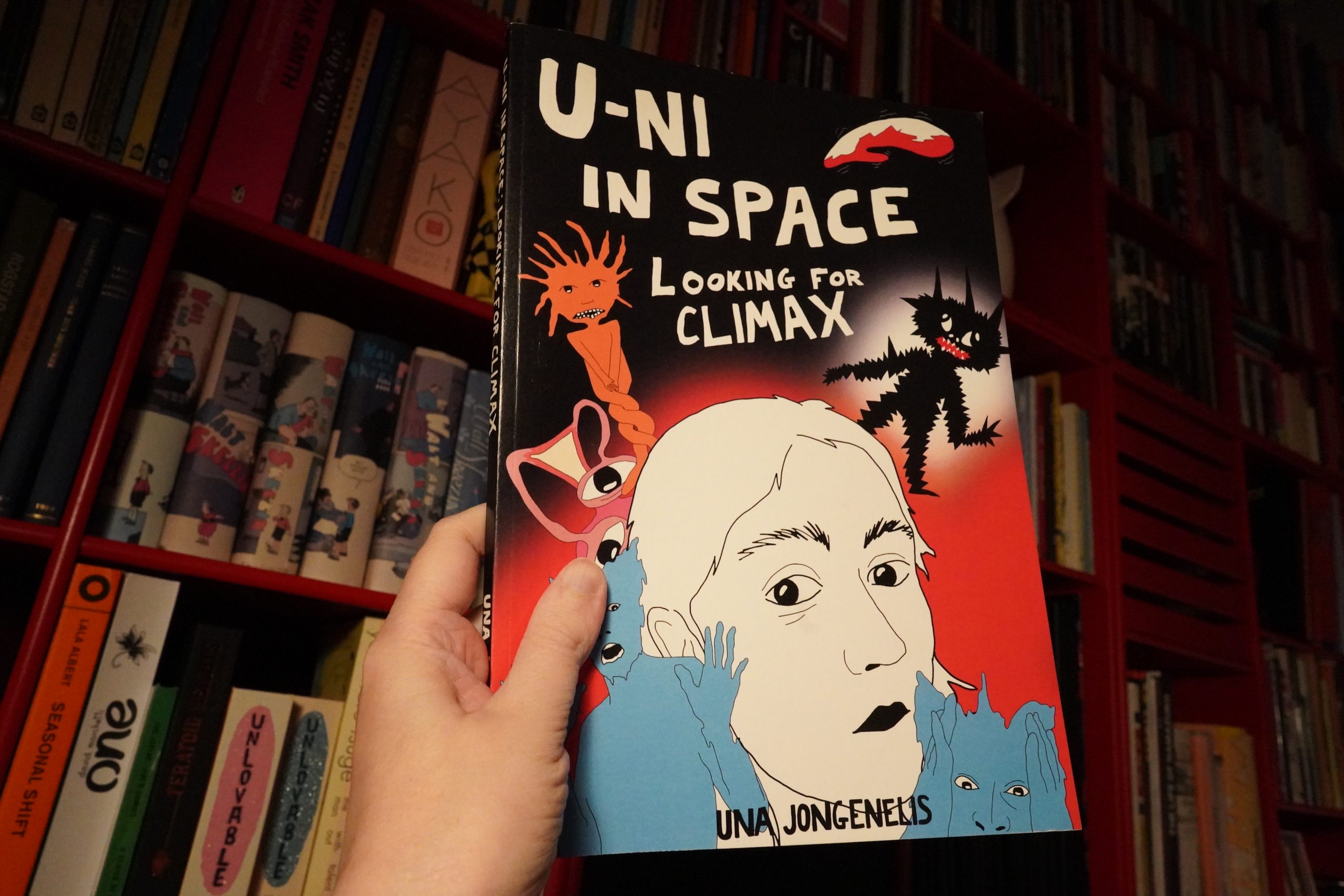
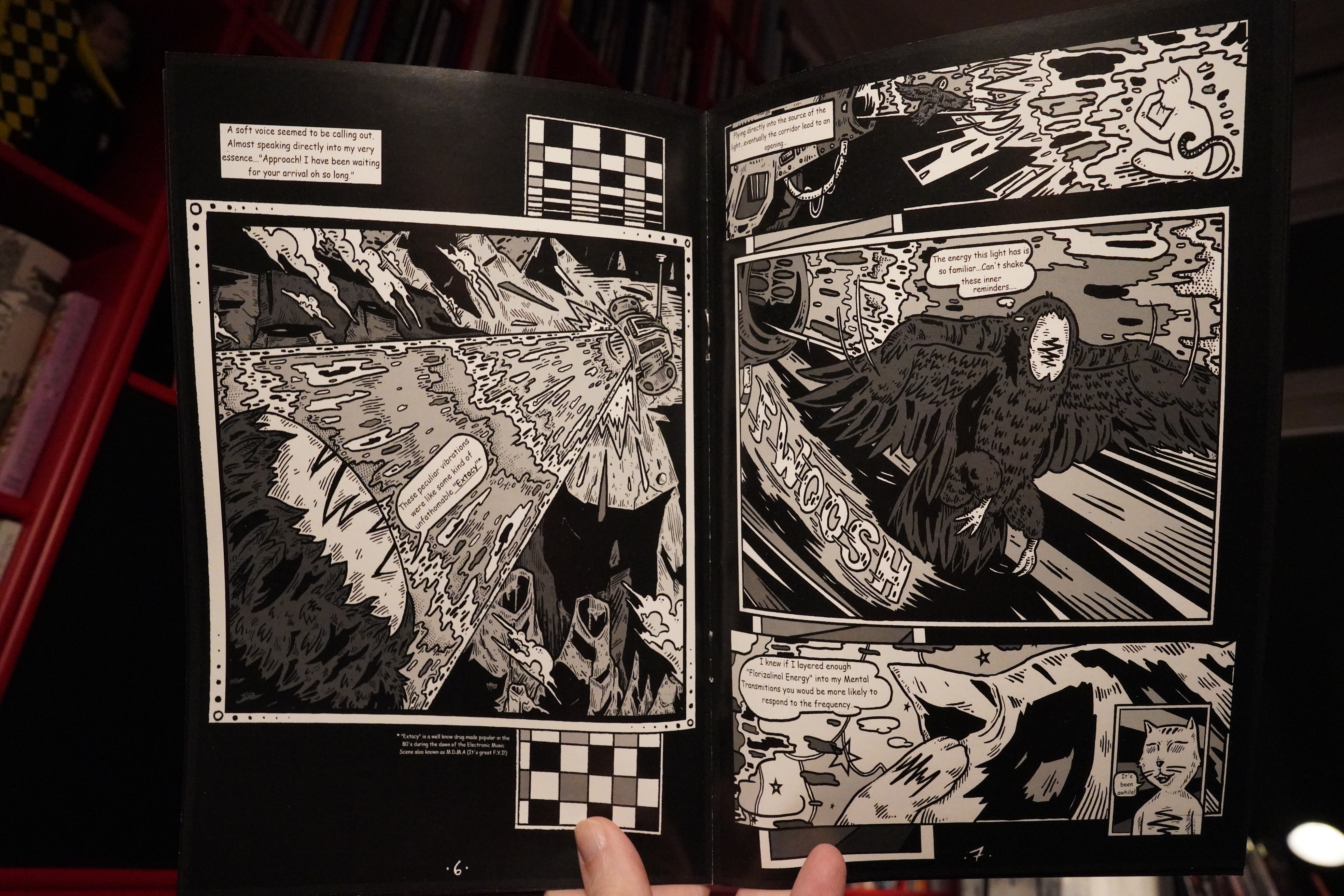
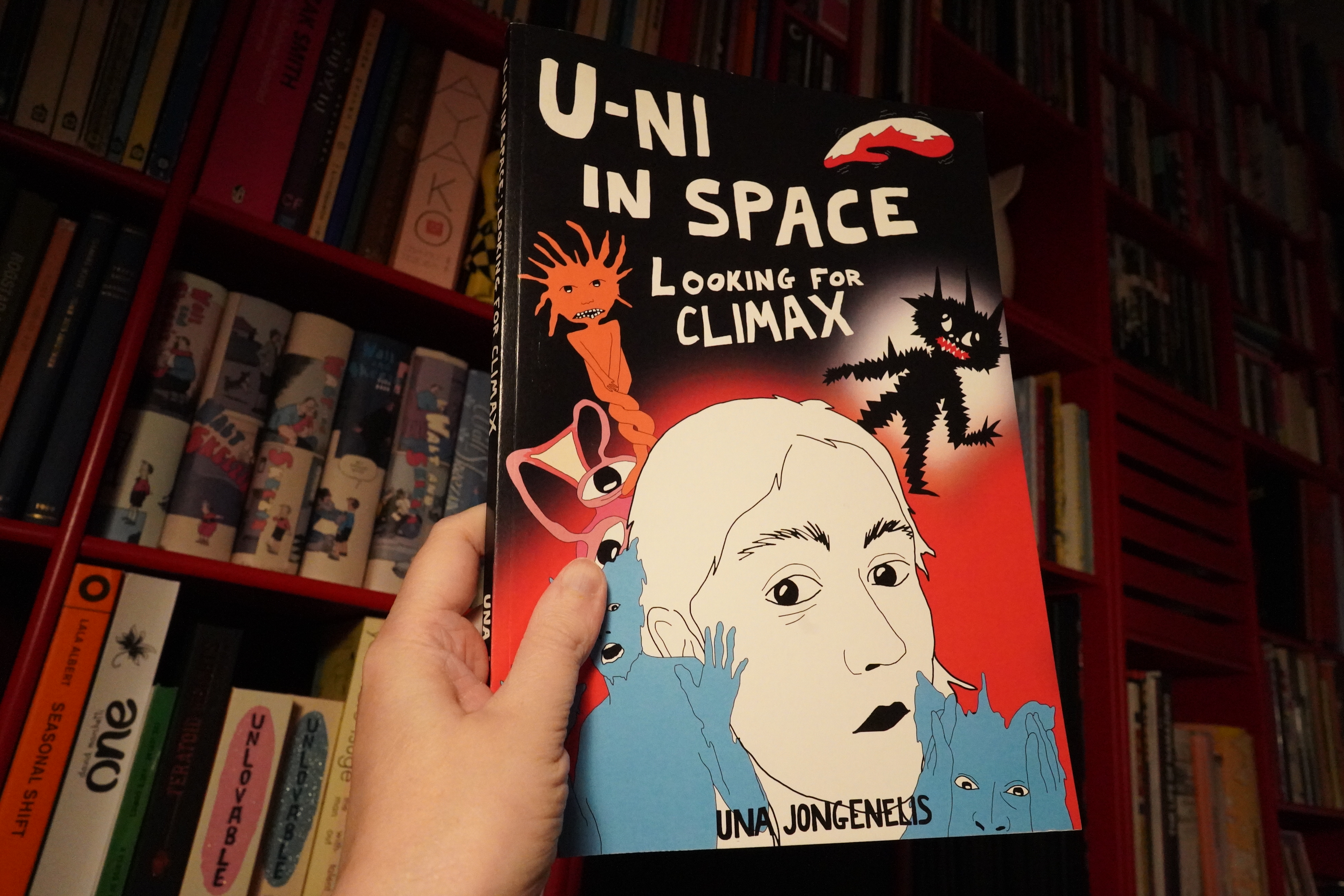
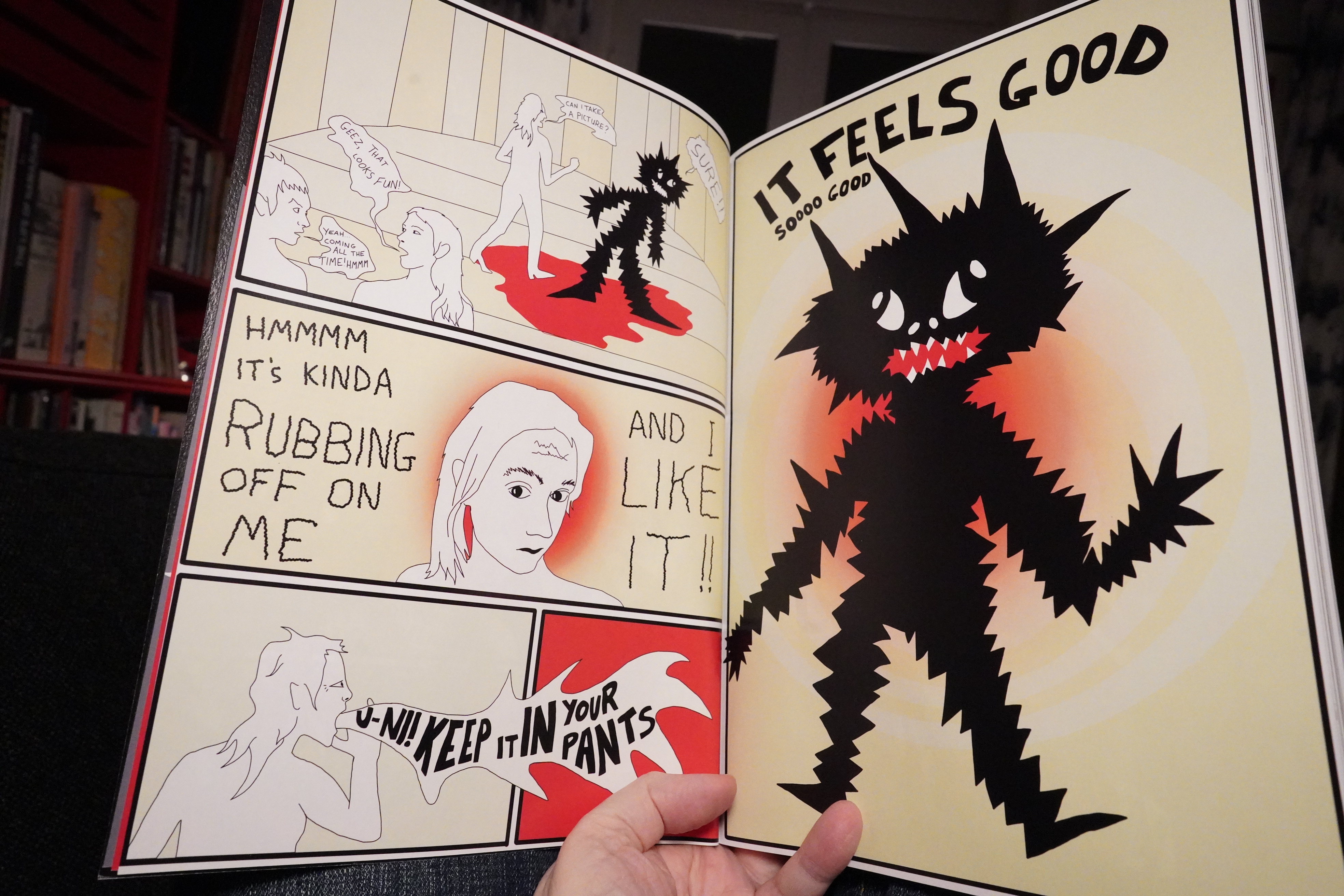
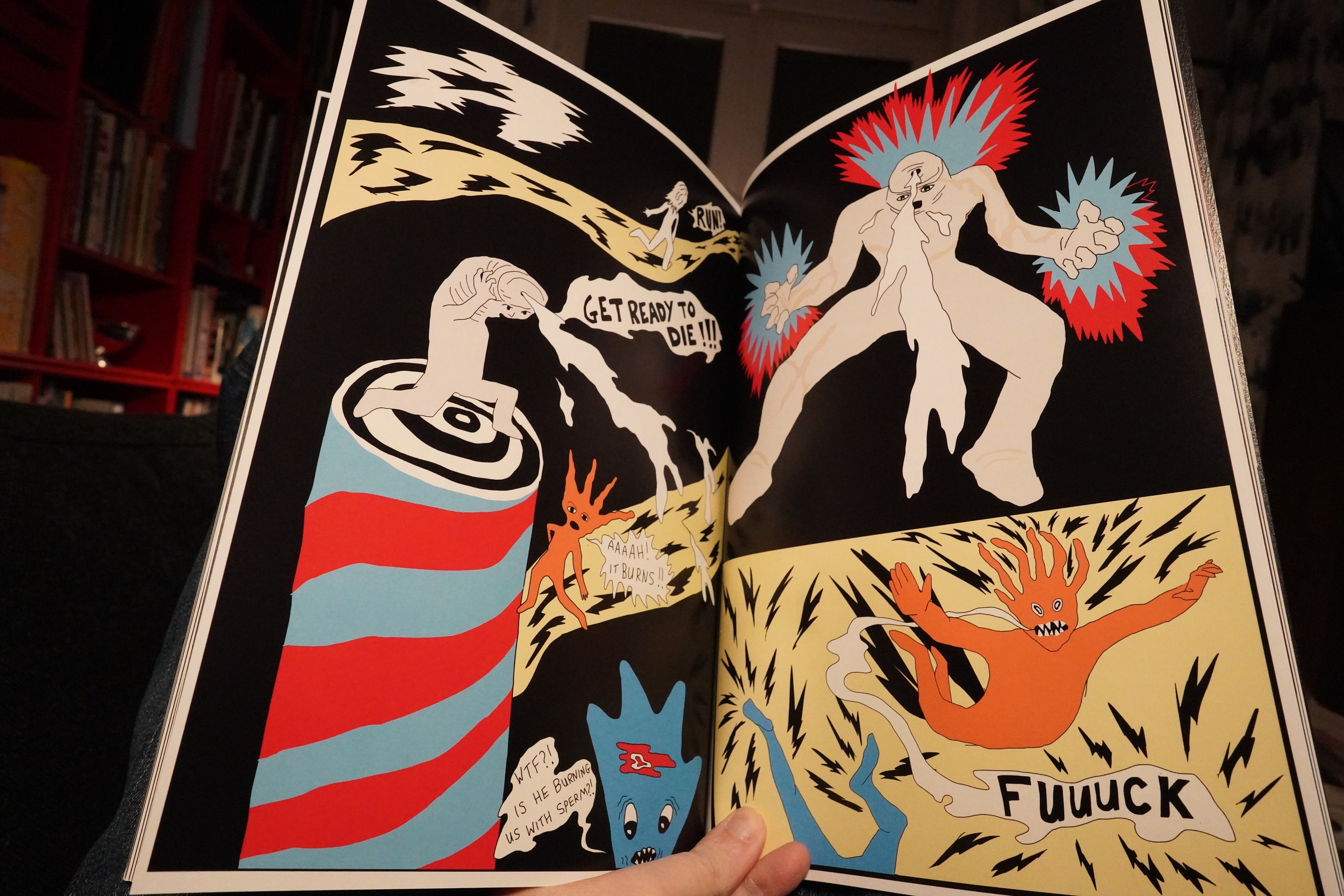
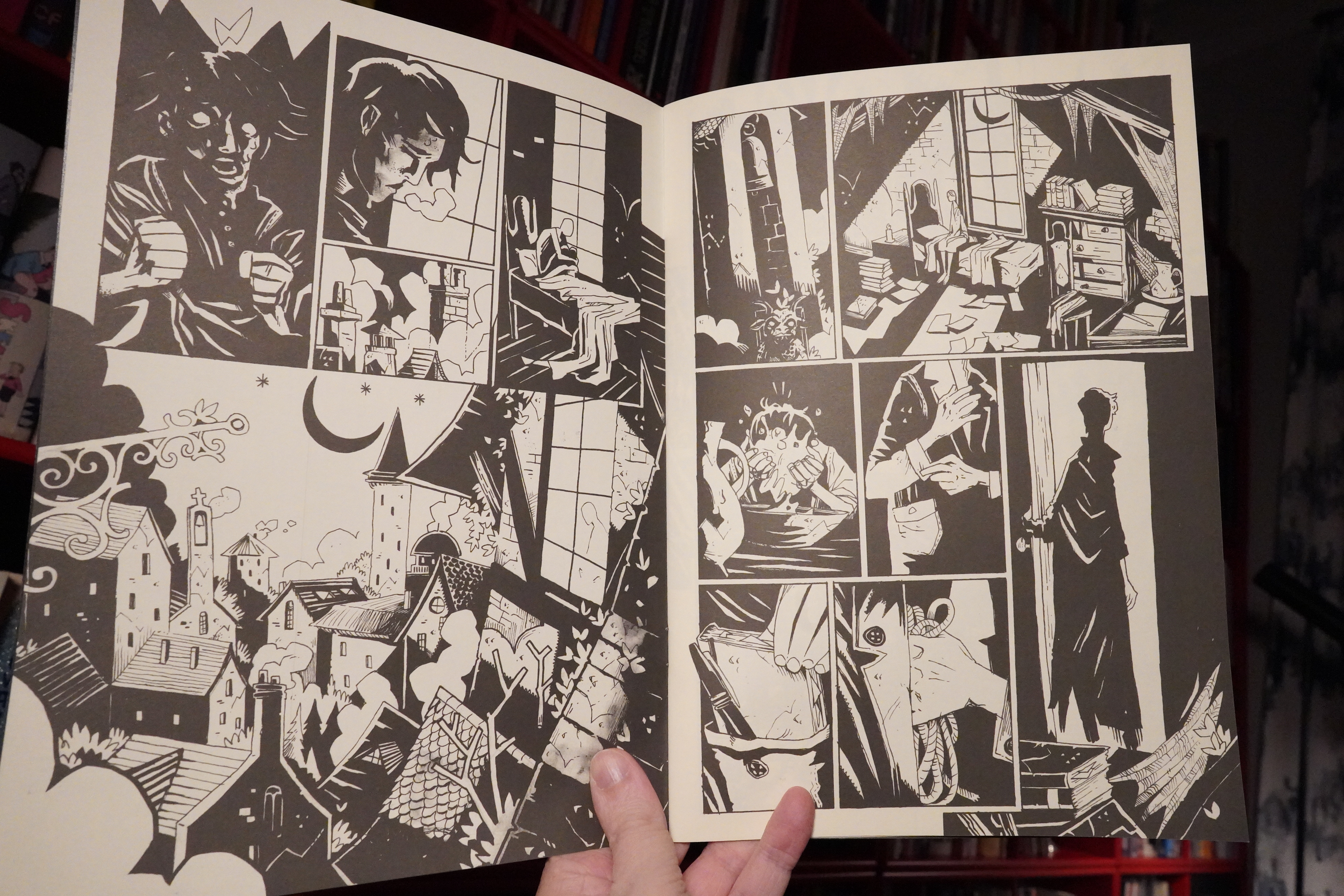
20:42: U-Ni in Space: Looking for Climax by Una Jongenelis
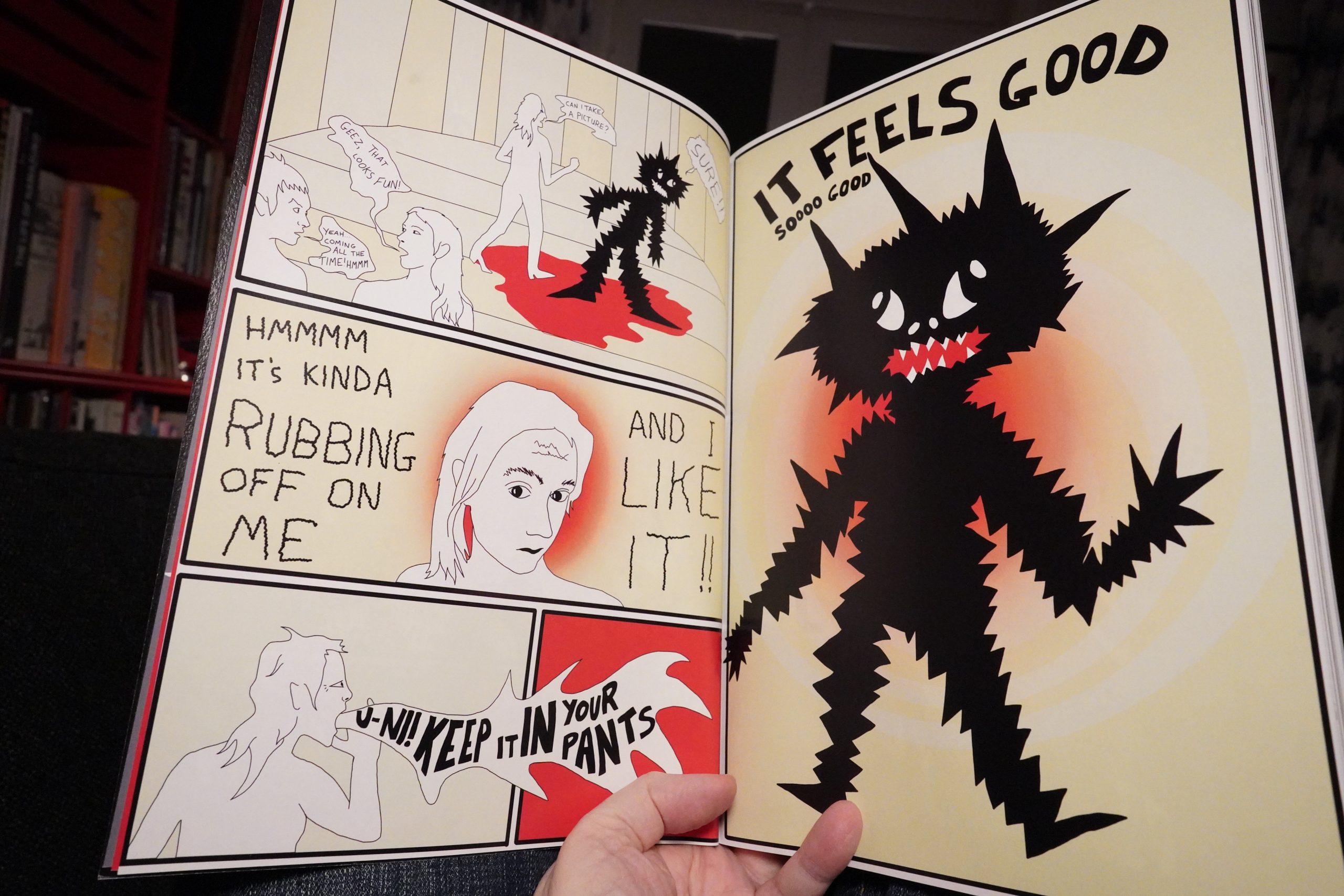
This is so weird. It’s a big book — I guesstimate 160 pages? Printed in a super sharp way on glossy paper.

It’s totally original. The artwork shows some influences from 70s pop art, I guess? But it’s something else entirely.
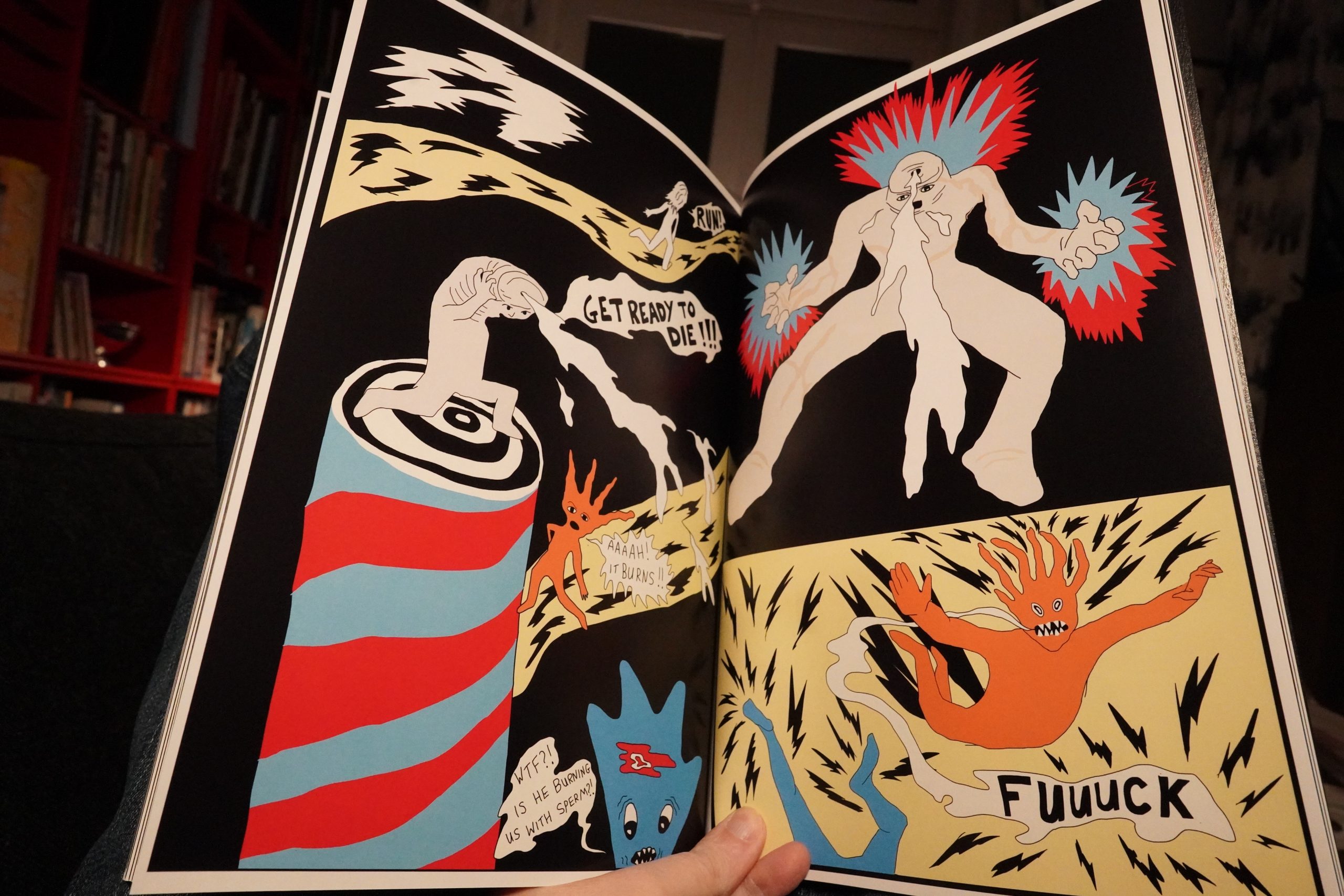
The storyline is surprisingly straightforward — it’s some scientists going around in a space ship looking for a criminal that’s stolen their climaxes.
I like it a lot. And she’s selling fashion on her web site, and I think I’ll order some socks and a scarf, at least.
| Blaine L. Reininger: Live in Brussels |  |
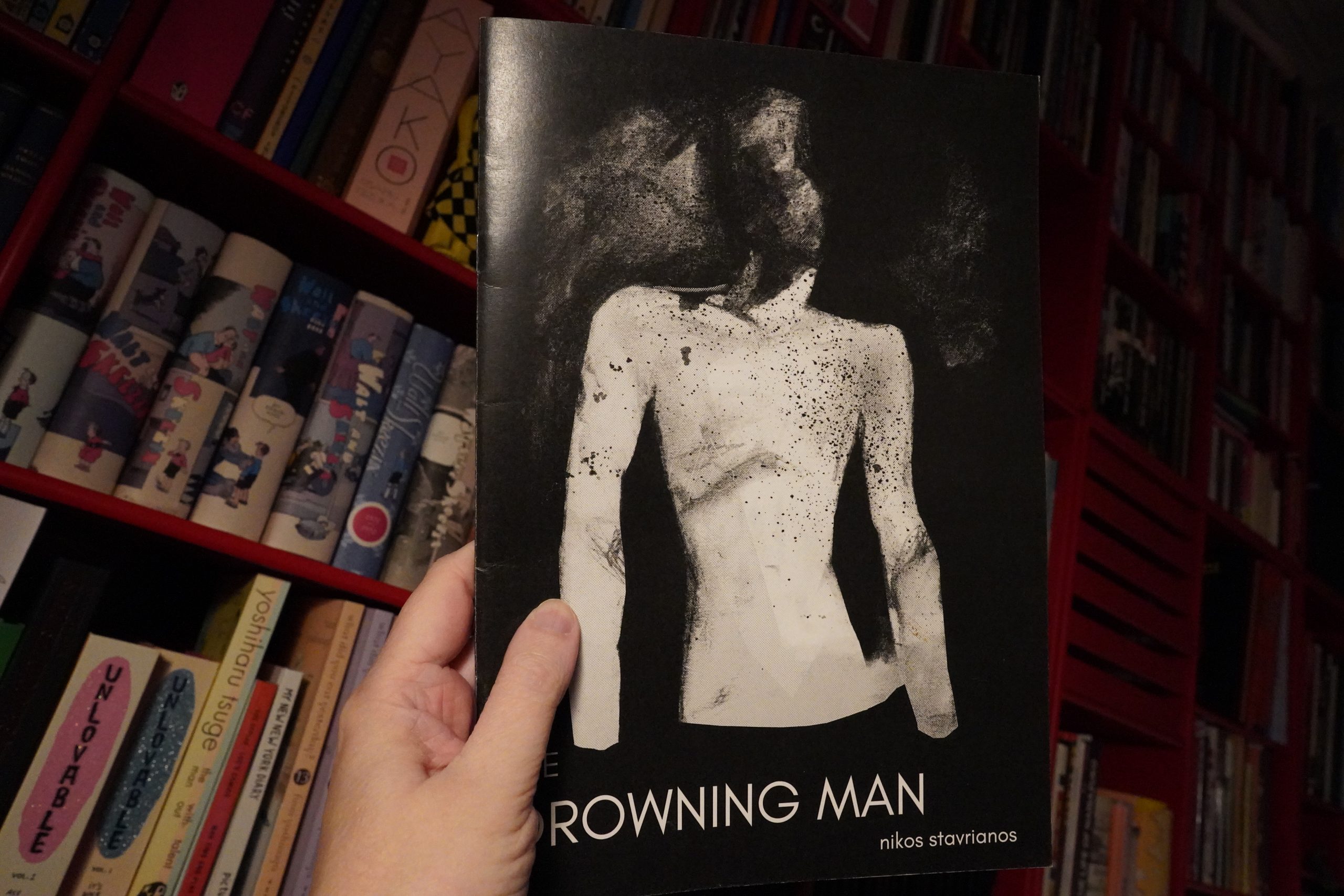
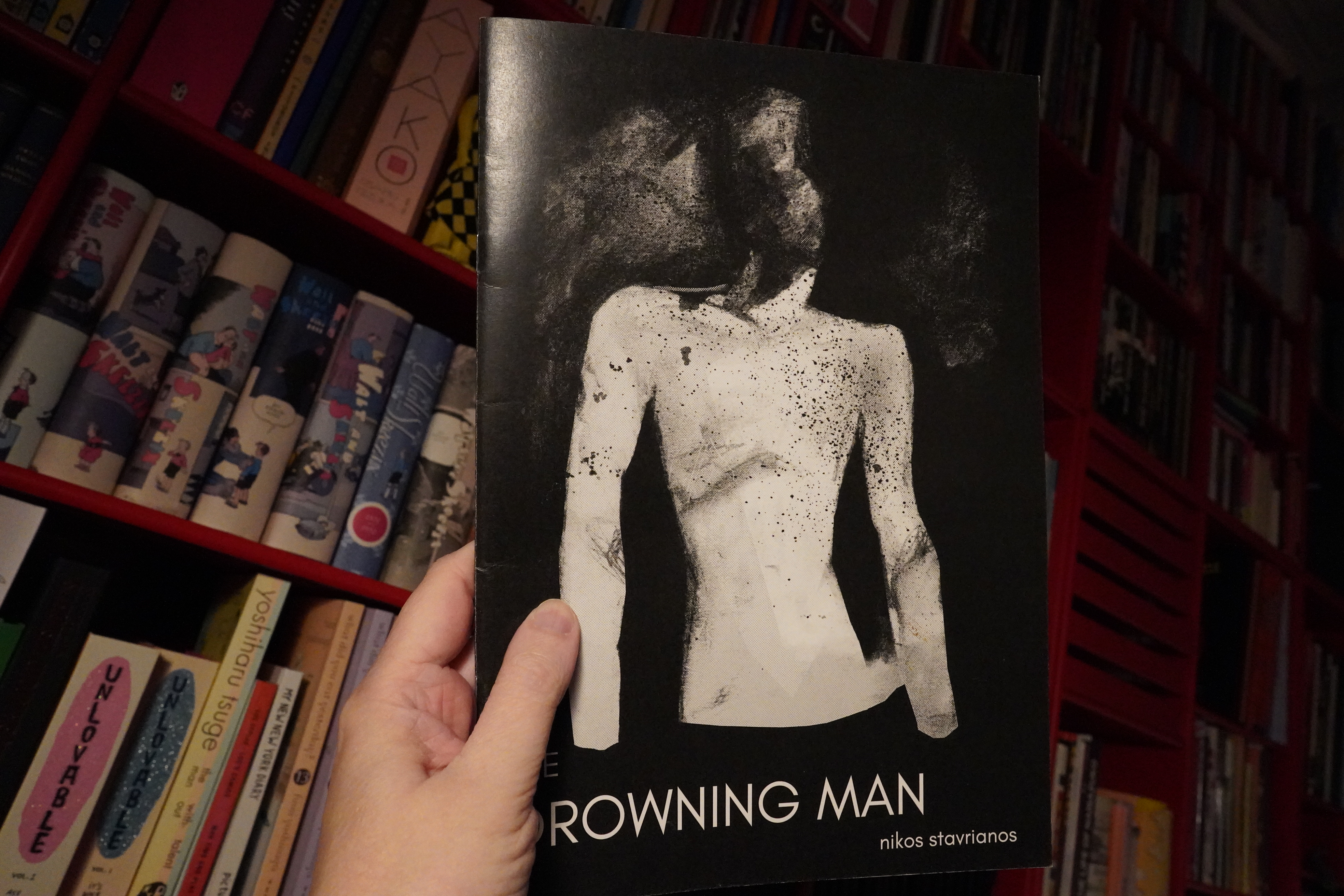
21:08: The Drowning Man by Nikos Stavrianos
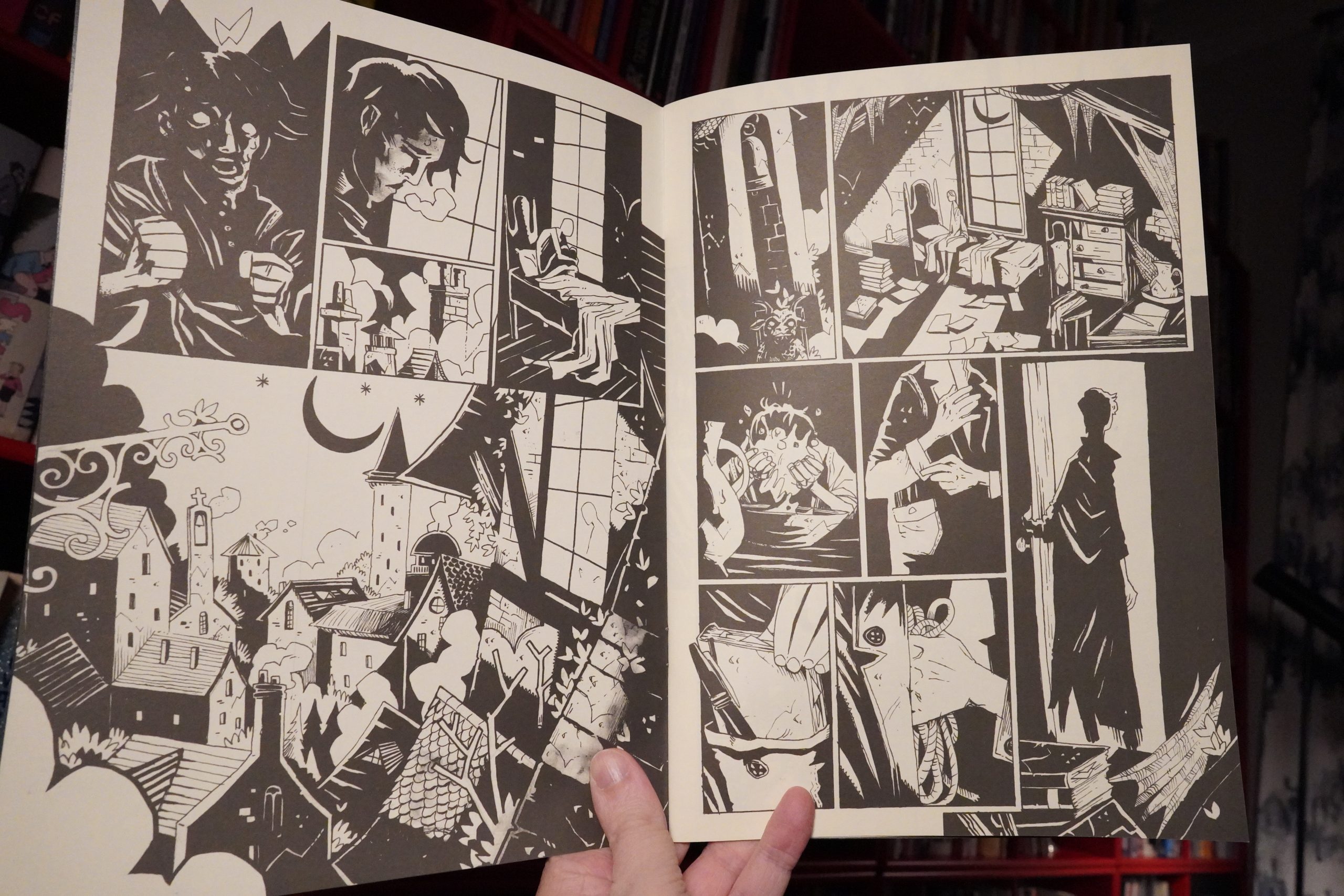
This has very sharp artwork (and quotes a bit from early lyrics by The Cure)…
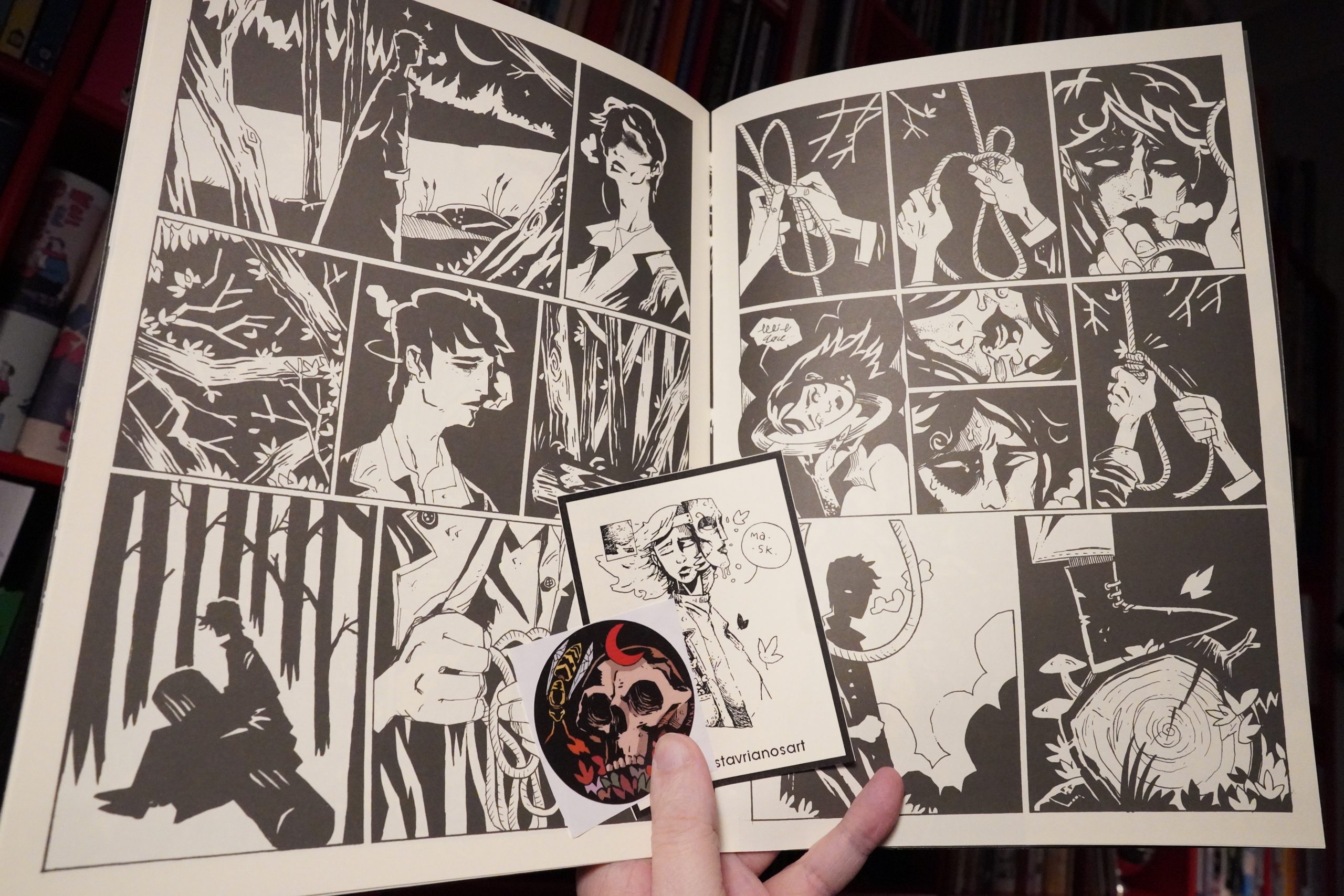
… but the story didn’t really grab me, I’m afraid. But clearly very talented artist.
| Blaine L. Reininger: Live in Brussels |  |
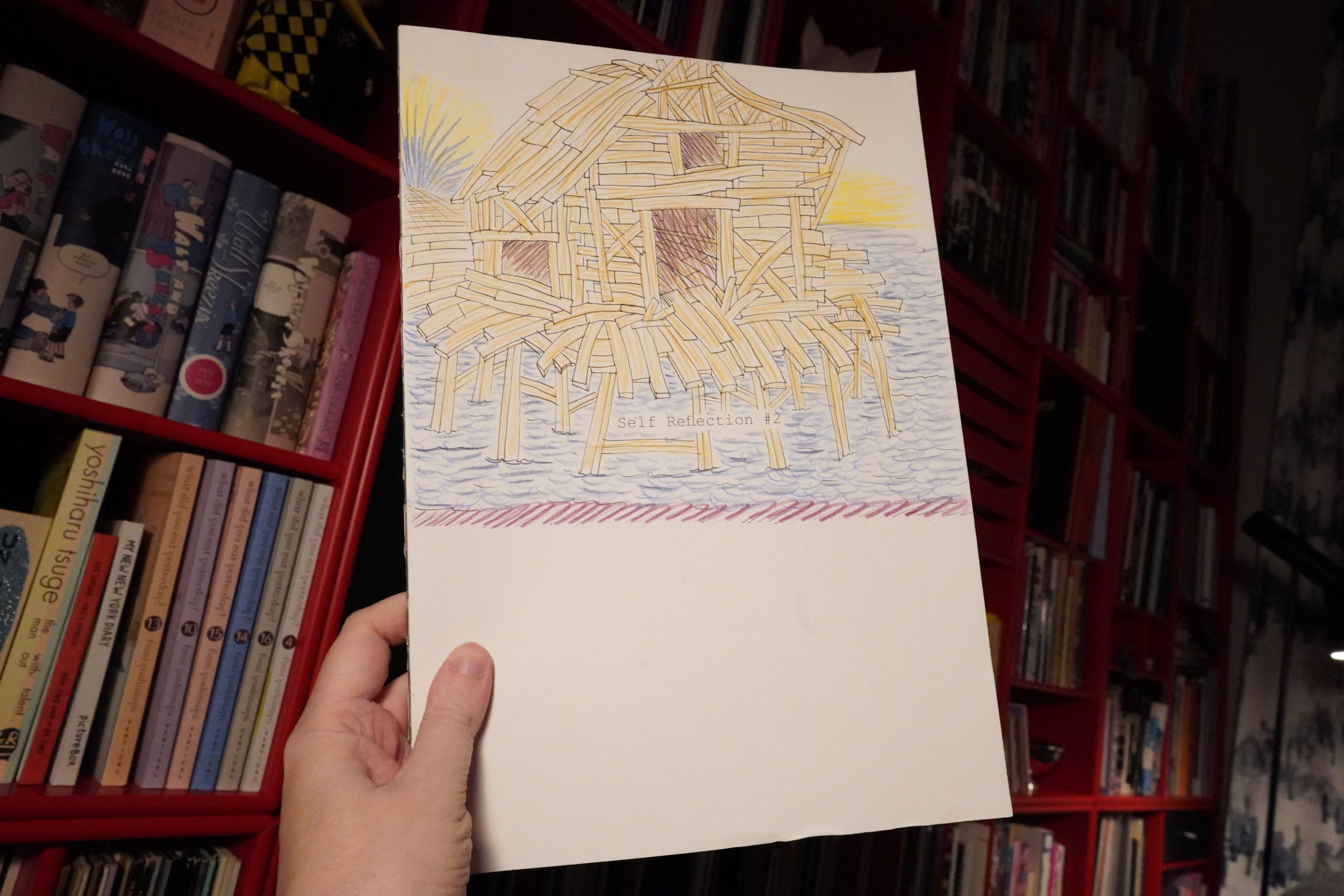
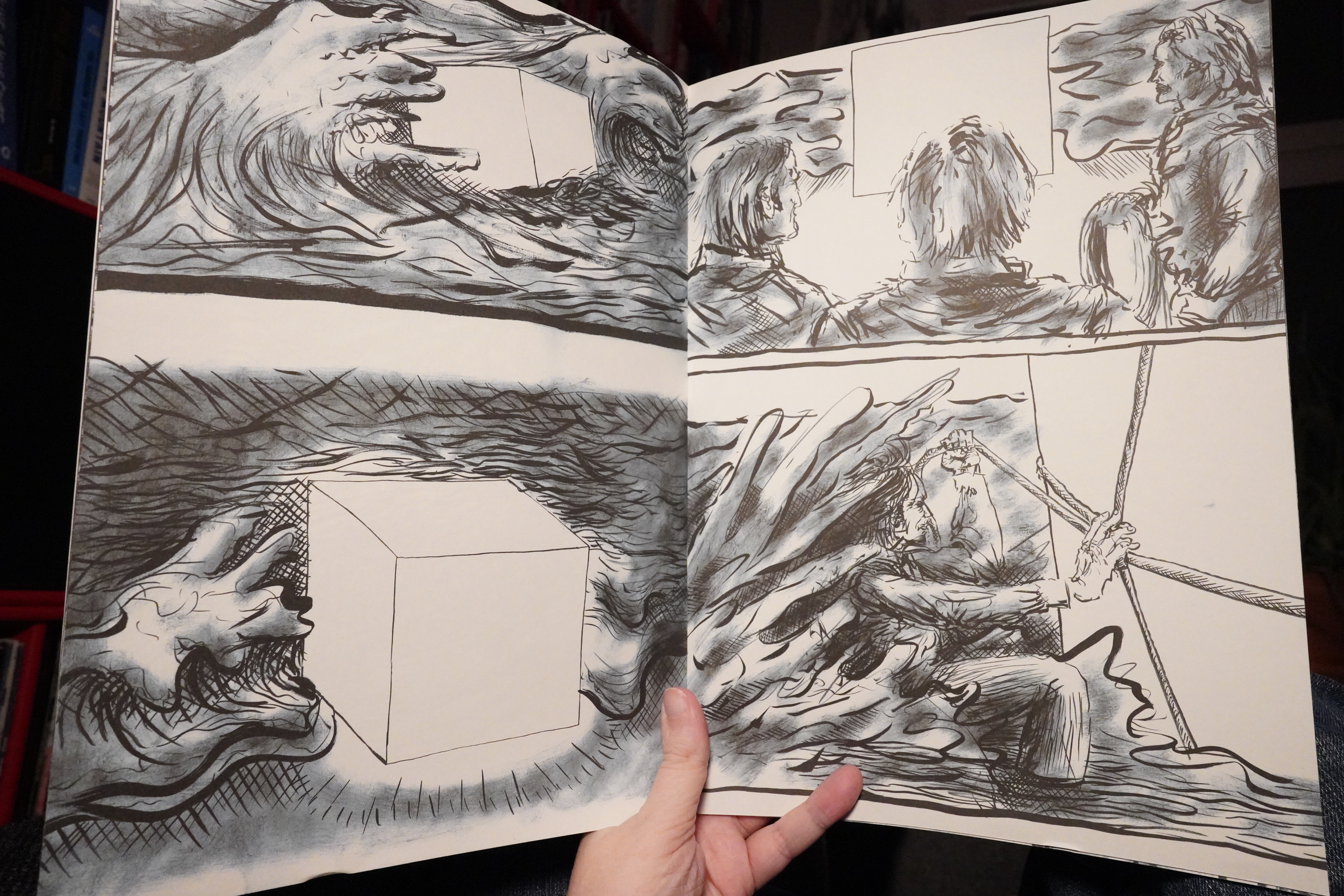
21:15: Self Reflection #2 by Emile Weisz
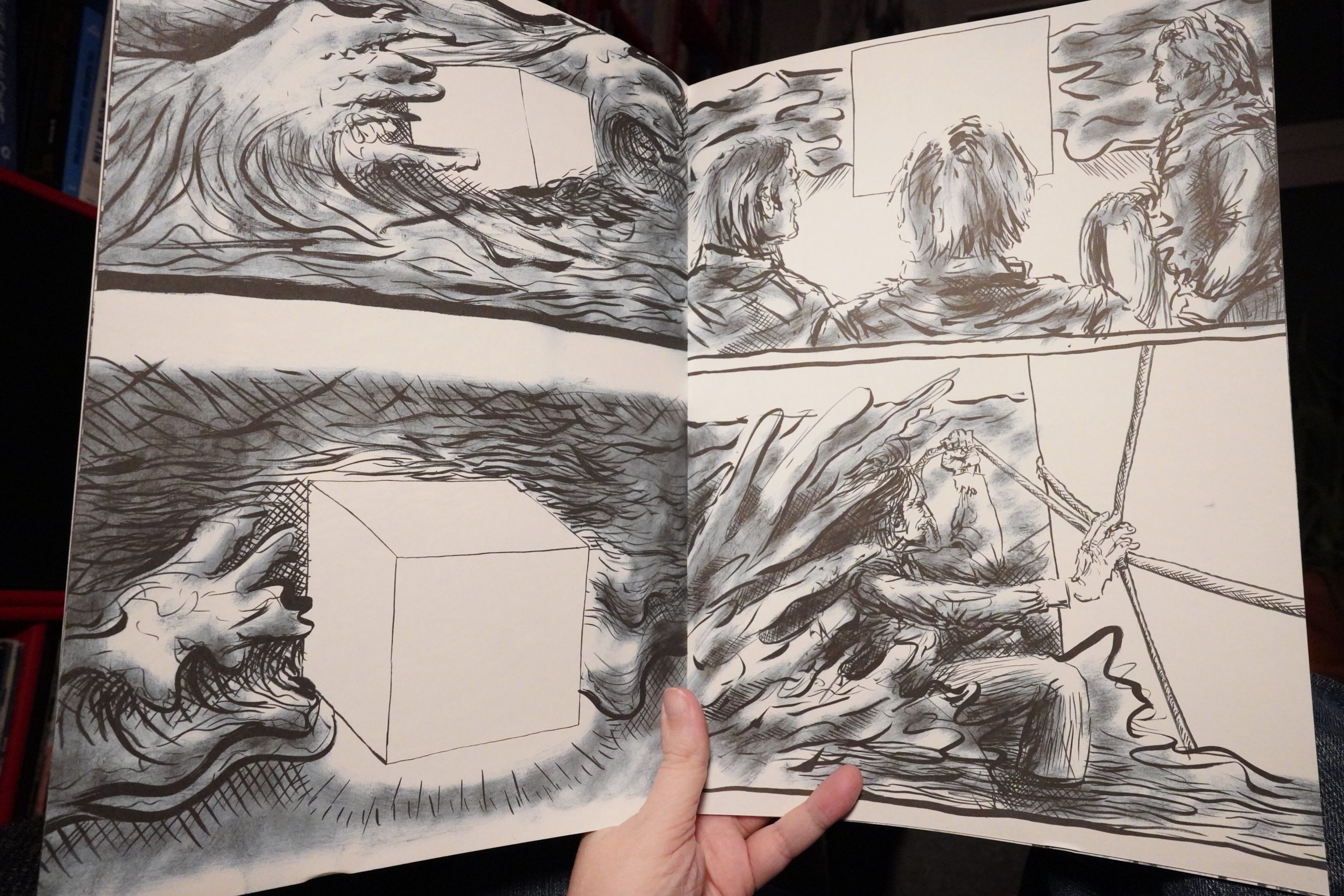
This is a big, silent book about… er… it’s got a lot of symbolism going on, but I’m not quite sure what it’s all about. Something about Ikarus?
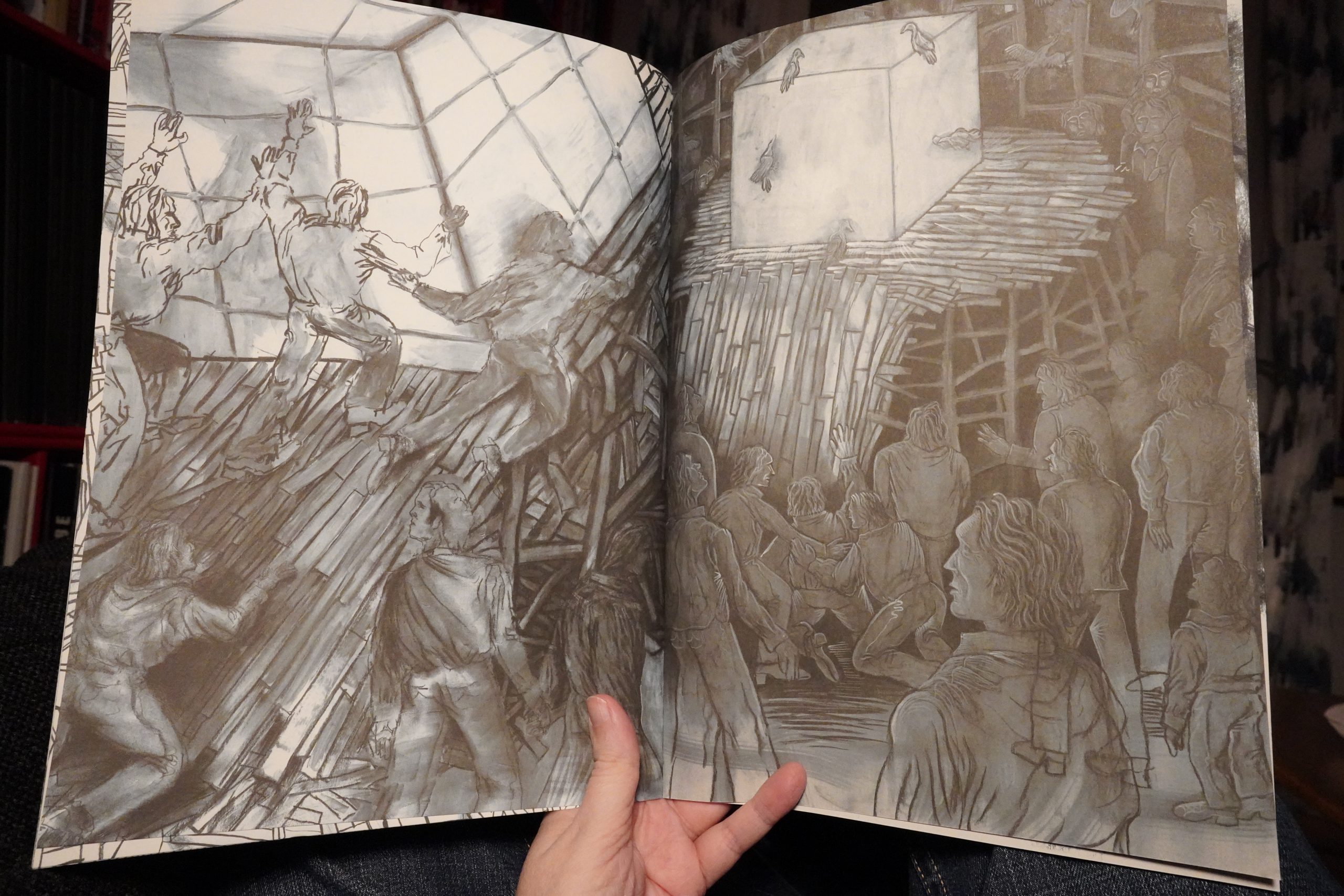
And a box.
I didn’t quite connect with this one.
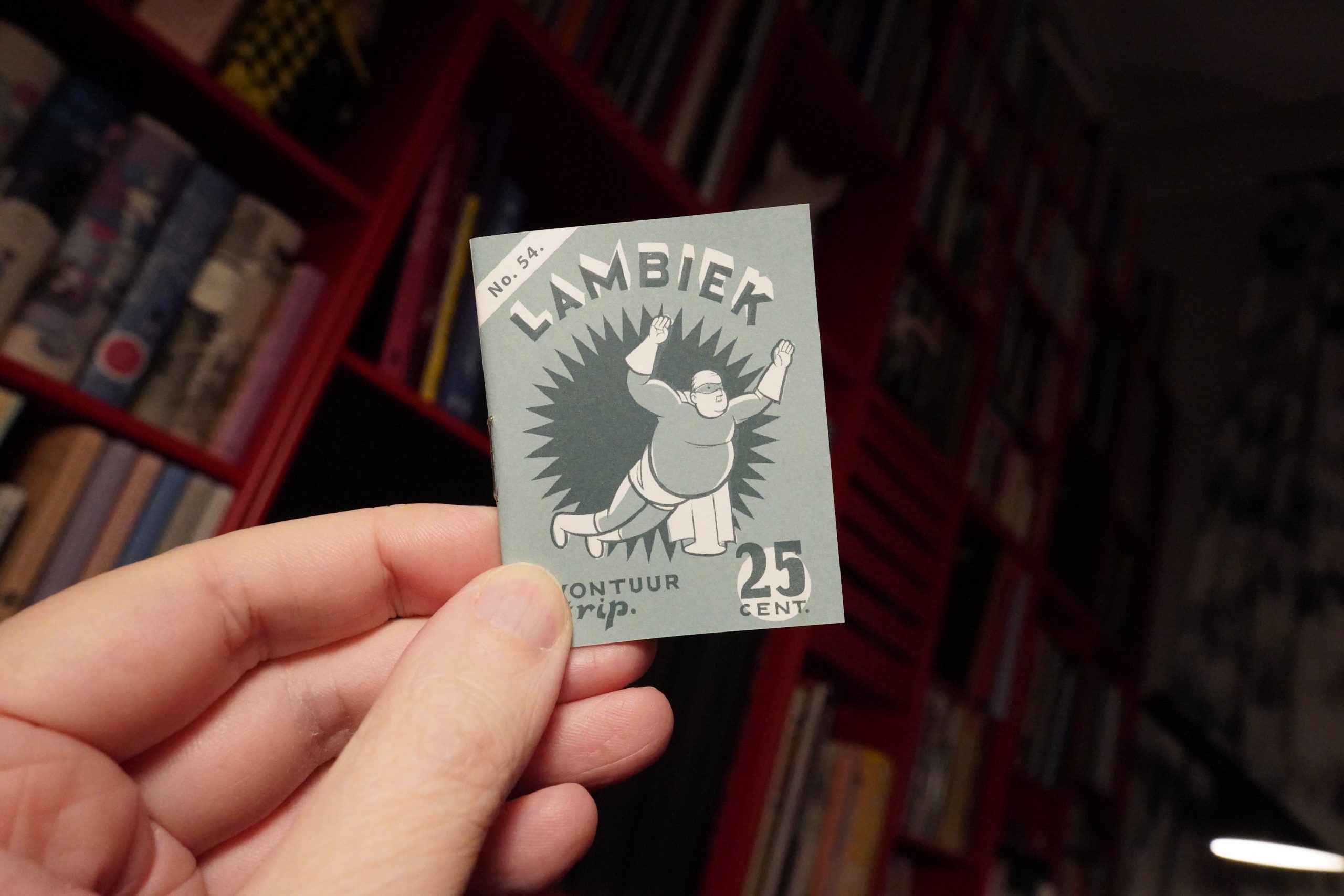
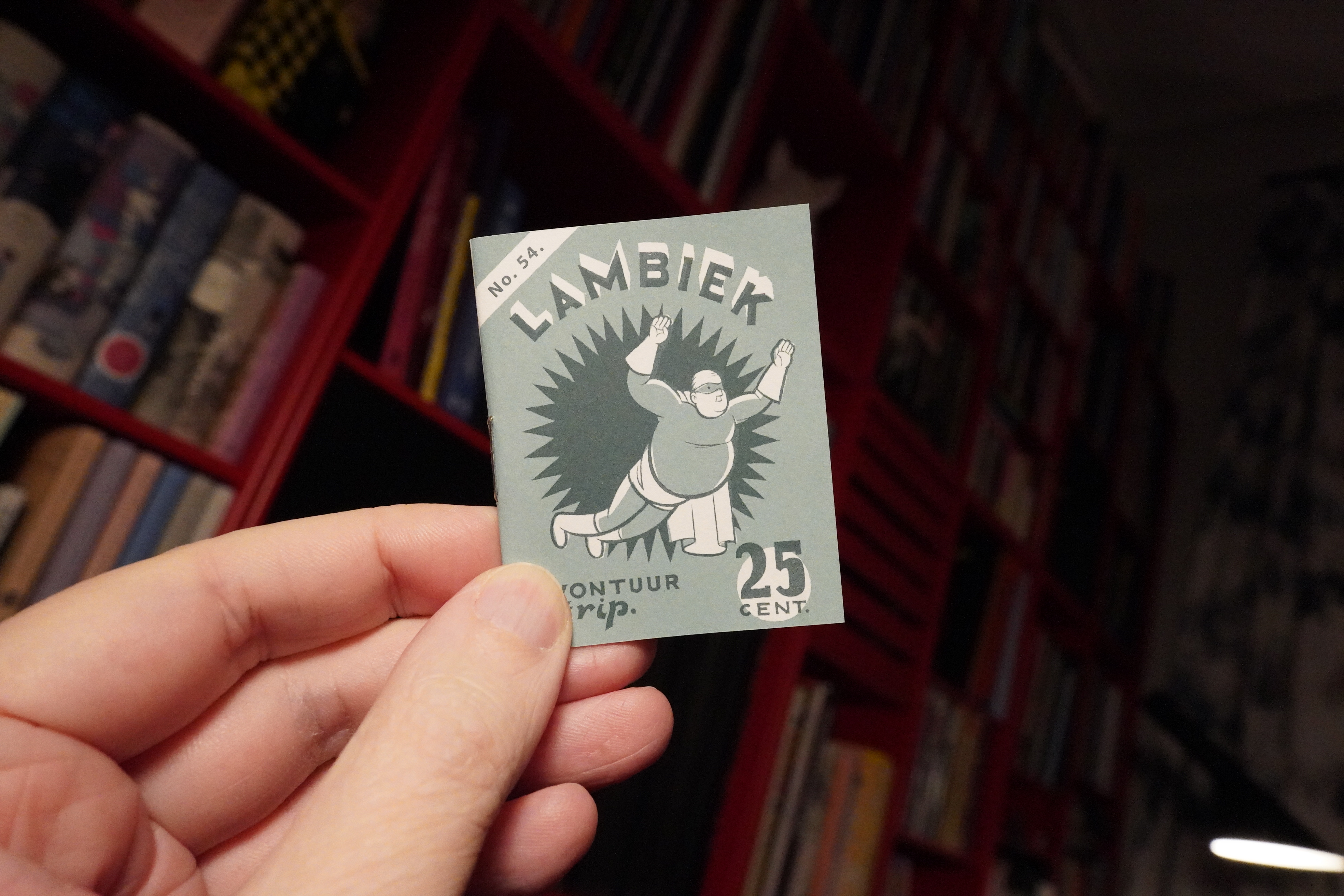
21:25: Lambie Avontuur Strip #54 by Chris Ware
And this brings us to the bottom of the Lambiek shopping bag.
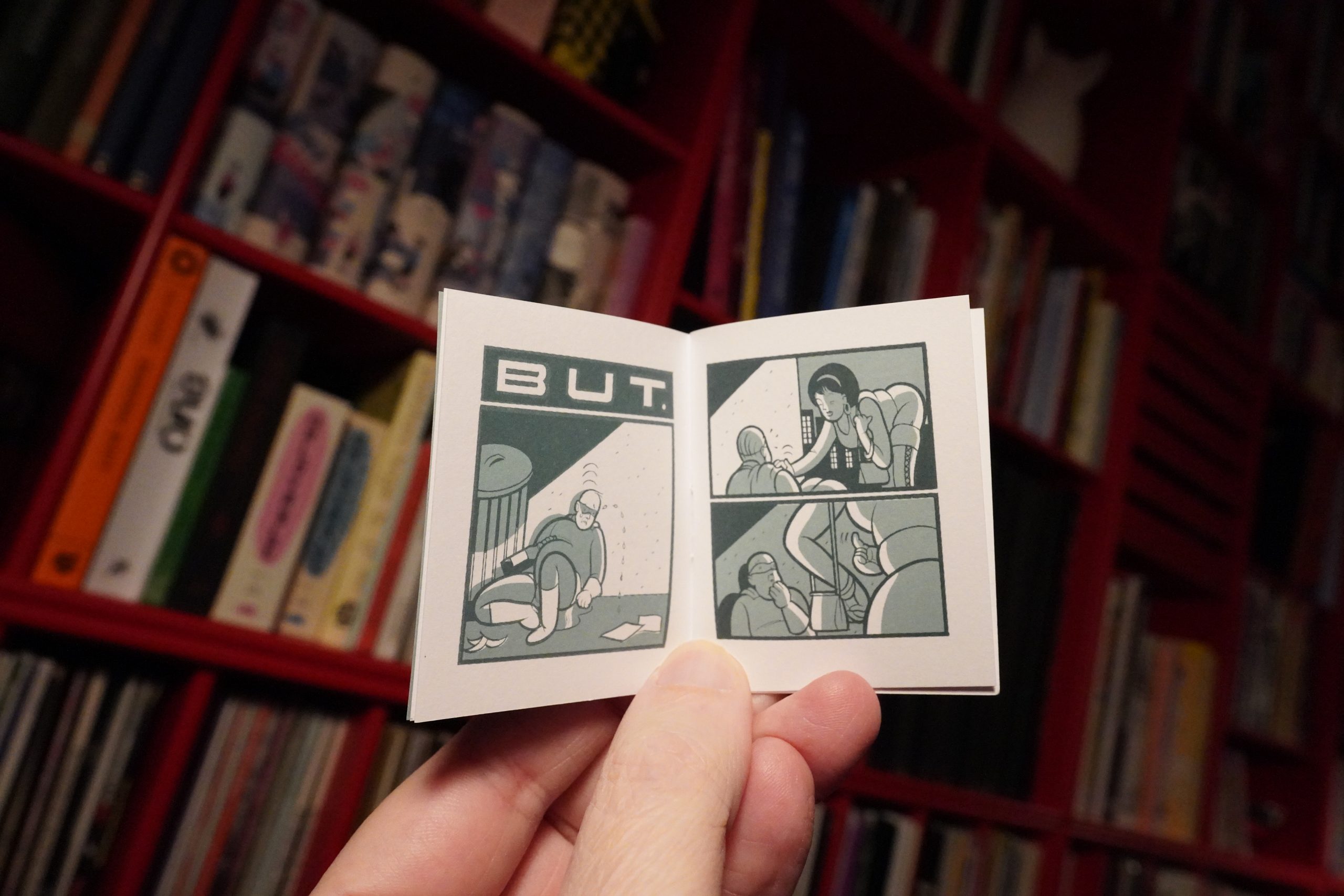
It’s a teensy little booklet about how comics and hookers are great. I don’t think I’ve read this before? It’s neat.
Now I should make some dinner… be right back…
| Big Audio Dynamite: No. 10, Upping St. |  |
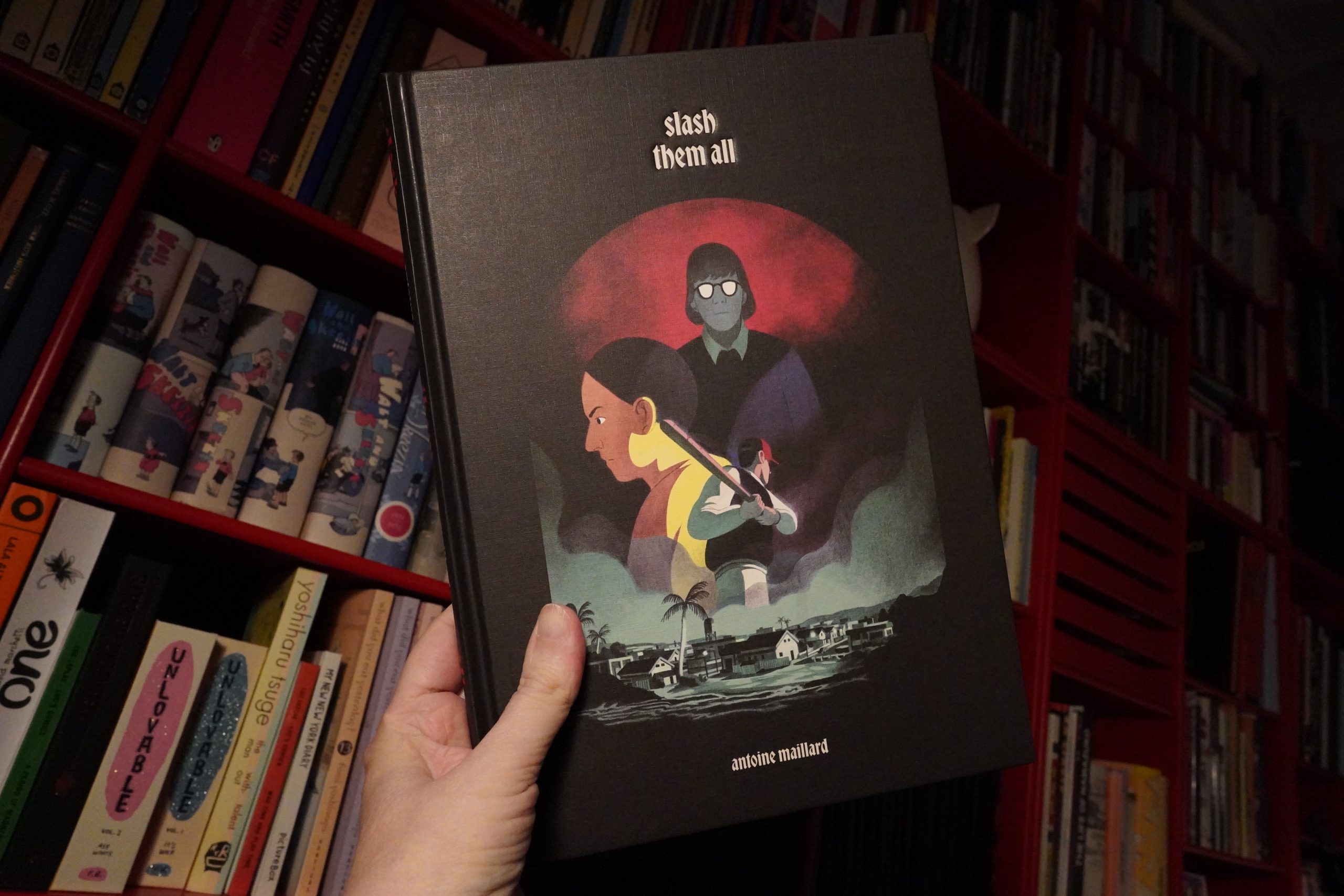
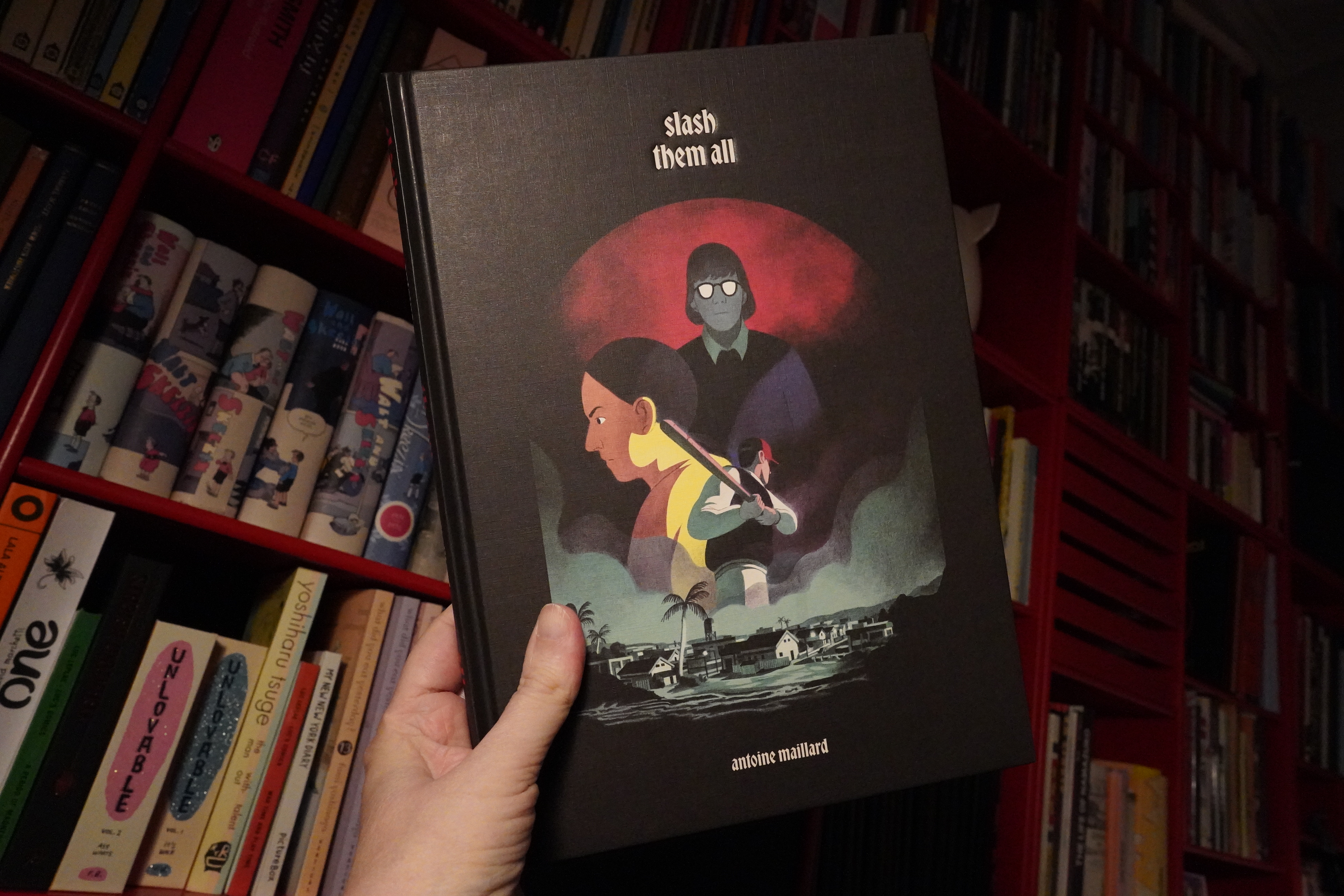
21:53: Slash Them All by Antione Maillard (Fantagraphics)
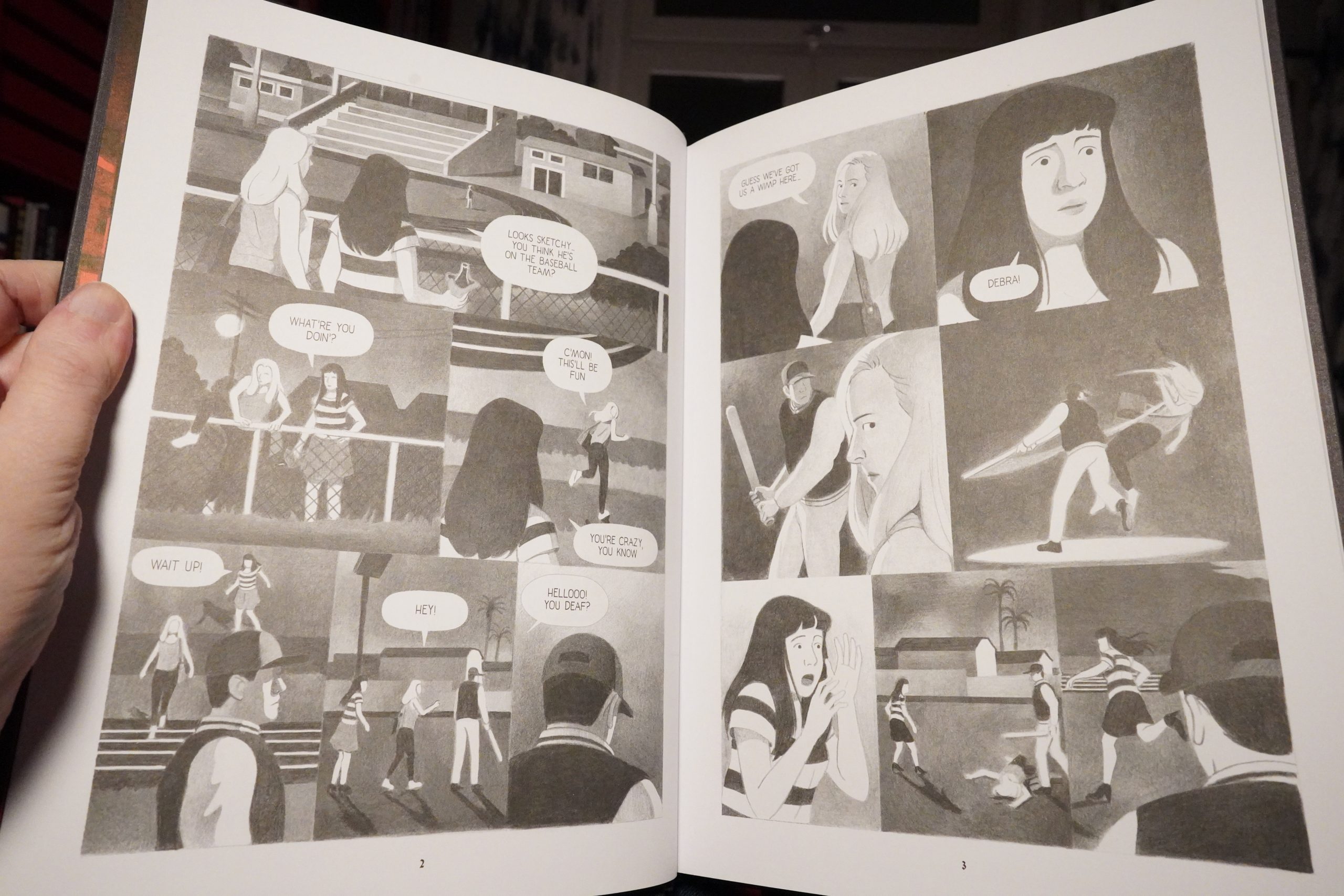
Hm… this reminds me of… like… Nick Drnaso being done by a Japanese comics artist? Which it isn’t. But…
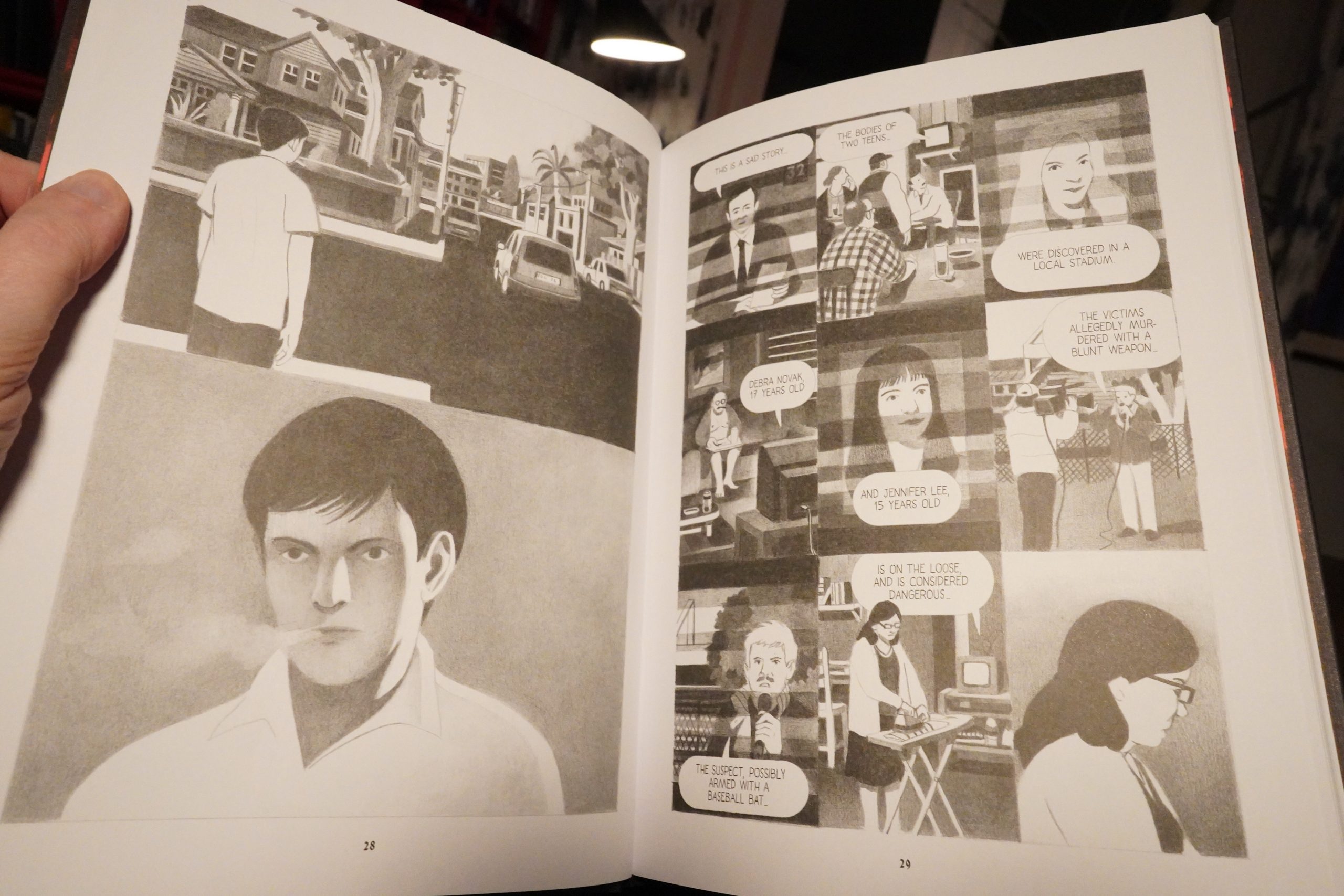
See what I mean? Anyway, this is OK — the artwork’s appealing, but the storytelling is kinda choppy. It won awards in France, though, so what do I know.
| Big Audio Dynamite: No. 10, Upping St. |  |
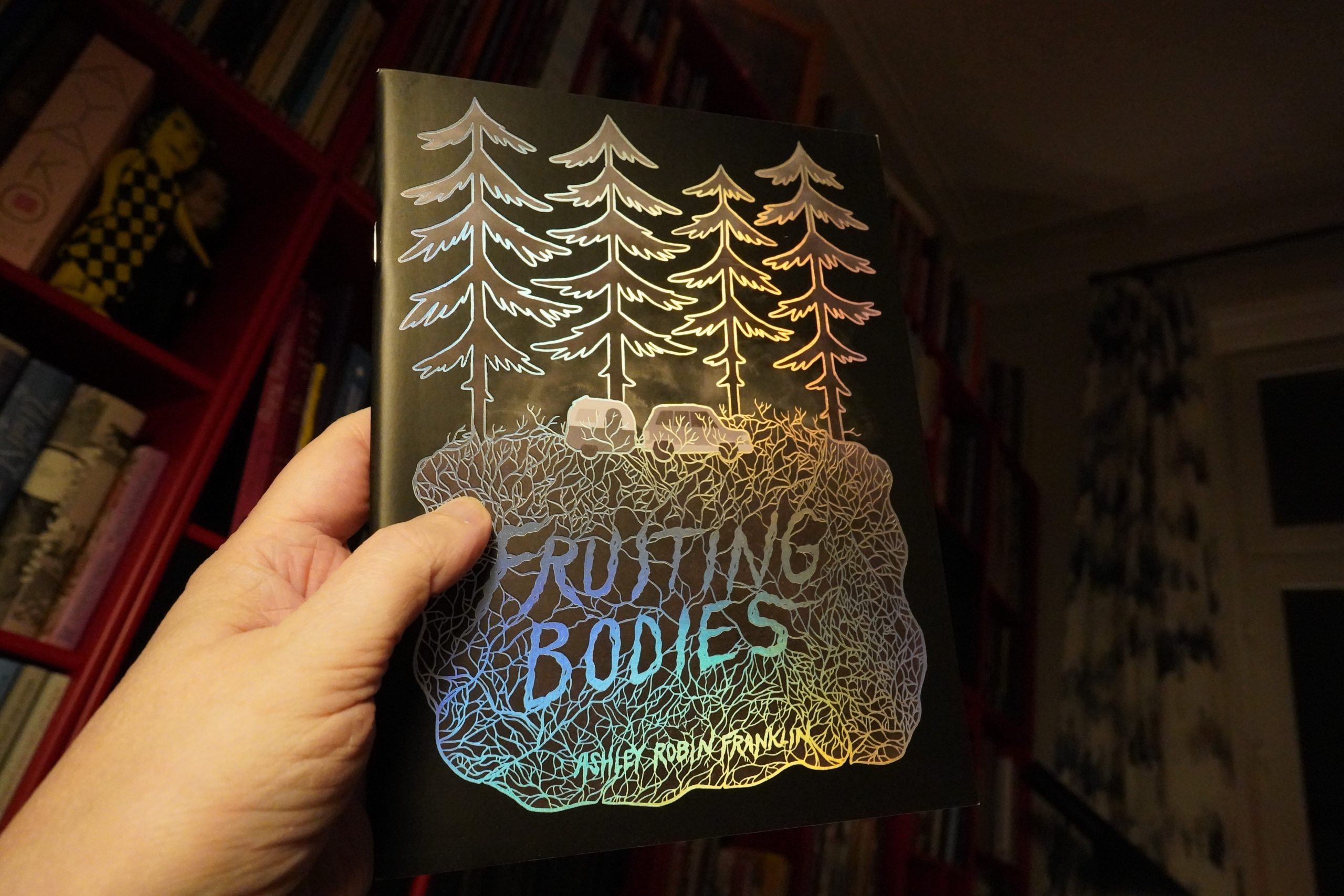
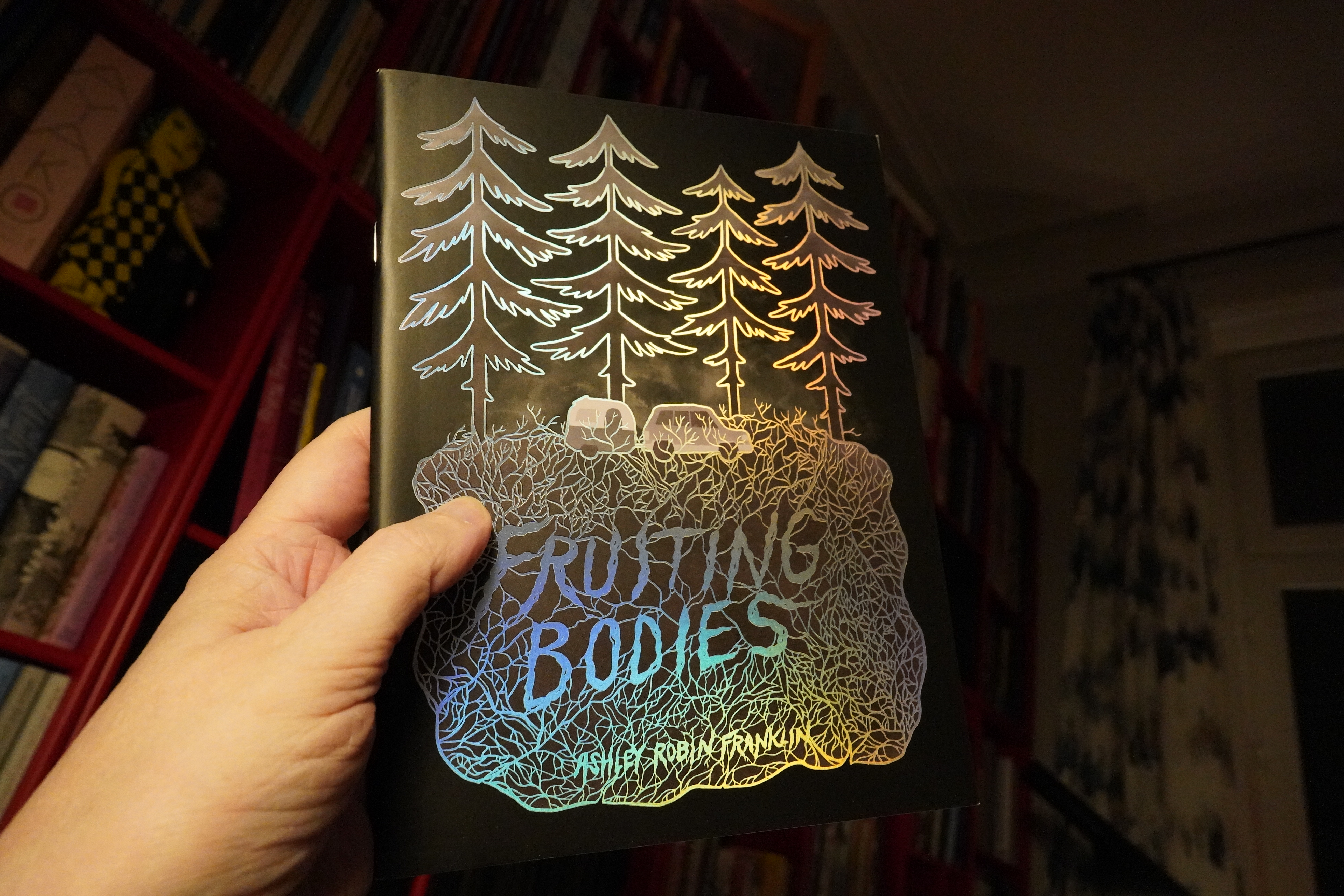
22:16: Fruiting Bodies by Ashley Robin Franklin (Silver Sprocket)
Nice metallic printing on the covers.
Anyway, I think this is from the first Desert Island Mystery Box Subscription? I wasn’t sure whether to do one of those, because I buy a lot of comics already, and what are the chances that they’d be sending me things that I already had? And indeed:

I got four minis and the magazine from Kuš all in one box, and I already had all of those. I think that’s kinda lazy of the Desert Island people? That’s the exact contents of the last shipment from Kuš anyway, and having a box being mostly just that is the opposite of fun.
But I haven’t read this Fruiting Bodies thing, so let’s do that.
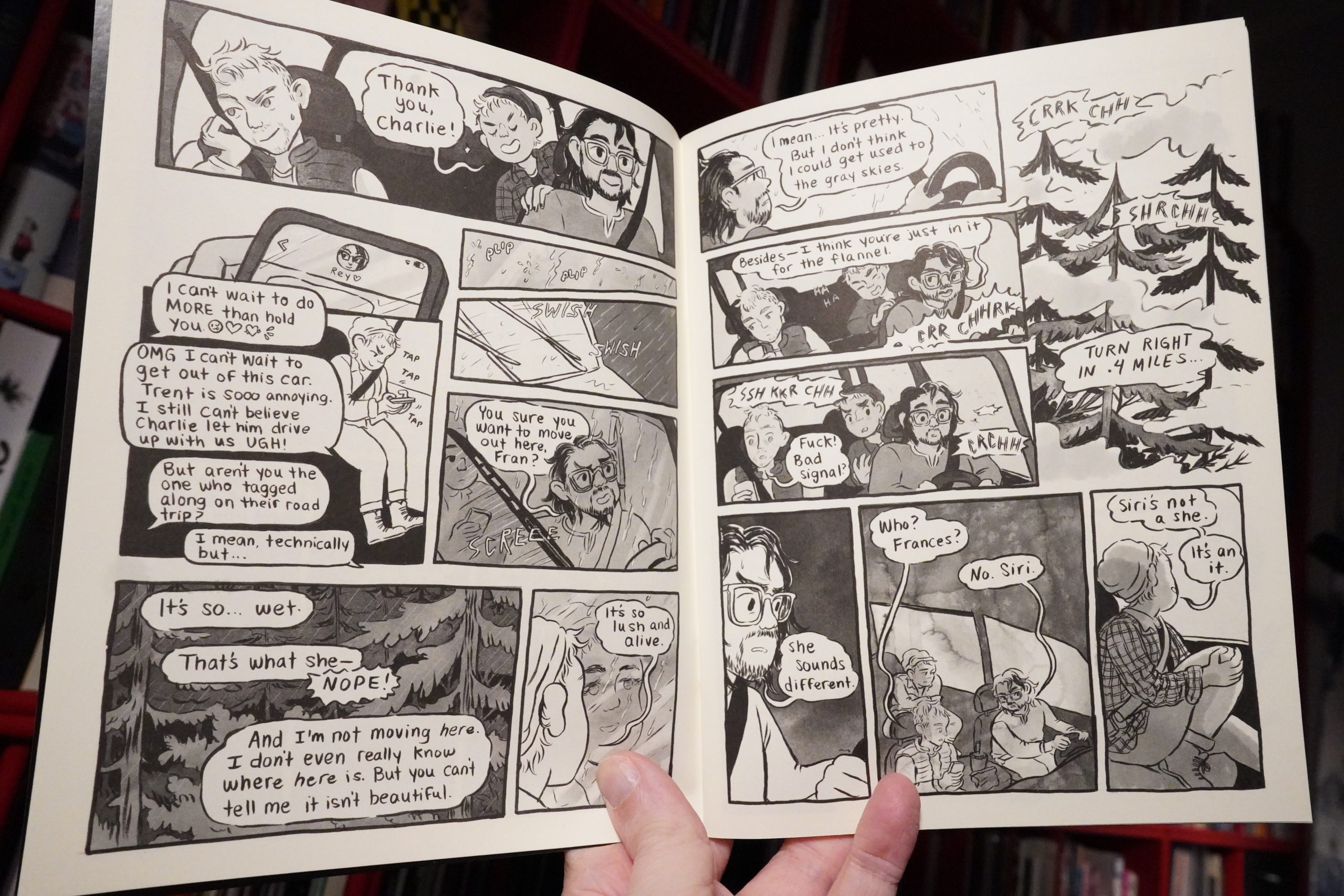
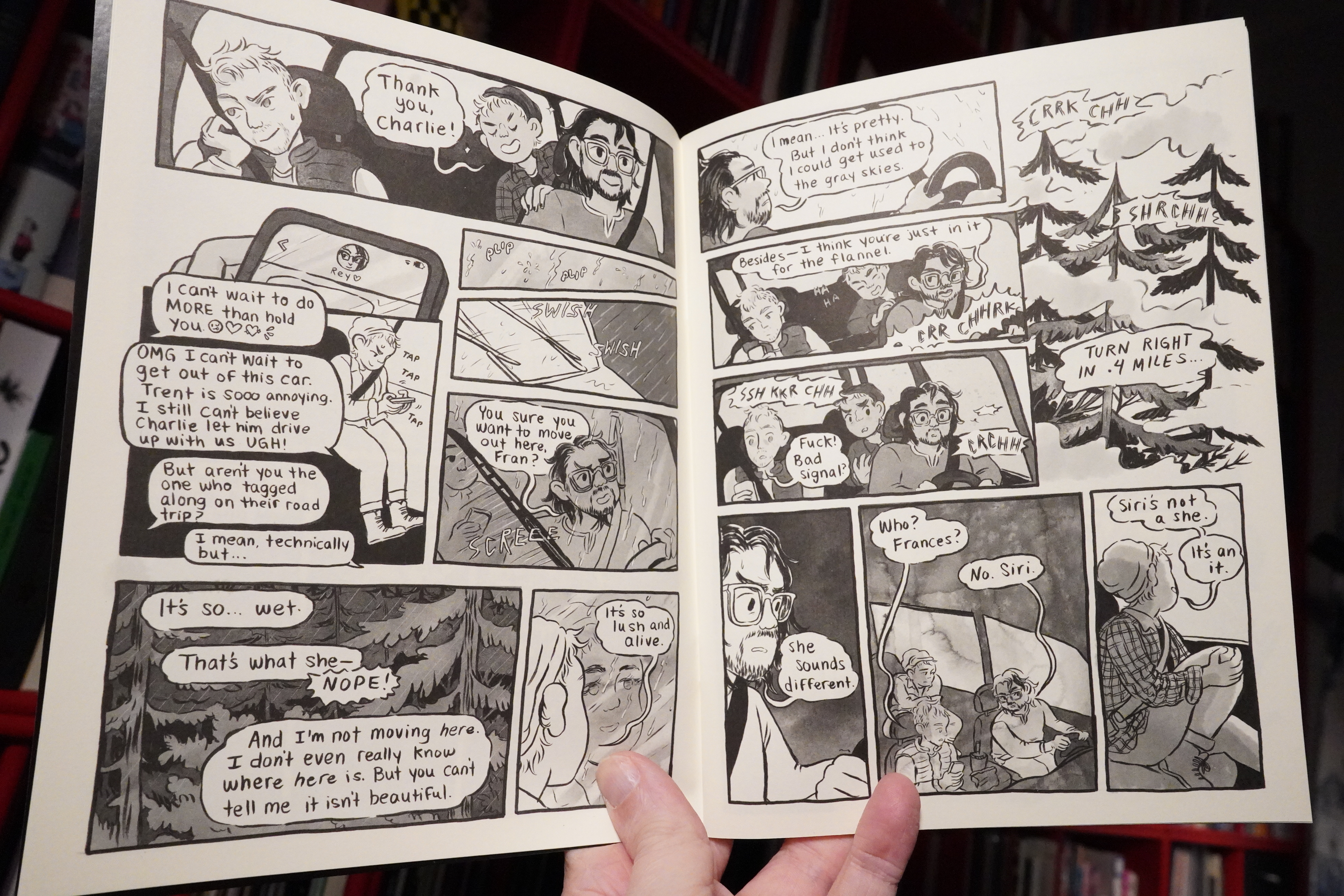
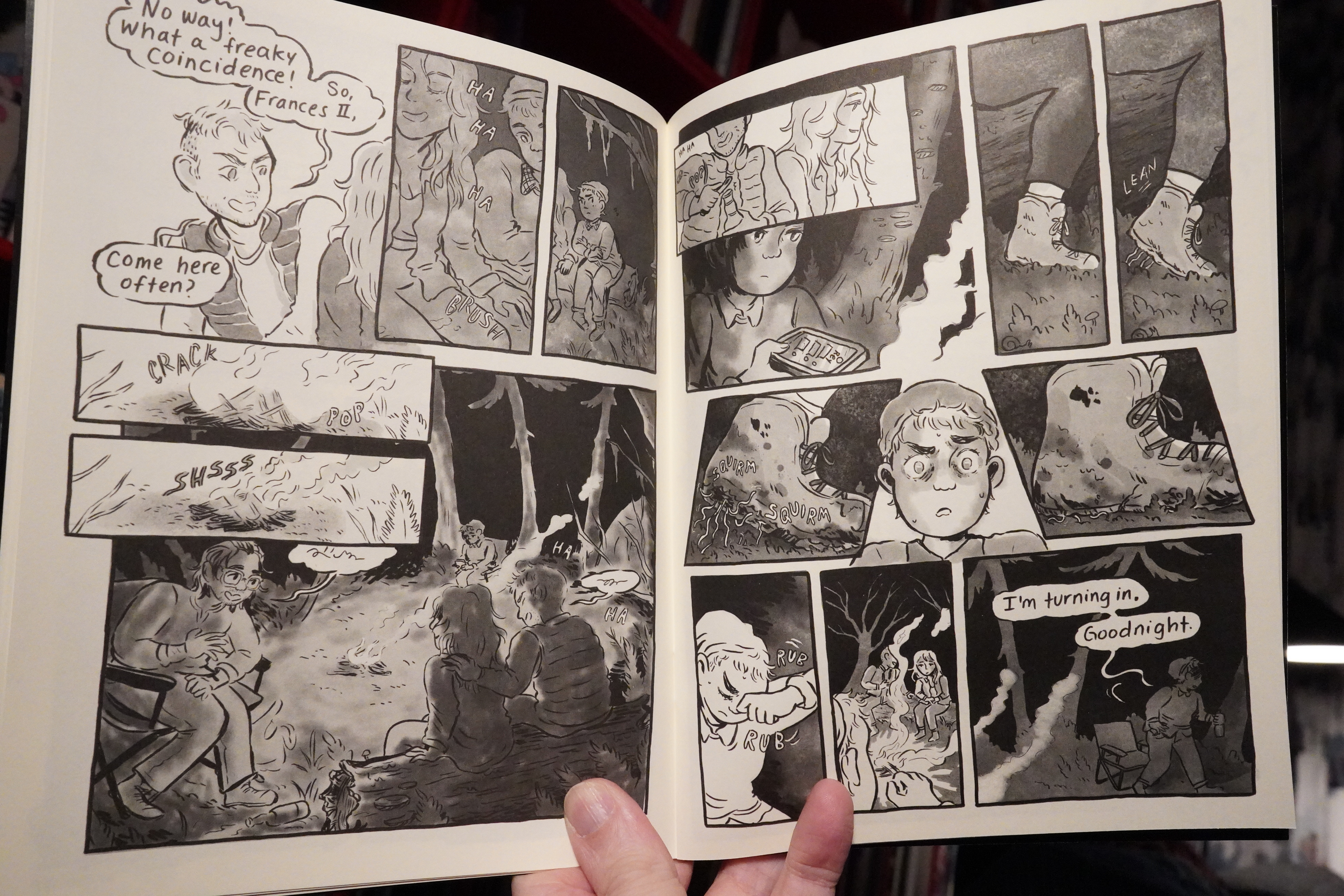
This is a classic horror story — some people go into a forest and encounter some monsters. It’s fun.
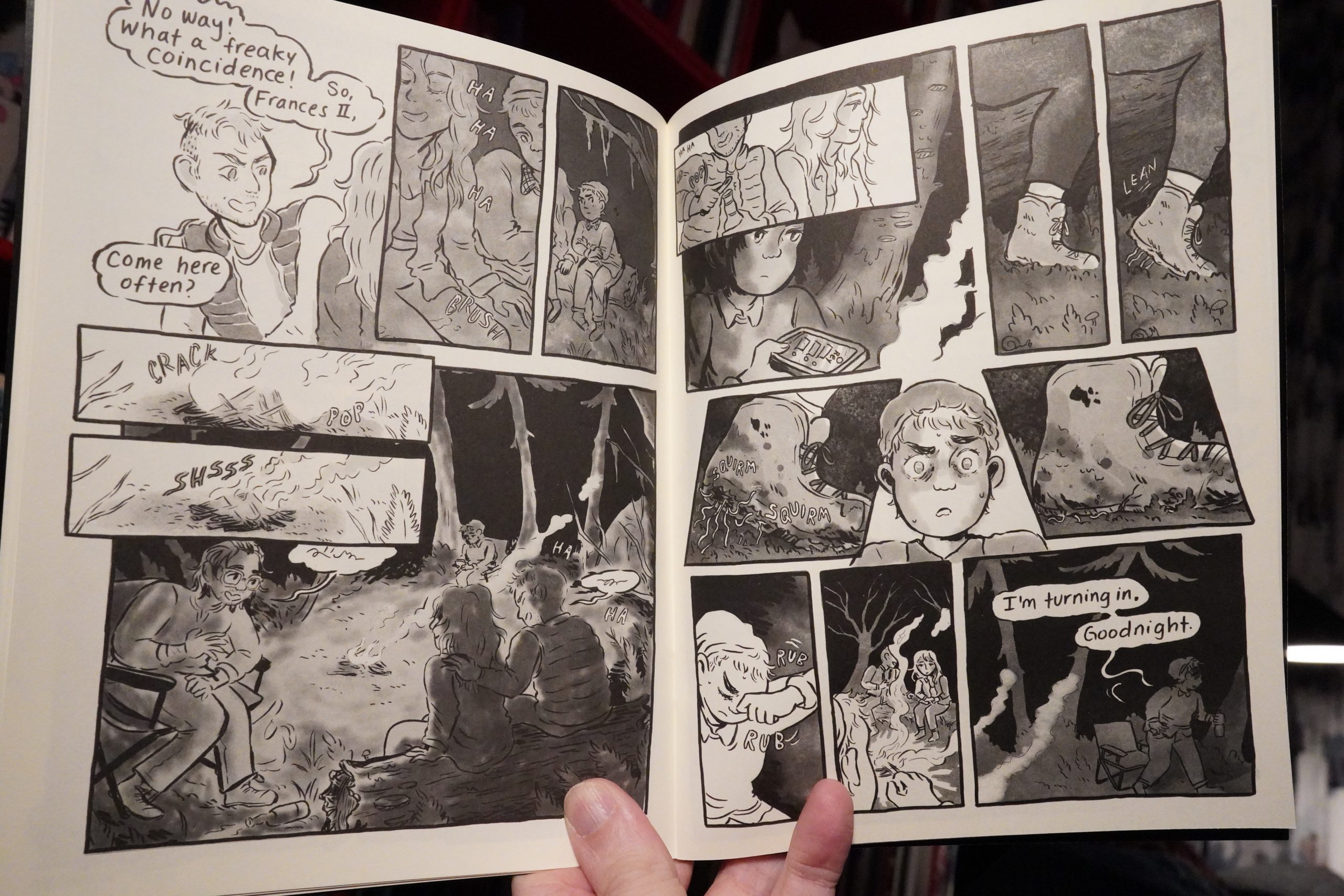
But the storytelling is a bit uneven. And the exposition dump at the end just feels unnecessary — surely everybody knows that about mycelia already? So not altogether successful, even if pretty entertaining.
| Various: Lonely is an Eyesore |  |
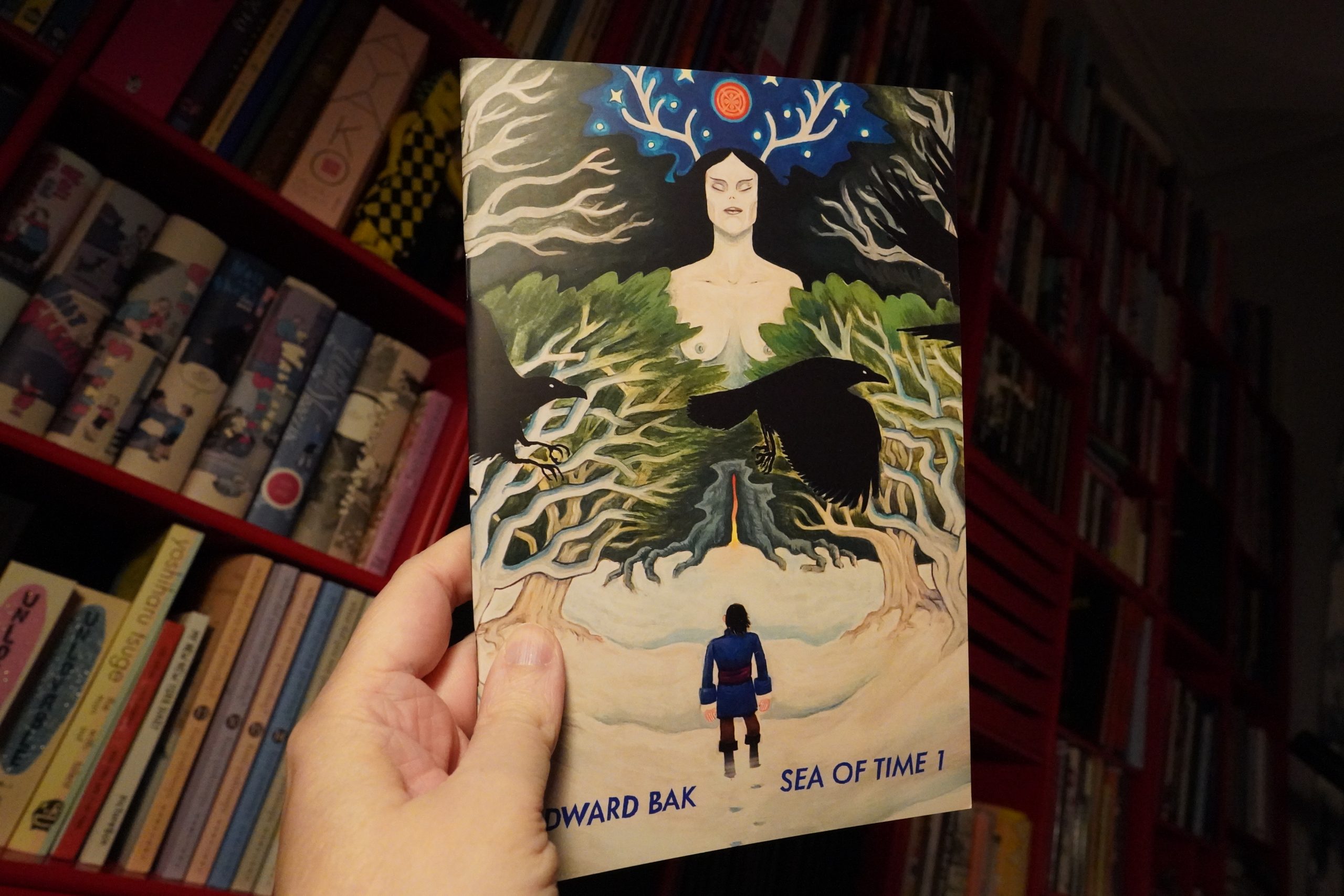
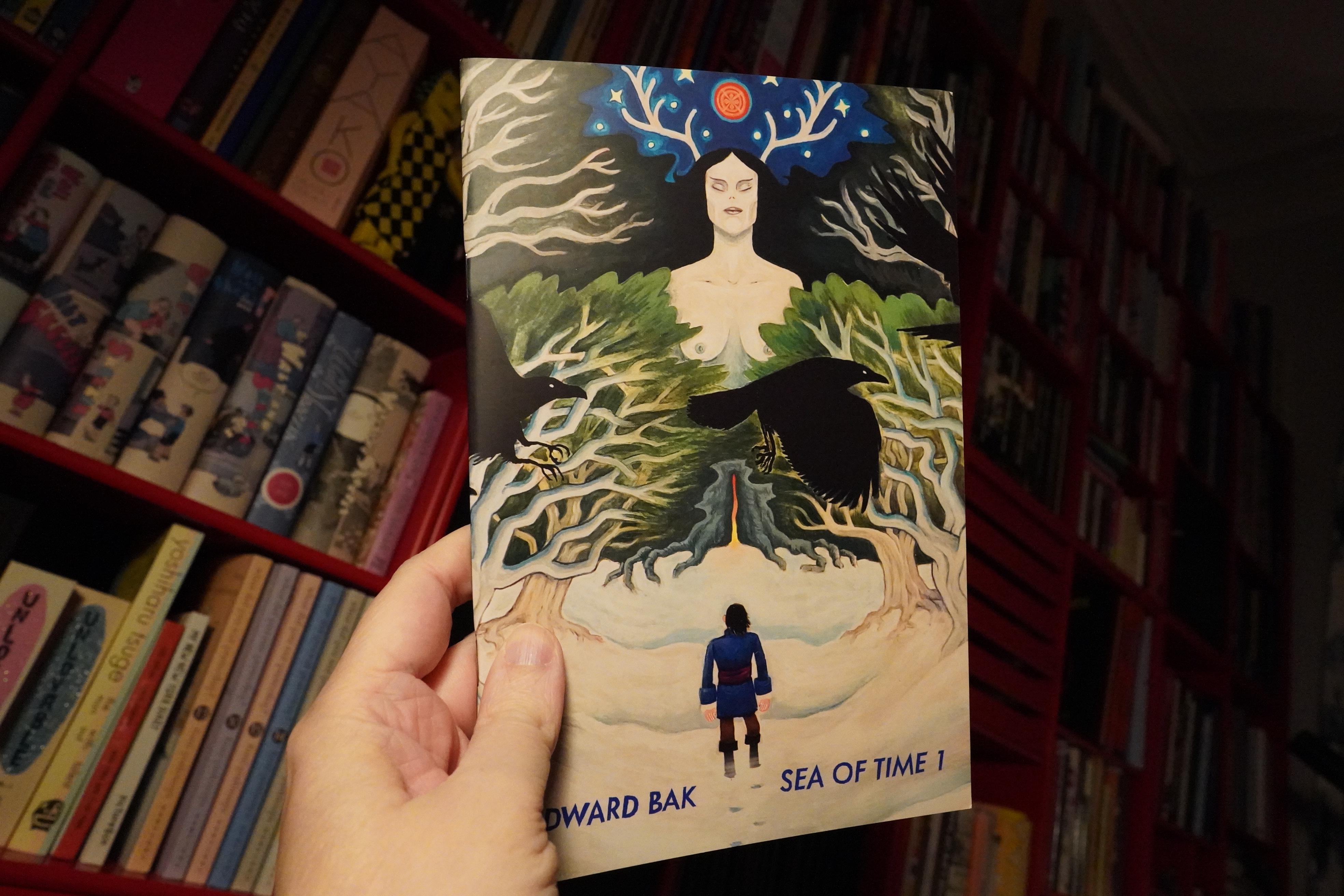
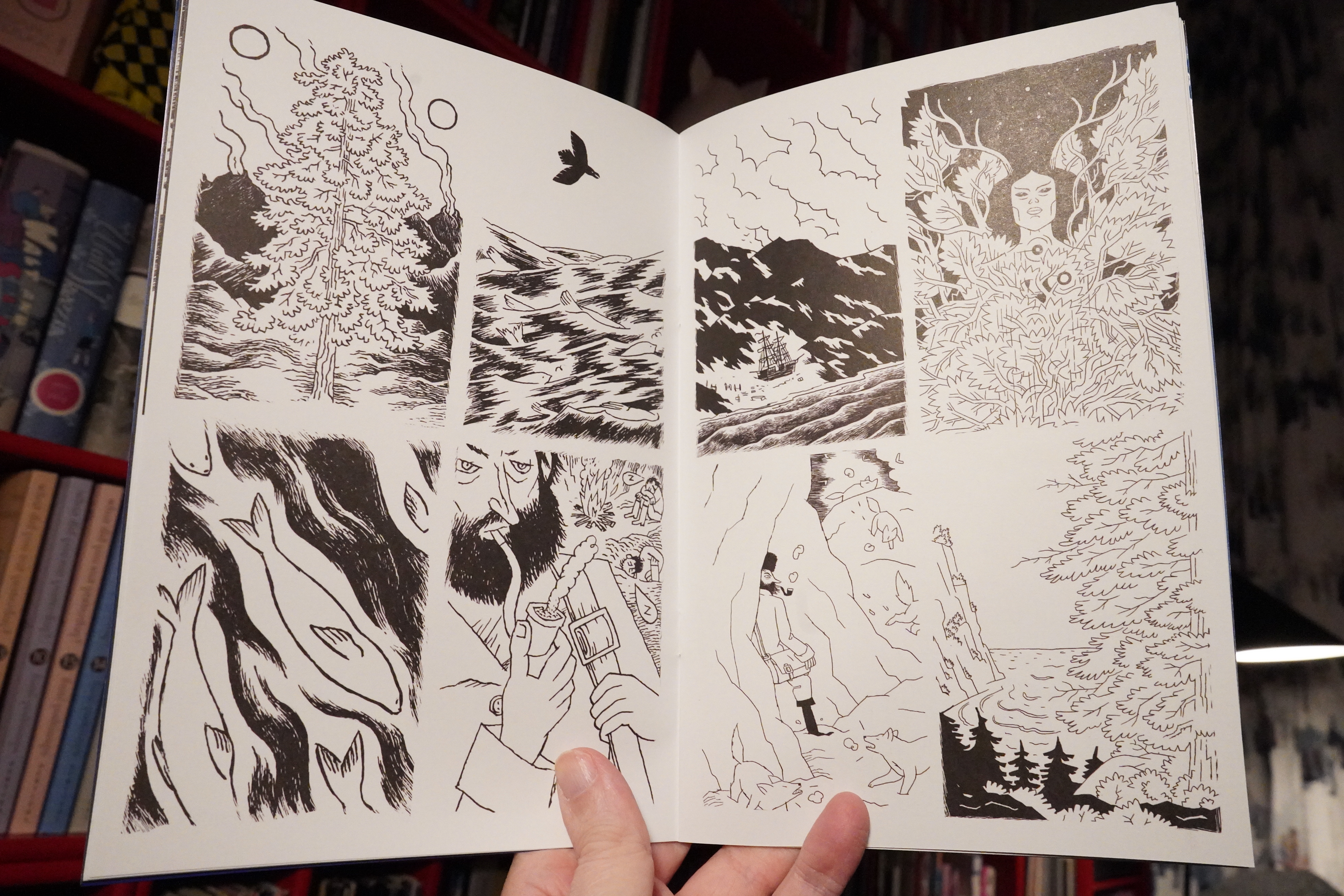
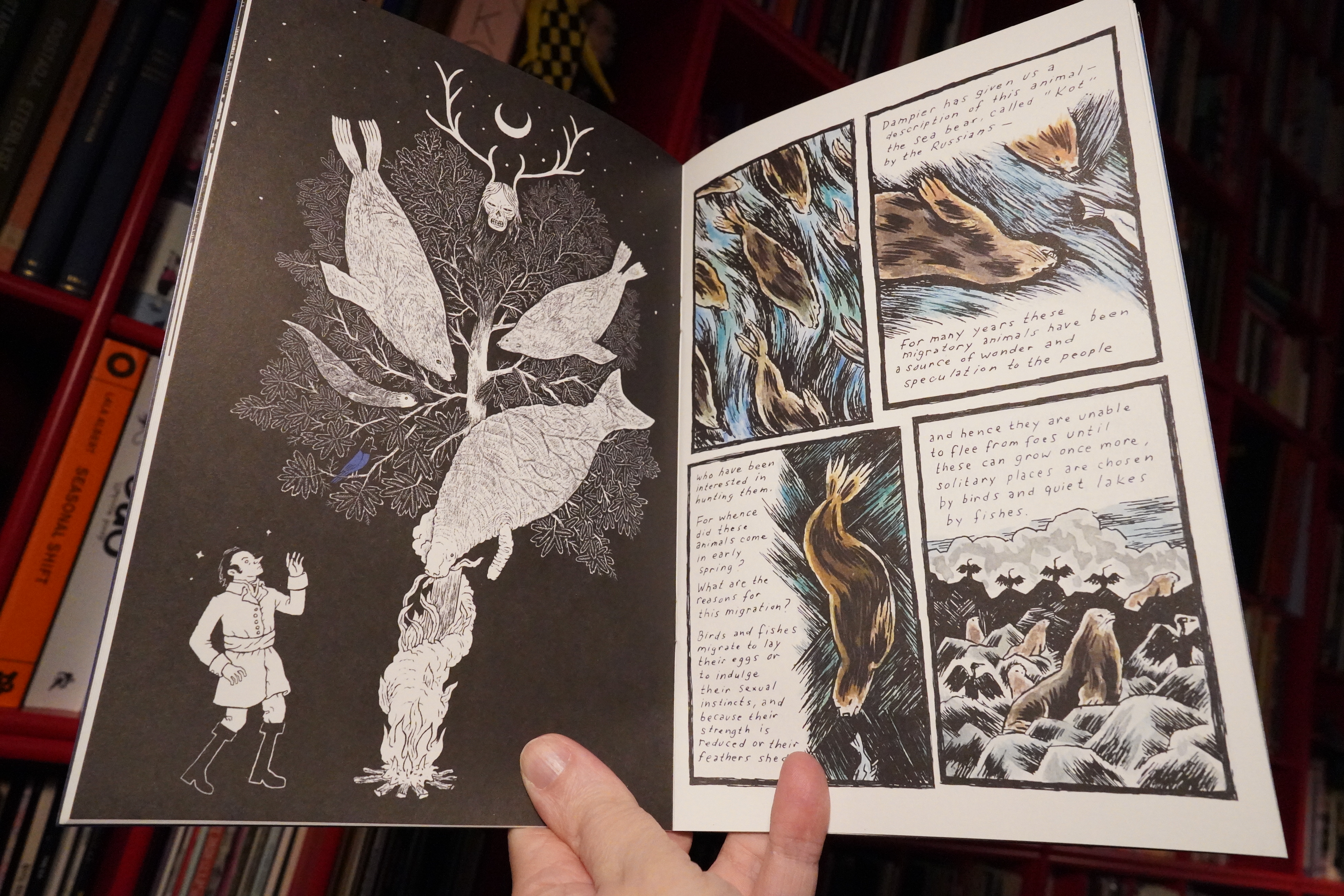
22:32: Sea of Time 1 by T Edward Bak (Floating World)
This is the final book from the Desert Island box (I think — I got things a bit mixed up on the shelf)…
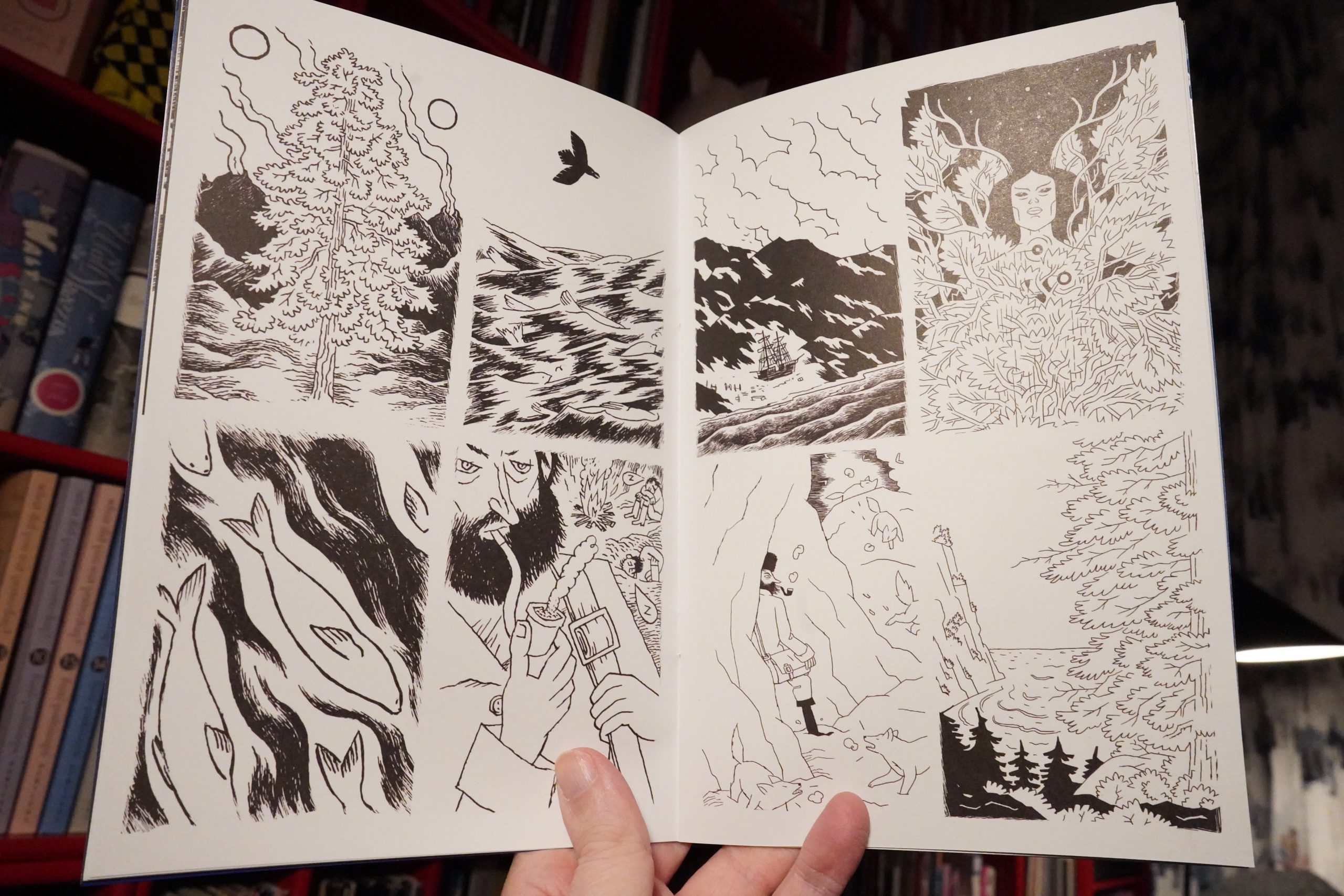
Wow, this is something else entirely.
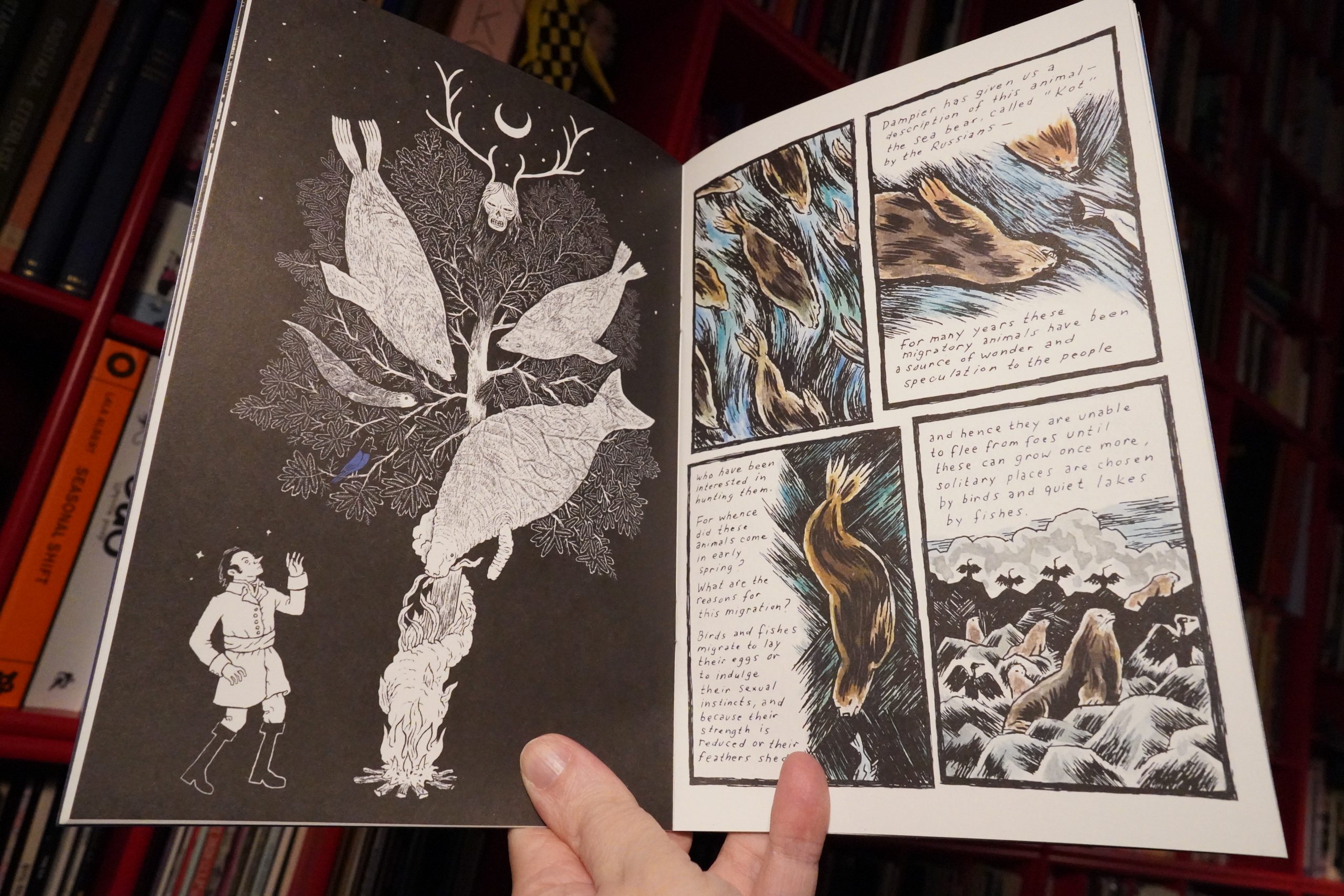
I don’t know what this series is going to be about, but I’m intrigued. About half the book is about sea lions and stuff, and the rest seems to be setting up some kind of narrative about an explorer, but I have no idea where this is going, which is fun. I’ll be following the series for sure.
So that’s it for the Desert Island box… I had most of it already, and the rest I was going to get anyway, so I guess it’s just not for me. I was hoping for more obscure stuff, really. I’ll give it a couple more months, but if it continues this way, I’ll be ditching the subscription. (I mean, it’s a solid selection of books, so I recommend it for someone who er doesn’t shop as much as I do.)
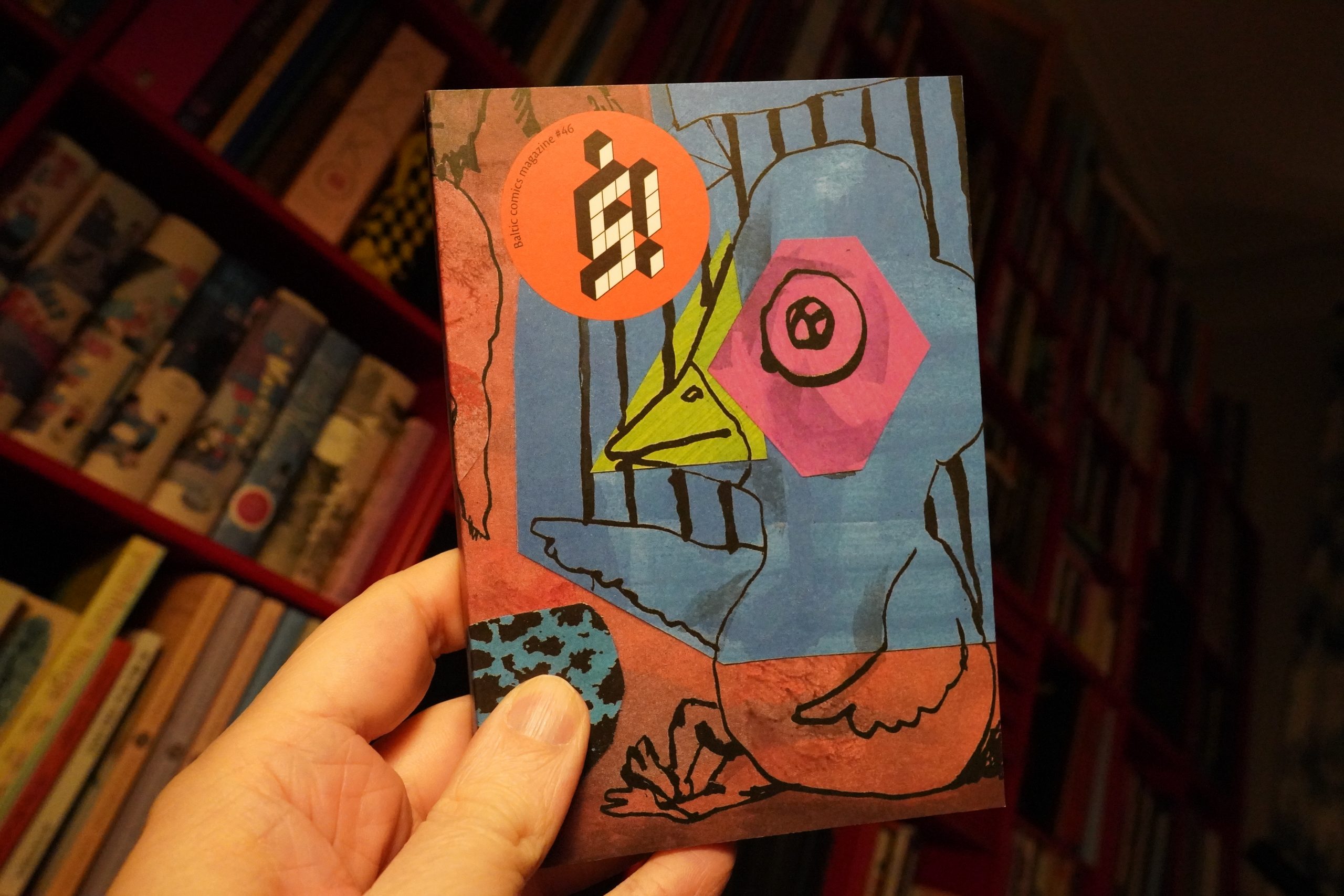
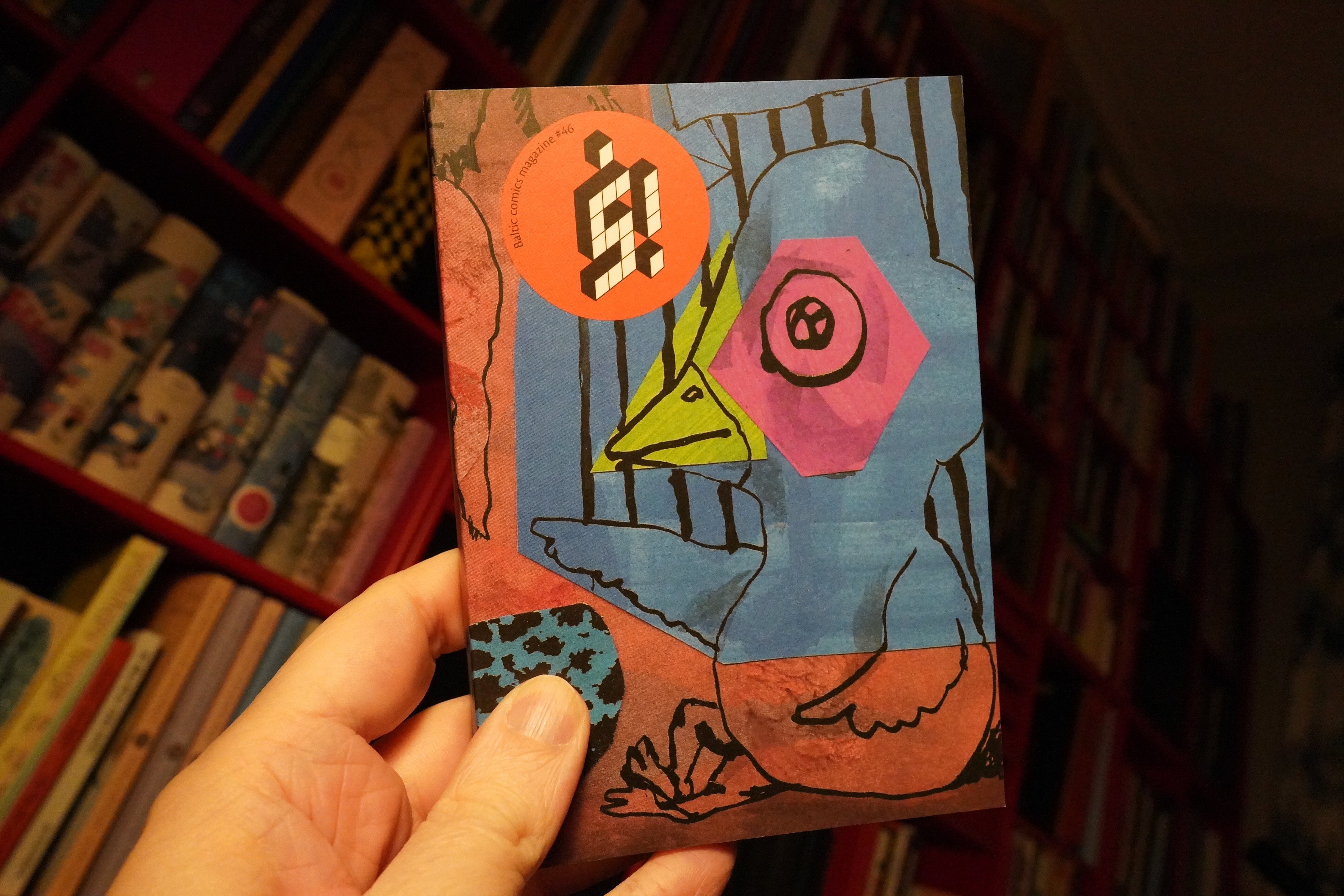
22:44: Š! #46 (Kuš)
Speaking of Kuš, I got the latest issue in the mail, too, so why not read that now…
It’s a special issue edited by the Stripburger editor. Which reminds me… I’d totally forgotten about Stripburger! I remember buying a handful of issues when the magazine had US distribution (through… er… was it Top Shelf? One of them there). But I see that they’ve kept publishing, so I’ll get a bunch of those…

The guest editor makes this a very different magazine from what it usually is. There’s more focus on narrative and less on art, I guess?
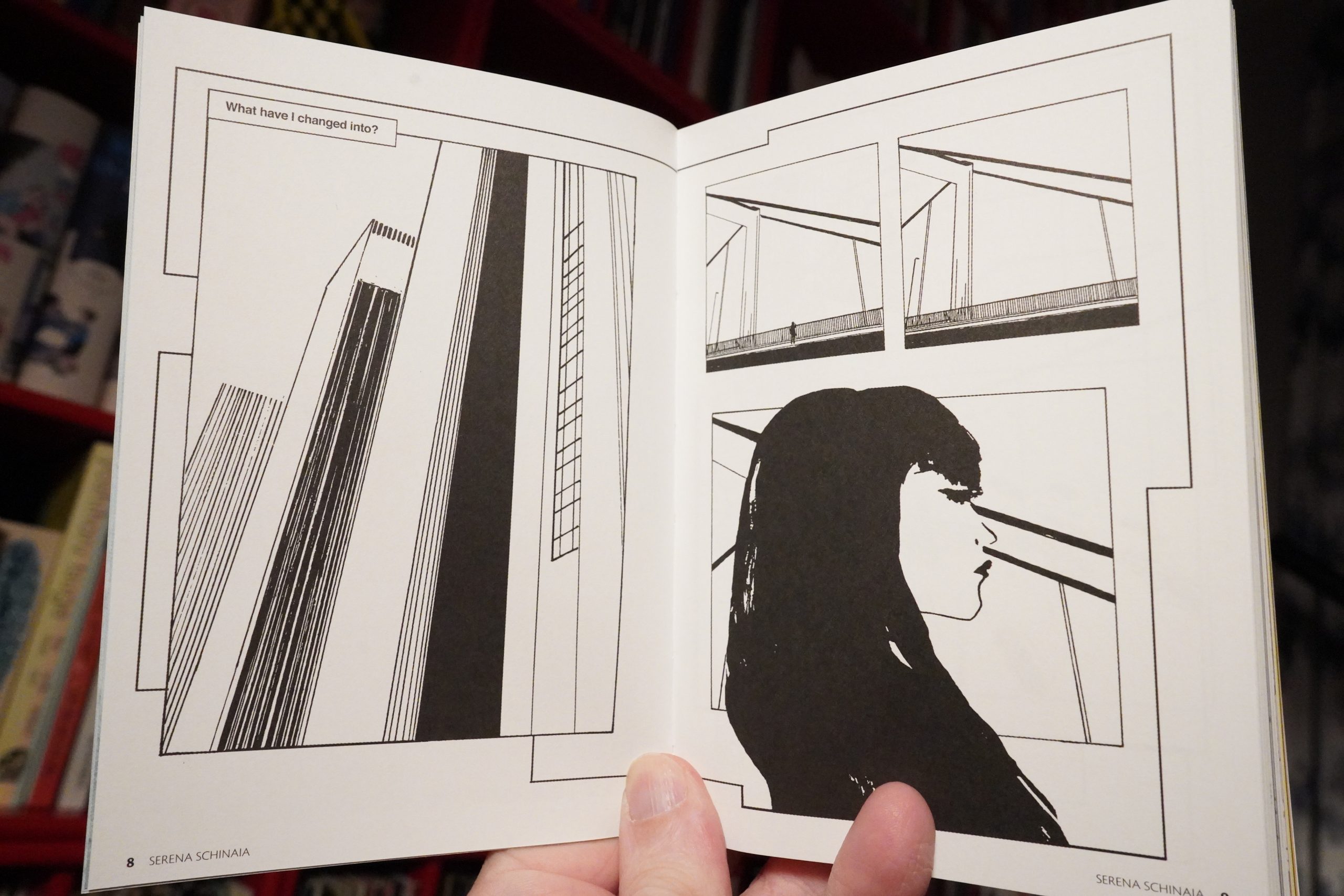
At the same time, many of these pieces are so short that my reaction to them was, like, “er, did they forget to include all the pages?”
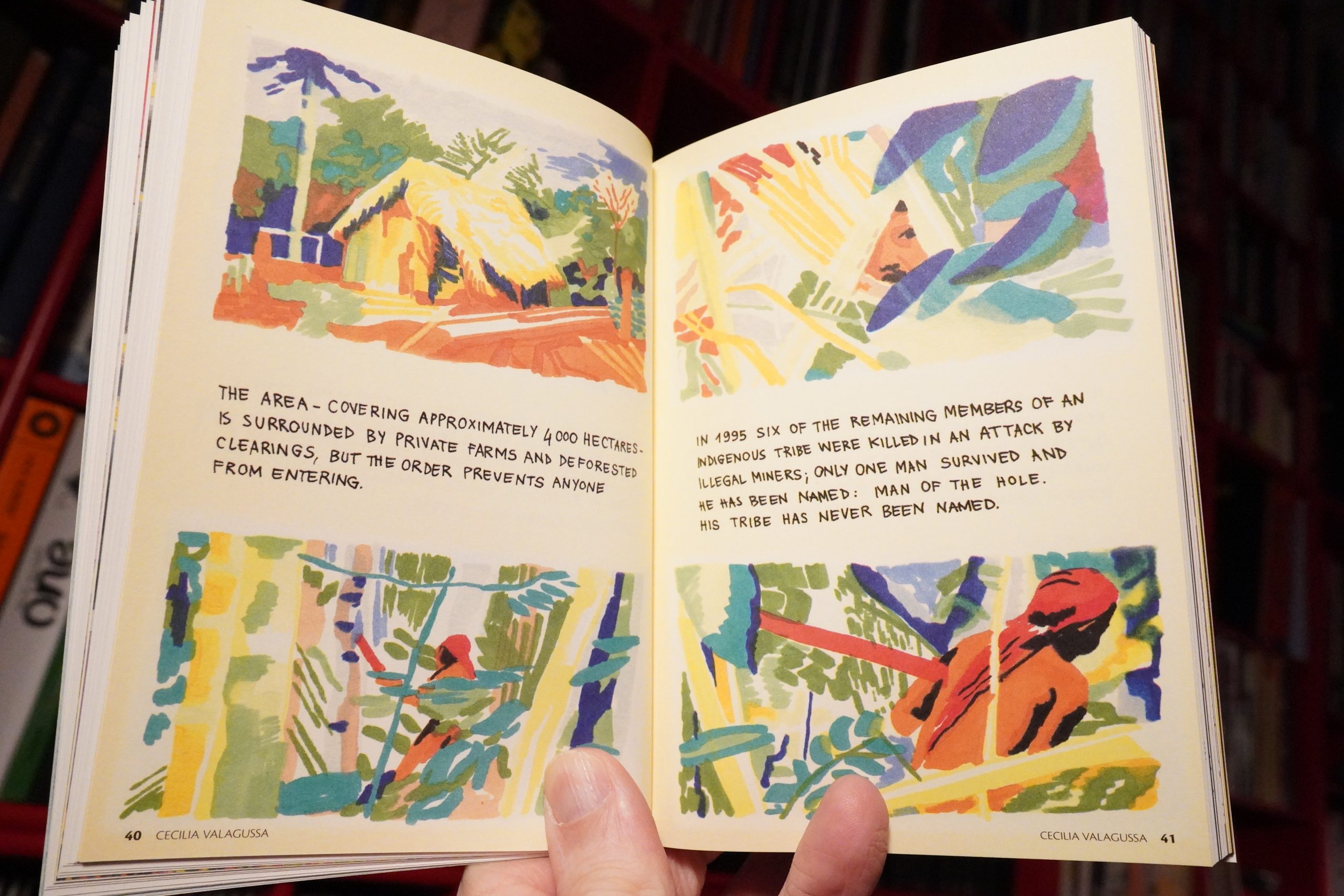
I mean, it’s fine, but…

There are stronger pieces in the book, too (which I’ve snapped pics of above). But it’s not altogether a convincing anthology.
| Tuxedomoon: You |  |
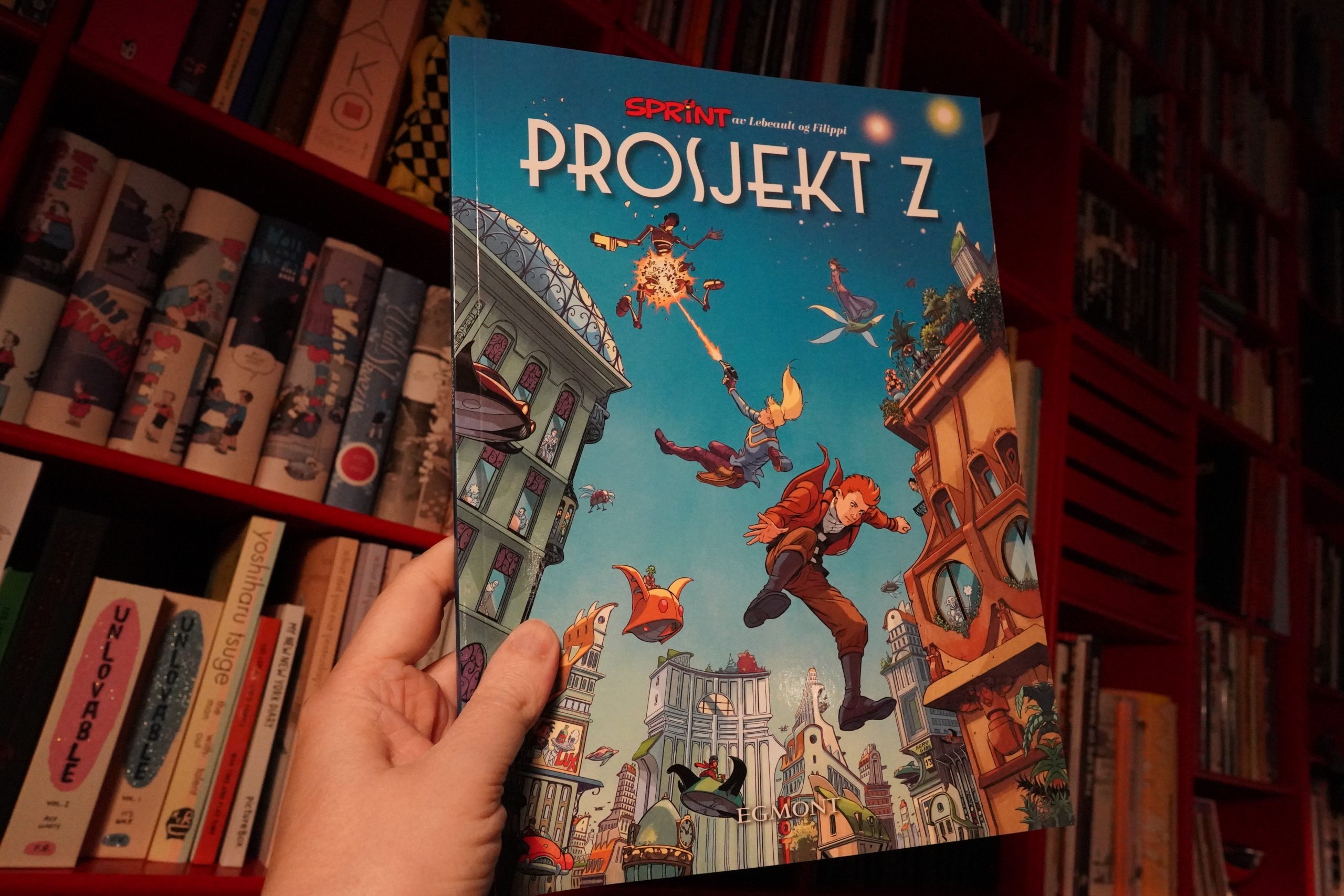
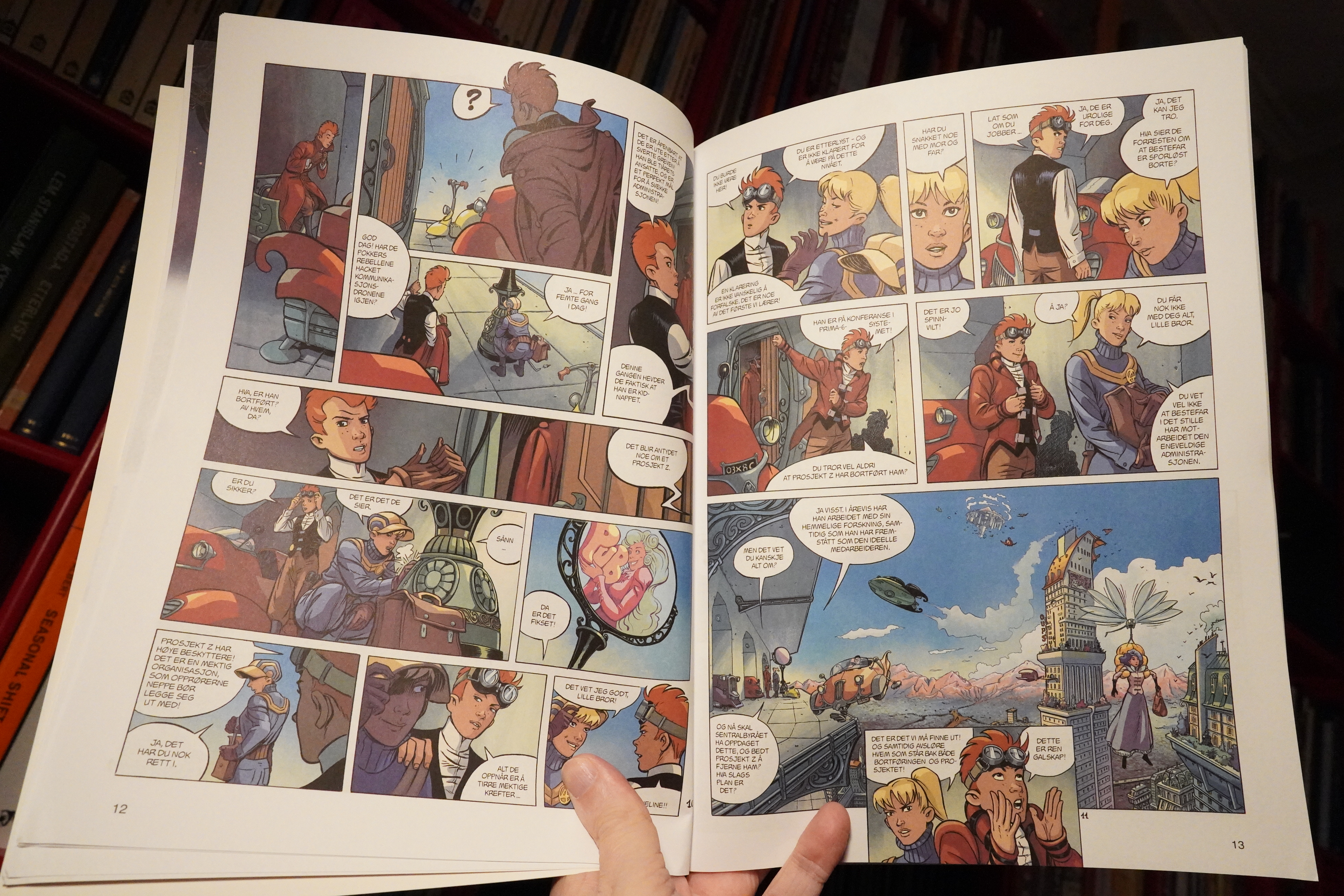
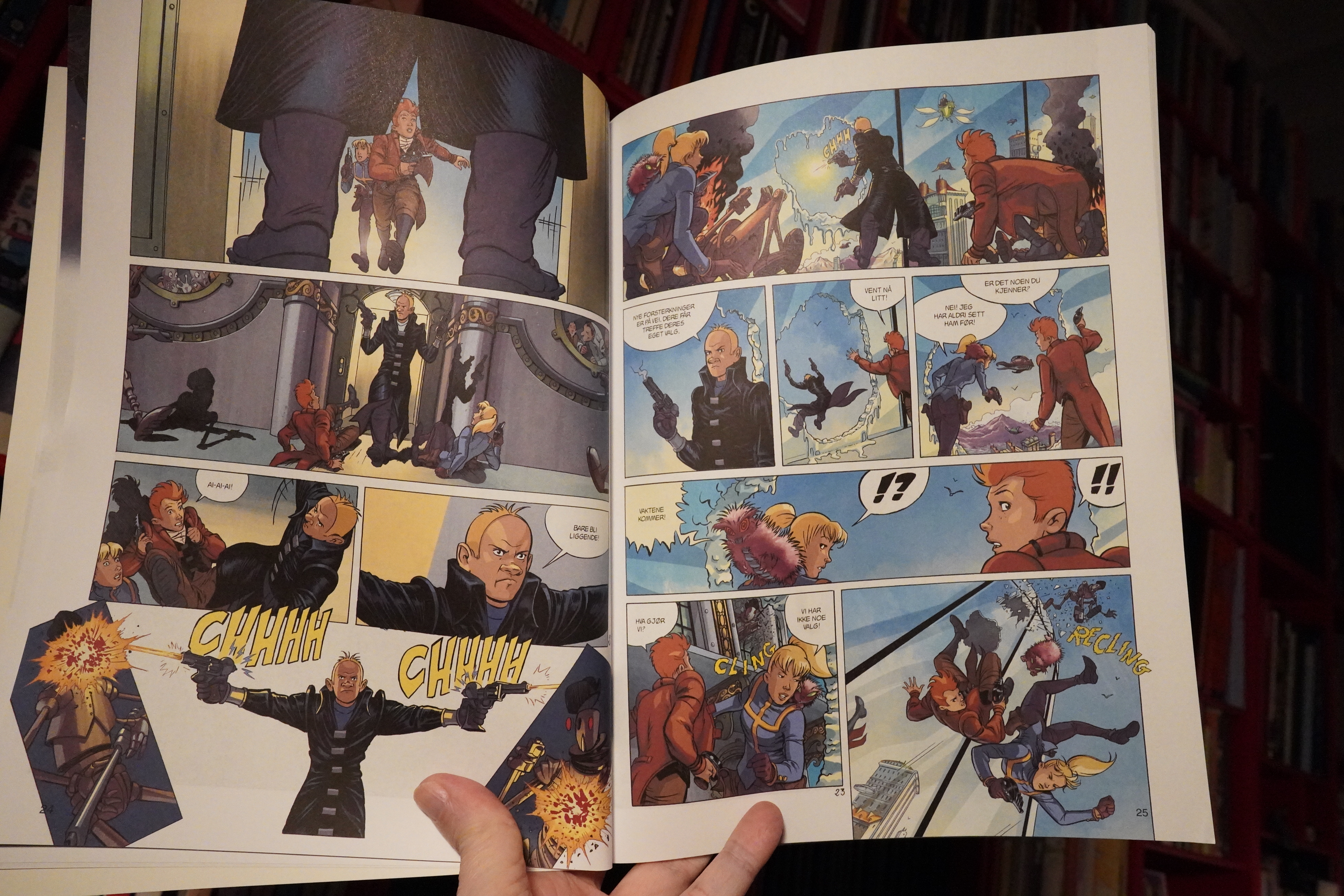
23:08: Spirou: Fondation Z by Lebeault & Filippi (Egmont)
Yes, yet another Spirou special edition. This time it looks like it’s going to be a sci fi thing?
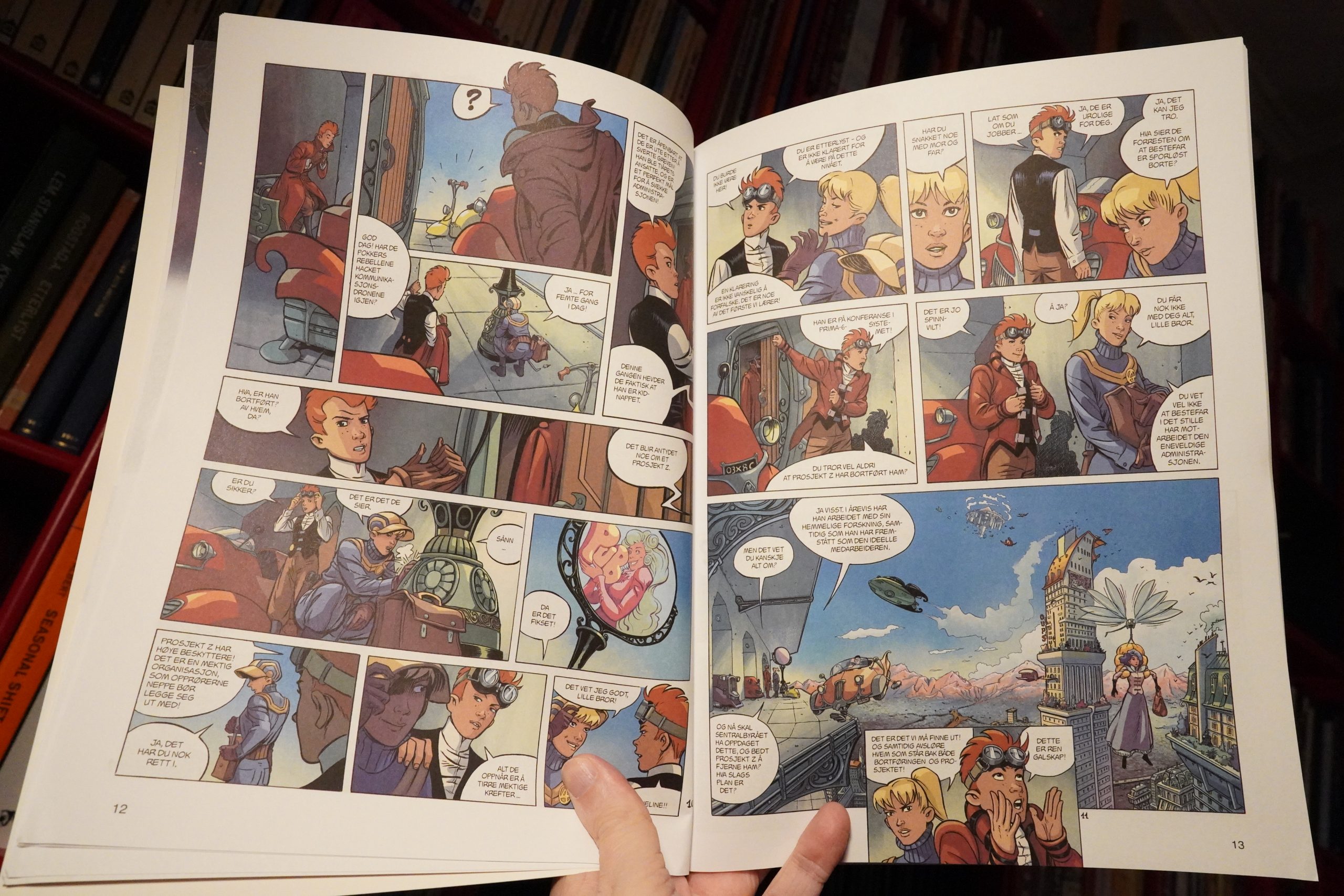
Such steampunk.
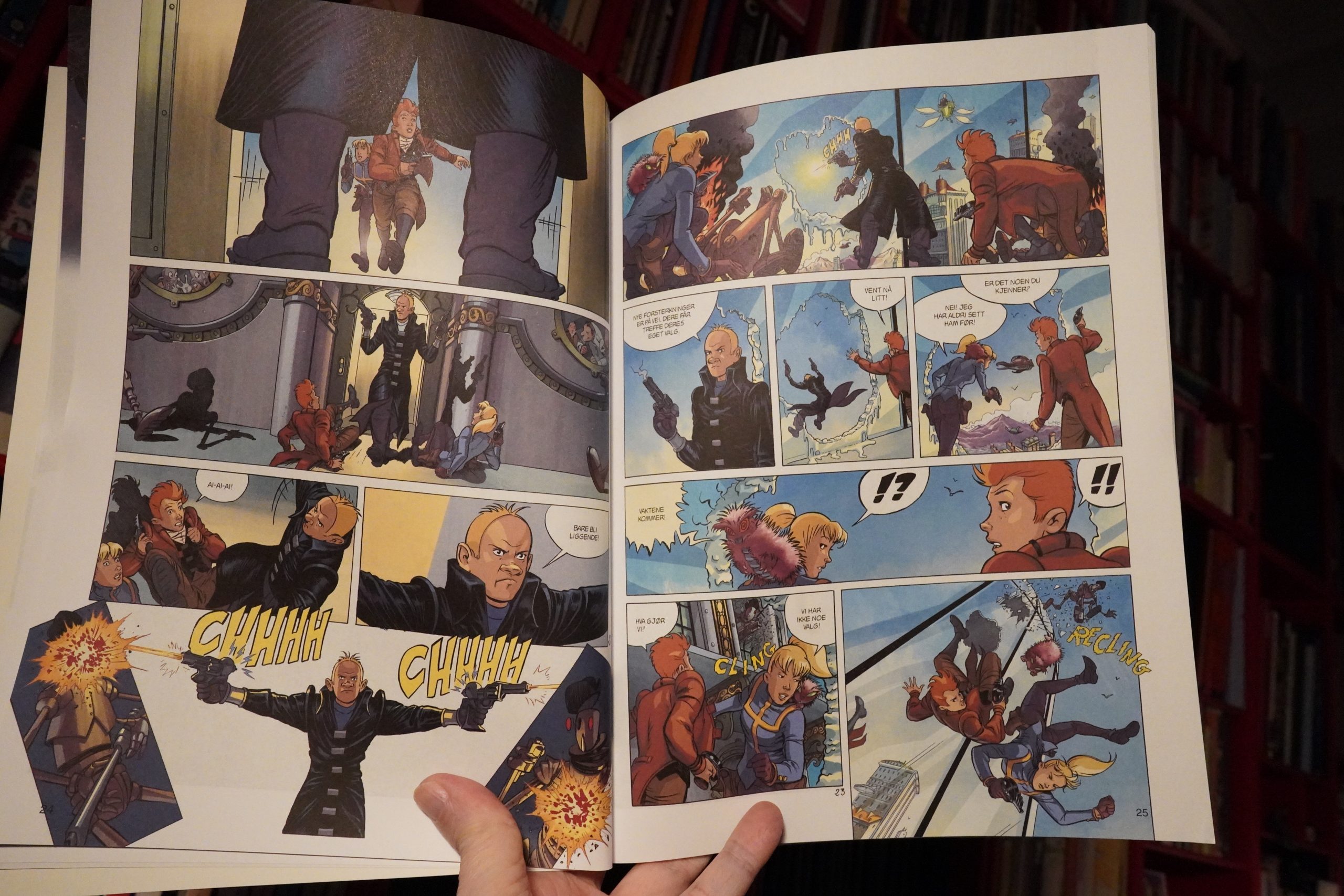
It’s a pretty tedious book, so I wondered whether the entire point of it was to chuckle at Fantasio there being a totally competent Matrix-like figure, but that doesn’t really seem to be it. SPOILER WARNING: The ending is really very clever and unexpected, even though it’s not really original either. Think… Miracleman by Alan Moore.
So I quite enjoyed the ending, but that’s like four pages out of 64, and the rest were … kinda annoying and not very exciting? So… But I can see people going *whoa* at the ending and being very impressed, so now I’m wondering what other people thought.
It’s got at 2.7 rating on Bedetheque, which means “eww”:
The whole is admirable, with breathtaking graphic richness, but, it must be admitted, somewhat suffocating.
Very, even too extreme and quite confusing, Fondation Z disconcerts at first glance and disappoints over the length. By dint of having wanted to play originality at all costs, the artists have somewhat lost sight of the objective of such an exercise in style: to use wisely a symbolic character of the 9th Art in a good story, quite simply .
I had a lot of trouble getting out of that, asking myself “but why did they take Spirou to complicate this futuristic story which could have been very good if it had told a One Shot story??? “.
And then there is the end…
The ending that justifies the whole story and is absolutely excellent, taking this comic from a big “blah” to a big “Ah! Yeah, anyway! »
Pretty much my reaction to it, I guess.
| Throwing Muses: The Fat Skier |  |
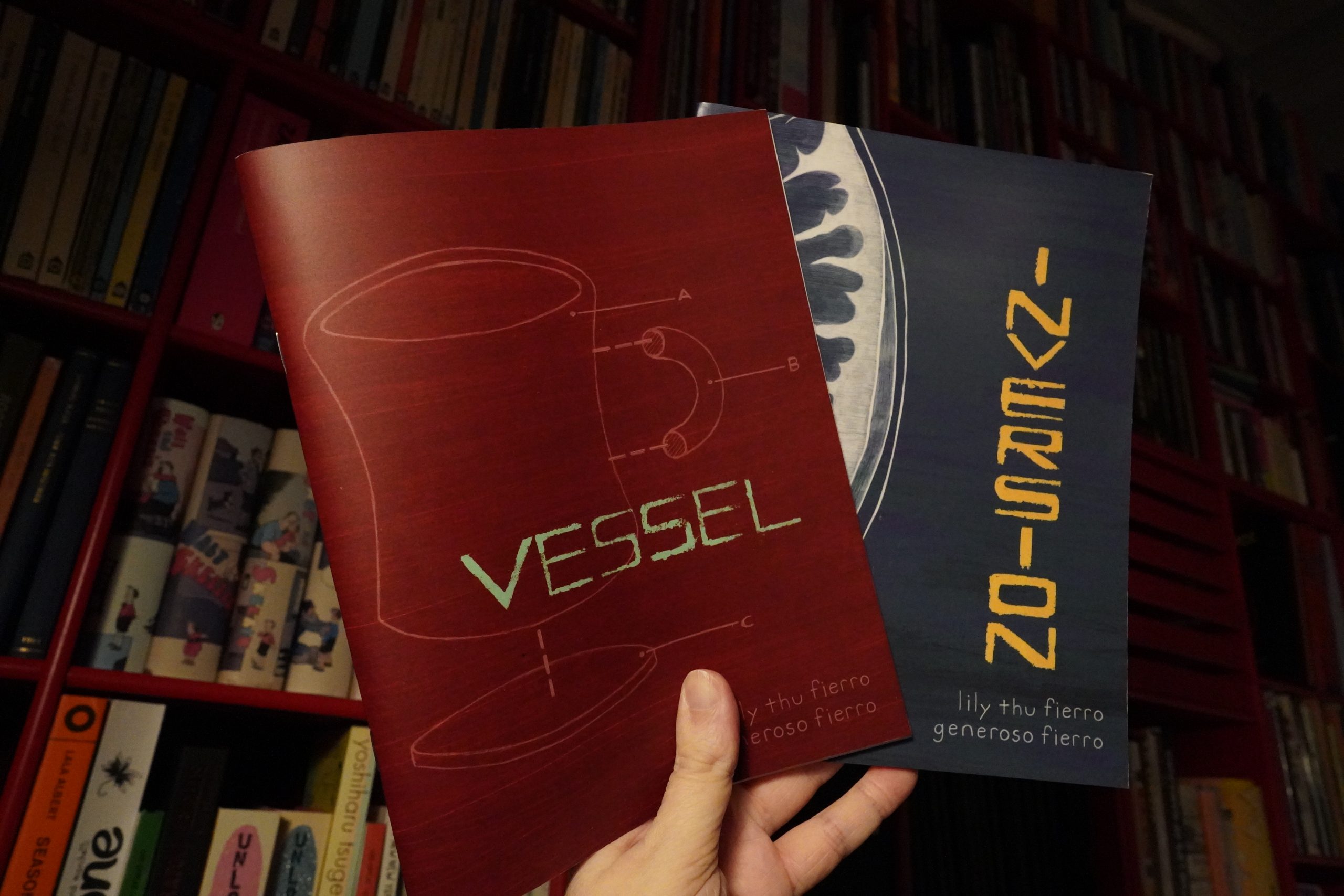
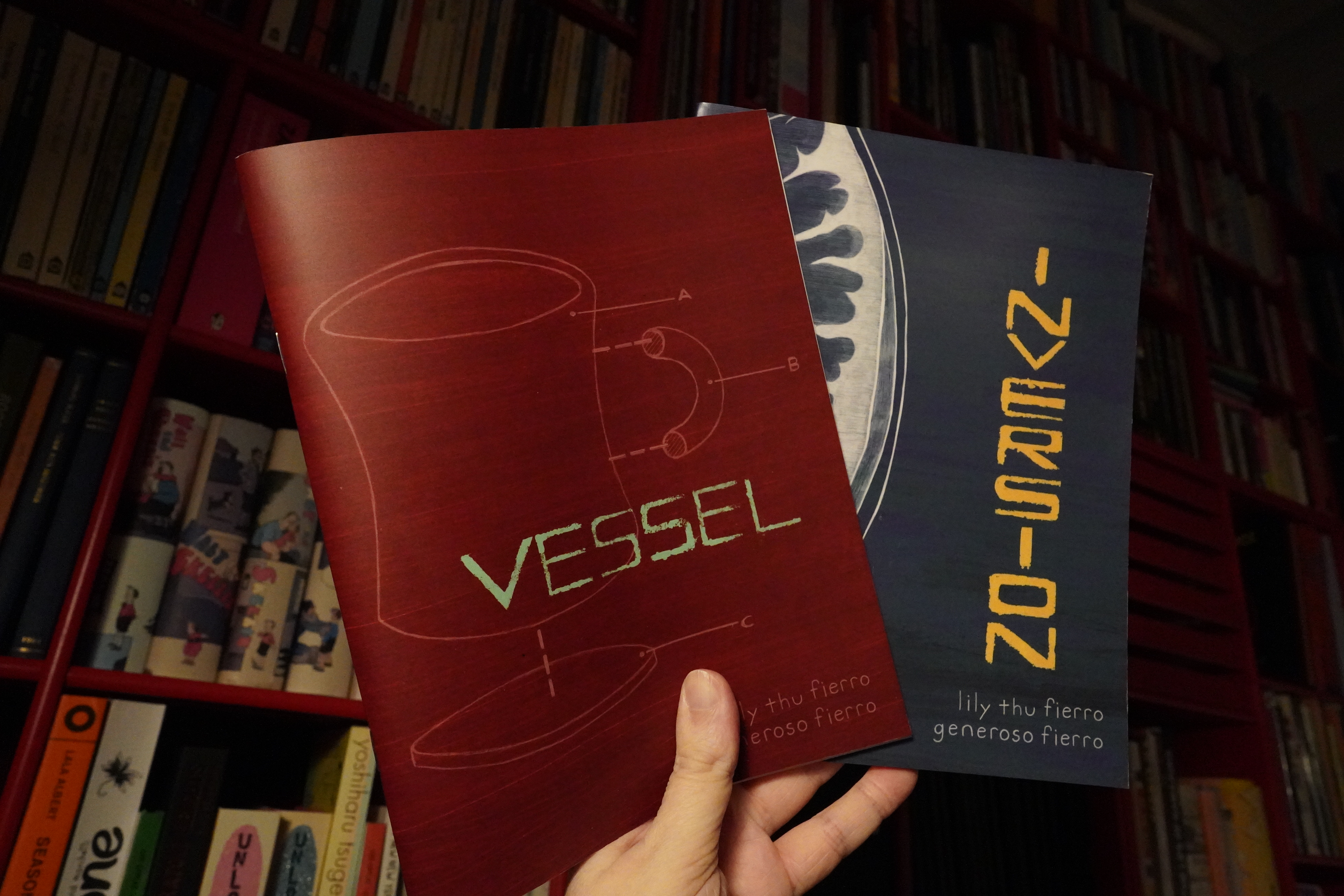
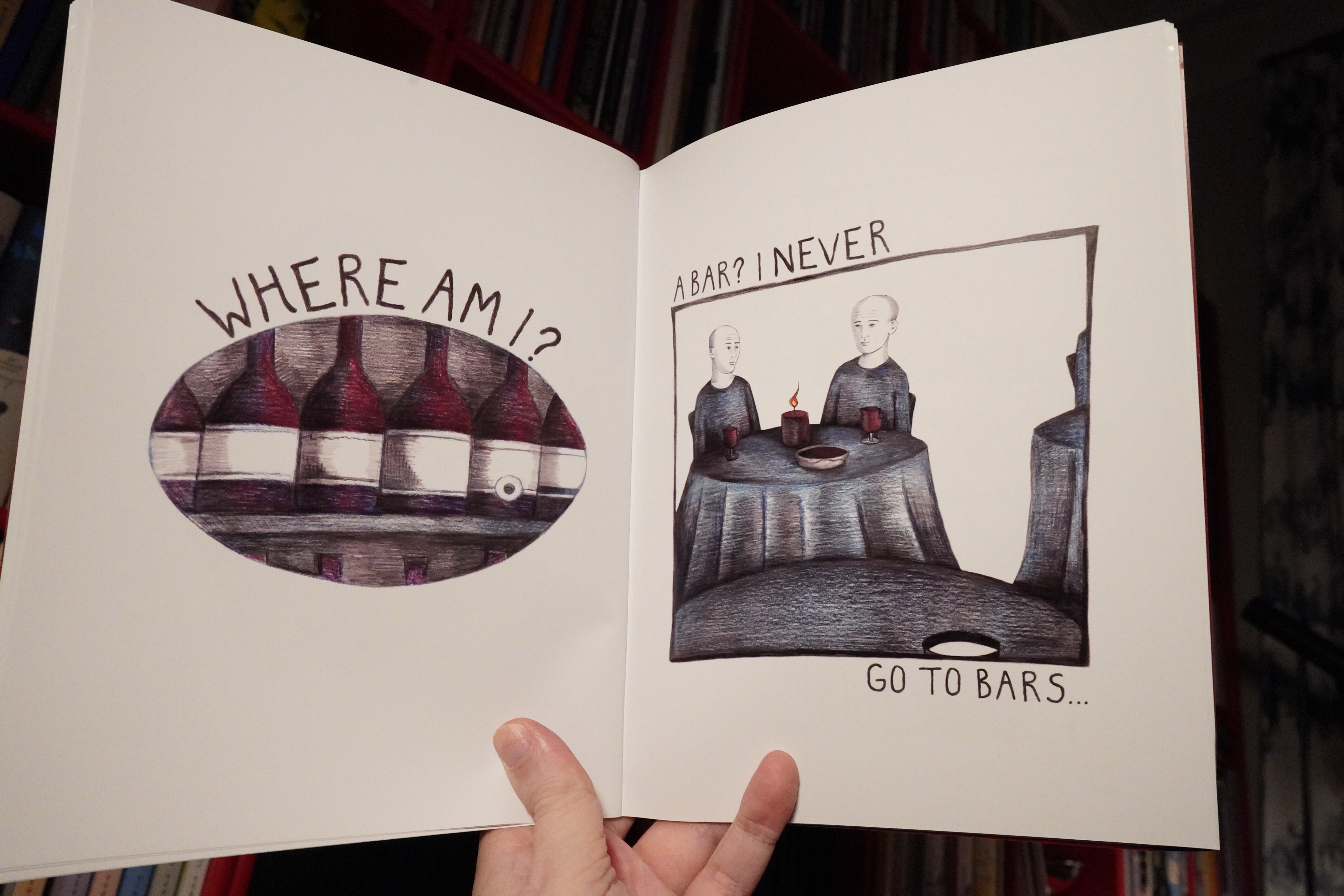
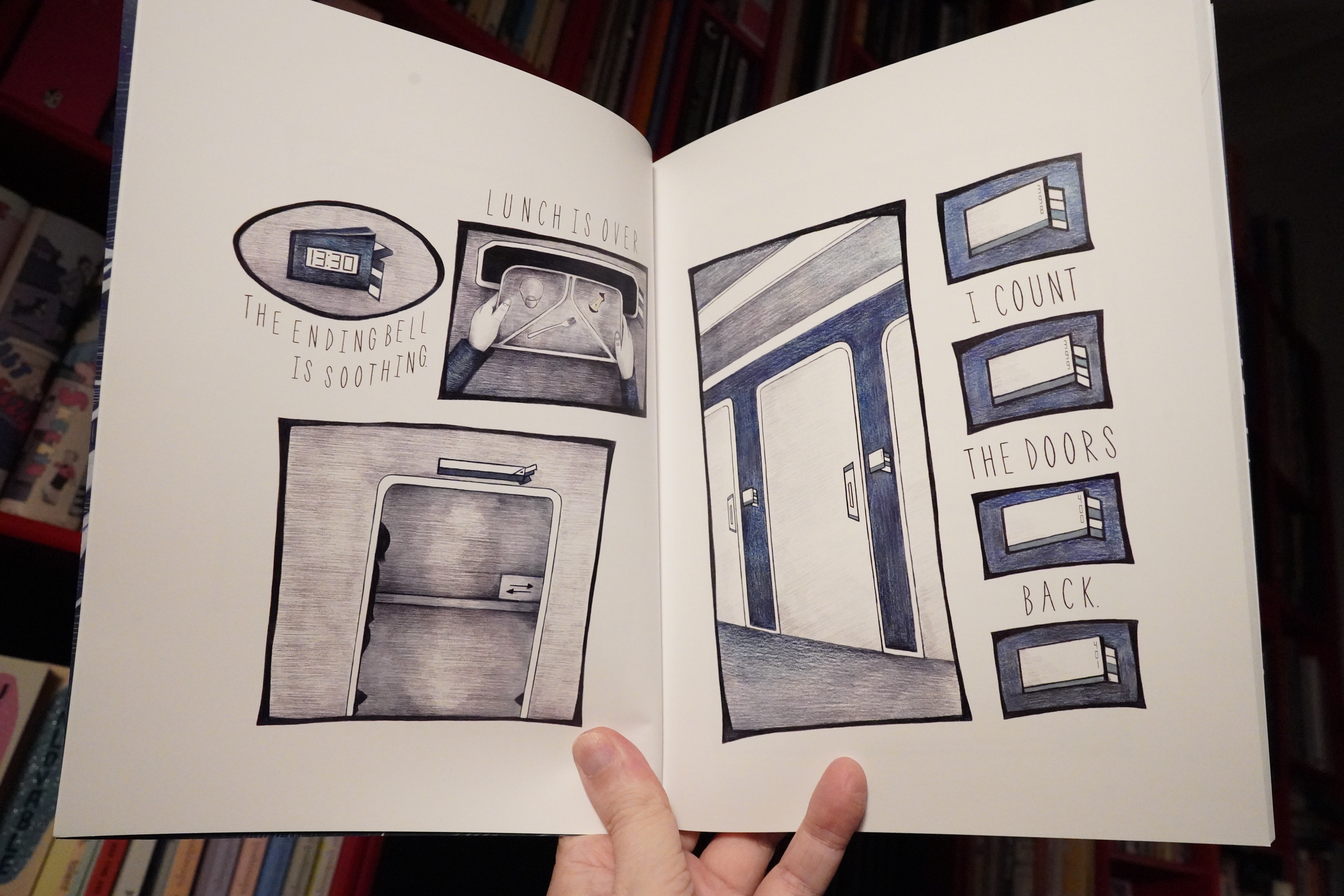
23:44: Vessel & Inversion by Lily Thu Fierro / Generoso Fierro
I also got a package from Domino Books, so let’s read those books…

Vessel is a somewhat straightforward book, told in this very original way.
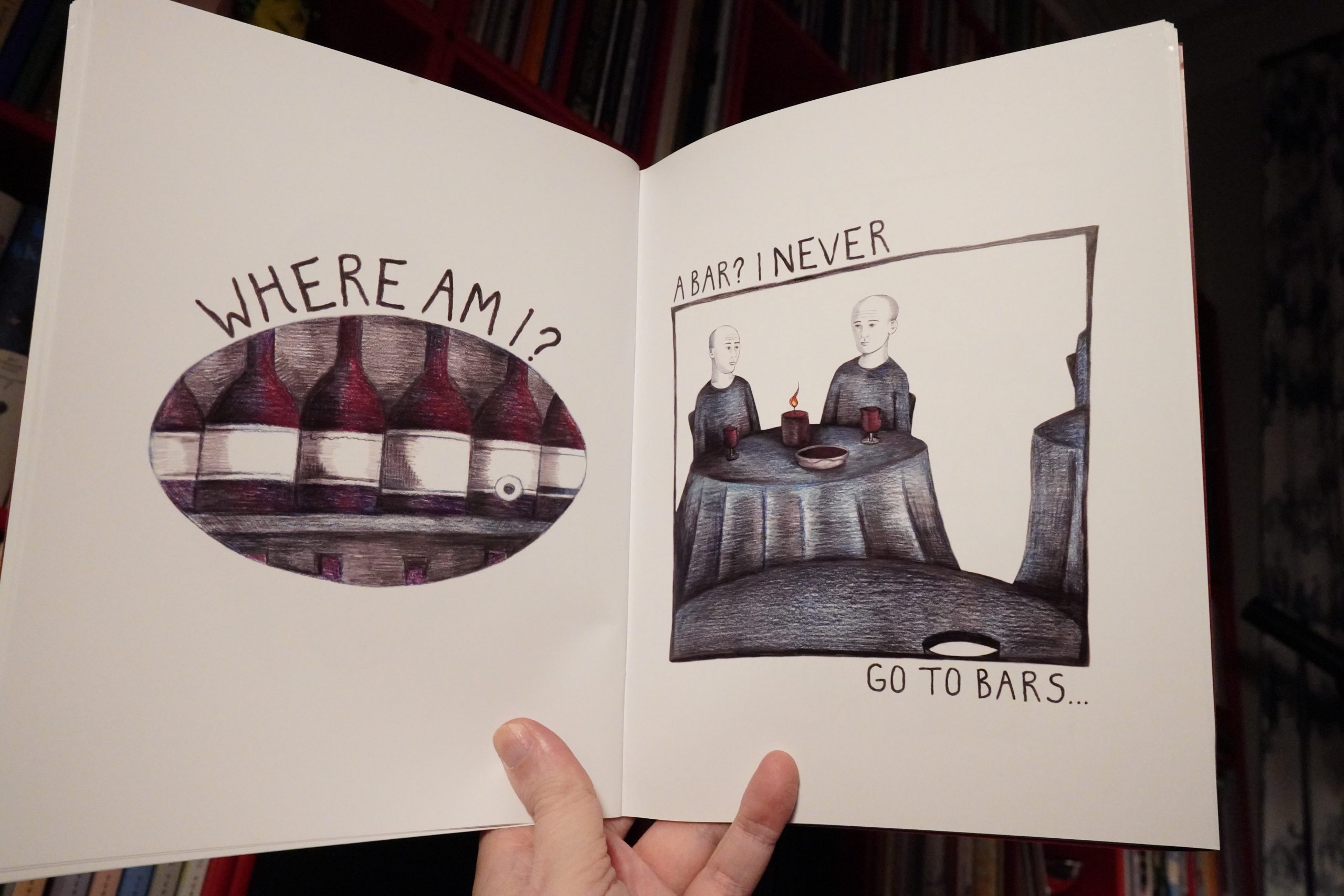
It’s quite interesting.
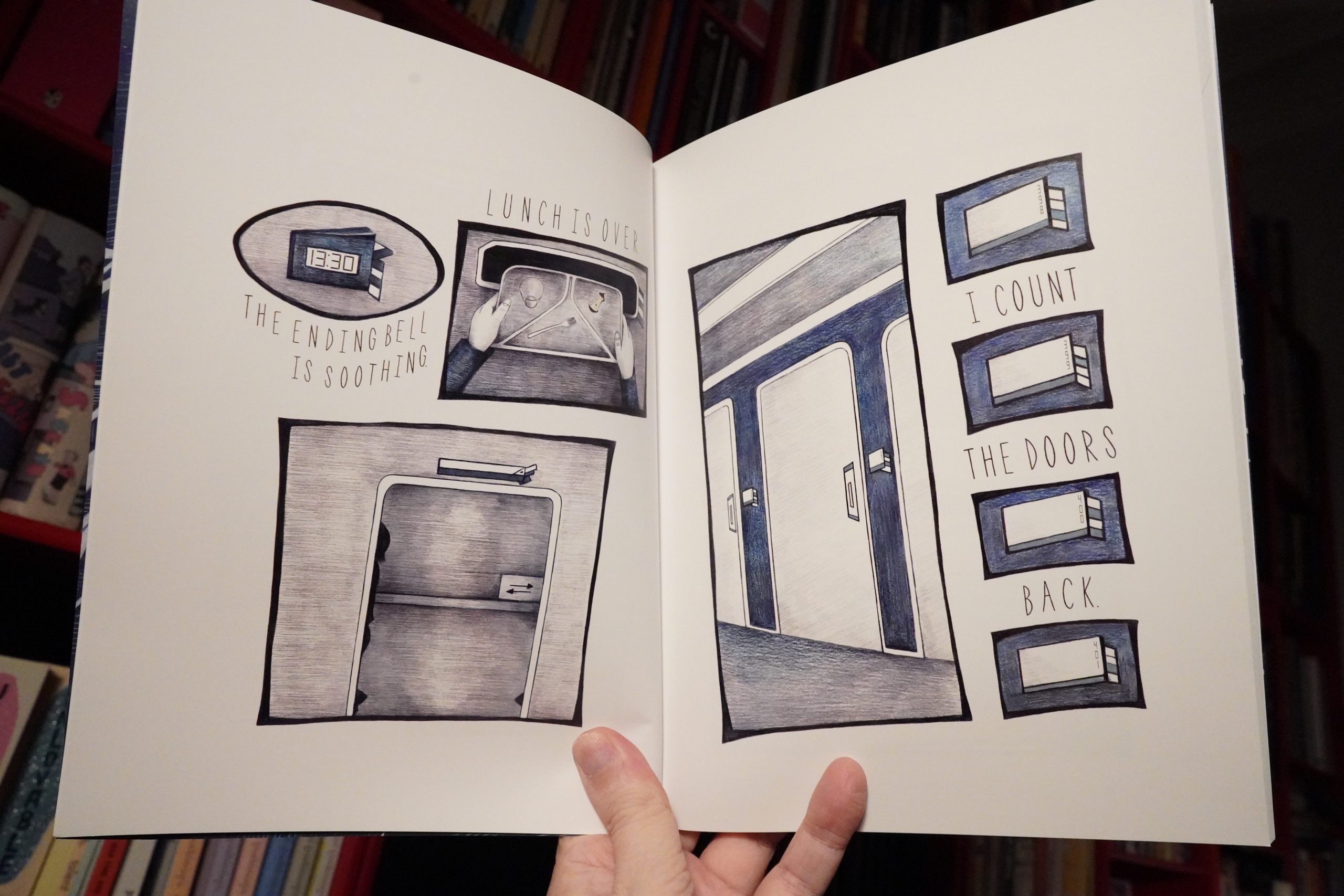
Inversion, however, seems a lot more ambitious, and it’s riveting and unnerving.
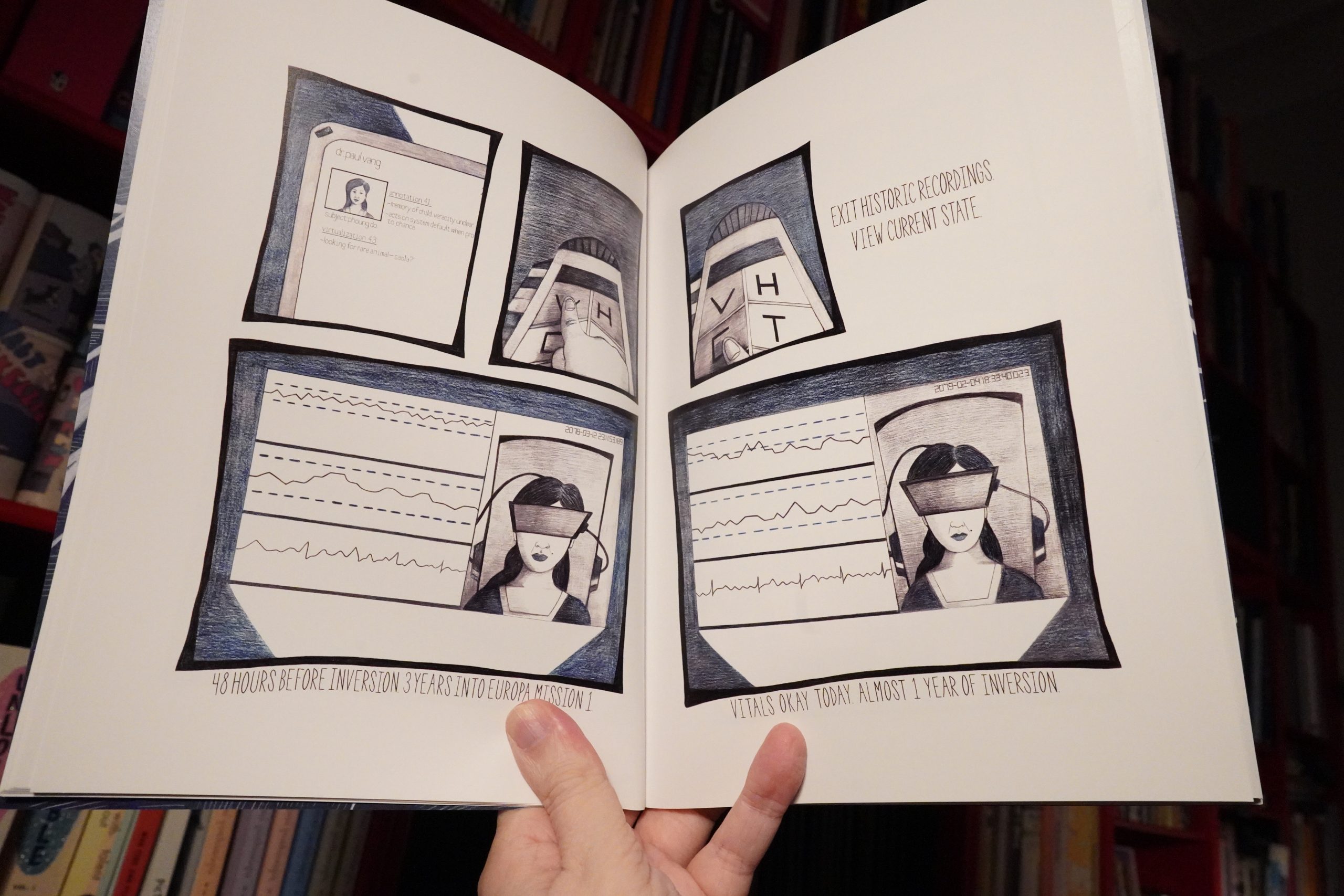
It’s more of a sci fi thing, I guess, but very odd. Compelling.
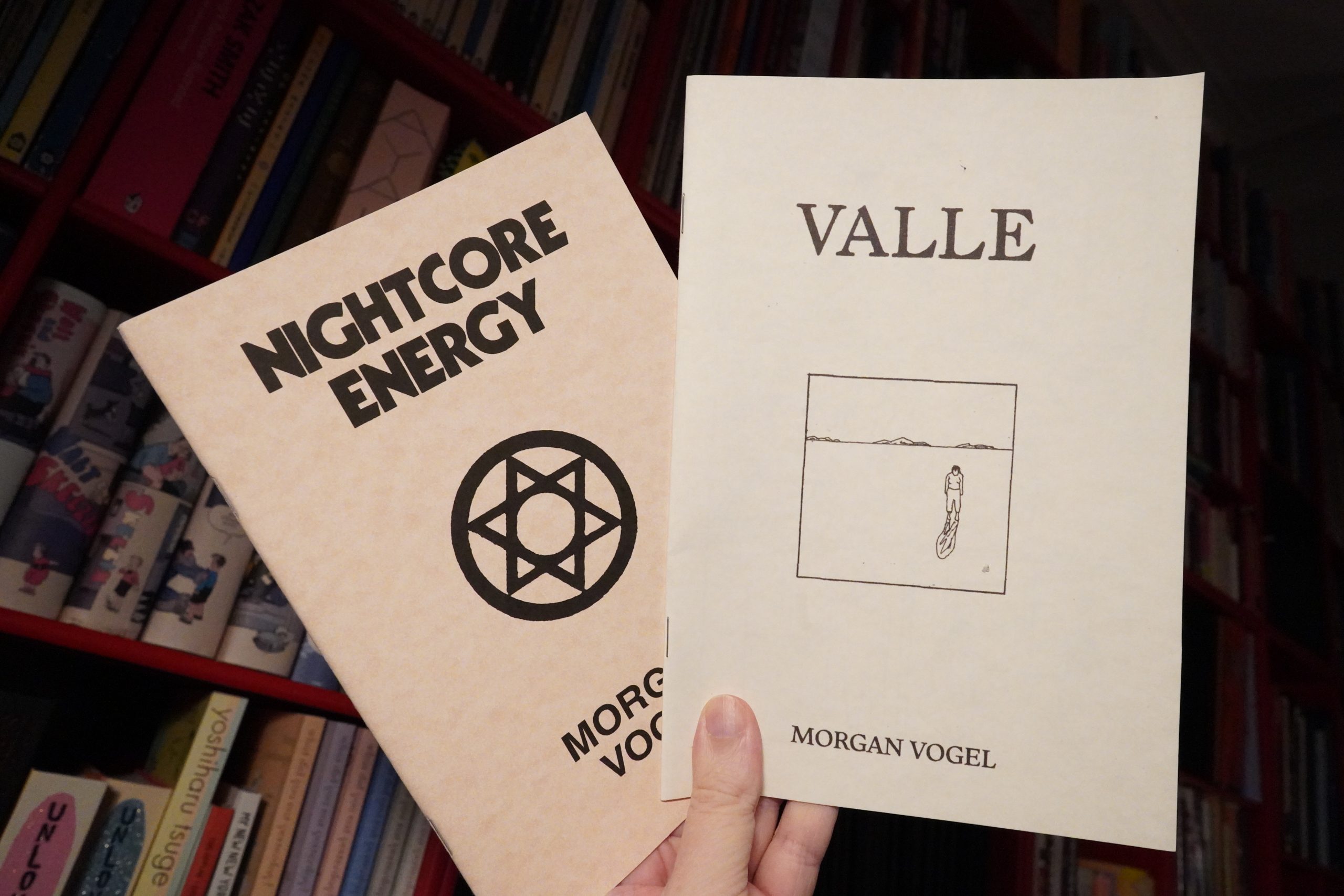
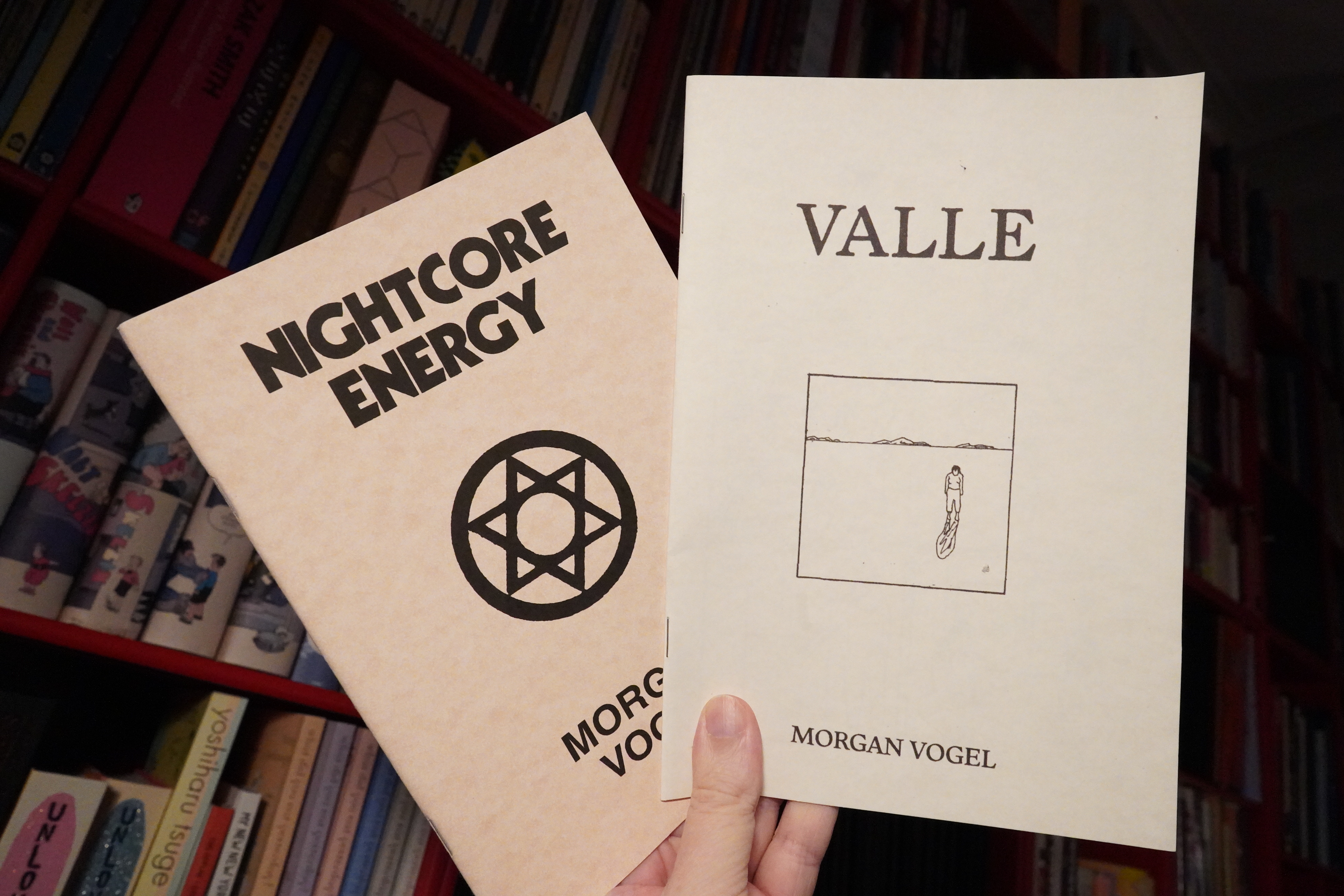
00:08: Nightcore Energy & Valle by Morgan Vogel
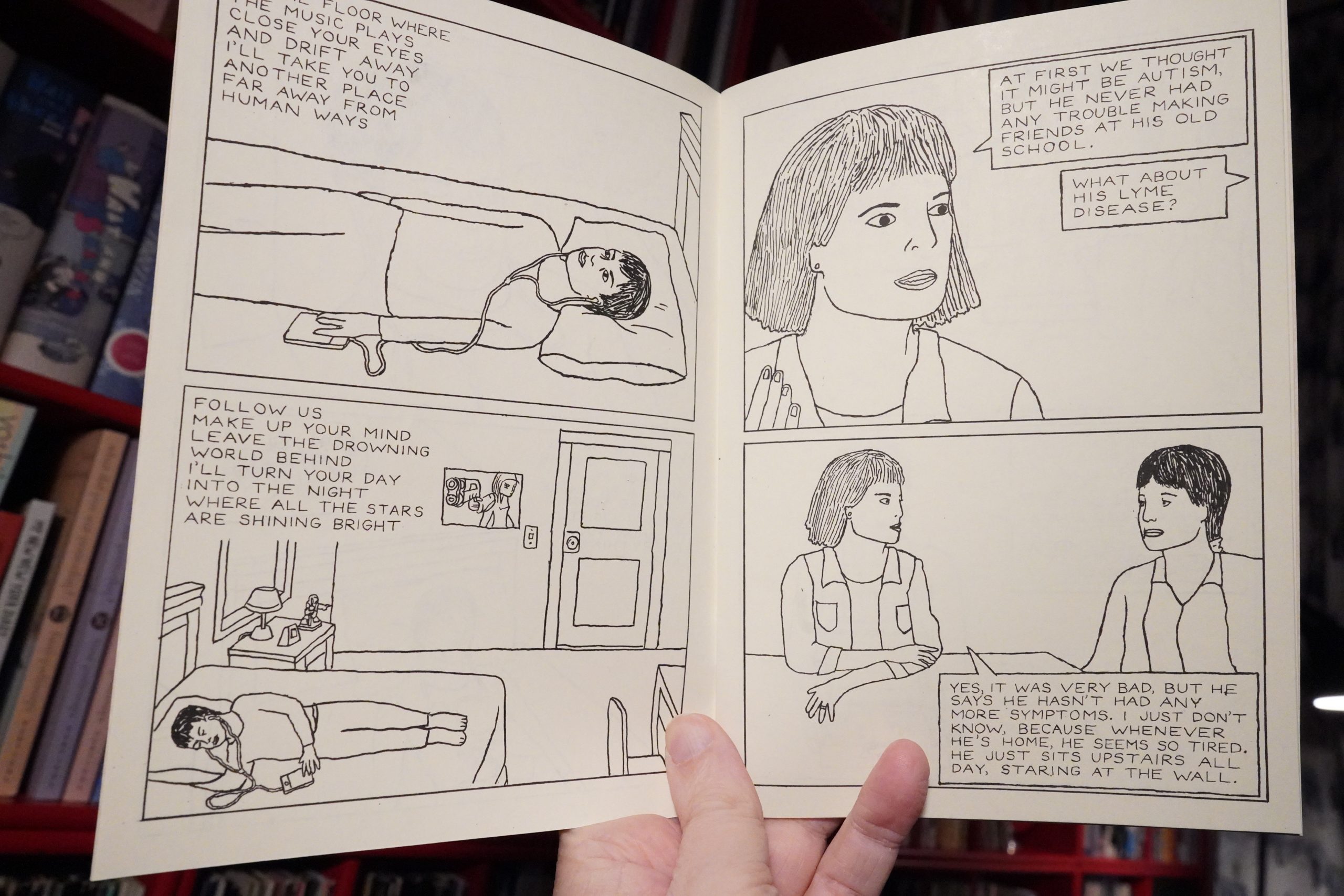
Nightcore Energy’s a horror story told very quietly. Impressive.

Valle is shorter and plays with virtual reality, and isn’t as compelling. But it’s a good story, anyway.
| Suzanne Vega: Solitude Standing |  |
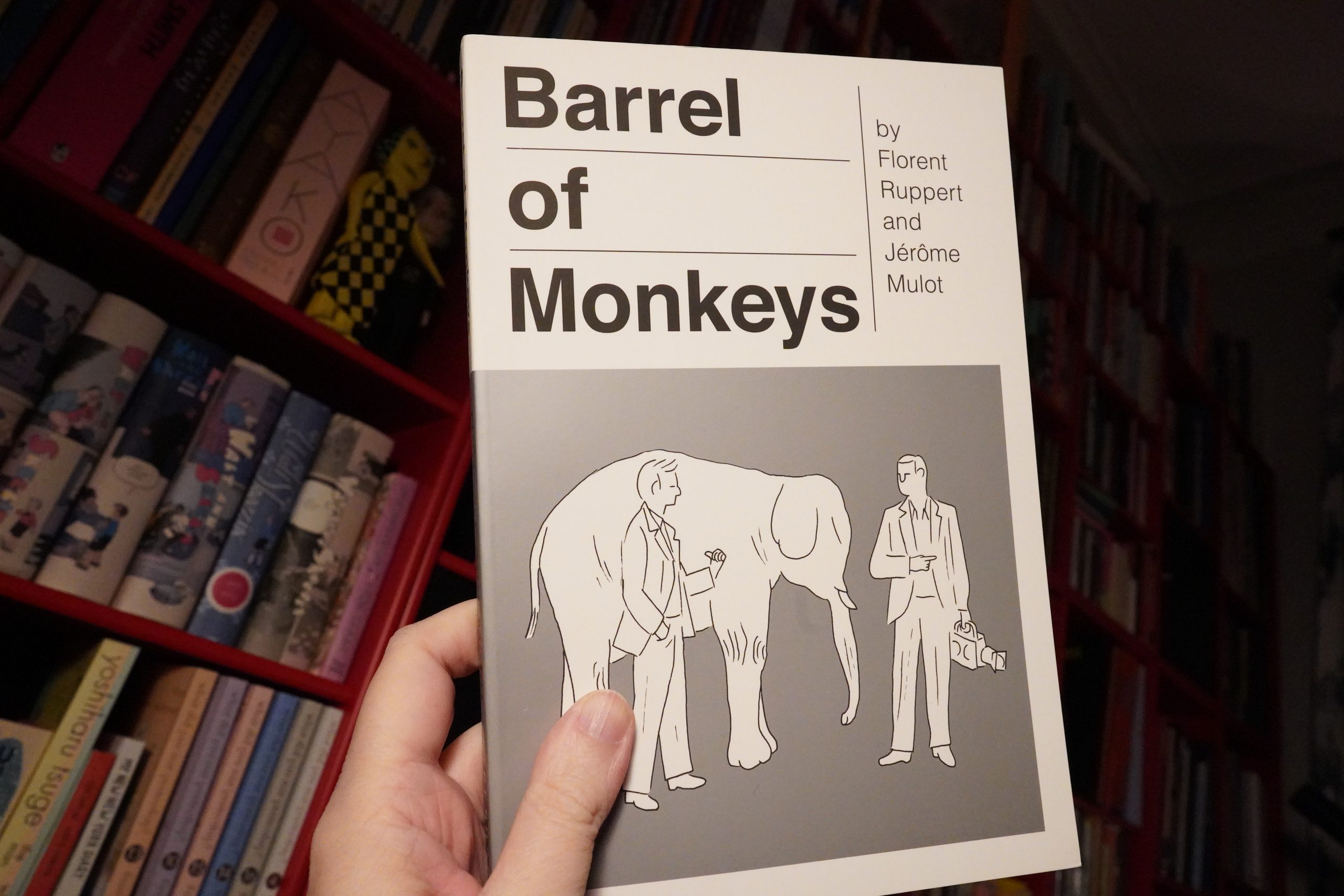
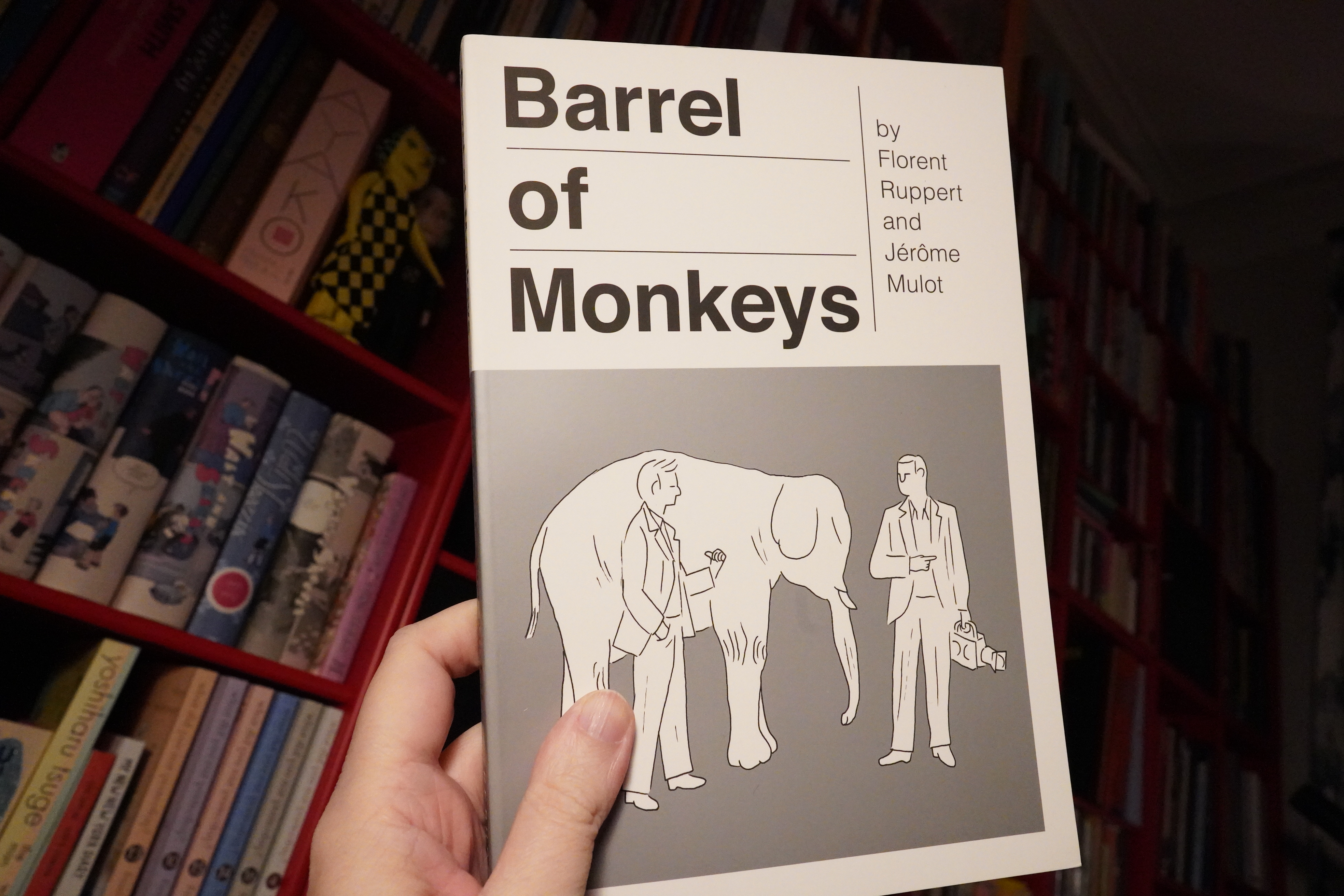
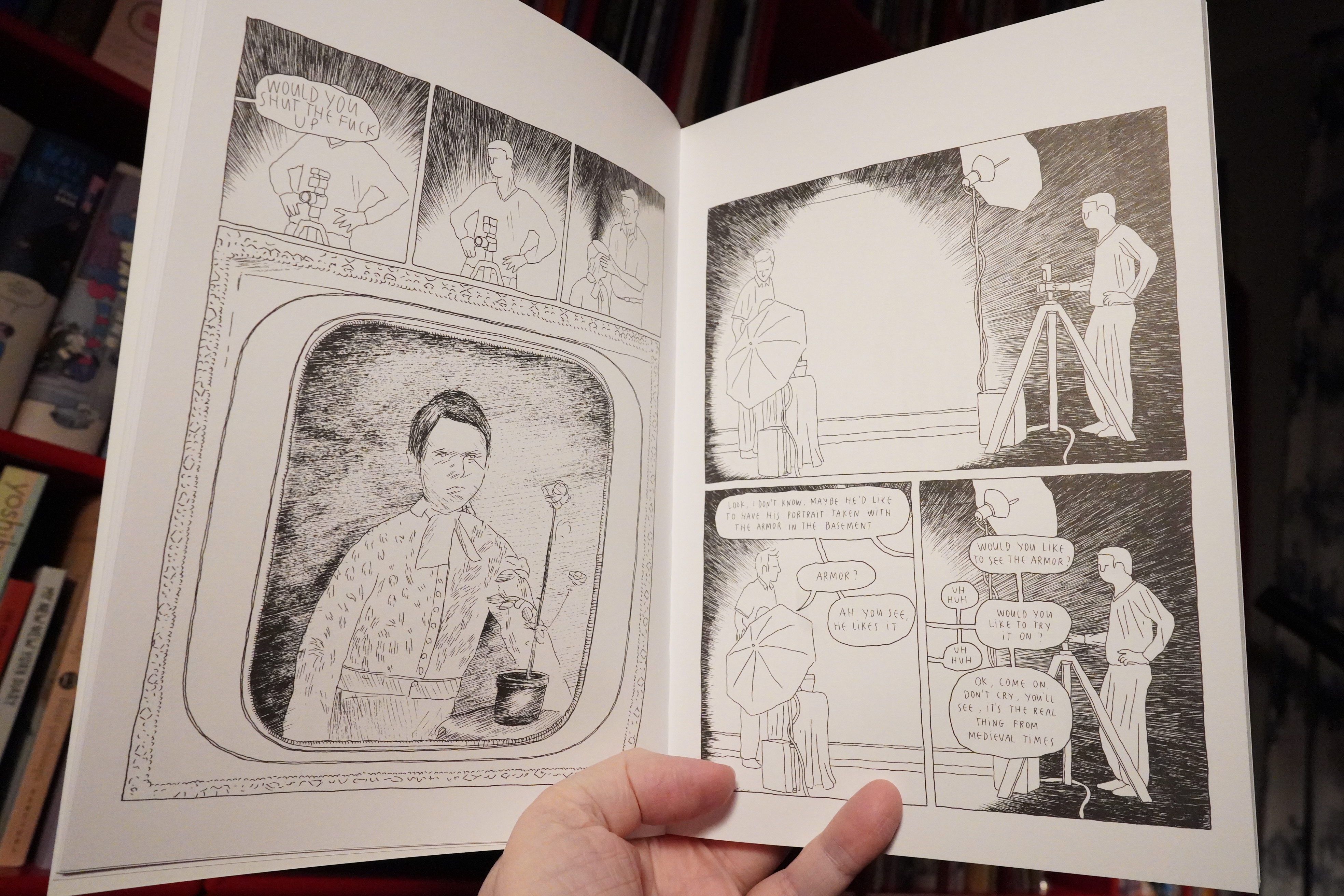
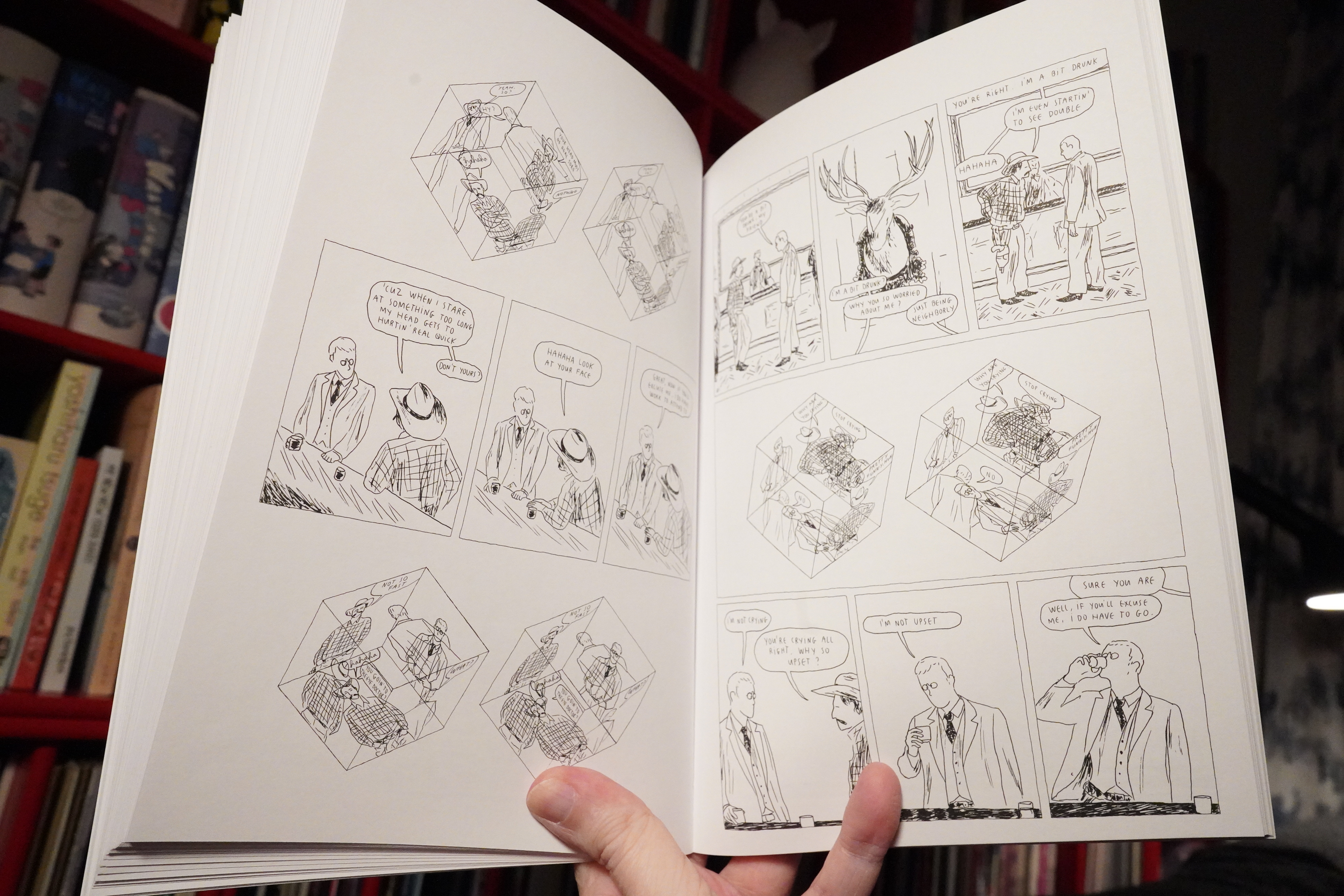
00:18: Barrel of Monkeys by Ruppert and Mulot (Rebus)
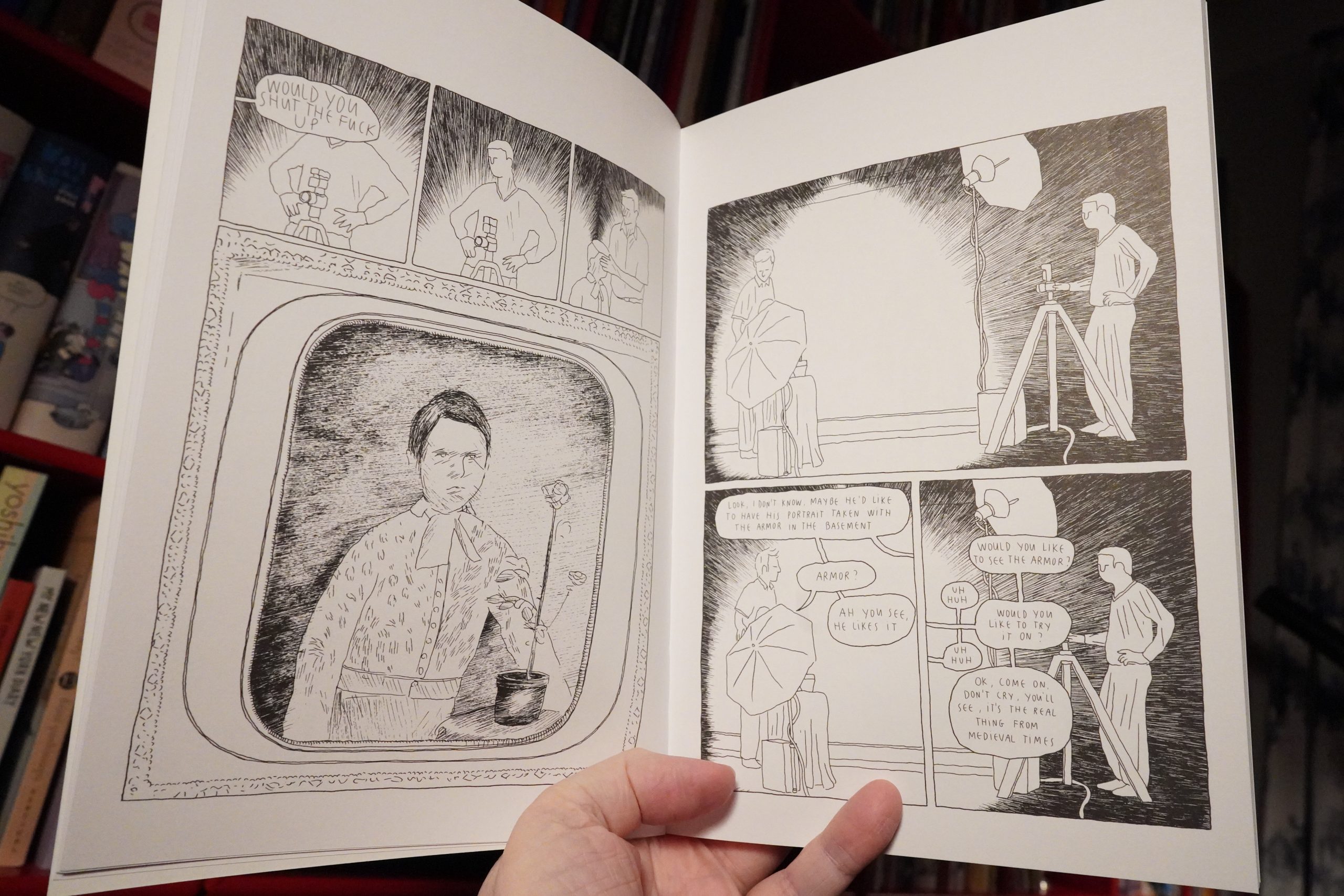
This is a bracingly nasty book. In a good way! I think.

Most of the enjoyment in reading this book is in the amazing variety in narrative strategies they employ. Every story is like a new thing to puzzle out how to read.

But it doesn’t feel academic at all — it’s visceral and nasty and more than a bit offputting. It’s great, but I can see why Rebus Books apparently never published anything more (and why the book is apparently still available to order, a decade after it was published in an English edition).
| Sussan Deyhim & Richard Horowitz: Desert Equations: Azax Attra |  |
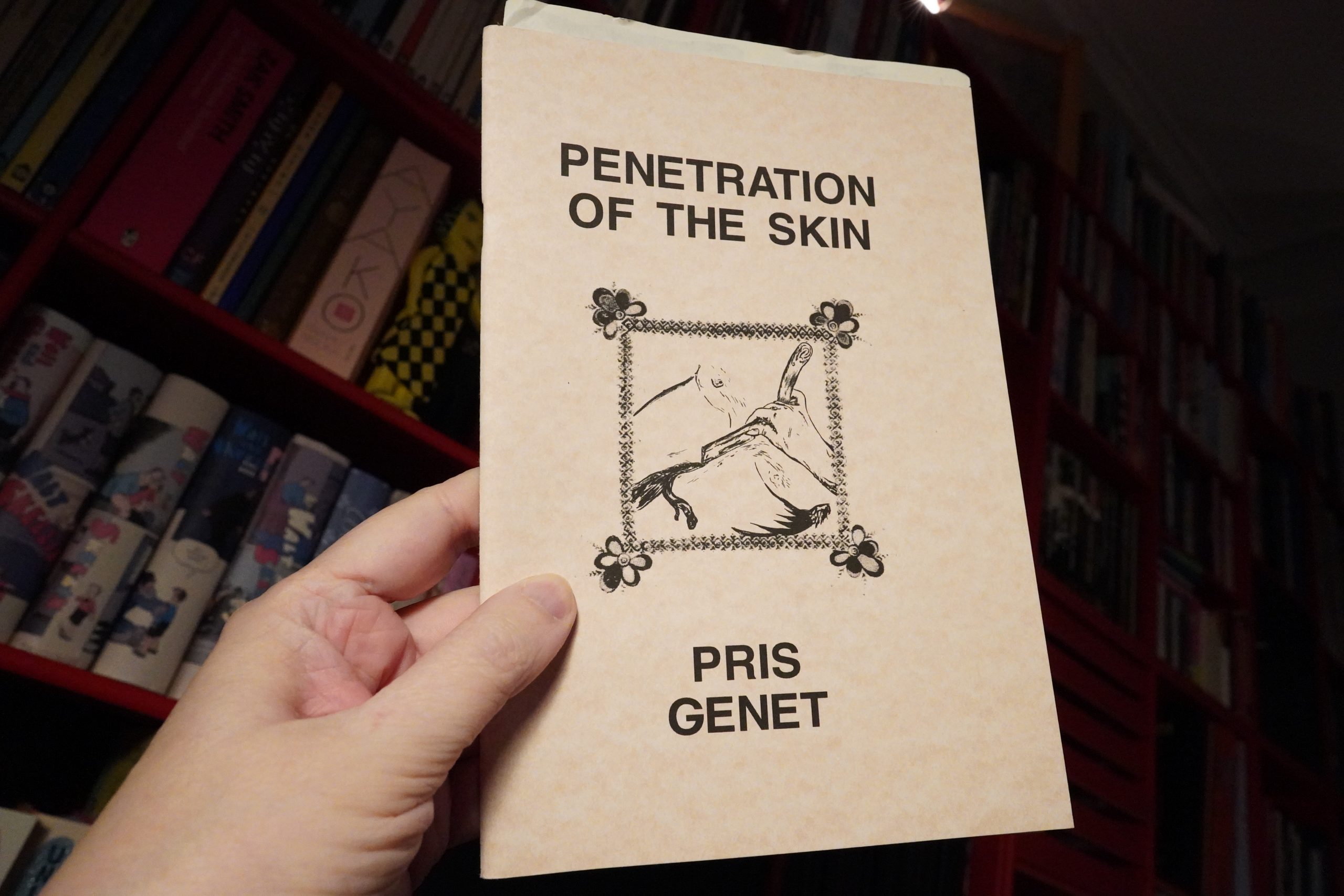
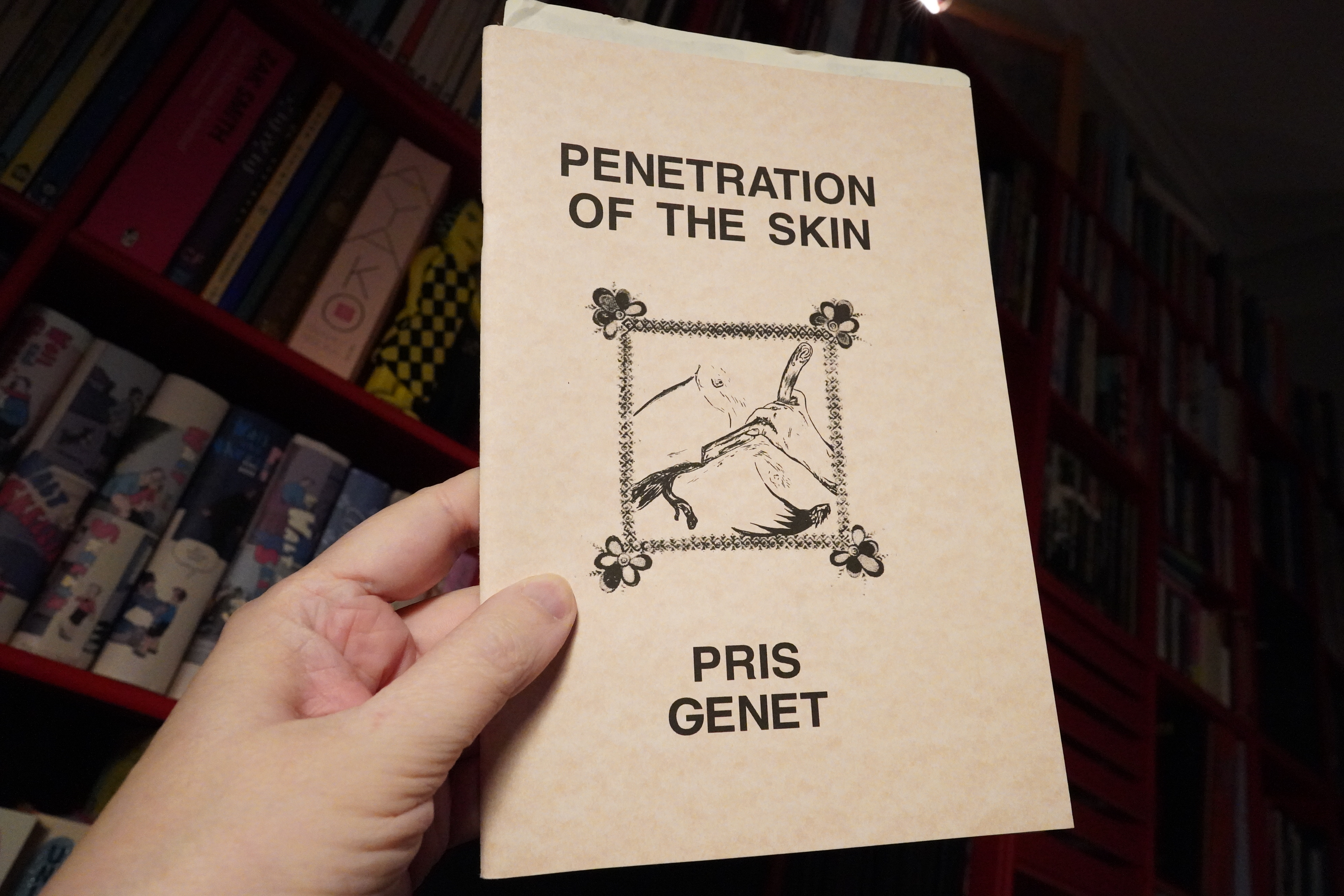
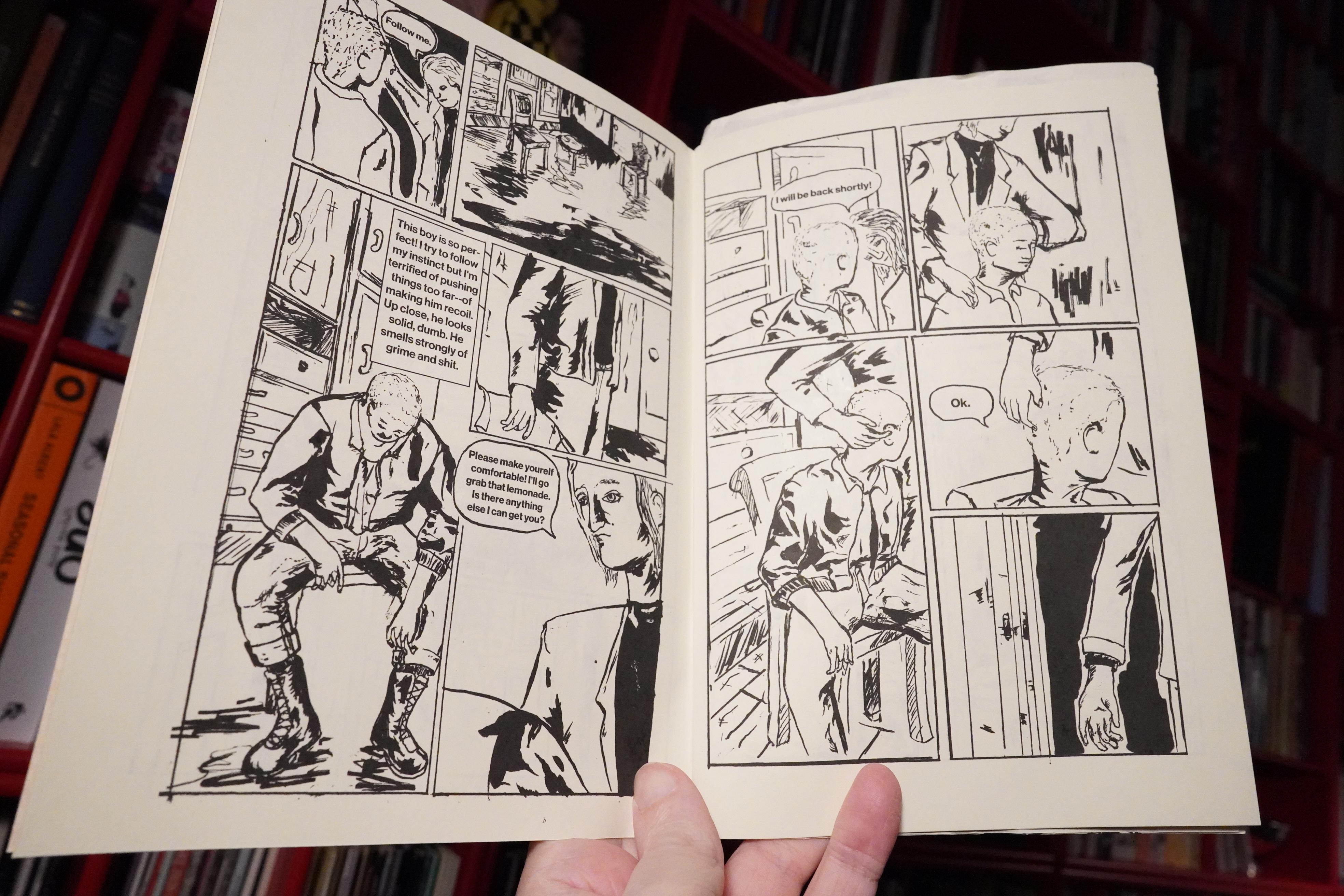
01:00: Penetration of the Skin by Pris Genet
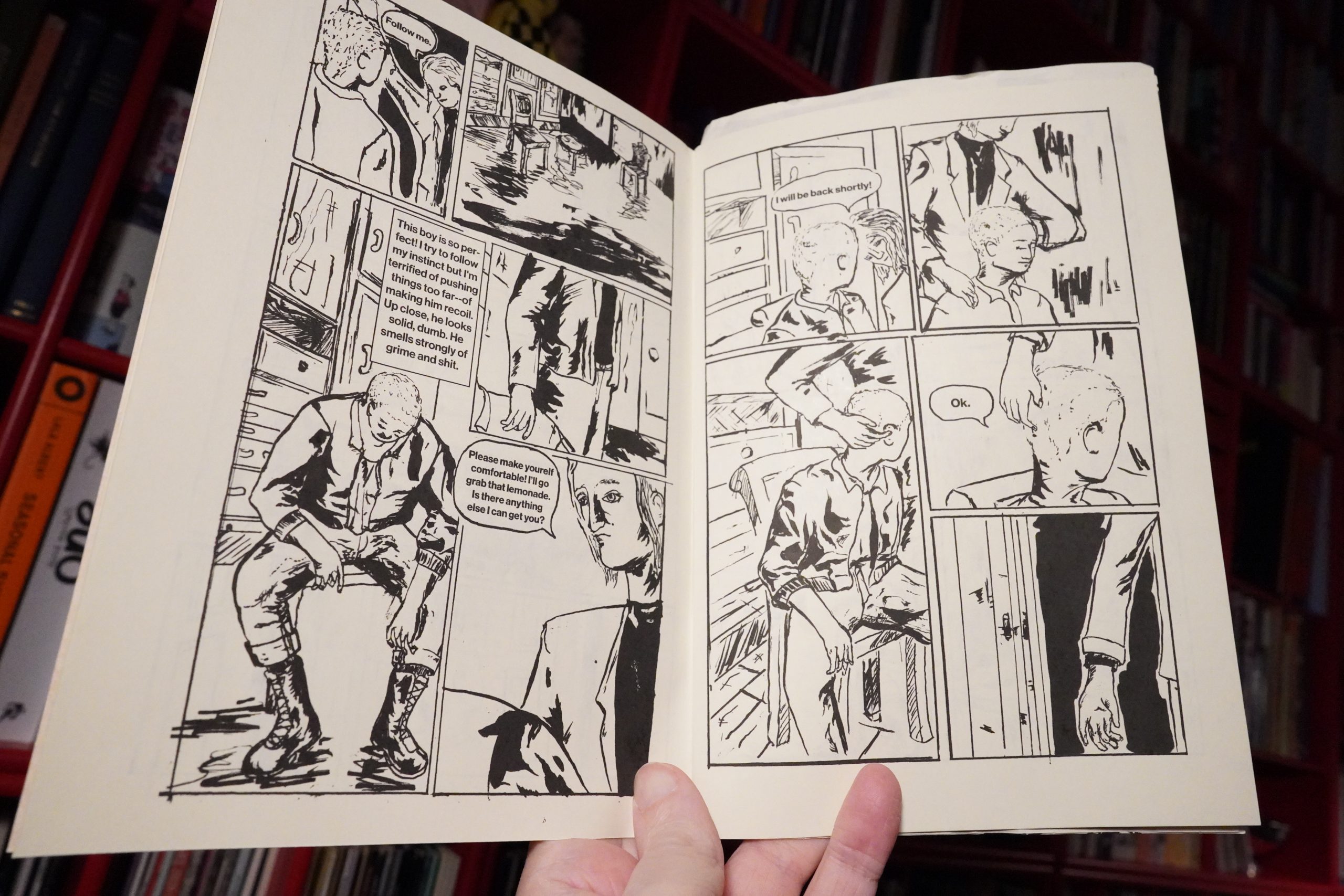
This is a very odd jerk-off fantasy book, I guess? It feels very honest.
| Sussan Deyhim & Richard Horowitz: Desert Equations: Azax Attra |  |
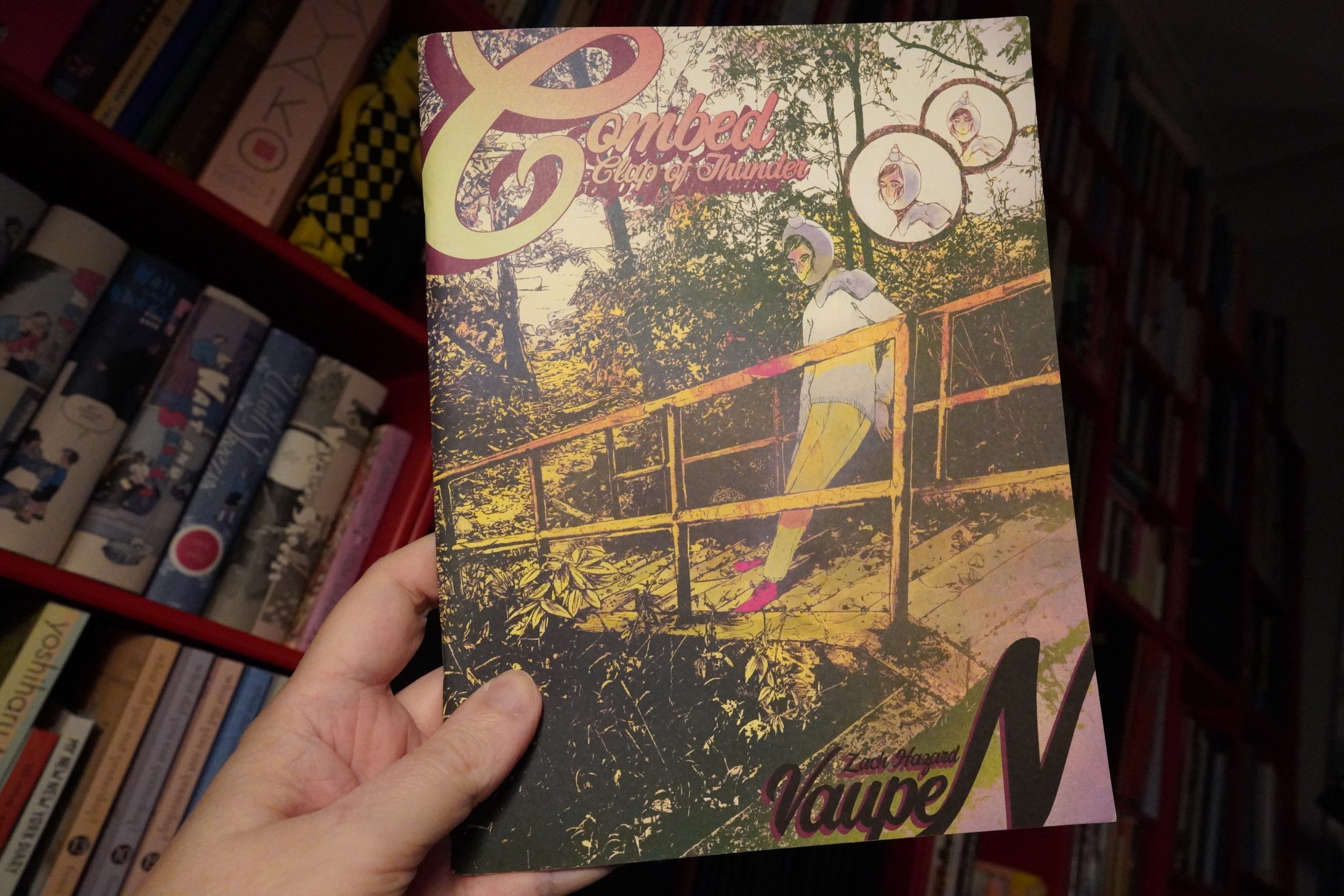
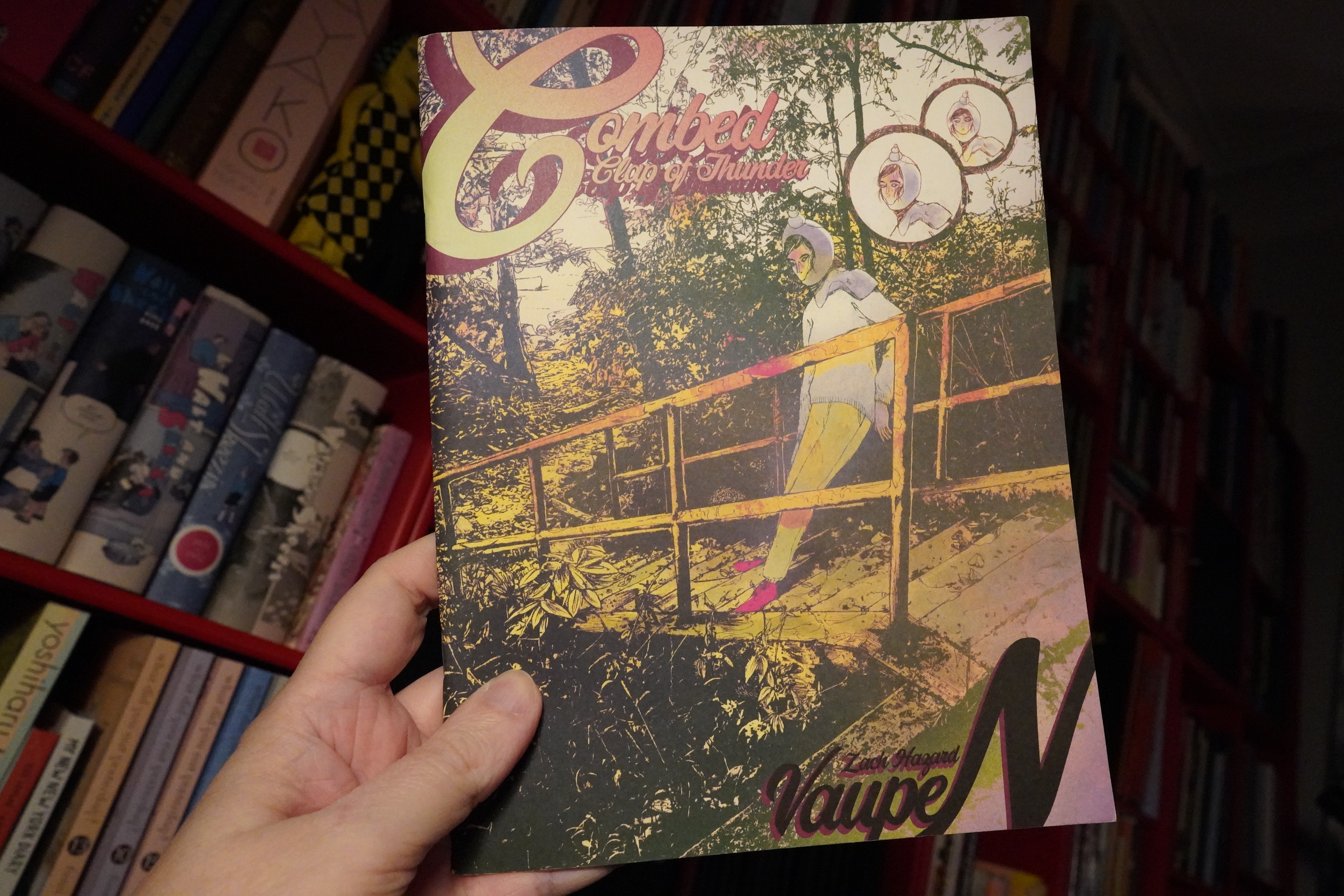
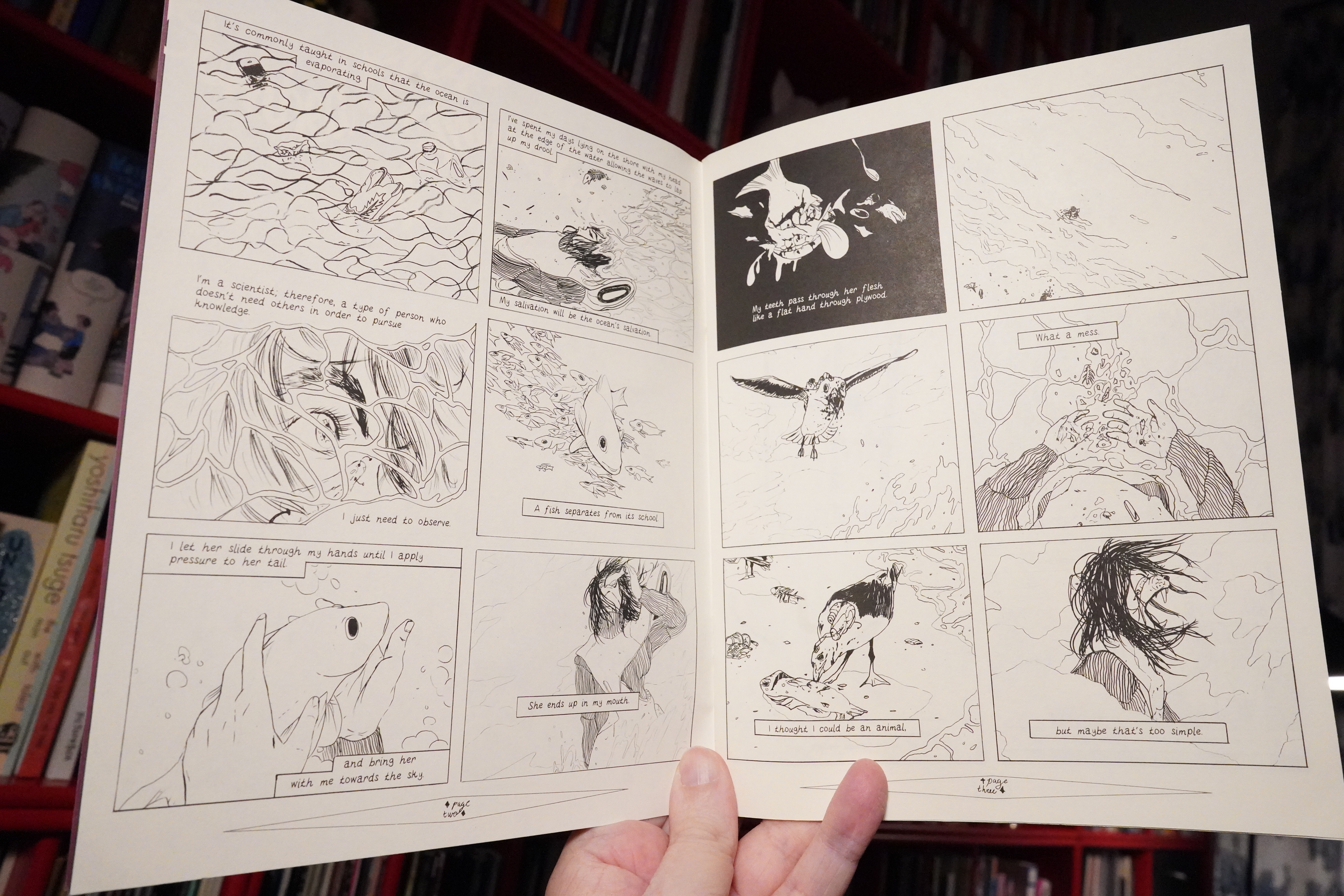
01:05: Combed Clap of Thunder by Zach Hazard Vaupen (Retrofit Comics)
Oh, an old Retrofit book… they published so much great stuff; to bad they shut down.
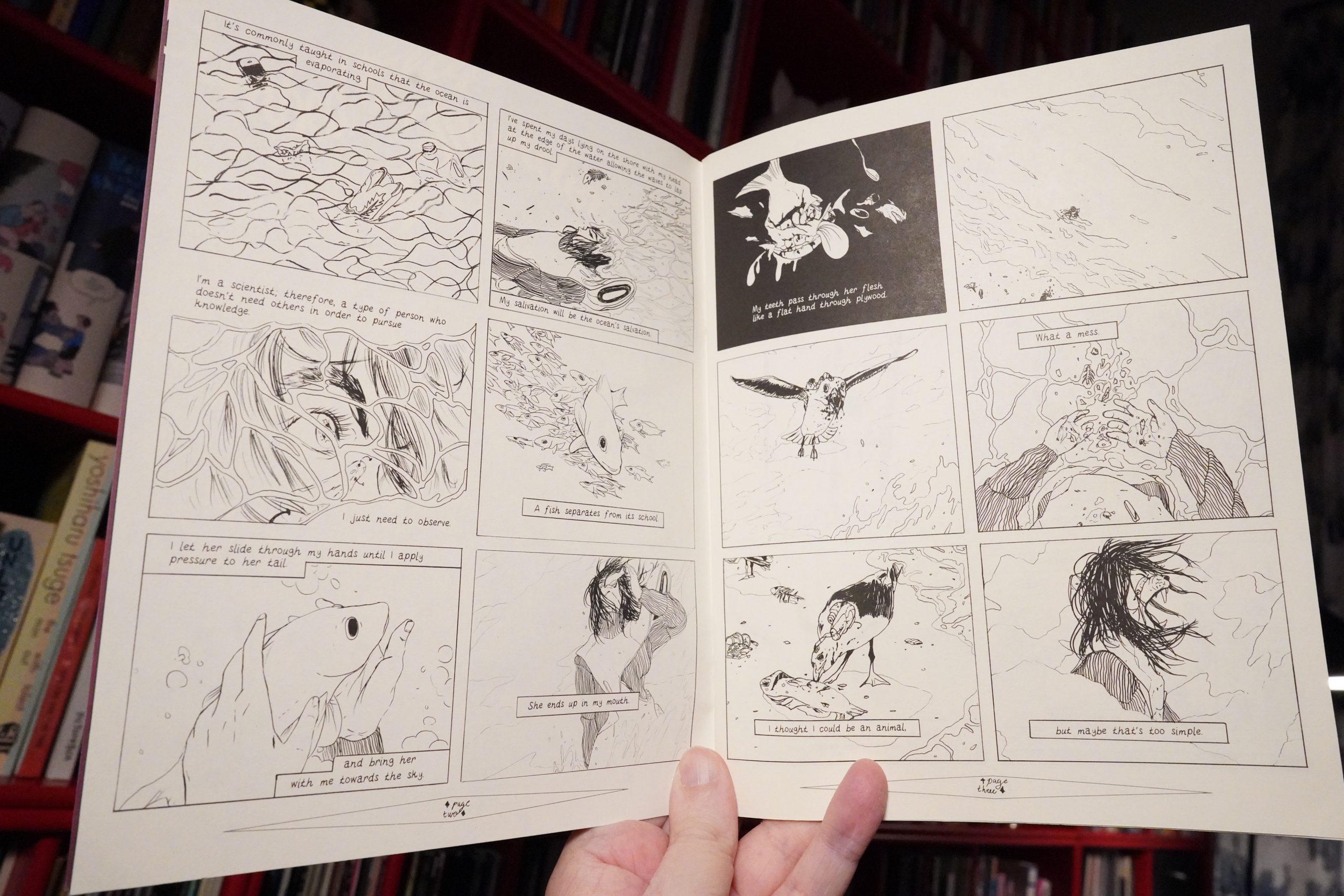
This is batshit insane. In a good way.
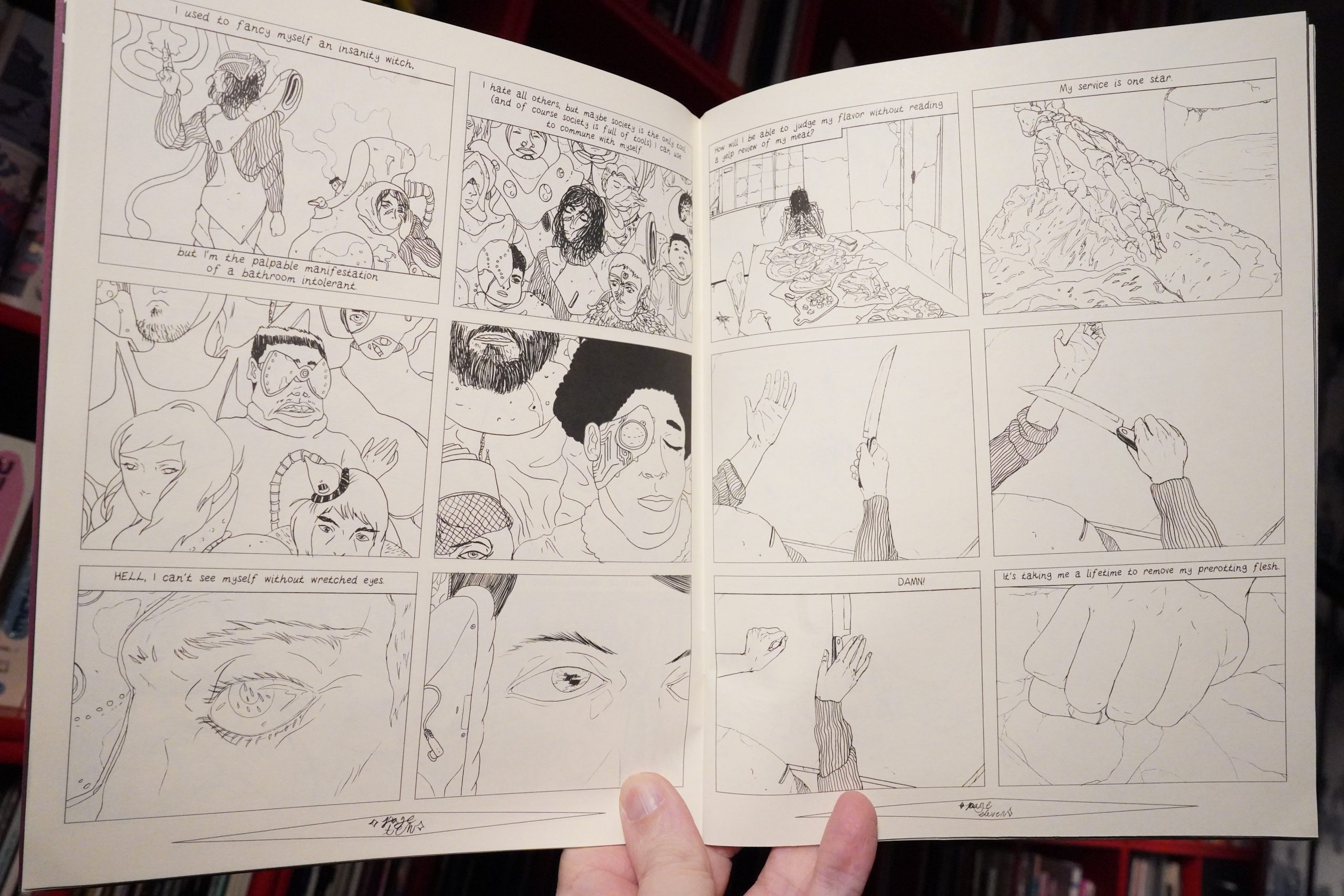
No notes. Excellent stuff.
| Sussan Deyhim & Richard Horowitz: Desert Equations: Azax Attra |  |
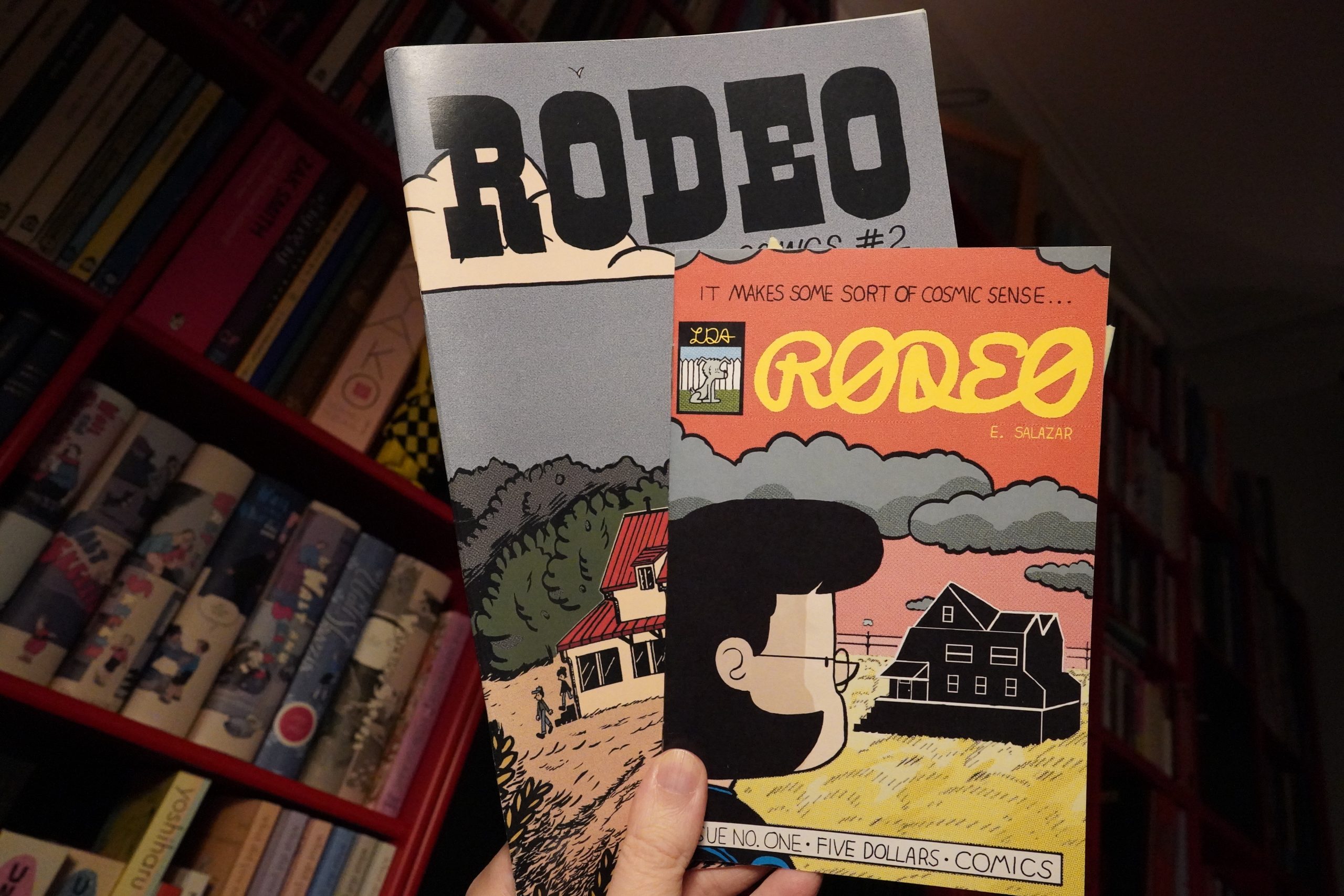
01:22: Rodeo #1-2 by Evan Salazar
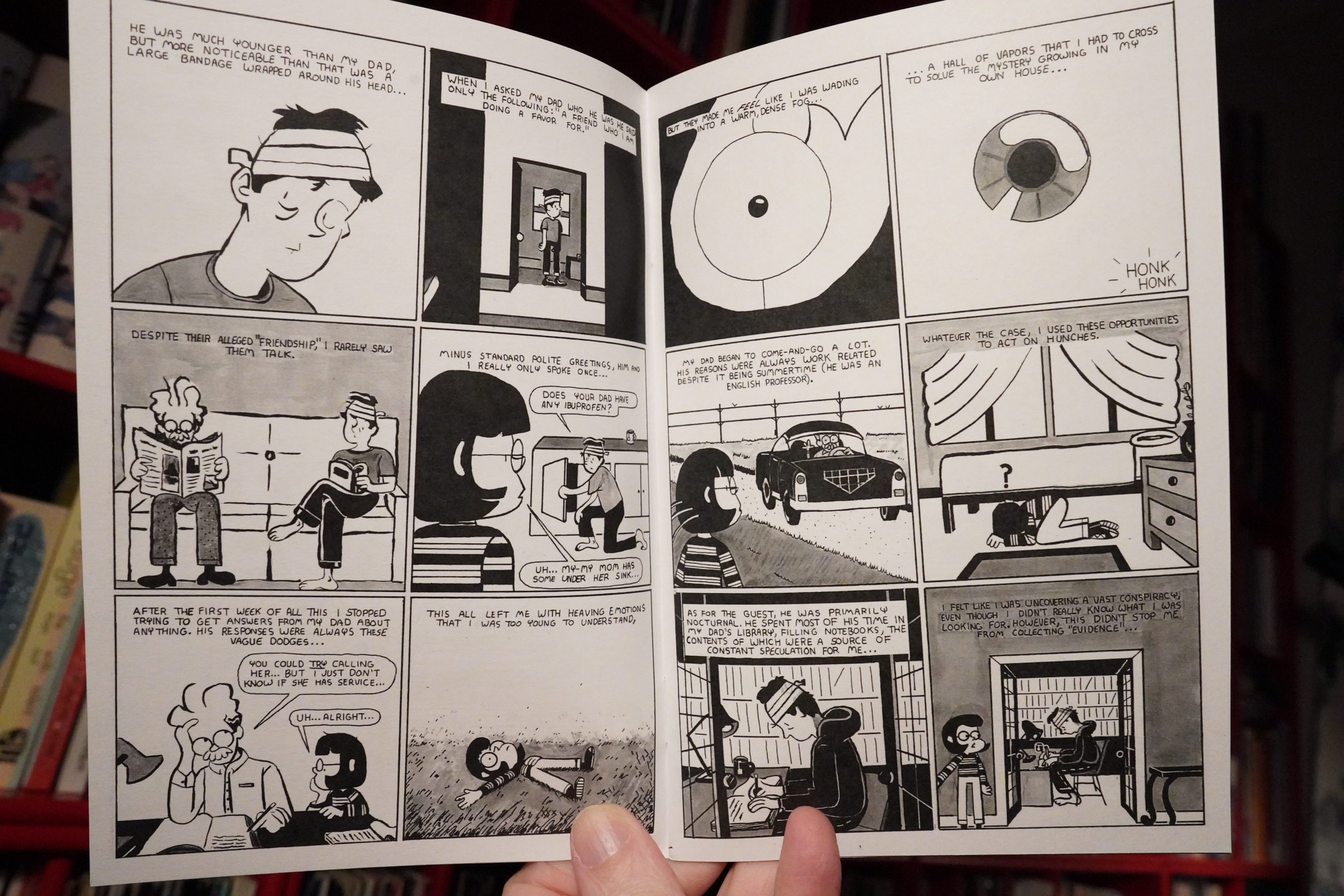
These are compelling books — they’re mysteries, but kinda mundane, vague ones.
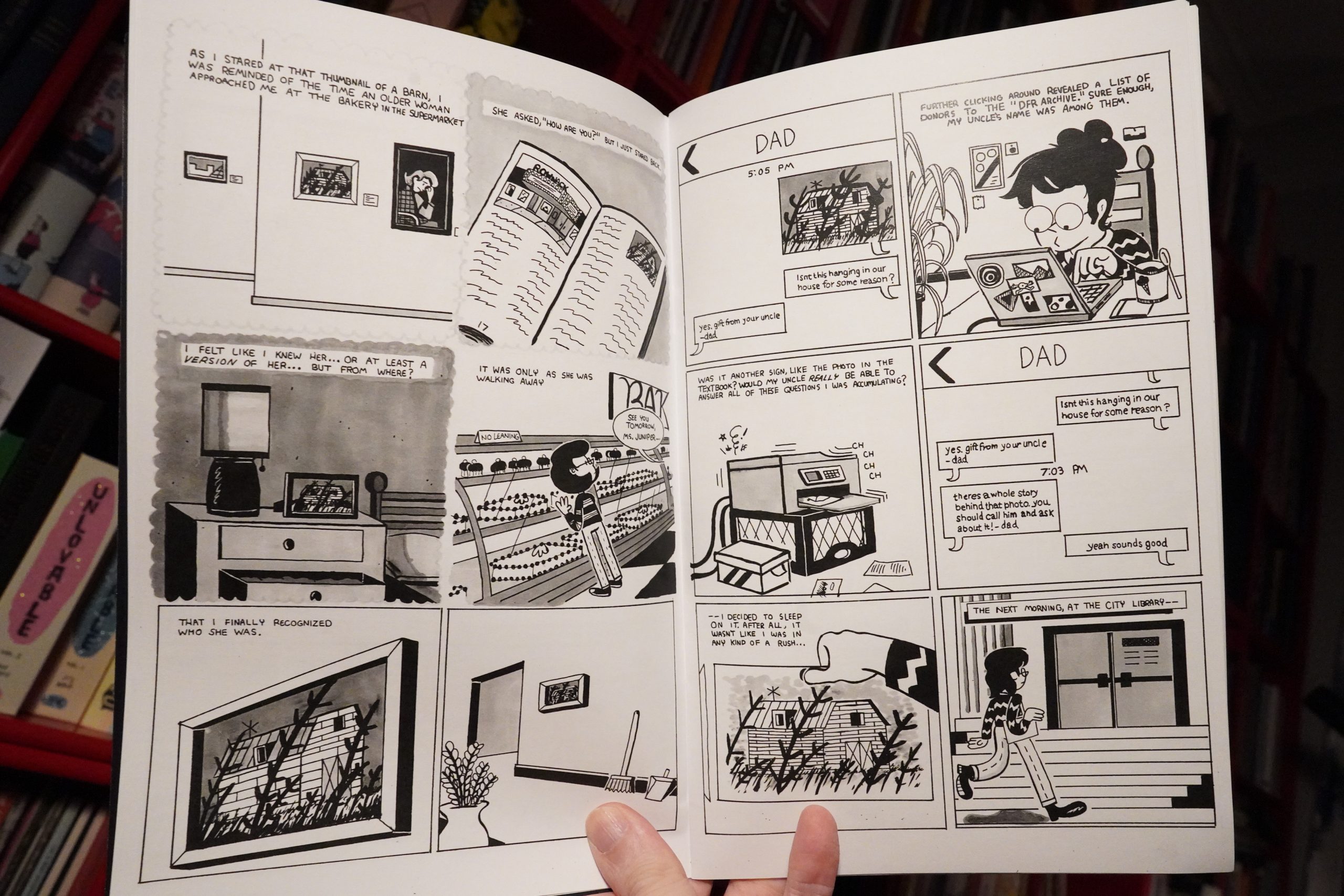
I got totally into them — I want to know who this mysterious author she’s trying to track down is and so on — and I’m not quite sure why. It’s something about the characterisation and pacing that’s just gripping.
| Steven Brown: Searching For Contact |  |
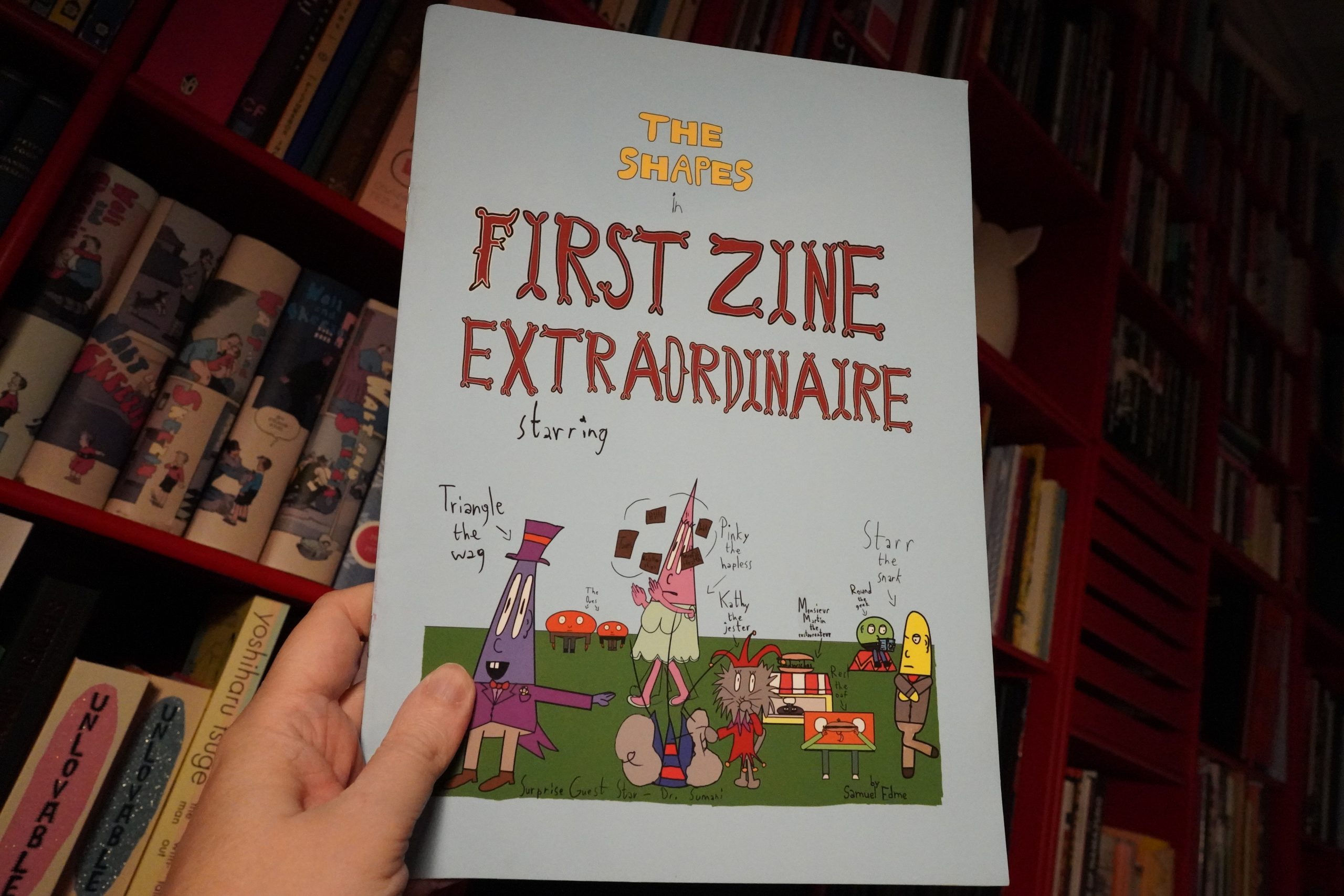
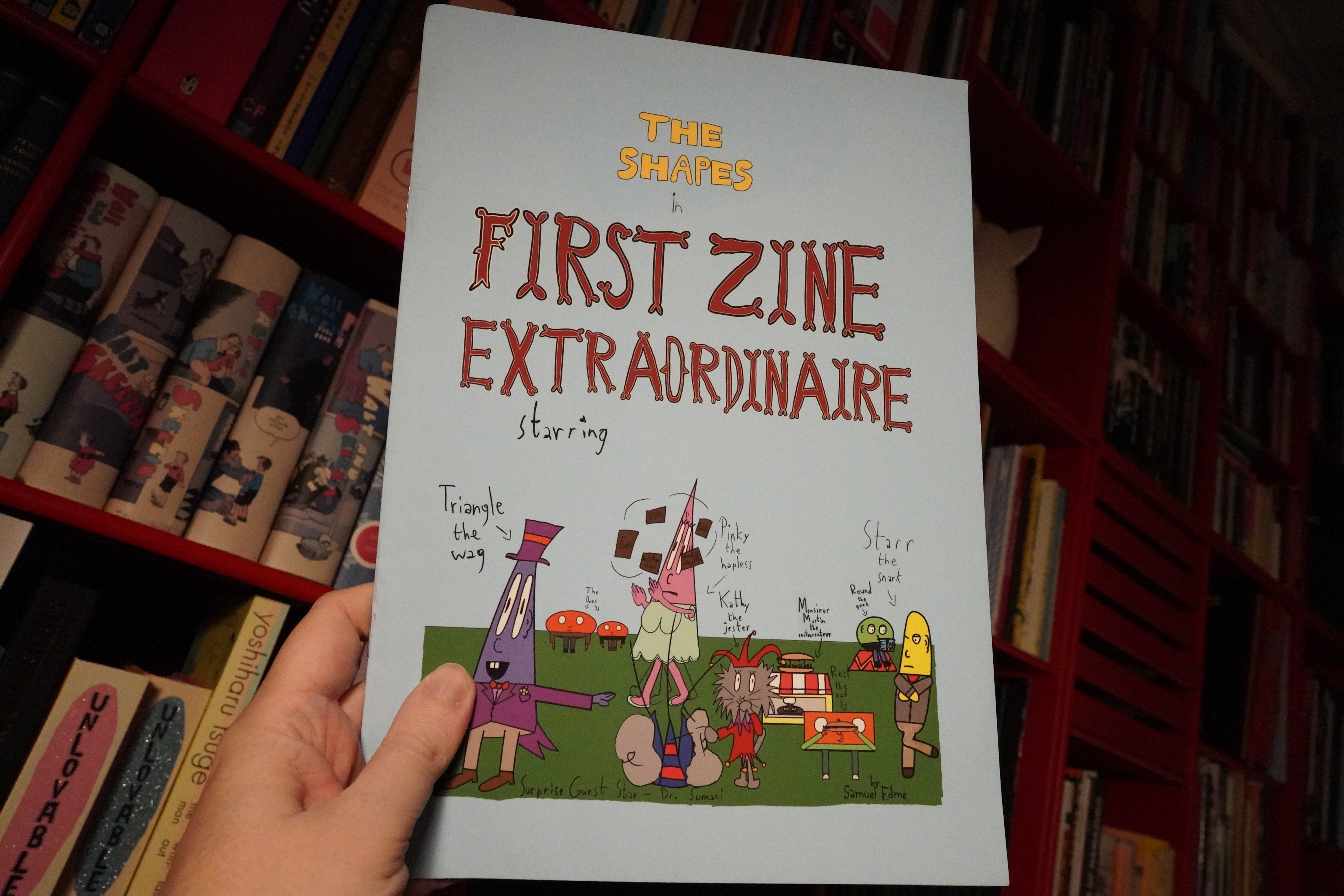
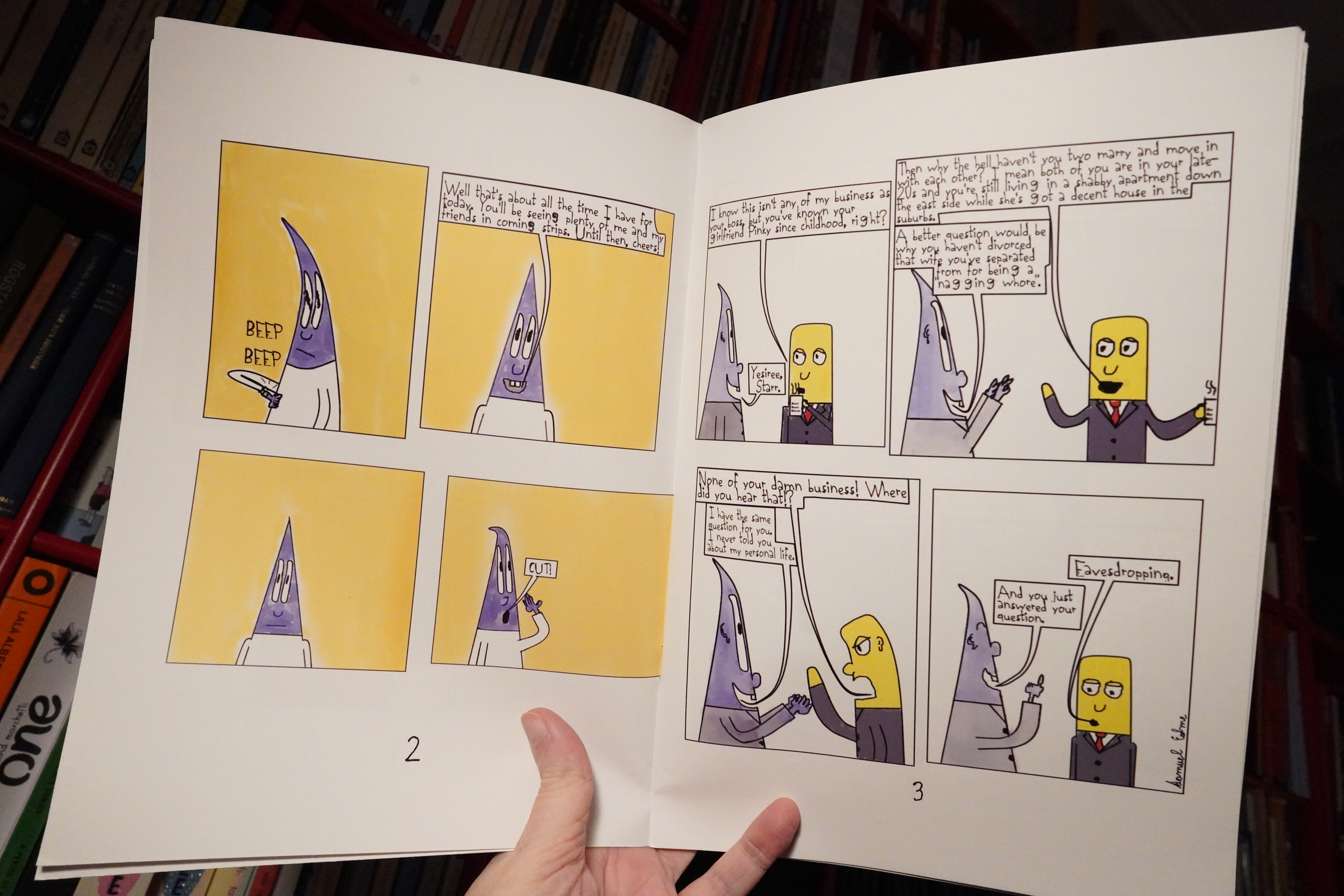
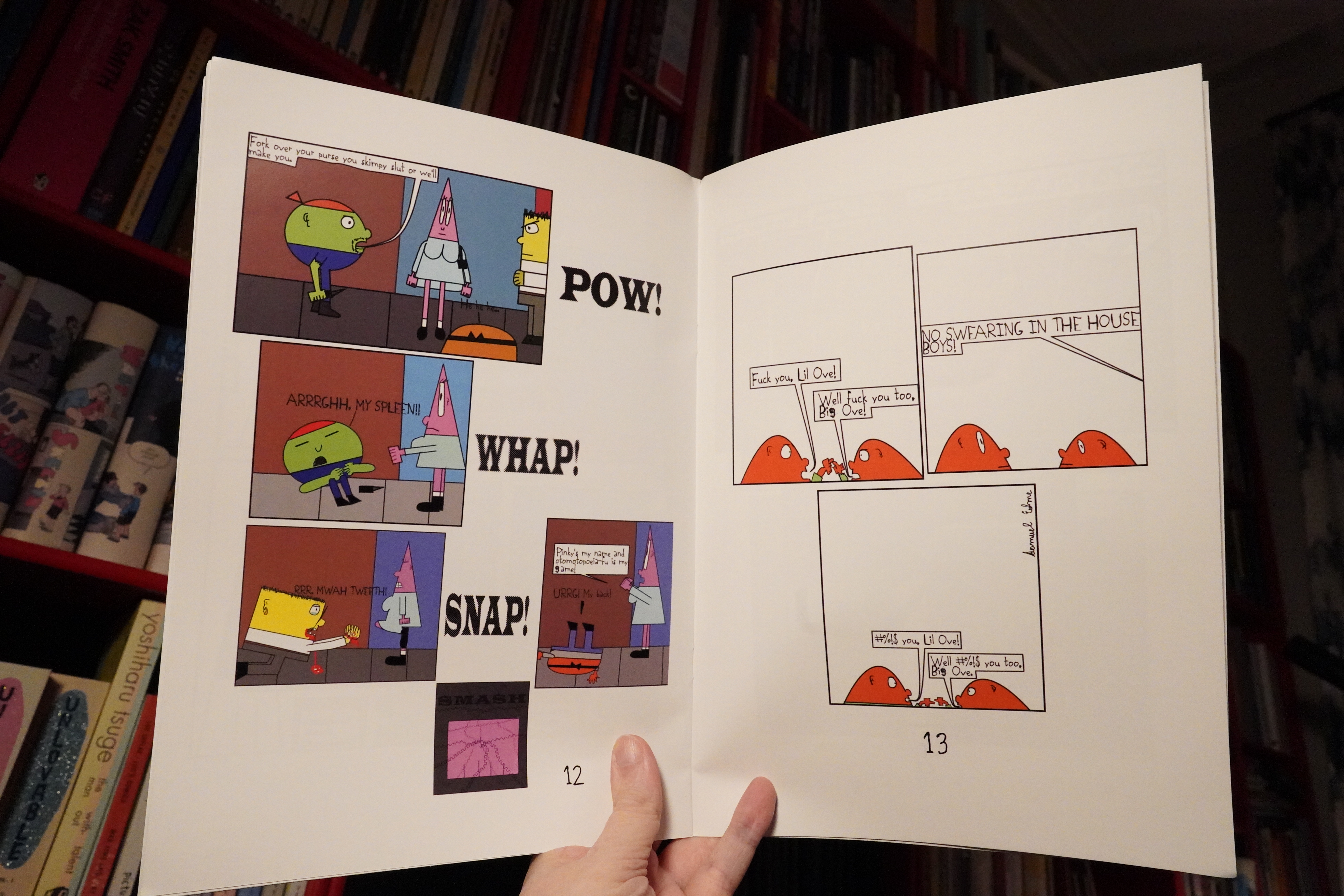
01:41: First Zine Extraordinaire by Samuel Edme
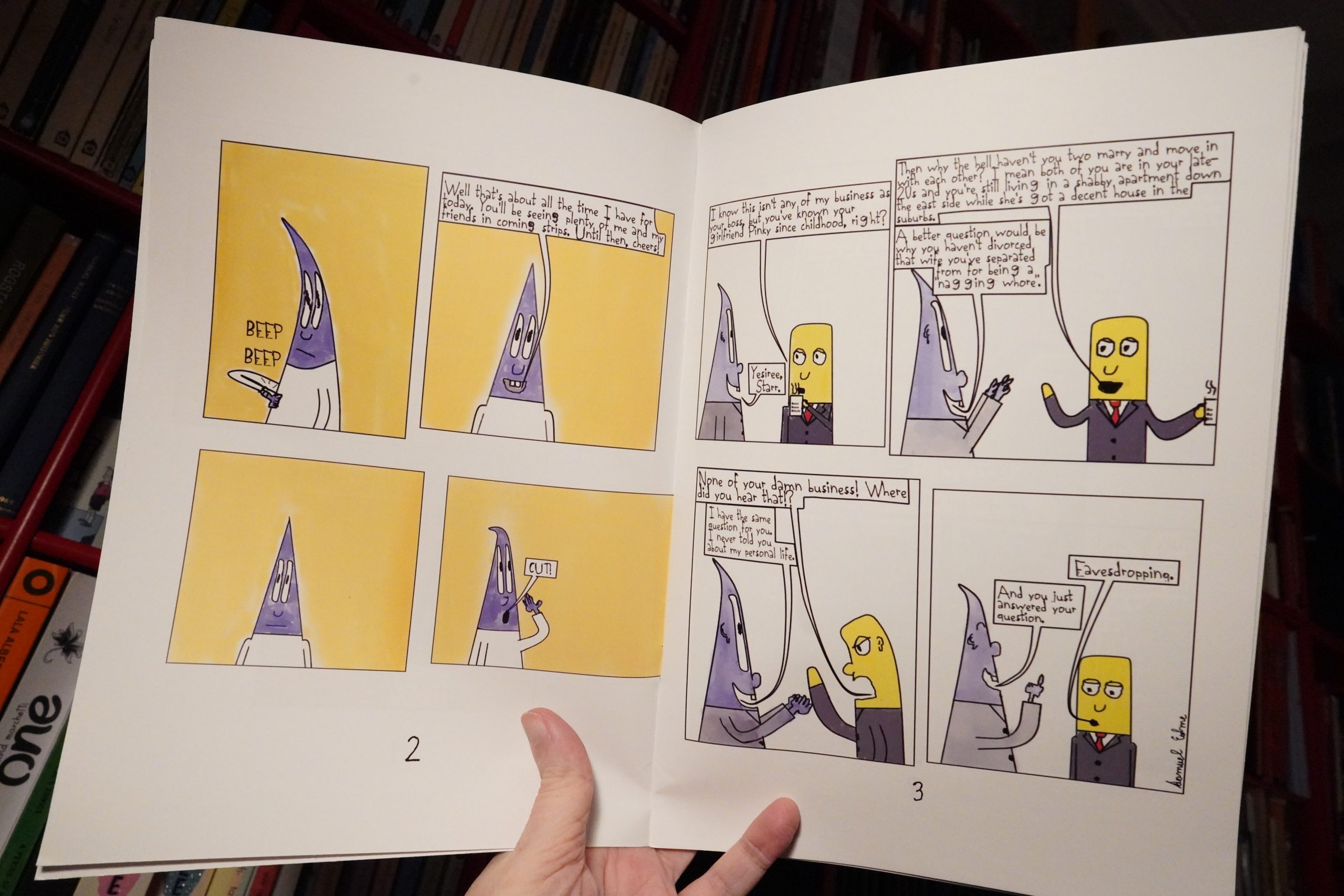
This is a collection of gag strips featuring characters made from different geometric shapes, I guess.
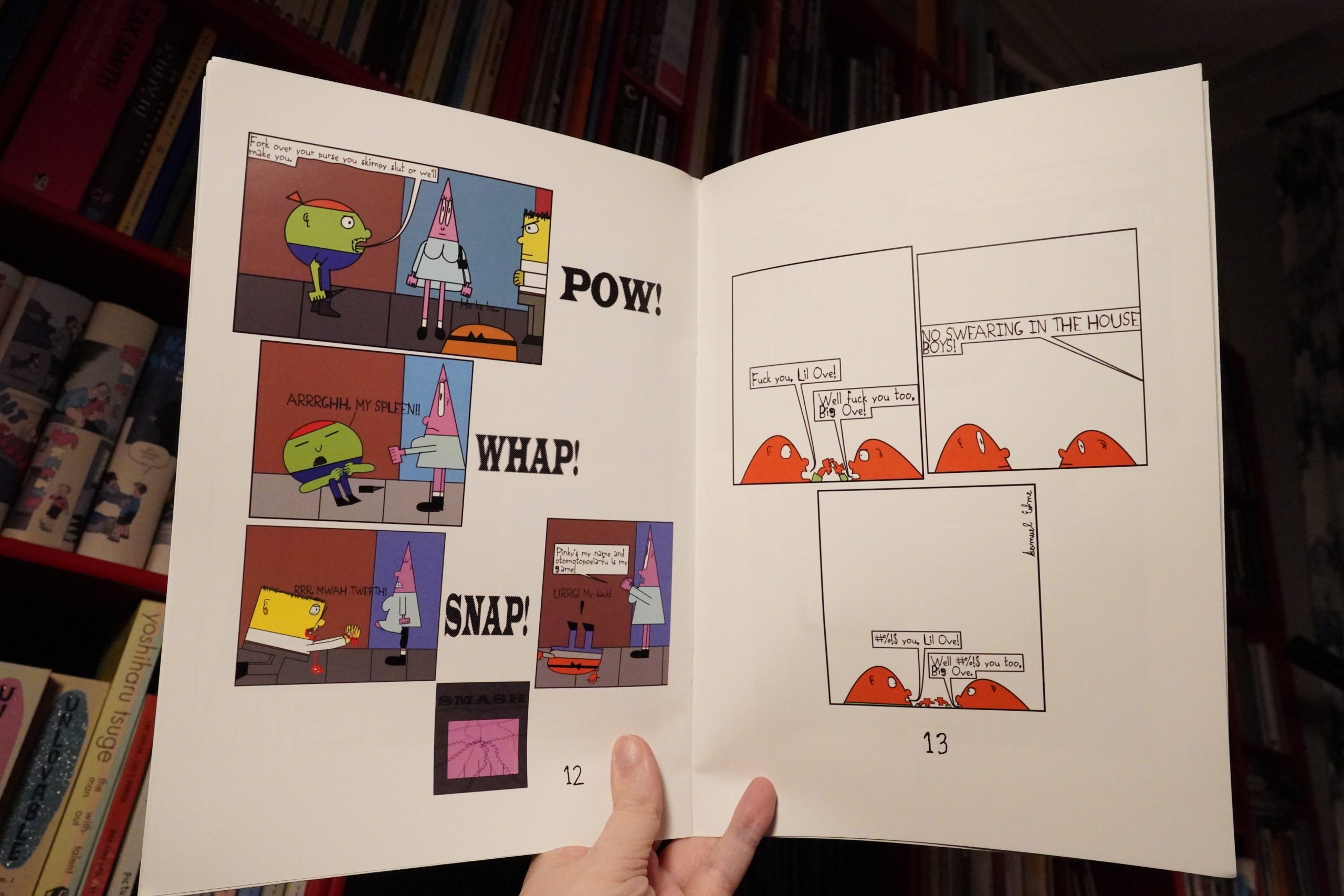
It’s pretty amusing.
| Steven Brown: Searching For Contact |  |
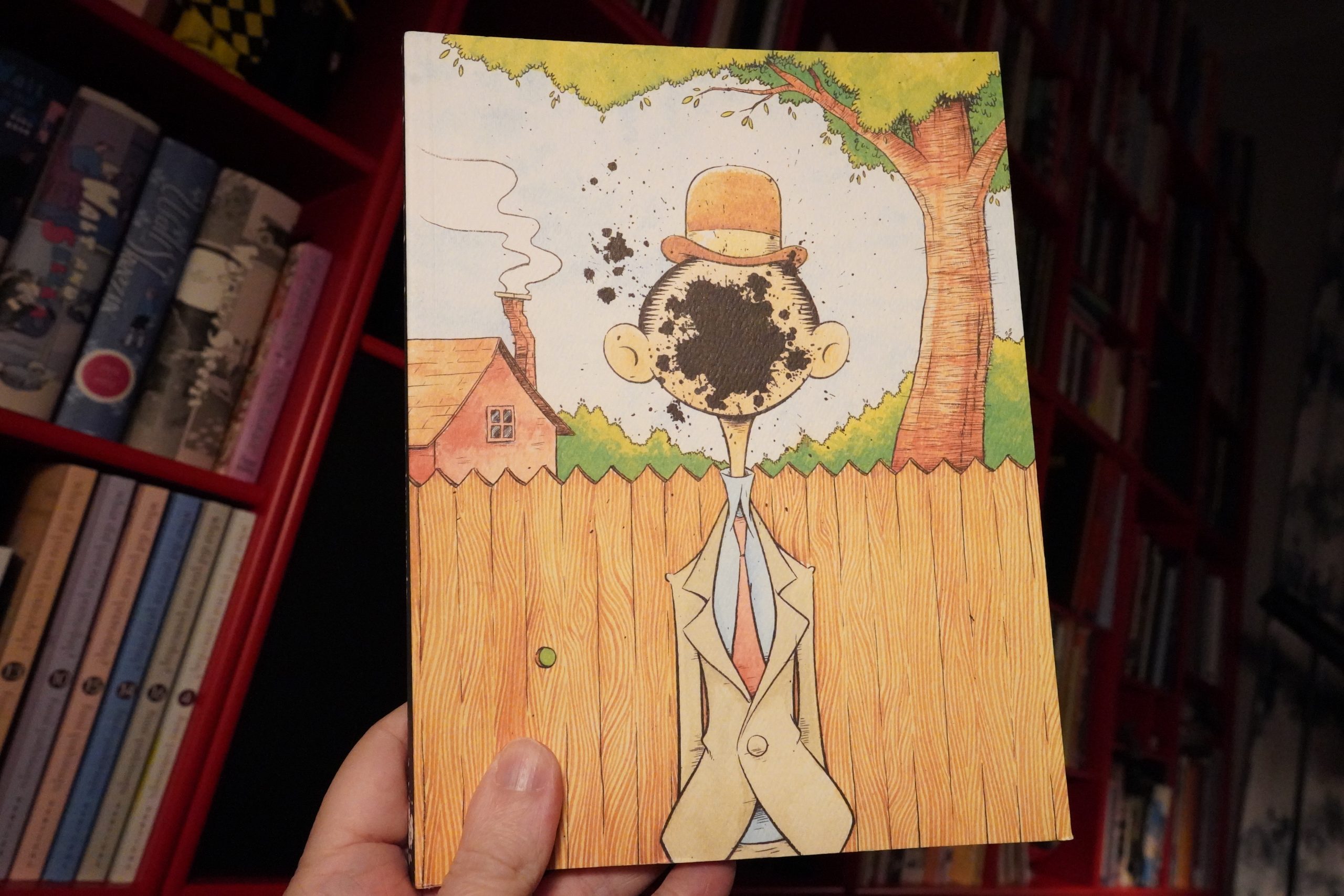
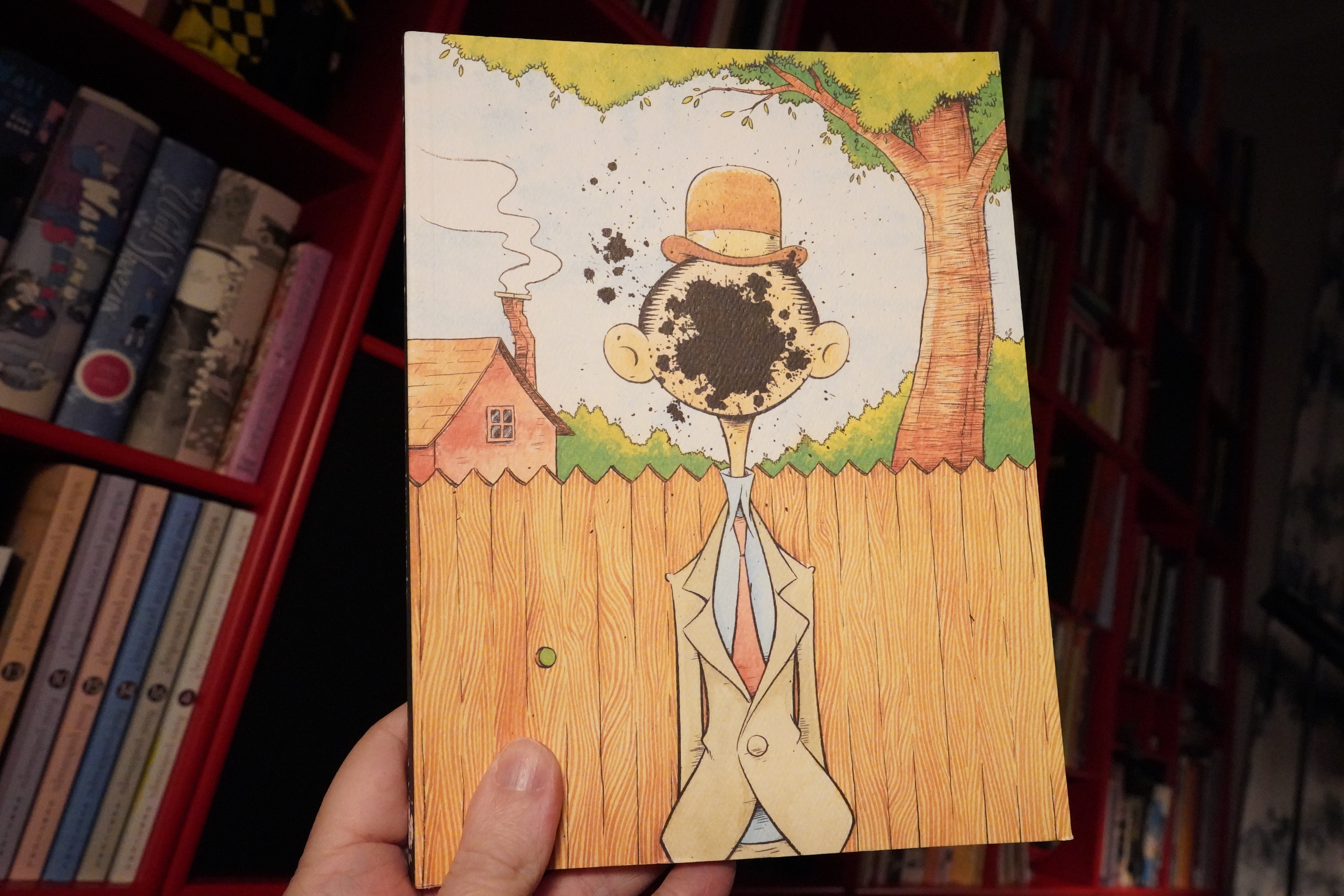
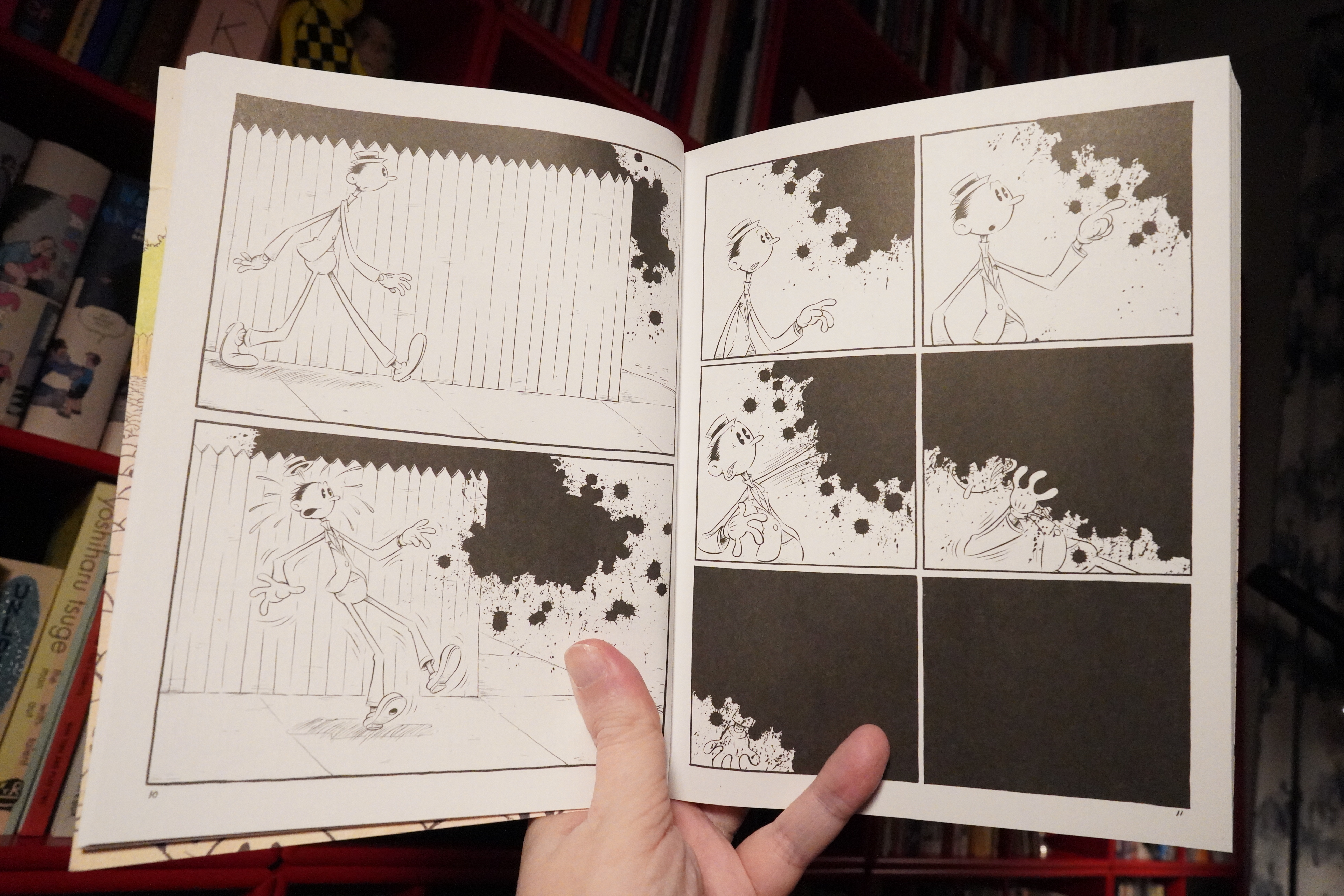
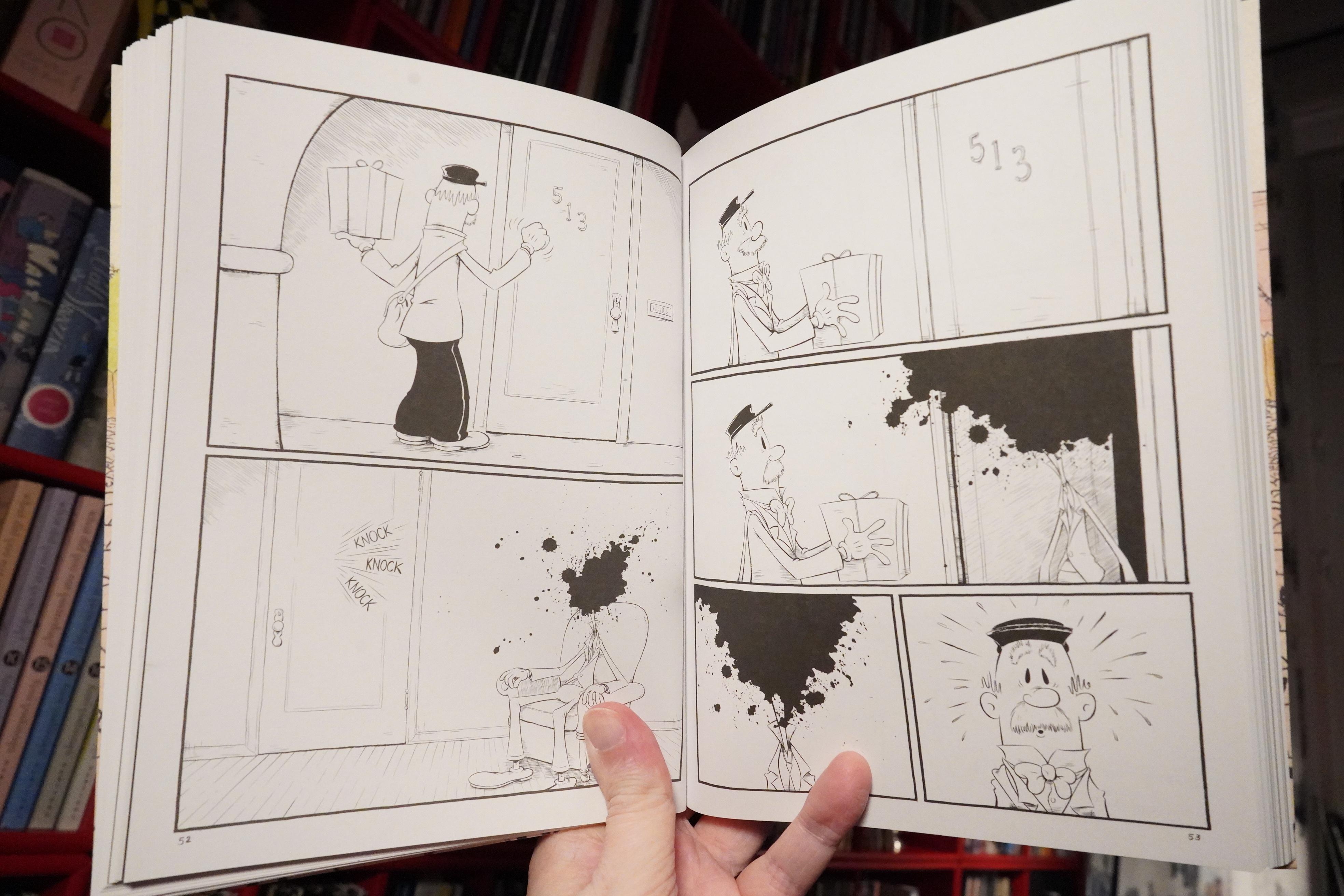
01:49: The Blot by Tom Neely
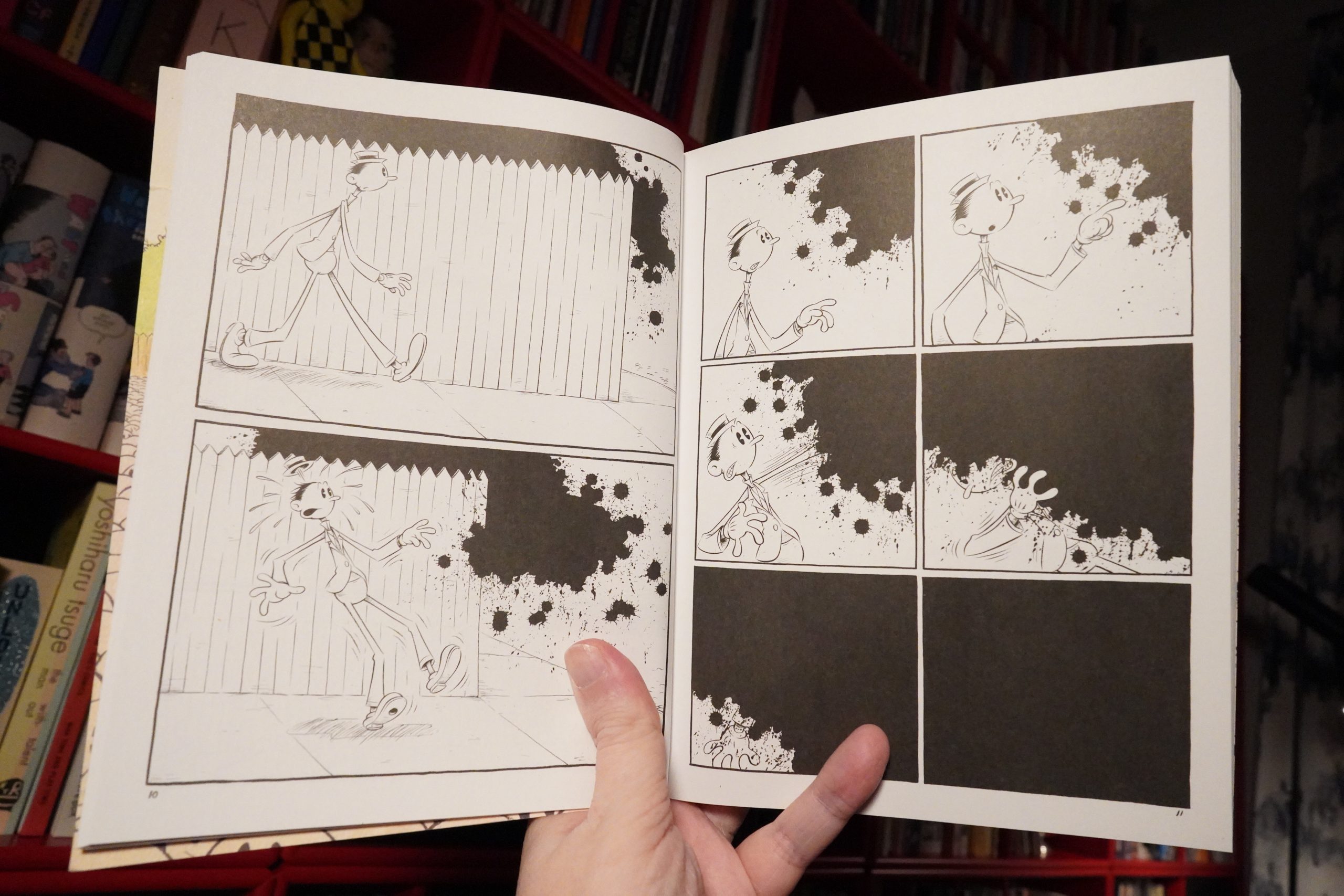
This book feels very 2007, which is a great coincidence, since that’s when it was published. So it’s very of its time — a post-Al Columbia/Top Shelf indie comics kind of thing?
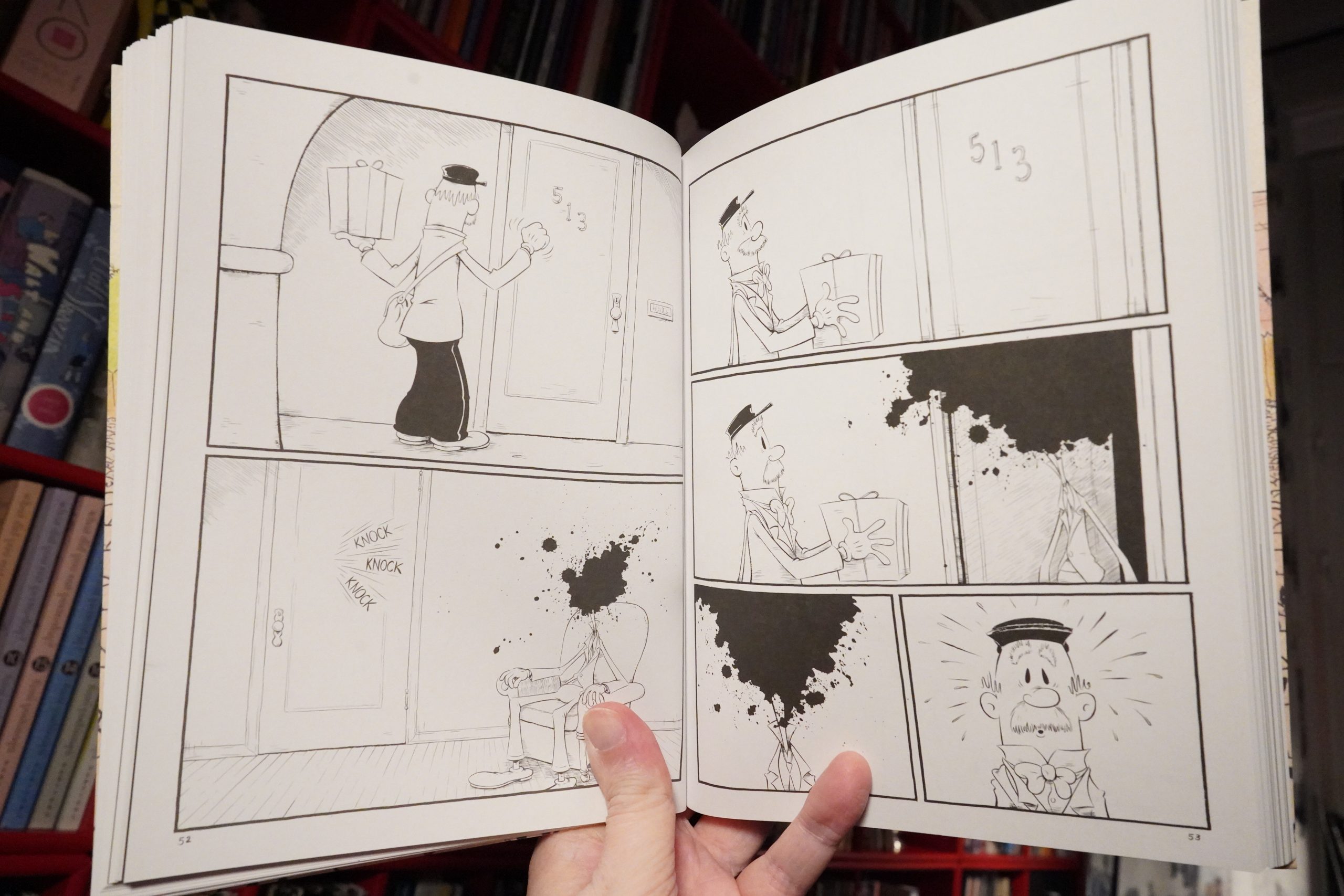
It’s somewhat interesting, but like much of that generation of comics, it lends itself to flippant Freudian analysis, which is seldom a good thing. I.e., “guys have this darkness inside themselves and women are horrible”. See? It’s not a good thing.
| The Smiths: Strangeways, Here We Come |  |
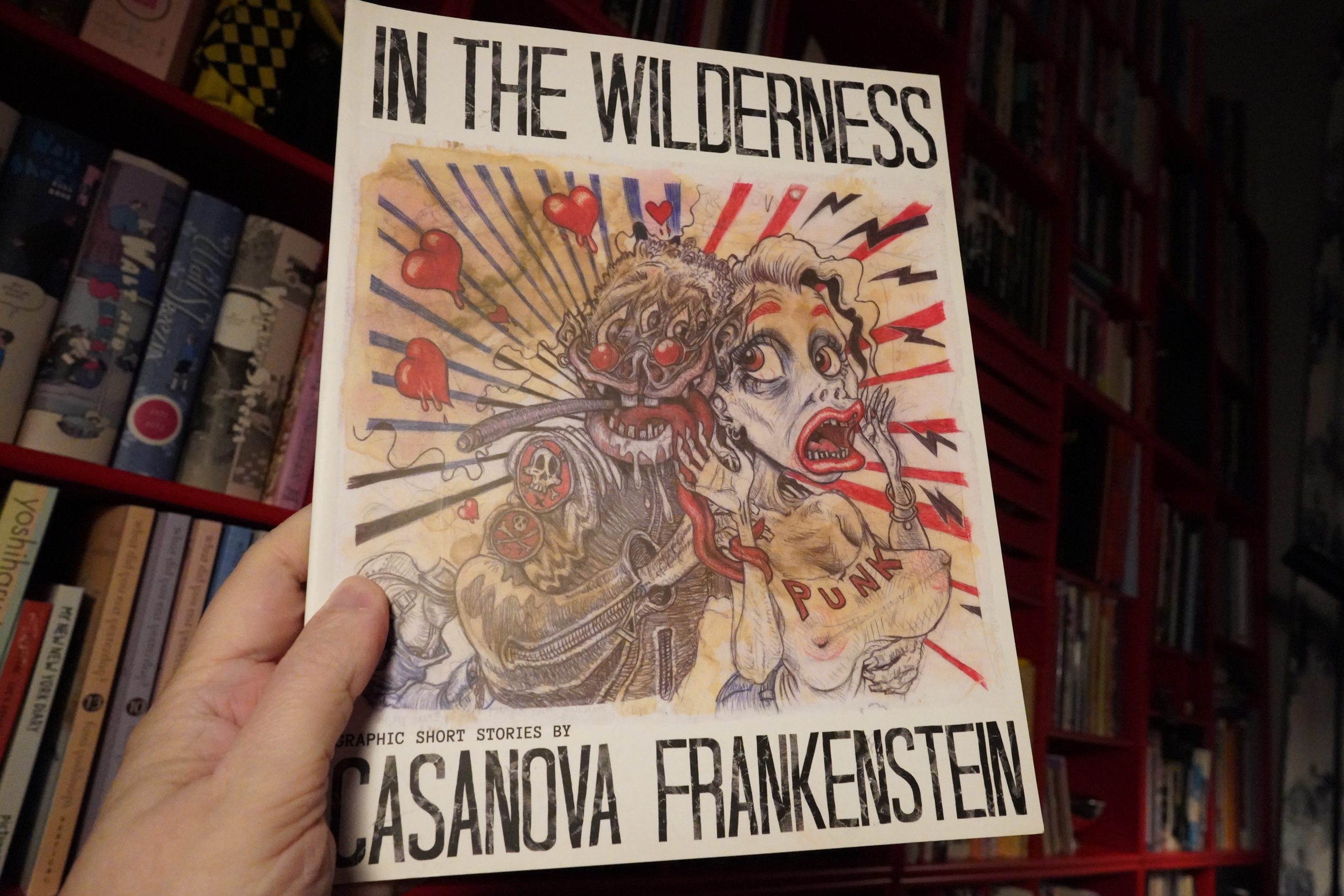
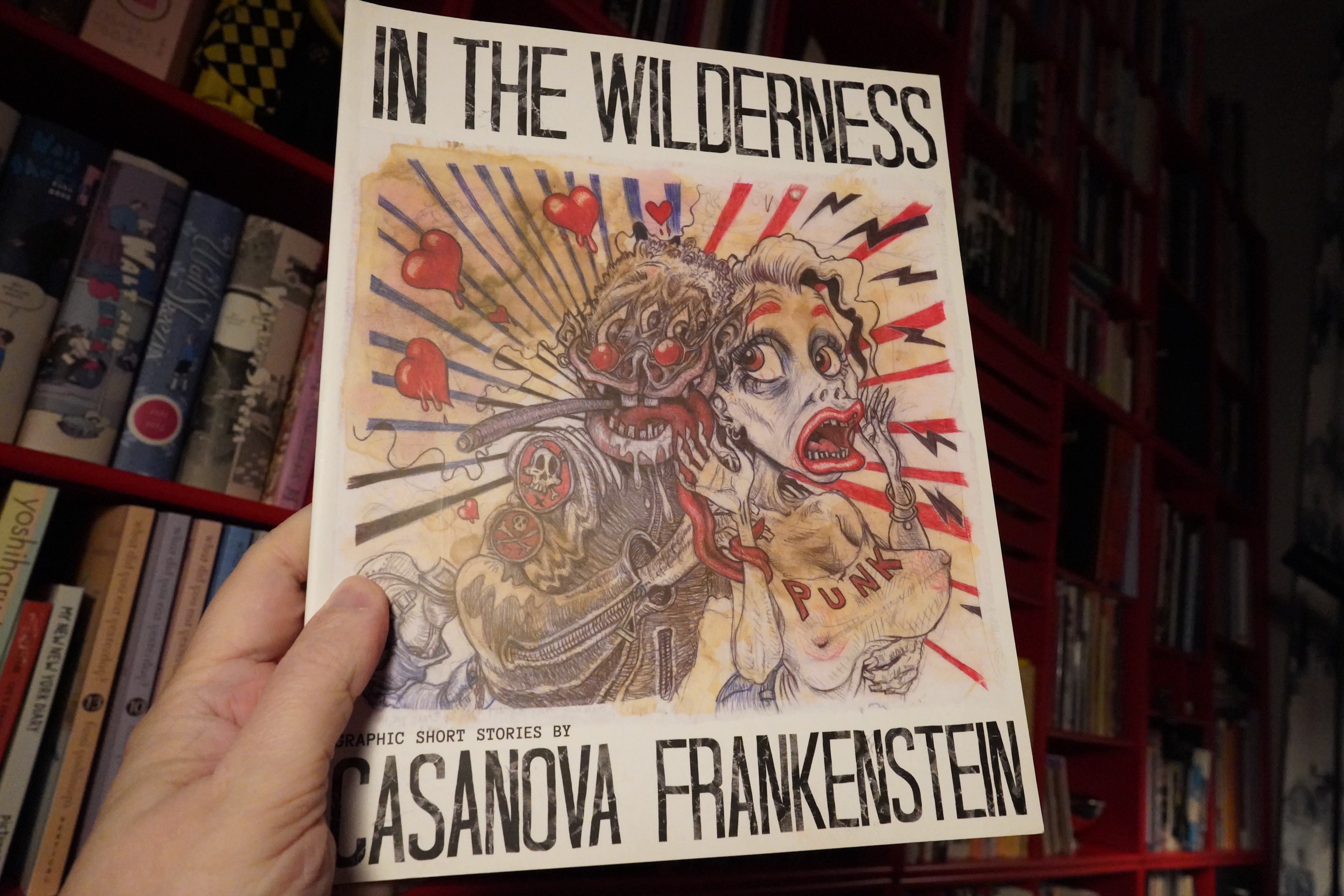
02:02: In the Wilderness by Casanova Frankenstein (Fantagraphics)
I’m pretty sure I already have this book (which was published in 2019), but I couldn’t find it anywhere here, so I bought it again.

Hm! Perhaps I did miss this the first time around. Some bits are vaguely familiar to me, but that may be because he also covered some of this stuff in the (partially) brilliant book he published this year, How To Make A monster.
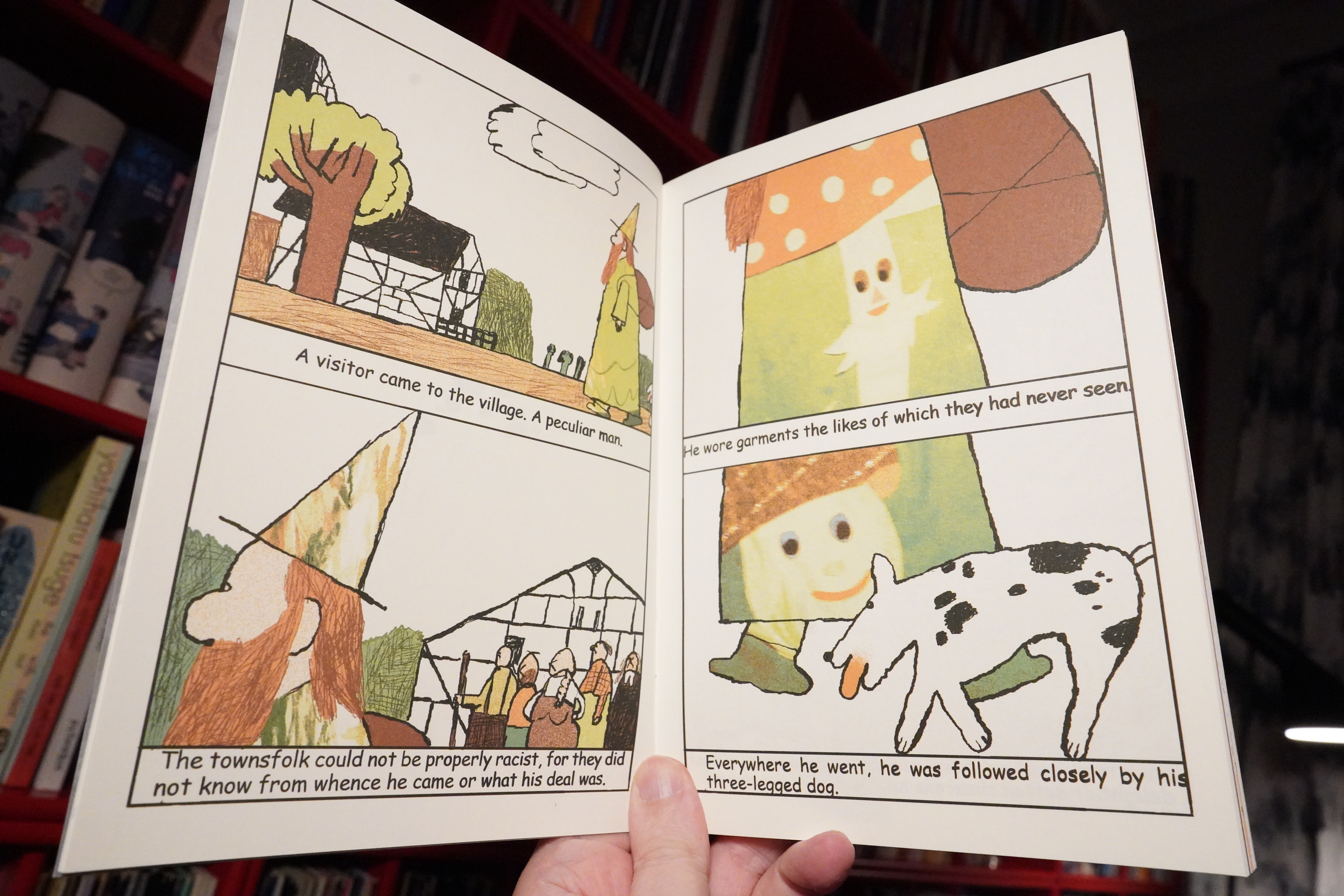
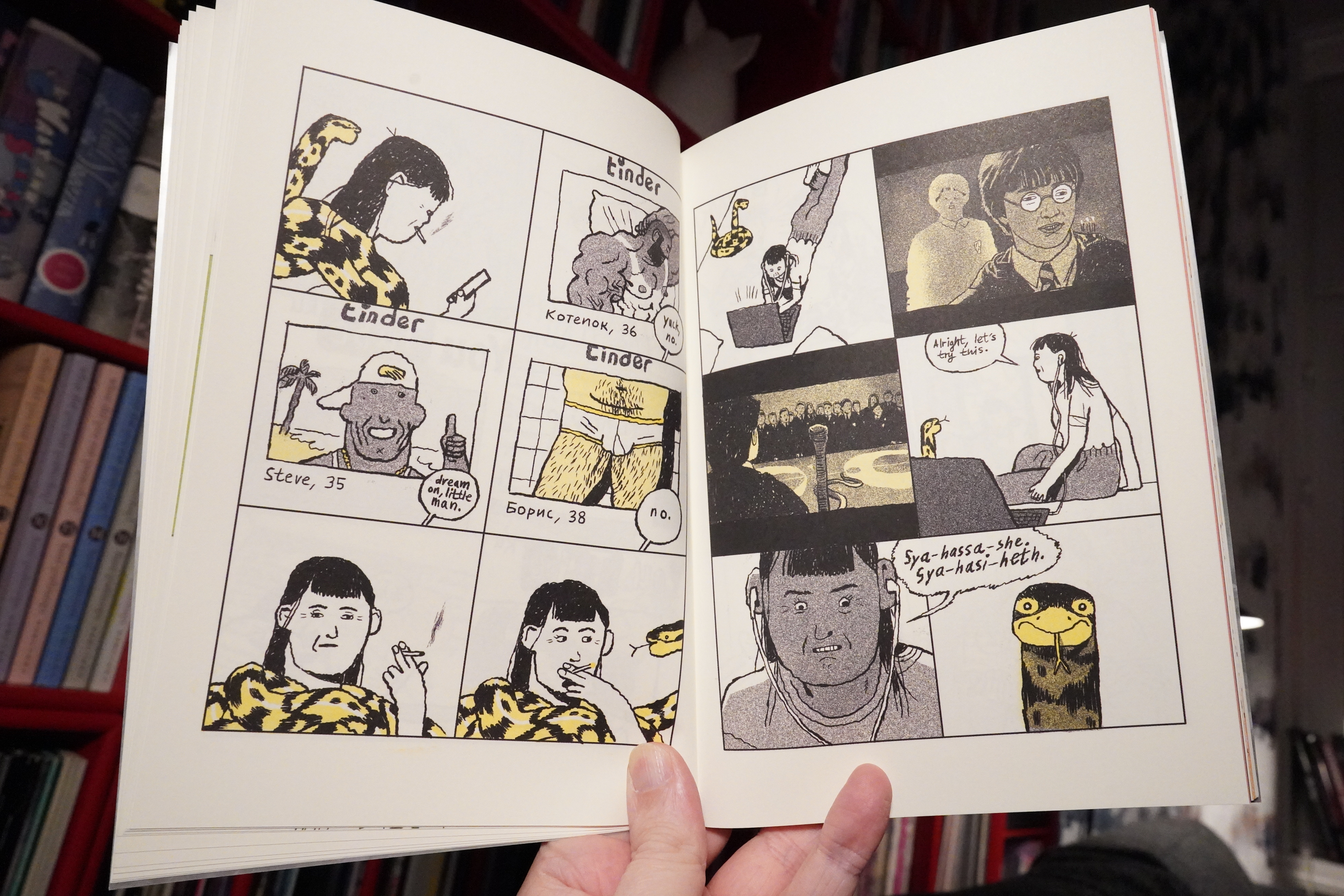
The artwork is more a lot looser than in, say, the wonderful Tad Martin #7-8, if I remember correctly…
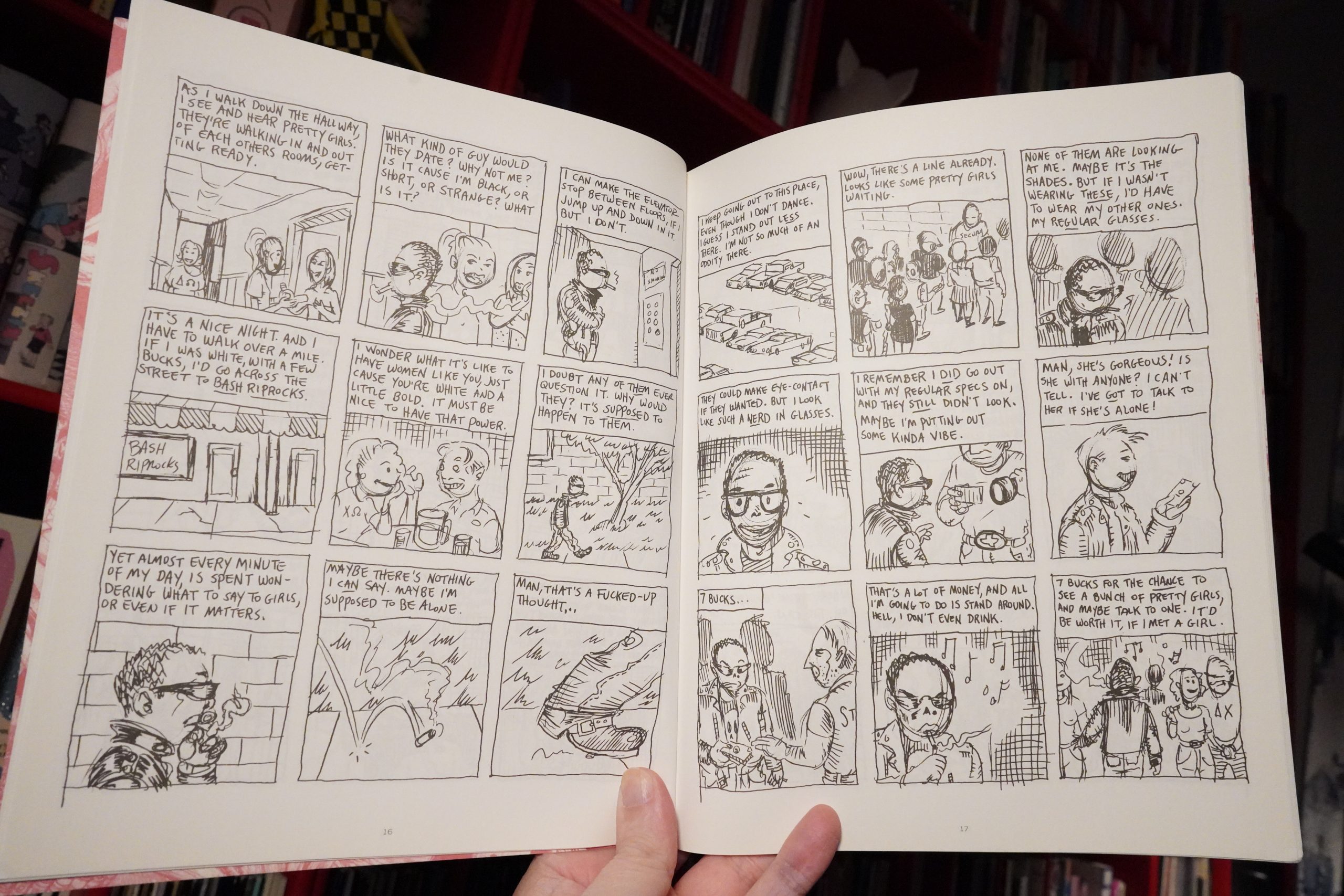
Hm… still not quite sure whether I’ve read this before… ANYWAY! It’s great. It’s so propulsively readable; the anger and resentment sizzles on the page. Very refreshing and bracing.

And there’s an interview with great pics included. It’s a good book.
Hey, it’s getting late… perhaps one more book.
| Pieter Nooten & Michael Brook: Sleeps With The Fishes |  |
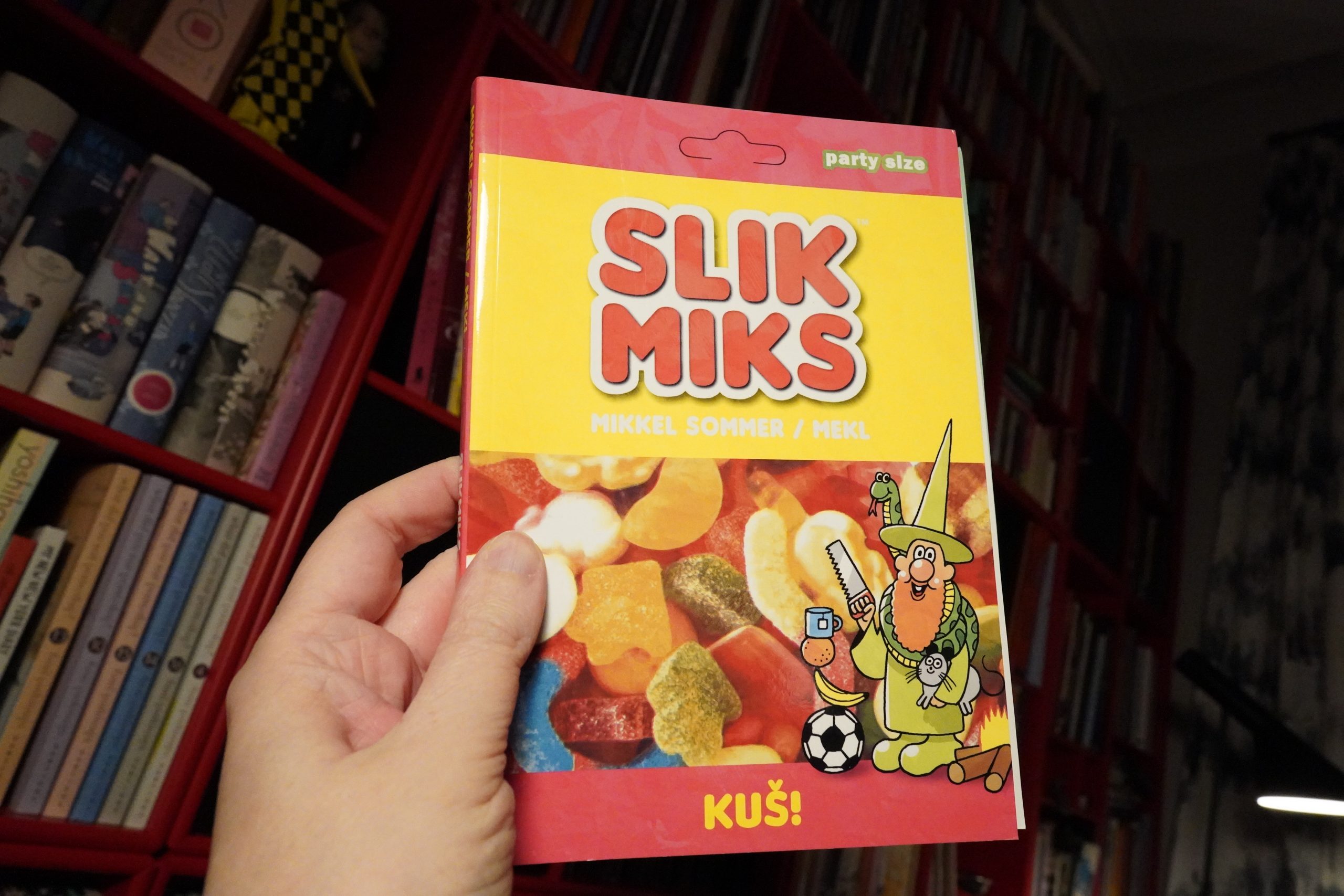
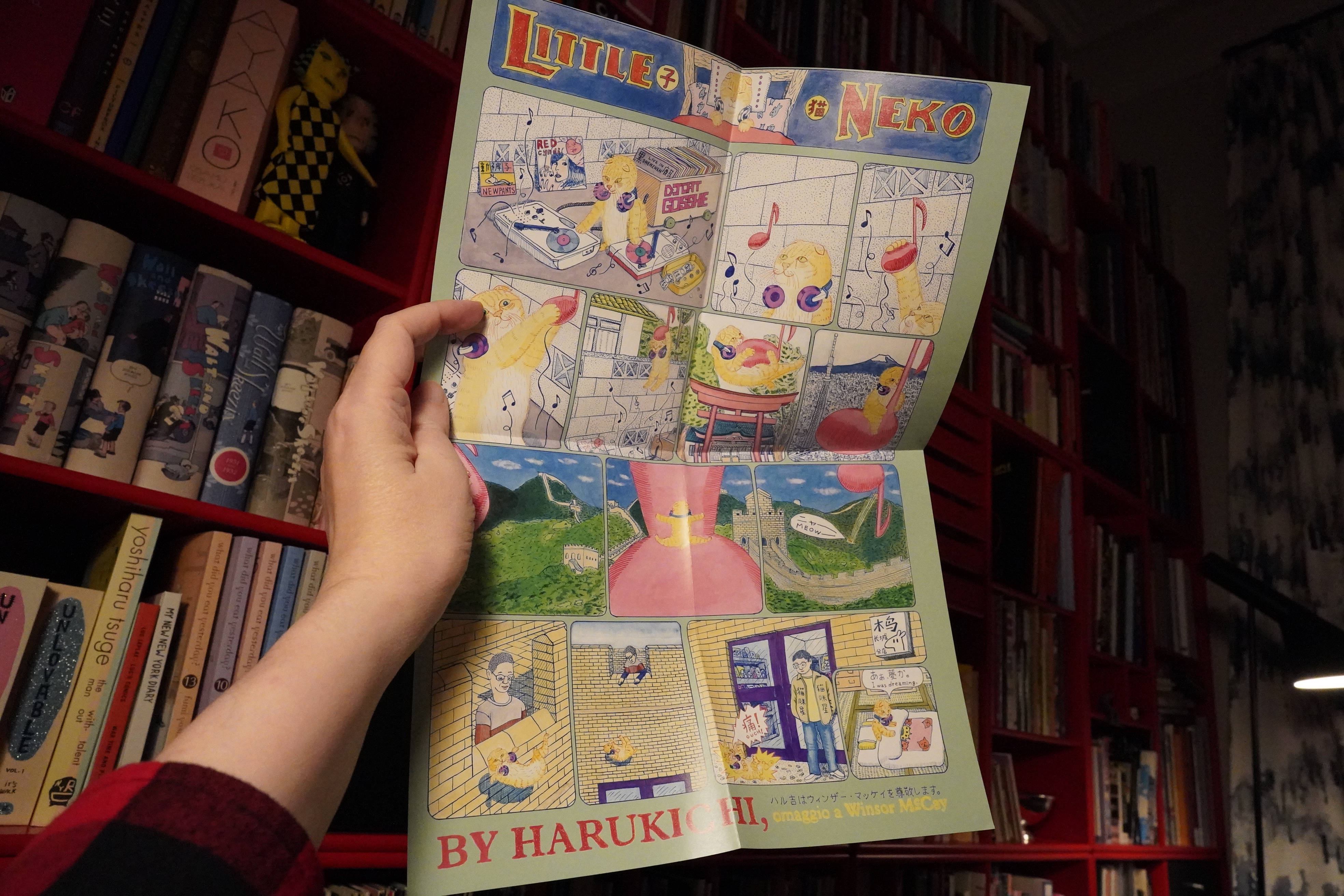
03:11: Slik Miks by Mikkel Sommer / Mekl (Kuš)
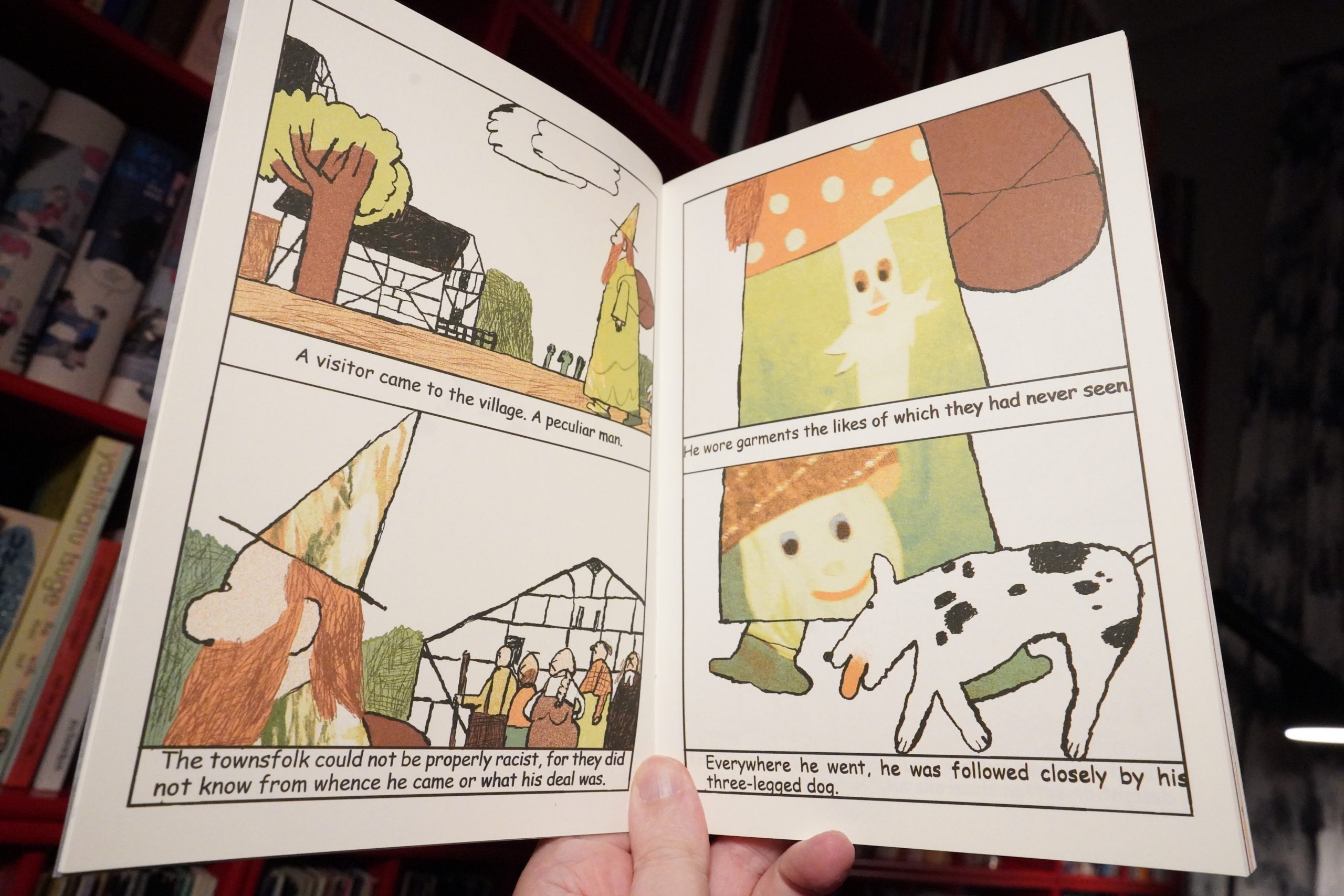
This shifts between being mildly amusing…
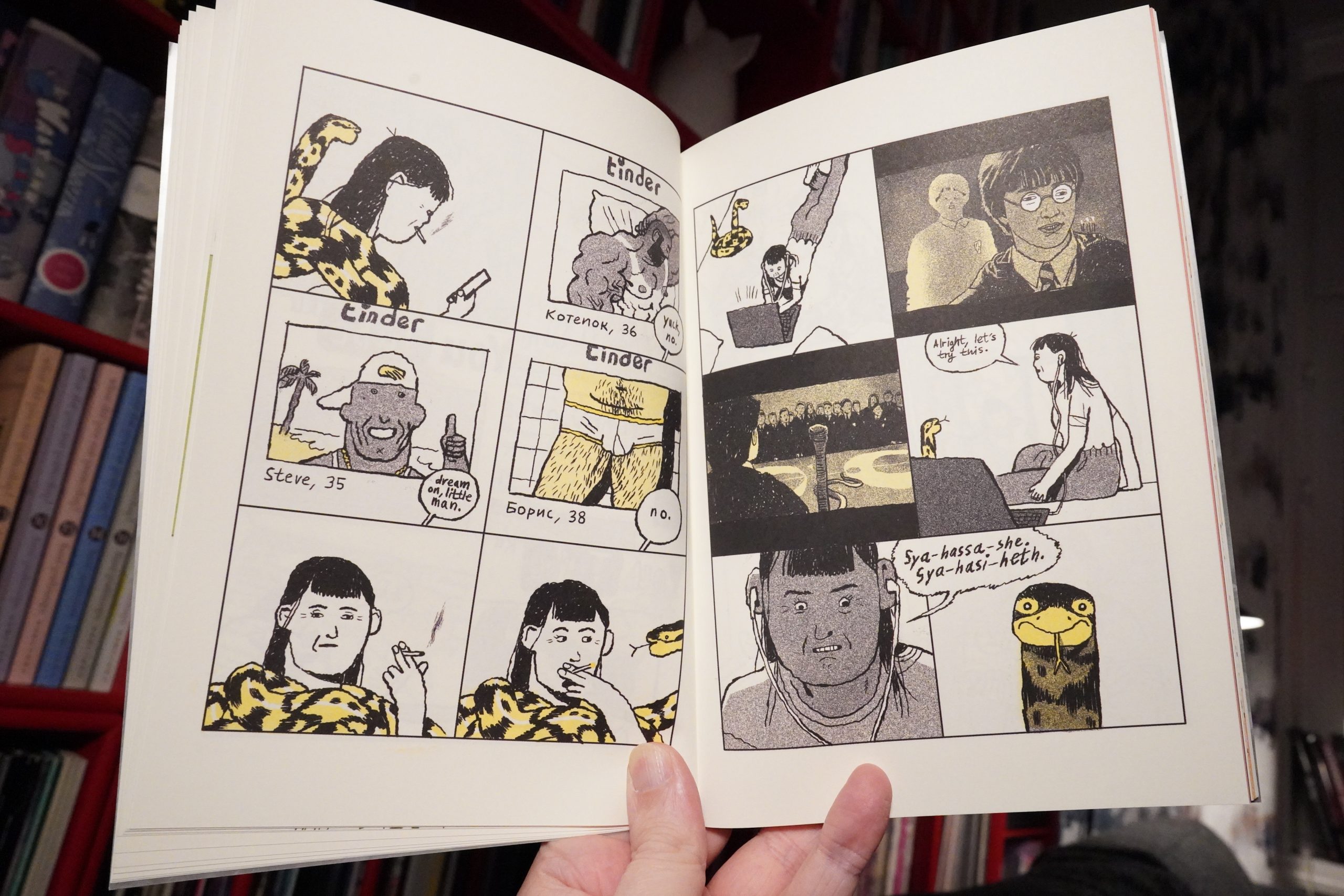
… to slyly amusing…

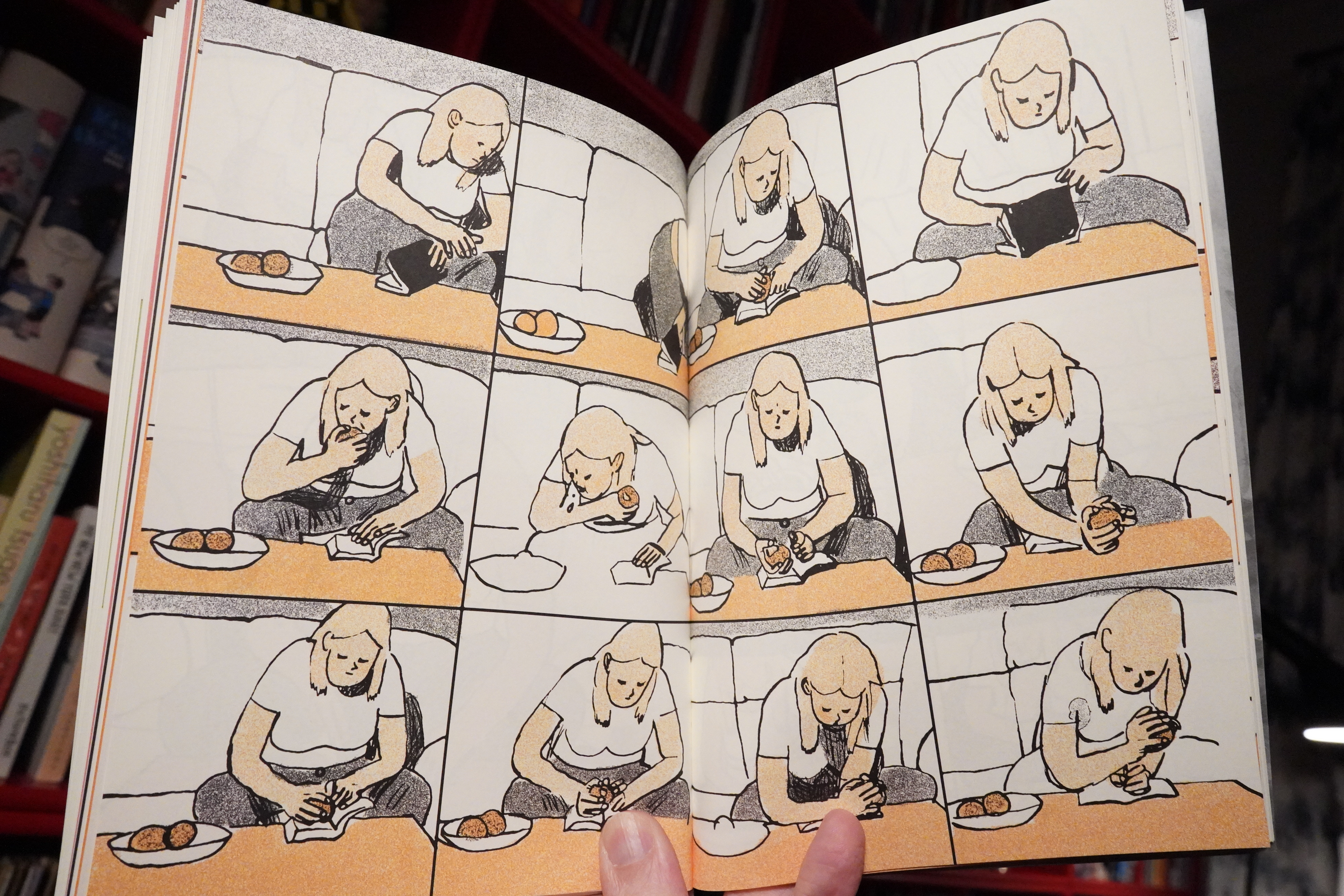
… to downright hilarious. (The above strip illustrates one of the major problems facing humanity today: How to read a book while eating an orange. It’s just hard!)
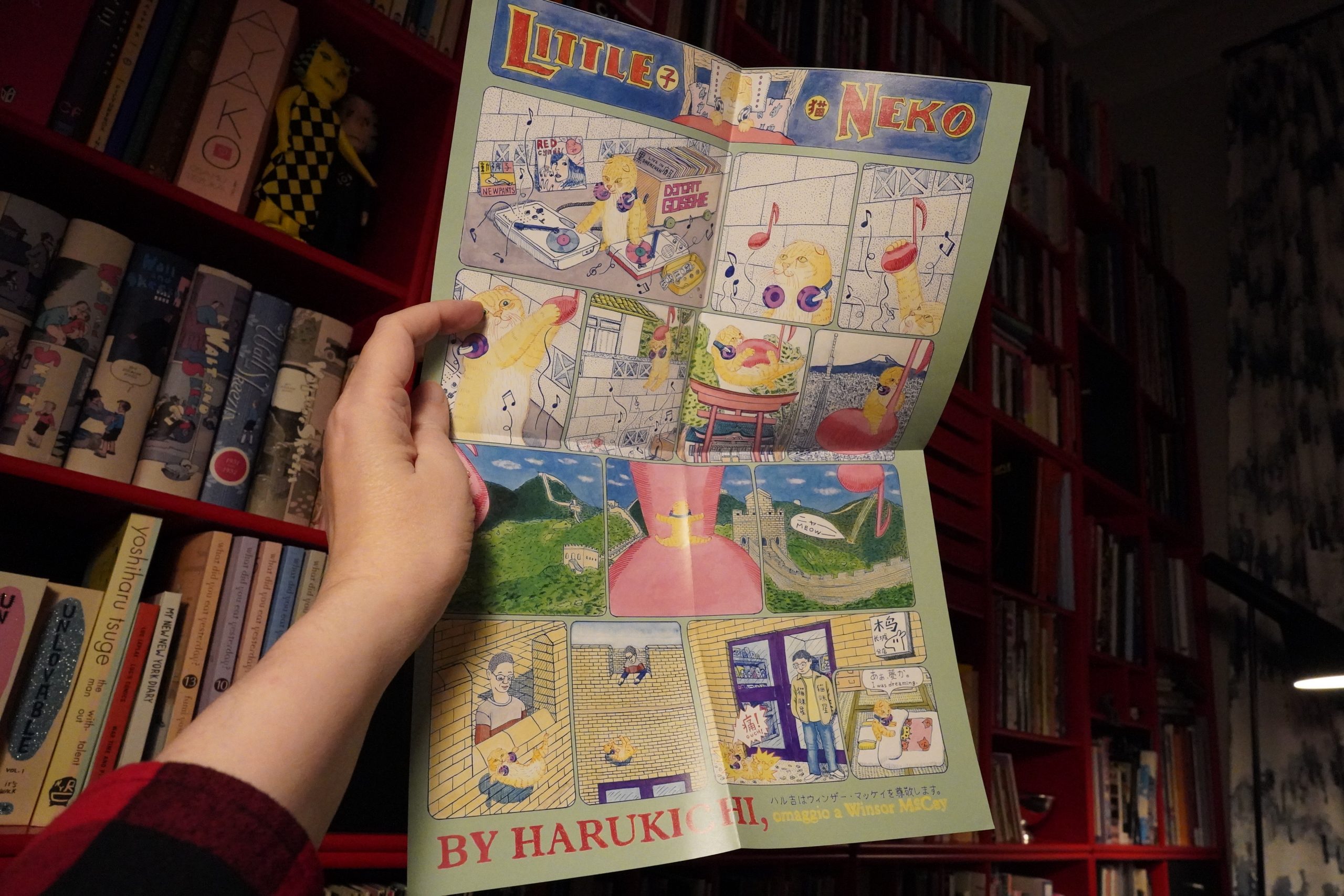
Oh, and there’s a DJ Cat poster included? Those Kuš people.
| Pieter Nooten & Michael Brook: Sleeps With The Fishes |  |
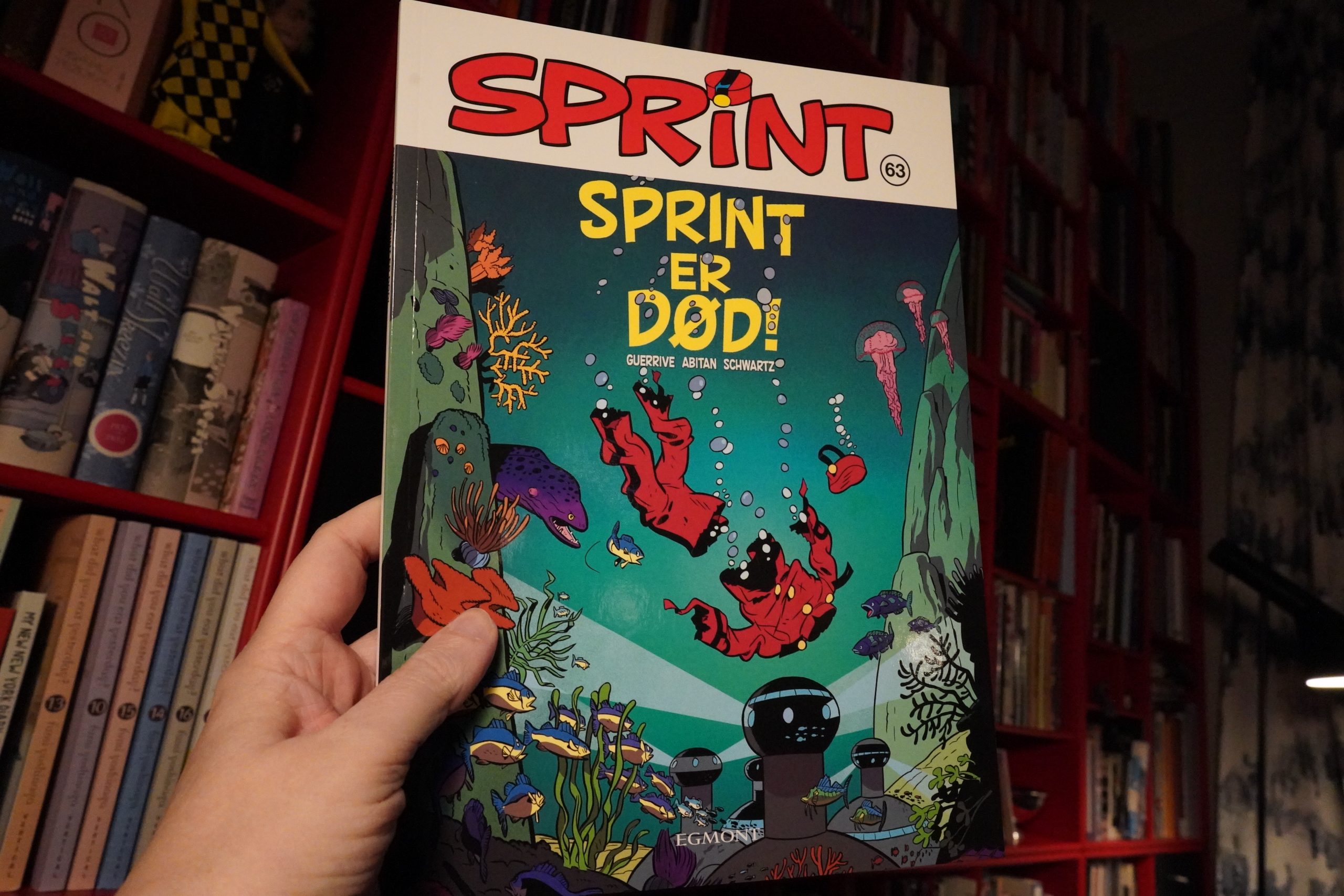
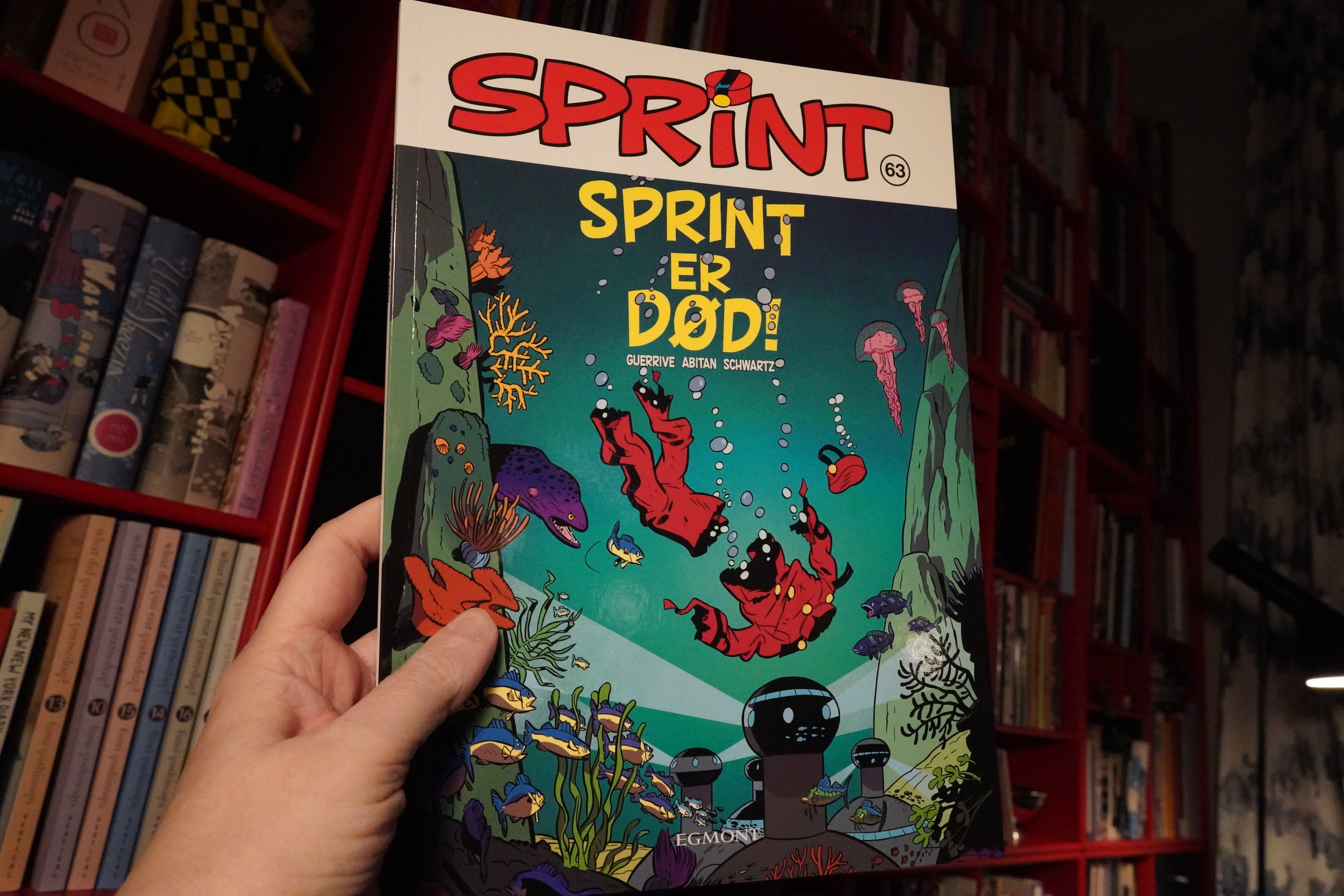
03:24: La mort de Spirou by Guerrive/Abitan/Schwartz (Egmont)
I really should be going to bed now, but I might as well end the day like I started: With a “special edition” French(ey) comic for children.
Or… is it part of the “main sequence” of Spirou? I don’t think I’ve seen one of those in years! Are they still making them? It’s got “63” on the cover there, but the Norwegian editions are often wonky that way (see Lucky Luke at the start of this blog post).
Hm… Yes! It’s part of the main sequence, and it’s brand new. Let’s se… Tome et Janry did the series from the 80s to 1998. Then Morvan/Munuera did #47 in 2004… In 2010 and #51, Vehlmann and Yoann took over, but only did five albums. And this, #56, is the first album from the new team (after a six year pause in publication — well, there’s been dozens of “special edition” Spirous during those years).
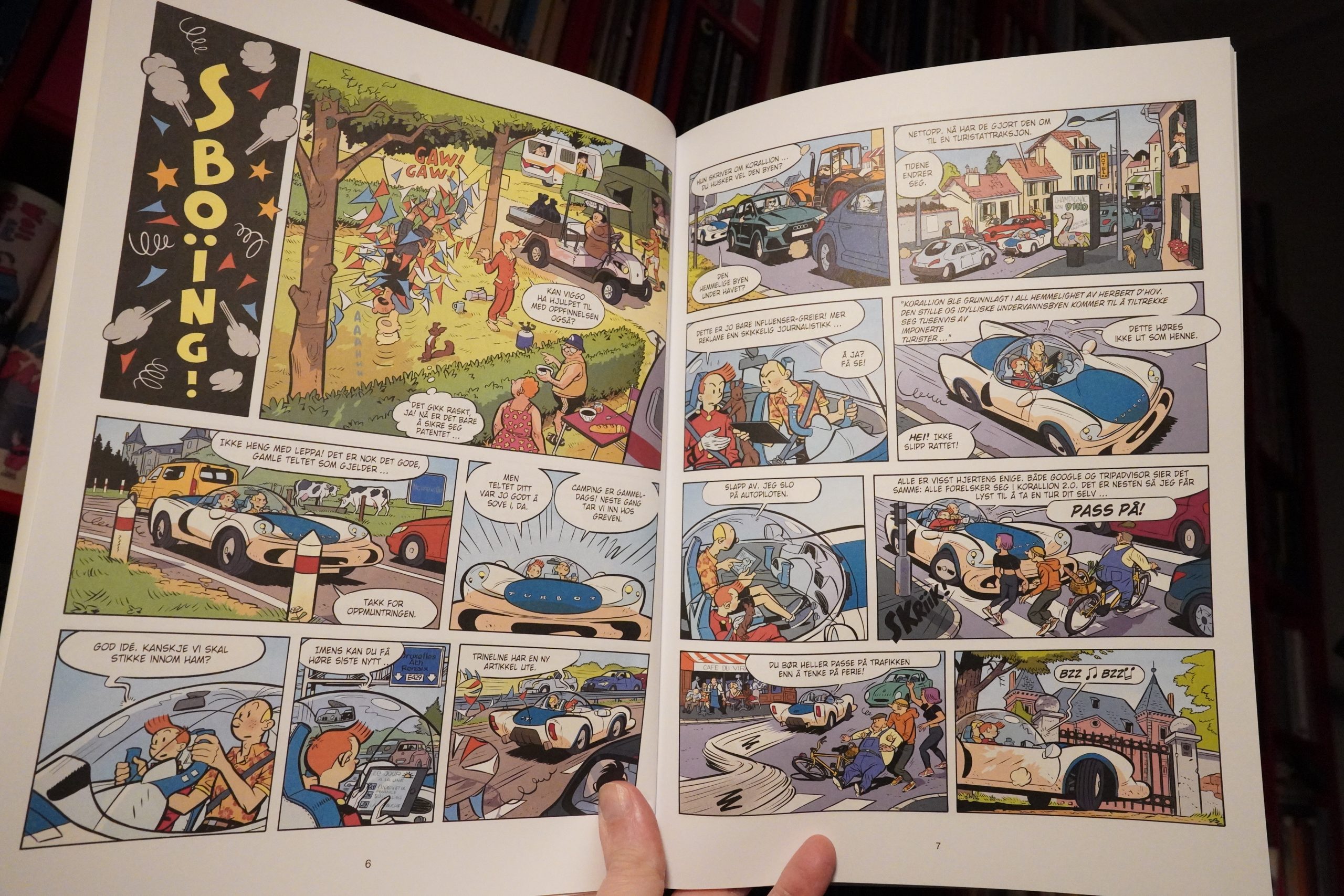
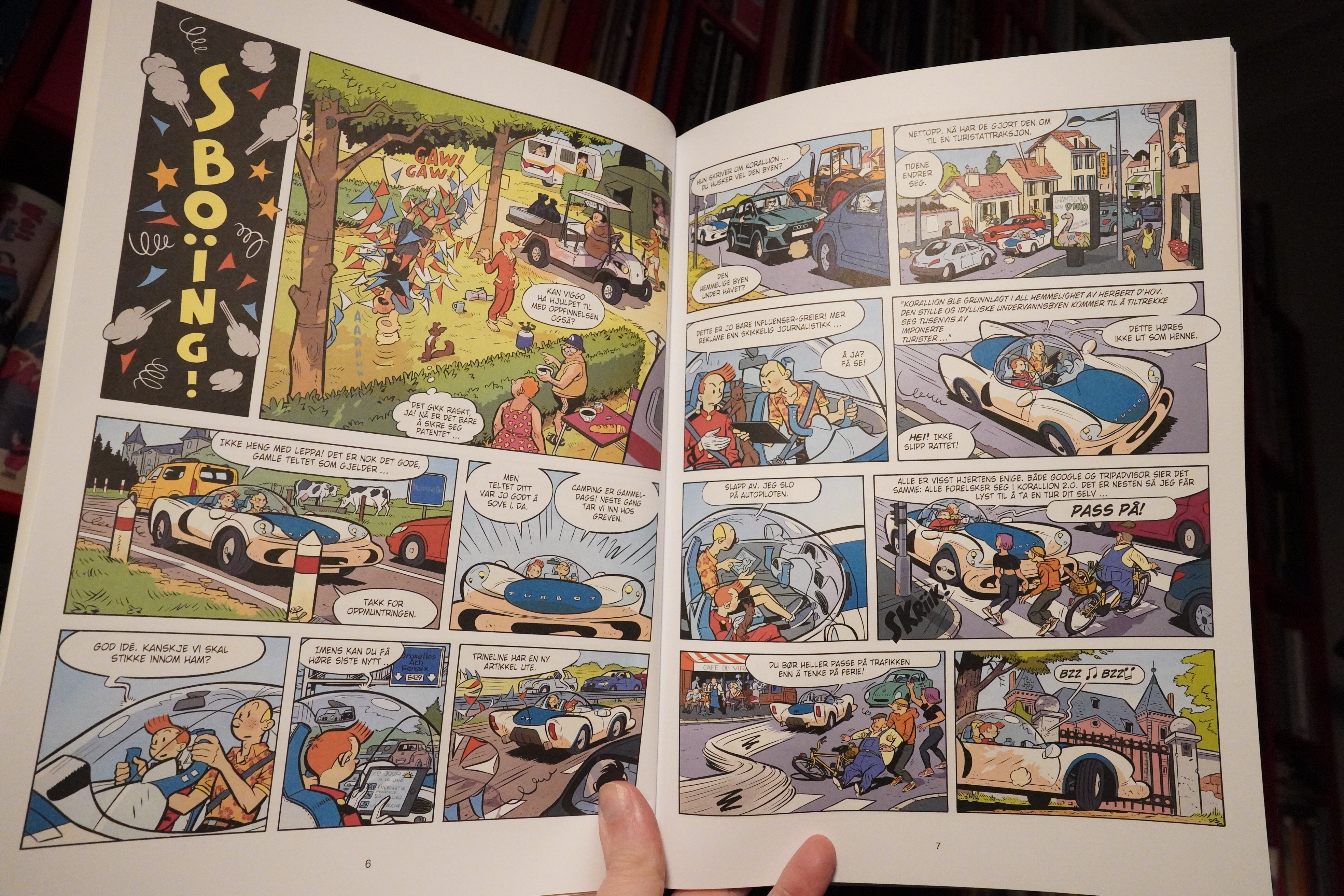
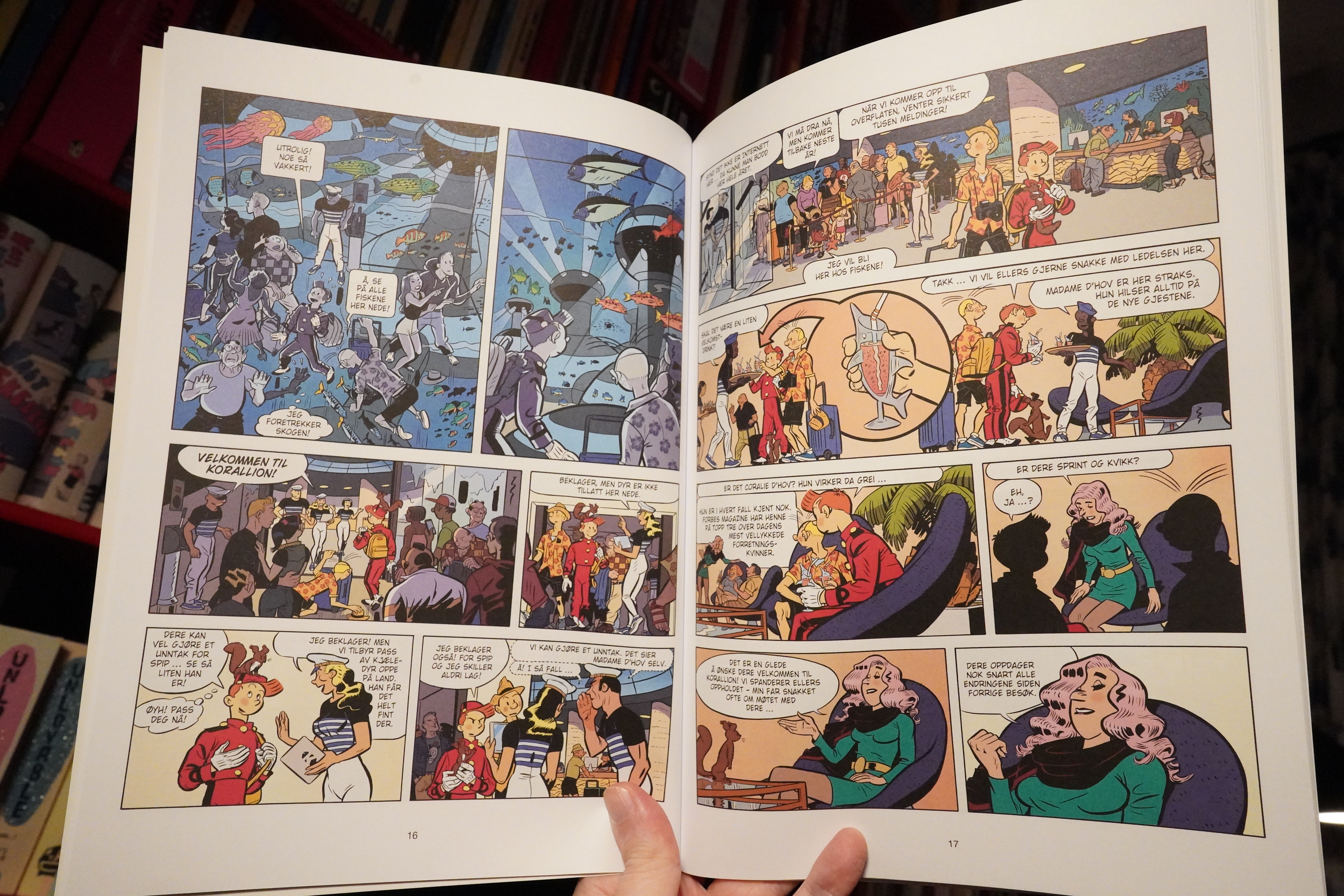
Huh. They’ve gone way back in time with the art style — this almost looks like Rob-Vel from the 40s. The story is set in the present (as “main line” Spirou books usually are), though.
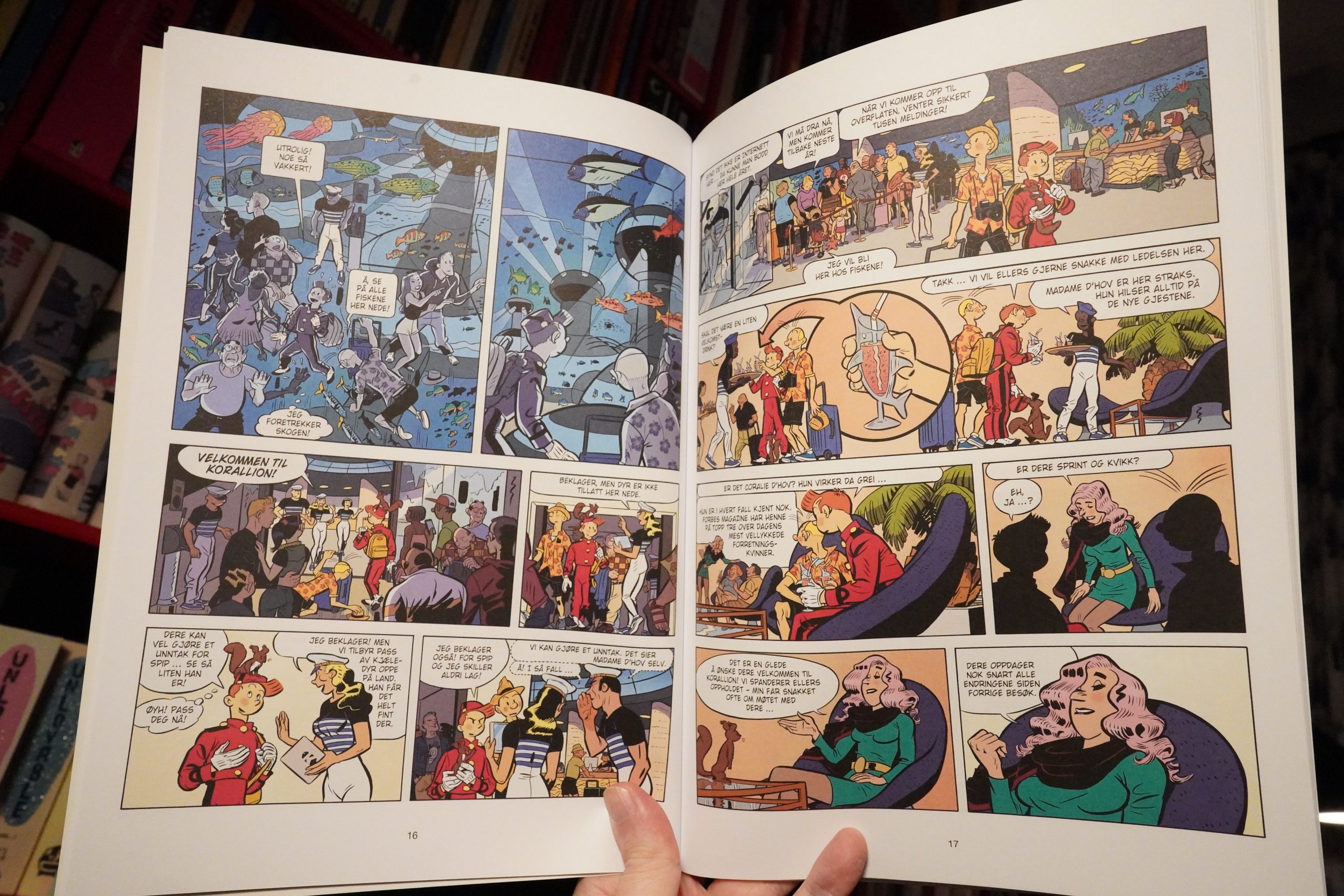
I think they’ve done a pretty good job here. It’s got more twists than a Franquin story would have and fewer gags, but it’s amusing throughout and pretty exciting. It ends on a total cliffhanger, though, with Spirou apparently being dead and all.
I’m assuming that’s not actually the case, but I certainly didn’t expect a cliffhanger like that, so I’m intrigued.
| New Order: Substance |  |
03:57: The End
And now it’s really time to go to bed.