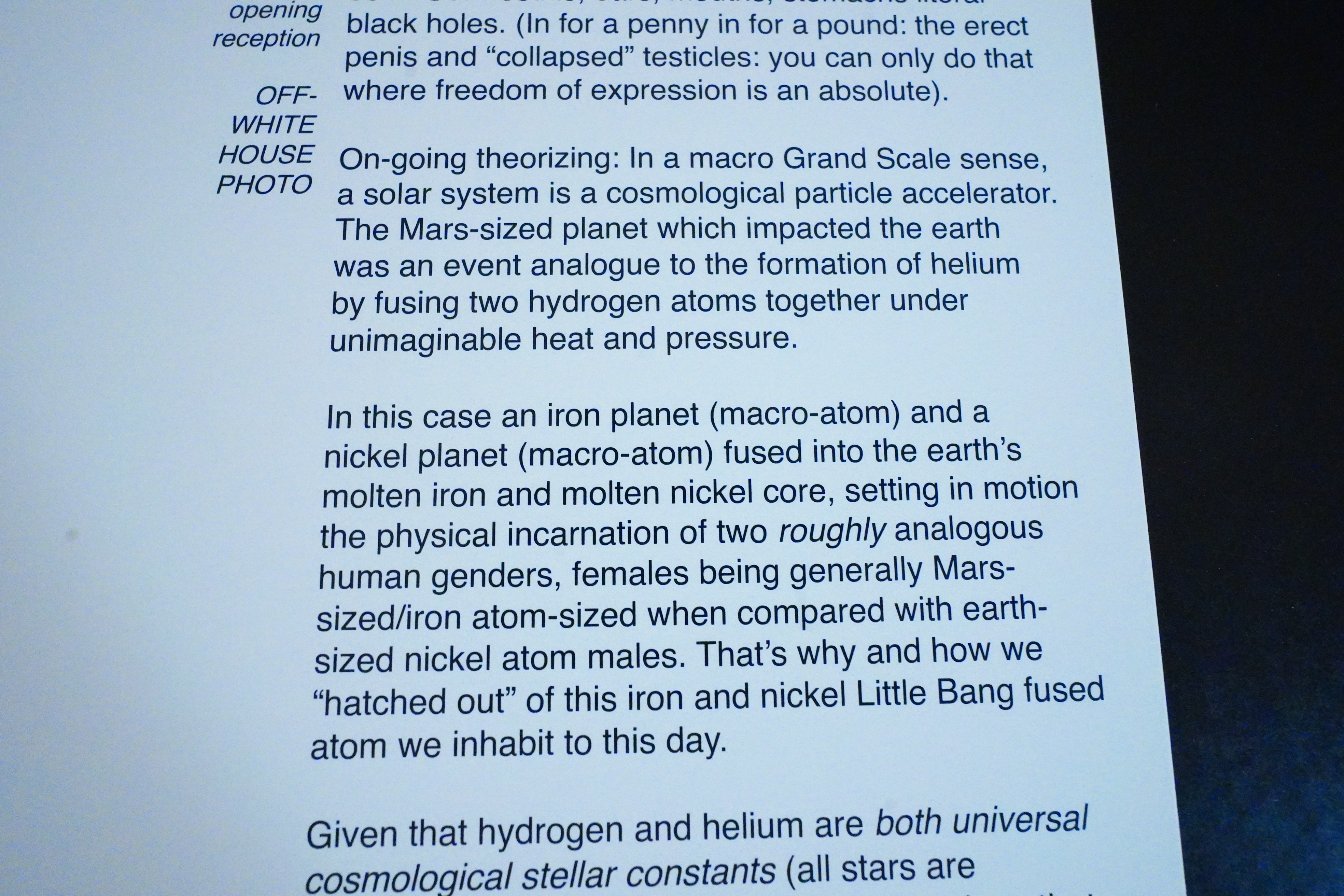
The solution to people not liking AI: Make real actors look like AI, too

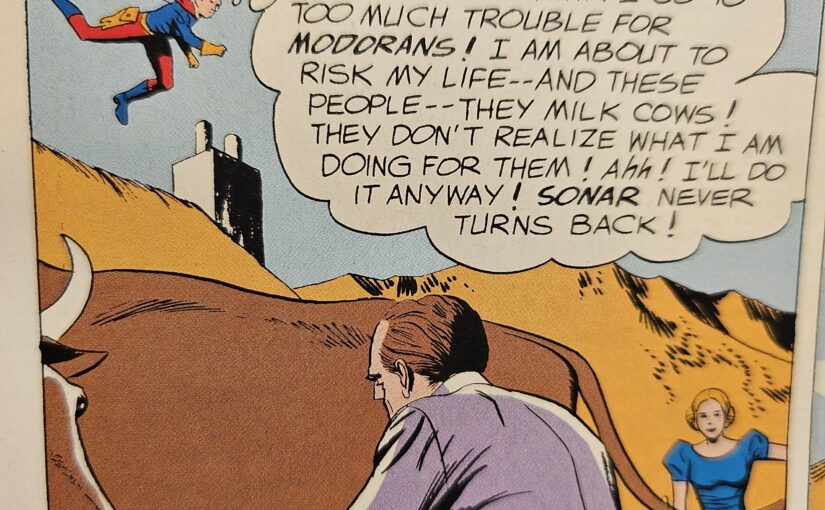
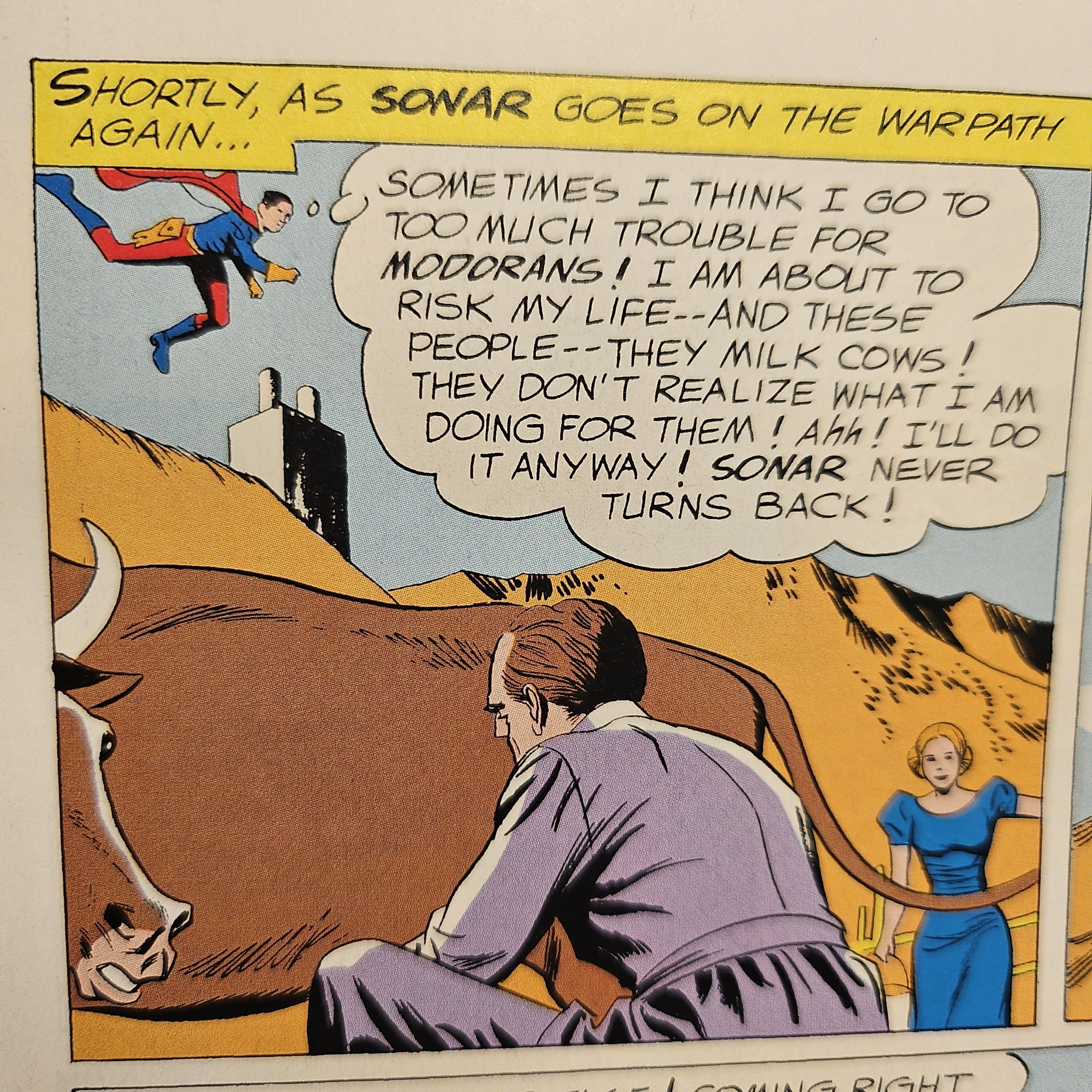
I’m reminded of the general thing with TV and movies over the past decade: They greenscreen so much, and it looks so bad, that the only real solution to not having the greenscreen stand out like a sore thumb is to make even the real stuff look equally fake. So you get everything colour graded into oblivion.

When people complain about how awful everything looks, filmmakers get really huffy and go “nooooo! it’s all in camera! you’re so stooopid!” (Imagine this guy’s voice.)

Example of real, in camera giraffe:

So yeah.

TBE2019: Dejects: Life Is Hard and Damned Unfair

Dejects: Life Is Hard and Damned Unfair (2019) by Jay Stephens

All of a sudden this blog series is in 2019! The previous post was about a book published in 1998, so we skipped ahead 21 years.

Black Eye is totally unique (I think) in rising from the dead like this — and certainly after such a long hiatus. After being one of the most well-respected comics publishers of the 90s (when people would list publishers with good books back then, the list would go “Fantagraphics, Drawn & Quarterly, Black Eye…” despite Black Eye being a much smaller publisher than the other two. But they did publish books that turned out to be pretty significant, like Jason Lutes’ Berlin and Dylan Horrocks’ Hicksville.

Back in the 90s, there were magazines about comics, so there’s still a record about what happened… but finding stuff like this is just painful. Let’s see…

Uhm… Oh, 2019.

Yes, but what’s the story behind it?

In 2019, Vrana relaunched Black Eye Books to publish the previously cancelled 11th issue of Pickle, by Dylan Horrocks. This was followed by the publication of Dejects, by Jay Stephens, the first full-colour publication from Black Eye. From 2010-2024, Black Eye Books published Jay Stephens’ horror series Dwellings.

Right:

I could never leave comics behind though! So in 2019, I revived my indie comic press Black Eye Books to keep nurturing my dedication to the art of visual storytelling.

Ah:

Then Michel Vrana, my old pal from Black Eye…I don’t remember the first convo about it, but I think he was having a bit of a midlife crisis moment, where I think he’d been going through old digital files to back them up, he was going through all the old Black Eye files. He reached out and said, “Can you imagine making comics today? All those things we only could dream of. Full color, no money down, you can crowdfund this stuff so it’s just pre orders. You know how many to print, we’re not warehousing this stuff.” He was pitching it as this kind of paradise moment for indie comics, the things you could do now. And he asked me if I had anything that I’d like to experiment with, just for fun.

Well, that makes sense — using crowdfunding would make things a lot less stressful for sure: You get the money to do the project up front, and you can then print a few more to sell afterwards, but you don’t need to do a whole warehouse. The bad thing about crowdfunding stuff is that the books usually sink without a trace afterwards: Many bookstores avoid carrying them, because they figure that everybody that’s interested will already have bought a copy, and there’s no budget for publicity, anyway.

Anyway: Let’s read the second thing (I think?) that the revived Black Eye would publish. I think the eleventh issue of Pickle might be the first thing they did? Oh, that reminds me; I happened upon the following yesterday while researching something else. Gary Groth writes in The Comics Journal #207, page #5:

BEFORE DEGENERATING into a blanket
condemnation of “small publishers,”
Bart Beaty’s “Opening Shots” raises
some good questions about the market-
ing Obstacles facing alternative comics.
He suggests that the failure ofa number
ofindependent comics may be more the
consequence of the “publishing strate-
gies of the small presses themselves”
than the usual gang of suspects that are
routinely flogged (especially in these
pages), mainly the philistinism and op-
portunism of the majority of retailers,
distributor(s), and fans (i.e., everyone
but the artist and publisher). What Beat)’
calls the Cerebus Effect is certainly a
valid observation (and though it’s old
news to those Ofus inside the profession,
I’m pleased to see it aired publicly); to
what extent this has decreased sales of
alternative comics series no one knows,
but I ‘d venture to say it’s had an appre-
ciable impact — which it was bound to
once eventual book publication ofcom-
ics series became institutionalized and
readers Came to expect it.

[…]

Ninety-nine percent ofthe kind of
grievances Beaty enumerates have noth-
ing whatsoever to do with pubhshers
(or artists) treating the reader unfairly or
disrespectfully or exploitively. It has to
do With one party (the publisher) not
being able to spend money he doesn’t
have. Period. It comes down to brute
economics, or, put another way, factors
beyond his control. Beaty’s own ex-
amples are illuminating:
l) Black Eye cancelled Dylan Horrock ‘s
Pickle after publishing issue and
intends to include the unpublished I
issue in theforthcoming collected volume
Hicksville. Beat! cries foul. But each
issue ofPickle probably lost Black Eye
money. My best guess is that each issue
IOS! an Of Clams —
S4000 over the life Of the ten-issue
series. My further guess is that Black’
Eye literally ‘t afford to publish
the issue
— or, rather, had to
decide tellether to publish the I lth issue
or put out a handsome trade collection
collecting them all. If you love books and
admire Pickle, the decision to put out
the trade book is an honorable one.
Instead of criticizing Black Eyeforfail•
ing to publish the last issue, it seems to
me a more civilized response would be to
get on knees and thank Black Eye
for standing behind it as long as it did.

Indeed!

Anyway! Dejects! That’s supposed to be the subject of this blog post, after all..

As usual with Black Eye, the design of the book is very nice. But the general feel is quite different from back in the 90s, when they had to be careful with using colour printing and using a cheap paper stock. And the book looks very… digital? That is, it sort of screams “Designed On The Computer”.

Stephens explains the book (in Futura and… is that Bodoni?) — it’s a collection of odds and ends.

But recoloured. The page to the left was published in Sin Comics, I think, but in black and white. It looks like it’s been touched up and coloured on the computer — the line looks a bit smoother than I remember it.

The strips are not presented in chronological order… or any specific order much?

The book consists almost completely of single-page gag strips, and that can get old pretty quick in a collection like this… but here it works. Perhaps because of the mixture of approaches and the way it’s sequenced?

Stephens does an impressive number of styles, but I don’t think it’ll come as a surprise to anybody that he’s mostly been working as an animator the last few decades.

Most of the material is from the 90s, I think, like this thing, which I think must have originated as a monthly magazine strip? (There are no notes in the book to say where anything originally appeared.)

That is impressively dumb! It’s s funny book.

The one long piece here is this sequence — it’s 24 pages long, and was previously published (in black and white) as an issue of The Land of Nod.

The book is an enjoyable read — the only thing I could have done about is this super duper compressed Nod strip, which feels like it’s going full out for chaos and mayhem, but doesn’t quite get there.

Stephens was interviews by The Comics Journal:

It’s a really dark book, to be honest.

[Laughs] Yeah. And as I was going through it, revisiting that stuff more intimately, and coloring it for this collection, because we had the opportunity to do so. That was really deep looking at how obvious my chemical imbalance was from the beginning of my career. [Laughs] Signs that I should have certainly been seeing.

Well, I mean, there’s Irwin, which is, “He try to have fun but he can’t.” [Laughs] Every strip is him trying to do something and can’t.

[Laughs]

Is Twerp the most autobiographical one of those? That’s the guy and his wife, where he’s just sad all the time.

I’d say so, yeah. Notes on a divorce.

[Laughs] But yeah, it’s a very dark book.

Thank you.

It looks like Dejects is sold out, but you can get an e-book.

It didn’t get very positive reviews on Goodread:

If, however, you’re a fan of 90s cartooning, this might be a love letter to you. I do like the visual style, but the jokes don’t land for me, so it wasn’t a fun read.

Oh, they reprinted Land of Nod #3:

A surprise addition to the book table was Land of Nod #3. Initially published in 1997, this reprint fixes some issues of the original run and is a testament to Michel and Jay’s enduring friendship.

But fixed some printing issues. That’s cool.

This blog post is part of the Total Black Eye series.

Adult Content

So today I found that one of the autoposts on Bluesky had been marked as “Adult Content” and the contents hidden.

So what was this shocking image? Yes:

I mean, I don’t care — I’m mostly just surprised that whatever system they have was able to identify this as a naked human being at all (it’s Adam (of Adam and Eve fame) in Paradise (of Adam and Eve fame)). But indeed ChatGPT is smarter than I’d have thought:

The image appears to show an illustrated book cover. The artwork features three cartoon-like characters in a grassy setting with scattered red apples. One character resembles a monkey, another looks like an abstract creature, and the third is a stylized human figure. The title on the cover reads “Paradise Sucks” with the author’s name, “Jimena Dihalgo,” included. The style is bright and playful with a satirical edge.

The author, Jimena Dihalgo, should be ashamed of him/herself!

Disappointing that it didn’t recognise the cute bug, though.

TBE1998: Black Candy

Black Candy (1998) by Matt Madden

Matt Madden! That’s a name I sort of vaguely remember, but have extremely positive vibes about… I don’t remember this book at all, though.

Oops! Do I remember how to censor things on this blog… This blog was censored from linking from Facebook for over a decade, and that’s presumably because of some of the comics I’ve posted snaps from over the years…

Yeah, it’s ‘class=”redact”‘. There we go — you have to hover over the pictures to see them, because they will surely destroy civilisation otherwise.

But that’s certainly a way to start a comic! Very in your face, so to speak.

There’s some superficial similarities to some of Charles Burns’ work, I guess — a sort of sex/body horror thing going on, but it’s a lot less mystifying than Burns is. And the artwork rather reminds me of David Mazzucchelli, especially in his City of Glass period.

It’s really good! It doesn’t fall into the trap of trying to explain things too much, but instead goes for, like, confusion and despair.

And it feels like exactly the perfect length, too.

Unfortunately, it hasn’t been reprinted? That’s a shame.

Tom Spurgeon writes in The Comics Journal #199, page #8:

“This is my first attempt to create a
sustained narrative, so a lot of it is
sort of stretching my wings.” says
Madden. “I’d say I was more con-
cerned With pace and mood than
anything else. I was trying to
ture some sense Of daily life (as my
friends and I experience it) being
ruptured by the absurd and
tesque.” Madden, known in his
previous work for a “slice •f life”
approach, isn•tstrayingtoo farfrom
those roots with this latest work
Black Candy draws from real life
situations — the story was initially inspired by a “sperm donors needed” ad in a newspaper — and from there touches on themes including, according
to Madden. “reproduction, parenting, sexuality and the male body flow.” Madden warns that potential readers don’t have to worry about being lectured.
saying he actually followed a very casual artistic approach in working with the material. “I let the themes [in Black Candyl develop at a pretty organic or
unconscious level. I was more interested in just writing the story. then going back and looking at the issues it raises.” Additionally. Black Candy may have
specific resonance for readers in college towns, as Madden drew on Stays in Austin and Ann Arbor, Michigan in completing the work.

[…]

Madden hopes that Black Candy will be the first in a series of larger, self-contained works. “l prefer to do longer stories and publish them as
complete books after the European model,” says Madden. The cartoonists notes that a lot of what is in his current offering may set a tone in other
ways. also think that a lot of the concerns in Black Candy— e.g. , formal playfulness, quasi-naturalistic dialogue, episodic structure — will continue
to be present in my future work.”
For now, however, fans will content themselves with Black Candys studied. masterful pace and deeply disturbing subtexts. Like any other “rookie”
with 10 years of experience. Matt Madden will almost certainly take a significant percentage of the comics-reading public by surprise.

Charles Hatfield writes in The Comics Journal #206, page #40:

Matt Madden’s Black Candy begins with
masturbation and ends with cremation.
The end follows logically from the begin-
ning, a direct result. In between, the pro-
tagonist “Carl” (i.e., man) endures betrayal
by his own body, hinted at in small, dark
lumps sprouting in his armpit and groin.
“Some kind Of VD,” he reasons, but we
know better: the lumps must have some-
thing to do with the little black pills he’s
been swallowing.
If this sounds disturbing, it should.

[…]

Lyrically, Black Candy succeeds in con-
juring mistrust and horror of the body;
narratively, however, it cheats. Plot-wise,
the story yawns wide open and never
closes: Madden ends up relying on a gnaw-
ing suggestiveness rather than full, fair
disclosure. Though the ending earns
grudging admiration for symbolic fit —
the metaphorical significance of the physi-
cal body is played out with an awful final-
ity — it is not motivated logically. If only
it were more carefully anchored.
In sum, Black Candy is a provokingly
evasive story, anchored in realism, au-
thenticated by sharp observations of the
everyday world, and compromised by grim
fantasy. Kudos is due for Black CandYs
looming sense of foreboding and stark
technique; and criticism for an ending
stacked with too many unfulfilled prom-
ises. The novella begins in a dark room,
and ends by taking a walk on the wild side
of speculation. Though Madden excels at
queasy suggestion and quietly modulated
menace, he fumbles the close, as if unwill-
ing to shoulder the expository burden
demanded by his fantastic premise. For all
its advances in craft, Black Candydoes not
pack the same punch as the less elaborate
(and, to be fair, less ambitious) Fair Warn-
ing, in which the disturbing elements are
more in sync with Madden’s low-key real-
ism.
Or so I would argue. Let the debate
commence, confident of Madden’s prom-
ise — Black Candy is worth arguing about,
and Madden’s name should register deeply
with readers. He demands, and delivers,
much. On the strength of this book, I await
his next.

Well, OK.

Anyway, this is the last comic I’ll be covering in the series that was published by Black Eye’s 90s incarnation. I don’t think this was the final thing they published — that might have been The Sands? But the chronology is a bit uncertain here. But in any case, that means that I have to cover Black Eye’s original demise now, so:

The Comics Journal #203, page #20:

The financial and production prob-
lems that forced Black Eye to cease
publishing for several months have
led two of its artists to seek homes at
other publishing houses and have
caused Black Eye publisher Michel
Vrana to rethink his future publishing
strategy by focusing almost exclu-
sively on collections and graphic
novels. From October Of last year to
this spring, Black Eye, which is run
solely by Vrana, was unable to print
its scheduled books (save for one issue
ofJason Lutes’ Berlin); the dormancy
stemmed in part from financial
troubles that began plaguing Black
Eye when Capital City Distribution
went out of business in July 1996, as
well ai time constraints placed on
Vrana when he took a full-timejob as
a graphic designer. The instability at
the company led bothJames Kochalka
and Megan Kelso to pull their books
from the Black Eye line, and reports
surfaced that some stores and dis-
tributors attempting to order books
from the company were getting no
response. In the wake of frustrations
voiced by some of the artists pub-
lished by Black Eye, Vrana has stated
that he is committed to continuing
publishing but is unlikely to publish
be
comics in serial form for the moment,
With the exception Of Berlin.

Vrana conceded that he had over-
extended himselfat times by trying to
juggle the duties of operating a one-
man publishing house while taking
on a fill-time job designing maga-
zines. When he began publishing,
Vrana said he was able to devote the
majority of time to Black Eye while
receiving additional money from
freelance design work. By the end Of
1997, he said, “things were difficult
financially” and his fill-time day job
“put a lot ofstrain on things.”
“Being young and overconfident,
I didn’t see any problem with taking
on a full-time job,” Vrana said.
found myself at times unable to do
production on books that had to get
out… I owed lots of money to lots of
people” and had to hold off on pub-
lishinguntil debts to places like printers
could be paid off.

For some ofthe artists associated
with Black Eye, the Small press Expo
in Bethesda, Mary. , last September
was something of a watershed for
their frustrations with the company,
in part because ofa lack ofcommu-
nication on the part Of Vrana.
According to James Kochalka, his
book Quit Your Job was first slated to
come out from Black Eye in August,
and was then was pushed back to
come Out in September for SPX.
Unfortunately, the Black Eye artists
found out when they arrived there
that the Black Eye books slated to
debut at the event had not gone to
press, and the rest of the Black Eye
books had also failed to arrive.
“All [the Black Eye] artists were
there, and they were all grumbling,
and [Vrana] wasn’t there” — which
gave them plenty of time to voice
their frustrations, Kochalka said. For
Ed Brubaker, whose Lowlife was seri-
alized by Aeon and collected in the
Black Eye book Complete
“SPX was kind of like the really big
deal… (Sands creator] Tom [Hart]
andJason [Lutes] basically killed them-
selves to get their books out for SPX
and the books just didn’t come out.”
Brubaker added that because Vrana
(who told the Journal that he couldn’t
afford to fly outto SPX) “waited until
the last minute” to have the Black
Eye backlist books shipped overnight
to SPX from a warehouse, a subse—
quent shipping error delayed the
arrival of the books until the second
day of the convention. Brubaker said
that he had to personally call the
holding area in Baltimore, Where the
books were incorrectly scheduled for
delivery two days after SPX, in order
to get someone to drive the Black Eye
books to SPX. “Michel knew about
all this at least a week or two before
the convention and waited until if
they fucked up, it would be too to
fix it,” Brubaker said.
. If you’re
going to be the publisher, you can’t
rely on everyone else to do every-
thing at the last minute.”
After SPX, Kochalka found his
book delayed yet again when Quit
Your Job was sent to the printer in
N ovember but was not printed due to
Vrana’s outstanding debt. “That was
pretty much the cue for me,” said
Kochalka, who submitted the book
to another publisher, Alternative Press,
which is scheduled to ship it in June.
“I was absolutely sure that I did not
want to give him another book and
then not have it come out,” he said.
Kochalka also rescinded another book
which he had offered to Black Eye
(Tiny Bubbles) and is now publishing
the project with Highwater Books.
“My only problem [with Black Eye],
Kochlaka stated, was having his book
“constantly delayed through no fault
of mine… I really like
Michel and Black Eye as
a company.”
Kelso, who decided
not to publish her Girlhero
comic with Black Eye,
also emphasized that she
did not harbor any “ill
will” towards Vrana. “l
just sort of looked at the
situation [with Vrana’s
new job] and I saw what
everybody else saw —
that everything was
coming outlate, ifatall…
and it just seemed like
[Vranal was really busy,
that he didn’t have time
to put my book out… I
just told him that it
seem like a good time
[for Black Eye to publish
Girlherol.
While Brubaker
echoed Kelso and
Kochalka’s personal as-
sessment of Vrana, he cited
additional frustrations about reports
that stores who were attempting to
order his Lowlife collection found
Black Eye unresponsive. Brubaker
told the Journal that a few retailers
had complained to him personally
about the situation while he was in
their stores or attending conven-
tions. According to Kristine Anstein,
who works for the Bay Area dis-
tributorLast Gasp, Black Eye orders
have recently come in, but she “had
trouble at various points… We got
in a reorder now, so I’m happy; if
you had talked to me a month or
two ago when I was tearing my hair
out trying to get Berlin, I would
have been unhappy.” And Kevin
Halstead, who works as a manager
at the Seattle comics shop Zanadu,
told the Journal that he “pretty much
gave up on trying to place orders
directly [with Black Eye) about six
months ago” when Vrana did not
respond to multiple e-mail mes-
sages he had sent regarding orders.
He added that he had placed reor-
ders with Diamond for Black Eye
Books without receiving anything.
“We used to order directly from
(the publisher] all the time,” said
Halstead. “Then all Of the sudden,
we couldn’t… which is too bad,
because we probably could have
sold a lot more books.

It sounds like an absolute nightmare for Vrána — it sounds like things just got gradually more out of hand until he started withdrawing. I can totally sympathise.

For Vrana’s part, he acknowledged
many of the concerns voiced by the
creators, although he noted that he
wasn’t aware of having failed to re-
spond to requests for reorders. Any
communication problems, while ” Cer-
tainly unintentional,” admittedly
“caused a lot of resentment on the
part Ofthe creators… I was so wrapped
up in trying to reduce my debt that a
lot ofthin5 fell by the wayside… this
is one of the dangers when you have
a company that is run by only one
person.” As for the problems at SPX:
“Some people worked very hard to
have their books come out, it’s true,”
he stated. “It was personal problems
on my side. I should have realized my
financial and time Situation much ear-
lier to be able to say, ‘This isn’t going
to happen. ‘ All Ofthis frustration was
vented in this little vacuum and I
didn’t find out about it until much
later.”
Still, Vrana stated that he was
committed to publishing, that he had
erased most of the debts that stalled
production, and that he would be
able to manage his design work along
with Black Eye as long as he adheres
to a reasonable schedule and shifts
towards a different focus, “from a lot
of periodicals to a few trade
paperbacks… something along the
European model, where you release
three to five trade paperbacks [per
yearl and then slowly build a backlist.

[…]

“If it turns out at the end of 1998
that I was unable to do things prop-
erly it may be the best thing for
everybody if I was just to pack it in. I
don’t have a desire to, but ift find out
I’m being both a detriment to myself
and other people, it would be selfish
to do otherwise. [Butl I’ve stuck it
out this far, and you don’t give away
five years of your life on a whim.””

But that was basically it… until 2019.

This blog post is part of the Total Black Eye series.

TBE1997: Paradise Sucks

Paradise Sucks (1997) by James Kochalka

This is another book that’s somewhat unusual for Black Eye to have been publishing. I bought it at the time, but it’s not until I got prepared to do this blog series that I realised that it wasn’t an Alternative Comics (or something) book.

It’s printed on pleasingly off-white paper in a cute, small format.

The book is pretty oddly structured — we start off following this dumpster diver that finds a bible…

… and then some rich guys stop by to buy his geometrical artwork. I thought that this was going to lead off into yet another rant against modern art (the traditional bête noires or comics artists), but that didn’t really go anywhere, because…

… the rest of the book is about Adam and Eve and stuff (and the artist wanders into that story).

I’m not sure at all what Kochalka meant to achieve with this book — perhaps it’s more fun if you’re religious (and then perhaps these depictions of Adam and Eve would be all sacrilegious and stuff)? — but for me it’s just an “uhm?” I mean, I like Kochalka, and I have at least a couple dozen of his books. But this one doesn’t really go anywhere.

Kochalka’s artwork is fun, though.

Christopher Brayshaw writes in The Comics Journal #198, page #42:

Last year when I reviewed one Of James
Kochalka’s contributions to an eminently
forgettable small press anthology, I had
some harsh criticisms of his unpolished
art, non-stop sentimentalization, and ob-
noxious self-promotion. These tendencies
are still pronounced in the self-acclaimed
superstar’s most recent major work, but
along with them comes much subtler char-
acterization, more refined drawing, and
some surprisingly mature pacing. While
these new-found improvements aren’t
enough to convert me to Kochalka any
time soon, they do indicate that, despite
his witless refrain of “Who needs craft?” in
the Journars letters pages, Kochalka’s
aware ofhis shortcomings and consciously
tries to overcome them.

[…]

That said, Kochalka’s own messy line
works well, not because it’s “expressive,”
but because it clearly defines form, and
adds visual contrast to his pages. His pie
tures’ swelling curves also work well. For
example, when Kochalka’s cartoon God,
with his wizard’s cap and wand and robe,
makes the world, the curves of his hat,
robe, and beard echo the organic shapes of
the grass, herbs, and mud that constitute
his brand-new world. This sequence in
particular shows Kochalka to be a much
better cartoonist than l, or any of his other
detractors, has previously acknowledged.
Further, this scene, along with another
where Adam and Eve name the garden’s
inhabitants, are paced slowly and reflec-
tively, like poems absorbed in articulating
thejoyful task ofnaming the not-yetknown.
But there are still problems. Kochalka
doesn’tedit, soa lot of things get thrown in
to distract us from the rhythms he works so
hard to set up (and pulls off so well) else•
where. His love Of childish things like
monkey poo and pink bottoms are a long
way from his wonderfully evocative de-
scriptions of Eden. And his dialogue, never
one of his strong points, is still exquisitely
painful. “My old, shaking hands. I can’t
fucking paint straight. My life is nothing.
Wasted away.” Excluding the fact that any-
one can “paint straight” with masking tape
and a roller, this verbal gem could have just
as easily come from the pages of Gen 13.
Still, despite all these problems, Para-
dise Sucks commands attention. Like all
Black Eye titles, it’s wonderfully designed,
resembling a cross between a CD booklet
and a Big Little Book. And Kochalka’s oddly
poetic storytelling is, for the most part,
honestly felt and moving, a clear indica-
tion that, however unwilling he might be
to admit it, craft is unquestionably present
in the self-proclaimed superstar’s bag of
tricks.

Wizard Magazine #69, page #85:

It’s almost impossible to be bored read-
ing Kochalka’s books. Take his latest pro-
ject, for example. It’s a graphic novel called
Paradise Sucks, and it features two distinct
stories that intersect at various points.
Kochalka’s sometimes stand-in, Magic Boy,
stars in one of the stories as a geometric
painter struggling to find the spark of cre-
ativity in his work that he’s long since lost.
The other half of the story is Kochalka’s
distinctive take on the creation story with
Adam and Eve. “You get a little bit of one
story and a little bit of another, [going] back
and forth for a while until eventually they
merge into one story.”

It doesn’t seem to have gotten much attention:

It’s not a bad comic book but if you’re a James Kochalka fan, chances are you’ve read some of his better works – American Elf, Monkey Vs Robot, Fantastic Butterflys – so “Paradise Sucks”, while familiar, will look a bit weak in comparison.

But then again, Black Eye was starting to shut down around this time, so perhaps it didn’t get full distribution? I’ll be covering that more in the next blog post, which is the final blog post about the 90s incarnation of Black Eye.

I think this person liked it:

Now I’m not real big on the whole religion thing, as most of you know, but seeing God with a magic wand tapping things into being with the sound effects of “shzing!” “ping!” and “phooo” is just brain-meltingly cute.

This blog post is part of the Total Black Eye series.