Allowing comments on a WordPress blog is only viable if you have a spam checker. Fortunately Automattic (the people behind WordPress) also provide (free) access to Akismet antispam. Because if you run a WordPress blog, you will be getting hundreds of spam comments per day:
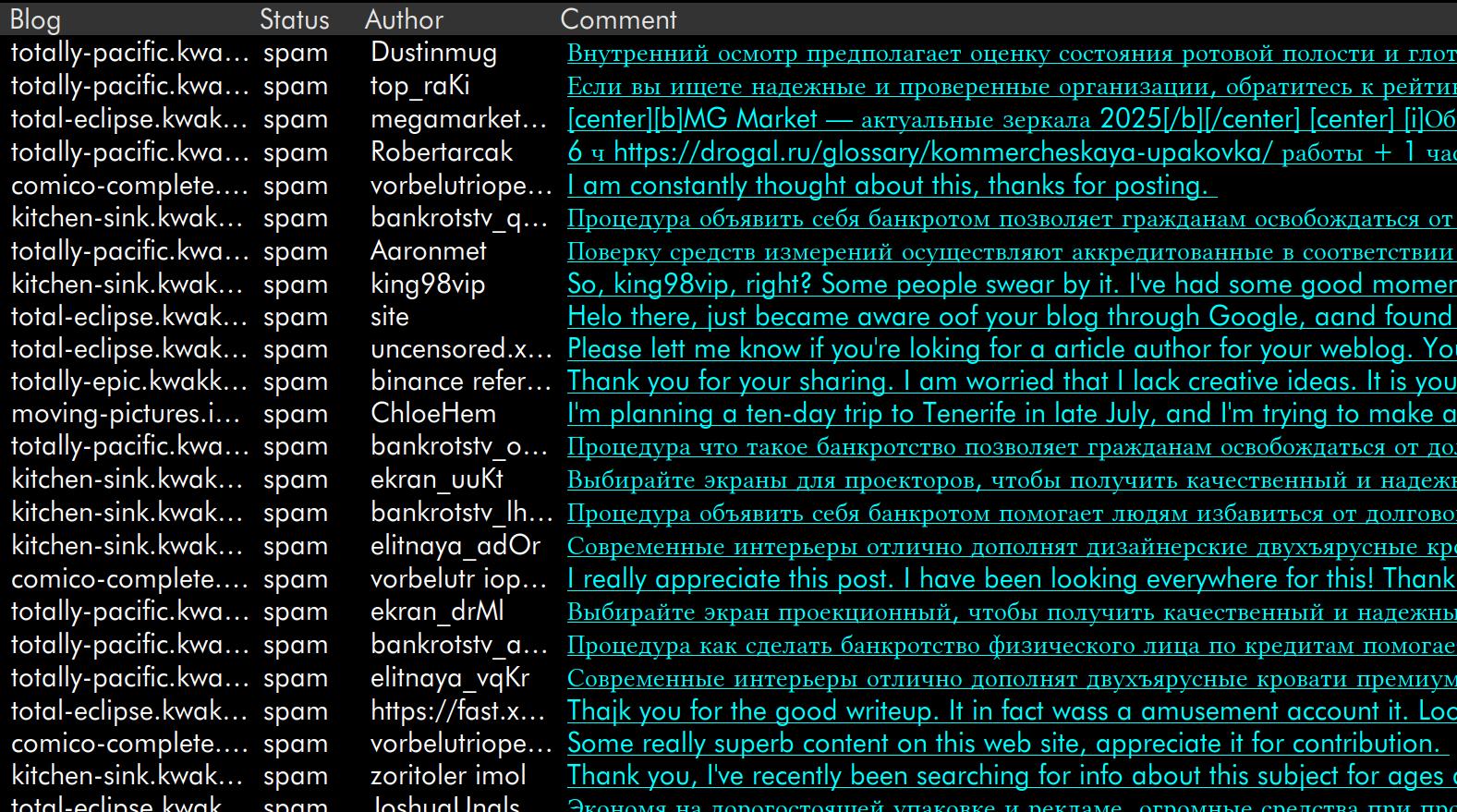
Nobody can wade through all of that, but Akismet correctly identifies all of this junk, so you never actually see it. Thanks, Automattic!
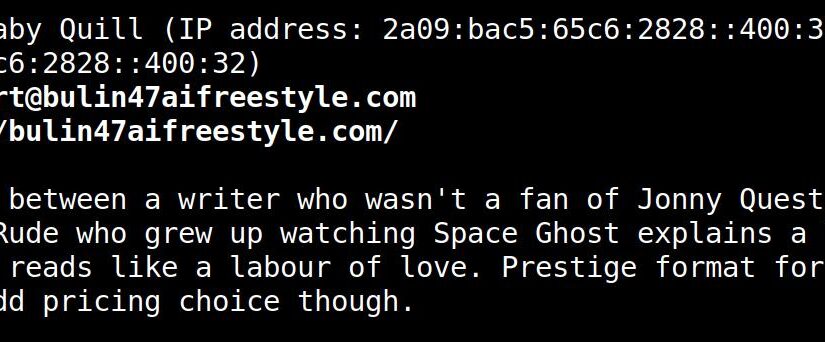
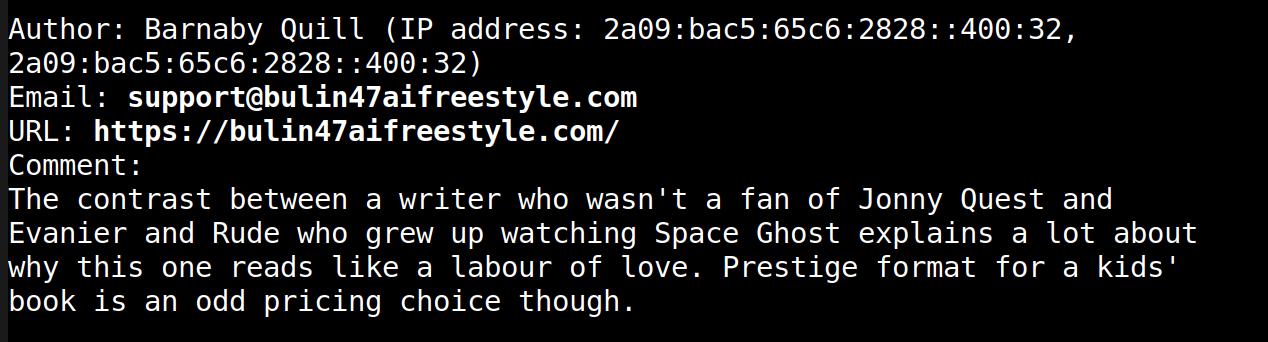
But ever since LLMs became a thing, I’ve assumed that comment spammers would be using them to post reasonable-sounding comments that would bypass Akismet… and there have been instances of this, but the deluge took longer to arrive than expected. But it seems to have started for real now:
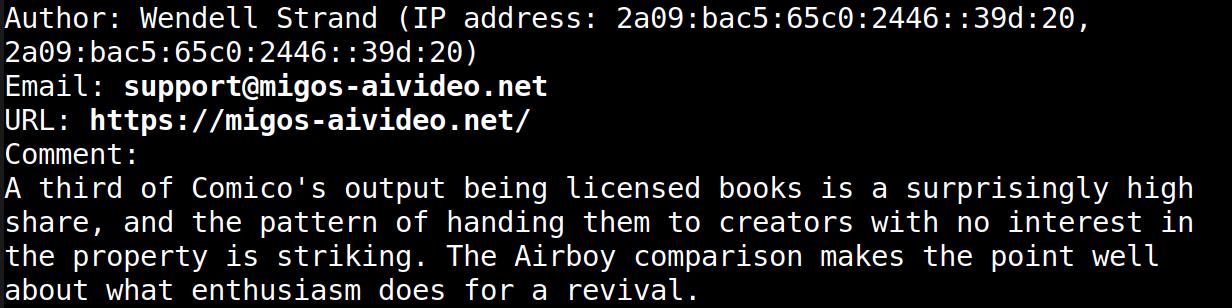
This first wave of AI spam is easy enough to identify — they all vaguely agree with something you said in the blog post, and then link to some shady, scammy AI video thing. (Normal, non-AI spam comments usually go “Very interesting blog! You’re so smart!” etc, but these spam comments are readily identifiable because they don’t respond to anything in particular you’ve said. This AI wave does, though — it reformulates something you’ve said in the blog post, and then agrees with it.)
And Akismet doesn’t identify these for some reason or other. I mean, even though you can’t determine that it’s spam based on the comment itself, the URLs should be a good enough indicator, right?
C’mon, Akismet — you can do it! I have faith in you!

Heh, while writing this blog post, I got the following comment (correctly identified as spam by Akismet). Amusing, but not LLM spam.
I’m dreading the next wave of LLM spam, though — this initial wave is pretty stupid, but the next wave will have better text and no links (to make you approve the comment), and then the next comment will be automatically approved (as per standard WordPress settings), and that is the one that will have the links to the spam site.
So I guess you should flip your comments setting to “Comment must be manually approved”:

This future is so annoying, man. No flying cars except fake flying cars, and all of this junk we have to deal with.

Back when I still used WordPress and/or allowed comments, I preferred a honeypot, which was just a hidden checkbox bots were inclined to check and therefore trap themselves; see: https://wordpress.org/plugins/tags/honeypot/
They used the fact that bots only viewed the source code, so it is (was?) easy to hide something there for them to act on that normal users wouldn’t see.
I wonder how effective these still are?
I doubt that someone is throwing models around that view/parse the actual website instead of just its underlying HTML. Although perhaps they have to due to captchas and such.
Yeah, LLMs (and web scrapers) these days commonly use real (headless) web browsers, because on many web sites you really have to run all the Javascript to even read the page. So LLMs pretty much see the same web pages that humans do.
I was hoping it would be a cost-factor to run those en masse, but it looks like I’m mistaken.
Sidenote: I tried to reply directly to your comment but whenever I click the “reply”-button below your comment it will shortly show me “Reply to larsmagne23” before it refreshes the page and I’m back to the normal comment-view.
Another, probably related curiosity: When I click my name to see whether I typoed the URL to my blog, it takes a second longer than usual before it goes there or opens it in another tab. Anything JavaScript-ly going on perhaps?
For reference: I’m on FireFox 140.0.4 (yeah it’s older but updating FF usually installs some unwanted stuff and makes me sad) on some ubuntuan Linux-offshoot with only uBlock Origin as relevant plugin.
Thanks for letting me know about the “reply” button malfunction — it’s due to the self-hosted stats package. Now fixed. (And the delay when clicking a link has the same cause.)
Works now as intended!