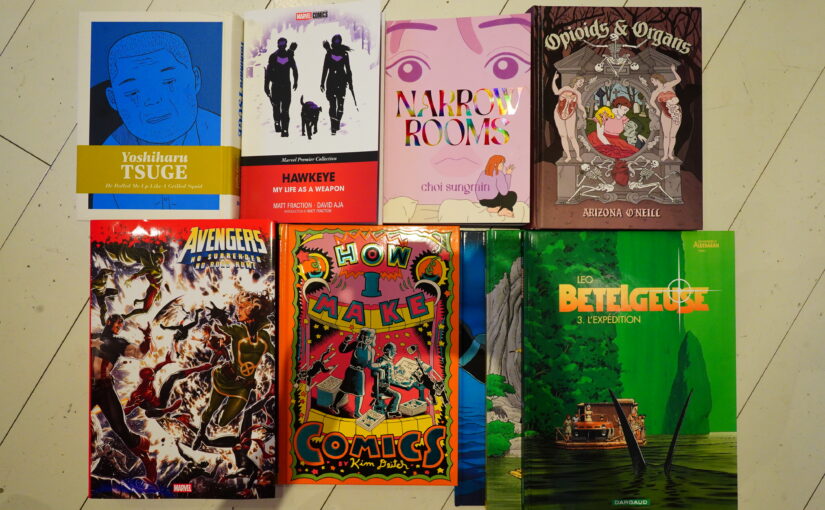
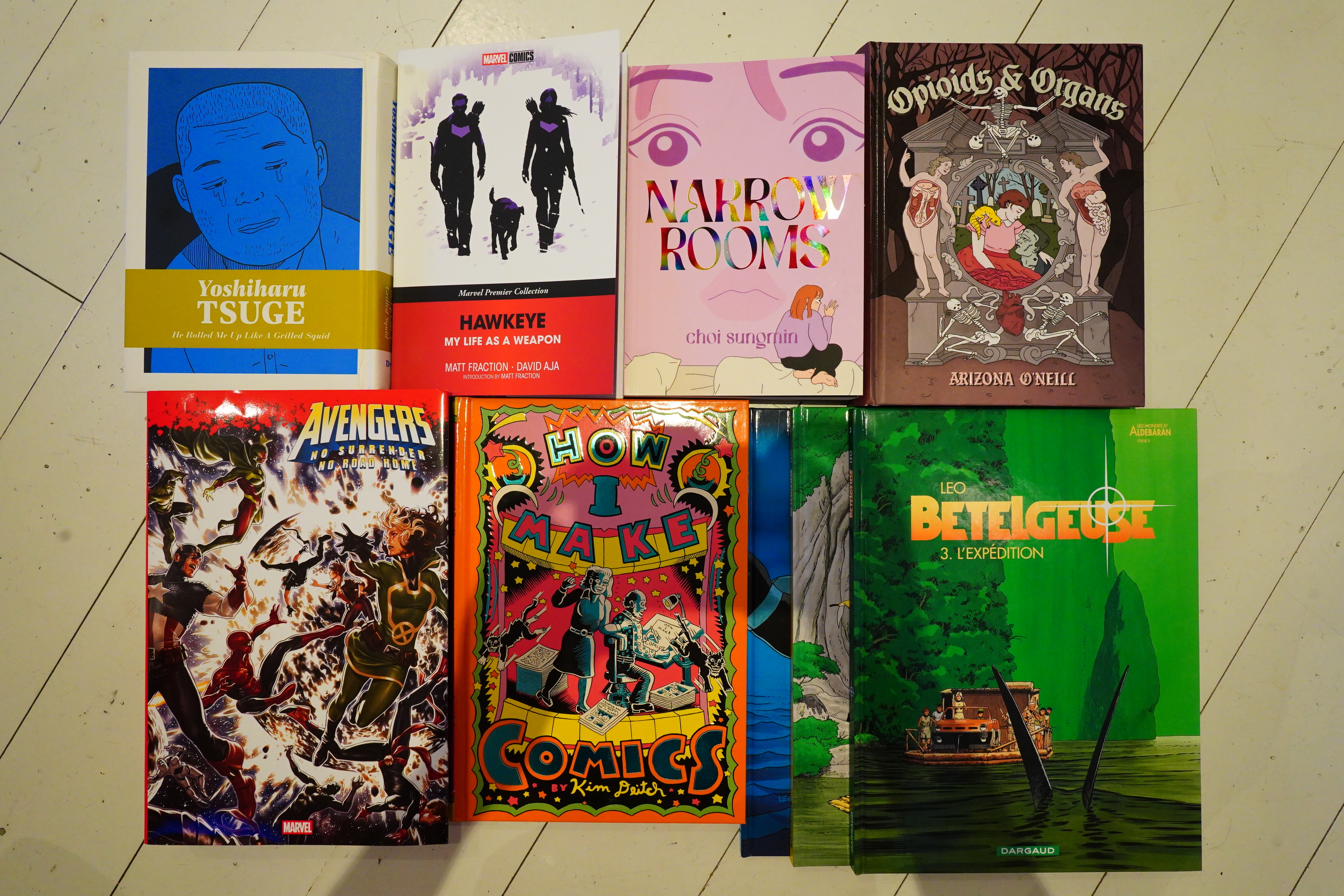
Huh! I read some more comics.
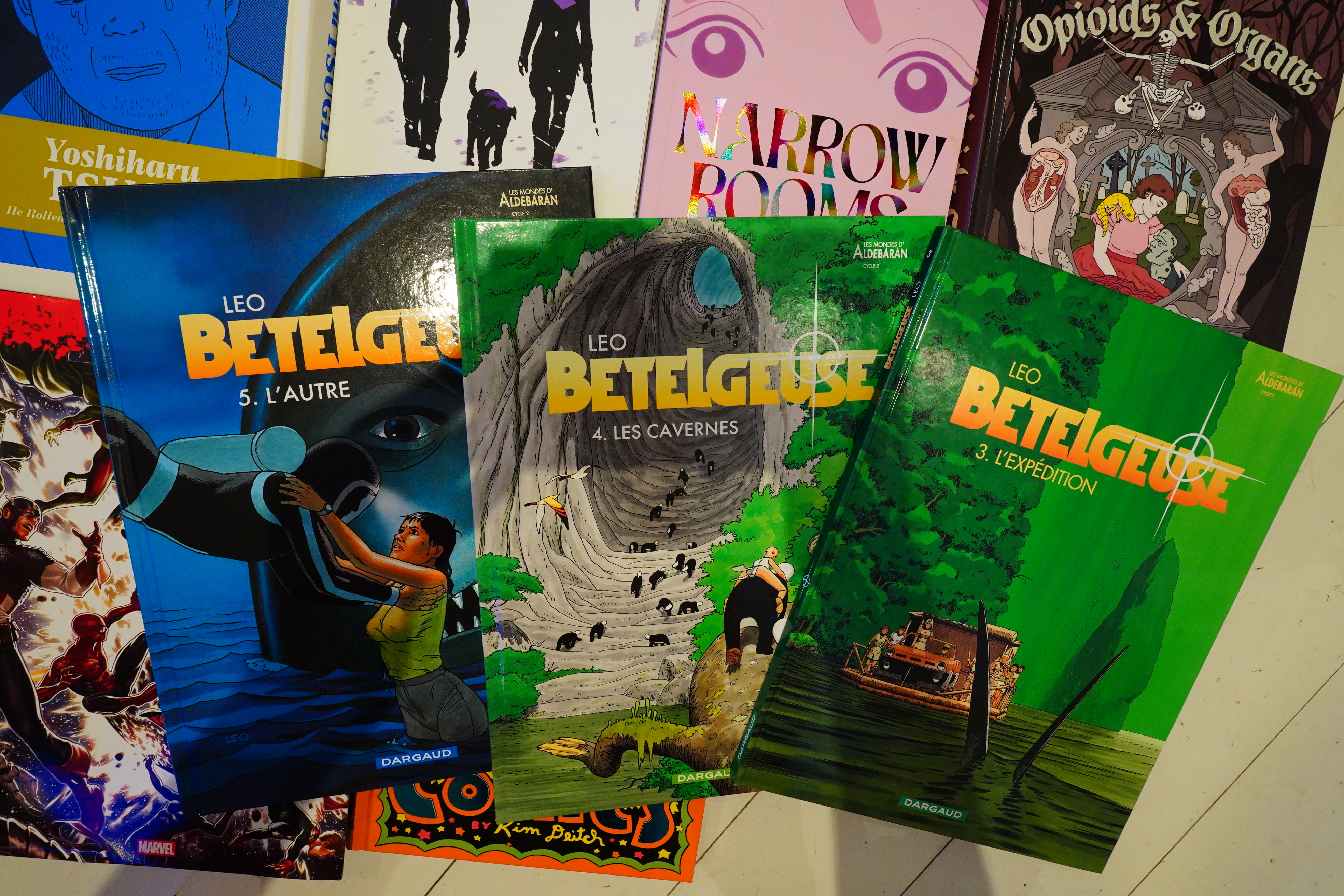
I finished off Leo’s Betelgeuse series.
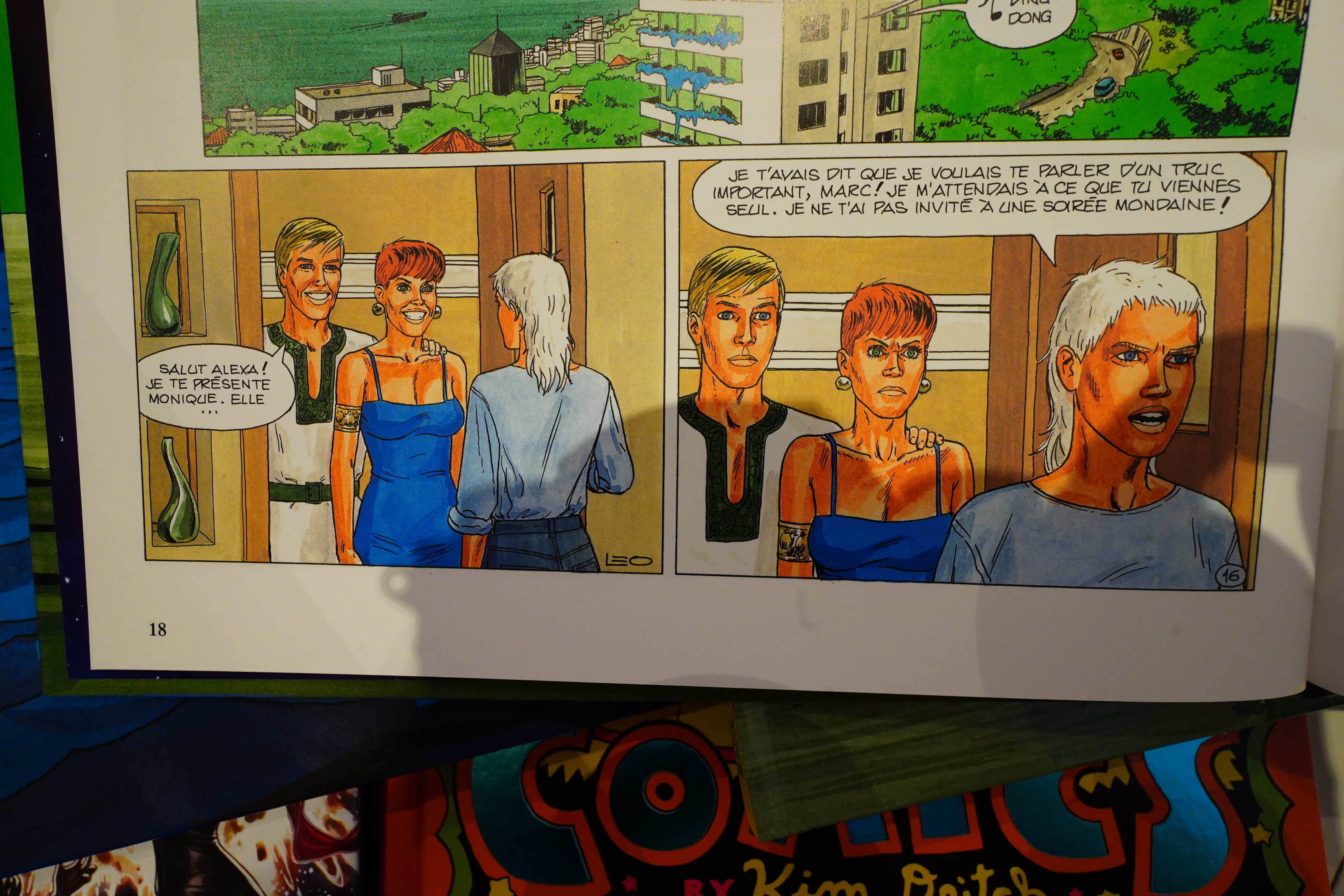
Scenes like this really bring home how little variation there is in Leo’s human characters (beyond hairdos). It’s pretty amusing once you start noticing it.
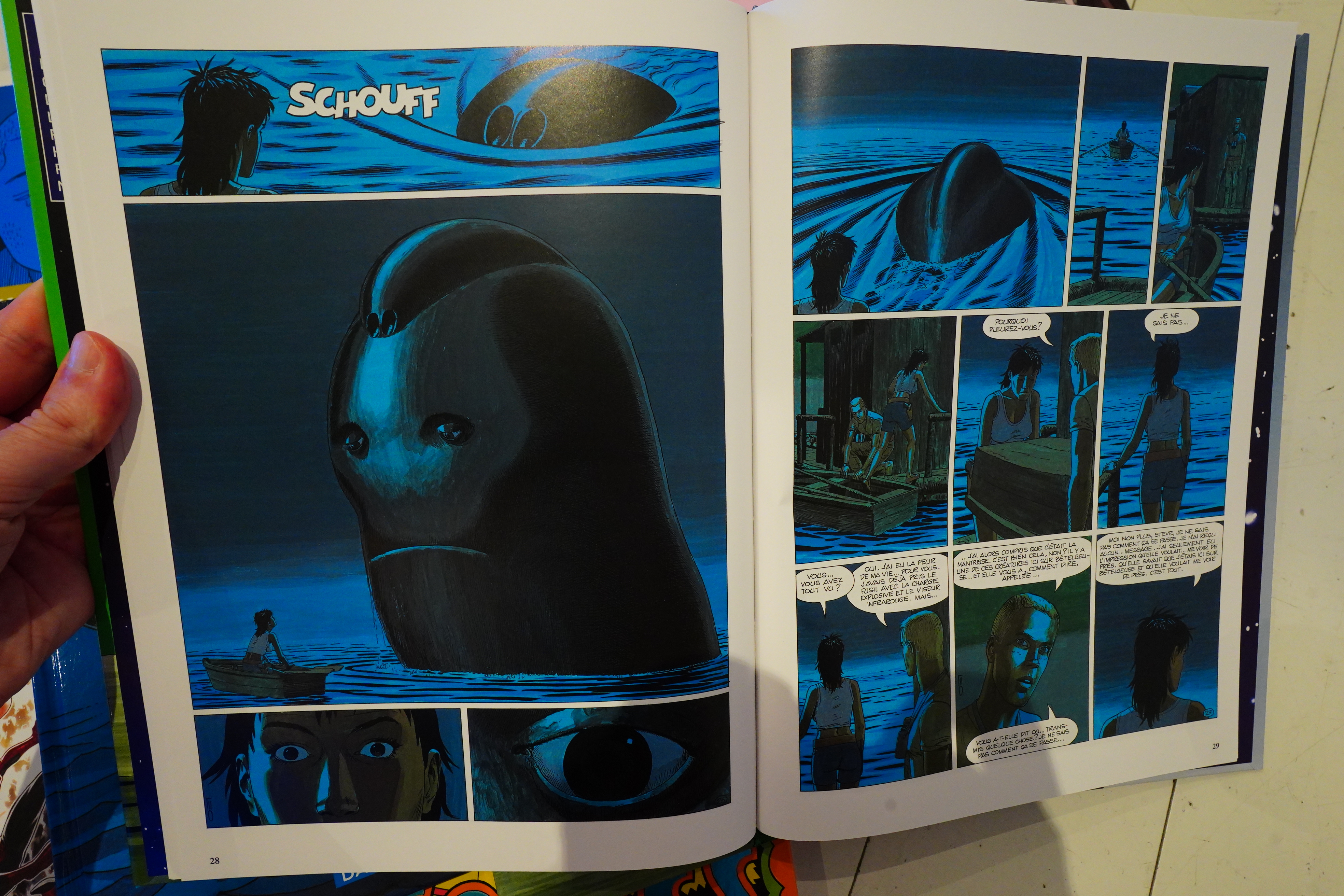
But there’s plenty of variation in his other creatures.
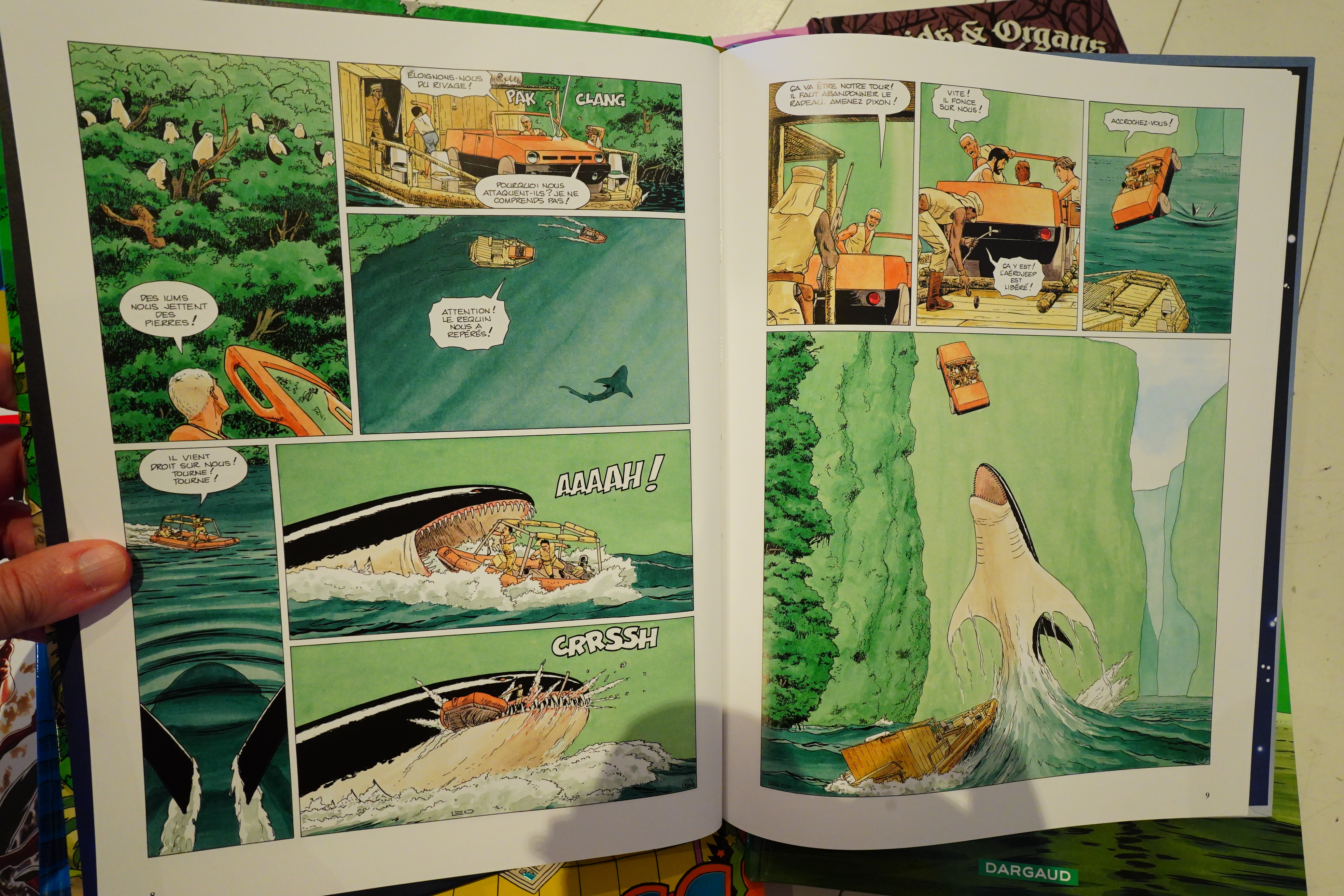
These albums are really exciting, I have to say — so many interesting things happen, and so many mysteries. Of course, that means that the mysteries have to be somewhat resolved in the final album (or “episode”, as Leo calls them), and the solutions are never as intriguing as the mysteries. So a bit of a letdown, but still a really fun read. (Which really helps, since my French is baaad.)
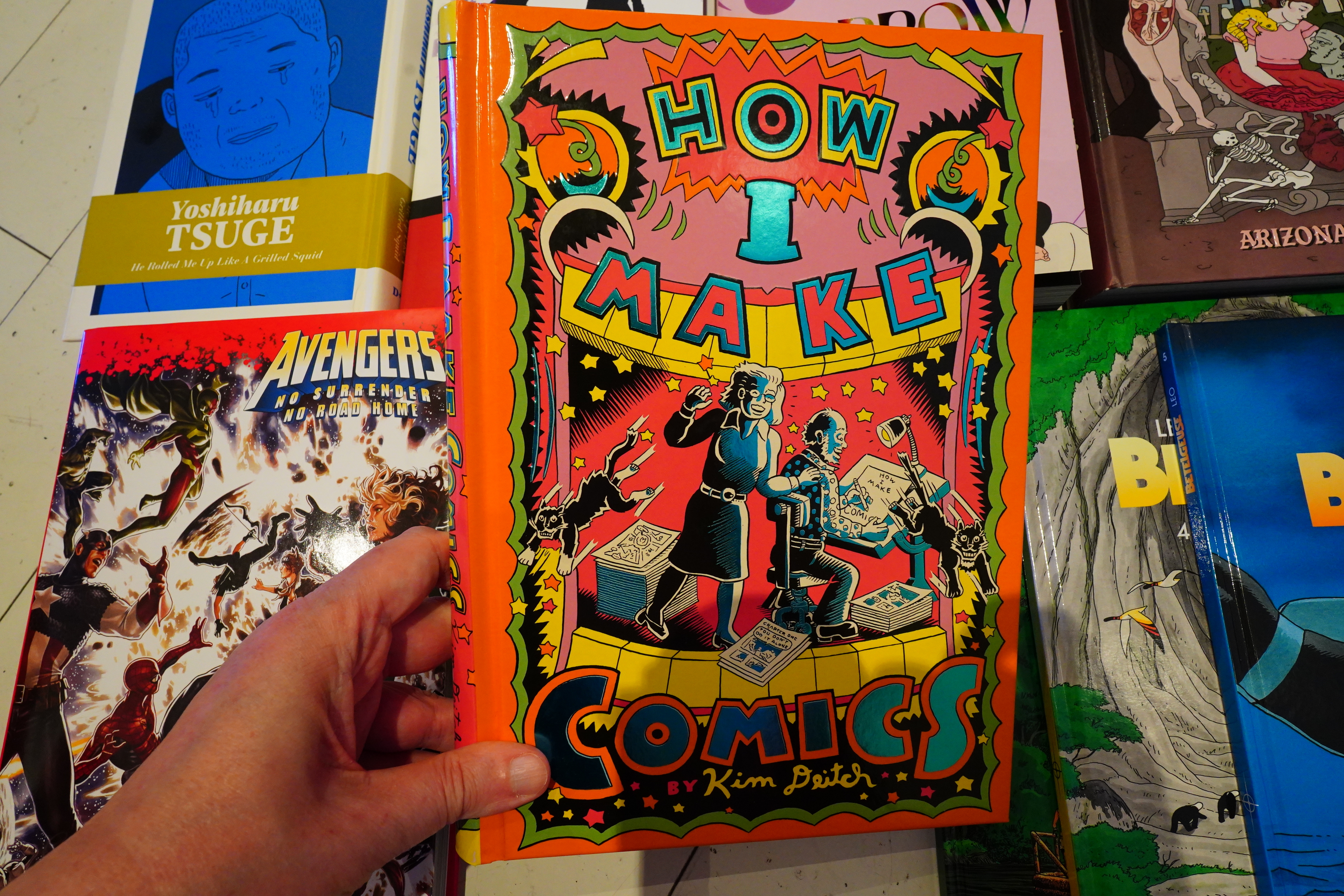
New Kim Deitch! That’s something to celebrate.
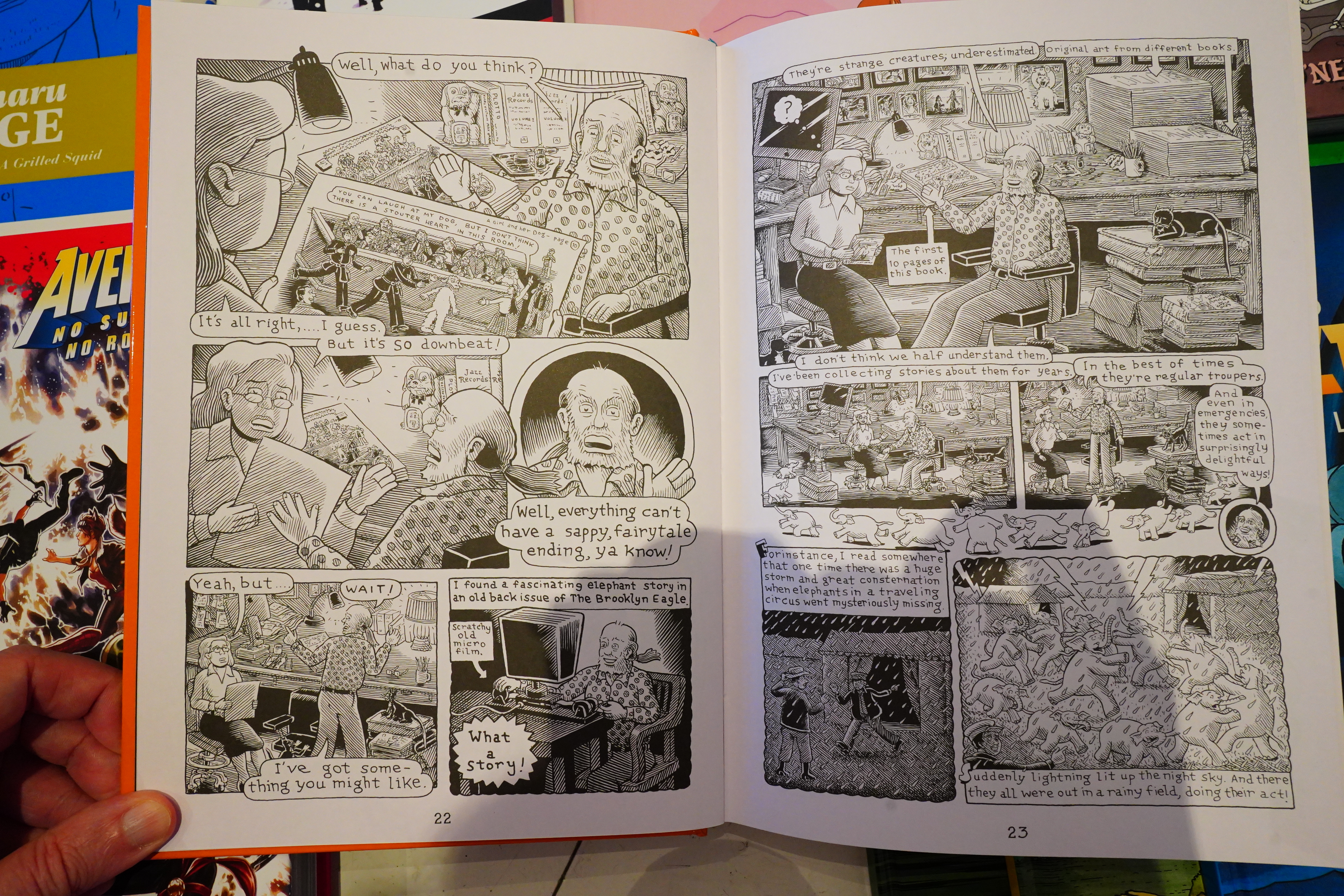
This is not another chapter in his mega-cycle about oldee tymey cartoonists and their creation, but is instead a kinda meandering not-really-a-story tied together by scenes of Deitch talking to his wife about stories (and her coming up with a story). It’s a thoroughly entertaining read.
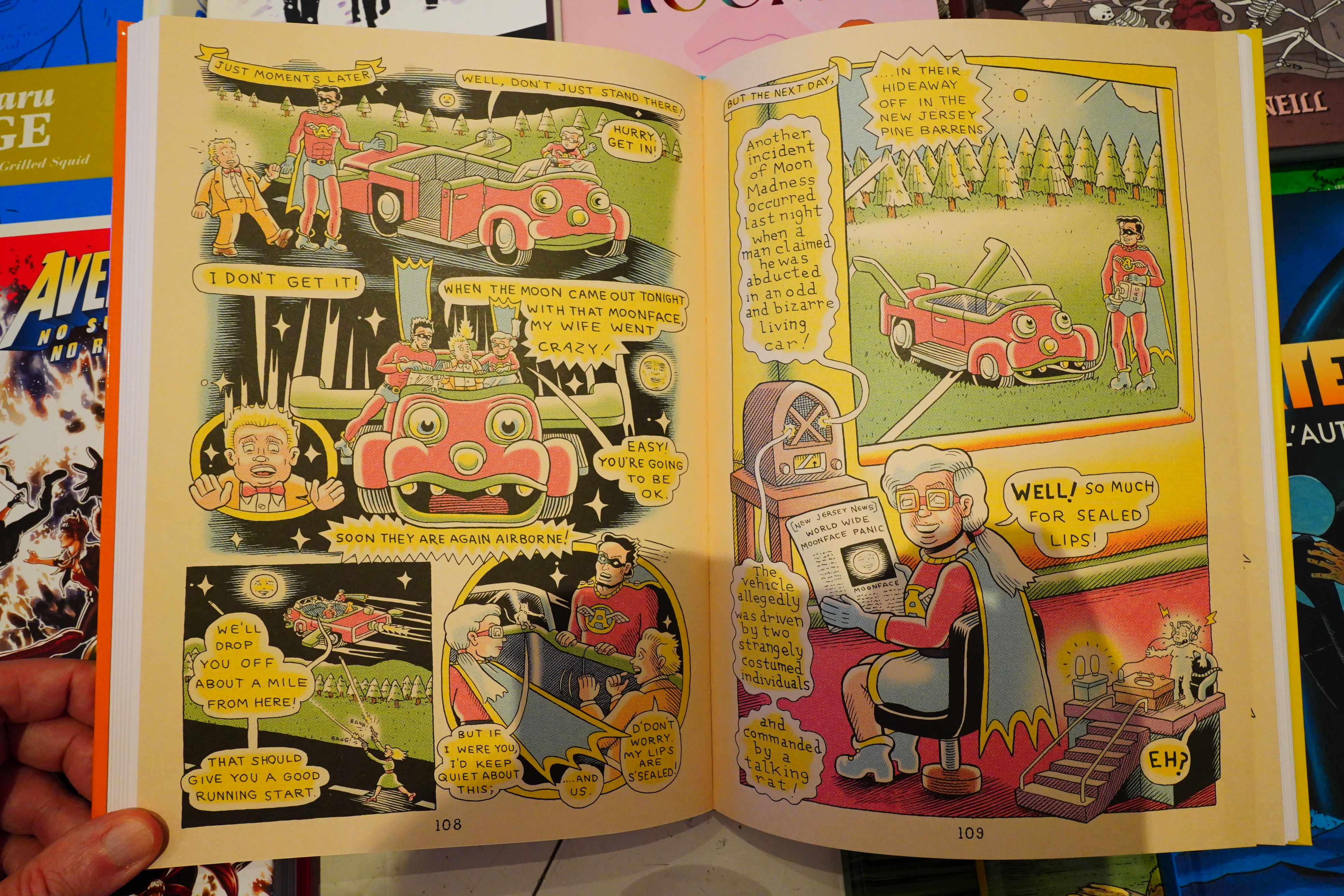
The main er “story” lasts for about a hundred pages, and then there’s an appendix of even more random stuff.
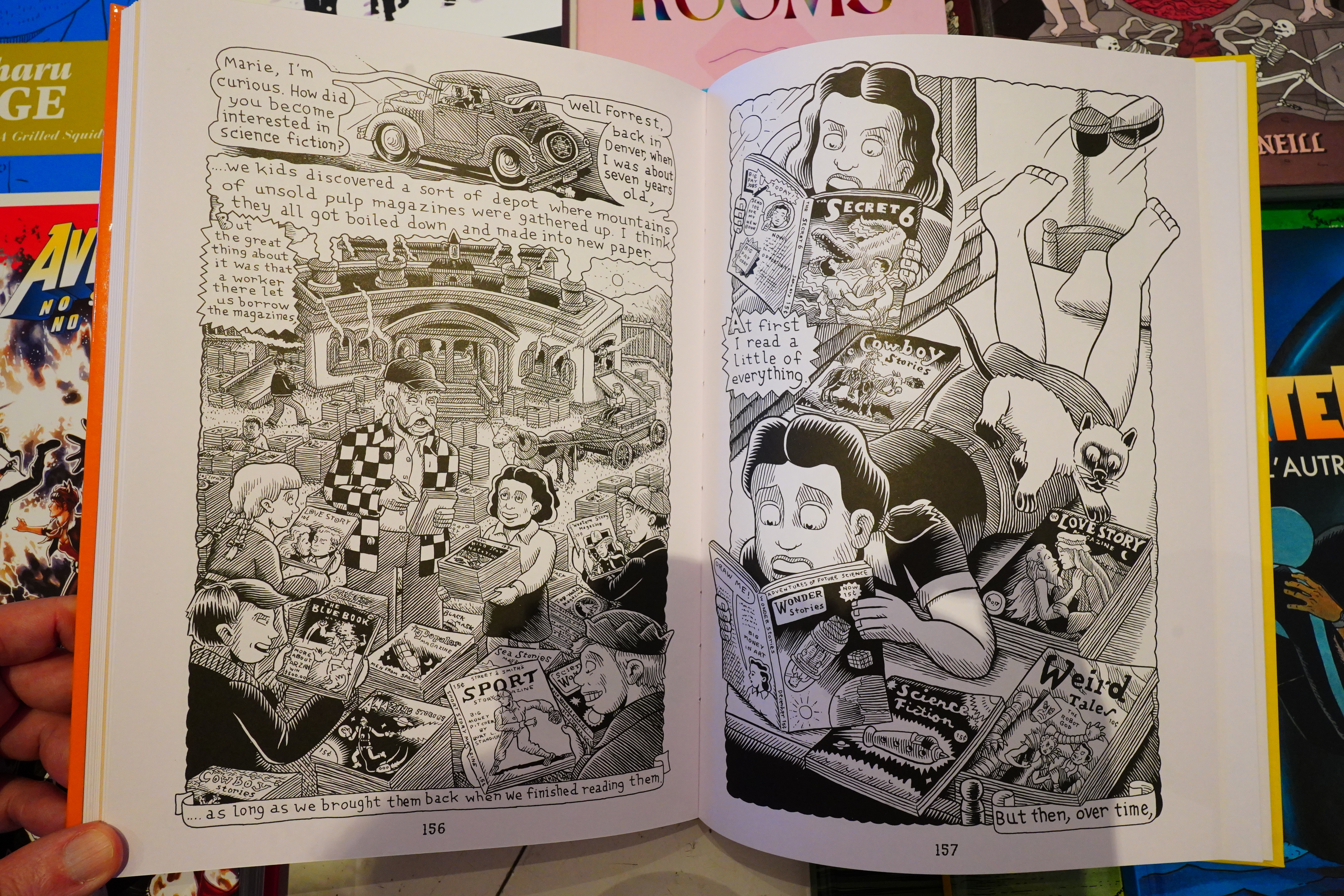
There’s just something incredibly pleasing about Deitch’s line. These pages are just a lot of fun to look at, beyond reading.
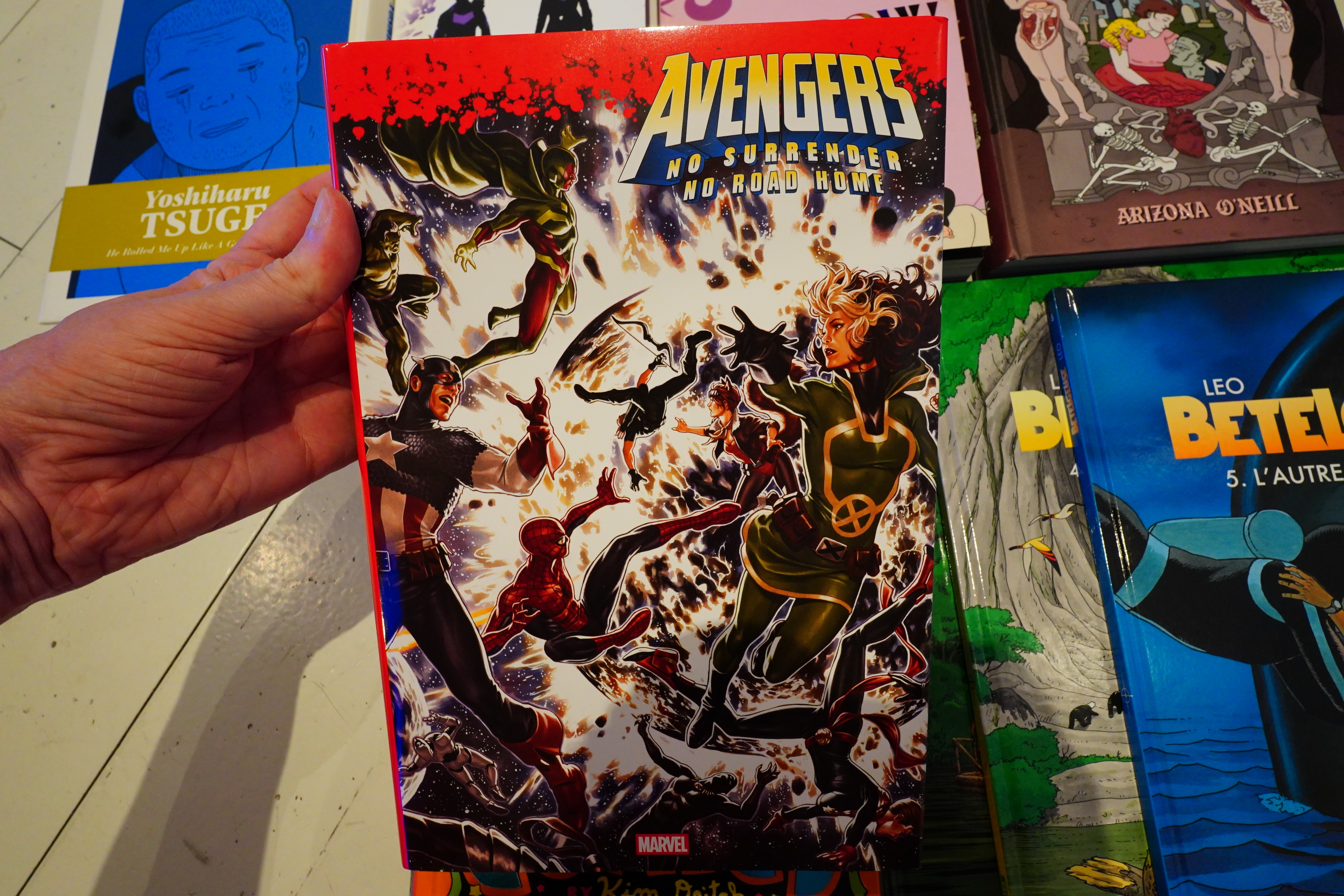
This is one of those huge omnibuses…
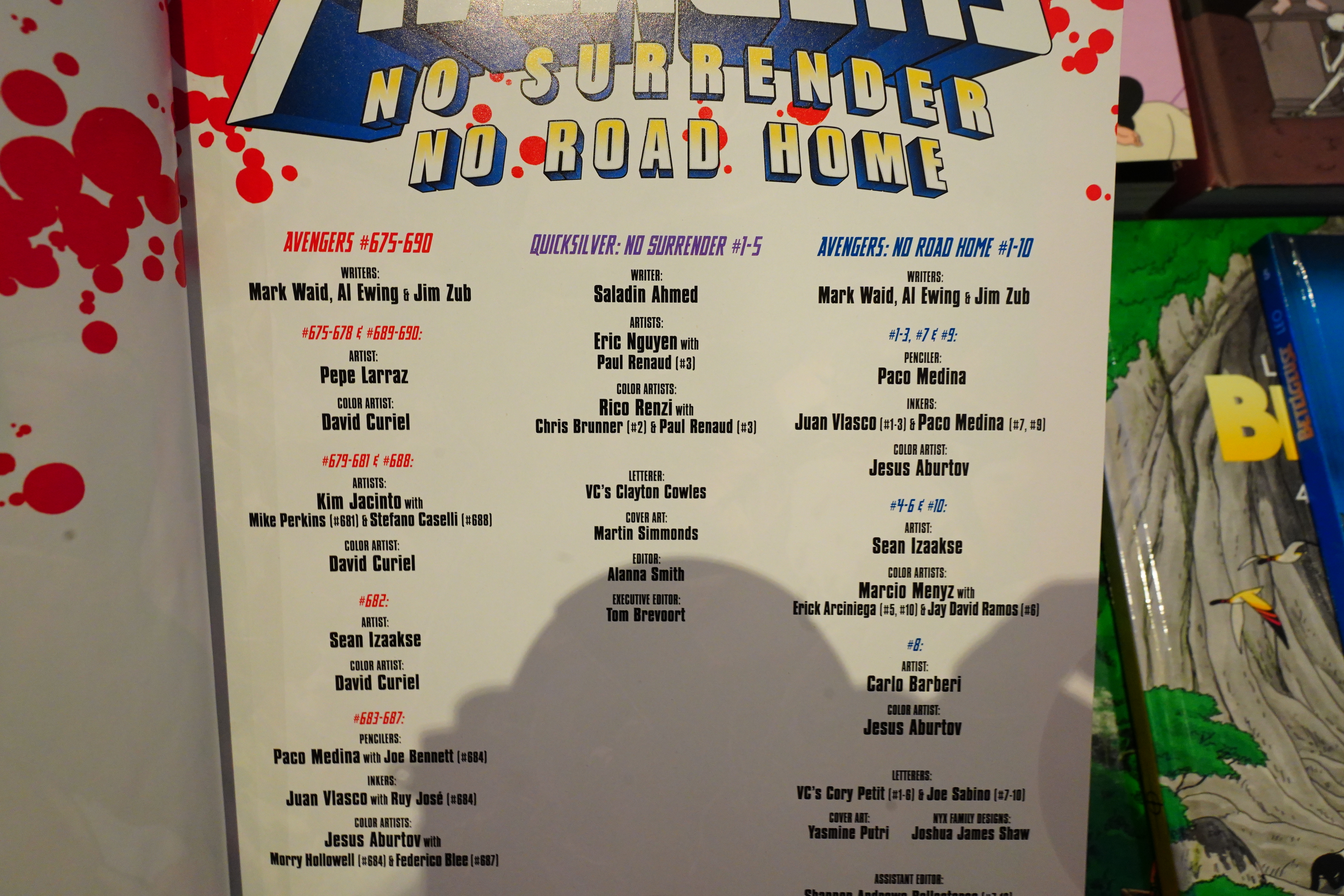
… and it collects these things, created by a cast of thousands. OK, dozens. A dozen?
Anyway, there’s so many writers here because Marvel had three (at least) ongoing Avengers series, but for a summer stunt, the other series were cancelled and the main series was published weekly for a few months. So all the writers from all the series converged on the main series…
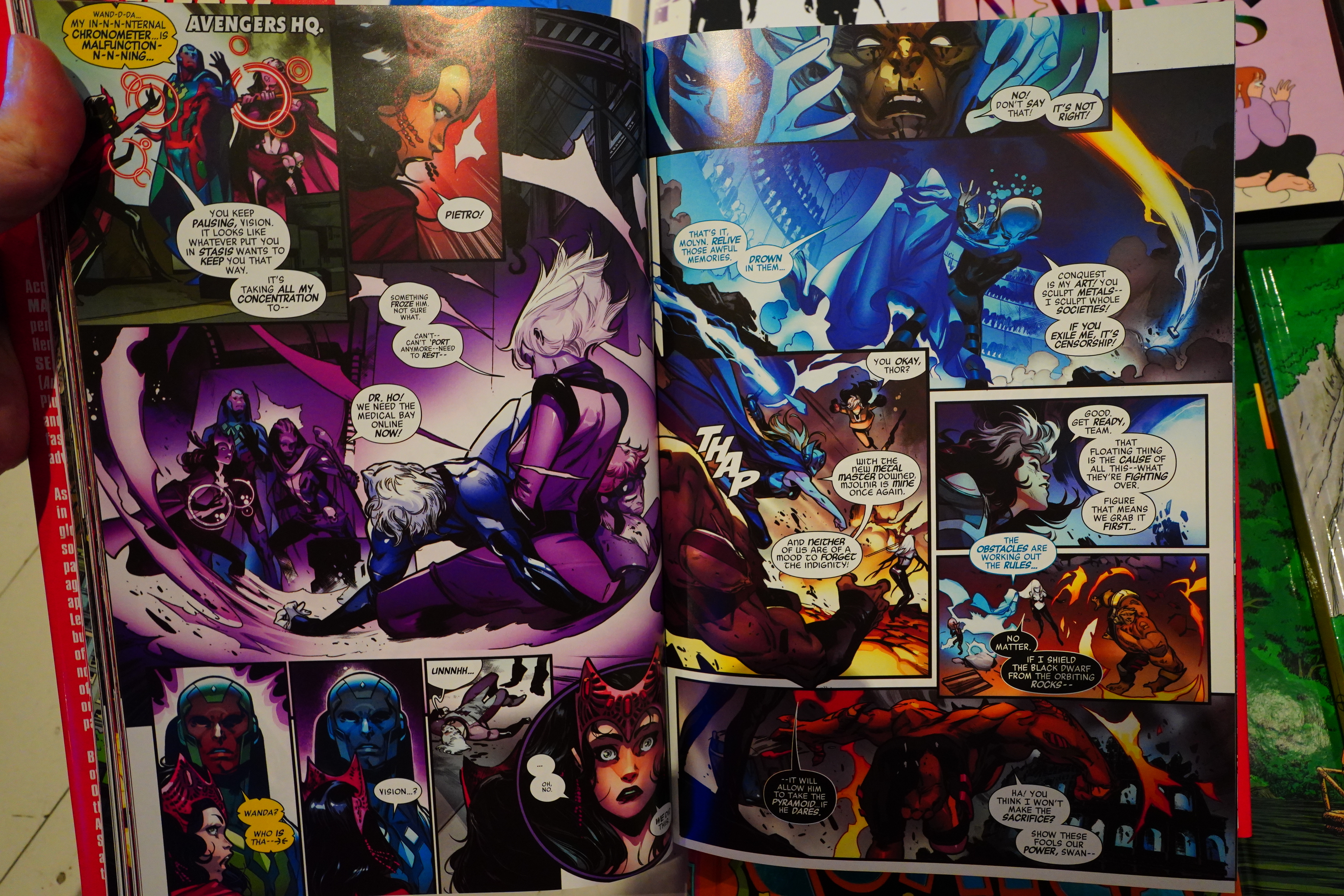
You’d think that’d lead to a totally disjointed, overstuffed mess, and… not really? It’s a pretty fun read.
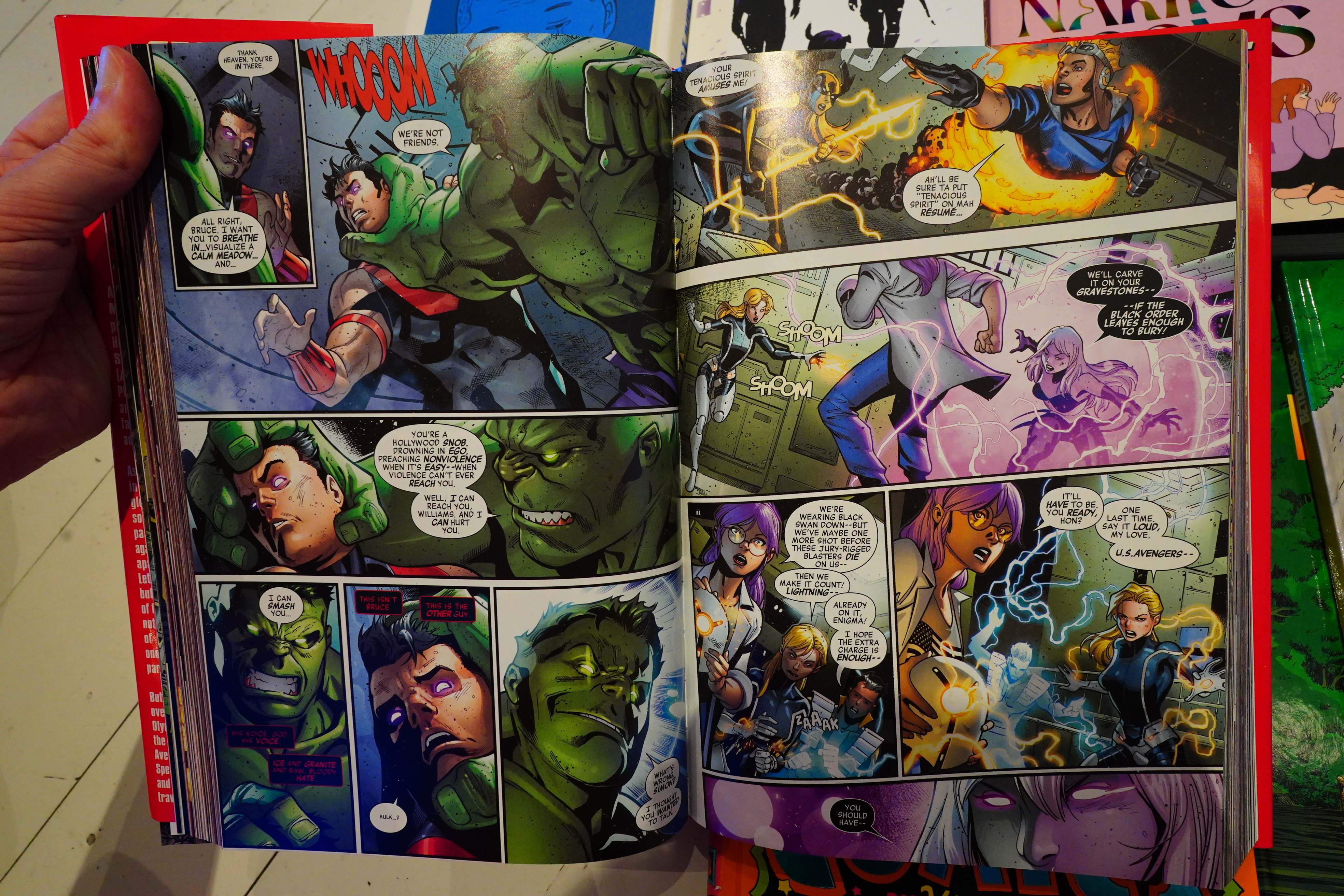
It’s got something going on. I enjoyed reading this, even though it’s pretty stupid.
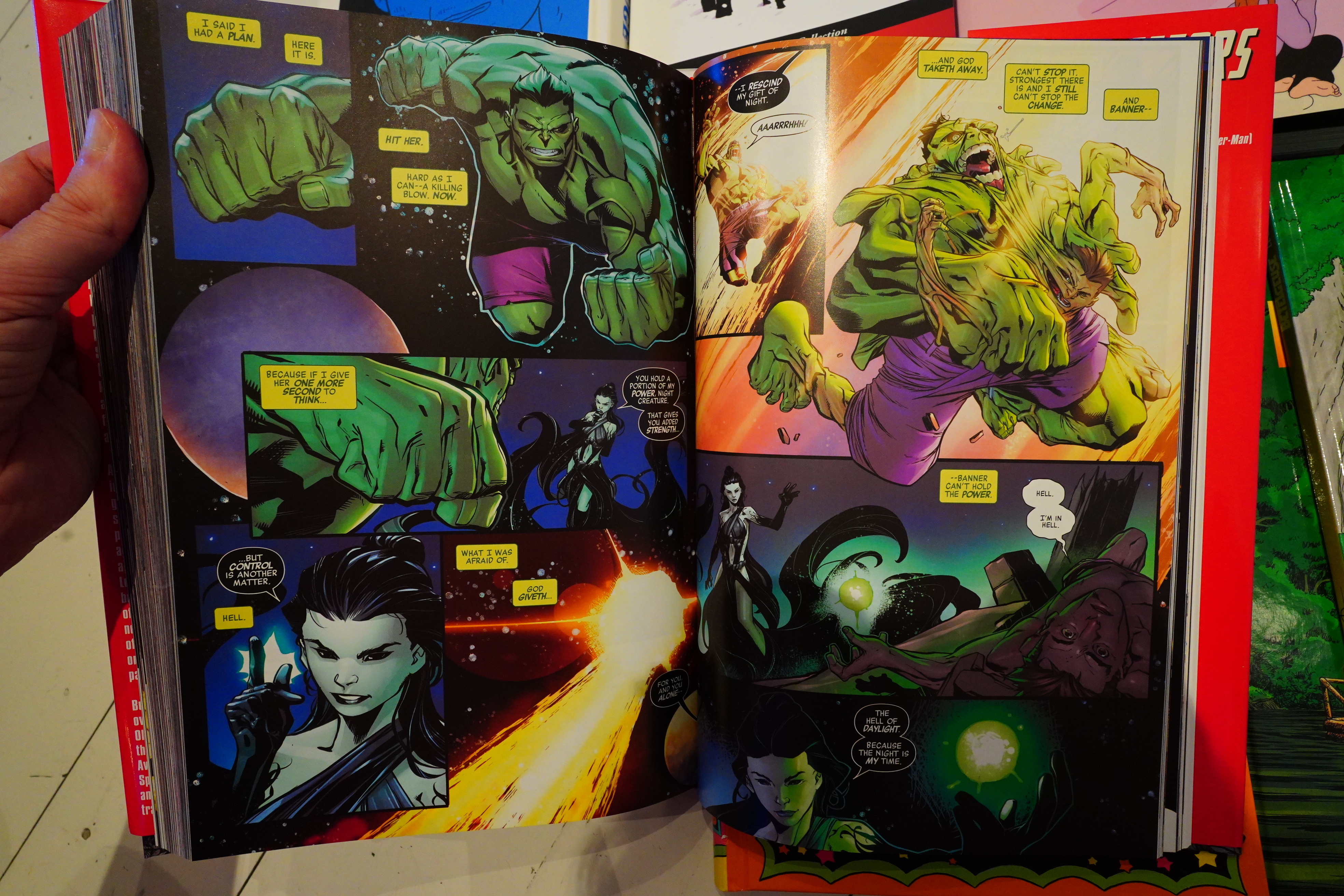
Apparently other people also liked it, because Marvel decreed that there should be a followup a couple years later. So the three writers descended again and produced an unreadable mess. The followup series is just so bad. Incredibly awful.
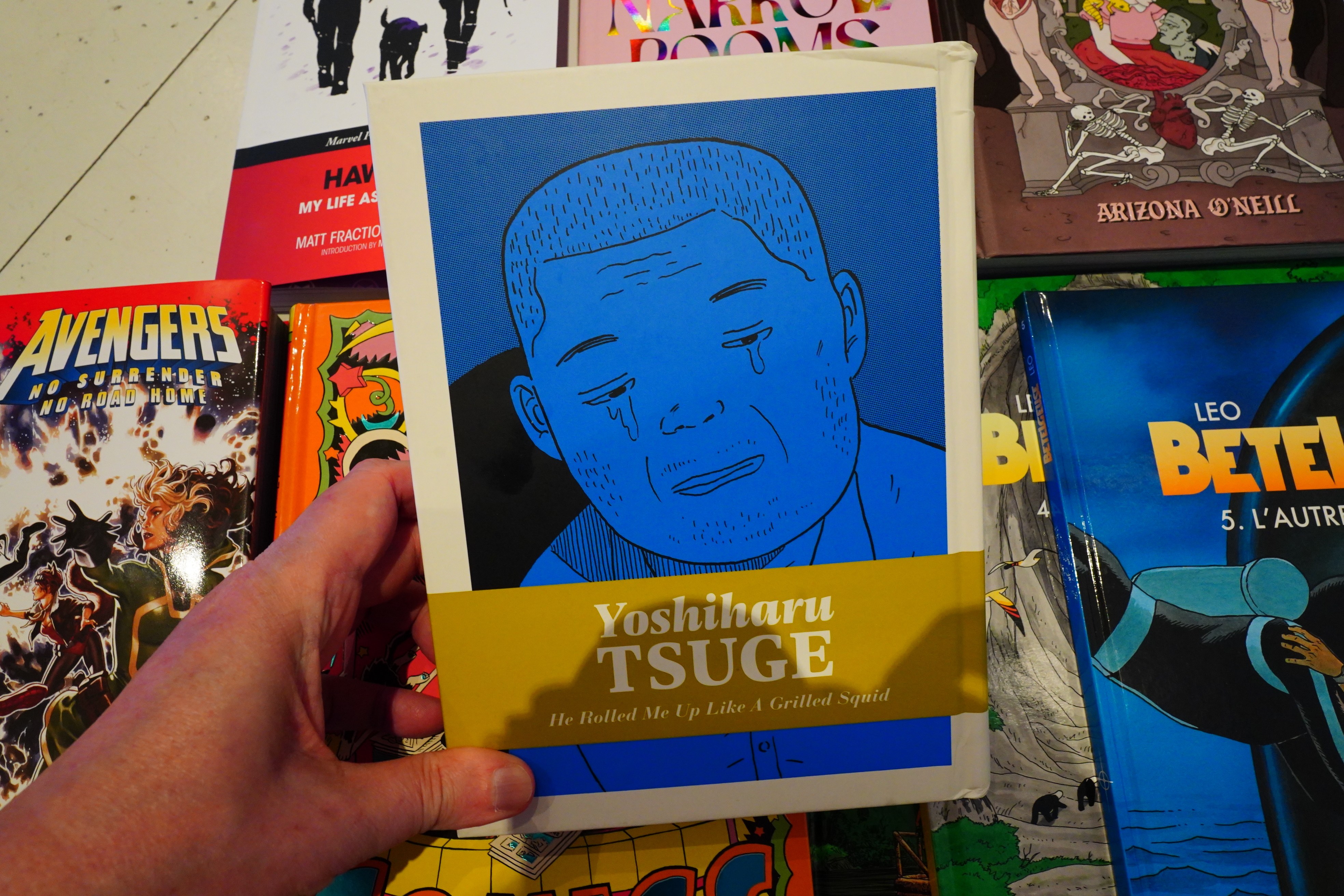
D&Q’s Yoshiharu Tsuge series continues…
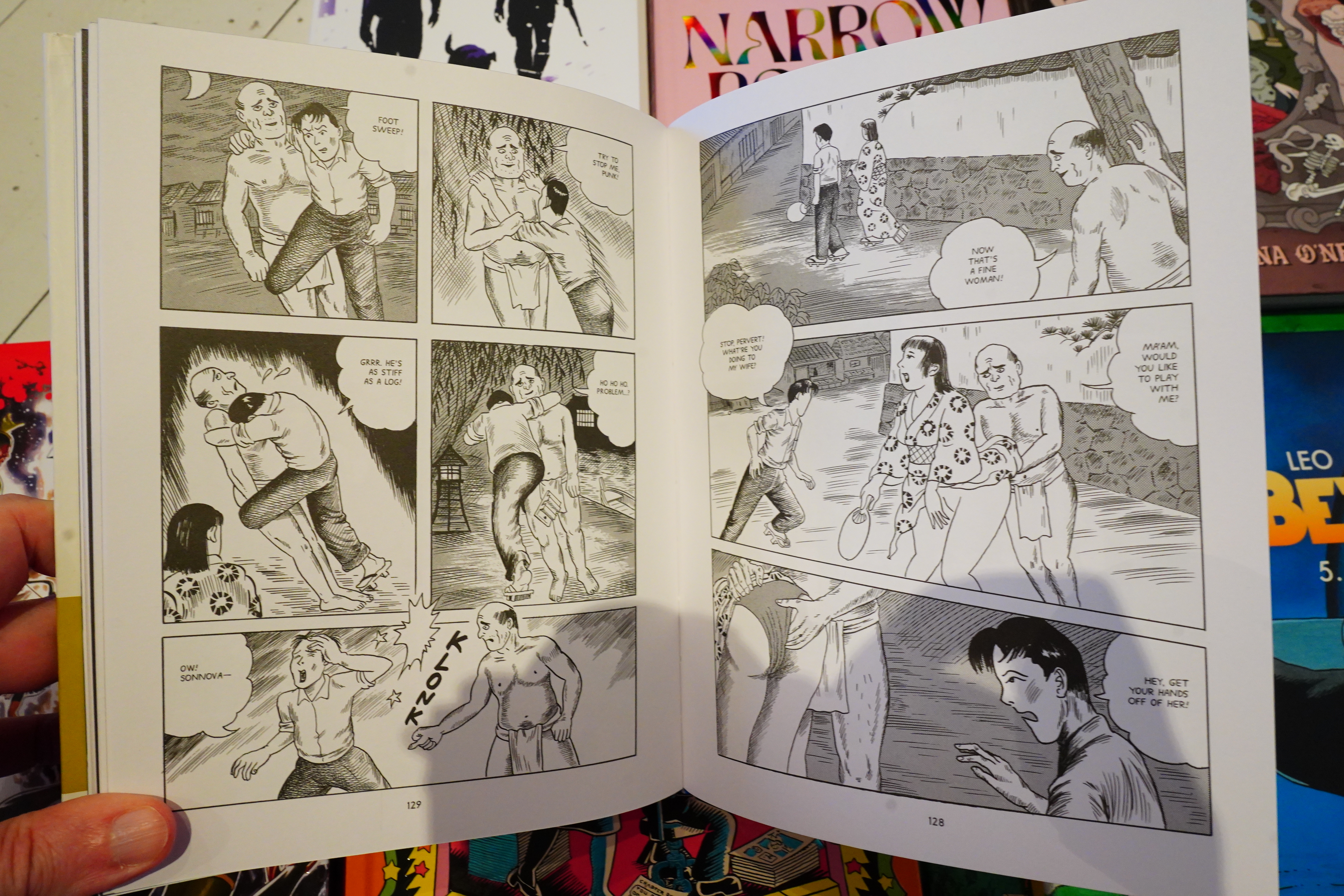
This is not Tsuge’s best work. Many of these stories just feel like he’s done them before — and that goes for most of the dream-like stories (like above).
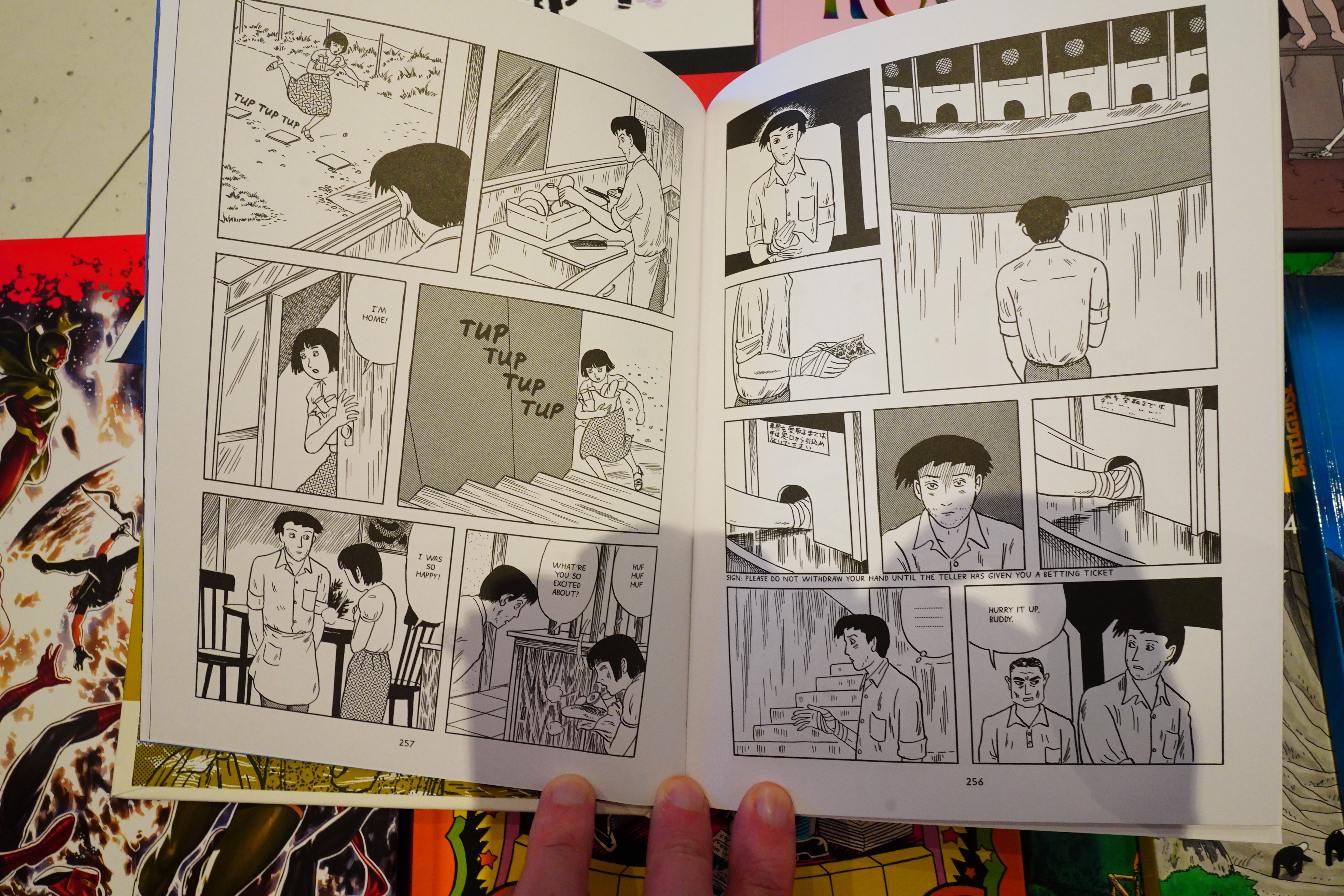
On the other hand, the autobio stories (well, I assume they are) still seem pretty fresh.
So it’s a mixed bag, the good stuff is good.
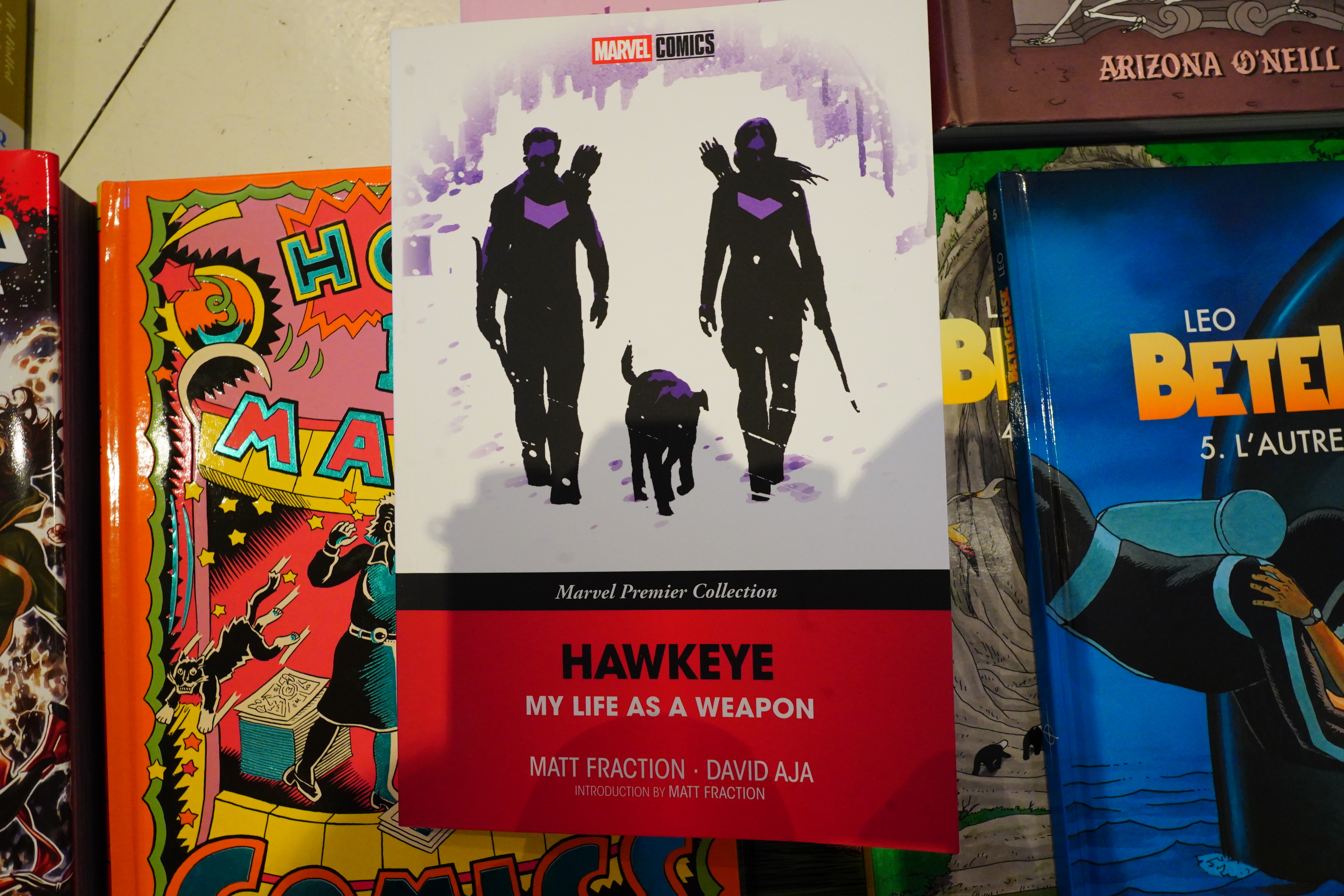
This is the first of these collections I’ve bought — “Marvel Premier Collection”. They’re slightly smaller than standard size, and are printed on matte paper. So I guess this is Marvel’s response to the wildly successful DC Compact series of books?
I think the format is better than DC’s — I think the Compact books are even smaller than this? Which makes the lettering hard to read (at least for me). But it’s not perfect — the gutters are too narrow, the spine is too stiff, and they’ve put that horrible, horrible phtfalate “soft touch” stuff on the cover to make it classée, but that just makes your fingers recoil in horror.
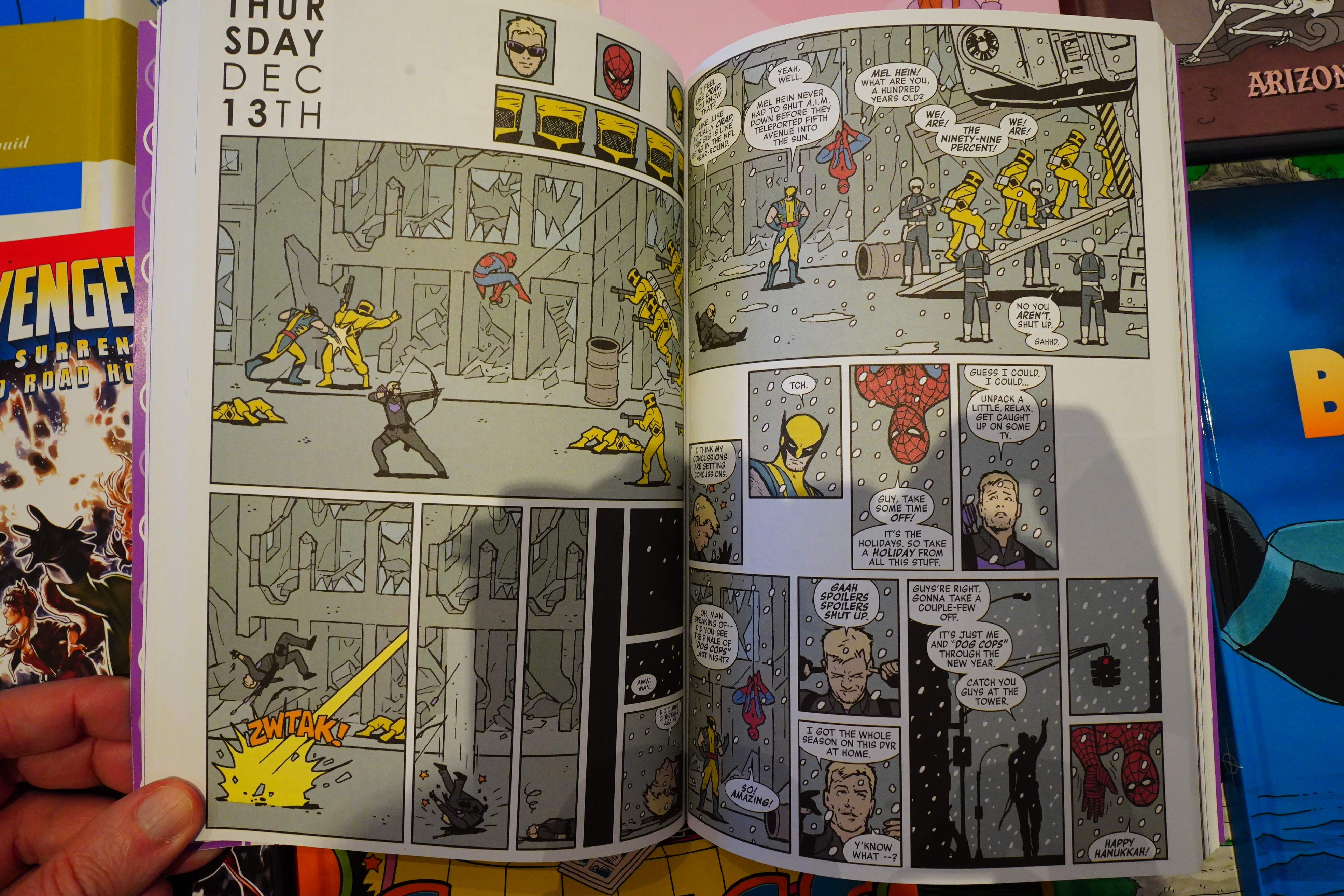
Anyway, I’ve read some of these comics before, but I was late to the Fraction/Aja Hawkman, so it’s fun to finally read these comics in order now. Fraction and Aja was having a lot of fun in these issues, and it shows. (Sometimes it feels a bit like Fraction is going through Understanding Comics, page by page, to use all transitions described there, though.)
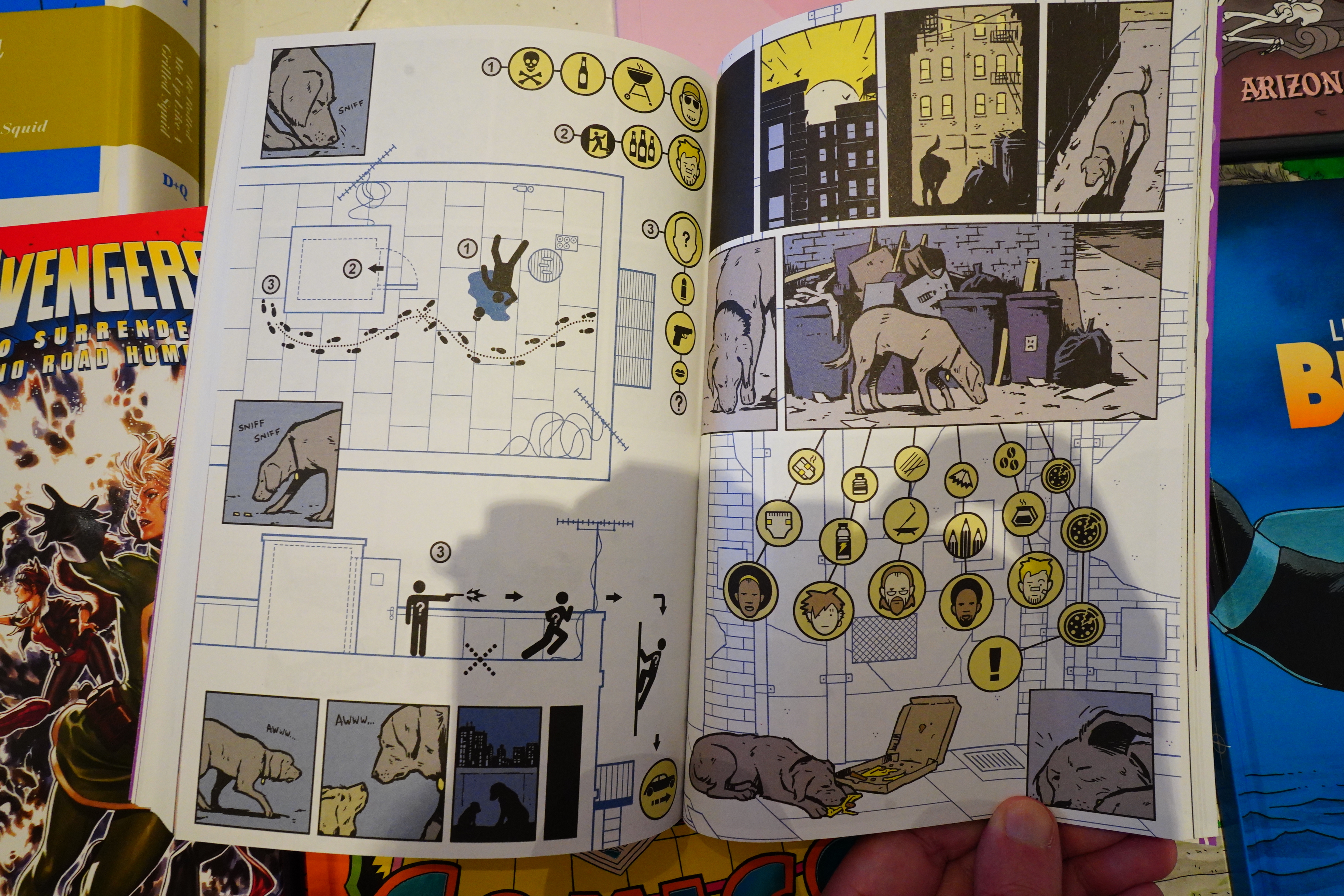
But it’s fun and inventive. So something like this would probably not get published by Marvel these days — it has way too much character.
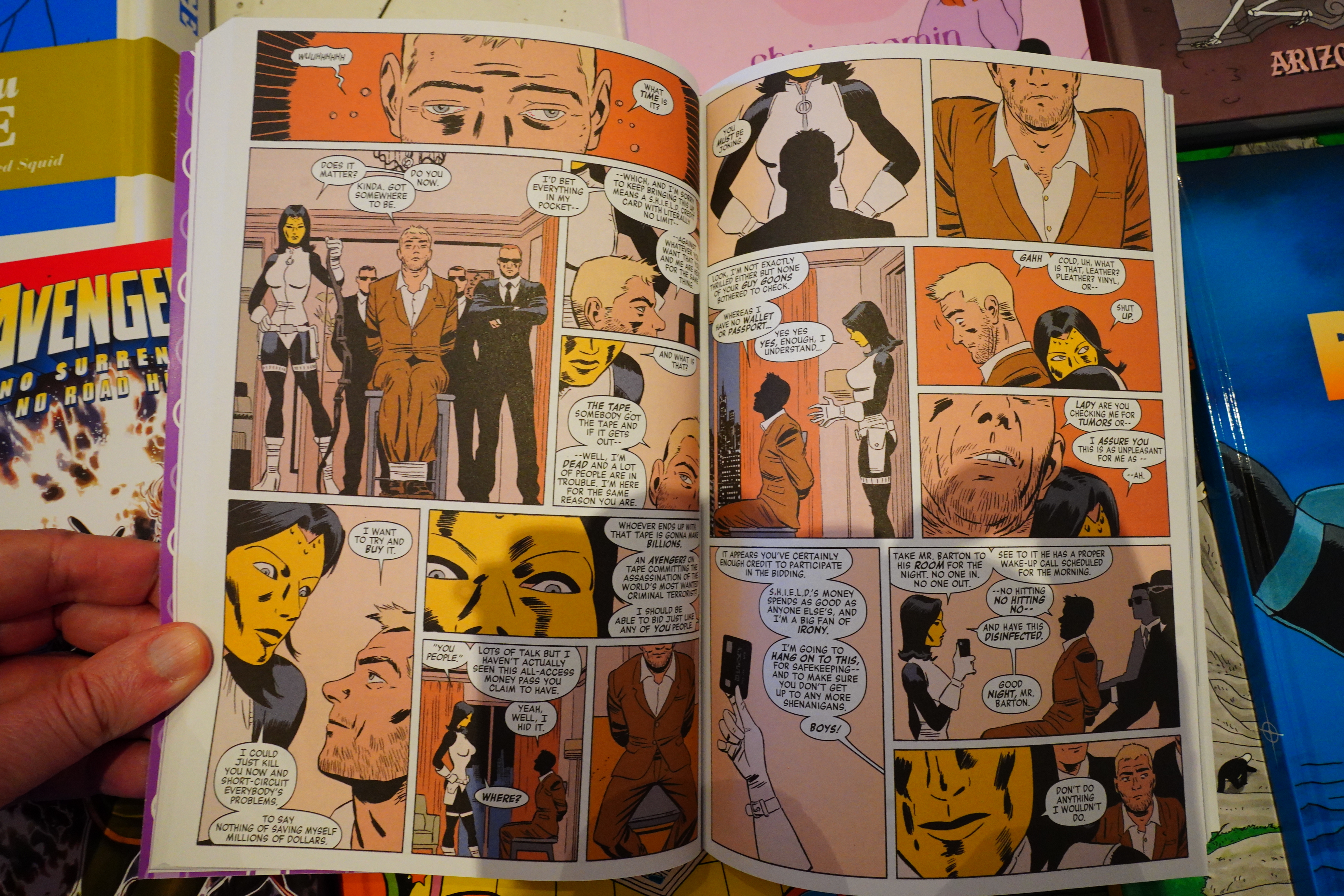
But… even back then, they apparently didn’t leave the creators be. So almost half these issues are drawn by fill-in artists, which makes for such a jarring read. Didn’t Marvel even consider that this could have become a perennial seller in the paperback edition? With all these fill-in issues, the book just loses drive and becomes kinda aimless: Whenever you get to a fill-in issue, that feels like a perfect place to put the book down and then forget to start reading it again.
Such a waste of a perfect opportunity for making something memorable.
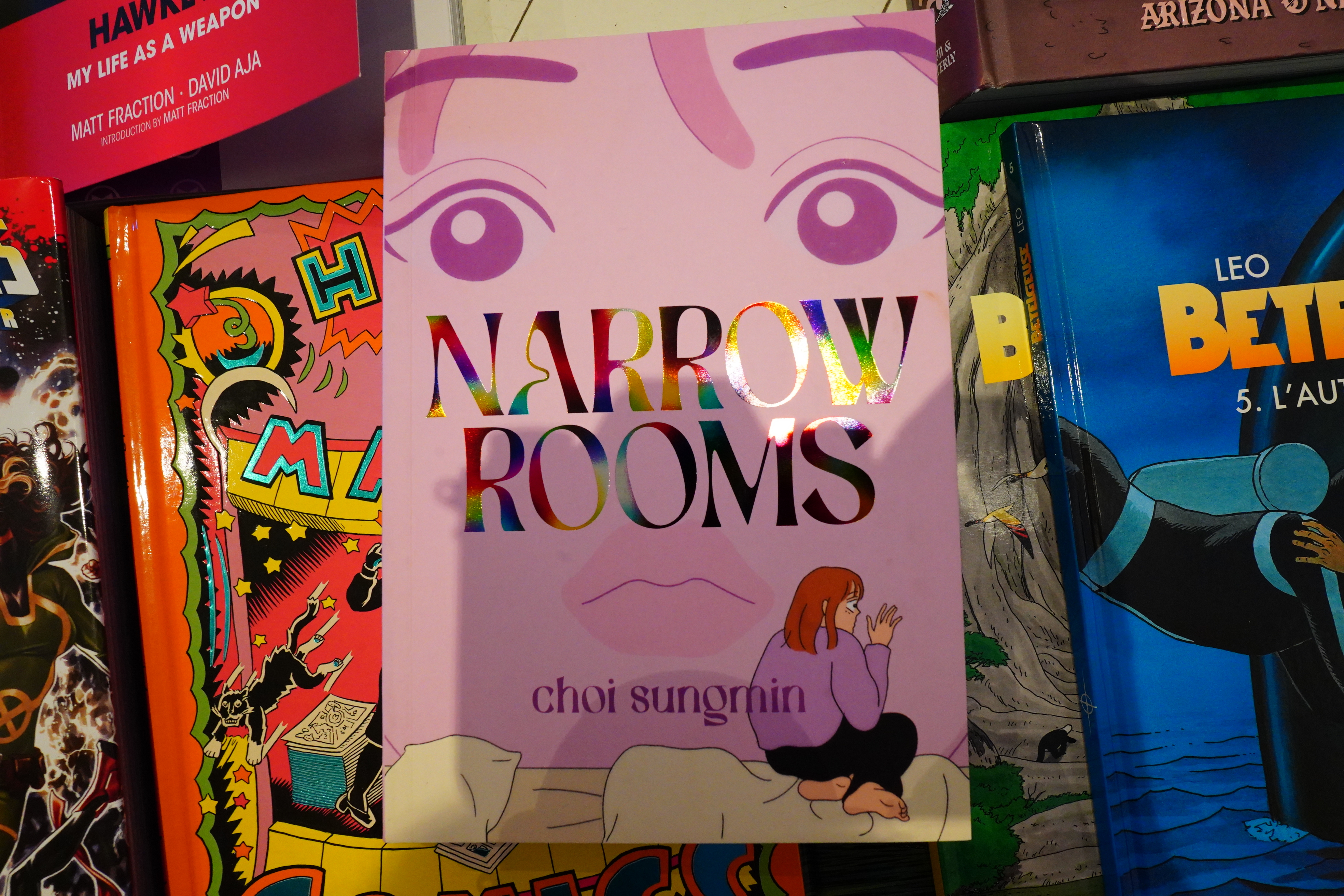
This is a Korean book about art school students, which feels like a genre that we’ve perhaps seen way too many books of in the past few years.
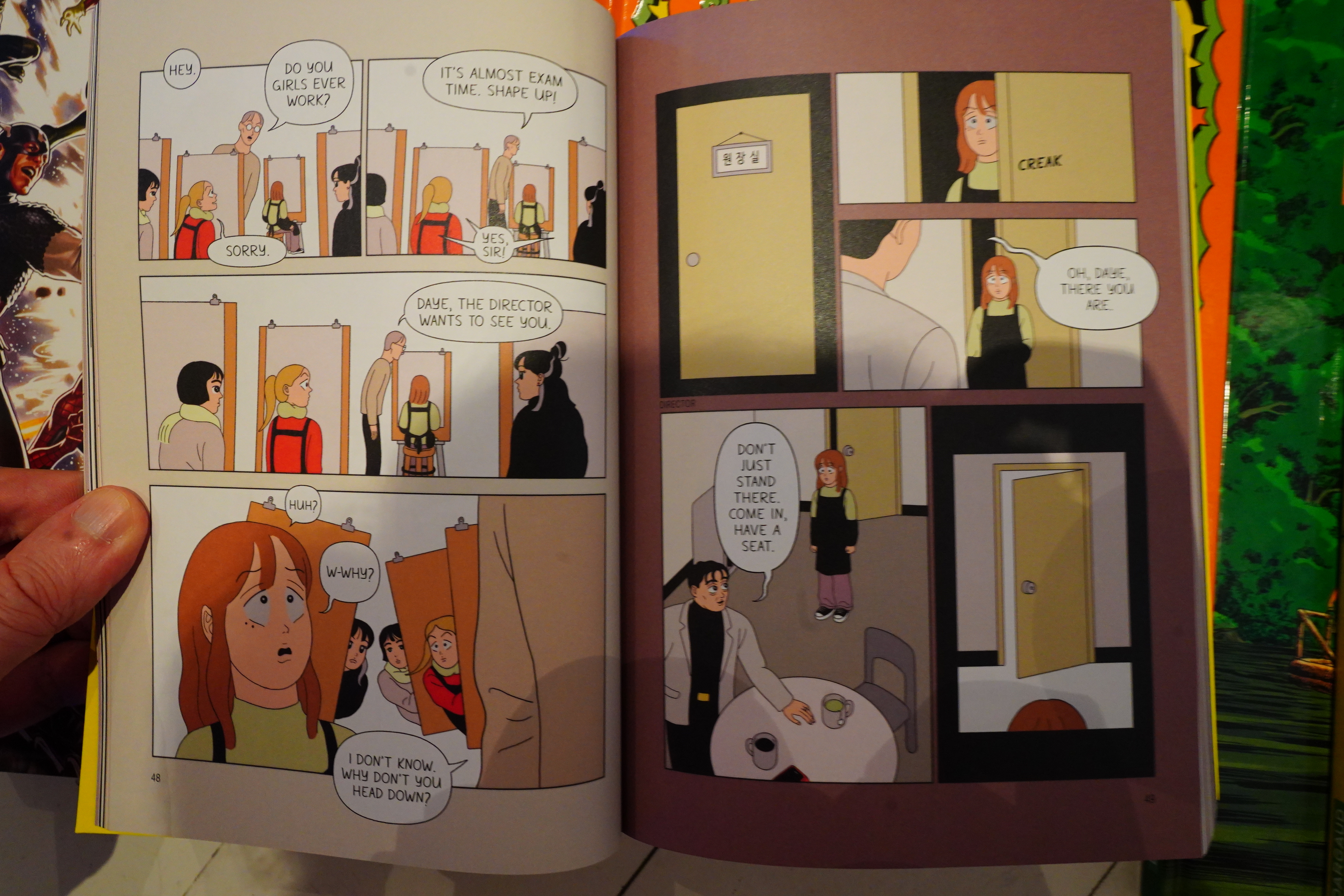
And I have to say that this artwork doesn’t do anything for me.
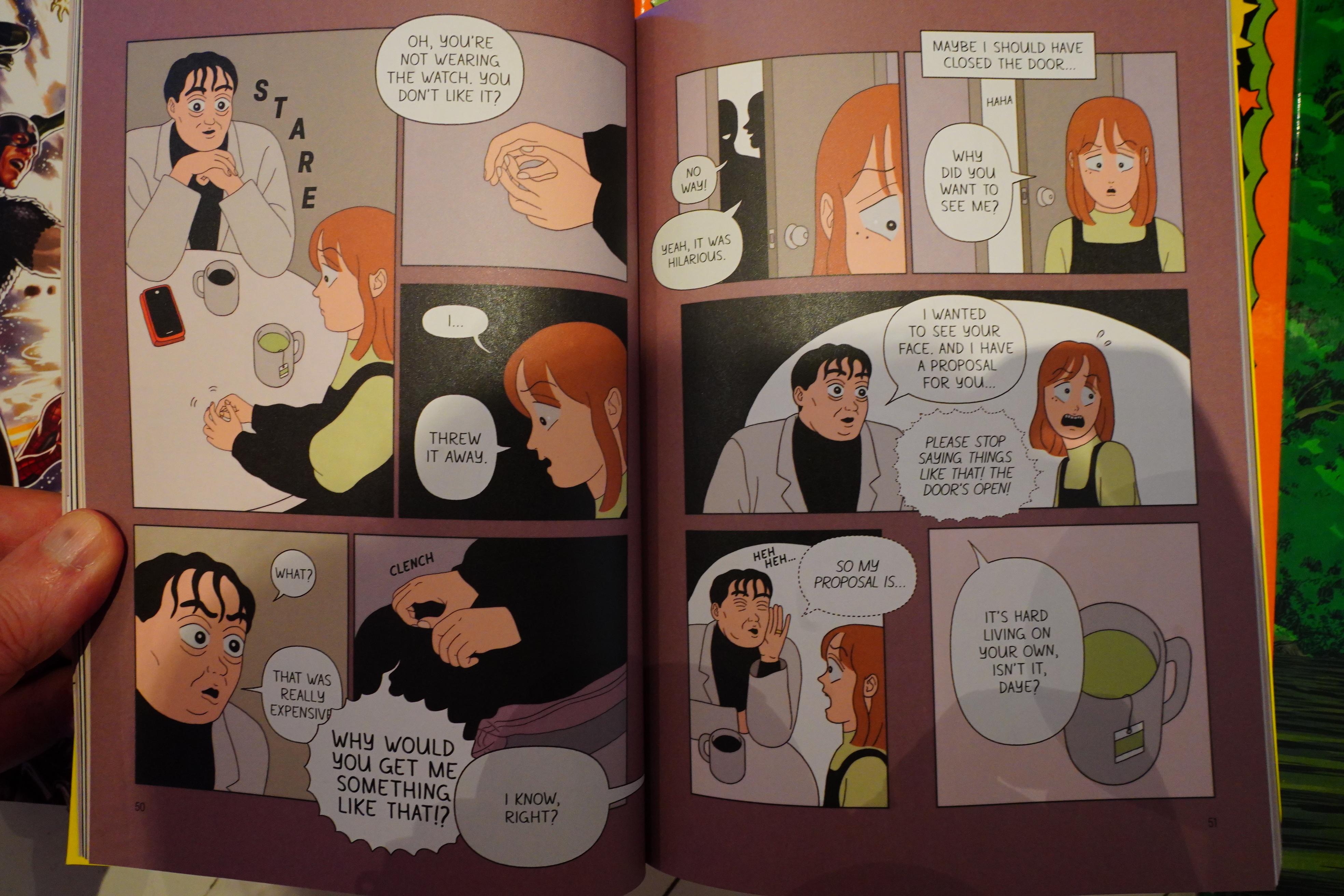
So I was starting to thing that I was going to ditch the book after having read some dozens of pages…
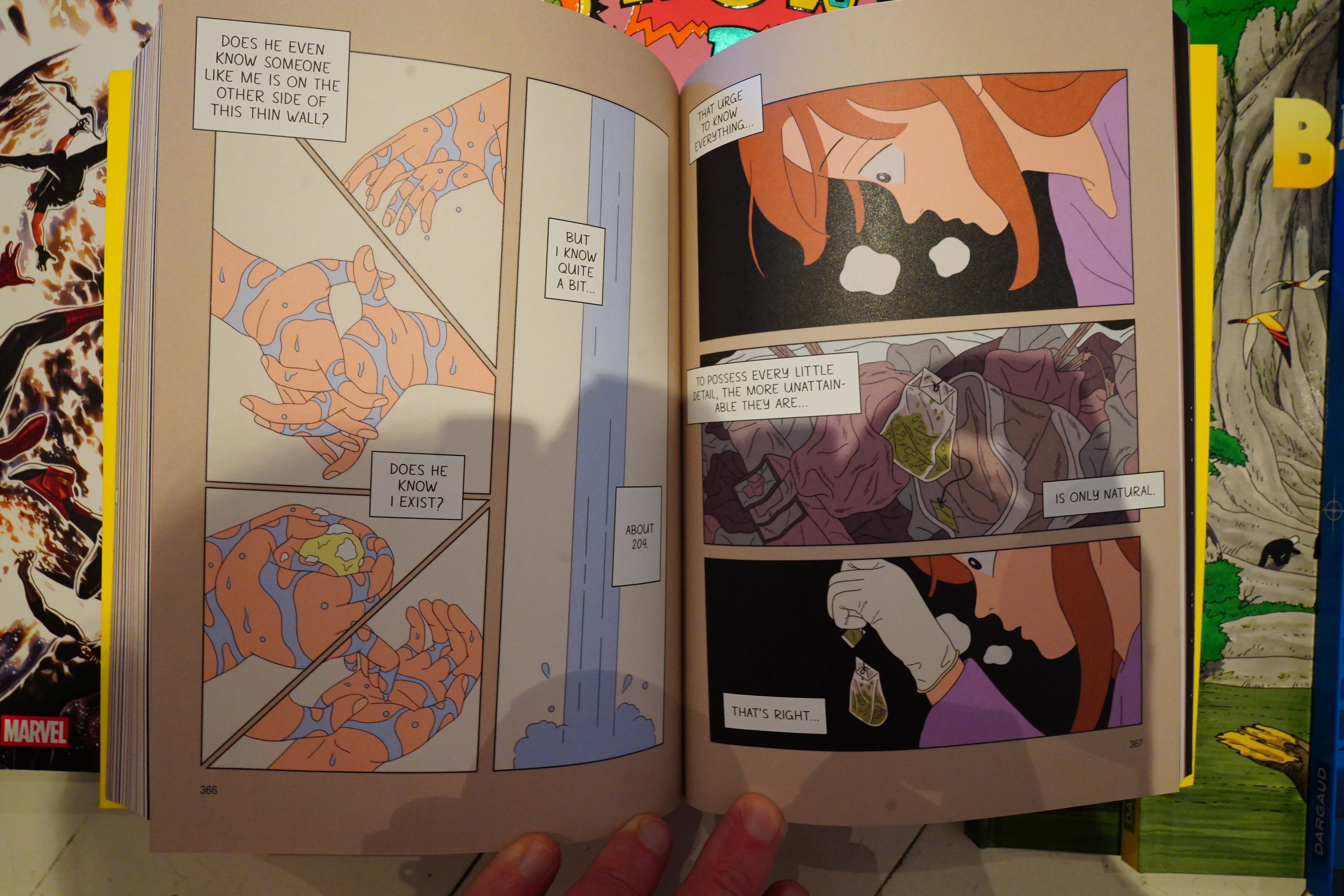
… but then I found myself pretty engrossed in the storyline, which is about obsession, mostly. And it has a solid ending. So that was surprising.
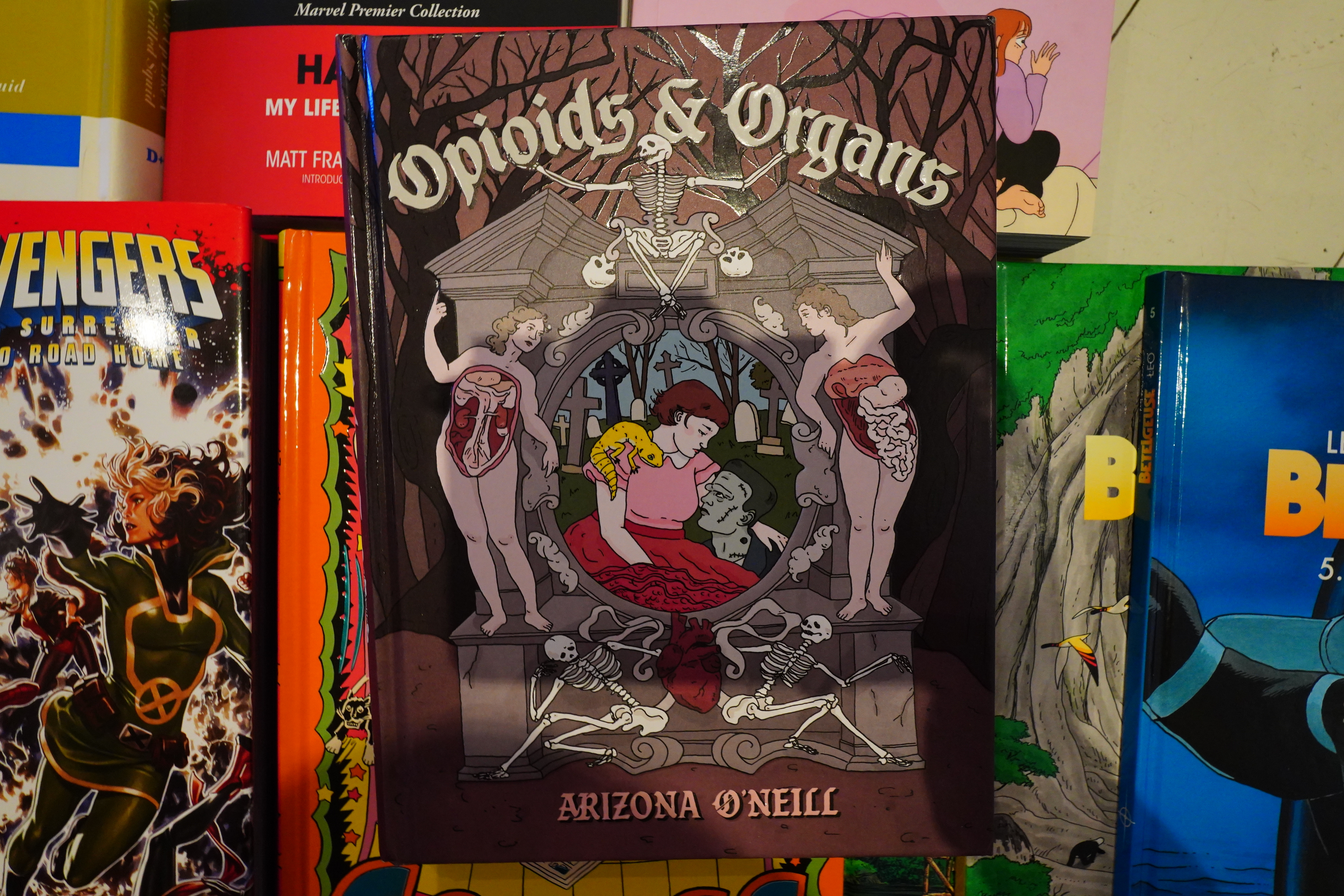
I almost never read reviews of books that I’m going to read, but I found myself reading Ryan C.’s brutal takedown of this book.
D+Q […], which has seen them trade in their heritage of groundbreaking, experimental work in favor of a slate heavy on narratives of trauma-turned-triumph/canonization-through-victimization that started as a disconcerting trend, but has slowly morphed into something akin to a cynical, demographically-targeted “strategy” that’s just gotten REALLY fucking tedious.
Which I totally agree with! However, reading the review, it just sounded… odd. I mean, his objections to the book sounded to me like were already present in the book itself.
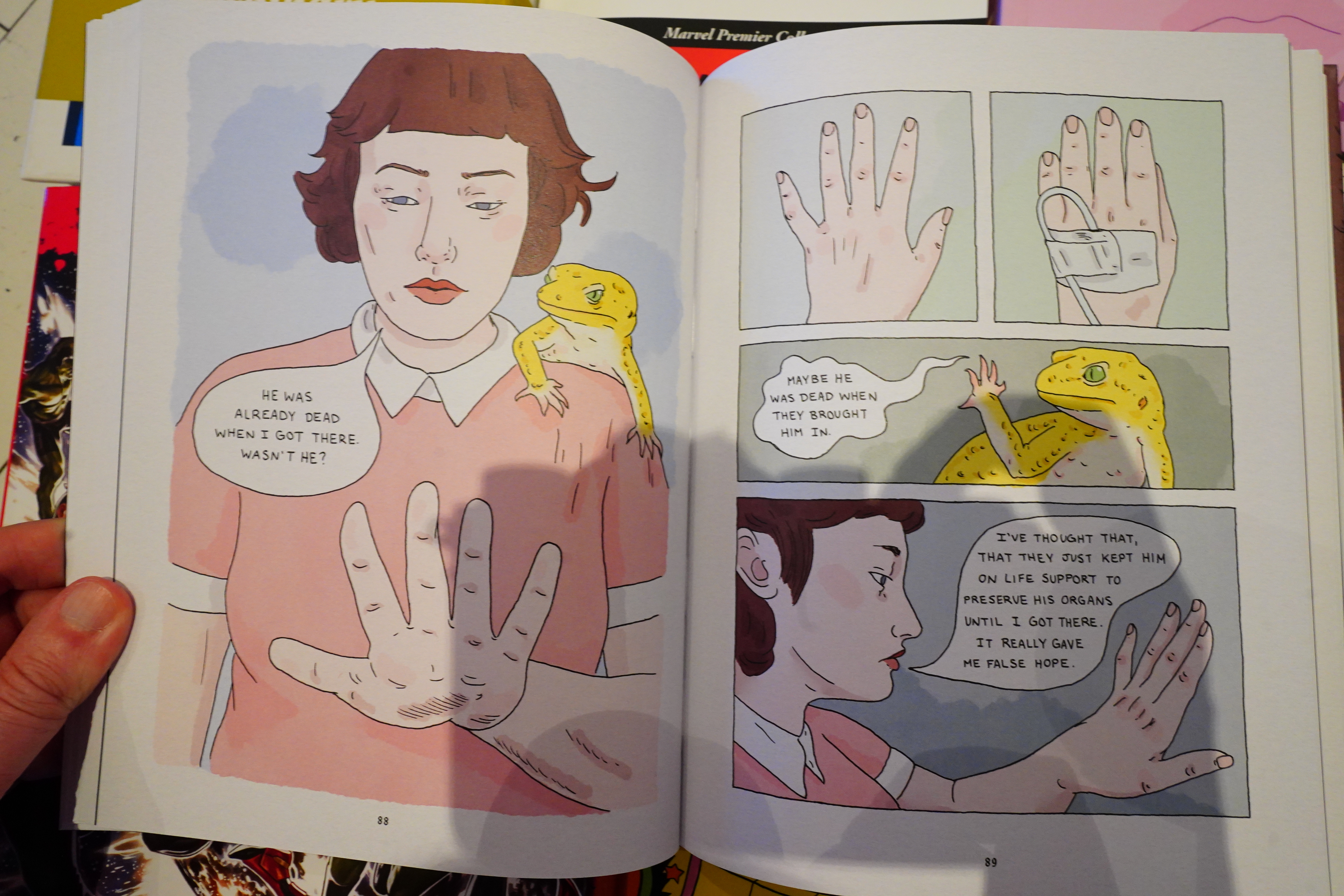
And I was right! This is not some kind of heartfelt trauma dump book, but is instead about the author’s confused and conflicted reaction to signing the organ donation sheet for her father who died of a fentanyl overdose. It’s super analytical and doesn’t ask for sympathy even once.
She uses the experience as a springboard to talk about how the opioid epidemic has made lots and lots more organs available for transplantation, and talks about how this is part of a long history of organs going from one demographic to another, which is interesting. And then, of course, there’s a conspiracy angle:
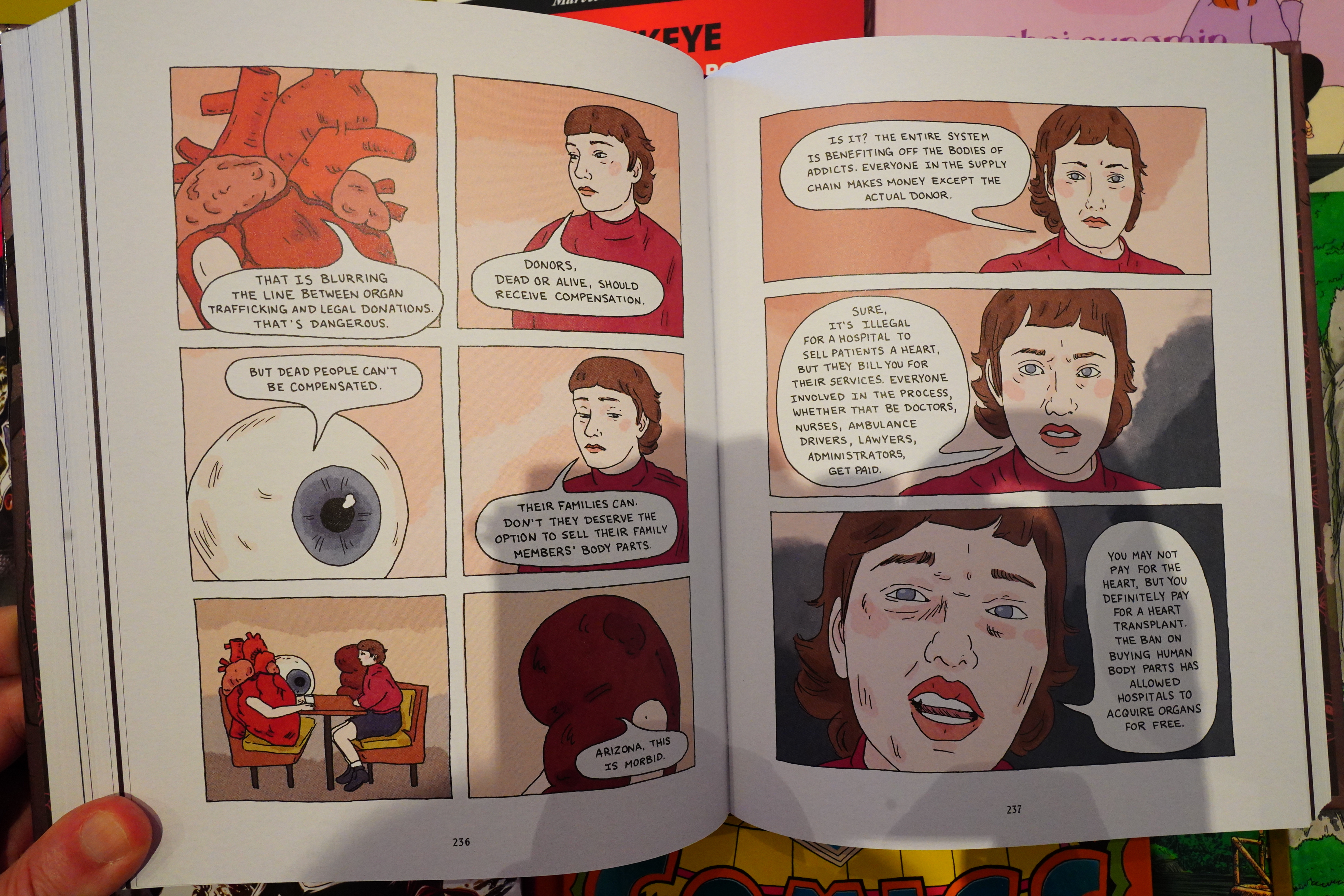
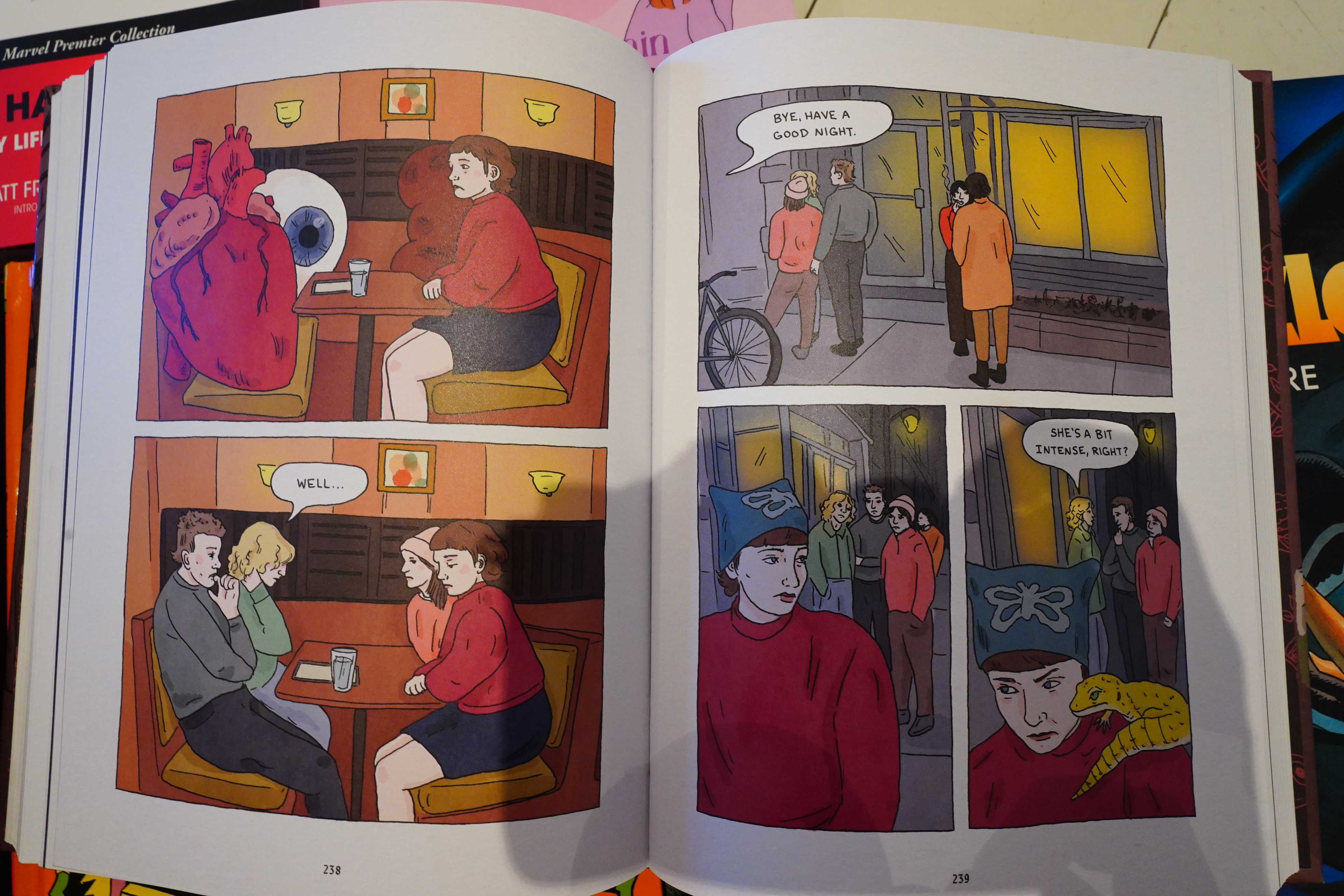
Hilariously depicted in this sequence, where (repeatedly) her friends treat her like she’s totally insane when she spouts these theories (note the silent panels). It’s also refreshing how she doesn’t insist on anything beyond her own confusion — is she making fun of herself? Is she saying these things seriously? We don’t know, and that’s wonderful.
So I have to say that I haven’t seen a misreading of a work on this level since R. Fiore’s takedown of Invisible Ink by Bill Griffith, and that one was pretty jaw-dropping.
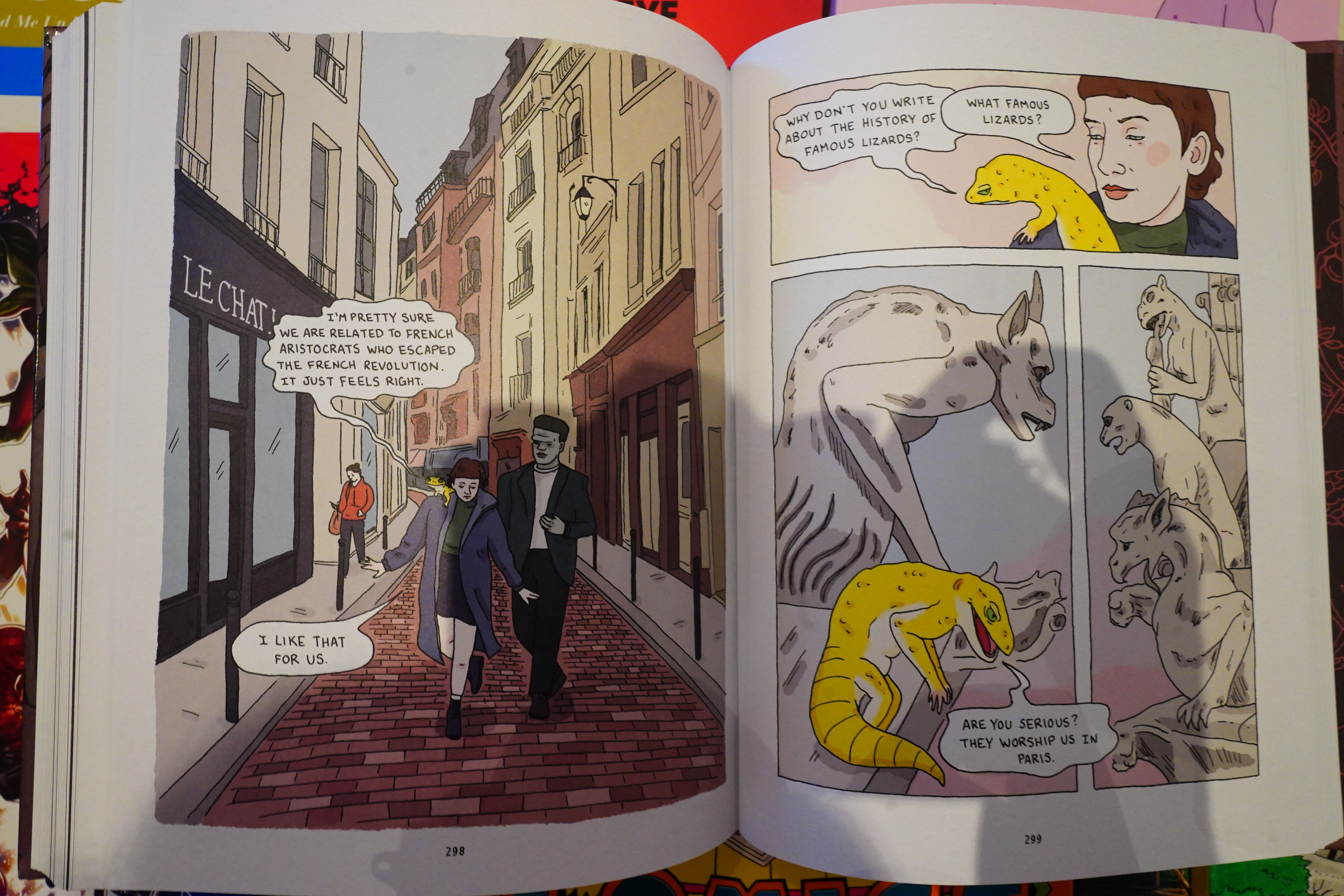
The artwork is obviously very photo referenced, and sometimes it leads to very awkward pages, but I found the artwork to be quite compelling. And her storytelling really works — the book flows very nicely.
My only real criticism here is that the book kinda peters out. The final section with the scenes from the Paris catacombs was good, but it really didn’t seem to have much to do with the rest of the book, and could just as well have been published as a separate work.
OK, that’s it.