
This was apparently published without a dustcover? This edition is from 1975, so that’s kinda unusual, isn’t it?
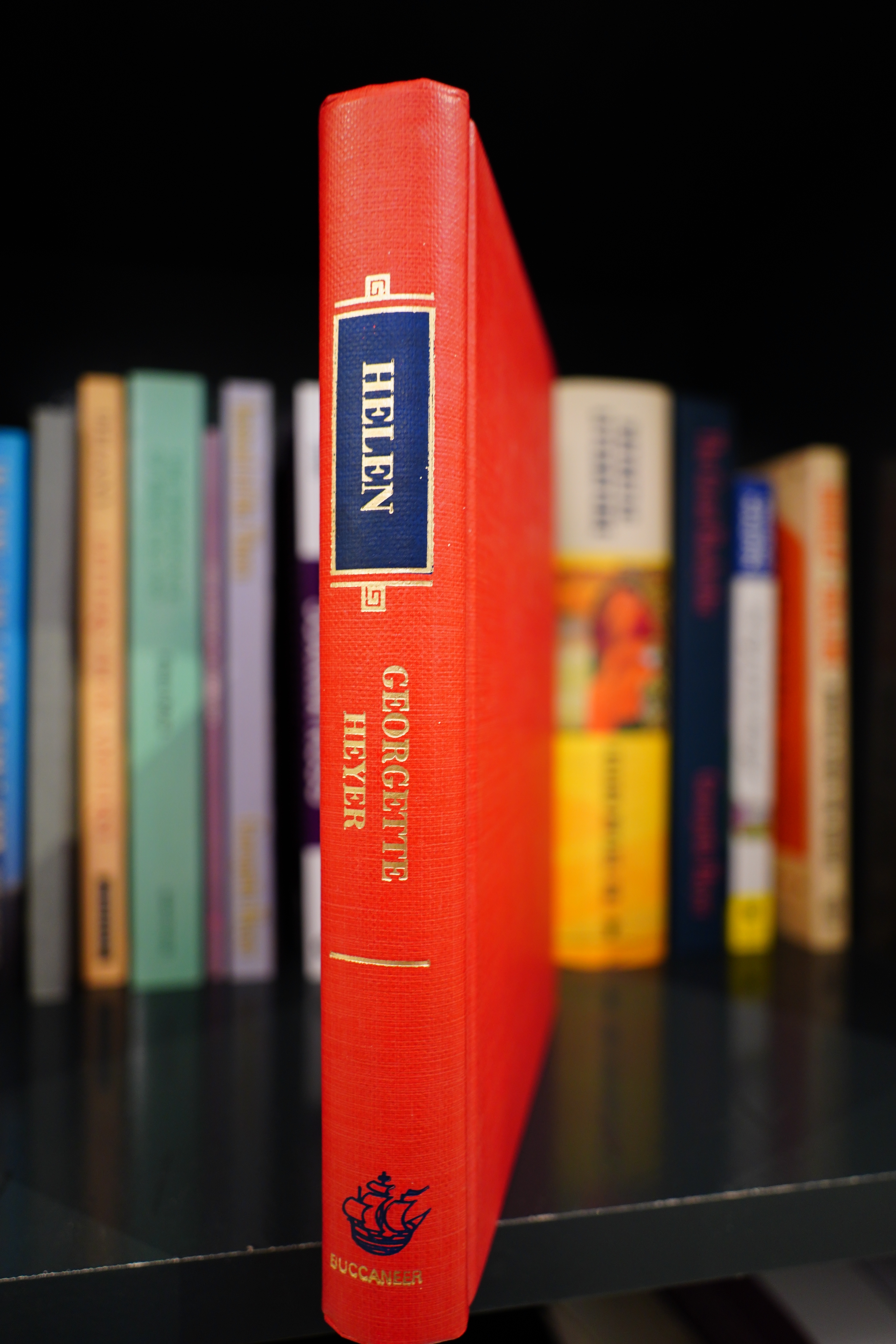
Anyway, this is one of those dreaded “serious” novels Georgette Heyer tried to write. Heyer is, of course, deservedly famous for writing Regency romances — I guess she’s commonly held to have invented the genre? I’ve read all of them, and most of them are indeed very, very good. (Hm… I should re-read some of them, really…)
She also wrote mysteries, and they’re… so-so? Her mystery formula is to have everybody be absolutely rotters, so that everybody can be suspected, but that severely limits reader engagement, because unless the mysteries themselves are super duper clever (and they aren’t), it’s just hard to care.
But Heyer also tried to write more serious “contemporary” novels — and they’re universally disliked, I think? Even by Heyer herself — she refused to have them reprinted… but the year after she died in 1974, unscrupulous publishers put new editions out. The name “Buccaneer Books” was perhaps not chosen randomly?
I’ve had these books for some years, and:

I guess I’m glad I bought them when I did, even if I’m not actually looking forward to reading them.
But it’s time to read another one — the first (and so far, only) one of the “contemporary” novels I read was Barren Corn in 2020. One every five years surely shouldn’t be too taxing?
I’m ditching this if it turns out to be too awful, but I can’t help hoping that it’s going to be fine… Here we go:
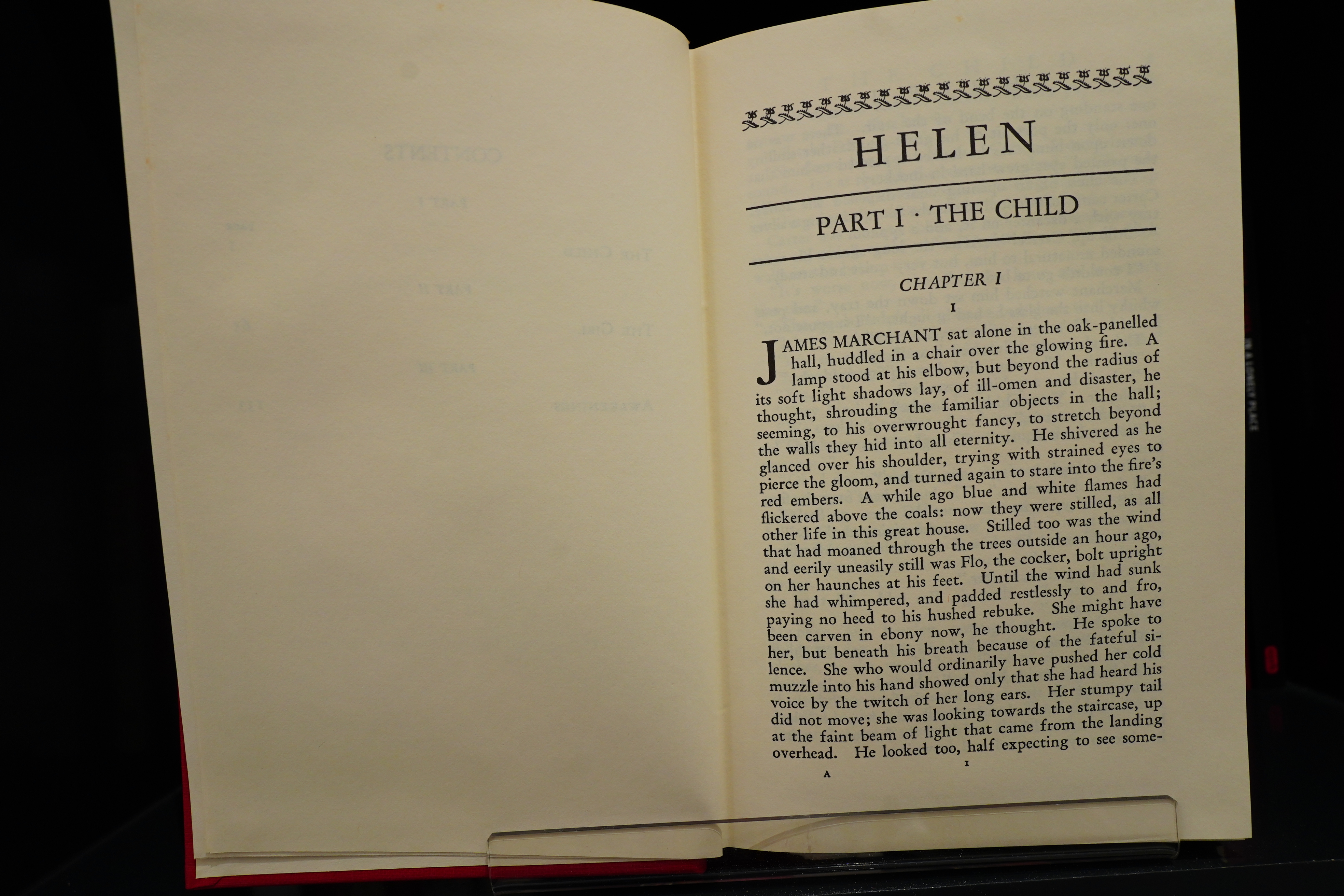
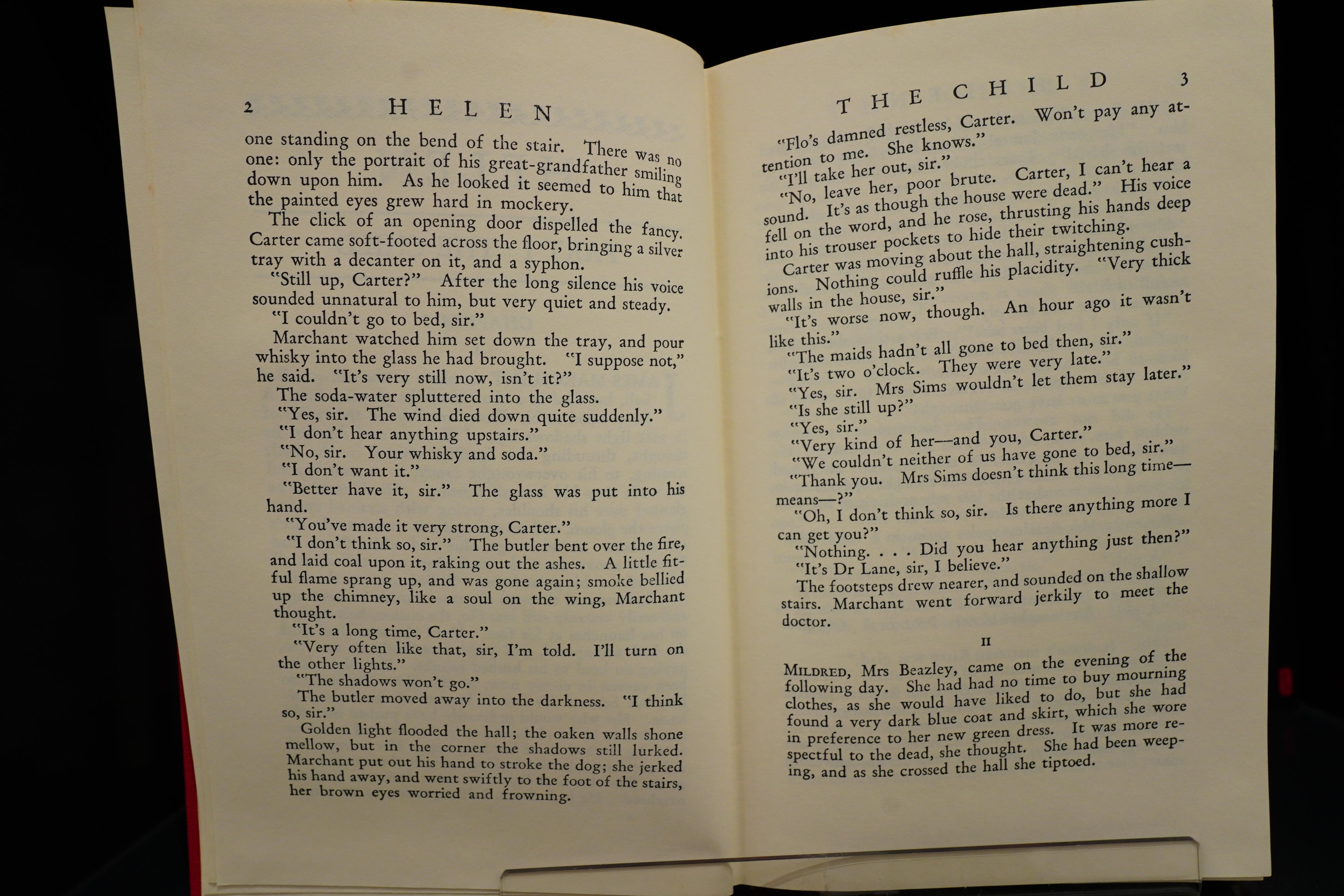
I remember as a teenager I was talking to a friend about how absolutely tiresome it was that absolutely all books had conflict in them: It just seemed so trite and unimaginative to rely on that single element when writing a book.
(And the same for movies and stuff.)
This book definitely doesn’t rely on conflict. Instead we get the story of Helen, a girl born to a rich, smart and good father. She grows up swell, and nothing bad happens, really. (Until the last sixth of the book.) And I think it works really well? It does read a bit like a wish fulfilment story, but Heyer writes well, and it’s just fun following these somewhat amusing people around.
I still think I was right back then — conflict is such a convenient crutch. You see midwits proudly proclaiming stuff like “writing is coming up with good characters, and then imagining the most horrible things that could happen to them”. You have textbooks proclaiming that every scene should have a primary and a secondary conflict. You have so much fake drama — it’s easy, and nobody will pick on you for having too muck idiotic drama in your book. It’s such a hegemonic convention that you look like a moron for even questioning its primacy.
But… this isn’t a totally successful book. Heyer has a tendency to have her characters expound at length about Things In Society, and those opinions are invariably tedious. Even worse were those thirty pages where she went on about The Nature Of Love.
I did thoroughly enjoy reading 80% of this book, and then the rest was *rolls eyes*.
I don’t understand at all why Heyer suppressed this book, though. Were the reviews savage at the time?
Hm…:
In due time Helen is bound to marry an exceptionally agreeable young man; all her training indicates such an end. This being his inner conviction, the reader can take his time over this leisurely tale, which takes an even course through pleasant English scenes and shows us the growth and development of a thoroughly “nice” girl, candid, athletic, and affectionate.
Well, it’s not very savage…
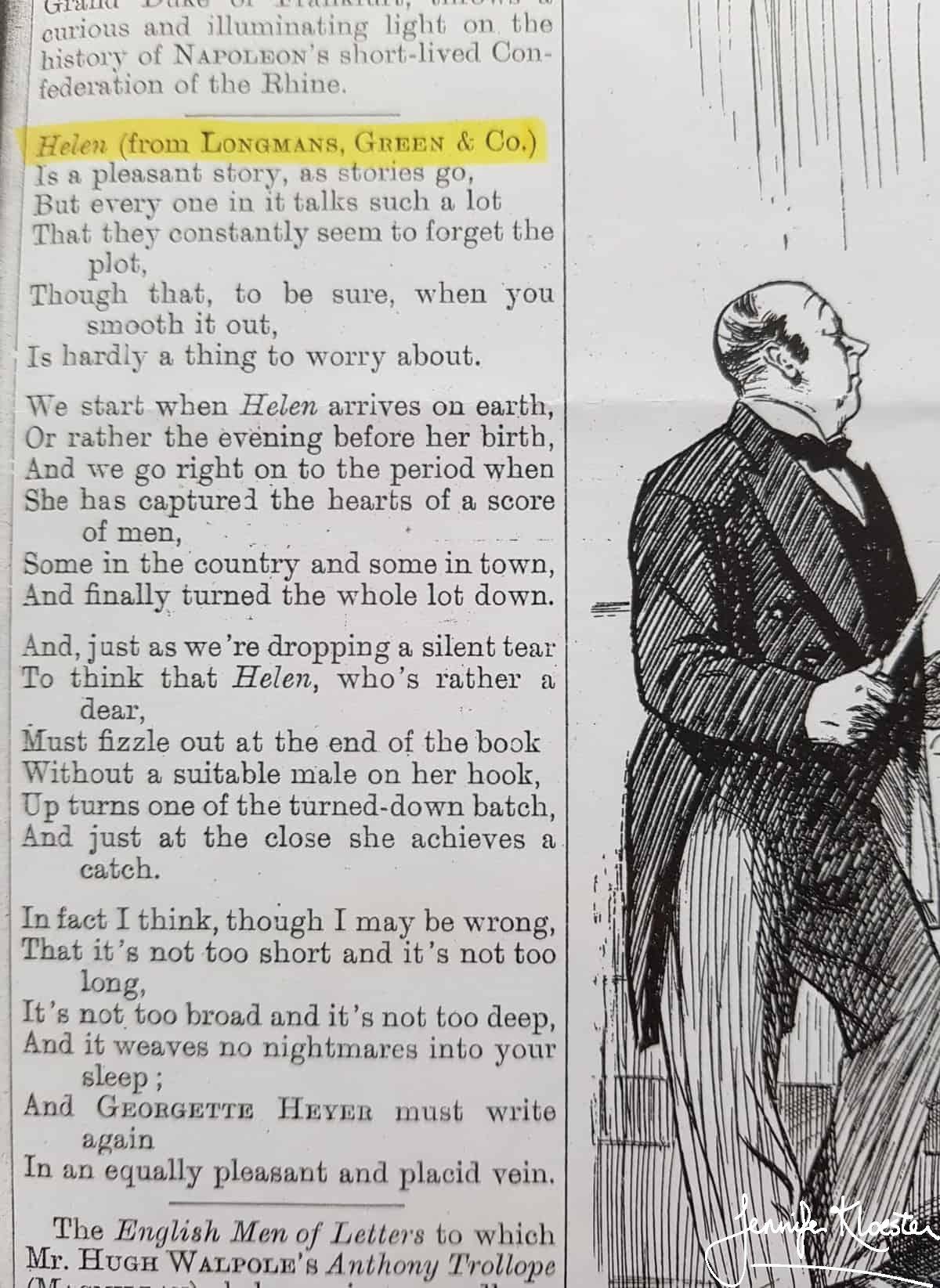
Heh, Punch had this poem about it… and it’s not particularly negative, either.
Ah:
Georgette Heyer’s second contemporary novel, Helen, would also be her most autobiographical
It has a very low Goodreads score, 3.28:

Helen (1928) by Georgette Heyer (buy new, buy used, 3.28 on Goodreads)