

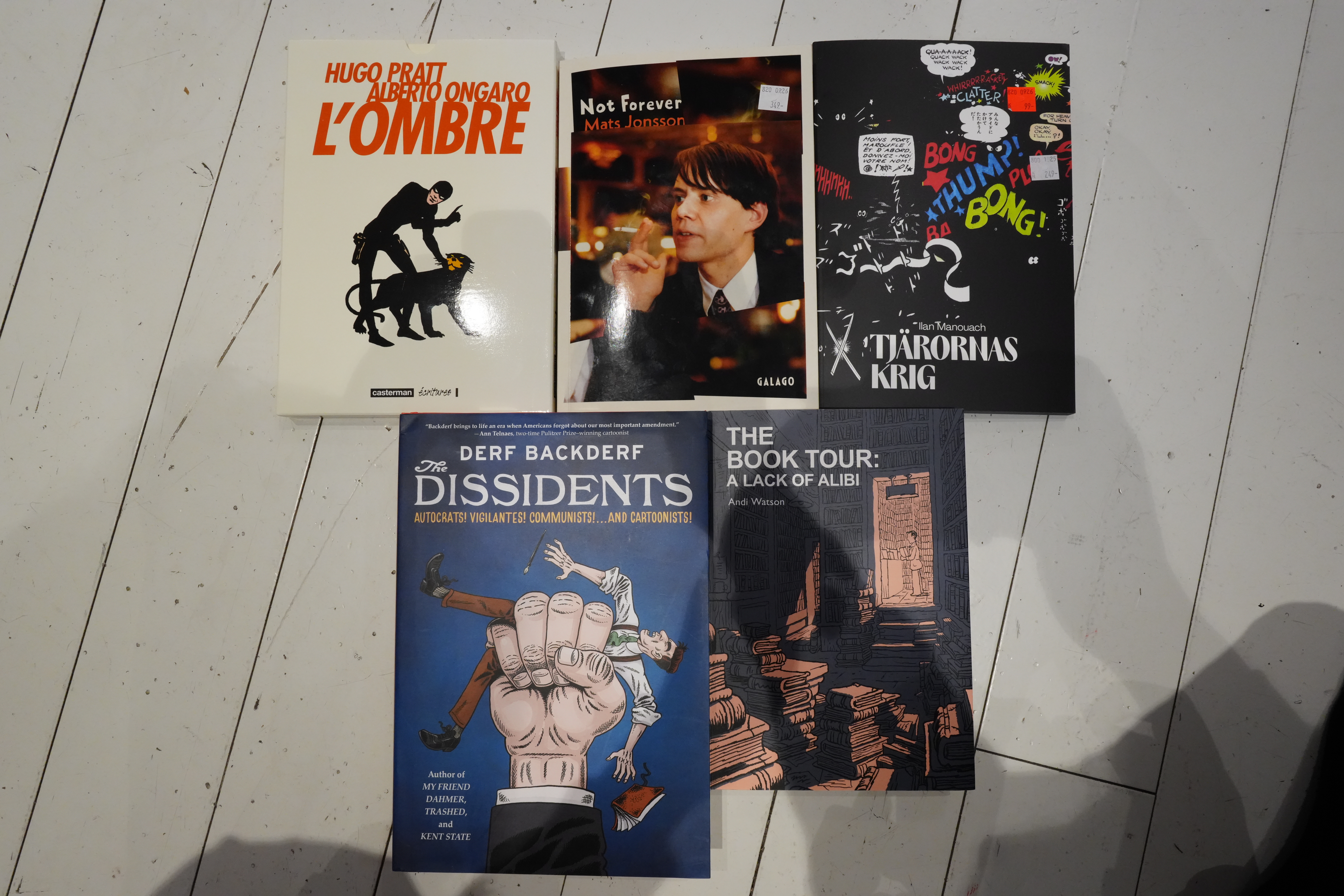
Here’s some comics I’ve read over the last week. I mean… Oh, right, I did one of these posts yesterday, but I unexpectedly spent the entire day reading comics, so I thought I’d just do one of these blog posts again today.
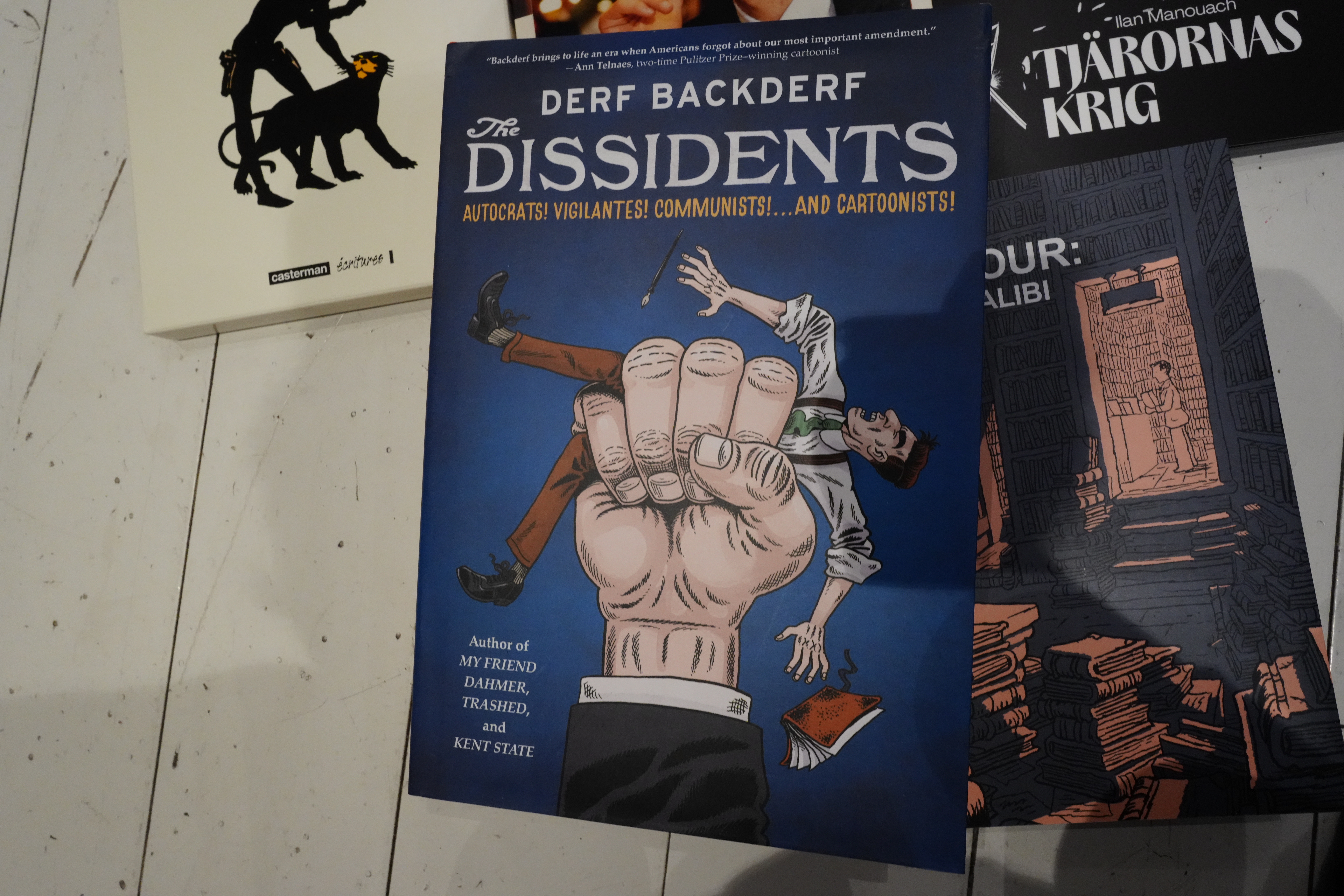
The heftiest book of the day is Derf Backderf’s The Dissidents.
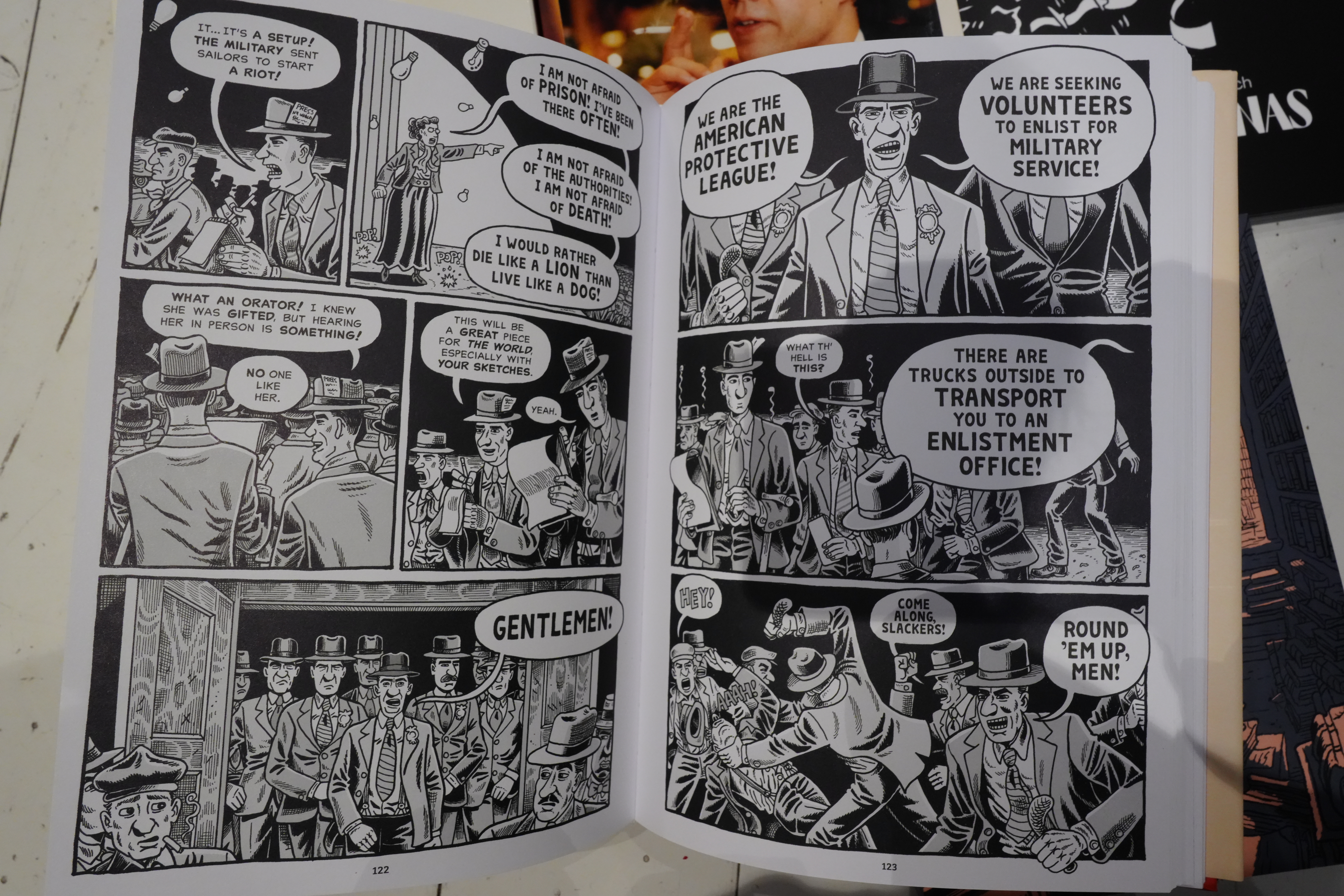
Which I really liked — but I have to say that I was initially really, really confused. It’s presented as the story of a cartoonist who worked for various (mostly lefty) magazines and newspapers in the 1910s. So I googled his name, and found out that he was fictional.
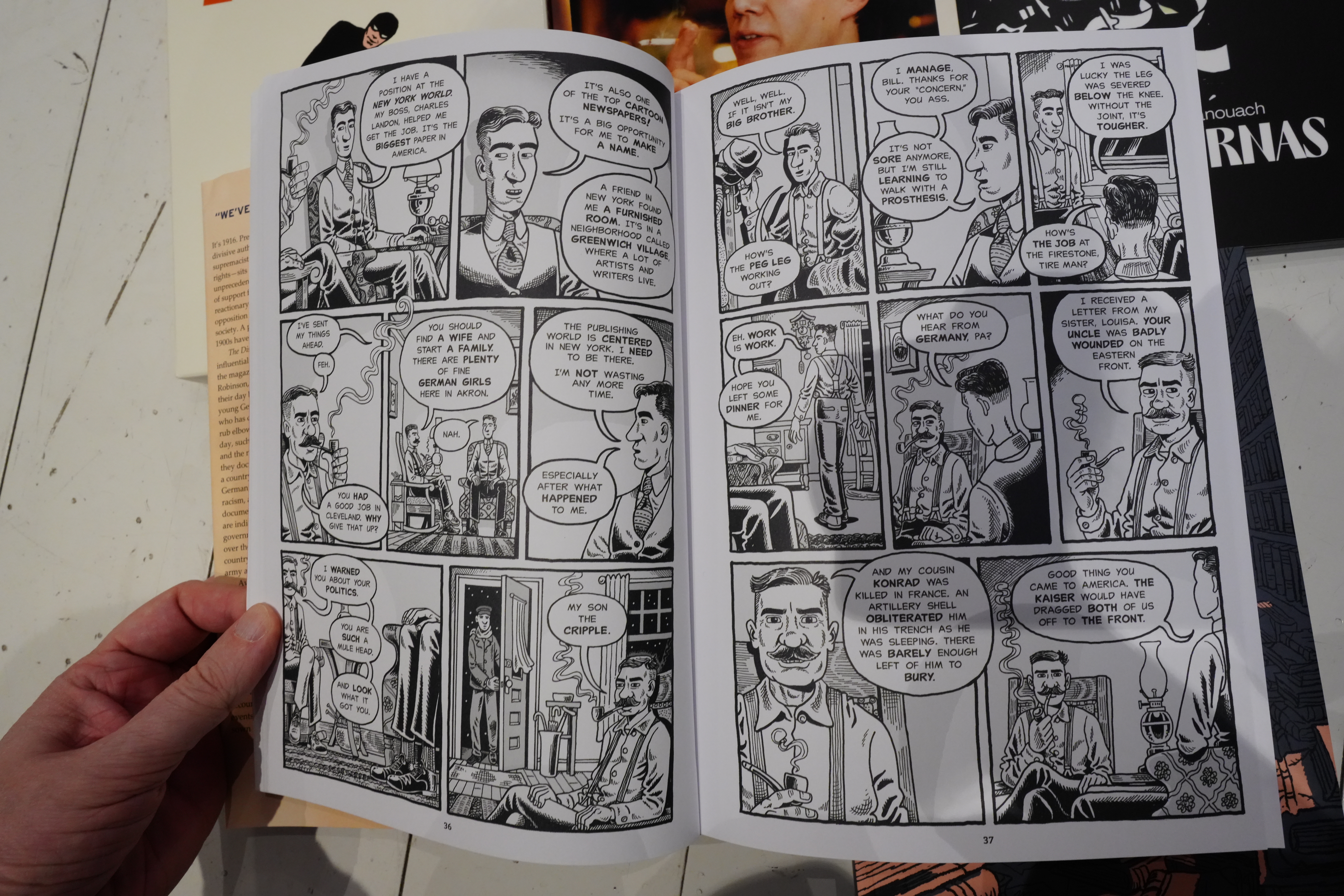
So then we’re presented with this magazine called The Masses, so I googled that because I assumed that it was also fictional, but it’s not. And he also works for a newspaper called The New York World. Hah! That has to be fictional, right? But no.
So the setup is the totally traditional one that you have a fictional point-of-view character who goes through historical travails, and absolutely everything else (names and all) is non-fictional. And that’s totally fine — it’s a setup that can work really well.
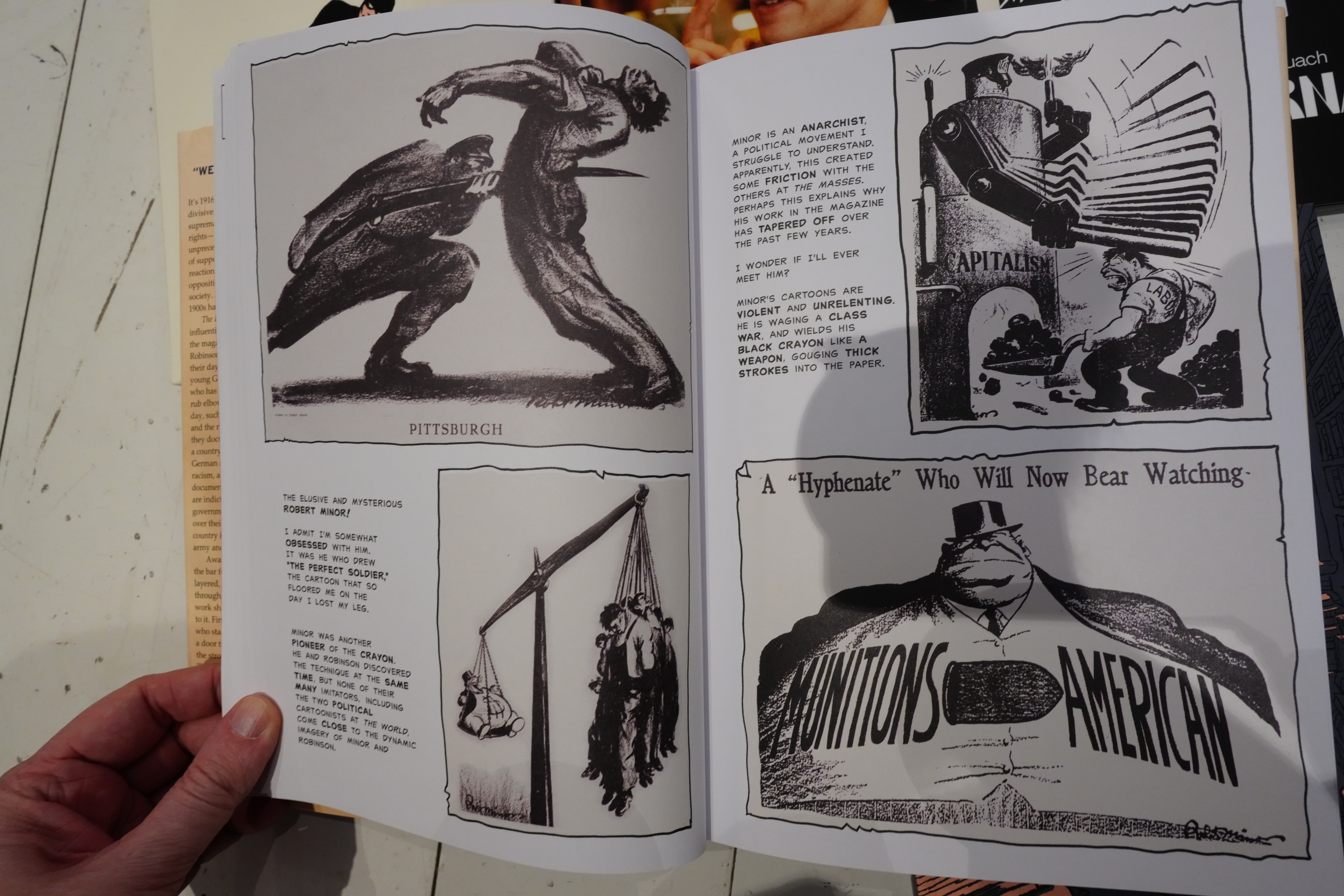
But would it have been too much bother to just say what the setup was? It would have taken one simple sentence and would have saved the reader (at least this reader) a lot of googling while reading, which is something I hate doing.
The other confusing thing is the name: “The Dissidents”. That sounds so general that I assumed that this was going to be more of an “overview” book of many dissident movements, but I guess a name like “The Cartoonists Who Worked For A Socialist Magazine” (which is what it’s really about) would sound less appealing?
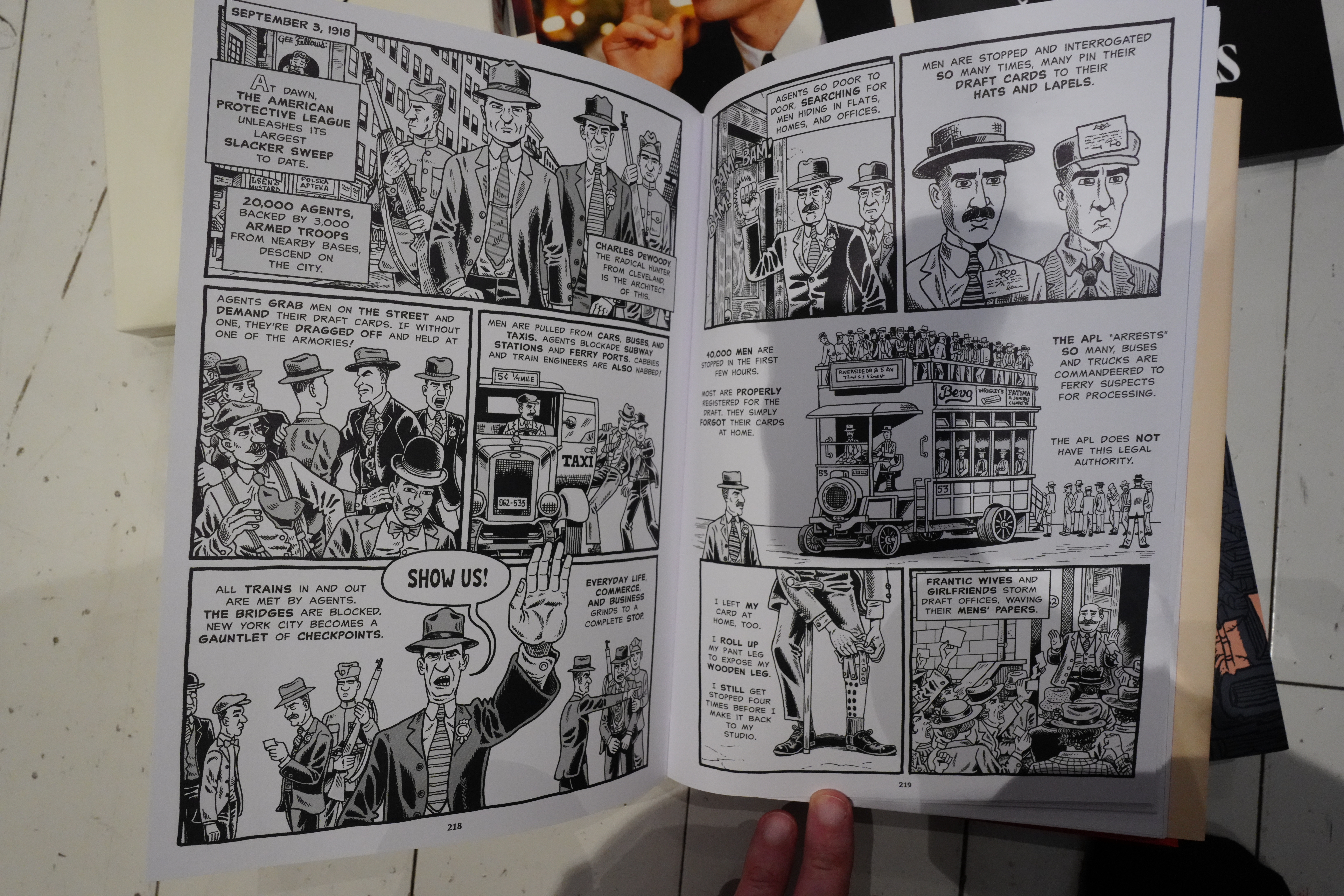
So I had a problem with the … stuff that’s not actually in the book, I guess. If you know these things in advance, the book is pretty engrossing, and extremely interesting: I learned so many new things about this era in the US.
The storytelling is good, the artwork is pretty attractive, and it just really works all over. It’s a solid book.
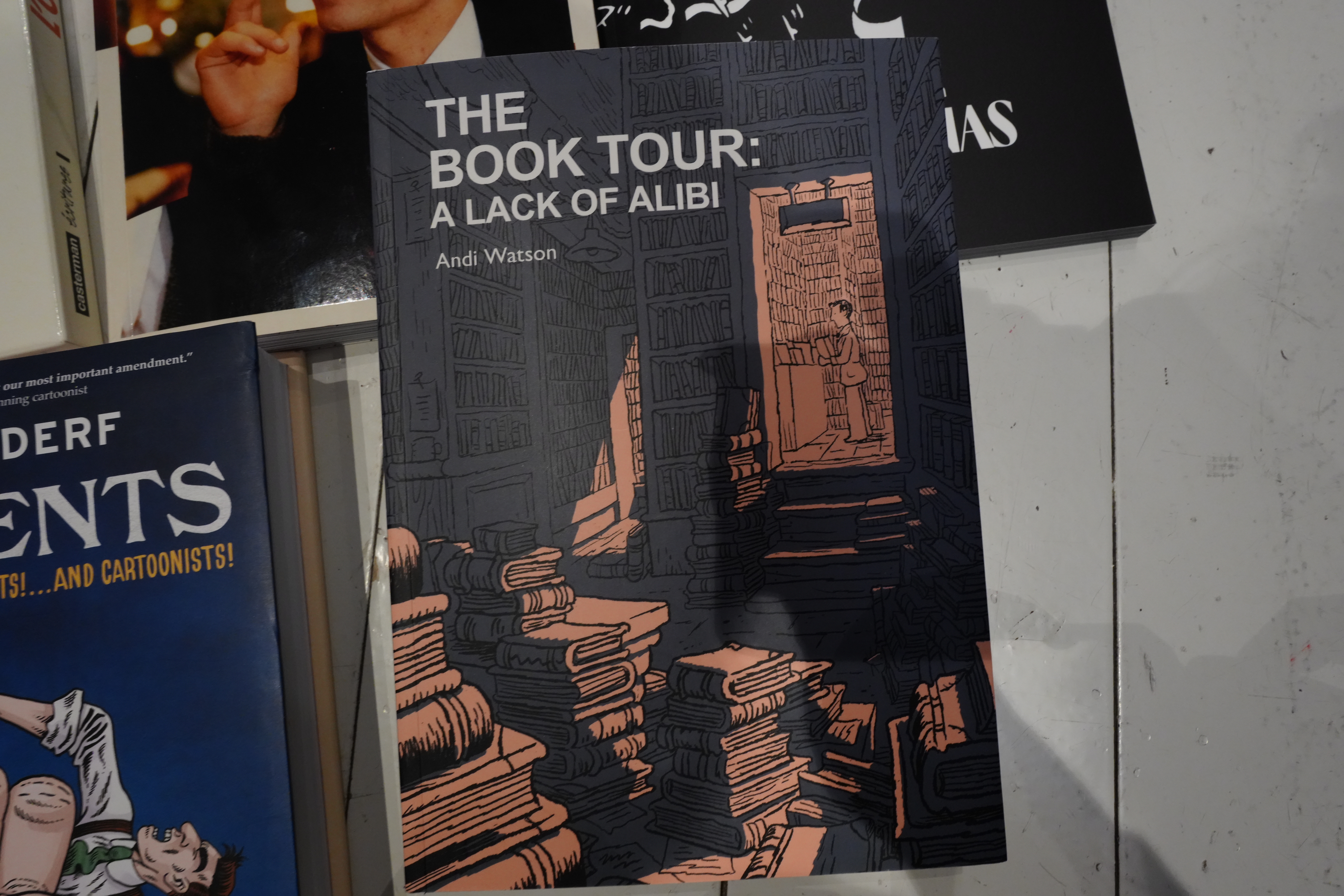
I bought this Andi Watson book by mistake — I really disliked his previous book (called “The Book Tour”, I think): I found it to be a generic descent-into-mysterious-mysteries kind of thing.
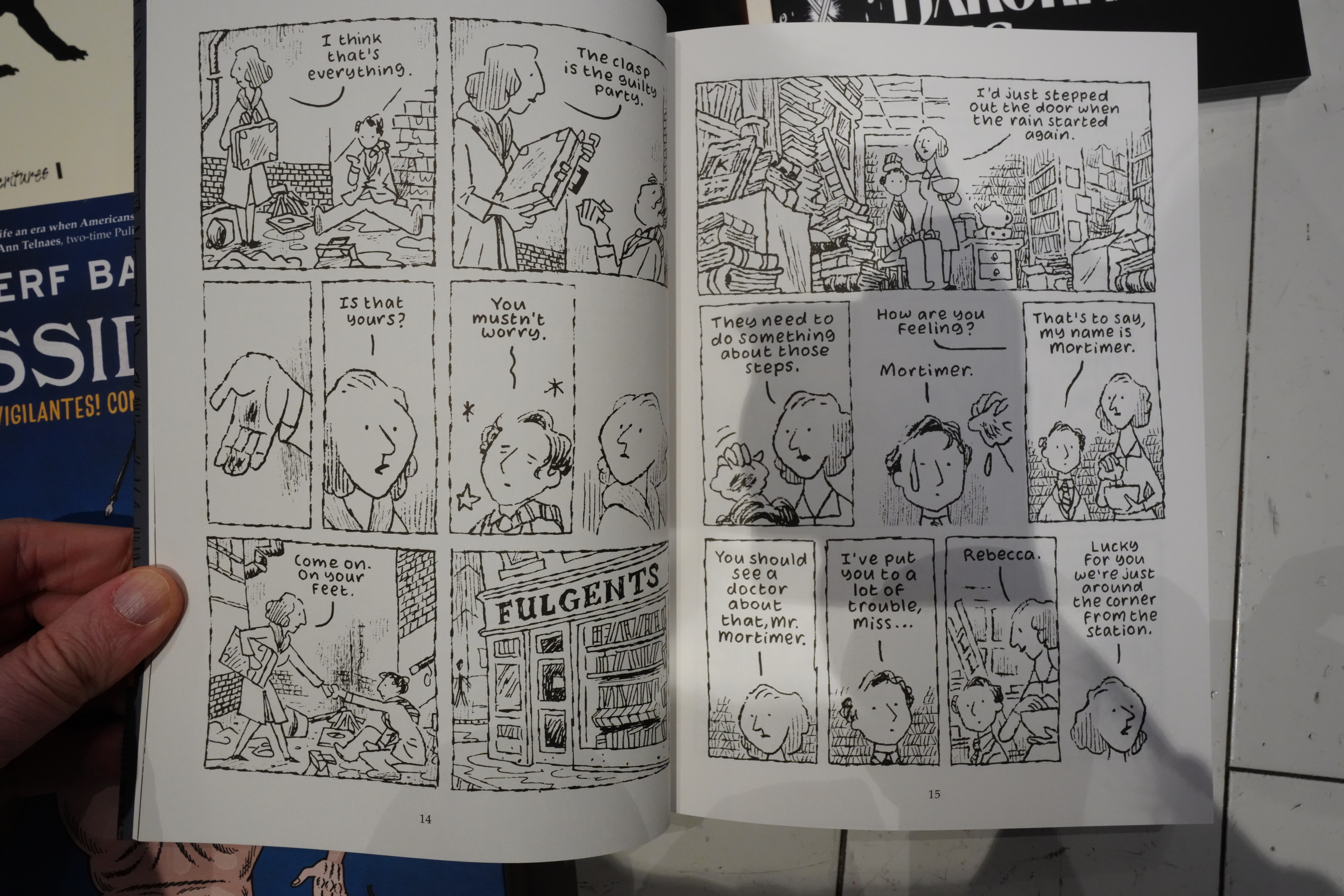
And this.. is apparently the same thing all over again — a guy arrives in a city, and immediately lots of mysterious things happen to him.
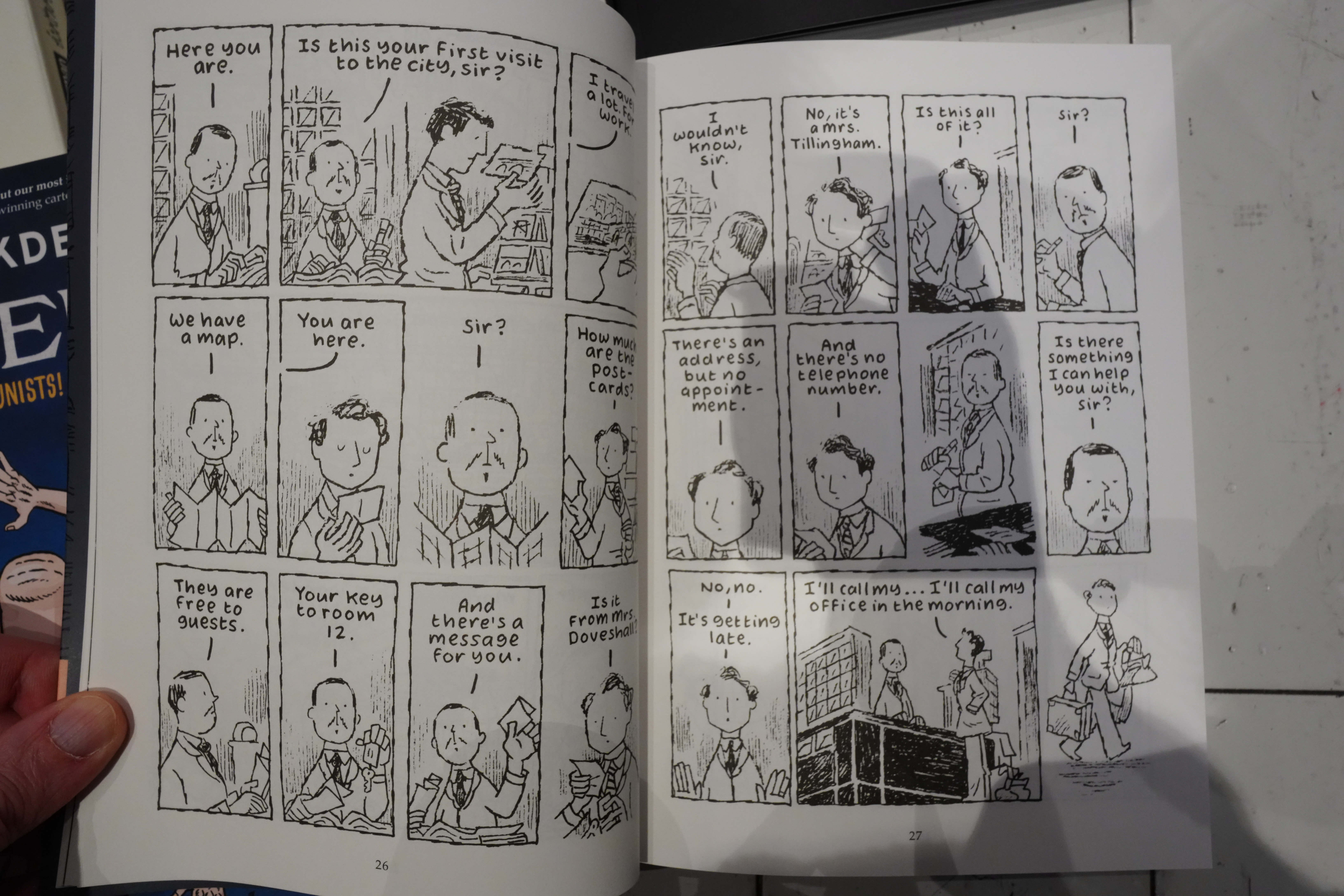
Everybody acting all mysterious.
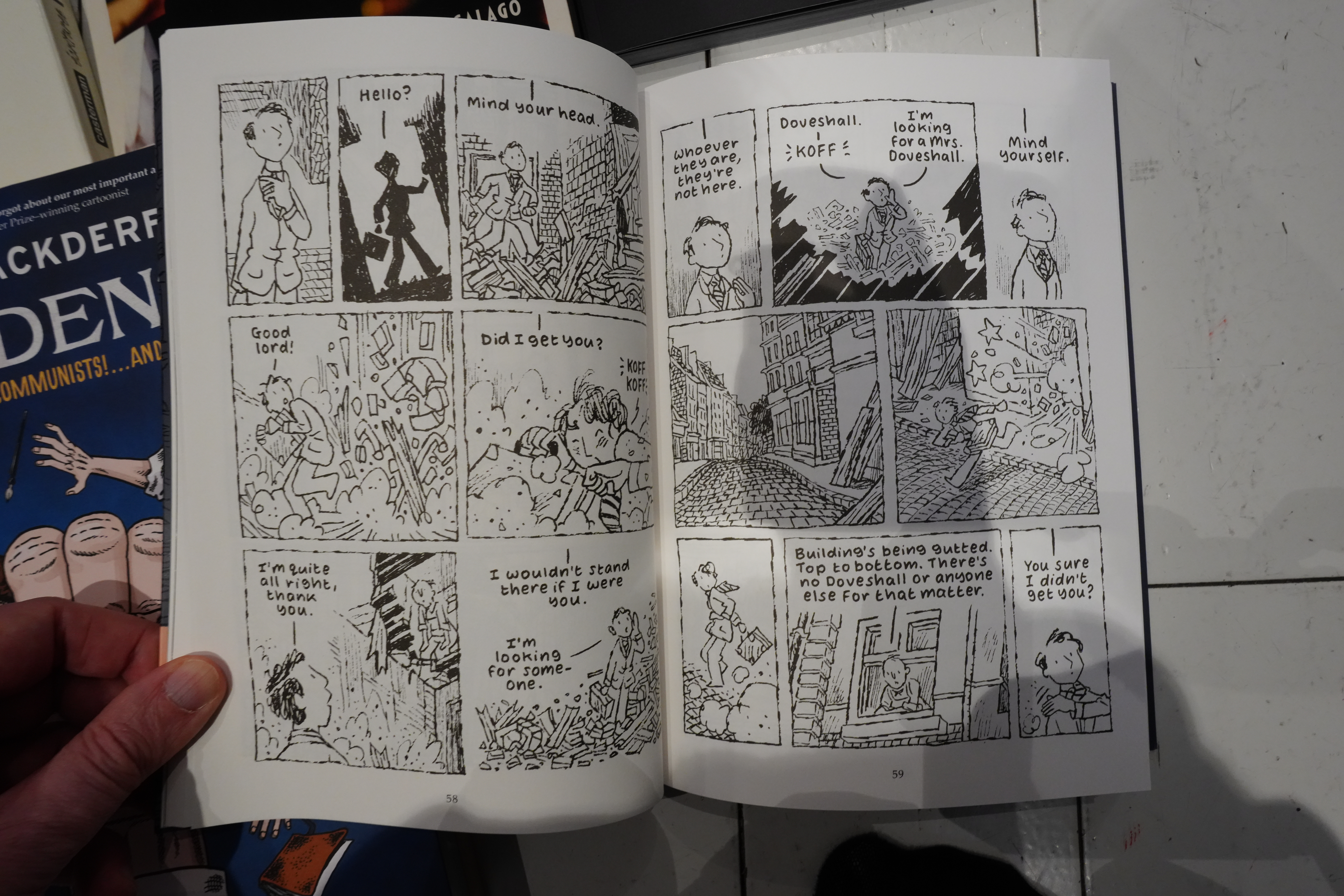
Such mysterious.
I ditched this one after a few dozen pages.
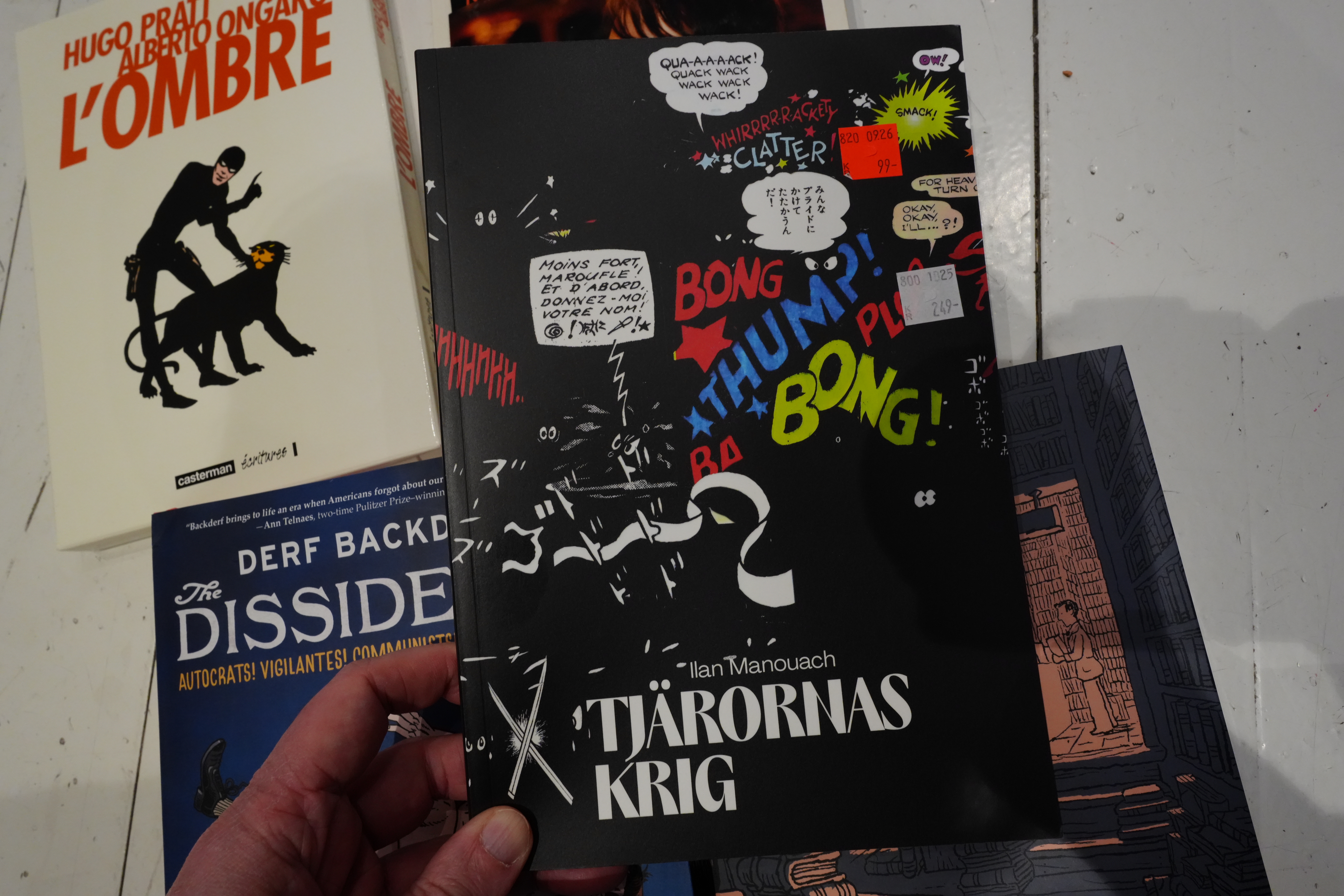
I picked up this book by Ilan Manouach at a sale earlier this autumn.
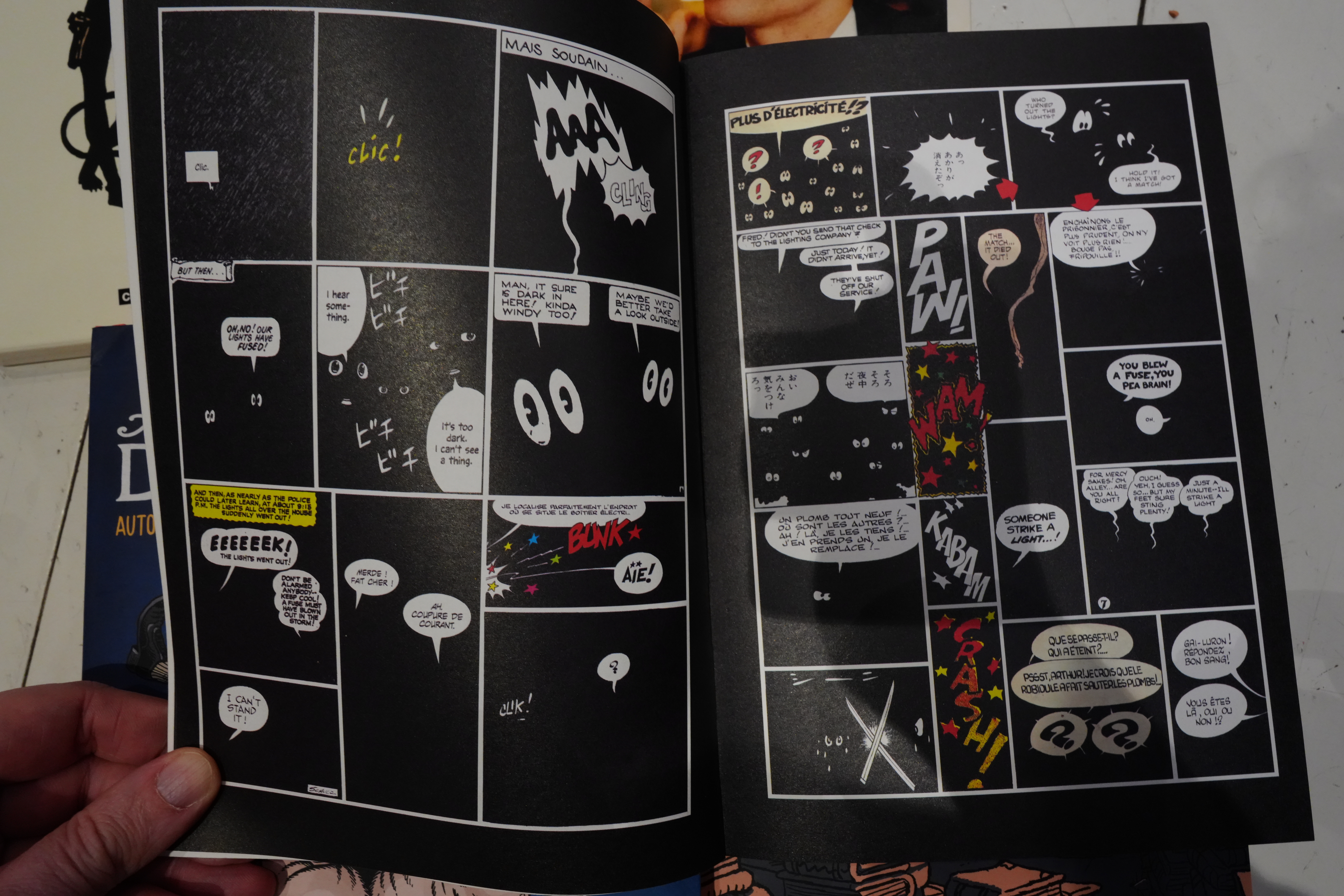
And this is a properly conceptual book.
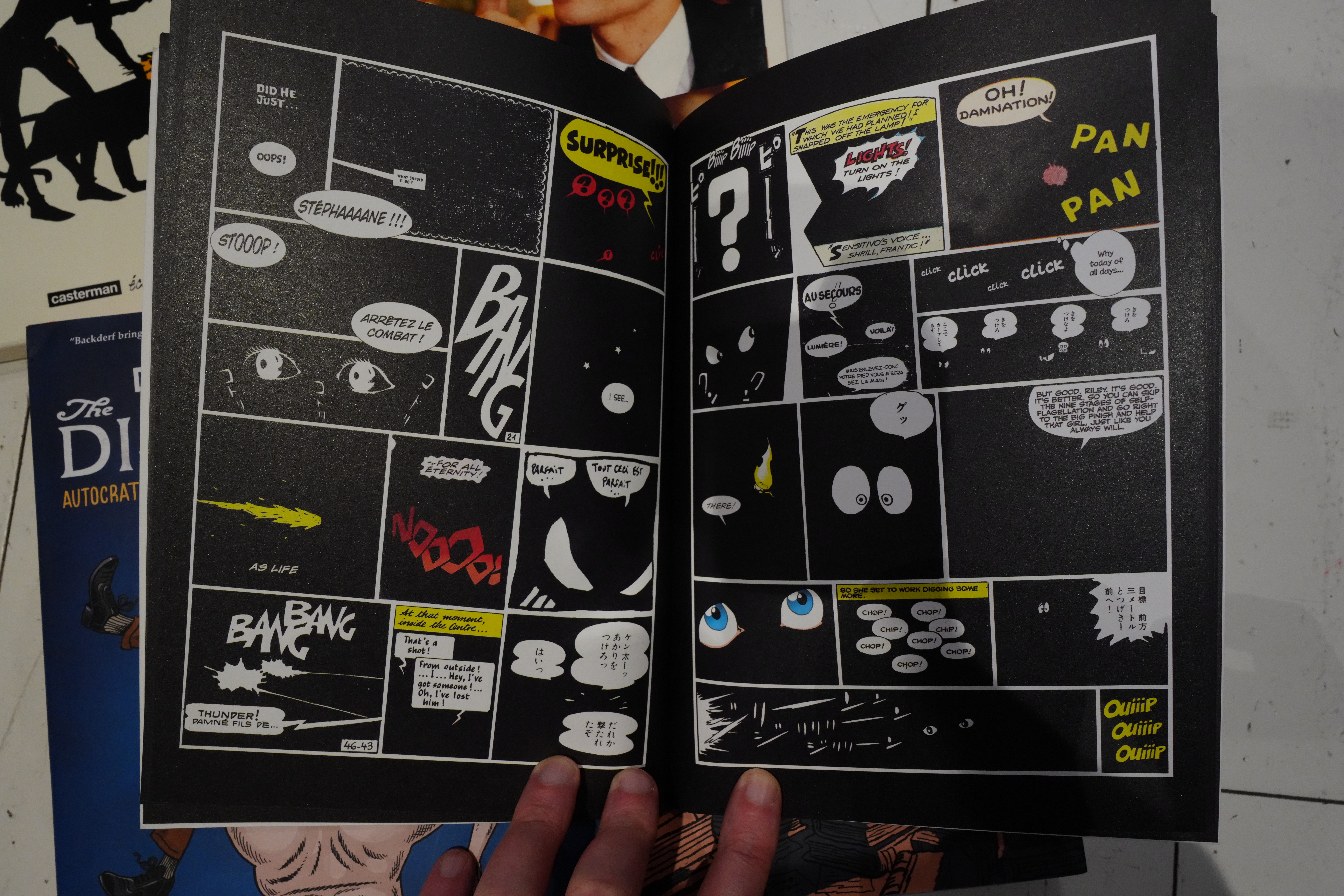
I’m guessing the artist took panels from many, many, many different comics and removed everything except the text, sound effects and the eyes?
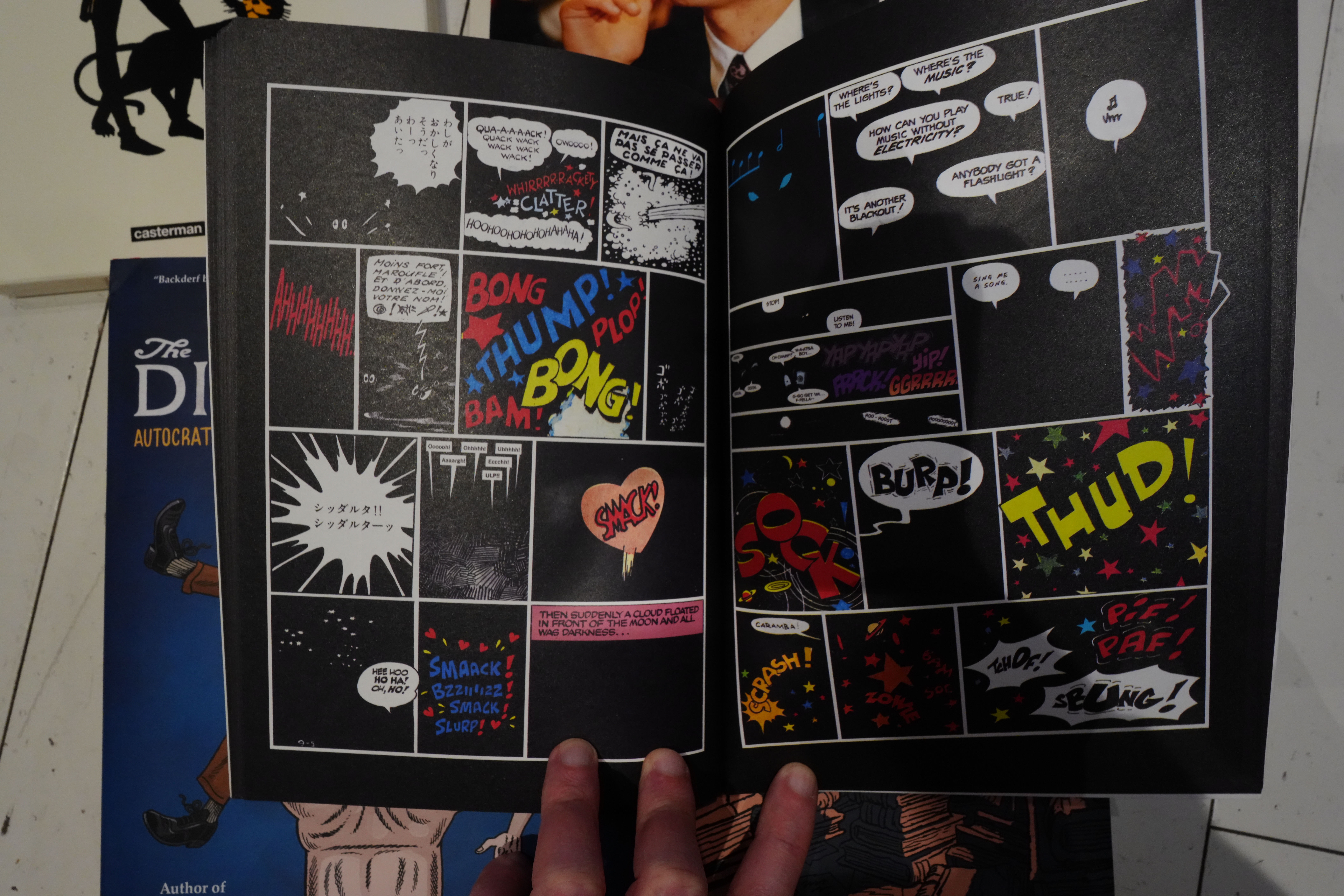
I don’t think it’s a narrative? It’s nice to look at, anyway.
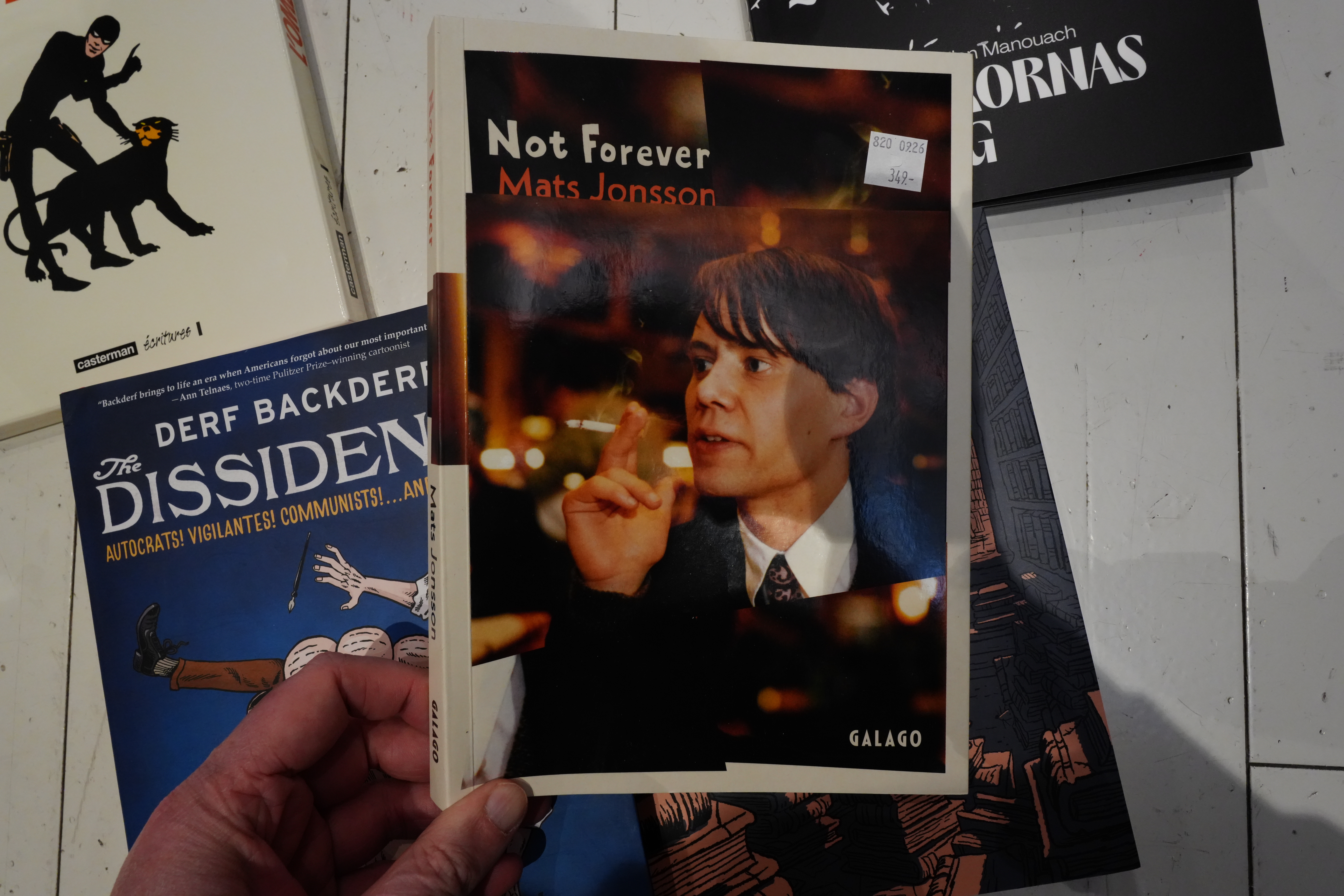
Mats Jonsson is probably Sweden’s best-known comics creator, and this is a follow-up to his most famous book (I think) from the 90s.
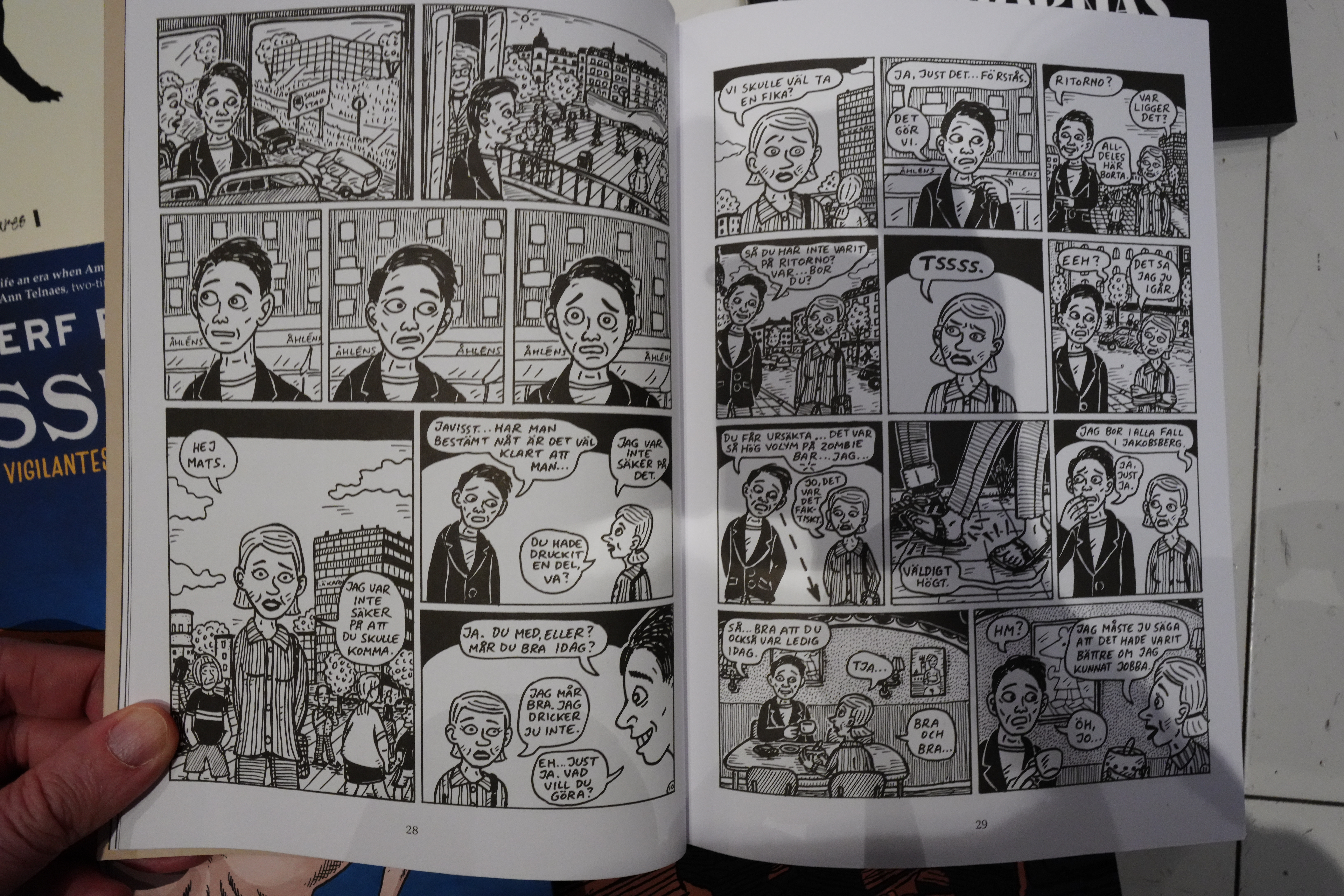
So that’s all good, except that after starting to read the book I went “hey… I’ve read this before”. And it turns out that perhaps a half of these pages have previously been published in his one-man anthology that I’ve read.
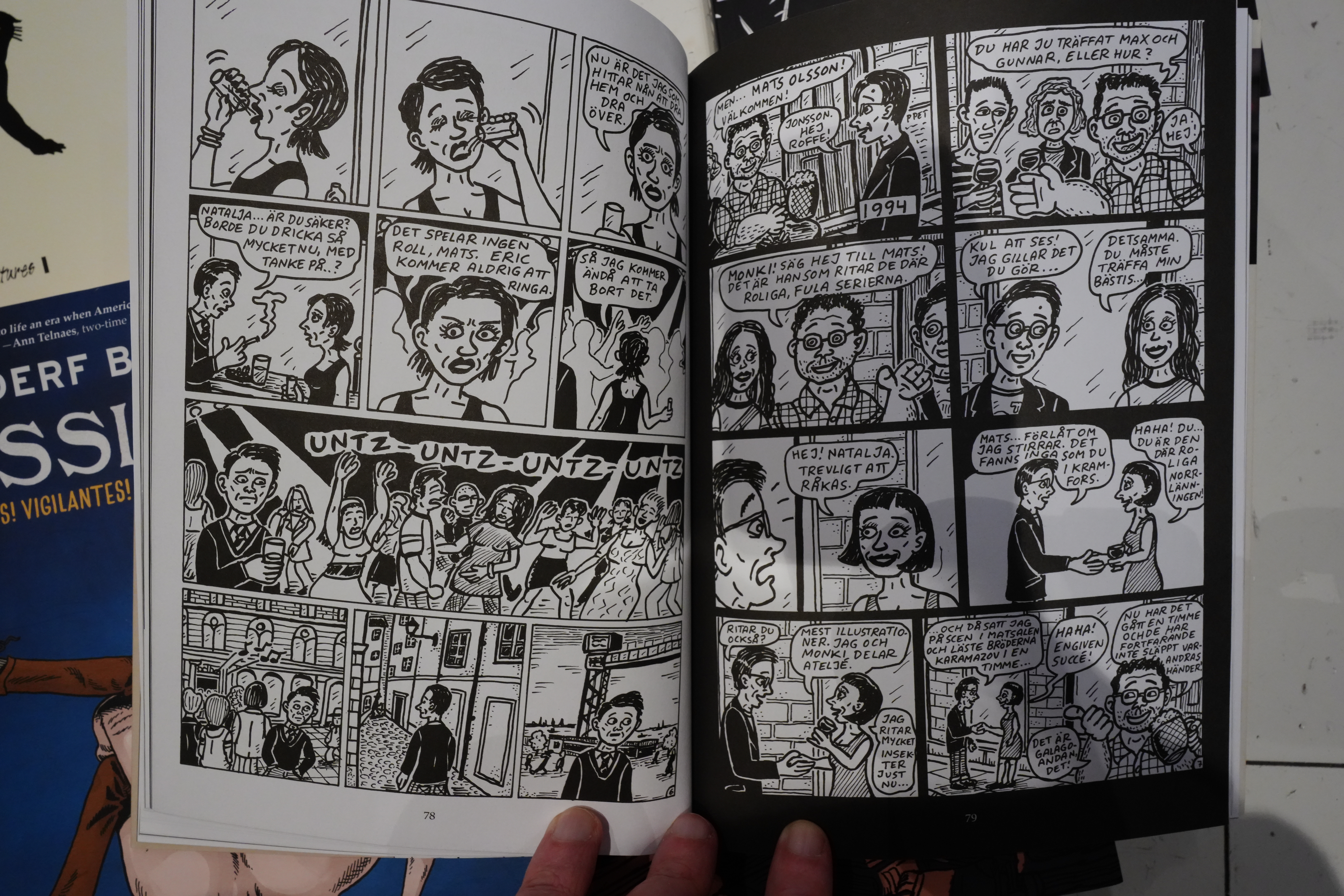
So that was a disappointment. But! It’s still a really strong book.
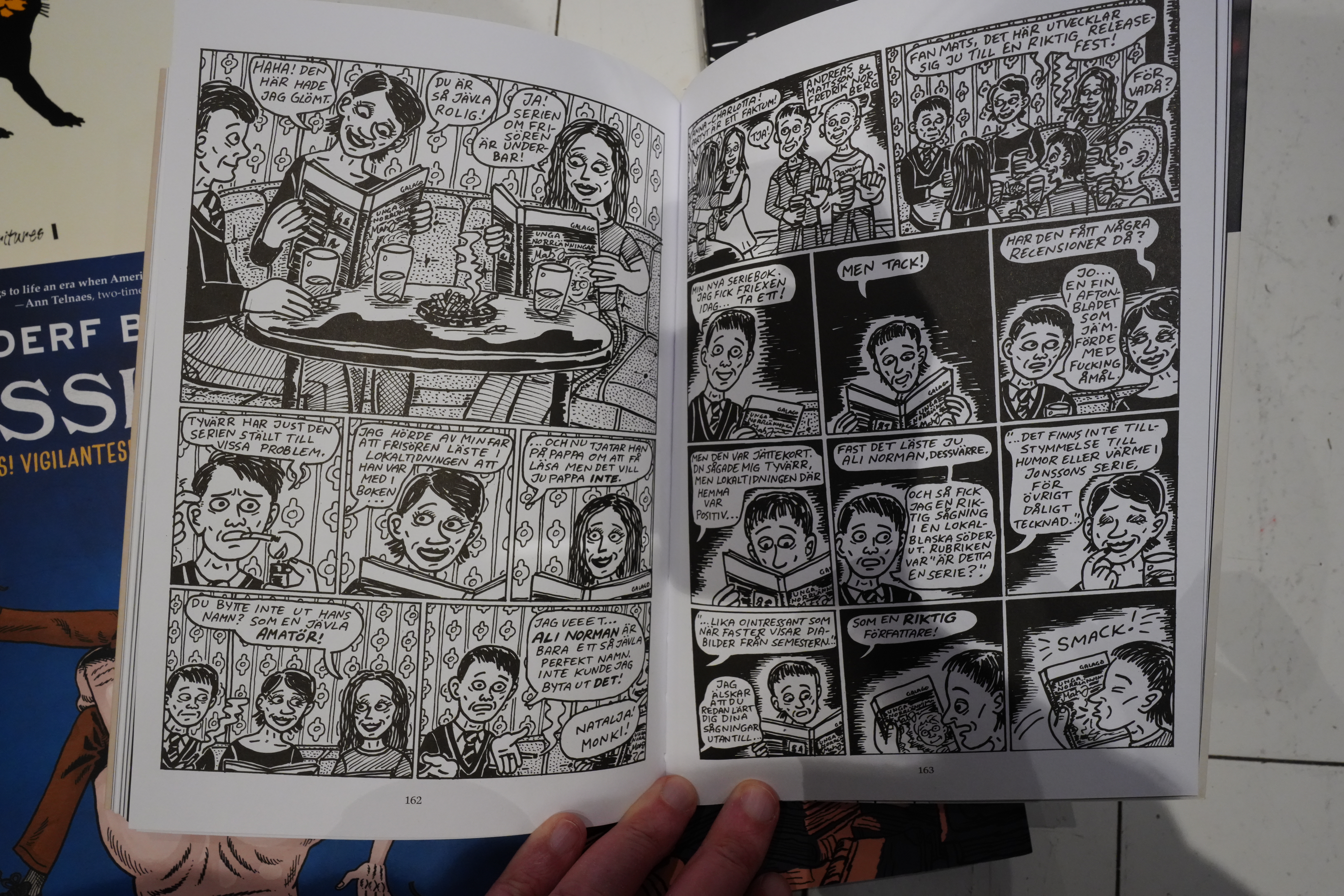
It’s very much a classic let-it-all-hang-out 90s autobio comic. And I really like that sort of thing.
The story is a bit bumpy, though — sometimes I was left going “err… and that woman is…?” But still a good read.
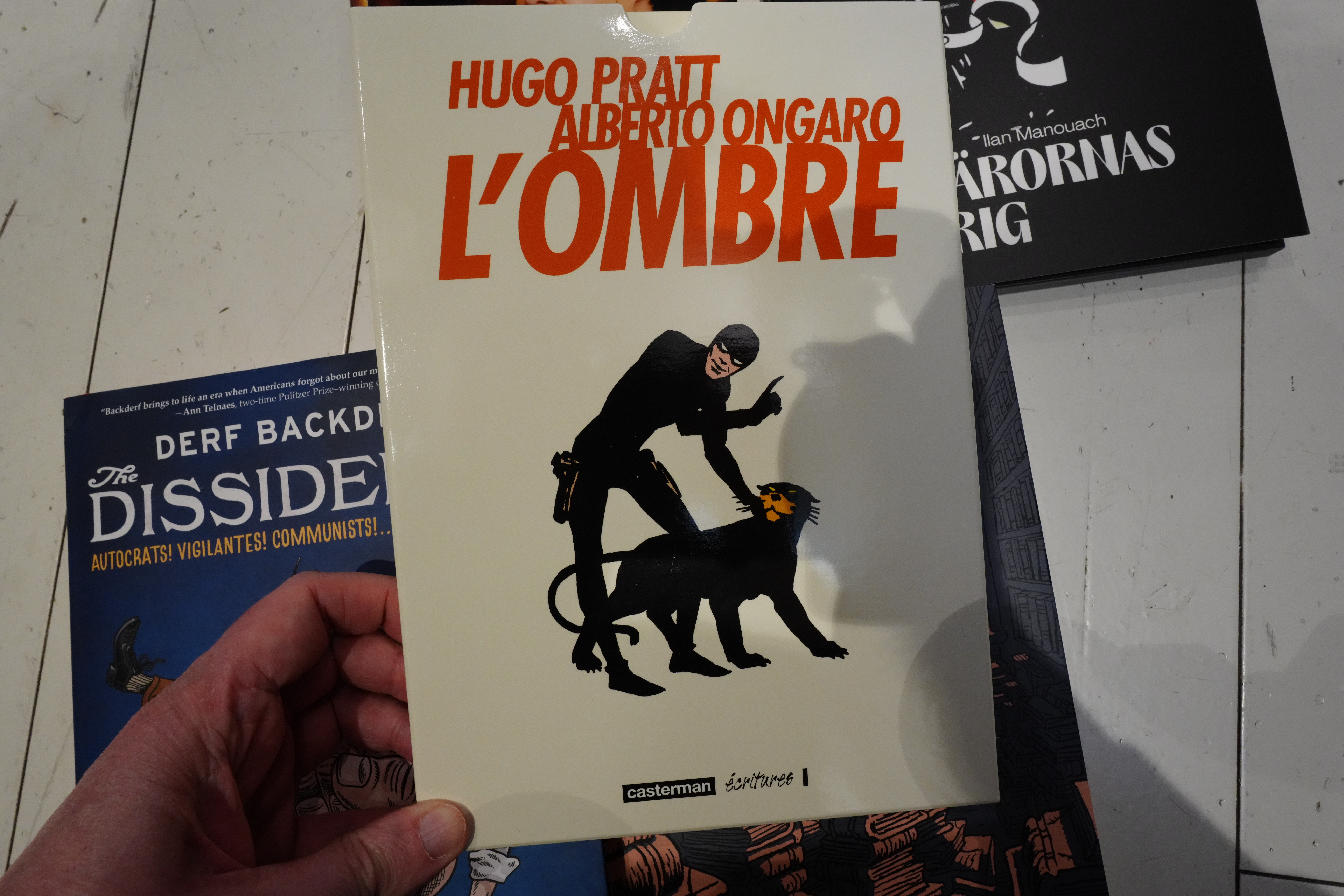
This is a French edition of an Italian comics series from the mid-60s — by Alberto Ongaro and HUGO FUCKING PRATT!!1! *gasp*
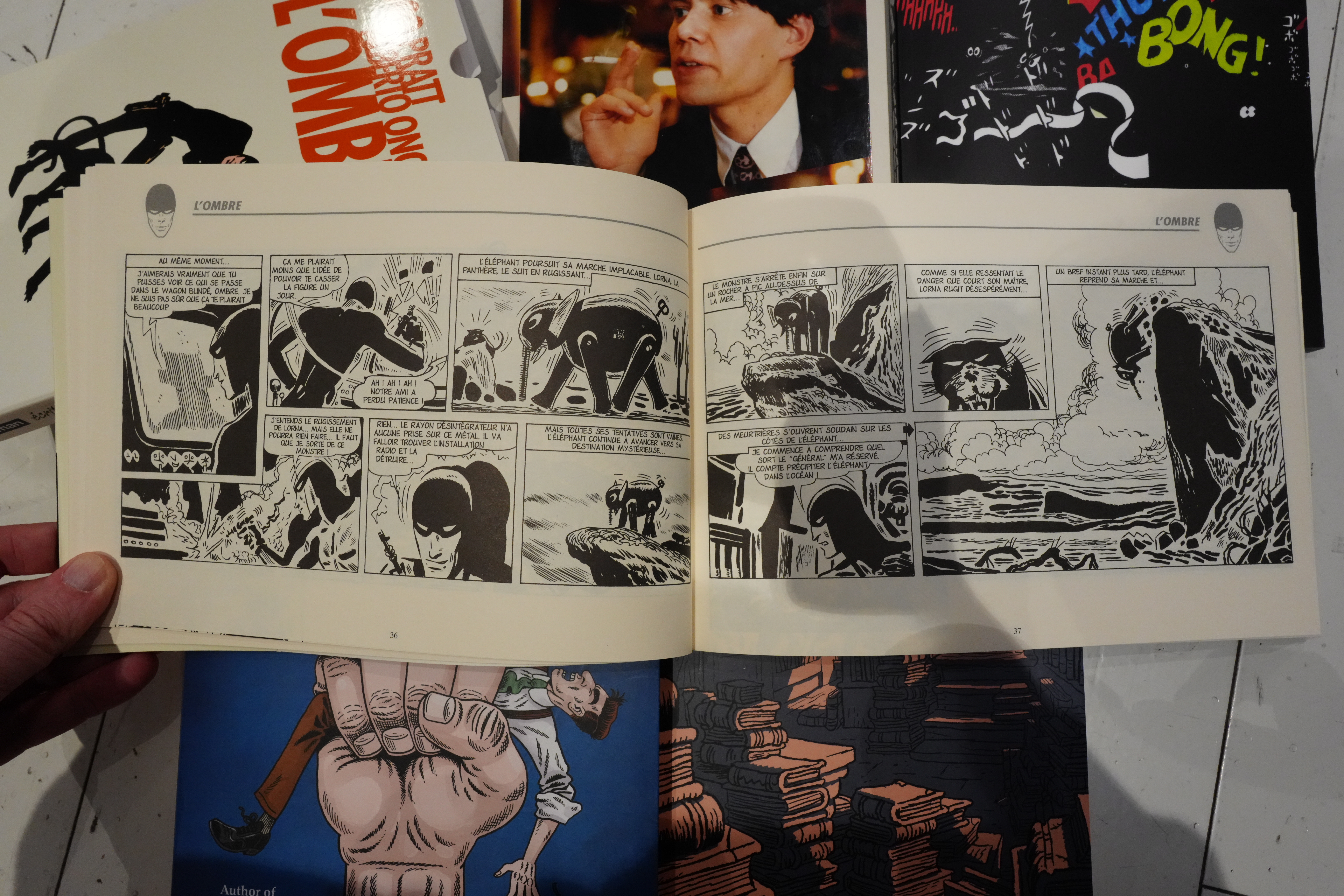
And judging by the art style, Pratt must have done this just before creating Corto Maltese — the artwork isn’t quite as awesome as it would get, but it’s certainly getting there.
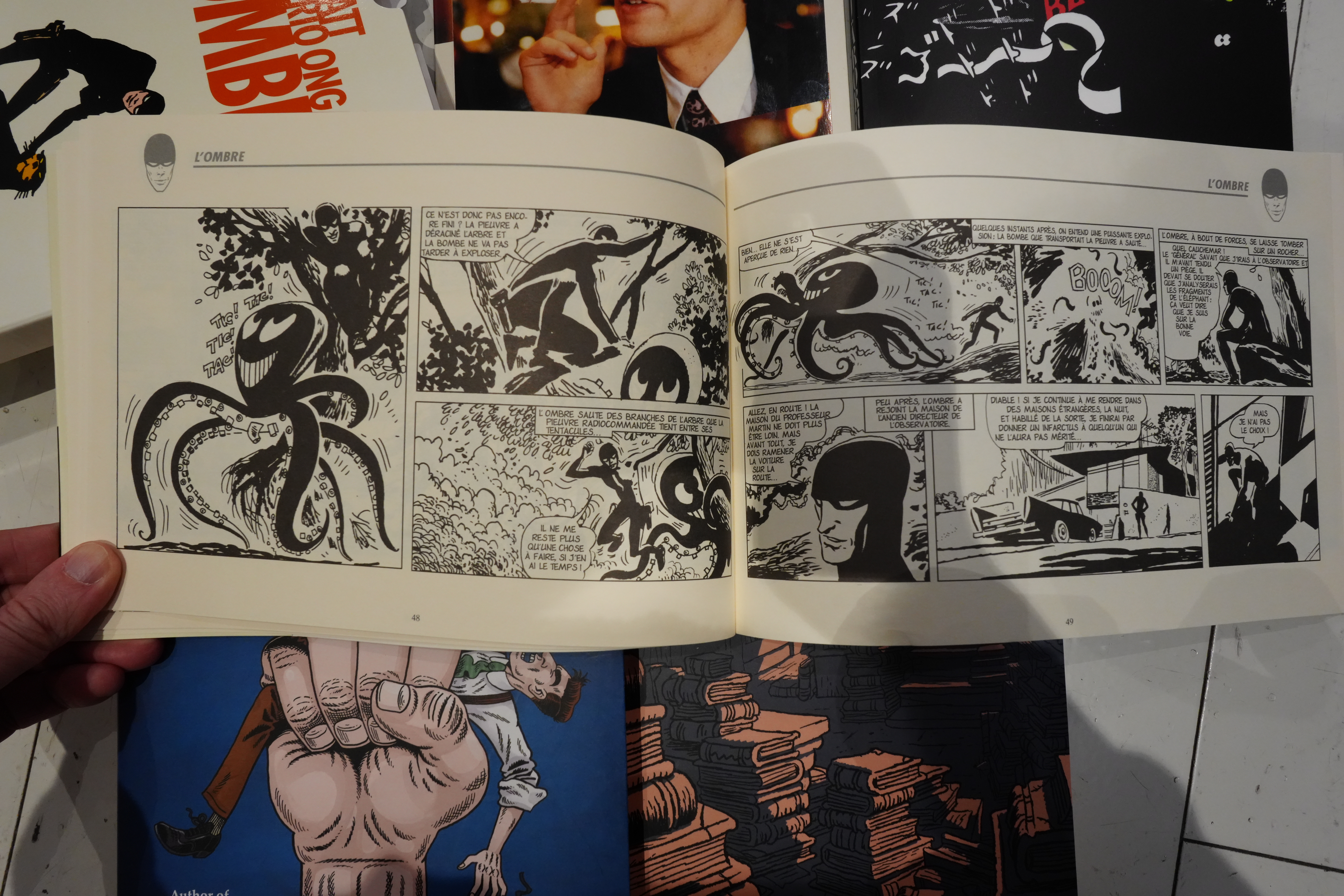
L’ombre is a Phantom-like super-hero (sort of) who fights a criminal mastermind who has many different names. While the plots are serious — totally serious — Pratt is obviously not taking the assignment seriously. It really looks like he was having a ball drawing these stories.
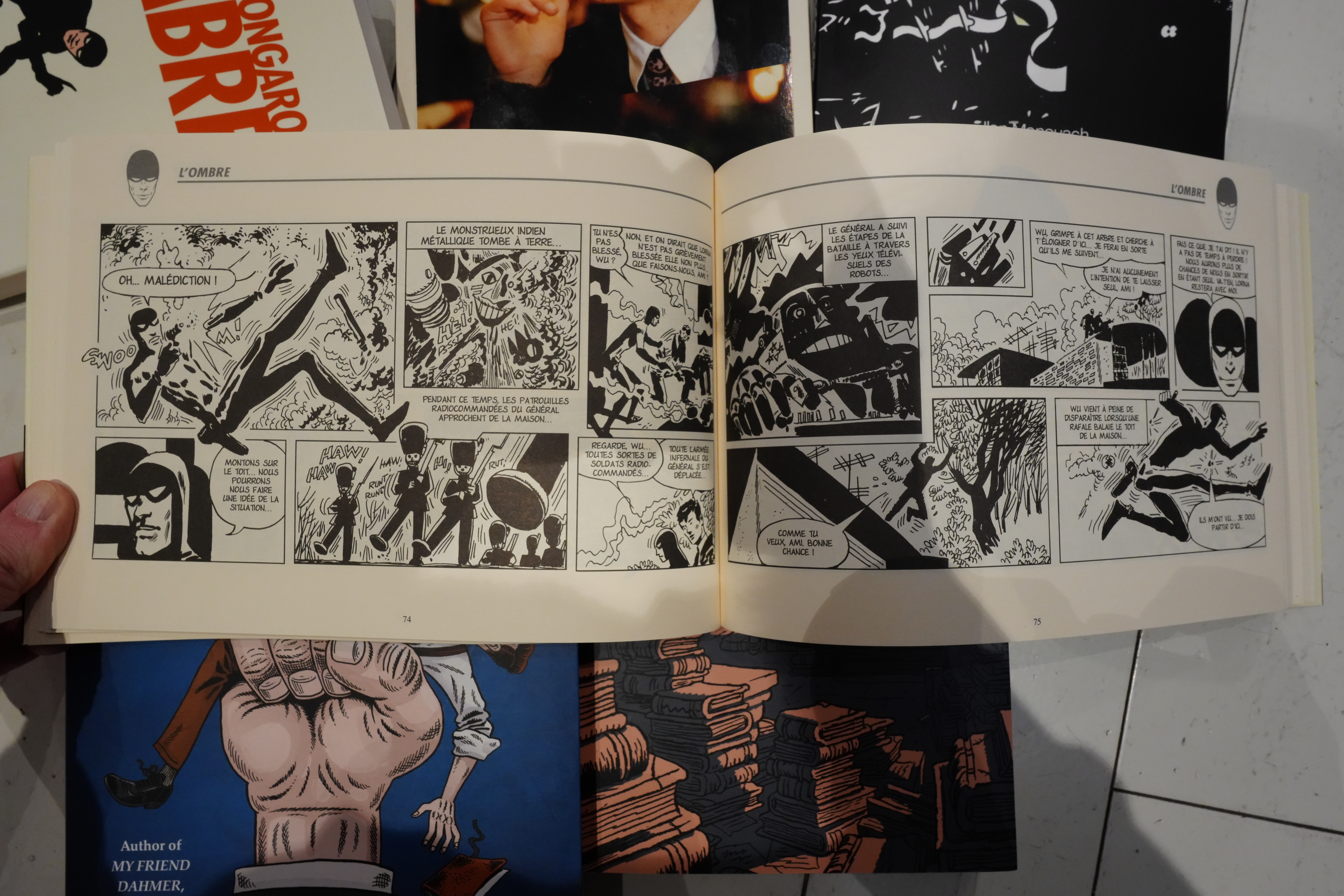
The reason this edition exists isn’t because of the stories, but because of Pratt’s artwork, presumably. But! The stories aren’t bad, either — they’re inventive and do the trick. Perhaps a bit repetitive — L’ombre is put in mortal danger dozens of times, only to be saved by his trusty sidekick Prince Wu or his trusty panther companion. (Yes, L’ombre has a panther as a pet.)
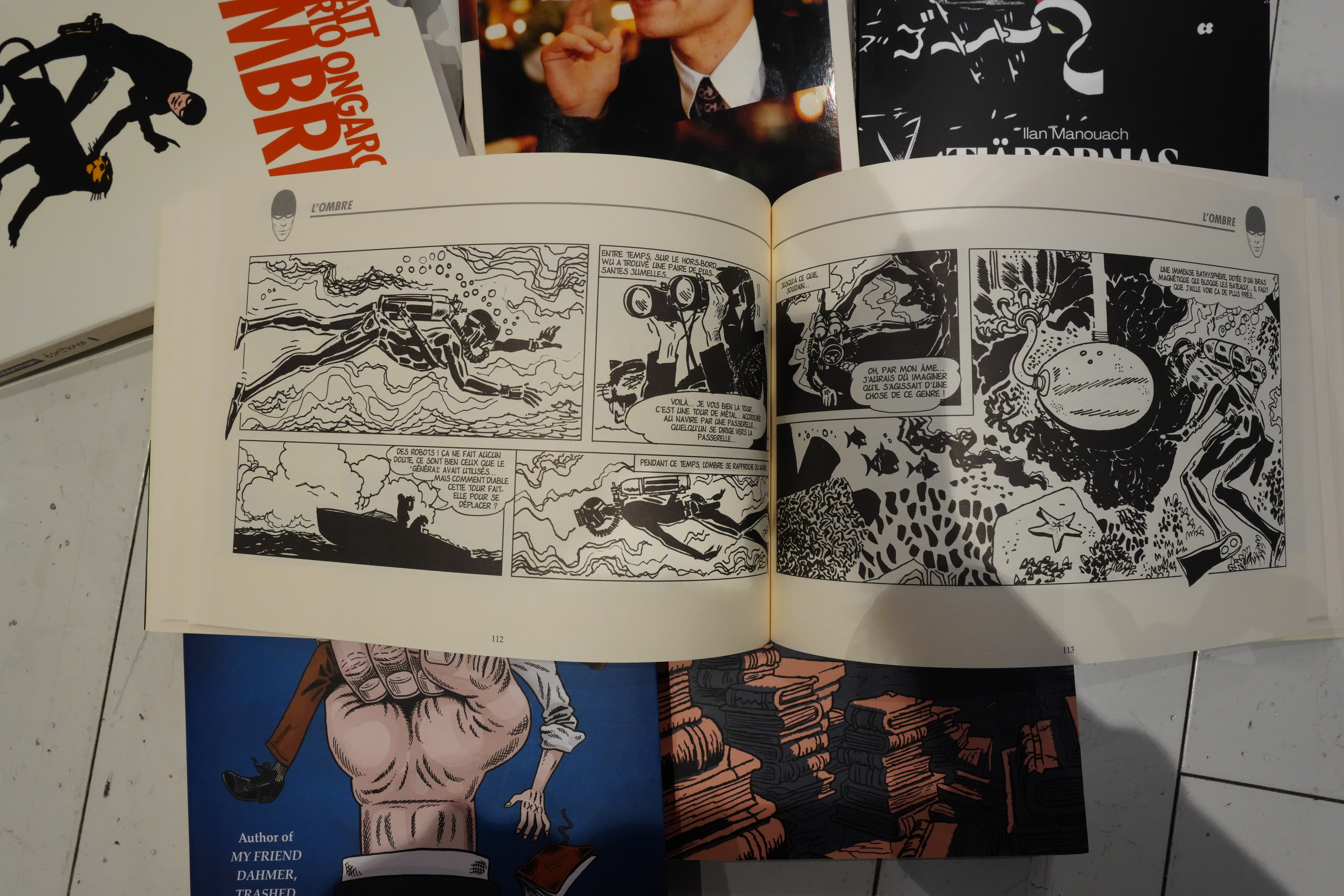
This is probably the easiest French I’ve read in a comic book not meant for young children — the translator resorts to clichés and set phrases a lot, and absolutely, totally eschews slang. So I was able to read this book almost without assistance from Google Translate.
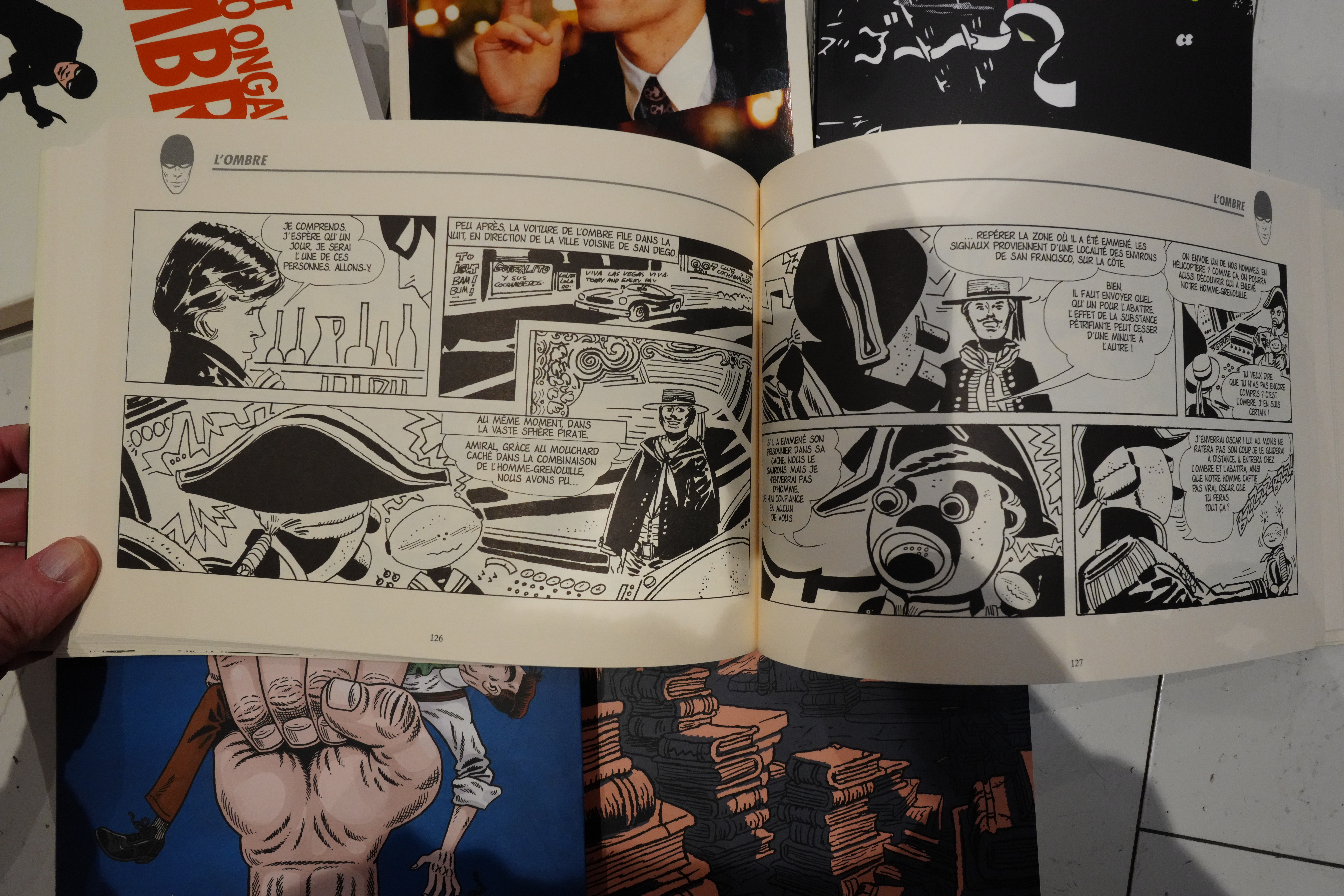
Heh… I wonder whether Pratt was already designing Corto Maltese while drawing this sequence — the villain’s henchmen are wearing a uniform that’s not totally dissimilar from what Corto Maltese would sometimes wear later.
Anyway, I read the L’ombre book over a week (even if I read all the other comics here today), so I guess the title of this blog post isn’t totally wrong anyway.