

There’s a good article today in kode24 called “I can’t be bothered to hear about that vibe coded hobby project of yours”:
But as with all AI-generated content, the problem is that people won’t bother spending time on something you didn’t bother spending time on yourself.
[…]
Then, of course, there are a few instances where you simply cannot find what you need. That is why some argue that the true value of “vibbe-coding” lies in creating your own tools for your own personal use. And they might well be right.
Because the beauty of it is that you don’t have to tell anyone else about them.
So true, so true — I agree 100%.
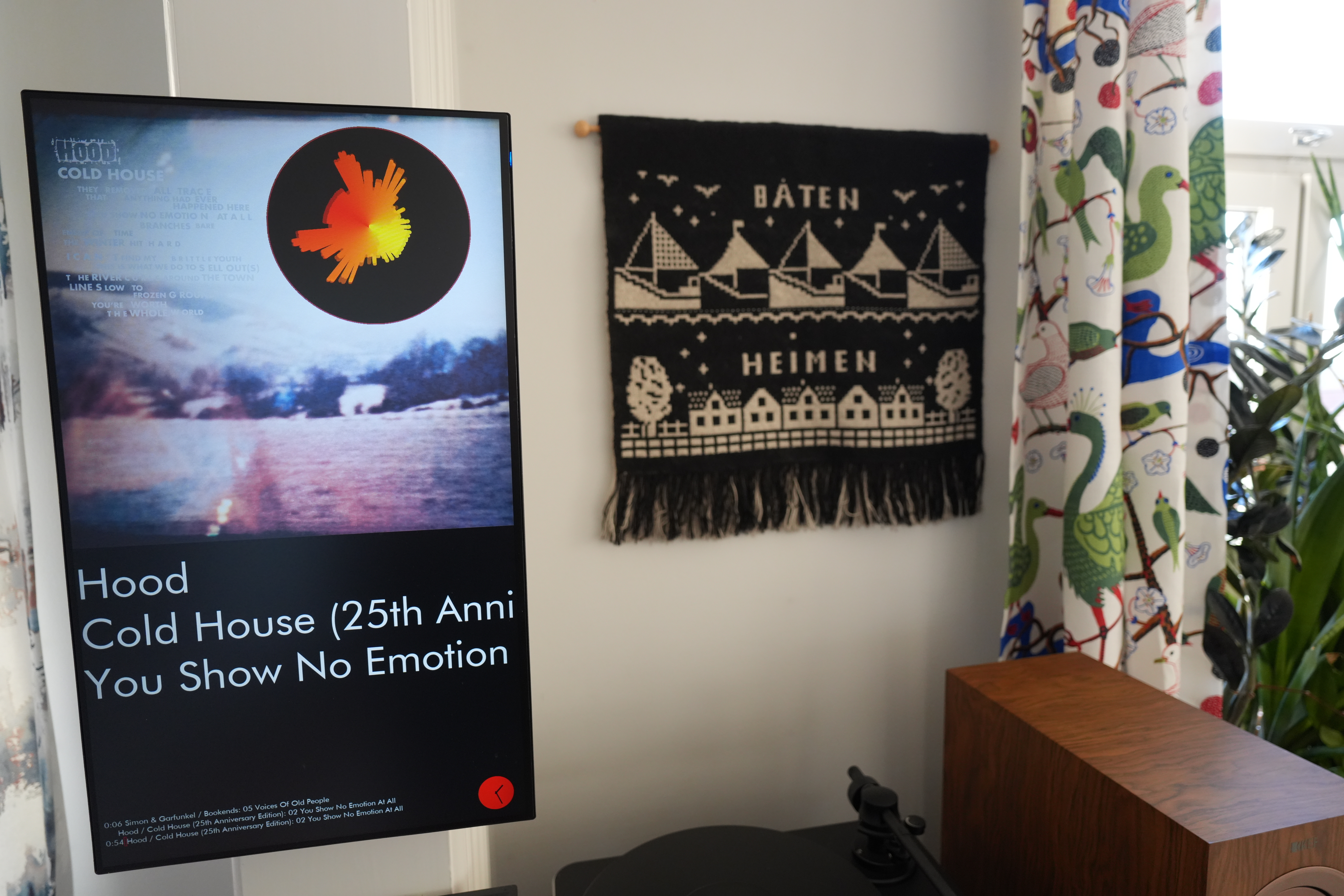
Anyway, a couple decades ago, probably while falling asleep, I imagined a silly FFT display of the music playing. You know — one of those things that move along with the beat and the frequencies like all the Winamp plugins had.
I’m not sure quite why I had that idea, because I’m against having displays with lots of action in general — I hate distractions.
But I had an idea for how it would look, and I thought it might look, for want of a better word, “cool”.
So I started working on it, and then I realised that 1) I know nothing about the ALSA sound system, and 2) I know little about Fourier and maths in general, and 5) I know very little about X programming.
So I was the person least suited to doing this in the world, and the project stalled pretty quickly.

This is my excellent drawing to illustrate what I wanted it to look like — I was thinking about a circle with red lines, but then I remembered that I wanted the lines to be more radial.
After the previous success with Just Have Claude Do It yesterday, I thought of just asking it to do this one, too, and half an hour later…
And with some tweaking:
I guess with stupid hobby projects like this you used to be able to say “well, this may be stupid, but at least I made it! And now I know how to do X programming!”
Well, this project may be stupid, but I didn’t make it, and I’m even stupider than when I started it, I guess. So that’s a major difference between doing silly programming yourself and outsourcing it to an LLM.
Still… the results are amusing, I think? And I would not actually have done this myself.
You can find the results on Microsoft Github, but I guess you can just ask Claude to make you one yourself — that’s probably easier than using this code…