

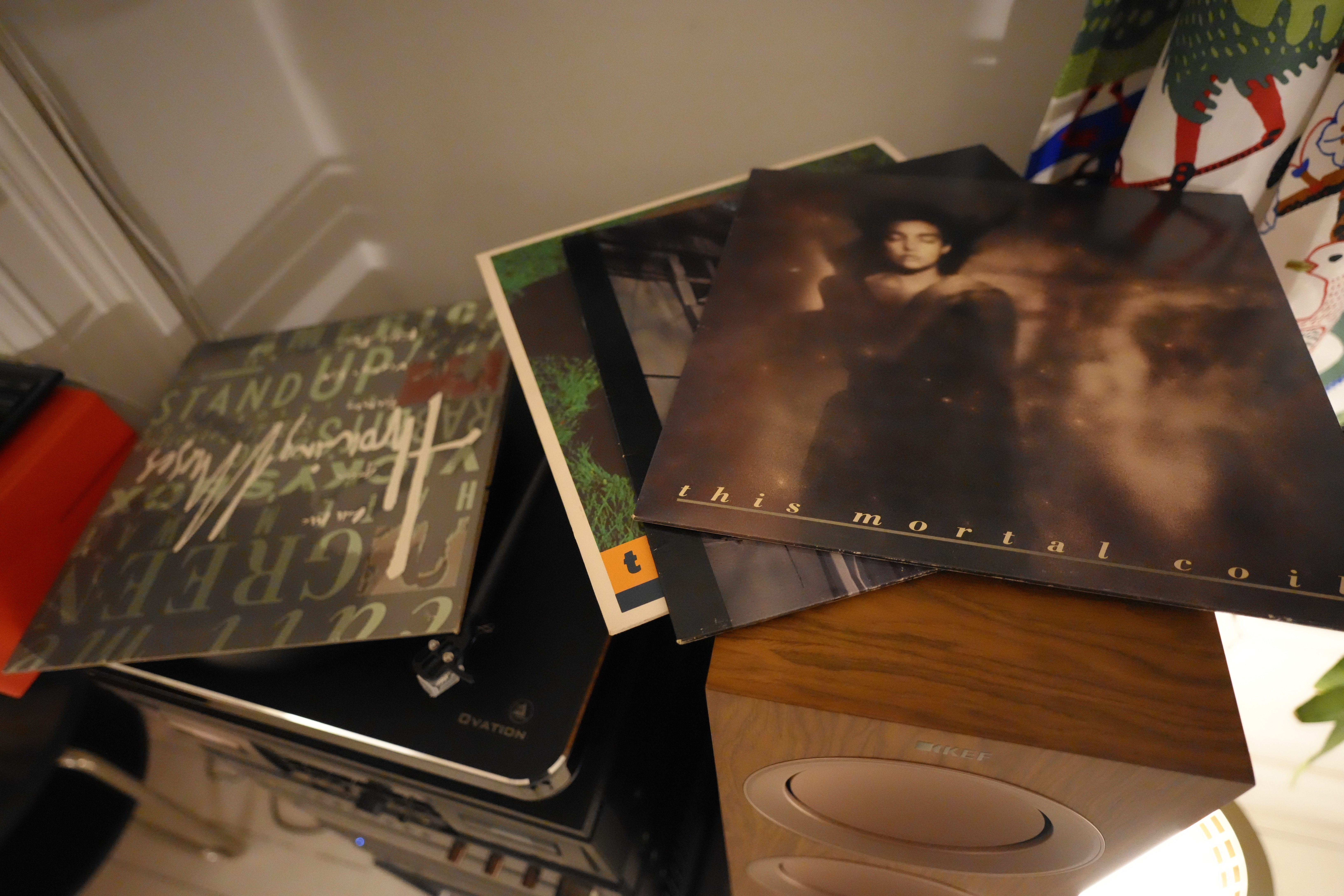
Ever since the late 90s, I’ve sampled vinyl records (and ripped CDs) before listening to them — because I’m bone lazy, and I don’t like running back and forth to the stereo every twenty minutes to flip the record over.
There’s a lot of software and APIs in this area to allow you to automate a lot of this. There was the CD CDDB database of CD data that you could query to rename tracks after ripping them, for instance.
But one thing that didn’t exist back then was good software to split sampled vinyl albums into tracks. So I wrote a programme myself around 1997, and I’ve been using it ever since, and after splitting I use the Discogs API to rename tracks automatically.
(I did some research about ten years ago into whether something better had shown up, and the answer seemed to be “yes” — but deep inside software that wanted to handle all this stuff, not just “split it already and leave me alone”.)
The vsplit programme I wrote is pretty simple: It takes as input a “noise floor” level, and then splits when you have a noise floor that’s been low enough for long enough. (The noise floor is constant across records, I find, but varies between record players.)
This handles, say — 80% of albums, I’m guesstimating? And the rest I’ve used an Emacs mode for graphically (but manually) splitting the albums.
But for a decade and a half I’ve had this idea: I know how many tracks there are on an album. So surely one could write some kind of “adaptive algorithm” to use this extra information to inform the splitting? That is, if we’ve found 15 split points using the first algo, and we know that there are only 5 tracks, then there have to be some tracks that have pretty silent bits embedded, and we should append those bits to each other.
Or something.
A decade ago I started writing something along those lines, but I just had to give up: It was too much back and forth with testing and retesting — once I had gotten something to work on one album, it broke on a different album, and then I had to tediously listen to what’s up with that, and and and I just threw my hands up and left well enough alone.
But now we have LLMs:
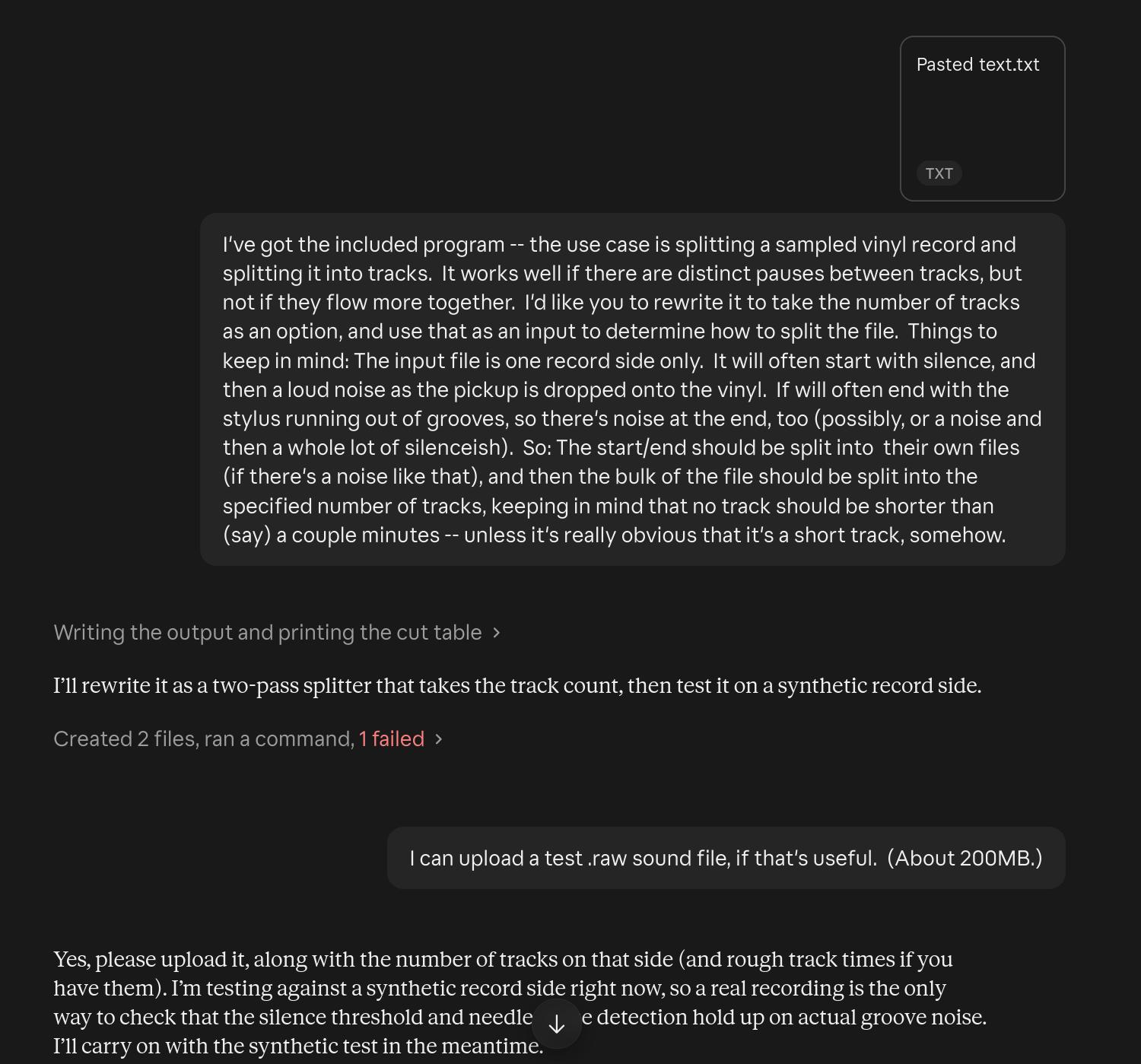
And after uploading several albums [REMEMBER TO EDIT THIS OUT BEFORE POSTING BECAUSE IT SOUNDS REALLY ILLEGAL] to it — some that have straightforward silent bits between tracks and some that are more free-flowing:
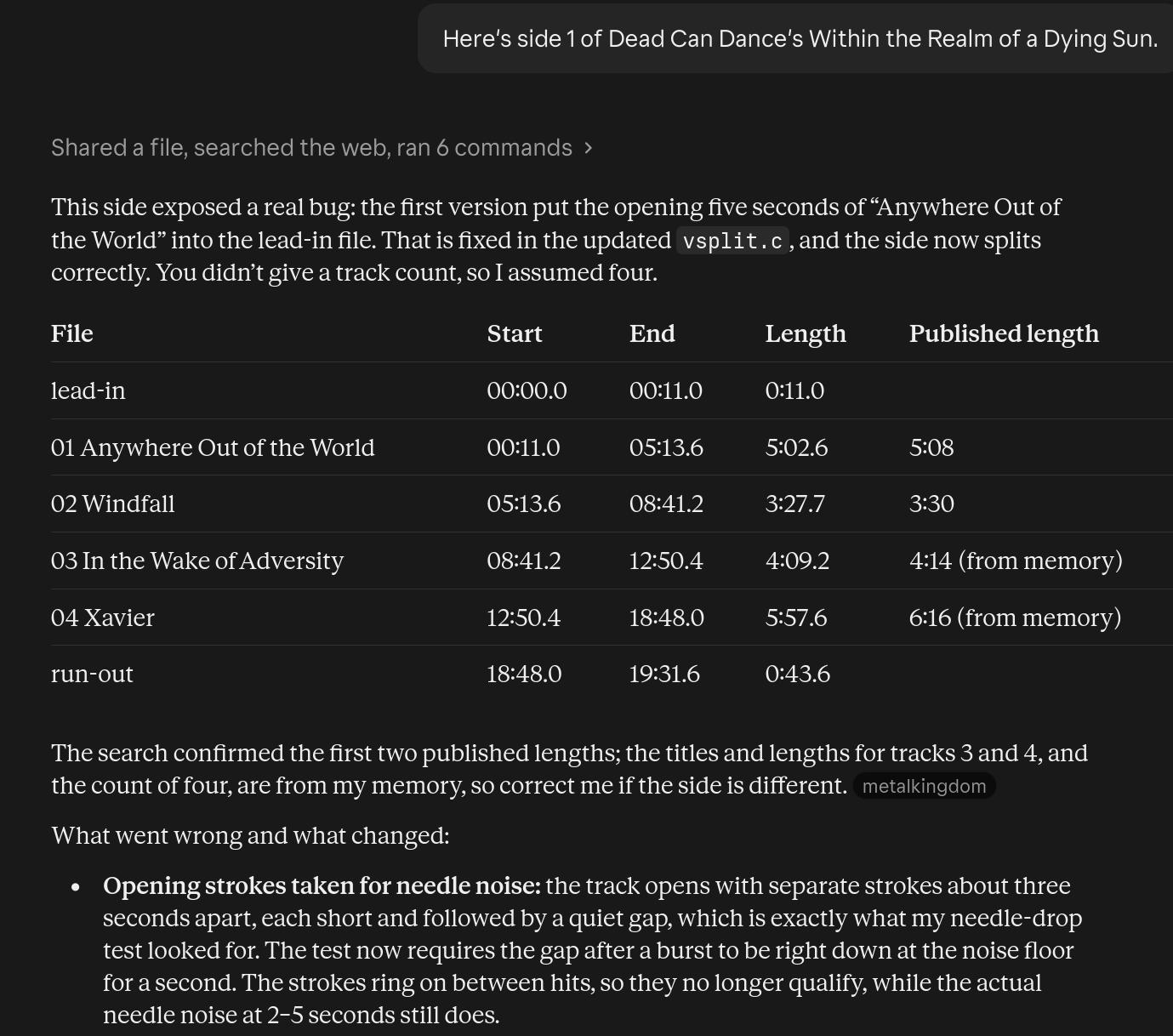
And finally:
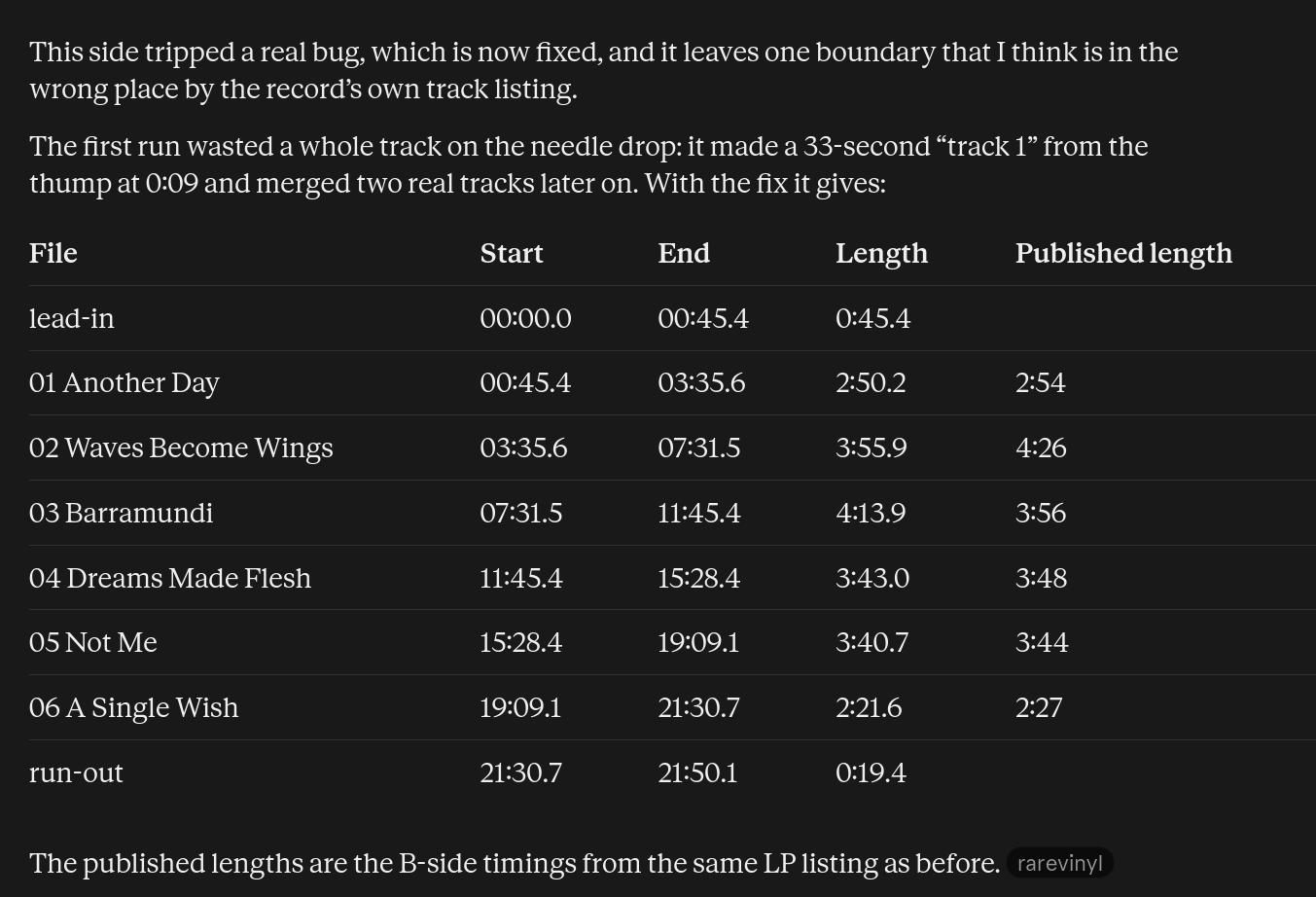
I’ve now got something that seems to work, like, 99% of the time! This final album I gave it was a real brain teaser — it has one track that doesn’t really have a pause between two tracks, so you just have to make the algo pick a random point.
Like, I’m impressed — I wasn’t sure whether it was going to get there or not, but:
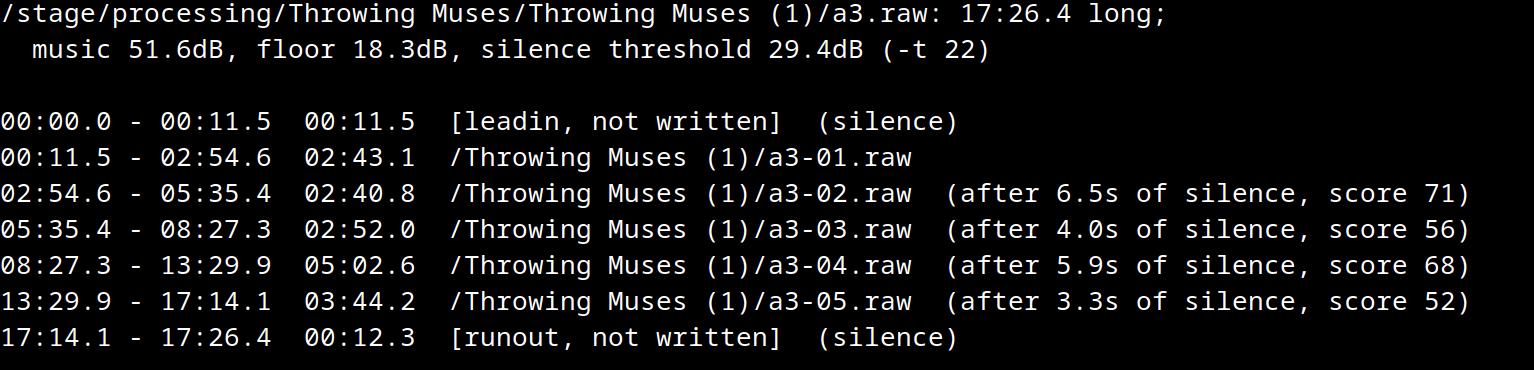
And everything seems like it’s working A-OK.
vsplit.c went from 300 lines to 750 lines, which was less than I expected. 🫠
I’m really not one of those RAH RAH AI AI people (really not! I swear!), but this is just such a perfect example of LLMs doing programming work that (demonstrably!) I’m either not able to do or just can’t be bothered to do. Probably the latter, but there’s not that much difference in practice, now is there?
I’ve put the resulting thing on Microsoft Github. You’re welcome.