

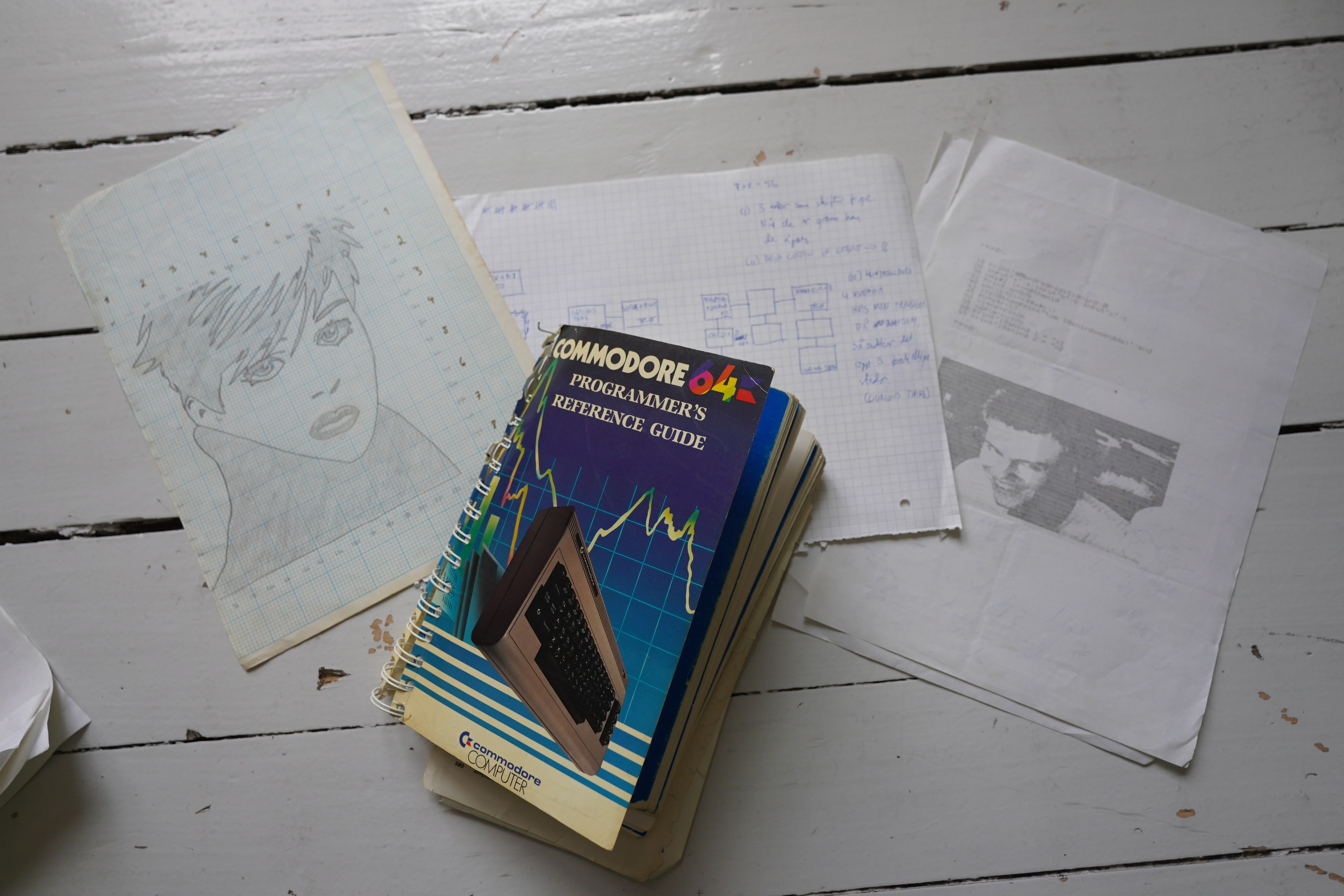
I think this is probably the last post in this series of blog posts resulting from me digging through boxes and boxes in the attic (and other cupboards and drawers), looking for things to get rid of.
But I’m keeping some of the above, because I just have to.
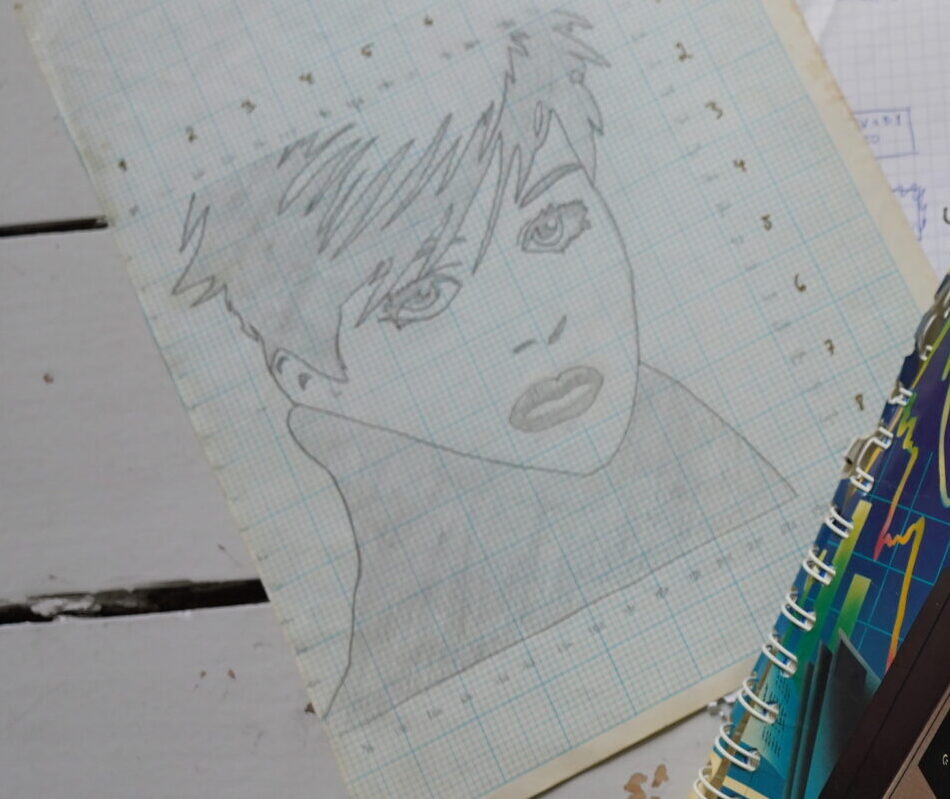
I traced this from an issue of Love and Rockets to use in a Commodore 64 video game I was writing with some friends. And the reason it’s on graph paper is because we had to convert it to numerical values, right? So we took turns (in some class in high school; probably biology because that’s the most boring one) converting this to numbers. Good way to memorise that a dot in bit 7 is 128, and in bit 4 is 16, so if there’s a dot in bit 7 and bit 4, then the byte is 144.
It would probably have been easier if we did the math in base 16, but for some reason or other that escapes me, we didn’t?
Hey, we were … 16? 15?
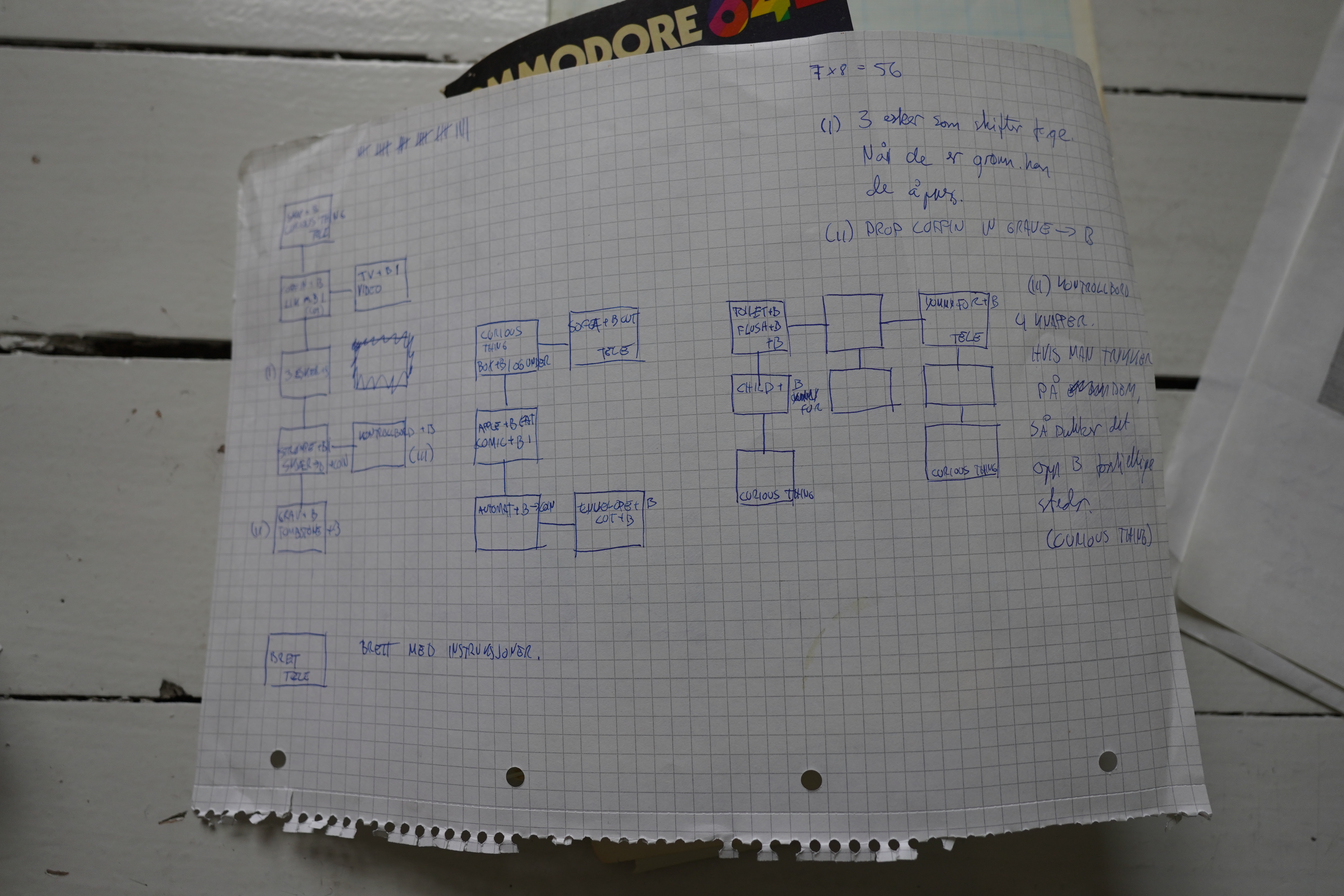
So here’s part of a map to the adventure game I was writing. I remember working at it day and night for several years — staying up all night long during the summer holidays, plugging away at it. And then we tried to have a hackathon where we’d hack away at it together, but I think that broke down pretty quickly — no pair programming for us.
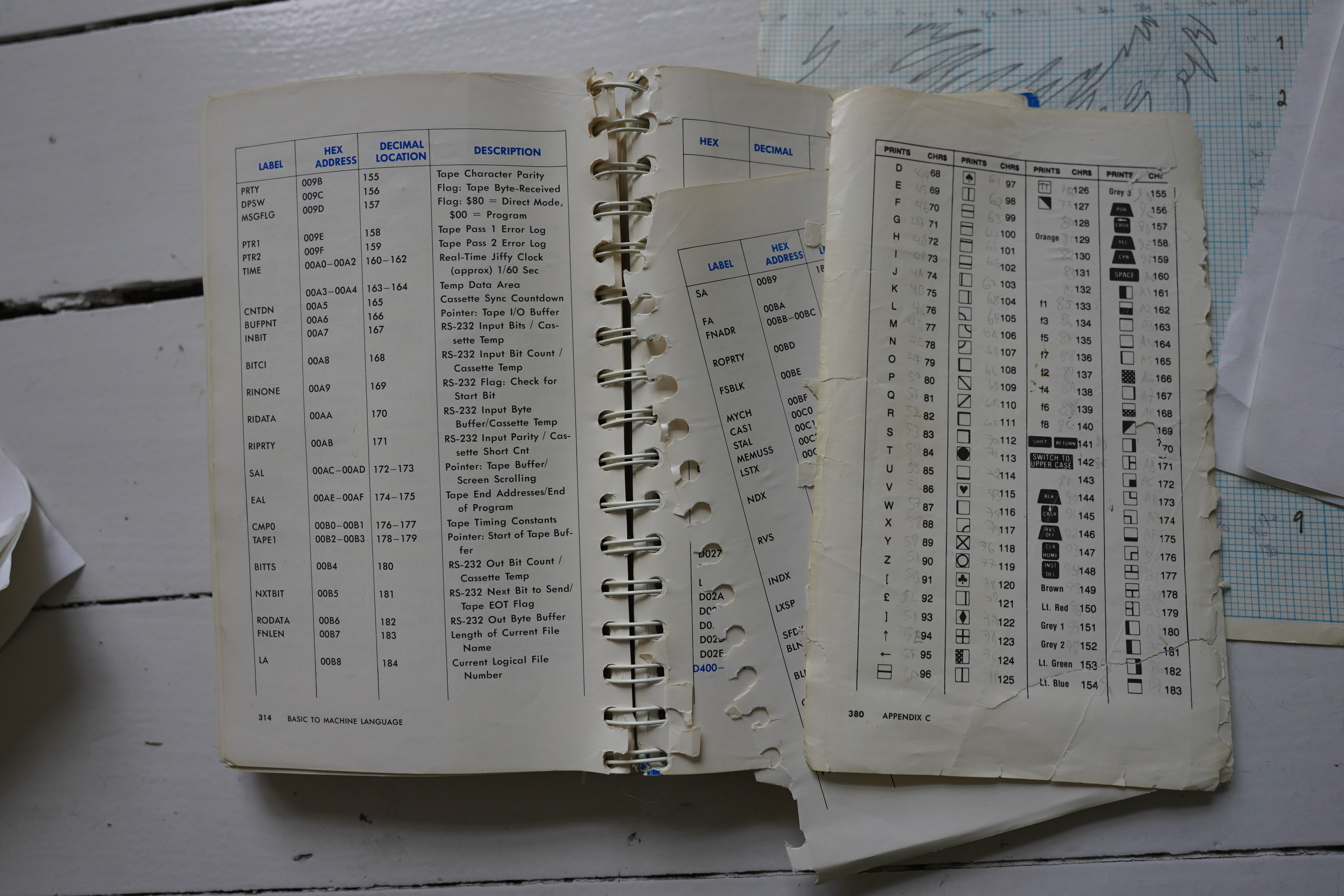
The Commodore 64 Reference Guide sure got a lot of usage, eh?
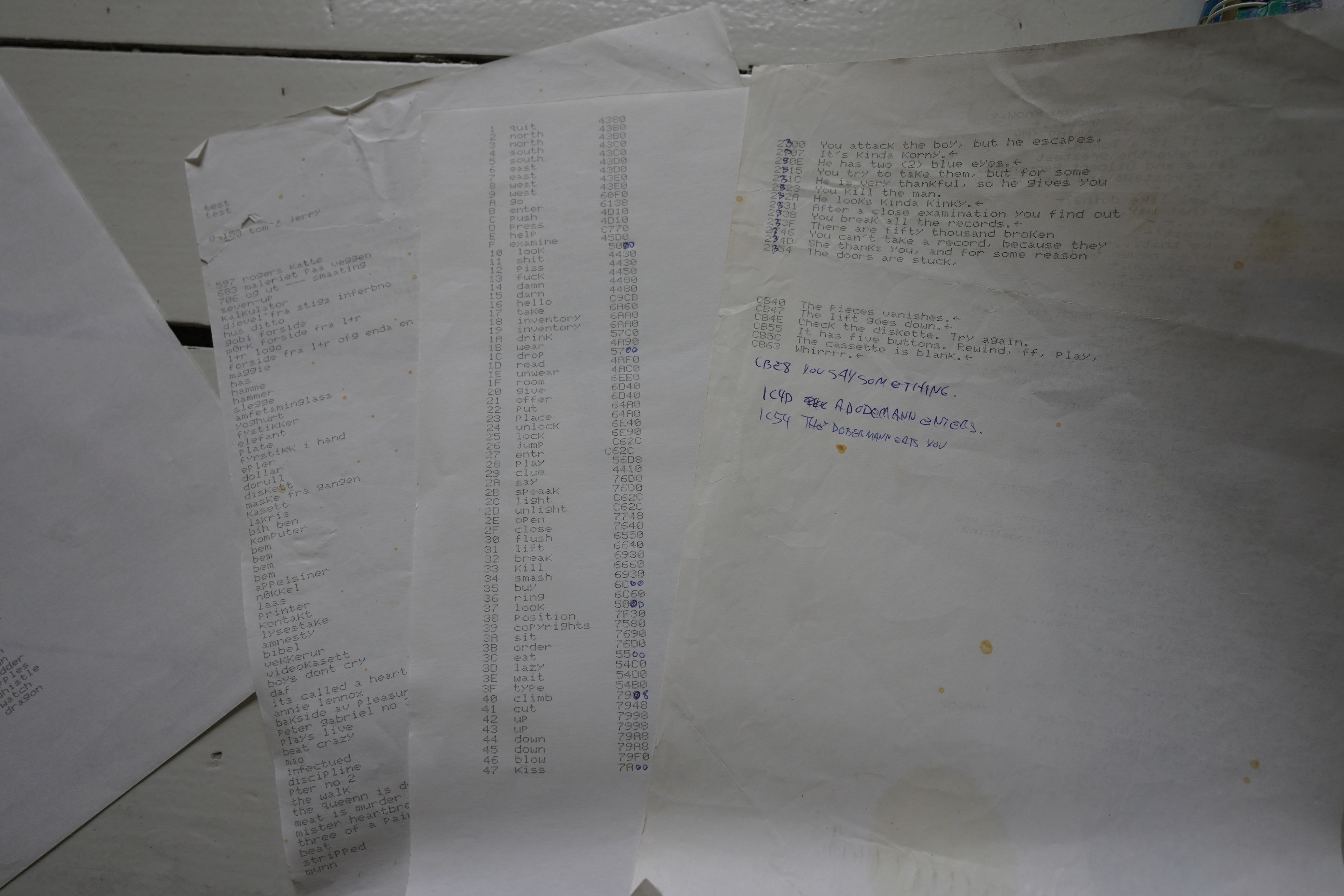
An overview of commands and their locations, and also strings and where they were. I was writing the game using Zoom, a disassembler — I did not have an assembler, so no symbols for anything — keeping track of where stuff was had to be done manually like this.
Let’s see…
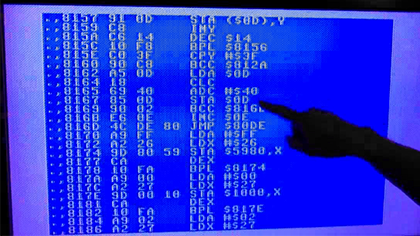
Here’s a picture of Zoom in action that I found on the intertubes. So I would be typing away in this — the only way to get rid of an instruction would be to NOP it out (NOP was just one byte, so you could always NOP out any instruction by adding the correct number of NOPs), and if I had to add a new instruction in the middle, I first have to move the instructions below it down (by entering new addresses and hitting RET a lot) and hope that I’ve reserved enough free space below the sub to allow doing that.
Ahhh… proper programming! That’s the way to do it!
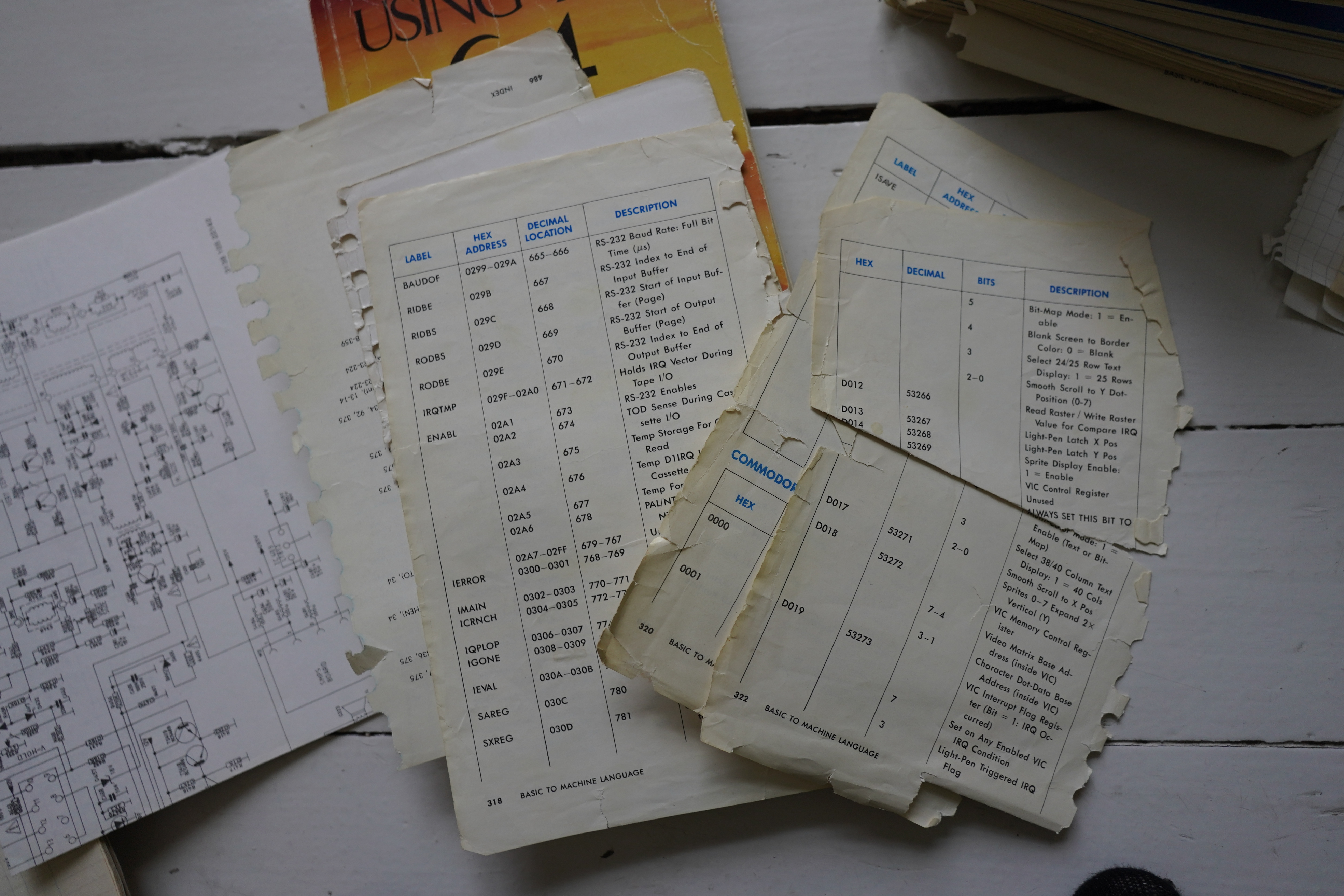
These pages had to be particularly important… Hm… raster IRQs…
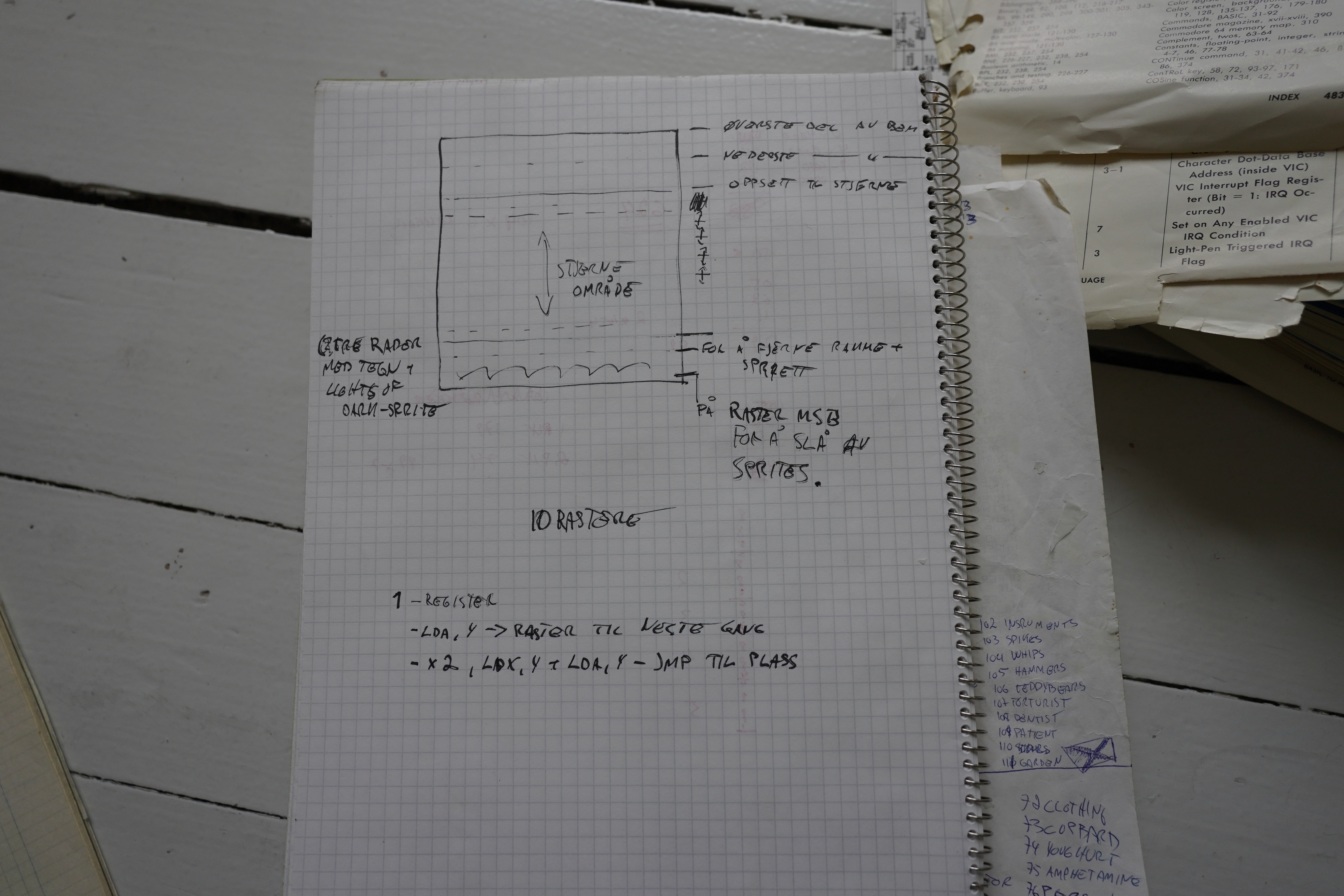
Heh, I think I was working out how to do that trick to extend the screen area?
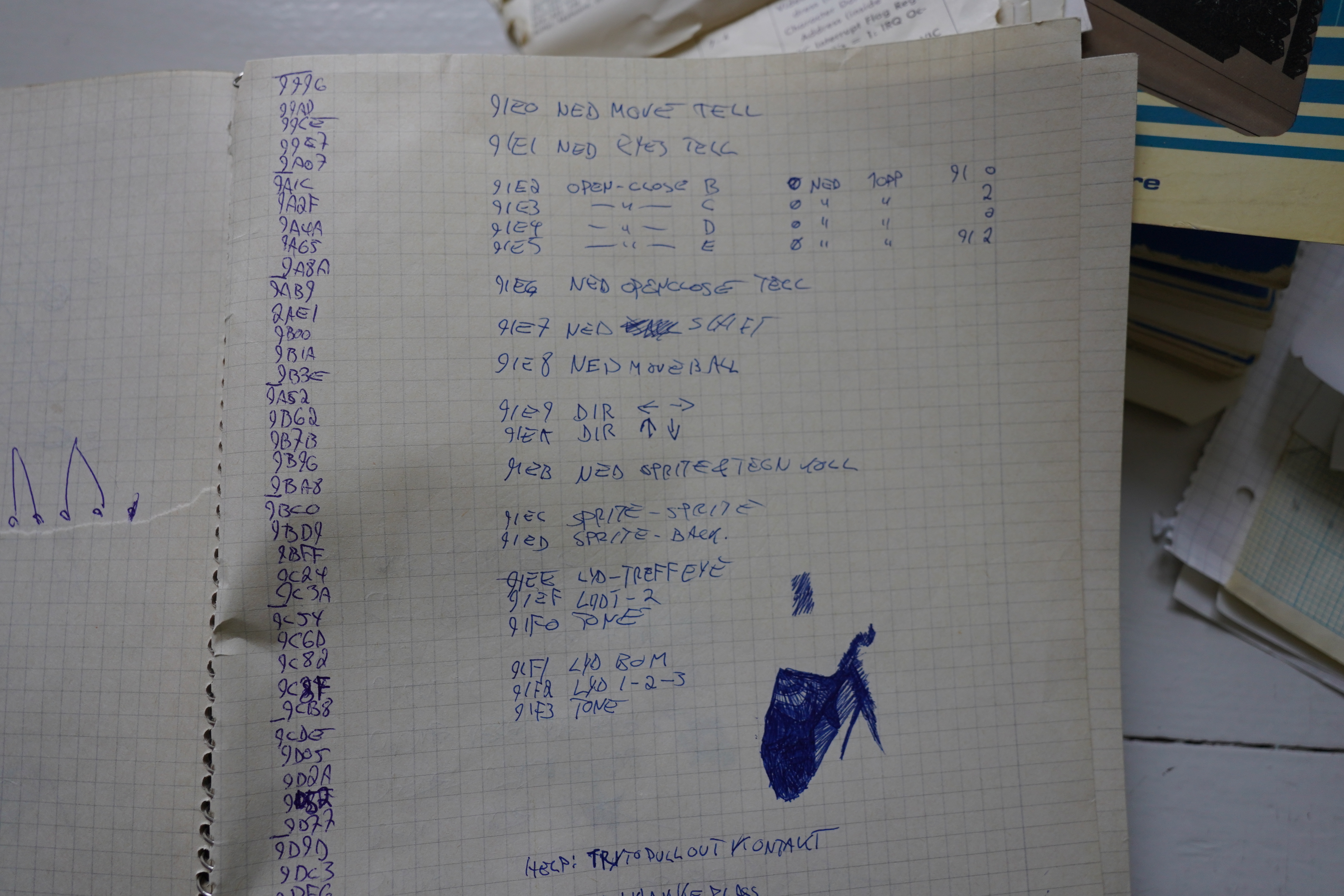
More command overviews?
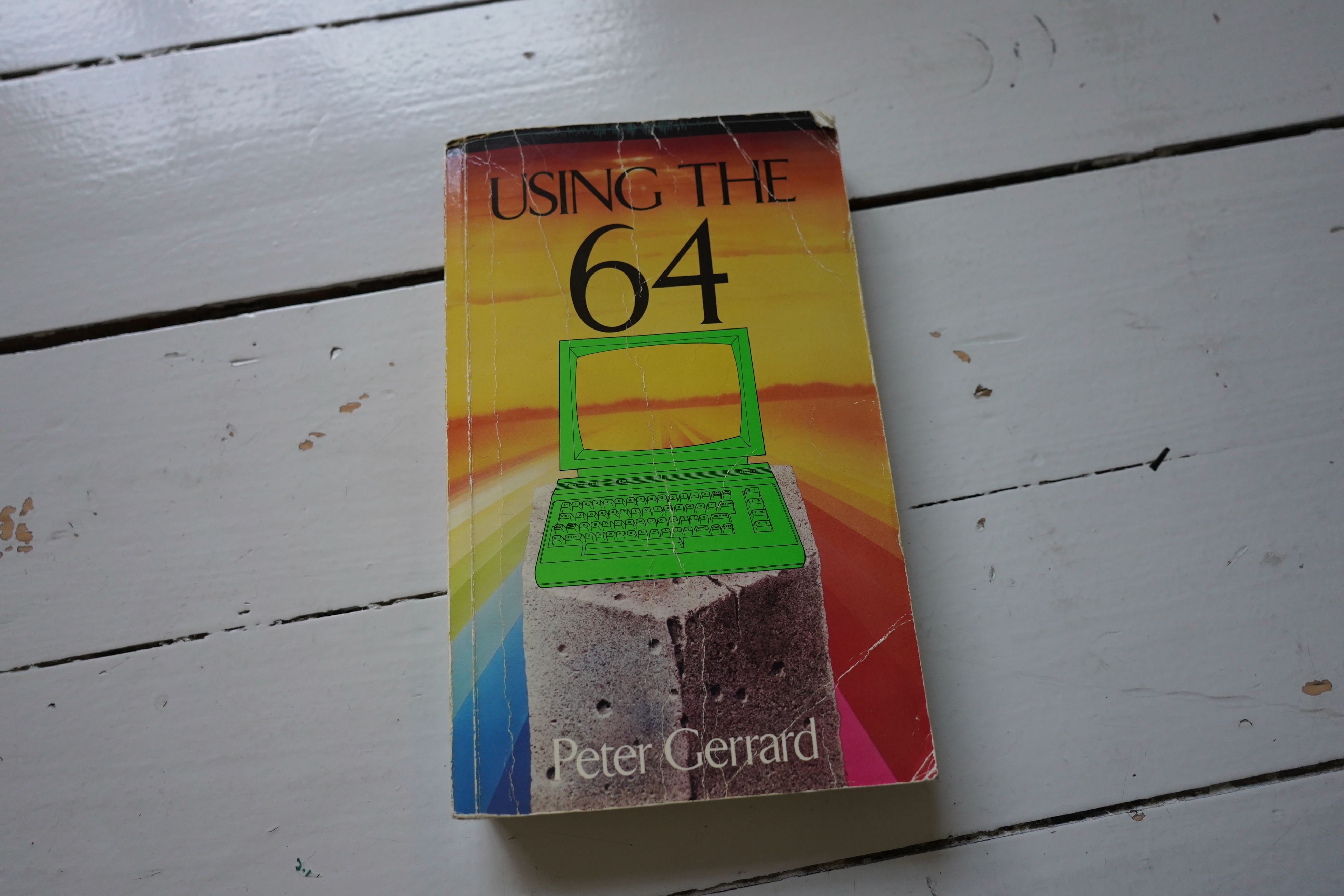
This was the other C64 book I had. Not as much used as the reference manual, but let’s see where it flips open by itself:
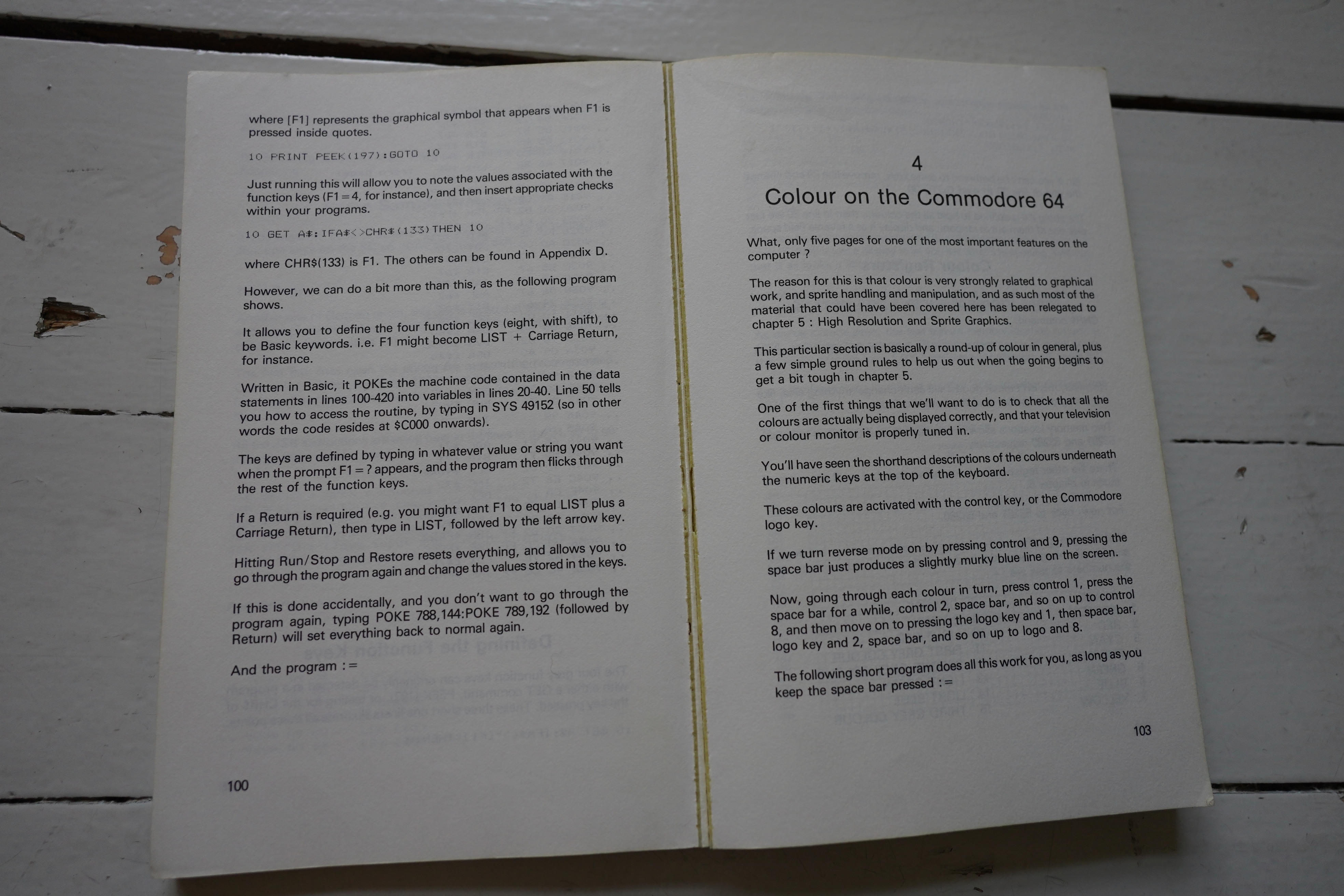
I guess that makes sense.
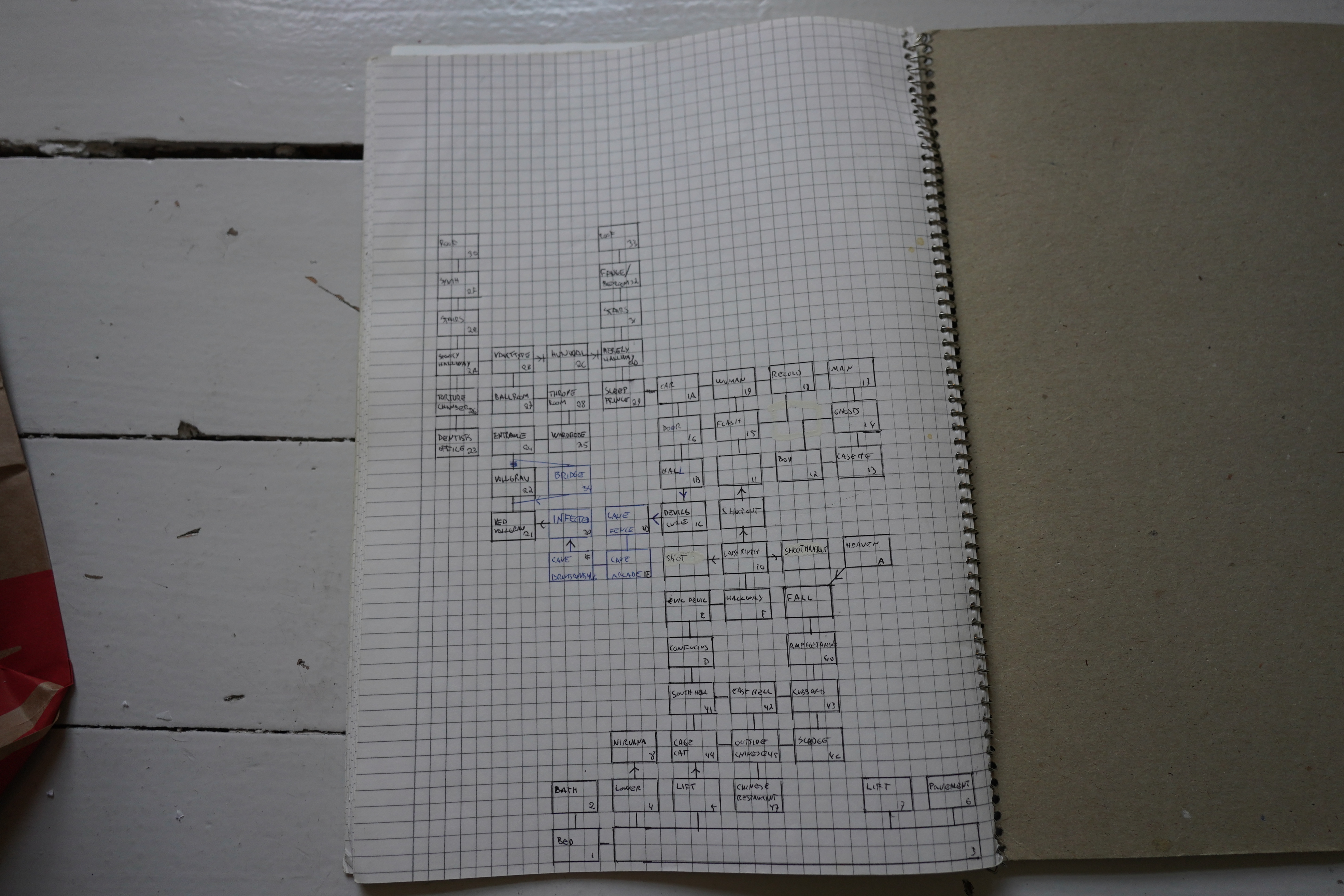
I think that’s a map of the entire game? It had a lot of sub games and stuff.
Heh, it’d be fun to fire it up under an emulator some time, but I seem to have misplaced the disk images — a friend of mine went through all the diskettes, like, twenty years ago and sent me the image files, but now I can’t find them.
I don’t think I ever finished it, but I remember stitching together the pieces I had into a “playable” whole. It was about ten mini games, and then a lot of Hobbit-inspired adventure-walking in between the mini games?
I was never into actually playing games, so I’m sure the game play was totally horrendous.
Oh, well.
[Edit: *gasp*
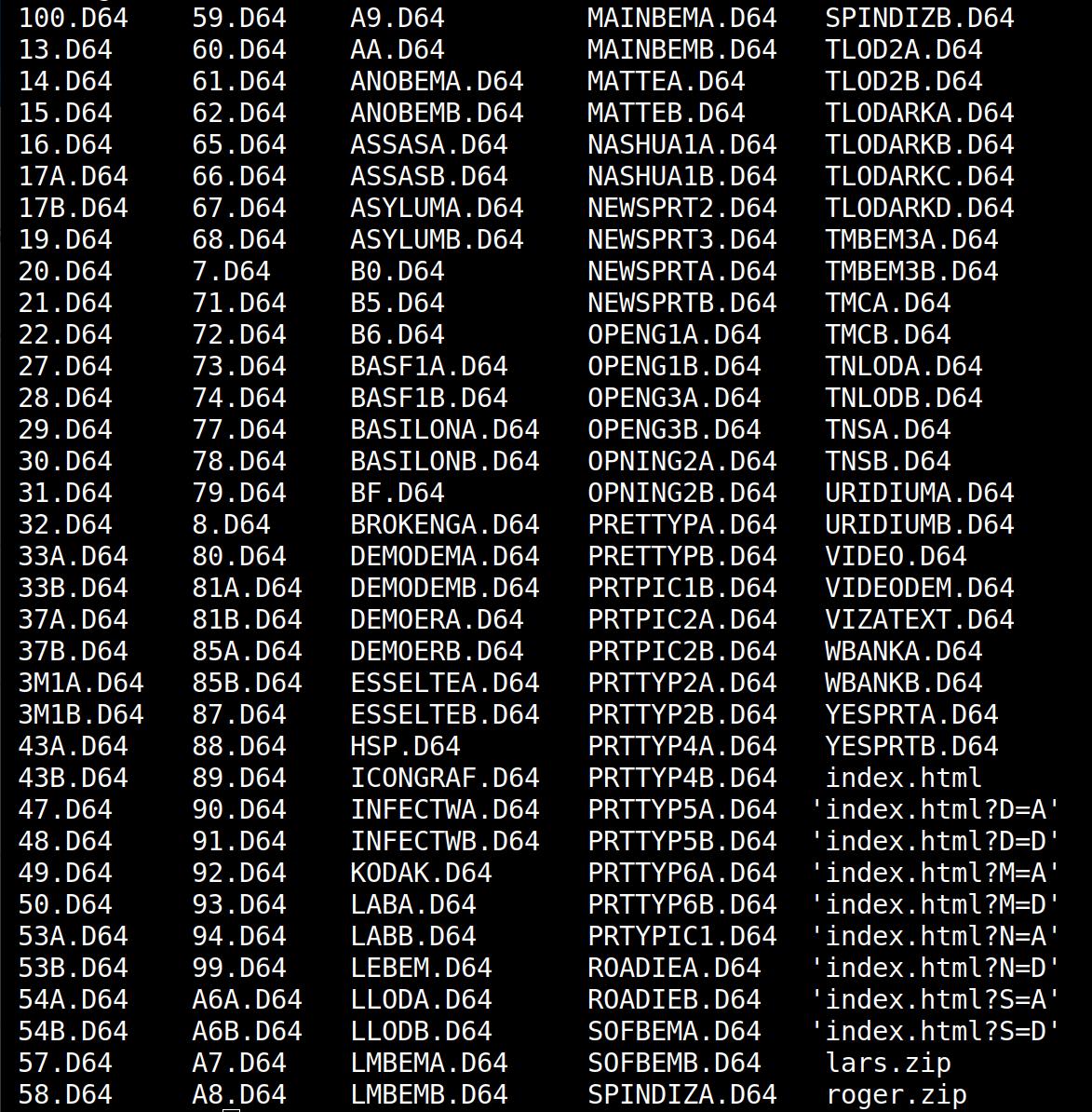
I FOUND THEM ON AN OLD BACKUP DISK!!!!1!
]